Discussions Kozlow67 took part in
13 results on this page.
More options
Many results are in French, the community’s main language. English translations are added over time.
Search results
Recommendations for planning a trip to Japan: any agencies to recommend?
Hello everyone,
I’m reaching out to you because I’m planning our next big trip (Japan is really tempting us for the autumn!) and I have to admit, I’m feeling a bit overwhelmed.
My husband and I have always loved traveling, and at 75, we have no intention of stopping... But I find that everything’s getting so complicated. I try to be "modern" by booking online, but as soon as there’s a problem, we hit a wall.
A friend nearly missed her departure last year because of a visa issue that wasn’t explained properly on a website... and no one to call for help, just automated messages.
It makes me a little nervous to be alone in front of a screen so far away, especially since at our age, we like knowing there’s real support if our health takes a turn while we’re there.
Anyway, I’m tired of seeing my file passed from one person to another without ever having the same contact... Do you know of any small, trustworthy agencies or people who still work the "old-fashioned" way and really look after their clients? I love my independence, but I need a real face behind my project.
Thanks in advance for your advice, and I look forward to reading your replies, Catherine
Naha & Osaka, Japan - June 2025
It’s an understatement to say that Japan is a world apart. All around me, people exclaim: "How lucky you are to be able to go there! I’ve always dreamed of visiting, of finding myself in that culture blending tradition and technology!" Yes, they’re right. Until the moment their dreams become reality and things appear as they truly are, without the filter of fantasized preconceptions. Because in the collective unconscious, Japan indeed seems like a civilization—if not neutral—at least stripped of any social maturation. As if it had emerged all at once from its canonical ages, offering only the best of its traditions, and as if those traditions were undoubtedly the foundation of its extraordinary discipline. Yet, as always, the truth is far more complex. Modern Japan is likely shaped by its millennia-old traditions. But that Japan is also the result of its own uncertainties and contradictions. I’ve always been wary. I’ve never understood why the cleaning women on the platform bow when the train arrives. At some point, too much discipline, too much deference—it makes you smile, it raises questions.
Finally, thanks to F., a dream is coming true! Not the dream of going to Japan—a country I’ve visited more than any other, except for Réunion and the UK—but the dream of completing the fastest round-the-world trip of my career. Indeed, due to the restrictions imposed by the Russians*, the plane flies over the Caucasus and China on the way there; on the return, it gracefully heads toward the Arctic after skirting the Aleutian Islands, Alaska, and Greenland. So, in nearly 26 hours of flight, I complete my 6th round-the-world trip. A round-the-world trip with just one stopover. Or two, if you count our impromptu detour to Okinawa.
(* In response to Western sanctions, Russia closed its airspace to Western airlines on February 28, 2022, except for Air Serbia, Turkish Airlines, Pegasus, and Belavia. This decision adds 2 to 3 hours to flight times and, incidentally, increases operating costs.)
The empire of noise. The empire that dazzles. In Japan, the auditory and visual space is constantly fed. No respite. You have to be strong. Navigating public transport feels like playing the most advanced video game: moving between language barriers and a different organization, the hero tries to ignore the numerous visual and auditory distractions. Mostly auditory, though. Because in Japan, there’s a culture of noise that has undoubtedly inspired our national railways. Everything must be announced. So, here and there, all along the route, we find agents whose sole role is to endlessly repeat safety messages through megaphones more or less suited to the situation. The result is a constant murmur, a kind of tinnitus, a subtle but incessant buzz that fades only at bedtime and returns with a vengeance at first light, when we descend back into the supposedly sterile depths of Osaka’s subway. "To go right, please turn right, kudasaï. When descending the stairs, please mind the steps, kudasaï. To go straight, please take the left corridor, kudasaï." That *kudasaï* ("please" in Japanese), I assure you, has permanently lodged itself in my auditory cells.
Screens are no exception; the brain is constantly stimulated. But paradoxically, passengers massively retreat into their own worlds via their screens. Literally glued to their phones, earbuds firmly in place, people escape into the virtual aisles of a furniture store, a game, a movie... In the train cars, raised voices are rare. The field is clear for announcements and other jingles. Each stop is announced by a little tune unique to each station. Simply incredible.
If we usually judge a country by the welcome its inhabitants offer, in Japan, we’re left wanting. Indeed, the Lost in Translation* spirit doesn’t just apply to verbal exchanges—it applies to everything, especially non-verbal communication. In Japan, me, the slightly North African Corsican, I’m at a loss. I speak loudly, I gesture, in front of a hotel concierge just as lost. Each for our own reasons. Yes, he speaks some English, but we can’t seem to connect. It’s a losing battle trying to find a bit of compassion from a local who’s far from familiar with Western concerns. I try to buy tickets for the World Expo? I run into a systematization as rigid as it is abrupt, which the concierge can’t seem to navigate. While we might still have a shred of common sense, here in Japan, everything is digitized. Soon, no one will be surprised that a QR code becomes essential just to go to the bathroom.
(* Film by Sofia Coppola, released in 2003, which explores isolation, unease, Japanese culture, and language through the experiences of two protagonists.)
In the end, we get that ticket for the Expo. After providing personal information on yet another account created for the occasion, we buy electronic tickets—a QR code, then—to regulate the comings and goings, the souls and aspirations of all these wandering beings scattered across the globe. And it’s probably for the best... Because we’ll be tens of thousands of visitors—100,000 to 150,000 per day—walking the aisles of this enormous improvised amusement park, a kind of delirious superstructure surrounded by the Grand Ring, the largest wooden construction in the world. Inside the park, the pavilions, flagship vessels of their respective countries, compete in ingenuity, proportionate to their GDP, to attract visitors. But you have to wait up to two hours to visit the most popular ones! Fortunately, about a hundred countries can be explored without waiting in shared, more spacious areas. What will I remember from this adventure? The beauty of that wooden structure, despite any environmental or financial considerations—200M € for barely renewable elements; a certain poetry, even magic, in the expression of this event—conversing with Juliette Petit, the splendid representative of Vanuatu, had something indescribable; a close-up experience of Japanese discipline when it came time to return to the subway after that epic evening—thousands upon thousands of people converging at the same time toward a single place without any interruption in the flow.
But my real passion is the countryside. So, I’ll especially remember that brief escape, on the very first day, to the Mino-o waterfall, where the journey itself was already enchanting. Quickly leaving the underground lines, our train speeds through the city’s endless expanse and drops us at the foot of a hill, the abrupt edge of the urban sprawl. The slope was too steep to build anything? We leave behind an impressive hotel, a capitalist eyesore defying the laws of elevation to tackle the climb toward the waterfall. A bucolic walk where the stroller can choose between a paved path or more epic trails. Here and there, stalls, temples, everywhere, a certain serenity. The city’s pulse gives way to a magnificent spectacle magnified by giant sequoias. From the depths of a ravine, we try to glimpse the sky beyond the foliage. Everything is oversized. Here, you can breathe.
***
In reality, Japan has never undertaken any real work of memory. Aside from a few feeble gestures to appease Washington in its choice of Asian partners, one wonders if the Japanese have ever truly grasped the horror they were forced to participate in. While our Judeo-Christian society has more or less assimilated the notions of forgiveness and self-questioning, where does Japanese society stand, juggling a millennia-old Zen philosophy and the unabashed Machiavellianism of an emperor utterly possessed? Is it just me, or does there float in the atmosphere a kind of unease, a malaise, an awkward relationship with reality? For me, bowing to a train as it enters the station is just the result of a poorly directed moral dilemma...
Ah, how distant is the time of sakoku, that closure of the country—both concrete and ideological—that was in vogue for two centuries. Because if no one could enter, no one could leave either! A boon for neighboring countries. But from 1854, following the skirmishes of Commodore Matthew Perry, who demanded Japan’s participation in trade, the country suddenly became aware of the disparities separating it from the West. Bring Japan up to the level of other nations? Industrialization, competition, search for raw materials... Hirohito (1901–1989) emerges on the scene, a bit expansionist and willing to stop at nothing to achieve his goals. Above all, he knew how to use, in his own way, the incredible capacity for self-sacrifice of his people...
We protest, we condemn, we all rally behind an acceptable discourse when it comes to discussing the use of the atomic bomb. Yet, we forget one essential thing: Hiroshima wasn’t enough to make Hirohito yield. While we’re bombarded with anti-fascist elements, as if the sole purpose of school curricula were to prevent us from voting for the National Rally, we completely overlook those events of rare cruelty that took place on the other side of the globe at a time contemporary with Nazi atrocities. Why? Because it was farther away, on the other side of the world? Because we must both condemn the use of nuclear weapons and Nazism? What a dangerous game. Killing civilians is beyond comprehension, everyone agrees on that. But hasn’t Japan ever been guilty of such atrocities? Our empathy is legitimate; it won’t, however, remove from my mind the idea that there was no other solution. Nagasaki is the most telling proof of that.
At least in France, in school textbooks, Hitler will have completely overshadowed the existence of people crueler and more abject than him. Certainly, Adolf was a deeply disturbed man whom events propelled to power. But I’m justified in believing that his approach was probably more humane than that of Joseph Stalin at the height of his art*. And if Hirohito followed the same line as Hitler, in the sense that he represented the superior race, he would apply with conviction what was Stalin’s credo: contempt for his own people when sending them to slaughter, and an even fiercer contempt for the human race when it didn’t have the good fortune to be Japanese. Just look at how China was invaded and by what means millions of Chinese were annihilated, burned, deported, buried alive! Operation Scorched Earth or Three Alls Policy for kill all, burn all, loot all? No comment. Even today, the Japanese are convinced they waged a patriotic war, when clearly, that war served only vague ideological (and certainly economic) interests.
(* "In many ways, Hitler’s National Socialism was far more humane than Communism: it wasn’t unthinkable to speak to the SS or the Gestapo, and dissuading them from sending you to a prison camp wasn’t utopian. To some extent (compared to the Communists), you could still expect a semblance of justice. All those who lived under Hitler and under Communism will tell you: as the front lines shifted, they always managed to end up in Germany, where, though it was a strange place ruled by a madman, life went on. Under Communism, there was no life; totalitarianism was absolute. Probably, Hitler’s conservatism prevented him from fully imitating Bolshevism." Seraphim Rose in The Revolutions of the 19th and 20th Centuries (circa 1970))
In Naha, we visit two strategic sites: the Imperial Navy headquarters and Maeda Escarpment, in Urasoe, better known as Hacksaw Ridge. I love this confrontation with history. In the hand-dug tunnels of the headquarters, we meet Japanese people seeking information. They’re not responsible for this tragedy. Neither are we. I would have liked to tell them that, to hug them, to move on. To finally believe in those peace messages displayed here and there. Yes, it’s curious to read those calls for peace* when no real work of memory** has been undertaken. Two civilizations, two perspectives, a profound misunderstanding. When I analyze the waste of that war—and particularly the waste of those Pacific battles—like Peleliu in autumn 1944 and Okinawa in spring 1945—I can’t bring myself to share in the pathological patriotism that reigns within these walls. There, the room where the last message of Admiral Minoru Ōta was transmitted in Morse, praising the merits of the archipelago’s people. A tangled mix that, yes, is charged with positive emotions but, no, won’t remove from my mind the idea that this people was completely conditioned, completely disconnected from reality. Allying with the Axis powers? Invading the South Pacific? And finding that noble! Everyone sees things through their own lens.
(* Peace Declaration by Denny Tamaki, Governor of Okinawa, June 2020. ** "Recognizing the atrocities committed by one’s country requires a mix of democratic culture and self-confidence that is more the exception than the rule." Dominique Moïsi in Les Échos, April 30, 2015)
Okinawa. 200,000 dead. Stemming from bushido, the way of the warrior, this conditioning reached its peak with the kamikaze philosophy in particular and suicide in general. So, schematically, here’s how things went: as the island was encircled—Peleliu, Iwo Jima, Okinawa—and all hope was lost, the order was given to kill ten American soldiers before taking one’s own life. The deceit of this system, where surrender is synonymous with dishonor, involves creating tunnels and secret pockets where Japanese soldiers hide and from which they emerge. Long before the atomic bomb, the knell of their war had sounded. Hiroshima and Nagasaki are just the result of human pride, of which Hirohito’s reign is the finest example. Why was this henchman of Satan left in place until his death? I don’t understand. While the humiliation inflicted on Germany repeatedly was abject, especially for its people, the absence of any real and pressing accountability for Hirohito in this large-scale carnage he instigated leaves room for the wildest interpretations. As if to underscore my point, Emperor Naruhito visited Okinawa the same day we did, paying his respects to the inhabitants who fell in battle. I looked at the faces in the monorail serving the south of the island. There were elderly people who undoubtedly lost their parents eighty years ago. To what extent can they blame this tragedy on the delusional visions of their leaders?
On Maeda Escarpment, I salute the courage of Desmond Doss, that conscientious objector who fought to serve his country while refusing to ever carry a weapon. There, at the top of a steep ridge, you can see to the north the Allies’ advance, while to the south, the slope is gentler down to Shuri, in front of the headquarters. The underground is a Swiss cheese filled with enemies. Desmond works as a medic. He manages to save 75 wounded from certain death by evacuating them at night from the battlefield using makeshift ropes. Back in Osaka, far from the somewhat dilapidated tropical islands, I rediscover the splendor and grandeur of Japan’s second-largest city. To tell the truth, and this applies to Okinawa too, the density is so insane on this archipelago that you sometimes wonder if it’s not just one giant city spread across the vast territory. Because between Tokyo and Osaka, while there are some mountains and forests, it’s the city that dominates; during rush hour, a rapid train connects the two cities every five minutes. We get lost in rather quiet alleys parallel to the main streets, only to find ourselves in the covered and lively galleries of Dōtonbori. We’re looking for a place to eat—above all, we’re trying to navigate the unlimited options stretching endlessly along the sidewalks. It’s absolutely mind-blowing. And while I introduce F. to a part of history that our Western societies have quickly forgotten, he initiates me into Japanese gastronomy despite my well-known aversion to Asian food. But nothing beats having a master in the field! We feast on okonomiyaki, Japanese pancakes expertly prepared and served on a teppan embedded in our table.
Night falls on Japan, and I still haven’t found the answer. Like in Singapore, one can praise the calm and serenity of human relationships, the delicacy that may just be hypocrisy, the politeness, the discipline. But above all, we notice that in the absence of freedom, in the absence of madness, poetry struggles to take root, boredom looms, as does real madness. Bushido still exists, honor is there and must be preserved. But the youth drowns in electronics and in willingly sterile cults (otaku), unable to discern what’s essential, failing to believe in their dreams. You have to succeed? Young people commit suicide because of school bullying, the slightly older ones because of work-related difficulties or marital problems. Nothing exceptional, we might say—average*—but you’d expect better from a country so well-organized, a country that makes so many Westerners dream. Yes, night falls on Japan. Empire of noise, empire of the senses, a very strange land where you find clean toilets in subway corridors but where the very meaning of life seems stifled by the mirages of technology. Above all, a civilization deprived of a penance that would prove salutary. We’re caught between two waters. Those of a shallow modernity without depth or anchor; those of a past that was majestic but irreparably tainted by the demonic madness of an overly adored emperor.
How can one fully thrive when guilt has no outlet?
(* France and Japan share a common statistic of 17 suicides per 100,000 inhabitants, which, depending on density, means 30 per day in France and 70 in Japan...)
Logistics and sightseeing questions for solo trip to Japan
Hi there,
I’m planning a trip to Japan in April/May.
I’ll start my journey in Tokyo for 3 to 4 days.
I’d love your advice on accommodation, transportation, an itinerary, and whether a guide would be useful.
I’m traveling solo and could use a little reassurance.
Before I forget... how do payments work?
Thanks for your help, Petra
Thanks for your help, Petra
Help organizing a trip to Japan
Hi there,
I’m looking for someone who could help me organize a trip to Japan for my niece and her son. I’ve seen that French-speaking guides are expensive, and the same goes for going through a tour operator.
Airline, local transportation, hotels, etc.
Thanks for your replies!
Betsyl
Planning 3 weeks in Sulawesi
My kids are dreaming of discovering Indonesia this summer—they’ll be celebrating their 15th and 20th birthdays! For the occasion, I was thinking of Sulawesi, a bit farther from Bali’s crowds.
I usually plan my trips myself, but I’ll admit I’m a little lost when it comes to transportation and logistics. We’d be there for about 18 days.
I’ve looked into guided tours, but the prices are pretty high. North or south for 3 weeks? Anyone have any firsthand experience to share?
I usually plan my trips myself, but I’ll admit I’m a little lost when it comes to transportation and logistics. We’d be there for about 18 days.
I’ve looked into guided tours, but the prices are pretty high. North or south for 3 weeks? Anyone have any firsthand experience to share?
What to choose for a first summer trip to Asia: Indonesia or Thailand?
Hi there,
I’m planning my first trip to Asia next summer with my partner and our daughter, who’ll be 3 and a half at the time, for 4 weeks (maybe 5).
I’ve heard that the timing is better for visiting Indonesia, but I’m hesitant because Thailand seems more accessible, and I’m worried that traveling to Indonesia during high season might be less enjoyable and a lot more expensive due to the number of tourists. We love cultural sites as much as natural ones, and we’re big foodies. We’re not necessarily looking for luxury and tend to take our time, travel by public transport, and look for accommodations with a good value for money—though we do occasionally splurge on a high-end restaurant.
I’m also wondering when and where to buy flight tickets and how comfortable the journey will be (especially for our daughter) if we fly with Thai Airways or Garuda.
Thanks in advance for sharing your thoughts and tips!
Damien
Japan: First Discovery!
Here’s a little story about my first trip to Japan with my partner.
We went for our first visit from October 29 to November 13, 2024.
I had planned this entire trip back in November 2020, but given the health situation at the time, I had to cancel...
Here’s the classic route we took: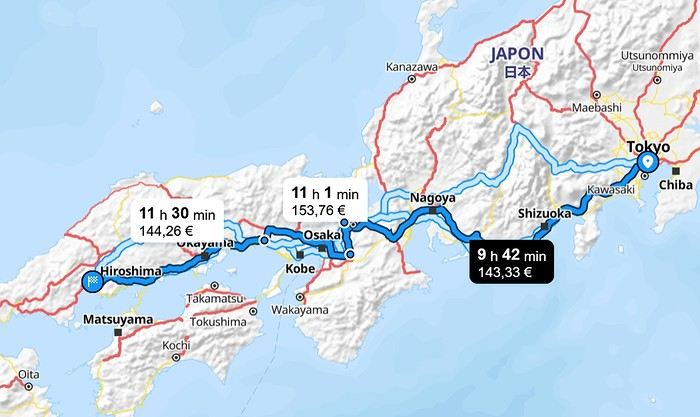
We booked everything ourselves and got a regional pass for the area from Kyoto to Hiroshima. The hotels were reserved 3 months in advance on Book... and Agod... (1030 € for 2 people for 13 nights = 80 €/night). For the flight, we chose a Qatar Airways flight with a layover to break up the long journey (950 € per person). We also got a pass on the same site (Japan-Experience) to take the train connecting Narita Airport to Shibuya Station (the N'EX Narita Express). Since the airport is 75 km from central Tokyo, we opted for this mode of transport, even though there are cheaper alternatives. After reading various posts on VoyageForum, I understood how important it was to have a Welcome Suica card to pay for public transport (subway, tram, bus, boat throughout the country), and we were able to buy one at Narita Airport. It turned out to be super useful! After a long but smooth journey, we found ourselves at Narita Airport in the evening. Even though we had a pass for the Narita Express, we had to go to a counter to make a reservation for the train (mandatory). Then, once we arrived at Shibuya Station, we took the subway for 2 stops and finally reached our hotel, exhausted (Hotel Asia Center of Japan – 270 € for 3 nights with breakfast included).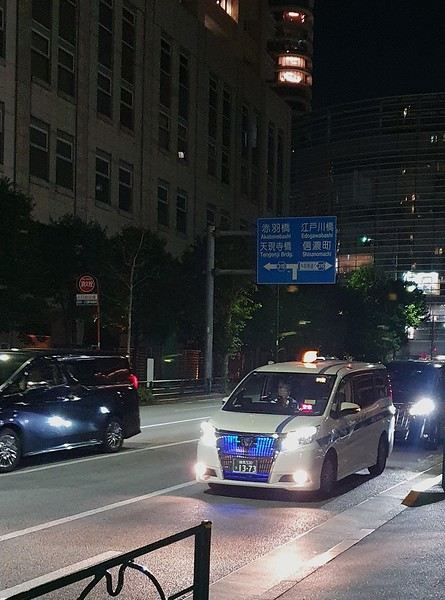
I had planned this entire trip back in November 2020, but given the health situation at the time, I had to cancel...
Here’s the classic route we took:
We booked everything ourselves and got a regional pass for the area from Kyoto to Hiroshima. The hotels were reserved 3 months in advance on Book... and Agod... (1030 € for 2 people for 13 nights = 80 €/night). For the flight, we chose a Qatar Airways flight with a layover to break up the long journey (950 € per person). We also got a pass on the same site (Japan-Experience) to take the train connecting Narita Airport to Shibuya Station (the N'EX Narita Express). Since the airport is 75 km from central Tokyo, we opted for this mode of transport, even though there are cheaper alternatives. After reading various posts on VoyageForum, I understood how important it was to have a Welcome Suica card to pay for public transport (subway, tram, bus, boat throughout the country), and we were able to buy one at Narita Airport. It turned out to be super useful! After a long but smooth journey, we found ourselves at Narita Airport in the evening. Even though we had a pass for the Narita Express, we had to go to a counter to make a reservation for the train (mandatory). Then, once we arrived at Shibuya Station, we took the subway for 2 stops and finally reached our hotel, exhausted (Hotel Asia Center of Japan – 270 € for 3 nights with breakfast included).
Découverte des ethnies minoritaires dans le nord du Vietnam
Bonjour amis voyageurs,
Voilà déjà un mois que nous sommes rentrés de notre voyage dans le nord du Vietnam . Nous avons adoré ce voyage plein de découvertes et de rencontres.
Pour nous, ce furent nos premiers pas en Asie. Nous avions déjà voyagé aux USA, au Canada et à Cuba mais jamais sur ce continent. Alors cette année, on s’est lancé. Pourquoi le Vietnam ? Et bien parce que j’avais lu de magnifiques carnets concernant ce pays sur ce forum.
Cette année fut l’année des nouveautés car habituellement, je prépare nos voyages seule et nous partons en totale autonomie en voiture de location. Pour le Vietnam, la voiture de location n’est pas possible et faire un tel voyage en transport en commun me paraissait un peu compliqué. Du coup j’ai fait appel à une agence de Hanoï pour nous organiser ce voyage. Après avoir demandé des devis à trois agences, nous avons sélectionné Amica Travel qui nous a donc organisé ce voyage avec guide et chauffeur.
J’ai été immédiatement séduite par le côté rassurant de voyager de cette façon mais d’un autre côté, j’ai été aussi un peu (beaucoup) inquiète quant au fait d’être continuellement accompagnée d’une tierce personne.
En ce qui concerne le trajet, nous l’avons élaboré ensemble, l’organisatrice du voyage et moi-même. Après plusieurs mails échangés ainsi qu’ un contact téléphonique, nous sommes arrivées à ce parcours :
Les 2 premiers jours à Hanoï Jour 3 : Hanoï – Sapa Jour 4 : Sapa Jour 5 : Sapa – Bac Ha Jour 6 : Bac Ha Jour 7 : Bac Ha – Ha Giang Jour 8 : Ha Giang – Dong Van Jour 9 : Dong Van – Bao Lac Jour 10 : Bao Lac – Ba Be Jour 11 : Ba Be Jour 12 : Ba Be – Hanoï Jour 13 : Hanoï – Tam Coc Jour 14 : Tam Coc Jour 15 : Tam Coc – Baie de Lan Ha Jour 16 : Baie de Lan Ha – Cat Ba Jour 17 : Cat Ba Jour 18 : Cat Ba – Hanoï
Les hôtels ont été choisis et réservés par l’agence. Nous avons aussi passé 4 nuits chez l’habitant.
Lors de nos différents échanges, j’avais insisté pour avoir un voyage cool (pas de mode marathon) avec beaucoup d’arrêts photo, des randonnées ainsi que des rencontres avec la population. Nous avons été comblés.
Maintenant je vous emmène découvrir tout cela.
1er jour : mardi 30 avril : le départ
C'est donc le mardi 30 avril très tôt le matin que nous quittons la maison pour nous rendre à Bruxelles afin de prendre le TGV pour Paris.
Arrivés à Paris bien avant le décollage de notre avion nous avons tout le temps pour enregistrer nos bagages et manger un petit morceau. Comme nous n'avions pas pris les visas à l'avance, (nous les achèterons à l'aéroport de Hanoï), on nous demande de montrer notre lettre d'invitation. Pas de problème, nous avons ce qu'il faut.
Nous embarquons donc dans un avion de la compagnie Vietnam Airlines et celui-ci décolle bien à l'heure.
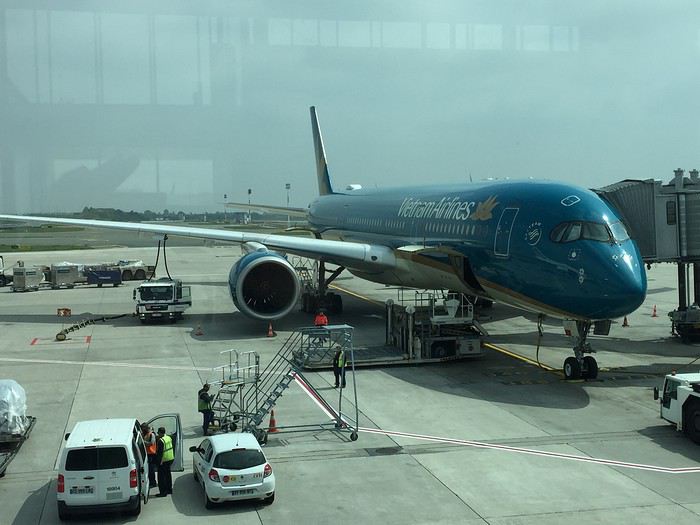
Après un vol parfait de 11 heures nous atterrissons à Hanoï sous un ciel très gris et même pluvieux. La première chose à faire avant de passer la douane est d'aller chercher le visa. Tout va très vite car nous avions déjà rempli les papiers chez nous à la maison. Nous le payons en euros sans problème et nous passons très vite le contrôle. Il nous reste à aller chercher nos bagages. C'est toujours une étape un peu stressante d'autant plus que nos sacs se font un peu attendre. Heureusement, les deux sacs sont enfin là, les vacances peuvent commencer. Avant de sortir de l'aéroport nous passons par le bureau de change afin de changer quelques euros en dongs. Et nous voilà tout à coup millionnaires.
Notre chauffeur est là. Il nous attend avec une pancarte sur laquelle nous lisons notre nom. Comme c'est agréable de se savoir attendus. Pas besoin de chercher un taxi ou autre moyen de transport. Nous apprécions déjà le confort de voyager par agence.
2eme jour : mercredi 1er mai : arrivée à Hanoï
Nous sommes déjà le 2eme jour. Et oui, avec le décalage horaire nous devons avancer nos montres de 5 heures. Nous embarquons avec notre chauffeur direction Hanoï. Nous en avons pour plus ou moins 45 minutes de route avant d'arriver à l'hôtel. Mais à notre grande surprise, nous allons faire une halte dans la ville de Hanoï pour une séance de spa. Je savais que nous irions au spa, cela était bien indiqué dans notre programme mais je pensais que ce serait à l'hôtel. Mais en fait non, c'est dans un institut dans la ville de Hanoï. Ok, cela va nous faire du bien après un voyage quand même un peu fatiguant mais je ne suis pas vraiment à l'aise. En effet, après 11 heures de vol sans possibilité, évidemment, de prendre une douche, je me dis que l'on ne doit plus être très frais. Et bien tant pis, allons -y Heureusement, nous avons quand même la possibilité de nous laver les pieds. C'est déjà ça ! Nous allons ensuite en cabine et c'est parti pour une heure de massage. Un délice, ça dénoue les muscles crispés par ce long trajet. Notre voyage commence bien.
Après cet agréable intermède, notre chauffeur nous amène à l'hôtel. Il est encore tôt et évidemment la chambre n'est pas prête. Elle le sera seulement dans l'après-midi. Ce n'est pas trop grave. Nous pouvons aller nous doucher au spa de l'hôtel et enfiler une tenue plus confortable pour commencer à découvrir la ville de Hanoï. Pour nos deux jours dans la capitale ce sera sans guide. Nous avons hâte de découvrir cette ville millénaire.
Notre hôtel se trouve à quelques minutes à pied du lac Hoan Kiem. Ce lac est situé au cœur de la capitale mais reste un véritable havre de paix à l'abri du tumulte de la ville bien que ses rives sont assez fréquentées par les locaux ainsi que par les touristes. Au sud du lac nous apercevons l'îlot de la tortue
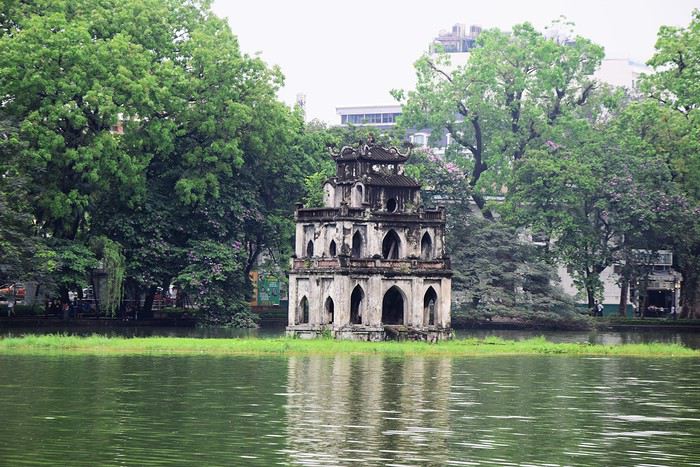
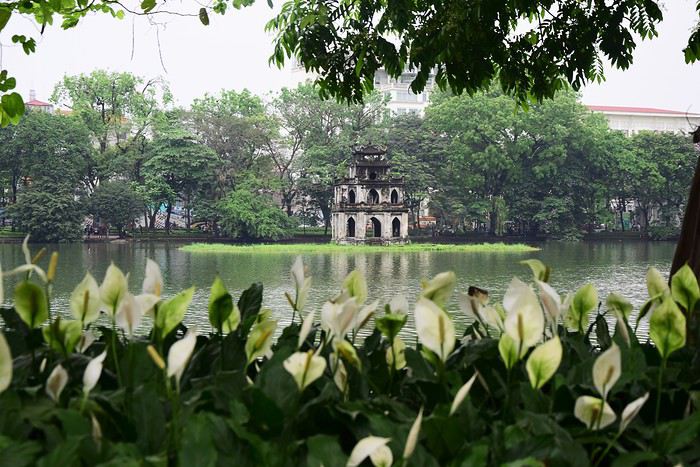
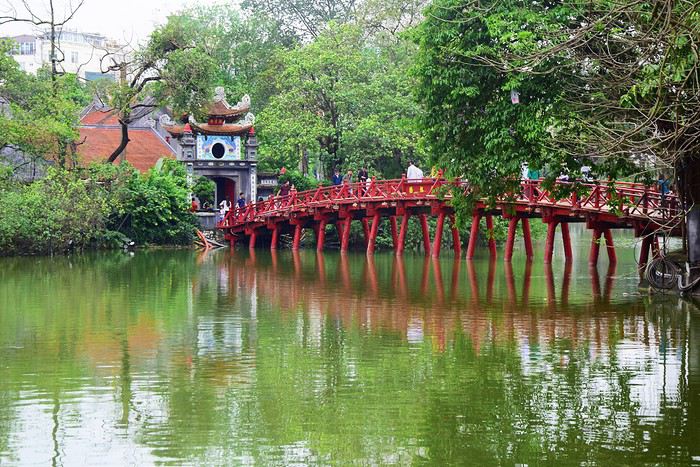
Nous continuons à longer le lac pour arriver au niveau du second îlot appelé îlot de jade sur lequel se dresse le temple Ngoc Son . Pour y accéder nous devons emprunter le pont the Huc . Un joli pont de bois peint en rouge qui contraste merveilleusement bien avec les eaux vertes du lac.
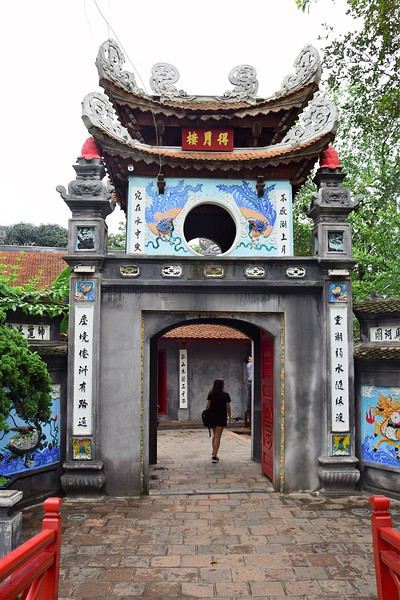
Nous décidons de visiter ce temple bien que ce soit bondé. Voici l'entrée du temple juste après le pont
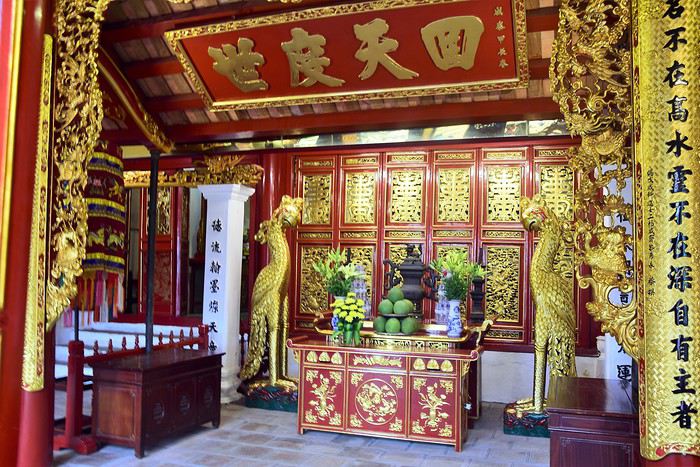
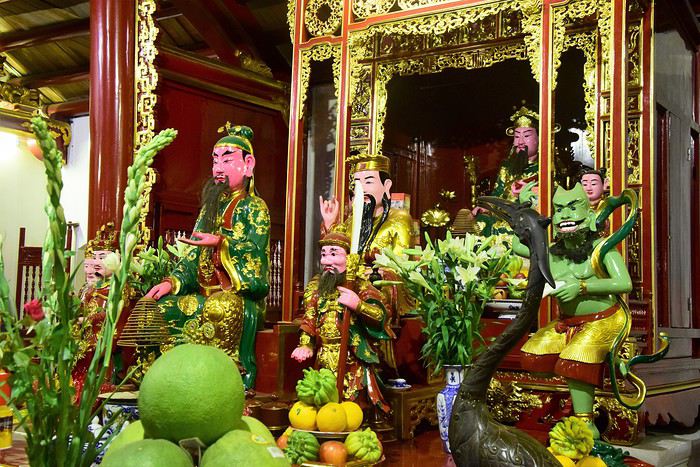
Des autels du temple
De très jolis bonzaïs ornent les espaces extérieurs du temple
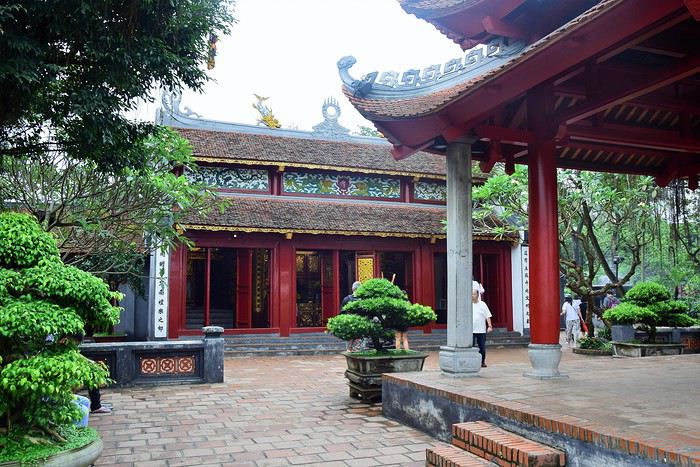
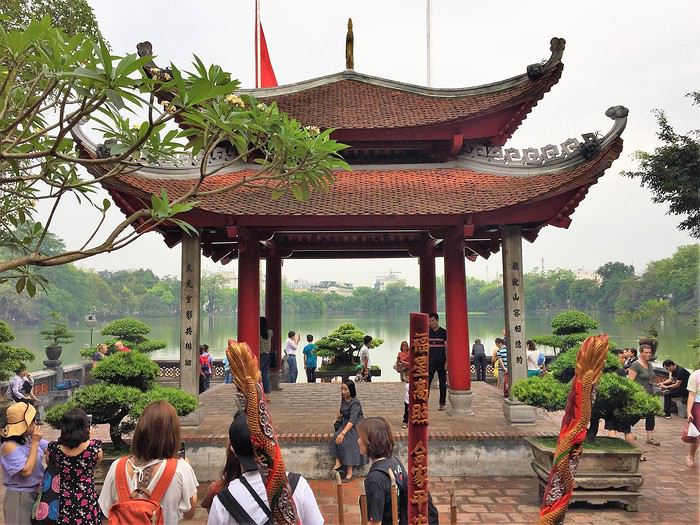
Nous ne nous attardons pas trop car il y a vraiment beaucoup de monde et nous avons hâte de découvrir le vieux quartier de Hanoï qui se trouve à deux pas d'ici. Ce quartier est le cœur historique de la ville et est très animé.
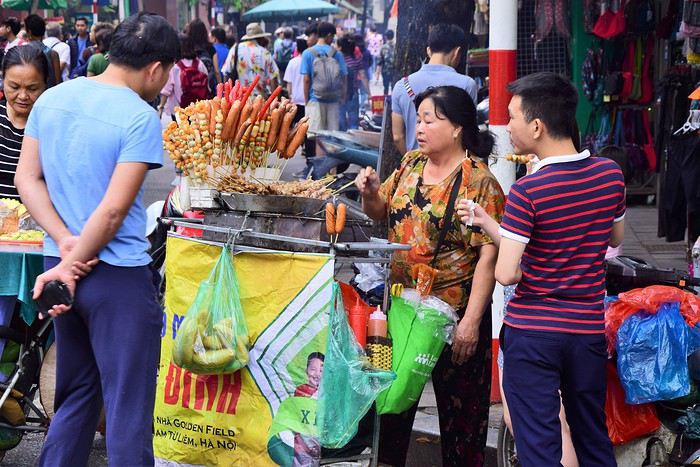
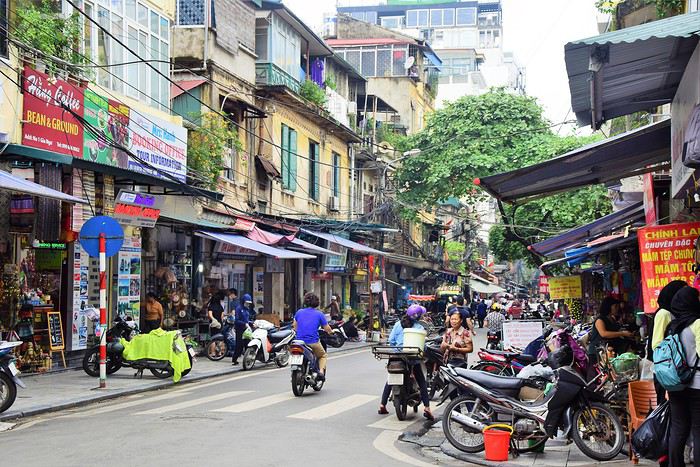
On l’appelle aussi le quartier des 36 corporations car il est composé de rues ayant chacune sa spécialité comme la rue de la chaussure ou la rue de la mercerie.
Pour bien s'imprégner de cette ambiance si particulière nous nous perdons dans les ruelles de ce labyrinthe. Se perdre est un grand mot car nous avons tout de même un plan et nous suivons le tracé d'une promenade proposée dans un guide touristique.
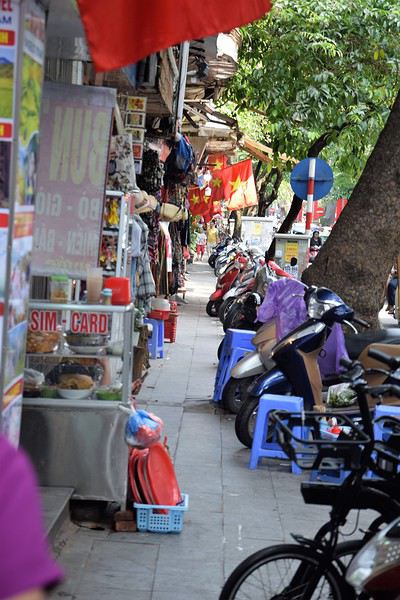
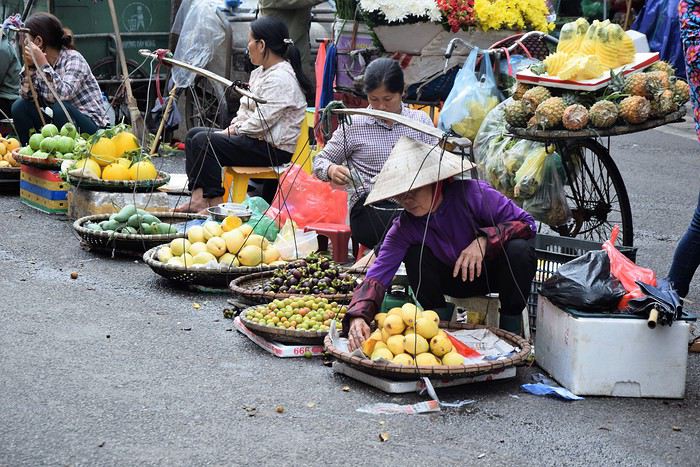
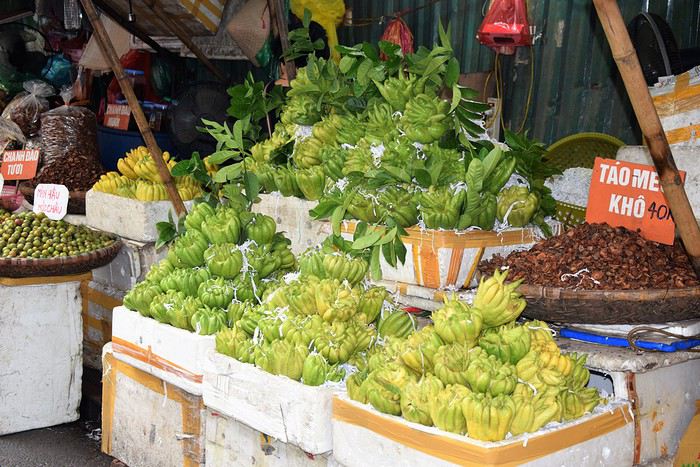
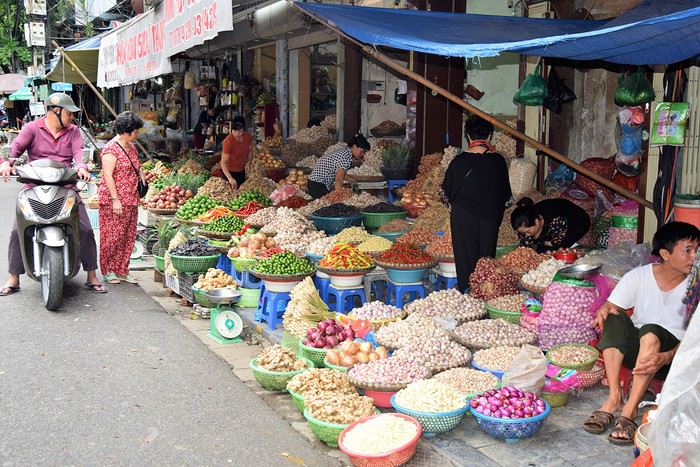
Après seulement quelques pas dans ce quartier je me sens emportée dans un tourbillon de couleurs et d'agitation. Je reste là époustouflée à regarder les gens vivre. Une femme essaye de nous vendre des beignets, une autre tente de nous mettre une palanche sur les épaules puis c'est un autre qui nous interpelle pour un tour en cyclo pousse. Ça fourmille de partout, ça grouille, ça bouge, ça crie, ça klaxonne. La vie est omniprésente, dans les artères principales mais aussi dans les ruelles plus sombres. Je suis étourdie par la frénésie de la ville Les restaurants occupent les trottoirs, les mobylettes aussi. La plupart du temps d’ailleurs le trottoir est inaccessible. Il faut marcher dans la rue.
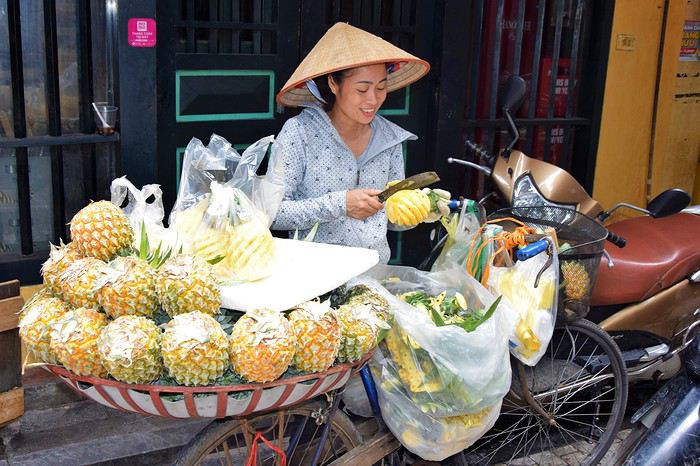
Ici, c'est la jolie vendeuse d'ananas qui occupe la place.
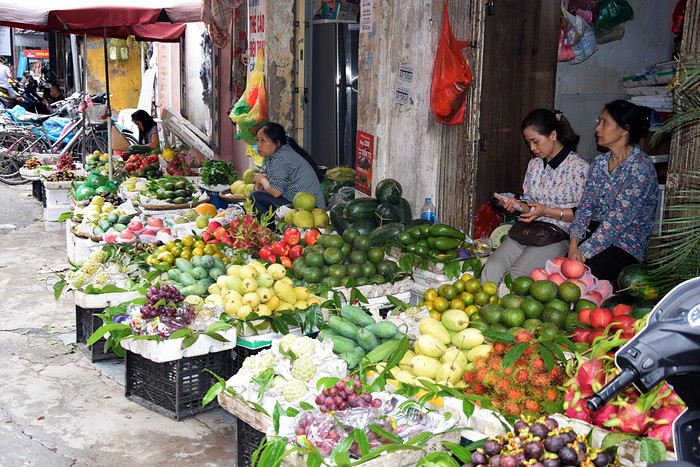
Les artisans travaillent ou vendent dans la rue
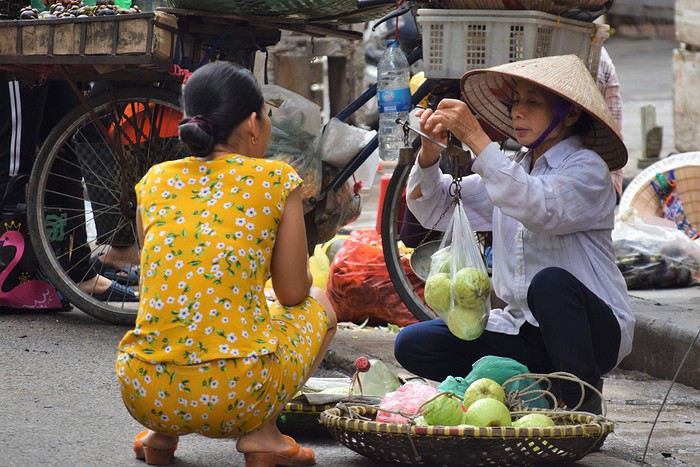
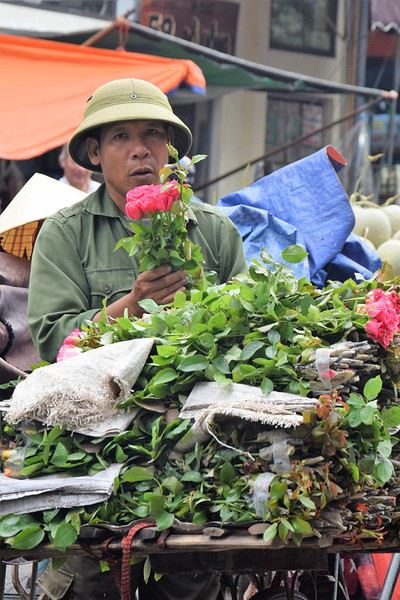
Le marchand de fleurs me regarde, espère peut-être vendre un bouquet.
Voilà déjà un mois que nous sommes rentrés de notre voyage dans le nord du Vietnam . Nous avons adoré ce voyage plein de découvertes et de rencontres.
Pour nous, ce furent nos premiers pas en Asie. Nous avions déjà voyagé aux USA, au Canada et à Cuba mais jamais sur ce continent. Alors cette année, on s’est lancé. Pourquoi le Vietnam ? Et bien parce que j’avais lu de magnifiques carnets concernant ce pays sur ce forum.
Cette année fut l’année des nouveautés car habituellement, je prépare nos voyages seule et nous partons en totale autonomie en voiture de location. Pour le Vietnam, la voiture de location n’est pas possible et faire un tel voyage en transport en commun me paraissait un peu compliqué. Du coup j’ai fait appel à une agence de Hanoï pour nous organiser ce voyage. Après avoir demandé des devis à trois agences, nous avons sélectionné Amica Travel qui nous a donc organisé ce voyage avec guide et chauffeur.
J’ai été immédiatement séduite par le côté rassurant de voyager de cette façon mais d’un autre côté, j’ai été aussi un peu (beaucoup) inquiète quant au fait d’être continuellement accompagnée d’une tierce personne.
En ce qui concerne le trajet, nous l’avons élaboré ensemble, l’organisatrice du voyage et moi-même. Après plusieurs mails échangés ainsi qu’ un contact téléphonique, nous sommes arrivées à ce parcours :
Les 2 premiers jours à Hanoï Jour 3 : Hanoï – Sapa Jour 4 : Sapa Jour 5 : Sapa – Bac Ha Jour 6 : Bac Ha Jour 7 : Bac Ha – Ha Giang Jour 8 : Ha Giang – Dong Van Jour 9 : Dong Van – Bao Lac Jour 10 : Bao Lac – Ba Be Jour 11 : Ba Be Jour 12 : Ba Be – Hanoï Jour 13 : Hanoï – Tam Coc Jour 14 : Tam Coc Jour 15 : Tam Coc – Baie de Lan Ha Jour 16 : Baie de Lan Ha – Cat Ba Jour 17 : Cat Ba Jour 18 : Cat Ba – Hanoï
Les hôtels ont été choisis et réservés par l’agence. Nous avons aussi passé 4 nuits chez l’habitant.
Lors de nos différents échanges, j’avais insisté pour avoir un voyage cool (pas de mode marathon) avec beaucoup d’arrêts photo, des randonnées ainsi que des rencontres avec la population. Nous avons été comblés.
Maintenant je vous emmène découvrir tout cela.
1er jour : mardi 30 avril : le départ
C'est donc le mardi 30 avril très tôt le matin que nous quittons la maison pour nous rendre à Bruxelles afin de prendre le TGV pour Paris.
Arrivés à Paris bien avant le décollage de notre avion nous avons tout le temps pour enregistrer nos bagages et manger un petit morceau. Comme nous n'avions pas pris les visas à l'avance, (nous les achèterons à l'aéroport de Hanoï), on nous demande de montrer notre lettre d'invitation. Pas de problème, nous avons ce qu'il faut.
Nous embarquons donc dans un avion de la compagnie Vietnam Airlines et celui-ci décolle bien à l'heure.
Après un vol parfait de 11 heures nous atterrissons à Hanoï sous un ciel très gris et même pluvieux. La première chose à faire avant de passer la douane est d'aller chercher le visa. Tout va très vite car nous avions déjà rempli les papiers chez nous à la maison. Nous le payons en euros sans problème et nous passons très vite le contrôle. Il nous reste à aller chercher nos bagages. C'est toujours une étape un peu stressante d'autant plus que nos sacs se font un peu attendre. Heureusement, les deux sacs sont enfin là, les vacances peuvent commencer. Avant de sortir de l'aéroport nous passons par le bureau de change afin de changer quelques euros en dongs. Et nous voilà tout à coup millionnaires.
Notre chauffeur est là. Il nous attend avec une pancarte sur laquelle nous lisons notre nom. Comme c'est agréable de se savoir attendus. Pas besoin de chercher un taxi ou autre moyen de transport. Nous apprécions déjà le confort de voyager par agence.
2eme jour : mercredi 1er mai : arrivée à Hanoï
Nous sommes déjà le 2eme jour. Et oui, avec le décalage horaire nous devons avancer nos montres de 5 heures. Nous embarquons avec notre chauffeur direction Hanoï. Nous en avons pour plus ou moins 45 minutes de route avant d'arriver à l'hôtel. Mais à notre grande surprise, nous allons faire une halte dans la ville de Hanoï pour une séance de spa. Je savais que nous irions au spa, cela était bien indiqué dans notre programme mais je pensais que ce serait à l'hôtel. Mais en fait non, c'est dans un institut dans la ville de Hanoï. Ok, cela va nous faire du bien après un voyage quand même un peu fatiguant mais je ne suis pas vraiment à l'aise. En effet, après 11 heures de vol sans possibilité, évidemment, de prendre une douche, je me dis que l'on ne doit plus être très frais. Et bien tant pis, allons -y Heureusement, nous avons quand même la possibilité de nous laver les pieds. C'est déjà ça ! Nous allons ensuite en cabine et c'est parti pour une heure de massage. Un délice, ça dénoue les muscles crispés par ce long trajet. Notre voyage commence bien.
Après cet agréable intermède, notre chauffeur nous amène à l'hôtel. Il est encore tôt et évidemment la chambre n'est pas prête. Elle le sera seulement dans l'après-midi. Ce n'est pas trop grave. Nous pouvons aller nous doucher au spa de l'hôtel et enfiler une tenue plus confortable pour commencer à découvrir la ville de Hanoï. Pour nos deux jours dans la capitale ce sera sans guide. Nous avons hâte de découvrir cette ville millénaire.
Notre hôtel se trouve à quelques minutes à pied du lac Hoan Kiem. Ce lac est situé au cœur de la capitale mais reste un véritable havre de paix à l'abri du tumulte de la ville bien que ses rives sont assez fréquentées par les locaux ainsi que par les touristes. Au sud du lac nous apercevons l'îlot de la tortue
Nous continuons à longer le lac pour arriver au niveau du second îlot appelé îlot de jade sur lequel se dresse le temple Ngoc Son . Pour y accéder nous devons emprunter le pont the Huc . Un joli pont de bois peint en rouge qui contraste merveilleusement bien avec les eaux vertes du lac.
Nous décidons de visiter ce temple bien que ce soit bondé. Voici l'entrée du temple juste après le pont
Des autels du temple
De très jolis bonzaïs ornent les espaces extérieurs du temple
Nous ne nous attardons pas trop car il y a vraiment beaucoup de monde et nous avons hâte de découvrir le vieux quartier de Hanoï qui se trouve à deux pas d'ici. Ce quartier est le cœur historique de la ville et est très animé.
On l’appelle aussi le quartier des 36 corporations car il est composé de rues ayant chacune sa spécialité comme la rue de la chaussure ou la rue de la mercerie.
Pour bien s'imprégner de cette ambiance si particulière nous nous perdons dans les ruelles de ce labyrinthe. Se perdre est un grand mot car nous avons tout de même un plan et nous suivons le tracé d'une promenade proposée dans un guide touristique.
Après seulement quelques pas dans ce quartier je me sens emportée dans un tourbillon de couleurs et d'agitation. Je reste là époustouflée à regarder les gens vivre. Une femme essaye de nous vendre des beignets, une autre tente de nous mettre une palanche sur les épaules puis c'est un autre qui nous interpelle pour un tour en cyclo pousse. Ça fourmille de partout, ça grouille, ça bouge, ça crie, ça klaxonne. La vie est omniprésente, dans les artères principales mais aussi dans les ruelles plus sombres. Je suis étourdie par la frénésie de la ville Les restaurants occupent les trottoirs, les mobylettes aussi. La plupart du temps d’ailleurs le trottoir est inaccessible. Il faut marcher dans la rue.
Ici, c'est la jolie vendeuse d'ananas qui occupe la place.
Les artisans travaillent ou vendent dans la rue
Le marchand de fleurs me regarde, espère peut-être vendre un bouquet.
Guatemala hors des sentiers battus (avec enfants)
Bonjour,
Les images et les récits sur cette merveilleuse terre qui est le Guatemala nous ont convaincus d'acheter des billets d'avions. Nous partons, mon conjoint, mes deux filles (11 et 9 ans) et moi pour un beau 3 semaines en sac à dos au mois août. Nos besoins et nos envies pour ce voyage sont de vivre des choses authentiques avec la population locales et de sortir des sentiers battus.
Le but de se message est de recueillir vos suggestions et recommandations. Je ne suis aucunement fermée à vos suggestions touristiques qui valent le détour, je vais noter tout tout tout, mais mentionnez moi aussi les petits endroits purs et merveilleux qui vous ont mis la larme à l'œil ou qui vous ont réellement donné le pouls du pays.
Aussi, est-ce que vous avez des recommandations coup de cœur pour les passer là nuits? (environ 175 GTQ) Des restos/cantines/marchés/bouffe de rue? Notez que nous cherchons aucunement des endroits luxueux.
A la suite de plusieurs lectures, semble-t-il qu'il est fortement recommandé d'être accompagné d'un guide pour certains endroits. A quels endroits est-ce nécessaire pour notre sécurité? Avez-vous des références de guides qui se débrouillent en français?
En terminant, chers complices, quelqu'un d'entre vous a louer une voiture? Est-ce recommandable? État des routes, barrages, sécurité ( et oui, encore elle!)...
Merci à tous et au plaisir de vous lire.
Partis avec des à-priori mais revenus enchantés du Vietnam
ITINERAIRE
Bonjour, Comme dit dans le titre , c'est un pays que j'appréhendais pas mal , à cause de lectures relatant des déconvenues et arnaques. Mais finalement après avoir voyagé en Thailande , au Laos , au Cambodge et en Birmanie , on s'est décidé pour le Vietnam ...et on est revenus éblouis et ravis .
Voyage effectué du 8 mai au 7 juin dernier , à 2 couples de seniors . itinéraire :
- Vol Nantes- Bangkok via Amsterdam sur KLM ( 1 nuit à BKK) - Vol BKK- Hanoi avec air Asia ( 3 nuits à Hanoi) - Croisière en baie d'Halong ( 1 nuit sur la jonque ) - Tam Coc ( 3 nuits ) - Sapa ( 1 nuit ) - Bac Ha ( 2 nuits ) - Ha Giang ( 1 nuit ) - Dong Van ( 2 n ) - Bao Lac ( 1 n ) - Cao Bang ( 2 n ) - Hanoi ( 1 n ) - vol de Hanoi à Hué ( 2 n ) - Hoi An ( 3 n ) - plage de An Bang ( 4 n ) - Vol de danang à BKK ( 2 n ) Vol BKK- nantes via Amsterdam
Je peux évidemment détailler ce périple si de futurs voyageurs sont intéressés. J'ai tout organisé par moi-même pour l'essentiel . Larsay m'a aidée à trouver un véhicule avec chauffeur anglophone pour la boucle nord de 10 jours en partant de Tam Coc et en finissant à Hanoi . En ce moment , on est dans le tri des photos et des montages vidéos , ce qui nous permet de continuer visuellement ce magnifique voyage . la météo que j'appréhendais a été très favorable ....( très chaude même )
je suis donc prête à mon tour à aider des forumeurs intéressés.
Cordialement
à suivre éventuellement...
Sri Lanka ou Vietnam en été
bonjour
Nous partons avec nos 2 grands enfants 20 et 16 ans.(fin juillet début aout).
Il faut que j achète rapidement les billets.
Mais nous n arrivons pas a nous décider, a cette époque de mousson entre sri Lanka et Vietnam
Nous sommes déjà allé 2 fois en Thaïlande et au Cambodge.
Nous avons hâte de ressortir les sacs à dos
Merci
Christine
Agences de voyage locales du Vietnam, Laos et Cambodge
Je cherche des informations sur des agences locales de bonnes réputation au Vietnam, Laos et Cambodge. Merci pour vos conseils.
Mazarine🙂
Voyage seule au Guatamala, femme de 60 ans
bonjour, me débrouillant en espagnol étant une femme de 60 ans, j'ai l'habitude de voyager seule, mais est-ce que le Guatamala est risqué? J'ai déjà visité la Bolivie, le Pérou, le Chili et l'Argentine et j'ai l'habitude voyager en routarde.
Combien coute aussi la vie aussi, logement et nourriture.
Tout renseignements sont les bienvenues.
Hasta luego
martina