Discussions Musiquemusic took part in
14 results on this page.
More options
Search results
Itinerary in the works for 3 weeks in southern Chile and Argentina
Hi there,
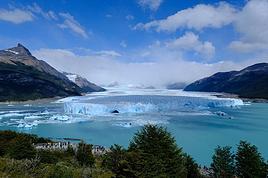
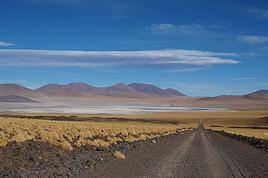
Three years after exploring northern Argentina and Chile, my two travel buddies and I want to discover the southern part of these two countries. We’re traveling on a budget, backpacker-style, favoring public transport and modest accommodations, but we don’t hesitate to splurge a little when it’s worth it. The classic spots that have been fueling our dreams: Bariloche, the lakes, Chiloé, El Chaltén, Torres del Paine, Perito Moreno, El Calafate, Fitz Roy, Ushuaia and Tierra del Fuego, and wrapping up in Valparaíso. We’ll take a round-trip flight to Santiago, then I’m thinking of a one-way flight from Santiago to Punta Arenas. From there, we’ll explore and do several day hikes in the south, including Ushuaia and, if possible, Tierra del Fuego. Then we’ll head back north by bus to Bariloche and the lakes, followed by Chiloé, then a bus to Santiago and Valparaíso. Based on your experience, could you help me figure out the best way to structure this trip and maybe suggest some ideas? Thanks in advance. Didier
Three years after exploring northern Argentina and Chile, my two travel buddies and I want to discover the southern part of these two countries. We’re traveling on a budget, backpacker-style, favoring public transport and modest accommodations, but we don’t hesitate to splurge a little when it’s worth it. The classic spots that have been fueling our dreams: Bariloche, the lakes, Chiloé, El Chaltén, Torres del Paine, Perito Moreno, El Calafate, Fitz Roy, Ushuaia and Tierra del Fuego, and wrapping up in Valparaíso. We’ll take a round-trip flight to Santiago, then I’m thinking of a one-way flight from Santiago to Punta Arenas. From there, we’ll explore and do several day hikes in the south, including Ushuaia and, if possible, Tierra del Fuego. Then we’ll head back north by bus to Bariloche and the lakes, followed by Chiloé, then a bus to Santiago and Valparaíso. Based on your experience, could you help me figure out the best way to structure this trip and maybe suggest some ideas? Thanks in advance. Didier
In Memory of Jamie Muir (1942–2025)
Musician, monk, painter: The metamorphoses of Jamie Muir
James David "Jamie" Muir, a talented drummer and percussionist and brief member of King Crimson, who left the world of pop music and show business to retreat to a Buddhist monastery in Scotland before dedicating himself almost entirely to painting, passed away last year at the age of 81. His artwork was recently featured in two exhibitions in Cornwall and London...
Born in Edinburgh, Scotland, in 1942, Jamie Muir attended the College of Art there in the 1960s. Early on, he was drawn to jazz.
Later settling in London, Jamie Muir played jazz trombone before turning to percussion. Influenced by American drummers like Tony Williams, Kenny Clarke, and Milford Graves, as well as musicians such as Pharoah Sanders and Albert Ayler, he gravitated toward free music, meaning improvisation. It was during this time that he began assembling an arsenal of household objects he later used alongside his standard drum kit: rattles, whistles, horns, chimes, bells, gongs, sheets of metal, shakers, drums, and plastic bottles.
After a brief stint in a multimedia group, Jamie Muir worked with choreographer Lindsay Kemp (as did David Bowie), played music in the short-lived jazz-rock group Sunship (with guitarist Allan Holdsworth, formerly of Soft Machine), and became involved in the ensemble known as The Music Improvisation Society, with Derek Bailey, Hugh Davies, and Evan Parker between 1968 and 1971. The Music Improvisation Society recorded an album for the ECM label in 1971 (never reissued on CD except in Japan) and a posthumous album (1968–71). Both records gained a cult following among fans of experimental and improvised music. After this experience, Muir played in Pete Brown’s Battered Ornaments and then in the band Boris with Jamie Peters, Don Weller, and former Colosseum member Jim Roache. He also briefly joined Assagai, an Afro-rock group featuring South African and Nigerian musicians from the legendary South African band Blue Notes (including drummer Louis Moholo, saxophonist Dudu Pukwana, and trumpeter/flutist Mongezi Feza).
In the summer of 1972, Robert Fripp, leader and guitarist of King Crimson, whom a journalist from *Melody Maker* had suggested meet this percussionist from the English experimental scene, invited Jamie Muir to join the new King Crimson lineup he was assembling: Robert Fripp (guitar, mellotron), David Cross (violin), John Wetton (bass), Bill Bruford (drums), and Jamie Muir (percussion). "King Crimson was the ideal for me because it was a rock band that had more than three brain cells. I was very much more an instrumental style of musician rather than being song-based, and there weren’t many other bands that I would have been any good in. I was extremely pleased and felt completely at home with Crimson." Once formed, the new group honed their sound on stage from early October to mid-December 1972 (see the 1972 live albums in the discography below), before recording the album Larks’ Tongues in Aspic in early 1973. A grand album, one of the band’s best, and one of the best of the 1970s.
However, after a concert at the Marquee Club in London, Jamie Muir left not only the band but also the music world entirely, with immediate effect. During the six months Muir spent with King Crimson, his presence completely upended the group’s philosophy, loosening the notoriously strict rules imposed by Fripp and pushing the boundaries of improvisation. Jamie Muir’s contribution—clearly heard on Larks’ Tongues in Aspic—was to introduce a touch of anarchy into Robert Fripp’s music, which was usually so tight, rational, and meticulously structured.
Muir returned to Scotland, to the Samye Ling Monastery near Eskdalemuir in Dumfries and Galloway (in the south), where he spent several years as a Buddhist monk, the pleasures of his former life giving way to retreat and meditation.
Muir came back to London and music in the 1980s, playing and recording with Derek Bailey and Evan Parker from the Music Improvisation Company, as well as with former King Crimson member Michael Giles on the soundtrack for the independent British film Ghost Dance (1983).
In 1990, Muir left music behind once more and increasingly devoted himself to painting, a discipline he maintained until his death. In his later years, he began exploring digital art as another form of expression.
In recent years, he lived in Penzance, Cornwall, where he passed away in February 2025.
Hery
Discography:
A. Jamie Muir with King Crimson: • Larks’ Tongues In Aspic (1973) • Larks’ Tongues In Aspic (The Complete Recordings) (2023, 4 CDs) • Cosmic Muir (1998, Japan, unofficial release) • The Beat Club Bremen 1972 (1999) • Live at the Zoom Club Frankfurt, Germany (October 13, 1972) (2002, 2 CDs) • Live in Guildford (November 13, 1972) (2003) • Live in Newcastle (December 8, 1972) (2019, mono) B. Jamie Muir and other projects: • The Music Improvisation Company: The Music Improvisation Company (1970) • The Music Improvisation Company: 1968–1971 (1976) • Derek Bailey / Jamie Muir: Dart Drug (1981) • Michael Giles / Jamie Muir / David Cunningham: Ghost Dance (1996) • Evan Parker / Jamie Muir / Paul Rodgers: The Ayes Have It (2001)
Links:
https://www.jamiemuirart.com/
https://www.youtube.com/watch?v=eDyf0ofV5n4 (King Crimson: "Larks' Tongues in Aspic") https://www.youtube.com/watch?v=ZgoKT8hEBFQ&list=RDJ2FjbpvX8dA&index=2 (Michael Giles, Jamie Muir, David Cunningham)
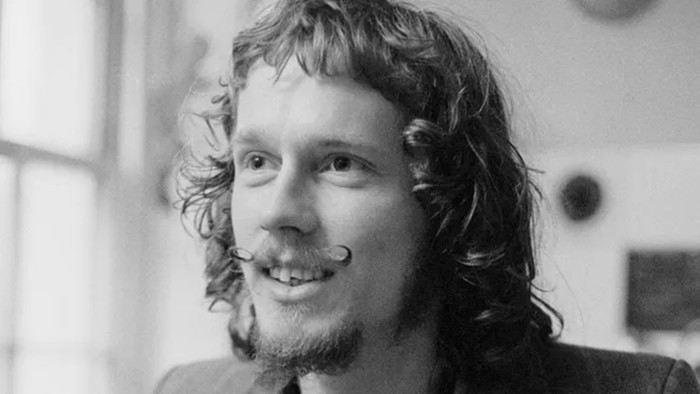 The musician
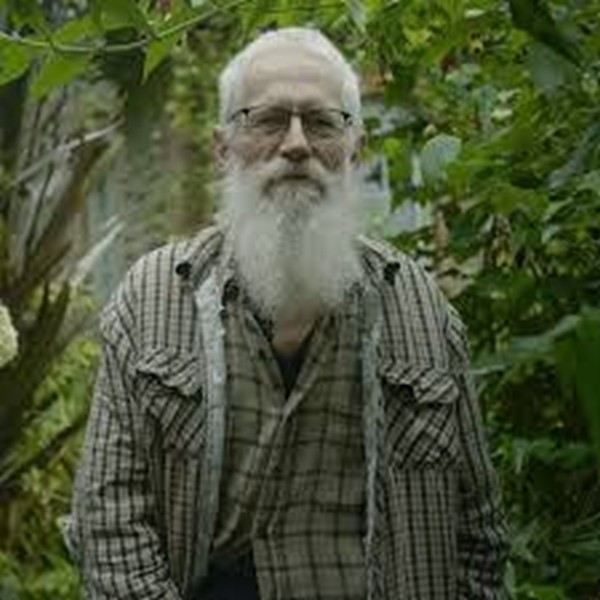 The painter
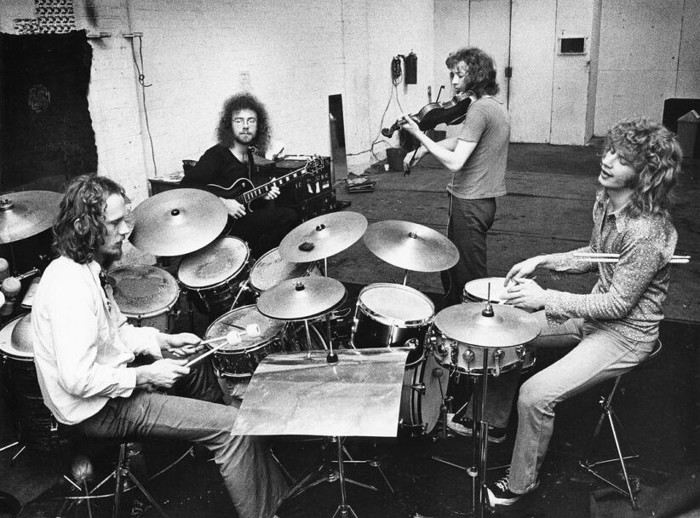 The band (l. to r.: Muir, Fripp, Cross, Bruford)
James David "Jamie" Muir, a talented drummer and percussionist and brief member of King Crimson, who left the world of pop music and show business to retreat to a Buddhist monastery in Scotland before dedicating himself almost entirely to painting, passed away last year at the age of 81. His artwork was recently featured in two exhibitions in Cornwall and London...
Born in Edinburgh, Scotland, in 1942, Jamie Muir attended the College of Art there in the 1960s. Early on, he was drawn to jazz.
Later settling in London, Jamie Muir played jazz trombone before turning to percussion. Influenced by American drummers like Tony Williams, Kenny Clarke, and Milford Graves, as well as musicians such as Pharoah Sanders and Albert Ayler, he gravitated toward free music, meaning improvisation. It was during this time that he began assembling an arsenal of household objects he later used alongside his standard drum kit: rattles, whistles, horns, chimes, bells, gongs, sheets of metal, shakers, drums, and plastic bottles.
After a brief stint in a multimedia group, Jamie Muir worked with choreographer Lindsay Kemp (as did David Bowie), played music in the short-lived jazz-rock group Sunship (with guitarist Allan Holdsworth, formerly of Soft Machine), and became involved in the ensemble known as The Music Improvisation Society, with Derek Bailey, Hugh Davies, and Evan Parker between 1968 and 1971. The Music Improvisation Society recorded an album for the ECM label in 1971 (never reissued on CD except in Japan) and a posthumous album (1968–71). Both records gained a cult following among fans of experimental and improvised music. After this experience, Muir played in Pete Brown’s Battered Ornaments and then in the band Boris with Jamie Peters, Don Weller, and former Colosseum member Jim Roache. He also briefly joined Assagai, an Afro-rock group featuring South African and Nigerian musicians from the legendary South African band Blue Notes (including drummer Louis Moholo, saxophonist Dudu Pukwana, and trumpeter/flutist Mongezi Feza).
In the summer of 1972, Robert Fripp, leader and guitarist of King Crimson, whom a journalist from *Melody Maker* had suggested meet this percussionist from the English experimental scene, invited Jamie Muir to join the new King Crimson lineup he was assembling: Robert Fripp (guitar, mellotron), David Cross (violin), John Wetton (bass), Bill Bruford (drums), and Jamie Muir (percussion). "King Crimson was the ideal for me because it was a rock band that had more than three brain cells. I was very much more an instrumental style of musician rather than being song-based, and there weren’t many other bands that I would have been any good in. I was extremely pleased and felt completely at home with Crimson." Once formed, the new group honed their sound on stage from early October to mid-December 1972 (see the 1972 live albums in the discography below), before recording the album Larks’ Tongues in Aspic in early 1973. A grand album, one of the band’s best, and one of the best of the 1970s.
However, after a concert at the Marquee Club in London, Jamie Muir left not only the band but also the music world entirely, with immediate effect. During the six months Muir spent with King Crimson, his presence completely upended the group’s philosophy, loosening the notoriously strict rules imposed by Fripp and pushing the boundaries of improvisation. Jamie Muir’s contribution—clearly heard on Larks’ Tongues in Aspic—was to introduce a touch of anarchy into Robert Fripp’s music, which was usually so tight, rational, and meticulously structured.
Muir returned to Scotland, to the Samye Ling Monastery near Eskdalemuir in Dumfries and Galloway (in the south), where he spent several years as a Buddhist monk, the pleasures of his former life giving way to retreat and meditation.
Muir came back to London and music in the 1980s, playing and recording with Derek Bailey and Evan Parker from the Music Improvisation Company, as well as with former King Crimson member Michael Giles on the soundtrack for the independent British film Ghost Dance (1983).
In 1990, Muir left music behind once more and increasingly devoted himself to painting, a discipline he maintained until his death. In his later years, he began exploring digital art as another form of expression.
In recent years, he lived in Penzance, Cornwall, where he passed away in February 2025.
Hery
Discography:
A. Jamie Muir with King Crimson: • Larks’ Tongues In Aspic (1973) • Larks’ Tongues In Aspic (The Complete Recordings) (2023, 4 CDs) • Cosmic Muir (1998, Japan, unofficial release) • The Beat Club Bremen 1972 (1999) • Live at the Zoom Club Frankfurt, Germany (October 13, 1972) (2002, 2 CDs) • Live in Guildford (November 13, 1972) (2003) • Live in Newcastle (December 8, 1972) (2019, mono) B. Jamie Muir and other projects: • The Music Improvisation Company: The Music Improvisation Company (1970) • The Music Improvisation Company: 1968–1971 (1976) • Derek Bailey / Jamie Muir: Dart Drug (1981) • Michael Giles / Jamie Muir / David Cunningham: Ghost Dance (1996) • Evan Parker / Jamie Muir / Paul Rodgers: The Ayes Have It (2001)
Links:
https://www.jamiemuirart.com/
https://www.youtube.com/watch?v=eDyf0ofV5n4 (King Crimson: "Larks' Tongues in Aspic") https://www.youtube.com/watch?v=ZgoKT8hEBFQ&list=RDJ2FjbpvX8dA&index=2 (Michael Giles, Jamie Muir, David Cunningham)
The musician
The painter
The band (l. to r.: Muir, Fripp, Cross, Bruford)What are your recommendations for things to see in Copenhagen?
hi
I’ll be in Copenhagen this coming May for a few days.
Do you have any recommendations for things to visit?
If I had to pick one castle to visit, which one would it be?
I’m torn between: Rosenborg Castle, Amalienborg Palace, or Frederiksborg and Charlottenborg Palaces
Any suggestions?
Thanks
I’ll be in Copenhagen this coming May for a few days.
Do you have any recommendations for things to visit?
If I had to pick one castle to visit, which one would it be?
I’m torn between: Rosenborg Castle, Amalienborg Palace, or Frederiksborg and Charlottenborg Palaces
Any suggestions?
Thanks
5 weeks to tour Scandinavia: what are the best routes and tips?
Hi there,
We’re planning to tour Scandinavia by camper van—Denmark, Sweden, Finland, and Norway (in that order)—for 5 weeks from late May to late June 2026.
I’ve done it before, but that was way back in 1980 😎 and by hitchhiking!
We’d love to hear from anyone who’s done this trip about the best routes, great tips, must-know advice, and what to do or avoid (ferries, campsites, etc.).
Thanks in advance!
Actor Robert REDFORD has passed away.
Hello,
In 1985, the film "Out of Africa" was released, which inspired me to visit Kenya for the first time a year later. My passion for animals in their wild and natural habitat, and thus for safaris, was born while watching this film and appreciating Robert REDFORD’s acting.
Of course, the film’s director and Meryl STREEP also contributed greatly to this wonderful movie.....
In a way, I owe him this passion, and I thank him for it. Sometimes, during safaris, when we had our breakfasts in the middle of nature, in one reserve or another in Kenya or Tanzania, I often thought of him.
May he rest in peace, far from our world of madness. Thank you for EVERYTHING, Mr. REDFORD.
( In three weeks in Kenya, I think I’ll often be thinking of him....... )
...
Hitchhiking in the 70s-80s
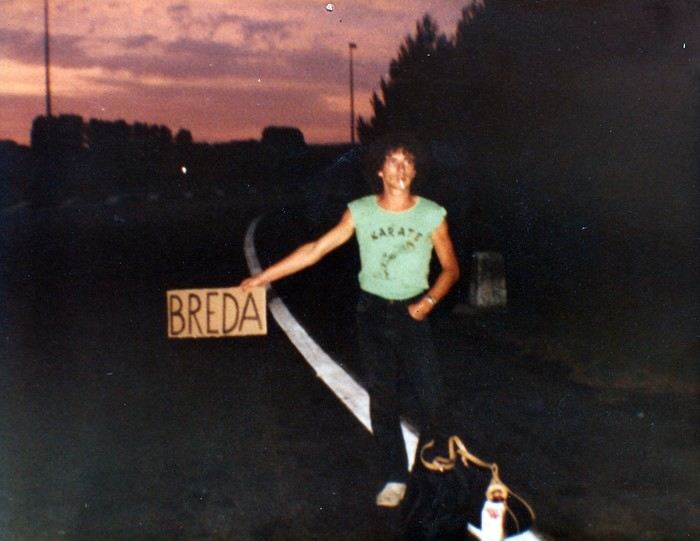
“Hey, your Marker... - My Marker? - The one you used to make hitchhiking signs.”
The marker in question is sitting proudly on the kitchen table. Marielle found it at the bottom of a moving box.
I’ve been meaning to tell the long story of my love affair with hitchhiking for years. Here we go.
To be honest, I’m not quite sure when it started. My earliest memory goes back to a fair with a bike race in my maternal grandparents’ village. I was with my cousin, my little sister, and three girl cousins. There were six of us, ages ranging from six or seven to thirteen or fourteen. Our parents stayed at the fair, and we’d had enough. So we decided to walk home. Only it was four kilometers away. So we hitchhiked. A guy driving an old car picked us all up and dropped us off at the farm. He probably found it amusing to see us thumbing a ride by the side of the road, but maybe it also worried him a bit. With everything you read in the papers...
Around fifteen or sixteen, I started hitchhiking regularly, alone or with a friend, to go to the nearby town. But it was especially when I started boarding school in Orléans that it became more regular. The first year, I’d leave Monday morning and come back Saturday noon by bus. It was an old, uncomfortable bus where we froze in winter. To make matters worse, I often got motion sickness if, as was too often the case, I ended up sitting in the back. In the spring, a high school friend suggested I hitchhike back. It meant a slight detour, but the advantage was taking only national roads.
So that’s how, from the end of tenth grade to twelfth grade, I’d thumb a ride every Saturday on the Pont de Bourgogne. Drivers were used to seeing young people hitchhiking, and it worked pretty well. Our biggest fear? Soldiers! At that time, military service was still mandatory, and on weekends, it wasn’t rare to see them competing with us. They’d keep their uniforms on to go home. That gave people confidence—with everything you read in the papers—and they’d rarely wait more than five minutes. We, with our long hair, were definitely less popular. From time to time, three big red-faced guys in a van coming back from a construction site would flip us off, yelling things like “go get a haircut, you bums!” Those were the good old days.
We still had a good laugh, though. Patrice, the friend I’d hitchhike back from school with on Saturdays, is a musician—I’d later discover he’s an excellent composer. A die-hard Beatles fan, he knows their repertoire by heart and spends his time singing at the top of his lungs while we thumb a ride. One Saturday late morning, we’d been waiting for a while at the exit of Châteauneuf-sur-Loire when a little lady came up to him and asked if he could please sing a little quieter: a baby was sleeping in the house. He put on the most sorry face: “Oh, sorry ma’am, we didn’t realize.” No sooner had the lady gone back inside than he started again. Luckily, a car stopped just then, sparing me the embarrassment of seeing the lady come back out.
Saturday was also the day when the cigarette pack was dangerously low. So before leaving, we’d go buy some “Parisiennes,” the “P4s” as we called them back then. They were slightly thinner cigarettes with a mix of tobacco scraps. Sometimes they tasted like light tobacco, sometimes like dark. Not great, but by the end of the week, our pocket money was gone. They were sold in small packs of four, hence the name P4. We’d only pay 20 centimes. On Saturdays, it was rare for the two of us to manage to scrape together 1.50 F to buy a whole pack of Gauloises...
The last twenty kilometers, I’d usually do alone, Patrice having reached his destination. From time to time, luck would smile on me: an acquaintance would just happen to pass by and stop. One January Saturday, at the exit of Gien, I ran into another guy from Argenton whom I knew a little. That day, the weather was nice, but the temperature was well below zero. It was around noon, and it was the off-peak hour. We were shivering, stamping our feet by the side of the road, when a Citroën “Tube” arrived: it was his father’s boss’s, a mason. They were both sitting in the front, but since they were obese, they had us climb onto the open back. Even though we huddled against the cab to shelter from the wind, the twenty kilometers felt very long, especially since we were only going sixty kilometers an hour. Our hands and cheeks were blue when we finally arrived.
The year I took my baccalaureate, a friend with a 2CV would take me Monday mornings with one or two others we’d pick up in nearby villages. We’d share the gas costs, but it was still cheaper than the bus. And in winter, the bus was my nightmare. You had to get up at five to catch it at six. Not enough sleep, and outside it was freezing or raining—or both. The 2CV was luxury. Plus, Philippe would pick me up at home. On the other hand, since I didn’t have class Saturday mornings—well, I did, but we only had PE the first two hours and nothing after—I’d skip class and slip out right after breakfast to thumb a ride at the Pont de Bourgogne.
Those three high school years were formative in this optional subject that was hitchhiking. Little by little, I learned the rules of the game. First, you shouldn’t walk along the road while thumbing. Cars go too fast and can’t stop easily. Accepting a ride that’s too short is also a no-go. The guy who offers to take you a little way but drops you off at some vague crossroads in the middle of nowhere? No thanks. You need to get dropped off in a town. If it’s a fairly big city, you often have to cross it from one end to the other, but it’s better. At the exit, you have to choose your spot well. Actually, you have to put yourself in the driver’s shoes: they need to see you early enough, not be going too fast, and be able to stop easily without risking an accident. So when leaving a city, it’s better not to go too far. It’s wiser to find a spot where cars go slowly and can stop easily. And preferably near a café. The café is for when you still have a few coins for a coffee and need to warm up. From time to time, you’d run into someone nice who’d make a detour to drop you off at a better spot to start again. Finally, if possible, avoid hitchhiking on Sundays. Cars are packed with whole families who, most of the time, aren’t going far. And then there’s the little worry of those people who rarely leave home: with everything you read in the papers...
During those high school years, it was only short trips, rarely exceeding a hundred kilometers. Later, I aimed bigger, and things were a bit different. In 1973-74, I crossed part of France for the first time on two or three occasions, coming back from the German border or returning to Bordeaux, where we lived briefly. Since there weren’t many highways back then, we took national roads. It was during these trips that I realized it was better to leave in the evening. As I said earlier, Sunday is to be avoided, but on weekdays, there’s another problem: if you leave in the morning, you only make short hops. First, it often takes longer to get going because drivers are people going to work nearby. Which brings us back to those who drop you off in a bad spot, far from everything. There, you have to know how to refuse. You thank the driver for stopping—oh, if only everyone could be like you—while explaining why you’d rather stay put. People don’t take offense, by the way. Those who pick up hitchhikers often hitchhiked themselves when they were in the military or before they had a car. In the late afternoon, you’d often run into salespeople or truckers, in other words, people who drive a lot. At that time, salespeople no longer had appointments and were more relaxed. They wanted to talk about something other than the merits of their products. On the radio, it was time for *Les Grosses Têtes*. You’d also quite often run into small business owners, professionals, or even hippies. The conversations were pleasant and often enriching. A little later in the evening, truckers would take over. They’d already driven a few hundred kilometers, and the depot or customs was still far away. So they’d gladly take a hitchhiker to stay awake at the wheel and chat. The radio with Max Ménier’s show *Les routiers sont sympas*, you’d eventually get tired of it. So a hitchhiker was a change. Others, who’d hit the road at midnight to be at their destination by morning, were nice and offered to let you lie down on the bunk while they drove. When you’d been hitchhiking since six in the evening, freezing in the wind between two vehicles, you weren’t unhappy to take a little nap.
Speaking of Max Ménier, he’d often make announcements for hitchhikers. One evening, I called him. It was getting late, and I still had quite a way to go. No luck: the show had ended for good the day before!
In short, it’s better not to rush, sleep in, and leave after lunch, or better yet, in the late afternoon. Obviously, I’m talking about when you have several hundred kilometers to cover. That’s when you have to play it pro.
First thing, especially at night, but it also applies in the middle of summer when the light is blinding: dress to be seen from far away. I’ll admit I have an advantage over most other hitchhikers: I’m small and don’t scare people. To balance that out, racist drivers often take me for an Arab and are less likely to pick me up, but overall, the balance tips in my favor. Back to the need to be seen: at night, I wear light-colored clothes. In headlights, you can see me from far away.
Second thing: travel light. Forget the big backpack with a frame. Drivers don’t always have room in the trunk or on the back seat, especially if it’s rained and the ground is wet. Plus, it forces them to get out of the car. If they’re nice enough to pick up a hitchhiker, you shouldn’t ask for too much either.
Third thing: bring a cardboard sign and a big marker—like the ones in the photo at the start of this post—to write the name of your destination. In the early 80s, I ran a tourist house in the Cher, but I lived in the Netherlands. In the off-season, it was only open on weekends. On Fridays, I’d leave Holland and return on Mondays. 1200 km round trip. On the way there, in Paris, I’d stand at Porte de la Chapelle. At that spot, the road is very wide, and drivers could stop easily. Obviously, on the sign, I didn’t write Eindhoven, which not everyone knows, and even less Amsterdam because of its seedy reputation. In that case, you’d expect to see a police car stop and two officers in kepis ask for your papers. So as a first destination, I’d write Compiègne. We were well out of Paris, and since it wasn’t too far, a trucker or salesperson was less reluctant to stop. Once past Compiègne, I’d take out my Lille sign. Once in Belgium, it wasn’t really necessary to use a sign anymore, since everyone was going in the same direction. Usually, the guy who picked me up at Porte de la Chapelle would say he wasn’t going far but could take me a little way. Before that, I’d still ask if there was a gas station on the highway where he could drop me off before exiting. While talking, the guy would realize he wasn’t dealing with a dangerous criminal. He’d pretend to check his watch, think for a moment, then say that actually, he was going to Belgium and could take me to the border or a little beyond. To leave Paris on the way back, I’d take the train to Melun, where it was easier to hitchhike than at Porte d’Italie.
Over all those years, I think I was pretty lucky. Or maybe philosophical enough not to imagine a car would stop after a few minutes. An hour’s wait was average. Sure, I sometimes waited three, four, or five hours. Most often at odd hours and in terrible weather. When it doesn’t work, it doesn’t work. But there’s always a moment when things pick up. Sure, when you’re soaked in freezing rain in the early morning after a sleepless night, you’re less philosophical than when I’m writing these lines comfortably at my computer, but it still holds true.
Earlier, I mentioned clothing and the importance of being well-rested before leaving. When you’ve eaten well and just gotten out of the shower, shaved, you’re in a better mood. And somehow, drivers sense it. Or at least, that’s the impression I’ve always had. It’s better to look in shape than disgusted at standing there, half-heartedly thumbing a ride. In short, when I’d start to get fed up with waiting, I’d go into the first café I saw for a coffee. Coming back out, I’d be refreshed, and most of the time, a car would stop within minutes. I’ve often said that when I stood by the side of the road thumbing a ride, I felt a bit like a gambler in front of a slot machine. It was a matter of giving luck a chance. And well, it worked out pretty well.
Then, there are countries where hitchhiking works really well and others where it’s harder. In the 70s-80s, it worked best in Germany and England. In the late afternoon, it wasn’t rare to be invited for tea. Well, that was in England. Tea meant being offered room and board. In Germany, they’d offer you coffee. Once there, they’d first show you the guest room and point out the bathroom before sitting you down in front of a big plate of cold cuts. In the evening, they’d go out in town, and the next morning, they’d usually drop you off at a good spot for hitchhiking. On the other hand, in Mediterranean and Scandinavian countries, you’d better be patient. In Spain or Italy, it’s better to take the train, which was dirt cheap back then. However, if you’re a couple traveling light, it’s already easier in most countries.
In 1982, I went on a trip around Turkey with my girlfriend. We only had two small bags, which was plenty. It was November-December, and we wore our warm, bulky clothes. Leaving Eindhoven at nine in the morning, we arrived in Graz, near the Yugoslav border, at eleven at night. 1300 km in a day! In just four or five vehicles. One to the German border, about fifty kilometers from Eindhoven, the second to Hagen in the Ruhr, the third to Salzburg, and the last to Graz at the Yugoslav border. Record broken. During the night crossing of Yugoslavia, we ran into a trucker close to retirement who lent us the truck’s bunk. So we arrived fresh and rested near Skopje the next morning. We continued to Thessaloniki in northern Greece before taking the train to Istanbul. In Turkey, we traveled a good part of the country by hitchhiking too. With truckers in old, overloaded, slow trucks that climbed hills at fifteen kilometers an hour, but also in cars where five or six people were already crammed in. And every time, we were invited for tea. Once, we were even picked up by a big shot in his Mercedes with a chauffeur. Until then, the average speed was around fifty kilometers an hour. There, we were going two hundred. On a national road, not a nice European highway.
I’ve also hitchhiked in Nepal, from Lumbini, Buddha’s birthplace, to a village on the way to Pokhara. It must have been midday. No bus until the next day. I gave it a try. A small truck overloaded with rice sacks, with two or three young people already perched on top, stopped. I rode on the roof of the cab. At fifty kilometers an hour when it was going well, with a breathtaking view. Coming back from India, I also crossed part of Iran by hitchhiking, from Tehran to the Turkish border. I did this trip with an Austrian I met at the hotel who, like me, had to watch his pennies. We gave it a shot. There was almost no traffic, but to our great surprise, the first car that passed in the area would always stop. They’d just ask for a modest contribution for gas, and it cost next to nothing.
Sometimes, you get scared too. After leaving Turkey in early December 82, we spent about two weeks in the southern Peloponnese harvesting olives. A few days before Christmas, we hitchhiked back to Holland. A girl picked us up in her little Fiat 500. We were driving on a mountain road, and that morning there was a bit of black ice. After crossing a pass, we saw the old Ford Taunus ahead of us at fifty meters start to skid. The driver let out a “heeee!” while grabbing my knees. I reflexively grabbed the wheel. Finally, the Taunus got back on track. And we didn’t swerve. But those few seconds felt very long.
In January 77, while I’d been living in Germany for a few months, I decided to spend a few days in Italy. By hitchhiking, of course. I left in the early afternoon, and by ten at night, I wasn’t far from Frankfurt. I saw a big Mercedes stop. The four or five young people crammed inside were listening to Schlager at full volume. Beer cans littered the floor. They didn’t have a precise destination, and as long as they were going south, that was fine with me. They’d finished their military service that very day and had clearly already celebrated their discharge. The driver was going 160, zigzagging dangerously from one side of the highway to the other. I should have realized he wasn’t entirely sober either. Luckily, there was almost no traffic. Finally, I managed to get dropped off at a gas station just before Frankfurt, relieved. I hope their trip didn’t end tragically.
Another time, coming back from Holland with my wife, we were picked up early in the morning near Senlis by two guys from Lille. They were going to work near Tours and could drop us off at Porte d’Italie. Apparently, they were coworkers but barely knew each other. The driver offered us a beer—at six in the morning, sure!—before opening another can for himself. He was clearly having trouble staying in the right lane. We politely declined, the passenger too. Everyone was tense. Luckily, it was rush hour on the ring road, and we were going slowly. When we got out of the car, the passenger said goodbye with the look of a guy being offered the condemned man’s rum and cigarette.
Finally, there are the annoying remarks from drivers who are either gay when you’re alone or turned on by the sight of your girlfriend when you’re a couple. In those cases, I’d get in the back so the guy wouldn’t feel too confident. And if the conversation got a little too suggestive, we’d deflect until we got dropped off.
And luckily, there are the times, not so rare after all, when you run into really nice people who invite you to eat and sleep at their place and drive you to a good spot the next morning. In Germany and England, that was common. And then there are the big strokes of luck, like during our trip to Turkey when we crossed most of Germany in one car, or that other time when some Germans drove me from the exit of Geneva all the way to the Costa Brava.
Going back to “with everything you read in the papers” and its variant “with everything you see on TV”—and now on the internet—it’s always left me perplexed. Personally, I’ve never heard of hitchhikers assaulting drivers, even if it may have happened. On the other hand, what was most common were hitchhikers being assaulted, especially girls. Anyway, even armed, it seems a bit stupid to assault the driver—wouldn’t that risk causing an accident?
Finally, since that time, I’ve occasionally wanted to hitchhike somewhere far away in France. Most often, too busy with work, it never happened, but the nostalgia hasn’t completely disappeared.
* * *
Other Hitchhikers
And then one day, I... settled down to become a driver myself. Ten years had passed, and you saw fewer and fewer hitchhikers. Or maybe I saw fewer because I had a regular job and wasn’t traveling the same way. And then I understood a few things.
Several times, I was tempted to pick up a hitchhiker, but they didn’t meet the required conditions. They were walking along the road instead of staying at the exit of the previous town. Hard to stop without risking an accident. Or the guy looked really scruffy. Or he was sulking, if not both. Then you think of that famous “with everything you read in the papers.” Not that I was scared, but unfortunately, the few hitchhikers I did pick up later were rarely interesting.
A few years ago, we picked up a young guy at the exit of a small town in Sologne. Not an easy spot for hitchhiking. Bad luck, he was a pretentious little jerk. He was barely 20 or 25 and talked like a bitter old man. He was a waiter in a restaurant. According to him, it was lucky he was there, otherwise the boss would have closed up shop long ago. You’d think he had thirty or forty years of professional experience behind him. As we approached Blois, he started ranting about Arabs, blaming them for all evils. And he laid it on thick. That morning, we were going to a teenager’s funeral who had just committed suicide, so he really got on our nerves, Mr. Know-It-All. Out of anger, I dropped him off next to a shopping center a few kilometers from downtown. Not nice, but it felt good.
Some time ago, we were driving around the Limousin on a Sunday to try out the used Twingo we’d just bought. We picked up a guy in his forties. A German who spoke French well. He started talking about the environment. He was a green Khmer. He got worked up all by himself with his pseudo-eco rant and, after a few kilometers, was almost yelling at us. As we were about to leave the main road for a small one, I dropped him off at a crossroads in the middle of nowhere. Normally, I would have made a little detour to take him to a better spot, but this time, I didn’t feel like doing the... eco-warrior a favor.
On the other hand, I’ve still done my good deed a few times. One June morning, coming back from Orléans, I saw a man in his sixties hitchhiking. The poor guy had had a rough time. He was from Montpellier and was coming back from Caen, where he’d been promised a job. Once there, they bluntly told him the position was already taken, and he had to go back. Except he didn’t have enough money left for the train. He’d spent the night hitchhiking without success. I could only take him as far as Lamotte-Beuvron, where I dropped him off near the fire station. Apparently, there was some vague shelter there or something, but it only opened a few hours later. In the meantime, he settled on the grass in a corner to sleep a little. While he was doing that, I quickly went to the train station to check the price of a ticket to Montpellier. It was within my means. Since he was sound asleep, I slipped the train ticket and 100 francs into his pocket. I couldn’t imagine him continuing to hitchhike all the way to Montpellier. And I bet he didn’t even have a piece of cardboard and a marker!
When we go to Brazil, we usually rent a small car. One day, we were coming back from Paracuru to Fortaleza when we saw a whole family hitchhiking. Two adults and two or three small children. Here near the equator, the sun sets very quickly, and it would soon be night. There was little traffic, and trucks wouldn’t stop because there was no room in the cab. As for the rich people driving big 4x4s, they wouldn’t stoop to picking up the lower classes. The only hope for this kind of family was usually a farmer or artisan who’d let them ride in the back of his pickup. Obviously, they were a bit surprised to see us. Everyone crammed in as best they could in the back of our little car. When we dropped them off, we got a whole string of “Deus lhes abençõe”—God bless you.
Still in Brazil, we were on the road from Barreirinhas to São Luís do Maranhão. About 150 km of deserted road with an isolated mud house here and there. A young woman flagged us down. She was very pregnant and had to get to the clinic twenty or thirty kilometers away to give birth. Someone was supposed to drive her, but the first signs of labor started earlier than expected, and the driver was unavailable. Even driving fast, we weren’t feeling great: it would be just our luck if she gave birth in the car!
Today, we’re in the age of smartphones and carpooling apps. Safety. With everything you see on TV... Three or four years ago, we signed up on a platform. Our first, and only, “client” was a little jerk who didn’t say a word the whole trip. No hello, no goodbye, and certainly no thank you. The next day, we found his Ray-Bans in the car. We didn’t run after him to give them back. Ha!
Booking bus tickets to Valparaiso
Hi there,
Assuming our flight takes off, we’re leaving on September 10th... On the 30th, we need to go to Valparaiso by bus—round trip in one day. I tried booking tickets on either Turbus or Pullman from the Alameda station, but neither site lets us enter our nationality because it’s not listed in the dropdown. Is it really necessary to book the bus tickets online, or can we just grab them the morning of—or even 48 hours ahead at the station? Thanks! Odile
Assuming our flight takes off, we’re leaving on September 10th... On the 30th, we need to go to Valparaiso by bus—round trip in one day. I tried booking tickets on either Turbus or Pullman from the Alameda station, but neither site lets us enter our nationality because it’s not listed in the dropdown. Is it really necessary to book the bus tickets online, or can we just grab them the morning of—or even 48 hours ahead at the station? Thanks! Odile
What to see and do on the Isle of Skye?
Hi everyone, I’m asking for your help because I’m planning a 5-day trip to Scotland starting from Glasgow. I’d like to visit the Isle of Skye—my problem is, is it accessible without a car? And what can you do on this island?
Anthony Braxton at 80
Between composition and improvisation: Anthony Braxton
For over half a century, the American Anthony Braxton—a composer, multi-instrumentalist, music theorist, university professor, mentor, and visionary—has been one of the key figures in avant-garde contemporary music. Braxton himself describes his music as "creative music," drawing inspiration from jazz, European New Music (Schönberg, Stockhausen, and Xenakis are among the composers who influenced him), and music from various world cultures. In other words, his work uniquely oscillates between composition and improvisation. His body of work includes around 700 compositions, over 200 albums, and a dozen theoretical books.
Anthony Braxton is one of the most striking and brilliant figures in contemporary jazz. As a member of the Creative Construction Company (with violinist Leroy Jenkins and trumpeter Leo Smith) and the quartet Circle (with Chick Corea, Dave Holland, and Barry Altschul—whose double album Circle. Paris Concert is a landmark of contemporary jazz), with his groundbreaking solo alto saxophone album For Alto (1968), his duo with drummer Max Roach, Birth and Rebirth (1978), and especially his own ensembles and large formations, he set out to "redefine the space of music" (Braxton). In doing so, he gave decisive impetus to the development of jazz, making him a star of the avant-garde in the 1970s, with a recording contract from a major label.
Born in 1945 in the South Side, an African-American neighborhood of Chicago, Braxton was always a bit of an outsider, not doing what everyone else did. While the boys in his neighborhood hung out and goofed around, he stayed home pondering chess games or practicing the saxophone. Later, he became a leading figure in the Chicago musicians' organization AACM (Association for the Advancement of Creative Musicians), a mutual aid network for many African-American musicians in Chicago's new jazz scene. He then led his own formations for years, including musicians like George Lewis, John Lindberg, Marilyn Crispell, Gerry Hemingway, Kenny Wheeler, Dave Holland, Barry Altschul, Mark Dresser, Ray Anderson, and Mark Helias. In the mid-1980s, Braxton settled down a bit by accepting a teaching position at Mills College at the University of California, Berkeley. He was a tenured professor at Wesleyan University in Middletown, Connecticut, for many years. From his "school" emerged musicians of the younger generation, such as Taylor Ho Bynum (trumpet), Aaron Siegel (percussion), Jay Rozen (tuba), Jessica Pavone (violin, viola, flute), and Mary Halvorson (guitar).
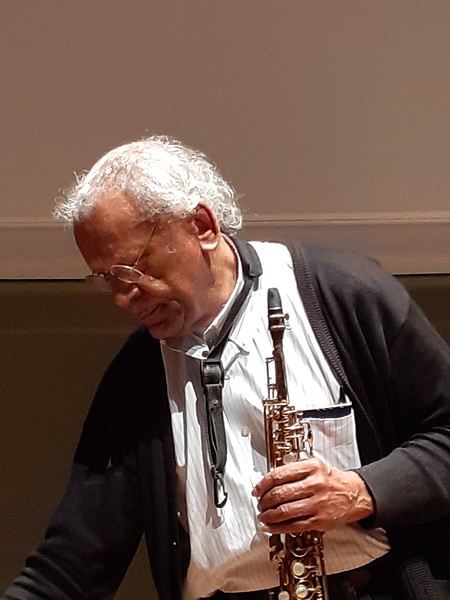
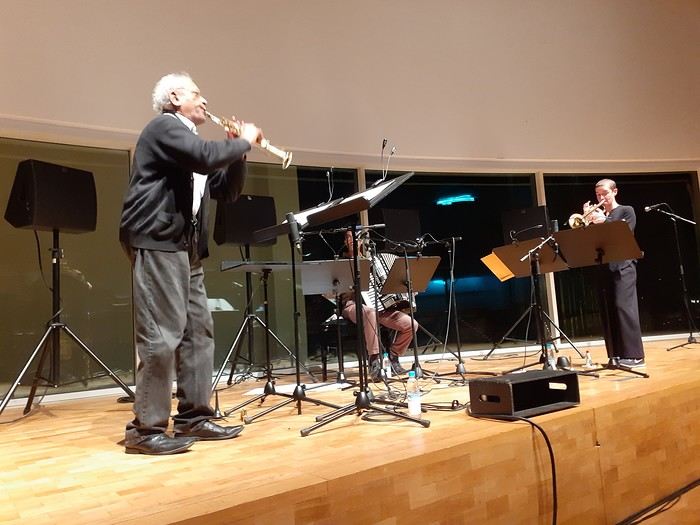
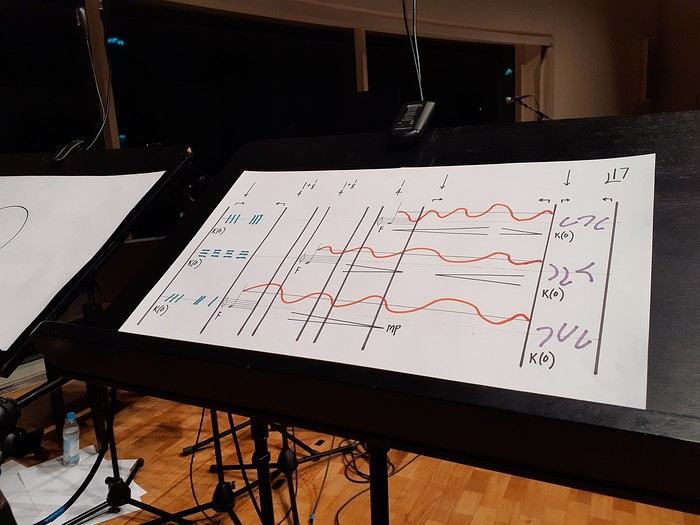
I’ve seen Anthony Braxton in concert many times: the first time at the Moers Jazz Festival (1976) in a duo with George Lewis (trombone)—I still remember it vividly—the last time in November 2021 in Ulm with his Diamond Curtain Wall Trio (with the incredible Portuguese trumpeter Susanna Santos Silva; see the photos).
Just a few days ago, on June 4, this exceptional figure celebrated his 80th birthday. Congratulations!
hgb
For over half a century, the American Anthony Braxton—a composer, multi-instrumentalist, music theorist, university professor, mentor, and visionary—has been one of the key figures in avant-garde contemporary music. Braxton himself describes his music as "creative music," drawing inspiration from jazz, European New Music (Schönberg, Stockhausen, and Xenakis are among the composers who influenced him), and music from various world cultures. In other words, his work uniquely oscillates between composition and improvisation. His body of work includes around 700 compositions, over 200 albums, and a dozen theoretical books.
Anthony Braxton is one of the most striking and brilliant figures in contemporary jazz. As a member of the Creative Construction Company (with violinist Leroy Jenkins and trumpeter Leo Smith) and the quartet Circle (with Chick Corea, Dave Holland, and Barry Altschul—whose double album Circle. Paris Concert is a landmark of contemporary jazz), with his groundbreaking solo alto saxophone album For Alto (1968), his duo with drummer Max Roach, Birth and Rebirth (1978), and especially his own ensembles and large formations, he set out to "redefine the space of music" (Braxton). In doing so, he gave decisive impetus to the development of jazz, making him a star of the avant-garde in the 1970s, with a recording contract from a major label.
Born in 1945 in the South Side, an African-American neighborhood of Chicago, Braxton was always a bit of an outsider, not doing what everyone else did. While the boys in his neighborhood hung out and goofed around, he stayed home pondering chess games or practicing the saxophone. Later, he became a leading figure in the Chicago musicians' organization AACM (Association for the Advancement of Creative Musicians), a mutual aid network for many African-American musicians in Chicago's new jazz scene. He then led his own formations for years, including musicians like George Lewis, John Lindberg, Marilyn Crispell, Gerry Hemingway, Kenny Wheeler, Dave Holland, Barry Altschul, Mark Dresser, Ray Anderson, and Mark Helias. In the mid-1980s, Braxton settled down a bit by accepting a teaching position at Mills College at the University of California, Berkeley. He was a tenured professor at Wesleyan University in Middletown, Connecticut, for many years. From his "school" emerged musicians of the younger generation, such as Taylor Ho Bynum (trumpet), Aaron Siegel (percussion), Jay Rozen (tuba), Jessica Pavone (violin, viola, flute), and Mary Halvorson (guitar).
I’ve seen Anthony Braxton in concert many times: the first time at the Moers Jazz Festival (1976) in a duo with George Lewis (trombone)—I still remember it vividly—the last time in November 2021 in Ulm with his Diamond Curtain Wall Trio (with the incredible Portuguese trumpeter Susanna Santos Silva; see the photos).
Just a few days ago, on June 4, this exceptional figure celebrated his 80th birthday. Congratulations!
hgb
Tips for visiting Peru on this itinerary
Hi there,
I’m planning a trip to Peru and have estimated how many days I’ll spend in each place.
Any advice on must-see sights and tourist traps to avoid?
September–October
5 days in Lima
Bus: 07:00→13:30 or 06:00 to 09:30 (express) (3 hr 30 min journey) 3 days in Paracas (beach)
3 days in Nazca
3 days in Arequipa
3 days in Puno (Lake Titicaca)
5 days in Cusco
Thanks in advance
5 days in Lima
Bus: 07:00→13:30 or 06:00 to 09:30 (express) (3 hr 30 min journey) 3 days in Paracas (beach)
3 days in Nazca
3 days in Arequipa
3 days in Puno (Lake Titicaca)
5 days in Cusco
Thanks in advance
Roswell to Tucumcari leg: Route 66 conditions
Hi everyone! 🙂
We’re on the Roswell–Tucumcari leg. We’ll go through Fort Sumner. After visiting, there are two ways to reach Tucumcari:
Take US 84 to Santa Rosa, see its Blue Hole, then the almost ghost towns on the historic Route 66 (Cuervo, Newkirk, and Montoya). We won’t visit the Route 66 auto museum (we’ll do the one in Tucumcari). The other option is to take 252 and then 209.
The next day, we plan to head to our next stop in Las Vegas (the one in NM) by going up the Mesalands Scenic Byway (104).
Is the detour to Santa Rosa worth it? Are the historic Route 66 sections drivable?
Thanks for your tips! Marcalamar 🙂
What are the criteria that make you choose one destination over another?
Hi there,
The title might be a bit long, but I hope it’s completely understandable!
When it comes to choosing your next trip, what tips the scales in favor of Eritrea over Ibiza?
Why pick Canada over French Polynesia?
The price? A magazine or TV report, a travel journal, an Instagram ad? Ease of travel? Minimal time difference? The country that has the most in common with all the trip participants? Activities? Relaxation? The desire to push your limits?
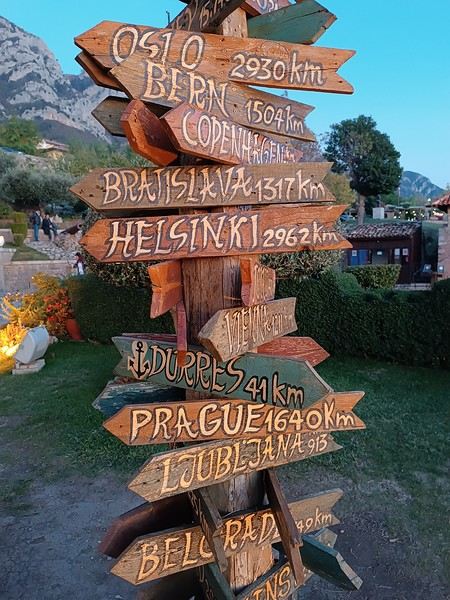
A photo?
What else, I wonder...
Personally, I often prioritize simple destinations (no administrative hassles), where I’m not at risk (nothing extraordinary like getting kidnapped by Daesh or ending up in a jail cell because the current geopolitics aren’t favorable to my passport, etc.), and where I can drive.
Wide-open natural spaces are more my thing than urban anthills.
Finally, I try not to spend three days on a plane to reach my destination, and I aim for a maximum budget of 3500 € (for 3 weeks) in comfortable conditions—that means charming hotels, good meals, etc.
What about you?🙂
The title might be a bit long, but I hope it’s completely understandable!
When it comes to choosing your next trip, what tips the scales in favor of Eritrea over Ibiza?
Why pick Canada over French Polynesia?
The price? A magazine or TV report, a travel journal, an Instagram ad? Ease of travel? Minimal time difference? The country that has the most in common with all the trip participants? Activities? Relaxation? The desire to push your limits?
A photo?
What else, I wonder...
Personally, I often prioritize simple destinations (no administrative hassles), where I’m not at risk (nothing extraordinary like getting kidnapped by Daesh or ending up in a jail cell because the current geopolitics aren’t favorable to my passport, etc.), and where I can drive.
Wide-open natural spaces are more my thing than urban anthills.
Finally, I try not to spend three days on a plane to reach my destination, and I aim for a maximum budget of 3500 € (for 3 weeks) in comfortable conditions—that means charming hotels, good meals, etc.
What about you?🙂
Mesa Verde: Must-see or not?
I'm struggling to fit everything into my West US itinerary (it's here!) and one way to relax it could be to skip Mesa Verde.
I quite liked it, but nothing more (I was actually pretty indifferent to Canyon de Chelly too). My partner hasn’t been there yet (first trip to the US, aside from a stay in NYC).
Any arguments for or against? Thanks in advance :)
I quite liked it, but nothing more (I was actually pretty indifferent to Canyon de Chelly too). My partner hasn’t been there yet (first trip to the US, aside from a stay in NYC).
Any arguments for or against? Thanks in advance :)
Road trip: Las Vegas, Texas, and Tennessee
Hi everyone,
After already exploring the West, which was amazing, I’ve got a new plan—I’d like to visit Texas and Tennessee.
I want to start in Las Vegas, revisit Monument Valley, and head toward Dallas, stopping in Albuquerque and other cool spots along the way.
Then, I’ll leave Dallas for Nashville, with several stops in between—any suggestions on where to go?
Do you think 20 days is enough for this trip?
Thanks for your input!