Discussions started by Thlaspi
2 results on this page.
More options
Many results are in French, the community’s main language. English translations are added over time.
Search results
A Guide to Kashmir
Arthur Neve (1859–1919), an English doctor and missionary, dedicated most of his life to his passion for Kashmir, a region he wrote several books about—including this guide (18 editions published between 1890 and 1945).
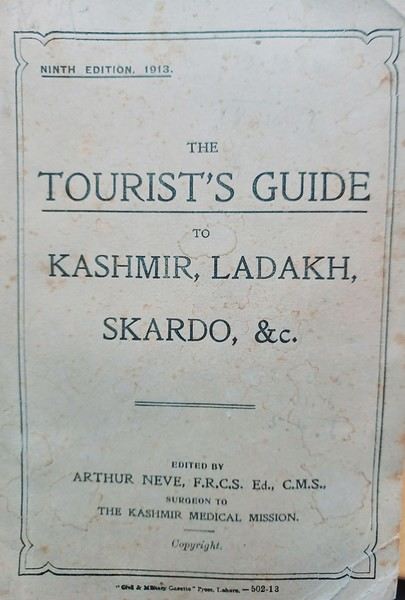 This copy (225 pages, 9th edition, 1913), published in Lahore, features dozens of detailed itineraries with maps, covering campsites, mountain pastures, river crossings, and more. Among them, you can trek from Srinagar to Khapalu and then to Baltistan, or "travel" from Leh to Yarkand (Xinjiang) via the Nubra Valley, along with other unexpected destinations.
The guide also includes suggestions for shikara rides, houseboat rentals, and gear for hunting, camping, fishing, and photography.
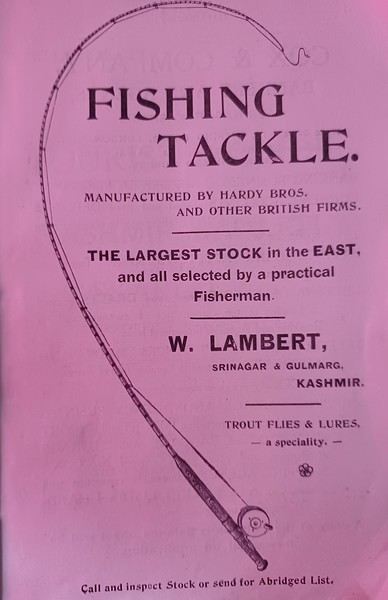 Plus, it lists various supplies like chocolate, Egyptian cigarettes, frames, and alcohol.
Note that the Murree Brewery, relocated to Rawalpindi, is still operational—though, in theory, the predominantly Muslim population can’t access it.
 I found this book in a box of old books, and you can still find copies on Anglo-Saxon websites—though often at prohibitive prices.
This copy (225 pages, 9th edition, 1913), published in Lahore, features dozens of detailed itineraries with maps, covering campsites, mountain pastures, river crossings, and more. Among them, you can trek from Srinagar to Khapalu and then to Baltistan, or "travel" from Leh to Yarkand (Xinjiang) via the Nubra Valley, along with other unexpected destinations.
The guide also includes suggestions for shikara rides, houseboat rentals, and gear for hunting, camping, fishing, and photography.
Plus, it lists various supplies like chocolate, Egyptian cigarettes, frames, and alcohol.
Note that the Murree Brewery, relocated to Rawalpindi, is still operational—though, in theory, the predominantly Muslim population can’t access it.
I found this book in a box of old books, and you can still find copies on Anglo-Saxon websites—though often at prohibitive prices.Qinghai (Chine): un petit tour aux sources du Mékong
Le col de Zhung-la abrite d'importantes colonies de chenilles à la robe anthracite délicatement saupoudrée d'éclats orangés du plus bel effet, tendance années 70.Chacun y va de sa raclette et de son récipient et récupère l'animal vagabond afin de le soustraire à un trafic quasi inexistant et tenter de le diriger vers un éventuel droit chemin.
Le col à 4800m est également le passage obligé pour pénétrer dans le district de Nangchen, jadis un des 5 royaumes indépendants du Tibet oriental, région préservée car très isolée(absence totale de transports locaux) située à l'extrême sud de la province du Qinhai sur une superficie équivalente à celle de deux départements français pour une population d'environ 70000h presque exclusivement tibétaine, elle abrite une centaine de monastères dont certains se trouvent dans des lieux hautement improbables.
Sharda, chef-lieu de canton, importante bourgade sans intérêt bâtie le long d'une rue interminable(configuration semblable à celle d'Aba, version far-west) est le point de départ vers vraisemblablement la plus belle partie du Kham de par la variété de ses superbes paysages, prairies verdoyantes, falaises impressionnantes ou forêts touffues sur fond de pics enneigés, un enchantement quelque soit la direction choisie.
Qqs ex:
Monastère de Dana au bout du monde ,6h l'aller simple agrémenté du passage de 5 cols, nid d'aigle perché a 4300m dans un environnement majestueux.
Monastère de Surmong reconstruit mais très imposant, festival haut en couleurs, à proximité(20km) dans un des méandres de la rivière Dzi le plus photogénique de tous:Ganden Gontsi Zurmang Ganden Tubten Ngelekling ou pour faire court Ganden gompa
Monastère de Gar, suspendu à la falaise au sortir de la forêt de Baizha un des rares endroits au Tibet où l'on trouve des singes.
Monastère de Juela au bord du Dza Chu, affluent du Mékong et son étonnante tour à 6 étages.
Et bien d'autres découvertes à réaliser dans une région qui jusqu'à présent a pu préserver l'essentiel de sa culture et de ses traditions.