Results for "Turquie+événement"
About 14,473 results.
More options
Many results are in French, the community’s main language. English translations are added over time.
Search results
L'Algérie: jusqu'à Djanet et l'Erg Admer, vraiment à faire?
Cela fait déja quelque temps que je connais et cotoie des Algériens en France, et c'est un grand plaisir.
Un récent voyage au Mali, avec Air Algérie, via Alger pour une escale a encore renforcé les très bonnes impressions que j'ai sur cette jeune Nation.
Lors de mes deux passages à Alger, l'accueil a été exemplaire : sympathique, courtois, juste ce qu'il faut de sérieux, même de la part du personnel de l'aeroport.
Cela m'encourage vivement à aller y faire un tour
Quelles sont vos impressions et vos coups de coeur ?
Quelles sont vos impressions et vos coups de coeur ?
From France to Bulgaria by Train
September 2017. I’m setting off on a journey from the Atlantic to the Black Sea—entirely by TRAIN—crossing Switzerland, Austria, Slovenia, Serbia, and Bulgaria all the way to Varna. I leave the house, walk briskly for half an hour to the station. Haven’t carried a backpack in years. I arrive at the station drenched in sweat. It’s a scorching late summer. My T-shirt is soaked. First minor challenge, first thought: travel is discomfort. You have to put yourself in a state of discomfort, accept it, and move beyond it. My T-shirt will dry on me—portable, self-contained heating at a steady 37°C.
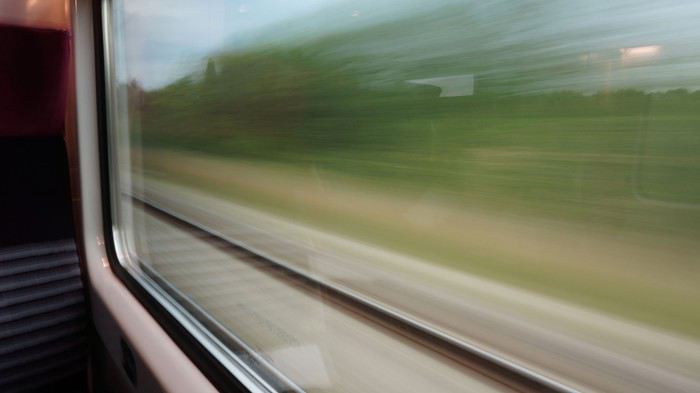
Departure on the Ouigo from Rennes station, arriving in Massy 1.5 hours later. And then the rush toward the exit. In a frantic rhythm, hundreds of passengers trample in the same direction like a single organism, as if driven by some urgency. The human snake with things to do. Meanwhile, the metal snake that teleported us here continues on its infinite path, perched on its two rails. At the station exit, ticket machines for the RER are under siege, lines stretching outside the building. I watch for a moment, then... veer off toward a café 200 meters away. A guy at the entrance greets me at the top of the stairs with humor. I stir my espresso and think how hot it is to be setting off on a trip—especially since I’m heading toward Southern Europe. Then comes a thought, maybe cliché but fitting: if you wait for ideal conditions to act, to leave, to do, you might wait forever.

PARIS, youth hostel at 8 Jules Ferry Street, 21 € for a bed in a dorm. Unbeatable price for sleeping in the capital. Friendly welcome and a nice neighborhood near République. They don’t ask for a hostel federation card. Paris is as beautiful as ever—and as polluted. My eyes and throat sting a little. I buy a ukulele (the reason for this stop in Paris), using my backpack as a case. First notes strummed in the empty hostel room. We’ll end up being four people sleeping here, mostly in their thirties or older. In the evening, I have a Grimp on the terrace of a nearby café. After a day of carrying my backpack in the heat, the first sips of cold beer are pure bliss. The window stays wide open all night because of the heat, to let in a little air. Feels like sleeping right on the boulevard, with motorcycles and cars passing all night long.

TGV from Paris to Strasbourg. The sound of the train is smooth and soft, almost nonexistent. I think to myself that the TGV is already a thing of the past—a time when we believed abolishing time would mean abolishing finitude, when in reality it only erased life. A time when we believed in the rise of a single, affluent upper-middle class with access to immediacy in a world of efficiency, profit, cleanliness, straight lines, no sweat, no dust. I think speed is part of the past. When you go fast, you rush, you’re never where you are—always just ahead, never here and now. Speed is a rejection of life, a sick movement, an illusion of power and joy. No yawning, no breathing, no dozing, no thinking. Speed abolishes time and space. People get sucked in. Quick, into the vacuum—never inspired, no time. Aspiration versus inspiration. A battle between unreal times (past and future) and the only real time: the present.

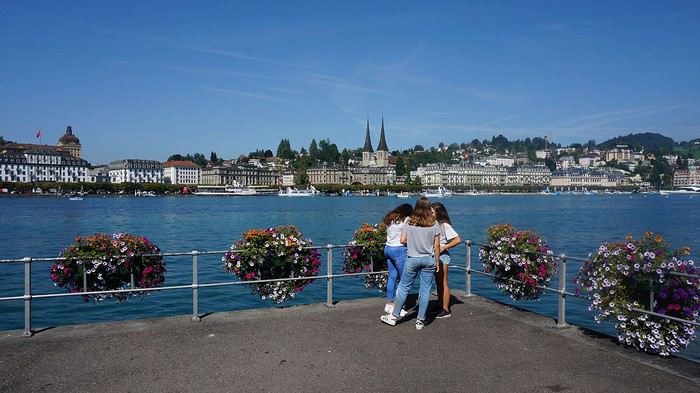
Second night. Youth hostel in Lucerne, Switzerland. Tough end to the day—tired, starting to get blisters. Lucerne, with its charms and hordes of tourists, wears me out. With my blisters, I drag myself to the station, buy some Asian takeaway, and wait for the bus to escape to the hostel. There, three massive Russian-speaking guys chat and down beers around a table on the terrace by the entrance. I sit a little apart. The Swiss hostel is twice as expensive as the one in Paris. The common areas are spacious, but the rooms are cramped and lack a sink. The opposite of the Parisian hostel, where the common spaces were minimal but the room was spacious and had a sink. I share the small room with two students from Singapore. Lights go out around 10 PM, but in the hallway, a group of overexcited girls from the next room scream, laugh, slam doors, and keep coming and going for over an hour. The next day, I’d find the girls’ bathroom floor covered in chips.
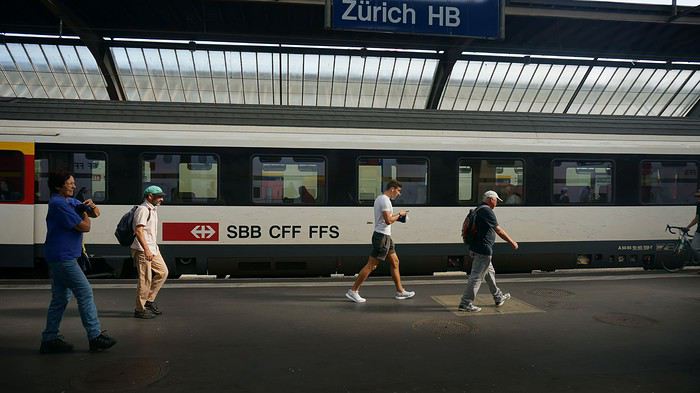
 Day three. Departure from Lucerne station in the morning, change in Zurich, heading to Villach in Austria near the Slovenian border. The train is slow, skirting a large lake with mountains where rocks jut out by the water. The view through the window is soothing. The sounds of the train are pleasant. In front of me, two women speak softly while eating Swiss crackers. Then the train speeds up as we leave the lakeside. I decide to get off at Wörgl, a small station surrounded by mountains, instead of continuing to Salzburg. The train I take in Wörgl looks like our TER. Not many people, just three small carriages, well-balanced air conditioning. Good call: this little train winds through the Austrian mountains. It stops often, but the scenery is beautiful, and I’m in no hurry. Typical little villages, chalets on the mountainside, coniferous forests. To be honest, after a while, I get a bit tired of these endless valleys. Lack of perspective and distant views.
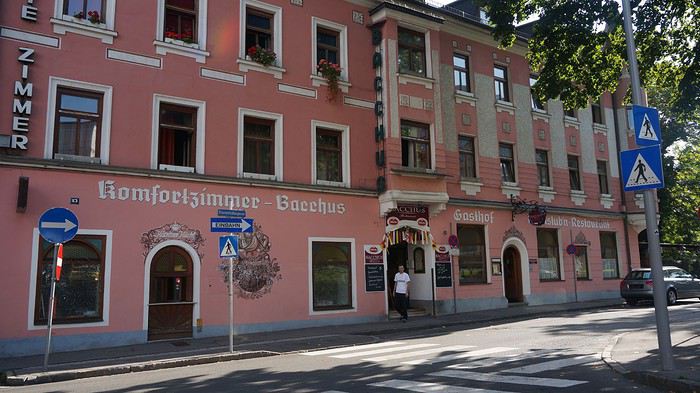
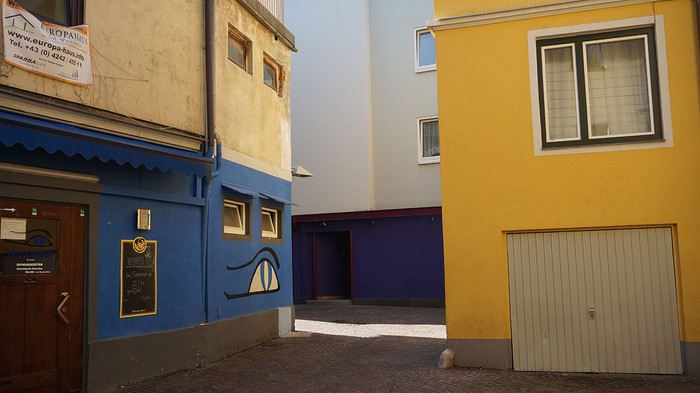
Villach. A pleasant town with a well-maintained old pedestrian center and its old bridge spanning the Drava. I arrive in the early evening. After a good walk, I pass through a mixed zone (industrial and sports) and find the youth hostel 2–3 km from the station. 25 € a night, but the hostel is "full," and of course, I haven’t booked. I never book in advance or use a phone to navigate. I prefer to improvise and ask for directions. I head back to the city center and find a room for 76 € in a three-star hotel. The guy at reception, very kind, looks like he stepped out of a comic book—a short, chubby guy with a serene face and voice. He’s not rushed at all, takes his time, which is really nice. The room isn’t great in terms of essentials, but a lot of effort (finishes, furniture) has gone into matching the hotel’s standards. No free space, window overlooking a narrow courtyard (smell of cooking in the morning), and a small, not-very-firm bed. Bathroom’s fine, and there’s a big screen (one channel in French). In the morning, a free breakfast with an incredibly varied spread—salty and sweet, meats, cooked dishes, pastries, dried fruits, cereals... Sitting with me in the room are mostly couples in their sixties.

Departure from Villach station. Train at 12:53 PM to Ljubljana. 17 €. Quite an old train, compartments with six seats, some patched up. I share a compartment with a very nice Croatian woman around 35. We start chatting, and I explain the nature of my trip. I also tell her about my first big train trip in Asia, which piques her interest, and she asks me quite a few questions. She’s seen documentaries about trains in Russia or India, and I give her a firsthand account from "reality." Her English is a bit better than mine, but we’re more or less on the same level, which I think helps the conversation flow and last. You could almost say we meet while traveling not because of shared interests but because our language levels match!


Ljubljana. No idea what this city looks like. I quickly checked a few forums and was expecting a somewhat dreary big city, pollution... Not at all. After a few minutes’ walk from the station, I enter a pedestrian and tourist area with beautiful, well-maintained, colorful buildings. The city seems immediately very pleasant, everything within reach. At the tourist office, I grab a map and see there’s no shortage of hostels. I find one in the city center in a large old building, with big rooms that haven’t been renovated in decades. 15 € a night. Ljubljana is actually a charming little city, touristy, with a completely pedestrianized center. Prices are already a bit lower than in big French cities. Example prices: 6 € for a large, very filling plate of excellent falafel, hummus, fries, and raw veggies; 2.5 € for a half-pint on a terrace in the city center; 1.50 € for a lungo coffee; 60 cents for a kind of jam-filled bread. In the narrow streets, you come across lots of bikes that seem to rule here. Pedestrians have to move aside. I reach a pedestrian crossing—maybe the only street in the city center open to cars. I’m about to cross (against the light for pedestrians), but a young Slovenian woman warns me in English; she says I could get fined for that.
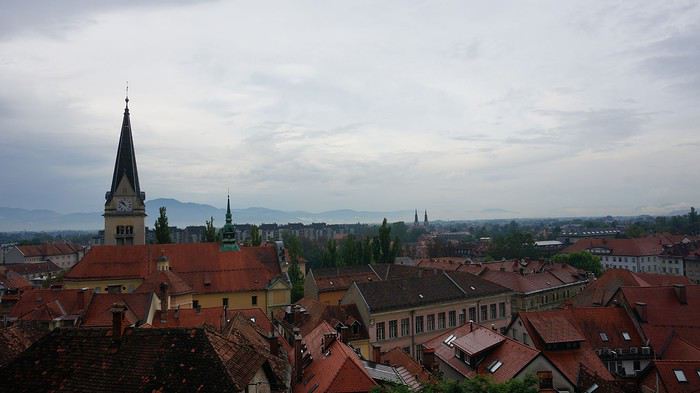
The next day, it’s raining. During a break in the clouds, I manage to have breakfast on a terrace. I find a slightly more expensive hostel (21 €) but with nice common areas. A smaller room but better designed, with a locker for securing your bag. It’s going to rain all morning. I head up to the castle—a walk that, besides getting the legs moving, offers a great view of Ljubljana rather than the castle itself. Midday. It’s raining, so I eat a plate of fish with potatoes cooked by a street vendor at a market, sheltered by a flimsy umbrella. Not many people at the market brave the rain. But I’m loving it. The vendor, very Slavic-looking, corrects my attempt to say "thank you" in Slovenian ("hvala"). A few minutes’ walk away, I reach Ljubljana’s big park. You quickly arrive after a small climb into wild forest—seemingly not maintained at all. And we’re only 1 or 2 km from the tourist office! My feet are soaked—damn shoes that were supposed to be waterproof!
More travels and train sounds on my site crilef.free.fr and also crilef.fr
Departure on the Ouigo from Rennes station, arriving in Massy 1.5 hours later. And then the rush toward the exit. In a frantic rhythm, hundreds of passengers trample in the same direction like a single organism, as if driven by some urgency. The human snake with things to do. Meanwhile, the metal snake that teleported us here continues on its infinite path, perched on its two rails. At the station exit, ticket machines for the RER are under siege, lines stretching outside the building. I watch for a moment, then... veer off toward a café 200 meters away. A guy at the entrance greets me at the top of the stairs with humor. I stir my espresso and think how hot it is to be setting off on a trip—especially since I’m heading toward Southern Europe. Then comes a thought, maybe cliché but fitting: if you wait for ideal conditions to act, to leave, to do, you might wait forever.
PARIS, youth hostel at 8 Jules Ferry Street, 21 € for a bed in a dorm. Unbeatable price for sleeping in the capital. Friendly welcome and a nice neighborhood near République. They don’t ask for a hostel federation card. Paris is as beautiful as ever—and as polluted. My eyes and throat sting a little. I buy a ukulele (the reason for this stop in Paris), using my backpack as a case. First notes strummed in the empty hostel room. We’ll end up being four people sleeping here, mostly in their thirties or older. In the evening, I have a Grimp on the terrace of a nearby café. After a day of carrying my backpack in the heat, the first sips of cold beer are pure bliss. The window stays wide open all night because of the heat, to let in a little air. Feels like sleeping right on the boulevard, with motorcycles and cars passing all night long.
TGV from Paris to Strasbourg. The sound of the train is smooth and soft, almost nonexistent. I think to myself that the TGV is already a thing of the past—a time when we believed abolishing time would mean abolishing finitude, when in reality it only erased life. A time when we believed in the rise of a single, affluent upper-middle class with access to immediacy in a world of efficiency, profit, cleanliness, straight lines, no sweat, no dust. I think speed is part of the past. When you go fast, you rush, you’re never where you are—always just ahead, never here and now. Speed is a rejection of life, a sick movement, an illusion of power and joy. No yawning, no breathing, no dozing, no thinking. Speed abolishes time and space. People get sucked in. Quick, into the vacuum—never inspired, no time. Aspiration versus inspiration. A battle between unreal times (past and future) and the only real time: the present.
Second night. Youth hostel in Lucerne, Switzerland. Tough end to the day—tired, starting to get blisters. Lucerne, with its charms and hordes of tourists, wears me out. With my blisters, I drag myself to the station, buy some Asian takeaway, and wait for the bus to escape to the hostel. There, three massive Russian-speaking guys chat and down beers around a table on the terrace by the entrance. I sit a little apart. The Swiss hostel is twice as expensive as the one in Paris. The common areas are spacious, but the rooms are cramped and lack a sink. The opposite of the Parisian hostel, where the common spaces were minimal but the room was spacious and had a sink. I share the small room with two students from Singapore. Lights go out around 10 PM, but in the hallway, a group of overexcited girls from the next room scream, laugh, slam doors, and keep coming and going for over an hour. The next day, I’d find the girls’ bathroom floor covered in chips.
Day three. Departure from Lucerne station in the morning, change in Zurich, heading to Villach in Austria near the Slovenian border. The train is slow, skirting a large lake with mountains where rocks jut out by the water. The view through the window is soothing. The sounds of the train are pleasant. In front of me, two women speak softly while eating Swiss crackers. Then the train speeds up as we leave the lakeside. I decide to get off at Wörgl, a small station surrounded by mountains, instead of continuing to Salzburg. The train I take in Wörgl looks like our TER. Not many people, just three small carriages, well-balanced air conditioning. Good call: this little train winds through the Austrian mountains. It stops often, but the scenery is beautiful, and I’m in no hurry. Typical little villages, chalets on the mountainside, coniferous forests. To be honest, after a while, I get a bit tired of these endless valleys. Lack of perspective and distant views.Villach. A pleasant town with a well-maintained old pedestrian center and its old bridge spanning the Drava. I arrive in the early evening. After a good walk, I pass through a mixed zone (industrial and sports) and find the youth hostel 2–3 km from the station. 25 € a night, but the hostel is "full," and of course, I haven’t booked. I never book in advance or use a phone to navigate. I prefer to improvise and ask for directions. I head back to the city center and find a room for 76 € in a three-star hotel. The guy at reception, very kind, looks like he stepped out of a comic book—a short, chubby guy with a serene face and voice. He’s not rushed at all, takes his time, which is really nice. The room isn’t great in terms of essentials, but a lot of effort (finishes, furniture) has gone into matching the hotel’s standards. No free space, window overlooking a narrow courtyard (smell of cooking in the morning), and a small, not-very-firm bed. Bathroom’s fine, and there’s a big screen (one channel in French). In the morning, a free breakfast with an incredibly varied spread—salty and sweet, meats, cooked dishes, pastries, dried fruits, cereals... Sitting with me in the room are mostly couples in their sixties.
Departure from Villach station. Train at 12:53 PM to Ljubljana. 17 €. Quite an old train, compartments with six seats, some patched up. I share a compartment with a very nice Croatian woman around 35. We start chatting, and I explain the nature of my trip. I also tell her about my first big train trip in Asia, which piques her interest, and she asks me quite a few questions. She’s seen documentaries about trains in Russia or India, and I give her a firsthand account from "reality." Her English is a bit better than mine, but we’re more or less on the same level, which I think helps the conversation flow and last. You could almost say we meet while traveling not because of shared interests but because our language levels match!
Ljubljana. No idea what this city looks like. I quickly checked a few forums and was expecting a somewhat dreary big city, pollution... Not at all. After a few minutes’ walk from the station, I enter a pedestrian and tourist area with beautiful, well-maintained, colorful buildings. The city seems immediately very pleasant, everything within reach. At the tourist office, I grab a map and see there’s no shortage of hostels. I find one in the city center in a large old building, with big rooms that haven’t been renovated in decades. 15 € a night. Ljubljana is actually a charming little city, touristy, with a completely pedestrianized center. Prices are already a bit lower than in big French cities. Example prices: 6 € for a large, very filling plate of excellent falafel, hummus, fries, and raw veggies; 2.5 € for a half-pint on a terrace in the city center; 1.50 € for a lungo coffee; 60 cents for a kind of jam-filled bread. In the narrow streets, you come across lots of bikes that seem to rule here. Pedestrians have to move aside. I reach a pedestrian crossing—maybe the only street in the city center open to cars. I’m about to cross (against the light for pedestrians), but a young Slovenian woman warns me in English; she says I could get fined for that.
The next day, it’s raining. During a break in the clouds, I manage to have breakfast on a terrace. I find a slightly more expensive hostel (21 €) but with nice common areas. A smaller room but better designed, with a locker for securing your bag. It’s going to rain all morning. I head up to the castle—a walk that, besides getting the legs moving, offers a great view of Ljubljana rather than the castle itself. Midday. It’s raining, so I eat a plate of fish with potatoes cooked by a street vendor at a market, sheltered by a flimsy umbrella. Not many people at the market brave the rain. But I’m loving it. The vendor, very Slavic-looking, corrects my attempt to say "thank you" in Slovenian ("hvala"). A few minutes’ walk away, I reach Ljubljana’s big park. You quickly arrive after a small climb into wild forest—seemingly not maintained at all. And we’re only 1 or 2 km from the tourist office! My feet are soaked—damn shoes that were supposed to be waterproof!
More travels and train sounds on my site crilef.free.fr and also crilef.fr
Langue la plus difficile au monde?
Quelqu’un a récemment posé la question sur VF « quelles sont les langues les plus faciles à apprendre ? » (http://voyageforum.com/forum/langue_etrangere_plus_facile_apprendre_D4783600/).
Je me suis dit, pourquoi pas ne pas poser la question opposée ? Je ne crois pas que cela ait été fait sur VF (peut-être suis-je le seul fou ici ?), alors donc, pour m’amuser, j’ai fait un petit brin de recherche, dont je présente ici les résultats.
Une enquête a été menée par le site Lexiophiles (qui n’est pas un site exclusivement francophone) auprès de ses lecteurs afin de savoir quelle était, d'après eux, la langue la plus difficile à apprendre. Le vote comprenait 3 parties : La difficulté de prononciation, la difficulté d'écriture, et la difficulté d'apprendre la langue en général. Les langues en tête de liste, jugées difficiles sous chacun de ces trois rapports sont, « dans l’ordre » (on peut se demander s’il peut véritablement y avoir un ordre dans l’absolu) :
1. Le Mandarin
2. Le Polonais
3. L’Arabe
4. Le Hongrois
5. Le Japonais
6. L’Anglais
On reviendra sur ces langues, mais traitons ici-même de l’Anglais. Qu’il figure dans cette liste me surprend vraiment, car j’ai toujours entendu dire que c’est une langue facile, avis que je partage personnellement. Sa grammaire est particulièrement simple, si on compare au Français ou d’autres langues européennes. Le fait que l’Anglais soit cité dans cette enquête de Lexiophiles vient sans aucun doute que c’est la langue étrangère la plus connue à travers le monde, et pour des millions de gens qui n’ont pas vraiment essayé autre chose, oui, bien sûr, ils disent que c’est une langue difficile.
Il y a, puisque nous y sommes, cette théorie selon laquelle l’Anglais ait l’un des plus riches vocabulaires au monde. Les Britanniques se targuent souvent d’avoir beaucoup plus de vocabulaire que les Français. C’est possible, après tout l’Anglais a massivement emprunté au Français, comme tout le monde le sait, tout en gardant son vocabulaire germaniqe d’origine. De plus, l’Anglais a énormément développé un vocabulaire sur la base du Latin. Mais une très grande proportion de ce vocabulaire d’origine francaise ou latine n’est utilisé que dans des contextes « élevés », et non dans le langage de tous les jours.
Cette petite tirade sur l’Anglais montre combien il est difficile de répondre à la question posée : les gens usent de critères différents pour justifier leurs réponses.
Parmi les autres langues considérées difficiles par les lecteurs de Lexiophiles figurent le Basque, le Hindi, le Coréen …. et le Français. Puis aussi le Finnois (ou Finlandais, ou Suomi), le Lithuanien (7 cas de déclinaison), l’Islandais et le Grec (déclinaisons également).
En dehors de Lexiophiles, quelqu’un a dit sur le web qu’en Europe, les deux langues vraiment difficiles sont le Finnois et le Hongrois. Ces 2 langues ne sont pas de souche indo-européenne, mais ouralo-bouriate (notons que l’Estonien l’est aussi, et est proche du Finnois). Le Grec et le Russe (entre autres) ne sont pas, selon cette personne (du web), des obstacles insurmontables en ce qui concerne leurs alphabets, qui peuvent s’apprendre en quelques jours (ce avec quoi je suis d’accord).
Dans le reste du monde, et toujours selon cette personne, la langue la plus difficile serait le Khmer car certains sons sont quasi inaudibles pour les oreilles européennes. La même personne mentionne le Thaï dans la même foulée, ce qui enlève une bonne marge de crédibilité dans ses opinions, à mon avis. Le Thaï est loin d’être vraiment difficile phonétiquement, et de plus sa grammaire est de la plus grande simplicité. Mais, certes, son écriture est difficile : elle est très logique mais demande énormément d’efforts à assimiler. Que dire par contre des « langues à clics » de l’Afrique du Sud, le Xhosa par exemple ? Il semblerait que ces clics (qui marquent certaines consonnes) sont tout à fait uniques à ces langues.
Toujours la même personne juge que le Mandarin est accessible à celui qui veut, mais que par contre le Cantonnais « a aussi des sons très difficiles à percevoir ». Cela doit être par référence aux 9 tons du Cantonnais. Le Mandarin est si simple par comparaison, n’ayant que 4 tons (plus le ton neutre, en fait un 5-ème niveau de ton). Le Japonais serait plus facile (phonétiquement). Quant aux idéogrammes chinois et japonais, il suffirait d'en connaitre environ 500 pour pouvoir lire le journal. Mais une autre personne déclare que le Japonais serait la langue la plus difficile « sans l'ombre d'un doute », car (dit-elle) on estime à huit années le temps d'étude nécessaire à un Français pour le parler parfaitement! Cela ne veut pas dire grand-chose, car je connais pas mal de gens qui peuvent passer plusieurs années à « apprendre » une langue étrangère même réputée plus simple (l’Anglais par exemple) et qui n’arriveront toujours pas à parler correctement. Il faudrait aussi définir « année d’étude ».
Ouf! Je vais faire une pause.... 🙂
Je me suis dit, pourquoi pas ne pas poser la question opposée ? Je ne crois pas que cela ait été fait sur VF (peut-être suis-je le seul fou ici ?), alors donc, pour m’amuser, j’ai fait un petit brin de recherche, dont je présente ici les résultats.
Une enquête a été menée par le site Lexiophiles (qui n’est pas un site exclusivement francophone) auprès de ses lecteurs afin de savoir quelle était, d'après eux, la langue la plus difficile à apprendre. Le vote comprenait 3 parties : La difficulté de prononciation, la difficulté d'écriture, et la difficulté d'apprendre la langue en général. Les langues en tête de liste, jugées difficiles sous chacun de ces trois rapports sont, « dans l’ordre » (on peut se demander s’il peut véritablement y avoir un ordre dans l’absolu) :
1. Le Mandarin
2. Le Polonais
3. L’Arabe
4. Le Hongrois
5. Le Japonais
6. L’Anglais
On reviendra sur ces langues, mais traitons ici-même de l’Anglais. Qu’il figure dans cette liste me surprend vraiment, car j’ai toujours entendu dire que c’est une langue facile, avis que je partage personnellement. Sa grammaire est particulièrement simple, si on compare au Français ou d’autres langues européennes. Le fait que l’Anglais soit cité dans cette enquête de Lexiophiles vient sans aucun doute que c’est la langue étrangère la plus connue à travers le monde, et pour des millions de gens qui n’ont pas vraiment essayé autre chose, oui, bien sûr, ils disent que c’est une langue difficile.
Il y a, puisque nous y sommes, cette théorie selon laquelle l’Anglais ait l’un des plus riches vocabulaires au monde. Les Britanniques se targuent souvent d’avoir beaucoup plus de vocabulaire que les Français. C’est possible, après tout l’Anglais a massivement emprunté au Français, comme tout le monde le sait, tout en gardant son vocabulaire germaniqe d’origine. De plus, l’Anglais a énormément développé un vocabulaire sur la base du Latin. Mais une très grande proportion de ce vocabulaire d’origine francaise ou latine n’est utilisé que dans des contextes « élevés », et non dans le langage de tous les jours.
Cette petite tirade sur l’Anglais montre combien il est difficile de répondre à la question posée : les gens usent de critères différents pour justifier leurs réponses.
Parmi les autres langues considérées difficiles par les lecteurs de Lexiophiles figurent le Basque, le Hindi, le Coréen …. et le Français. Puis aussi le Finnois (ou Finlandais, ou Suomi), le Lithuanien (7 cas de déclinaison), l’Islandais et le Grec (déclinaisons également).
En dehors de Lexiophiles, quelqu’un a dit sur le web qu’en Europe, les deux langues vraiment difficiles sont le Finnois et le Hongrois. Ces 2 langues ne sont pas de souche indo-européenne, mais ouralo-bouriate (notons que l’Estonien l’est aussi, et est proche du Finnois). Le Grec et le Russe (entre autres) ne sont pas, selon cette personne (du web), des obstacles insurmontables en ce qui concerne leurs alphabets, qui peuvent s’apprendre en quelques jours (ce avec quoi je suis d’accord).
Dans le reste du monde, et toujours selon cette personne, la langue la plus difficile serait le Khmer car certains sons sont quasi inaudibles pour les oreilles européennes. La même personne mentionne le Thaï dans la même foulée, ce qui enlève une bonne marge de crédibilité dans ses opinions, à mon avis. Le Thaï est loin d’être vraiment difficile phonétiquement, et de plus sa grammaire est de la plus grande simplicité. Mais, certes, son écriture est difficile : elle est très logique mais demande énormément d’efforts à assimiler. Que dire par contre des « langues à clics » de l’Afrique du Sud, le Xhosa par exemple ? Il semblerait que ces clics (qui marquent certaines consonnes) sont tout à fait uniques à ces langues.
Toujours la même personne juge que le Mandarin est accessible à celui qui veut, mais que par contre le Cantonnais « a aussi des sons très difficiles à percevoir ». Cela doit être par référence aux 9 tons du Cantonnais. Le Mandarin est si simple par comparaison, n’ayant que 4 tons (plus le ton neutre, en fait un 5-ème niveau de ton). Le Japonais serait plus facile (phonétiquement). Quant aux idéogrammes chinois et japonais, il suffirait d'en connaitre environ 500 pour pouvoir lire le journal. Mais une autre personne déclare que le Japonais serait la langue la plus difficile « sans l'ombre d'un doute », car (dit-elle) on estime à huit années le temps d'étude nécessaire à un Français pour le parler parfaitement! Cela ne veut pas dire grand-chose, car je connais pas mal de gens qui peuvent passer plusieurs années à « apprendre » une langue étrangère même réputée plus simple (l’Anglais par exemple) et qui n’arriveront toujours pas à parler correctement. Il faudrait aussi définir « année d’étude ».
Ouf! Je vais faire une pause.... 🙂
Ah les préjugés!
Qui n'a jamais entendu des préjugés grotesques et qui vous ont fait marrer!!!!!!!!!!!
Voici quelques petits préjugés donc j'ai eu l'honneur d'entendre: Mais au burkina ils ont de l'electricité? Ils doivent tous dormir dans des huttes en bois! En syrie mais ils vont tous te fusillier. Mais il n'y a pas de routes au maroc tu vas te perdre!
Si vous avez eu echos de quelques prejugés n'hesitez pas a les mettre !!
Voici quelques petits préjugés donc j'ai eu l'honneur d'entendre: Mais au burkina ils ont de l'electricité? Ils doivent tous dormir dans des huttes en bois! En syrie mais ils vont tous te fusillier. Mais il n'y a pas de routes au maroc tu vas te perdre!
Si vous avez eu echos de quelques prejugés n'hesitez pas a les mettre !!
Missing second first name on Turkish Airlines ticket
Hi,
I bought my flight ticket with my first (usual) first name, which appears first on my passport. However, I have two first names on my passport, and of course, it’s mentioned in the machine-readable zone at the bottom.
I booked with Turkish Airlines (through an online agency) for a trip to South Korea.
I wanted to know if it would be a problem that I only used my first first name on the ticket, while my passport has two. I had requested through the agency to add the second first name, but the airline refused because it doesn’t meet their general conditions. (They must have seen that the last name and first name were the same, and only the second first name was added.)
So, my ticket has my last name and first first name correctly spelled, and when I check in online, I’ll enter the passport details correctly.
I’ll have a layover in Istanbul on the flight.
Thanks in advance for your replies. Have a great day.
I bought my flight ticket with my first (usual) first name, which appears first on my passport. However, I have two first names on my passport, and of course, it’s mentioned in the machine-readable zone at the bottom.
I booked with Turkish Airlines (through an online agency) for a trip to South Korea.
I wanted to know if it would be a problem that I only used my first first name on the ticket, while my passport has two. I had requested through the agency to add the second first name, but the airline refused because it doesn’t meet their general conditions. (They must have seen that the last name and first name were the same, and only the second first name was added.)
So, my ticket has my last name and first first name correctly spelled, and when I check in online, I’ll enter the passport details correctly.
I’ll have a layover in Istanbul on the flight.
Thanks in advance for your replies. Have a great day.
Looking for Motorcycle Riders for a Trip to Georgia in September 2026 or May 2027
Hi everyone,
I’m planning a motorcycle road trip to Armenia and Georgia in September 2026 or May 2027. I’m looking for one or more riders (male or female) who’d like to explore these countries with me.
Along the way, we’ll visit Cappadocia, the capitals Yerevan, Tbilisi, Sofia, Skopje, and other cities—we can finalize the route and roadbook later.
This trip requires experience with long motorcycle journeys, as we’ll cover around 7,000 km over 5 or 6 weeks (or more, depending on sightseeing and time spent).
I don’t expect dozens of applicants, since motorcycle riders are few and far between on this forum, but I’m putting this out there anyway.
See you soon
I’m planning a motorcycle road trip to Armenia and Georgia in September 2026 or May 2027. I’m looking for one or more riders (male or female) who’d like to explore these countries with me.
Along the way, we’ll visit Cappadocia, the capitals Yerevan, Tbilisi, Sofia, Skopje, and other cities—we can finalize the route and roadbook later.
This trip requires experience with long motorcycle journeys, as we’ll cover around 7,000 km over 5 or 6 weeks (or more, depending on sightseeing and time spent).
I don’t expect dozens of applicants, since motorcycle riders are few and far between on this forum, but I’m putting this out there anyway.
See you soon
Looking for Motorcycle Riders for Trip to Georgia – May 2027 (or September 2026)
Hi everyone,
I’m planning a motorcycle road trip to Armenia and Georgia in September 2026 or May 2027. I’m looking for one or more riders (male or female) who’d like to explore these countries with me.
Along the way, we’ll visit Cappadocia, the capitals Yerevan, Tbilisi, Sofia, Skopje, and other cities—we can finalize the route and roadbook later.
You’ll need to be experienced with long motorcycle trips, as we’ll cover around 7,000 km over 5 or 6 weeks (or more, depending on how much time we spend sightseeing).
See you soon!
I’m planning a motorcycle road trip to Armenia and Georgia in September 2026 or May 2027. I’m looking for one or more riders (male or female) who’d like to explore these countries with me.
Along the way, we’ll visit Cappadocia, the capitals Yerevan, Tbilisi, Sofia, Skopje, and other cities—we can finalize the route and roadbook later.
You’ll need to be experienced with long motorcycle trips, as we’ll cover around 7,000 km over 5 or 6 weeks (or more, depending on how much time we spend sightseeing).
See you soon!
Can you take a ferry from Greece to Turkey by car?
I'm looking to travel to Turkey from Greece by car. Do you know any ferry companies that operate this route? Thanks for your replies
Turkey late 2025 - early 2026. Antalya & Cappadocia trip
Hey fellow travelers,
I’m planning a little trip to Turkey from December 30th to January 11th, around Antalya and the surrounding areas. Sightseeing, some hiking, etc. Gonna soak up this beautiful region.
I also wanna check out Cappadocia in winter—it must be magical this time of year.
If anyone’s gonna be around, we could share part of the journey together.
See you soon!
Cheers,
Antoine
3-day itinerary to explore Cappadocia
Hi there! There are so many valleys to discover in Cappadocia—it’s hard to figure out which ones to visit and in what order before you’re actually there. So, I put together a 3-day itinerary after my trip in October, packed with useful info: the cost of visits, how to book a hot-air balloon flight, which valleys to explore, and more.
Here’s the link: https://worldseenbymathilde.blogspot.com/2023/10/3-jours-pour-visiter-la-cappadoce.html
Hope this helps! :)
Hope this helps! :)
Istanbul - Antalya Train
Hi there!
We’re planning to head back to Istanbul next year—obviously by plane—and then take the train from Istanbul to Antalya. Has anyone here already made this trip by train with TCDD?
I’d love any tips or info that could be useful for us!
A little story about a layover in Istanbul.
Hi everyone,
Since it’s a hot topic, yet rarely shown, and since there’s quite a bit of criticism and prejudice around it—and since I’ve had three in ten days—I’m going to talk about layovers at Istanbul Airport, especially with Turkish Airlines. This is a common scenario for forum members planning trips to Central Asia, the Caucasus, but also Japan, China, Australia, Africa, and more.
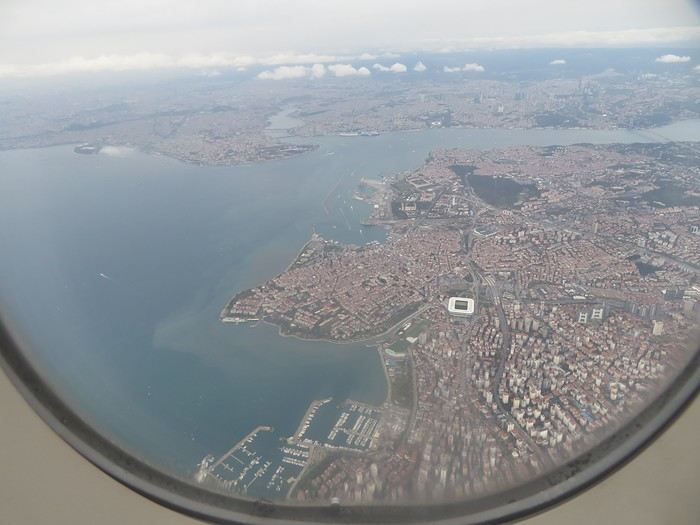
It all starts on a plane beginning its descent, knowing that the approach to Istanbul Airport is always quite long—about thirty minutes. Through the windows, if you’re lucky, you get a view of the city. You need to know a little to get your bearings, but here we’re on the side of Sabiha Gökçen Airport, south of Istanbul on the Asian side. You can spot the Bosphorus, the Golden Horn, and Fenerbahçe’s football stadium.

Landing over highways with three times four lanes, and then the airport tarmac for the taxi phase. This can take a while—sometimes nearly half an hour—but this morning, luck was on my side: barely more than 10 minutes. It’s rare now for Turkish Airlines planes to unload via pax buses, so we got a jet bridge. Avgeeks will immediately notice they’re not in Europe anymore but in another world: Pobeda, Belavia, and plenty of more exotic airlines. As the captain seriously put it in his final announcement after thanking the kids, it’s the “crossroads of the world.”
We suddenly step into a massive corridor, an endless, bright hall, usually deserted, and turn left or right—I think it’s always left for the flights I take, heading toward “transfers.” The walk is supposed to take a good ten minutes at worst. Watch out for airport vehicles—they come fast and don’t honk.
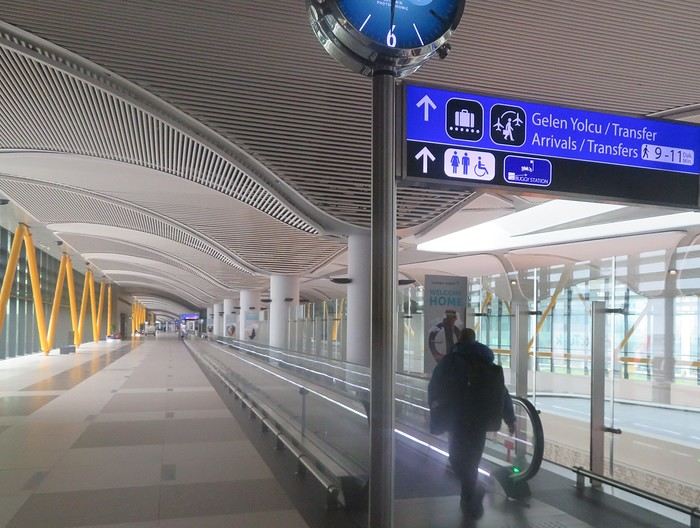
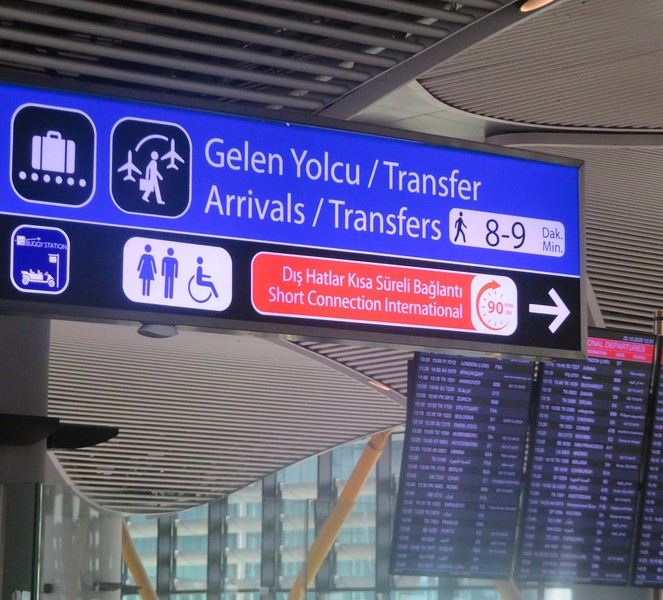
Here’s where it gets interesting: Istanbul has always had a bypass for short layovers, something you never hear about on forums. In the past, you had to bolt out of the jet bridge like a rocket and vaguely show your boarding pass to an attendant before sprinting. But now it’s institutionalized, and there’s signage that spares you from running all the way to the main security check. Until recently—at least the last time I did this—it even let you skip all formalities, dropping you like a wild dog into the departures area, which is spacious enough to stretch your legs!
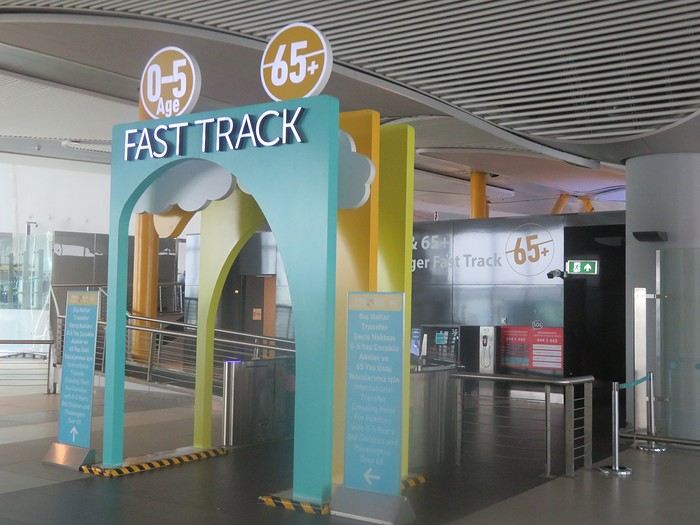
A heads-up for the young and the not-so-young: even without the bypass, if you’re under 5 (accompanied), over 65 (alone), you get fast track. That saves you a few hundred meters and possibly some waiting time, though I’m less sure about that. The entrance honestly looks like an amusement park, though.
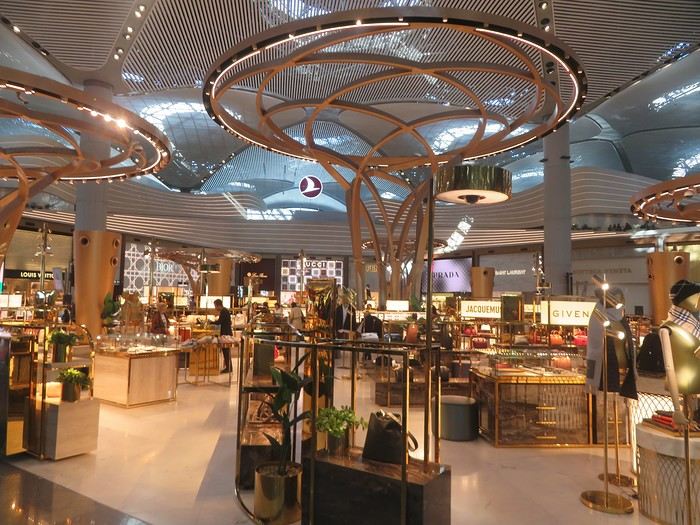
So, not young enough, not old enough, I keep going. I pass by dozens of passport control booths (in blue) and reach the transfer security checkpoint (in red). There’s a fast track for Business and Gold passengers—in my case, I’m both—but since it’s at the wrong end for my direction, it wouldn’t even be worth it. It’d just be a frivolous sprint. None of this is crowded at all; the wait lasted about a minute. You have to take out your laptop at this checkpoint—not all of them—but you haven’t had to take out liquids for a while in Istanbul. A hallway, an escalator, and then—bam—you’re in the Dubai-esque hall. One look says it all. Everything sparkles, everything’s expensive. *Very* expensive. Just for show, I spot a sandwich for around 12 €, and some simits for about 4 € (it’s in TL, but that’s roughly the conversion).
So, I head to the lounge—or one of the lounges—at Turkish Airlines, upstairs. Here too, there’s a priority entrance for families and people with reduced mobility, and an extra hundred meters for everyone else. A few of us seem to have had the same idea, and the twin lounges are under renovation for three months. One is for Business Class passengers, the other for Miles & Smiles and Gold members. They’re nearly identical. Needless to say, it’s packed—just as crowded in one as the other. There are *tons* of Business Class passengers on Turkish Airlines. I assume some other airlines’ passengers are mixed in, but not enough to explain the crowd. It’s as busy as Gare Montparnasse on a holiday departure day, and the 5 or 6 food counters, along with the salad and dessert buffets, are struggling to keep up. I didn’t dare ask to access the shower area, but I’ll admit the Wi-Fi works without the torturous maneuvers it required just a few months ago. Later, I’ll have to watch for the gate for my destination—Warsaw. With my usual luck, it’ll be in the F double-digits, the farthest ones, listed as 15 to 19 minutes away. That said, once you reach the end of that dead end, there’s plenty of quiet space with power outlets. Because here, there’s high demand for kilowatts.
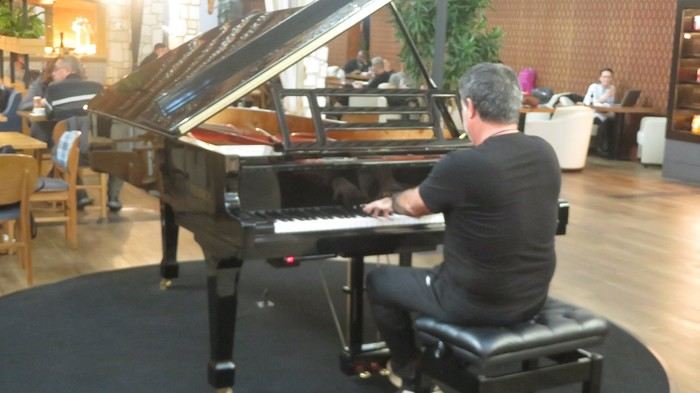
My reporter’s conscience doesn’t go so far as to guide me here—I’ve covered the free access up to the iGA lounge, which has a good reputation but costs nearly 100 € for three hours. Maybe another time, on a promo day—I’ll keep an eye on their site. The piano starts playing “Bésame Mucho,” so I’ll pause my story here.
Michel
Since it’s a hot topic, yet rarely shown, and since there’s quite a bit of criticism and prejudice around it—and since I’ve had three in ten days—I’m going to talk about layovers at Istanbul Airport, especially with Turkish Airlines. This is a common scenario for forum members planning trips to Central Asia, the Caucasus, but also Japan, China, Australia, Africa, and more.
It all starts on a plane beginning its descent, knowing that the approach to Istanbul Airport is always quite long—about thirty minutes. Through the windows, if you’re lucky, you get a view of the city. You need to know a little to get your bearings, but here we’re on the side of Sabiha Gökçen Airport, south of Istanbul on the Asian side. You can spot the Bosphorus, the Golden Horn, and Fenerbahçe’s football stadium.
Landing over highways with three times four lanes, and then the airport tarmac for the taxi phase. This can take a while—sometimes nearly half an hour—but this morning, luck was on my side: barely more than 10 minutes. It’s rare now for Turkish Airlines planes to unload via pax buses, so we got a jet bridge. Avgeeks will immediately notice they’re not in Europe anymore but in another world: Pobeda, Belavia, and plenty of more exotic airlines. As the captain seriously put it in his final announcement after thanking the kids, it’s the “crossroads of the world.”
We suddenly step into a massive corridor, an endless, bright hall, usually deserted, and turn left or right—I think it’s always left for the flights I take, heading toward “transfers.” The walk is supposed to take a good ten minutes at worst. Watch out for airport vehicles—they come fast and don’t honk.
Here’s where it gets interesting: Istanbul has always had a bypass for short layovers, something you never hear about on forums. In the past, you had to bolt out of the jet bridge like a rocket and vaguely show your boarding pass to an attendant before sprinting. But now it’s institutionalized, and there’s signage that spares you from running all the way to the main security check. Until recently—at least the last time I did this—it even let you skip all formalities, dropping you like a wild dog into the departures area, which is spacious enough to stretch your legs!
A heads-up for the young and the not-so-young: even without the bypass, if you’re under 5 (accompanied), over 65 (alone), you get fast track. That saves you a few hundred meters and possibly some waiting time, though I’m less sure about that. The entrance honestly looks like an amusement park, though.
So, not young enough, not old enough, I keep going. I pass by dozens of passport control booths (in blue) and reach the transfer security checkpoint (in red). There’s a fast track for Business and Gold passengers—in my case, I’m both—but since it’s at the wrong end for my direction, it wouldn’t even be worth it. It’d just be a frivolous sprint. None of this is crowded at all; the wait lasted about a minute. You have to take out your laptop at this checkpoint—not all of them—but you haven’t had to take out liquids for a while in Istanbul. A hallway, an escalator, and then—bam—you’re in the Dubai-esque hall. One look says it all. Everything sparkles, everything’s expensive. *Very* expensive. Just for show, I spot a sandwich for around 12 €, and some simits for about 4 € (it’s in TL, but that’s roughly the conversion).
So, I head to the lounge—or one of the lounges—at Turkish Airlines, upstairs. Here too, there’s a priority entrance for families and people with reduced mobility, and an extra hundred meters for everyone else. A few of us seem to have had the same idea, and the twin lounges are under renovation for three months. One is for Business Class passengers, the other for Miles & Smiles and Gold members. They’re nearly identical. Needless to say, it’s packed—just as crowded in one as the other. There are *tons* of Business Class passengers on Turkish Airlines. I assume some other airlines’ passengers are mixed in, but not enough to explain the crowd. It’s as busy as Gare Montparnasse on a holiday departure day, and the 5 or 6 food counters, along with the salad and dessert buffets, are struggling to keep up. I didn’t dare ask to access the shower area, but I’ll admit the Wi-Fi works without the torturous maneuvers it required just a few months ago. Later, I’ll have to watch for the gate for my destination—Warsaw. With my usual luck, it’ll be in the F double-digits, the farthest ones, listed as 15 to 19 minutes away. That said, once you reach the end of that dead end, there’s plenty of quiet space with power outlets. Because here, there’s high demand for kilowatts.
My reporter’s conscience doesn’t go so far as to guide me here—I’ve covered the free access up to the iGA lounge, which has a good reputation but costs nearly 100 € for three hours. Maybe another time, on a promo day—I’ll keep an eye on their site. The piano starts playing “Bésame Mucho,” so I’ll pause my story here.
Michel
Looking for travel companion for multiple destinations
hi, I’d like to visit Turkey, or maybe Tunisia—I’m even open to other suggestions, like Egypt, Azerbaijan, or Vietnam. I’ve been traveling solo for a while now, but this time I’d love to share the trip with one or two people. Thanks for your tips!
The Two of Us in Istanbul: A Turkish Blue Round
Hello everyone,
I’m not really a regular contributor to VoyageForum, but every time Kate and I travel, she encourages me to write a travel journal and publish it. And I must admit, it’s a very enjoyable intellectual exercise, though not always easy. As a VF contributor whose journals I’ve read once said, this retrospective work not only helps preserve memories but also provides a fruitful moment of introspection by bringing back emotions and feelings.
Kate and I spent a week in Istanbul. For her, who had already visited, it was a return; for me, it was a discovery.
As we’ve now made a habit of, I write the texts, and she posts her photos. We hope this illustrated story, crafted together, will revive beautiful sensations for those who know the city and inspire others to discover it. Here we go!
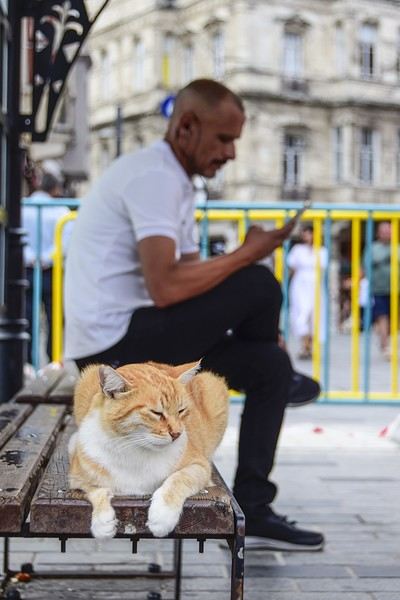
I’m not really a regular contributor to VoyageForum, but every time Kate and I travel, she encourages me to write a travel journal and publish it. And I must admit, it’s a very enjoyable intellectual exercise, though not always easy. As a VF contributor whose journals I’ve read once said, this retrospective work not only helps preserve memories but also provides a fruitful moment of introspection by bringing back emotions and feelings.
Kate and I spent a week in Istanbul. For her, who had already visited, it was a return; for me, it was a discovery.
As we’ve now made a habit of, I write the texts, and she posts her photos. We hope this illustrated story, crafted together, will revive beautiful sensations for those who know the city and inspire others to discover it. Here we go!
Turkey - Cycling Buddy from Mount Ararat to Cappadocia - October 2025
Hello,
I’m looking for cycling buddies to bike back from the Mount Ararat region (northeastern Turkey) to Cappadocia, passing through Lake Van. The rest of the route will be decided based on points of interest. We’ll spend several days exploring Cappadocia by bike—it’s huge!
From early to late October.
Expect some serious elevation gain in this part of the country.
We’ll camp or stay in accommodations depending on what’s available.
Actually, I’ll be leaving France a bit earlier to attempt the ascent of Mount Ararat (5,137m).
I’m 57 years old, have been traveling by bike for a good ten years, and I’m also passionate about mountains.
Looking forward to hearing from you!
Christine
Tips for cycling the EuroVelo 8 from Nice to Izmir
Hi there,
I’m planning to cycle the EuroVelo 8 route from Nice to Izmir in Turkey (about 2,500 km), but I’m not finding much info or tips for this itinerary.
I’d like to leave at the end of September and complete the route in a max of 2 months, as self-sufficiently as possible (I have a tent, sleeping bag, and camping cookware).
Is this a good idea (will it be too cold starting in October)?
Are there any precautions I should take? Any areas to avoid? Since multiple countries are involved.
And are there any places worth visiting that aren’t on the main route?
I’m used to cycle touring in France but not abroad, so I’d appreciate any tips!
Thanks in advance.
I’d like to leave at the end of September and complete the route in a max of 2 months, as self-sufficiently as possible (I have a tent, sleeping bag, and camping cookware).
Is this a good idea (will it be too cold starting in October)?
Are there any precautions I should take? Any areas to avoid? Since multiple countries are involved.
And are there any places worth visiting that aren’t on the main route?
I’m used to cycle touring in France but not abroad, so I’d appreciate any tips!
Thanks in advance.
Off-the-beaten-path spots near Izmir?
Hi there,
I’m heading to Turkey soon for a solid month.
I was thinking of exploring the Aegean coast, but I’m a bit worried about crowds… even though it’ll be mid-September.
Any hidden gems or favorite spots you’d recommend?
Quiet beaches, maybe?
Thanks for your tips!
Patricia
A disastrous experience with Lastminute.com
A disastrous experience with Lastminute.com – Family left outside with no assistance
I booked a stay at the Akgun Istanbul Hotel via for a total of 3 884 €. Despite receiving a booking confirmation, the hotel refused to accommodate us. My wife was sick, we had two children with us, and we literally found ourselves outside with no help at all. We had to book another hotel at our own expense, and even with the evidence we provided (medical documents, receipts, exchanges with customer service), only refunded 717 €. Customer service refused to reopen the case, completely ignoring the exceptional circumstances. No gesture, no assistance, no respect.
I strongly advise against using this platform for anyone traveling with family or in sensitive situations. If something goes wrong, you’ll be on your own.
I booked a stay at the Akgun Istanbul Hotel via for a total of 3 884 €. Despite receiving a booking confirmation, the hotel refused to accommodate us. My wife was sick, we had two children with us, and we literally found ourselves outside with no help at all. We had to book another hotel at our own expense, and even with the evidence we provided (medical documents, receipts, exchanges with customer service), only refunded 717 €. Customer service refused to reopen the case, completely ignoring the exceptional circumstances. No gesture, no assistance, no respect.
I strongly advise against using this platform for anyone traveling with family or in sensitive situations. If something goes wrong, you’ll be on your own.
Sunny Destination - 3 Weeks Between September and October 2025
Hello!
I’m planning to spend nearly 3 weeks in the sun in September (from mid-September to October 7th).
I’d prefer a sunny destination. I was thinking of places like Turkey, Greece, an Eastern European country (Georgia, Bulgaria, etc.), the Canary Islands, Portugal, or even South Africa.
The idea is to mix visits to monuments, hikes in parks, and some beach relaxation.
I’m primarily looking for female travel companions for convenience, ideally around my age (I’m 42).
I usually organize my trips solo without going through an agency.
Once there, I’m used to walking a lot and getting around by public transport (train, coach, bus, etc.).
Feel free to message me if you have any questions.
Have a great day! !
I’m planning to spend nearly 3 weeks in the sun in September (from mid-September to October 7th).
I’d prefer a sunny destination. I was thinking of places like Turkey, Greece, an Eastern European country (Georgia, Bulgaria, etc.), the Canary Islands, Portugal, or even South Africa.
The idea is to mix visits to monuments, hikes in parks, and some beach relaxation.
I’m primarily looking for female travel companions for convenience, ideally around my age (I’m 42).
I usually organize my trips solo without going through an agency.
Once there, I’m used to walking a lot and getting around by public transport (train, coach, bus, etc.).
Feel free to message me if you have any questions.
Have a great day! !
Crossing Iran by motorcycle
Hi there,
I’m planning to head to Asia by motorcycle in September. I’d like to know if it’s still possible to cross Iran...
If not, what other routes might be feasible in the fall?
Thanks in advance for your feedback!
Franck