Results for "Rio+Grande+|+3+>+99"
11282 results found.
Des euros au Brésil? English translation pending
Bonjour!
Je pars decouvrir le bresil en aout avec des amis et on se demandait on peut emmener des euros ou si les traditionnels dollars sont vraiment utiles.
J'ai meme encore quelques questions en plus!!
🙂 trois jours de trekking a lencois et alentours, y en a-t-il un incontournablement beau?
😎😮 decouvrir quatre jours salvador di bahia, quels endroits et activites palpitants et interessants a vivre?
Merci de vos idees et infos, elles seront precieuses!
Je pars decouvrir le bresil en aout avec des amis et on se demandait on peut emmener des euros ou si les traditionnels dollars sont vraiment utiles.
J'ai meme encore quelques questions en plus!!
🙂 trois jours de trekking a lencois et alentours, y en a-t-il un incontournablement beau?
😎😮 decouvrir quatre jours salvador di bahia, quels endroits et activites palpitants et interessants a vivre?
Merci de vos idees et infos, elles seront precieuses!
1an seul en ams,folie ou pas? English translation pending
🙂 bjr a vous tous et vous toutes amis routards.me voila sur la derniere ligne droite, je part debut decembre pour une annèe en amerique du sud, je commence en argentine, descend sur le chili, bolivie, perou...pour finir au mexique.je part seul.j'en suis heureux avant meme d'etre parti mais aussi assez anxieux et pleins de questions en tout genre.faut dire que j'ai 44ans et aucune experience de ce type de voyage en routard, simplement j'en ai toujours revè sans avoir le courage et la determination pour le faire.😕 il me semble que c'est maintenant ou jamais, suis -je raisonnable ou tout simplement fou fou?je ne sais que penser de cette decision mais en revanche ce que je sais c'est que l'appel en moi est trop fort pour y resister. comme le dit le proverbe "mieux vaut tard que jamais".
Tranquilité dans une hutte... en Amérique Centrale English translation pending
Je cherche un endroit paisible, pas trop cher, pour séjourner 1 semaine... végéter sur le bord de l'eau, avec une hutte simple, pas compliquée, mais propre et sécuritaire.... En fait je cherche l'entre-deux: pas un hotel chic avec des huttes et pas non plus la brousse et l'aventure exotique... un mix des deux. Mon petit lit dans une cute petite hutte sur le bord d'une plage... avec les installations sanitaires communes... un endroit où je pourrais accrocher mon hamac et relaxer... me ramener de la bouffe et la déguster le soir à l'extérieur de ma hutte...
Est-ce que ca existe? ;-)
Est-ce que ca existe? ;-)
Quel pays en Amérique du sud? English translation pending
Bonjour,
je pars faire un tour du monde à partir du mois d'Octobre 2004, et je serais en Amérique du sud à partir de janvier-février. Pour l'instant j'ai prévu dans mon itinéraire de faire le Chili puis l'Argentine et enfin le Brésil. Ce choix vous paraît il judicieux ? Si non quel itinéraire faire ? Je pensais faire du Chili en Argentine par le bus en partant vers le sud du chili et en remontant l'argentine pour prendre l'avion ensuite de Bueono Aires jusqu'à Sao paulo.
Tous vos conseils sont les bienvenus.
Merci
je pars faire un tour du monde à partir du mois d'Octobre 2004, et je serais en Amérique du sud à partir de janvier-février. Pour l'instant j'ai prévu dans mon itinéraire de faire le Chili puis l'Argentine et enfin le Brésil. Ce choix vous paraît il judicieux ? Si non quel itinéraire faire ? Je pensais faire du Chili en Argentine par le bus en partant vers le sud du chili et en remontant l'argentine pour prendre l'avion ensuite de Bueono Aires jusqu'à Sao paulo.
Tous vos conseils sont les bienvenus.
Merci
Aller au Nicaragua via le Costa Rica English translation pending
Bonjour,
(merci Alan pour ta réponse, j'ai descider de demander à tous)
J'ai quelques questions pour l'achat du billet
Je vais au Nicaragua l'été prochain pour une période de trois semaines.
Je constate que la différence de prix entre les destinations San José et Managua est importante.
Alors, je songe peut-être a attérir à San José, idée qui me palpite pas trop
(je pert 2 jours, il faut aussi calculer les dépenses)..
Premièrement, j'ai aucune idée des distances réelles, on m'a dit 10hrs de SJ à Managua mais je me demandais si il était possible de le faire en 2 coups (je voyage avec un enfant de 18 mois)
C'est quoi les distances SJ-libéria libéria-San juan del sur ou autres??
Pas de problème à la douane? Une connaissance est rester prise pour la nuit.
Et tant qu'a être au Costa Rica (estce-que j'y dépenserais l'$ que j, ai sauver??
J'aimerais arriver directement à managua mais voici la réalité précise;
C'est déja 90us de plus pour arriver à LIbéria
Mais 375us de plus managua que SJ alors mon budget en prend un coup!!
Je ne connais pas le budget requis mais voilà le mien sans calculer les frais que tous cela occasionne, comment je me débrouille avec (2 adultes, un enfant);
En arrivant à Managua 66Can/49US/40Euro par jour
En arrivant à San José 85Can/63US/51Euro par jour ( 4us de moins/jour pour arriver à Libéria
Voilà, impossible d'être plus détaillé
Qu'elle sont vos avis??
Merci beaucoup de m'aider
La première fois... voyage en solo English translation pending
Merci à ceux qui prennent ce site pour un site comme un exutoire à leur ennui d'arrêter. Certes, une discussion n'est jamais exempte de divergence d'opinions, mais je crois que ce n'est pas non plus le "lieu" pour montrer qui a tort ou raison.
Je lance un sujet pour ceux qui ont déjà voyagé seuls.
Je voudrais savoir comment cela s'est passé votre premier voyage en solo .... "dans la tête". C'est à dire comment vous sentiez-vous avant de faire le grand saut, quel âge aviez-vous, ce qui vous faisait le plus peur, ce qui a fait que vous vous êtes lancés, si cela s'est fait par étapes, si vous êtes passés d'abord par les voyages organisés, où êtes-vous allés, comment vous sentiez-vous après ....
Me concernant. Je suis partie la première fois hors du vieux continent un peu tard (22 ans). Direction Equateur. Non non non. Il n'était pas question de partir seule (surtout avec mon éducation bien stricte, selon laquelle une fille ne part pas sans être accompagnée). Je me résouds donc à prendre un voyage organisé NF. 3 semaines en Equateur avec un groupe. 15 personnes environ. Nous allons à Otavalo, faisons des randos .... arrivons en Amazonie pour 5 jours. Déjà, les plaintes du groupe allaient bon train (il n'y a pas de jus d'orange ce matin .... la pizza n'était pas bonne .... le marché aux bestiaux ça pue ...). Tout se fait très vite, au cours de ces quelques jours en rain forest. Une fille qui devient presque hysteriques à cause des insectes, de l'eau marron du rio dans lequel elle doit se laver ... les petits groupes râlent et parlent des séjours au Maroc au bord de la plage et se demandent ce qu'ils font là.
Je ne parlais pas espagnol à l'époque (encore moins le ouarani) mais doucement, insensiblement, j'ai commencé à passer mon temps avec les deux guides (deux jeunes indiens) et le cuisinier. Je m'amusais avec eux, pas avec le groupe. Avec eux on grimpait aux arbres et puis on plongeait dans le rio, on allait marcher pendant que les autres faisaient la sieste ....
A la fin de ces quelques jours en forêt un séjour à la plage (Esmeralda) de 5 jours était prévu. Pour ma part, je me suis rendue dans une agence de voyage, je pris un billet de retour Quito-Paris pour un mois et 1/2 après, j'ai quitté le groupe, et je suis restée à Coca dans une petite ville à la lisière de la forêt, près des rios Napo et Tiputini, avec mes nouveaux amis ... Ce fut GEEEEENIAL.
Ce fut le premier et dernier voyage en groupe. Aujourd'hui la question ne se pose plus, je pars toute seule comme une grande, même si pour certaines destinations qui me font très envie, j'hésite encore (Haïti, Etiophie, Lybie).
Je lance un sujet pour ceux qui ont déjà voyagé seuls.
Je voudrais savoir comment cela s'est passé votre premier voyage en solo .... "dans la tête". C'est à dire comment vous sentiez-vous avant de faire le grand saut, quel âge aviez-vous, ce qui vous faisait le plus peur, ce qui a fait que vous vous êtes lancés, si cela s'est fait par étapes, si vous êtes passés d'abord par les voyages organisés, où êtes-vous allés, comment vous sentiez-vous après ....
Me concernant. Je suis partie la première fois hors du vieux continent un peu tard (22 ans). Direction Equateur. Non non non. Il n'était pas question de partir seule (surtout avec mon éducation bien stricte, selon laquelle une fille ne part pas sans être accompagnée). Je me résouds donc à prendre un voyage organisé NF. 3 semaines en Equateur avec un groupe. 15 personnes environ. Nous allons à Otavalo, faisons des randos .... arrivons en Amazonie pour 5 jours. Déjà, les plaintes du groupe allaient bon train (il n'y a pas de jus d'orange ce matin .... la pizza n'était pas bonne .... le marché aux bestiaux ça pue ...). Tout se fait très vite, au cours de ces quelques jours en rain forest. Une fille qui devient presque hysteriques à cause des insectes, de l'eau marron du rio dans lequel elle doit se laver ... les petits groupes râlent et parlent des séjours au Maroc au bord de la plage et se demandent ce qu'ils font là.
Je ne parlais pas espagnol à l'époque (encore moins le ouarani) mais doucement, insensiblement, j'ai commencé à passer mon temps avec les deux guides (deux jeunes indiens) et le cuisinier. Je m'amusais avec eux, pas avec le groupe. Avec eux on grimpait aux arbres et puis on plongeait dans le rio, on allait marcher pendant que les autres faisaient la sieste ....
A la fin de ces quelques jours en forêt un séjour à la plage (Esmeralda) de 5 jours était prévu. Pour ma part, je me suis rendue dans une agence de voyage, je pris un billet de retour Quito-Paris pour un mois et 1/2 après, j'ai quitté le groupe, et je suis restée à Coca dans une petite ville à la lisière de la forêt, près des rios Napo et Tiputini, avec mes nouveaux amis ... Ce fut GEEEEENIAL.
Ce fut le premier et dernier voyage en groupe. Aujourd'hui la question ne se pose plus, je pars toute seule comme une grande, même si pour certaines destinations qui me font très envie, j'hésite encore (Haïti, Etiophie, Lybie).
Hôtels de luxe incontournables pour barroudeurs... English translation pending
Les voyageurs ouverts d'esprit ne se cantonnent pas qu'aux auberges de jeunesse, hôtels bas de gamme ou chambres d'hôtes. Parfois, manger ou dormir dans un hôtel de luxe peut se révéler être un moment incontournable d'un voyage réussi. Je commence :
PALMYRE : L'hôtel "SHAMS", pour y déguster ses mezzehs fins et délicats dans son immense réstaurant souvent vide aux tentures orientales. La vue sur le site archéologique y est imprenable. Se baigner dans la piscine après le repas, en plein désert est un autre moment unique à vivre absolument.
L'hôtel "Zénobie" pour y manger sur la terrasse à l'ombre des oliviers, sur des chapiteaux de temples ou de palais faisant office de tables. C'est le seul hôtel de Tadmor se trouvant sur le site de Palmyre. Du jardin restaurant ou de sa chambre l'on voit le site.
ISPAHAN : L'hôtel "Shah Abbas". C'est un ancien caravansérail transformé en hôtel luxueux. manger dans son jardin bordé de lauriers roses et blancs est un luxe tout à fait abordable pour tout voyageur, y dormir l'est moins mais pour ceux qui peuvent se le permettre, il serait dommage de s'en priver.
à vous ...
PALMYRE : L'hôtel "SHAMS", pour y déguster ses mezzehs fins et délicats dans son immense réstaurant souvent vide aux tentures orientales. La vue sur le site archéologique y est imprenable. Se baigner dans la piscine après le repas, en plein désert est un autre moment unique à vivre absolument.
L'hôtel "Zénobie" pour y manger sur la terrasse à l'ombre des oliviers, sur des chapiteaux de temples ou de palais faisant office de tables. C'est le seul hôtel de Tadmor se trouvant sur le site de Palmyre. Du jardin restaurant ou de sa chambre l'on voit le site.
ISPAHAN : L'hôtel "Shah Abbas". C'est un ancien caravansérail transformé en hôtel luxueux. manger dans son jardin bordé de lauriers roses et blancs est un luxe tout à fait abordable pour tout voyageur, y dormir l'est moins mais pour ceux qui peuvent se le permettre, il serait dommage de s'en priver.
à vous ...
Hôtel pas cher en République Dominicaine? English translation pending
Salut a tous, je pars dans 5 j en rep dom, pour 17j, de santo domingo a cabarete, et je n ai trouve sur le net aucun hotel pas chers? Y a t il quelqu un pour m aider sur ce coups la?????J'offre ce trip a ma copine, mais je ne me voit pas payer un hotel 3 etoiles tous les soirs...Please help!
Lionel
Lionel
La Patagonie et La Terre de Feu English translation pending
Revenant tout juste d'Afrique, je repars pour l'Amérique du Sud : 1 mois depuis Lima jusqu'à La Paz ensuite je souhaite découvrir la Patagonie et la Terre de Feu mais pas toute seule. Connaîtriez-vous des compagnies sur place, en France ou même anglaises qui propose des treks et autres trips d'environ 2 semaines dans la région ???
Pour ma part je vous conseille vivement d'aller faire un tour sur le site www.overlandclub.com, si l'anglais n'est pas un problème pour vous, je vous recommande leurs virées de 1 semaine à 6 mois en Afrique (leur principale destination), Amérique du Sud, Nouvelle Zelande et bientot Asie. Principe, des camions de l'armée (quelque peu relookés tout de même !!!) sillonnant les routes du monde. En Afrique, j'ai finalement opté pour un trip de un mois :démarrage au Kenya, puis Tanzanie, Zanzibar, la Zambie, le Zimbabwe pour finir à Jo'burg. Techniquement : que des anglo saxons (donc il faut être à l'aise dans la langue de Shakespeare) surtout des Australiens d'ailleurs (qui doivent être plus que joyeux à la minute ou je vous écrit, victoire en demi-finale de rugby oblige). En gros, tu te débrouilles pour le billet, tu payes à l'agence le prix du transport et de la bouffe, quant aux activités tu avises sur place, ce qui te laisses une grande liberté dans le choix une fois là-bas. Adepte des voyages seule, ce périple à 17 fut pour moi la plus belle expérience de ma vie. De plus les anglo-saxons (même si leur penchant pour la bière commençait sérieusement à me "saoûler" sur la fin) sont des inconditionnels du voyage. Pour eux, (en particulier les Aussies et les Kiwis) quitter le cocon familial veut dire 2 ans voire plus loin de leur nid douillet. Certains n'ayant pas revu leur famille depuis 4 ans. Autant vous dire que nous "froggies" et nos 6 à 12 mois autour de la planète les font sourire. Bref des travellers, des vrais, et pour une fois le sentiment incomparable de pouvoir partager l'essentiel d'un voyage. Pour quelques clichés (marcher avec les lions, nager avec les éléphants...et moi avec un sourire digne de la pub freedant tellement je suis heureuse (effets secondaires garantis de l'Afrique) rendez-vous sur www.webshots.com (elina_lou).
PS : Je repars avec eux pour le circuit Lima / La Paz, du 28 novembre au 23 décembre. Pour ceux et celles que ça intéresse.
A bon entendeur(euse) salut !
Heu PPS : un tuyau pour ma question sur la Patagonie et la Terre de Feu ??? merci d'avance
:))))
Bises à TOUS ! Lou
Pour ma part je vous conseille vivement d'aller faire un tour sur le site www.overlandclub.com, si l'anglais n'est pas un problème pour vous, je vous recommande leurs virées de 1 semaine à 6 mois en Afrique (leur principale destination), Amérique du Sud, Nouvelle Zelande et bientot Asie. Principe, des camions de l'armée (quelque peu relookés tout de même !!!) sillonnant les routes du monde. En Afrique, j'ai finalement opté pour un trip de un mois :démarrage au Kenya, puis Tanzanie, Zanzibar, la Zambie, le Zimbabwe pour finir à Jo'burg. Techniquement : que des anglo saxons (donc il faut être à l'aise dans la langue de Shakespeare) surtout des Australiens d'ailleurs (qui doivent être plus que joyeux à la minute ou je vous écrit, victoire en demi-finale de rugby oblige). En gros, tu te débrouilles pour le billet, tu payes à l'agence le prix du transport et de la bouffe, quant aux activités tu avises sur place, ce qui te laisses une grande liberté dans le choix une fois là-bas. Adepte des voyages seule, ce périple à 17 fut pour moi la plus belle expérience de ma vie. De plus les anglo-saxons (même si leur penchant pour la bière commençait sérieusement à me "saoûler" sur la fin) sont des inconditionnels du voyage. Pour eux, (en particulier les Aussies et les Kiwis) quitter le cocon familial veut dire 2 ans voire plus loin de leur nid douillet. Certains n'ayant pas revu leur famille depuis 4 ans. Autant vous dire que nous "froggies" et nos 6 à 12 mois autour de la planète les font sourire. Bref des travellers, des vrais, et pour une fois le sentiment incomparable de pouvoir partager l'essentiel d'un voyage. Pour quelques clichés (marcher avec les lions, nager avec les éléphants...et moi avec un sourire digne de la pub freedant tellement je suis heureuse (effets secondaires garantis de l'Afrique) rendez-vous sur www.webshots.com (elina_lou).
PS : Je repars avec eux pour le circuit Lima / La Paz, du 28 novembre au 23 décembre. Pour ceux et celles que ça intéresse.
A bon entendeur(euse) salut !
Heu PPS : un tuyau pour ma question sur la Patagonie et la Terre de Feu ??? merci d'avance
:))))
Bises à TOUS ! Lou
Nord ou sud de la République Dominicaine? English translation pending
Bonjour,
Nous voulons partir en rep dom; nous avons trouvé deux séjours; un au sud à Boca Chica, l'autre moins cher pour Sosua au nord; nous hésitons; il parait que les plages du nord sont bien moins agréables que celles du sud; cela en vaut-il la peine pour quelque'un qui ne surfe pas? Nous souhaitons aussi faire des excursions;
Que nous conseillez vous? ou y a-t-il le plus de choses à faire? les palges du nord sont-elles si agitées qu'on le dit? Y a-t-il une si grande différence entre le nord et le sud?
Merci! de me répondre rapidement; mon départ est tres proche!
Nous voulons partir en rep dom; nous avons trouvé deux séjours; un au sud à Boca Chica, l'autre moins cher pour Sosua au nord; nous hésitons; il parait que les plages du nord sont bien moins agréables que celles du sud; cela en vaut-il la peine pour quelque'un qui ne surfe pas? Nous souhaitons aussi faire des excursions;
Que nous conseillez vous? ou y a-t-il le plus de choses à faire? les palges du nord sont-elles si agitées qu'on le dit? Y a-t-il une si grande différence entre le nord et le sud?
Merci! de me répondre rapidement; mon départ est tres proche!
Mes conseils de sécurité pour le Brésil English translation pending
Salut!
Bon alors comme je reviens du Brésil et que je lis sans cesse des trucs sur ce site sur le Brésil et sur la sécurité voilà ce que j'ai a dire... Mais surtout j'aimerais rassurer certains et conseiller d'autres gens sur les régions que j'ai visité. J'y suis passé 6 semaines en tant qu'étudiante et touriste et laissez moi vous dire que comme bien des voyageurs, le Brésil me faisait un peu peur a cause du climat de violence. Mais voilà que je suis revenue chez moi en un seul morceau avec tous mes bagages. Oui c'est vrai que le Brésil c'est dangeureux mais il faut savoir être aux bons endroits aux bons moments. Si vous avez à passer quelques jours dans une ville pourquoi ne pas faire des activités de touristes si vous avez peur d'aller explorer. Je crois que la chose la plus importante c'est de ne pas avoir l'allure d'un touriste. Dès votre arrivée observer le look des brésiliens et courez vous acheter des sandales en plastique. Moi j'ai compris très vite que le truc pour éviter les ennuies c'est de passer inapercu. Et c'est beaucoup plus simple qu'on peut le croire (si bien sûr on n'a pas son 70 litres sur le dos!!). Une fois légèrement bronzé, quelques mots en brésiliens en poche et quelques attitudes brésiliennes dans le corps vous êtes en buizness. A noter que les brésiliens font très peu de salut de la main, il utilise le pouce dans les airs pour dire salut, ok, c'est bon. A adopter dès que l'avion atterit, c'est un must!
Pour ce qui concerne la violence, il est clair que certaines villes sont pires que d'autres... Mais une favelas reste une favelas alors éviter de vous y approcher. La police très corrompue dans les favelas ne vous aidera surement pas et demander vous aussi une chose: qu'est-ce que vous avez à faire là? Allez donc dans un autre pays pour voir la pauvreté et de toute façon la pauvreté n'a rien d'une attraction c'est un mode de vie à respecter, selon moi! Sinon dans les rues, promenez vous avec rien, sinon privilégier un sac en bandouillère banal. Parce qu'une fois sur la rue vous verrai bien assez vite que le sac à dos n'est pas très à la mode en ville. Ah aussi, éviter les guichets automatiques du type Banco do Brasil 24 horas sur les trottoirs, j'ai l'impression que retirer de l'argent là peut vous causer des ennuis. Les centres commerciaux et les banques sont favorables. Éviter de prendre le bus à Rio de Janeiro, même les habitants le déconseille, le métro est par contre très fiable.
Alors voici les endroits que j'ai vus au Brésil pour ceux qui ont le goût de me demander conseils ou de partager: Belo Horizonte et les alentours (j'y ai passé un mois pour mes études) et principalement les quartiers de Pampulha et Savassi (où je vivais et sortais), Diamantina (Biribiri, la Serra do Cipo), Ouro Preto (journée à Congonhas, Tiradentes, Mariana), Parque Estadual da Rola Moça (Serra do Curral), Parque Estadual do Rio Doce, Parque Nacional de Caparao, tous ça dans l'État du Minas Gerais, l'état d'Espirito Santo (Victoria, Santa Cruz), l'État de Rio de Janeiro (la ville elle-même), et Ilha Grande.
Tchau, até mais!
Bon alors comme je reviens du Brésil et que je lis sans cesse des trucs sur ce site sur le Brésil et sur la sécurité voilà ce que j'ai a dire... Mais surtout j'aimerais rassurer certains et conseiller d'autres gens sur les régions que j'ai visité. J'y suis passé 6 semaines en tant qu'étudiante et touriste et laissez moi vous dire que comme bien des voyageurs, le Brésil me faisait un peu peur a cause du climat de violence. Mais voilà que je suis revenue chez moi en un seul morceau avec tous mes bagages. Oui c'est vrai que le Brésil c'est dangeureux mais il faut savoir être aux bons endroits aux bons moments. Si vous avez à passer quelques jours dans une ville pourquoi ne pas faire des activités de touristes si vous avez peur d'aller explorer. Je crois que la chose la plus importante c'est de ne pas avoir l'allure d'un touriste. Dès votre arrivée observer le look des brésiliens et courez vous acheter des sandales en plastique. Moi j'ai compris très vite que le truc pour éviter les ennuies c'est de passer inapercu. Et c'est beaucoup plus simple qu'on peut le croire (si bien sûr on n'a pas son 70 litres sur le dos!!). Une fois légèrement bronzé, quelques mots en brésiliens en poche et quelques attitudes brésiliennes dans le corps vous êtes en buizness. A noter que les brésiliens font très peu de salut de la main, il utilise le pouce dans les airs pour dire salut, ok, c'est bon. A adopter dès que l'avion atterit, c'est un must!
Pour ce qui concerne la violence, il est clair que certaines villes sont pires que d'autres... Mais une favelas reste une favelas alors éviter de vous y approcher. La police très corrompue dans les favelas ne vous aidera surement pas et demander vous aussi une chose: qu'est-ce que vous avez à faire là? Allez donc dans un autre pays pour voir la pauvreté et de toute façon la pauvreté n'a rien d'une attraction c'est un mode de vie à respecter, selon moi! Sinon dans les rues, promenez vous avec rien, sinon privilégier un sac en bandouillère banal. Parce qu'une fois sur la rue vous verrai bien assez vite que le sac à dos n'est pas très à la mode en ville. Ah aussi, éviter les guichets automatiques du type Banco do Brasil 24 horas sur les trottoirs, j'ai l'impression que retirer de l'argent là peut vous causer des ennuis. Les centres commerciaux et les banques sont favorables. Éviter de prendre le bus à Rio de Janeiro, même les habitants le déconseille, le métro est par contre très fiable.
Alors voici les endroits que j'ai vus au Brésil pour ceux qui ont le goût de me demander conseils ou de partager: Belo Horizonte et les alentours (j'y ai passé un mois pour mes études) et principalement les quartiers de Pampulha et Savassi (où je vivais et sortais), Diamantina (Biribiri, la Serra do Cipo), Ouro Preto (journée à Congonhas, Tiradentes, Mariana), Parque Estadual da Rola Moça (Serra do Curral), Parque Estadual do Rio Doce, Parque Nacional de Caparao, tous ça dans l'État du Minas Gerais, l'état d'Espirito Santo (Victoria, Santa Cruz), l'État de Rio de Janeiro (la ville elle-même), et Ilha Grande.
Tchau, até mais!
Sécurité au Brésil (amazonie)? English translation pending
Merci a jaisalmer et a trans pour les réponses apportées à ma précédente question.
Pour ce qui concerne la sécurité au brésil, j'aimerais avoir votre avis. j'ai lu toutes sortes de choses, et si je prends certaines au pied de la lettre, j'annule mon voyage...
Bien entendu, en prenant un peu de recul, je me dis qu'avec un minimum de précaution (pas d'étalage de billet de banque, de bijoux ou d'appareil photo dernier cri, pas de visite de "quartiers chauds"...) je devrais pouvoir passer un séjour agréable.
Mais qu'en est-il vraiment, je rappelle que je vais voyager avec un groupe d'une vingtaine de personne (tour operator français), le fait d'être en groupe protège t'il, ou génére t'il les convoitises?
Mon circuit commence à salvador, se poursuit par l'amazonie, ouru preto et belo horizonte, puis iguacu et rio. Certains endroits sont-ils plus à craindre que d'autre? (rio j'imagine...)
Merci à ceux qui répondront
Merci à ceux qui répondront
Sponsors.... English translation pending
Oui, c'est un peu bizarre le nombre de voyageurs qui veulent maintenant se faire sponsoriser. Vous me direz pour un voyage humanitaire ou peut être aller chercher des gens en difficulté quelquepart....non, même pas, juste pour se payer le luxe de voyager à moindre frais, et je ne sais pas vous, mais je trouve celà un peu énervant !
Un de nos amis voyageurs, bien connu sur ce forum et que j'apprécie pour ses judicieuses remarques, nous dit qu'il faut ne compter que sur soi même et que c'est là la base de l'aventure, et je le rejoins entièrement car autrement pourquoi ne pas demander à nos gouvernants de créer une allocation voyage profitable à tous, c'est un peu exagéré mais il n'y a pas de raison que certains obtiennent des aides de soi disants sponsors, et que d'autres ne goutent jamais aux joies du voyage sous prétexte qu'ils n'ont pas d'argent.
La préparation d'un voyage c'est aussi le financement il est vrai, mais quelle plus grande joie que le fruit de son labeur pour pouvoir partir....enfin. Déjà avec les moyens de communications actuels, il est aisé de relier n'importe quel point du globe, mais si en plus on peut partir à n'importe quel moment grâce à je ne sais quel généreux mécène, ou se trouve alors la recherche du plaisir de pouvoir partir un jour pour sa destination tant révée.
Qu'en pensez vous ?
Un de nos amis voyageurs, bien connu sur ce forum et que j'apprécie pour ses judicieuses remarques, nous dit qu'il faut ne compter que sur soi même et que c'est là la base de l'aventure, et je le rejoins entièrement car autrement pourquoi ne pas demander à nos gouvernants de créer une allocation voyage profitable à tous, c'est un peu exagéré mais il n'y a pas de raison que certains obtiennent des aides de soi disants sponsors, et que d'autres ne goutent jamais aux joies du voyage sous prétexte qu'ils n'ont pas d'argent.
La préparation d'un voyage c'est aussi le financement il est vrai, mais quelle plus grande joie que le fruit de son labeur pour pouvoir partir....enfin. Déjà avec les moyens de communications actuels, il est aisé de relier n'importe quel point du globe, mais si en plus on peut partir à n'importe quel moment grâce à je ne sais quel généreux mécène, ou se trouve alors la recherche du plaisir de pouvoir partir un jour pour sa destination tant révée.
Qu'en pensez vous ?
Pérou: sécurité lors des déplacements English translation pending
salut. je désir partir à la découverte de ce magnifique pay qui est le Pérou.
il a une chose cependant qui me fait peur. lorsqu'on ce déplace dans le pay et qu'on veux ce rendre à une autre ville, comment fait-on pour dormir lorsqu'on ce trouve à mi-chemin de son arrivé?
es-ce Sécuritaire de dormir en bordure des routes??
* Avis aux intéressé. Si tu est dans la vingtaine et que tu est aventureu(se). je part en juin juillet 2004. laisse moi un msg legaultd@videotron.ca
il a une chose cependant qui me fait peur. lorsqu'on ce déplace dans le pay et qu'on veux ce rendre à une autre ville, comment fait-on pour dormir lorsqu'on ce trouve à mi-chemin de son arrivé?
es-ce Sécuritaire de dormir en bordure des routes??
* Avis aux intéressé. Si tu est dans la vingtaine et que tu est aventureu(se). je part en juin juillet 2004. laisse moi un msg legaultd@videotron.ca
Brésil pour l'été: bons plans et travail English translation pending
Salut tout le monde, je suis du Québec. Les études m'ont mis à bout de nerfs et je veux relaxer à "bas pris" cet été. Je n'ai jamais fait de voyage important donc je suis un peu perdu dans tout ça, j'aimerais avoir des "témoignages" de personnes qui, comme moi, ont décidé de partir très loin sur un coup de tête. Du même coup, il serait intéressant de partir avec quelqu'un pour partager l'expérience. Une jeune québécoise ou un québécois intéressant serait une bonne compagnie, je suis un gars très authentique et amusant. Je souhaite avoir des réponses relatives à l'argent que je dois prévoir pour un voyage de 2-3 mois et s'il peut être envisageable de trouver un emploi la-bas, je suis étudiant en Technologie physique.
Merci à l'avance!😕
Merci à l'avance!😕
August 2026 Photo Contest Theme: Religious Buildings
Since I don’t have time to come up with an original theme, I’m suggesting a broad, international topic: religious buildings around the world. Given how vast the subject is, I’d like us to focus on photos of exteriors—wide shots or details. Interiors, which are just as varied, could be the subject of another contest.
A few of my own photos, just to give you an idea: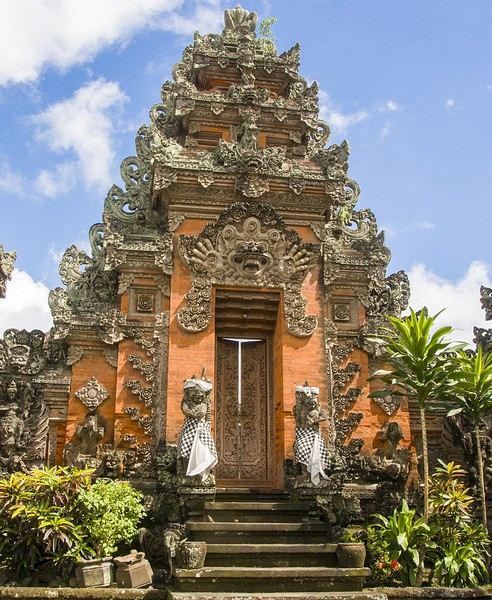
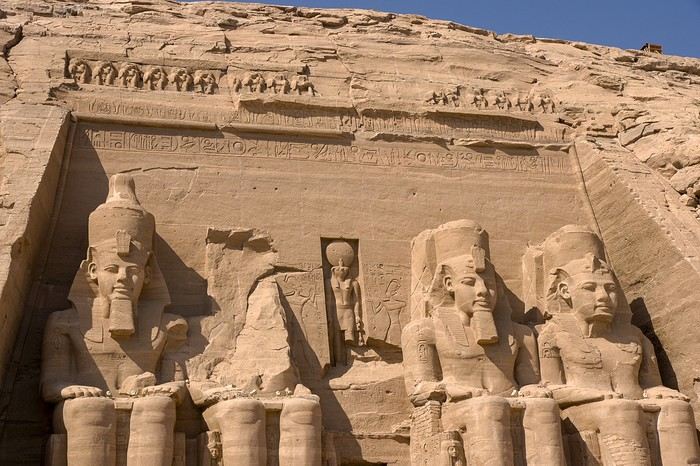
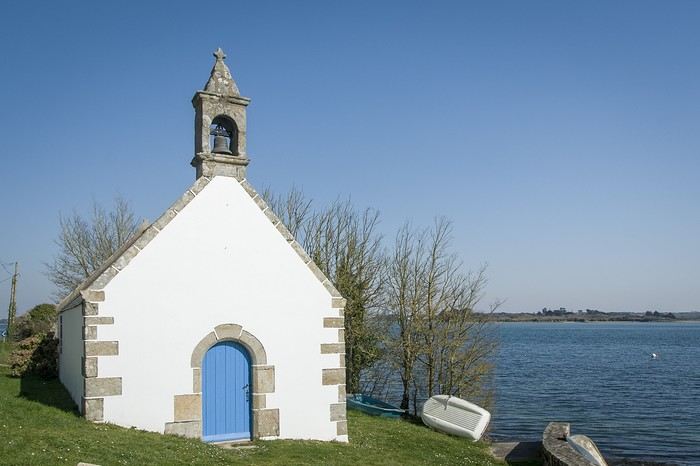
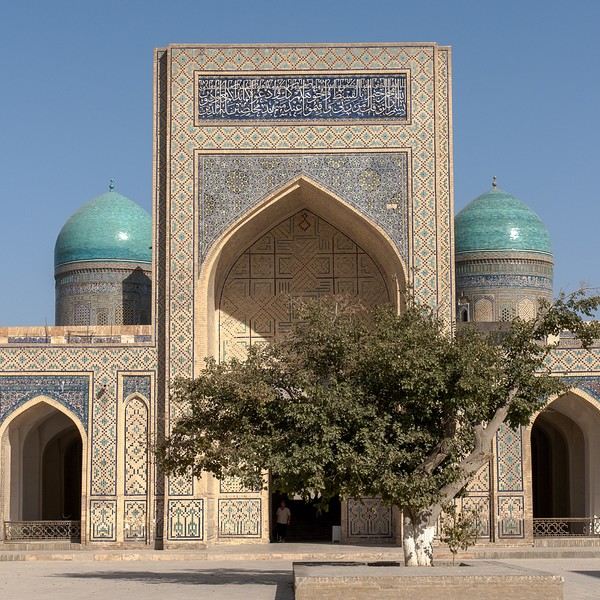
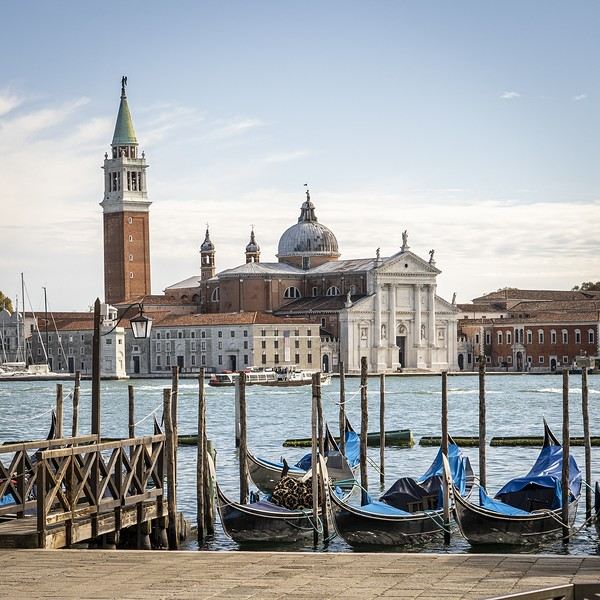

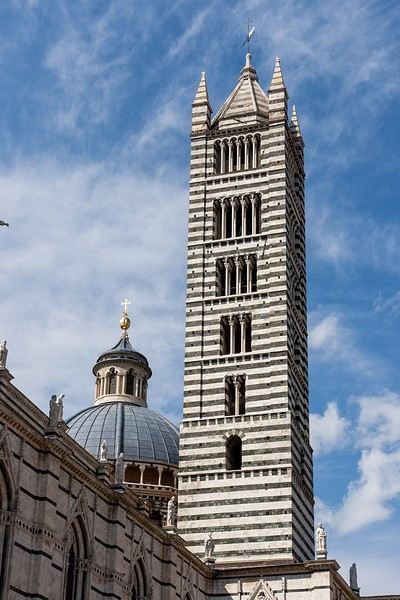
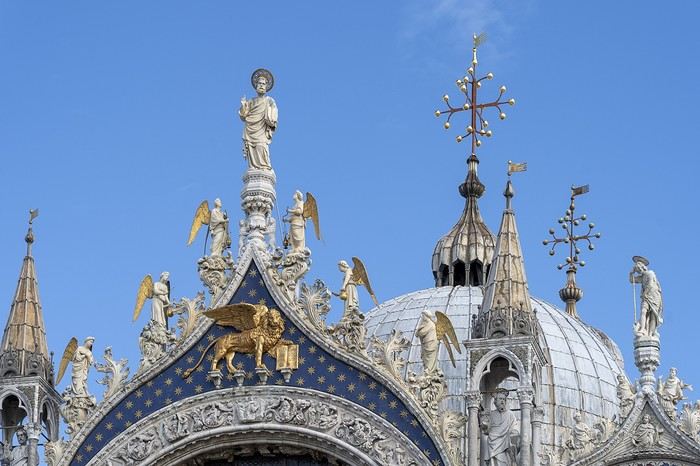
A few of my own photos, just to give you an idea:
Southwest USA Road Trip Part II
Here we go with this second travel journal dedicated to the American West! It’s a must when you love it! 😊
We had left off in the charming town of Bisbee, which once thrived thanks to its copper mines. Today, mining is a thing of the past, and the town seems a bit sleepy.
Unfortunately, I didn’t dig deep enough on-site to answer all the questions my observations raised. Guess I’ll have to *dig* into the subject a bit more... no pun intended! 😊
Let’s hop back in the car and head a little further south to check out the esplanade that offers a view—if you can call it that—of the impressive open-pit mine. Then, it’s off to the Lowell neighborhood.
Preserved almost exactly as it was, this area must’ve been bustling in its heyday. The vintage cars are still around, storefronts and signs look like they’re straight out of another era, and the whole place has a pretty amazing vibe. You’d almost think you were on Route 66!
Here, we’re not just discovering an old neighborhood—it’s a little slice of American history. And, a detail that’s great for my physical health: the area isn’t too spread out. Lucky me! 😊
I won’t post too many photos here since I think I can turn them into a future photo exhibit. Between these and some shots from Route 66, I should have more than enough material! So, let’s keep a few under wraps... to preserve the surprise. 😊
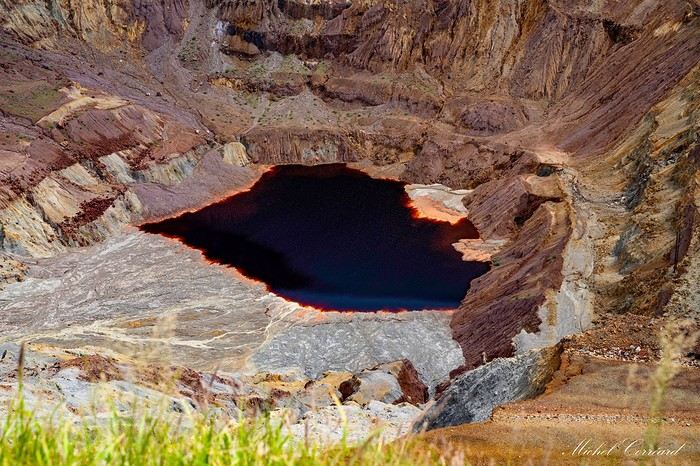
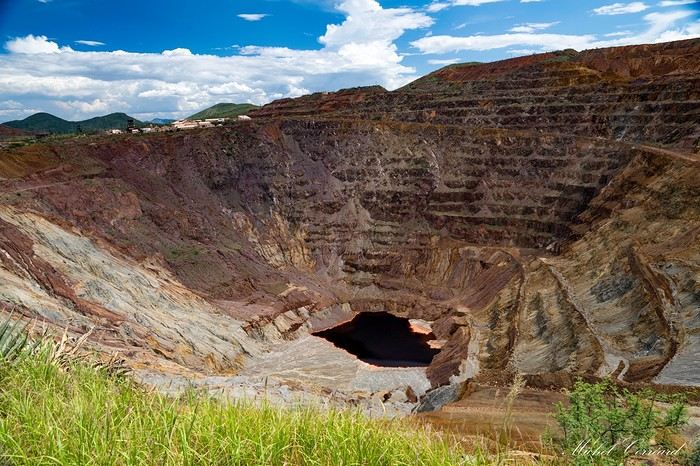
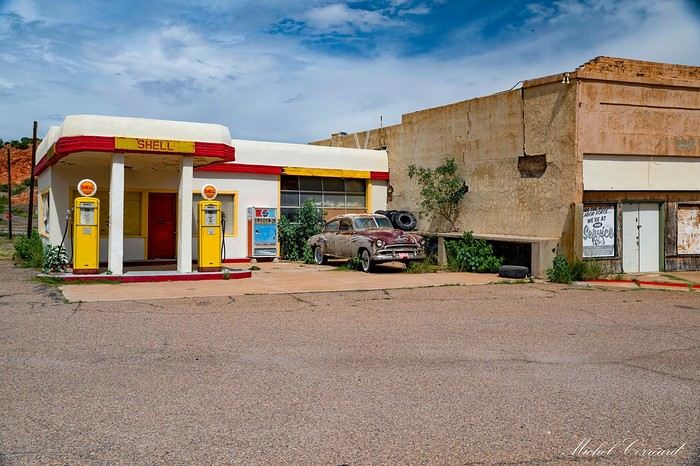
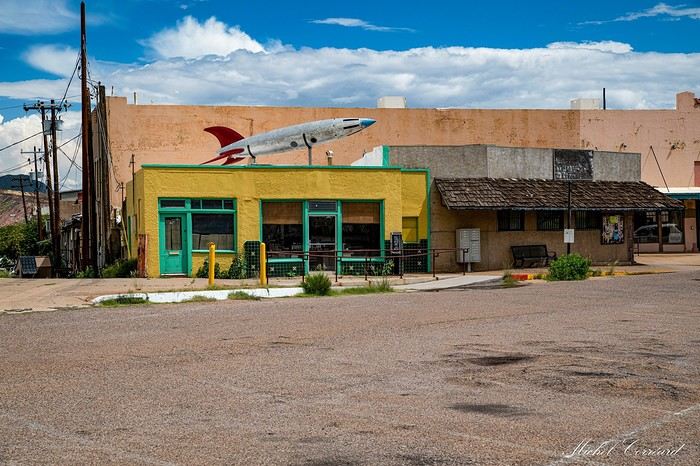
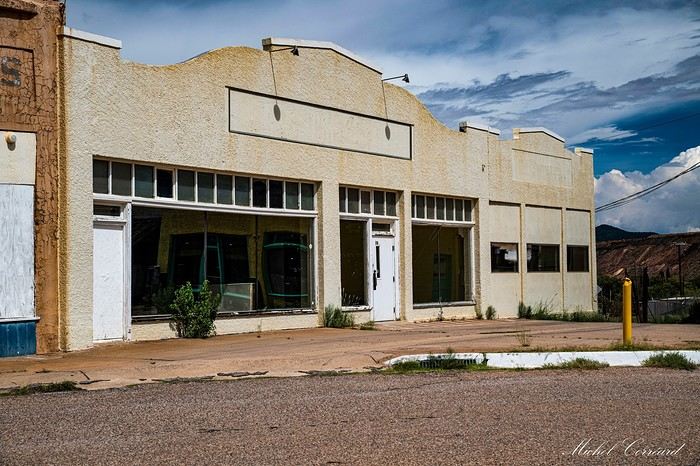
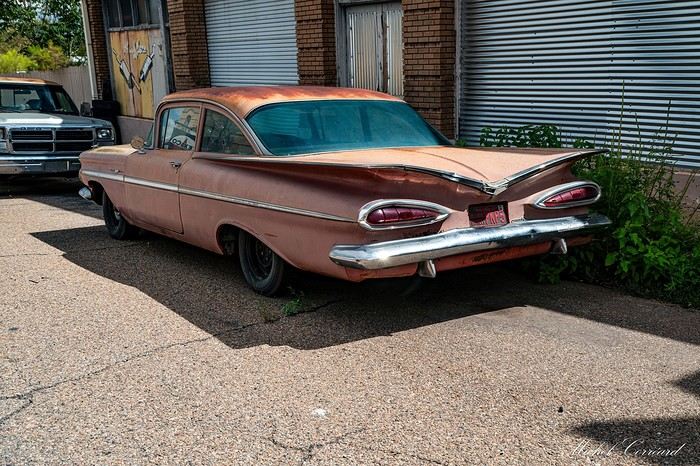
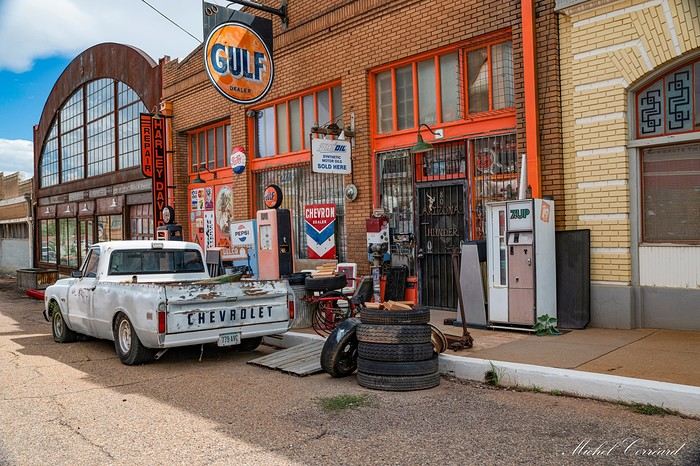
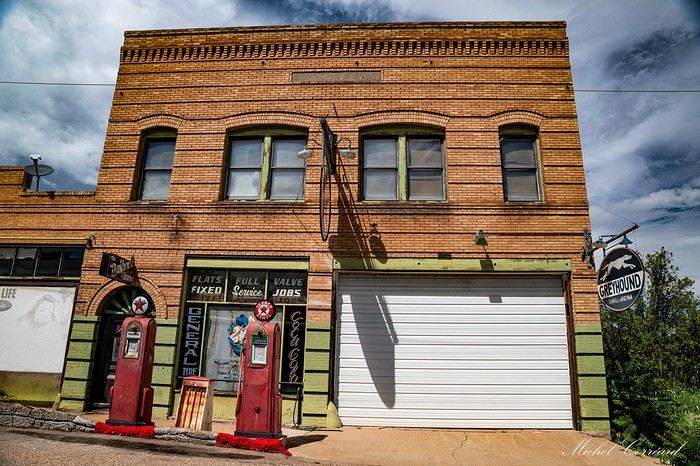
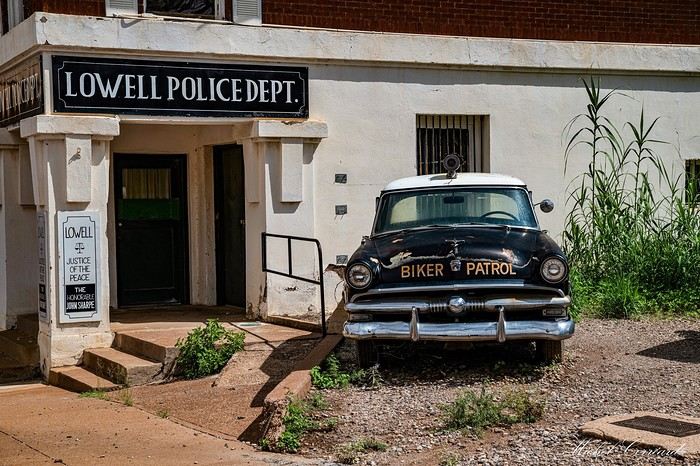
We had left off in the charming town of Bisbee, which once thrived thanks to its copper mines. Today, mining is a thing of the past, and the town seems a bit sleepy.
Unfortunately, I didn’t dig deep enough on-site to answer all the questions my observations raised. Guess I’ll have to *dig* into the subject a bit more... no pun intended! 😊
Let’s hop back in the car and head a little further south to check out the esplanade that offers a view—if you can call it that—of the impressive open-pit mine. Then, it’s off to the Lowell neighborhood.
Preserved almost exactly as it was, this area must’ve been bustling in its heyday. The vintage cars are still around, storefronts and signs look like they’re straight out of another era, and the whole place has a pretty amazing vibe. You’d almost think you were on Route 66!
Here, we’re not just discovering an old neighborhood—it’s a little slice of American history. And, a detail that’s great for my physical health: the area isn’t too spread out. Lucky me! 😊
I won’t post too many photos here since I think I can turn them into a future photo exhibit. Between these and some shots from Route 66, I should have more than enough material! So, let’s keep a few under wraps... to preserve the surprise. 😊
Africa: A Heartfelt Love for a Continent
“When the Whites came to Africa, we had the land and they had the Bible. They taught us to pray with our eyes closed: when we opened them, the Whites had the land and we had the Bible.” Jomo Kenyatta (p.7)
The Maggi cube, an unchallenged hegemony, and so much more
“The hopeless continent,” headlined The Economist, a British magazine, in July 2000 about Africa. Eleven years later, the same magazine headlined “Africa rising” instead. Images of Africa in the prosperous North constantly oscillate between apocalyptic scenarios and enthusiastic projections. A key issue with such images lies in the generalization they entail. If you look at the continent, considerable contrasts emerge depending on space and time. It’s no surprise that a region of the world encompassing such diverse ecological zones, maintaining such varied ties with other continents, comprising nearly fifty nation-states in sub-Saharan Africa alone, and characterized by a great diversity of languages, belief systems, and historical paths, doesn’t share a single destiny.
And yet, for many people outside Africa, as well as for many Africans, the continent constitutes a single entity, defined by criteria such as skin color, a colonial past, poverty, and the art of survival. Until now, these perspectives were generally accompanied by the idea that Africa had to—or should have—followed a single path together, sometimes called development, sometimes modernization, sometimes liberation, then a market economy. None of these paths delivered on their promises.
The two writers Alain Mabanckou and Abdourahman Waberi—one from Congo, the other raised in Djibouti, both long settled in France and now professors at renowned North American universities (Los Angeles, Washington)—have had enough of pessimistic scenarios: “We are aware that Africa is in the world and the world is in Africa. The same goes for all other continents, as our destinies are inextricably linked for better or worse. We refuse to see Africa as a reservoir of misfortunes or a continent cursed by atavistic misfortune and characterized by ethnic conflicts. [...] It’s this passionate flame we wanted to capture in a book [...] a kind of stroll through African cultures, without any demands, each letter of the alphabet leading us to a notion, a practice, a concept, a moment in history, literature, painting, politics, economics, cuisine, etc.” (p.10-11). Africa, they write, is on the verge of “imposing a signature, a style, a way of being in the world and in relation to the rest of the world.” (p.11) To put words to the continent’s diversity and dynamism, the two authors created a “rambling ABC,” a kind of portrait—or more precisely, a mythography—that lets you see and feel the pulse of a vast continent whose cultural power is unfolding before our eyes. Once marginalized or even mocked, the voice and importance of the Continent in global affairs are now undeniable” (p.11), containing over a hundred entries, mostly concise, written in a relaxed and casual style. The optimistic, even exuberant tone is set from the brief introduction. The duo of authors wants to “sing a love song to the cultures of our continent, to its inhabitants past and present, to its exceptional resources and its spectacular globalization despite a certain pollution that still clouds our skies due to the unmatched duration of dictatorships in some of our regions.” (p.12) In doing so, they don’t want to be too distracted by today’s Afewerki-Biya-Bongo-Déby & Co. ...
Of course, you’ll find tributes to great precursors like Frantz Fanon (“[...] it was a love story and admiration that wasn’t dimmed by the four decades separating his birth from ours. Let’s add that we were born while the native of Fort-de-France had left the world’s stage four years earlier, in the prime of life” p.141), Mongo Beti (“You must read and reread Mongo Beti, a genius who used his fame to support often just causes in Africa, like defending oppressed groups. His place is already in History. His oppressors, like the dictators Ahmadou Ahidjo and Paul Biya, can’t compete in the same category” p.64), the Malian Amadou Hampâté Bâ
(“Posterity remembers him mainly as an tireless defender of African cultures. His plea for the collection and preservation of traditional African knowledge remains a major event for all men and women of good will. One day in 1960, at the UNESCO podium, the native of Bandiagara sounded the alarm: ‘[...] Since we’ve admitted that the humanity of each people is the heritage of all humanity, if African traditions aren’t collected in time and written down, they’ll one day be missing from the universal archives of humanity.’” p.51),
Kwame Nkrumah, “one of the founders of Pan-Africanism, father of Ghana’s independence” (p.239), as well as the historian Cheikh Anta Diop, the writer, poet, and politician Aimé Césaire, and the economist and thinker Samir Amin, but also very warm tributes to certain contemporary African intellectuals like Souleymane Bachir Diagne and Achille Mbembe
(“A few years ago, in dominant economic circles, a rumor often resurfaced, usually disguised as a cold and scientifically proven analysis: Africa is useless. It’s a burden for the rest of the human community. With its 2% share in world trade, it would disappear from stock market radars without anyone noticing. So? Maybe it’ll be pulled up by other continents. Wanting to surpass itself is a crazy bet for Africans, they concluded. Arrogant or clueless, President Nicolas Sarkozy declared before an audience of students and teachers at Cheikh Anta Diop University in Dakar: ‘The African man hasn’t entered history enough [...] He only knows the eternal repetition of time marked by the endless repetition of the same gestures and words.’ That was in 2007. For decades, armed only with reason, an intellectual often steps up to debunk prejudices, lazy readings, and dishonest frameworks used as false fronts by those who, like Nicolas Sarkozy or former journalist Stephen Smith, out of ignorance, contempt, or condescension, distort African reality. This intellectual is none other than the historian and political scientist Achille Mbembe. This heir of Frantz Fanon, Amílcar Cabral, Jean-Marc Ela, and Fabien Eboussi-Boulaga was born in 1957 in Cameroon, in the Bassa region. Marked early by the upheavals of a fratricidal war, Achille Mbembe became the guardian of the memory of martyrs. After brilliant studies in Paris, he went on to teach at the best American universities, but the call of the Continent was stronger than anything else. In Dakar, he once directed CODESRIA (Council for the Development of Social Science Research in Africa) before joining the University of the Witwatersrand in Johannesburg, South Africa. Even though the author of *Critique of Black Reason* (��ditions La Découverte, 2015) spends a few months at Duke University in North Carolina, his observation post remains South Africa. From Johannesburg, Achille Mbembe scrutinizes Africa and the whole world. A lucid observer with an elegant and generous pen, Achille Mbembe knows how to blend big and small history: ‘I was born one day in July, as the month was drawing to a close. It was 1957, in that part of Africa recently named ‘Cameroon,’ a memory of the wonder that seized Portuguese sailors in the 15th century when, sailing up the river near Douala, they couldn’t help but note the presence of a multitude of crustaceans, and named it *Rio dos Camarões*, meaning ‘River of Shrimp.’ I grew up in the shadow of this nameless land, since, in a way, the name it bears is only the product of someone else’s astonishment: a lexical mistake, if you will.’ From this mistake or wound, he made leaven, a springboard to compose a rich work, recognized worldwide. To denounce barriers and barbarians too. But that’s not enough. Among his peers in circles of thought and action, Achille Mbembe passionately and consistently defends human dignity and the beauty of the world. In doing so, he fulfills the mission Frantz Fanon entrusted to him.” (p.227-229),
as well as entries dedicated to lesser-known artists and intellectuals, like the French journalist and activist Rokhaya Diallo, daughter of Senegalese and Gambian parents, or the Ethiopian filmmaker Haile Gerima, who has long lived in the United States. Other names from politics, sports, music, art, and literature: Kofi Annan, p.36; Barack Obama, p.243; Thomas Sankara, p.277; Ousmane Sow, p.285; Yambo Ouologuem, p.250; Léopold Sédar Senghor, p.282; Muhammad Ali, p.30; Nuruddin Farah, p.146; Salif Keita, p.203; Ahmadou Kourouma, p.206; Ngũgĩ wa Thiong’o, p.236; Winnie Mandela, p.224; Kylian Mbappé, p.226 ...
The authors, who resolutely commit to a “mythography” (p.11) of Africa, also pay special attention to local social movements, cultural events, and aspects of daily life. *Y’en a marre*, “which also meant ‘we’re fed up with sitting on our hands’” (p.320-321), emerged about a decade ago in Senegal as a citizen movement of peaceful resistance and symbolizes, the authors emphasize, the fact that African youth are increasingly fed up “with the political circus deployed in Africa since independence, as our parents would say, ‘since the White man left’...” (p.321). A full entry is dedicated to the Maggi bouillon cube, which has flooded African markets for about forty years and enjoys immense popularity (“It’s everywhere in Africa, from Dakar to Djibouti, and from Tangier to Cape Town. It’s in every pot, every stew. Little hands put it in every sauce, every local or adapted dish. An unchallenged hegemony! You’ll find it in diasporas too. The culinary strolls in Paris, in the [...] neighborhood” p.90). Critics blame it not only for impoverishing the aromatic diversity of local dishes but also for being harmful to health. And yet, “he poorest Africans, those who eat only once a day, a few spoonfuls of white beans and a ball of *foufou*, for example, are the most fervent users of the magic cube.” (p.92-93)
For *fonio*, “the new trendy cereal. [...] From the millet family, fonio is probably the oldest cereal cultivated in West Africa, and mainly in its sub-Saharan part, for millennia. [...] Easy to grow, water-efficient, fonio grows everywhere except on clay soils. Long neglected because it was considered the poor man’s crop, fonio is now a source of pride for the farmers who cultivate it and cherish it like the apple of their eye” (p.156-157), the authors immediately offer a detailed recipe, letting the reader know that “e can’t resist sharing this fonio with chicken recipe from Mali with you:
Ingredients: 1 chicken 3 large ripe red tomatoes 4 tbsp tomato paste 4 large onions 1 garlic clove 1/2 cup oil 2 Maggi cubes or salt 2 large carrots 1 turnip 1 large cabbage 2 large potatoes 1 celery stalk 1 packet pre-cooked fonio 4 okra (or okra powder) salt, pepper
Preparation: 1. Prepare the sauce: wash and cut the chicken. Peel the onions, garlic, and vegetables. 2. In a pot, fry the chicken pieces. 3. Dice the onions, tomatoes, carrots, and turnip very small and add them to the pot. 4. Add the tomato paste, salt, and pepper. 5. Simmer for 15 min, then add 2 L of water and the cooked chicken pieces. 6. Simmer for 30 min, then add the crushed garlic and celery, plus the cabbage cut into 4 and the potatoes cut in half. 7. Prepare the fonio: cover it with warm water, let it rest for 15 min, and cook it over low heat. 8. In a small pot, boil the okra and crush them. 9. Mix the crushed okra with the cooked fonio, then salt. Serve hot.” (p.158-159)
The comedy *Black Mic Mac*, released in French theaters in 1986 and addressing France’s increasingly restrictive immigration policy at the time, also gets an entry, as do *Tintin in the Congo*, the popular comic, and *Jip’s Café* (“[...] a little Africa in the heart of Paris, with passersby stopping to admire the ‘ambianceurs’ on the dance floor or attend the cultural events offered by the place” (p.194), an African establishment in Paris that Alain Mabanckou already immortalized in one of his novels.
The duo of authors also tackles thorny subjects like jihadism (p.119), the Rwandan genocide (p.272), the CFA franc (p.82), and dictatorship (p.110). While the two strike the right tone here, many entries leave a slightly bitter taste. Two examples: why doesn’t the text on Barack Obama mention the great disappointment of many people in Africa, who expected more from the African policy of the first U.S. president with African roots than just occasional warm words? Why do the comments on Winnie Mandela gloss over the fact that she was a highly controversial icon of the anti-apartheid movement due to her involvement in kidnappings, acts of torture, and murders of alleged apartheid collaborators? Instead, there’s a compassion that brings tears to the eyes: “She was often reduced to a secondary role, the wife of a great man” or “When victory came, she didn’t taste its fruits. Divorced, isolated. She would never be a ‘first lady’ in an evening gown, posing before a bed of chrysanthemums. They’d keep her far from the circles of power” (p.224-225). At this point, I would’ve liked the authors to take a slightly more critical stance...
That said, these “weaknesses” (if you can call them that) shouldn’t overshadow the book as a whole. It remains an informative, sometimes very entertaining, and often even original work in its own way.
Book information (the original French and the German translation):
Alain Mabanckou/Abdourahman Waberi. Dictionnaire enjoué des cultures africaines. Fayard, 2019. Alain Mabanckou/Abdourahman Waberi. Der Puls Afrikas. Eine Liebeserklärung von A bis Z. Reclam, 2022.
Hery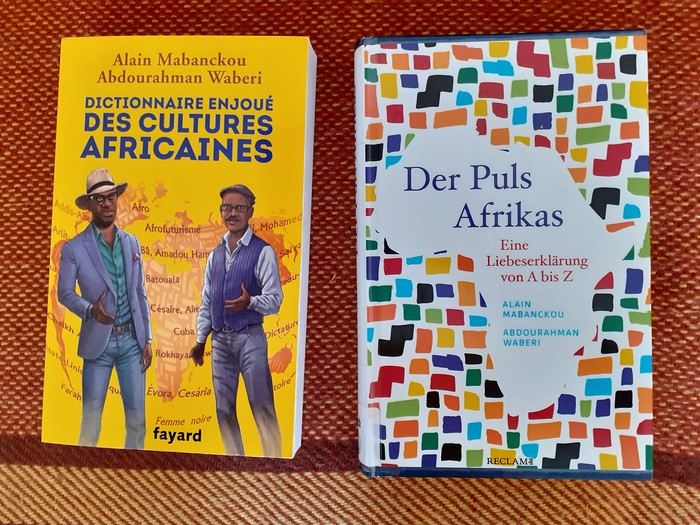
The Maggi cube, an unchallenged hegemony, and so much more
“The hopeless continent,” headlined The Economist, a British magazine, in July 2000 about Africa. Eleven years later, the same magazine headlined “Africa rising” instead. Images of Africa in the prosperous North constantly oscillate between apocalyptic scenarios and enthusiastic projections. A key issue with such images lies in the generalization they entail. If you look at the continent, considerable contrasts emerge depending on space and time. It’s no surprise that a region of the world encompassing such diverse ecological zones, maintaining such varied ties with other continents, comprising nearly fifty nation-states in sub-Saharan Africa alone, and characterized by a great diversity of languages, belief systems, and historical paths, doesn’t share a single destiny.
And yet, for many people outside Africa, as well as for many Africans, the continent constitutes a single entity, defined by criteria such as skin color, a colonial past, poverty, and the art of survival. Until now, these perspectives were generally accompanied by the idea that Africa had to—or should have—followed a single path together, sometimes called development, sometimes modernization, sometimes liberation, then a market economy. None of these paths delivered on their promises.
The two writers Alain Mabanckou and Abdourahman Waberi—one from Congo, the other raised in Djibouti, both long settled in France and now professors at renowned North American universities (Los Angeles, Washington)—have had enough of pessimistic scenarios: “We are aware that Africa is in the world and the world is in Africa. The same goes for all other continents, as our destinies are inextricably linked for better or worse. We refuse to see Africa as a reservoir of misfortunes or a continent cursed by atavistic misfortune and characterized by ethnic conflicts. [...] It’s this passionate flame we wanted to capture in a book [...] a kind of stroll through African cultures, without any demands, each letter of the alphabet leading us to a notion, a practice, a concept, a moment in history, literature, painting, politics, economics, cuisine, etc.” (p.10-11). Africa, they write, is on the verge of “imposing a signature, a style, a way of being in the world and in relation to the rest of the world.” (p.11) To put words to the continent’s diversity and dynamism, the two authors created a “rambling ABC,” a kind of portrait—or more precisely, a mythography—that lets you see and feel the pulse of a vast continent whose cultural power is unfolding before our eyes. Once marginalized or even mocked, the voice and importance of the Continent in global affairs are now undeniable” (p.11), containing over a hundred entries, mostly concise, written in a relaxed and casual style. The optimistic, even exuberant tone is set from the brief introduction. The duo of authors wants to “sing a love song to the cultures of our continent, to its inhabitants past and present, to its exceptional resources and its spectacular globalization despite a certain pollution that still clouds our skies due to the unmatched duration of dictatorships in some of our regions.” (p.12) In doing so, they don’t want to be too distracted by today’s Afewerki-Biya-Bongo-Déby & Co. ...
Of course, you’ll find tributes to great precursors like Frantz Fanon (“[...] it was a love story and admiration that wasn’t dimmed by the four decades separating his birth from ours. Let’s add that we were born while the native of Fort-de-France had left the world’s stage four years earlier, in the prime of life” p.141), Mongo Beti (“You must read and reread Mongo Beti, a genius who used his fame to support often just causes in Africa, like defending oppressed groups. His place is already in History. His oppressors, like the dictators Ahmadou Ahidjo and Paul Biya, can’t compete in the same category” p.64), the Malian Amadou Hampâté Bâ
(“Posterity remembers him mainly as an tireless defender of African cultures. His plea for the collection and preservation of traditional African knowledge remains a major event for all men and women of good will. One day in 1960, at the UNESCO podium, the native of Bandiagara sounded the alarm: ‘[...] Since we’ve admitted that the humanity of each people is the heritage of all humanity, if African traditions aren’t collected in time and written down, they’ll one day be missing from the universal archives of humanity.’” p.51),
Kwame Nkrumah, “one of the founders of Pan-Africanism, father of Ghana’s independence” (p.239), as well as the historian Cheikh Anta Diop, the writer, poet, and politician Aimé Césaire, and the economist and thinker Samir Amin, but also very warm tributes to certain contemporary African intellectuals like Souleymane Bachir Diagne and Achille Mbembe
(“A few years ago, in dominant economic circles, a rumor often resurfaced, usually disguised as a cold and scientifically proven analysis: Africa is useless. It’s a burden for the rest of the human community. With its 2% share in world trade, it would disappear from stock market radars without anyone noticing. So? Maybe it’ll be pulled up by other continents. Wanting to surpass itself is a crazy bet for Africans, they concluded. Arrogant or clueless, President Nicolas Sarkozy declared before an audience of students and teachers at Cheikh Anta Diop University in Dakar: ‘The African man hasn’t entered history enough [...] He only knows the eternal repetition of time marked by the endless repetition of the same gestures and words.’ That was in 2007. For decades, armed only with reason, an intellectual often steps up to debunk prejudices, lazy readings, and dishonest frameworks used as false fronts by those who, like Nicolas Sarkozy or former journalist Stephen Smith, out of ignorance, contempt, or condescension, distort African reality. This intellectual is none other than the historian and political scientist Achille Mbembe. This heir of Frantz Fanon, Amílcar Cabral, Jean-Marc Ela, and Fabien Eboussi-Boulaga was born in 1957 in Cameroon, in the Bassa region. Marked early by the upheavals of a fratricidal war, Achille Mbembe became the guardian of the memory of martyrs. After brilliant studies in Paris, he went on to teach at the best American universities, but the call of the Continent was stronger than anything else. In Dakar, he once directed CODESRIA (Council for the Development of Social Science Research in Africa) before joining the University of the Witwatersrand in Johannesburg, South Africa. Even though the author of *Critique of Black Reason* (��ditions La Découverte, 2015) spends a few months at Duke University in North Carolina, his observation post remains South Africa. From Johannesburg, Achille Mbembe scrutinizes Africa and the whole world. A lucid observer with an elegant and generous pen, Achille Mbembe knows how to blend big and small history: ‘I was born one day in July, as the month was drawing to a close. It was 1957, in that part of Africa recently named ‘Cameroon,’ a memory of the wonder that seized Portuguese sailors in the 15th century when, sailing up the river near Douala, they couldn’t help but note the presence of a multitude of crustaceans, and named it *Rio dos Camarões*, meaning ‘River of Shrimp.’ I grew up in the shadow of this nameless land, since, in a way, the name it bears is only the product of someone else’s astonishment: a lexical mistake, if you will.’ From this mistake or wound, he made leaven, a springboard to compose a rich work, recognized worldwide. To denounce barriers and barbarians too. But that’s not enough. Among his peers in circles of thought and action, Achille Mbembe passionately and consistently defends human dignity and the beauty of the world. In doing so, he fulfills the mission Frantz Fanon entrusted to him.” (p.227-229),
as well as entries dedicated to lesser-known artists and intellectuals, like the French journalist and activist Rokhaya Diallo, daughter of Senegalese and Gambian parents, or the Ethiopian filmmaker Haile Gerima, who has long lived in the United States. Other names from politics, sports, music, art, and literature: Kofi Annan, p.36; Barack Obama, p.243; Thomas Sankara, p.277; Ousmane Sow, p.285; Yambo Ouologuem, p.250; Léopold Sédar Senghor, p.282; Muhammad Ali, p.30; Nuruddin Farah, p.146; Salif Keita, p.203; Ahmadou Kourouma, p.206; Ngũgĩ wa Thiong’o, p.236; Winnie Mandela, p.224; Kylian Mbappé, p.226 ...
The authors, who resolutely commit to a “mythography” (p.11) of Africa, also pay special attention to local social movements, cultural events, and aspects of daily life. *Y’en a marre*, “which also meant ‘we’re fed up with sitting on our hands’” (p.320-321), emerged about a decade ago in Senegal as a citizen movement of peaceful resistance and symbolizes, the authors emphasize, the fact that African youth are increasingly fed up “with the political circus deployed in Africa since independence, as our parents would say, ‘since the White man left’...” (p.321). A full entry is dedicated to the Maggi bouillon cube, which has flooded African markets for about forty years and enjoys immense popularity (“It’s everywhere in Africa, from Dakar to Djibouti, and from Tangier to Cape Town. It’s in every pot, every stew. Little hands put it in every sauce, every local or adapted dish. An unchallenged hegemony! You’ll find it in diasporas too. The culinary strolls in Paris, in the [...] neighborhood” p.90). Critics blame it not only for impoverishing the aromatic diversity of local dishes but also for being harmful to health. And yet, “he poorest Africans, those who eat only once a day, a few spoonfuls of white beans and a ball of *foufou*, for example, are the most fervent users of the magic cube.” (p.92-93)
For *fonio*, “the new trendy cereal. [...] From the millet family, fonio is probably the oldest cereal cultivated in West Africa, and mainly in its sub-Saharan part, for millennia. [...] Easy to grow, water-efficient, fonio grows everywhere except on clay soils. Long neglected because it was considered the poor man’s crop, fonio is now a source of pride for the farmers who cultivate it and cherish it like the apple of their eye” (p.156-157), the authors immediately offer a detailed recipe, letting the reader know that “e can’t resist sharing this fonio with chicken recipe from Mali with you:
Ingredients: 1 chicken 3 large ripe red tomatoes 4 tbsp tomato paste 4 large onions 1 garlic clove 1/2 cup oil 2 Maggi cubes or salt 2 large carrots 1 turnip 1 large cabbage 2 large potatoes 1 celery stalk 1 packet pre-cooked fonio 4 okra (or okra powder) salt, pepper
Preparation: 1. Prepare the sauce: wash and cut the chicken. Peel the onions, garlic, and vegetables. 2. In a pot, fry the chicken pieces. 3. Dice the onions, tomatoes, carrots, and turnip very small and add them to the pot. 4. Add the tomato paste, salt, and pepper. 5. Simmer for 15 min, then add 2 L of water and the cooked chicken pieces. 6. Simmer for 30 min, then add the crushed garlic and celery, plus the cabbage cut into 4 and the potatoes cut in half. 7. Prepare the fonio: cover it with warm water, let it rest for 15 min, and cook it over low heat. 8. In a small pot, boil the okra and crush them. 9. Mix the crushed okra with the cooked fonio, then salt. Serve hot.” (p.158-159)
The comedy *Black Mic Mac*, released in French theaters in 1986 and addressing France’s increasingly restrictive immigration policy at the time, also gets an entry, as do *Tintin in the Congo*, the popular comic, and *Jip’s Café* (“[...] a little Africa in the heart of Paris, with passersby stopping to admire the ‘ambianceurs’ on the dance floor or attend the cultural events offered by the place” (p.194), an African establishment in Paris that Alain Mabanckou already immortalized in one of his novels.
The duo of authors also tackles thorny subjects like jihadism (p.119), the Rwandan genocide (p.272), the CFA franc (p.82), and dictatorship (p.110). While the two strike the right tone here, many entries leave a slightly bitter taste. Two examples: why doesn’t the text on Barack Obama mention the great disappointment of many people in Africa, who expected more from the African policy of the first U.S. president with African roots than just occasional warm words? Why do the comments on Winnie Mandela gloss over the fact that she was a highly controversial icon of the anti-apartheid movement due to her involvement in kidnappings, acts of torture, and murders of alleged apartheid collaborators? Instead, there’s a compassion that brings tears to the eyes: “She was often reduced to a secondary role, the wife of a great man” or “When victory came, she didn’t taste its fruits. Divorced, isolated. She would never be a ‘first lady’ in an evening gown, posing before a bed of chrysanthemums. They’d keep her far from the circles of power” (p.224-225). At this point, I would’ve liked the authors to take a slightly more critical stance...
That said, these “weaknesses” (if you can call them that) shouldn’t overshadow the book as a whole. It remains an informative, sometimes very entertaining, and often even original work in its own way.
Book information (the original French and the German translation):
Alain Mabanckou/Abdourahman Waberi. Dictionnaire enjoué des cultures africaines. Fayard, 2019. Alain Mabanckou/Abdourahman Waberi. Der Puls Afrikas. Eine Liebeserklärung von A bis Z. Reclam, 2022.
Hery
Staircases. Photo contest theme for May 2026.
Hello
This month’s photo contest theme for May 2026 is "Staircases"
Plural or singular? Does it really matter as long as you’re told you’ve gone up or down them well?
Anyway, it’s not that complicated, even though I’m sure some will manage to overcomplicate it—after all, why keep things simple when making them complicated is so much more fun (as an Indian proverb goes).
To participate: Submit your photos until Monday, May 25 at 11:59 PM You can post up to 3 photos, numbered and shared in separate messages, along with a short description of the location and the story behind it.
To vote: From Tuesday, May 26 at 12:01 AM until Saturday, May 30 at 11:59 PM After the deadline, it’s too late.
Please include the photo number, username, and the points awarded: Photo #1 = 3 pts Photo #2 = 2 pts Photo #3 = 1 pt
All VF members can vote (even those who didn’t submit photos). In case of a tie for first place, the winning photo will be the one with the most first-place votes, then second-place votes! The lucky winner will get to organize June 2026’s photo contest.
For discussions about the theme, click here: Discussion thread for May 2026’s theme: Staircases
This month’s photo contest theme for May 2026 is "Staircases"
Plural or singular? Does it really matter as long as you’re told you’ve gone up or down them well?
Anyway, it’s not that complicated, even though I’m sure some will manage to overcomplicate it—after all, why keep things simple when making them complicated is so much more fun (as an Indian proverb goes).
To participate: Submit your photos until Monday, May 25 at 11:59 PM You can post up to 3 photos, numbered and shared in separate messages, along with a short description of the location and the story behind it.
To vote: From Tuesday, May 26 at 12:01 AM until Saturday, May 30 at 11:59 PM After the deadline, it’s too late.
Please include the photo number, username, and the points awarded: Photo #1 = 3 pts Photo #2 = 2 pts Photo #3 = 1 pt
All VF members can vote (even those who didn’t submit photos). In case of a tie for first place, the winning photo will be the one with the most first-place votes, then second-place votes! The lucky winner will get to organize June 2026’s photo contest.
For discussions about the theme, click here: Discussion thread for May 2026’s theme: Staircases
USA Road Trip - November 2023
After staying in Aruba in November 2023, we picked up our camper van, which we had left in a hotel parking lot in Miami, Florida.
This isn’t our first road trip across the United States. Since we’re retired, we took the opportunity to travel along the American West Coast, starting with the Everglades in Florida to visit a few parks where we could spot alligators.
We also made a few stops in Mississippi and Texas to explore the most important cities in those states.
Did you know that Austin is home to the world’s largest urban bat colony? It’s truly impressive to see thousands of them take flight at dusk.
I invite you to keep reading this travel journal and watch the videos that’ll give you a little more insight into these different destinations.
Videos are embedded throughout the summary. Just click on the image to start the video.
To jump to a specific post, here are the relevant links:
FLORIDA:
Big Cypress National Preserve - Ochopee Captain Mitch's Everglades Airboat Tours Marco Island
MISSISSIPPI:
Exploring Biloxi
TEXAS:
Downtown Houston Corpus Christi San Antonio Attractions McNutt Sculpture Garden - San Antonio Mission San José - San Antonio Austin Attractions The World’s Largest Urban Bat Colony - Austin Downtown Fort Worth Attractions Downtown Dallas
This isn’t our first road trip across the United States. Since we’re retired, we took the opportunity to travel along the American West Coast, starting with the Everglades in Florida to visit a few parks where we could spot alligators.
We also made a few stops in Mississippi and Texas to explore the most important cities in those states.
Did you know that Austin is home to the world’s largest urban bat colony? It’s truly impressive to see thousands of them take flight at dusk.
I invite you to keep reading this travel journal and watch the videos that’ll give you a little more insight into these different destinations.
Videos are embedded throughout the summary. Just click on the image to start the video.
To jump to a specific post, here are the relevant links:
FLORIDA:
Big Cypress National Preserve - Ochopee Captain Mitch's Everglades Airboat Tours Marco Island
MISSISSIPPI:
Exploring Biloxi
TEXAS:
Downtown Houston Corpus Christi San Antonio Attractions McNutt Sculpture Garden - San Antonio Mission San José - San Antonio Austin Attractions The World’s Largest Urban Bat Colony - Austin Downtown Fort Worth Attractions Downtown Dallas
April 2026 Theme Discussion: Feeling Peachy?
Hey there!
This is the spot where we can chill and chat about fishing at sea worldwide 😊
Here are two charming fishermen taking a well-deserved break near Zanzibar!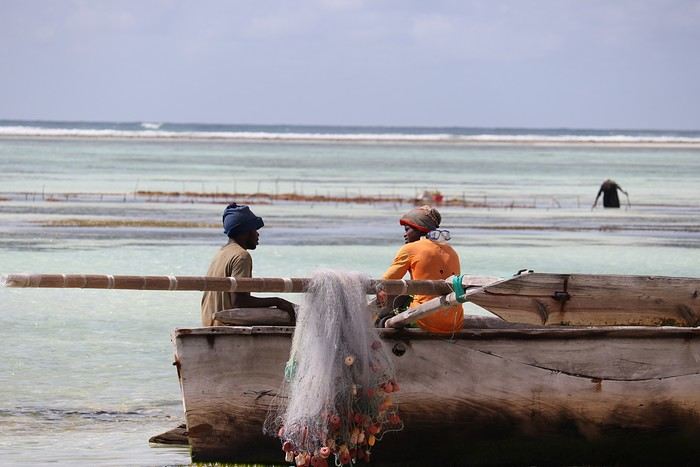
This is the spot where we can chill and chat about fishing at sea worldwide 😊
Here are two charming fishermen taking a well-deserved break near Zanzibar!
A Bold Combo: Southern Peru, Bolivia, and Northern Chile
Hello everyone,
For our latest 3-week family trip (yes, the kids are growing up, and two of them are about to enter the working world), we’re heading to South America! For our first time on this continent, I had planned a classic 3-week loop in Peru.
But since we won’t be returning to this part of the world anytime soon, I thought: why not follow in the footsteps of Franck, aka Bibouns51, who, in 18 days, didn’t just stick to Peru but also added two of the planet’s most stunning landscapes to his itinerary... the Salar de Uyuni in Bolivia and its neighbor, the fabulous Atacama Desert in northern Chile !!
So, I set about the tricky task of limiting the regions we’d visit in Peru to those we considered must-sees, to avoid rushing too much. The visit schedules were optimized, including several comfortable overnight buses that have the huge advantage of letting us hop between regions.
So, we’re off on a somewhat adventurous trip with three domestic flights (two on the first day and one on the last), two overnight buses for quick hops, several car rentals, the services of a few drivers to make the trip more comfortable, and even a tour operator for crossing the Salar...
Our main concern is altitude sickness, and we’re bringing Diamox, aspirin, etc., just in case.
Our second worry before departure was not even getting off the ground... Yes, for once, we’re leaving from France—Marseille, to be exact. The week before our departure, with the surprise air traffic controllers’ strike, I remembered why we usually prefer to leave from abroad, like Turin or Barcelona... In the end, it wasn’t the air traffic controllers who made us nervous but the early July wildfires that paralyzed the airport a few days before our departure. Fortunately, the fires were quickly brought under control, and on the big day, everything was smooth sailing!
Detailed itinerary (which changed on Day 1 due to departure hiccups): Day 0: Flight Marseille - Madrid - Lima PERU Theoretical and abandoned Day 1: Flight Lima - Cuzco and visit Cuzco (Puka Pukara, Tambomachay, Cristo Blanco Observatory, Sacsayhuaman sunset) - Night in Cuzco Day 2: Taxi -> Chinchero - Moray - Maras Salt Mines - Ollantaytambo - Train to Aguas Calientes Day 3: Machu Picchu - Return train to Ollantaytambo Day 4: 2-day taxi -> Pisac - Tipon - Andahuaylillas - Huaro - Night in San Pedro Day 5: Palcoyo - Checacupe - Vinicunca - Return and night in Cuzco Day 6: Day in Cuzco (catch-up on Sacsayhuaman, San Blas district, Temple of the Sun) - Overnight bus to Arequipa Day 7: Rental car -> On the road to Colca Canyon, night in Cabanaconde Day 8: Descent to the bottom of Colca Canyon, night at Oasis Sangalle Day 9: Ascent from the canyon - Maca - Chivay - Return and night in Arequipa Day 10: Visit Arequipa (Santa Catalina Convent, La Recoleta Church and Monastery, La Compañía Church, Cathedral) - Overnight bus to Puno Day 11: Lake Titicaca - Night in Puno BOLIVIA Day 12: Shared taxi -> Road to La Paz, visit downtown La Paz - Night 1 in La Paz Day 13: Moon Valley and Las Animas Valley - Night 2 in La Paz Day 14: Day in La Paz - Night 3 in La Paz Day 15: Flight to Uyuni - Day 1 of Salar de Uyuni tour - Night at the edge of the Salar Day 16: Crossing the Lipez region and lagoons - Night near Laguna Colorada Day 17: Sol de Mañana CHILE Day 17 cont.: Pre-booked transfer to SPDA - 4x4 rental - Pukara de Quitor - Stargazing tour - Night 1 in SPDA Day 18: Death Valley and Moon Valley - Night 2 in SPDA Day 19: Miscanti and Miniques Lagoons, Salar de Aguas Calientes and its Piedra Roja, Tebenquiche Lagoon and Quebrada del Diablo - Night 3 in SPDA Day 20: Rainbow Valley and swim in the Puritama River - Night 4 in SPDA Day 21: Tebenquiche Lagoon - Bus to Calama - Flight to Santiago Day 22: Return Santiago - Madrid - Marseille
Day 0 - 11/07: Destination Lima
Our first flight from Marseille went smoothly to our Iberia layover in Madrid.
In Madrid, just after getting off the plane around 8 PM, and as we were walking through the terminal, we got a rude awakening!!
We saw the word "Cancelled" next to our flight number on the display boards. Thinking it must be a glitch, we checked another screen, but the system was stubborn, and the same dreaded word appeared !
So, we headed to the Iberia counter, where an agent confirmed that our Friday evening flight was canceled and rescheduled for the next morning. The reason? A breakdown and no replacement plane, even though we were in Madrid, Iberia’s home base!
To make matters worse, I remembered our super-tight schedule, planned to the minute, with no buffer day in Lima. Since I’m a bit phobic of megacities and hadn’t found anything appealing in the Peruvian capital in our guidebooks, we’d planned to leave Lima as soon as possible for Cusco, the heart of the Sacred Valley, to spend our first day there.
Bad idea, because we already knew the 4-hour buffer wouldn’t be enough, and we’d miss the domestic flight, which was, of course, non-refundable and non-changeable. So, we had to call LATAM from Madrid to find another flight for Saturday evening and negotiate a rate to recover some of our initial outlay.
After an hour on the phone with customer service, several endless holds, and three failed attempts to dictate our credit card number over the phone to a Spaniard speaking English with a thick accent, we finally managed to confirm the transaction, securing our new flight tickets for a moderate extra cost of just 150 € total.
At first, we were pretty bummed about losing a day and incurring extra fees to reschedule the domestic flight, but then, when we learned from an Iberia customer service rep that we’d receive the max compensation of 600 € per traveler, we even ended up grinning... because 3000 € in refunds for only losing the first day in Cusco? We’d sign up for that 10 times over!!
Iberia then took care of us, putting us up in a hotel where we had dinner before a short 5-hour night and an early morning departure. I took the opportunity to improvise a quick day of sightseeing in Lima, focusing on the Barranco and Miraflores districts.
For our latest 3-week family trip (yes, the kids are growing up, and two of them are about to enter the working world), we’re heading to South America! For our first time on this continent, I had planned a classic 3-week loop in Peru.
But since we won’t be returning to this part of the world anytime soon, I thought: why not follow in the footsteps of Franck, aka Bibouns51, who, in 18 days, didn’t just stick to Peru but also added two of the planet’s most stunning landscapes to his itinerary... the Salar de Uyuni in Bolivia and its neighbor, the fabulous Atacama Desert in northern Chile !!
So, I set about the tricky task of limiting the regions we’d visit in Peru to those we considered must-sees, to avoid rushing too much. The visit schedules were optimized, including several comfortable overnight buses that have the huge advantage of letting us hop between regions.
So, we’re off on a somewhat adventurous trip with three domestic flights (two on the first day and one on the last), two overnight buses for quick hops, several car rentals, the services of a few drivers to make the trip more comfortable, and even a tour operator for crossing the Salar...
Our main concern is altitude sickness, and we’re bringing Diamox, aspirin, etc., just in case.
Our second worry before departure was not even getting off the ground... Yes, for once, we’re leaving from France—Marseille, to be exact. The week before our departure, with the surprise air traffic controllers’ strike, I remembered why we usually prefer to leave from abroad, like Turin or Barcelona... In the end, it wasn’t the air traffic controllers who made us nervous but the early July wildfires that paralyzed the airport a few days before our departure. Fortunately, the fires were quickly brought under control, and on the big day, everything was smooth sailing!
Detailed itinerary (which changed on Day 1 due to departure hiccups): Day 0: Flight Marseille - Madrid - Lima PERU Theoretical and abandoned Day 1: Flight Lima - Cuzco and visit Cuzco (Puka Pukara, Tambomachay, Cristo Blanco Observatory, Sacsayhuaman sunset) - Night in Cuzco Day 2: Taxi -> Chinchero - Moray - Maras Salt Mines - Ollantaytambo - Train to Aguas Calientes Day 3: Machu Picchu - Return train to Ollantaytambo Day 4: 2-day taxi -> Pisac - Tipon - Andahuaylillas - Huaro - Night in San Pedro Day 5: Palcoyo - Checacupe - Vinicunca - Return and night in Cuzco Day 6: Day in Cuzco (catch-up on Sacsayhuaman, San Blas district, Temple of the Sun) - Overnight bus to Arequipa Day 7: Rental car -> On the road to Colca Canyon, night in Cabanaconde Day 8: Descent to the bottom of Colca Canyon, night at Oasis Sangalle Day 9: Ascent from the canyon - Maca - Chivay - Return and night in Arequipa Day 10: Visit Arequipa (Santa Catalina Convent, La Recoleta Church and Monastery, La Compañía Church, Cathedral) - Overnight bus to Puno Day 11: Lake Titicaca - Night in Puno BOLIVIA Day 12: Shared taxi -> Road to La Paz, visit downtown La Paz - Night 1 in La Paz Day 13: Moon Valley and Las Animas Valley - Night 2 in La Paz Day 14: Day in La Paz - Night 3 in La Paz Day 15: Flight to Uyuni - Day 1 of Salar de Uyuni tour - Night at the edge of the Salar Day 16: Crossing the Lipez region and lagoons - Night near Laguna Colorada Day 17: Sol de Mañana CHILE Day 17 cont.: Pre-booked transfer to SPDA - 4x4 rental - Pukara de Quitor - Stargazing tour - Night 1 in SPDA Day 18: Death Valley and Moon Valley - Night 2 in SPDA Day 19: Miscanti and Miniques Lagoons, Salar de Aguas Calientes and its Piedra Roja, Tebenquiche Lagoon and Quebrada del Diablo - Night 3 in SPDA Day 20: Rainbow Valley and swim in the Puritama River - Night 4 in SPDA Day 21: Tebenquiche Lagoon - Bus to Calama - Flight to Santiago Day 22: Return Santiago - Madrid - Marseille
Day 0 - 11/07: Destination Lima
Our first flight from Marseille went smoothly to our Iberia layover in Madrid.
In Madrid, just after getting off the plane around 8 PM, and as we were walking through the terminal, we got a rude awakening!!
We saw the word "Cancelled" next to our flight number on the display boards. Thinking it must be a glitch, we checked another screen, but the system was stubborn, and the same dreaded word appeared !
So, we headed to the Iberia counter, where an agent confirmed that our Friday evening flight was canceled and rescheduled for the next morning. The reason? A breakdown and no replacement plane, even though we were in Madrid, Iberia’s home base!
To make matters worse, I remembered our super-tight schedule, planned to the minute, with no buffer day in Lima. Since I’m a bit phobic of megacities and hadn’t found anything appealing in the Peruvian capital in our guidebooks, we’d planned to leave Lima as soon as possible for Cusco, the heart of the Sacred Valley, to spend our first day there.
Bad idea, because we already knew the 4-hour buffer wouldn’t be enough, and we’d miss the domestic flight, which was, of course, non-refundable and non-changeable. So, we had to call LATAM from Madrid to find another flight for Saturday evening and negotiate a rate to recover some of our initial outlay.
After an hour on the phone with customer service, several endless holds, and three failed attempts to dictate our credit card number over the phone to a Spaniard speaking English with a thick accent, we finally managed to confirm the transaction, securing our new flight tickets for a moderate extra cost of just 150 € total.
At first, we were pretty bummed about losing a day and incurring extra fees to reschedule the domestic flight, but then, when we learned from an Iberia customer service rep that we’d receive the max compensation of 600 € per traveler, we even ended up grinning... because 3000 € in refunds for only losing the first day in Cusco? We’d sign up for that 10 times over!!
Iberia then took care of us, putting us up in a hotel where we had dinner before a short 5-hour night and an early morning departure. I took the opportunity to improvise a quick day of sightseeing in Lima, focusing on the Barranco and Miraflores districts.
Discussion around March 2026's Theme: Metal, Metallic
This is where we share stories (or post extra photos) around March’s theme Metal, Metallic.
Back to the March 2026 contest: HERE
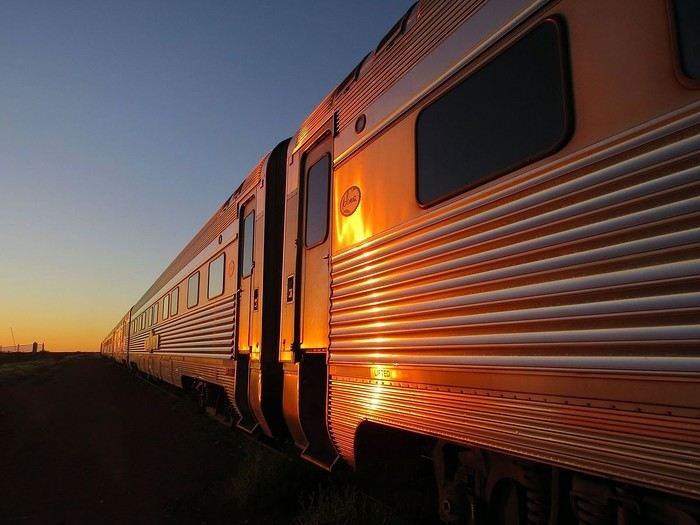
The Ghan (train connecting Adelaide to Darwin), at dawn.
Back to the March 2026 contest: HERE
The Ghan (train connecting Adelaide to Darwin), at dawn.
Review of an expedition cruise to the Seychelles with Ponant from January 25 to February 2, 2026
Hi everyone,
It was totally by chance that I found this cruise while chatting with Alfred in November 2024. It wasn’t planned, but the price was attractive—one of those "great deals" from Ponant that I love and that don’t exist anymore. Since everyone’s wondering, here’s the answer without waiting for the end of the story: after my various loyalty discounts, I paid **3,250 € per person** for 8 nights/9 days on the expedition cruise *The Essentials of the Seychelles*.
Expedition cruises are by far our favorites. The outings are done by Zodiac with the ship’s naturalist guides, everything’s included, and there’s no need to add any excursions or prepare anything.
We’re liking long flights less and less, so to break up the trip, we decided to stop over in Doha for four days on the way there and one day on the way back.
I’m happy to share the good and not-so-good moments, the great surprises, and the disappointments of this trip with you.
It was totally by chance that I found this cruise while chatting with Alfred in November 2024. It wasn’t planned, but the price was attractive—one of those "great deals" from Ponant that I love and that don’t exist anymore. Since everyone’s wondering, here’s the answer without waiting for the end of the story: after my various loyalty discounts, I paid **3,250 € per person** for 8 nights/9 days on the expedition cruise *The Essentials of the Seychelles*.
Expedition cruises are by far our favorites. The outings are done by Zodiac with the ship’s naturalist guides, everything’s included, and there’s no need to add any excursions or prepare anything.
We’re liking long flights less and less, so to break up the trip, we decided to stop over in Doha for four days on the way there and one day on the way back.
I’m happy to share the good and not-so-good moments, the great surprises, and the disappointments of this trip with you.
Questions about visiting Guatemala in 14 days
hi there,
we’re traveling as a couple to Guatemala from Feb 8 to 22. We’ve realized that given the distances, it feels a bit short. So, we’ve decided to limit ourselves to:
- Antigua: 3 nights (from Feb 8 to 11), including the arrival day - Lake Atitlán: from Feb 11 to 14 – 3 nights in San Juan La Laguna, including the morning trip from Antigua to Lake Atitlán - Chichicastenango: from Feb 14 to 15 – 1 night to attend the Sunday market and visit the cemetery
We have 7 days left that we’re not sure how to organize to cover: Flores – Tikal – El Remate, then head back to Guatemala City for our flight on Feb 22. Actually, I have a few questions: Do you think the time in Antigua and at the lake is enough? We might do the Pacaya Volcano, which is accessible for beginners, and that’s it. Should we spend a bit more time at these two spots: Antigua and the lake? If so, we’d have to skip the Chichicastenango market. We’re also thinking of leaving Chichicastenango to head to Flores, then staying overnight in El Remate. Does that seem doable in one day? We’ve noted that the trips are long, and since we don’t want to rush, we’ve reduced the number of accommodations. Even though we know we won’t see everything, we don’t want to miss the must-sees. We’re also wondering if we’ve planned the route in the right direction, or if we should head straight to Tikal when we arrive. Anyway, I know this is long, but we’re a bit lost. Thanks so much for your help! Annick
we’re traveling as a couple to Guatemala from Feb 8 to 22. We’ve realized that given the distances, it feels a bit short. So, we’ve decided to limit ourselves to:
- Antigua: 3 nights (from Feb 8 to 11), including the arrival day - Lake Atitlán: from Feb 11 to 14 – 3 nights in San Juan La Laguna, including the morning trip from Antigua to Lake Atitlán - Chichicastenango: from Feb 14 to 15 – 1 night to attend the Sunday market and visit the cemetery
We have 7 days left that we’re not sure how to organize to cover: Flores – Tikal – El Remate, then head back to Guatemala City for our flight on Feb 22. Actually, I have a few questions: Do you think the time in Antigua and at the lake is enough? We might do the Pacaya Volcano, which is accessible for beginners, and that’s it. Should we spend a bit more time at these two spots: Antigua and the lake? If so, we’d have to skip the Chichicastenango market. We’re also thinking of leaving Chichicastenango to head to Flores, then staying overnight in El Remate. Does that seem doable in one day? We’ve noted that the trips are long, and since we don’t want to rush, we’ve reduced the number of accommodations. Even though we know we won’t see everything, we don’t want to miss the must-sees. We’re also wondering if we’ve planned the route in the right direction, or if we should head straight to Tikal when we arrive. Anyway, I know this is long, but we’re a bit lost. Thanks so much for your help! Annick
The (Almost) Tour of the Dominican Republic - April 2025
Another fresh travel journal!
The context: For my 60th birthday, I had planned to take my family (kids + partners) for a week in Gran Canaria, at an all-inclusive hotel, but with the firm intention of exploring and hiking. The deal was to meet up at least in the evenings to spend time together, if my pace didn’t suit them. Personally, I’m not into beaches and lazing around, but my daughter-in-law is pretty cool. We were going to be together, do what we liked, and all would be well. Unfortunately, five days before departure, my mother-in-law passed away, and of course, we had to cancel everything. I was able to get a refund for a lot of things, including the hotel despite missing the free cancellation deadline (really cool of them), and I got a one-year credit for the full price of the flight tickets. So, we tried to plan the same thing for my kids, but with their schedules, we couldn’t find a date. I had to find a destination served by Iberia, far enough to use up my credit. We don’t know the Caribbean, we needed sun and a bit of rest, so the Dominican Republic won out. But no way were we going to mess up by staying in an all-inclusive hotel and only visiting the island’s paradise beaches… (we’ll get back to that). So, as usual, I put together a little road trip with a rental car.
Here we go!!!!
Day 1: Crossing the Atlantic Super early departure for Lyon-Saint Exupéry Airport. A 3-hour layover in Madrid (my wife’s had enough of flight delays, so I played it safe). Flight to Santo Domingo without any issues. The luggage arrived, the driver I’d booked was there, everything went smoothly. We got to our hotel in the Zona Colonial around 4 PM. Bad luck—it’s on a cute little square where there was supposed to be neighborhood activity in the evening. It’s completely under construction! Too bad! We decided to head to the Malecón, a sort of local Promenade des Anglais, except there are no English people. It’s nice, safe, spacious, and by the ocean. We walked for a while, and as happy hour rolled around, I started my training as an intern in rum-based cocktails. A mojito, classic, but it’s amazing to be sipping the drink in the warmth, right by the big blue. On the way back to the hotel, we grabbed some bananas, ate them in the room, and then bedtime.
The plus: We actually left! The minus: There isn’t one
The context: For my 60th birthday, I had planned to take my family (kids + partners) for a week in Gran Canaria, at an all-inclusive hotel, but with the firm intention of exploring and hiking. The deal was to meet up at least in the evenings to spend time together, if my pace didn’t suit them. Personally, I’m not into beaches and lazing around, but my daughter-in-law is pretty cool. We were going to be together, do what we liked, and all would be well. Unfortunately, five days before departure, my mother-in-law passed away, and of course, we had to cancel everything. I was able to get a refund for a lot of things, including the hotel despite missing the free cancellation deadline (really cool of them), and I got a one-year credit for the full price of the flight tickets. So, we tried to plan the same thing for my kids, but with their schedules, we couldn’t find a date. I had to find a destination served by Iberia, far enough to use up my credit. We don’t know the Caribbean, we needed sun and a bit of rest, so the Dominican Republic won out. But no way were we going to mess up by staying in an all-inclusive hotel and only visiting the island’s paradise beaches… (we’ll get back to that). So, as usual, I put together a little road trip with a rental car.
Here we go!!!!
Day 1: Crossing the Atlantic Super early departure for Lyon-Saint Exupéry Airport. A 3-hour layover in Madrid (my wife’s had enough of flight delays, so I played it safe). Flight to Santo Domingo without any issues. The luggage arrived, the driver I’d booked was there, everything went smoothly. We got to our hotel in the Zona Colonial around 4 PM. Bad luck—it’s on a cute little square where there was supposed to be neighborhood activity in the evening. It’s completely under construction! Too bad! We decided to head to the Malecón, a sort of local Promenade des Anglais, except there are no English people. It’s nice, safe, spacious, and by the ocean. We walked for a while, and as happy hour rolled around, I started my training as an intern in rum-based cocktails. A mojito, classic, but it’s amazing to be sipping the drink in the warmth, right by the big blue. On the way back to the hotel, we grabbed some bananas, ate them in the room, and then bedtime.
The plus: We actually left! The minus: There isn’t one
3 weeks in Colombia (August 2023)
Why Colombia?
It's quite simple. For the past few years, my daughter has been living with a Colombian from Bogotá. The idea was to discover his country, meet his family, and do part of the trip all four of us together.
We’re heading out first as scouts, then they’ll join us to continue the journey.
The itinerary was shared in another post—now it’s time for the impressions.
No photos, as for me, it’s video and nothing more!
Day 1: The big departure What was planned: A flight from Lyon Saint-Exupéry late morning heading to Frankfurt. Two hours of waiting in Frankfurt (just enough time to eat a pretzel!!) and then off to Bogotá for an arrival around 7 PM local time. I hadn’t done the Check-Mig (to be done 72 hours before the flight). I did it on my phone, giving a fake arrival date in Colombia, and the attendant told me there wouldn’t be any issues in Bogotá. Actually, two hours of delay at departure in Lyon because a sick passenger was on the plane—they had to evacuate him, and the ambulance that was supposed to be there didn’t have permission to come near the plane. Ah, French administrative formalities!!!!! Flight to Frankfurt with Lufthansa went smoothly. A sprint through the airport—very well organized. Connection secured, so we boarded the plane, and two hours later than scheduled, we took off for an 11-hour flight! Arrival in Bogotá, and the immigration process took over an hour and a half because of the crowds. However, no issues with the Check-Mig—they barely glanced at it. Our daughter’s father-in-law ended up waiting over 3 hours at the airport because of this!!! Surprise: No luggage. Luckily, we had packed essentials in our carry-ons! Quick administrative paperwork, and Lufthansa informed me our bags would be on the next flight, so no big deal. Off to our hotel in La Candelaria and a good night’s rest.
The plus: We’re in Bogotá! The minus: Flight delays are becoming more and more common.
Day 1: The big departure What was planned: A flight from Lyon Saint-Exupéry late morning heading to Frankfurt. Two hours of waiting in Frankfurt (just enough time to eat a pretzel!!) and then off to Bogotá for an arrival around 7 PM local time. I hadn’t done the Check-Mig (to be done 72 hours before the flight). I did it on my phone, giving a fake arrival date in Colombia, and the attendant told me there wouldn’t be any issues in Bogotá. Actually, two hours of delay at departure in Lyon because a sick passenger was on the plane—they had to evacuate him, and the ambulance that was supposed to be there didn’t have permission to come near the plane. Ah, French administrative formalities!!!!! Flight to Frankfurt with Lufthansa went smoothly. A sprint through the airport—very well organized. Connection secured, so we boarded the plane, and two hours later than scheduled, we took off for an 11-hour flight! Arrival in Bogotá, and the immigration process took over an hour and a half because of the crowds. However, no issues with the Check-Mig—they barely glanced at it. Our daughter’s father-in-law ended up waiting over 3 hours at the airport because of this!!! Surprise: No luggage. Luckily, we had packed essentials in our carry-ons! Quick administrative paperwork, and Lufthansa informed me our bags would be on the next flight, so no big deal. Off to our hotel in La Candelaria and a good night’s rest.
The plus: We’re in Bogotá! The minus: Flight delays are becoming more and more common.
Grand tour of Argentina March 2025
My buddy Christian and I (Patrick) are off for 28 days in Argentina in March.
We’ve already shared several trips as a duo (Bolivia Peru, Namibia, Laos, Costa Rica).
Since we’re starting from the idea that at our age (65) we won’t be coming back here—there are just too many other corners of the world to discover—we did the "grand tour" of Argentina, with 6 domestic flights to make the most of our 28 days.
Here are our stops:
1) Departure from Brussels to Buenos Aires via Madrid
2) Arrival and first contact with Buenos Aires
3) Early morning flight to Ushuaia. Boat trip on the Beagle Channel
4) Ushuaia: hikes in Tierra del Fuego National Park
5) Ushuaia: last hike and flight to El Calafate
6) El Calafate to El Chaltén by bus. First hike
7) El Chaltén: hike
8) El Chaltén: hike
9) El Chaltén: hike and bus back to El Calafate
10) El Calafate: Perito Moreno Glacier
11) Flight to Bariloche. Car rental and surrounding areas
12) Seven Lakes Region
13) Nahuel Huapi National Park region
14) Flight to Salta. Car rental
15) To Tilcara
16) To Humahuaca
17) To Purmamarca
18) To Jujuy via the salt flats
19) To Cafayate
20) Around Cafayate
21) To Cachi
22) Back to Salta
23) Flight to Iguazu
24) Waterfalls on the Argentine side
25) Waterfalls on the Brazilian side and flight to Buenos Aires
26) Buenos Aires
27) Return flight
28) Morning arrival
Happy reading!..
From Caño Cristales to Tayrona Park
After about 12 hours of flying from Toulouse (via Paris), we landed in Bogotá six years after our first trip to Colombia. This time, our journey will be very different, with only this stop in the Colombian capital in common.
Our travel itinerary
Bogotá / La Macarena (Caño Cristales) / Villa de Leyva / Barichara / San Gil / Girón / Mompox / Ciénaga and the Santa Marta lagoon / Minca / Los Naranjos (Tayrona Park) / Bogotá.
Step 1: Bogotá (and Nemecon)
Bogotá (1/3)
This morning, we had a meet-up with Flora from Aventure Colombia, who helped me organize one of our stops, a few transfers, and tomorrow’s day trip, the program of which I changed at the last minute after deciding to skip the visit to the Salt Cathedral of Zipaquirá. Flora is a kind and lovely person, always available, and she did everything to answer my questions and give me advice.
She’s a local contact I highly recommend. Flora can help you plan your trip, whether you want a fully organized tour or, like us, just need assistance with a specific stop or one or more transfers between cities.
We left Flora after setting a meet-up for our return to Bogotá in a month. As we walked out of her agency, we headed to the wonderful Gold Museum, located just a hundred meters away. I was excited to revisit this amazing museum.
Note: Free entry for those over 60, regardless of nationality. Just show your passport.
Like six years ago, I was amazed by its museography, the beauty of the pieces on display, and that breathtaking shamanic room.
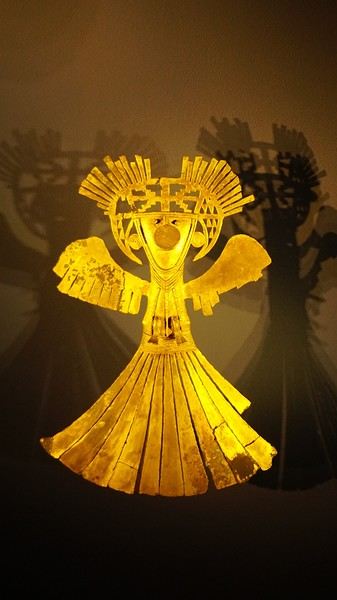
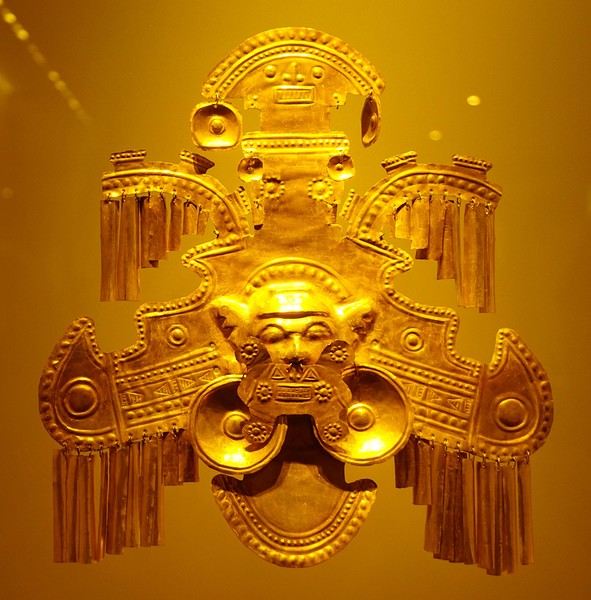
About two hours later, we decided to walk (careful, it’s a climb!) to the Monserrate cable car (3152m). Long wait to buy tickets and board the cable car! Once we arrived, a few raindrops, an impressive panoramic view of Bogotá’s vastness, a quick visit to the basilica (a pilgrimage site for Colombians), a walk through the tourist market, and at the top, plenty of small restaurants where we had our first Colombian meal. After our hearty lunch, we were lucky to see the sun return! No line for the descent. We then headed back to the hotel because Justine wanted to rest and recover from the trip. As for me, I continued my walk. I discovered a really nice craft market recommended by Flora, Pasaje Rivas, returned to Bolívar Square, and wandered through different streets, including the main pedestrian avenue (Calle 7), where there’s always something to see.
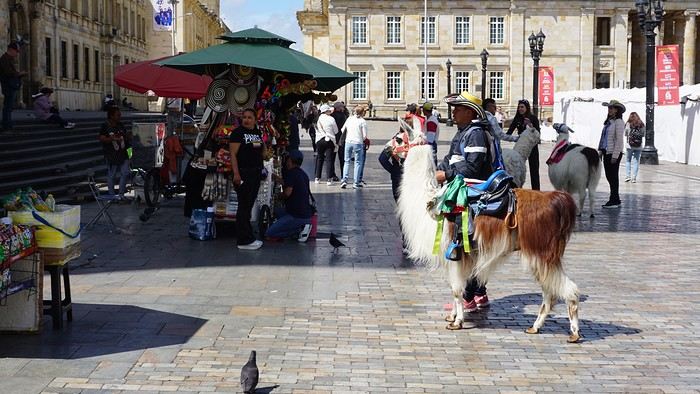
Tomorrow, a change of scenery as we head out for a hike in a small desert (Desierto de Chueca), located about 2 hours from Bogotá in the village of Nemecon. For this outing from Bogotá, with Flora’s help, we booked a car with a driver for the day. Flora also took care of booking the guide (since the site can only be visited with one). Nemecon (2/3) Today, we went to Nemecon to hike about 7.5 km in the ‘Desert of Checua.’ It’s nothing like sandy deserts! Instead, it’s geological formations sculpted by time, wind, and water. After two hours on the road—almost one of them spent navigating traffic jams with cars, trucks, buses, and a continuous flow of motorcycles on either side of our taxi—we reached Nemecon! The village center is really (too?) quiet. We met up with Deisy and headed toward the ‘desert,’ about twenty minutes away on a bumpy dirt road. Once there, a quick briefing, and off we went! Deisy didn’t stop talking (in Spanish) for over 3 hours!!! She told us so much about her region (flower farming, water management, traditions, songs, etc.), the origin of the site, and even mentioned Antonio Banderas, who filmed *The 33* in the village’s salt mine (the story of the survival of 33 Chilean miners after a collapse in their copper and gold mine). One hour of walking to reach the site, one hour to explore it, and one hour to return.
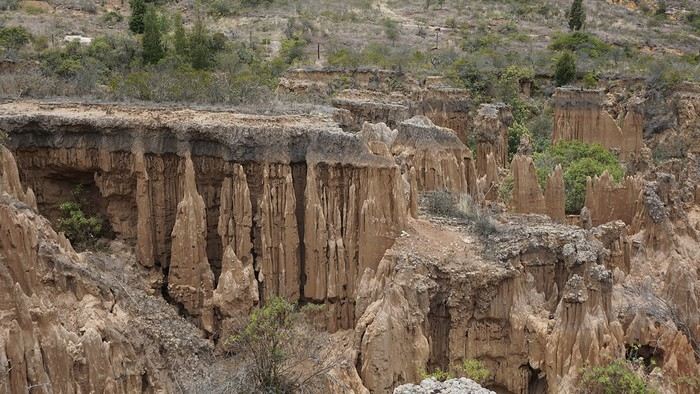
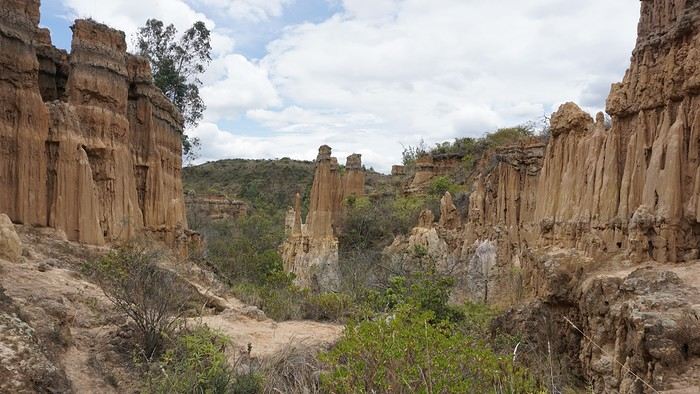
The advantage of this non-stop chatter was that it forced us to brush up on our Spanish at lightning speed. I even wondered if the effort to concentrate wasn’t more exhausting than the physical effort! Especially since on the way back, I got an oral quiz. Deisy wanted to make sure I remembered some of the information she’d given me during the visit: why is this rock white, that one red, and that one black? Back in the village, we had lunch at a restaurant recommended by Deisy before visiting the Nemecon salt mine. Before entering, a guide spent a good half-hour explaining the origin of the salt and the presence of many fossils in the area. Again, concentrating was tough because all the comments were exclusively in Spanish! An hour and a half wandering through the tunnels with a ‘lovely miner’s helmet’ on our heads!
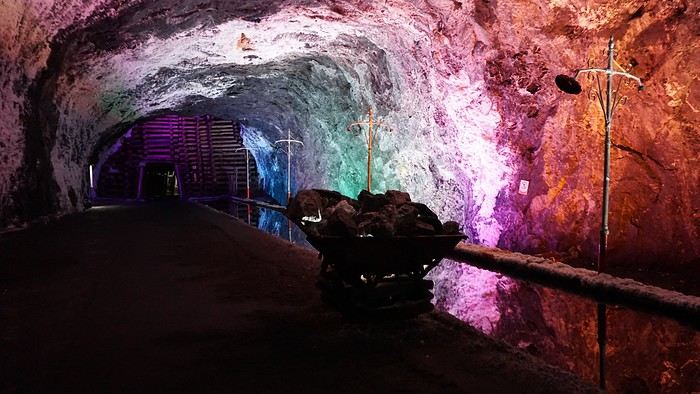
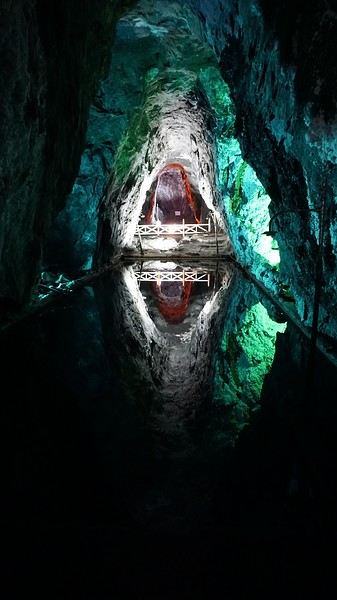

We met our driver at the mine entrance. The return to Bogotá was a bit faster, but traffic in the city center was still heavy! We arrived in front of our hotel between 8:00 and 8:30 PM. It’s been a pretty intense start to the trip! Tonight, our legs are tired. Hopefully, tomorrow will be a bit more relaxed! Bogotá (3/3) We started the day by visiting the Santa Clara Church Museum, located next to the presidential palace. Alejandra (from the local agency ‘Gaia Tours Colombia,’ which organized our stay in Caño Cristales (La Macarena)) had recommended this visit for its rich mural paintings.
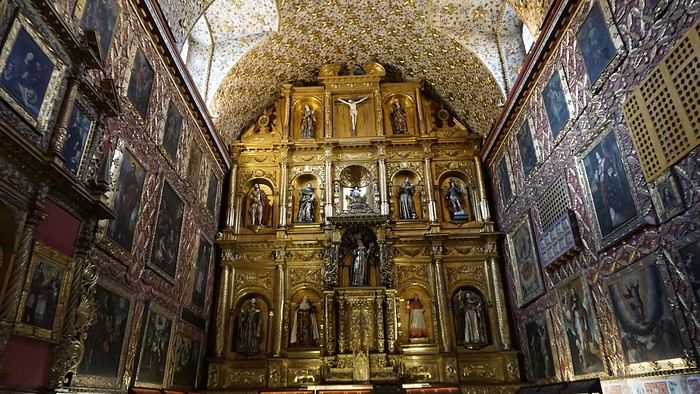
A few hundred meters further, after crossing the Plaza Mayor again, we visited the cultural complex housing the Botero Museum, the Mint Museum, and the Bank of the Republic Art Museum. Note that entry is free for all three museums. Botero Museum: There are fewer works by Botero here than in the Medellín museum, but more paintings and sculptures by other artists, all from Botero’s private collection (donated to Colombia). Mint Museum: We limited ourselves to visiting one room (on Flora’s advice) where three gold and gemstone monstrances and a Christ with a crown of emerald thorns are displayed. Photos are not allowed. Art Museum: We visited two temporary exhibitions. Lunchtime came quickly. We had a good meal at a reasonably priced small restaurant in the La Candelaria micro-district, near the Chorro de Quevedo square. We decided to spend the afternoon wandering the streets and alleys of the historic center to discover local street art.
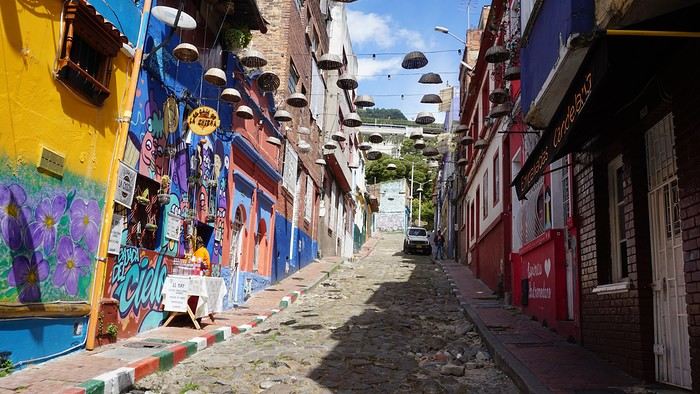
We also passed through very lively pedestrian streets. I also decided to revisit Pasaje Rivas to show Justine all the shops selling more or less artisanal products. Tomorrow morning, we fly to La Macarena at 10:30 AM. Not to dance (you’d be surprised if I told you we were going to take a South American dance class, right?!), but to visit the fabulous Caño Cristales, a river naturally colored by aquatic plants. The planned program includes hiking, horseback riding, canoeing, and swimming among these plants. This site was long inaccessible because the area was controlled by the FARC. Access and tourism development became possible after agreements and amnesty measures between the Colombian government and paramilitary groups. As in other regions, former FARC members have been able to transition into various tourism-related activities.
About two hours later, we decided to walk (careful, it’s a climb!) to the Monserrate cable car (3152m). Long wait to buy tickets and board the cable car! Once we arrived, a few raindrops, an impressive panoramic view of Bogotá’s vastness, a quick visit to the basilica (a pilgrimage site for Colombians), a walk through the tourist market, and at the top, plenty of small restaurants where we had our first Colombian meal. After our hearty lunch, we were lucky to see the sun return! No line for the descent. We then headed back to the hotel because Justine wanted to rest and recover from the trip. As for me, I continued my walk. I discovered a really nice craft market recommended by Flora, Pasaje Rivas, returned to Bolívar Square, and wandered through different streets, including the main pedestrian avenue (Calle 7), where there’s always something to see.
Tomorrow, a change of scenery as we head out for a hike in a small desert (Desierto de Chueca), located about 2 hours from Bogotá in the village of Nemecon. For this outing from Bogotá, with Flora’s help, we booked a car with a driver for the day. Flora also took care of booking the guide (since the site can only be visited with one). Nemecon (2/3) Today, we went to Nemecon to hike about 7.5 km in the ‘Desert of Checua.’ It’s nothing like sandy deserts! Instead, it’s geological formations sculpted by time, wind, and water. After two hours on the road—almost one of them spent navigating traffic jams with cars, trucks, buses, and a continuous flow of motorcycles on either side of our taxi—we reached Nemecon! The village center is really (too?) quiet. We met up with Deisy and headed toward the ‘desert,’ about twenty minutes away on a bumpy dirt road. Once there, a quick briefing, and off we went! Deisy didn’t stop talking (in Spanish) for over 3 hours!!! She told us so much about her region (flower farming, water management, traditions, songs, etc.), the origin of the site, and even mentioned Antonio Banderas, who filmed *The 33* in the village’s salt mine (the story of the survival of 33 Chilean miners after a collapse in their copper and gold mine). One hour of walking to reach the site, one hour to explore it, and one hour to return.
The advantage of this non-stop chatter was that it forced us to brush up on our Spanish at lightning speed. I even wondered if the effort to concentrate wasn’t more exhausting than the physical effort! Especially since on the way back, I got an oral quiz. Deisy wanted to make sure I remembered some of the information she’d given me during the visit: why is this rock white, that one red, and that one black? Back in the village, we had lunch at a restaurant recommended by Deisy before visiting the Nemecon salt mine. Before entering, a guide spent a good half-hour explaining the origin of the salt and the presence of many fossils in the area. Again, concentrating was tough because all the comments were exclusively in Spanish! An hour and a half wandering through the tunnels with a ‘lovely miner’s helmet’ on our heads!
We met our driver at the mine entrance. The return to Bogotá was a bit faster, but traffic in the city center was still heavy! We arrived in front of our hotel between 8:00 and 8:30 PM. It’s been a pretty intense start to the trip! Tonight, our legs are tired. Hopefully, tomorrow will be a bit more relaxed! Bogotá (3/3) We started the day by visiting the Santa Clara Church Museum, located next to the presidential palace. Alejandra (from the local agency ‘Gaia Tours Colombia,’ which organized our stay in Caño Cristales (La Macarena)) had recommended this visit for its rich mural paintings.
A few hundred meters further, after crossing the Plaza Mayor again, we visited the cultural complex housing the Botero Museum, the Mint Museum, and the Bank of the Republic Art Museum. Note that entry is free for all three museums. Botero Museum: There are fewer works by Botero here than in the Medellín museum, but more paintings and sculptures by other artists, all from Botero’s private collection (donated to Colombia). Mint Museum: We limited ourselves to visiting one room (on Flora’s advice) where three gold and gemstone monstrances and a Christ with a crown of emerald thorns are displayed. Photos are not allowed. Art Museum: We visited two temporary exhibitions. Lunchtime came quickly. We had a good meal at a reasonably priced small restaurant in the La Candelaria micro-district, near the Chorro de Quevedo square. We decided to spend the afternoon wandering the streets and alleys of the historic center to discover local street art.
We also passed through very lively pedestrian streets. I also decided to revisit Pasaje Rivas to show Justine all the shops selling more or less artisanal products. Tomorrow morning, we fly to La Macarena at 10:30 AM. Not to dance (you’d be surprised if I told you we were going to take a South American dance class, right?!), but to visit the fabulous Caño Cristales, a river naturally colored by aquatic plants. The planned program includes hiking, horseback riding, canoeing, and swimming among these plants. This site was long inaccessible because the area was controlled by the FARC. Access and tourism development became possible after agreements and amnesty measures between the Colombian government and paramilitary groups. As in other regions, former FARC members have been able to transition into various tourism-related activities.
Photo Contest, September 2020: Departure or Arrival Scenes and Places
Hello everyone, 🙂
This month’s theme is: places, departure or arrival scenes.
The places include: train or bus stations, passenger ports, and airports.
Here, for example, is Beijing West Railway Station
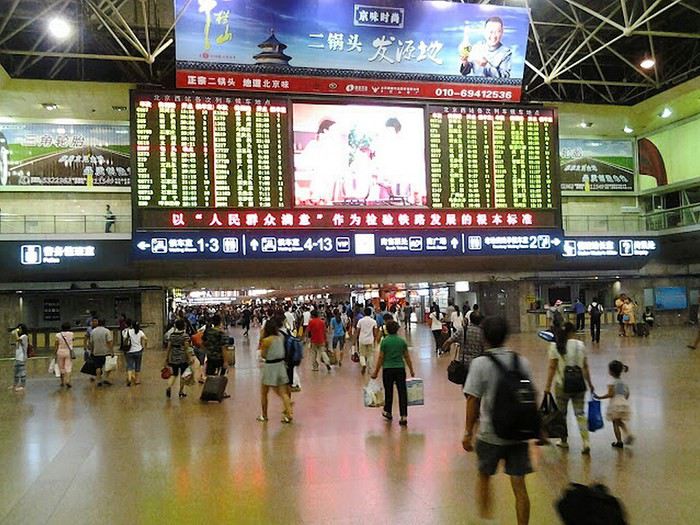 This is Beijing West Railway Station.
You can submit a photo of the whole place, a part of it (inside or outside, the platforms), or a detail (like a station clock) as long as it clearly shows it’s a departure or arrival spot—such as a timetable display.
Or here’s another example:
This is Beijing West Railway Station.
You can submit a photo of the whole place, a part of it (inside or outside, the platforms), or a detail (like a station clock) as long as it clearly shows it’s a departure or arrival spot—such as a timetable display.
Or here’s another example:
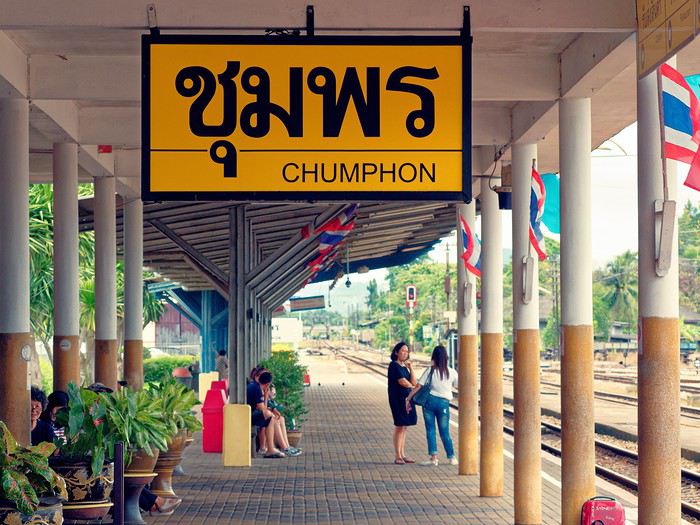
Even if you’re not in one of these places, a departure or arrival scene is welcome: Example: Early morning departure from a pagoda at Inle Lake (Myanmar) as people head back to their villages in the surrounding hills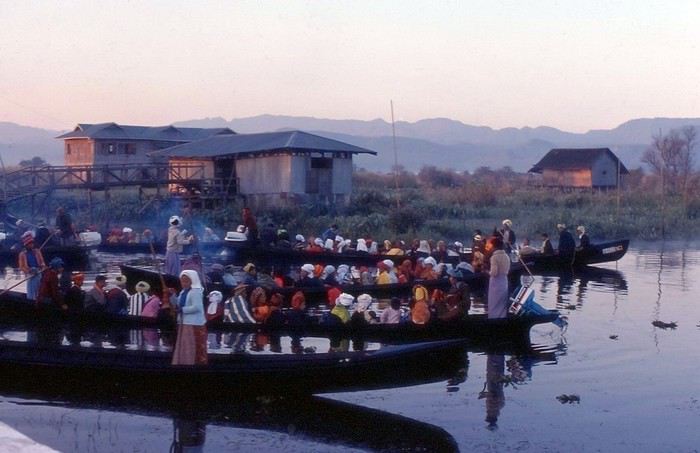
A vehicle about to leave: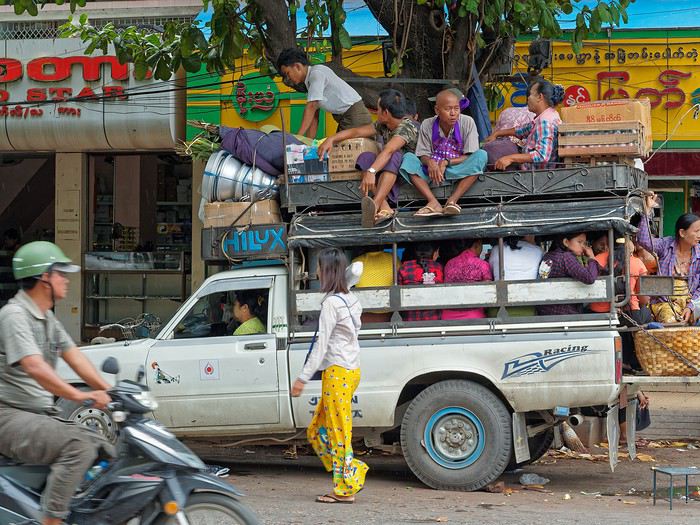
People are also allowed, as long as they’re clearly identified as travelers about to depart or who have just arrived. Bus station in Thailand (a photo I’d shared for the "solitude" theme)
Another example: in the foreground, a boat docked, and just above, another that has just left (Rangoon, Myanmar—these boats serve cities in the Irrawaddy Delta, and in some areas, they’re still the only means of transport for locals).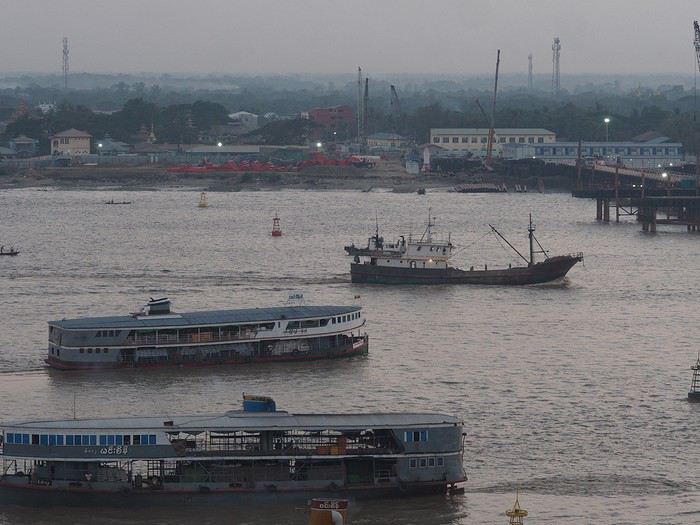
You can also include departures or arrivals from races, but again, it must be at the start or finish, not during the race: Boats before the start of the Route du Rhum in Saint-Malo: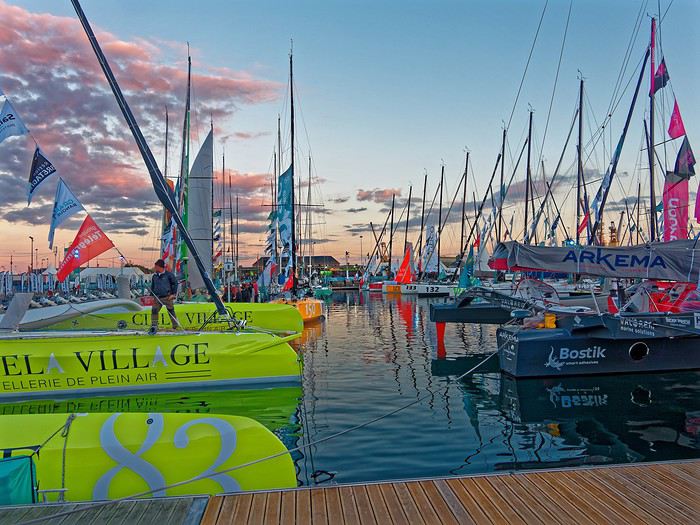
Participation: Each participant can submit up to 3 photos, until Tuesday, September 22 at 11:59 PM Paris time. Each photo must be posted in a separate message, with its number (1, 2, or 3). Don’t forget to add a short description (comment, location, etc.).
Voting: Every VoyageForum member can vote for the 4 photos they think are the best, based on their own criteria and the theme (I’m trying this format this month). Voting will take place from Wednesday, September 23 to Tuesday, September 29 at 11:59 PM Paris time.
Photos should be ranked in order of preference: - 1st photo: 4 points - 2nd: 3 points - 3rd: 2 points - 4th: 1 point
Each member can vote only once for 4 photos. No ties for 4th place with half a point each.
The winner is the photographer whose photo receives the most points. Results will be announced on September 30. In case of a tie, the number of first-place votes will decide. The winner will have the honor of organizing October’s contest.
Give me two or three days to put together the slideshow—I’ll definitely reach out to Masterpo via PM for advice if I’m stuck (and if he’s willing).
Good luck to everyone—may the best photographer win! Let’s get started! For discussion, it’s here
This is Beijing West Railway Station.
You can submit a photo of the whole place, a part of it (inside or outside, the platforms), or a detail (like a station clock) as long as it clearly shows it’s a departure or arrival spot—such as a timetable display.
Or here’s another example:
Even if you’re not in one of these places, a departure or arrival scene is welcome: Example: Early morning departure from a pagoda at Inle Lake (Myanmar) as people head back to their villages in the surrounding hills
A vehicle about to leave:
People are also allowed, as long as they’re clearly identified as travelers about to depart or who have just arrived. Bus station in Thailand (a photo I’d shared for the "solitude" theme)
Another example: in the foreground, a boat docked, and just above, another that has just left (Rangoon, Myanmar—these boats serve cities in the Irrawaddy Delta, and in some areas, they’re still the only means of transport for locals).
You can also include departures or arrivals from races, but again, it must be at the start or finish, not during the race: Boats before the start of the Route du Rhum in Saint-Malo:
Participation: Each participant can submit up to 3 photos, until Tuesday, September 22 at 11:59 PM Paris time. Each photo must be posted in a separate message, with its number (1, 2, or 3). Don’t forget to add a short description (comment, location, etc.).
Voting: Every VoyageForum member can vote for the 4 photos they think are the best, based on their own criteria and the theme (I’m trying this format this month). Voting will take place from Wednesday, September 23 to Tuesday, September 29 at 11:59 PM Paris time.
Photos should be ranked in order of preference: - 1st photo: 4 points - 2nd: 3 points - 3rd: 2 points - 4th: 1 point
Each member can vote only once for 4 photos. No ties for 4th place with half a point each.
The winner is the photographer whose photo receives the most points. Results will be announced on September 30. In case of a tie, the number of first-place votes will decide. The winner will have the honor of organizing October’s contest.
Give me two or three days to put together the slideshow—I’ll definitely reach out to Masterpo via PM for advice if I’m stuck (and if he’s willing).
Good luck to everyone—may the best photographer win! Let’s get started! For discussion, it’s here