Results for "Gabès+|+1+>+87"
10738 results found.
What budget should you plan for 2 weeks of travel in China?
Hi there,
We just got back from a 2-week trip to China as a couple, and before we left, the budget was the hardest thing to picture concretely. We found plenty of info on visas, apps, transport, and itineraries, but way fewer detailed breakdowns of what you *actually* spend on the ground.
So, we took the time to share our real budget for 14 days. In our case, we spent around 1,800 € per person, with a big chunk of that going toward round-trip flights at about 600 € per person. We were also pretty surprised by how affordable China can be once you’re there—transport is often cheap, and a lot of everyday expenses stay reasonable.
The trickiest part, in the end, was figuring out how to pay while you’re there, since it’s not always obvious if you’re not prepared. But once everything’s set up and you get the hang of it, it’s really smooth.
If this can help other travelers get a better idea before they go, we’ve broken it all down here:
https://aventures-sans-mesaventure.com/budget-2-semaines-de-voyage-en-chine/
Happy travels and enjoy your adventure! Hélia
Happy travels and enjoy your adventure! Hélia
One-month road trip in Namibia
Here we go—finally, the big day has arrived! A trip the whole family (my two kids, my husband, and me) had been looking forward to for so long.
To keep it short, we left from Nice, arrived in Namibia on June 25, 2025, and left again on the 21st—four weeks later.
We used an agency for all the camping reservations, activities, and the car rental. At least that side of things was taken care of. Michaël was our contact throughout the planning and the trip itself.
We spent our first night at Londiningi BB. A bit out of the city center but very quiet. The rooms were spacious and clean, and we could eat on-site that evening. Perfect for recovering from the flight.
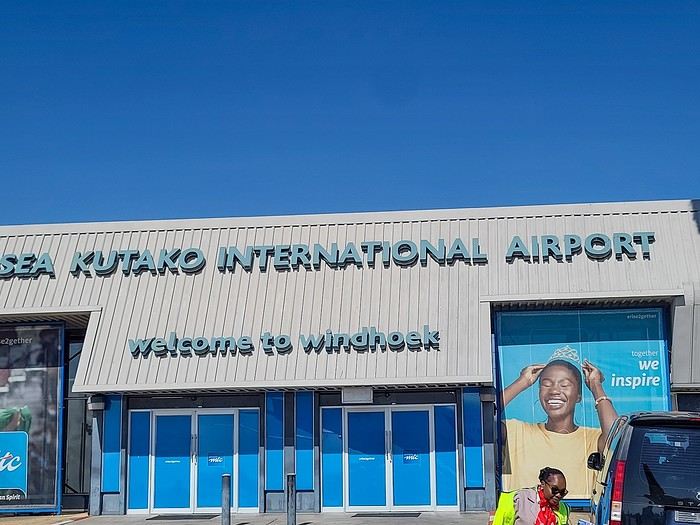
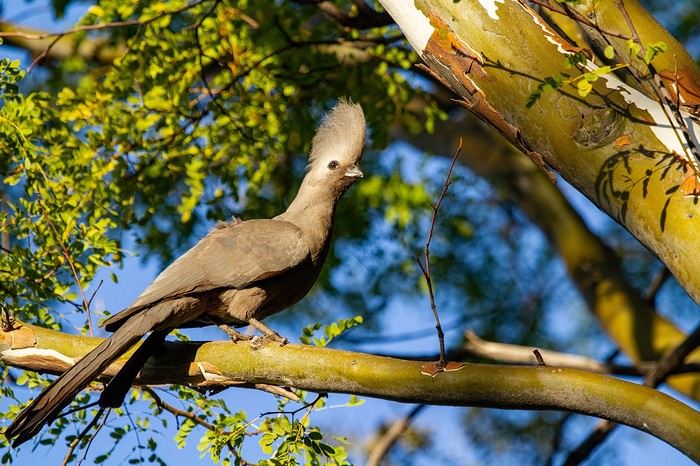

We spent our first night at Londiningi BB. A bit out of the city center but very quiet. The rooms were spacious and clean, and we could eat on-site that evening. Perfect for recovering from the flight.
From Avignon to Casamance Without Flying
Hi there,
Last February, I made a trip using "public transport" from France to southern Senegal via Spain, Morocco, Western Sahara, and Mauritania.
It’s a journey of about 5,000 km, where I took trains (as far as Marrakech), ferries (to cross Gibraltar and then to reach Casamance from Dakar), and mostly buses on the long desert straightaways. I hadn’t planned any stops in advance or booked any hotels, except for the very first train to Spain, which left plenty of room for the unexpected. Why travel by land and sea? In recent years, flight-free travel has been gaining popularity. On social media, posts explaining how to cross Europe by train as quickly as possible go viral. Traveling without flying—and making sure people know about it—has become a great way to earn a badge of eco-responsibility: an essential totem for anyone wanting to prove both their dedication to the ecological cause and the wisdom of slow travel. I haven’t flown in years, and this journey to West Africa could easily be filed under "responsible travel." But it wouldn’t be honest to say that: in reality, it wasn’t really my aversion to flying that motivated this long trek. I see overland travel primarily as a way to experience the world’s geography at a grounded, earthly pace—the pace of the locals. Besides, I’ll be flying back, which disqualifies any claim to being a model of sustainability. So no eco-badge, and no adventurer’s badge either: you won’t find any heroic tales of camel rides in lost lands or mineral train wagons in this account (popular with influencers, the Mauritania iron ore train now attracts tourists from all over the world, turning "the experience" into something you "have to do at least once in your life"). This five-part story, written on the road, has no other ambition than to recount a journey through places and people, and to share the thoughts they inspire in me. As simply and, I hope, as humbly as possible.
I’m posting the episodes here, which you can also find on my blog (with more photos) at the following links:
Episode 1: Spain, from Avignon to Algeciras
Episode 2: Morocco, from Tangier to Tarfaya
Episode 3: Western Sahara, from Tarfaya to Guerguerat
Episode 4: Mauritania, from Guerguerat to Nouakchott
Episode 5: Senegal, from Rosso to Saloulou
To help those who might want to make the same trip, I’ve also put together a summary of the route with recommendations—you can read it at the end of the story and on the blog: From France to Senegal Without Flying: Route and Itinerary Recommendations
Happy reading, and safe travels!
Last February, I made a trip using "public transport" from France to southern Senegal via Spain, Morocco, Western Sahara, and Mauritania.
It’s a journey of about 5,000 km, where I took trains (as far as Marrakech), ferries (to cross Gibraltar and then to reach Casamance from Dakar), and mostly buses on the long desert straightaways. I hadn’t planned any stops in advance or booked any hotels, except for the very first train to Spain, which left plenty of room for the unexpected. Why travel by land and sea? In recent years, flight-free travel has been gaining popularity. On social media, posts explaining how to cross Europe by train as quickly as possible go viral. Traveling without flying—and making sure people know about it—has become a great way to earn a badge of eco-responsibility: an essential totem for anyone wanting to prove both their dedication to the ecological cause and the wisdom of slow travel. I haven’t flown in years, and this journey to West Africa could easily be filed under "responsible travel." But it wouldn’t be honest to say that: in reality, it wasn’t really my aversion to flying that motivated this long trek. I see overland travel primarily as a way to experience the world’s geography at a grounded, earthly pace—the pace of the locals. Besides, I’ll be flying back, which disqualifies any claim to being a model of sustainability. So no eco-badge, and no adventurer’s badge either: you won’t find any heroic tales of camel rides in lost lands or mineral train wagons in this account (popular with influencers, the Mauritania iron ore train now attracts tourists from all over the world, turning "the experience" into something you "have to do at least once in your life"). This five-part story, written on the road, has no other ambition than to recount a journey through places and people, and to share the thoughts they inspire in me. As simply and, I hope, as humbly as possible.
I’m posting the episodes here, which you can also find on my blog (with more photos) at the following links:
Episode 1: Spain, from Avignon to Algeciras
Episode 2: Morocco, from Tangier to Tarfaya
Episode 3: Western Sahara, from Tarfaya to Guerguerat
Episode 4: Mauritania, from Guerguerat to Nouakchott
Episode 5: Senegal, from Rosso to Saloulou
To help those who might want to make the same trip, I’ve also put together a summary of the route with recommendations—you can read it at the end of the story and on the blog: From France to Senegal Without Flying: Route and Itinerary Recommendations
Happy reading, and safe travels!
Nice at the end of April: neighborhoods, villages to visit, and transport passes
Hi there,
Could you recommend some nice and affordable neighborhoods to book a hotel in for visiting Nice and exploring its surroundings and nearby villages?
I’d like to know if it’s better to book the entire stay in Nice and take day trips to the villages, or if there are villages worth spending at least one night in to really explore them properly?
Since all the villages are stunning and we have to make a choice, which ones are absolutely must-visit?
My 16-year-old daughter and I will be spending a week there at the end of April. We’ll arrive by TGV from Paris and plan to use public transport during our stay. Do you know if there’s a weekly transport pass available and how much it costs?
Thanks in advance for your help!
I’d like to know if it’s better to book the entire stay in Nice and take day trips to the villages, or if there are villages worth spending at least one night in to really explore them properly?
Since all the villages are stunning and we have to make a choice, which ones are absolutely must-visit?
My 16-year-old daughter and I will be spending a week there at the end of April. We’ll arrive by TGV from Paris and plan to use public transport during our stay. Do you know if there’s a weekly transport pass available and how much it costs?
Thanks in advance for your help!
Practical aspects spring 2026: border to Murmansk, to Pskov, SIM cards, internet.
I took a few days to get some fresh air outside the Schengen-NATO prison. Between March 18, 2026, and March 25, 2026, as shown by the passport stamps:
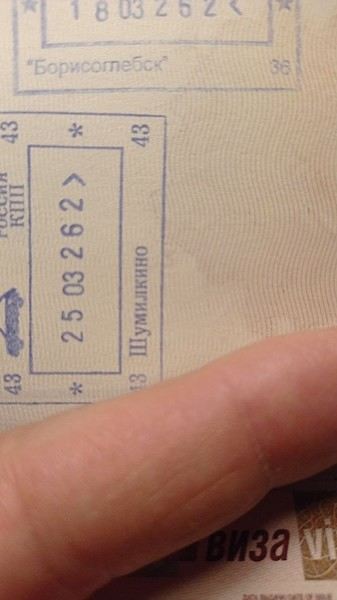
Borisoglebsk is the Russian border checkpoint after Kirkenes, on the road to Murmansk.
Kirkenes is a tiny town with a correspondingly small airport. Nothing has changed there: the minibuses to Murmansk wait on the right as you exit the airport. They’re synchronized with the two daily flights from Oslo—the SAS around 11:00 AM and Norwegian around 11:30 AM. They stop in Kirkenes at the corner of the Scandic for an hour, where other passengers can board, then head straight to the nearby border.
This is the least hassle Frontex/Schengen border. The Norwegian agent quickly scans your passport, and that’s it. No customs, since Norway is Schengen but not in the EU. On the Russian side, there’s a passport check and a quick customs inspection. All in all, crossing both the Norwegian and Russian checkpoints takes about 15 minutes.
A paper visa is required; e-visas aren’t accepted.
Two companies run the route: Avto Ekspress and Borodin: https://ae51.ru/routes/kirkenes-murmansk/ https://borodinbus.com/
The one-way fare is 5,500 ₽. You can either buy it online in rubles with a MIR card or make a formal reservation and pay in NOK cash to the driver. I took Borodin, and the price in NOK was much more expensive than in ₽.
=========================
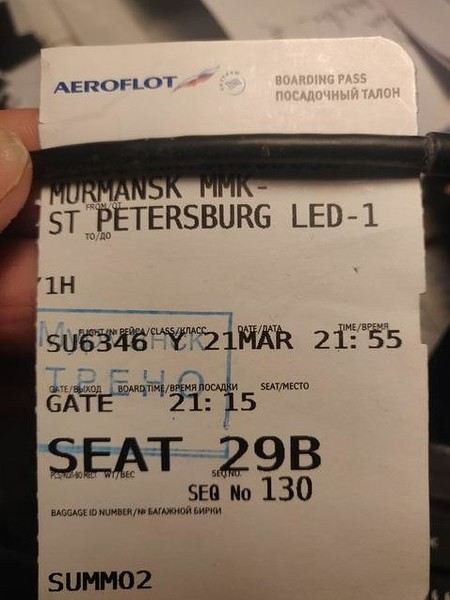
On March 25, I left from Pskov via the Estonian border post at Luhaama. I spent three days in Murmansk, flew to St. Petersburg (SPB), stayed there for two days, then took an evening train to Pskov.
Since the end of February—and reportedly until the end of May—the Estonians have restricted the opening hours of the two border crossings near Pskov: Koidula (Pechory on the Russian side) and Luhaama (Izborsk on the Russian side). They’re closed at night between 7:00 PM and 7:00 AM. Right now, there’s a bus from Pskov at 7:00 AM to the border. It drops you off at the end of the road where truckers—many Kazakh and Serbian—are parked on the side. You finish the rest on foot to the barrier, where there’s a quick initial check for Ukrainian stamps in passports. Then you walk to the customs building, followed by passport control at the kiosk for motorists. After that, it’s a 500-meter walk to the Estonian checkpoint. At the moment, things seem calmer. Passport control is quick. The usual silly questions in English: "Where were you? Where are you going?" I just gave my most clueless smile: "Sorry, I don’t understand." Yeah, right—I don’t speak English, especially not at an Estonian border with a French passport. If they’re in a mood, though... A very quick bag inspection. Once you exit the Estonian post, walk to the bus stop sign by the road where another coach takes you to Riga.
The catch: in my case, last Wednesday, there were two passengers (Russians) with old Ukrainian stamps in their passports. The bus from the Estonian post to Riga was supposed to leave around 9:30 AM. We ended up leaving around noon after the two were grilled by the FSB. Since it was a weekday outside of holidays, the bus was half-empty. The fuller the bus and the more people with Ukrainian stamps, the worse the nightmare. Don’t book a same-day flight from Riga. I had a flight at 6:00 PM, so it worked out.
=============
The Kirkenes-Murmansk route is still clearly the easiest and fastest. But it’s not the most convenient since it’s way up north.
Next, I’d say the Gdansk-Kaliningrad route in the middle of the week. Avoid weekends and holiday departures/returns.
Avoid the Narva-Ivangorod route during Christmas, Easter, May 9, and *all* summer.
==============
About flights from Murmansk to St. Petersburg: prices are good. I bought my ticket the day before departure on Rossiya for 7,500 ₽, including 10 kg of luggage + a handbag.
It’s the tail end of the northern lights season, and there were still crowds of Chinese tourists.
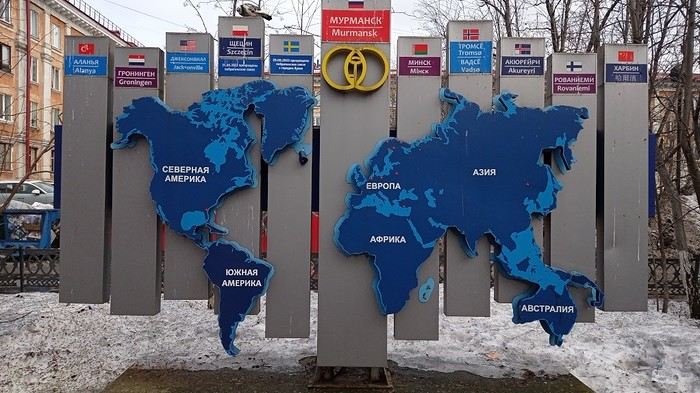
By the way, Murmansk is twinned with Harbin:
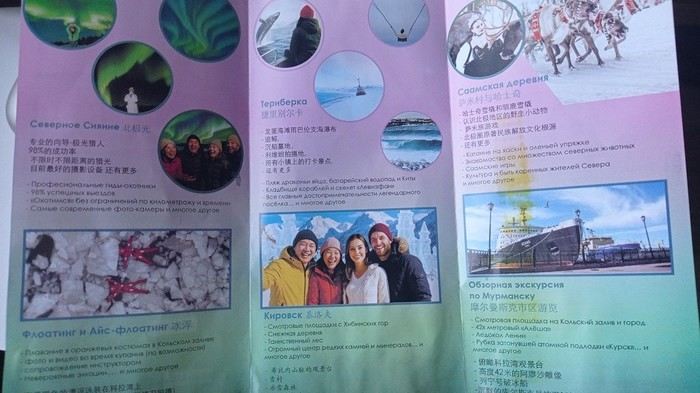
Chinese tourists are the largest foreign group, followed by Indians, then a mix of others from the Far East, Turks, Arabs, etc. Brochures are bilingual—Russian and Chinese:
============================
But let’s talk practical stuff. --
My domestic SIM card was restricted for SMS and internet for 24 hours. After that, if you want to keep using SMS, don’t turn off your phone—restarting triggers another 24-hour purgatory.
My Russian SIM cards (Megafon, MTS, Beeline) were activated as soon as I logged into their respective apps with my credentials.
Internet --
Telegram is heavily slowed down by authorities. To use it, you need to connect through proxy servers, which you load into the latest version of the app. Traffic is then rerouted internally within Telegram to servers outside Russia (Germany, Poland, Sweden, etc.). You can find these proxies on various channels. One is ChatVPN—check their website too.
For general internet use, like browsing the web, VPNs that work right now use the VLESS protocol. You can find several on Telegram by searching "VPN." A few free days, then payment in rubles or crypto.
Rozkomnadzor’s team are experts at this, so things can change. It’s a constant cat-and-mouse game.
Pskov is a special case. The city is near Estonia and has a large military base. Depending on NATO drone swarms launched from the Baltics, Wi-Fi can be completely suspended except for the most essential mobile apps. The drone swarms use the 4G network, and the powerful electronic jamming and drone suppression systems cause periods without Wi-Fi—including in hotels. Wired connections aren’t affected.
Borisoglebsk is the Russian border checkpoint after Kirkenes, on the road to Murmansk.
Kirkenes is a tiny town with a correspondingly small airport. Nothing has changed there: the minibuses to Murmansk wait on the right as you exit the airport. They’re synchronized with the two daily flights from Oslo—the SAS around 11:00 AM and Norwegian around 11:30 AM. They stop in Kirkenes at the corner of the Scandic for an hour, where other passengers can board, then head straight to the nearby border.
This is the least hassle Frontex/Schengen border. The Norwegian agent quickly scans your passport, and that’s it. No customs, since Norway is Schengen but not in the EU. On the Russian side, there’s a passport check and a quick customs inspection. All in all, crossing both the Norwegian and Russian checkpoints takes about 15 minutes.
A paper visa is required; e-visas aren’t accepted.
Two companies run the route: Avto Ekspress and Borodin: https://ae51.ru/routes/kirkenes-murmansk/ https://borodinbus.com/
The one-way fare is 5,500 ₽. You can either buy it online in rubles with a MIR card or make a formal reservation and pay in NOK cash to the driver. I took Borodin, and the price in NOK was much more expensive than in ₽.
=========================
On March 25, I left from Pskov via the Estonian border post at Luhaama. I spent three days in Murmansk, flew to St. Petersburg (SPB), stayed there for two days, then took an evening train to Pskov.
Since the end of February—and reportedly until the end of May—the Estonians have restricted the opening hours of the two border crossings near Pskov: Koidula (Pechory on the Russian side) and Luhaama (Izborsk on the Russian side). They’re closed at night between 7:00 PM and 7:00 AM. Right now, there’s a bus from Pskov at 7:00 AM to the border. It drops you off at the end of the road where truckers—many Kazakh and Serbian—are parked on the side. You finish the rest on foot to the barrier, where there’s a quick initial check for Ukrainian stamps in passports. Then you walk to the customs building, followed by passport control at the kiosk for motorists. After that, it’s a 500-meter walk to the Estonian checkpoint. At the moment, things seem calmer. Passport control is quick. The usual silly questions in English: "Where were you? Where are you going?" I just gave my most clueless smile: "Sorry, I don’t understand." Yeah, right—I don’t speak English, especially not at an Estonian border with a French passport. If they’re in a mood, though... A very quick bag inspection. Once you exit the Estonian post, walk to the bus stop sign by the road where another coach takes you to Riga.
The catch: in my case, last Wednesday, there were two passengers (Russians) with old Ukrainian stamps in their passports. The bus from the Estonian post to Riga was supposed to leave around 9:30 AM. We ended up leaving around noon after the two were grilled by the FSB. Since it was a weekday outside of holidays, the bus was half-empty. The fuller the bus and the more people with Ukrainian stamps, the worse the nightmare. Don’t book a same-day flight from Riga. I had a flight at 6:00 PM, so it worked out.
=============
The Kirkenes-Murmansk route is still clearly the easiest and fastest. But it’s not the most convenient since it’s way up north.
Next, I’d say the Gdansk-Kaliningrad route in the middle of the week. Avoid weekends and holiday departures/returns.
Avoid the Narva-Ivangorod route during Christmas, Easter, May 9, and *all* summer.
==============
About flights from Murmansk to St. Petersburg: prices are good. I bought my ticket the day before departure on Rossiya for 7,500 ₽, including 10 kg of luggage + a handbag.
It’s the tail end of the northern lights season, and there were still crowds of Chinese tourists.
By the way, Murmansk is twinned with Harbin:
Chinese tourists are the largest foreign group, followed by Indians, then a mix of others from the Far East, Turks, Arabs, etc. Brochures are bilingual—Russian and Chinese:
============================
But let’s talk practical stuff. --
My domestic SIM card was restricted for SMS and internet for 24 hours. After that, if you want to keep using SMS, don’t turn off your phone—restarting triggers another 24-hour purgatory.
My Russian SIM cards (Megafon, MTS, Beeline) were activated as soon as I logged into their respective apps with my credentials.
Internet --
Telegram is heavily slowed down by authorities. To use it, you need to connect through proxy servers, which you load into the latest version of the app. Traffic is then rerouted internally within Telegram to servers outside Russia (Germany, Poland, Sweden, etc.). You can find these proxies on various channels. One is ChatVPN—check their website too.
For general internet use, like browsing the web, VPNs that work right now use the VLESS protocol. You can find several on Telegram by searching "VPN." A few free days, then payment in rubles or crypto.
Rozkomnadzor’s team are experts at this, so things can change. It’s a constant cat-and-mouse game.
Pskov is a special case. The city is near Estonia and has a large military base. Depending on NATO drone swarms launched from the Baltics, Wi-Fi can be completely suspended except for the most essential mobile apps. The drone swarms use the 4G network, and the powerful electronic jamming and drone suppression systems cause periods without Wi-Fi—including in hotels. Wired connections aren’t affected.
Which base(s) to choose in Cyprus?
Hello
It’s decided—next summer, it’s Cyprus! A region we don’t know yet, with nature, culture, beach time, and diving the Zenobia 😎 We’re thinking of a 2-week trip.
After flipping through the LP guide, I’m still unsure about the best bases—I can’t quite picture the distances...
Option 1: Stay near Larnaca for 1 week and Paphos for the other. But from Larnaca, Cape Greco is doable. Wouldn’t it be better to stay near Cape Greco (Protaras?) instead? What about getting to Lefkara? Same from Paphos—easy to explore as far as Kourion.
Option 2: A single, more central base somewhere between Limassol and Larnaca.
Thanks for your tips and great deals 😉
It’s decided—next summer, it’s Cyprus! A region we don’t know yet, with nature, culture, beach time, and diving the Zenobia 😎 We’re thinking of a 2-week trip.
After flipping through the LP guide, I’m still unsure about the best bases—I can’t quite picture the distances...
Option 1: Stay near Larnaca for 1 week and Paphos for the other. But from Larnaca, Cape Greco is doable. Wouldn’t it be better to stay near Cape Greco (Protaras?) instead? What about getting to Lefkara? Same from Paphos—easy to explore as far as Kourion.
Option 2: A single, more central base somewhere between Limassol and Larnaca.
Thanks for your tips and great deals 😉
Airport bus from Hanoi to Cao Bang
Hi there, we’re landing at Hanoi Airport and would like to head straight to Cao Bang without going into Hanoi. Does anyone know if there are buses that go directly from the airport to Cao Bang (especially in the early afternoon)? Thanks in advance!
Is it possible to return to China after a stay in Taiwan with the visa-free entry?
Hi, I'd like to know—I'm planning to go to Taiwan and would like to make a stop in China, then another stop in China on my way back from Taiwan.
In total, I'd stay less than 30 cumulative days in China, but would I still be allowed to return after coming back from Taiwan (while still benefiting from the visa exemption)?
Thanks! ^^
In total, I'd stay less than 30 cumulative days in China, but would I still be allowed to return after coming back from Taiwan (while still benefiting from the visa exemption)?
Thanks! ^^
Question about Rome2Rio in Thailand
Hi there,
I have a question about the Rome2Rio app. Can you set it up to show routes using the BTS and MRT (for Bangkok) instead of buses or taxis? For example, I’d like to know how long the trip from Chong Nonsi to Bang Khun Non will take, but the app doesn’t suggest the MRT or BTS, even though it’s totally doable. Any tips on how to fix this?
I have a question about the Rome2Rio app. Can you set it up to show routes using the BTS and MRT (for Bangkok) instead of buses or taxis? For example, I’d like to know how long the trip from Chong Nonsi to Bang Khun Non will take, but the app doesn’t suggest the MRT or BTS, even though it’s totally doable. Any tips on how to fix this?
What to see and do in Bilbao for a week?
Hi there,
Can you share your experiences about Bilbao with us? We're planning to go during the last week of April, with our main goal being to visit the Guggenheim Museum. Despite our research, we're not sure if a week is too long or what there really is to see and do in Bilbao. Should we rent a car to explore the surrounding areas? For San Sebastián, it seems there are pretty convenient buses. Would a day trip there and back be doable?
Any advice would be welcome regarding the itinerary, local transportation, hotels, and how long to stay.
Thanks in advance!
Maevita
Traveling alone with my 10-year-old daughter in Morocco
Hello,
I’d like to go to Morocco with my 10-year-old daughter for three weeks in February.
Do you think, as women traveling alone, we’ll feel comfortable? Sorry if my question seems odd, but when I mentioned my plans, I got some hesitant reactions.
I’ve never been to North Africa. I’ve traveled several times to the Sultanate of Oman, where I felt very at ease as long as we respected the basic cultural norms. For those who know Morocco, do you think it’s different? Would it be appropriate for me to cover my head?
I was thinking of arriving in Agadir and spending a few days in Taghazout and the surrounding area. After that, if you have any tips, I’m all ears. We’re looking to discover Moroccan cultures, see artisans at work, or even try our hand at a local craft—we’d love that. Simply meeting families, seeing landscapes, animals, and soaking in the culture gently, opening ourselves to something new—that’s what motivates us. And if there are opportunities to listen to local music, even better.
We’ll be traveling by public transport. Thanks in advance for your ideas. Happy travels to everyone.
I was thinking of arriving in Agadir and spending a few days in Taghazout and the surrounding area. After that, if you have any tips, I’m all ears. We’re looking to discover Moroccan cultures, see artisans at work, or even try our hand at a local craft—we’d love that. Simply meeting families, seeing landscapes, animals, and soaking in the culture gently, opening ourselves to something new—that’s what motivates us. And if there are opportunities to listen to local music, even better.
We’ll be traveling by public transport. Thanks in advance for your ideas. Happy travels to everyone.
What routes for Kruger?
Hi everyone again 🙂
I was thinking of continuing the questions from my first post, but since the title was changed... I’m starting a new thread
The plane should land on Saturday around 11 AM. After collecting luggage and the car, I think we’ll leave the airport between 1 and 2 PM. Question #1: Where should we stop along the way, allowing some buffer time so we don’t end up driving at night if the flight is delayed? (The idea isn’t to sightsee but just to take a break while making progress toward Kruger.)
We’ll spend part of Sunday, Monday, Tuesday, Wednesday, and Thursday (a little over 4 days) in Kruger. Questions #2 and beyond: What route should we take? I’ve considered two options: either enter from the south (Malelane Gate?) and head north up to the Olifants area to exit at Orpen Gate. How many accommodations should we book in this case, and where? Or enter at Orpen Gate and exit near Hazyview (or the other way around, and near Hazyview, should it be Paul Kruger Gate or Phabeni?). In this case, it would allow us to spend 2 nights in one place and 2 in another, but we’d skip the south (or is it possible to visit it in a day?) Well, for accommodations (accessible by sedan), all suggestions are welcome… but I’ve checked October availability, and there aren’t many left 😕 I plan to spend Thursday in the park and exit before it closes to sleep outside, which would save time the next day for the drive to the airport. I was thinking of Hazyview (again, no sightseeing since we already visited the area in 2009), but do you have another/better idea?
For clarity, here’s a summary of the Kruger part: Day 1: Arrival in Johannesburg and drive to ? Day 2: Enter Kruger (likely late morning or early afternoon) Days 3, 4, and 5: Kruger with exit at the end of Day 5 Day 6: Drive to the airport for the Cape Town and surrounds portion
Regarding Kruger bookings, it seems (I lost my old notes when my hard drive crashed—I backed up work documents but not vacation ones, what a mess!) that you can monitor reservations, and if a preferred accommodation becomes available, you can book it and cancel the old one. Is that still the case? (And is it easy to do?)
Thanks in advance for your answers. I’m off to reread travel journals about Cape Town and will probably be back with more questions (the accommodation availability issue seems less urgent there, so less of a priority).
I was thinking of continuing the questions from my first post, but since the title was changed... I’m starting a new thread
The plane should land on Saturday around 11 AM. After collecting luggage and the car, I think we’ll leave the airport between 1 and 2 PM. Question #1: Where should we stop along the way, allowing some buffer time so we don’t end up driving at night if the flight is delayed? (The idea isn’t to sightsee but just to take a break while making progress toward Kruger.)
We’ll spend part of Sunday, Monday, Tuesday, Wednesday, and Thursday (a little over 4 days) in Kruger. Questions #2 and beyond: What route should we take? I’ve considered two options: either enter from the south (Malelane Gate?) and head north up to the Olifants area to exit at Orpen Gate. How many accommodations should we book in this case, and where? Or enter at Orpen Gate and exit near Hazyview (or the other way around, and near Hazyview, should it be Paul Kruger Gate or Phabeni?). In this case, it would allow us to spend 2 nights in one place and 2 in another, but we’d skip the south (or is it possible to visit it in a day?) Well, for accommodations (accessible by sedan), all suggestions are welcome… but I’ve checked October availability, and there aren’t many left 😕 I plan to spend Thursday in the park and exit before it closes to sleep outside, which would save time the next day for the drive to the airport. I was thinking of Hazyview (again, no sightseeing since we already visited the area in 2009), but do you have another/better idea?
For clarity, here’s a summary of the Kruger part: Day 1: Arrival in Johannesburg and drive to ? Day 2: Enter Kruger (likely late morning or early afternoon) Days 3, 4, and 5: Kruger with exit at the end of Day 5 Day 6: Drive to the airport for the Cape Town and surrounds portion
Regarding Kruger bookings, it seems (I lost my old notes when my hard drive crashed—I backed up work documents but not vacation ones, what a mess!) that you can monitor reservations, and if a preferred accommodation becomes available, you can book it and cancel the old one. Is that still the case? (And is it easy to do?)
Thanks in advance for your answers. I’m off to reread travel journals about Cape Town and will probably be back with more questions (the accommodation availability issue seems less urgent there, so less of a priority).
Car rental in Seville: which location is the most convenient?
Hi there,
We’re spending a week in Andalusia in April, starting with 2 days in Seville, then Córdoba, Granada, and Ronda.
We’re thinking of renting a car the morning we leave Seville and returning it at the airport on the last day.
Do you know which downtown rental spot is the easiest for quickly getting out of the city? Or maybe it’s simpler to rent at the airport and leave the car in a parking lot for the first 2 days? Thanks in advance for your help!
Amandine
Do you know which downtown rental spot is the easiest for quickly getting out of the city? Or maybe it’s simpler to rent at the airport and leave the car in a parking lot for the first 2 days? Thanks in advance for your help!
Amandine
How can I get to Hendaye from eastern France with my bike?
Hi there,
I’m planning to cycle the Vélodyssée from Hendaye to Saint-Brevin in July 2026. My issue: how do I get to Hendaye with my bike? FlixBus doesn’t take bikes, and SNCF is complicated. Any ideas? Has anyone got a solution to suggest? Thanks in advance! Cheers, Patrig
I’m planning to cycle the Vélodyssée from Hendaye to Saint-Brevin in July 2026. My issue: how do I get to Hendaye with my bike? FlixBus doesn’t take bikes, and SNCF is complicated. Any ideas? Has anyone got a solution to suggest? Thanks in advance! Cheers, Patrig
30 days, 3 provinces in this China that fascinates me...
We’ve just returned from a 30-day trip to China, 20 years after our last visit to this vast country.
What a transformation! So many new highways, high-speed trains, clean public restrooms, very comfortable and affordable hotels, and queues before boarding public transport… Has China really changed this much?
Language Technology has helped overcome—on a very small scale, of course—the language barrier thanks to translation apps on our phones. Unfortunately, very few Chinese people speak English, even in international hotels, which we find baffling, even frustrating, but that’s just how it is, and it’s up to us to adapt. It’s a shame, too, because no one makes an effort to communicate any other way than through their phone, which wasn’t the case when we were there 20 years ago. In restaurants, hotels, and some shops, they’ll show you a voice translation—usually in English—on a phone, and all you have to do is respond.
Payments We never withdrew cash in China. It’s possible to do so, but we never looked for an ATM. On the other hand, we tried to exchange 100 € as soon as we arrived in Xi’an, and it was a real ordeal. We had to do it at a specific bank, The Bank of China, and the administrative process took… an hour! So, no cash. Like everyone else, we used Alipay, one of the most popular online payment systems, and it’s super easy to use. WeChat also works well but is a bit more complicated to set up. It’s so convenient and used absolutely everywhere, even for purchases of 5 yuan, which is roughly the equivalent of about 55 euro cents. 10 yuan equals 1.22 €.
Phone As for the internet, I had installed a VPN before leaving—Let’s VPN—but it was completely useless since we had subscribed to an international plan with our carrier before the trip, which gave us 35 GB of data. No need to ask hotels for Wi-Fi; we only used roaming. It worked perfectly, no matter where we were. So, no VPN or SIM card for us.
TWO ESSENTIAL TOOLS FOR TRAVELING: your passport and your phone Traveling to China is much simpler than you might think. And let’s add that the Chinese, despite the language barrier, are very open and always ready to help.
The itinerary After carefully planning our route and considering the length of our stay (I had initially thought about applying for a visa longer than 30 days to stay for 6 weeks in China), we decided to take advantage of the recent option to stay for 30 days. Of course, we had to make some choices. I booked a one-way ticket from Paris to Xi’an and a return from Kunming to Paris once the itinerary was set: 9 days in northern Gansu 4 days in Hunan, specifically the well-known Zhangjiajie 15 days in Yunnan
Organization, transport, hotels This wasn’t a "backpacker" trip, as the hotels we booked were generally comfortable. I had arranged a car with a driver for the Yunnan portion through the Ciel Yunnan agency. Excellent choice—it allowed us to optimize our route. For the Gansu and Hunan portions, after much deliberation, we decided against hiring a driver. All our travel was by train and taxi. Taxis are available near train stations, airports, and some hotels in big cities. We also used "Didi," the Chinese equivalent of Uber. The app is available through Alipay. Getting around China by train is extremely easy. You just need to book your tickets on a travel site. I used trip.com and travelchina. Since we weren’t traveling during peak season, it was easy to get the tickets we wanted. You can buy train tickets up to 15 days before departure. You can book earlier, but there’s no guarantee you’ll get the time you want, especially during tourist seasons (usually the first week of October or May). Once at the station, you only need to show your passport, and you’ll need it again when leaving the station. Taxis are easy to find and not expensive. For day trips, we usually went through the hotel. Like everyone else, I had checked the prices of online tour agencies beforehand, and they were all overpriced. It’s better to wait until the last minute or, if possible, contact the hotel and ask them. I did this twice. We took domestic flights three times: Xi’an to Dunhuang Lanzhou to Changsha Changsha to Lijiang It’s best to buy flights shortly before departure, as prices are quite low then. There’s no point in booking months in advance. Often, flights only appear 2 months before departure. All hotel reservations were made on trip.com, except for three booked on Booking. Almost all exceeded our expectations in terms of comfort. Rooms were usually spacious, and new technology even makes its way into the rooms with "smart" toilets and automatic curtains… All for a very reasonable price.
The "attractions" That’s the term used on travel sites like trip.com for visits and activities, and it fits perfectly! Don’t expect to move freely around a natural tourist site. Cars aren’t allowed. The process is more or less the same everywhere: you arrive at the visitor center, pay the entrance fee, then, with your ticket or passport (always keep them on you!), you board a bus that takes you to the various viewpoints. The duration of the "tour" is usually indicated. It might seem confusing or even unnatural, but no one can avoid it unless you go to very remote, non-touristy places. Generally, the further west you go, the less this type of visit exists. The upside is that these places are better preserved since access is only by electric shuttle. On the downside, you sometimes have to deal with noisy tourist groups, their guides’ loudspeakers, and their non-stop chatter. But if you move a little further away, you’ll often find yourself alone.
Highlights of this trip:🙂 A 2-day escape to the Badan Jaran Desert—absolutely stunning. The colorful mountains near Zhangye. The Buddhist caves in Gansu. The breathtaking Hani and Yi rice terraces in Yuanyang. The architecture of the old towns, even if they sometimes feel a bit overdone. The warm welcome from the locals.
A little disappointed by: Zhangjiajie, despite its beauty. It was way too crowded, even though we were there in the off-season. And that’s nothing compared to the Stone Forest near Kunming… I also struggled with the food after a while. 😕
A few photos to come…
Language Technology has helped overcome—on a very small scale, of course—the language barrier thanks to translation apps on our phones. Unfortunately, very few Chinese people speak English, even in international hotels, which we find baffling, even frustrating, but that’s just how it is, and it’s up to us to adapt. It’s a shame, too, because no one makes an effort to communicate any other way than through their phone, which wasn’t the case when we were there 20 years ago. In restaurants, hotels, and some shops, they’ll show you a voice translation—usually in English—on a phone, and all you have to do is respond.
Payments We never withdrew cash in China. It’s possible to do so, but we never looked for an ATM. On the other hand, we tried to exchange 100 € as soon as we arrived in Xi’an, and it was a real ordeal. We had to do it at a specific bank, The Bank of China, and the administrative process took… an hour! So, no cash. Like everyone else, we used Alipay, one of the most popular online payment systems, and it’s super easy to use. WeChat also works well but is a bit more complicated to set up. It’s so convenient and used absolutely everywhere, even for purchases of 5 yuan, which is roughly the equivalent of about 55 euro cents. 10 yuan equals 1.22 €.
Phone As for the internet, I had installed a VPN before leaving—Let’s VPN—but it was completely useless since we had subscribed to an international plan with our carrier before the trip, which gave us 35 GB of data. No need to ask hotels for Wi-Fi; we only used roaming. It worked perfectly, no matter where we were. So, no VPN or SIM card for us.
TWO ESSENTIAL TOOLS FOR TRAVELING: your passport and your phone Traveling to China is much simpler than you might think. And let’s add that the Chinese, despite the language barrier, are very open and always ready to help.
The itinerary After carefully planning our route and considering the length of our stay (I had initially thought about applying for a visa longer than 30 days to stay for 6 weeks in China), we decided to take advantage of the recent option to stay for 30 days. Of course, we had to make some choices. I booked a one-way ticket from Paris to Xi’an and a return from Kunming to Paris once the itinerary was set: 9 days in northern Gansu 4 days in Hunan, specifically the well-known Zhangjiajie 15 days in Yunnan
Organization, transport, hotels This wasn’t a "backpacker" trip, as the hotels we booked were generally comfortable. I had arranged a car with a driver for the Yunnan portion through the Ciel Yunnan agency. Excellent choice—it allowed us to optimize our route. For the Gansu and Hunan portions, after much deliberation, we decided against hiring a driver. All our travel was by train and taxi. Taxis are available near train stations, airports, and some hotels in big cities. We also used "Didi," the Chinese equivalent of Uber. The app is available through Alipay. Getting around China by train is extremely easy. You just need to book your tickets on a travel site. I used trip.com and travelchina. Since we weren’t traveling during peak season, it was easy to get the tickets we wanted. You can buy train tickets up to 15 days before departure. You can book earlier, but there’s no guarantee you’ll get the time you want, especially during tourist seasons (usually the first week of October or May). Once at the station, you only need to show your passport, and you’ll need it again when leaving the station. Taxis are easy to find and not expensive. For day trips, we usually went through the hotel. Like everyone else, I had checked the prices of online tour agencies beforehand, and they were all overpriced. It’s better to wait until the last minute or, if possible, contact the hotel and ask them. I did this twice. We took domestic flights three times: Xi’an to Dunhuang Lanzhou to Changsha Changsha to Lijiang It’s best to buy flights shortly before departure, as prices are quite low then. There’s no point in booking months in advance. Often, flights only appear 2 months before departure. All hotel reservations were made on trip.com, except for three booked on Booking. Almost all exceeded our expectations in terms of comfort. Rooms were usually spacious, and new technology even makes its way into the rooms with "smart" toilets and automatic curtains… All for a very reasonable price.
The "attractions" That’s the term used on travel sites like trip.com for visits and activities, and it fits perfectly! Don’t expect to move freely around a natural tourist site. Cars aren’t allowed. The process is more or less the same everywhere: you arrive at the visitor center, pay the entrance fee, then, with your ticket or passport (always keep them on you!), you board a bus that takes you to the various viewpoints. The duration of the "tour" is usually indicated. It might seem confusing or even unnatural, but no one can avoid it unless you go to very remote, non-touristy places. Generally, the further west you go, the less this type of visit exists. The upside is that these places are better preserved since access is only by electric shuttle. On the downside, you sometimes have to deal with noisy tourist groups, their guides’ loudspeakers, and their non-stop chatter. But if you move a little further away, you’ll often find yourself alone.
Highlights of this trip:🙂 A 2-day escape to the Badan Jaran Desert—absolutely stunning. The colorful mountains near Zhangye. The Buddhist caves in Gansu. The breathtaking Hani and Yi rice terraces in Yuanyang. The architecture of the old towns, even if they sometimes feel a bit overdone. The warm welcome from the locals.
A little disappointed by: Zhangjiajie, despite its beauty. It was way too crowded, even though we were there in the off-season. And that’s nothing compared to the Stone Forest near Kunming… I also struggled with the food after a while. 😕
A few photos to come…
Quiet place to relax by the sea in Sri Lanka?
Hi there,
I’m planning a 3-week trip to Sri Lanka in January. I’ve always traveled with a backpack, moving every couple of days or so, and I’ve seen the recommended itineraries where you only need one night in each place.
But this time, since I’m really tired, I’d like to settle in for a few days when I arrive. I’d love to find a quiet, pretty spot where I can rest, swim, and eat well ;)
Are there still beautiful places by the sea with few tourists? And do any of you know some great spots or hostels you could recommend for those few days?
After that, I’ll move on to a short itinerary—I know I won’t be able to see everything, and that’s not the goal. No rushing this time ;) just enjoying and discovering at my own pace.
Thanks in advance for your tips!
I’m planning a 3-week trip to Sri Lanka in January. I’ve always traveled with a backpack, moving every couple of days or so, and I’ve seen the recommended itineraries where you only need one night in each place.
But this time, since I’m really tired, I’d like to settle in for a few days when I arrive. I’d love to find a quiet, pretty spot where I can rest, swim, and eat well ;)
Are there still beautiful places by the sea with few tourists? And do any of you know some great spots or hostels you could recommend for those few days?
After that, I’ll move on to a short itinerary—I know I won’t be able to see everything, and that’s not the goal. No rushing this time ;) just enjoying and discovering at my own pace.
Thanks in advance for your tips!
Trip Report: Silk Road Journey in China
Hi everyone,
This trip report covers a journey along the Silk Road in China (see detailed description below) undertaken in October 2025. The goal isn’t to recount the trip but to provide information that might help those who want to take a similar journey. Much of the information is valid for any trip to China.
Who we are: a retired couple, aged 63 and 65 (age gives discounts on entry to various sites and museums in China, which is why I won’t list prices here—I don’t know them, but you can easily find them online). We’re used to traveling independently. We speak English, which is the only foreign language spoken in China, though by very few people. I speak and read a little Chinese, which helped, but you can easily get by without it (without any English at all, I think it would be more difficult).
Period: We arrived just after "Golden Week," when all of China is on vacation, and after the summer, when schools are out, so we encountered very few tourists (99.99% of whom were Chinese). Our experience with booking visits in advance (which we didn’t need to do) isn’t representative for those who want to travel in the summer! The October-November period was perfect for our trip—it wasn’t too hot or too cold (one day of snow on the Tibetan Plateau), though it was only a few degrees on the Tibetan part, with altitudes between 2,000 and 3,000 meters. The trees were beautifully colored.
General remarks: Everyone we dealt with was very kind and perfectly honest. If you order a meal without really understanding what to do and the person modifies your order, trust them—the result is what you need. If a taxi driver signals that they’ll wait for you to finish your visit and pick you up afterward, trust them. It means there aren’t many taxis where you are, and it’ll be more convenient. For prices at street vendors, we always found the right ballpark, and sometimes they even added a little extra to please us. A taxi driver treated us to lunch, and an employee drove us back to the hotel after a visit because there were no taxis. If you struggle to buy a ticket online because there’s no counter, someone will come to help. People even spontaneously ask if everything’s okay and if you need anything.
Everywhere we went was very clean, including restrooms (trains, stations, hotels, museums, tourist sites) and streets. The old stereotypes about this no longer apply.
The trip can be challenging for those who have difficulty walking. The distances to cover on foot in stations, to access sites, and within the sites themselves can sometimes be really long.
We used the Lonely Planet guide in English (published at the end of August 2025) a little for preparation, but mostly relied on the internet.
Before leaving: No visa is needed for French citizens for stays under 30 days. You get a stamp on your passport upon arrival and departure, and the formalities themselves are very quick in both directions (excluding any potential queues). Just a photo and fingerprints upon arrival, and welcome to China’s facial recognition system.
Money: All your payments (see below) will go through your Visa card—there will be hundreds, including many payments of 20 cents to a few euros. So, you need an international option that allows unlimited card transactions. Since cash is rarely needed, the allowed number of ATM withdrawals can be low. We made 3 withdrawals totaling 800 € for a month and could have managed with just 2. The exchange rate charged on our Visa card was 12 € for 100 RMB (yuan).
Install the following apps on your smartphone before leaving (otherwise, you’ll only have access to the Chinese versions, if available): - Alipay, which is used to pay everywhere in China (details below). You need to link it to your credit card, then provide proof of identity by uploading a passport photo and completing a facial recognition session. Alipay gives access to Didi (China’s Uber), public transport (metro/bus), and can also translate phrases. - WeChat (Weixin in Chinese, pronounced *weishin*), which is also used for payments but also replaces WhatsApp. Unfortunately, to activate your account, you need someone who already has WeChat to sponsor you (preferably a Chinese person). We asked someone at our first accommodations to do this—no problem. By sharing your WeChat number with accommodations, they can send you messages that are automatically translated, and you can communicate with people thanks to the translation (translation to French is very poor; it’s much better in English, but unfortunately, WeChat detects your phone’s language). Alipay and WeChat are accepted almost everywhere, but some places only accept WeChat. - Amap, the international version of Baidu Maps, which replaces Google Maps (not at all up-to-date in China). The English names of hotels often have little to do with the Chinese names except for a phonetic resemblance. To find them on Amap, it’s best to copy the Chinese name found on your Trip reservation under "show address in Chinese." - A VPN. We had CyberGhost, which didn’t work, but according to other travelers, NordVPN and Windscribe do. Without a VPN, you can’t access Google services, on WhatsApp you can send and receive text but not photos, and you can’t send or receive emails on Gmail addresses. We managed without a VPN by using Firefox as a browser and Bing as a search engine. - Trip, for booking trains and accommodations, and buying some tickets. It’s the equivalent of Booking for accommodations, but Booking has very few listings in China, while Trip has hundreds in every city. Most hotels and trains are exchangeable and refundable until the day before, with no or minimal fees.
You don’t need contactless (NFC) payment on your phone. Either you scan a barcode and enter the amount to pay, or you display a barcode, and they scan it with a scanner, and the amount is deducted directly.
Upon arrival: - Buy a Chinese SIM card: 100 RMB for 300 GB of data and several hours of talk time (we didn’t use it). Set the Chinese number as a reference on Alipay, WeChat, and Amap. - Find someone to sponsor you on WeChat.
Transportation: - **Plane**: China Eastern, Paris-Canton then Canton-Urumqi on the way out, and Xian-Canton then Canton-Paris on the way back. International flights were smooth, but the schedules for the two domestic flights were changed. It was fine on the way out because we had some leeway, but on the way back, we were notified the morning of that our flight was canceled and replaced with one that didn’t allow for the connection. We called and changed to an earlier flight (I think we were lucky to find available seats). - **Train**: Most long distances were covered by high-speed trains (called D or G in China) at 240 or 300 km/h. Second class is perfect—just as comfortable and clean as our TGVs. The only advantage of first class is the wider seats for larger people, but the downside is that seats are often booked in advance and thus less available. You can book trains long in advance on Trip, but they only go on sale in China 15 days before departure, so that’s when you’ll know if you have a ticket. Initially, we booked first class, but there were no seats available on the day, so we ended up booking everything in second class, which was perfect. There’s no paper ticket—if you’ve bought one, you go to the station, show your passport, and enter. You do the same to access the platform 15 minutes before the train, and that’s it. Our train was canceled twice, but no problem—we went to the ticket counter, got a refund, and were offered a replacement. It didn’t delay us by more than an hour (maybe it would be harder in peak season). For prices, check Trip.com, but it’s significantly cheaper than in France. - **Bus**: We took the bus between Xining and Tongren, Tongren to Xiahe, and Hezuo to Lanzhou—about 3 hours each time for 200 km, 6 € per person, and departures were right on time. - **Taxi**: For trips between the station and hotel, or hotel and visits. If you take a Didi via the Alipay app, you activate your location, enter your destination, and it offers several taxis. You accept, and you get the car’s license plate and its real-time position on the map. When you get in, the driver often asks for the last four digits of your phone number to confirm. Otherwise, you go to the taxi stand outside the station. The price per kilometer is around 20 cents, so for a 30 km trip from the station to the hotel, you’ll pay about 6 €. We never tried to save more by taking local buses, but since the metro in Xian costs 25 cents per trip, it’s probably in the same ballpark. Amap provides public transport routes like Google Maps. - **Driver**: We hired a taxi/driver for the day several times for sightseeing. Prices ranged from 350 to 1,000 RMB (the most expensive was arranged through the Sofitel Xining concierge) for trips ranging from a few hours to a full day, sometimes covering over 300 km (see the detailed trip description).
Accommodations: All booked in advance on Trip, but several were changed during the trip. Off-season, there were no issues. We mostly stayed in upscale places, but in China, that means 50 to 60 € per night in the most central or convenient neighborhood. Note: Almost all hotels have a 5/5 rating on Trip, but it seems the Chinese avoid giving lower ratings to be polite. So, you have to read the comments to realize that in France, we might have given a 2 or 3!
Food: At the table, you’re served hot water or a hot infusion, presumably made with purified water. We never got sick from drinking it, but don’t drink tap water. Purified or mineral water is easy to find.
In restaurants, you can manage by pointing to the dish you want from another diner, on the wall where there are photos, or on the menu with pictures. The food in the region isn’t often spicy, and people usually ask or signal before adding the red spicy sauce, so you should be able to handle it if you don’t like chili at all.
The "fake old quarters" in several cities are great places to find all kinds of restaurants (see detailed trip below).
Like Google Maps, Amap can show you nearby restaurants.
Shopping: For dried fruits, buy them in Turfan—you won’t find the same variety and quality even in Xian. Generally, if you like something, buy it. If you wait, you might not find it outside the region where you are.
In Xian, there’s a "Tea City" where you can find all kinds of tea (from cheap to very expensive).
The trip in more detail: I won’t dwell on the beauty or interest of the sites here since that’s a matter of personal taste. However, I will do so for lesser-known places to give an idea to those who might be interested.
For many sites, there are shuttles (sometimes not included in the ticket price but costing around 1 €) that take you to the interesting spots. We always took them—it saves you from walking past countless shops or along uninteresting paths.
- **Urumqi**: We spent only one night there, arriving in the middle of the afternoon and leaving the next morning. We stayed at the Dana Hotel in the bazaar. Given the size of the city, it’s a good option because I don’t think there are many other interesting places. The bazaar is brand new and not at all "typical" (Turfan’s bazaar is infinitely more interesting), but the dining area is very nice.
- **Turfan**: Stayed at the New Dap Hostel, which was great. The neighborhood is nice, not far from the city, and easy to find food. The museum is closed until 2026 (Amap provides museum hours and closures). We took a day trip (for the two of us) with a driver to the Bezeklik Caves, Flaming Mountains, the abandoned city of Gaochang, the Tuyuk Village Museum, and the Emin Minaret for 500 RMB from 9 AM to 8 PM (arranged by the hostel). The landscape during the excursion was quite fabulous. We also visited the Karez Museum and the abandoned city of Jiaohe on our own the next day. At this time of year, the sun sets around 6 PM, and there’s often haze after 5 PM, so for Jiaohe, for example, which takes about 3 hours to visit, it’s best to be there by 1 or 2 PM at the latest.
The Dahua Market area is perfect for dried fruits (including the famous grapes), and you can eat there among locals in their traditional costumes. Next to it, there are buildings full of shops selling made-in-China items—it kept us busy for a good half-day, if not more.
- **Dunhuang**: Stayed in a guesthouse near the dunes—the city center isn’t far but seems quite artificial. Visited the dunes, with a ticket valid for 3 days. Lots of Chinese tourists—very typical and interesting from an ethnological perspective 😊. We got up early one morning to climb the highest dune, just beyond the one everyone goes to. It’s a bit long and tiring, but the view is worth it. Visited the Mogao Caves, buying the ticket on-site (no chance in season without booking in advance). We met two other French people and got a French-speaking guide (by pretending not to understand English). It was really worth it—a group of 4 instead of 20, and they took their time (2 hours) for the visit. We took a day trip to the Yulin Caves (2.5 hours by road and 160 km one way) with a driver for 350 RMB. We liked it a lot, but if the Mogao Caves are enough for you, it’s not very different.
- **Jiayuguan**: Stayed in a city-center hotel. Visited the Wei and Jin tombs (actually just one)—that’s where we were told the taxi should wait to take us back to the city. We went down into a crypt with lots of decorated bricks from the 3rd century. We really liked it, but it’s not as spectacular as the fort if you’re not a fan. Visited the Jiayuguan Fort and, with the same ticket, climbed a small section of the Great Wall 10 km away. Plan at least 3 good hours for all this—there’s plenty to see.
- **Zhangye**: Stayed at The Silk Road Travelers Hostel, rustic but very nice and organizes excursions. Visited the Danxia (colored mountains)—just as spectacular as the photos. You can easily spend 3 hours there, so plan to finish before sunset to avoid the haze (you can always stay longer for the sunset if the weather’s nice). The next day, visited the Mati Si Temple in the cliff. The 10,000 Buddha Caves are under renovation, but the setting and the main temple are well worth the visit (the paths through the cliff tunnels must be hellish in peak season). You can probably organize these two excursions yourself by asking any taxi driver. Also visited the Giant Buddha Temple in the city center—really worth it.
- **Xining**: Stayed in a city-center hotel. Visited the Tibetan Medicine Museum to see the world’s largest thangka (1 km long), made over 40 years by renowned artists. It’s absolutely magnificent, on par with the virtuosity (but over 1 km) of the thangkas painted by famous artists in Xiahe (see below). Hired a female taxi driver for the day to visit Kumbum Monastery (Ta’er Si in Chinese) and the Danxia area in Guide, 50 km beyond the monastery. It’s less spectacular than Zhangye’s Danxia, but we really liked it (including the journey’s landscape). The next day, visited the old Ming-era Qutan Monastery—no visitors, with beautiful murals (half under renovation). Accessible by train to Haidong or Ledu, then a taxi. Xining’s mosque is of no interest, but there’s a pedestrian street with food stalls nearby that’s very nice.
- **Tongren**: Stayed near the main monastery. Visited Longwu Monastery (several hours), with lots of nice shops along the street leading to it. Then visited Wutun Monastery, which is less lively but beautiful and close to thangka workshops. You can go in and watch the painters at work. For a thangka made by a renowned artist, count about a year of work for 1 m² and around 10,000 €.
- **Xiahe**: Stayed in a city-center hotel. Visited Labrang Monastery—very nice but not as much as Tongren’s because many halls were closed. I think it’s better to go in season and take an English-guided tour (but it’s still worth the trip, even off-season).
- **Langmusi**: Took a taxi, but you can also take a bus (though very early in the morning and longer). Particularly beautiful for us because we woke up to bright sunshine and 5 cm of snow everywhere. Visited the two temples (really nice) and did the classic hike in the gorges starting at the Fairy Cave. For those interested, we continued along the canyon path, and after the meadow where marmots are clearly visible in summer, we climbed toward a pass on the left at 3,800 meters. The view of Langmusi and, above all, the vast grasslands and distant mountains was fabulous (3 hours round trip from the temple). You could probably reach the 4,000-meter summit by continuing up the valley instead of turning left, but according to guides, it’s better to count 7 hours round trip (no technical difficulty). You can leave Langmusi by bus, but off-season, you first have to take a taxi to a stop outside the city and wait for the bus. We didn’t try and took a taxi to Hezuo instead.
Note on this region: A high-speed train is under construction from Xining to Langmusi and beyond (never seen such an impressive construction site!). When it’s operational (in one or two years, I think), access to the area will be revolutionized, and perhaps some of the charm will be lost.
- **Hezuo**: Stopped on the way from Langmusi to Lanzhou. Visited the Milarepa Pagoda, entirely destroyed during the Cultural Revolution and since rebuilt. We liked it since we were passing through, but it doesn’t necessarily justify a long detour.
- **Lanzhou**: Reached by one of the many buses from Hezuo. Stayed in the "fake old quarter," which is extremely pleasant, especially in the evening with restaurants, groups of Chinese women dancing to loud music, etc. Visited Bingling Si with a driver, 120 km away—the landscape and site are absolutely magnificent, with no one around at our time of year. Visited the Gansu Museum (where the famous Flying Horse is, but it’s a replica). We bought the ticket on entry, but in season, you probably need to book in advance.
- **Yinchuan**: Stayed in the city center. A city we discovered by chance in the Lonely Planet—worth it if you have time. On the way, we stopped for a few hours in Zhongwei, where there’s an incredible Taoist temple (I’ll let you be surprised). Visited the Western Xia tombs—we took the short option, which visits Tomb 3. We think the others are similar but less impressive. The surrounding landscape and site are quite spectacular. Visited the film sets (really fun if you like Chinese movies), the short but interesting Ningxia Museum, and finally the modern art museum. The architecture is avant-garde, and there are some beautiful works (we like it, but it’s far from the center—hire a driver who waits, or you might have to wait for an employee to offer a ride back).
- **Tianshui**: Stayed in the suburbs, but you should find a hotel near the "fake old quarter" between the Fu Xi Temples and the Taoist temple—it’s a very nice area, and the two temples (especially the Taoist one) are within walking distance. Visited the Maijishan Caves—the ticket includes the shuttle to get there. Took a taxi from Lanzhou for about 10 € in 45 minutes. We found these caves fabulous.
- **Xi’an**: Stayed 500 meters from the Bell Tower at Hantang Inn—very convenient. We’d been before, so we didn’t revisit the Terracotta Army. The calligraphy district is worth it, as is the Muslim Quarter, though it’s very touristy. The area indicated on the Lonely Planet’s walking tour near the old fruit and vegetable market isn’t very interesting. To buy tea, you can go to the Northwest International Tea City, with dozens of shops. We chose one at random, tasted, and bought various teas. There’s everything from cheap to extremely expensive, but you can find reasonable prices even in seemingly luxurious shops. Along the street north of this area, there are large stores with tons of Chinese goods selling dishes, wedding items, etc. We spent hours there. In the city center, there are only malls with more or less international brands.
- **Longmen Grottoes**: Visited as a round trip by high-speed train from Xian—1 hour 15 minutes to Longmen’s high-speed train station, and the site entrance is 15 minutes by taxi.
We didn’t go to Mount Hua Shan, but there’s a high-speed train station nearby, and there were people on the train who were clearly going there. So, you can probably do this excursion in a day from Xian as well.
Conclusion: We hope this report makes you want to go or helps you if you’re already planning to. If you have questions that you can’t find the answer to by searching properly online and we can answer, don’t hesitate.
This trip report covers a journey along the Silk Road in China (see detailed description below) undertaken in October 2025. The goal isn’t to recount the trip but to provide information that might help those who want to take a similar journey. Much of the information is valid for any trip to China.
Who we are: a retired couple, aged 63 and 65 (age gives discounts on entry to various sites and museums in China, which is why I won’t list prices here—I don’t know them, but you can easily find them online). We’re used to traveling independently. We speak English, which is the only foreign language spoken in China, though by very few people. I speak and read a little Chinese, which helped, but you can easily get by without it (without any English at all, I think it would be more difficult).
Period: We arrived just after "Golden Week," when all of China is on vacation, and after the summer, when schools are out, so we encountered very few tourists (99.99% of whom were Chinese). Our experience with booking visits in advance (which we didn’t need to do) isn’t representative for those who want to travel in the summer! The October-November period was perfect for our trip—it wasn’t too hot or too cold (one day of snow on the Tibetan Plateau), though it was only a few degrees on the Tibetan part, with altitudes between 2,000 and 3,000 meters. The trees were beautifully colored.
General remarks: Everyone we dealt with was very kind and perfectly honest. If you order a meal without really understanding what to do and the person modifies your order, trust them—the result is what you need. If a taxi driver signals that they’ll wait for you to finish your visit and pick you up afterward, trust them. It means there aren’t many taxis where you are, and it’ll be more convenient. For prices at street vendors, we always found the right ballpark, and sometimes they even added a little extra to please us. A taxi driver treated us to lunch, and an employee drove us back to the hotel after a visit because there were no taxis. If you struggle to buy a ticket online because there’s no counter, someone will come to help. People even spontaneously ask if everything’s okay and if you need anything.
Everywhere we went was very clean, including restrooms (trains, stations, hotels, museums, tourist sites) and streets. The old stereotypes about this no longer apply.
The trip can be challenging for those who have difficulty walking. The distances to cover on foot in stations, to access sites, and within the sites themselves can sometimes be really long.
We used the Lonely Planet guide in English (published at the end of August 2025) a little for preparation, but mostly relied on the internet.
Before leaving: No visa is needed for French citizens for stays under 30 days. You get a stamp on your passport upon arrival and departure, and the formalities themselves are very quick in both directions (excluding any potential queues). Just a photo and fingerprints upon arrival, and welcome to China’s facial recognition system.
Money: All your payments (see below) will go through your Visa card—there will be hundreds, including many payments of 20 cents to a few euros. So, you need an international option that allows unlimited card transactions. Since cash is rarely needed, the allowed number of ATM withdrawals can be low. We made 3 withdrawals totaling 800 € for a month and could have managed with just 2. The exchange rate charged on our Visa card was 12 € for 100 RMB (yuan).
Install the following apps on your smartphone before leaving (otherwise, you’ll only have access to the Chinese versions, if available): - Alipay, which is used to pay everywhere in China (details below). You need to link it to your credit card, then provide proof of identity by uploading a passport photo and completing a facial recognition session. Alipay gives access to Didi (China’s Uber), public transport (metro/bus), and can also translate phrases. - WeChat (Weixin in Chinese, pronounced *weishin*), which is also used for payments but also replaces WhatsApp. Unfortunately, to activate your account, you need someone who already has WeChat to sponsor you (preferably a Chinese person). We asked someone at our first accommodations to do this—no problem. By sharing your WeChat number with accommodations, they can send you messages that are automatically translated, and you can communicate with people thanks to the translation (translation to French is very poor; it’s much better in English, but unfortunately, WeChat detects your phone’s language). Alipay and WeChat are accepted almost everywhere, but some places only accept WeChat. - Amap, the international version of Baidu Maps, which replaces Google Maps (not at all up-to-date in China). The English names of hotels often have little to do with the Chinese names except for a phonetic resemblance. To find them on Amap, it’s best to copy the Chinese name found on your Trip reservation under "show address in Chinese." - A VPN. We had CyberGhost, which didn’t work, but according to other travelers, NordVPN and Windscribe do. Without a VPN, you can’t access Google services, on WhatsApp you can send and receive text but not photos, and you can’t send or receive emails on Gmail addresses. We managed without a VPN by using Firefox as a browser and Bing as a search engine. - Trip, for booking trains and accommodations, and buying some tickets. It’s the equivalent of Booking for accommodations, but Booking has very few listings in China, while Trip has hundreds in every city. Most hotels and trains are exchangeable and refundable until the day before, with no or minimal fees.
You don’t need contactless (NFC) payment on your phone. Either you scan a barcode and enter the amount to pay, or you display a barcode, and they scan it with a scanner, and the amount is deducted directly.
Upon arrival: - Buy a Chinese SIM card: 100 RMB for 300 GB of data and several hours of talk time (we didn’t use it). Set the Chinese number as a reference on Alipay, WeChat, and Amap. - Find someone to sponsor you on WeChat.
Transportation: - **Plane**: China Eastern, Paris-Canton then Canton-Urumqi on the way out, and Xian-Canton then Canton-Paris on the way back. International flights were smooth, but the schedules for the two domestic flights were changed. It was fine on the way out because we had some leeway, but on the way back, we were notified the morning of that our flight was canceled and replaced with one that didn’t allow for the connection. We called and changed to an earlier flight (I think we were lucky to find available seats). - **Train**: Most long distances were covered by high-speed trains (called D or G in China) at 240 or 300 km/h. Second class is perfect—just as comfortable and clean as our TGVs. The only advantage of first class is the wider seats for larger people, but the downside is that seats are often booked in advance and thus less available. You can book trains long in advance on Trip, but they only go on sale in China 15 days before departure, so that’s when you’ll know if you have a ticket. Initially, we booked first class, but there were no seats available on the day, so we ended up booking everything in second class, which was perfect. There’s no paper ticket—if you’ve bought one, you go to the station, show your passport, and enter. You do the same to access the platform 15 minutes before the train, and that’s it. Our train was canceled twice, but no problem—we went to the ticket counter, got a refund, and were offered a replacement. It didn’t delay us by more than an hour (maybe it would be harder in peak season). For prices, check Trip.com, but it’s significantly cheaper than in France. - **Bus**: We took the bus between Xining and Tongren, Tongren to Xiahe, and Hezuo to Lanzhou—about 3 hours each time for 200 km, 6 € per person, and departures were right on time. - **Taxi**: For trips between the station and hotel, or hotel and visits. If you take a Didi via the Alipay app, you activate your location, enter your destination, and it offers several taxis. You accept, and you get the car’s license plate and its real-time position on the map. When you get in, the driver often asks for the last four digits of your phone number to confirm. Otherwise, you go to the taxi stand outside the station. The price per kilometer is around 20 cents, so for a 30 km trip from the station to the hotel, you’ll pay about 6 €. We never tried to save more by taking local buses, but since the metro in Xian costs 25 cents per trip, it’s probably in the same ballpark. Amap provides public transport routes like Google Maps. - **Driver**: We hired a taxi/driver for the day several times for sightseeing. Prices ranged from 350 to 1,000 RMB (the most expensive was arranged through the Sofitel Xining concierge) for trips ranging from a few hours to a full day, sometimes covering over 300 km (see the detailed trip description).
Accommodations: All booked in advance on Trip, but several were changed during the trip. Off-season, there were no issues. We mostly stayed in upscale places, but in China, that means 50 to 60 € per night in the most central or convenient neighborhood. Note: Almost all hotels have a 5/5 rating on Trip, but it seems the Chinese avoid giving lower ratings to be polite. So, you have to read the comments to realize that in France, we might have given a 2 or 3!
Food: At the table, you’re served hot water or a hot infusion, presumably made with purified water. We never got sick from drinking it, but don’t drink tap water. Purified or mineral water is easy to find.
In restaurants, you can manage by pointing to the dish you want from another diner, on the wall where there are photos, or on the menu with pictures. The food in the region isn’t often spicy, and people usually ask or signal before adding the red spicy sauce, so you should be able to handle it if you don’t like chili at all.
The "fake old quarters" in several cities are great places to find all kinds of restaurants (see detailed trip below).
Like Google Maps, Amap can show you nearby restaurants.
Shopping: For dried fruits, buy them in Turfan—you won’t find the same variety and quality even in Xian. Generally, if you like something, buy it. If you wait, you might not find it outside the region where you are.
In Xian, there’s a "Tea City" where you can find all kinds of tea (from cheap to very expensive).
The trip in more detail: I won’t dwell on the beauty or interest of the sites here since that’s a matter of personal taste. However, I will do so for lesser-known places to give an idea to those who might be interested.
For many sites, there are shuttles (sometimes not included in the ticket price but costing around 1 €) that take you to the interesting spots. We always took them—it saves you from walking past countless shops or along uninteresting paths.
- **Urumqi**: We spent only one night there, arriving in the middle of the afternoon and leaving the next morning. We stayed at the Dana Hotel in the bazaar. Given the size of the city, it’s a good option because I don’t think there are many other interesting places. The bazaar is brand new and not at all "typical" (Turfan’s bazaar is infinitely more interesting), but the dining area is very nice.
- **Turfan**: Stayed at the New Dap Hostel, which was great. The neighborhood is nice, not far from the city, and easy to find food. The museum is closed until 2026 (Amap provides museum hours and closures). We took a day trip (for the two of us) with a driver to the Bezeklik Caves, Flaming Mountains, the abandoned city of Gaochang, the Tuyuk Village Museum, and the Emin Minaret for 500 RMB from 9 AM to 8 PM (arranged by the hostel). The landscape during the excursion was quite fabulous. We also visited the Karez Museum and the abandoned city of Jiaohe on our own the next day. At this time of year, the sun sets around 6 PM, and there’s often haze after 5 PM, so for Jiaohe, for example, which takes about 3 hours to visit, it’s best to be there by 1 or 2 PM at the latest.
The Dahua Market area is perfect for dried fruits (including the famous grapes), and you can eat there among locals in their traditional costumes. Next to it, there are buildings full of shops selling made-in-China items—it kept us busy for a good half-day, if not more.
- **Dunhuang**: Stayed in a guesthouse near the dunes—the city center isn’t far but seems quite artificial. Visited the dunes, with a ticket valid for 3 days. Lots of Chinese tourists—very typical and interesting from an ethnological perspective 😊. We got up early one morning to climb the highest dune, just beyond the one everyone goes to. It’s a bit long and tiring, but the view is worth it. Visited the Mogao Caves, buying the ticket on-site (no chance in season without booking in advance). We met two other French people and got a French-speaking guide (by pretending not to understand English). It was really worth it—a group of 4 instead of 20, and they took their time (2 hours) for the visit. We took a day trip to the Yulin Caves (2.5 hours by road and 160 km one way) with a driver for 350 RMB. We liked it a lot, but if the Mogao Caves are enough for you, it’s not very different.
- **Jiayuguan**: Stayed in a city-center hotel. Visited the Wei and Jin tombs (actually just one)—that’s where we were told the taxi should wait to take us back to the city. We went down into a crypt with lots of decorated bricks from the 3rd century. We really liked it, but it’s not as spectacular as the fort if you’re not a fan. Visited the Jiayuguan Fort and, with the same ticket, climbed a small section of the Great Wall 10 km away. Plan at least 3 good hours for all this—there’s plenty to see.
- **Zhangye**: Stayed at The Silk Road Travelers Hostel, rustic but very nice and organizes excursions. Visited the Danxia (colored mountains)—just as spectacular as the photos. You can easily spend 3 hours there, so plan to finish before sunset to avoid the haze (you can always stay longer for the sunset if the weather’s nice). The next day, visited the Mati Si Temple in the cliff. The 10,000 Buddha Caves are under renovation, but the setting and the main temple are well worth the visit (the paths through the cliff tunnels must be hellish in peak season). You can probably organize these two excursions yourself by asking any taxi driver. Also visited the Giant Buddha Temple in the city center—really worth it.
- **Xining**: Stayed in a city-center hotel. Visited the Tibetan Medicine Museum to see the world’s largest thangka (1 km long), made over 40 years by renowned artists. It’s absolutely magnificent, on par with the virtuosity (but over 1 km) of the thangkas painted by famous artists in Xiahe (see below). Hired a female taxi driver for the day to visit Kumbum Monastery (Ta’er Si in Chinese) and the Danxia area in Guide, 50 km beyond the monastery. It’s less spectacular than Zhangye’s Danxia, but we really liked it (including the journey’s landscape). The next day, visited the old Ming-era Qutan Monastery—no visitors, with beautiful murals (half under renovation). Accessible by train to Haidong or Ledu, then a taxi. Xining’s mosque is of no interest, but there’s a pedestrian street with food stalls nearby that’s very nice.
- **Tongren**: Stayed near the main monastery. Visited Longwu Monastery (several hours), with lots of nice shops along the street leading to it. Then visited Wutun Monastery, which is less lively but beautiful and close to thangka workshops. You can go in and watch the painters at work. For a thangka made by a renowned artist, count about a year of work for 1 m² and around 10,000 €.
- **Xiahe**: Stayed in a city-center hotel. Visited Labrang Monastery—very nice but not as much as Tongren’s because many halls were closed. I think it’s better to go in season and take an English-guided tour (but it’s still worth the trip, even off-season).
- **Langmusi**: Took a taxi, but you can also take a bus (though very early in the morning and longer). Particularly beautiful for us because we woke up to bright sunshine and 5 cm of snow everywhere. Visited the two temples (really nice) and did the classic hike in the gorges starting at the Fairy Cave. For those interested, we continued along the canyon path, and after the meadow where marmots are clearly visible in summer, we climbed toward a pass on the left at 3,800 meters. The view of Langmusi and, above all, the vast grasslands and distant mountains was fabulous (3 hours round trip from the temple). You could probably reach the 4,000-meter summit by continuing up the valley instead of turning left, but according to guides, it’s better to count 7 hours round trip (no technical difficulty). You can leave Langmusi by bus, but off-season, you first have to take a taxi to a stop outside the city and wait for the bus. We didn’t try and took a taxi to Hezuo instead.
Note on this region: A high-speed train is under construction from Xining to Langmusi and beyond (never seen such an impressive construction site!). When it’s operational (in one or two years, I think), access to the area will be revolutionized, and perhaps some of the charm will be lost.
- **Hezuo**: Stopped on the way from Langmusi to Lanzhou. Visited the Milarepa Pagoda, entirely destroyed during the Cultural Revolution and since rebuilt. We liked it since we were passing through, but it doesn’t necessarily justify a long detour.
- **Lanzhou**: Reached by one of the many buses from Hezuo. Stayed in the "fake old quarter," which is extremely pleasant, especially in the evening with restaurants, groups of Chinese women dancing to loud music, etc. Visited Bingling Si with a driver, 120 km away—the landscape and site are absolutely magnificent, with no one around at our time of year. Visited the Gansu Museum (where the famous Flying Horse is, but it’s a replica). We bought the ticket on entry, but in season, you probably need to book in advance.
- **Yinchuan**: Stayed in the city center. A city we discovered by chance in the Lonely Planet—worth it if you have time. On the way, we stopped for a few hours in Zhongwei, where there’s an incredible Taoist temple (I’ll let you be surprised). Visited the Western Xia tombs—we took the short option, which visits Tomb 3. We think the others are similar but less impressive. The surrounding landscape and site are quite spectacular. Visited the film sets (really fun if you like Chinese movies), the short but interesting Ningxia Museum, and finally the modern art museum. The architecture is avant-garde, and there are some beautiful works (we like it, but it’s far from the center—hire a driver who waits, or you might have to wait for an employee to offer a ride back).
- **Tianshui**: Stayed in the suburbs, but you should find a hotel near the "fake old quarter" between the Fu Xi Temples and the Taoist temple—it’s a very nice area, and the two temples (especially the Taoist one) are within walking distance. Visited the Maijishan Caves—the ticket includes the shuttle to get there. Took a taxi from Lanzhou for about 10 € in 45 minutes. We found these caves fabulous.
- **Xi’an**: Stayed 500 meters from the Bell Tower at Hantang Inn—very convenient. We’d been before, so we didn’t revisit the Terracotta Army. The calligraphy district is worth it, as is the Muslim Quarter, though it’s very touristy. The area indicated on the Lonely Planet’s walking tour near the old fruit and vegetable market isn’t very interesting. To buy tea, you can go to the Northwest International Tea City, with dozens of shops. We chose one at random, tasted, and bought various teas. There’s everything from cheap to extremely expensive, but you can find reasonable prices even in seemingly luxurious shops. Along the street north of this area, there are large stores with tons of Chinese goods selling dishes, wedding items, etc. We spent hours there. In the city center, there are only malls with more or less international brands.
- **Longmen Grottoes**: Visited as a round trip by high-speed train from Xian—1 hour 15 minutes to Longmen’s high-speed train station, and the site entrance is 15 minutes by taxi.
We didn’t go to Mount Hua Shan, but there’s a high-speed train station nearby, and there were people on the train who were clearly going there. So, you can probably do this excursion in a day from Xian as well.
Conclusion: We hope this report makes you want to go or helps you if you’re already planning to. If you have questions that you can’t find the answer to by searching properly online and we can answer, don’t hesitate.
Questions about budget and payments in Japan
Hi there,
The info I found on the forum is a bit outdated, so I’m asking again!
1) What budget should I plan for 15 days, given that hotels with breakfast, transfers, and transport are already paid for? I know it depends on the person, but I’d love a rough idea. For meals, we’re thinking simple street food or small local restaurants.
2) I’ve heard that credit cards (we each have a Revolut + 1 Visa Premier) aren’t widely used and that it’s better to have cash. Can you confirm?
3) Are foreign credit cards still not accepted at bank ATMs? Still 7-Eleven or the Post Office? And what about American Express?
Thanks in advance, Best regards
The info I found on the forum is a bit outdated, so I’m asking again!
1) What budget should I plan for 15 days, given that hotels with breakfast, transfers, and transport are already paid for? I know it depends on the person, but I’d love a rough idea. For meals, we’re thinking simple street food or small local restaurants.
2) I’ve heard that credit cards (we each have a Revolut + 1 Visa Premier) aren’t widely used and that it’s better to have cash. Can you confirm?
3) Are foreign credit cards still not accepted at bank ATMs? Still 7-Eleven or the Post Office? And what about American Express?
Thanks in advance, Best regards
New Navi Mumbai International Airport
India inaugurates the new Navi Mumbai International Airport and the final phase of Mumbai’s Metro Line 3—a major turning point for the country’s infrastructure.
Mumbai, India’s economic capital, is entering a new era of modernization. The Indian government has officially inaugurated the Navi Mumbai International Airport, one of the country’s most ambitious infrastructure projects, along with the final phase of Metro Line 3, a key axis to ease congestion in the megacity.
The Navi Mumbai International Airport (NMIA), located about 35 km from the city center, aims to eventually handle up to 60 million passengers per year. Built to reduce pressure on the already saturated Chhatrapati Shivaji Maharaj Airport, it features ultra-modern facilities, sustainable design, and cutting-edge technologies for air traffic management and energy efficiency.
At the same time, the completion of Mumbai’s Metro Line 3, connecting Colaba to Bandra-SEEPZ, marks a major advancement in urban mobility. This 33.5 km underground section will significantly reduce travel time and congestion in a city known for its chronic traffic jams.
These two projects reflect the Indian government’s commitment to transforming Mumbai into a global hub, combining connectivity, sustainability, and economic development.
The Navi Mumbai International Airport (NMIA), a project two decades in the making, has finally come to fruition. Phase one of the airport was inaugurated Wednesday by Prime Minister Narendra Modi, in the presence of Chief Minister Devendra Fadnavis and Deputy Chief Ministers Eknath Shinde and Ajit Pawar. Although the first phase, which includes Terminal 1 and Runway 1 with 10 bus gates and 29 aero bridges, has been inaugurated, flight operations will not begin immediately.
"Post-inauguration, the airport will be handed over to the Central Industrial Security Force (CISF) for a security sweep, which could take 30 to 45 days. We also need to mobilize customs and immigration teams and complete end-to-end testing, which is a 45-60-day process," said Arun Bansal, CEO of Adani Airports Holdings Ltd, developer and operator of the NMIA, during a press briefing at the NMIA premises Monday. Even though an exact date hasn’t been announced, NMIA CEO Captain B V J K Sharma and Bansal said commercial flights are expected to begin in December 2025. Plans of major carriers Three major airlines—Air India, Akasa Air, and IndiGo—have already signed on to shift part of their operations to NMIA. Last month, Air India announced plans to start with 20 daily departures (40 air traffic movements) through Air India Express, connecting 15 Indian cities in the first phase. By mid-2026, it aims to scale up to 55 daily departures, including up to five international flights. IndiGo, which made its announcement in May, plans to operate 18 daily flights to more than 15 cities from the first day of commercial operations and intends to expand to 140 daily flights—30 of which will be international—within 18 months. In June, Akasa Air said it will start with 15 daily domestic flights, scaling up to over 300 domestic and 50 international flights a week within a few months. When asked which airline will operate the first flight, Bansal said, "We want all three airlines to be there on Day 1. It depends on who has the earliest slot that day, and the destination choice lies entirely with the airlines." Operations to begin with 12-hour window In the first month, flights will operate between 8 am and 8 pm, with the 12-hour window likely to be extended as operations stabilize. Although NMIA’s full capacity is 40 air traffic movements (ATMs) per hour, the initial phase will handle 10 ATMs—allowing 10 aircraft to land or take off every hour. Airlines are expected to announce routes and ticket sales soon. Touted as an international aviation hub, NMIA positions Mumbai alongside global twin-airport cities such as London, Dubai, and New York, and plans to launch both domestic and international operations from Day 1. Concession for international carriers When asked if international carriers will be given any concessions, Bansal said, "For international airlines, we will not charge them parking fees for the first year." The duo added that NMIA aims to reclaim Mumbai’s rightful place on the global aviation map. "For a decade… travelers didn’t have a choice—airlines couldn’t get additional slots (at the Mumbai airport), so traffic shifted to Delhi. We are course-correcting that with NMIA. It won’t happen overnight, but over the next five–seven years, you’ll see the change," said Bansal. He noted that Mumbai currently lacks direct flights to major destinations in Europe and the U.S., something NMIA hopes to change. "If you see east-to-west flights, Mumbai is a natural stop," added Sharma. As reported earlier, NMIA will eventually feature four terminals and two parallel runways, with a total capacity to handle up to 90 million passengers per annum (MPPA), compared to 20 MPPA in the first phase. In the long term, the airport aims to serve as a key transfer hub between the East and the West, enabling passengers from Southeast Asia to connect seamlessly to Europe and North America.
The Navi Mumbai International Airport (NMIA), a project two decades in the making, has finally come to fruition. Phase one of the airport was inaugurated Wednesday by Prime Minister Narendra Modi, in the presence of Chief Minister Devendra Fadnavis and Deputy Chief Ministers Eknath Shinde and Ajit Pawar. Although the first phase, which includes Terminal 1 and Runway 1 with 10 bus gates and 29 aero bridges, has been inaugurated, flight operations will not begin immediately.
"Post-inauguration, the airport will be handed over to the Central Industrial Security Force (CISF) for a security sweep, which could take 30 to 45 days. We also need to mobilize customs and immigration teams and complete end-to-end testing, which is a 45-60-day process," said Arun Bansal, CEO of Adani Airports Holdings Ltd, developer and operator of the NMIA, during a press briefing at the NMIA premises Monday. Even though an exact date hasn’t been announced, NMIA CEO Captain B V J K Sharma and Bansal said commercial flights are expected to begin in December 2025. Plans of major carriers Three major airlines—Air India, Akasa Air, and IndiGo—have already signed on to shift part of their operations to NMIA. Last month, Air India announced plans to start with 20 daily departures (40 air traffic movements) through Air India Express, connecting 15 Indian cities in the first phase. By mid-2026, it aims to scale up to 55 daily departures, including up to five international flights. IndiGo, which made its announcement in May, plans to operate 18 daily flights to more than 15 cities from the first day of commercial operations and intends to expand to 140 daily flights—30 of which will be international—within 18 months. In June, Akasa Air said it will start with 15 daily domestic flights, scaling up to over 300 domestic and 50 international flights a week within a few months. When asked which airline will operate the first flight, Bansal said, "We want all three airlines to be there on Day 1. It depends on who has the earliest slot that day, and the destination choice lies entirely with the airlines." Operations to begin with 12-hour window In the first month, flights will operate between 8 am and 8 pm, with the 12-hour window likely to be extended as operations stabilize. Although NMIA’s full capacity is 40 air traffic movements (ATMs) per hour, the initial phase will handle 10 ATMs—allowing 10 aircraft to land or take off every hour. Airlines are expected to announce routes and ticket sales soon. Touted as an international aviation hub, NMIA positions Mumbai alongside global twin-airport cities such as London, Dubai, and New York, and plans to launch both domestic and international operations from Day 1. Concession for international carriers When asked if international carriers will be given any concessions, Bansal said, "For international airlines, we will not charge them parking fees for the first year." The duo added that NMIA aims to reclaim Mumbai’s rightful place on the global aviation map. "For a decade… travelers didn’t have a choice—airlines couldn’t get additional slots (at the Mumbai airport), so traffic shifted to Delhi. We are course-correcting that with NMIA. It won’t happen overnight, but over the next five–seven years, you’ll see the change," said Bansal. He noted that Mumbai currently lacks direct flights to major destinations in Europe and the U.S., something NMIA hopes to change. "If you see east-to-west flights, Mumbai is a natural stop," added Sharma. As reported earlier, NMIA will eventually feature four terminals and two parallel runways, with a total capacity to handle up to 90 million passengers per annum (MPPA), compared to 20 MPPA in the first phase. In the long term, the airport aims to serve as a key transfer hub between the East and the West, enabling passengers from Southeast Asia to connect seamlessly to Europe and North America.
Mauritian Ti' Punch
The recipe for the cocktail: endless beaches, a dazzling palette of colors, some breathtaking hikes, and excellent cuisine...
For the tasting, follow along in the pages of this travel journal! 😉
Don’t forget your hiking shoes, a swimsuit, sunscreen, but also a sweater, your driver’s license, and your credit card...
Just over 11 hours of flight, and we’ll be setting foot on Mauritian soil!
For the tasting, follow along in the pages of this travel journal! 😉
Don’t forget your hiking shoes, a swimsuit, sunscreen, but also a sweater, your driver’s license, and your credit card...
Just over 11 hours of flight, and we’ll be setting foot on Mauritian soil!
Bike paths in Taiwan
Hi there,
I’m planning to cycle around Taiwan in 2026 and I’d love to know if it’s possible to do the whole island on bike paths, how many kilometers that would be, whether wild camping is easy, and so on…
Yet Another Travel Journal in this (Too) Familiar Rajasthan, But with Family and Kids
Prologue
This journal recounts a trip to Rajasthan that’s already over a year old and that I’ve only now found the chance to write about. The summer of 2024 marked my return to India—my tenth trip—after six long years away since my last solo wanderings in Tamil Nadu in 2018 (the journal of which is published on this site). That absence was partly (but not only) due to the long COVID and post-COVID period, which saw a complete halt and then a major slowdown in global tourism. To top it off, Voyage Forum announced its closure in an end-of-the-world atmosphere. A sad time for our favorite social activity…
A few weeks after returning from Rajasthan, I tried to motivate myself to start writing a journal to publish on a forum claiming to be VF’s successor, which I’d eventually signed up for out of desperation. But I kept hesitating and putting the project off because, for one, I no longer have the time I used to. For another, the vibe wasn’t really taking off on that forum—it was overrun with ads and not very active, contrary to what its host’s name suggested. Despite its good intentions and commendable role as a stopgap, it also turned out to be very impractical to use, especially when you don’t have much time like me. I’ll admit I’d occasionally check back on VF to see if anything was happening. But all the discussions remained frozen in time, stuck in that fateful year, 2020. Then, rumors swirled online about shady reasons behind its closure, leaving little room for hope.
And then, one fine morning, I got a message at work from Marien informing me that VF had reopened. What a huge surprise! Even though the forum’s “end” had played out in a somewhat apocalyptic atmosphere, the memories of passionate and heated discussions, the frank debates, and the useful exchanges that made this site a traveler’s goldmine and a unique hub of conviviality all came rushing back to me like a breath of fresh air. I finally saw a sign and tried to motivate myself to find the time to publish the journal of this tenth trip to India and fifth to Rajasthan. But in the end, I got bogged down in professional and family obligations and never managed to find the time to get started. That’s now fixed, though, because I had two reasons for wanting to do it: I find that looking back on a trip to tell others about it is a highly beneficial introspective exercise. Also, I thought this journal could be useful to other travelers on a few points.
Because, “do we really need yet another journal about Rajasthan?” you might rightly ask! Especially in a time when so many journals about the “Land of Kings” have been published since VF’s return, not to mention the countless stories you can already find online about this region, one of India’s most touristy. And I’d add, why go back to Rajasthan for a fifth time, where I’ve already dragged my feet more than enough—through its forts, deserts, temples, cities, villages, bumpy roads, train stations, tasty street food stalls, cheap guesthouses, and more? Where some might see just another overhyped tourist destination full of the same old *Arabian Nights* clichés, worn to a thread, that I mentioned earlier, when there’s so much else to see in India? Well, first because it’s a magnificent country I never tire of, where I started an academic study and made so many connections. It’s also packed with places where you won’t find a single tourist (right, Marie-Jo?), even in the heart of well-trodden paths and classic itineraries. And most importantly, as I said earlier, things have changed in recent years. First, after six years without traveling far, the urge to go back to India was getting stronger. But this time, no more solo trips (often) or duo adventures (sometimes)—now it’s a team of four that has to come along! And even if you can argue with that, what better place than Rajasthan to introduce India to people who’ve never seen it? To kids you want to amaze? Plus, traveling with your new little family to your favorite country isn’t the same as going solo in often spartan conditions that only affect you. It’s a different challenge, but ultimately probably much harder. So, is it really reasonable to take two kids to India, including a two-year-old baby? That’s one of the main goals of this journal (but not the only one)—to try to answer that question.
As you can tell, it’s not so much the destination but the slightly unusual setup of this trip that, in my opinion, will make this journal interesting. Despite my experience and expertise (yes, I dare say it) in India, there were plenty of questions before we finalized the plan and said, “Alright, let’s go!” The questions were flying for us parents. Is it wise to travel to India with a two-year-old? What would we do (it happened) if the kids got very sick? Would they be able to handle a road trip on Rajasthan’s bumpy, dusty roads using public transport? Could they handle the shock of such a different world—the dirt, poverty, pollution, noise (…and the smell, as they say), the spicy food, monkeys, mosquitoes, snakes, tigers, leopards, and so on? In short, all the clichés that I usually joke about suddenly became potential realities. Another concern: as a mixed Franco-African family (not me, but my partner and her oldest), wouldn’t we risk not always being well received, given what you sometimes hear about that in India? How would Indians react to seeing a mixed-race family, the ultimate taboo in a country of purity and social segregation, which would undoubtedly raise many questions for them? Of course, not everything went as expected… Because, as you know, with India—and what makes it charming for some—there are always complications: sometimes where you don’t expect them… and sometimes where you do. I’ll go into detail about that in the journal to come (not right away) and in the final review (even later). These experiences could be useful to travelers who find themselves in similar situations and have the same questions we did before embarking on such a journey. And maybe it’ll spark the curiosity of those who aren’t concerned and will read yet another Rajasthan journal, but with its own unique twists.
Despite my unchanged constraints, which mean I have little time to write this, I don’t want to rush the story, so I’ll take my time. There will probably be lulls. I hope that won’t stop people from coming to react, debate, share their impressions, or ask for information.
This journal recounts a trip to Rajasthan that’s already over a year old and that I’ve only now found the chance to write about. The summer of 2024 marked my return to India—my tenth trip—after six long years away since my last solo wanderings in Tamil Nadu in 2018 (the journal of which is published on this site). That absence was partly (but not only) due to the long COVID and post-COVID period, which saw a complete halt and then a major slowdown in global tourism. To top it off, Voyage Forum announced its closure in an end-of-the-world atmosphere. A sad time for our favorite social activity…
A few weeks after returning from Rajasthan, I tried to motivate myself to start writing a journal to publish on a forum claiming to be VF’s successor, which I’d eventually signed up for out of desperation. But I kept hesitating and putting the project off because, for one, I no longer have the time I used to. For another, the vibe wasn’t really taking off on that forum—it was overrun with ads and not very active, contrary to what its host’s name suggested. Despite its good intentions and commendable role as a stopgap, it also turned out to be very impractical to use, especially when you don’t have much time like me. I’ll admit I’d occasionally check back on VF to see if anything was happening. But all the discussions remained frozen in time, stuck in that fateful year, 2020. Then, rumors swirled online about shady reasons behind its closure, leaving little room for hope.
And then, one fine morning, I got a message at work from Marien informing me that VF had reopened. What a huge surprise! Even though the forum’s “end” had played out in a somewhat apocalyptic atmosphere, the memories of passionate and heated discussions, the frank debates, and the useful exchanges that made this site a traveler’s goldmine and a unique hub of conviviality all came rushing back to me like a breath of fresh air. I finally saw a sign and tried to motivate myself to find the time to publish the journal of this tenth trip to India and fifth to Rajasthan. But in the end, I got bogged down in professional and family obligations and never managed to find the time to get started. That’s now fixed, though, because I had two reasons for wanting to do it: I find that looking back on a trip to tell others about it is a highly beneficial introspective exercise. Also, I thought this journal could be useful to other travelers on a few points.
Because, “do we really need yet another journal about Rajasthan?” you might rightly ask! Especially in a time when so many journals about the “Land of Kings” have been published since VF’s return, not to mention the countless stories you can already find online about this region, one of India’s most touristy. And I’d add, why go back to Rajasthan for a fifth time, where I’ve already dragged my feet more than enough—through its forts, deserts, temples, cities, villages, bumpy roads, train stations, tasty street food stalls, cheap guesthouses, and more? Where some might see just another overhyped tourist destination full of the same old *Arabian Nights* clichés, worn to a thread, that I mentioned earlier, when there’s so much else to see in India? Well, first because it’s a magnificent country I never tire of, where I started an academic study and made so many connections. It’s also packed with places where you won’t find a single tourist (right, Marie-Jo?), even in the heart of well-trodden paths and classic itineraries. And most importantly, as I said earlier, things have changed in recent years. First, after six years without traveling far, the urge to go back to India was getting stronger. But this time, no more solo trips (often) or duo adventures (sometimes)—now it’s a team of four that has to come along! And even if you can argue with that, what better place than Rajasthan to introduce India to people who’ve never seen it? To kids you want to amaze? Plus, traveling with your new little family to your favorite country isn’t the same as going solo in often spartan conditions that only affect you. It’s a different challenge, but ultimately probably much harder. So, is it really reasonable to take two kids to India, including a two-year-old baby? That’s one of the main goals of this journal (but not the only one)—to try to answer that question.
As you can tell, it’s not so much the destination but the slightly unusual setup of this trip that, in my opinion, will make this journal interesting. Despite my experience and expertise (yes, I dare say it) in India, there were plenty of questions before we finalized the plan and said, “Alright, let’s go!” The questions were flying for us parents. Is it wise to travel to India with a two-year-old? What would we do (it happened) if the kids got very sick? Would they be able to handle a road trip on Rajasthan’s bumpy, dusty roads using public transport? Could they handle the shock of such a different world—the dirt, poverty, pollution, noise (…and the smell, as they say), the spicy food, monkeys, mosquitoes, snakes, tigers, leopards, and so on? In short, all the clichés that I usually joke about suddenly became potential realities. Another concern: as a mixed Franco-African family (not me, but my partner and her oldest), wouldn’t we risk not always being well received, given what you sometimes hear about that in India? How would Indians react to seeing a mixed-race family, the ultimate taboo in a country of purity and social segregation, which would undoubtedly raise many questions for them? Of course, not everything went as expected… Because, as you know, with India—and what makes it charming for some—there are always complications: sometimes where you don’t expect them… and sometimes where you do. I’ll go into detail about that in the journal to come (not right away) and in the final review (even later). These experiences could be useful to travelers who find themselves in similar situations and have the same questions we did before embarking on such a journey. And maybe it’ll spark the curiosity of those who aren’t concerned and will read yet another Rajasthan journal, but with its own unique twists.
Despite my unchanged constraints, which mean I have little time to write this, I don’t want to rush the story, so I’ll take my time. There will probably be lulls. I hope that won’t stop people from coming to react, debate, share their impressions, or ask for information.
Traveling by train and bus in Rajasthan
Hi everyone,
For traveling in Rajasthan by train and bus, could you give me some info: where to buy tickets, cost, purchase locations, websites, etc.?
Any tips you have would be super helpful.
Thanks
Feedback on Blyde River Canyon itinerary
Hi everyone,
Before entering Kruger Park, we’re planning a stop in Graskop on the way from Johannesburg, then spending two nights at Hippomoon Lodge.
I’ve mapped out the following route for a single day between Graskop and Hippomoon Lodge, but I’m wondering if it’s a bit too packed?😐
Visit the Blyde River Canyon in a full day – approx. 180 km / 2h40 drive, leaving Graskop at 8:30 AM:
- Graskop Gorge Lift on the R533 towards Hazyview
- The Pinnacle Rock
- Lisbon / God’s Window / Berlin Falls
- Lunch at The Chubby Pig
- Treur River
- Bourkes Luck, Farm, Moramelo, Uitspanning (33 km from Graskop Gorge Lift)
- Bourke’s Luck Potholes
- Three Rondavels viewpoint
- ???Hike starting from Blyde Canyon: A Forever Resort / the guinea fowl trail / Lower viewpoint
- Entry to Swadini for a Boat Cruise on the Blyde River (boat excursion in the Blyde Canyon)
- Blyde Dam boat cruise
- Drive to Hippomoon Lodge to arrive around 5:00 PM
Thanks in advance for your feedback and experiences!😎
Tips for transport and activities in Koh Chang
Hi there,
I’ve planned to visit Koh Chang during my trip in November. I booked the Bangkok to Koh Chang route on 12go Asia with the company: Boonsiri High Speed Ferries, departing from the "Boonsiri Khao San office." Has anyone tried this company before?
Then, on Koh Chang, do you have any tips for keeping busy for 3–4 days?
Finally, I’ll need to return from Koh Chang to Bangkok to catch my flight back to France. What’s the best option?
Thanks in advance! Florent
I’ve planned to visit Koh Chang during my trip in November. I booked the Bangkok to Koh Chang route on 12go Asia with the company: Boonsiri High Speed Ferries, departing from the "Boonsiri Khao San office." Has anyone tried this company before?
Then, on Koh Chang, do you have any tips for keeping busy for 3–4 days?
Finally, I’ll need to return from Koh Chang to Bangkok to catch my flight back to France. What’s the best option?
Thanks in advance! Florent
What to do around Tioman? (Malaysia)
Hi there,
We’re heading to Malaysia for 10 days (landing in Singapore). We’ll spend 4 or 5 days on Tioman, but what after? I’m really struggling to find an itinerary or a second spot to settle in—any suggestions?
Laptop bag for digital nomads
Hey everyone,
I’m prepping for a long trip (3 months between Asia and Eastern Europe), and I’m looking for a backpack that can go everywhere with me while properly protecting my laptop (15 inches).
The goal isn’t a big 70L backpack, but rather a secondary bag I can keep with me in the cabin, to carry my laptop, documents, a change of clothes or two, chargers, etc. I work remotely as a freelancer, so I’ll be opening it often in cafés, co-working spaces, and airports.
Any recommendations? What do you take with you when you need to work while traveling? Any reliable brands or models to suggest?
Thanks in advance for your tips—it’ll help me avoid a bad purchase right before my departure!
The goal isn’t a big 70L backpack, but rather a secondary bag I can keep with me in the cabin, to carry my laptop, documents, a change of clothes or two, chargers, etc. I work remotely as a freelancer, so I’ll be opening it often in cafés, co-working spaces, and airports.
Any recommendations? What do you take with you when you need to work while traveling? Any reliable brands or models to suggest?
Thanks in advance for your tips—it’ll help me avoid a bad purchase right before my departure!
Uzbekistan with family in the spring
Hello,
I’ve been dreaming about the Silk Road for a long time and hope to visit Uzbekistan next year with my husband and son (11 years old). Late April to early May.
I’m planning a very classic itinerary: Tashkent - Samarkand - Bukhara - Khiva - Tashkent.
I checked the Uzbekistan Railways website, but it seems you can only book tickets three months in advance?
Otherwise, I’ve seen some people in other discussions suggest booking through Uzrailway. Are these the apps below? Are they reliable?
I really don’t want to go through a travel agency—I’d prefer to organize everything myself—and it seems the only hurdle is booking the trains. I was thinking of taking the train from Tashkent to Samarkand, then to Bukhara, and finally to Khiva, before flying back from Urgench to Tashkent with Uzbekistan Airways (is that a bad idea?🤪). What do you think?
Since we’re traveling with a child, I’d rather book and organize everything in advance to avoid any potential hassles. I tend to plan my trips much more now than I used to😏.
Would you have any great accommodation recommendations (not luxury, but not a youth hostel either)? We prefer places with charm, friendly owners, and a nice setting...
Also, I speak several languages but not Uzbek or Russian🤪... Is English widely spoken these days?
Thanks everyone 🙂
I’ve been dreaming about the Silk Road for a long time and hope to visit Uzbekistan next year with my husband and son (11 years old). Late April to early May.
I’m planning a very classic itinerary: Tashkent - Samarkand - Bukhara - Khiva - Tashkent.
I checked the Uzbekistan Railways website, but it seems you can only book tickets three months in advance?
Otherwise, I’ve seen some people in other discussions suggest booking through Uzrailway. Are these the apps below? Are they reliable?
I really don’t want to go through a travel agency—I’d prefer to organize everything myself—and it seems the only hurdle is booking the trains. I was thinking of taking the train from Tashkent to Samarkand, then to Bukhara, and finally to Khiva, before flying back from Urgench to Tashkent with Uzbekistan Airways (is that a bad idea?🤪). What do you think?
Since we’re traveling with a child, I’d rather book and organize everything in advance to avoid any potential hassles. I tend to plan my trips much more now than I used to😏.
Would you have any great accommodation recommendations (not luxury, but not a youth hostel either)? We prefer places with charm, friendly owners, and a nice setting...
Also, I speak several languages but not Uzbek or Russian🤪... Is English widely spoken these days?
Thanks everyone 🙂
A few tips for a first family trip to Japan
Hi everyone,
Let me introduce myself—I’m Christophe. I’m taking the plunge and planning my first trip to Japan for late February 2026. There’ll be five of us: my wife and I, and our three daughters, aged 12 and 15. Between the internet, travel agencies, and social media, there’s info coming from all directions, but it’s tough to find clear, objective, and relevant answers. I’d like this first trip to follow a classic route: 4/5 days in Tokyo 4 days in Kyoto (Nara) 2 days in Osaka (maybe Universal Studios) I’ve got a few questions—could you share your thoughts? 1. Is it better to return to Tokyo to catch our flight home, or is flying out directly from Osaka a better option? 2. For accommodation, would you recommend a hotel or an Airbnb? Since there are five of us, I think we’d like a small kitchen and a bit of space. 3. The famous JR Pass: is it worth it, or should we just buy tickets for each trip? I’ve read that the JR Pass has gotten more expensive and isn’t the ideal solution anymore, especially if you’re staying in the same cities for several days. 4. We’d like to have two phones—do you recommend eSIMs or a pocket Wi-Fi?
That’s it—I hope you can help shed some light on this. Thanks! Christophe
Let me introduce myself—I’m Christophe. I’m taking the plunge and planning my first trip to Japan for late February 2026. There’ll be five of us: my wife and I, and our three daughters, aged 12 and 15. Between the internet, travel agencies, and social media, there’s info coming from all directions, but it’s tough to find clear, objective, and relevant answers. I’d like this first trip to follow a classic route: 4/5 days in Tokyo 4 days in Kyoto (Nara) 2 days in Osaka (maybe Universal Studios) I’ve got a few questions—could you share your thoughts? 1. Is it better to return to Tokyo to catch our flight home, or is flying out directly from Osaka a better option? 2. For accommodation, would you recommend a hotel or an Airbnb? Since there are five of us, I think we’d like a small kitchen and a bit of space. 3. The famous JR Pass: is it worth it, or should we just buy tickets for each trip? I’ve read that the JR Pass has gotten more expensive and isn’t the ideal solution anymore, especially if you’re staying in the same cities for several days. 4. We’d like to have two phones—do you recommend eSIMs or a pocket Wi-Fi?
That’s it—I hope you can help shed some light on this. Thanks! Christophe
Connection time at Kuala Lumpur Airport
Hi there, I’d like to know if it’s possible to catch a 9:00 AM flight to Lombok with Air Asia after landing in Kuala Lumpur at 6:10 AM from Paris with Malaysia Airlines (we don’t have checked baggage, but our tickets are separate, so we’ll need to go through immigration). Same question for the return: arriving in Kuala Lumpur at 9:20 PM from Lombok and departing for Paris at 11:40 PM. I’ve read that the two airlines are in different terminals at the airport. The other option is to take flights with a 7- to 8-hour layover. What do you think is better? Thanks!