Results for "péninsule+Izu+|+112+>+175"
10265 results found.
Getting Away to Ireland
Hello and welcome aboard this new travel journal!
We’re heading off to Ireland together—a country I’ve wanted to explore for a very long time.
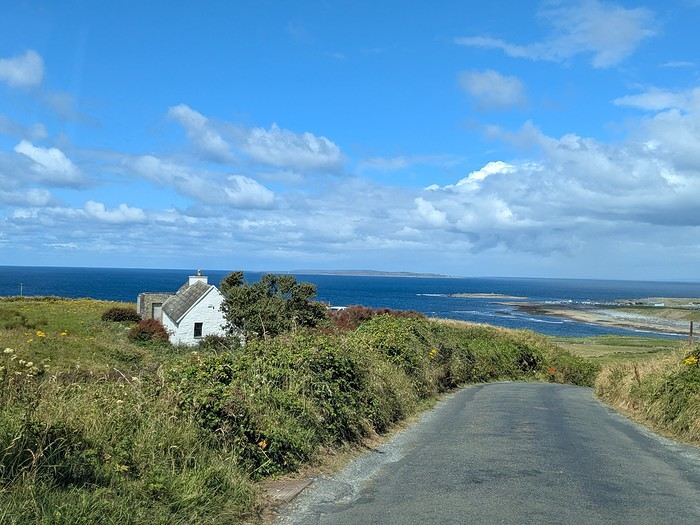
The moment has finally arrived. We’ll be traveling as a family—my wife, my husband, and our 7-year-old daughter.
Here’s our itinerary:
24/07: Flight from Marseille to Dublin, overnight in Dublin 25/07: Dublin, overnight in Dublin 26/07: Dublin, overnight in Dublin 27/07: Pick up rental car, drive to Dingle, overnight near Tralee on the peninsula 28/07: Visit the Ring of Kerry 29/07: Adare, Bunratty Castle, Galway, overnight in Outheragh, near Galway 30/07: Cliffs of Moher, overnight in Outheragh 31/07: Connemara, overnight in Outheragh 01/08: Drive to Sligo via Westport and Downpatrick Head, overnight in Sligo 02/08: Slieve League, Silver Strand Beach, Glencolmcille, overnight in Sligo 03/08: Drive to Derry via Glenveagh National Park, overnight in Derry 04/08: Giant’s Causeway, Dunluce Castle, Portrush, Derry, overnight in Derry 05/08: Drive to Belfast, visit Belfast, overnight in Lisburn (Belfast suburbs) 06/08: Game of Thrones filming locations: Dark Hedges, Carrick-a-Rede, Ballintoy, etc., overnight in Lisburn 07/08: Drive to the Wicklow Mountains, visit Wicklow Mountains National Park, overnight in Blessington 08/08: Drive back to Dublin and return to Marseille.
Cost breakdown:
Flights:
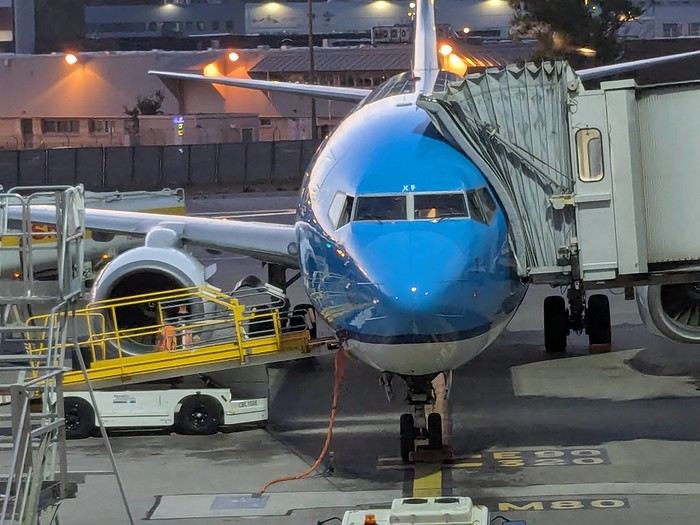
Outbound flights with KLM via Amsterdam for 3: 175 € + 40,000 Flying Blue miles (so essentially a free ticket) Return flight with Aer Lingus for 3: 489 €
Rental car:
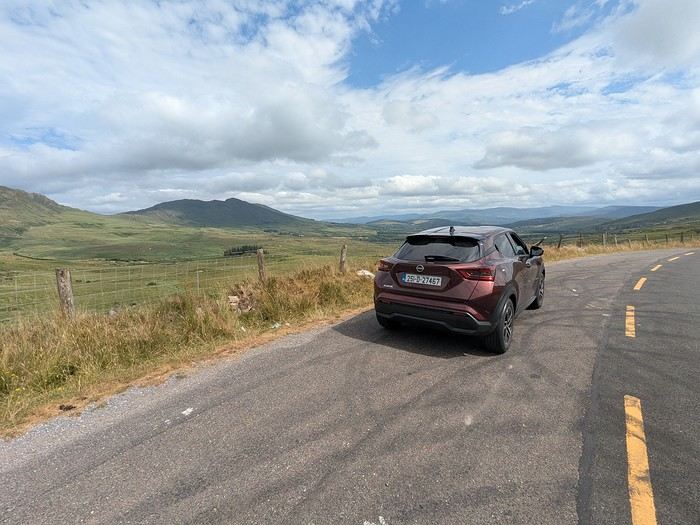
10 days booked with Enterprise via Carigami: 443 € including zero-excess insurance.
Accommodation:
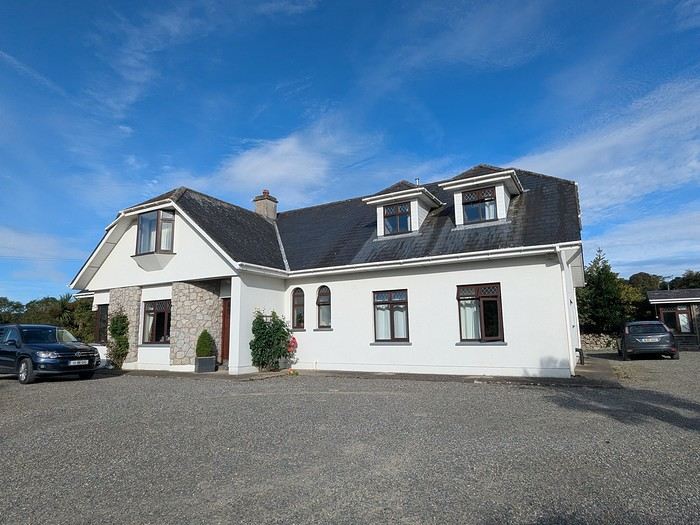
Dublin: 3 nights at Maldron Hotel New Cross: 394 € Tralee: 2 nights in a caravan (Ocean Trail Oasis): 292 € Outheragh: 3 nights Airbnb, family room with private bathroom: 430 € Sligo: 2 nights at Clayton Hotel: 456 € Derry: 2 nights at Belfray Inn: 255 € Lisburn: 2 nights at Temple Golf Club: 232 € Blessington: 1 night at Baltyboys Lodges B&B: 158 €
That brings our total to 3,325 € for three.
On the ground, visits, fuel, and food cost around 2,500 €. So this was quite an expensive trip. A few price examples: 1 liter of unleaded fuel: 1.89 € 3-day pass in Dublin: 18 € 1 scoop of ice cream: 5 to 6.5 € Castle visit: 15 € per person A coffee: 3-4 € A glass of wine at a restaurant: 8-10 € A half-pint of Guinness: 7-12 €
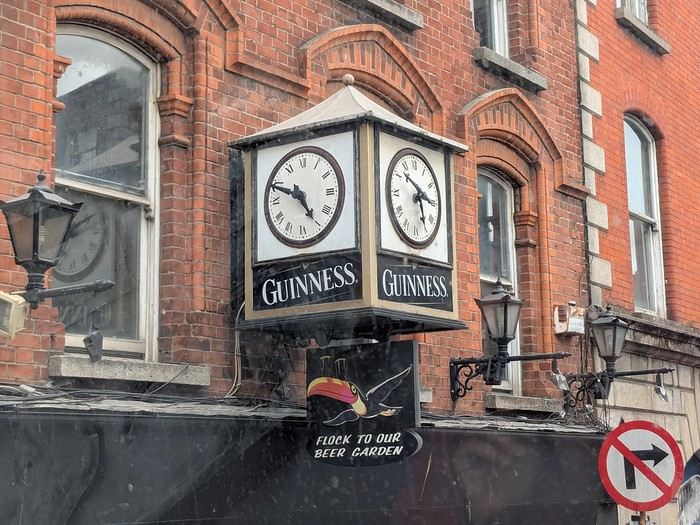
Now, here’s the day-by-day account of our adventure in Ireland:
The moment has finally arrived. We’ll be traveling as a family—my wife, my husband, and our 7-year-old daughter.
Here’s our itinerary:
24/07: Flight from Marseille to Dublin, overnight in Dublin 25/07: Dublin, overnight in Dublin 26/07: Dublin, overnight in Dublin 27/07: Pick up rental car, drive to Dingle, overnight near Tralee on the peninsula 28/07: Visit the Ring of Kerry 29/07: Adare, Bunratty Castle, Galway, overnight in Outheragh, near Galway 30/07: Cliffs of Moher, overnight in Outheragh 31/07: Connemara, overnight in Outheragh 01/08: Drive to Sligo via Westport and Downpatrick Head, overnight in Sligo 02/08: Slieve League, Silver Strand Beach, Glencolmcille, overnight in Sligo 03/08: Drive to Derry via Glenveagh National Park, overnight in Derry 04/08: Giant’s Causeway, Dunluce Castle, Portrush, Derry, overnight in Derry 05/08: Drive to Belfast, visit Belfast, overnight in Lisburn (Belfast suburbs) 06/08: Game of Thrones filming locations: Dark Hedges, Carrick-a-Rede, Ballintoy, etc., overnight in Lisburn 07/08: Drive to the Wicklow Mountains, visit Wicklow Mountains National Park, overnight in Blessington 08/08: Drive back to Dublin and return to Marseille.
Cost breakdown:
Flights:
Outbound flights with KLM via Amsterdam for 3: 175 € + 40,000 Flying Blue miles (so essentially a free ticket) Return flight with Aer Lingus for 3: 489 €
Rental car:
10 days booked with Enterprise via Carigami: 443 € including zero-excess insurance.
Accommodation:
Dublin: 3 nights at Maldron Hotel New Cross: 394 € Tralee: 2 nights in a caravan (Ocean Trail Oasis): 292 € Outheragh: 3 nights Airbnb, family room with private bathroom: 430 € Sligo: 2 nights at Clayton Hotel: 456 € Derry: 2 nights at Belfray Inn: 255 € Lisburn: 2 nights at Temple Golf Club: 232 € Blessington: 1 night at Baltyboys Lodges B&B: 158 €
That brings our total to 3,325 € for three.
On the ground, visits, fuel, and food cost around 2,500 €. So this was quite an expensive trip. A few price examples: 1 liter of unleaded fuel: 1.89 € 3-day pass in Dublin: 18 € 1 scoop of ice cream: 5 to 6.5 € Castle visit: 15 € per person A coffee: 3-4 € A glass of wine at a restaurant: 8-10 € A half-pint of Guinness: 7-12 €
Now, here’s the day-by-day account of our adventure in Ireland:
Questions about sightseeing, transport, and hotels for my first trip to Cyprus
I'm currently planning a trip to Cyprus for late October. I have a few questions:
- I plan to visit Nicosia, Paphos, and Ayia Napa. What do you recommend in Ayia Napa?
- Is it easy to get around by bus from one city to another? Or do you have any private drivers to recommend?
- Do you have any hotels to recommend?
Any tips or advice is welcome!
Thanks in advance
Kyushu off the beaten path: itinerary feedback
Hi there,
This isn’t my first trip, but it’s still tough to make choices, so I’m open to outside perspectives. This time, the plan is southern Kyushu with a slightly more off-the-beaten-path twist. I’m not sure if you’ll be able to help since I’m skipping some of the classics in Kyushu, but you never know. I’d love to hear your thoughts on whether this itinerary is realistic in terms of time spent in each place, travel time, and the overall pace of the road trip. Just to note, I already have my translated driver’s license.
Here’s the itinerary: - **Day 1:** YAMAGA / overnight in Yamaga or Kumamoto Depart from Osaka by train early in the morning to Kumamoto, pick up the rental car, then drive to Yamaga for a visit. Overnight in Yamaga or Kumamoto.
- **Days 2–4:** HITOYOSHI / overnight in Hitoyoshi Drive to Hitoyoshi for 3 days and 3 nights, including a visit to the town, nearby waterfalls, a walk along the Kuma River, a tea producer visit, and some craft activities.
- **Day 5:** AYA / overnight in Miyazaki Drive to Aya, visit the town, craft activities, the forest, and the suspension bridge.
- **Day 6:** AOSHIMA - NICHINAN COAST / overnight in Miyazaki Udo Shrine + Aoshima + scenic drive along the coast.
- **Day 7:** MIYAKONOJO / overnight in Shibushi Drive to a waterfall, then continue along the Nichinan Coast if there’s anything left to see, or visit Kojima Island.
- **Day 8:** SHIBUSHI Walk around the port and along the Osumi Peninsula coast, maybe as far as the Kishira/Hetsuka coast, or visit a black pork producer, a market gardener, or a tea producer. Overnight at a farm?
- **Day 9:** KANOYA / overnight in Kagoshima Visit Ogawara Waterfall, Nishiharadai Park, and Kannon Cave, then Sugawara Shrine, followed by the drive to Kagoshima.
- **Day 10:** KAGOSHIMA / overnight in Kagoshima Explore the city + whisky distillery in Hioki.
- **Days 11–12:** KOSHIKISHIMA / 2 nights in Koshikishima
- **Day 13:** AKUNE OSHIMA / overnight in Akune Ferry, then drive to Akune Oshima with a stop at Sendai Taki.
- **Days 14–15:** AMAKUSA / overnight in Amakusa Drive via Nagashima and visit Shimoshima (Amakusa).
- **Day 16:** AMAKUSA / overnight in Fukuoka Drive back toward Kumamoto with stops along the way, return the rental car, then take the train to Fukuoka.
- **Days 17–18:** FUKUOKA CITY / overnight in Fukuoka Possible half-day excursion to Nokonoshima, Munakata, or Nanzoin.
Any thoughts or suggestions? Too ambitious? I could add an extra day but would prefer not to if it means less rushing around.
Thanks!
This isn’t my first trip, but it’s still tough to make choices, so I’m open to outside perspectives. This time, the plan is southern Kyushu with a slightly more off-the-beaten-path twist. I’m not sure if you’ll be able to help since I’m skipping some of the classics in Kyushu, but you never know. I’d love to hear your thoughts on whether this itinerary is realistic in terms of time spent in each place, travel time, and the overall pace of the road trip. Just to note, I already have my translated driver’s license.
Here’s the itinerary: - **Day 1:** YAMAGA / overnight in Yamaga or Kumamoto Depart from Osaka by train early in the morning to Kumamoto, pick up the rental car, then drive to Yamaga for a visit. Overnight in Yamaga or Kumamoto.
- **Days 2–4:** HITOYOSHI / overnight in Hitoyoshi Drive to Hitoyoshi for 3 days and 3 nights, including a visit to the town, nearby waterfalls, a walk along the Kuma River, a tea producer visit, and some craft activities.
- **Day 5:** AYA / overnight in Miyazaki Drive to Aya, visit the town, craft activities, the forest, and the suspension bridge.
- **Day 6:** AOSHIMA - NICHINAN COAST / overnight in Miyazaki Udo Shrine + Aoshima + scenic drive along the coast.
- **Day 7:** MIYAKONOJO / overnight in Shibushi Drive to a waterfall, then continue along the Nichinan Coast if there’s anything left to see, or visit Kojima Island.
- **Day 8:** SHIBUSHI Walk around the port and along the Osumi Peninsula coast, maybe as far as the Kishira/Hetsuka coast, or visit a black pork producer, a market gardener, or a tea producer. Overnight at a farm?
- **Day 9:** KANOYA / overnight in Kagoshima Visit Ogawara Waterfall, Nishiharadai Park, and Kannon Cave, then Sugawara Shrine, followed by the drive to Kagoshima.
- **Day 10:** KAGOSHIMA / overnight in Kagoshima Explore the city + whisky distillery in Hioki.
- **Days 11–12:** KOSHIKISHIMA / 2 nights in Koshikishima
- **Day 13:** AKUNE OSHIMA / overnight in Akune Ferry, then drive to Akune Oshima with a stop at Sendai Taki.
- **Days 14–15:** AMAKUSA / overnight in Amakusa Drive via Nagashima and visit Shimoshima (Amakusa).
- **Day 16:** AMAKUSA / overnight in Fukuoka Drive back toward Kumamoto with stops along the way, return the rental car, then take the train to Fukuoka.
- **Days 17–18:** FUKUOKA CITY / overnight in Fukuoka Possible half-day excursion to Nokonoshima, Munakata, or Nanzoin.
Any thoughts or suggestions? Too ambitious? I could add an extra day but would prefer not to if it means less rushing around.
Thanks!
The Arco Seco: A Still Undiscovered Region of Panama
When planning a trip to Panama, you often hear about Panama City, Bocas del Toro, Boquete, or even San Blas. Yet, there’s a region that remains relatively under the radar in travel guides: the Arco Seco.
Located on the Pacific coast, between the provinces of Panamá Oeste, Coclé, Herrera, and Los Santos, the Arco Seco enjoys a generally drier climate than the rest of the country. Even during the rainy season, you’ll often find more sunshine here than in other parts of Panama.
For travelers who love alternating between beaches, nature, hikes, and local discoveries, this region is definitely worth a detour.
A few ideas for visits:
• The beaches of La Ensenada, El Palmar, Punta Barco, and Coronado
• Surfing at El Palmar, one of the most well-known spots on the Pacific coast
• Kitesurfing at Punta Chame, which is highly reputed!
• El Valle de Antón, nestled in an ancient volcanic crater, with its hikes, waterfalls, artisan market, and hot springs
• Various hikes offering stunning panoramas
• The waterfalls in the San Carlos and El Valle areas
• Golf at Vista Mar or Coronado
• Fishing villages where you can still buy freshly caught fish directly from local fishermen
What I particularly love about this region is that it lets you discover a more authentic and peaceful side of Panama while remaining easily accessible from Panama City.
I’ve been living in San Carlos for several years now, and I’m still discovering new places, trails, beaches, and hidden gems.
If anyone is planning a trip to this region and has questions, I’d be happy to share my favorite spots and personal recommendations.
Looking forward to exchanging tips with you!
Joëlle
Located on the Pacific coast, between the provinces of Panamá Oeste, Coclé, Herrera, and Los Santos, the Arco Seco enjoys a generally drier climate than the rest of the country. Even during the rainy season, you’ll often find more sunshine here than in other parts of Panama.
For travelers who love alternating between beaches, nature, hikes, and local discoveries, this region is definitely worth a detour.
A few ideas for visits:
• The beaches of La Ensenada, El Palmar, Punta Barco, and Coronado
• Surfing at El Palmar, one of the most well-known spots on the Pacific coast
• Kitesurfing at Punta Chame, which is highly reputed!
• El Valle de Antón, nestled in an ancient volcanic crater, with its hikes, waterfalls, artisan market, and hot springs
• Various hikes offering stunning panoramas
• The waterfalls in the San Carlos and El Valle areas
• Golf at Vista Mar or Coronado
• Fishing villages where you can still buy freshly caught fish directly from local fishermen
What I particularly love about this region is that it lets you discover a more authentic and peaceful side of Panama while remaining easily accessible from Panama City.
I’ve been living in San Carlos for several years now, and I’m still discovering new places, trails, beaches, and hidden gems.
If anyone is planning a trip to this region and has questions, I’d be happy to share my favorite spots and personal recommendations.
Looking forward to exchanging tips with you!
Joëlle
2 weeks in northern Portugal: what to see with the Douro Valley and Porto?
Hi there,
We’re traveling in our camper van from Haute-Savoie.
We’ve got 2 weeks in April and want to explore northern Portugal.
We’re thinking of:
- Peneda-Gerês National Park - the Douro Valley - Porto
We love nature, hiking, and culture (and also good food and wine).😉
Do you have an itinerary to suggest?
Thanks in advance for your replies
We’re traveling in our camper van from Haute-Savoie.
We’ve got 2 weeks in April and want to explore northern Portugal.
We’re thinking of:
- Peneda-Gerês National Park - the Douro Valley - Porto
We love nature, hiking, and culture (and also good food and wine).😉
Do you have an itinerary to suggest?
Thanks in advance for your replies
Tips for an 8-day van trip in Iceland
Hi there,
We're planning a full week in Iceland in April. Given the short timeframe to prepare, I’m asking for some help on the forum.
We’re considering renting a camper van to be more independent with our travel. - Is this really a good idea at this time of year due to weather conditions (cold nights, poor road conditions, etc.)? - Can we just "park" anywhere for the night to sleep, or do we absolutely have to go to a campsite? What are the approximate rates for a van with 2 people? Do we need to book in advance? - If this mode of transport is recommended, do you have any good places to rent one?
Iceland is still a big island with lots of points of interest, so I think it’ll be tough to see everything in 8 days. - Are there parts of the island we should prioritize in April? We like hiking (nothing too long—6 or 7 hours is out of the question) and unique landscapes. - Are some sites inaccessible at this time of year? - Is Reykjavik worth stopping for a day or two?
Thanks in advance for your answers!
Jeff
We're planning a full week in Iceland in April. Given the short timeframe to prepare, I’m asking for some help on the forum.
We’re considering renting a camper van to be more independent with our travel. - Is this really a good idea at this time of year due to weather conditions (cold nights, poor road conditions, etc.)? - Can we just "park" anywhere for the night to sleep, or do we absolutely have to go to a campsite? What are the approximate rates for a van with 2 people? Do we need to book in advance? - If this mode of transport is recommended, do you have any good places to rent one?
Iceland is still a big island with lots of points of interest, so I think it’ll be tough to see everything in 8 days. - Are there parts of the island we should prioritize in April? We like hiking (nothing too long—6 or 7 hours is out of the question) and unique landscapes. - Are some sites inaccessible at this time of year? - Is Reykjavik worth stopping for a day or two?
Thanks in advance for your answers!
Jeff
Iceland: To do the Golden Circle or not?
Hi everyone! 🙂
For once, I'm heading north... I’ve decided to spend a short time in Iceland, alone, during the first week of July. I’ll only have 5 full days there. Sure, it’s not much, so I’ll focus on what attracts me the most: the Highlands. Obviously, renting a 4x4—or even a regular car—on my own isn’t an option. That’s why I’m breaking my (probably unfounded) principles and have contacted local agencies for "day tours" in small-group format. Well, small-group up to 15 people, anyway... Oh well, I’m going for it! I’m really hesitant about visiting the Golden Circle on the last day, since I’ve read it’s become super crowded. I’d love your thoughts on this. Plus, if I visit that area, I’d want to include Bruarfoss, and as far as I know, only the Troll agency offers that detour. There’s also the Snaefellsnes Peninsula excursion that appeals to me, but it seems time-consuming. Time-consuming like the Jokulsarlon tour I’ve already booked. (But that’s on the first day, so I’ll still be full of energy!) By the last day, I’ll probably be running on empty... Otherwise, I’ll be doing 3 4x4 excursions that I’m really excited about: 1 in Thorsmork Valley, 1 in Landmannalaugar, and 1 in Kerlingarfjöll.
So, Golden Circle or no Golden Circle—that’s the question... Or maybe a relaxed day visiting Reykjavik and a lagoon. Blue Lagoon? Sky Lagoon? Meh...
For once, I'm heading north... I’ve decided to spend a short time in Iceland, alone, during the first week of July. I’ll only have 5 full days there. Sure, it’s not much, so I’ll focus on what attracts me the most: the Highlands. Obviously, renting a 4x4—or even a regular car—on my own isn’t an option. That’s why I’m breaking my (probably unfounded) principles and have contacted local agencies for "day tours" in small-group format. Well, small-group up to 15 people, anyway... Oh well, I’m going for it! I’m really hesitant about visiting the Golden Circle on the last day, since I’ve read it’s become super crowded. I’d love your thoughts on this. Plus, if I visit that area, I’d want to include Bruarfoss, and as far as I know, only the Troll agency offers that detour. There’s also the Snaefellsnes Peninsula excursion that appeals to me, but it seems time-consuming. Time-consuming like the Jokulsarlon tour I’ve already booked. (But that’s on the first day, so I’ll still be full of energy!) By the last day, I’ll probably be running on empty... Otherwise, I’ll be doing 3 4x4 excursions that I’m really excited about: 1 in Thorsmork Valley, 1 in Landmannalaugar, and 1 in Kerlingarfjöll.
So, Golden Circle or no Golden Circle—that’s the question... Or maybe a relaxed day visiting Reykjavik and a lagoon. Blue Lagoon? Sky Lagoon? Meh...
1 month in Malaysia - feedback on our itinerary
Hi,
This summer, we’re spending a month in Malaysia. There are 3 adults and two kids in our group. I’ve just finished planning our itinerary and I’d love to get your thoughts on whether it feels "coherent."
Thanks in advance for your feedback!
Christelle
07/07 Depart France 10:30 AM
08/07 Arrive KL 7:50 PM
09/07 KL
10/07 KL / Batu Caves
11/07 KL
12/07 KL → Kuching (flight)
13/07 Kuching
14/07 Bako National Park
15/07 Bako → Kuching
16/07 Semenggoh Reserve
17/07 Kuching → Mulu (flight)
18/07 Mulu National Park
19/07 Mulu → Kota Kinabalu (flight)
20/07 Kota Kinabalu → Sandakan (flight)
21/07 Kinabatangan
22/07 Kinabatangan → Sandakan / Sandakan → KL (flight)
23/07 Malacca
24/07 Malacca → Chin Swee Caves Temple
25/07 Chin Swee Caves Temple → Kuala Tahan / Taman Negara Park
26/07 Taman Negara Park
27/07 Kuala Tahan → Kuala Besut
28/07 Perhentian Islands
29/07 Perhentian Islands
30/07 Perhentian Islands
31/07 Perhentian → George Town
01/08 George Town / Penang
02/08 George Town / Penang
03/08 Ipoh
04/08 Cameron Highlands
05/08 Return to KL
06/08 Return to France
Scotland - Skye Trail and a little extra
After our amazing experience in the Lofoten Islands in summer 2023, I suggested to Jean Marie another trek I’d been wanting to do for a long time: the Skye Trail in Scotland.
A few photos of this stunning island and he was sold and ready to go.
The route is available on the excellent WalkHighlands site HERE (there’s also a Cicerone guide on the subject). And since I thought it was a shame it avoided the Black Cuillins, I added a 3-day detour in that area.
We took advantage of the May bank holidays in 2024, partly to avoid the peak tourist season and also the midge period—because for some reason, mosquitoes love me 😠!!
27/04 – Day 1 – Transfer to Skye and start of the trek: Rubha Hunish - Flodigarry 28/04 – Day 2 – Flodigarry – just before the Old Man of Storr 29/04 – Day 3 – Old Man of Storr – Portree, then bus to Sligachan 30/04 - Day 4 - Sligachan - Glenbrittle campsite via the Fairy Pools 01/05 – Day 5 – Round trip to Sgùrr na Banachdich from Glenbrittle campsite 02/05 – Day 6 – Round trip to Coire Lagan and walk on the Rubh an Dùnain peninsula 03/05 – Day 7 – Return (hitchhiking) to Sligachan campsite and hike in the Red Cuillins 04/05 – Day 8 – Resuming the Skye Trail – Sligachan – Elgol 05/05 – Day 9 – Elgol – Somewhere on the climb to Bla Bheinn 06/05 – Day 10 – Somewhere on the climb to Bla Bheinn - Broadford 07/05 – Day 11 – Visit to the Armadale Castle and park 08 & 09/05 – Return to Glasgow, visit the city, and return flight And here’s the summary
A few photos of this stunning island and he was sold and ready to go.
The route is available on the excellent WalkHighlands site HERE (there’s also a Cicerone guide on the subject). And since I thought it was a shame it avoided the Black Cuillins, I added a 3-day detour in that area.
We took advantage of the May bank holidays in 2024, partly to avoid the peak tourist season and also the midge period—because for some reason, mosquitoes love me 😠!!
27/04 – Day 1 – Transfer to Skye and start of the trek: Rubha Hunish - Flodigarry 28/04 – Day 2 – Flodigarry – just before the Old Man of Storr 29/04 – Day 3 – Old Man of Storr – Portree, then bus to Sligachan 30/04 - Day 4 - Sligachan - Glenbrittle campsite via the Fairy Pools 01/05 – Day 5 – Round trip to Sgùrr na Banachdich from Glenbrittle campsite 02/05 – Day 6 – Round trip to Coire Lagan and walk on the Rubh an Dùnain peninsula 03/05 – Day 7 – Return (hitchhiking) to Sligachan campsite and hike in the Red Cuillins 04/05 – Day 8 – Resuming the Skye Trail – Sligachan – Elgol 05/05 – Day 9 – Elgol – Somewhere on the climb to Bla Bheinn 06/05 – Day 10 – Somewhere on the climb to Bla Bheinn - Broadford 07/05 – Day 11 – Visit to the Armadale Castle and park 08 & 09/05 – Return to Glasgow, visit the city, and return flight And here’s the summary
Hiking, camping, and snorkeling on Madagascar's east coast
Hello,
I’m continuing the Antalaha–Maroantsetra discussion but for some info in the other direction, specifically about hiking from Maroantsetra to Antalaha.
In mid-December, I plan to take it easy from Tamatave to Antalaha. I’m thinking of making a few stops, like Nosy Atafana—has anyone snorkeled there? Is it nice? Can you find bush taxis on the Soniera–Ivongo / Maroantsetra stretch?
After that, I’m considering walking from Maroantsetra to Antalaha and figuring things out as I go, since the path seems well-used, so I’m not planning on a guide. Good idea or totally foolish? Should I bring a tent and some camping gear, or, as I’ve read multiple times, are there several villages with lodging and food options along the way? Any spots worth stopping at or nothing special to see?
In Antalaha, I saw the recommendation for Villa Malaza in the previous discussion, so I’m keeping that in mind. If there’s space, I’ll plan to stay there. In Antalaha itself, are there any places to visit, things to see, or activities you’d recommend?
Thanks in advance to everyone for any tips—they’ll be really helpful!
In mid-December, I plan to take it easy from Tamatave to Antalaha. I’m thinking of making a few stops, like Nosy Atafana—has anyone snorkeled there? Is it nice? Can you find bush taxis on the Soniera–Ivongo / Maroantsetra stretch?
After that, I’m considering walking from Maroantsetra to Antalaha and figuring things out as I go, since the path seems well-used, so I’m not planning on a guide. Good idea or totally foolish? Should I bring a tent and some camping gear, or, as I’ve read multiple times, are there several villages with lodging and food options along the way? Any spots worth stopping at or nothing special to see?
In Antalaha, I saw the recommendation for Villa Malaza in the previous discussion, so I’m keeping that in mind. If there’s space, I’ll plan to stay there. In Antalaha itself, are there any places to visit, things to see, or activities you’d recommend?
Thanks in advance to everyone for any tips—they’ll be really helpful!
Your recommendations for the Eastern Cape
Hello,
We’re planning our second trip to South Africa in July 2026. In 2023, we did a loop from Joburg, Golden Gate, Drakensberg, Hluhluwe, St Lucia, Eswatini, Kruger, Blyde River Canyon, and back to Joburg. This time, we’d like to go to Cape Town and do a road trip to Port Elizabeth, then fly back to Joburg to return to Kruger. At this stage of my planning, here’s what it could look like:
D1 to D4: Cape Town and Cape of Good Hope (Table Mountain, Lion’s Head, Waterfront, Bo-Kaap, Boulders, Cape Point, Chapman’s Peak Drive). I’ve spotted a few places to stay between Camps Bay and Hout Bay (3 nights). D5 and D6: Either Karoo NP or Hermanus and De Hoop. Any opinions to tip the scales? I’ll admit I’m already leaning toward Karoo (the "wild" vibe of the landscapes and wildlife encounters appeal to me much more than the seaside, which feels less exotic). If we go for Karoo, where should we stay? Inside the park or in Beaufort West? I’ve seen good reviews for Ko-ka Tsara Bush Camp, but maybe it’s better to stay in the Sanparks cottages to make the most of the park? (2 nights) Option B is to do Stellenbosch (though vineyards aren’t great in winter) and/or the Whale Route—Betty’s Bay, Hermanus, De Hoop (2 nights near Gansbaai). D7 and D8: Klein Karoo, Oudtshoorn. Staying at De Cango Guest Farm (2 nights). D9 and D10: Knysna, Robberg Nature Reserve, Tsitsikamma (2 nights in Plettenberg Bay and 1 night in PE). D11: Flight from Port Elizabeth to Joburg at 7 AM and drive to Marloth Park.
For Kruger, I’ve booked 2 nights in Marloth Park, 1 night in Skukuza, 2 nights in Satara, and 1 night in Talamati, which we loved. I’ll book the last night in Graskop later since we want to revisit the Blyde Canyon area.
I’d love all the feedback you can give on my itinerary, especially for days 5 and 6. If you have recommendations for accommodations for 4 people, I’d appreciate those too. Thanks! 🙂
We’re planning our second trip to South Africa in July 2026. In 2023, we did a loop from Joburg, Golden Gate, Drakensberg, Hluhluwe, St Lucia, Eswatini, Kruger, Blyde River Canyon, and back to Joburg. This time, we’d like to go to Cape Town and do a road trip to Port Elizabeth, then fly back to Joburg to return to Kruger. At this stage of my planning, here’s what it could look like:
D1 to D4: Cape Town and Cape of Good Hope (Table Mountain, Lion’s Head, Waterfront, Bo-Kaap, Boulders, Cape Point, Chapman’s Peak Drive). I’ve spotted a few places to stay between Camps Bay and Hout Bay (3 nights). D5 and D6: Either Karoo NP or Hermanus and De Hoop. Any opinions to tip the scales? I’ll admit I’m already leaning toward Karoo (the "wild" vibe of the landscapes and wildlife encounters appeal to me much more than the seaside, which feels less exotic). If we go for Karoo, where should we stay? Inside the park or in Beaufort West? I’ve seen good reviews for Ko-ka Tsara Bush Camp, but maybe it’s better to stay in the Sanparks cottages to make the most of the park? (2 nights) Option B is to do Stellenbosch (though vineyards aren’t great in winter) and/or the Whale Route—Betty’s Bay, Hermanus, De Hoop (2 nights near Gansbaai). D7 and D8: Klein Karoo, Oudtshoorn. Staying at De Cango Guest Farm (2 nights). D9 and D10: Knysna, Robberg Nature Reserve, Tsitsikamma (2 nights in Plettenberg Bay and 1 night in PE). D11: Flight from Port Elizabeth to Joburg at 7 AM and drive to Marloth Park.
For Kruger, I’ve booked 2 nights in Marloth Park, 1 night in Skukuza, 2 nights in Satara, and 1 night in Talamati, which we loved. I’ll book the last night in Graskop later since we want to revisit the Blyde Canyon area.
I’d love all the feedback you can give on my itinerary, especially for days 5 and 6. If you have recommendations for accommodations for 4 people, I’d appreciate those too. Thanks! 🙂
A summer in the sun in... Iceland!!
Ah, Iceland and us—it’s quite the story, or rather, a long wait... The first time we considered going was already 7-8 years ago, after reading travel journals describing breathtaking landscapes, countless active and dormant volcanoes, glaciers, and waterfalls with extraordinary flows. In short, this island, made of fire and ice, right at Europe’s doorstep with its own unique culture, had nothing but advantages, and it was urgent to visit without delay 😇
My *Routard* guidebook is actually from 2016. So why did Iceland make us wait so long before we finally gave in to its charms? Yes, why indeed?
Simply because reading other travel journals revealed the cost of living there—and especially the harsh climate, even in the middle of July 🤪! Some journals described entire weeks of rain and foggy weather, making it tricky to explore the island. The budget wasn’t spared either, because in the most touristy areas, especially in the south and around Myvatn, accommodation prices are downright indecent—even outright robbery. 😕
Plus, in the Highlands, there’s literally no permanent lodging, and the only way to spend several nights there is to camp. And camping in winter conditions wasn’t exactly part of our plans... 😄
So, year after year, this trip kept getting postponed...
until August 2023, when prices for Southern Africa, North or South America, or even Asia were all way too high for summer 2024!
That’s when I turned my attention back to the Land of Fire and Ice and scoured all the comparison sites for the best accommodation deals across the country. Planning for 20 nights, I found 13 nights in "proper" lodging for 5 people at an average cost of under 200 €! A miracle, considering that in the southern glacier region, around Vik or Myvatn, prices range from 300 to 1000 € per night 😮 😮!
Still, that means we’ll have to camp for 7 nights, mostly in the Highlands, near Askja or Landmannalaugar. 😎
For once, I built the daily itinerary entirely around the decently priced lodgings I found 11 months in advance! The shortage of places to stay in some areas forced me to plan a few long transition days and make some tough choices. No big deal, though—there’s so much to do on this island 🙂!
Once the main itinerary was set, everyone agreed to the plan: 2/3 in proper lodging and 1/3 camping, even the most camping-averse among us! *Follow my gaze...*
By the time we bought the flight tickets, I had to tweak the itinerary a bit because one or two places were already booked! Plus, it was impossible to wait for a more refined plan to adjust reservations, since almost all bookings are non-refundable!! The harsh law of supply and demand...
For the car rental, we booked a Hyundai Tucson, approved for the Highlands, from Lava Car Rental—a company I’d read good reviews about in a Facebook group—for a cool 2500 € with full insurance. A real 4x4, like a Defender, would’ve been more than double...! Welcome to Iceland 😕...
Activities and excursions also required some tough choices. We had two must-dos: whale watching in Húsavík (60 € pp on Getyourguide) and a Glacier and Summer Treasure Glacier Walk with BlueIceland (165 € pp with discount codes on Getyourguide).
For the baths, we skipped the Blue Lagoon—too expensive—in favor of the Secret Lagoon and the Myvatn Baths, the Blue Lagoon’s equivalent but half the price.
Two baths for the price of one... and even more, since I spotted several free hot-water swimming spots.
Itinerary: Day 1: Arrival in Reykjavik - Hraunfossar Waterfall - Surtshellir Cave Day 2: Grábrók Crater - Snæfellsnes Peninsula Day 3: Stykkishólmur - Sturlungalaug Hot Springs Day 4: Northwest Coast - Akureyri - Goðafoss Day 5: Myvatn Day 6: Myvatn - Dettifoss - Selfoss - Rauðhólar Day 7: Húsavík Whale Watching - Dettifoss - Selfoss Day 8: Stuðlagil Canyon - Seyðisfjörður Day 9: Puffin colony - Störurð Hike Day 10: Hengifoss - East Fjords, Mjóifjörður Day 11: Viking Village - Jökulsárlón - Fjallsárlón Day 12: Glacier Excursion - Svartifoss Day 13: Fjaðrárgljúfur Canyon - Vík Day 14: Þakgil - Lava Show Vík Day 15: Southern Waterfalls Day Day 16: Landmannalaugar - Skalli Hike Day 17: Landmannalaugar - Bláhnjúkur - Brennisteinsalda Day 18: Secret Lagoon, Kerlingarfjöll, and Gullfoss Day 19: Geysir - Reykjavik Day 20: Bruarfoss - Þingvellir - Kerid Crater - Krýsuvík Geothermal Area Day 21: Reykjanes Peninsula
Friday, July 5, 2024, is our last workday before driving up to Alsace overnight to leave the cockers at Grandpa’s for boarding. Then, at 1:30 AM, we’ll head to Frankfurt, where a direct flight to Iceland awaits.
We arrive at 4 AM. Since we leave at 7 AM, the "night" will only last the equivalent of a 30-minute nap 🤪... just enough to get us in the road-trip mood 😏!!
My *Routard* guidebook is actually from 2016. So why did Iceland make us wait so long before we finally gave in to its charms? Yes, why indeed?
Simply because reading other travel journals revealed the cost of living there—and especially the harsh climate, even in the middle of July 🤪! Some journals described entire weeks of rain and foggy weather, making it tricky to explore the island. The budget wasn’t spared either, because in the most touristy areas, especially in the south and around Myvatn, accommodation prices are downright indecent—even outright robbery. 😕
Plus, in the Highlands, there’s literally no permanent lodging, and the only way to spend several nights there is to camp. And camping in winter conditions wasn’t exactly part of our plans... 😄
So, year after year, this trip kept getting postponed...
until August 2023, when prices for Southern Africa, North or South America, or even Asia were all way too high for summer 2024!
That’s when I turned my attention back to the Land of Fire and Ice and scoured all the comparison sites for the best accommodation deals across the country. Planning for 20 nights, I found 13 nights in "proper" lodging for 5 people at an average cost of under 200 €! A miracle, considering that in the southern glacier region, around Vik or Myvatn, prices range from 300 to 1000 € per night 😮 😮!
Still, that means we’ll have to camp for 7 nights, mostly in the Highlands, near Askja or Landmannalaugar. 😎
For once, I built the daily itinerary entirely around the decently priced lodgings I found 11 months in advance! The shortage of places to stay in some areas forced me to plan a few long transition days and make some tough choices. No big deal, though—there’s so much to do on this island 🙂!
Once the main itinerary was set, everyone agreed to the plan: 2/3 in proper lodging and 1/3 camping, even the most camping-averse among us! *Follow my gaze...*
By the time we bought the flight tickets, I had to tweak the itinerary a bit because one or two places were already booked! Plus, it was impossible to wait for a more refined plan to adjust reservations, since almost all bookings are non-refundable!! The harsh law of supply and demand...
For the car rental, we booked a Hyundai Tucson, approved for the Highlands, from Lava Car Rental—a company I’d read good reviews about in a Facebook group—for a cool 2500 € with full insurance. A real 4x4, like a Defender, would’ve been more than double...! Welcome to Iceland 😕...
Activities and excursions also required some tough choices. We had two must-dos: whale watching in Húsavík (60 € pp on Getyourguide) and a Glacier and Summer Treasure Glacier Walk with BlueIceland (165 € pp with discount codes on Getyourguide).
For the baths, we skipped the Blue Lagoon—too expensive—in favor of the Secret Lagoon and the Myvatn Baths, the Blue Lagoon’s equivalent but half the price.
Two baths for the price of one... and even more, since I spotted several free hot-water swimming spots.
Itinerary: Day 1: Arrival in Reykjavik - Hraunfossar Waterfall - Surtshellir Cave Day 2: Grábrók Crater - Snæfellsnes Peninsula Day 3: Stykkishólmur - Sturlungalaug Hot Springs Day 4: Northwest Coast - Akureyri - Goðafoss Day 5: Myvatn Day 6: Myvatn - Dettifoss - Selfoss - Rauðhólar Day 7: Húsavík Whale Watching - Dettifoss - Selfoss Day 8: Stuðlagil Canyon - Seyðisfjörður Day 9: Puffin colony - Störurð Hike Day 10: Hengifoss - East Fjords, Mjóifjörður Day 11: Viking Village - Jökulsárlón - Fjallsárlón Day 12: Glacier Excursion - Svartifoss Day 13: Fjaðrárgljúfur Canyon - Vík Day 14: Þakgil - Lava Show Vík Day 15: Southern Waterfalls Day Day 16: Landmannalaugar - Skalli Hike Day 17: Landmannalaugar - Bláhnjúkur - Brennisteinsalda Day 18: Secret Lagoon, Kerlingarfjöll, and Gullfoss Day 19: Geysir - Reykjavik Day 20: Bruarfoss - Þingvellir - Kerid Crater - Krýsuvík Geothermal Area Day 21: Reykjanes Peninsula
Friday, July 5, 2024, is our last workday before driving up to Alsace overnight to leave the cockers at Grandpa’s for boarding. Then, at 1:30 AM, we’ll head to Frankfurt, where a direct flight to Iceland awaits.
We arrive at 4 AM. Since we leave at 7 AM, the "night" will only last the equivalent of a 30-minute nap 🤪... just enough to get us in the road-trip mood 😏!!
Which less touristy regions to visit in Mexico?
Hi everyone,
My partner and I would like to travel to Mexico during the Christmas holidays. We’re well aware that this is a peak tourist season, but it’s the only time of year when we can take a long trip (over two weeks) due to work commitments.
We’re looking to avoid overly touristy areas and travel independently (renting a car). We want to explore Mexico’s history, take our time, and enjoy nature and the sea.
I’ve never been to Mexico before, and I’m considering the following regions (not all of them, of course): Yucatán (outside Quintana Roo), Baja California, Oaxaca, or Chiapas.
I’ve more or less ruled out Chiapas for safety reasons (even though the nature there looks amazing), and I’d love to hear your thoughts on the other regions. From experience, I know that even in highly touristy areas, you can often find quieter spots with good planning and by avoiding the main hotspots. For example, we were in Thailand last year during the same period, and aside from 2-3 places, we had a very peaceful trip—sometimes even being the only Westerners around. Would the same be true for Yucatán or Baja California?
Do you have any recommendations for nice, less touristy spots? What are your thoughts on the regions I mentioned?
Thanks so much for your help, and I hope you have a great weekend!
My partner and I would like to travel to Mexico during the Christmas holidays. We’re well aware that this is a peak tourist season, but it’s the only time of year when we can take a long trip (over two weeks) due to work commitments.
We’re looking to avoid overly touristy areas and travel independently (renting a car). We want to explore Mexico’s history, take our time, and enjoy nature and the sea.
I’ve never been to Mexico before, and I’m considering the following regions (not all of them, of course): Yucatán (outside Quintana Roo), Baja California, Oaxaca, or Chiapas.
I’ve more or less ruled out Chiapas for safety reasons (even though the nature there looks amazing), and I’d love to hear your thoughts on the other regions. From experience, I know that even in highly touristy areas, you can often find quieter spots with good planning and by avoiding the main hotspots. For example, we were in Thailand last year during the same period, and aside from 2-3 places, we had a very peaceful trip—sometimes even being the only Westerners around. Would the same be true for Yucatán or Baja California?
Do you have any recommendations for nice, less touristy spots? What are your thoughts on the regions I mentioned?
Thanks so much for your help, and I hope you have a great weekend!
Kyushu in summer with kids
Hi everyone,
This’ll be our second trip to Japan this summer, after a trip in February 2019 to Tokyo, Kyoto, the Alps, and Kanazawa. We’d planned a hiking, onsen, villages, and volcanoes stay afterward, which was supposed to happen in April 2020, but the COVID crisis forced us to cancel everything, and we’ve been chomping at the bit ever since. In the meantime, we’ve had two kids, who’ll be 4 and 5 next summer. They walk well and eat just about anything. We’re thinking of arriving in Osaka and heading quickly to Kyushu, where we’d stay for 3 weeks. I’m looking for info but mostly finding tips for older kids. So here are a few questions—if you can help:
- I get that renting a car would be best, but we’re not planning to do that in Fukuoka. I was thinking of a car-free block in Fukuoka-Beppu (taking the bus for the transfer), then heading farther south by car.
- For the kids, if you’ve got tips on places or festivals they might enjoy—or classics to avoid with them...
- For hiking, I’d love any advice on 3-4 hour hikes, keeping in mind Aso if it’s calm. Yakushima, if we can swing it and you don’t advise against it. And do you know of an area where we could do a 2-3 day trek (something like the Kumano Kodo)?
- I know it’ll be hot, but I’m struggling to gauge if it’s worse than Southeast Asia, for example. We’re not planning to go to Tokyo in the middle of summer, but I’d like to know if it’ll be really tough with the kids—especially in Fukuoka.
Just wanted to thank all the forum contributors, including those who might not have answers for me. Your posts have been a huge help and inspiration over the years.
Pierre-Yves
VF Members' Cruise Departure Calendar for 2026
hi there
Here’s the cruise schedule for 2026.
It’s a great way to get ideas and maybe even meet up with other members.
2 essential rules:
1) never "quote" the calendar when replying—this’ll avoid any confusion 2) follow the format below DD/MM - username / SHIP IN CAPS / number of days / cruise title / departure port DON’T FORGET THE SPACES between the / /
REMINDER Despite my requests, few people follow the requested format. Cruises that stray too far from it won’t be listed anymore—sorry!PLEASE respect the templates! COPY AND PASTE THE FORMAT BELOW AND REPLACE WITH YOUR DETAILS IF YOU’RE STRUGGLING DD/MM - username / SHIP IN CAPS / number of days / cruise title / departure port DON’T FORGET THE SPACES between the / / It takes time to fix mistakes, so THANKS TO EVERYONE for your help!
YOUR TURN 😉
NUMBER OF CRUISES 2026: JANUARY FEBRUARY MARCH APRIL MAY JUNE JULY AUGUST SEPTEMBER OCTOBER NOVEMBER DECEMBER
1) never "quote" the calendar when replying—this’ll avoid any confusion 2) follow the format below DD/MM - username / SHIP IN CAPS / number of days / cruise title / departure port DON’T FORGET THE SPACES between the / /
REMINDER Despite my requests, few people follow the requested format. Cruises that stray too far from it won’t be listed anymore—sorry!PLEASE respect the templates! COPY AND PASTE THE FORMAT BELOW AND REPLACE WITH YOUR DETAILS IF YOU’RE STRUGGLING DD/MM - username / SHIP IN CAPS / number of days / cruise title / departure port DON’T FORGET THE SPACES between the / / It takes time to fix mistakes, so THANKS TO EVERYONE for your help!
YOUR TURN 😉
NUMBER OF CRUISES 2026: JANUARY FEBRUARY MARCH APRIL MAY JUNE JULY AUGUST SEPTEMBER OCTOBER NOVEMBER DECEMBER
Exploring southern and western Iceland by 4x4
Hi there,
I’m looking to put together a group of 4 people to explore western and southern Iceland. The snow conditions in November (second half of the month) make access to the north and east tricky. Why November? The nighttime conditions (between 9 PM and 2 AM are ideal for spotting the northern lights), there’s still daylight (days run from about 9:30 AM to 5:30 PM—so we’ll need to start the day while it’s still dark), it’s not too cold (between 0 and 5 °C), and prices are more attractive than in late summer or during the December holidays.
I plan to use a provider to handle the logistics of the itinerary, which we’ll need to stick to (see details below). The provider charges 1345 € per person (price based on 2 people, but it’s better to have 4 to lower the cost per person since the vehicle rate is the same for 2, 3, or 4 people). We can tweak the itinerary a bit, but we all know that if we stray too far from the proposed offer, the price can quickly go up. Included:
7 nights in a guesthouse or hotel, twin or double room, shared facilities, and breakfast included. 7 days of rental for a 4-wheel-drive vehicle suited to the group size, unlimited mileage (fuel is on us), CDW insurance, and a second driver option. A road map and detailed itinerary A 24/7 French-speaking assistance service
Base itinerary proposed by the agency... It seems solid, given we’ll be there for 8 days (arrival and departure included). It’s possible to extend (by paying for extra accommodation) depending on your flight departure date. Day 1: Arrival in Iceland From the airport, the Blue Lagoon (optional) for a swim in its warm, turquoise, and milky waters. Then, the drive to Reykjavík, crossing the wild and lunar landscapes of the Reykjanes Peninsula. Explore the Icelandic capital, Reykjavík. Distance: 55 km. Meals: on your own. Accommodation: guesthouse in Reykjavík or the surrounding area.
Day 2: Exploring the west coast around Snæfellsjökull The west coast in the Snæfellsnes region. Cliffs, wild coastlines, and isolated farms in vast open spaces. Around the Snæfellsjökull volcano, the gateway to Jules Verne’s *Journey to the Center of the Earth*, you’ll discover the Djúpalónssandur reefs, the charming little port of Arnarstapi, nestled beneath the glacier, and the ports of the north coast, Grundarfjörður and Stykkishólmur. Distance: 260 km.
Day 3: Borgarfjörður, Reykholt & the Hraunfossar & Barnafoss waterfalls The lovely and unique Hraunfossar and Barnafoss waterfalls, before visiting Reykholt, the historic home of Snorri Sturluson, a famous 13th-century writer, poet, and historian. Distance: 160 km. Day 4: The famous Golden Circle The three most famous sites in the country, forming the Golden Circle. First, the Þingvellir tectonic rift, where you can hike or even dive between the two tectonic plates in a stunning, vast lake. Geysir, to see its hot springs and the Strokkur geyser. Finally, the impressive Gullfoss waterfall. You can also relax in one of the hot springs in the area. Distance: 160 km. Day 5: The south coast: Seljalandsfoss, Skógafoss, Dyrhólaey & Vík From the Golden Circle region, the route continues along the south coast. You can stop near two magnificent waterfalls: Seljalandsfoss, which you can walk behind, and Skógafoss. Head toward Vík, at the foot of Eyjafjallajökull, and the stunning cliffs of Dyrhólaey with its black sand beaches. Distance: 180 km. Day 6: Walk among the icebergs of Jökulsárlón & Vatnajökull Glacier Continuing on Route 1, Jökulsárlón will be your next stop, where you’ll see the glacial lagoon with icebergs breaking off from the Breiðamerkurjökull glacier. Skaftafell National Park, where you can take a walk, especially around the Svartifoss waterfall. As an option, you can visit a hidden ice cave beneath the glacier. Distance: 250 km. Day 7: Exploring the south coast & return to Reykjavík Return to Reykjavík. Stop in Vík or at the Skógar Folklore Museum, then pass through Hveragerði town center to see the fumaroles and solfataras before heading back to the capital in the late afternoon. Distance: 280 km.
Day 8: Departure from Reykjavík & return flight Take your flight from Keflavík International Airport. If you’d like to explore the capital further, an extra night in Reykjavík is totally doable. Distance: 55 km.
We’d need to lock in dates between November 20 and 30 (I can’t do earlier, and after that, the days get too short, temperatures drop, and prices go up). Ideally, 4 people from my area—I’m in Vendée, so people from neighboring departments in Pays de la Loire, southern Brittany, or northern Nouvelle-Aquitaine would work so we can meet up.
Contact me via PM if you’re *seriously* interested in joining. We’ll need to book soon to keep the option of tweaking the trip (within limits) and to reserve flights early to manage costs (Iceland isn’t cheap for flights or the trip itself) and stick to the travel dates.
Meeting beforehand is key—we’ll need to agree that we’ll be spending 7 days in the same vehicle and sharing a room with one other person, which requires some flexibility and respect for each other. It’s best if everyone’s a little active. You can do your own thing in terms of mobility, but it’s good to get out of the vehicle and walk a bit (more or less, depending on the person). I’m planning optional activities that might be possible, like: - Walking on a glacier - Visiting an ice cave - Winter diving in the Silfra fissure (if possible) - And of course, soaking in hot springs Everyone can decide based on their interests and budget, but we’ll need to be okay with others doing these activities while sharing the same vehicle—obviously, within the limits of the itinerary and timing tied to accommodations.
Pascal
I’m looking to put together a group of 4 people to explore western and southern Iceland. The snow conditions in November (second half of the month) make access to the north and east tricky. Why November? The nighttime conditions (between 9 PM and 2 AM are ideal for spotting the northern lights), there’s still daylight (days run from about 9:30 AM to 5:30 PM—so we’ll need to start the day while it’s still dark), it’s not too cold (between 0 and 5 °C), and prices are more attractive than in late summer or during the December holidays.
I plan to use a provider to handle the logistics of the itinerary, which we’ll need to stick to (see details below). The provider charges 1345 € per person (price based on 2 people, but it’s better to have 4 to lower the cost per person since the vehicle rate is the same for 2, 3, or 4 people). We can tweak the itinerary a bit, but we all know that if we stray too far from the proposed offer, the price can quickly go up. Included:
7 nights in a guesthouse or hotel, twin or double room, shared facilities, and breakfast included. 7 days of rental for a 4-wheel-drive vehicle suited to the group size, unlimited mileage (fuel is on us), CDW insurance, and a second driver option. A road map and detailed itinerary A 24/7 French-speaking assistance service
Base itinerary proposed by the agency... It seems solid, given we’ll be there for 8 days (arrival and departure included). It’s possible to extend (by paying for extra accommodation) depending on your flight departure date. Day 1: Arrival in Iceland From the airport, the Blue Lagoon (optional) for a swim in its warm, turquoise, and milky waters. Then, the drive to Reykjavík, crossing the wild and lunar landscapes of the Reykjanes Peninsula. Explore the Icelandic capital, Reykjavík. Distance: 55 km. Meals: on your own. Accommodation: guesthouse in Reykjavík or the surrounding area.
Day 2: Exploring the west coast around Snæfellsjökull The west coast in the Snæfellsnes region. Cliffs, wild coastlines, and isolated farms in vast open spaces. Around the Snæfellsjökull volcano, the gateway to Jules Verne’s *Journey to the Center of the Earth*, you’ll discover the Djúpalónssandur reefs, the charming little port of Arnarstapi, nestled beneath the glacier, and the ports of the north coast, Grundarfjörður and Stykkishólmur. Distance: 260 km.
Day 3: Borgarfjörður, Reykholt & the Hraunfossar & Barnafoss waterfalls The lovely and unique Hraunfossar and Barnafoss waterfalls, before visiting Reykholt, the historic home of Snorri Sturluson, a famous 13th-century writer, poet, and historian. Distance: 160 km. Day 4: The famous Golden Circle The three most famous sites in the country, forming the Golden Circle. First, the Þingvellir tectonic rift, where you can hike or even dive between the two tectonic plates in a stunning, vast lake. Geysir, to see its hot springs and the Strokkur geyser. Finally, the impressive Gullfoss waterfall. You can also relax in one of the hot springs in the area. Distance: 160 km. Day 5: The south coast: Seljalandsfoss, Skógafoss, Dyrhólaey & Vík From the Golden Circle region, the route continues along the south coast. You can stop near two magnificent waterfalls: Seljalandsfoss, which you can walk behind, and Skógafoss. Head toward Vík, at the foot of Eyjafjallajökull, and the stunning cliffs of Dyrhólaey with its black sand beaches. Distance: 180 km. Day 6: Walk among the icebergs of Jökulsárlón & Vatnajökull Glacier Continuing on Route 1, Jökulsárlón will be your next stop, where you’ll see the glacial lagoon with icebergs breaking off from the Breiðamerkurjökull glacier. Skaftafell National Park, where you can take a walk, especially around the Svartifoss waterfall. As an option, you can visit a hidden ice cave beneath the glacier. Distance: 250 km. Day 7: Exploring the south coast & return to Reykjavík Return to Reykjavík. Stop in Vík or at the Skógar Folklore Museum, then pass through Hveragerði town center to see the fumaroles and solfataras before heading back to the capital in the late afternoon. Distance: 280 km.
Day 8: Departure from Reykjavík & return flight Take your flight from Keflavík International Airport. If you’d like to explore the capital further, an extra night in Reykjavík is totally doable. Distance: 55 km.
We’d need to lock in dates between November 20 and 30 (I can’t do earlier, and after that, the days get too short, temperatures drop, and prices go up). Ideally, 4 people from my area—I’m in Vendée, so people from neighboring departments in Pays de la Loire, southern Brittany, or northern Nouvelle-Aquitaine would work so we can meet up.
Contact me via PM if you’re *seriously* interested in joining. We’ll need to book soon to keep the option of tweaking the trip (within limits) and to reserve flights early to manage costs (Iceland isn’t cheap for flights or the trip itself) and stick to the travel dates.
Meeting beforehand is key—we’ll need to agree that we’ll be spending 7 days in the same vehicle and sharing a room with one other person, which requires some flexibility and respect for each other. It’s best if everyone’s a little active. You can do your own thing in terms of mobility, but it’s good to get out of the vehicle and walk a bit (more or less, depending on the person). I’m planning optional activities that might be possible, like: - Walking on a glacier - Visiting an ice cave - Winter diving in the Silfra fissure (if possible) - And of course, soaking in hot springs Everyone can decide based on their interests and budget, but we’ll need to be okay with others doing these activities while sharing the same vehicle—obviously, within the limits of the itinerary and timing tied to accommodations.
Pascal
How to get from Antalaha to Maroantsetra?
hi there
I’ll be in Antalaha in October and need to get to Maroantsetra. I’ve heard it’s possible by boat, but I can’t find any info about it. So I’m wondering if I’ll have to arrange something with local fishing boats or something else, and whether it’s a risky trip since the sea can get rough on Madagascar’s east coast. Has anyone done this before, or just know anything about it? What do you think?
I’ll be in Antalaha in October and need to get to Maroantsetra. I’ve heard it’s possible by boat, but I can’t find any info about it. So I’m wondering if I’ll have to arrange something with local fishing boats or something else, and whether it’s a risky trip since the sea can get rough on Madagascar’s east coast. Has anyone done this before, or just know anything about it? What do you think?
First trip to Sardinia from 04/12/24 to 04/21/24
I just got back from Sardinia 2 and wanted to share my little recap with you.
It’s a stunning country, and the people are so welcoming.
We were lucky to see it at the end of April—I wouldn’t go in July or August because it gets overcrowded and loses its charm!!!
SARDINIA 2: 10 days
-Departure from Geneva to Olbia on Friday, 04/12/24 with EasyJet: 1h30 flight -Return from Cagliari to Geneva on Sunday, 04/21/24 with EasyJet: 1h40 flight (Round-trip price: 314 €) -Car rental with Locauto: 250 €, including 51 € for "full" insurance + 87 € (drop-off at a different airport) -Accommodation every night via Booking 13: room + kitchen *OLBIA: Arrival at the airport… wasted time at Locauto because there was only one person at the desk (you can check in online and send the driver’s license and ID, but it was impossible to do!) Headed to our lodging. *COSTA SMERALDA: The part we liked the least… everything feels artificial since the billionaires moved in (Porto Rotondo, Porto Cervo, Baia di Sardinia). We regret not stopping at Golfo Aranci to see its underwater art museum, Mumart. *ARZACHENA and its archaeological park (Tomba dei Giganti: Coddu Ecchju, Li Muri, Nuraghe la Prisgiona) to see in beautiful nature. Coastal road toward Palau (lagoons with lots of birds). *PALAU: Ferries to La Maddalena Island every 15/30 minutes (37 € for 2 people + 1 car). *** La Maddalena is part of an archipelago with 7 large islands and small islets… absolutely stunning… views of Corsica! *** -La Maddalena: A charming little town with narrow streets. -Follow the scenic coastal road that loops around the island for 21 km (gorgeous). -On the east side of the island, take a 600m bridge to Caprera Island (lots of great hiking trails). -Lots of beaches with granite rocks and wild coves. -Return by ferry to Palau. *SANTA TERESA GALLURA: Departure for Bonifacio 2, 4 km to Capo Testa (cape with a lighthouse… granite rocks). Here, there were Roman quarries. *Drive down a beautiful road along the Costa Paradiso (red trachyte). *CASTELSARDO: A fortified hilltop town worth seeing. *PORTO TORRES: Visit the Basilica San Gavino. *STINTINO and its beaches, including La Pelosa with its Genoese tower… too crowded for us! *Viewpoint at Capo Falcone with a view of Parco dell’Asinara (we didn’t have time to go, but it’s a must). *Drive down to Argentiera via small coastal roads (old lead, zinc, and silver mines). A "ghost town" with a museum that’s apparently only open on weekends at this time of year. *Small road (with stunning sea views) toward Grotta di Nettuno (you get there by a long staircase, but it was too windy and closed!). Capo Caccia. *Drive down (along lagoons with birds, including pink flamingos) toward Alghero (historic center: ramparts, bell tower, churches). The city of coral and lobsters! *Drive along the sea to Bosa, a colorful little town (Malvasia vineyards) between the Temo River and the sea. *Road to Montiferru Castle on a volcanic massif—ruins of the castle with a beautiful panorama of rolling hills (cork oak forests, chestnut trees, oaks) and cultivated plots. *** Cuglieri: Olive oil museum *** *Santa Caterina di Pittinuri, S’Archittu (many beaches with limestone cliffs) (many archaeological sites). *SINIS PENINSULA: Cabras and its lagoons with lots of pink flamingos. Archaeological museum with its Nuragic giants. *Archaeological site of Tharros. *ORISTANO: Not much visited, but it has some beautiful buildings. A traditional Sardinian pastry shop—an absolute delight (DELIGIA, Via Figoli 61). *Road surrounded by marshes, along the coast with beautiful little beaches. *Arrival at Costa Verde: The Piscinas dunes and beaches are stunning. Miniera Montevecchio and the surrounding old mines (Iglesiente road) (Naracauli, Ingurtosu). *** Near Guspini, in the mountains, visit the village of Arbus, where many Sardinian knife makers are based. But make the detour to meet Paolo Pusceddu, the master knife maker who opens his workshop and created the *Museo del Coltello Sardo* Via Roma, 15 · +39 349 053 7765. Absolutely fascinating and super interesting… he also sells his knives at very reasonable prices. *Masua (mines) then Pan di Zucchero. *Porto Flavia: Transport of minerals from a port carved into the cliff with two 600m tunnels… the visit is a must. *IGLESIAS: Worth visiting. *ISOLA DI SANT’ANTIOCO: A bridge connects it to Sardinia 2. Drive around the island via small roads. Calasetta (white and blue houses), Nido del Passeri, Cala Lunga, Capo Sperone, Turri. Beautiful beaches and stunning views. *Road to Teulada, then Chia (see the small road from Chia to Tuerredda). *PULA: Archaeological site of Nora. *CAPOTERRA: We ended our trip with a night at an agriturismo in the middle of olive groves, "Azienda Agricola Corte degli Ulivi" (Pixina Sa Murta, Marco: +39 347 246 2361). Unforgettable welcome, eco-friendly place (wooden house with water and electricity self-sufficiency). *Cagliari airport. In total, 1000 km, and we still didn’t finish exploring (the area south of Olbia and the interior are still on the list). The Sardinians are very welcoming. Sardinia 2 is diverse (beaches, countryside, towns, archaeological sites…). We were lucky to visit at the end of April—summer must be awful with the heat and tourist crowds! Easy to visit with kids.
-Departure from Geneva to Olbia on Friday, 04/12/24 with EasyJet: 1h30 flight -Return from Cagliari to Geneva on Sunday, 04/21/24 with EasyJet: 1h40 flight (Round-trip price: 314 €) -Car rental with Locauto: 250 €, including 51 € for "full" insurance + 87 € (drop-off at a different airport) -Accommodation every night via Booking 13: room + kitchen *OLBIA: Arrival at the airport… wasted time at Locauto because there was only one person at the desk (you can check in online and send the driver’s license and ID, but it was impossible to do!) Headed to our lodging. *COSTA SMERALDA: The part we liked the least… everything feels artificial since the billionaires moved in (Porto Rotondo, Porto Cervo, Baia di Sardinia). We regret not stopping at Golfo Aranci to see its underwater art museum, Mumart. *ARZACHENA and its archaeological park (Tomba dei Giganti: Coddu Ecchju, Li Muri, Nuraghe la Prisgiona) to see in beautiful nature. Coastal road toward Palau (lagoons with lots of birds). *PALAU: Ferries to La Maddalena Island every 15/30 minutes (37 € for 2 people + 1 car). *** La Maddalena is part of an archipelago with 7 large islands and small islets… absolutely stunning… views of Corsica! *** -La Maddalena: A charming little town with narrow streets. -Follow the scenic coastal road that loops around the island for 21 km (gorgeous). -On the east side of the island, take a 600m bridge to Caprera Island (lots of great hiking trails). -Lots of beaches with granite rocks and wild coves. -Return by ferry to Palau. *SANTA TERESA GALLURA: Departure for Bonifacio 2, 4 km to Capo Testa (cape with a lighthouse… granite rocks). Here, there were Roman quarries. *Drive down a beautiful road along the Costa Paradiso (red trachyte). *CASTELSARDO: A fortified hilltop town worth seeing. *PORTO TORRES: Visit the Basilica San Gavino. *STINTINO and its beaches, including La Pelosa with its Genoese tower… too crowded for us! *Viewpoint at Capo Falcone with a view of Parco dell’Asinara (we didn’t have time to go, but it’s a must). *Drive down to Argentiera via small coastal roads (old lead, zinc, and silver mines). A "ghost town" with a museum that’s apparently only open on weekends at this time of year. *Small road (with stunning sea views) toward Grotta di Nettuno (you get there by a long staircase, but it was too windy and closed!). Capo Caccia. *Drive down (along lagoons with birds, including pink flamingos) toward Alghero (historic center: ramparts, bell tower, churches). The city of coral and lobsters! *Drive along the sea to Bosa, a colorful little town (Malvasia vineyards) between the Temo River and the sea. *Road to Montiferru Castle on a volcanic massif—ruins of the castle with a beautiful panorama of rolling hills (cork oak forests, chestnut trees, oaks) and cultivated plots. *** Cuglieri: Olive oil museum *** *Santa Caterina di Pittinuri, S’Archittu (many beaches with limestone cliffs) (many archaeological sites). *SINIS PENINSULA: Cabras and its lagoons with lots of pink flamingos. Archaeological museum with its Nuragic giants. *Archaeological site of Tharros. *ORISTANO: Not much visited, but it has some beautiful buildings. A traditional Sardinian pastry shop—an absolute delight (DELIGIA, Via Figoli 61). *Road surrounded by marshes, along the coast with beautiful little beaches. *Arrival at Costa Verde: The Piscinas dunes and beaches are stunning. Miniera Montevecchio and the surrounding old mines (Iglesiente road) (Naracauli, Ingurtosu). *** Near Guspini, in the mountains, visit the village of Arbus, where many Sardinian knife makers are based. But make the detour to meet Paolo Pusceddu, the master knife maker who opens his workshop and created the *Museo del Coltello Sardo* Via Roma, 15 · +39 349 053 7765. Absolutely fascinating and super interesting… he also sells his knives at very reasonable prices. *Masua (mines) then Pan di Zucchero. *Porto Flavia: Transport of minerals from a port carved into the cliff with two 600m tunnels… the visit is a must. *IGLESIAS: Worth visiting. *ISOLA DI SANT’ANTIOCO: A bridge connects it to Sardinia 2. Drive around the island via small roads. Calasetta (white and blue houses), Nido del Passeri, Cala Lunga, Capo Sperone, Turri. Beautiful beaches and stunning views. *Road to Teulada, then Chia (see the small road from Chia to Tuerredda). *PULA: Archaeological site of Nora. *CAPOTERRA: We ended our trip with a night at an agriturismo in the middle of olive groves, "Azienda Agricola Corte degli Ulivi" (Pixina Sa Murta, Marco: +39 347 246 2361). Unforgettable welcome, eco-friendly place (wooden house with water and electricity self-sufficiency). *Cagliari airport. In total, 1000 km, and we still didn’t finish exploring (the area south of Olbia and the interior are still on the list). The Sardinians are very welcoming. Sardinia 2 is diverse (beaches, countryside, towns, archaeological sites…). We were lucky to visit at the end of April—summer must be awful with the heat and tourist crowds! Easy to visit with kids.
Iceland: campervan or 4x4?
We're torn between a campervan (better in bad weather) and a 4x4 with accommodations, especially since lodging is expensive this summer.
The question: can you still reach off-the-beaten-path spots with a campervan, or are you stuck taking the crowded main roads all the time?
Thanks!
Another question:
For a 10-day trip, what’s the best option—circumnavigating the island, the west, south, or north?
Alaton
Alaton
Second trip to Iceland
We stayed in Iceland from August 27 to September 13, 2023. Actually, this was our second trip to the island.
During our first visit, we rented a camper van from Snail Motorhome Rental, a family-run business that provided outstanding service.
Unfortunately, we discovered that this company no longer exists.
So, we rented a camper van through a third party, specifically via the Nordic Travel Group website.
We chose City Car Rental, located near Keflavik Airport, because the rental cost was really appealing.
Apart from the quality of the sleeping bags and the size of the pillows we rented, our experience with this company was very positive.
We noticed a significant increase in tourism since our last trip in 2015.
Several sites have been redeveloped, and parking is now paid in many places.
Accommodations have multiplied, not only near major cities but also in remote areas.
One notable advantage, however, was discovering the wide variety of food products available in supermarkets. In 2015, the selection was very limited.
I invite you to continue reading this travel journal and watch the videos that will let you explore this destination, which has everything to charm outdoor enthusiasts.
Videos are embedded throughout the summary. Click on the image to start the video.
To jump to a specific post, here are the relevant links:
Hlauptungufoss, Midfoss and Bruarfoss Geysir, Blesi and Strokkur Gullfoss Brúarhlöð Canyon Faxafoss Kiðjabergsvöllur – Belvedere Kerið Crater Reykjadalur Valley – Hike to the hot springs Seljalandsfoss Gljúfrabúi Waterfall Seljavallalaug – One of Iceland’s oldest geothermal pools Skógafoss – Fimmvörðuháls hiking trail (partial) Kvernufoss Plane wreck at Solheimasandur Dyrhólaey Peninsula Reynisfjara Beach – Puffins and seals Vík í Mýrdal Fjaðrárgljúfur Canyon Skaftafell National Park – Svartifoss, Magnusarfoss & Hundafoss Svínafellsjökull Glacier Hofskirkja Church Fjallsárlón Glacial Lagoon (West) Fjallsárlón Glacial Lagoon (East) Jökulsárlón Glacial Lagoon Litlanefsfoss and Hengifoss Rjúkandi (Rjúkandafoss) Stuðlagil Canyon Selfoss and Dettifoss Krafla – Viti Crater Lake Krafla – Leirhnjúkur Lava Field Hverir Geothermal Site (Námafjall) Hverir – Hverarönd Geothermal Site – Blue Lagoon Grjótagjá – Hot Spring Cave Stóragjá – Hot Spring Cave Goðafoss Akureyri Zipline Hofsós – Pool by the Skagafjörður Fjord Víðimýrarkirkja Church Hvítserkur Rock – The Troll of Northwest Iceland Gislahellir (Gisli's Cave) Dynjandi (Fjallfoss) – One of Iceland’s most beautiful waterfalls Hellulaug (Natural hot spring pool) Stykkishólmur – Stykkishólmshöfn Port Kirkjufell & Kirkjufellsfoss Ólafsvík – Bugsfoss Lóndrangar Basalt Columns Arnarstapi Ytri-Tunga Farm – Seal watching Deildartunguhver Hot Spring Hraunfossar & Barnafoss Exploring Reykjavik Reykjavik – Whale Safari – Whale watching Raufarholshellir Lava Tunnel Gígvatnsvatn Lake (Green Lake/Graenevatn) Seltún Geothermal Site (Krýsuvík) Kleifarvatn Lake Blue Lagoon Thermal Spa Gunnuhver Geothermal Site Reykjanes Peninsula – Reykjanesviti Lighthouse Reykjanes Peninsula – Valahnúkamöl – Reykjanestá Ægissíðufoss Super Jeep excursion to Landmannalaugar Hiking in Landmannalaugar Scenery along the way
During our first visit, we rented a camper van from Snail Motorhome Rental, a family-run business that provided outstanding service.
Unfortunately, we discovered that this company no longer exists.
So, we rented a camper van through a third party, specifically via the Nordic Travel Group website.
We chose City Car Rental, located near Keflavik Airport, because the rental cost was really appealing.
Apart from the quality of the sleeping bags and the size of the pillows we rented, our experience with this company was very positive.
We noticed a significant increase in tourism since our last trip in 2015.
Several sites have been redeveloped, and parking is now paid in many places.
Accommodations have multiplied, not only near major cities but also in remote areas.
One notable advantage, however, was discovering the wide variety of food products available in supermarkets. In 2015, the selection was very limited.
I invite you to continue reading this travel journal and watch the videos that will let you explore this destination, which has everything to charm outdoor enthusiasts.
Videos are embedded throughout the summary. Click on the image to start the video.
To jump to a specific post, here are the relevant links:
Hlauptungufoss, Midfoss and Bruarfoss Geysir, Blesi and Strokkur Gullfoss Brúarhlöð Canyon Faxafoss Kiðjabergsvöllur – Belvedere Kerið Crater Reykjadalur Valley – Hike to the hot springs Seljalandsfoss Gljúfrabúi Waterfall Seljavallalaug – One of Iceland’s oldest geothermal pools Skógafoss – Fimmvörðuháls hiking trail (partial) Kvernufoss Plane wreck at Solheimasandur Dyrhólaey Peninsula Reynisfjara Beach – Puffins and seals Vík í Mýrdal Fjaðrárgljúfur Canyon Skaftafell National Park – Svartifoss, Magnusarfoss & Hundafoss Svínafellsjökull Glacier Hofskirkja Church Fjallsárlón Glacial Lagoon (West) Fjallsárlón Glacial Lagoon (East) Jökulsárlón Glacial Lagoon Litlanefsfoss and Hengifoss Rjúkandi (Rjúkandafoss) Stuðlagil Canyon Selfoss and Dettifoss Krafla – Viti Crater Lake Krafla – Leirhnjúkur Lava Field Hverir Geothermal Site (Námafjall) Hverir – Hverarönd Geothermal Site – Blue Lagoon Grjótagjá – Hot Spring Cave Stóragjá – Hot Spring Cave Goðafoss Akureyri Zipline Hofsós – Pool by the Skagafjörður Fjord Víðimýrarkirkja Church Hvítserkur Rock – The Troll of Northwest Iceland Gislahellir (Gisli's Cave) Dynjandi (Fjallfoss) – One of Iceland’s most beautiful waterfalls Hellulaug (Natural hot spring pool) Stykkishólmur – Stykkishólmshöfn Port Kirkjufell & Kirkjufellsfoss Ólafsvík – Bugsfoss Lóndrangar Basalt Columns Arnarstapi Ytri-Tunga Farm – Seal watching Deildartunguhver Hot Spring Hraunfossar & Barnafoss Exploring Reykjavik Reykjavik – Whale Safari – Whale watching Raufarholshellir Lava Tunnel Gígvatnsvatn Lake (Green Lake/Graenevatn) Seltún Geothermal Site (Krýsuvík) Kleifarvatn Lake Blue Lagoon Thermal Spa Gunnuhver Geothermal Site Reykjanes Peninsula – Reykjanesviti Lighthouse Reykjanes Peninsula – Valahnúkamöl – Reykjanestá Ægissíðufoss Super Jeep excursion to Landmannalaugar Hiking in Landmannalaugar Scenery along the way
Newfoundland - Hikes in the Western Part of the Island
INTRODUCTION
Trip taken in 2021, but still relevant for exploring the island of Newfoundland.
We went on multiple hikes in this Canadian province, which offers a unique and breathtaking landscape.
GPS coordinates: 46.20884, -60.24498 Marine Atlantic Ferry
To do this, we traveled to North Sydney, Nova Scotia, to board a Marine Atlantic ferry that took us to Port aux Basques in Newfoundland. The crossing takes about 7 hours.
The ferry *Highlanders* features spacious cabins for two or four people, a restaurant, a retail store, and a play area for kids.
The reclining seats are comfortable and include a headphone jack and a USB charging port.
We went out on the open-air panoramic observation deck several times to admire the Atlantic Ocean, hoping to spot some marine wildlife. Unfortunately, we didn’t see any.
This short video gives you an overview of the facilities. For more details, I invite you to check out Marine Atlantic’s website at the following address: https://www.marineatlantique.ca/.
https://youtu.be/oV9_7AcJnEQ
Trip taken in 2021, but still relevant for exploring the island of Newfoundland.
We went on multiple hikes in this Canadian province, which offers a unique and breathtaking landscape.
GPS coordinates: 46.20884, -60.24498 Marine Atlantic Ferry
To do this, we traveled to North Sydney, Nova Scotia, to board a Marine Atlantic ferry that took us to Port aux Basques in Newfoundland. The crossing takes about 7 hours.
The ferry *Highlanders* features spacious cabins for two or four people, a restaurant, a retail store, and a play area for kids.
The reclining seats are comfortable and include a headphone jack and a USB charging port.
We went out on the open-air panoramic observation deck several times to admire the Atlantic Ocean, hoping to spot some marine wildlife. Unfortunately, we didn’t see any.
This short video gives you an overview of the facilities. For more details, I invite you to check out Marine Atlantic’s website at the following address: https://www.marineatlantique.ca/.
https://youtu.be/oV9_7AcJnEQ
Destination choice for a family trip: Malaysia or Indonesia?
Hi everyone,
We’re a family with two kids who’ll be 3½ and 6½ years old at the time of the trip. We live in the city, and the little ones aren’t big hikers in nature, but they’re pretty cool with transportation. Travel month: May 2026 for 3 weeks (round trip) What we’re looking for: a relaxed trip combining nature, culture, beautiful beaches with snorkeling, and sunshine! We want to take our time with the kids and avoid driving 6 hours every couple of days. We’ve traveled as a couple before but not much with the kids (in Europe, by car).
Choices: I ruled out Mexico for various reasons. I’d also dismissed Indonesia because it seemed more tiring with kids in terms of transportation, but it’s back in my top 2 now! 😊 I also crossed off Sri Lanka because of the monsoon on the west coast in May. So, I’m left with Malaysia (KL-Malacca-Selangor-Borneo Sabah-Perhentian Islands area) or Java (Yogyakarta-Bromo-Karimunjawa Islands)... This list isn’t exhaustive—just some rough ideas.
Budget-wise, we’d like to stay in small hotels with pools for under 100 € in cities, but no need for a pool at the beach. Thanks in advance for your tips! Hélène
We’re a family with two kids who’ll be 3½ and 6½ years old at the time of the trip. We live in the city, and the little ones aren’t big hikers in nature, but they’re pretty cool with transportation. Travel month: May 2026 for 3 weeks (round trip) What we’re looking for: a relaxed trip combining nature, culture, beautiful beaches with snorkeling, and sunshine! We want to take our time with the kids and avoid driving 6 hours every couple of days. We’ve traveled as a couple before but not much with the kids (in Europe, by car).
Choices: I ruled out Mexico for various reasons. I’d also dismissed Indonesia because it seemed more tiring with kids in terms of transportation, but it’s back in my top 2 now! 😊 I also crossed off Sri Lanka because of the monsoon on the west coast in May. So, I’m left with Malaysia (KL-Malacca-Selangor-Borneo Sabah-Perhentian Islands area) or Java (Yogyakarta-Bromo-Karimunjawa Islands)... This list isn’t exhaustive—just some rough ideas.
Budget-wise, we’d like to stay in small hotels with pools for under 100 € in cities, but no need for a pool at the beach. Thanks in advance for your tips! Hélène
Trip report: Argentina’s Northwest
hi everyone, I’m just back from a 5-week trip to Argentina’s Northwest and San Pedro de Atacama in Chile. This was my second visit to the area—20 years apart—and my third trip to Argentina overall.
still just as stunning!
this time I explored the El Peñón and Antofagasta de la Sierra region in Catamarca province; I can’t recommend it enough.
the road from Cafayate is good—easy in a Renault Logan—and once you’re there you’ve got 4x4 excursions and hikes.
way fewer tourists than around Salta, and the landscapes are totally different.
happy travels!
15 days in Iceland in the fall: bookings and weather
Hello,
I’m planning our trip for two weeks in late September to early October. We’ll be renting a car and want to stay in hotels. I understand the weather starts to change and that the choice of places to visit depends on it. So, is it a good idea to book hotels now, or is it better to wait until we’re there? And in that case, is it easy to find hotels? (We’re 75 and 70 years old and really appreciate our comfort now🙂).
I have plenty of other questions and would love your advice. For example, I’ve heard the roads to the Westfjords can be closed, but is the Latrabjarg area doable in October? I’d also like to avoid changing locations every day, so is it a good idea to stay put for 2-3 days and explore the region?
Thanks in advance for your replies! Marie José
I have plenty of other questions and would love your advice. For example, I’ve heard the roads to the Westfjords can be closed, but is the Latrabjarg area doable in October? I’d also like to avoid changing locations every day, so is it a good idea to stay put for 2-3 days and explore the region?
Thanks in advance for your replies! Marie José
General 2022+ Update for Russia
This forum was closed for a long time after COVID, then due to its sale by the previous owner. Since 2022, there have been notable changes for Russia. It became possible to travel to Russia as a tourist again after COVID restrictions ended in summer 2022. But before that, in March 2022, the EU and member countries cut air links with Russia, as well as train lines. They also cut Russian banks off from the Euro-American banking network—meaning cards and wire transfers.
EU-based insurers stopped offering policies for Russia. The Green Card for cars in Russia was also discontinued. Then the EU abolished the simplified visa regime agreement with Russia. All in all, a summary of the current practical aspects would be helpful.
I’ve been traveling to Russia regularly for about twenty years, and after the long COVID break, I resumed in autumn 2022.
Visa
The usual paper visa is much more expensive. On one hand, because the previous regime was scrapped, and on the other, because invitations for multi-entry visas are pricier. A single-entry 30-day visa costs 80 €. The multi-entry one is 240 €. To be sure you’ll get a 12-month multi-entry, it’s best to buy a telex invitation from the MID (Russian Ministry of Foreign Affairs), though there are few resellers. Prices vary depending on the seller.
E-visas are now available for Schengen passport holders. A big simplification for trips up to 16 days within a 60-day validity period. You can apply from 40 days up to 5 days before your desired date. Issued in up to four days. The site is https://evisa.kdmid.ru/ Cost: 50 €. Processed through an Emirati bank (United Arab Emirates).
Medical Insurance
Medical insurance with repatriation is required to get a visa. So you’ll need to buy a policy. This brings up payment methods. If you’re already familiar with Russia and have a Russian bank account, you can pay with your Russian card. Otherwise, you’ll have to buy from a site that accepts payments via a Belarusian bank—which means your bank must work with Belarus—or go through https://goingrus.com/fr/insurance
Transport from the EU
Minibus (marshrutka) from Kirkenes (Norway) to Murmansk. Schedules are coordinated with flights from Oslo, which arrive between 11:00 and 12:00. They wait on the right as you exit the airport. Some are chartered by groups and leave directly, but may have space—ask the driver. Otherwise, two companies run the route, with a stop in town at the corner of the Scandic, where they depart around 14:00 or 15:00. Payment in cash (NOK or RUB) to the driver. Main operator: https://borodinbus.com Bus from Tallinn (Estonia) to St. Petersburg. The border crossing is on the Narva River. The Russian road checkpoint has been closed since January 2024 for construction expected to last 2.5 years, so reopening is possible in summer 2026. In the meantime, it’s a two-bus journey: Tallinn-Narva, then walk across the bridge between the Estonian and Russian checkpoints at Ivangorod, followed by another bus. Several companies: Luxexpress, Ecolines, Baltic Shuttle, Anniston, СКСавто. Bus from Riga to Pskov or St. Petersburg (final destination). Departs from Riga’s bus station (behind the train station) daily between 18:00 and 19:00. Arrives in Pskov between 01:00 and 02:00 (Russian time). Company: СКСавто. There’s another bus around 21:00 with Ecolines, but it’s longer, with a long stop at the border. Bus from Gdańsk to Kaliningrad. Several buses per day. From the PKS bus station, behind Gdańsk’s central station, on the other side of the boulevard. From Kaliningrad, a 1-hour flight to St. Petersburg costs around 5000 RUB.
Basically, unless you’re planning to go to Murmansk and the Kola Peninsula—and possibly from Murmansk, flights to Arkhangelsk, then Nenetsia (Naryan-Mar), etc.—the three main crossing points with airports are Tallinn, Riga, and Gdańsk.
The Gdańsk-Kaliningrad bus is the fastest, and the ticket to St. Petersburg is very reasonable.
The Narva-Ivangorod route is the riskiest in terms of potential queues and crossing time. Holiday periods are especially risky. Last mid-June, I took a 14:00 bus from Tallinn. I’d bought a single-berth compartment on the Grand Express St. Petersburg-Moscow train, leaving at 23:00, with the idea of a good night’s rest before a Moscow-Magadan flight. A 7-hour queue at the border meant I arrived at St. Petersburg’s bus station at 23:00—missed the train, had to book a room, and spent time finding a reasonably priced flight to Moscow the next day for the same airport as my Magadan flight.
The Riga-Pskov route is a bit long but relaxed. If you get off in Pskov, you can still get decent sleep between 02:00 and 12:00. The Oktyabrskaya Hotel is cheap. I’ve also stopped in Izborsk. You ask the driver when boarding in Riga. The stop is on the federal highway—cross the road, and the main inn is 200m away. You can explore the medieval site the next morning before taking a bus to Pskov (30 km).
From Pskov, there are fast regional Lastochka trains—three or four per day—to St. Petersburg, taking 3.5 hours. Very comfortable and affordable. Also, two daily flights with Azimuth to Moscow-Vnukovo from 5000 RUB. A one-hour flight. It’s a section of Pskov’s military airfield, just a few kilometers from the city center.
Money
Cash. The EU issued a nonsensical decree: a ban on importing EU currency (euros, zloty, kroner, forints, etc.) except for personal travel use. This doesn’t make sense because as a citizen of a eurozone country, you *have* to have euros—cash or electronic (card). You can’t travel without them. The stipulation about a limit for personal use is absurd because personal use can mean anything from a hostel bed to a luxury hotel room, plus transport (flight tickets, train tickets in Russia), restaurants, etc. Estonian customs officers ask about this at the border when leaving. They ask in Estonian, then Russian, then English, depending. Since I cross with a French passport, I just say, "Sorry, I don’t understand," no matter what. Then they ask with a questioning look, "Euro?" and I shake my head. I haven’t been searched, but they do ask to glance in your bag. Russians with large suitcases often get checked. Cards and phone apps: if you have a Russian bank account.
Telephony and Internet
Roaming works but is pricey. Okay for calls and SMS, but very expensive for data. In that case, use an e-SIM with your home carrier if your phone supports it. Otherwise, look into prepaid rechargeable SIMs in Russia for data only—like SIM cards for mobile modems.
Russian SIM: Since this year (2025), as of March, it’s mandatory to be registered in the EBS (Unified Biometric System) to buy a SIM card. For a non-resident foreigner, this means first registering for a SNILS at an MFC (Multifunctional Center)—also called "My Documents." The SNILS is the pension center, which doesn’t require residency. After getting your SNILS number and certificate, you register on the public services portal, Gosuslugi. Finally, you register in the EBS system (voice sample—you read numbers—and a biometric facial photo).
Personal Car
The Green Card no longer covers Russia, and neither do EU-based insurers. But third-party liability insurance (OSAGO) is mandatory. Since the closure of the Russian checkpoint at Ivangorod for construction and the Finnish border closure, the routes are from Kirkenes in Norway, the Estonia-Pskov route, and—since the Belarus-Russia joint visa this year—the Belarus route, e.g., Poland-Terespol-Brest or Lithuania-Belarus. No OSAGO sales if you cross via Kirkenes. I didn’t see any at Shumilkino, the Russian checkpoint after Estonia toward Pskov. If you have a Russian card, you can buy online, of course. Otherwise, pay in cash on-site at certain company offices (specific forms aren’t available at all agencies) or online by paying to a third-party account outside Russia—with added fees.
EU-based insurers stopped offering policies for Russia. The Green Card for cars in Russia was also discontinued. Then the EU abolished the simplified visa regime agreement with Russia. All in all, a summary of the current practical aspects would be helpful.
I’ve been traveling to Russia regularly for about twenty years, and after the long COVID break, I resumed in autumn 2022.
Visa
The usual paper visa is much more expensive. On one hand, because the previous regime was scrapped, and on the other, because invitations for multi-entry visas are pricier. A single-entry 30-day visa costs 80 €. The multi-entry one is 240 €. To be sure you’ll get a 12-month multi-entry, it’s best to buy a telex invitation from the MID (Russian Ministry of Foreign Affairs), though there are few resellers. Prices vary depending on the seller.
E-visas are now available for Schengen passport holders. A big simplification for trips up to 16 days within a 60-day validity period. You can apply from 40 days up to 5 days before your desired date. Issued in up to four days. The site is https://evisa.kdmid.ru/ Cost: 50 €. Processed through an Emirati bank (United Arab Emirates).
Medical Insurance
Medical insurance with repatriation is required to get a visa. So you’ll need to buy a policy. This brings up payment methods. If you’re already familiar with Russia and have a Russian bank account, you can pay with your Russian card. Otherwise, you’ll have to buy from a site that accepts payments via a Belarusian bank—which means your bank must work with Belarus—or go through https://goingrus.com/fr/insurance
Transport from the EU
Minibus (marshrutka) from Kirkenes (Norway) to Murmansk. Schedules are coordinated with flights from Oslo, which arrive between 11:00 and 12:00. They wait on the right as you exit the airport. Some are chartered by groups and leave directly, but may have space—ask the driver. Otherwise, two companies run the route, with a stop in town at the corner of the Scandic, where they depart around 14:00 or 15:00. Payment in cash (NOK or RUB) to the driver. Main operator: https://borodinbus.com Bus from Tallinn (Estonia) to St. Petersburg. The border crossing is on the Narva River. The Russian road checkpoint has been closed since January 2024 for construction expected to last 2.5 years, so reopening is possible in summer 2026. In the meantime, it’s a two-bus journey: Tallinn-Narva, then walk across the bridge between the Estonian and Russian checkpoints at Ivangorod, followed by another bus. Several companies: Luxexpress, Ecolines, Baltic Shuttle, Anniston, СКСавто. Bus from Riga to Pskov or St. Petersburg (final destination). Departs from Riga’s bus station (behind the train station) daily between 18:00 and 19:00. Arrives in Pskov between 01:00 and 02:00 (Russian time). Company: СКСавто. There’s another bus around 21:00 with Ecolines, but it’s longer, with a long stop at the border. Bus from Gdańsk to Kaliningrad. Several buses per day. From the PKS bus station, behind Gdańsk’s central station, on the other side of the boulevard. From Kaliningrad, a 1-hour flight to St. Petersburg costs around 5000 RUB.
Basically, unless you’re planning to go to Murmansk and the Kola Peninsula—and possibly from Murmansk, flights to Arkhangelsk, then Nenetsia (Naryan-Mar), etc.—the three main crossing points with airports are Tallinn, Riga, and Gdańsk.
The Gdańsk-Kaliningrad bus is the fastest, and the ticket to St. Petersburg is very reasonable.
The Narva-Ivangorod route is the riskiest in terms of potential queues and crossing time. Holiday periods are especially risky. Last mid-June, I took a 14:00 bus from Tallinn. I’d bought a single-berth compartment on the Grand Express St. Petersburg-Moscow train, leaving at 23:00, with the idea of a good night’s rest before a Moscow-Magadan flight. A 7-hour queue at the border meant I arrived at St. Petersburg’s bus station at 23:00—missed the train, had to book a room, and spent time finding a reasonably priced flight to Moscow the next day for the same airport as my Magadan flight.
The Riga-Pskov route is a bit long but relaxed. If you get off in Pskov, you can still get decent sleep between 02:00 and 12:00. The Oktyabrskaya Hotel is cheap. I’ve also stopped in Izborsk. You ask the driver when boarding in Riga. The stop is on the federal highway—cross the road, and the main inn is 200m away. You can explore the medieval site the next morning before taking a bus to Pskov (30 km).
From Pskov, there are fast regional Lastochka trains—three or four per day—to St. Petersburg, taking 3.5 hours. Very comfortable and affordable. Also, two daily flights with Azimuth to Moscow-Vnukovo from 5000 RUB. A one-hour flight. It’s a section of Pskov’s military airfield, just a few kilometers from the city center.
Money
Cash. The EU issued a nonsensical decree: a ban on importing EU currency (euros, zloty, kroner, forints, etc.) except for personal travel use. This doesn’t make sense because as a citizen of a eurozone country, you *have* to have euros—cash or electronic (card). You can’t travel without them. The stipulation about a limit for personal use is absurd because personal use can mean anything from a hostel bed to a luxury hotel room, plus transport (flight tickets, train tickets in Russia), restaurants, etc. Estonian customs officers ask about this at the border when leaving. They ask in Estonian, then Russian, then English, depending. Since I cross with a French passport, I just say, "Sorry, I don’t understand," no matter what. Then they ask with a questioning look, "Euro?" and I shake my head. I haven’t been searched, but they do ask to glance in your bag. Russians with large suitcases often get checked. Cards and phone apps: if you have a Russian bank account.
Telephony and Internet
Roaming works but is pricey. Okay for calls and SMS, but very expensive for data. In that case, use an e-SIM with your home carrier if your phone supports it. Otherwise, look into prepaid rechargeable SIMs in Russia for data only—like SIM cards for mobile modems.
Russian SIM: Since this year (2025), as of March, it’s mandatory to be registered in the EBS (Unified Biometric System) to buy a SIM card. For a non-resident foreigner, this means first registering for a SNILS at an MFC (Multifunctional Center)—also called "My Documents." The SNILS is the pension center, which doesn’t require residency. After getting your SNILS number and certificate, you register on the public services portal, Gosuslugi. Finally, you register in the EBS system (voice sample—you read numbers—and a biometric facial photo).
Personal Car
The Green Card no longer covers Russia, and neither do EU-based insurers. But third-party liability insurance (OSAGO) is mandatory. Since the closure of the Russian checkpoint at Ivangorod for construction and the Finnish border closure, the routes are from Kirkenes in Norway, the Estonia-Pskov route, and—since the Belarus-Russia joint visa this year—the Belarus route, e.g., Poland-Terespol-Brest or Lithuania-Belarus. No OSAGO sales if you cross via Kirkenes. I didn’t see any at Shumilkino, the Russian checkpoint after Estonia toward Pskov. If you have a Russian card, you can buy online, of course. Otherwise, pay in cash on-site at certain company offices (specific forms aren’t available at all agencies) or online by paying to a third-party account outside Russia—with added fees.
Campervan Road Trips: Freedom and Adventure in New Zealand
Ah! New Zealand, the ultimate road trip destination. If you've been dreaming of trying out a campervan adventure, it's definitely one of the best places in the world to take the plunge. With its diverse landscapes—white sand beaches, volcanoes, glaciers, fjords, and glacial lakes—the country also boasts top-notch infrastructure for campers, making it ideal for campervan circuits, even for beginners!
Why is New Zealand the perfect country for your first campervan trip?
Safe and Scenic Roads
New Zealand offers a well-maintained road network, usually not too busy outside major cities. This is a huge plus if you're new to driving a campervan. The routes often feature spectacular viewpoints. You'll also find a vast network of campgrounds, and while freedom camping is regulated, there are still plenty of spots where you can sleep for free. Speed limits are reasonable, and the driving culture is pretty relaxed.
Adapted Infrastructure
There are plenty of campervan rental companies offering different models, from converted vans to large family motorhomes. You'll find rental depots in major cities (Auckland, Christchurch, Queenstown), along with shuttle services between the airport and the depot. Campgrounds in New Zealand, whether private or managed by the Department of Conservation (DOC), are easy to find and well-marked. Plus, since New Zealand is a country of campers, you'll often get helpful tips from the locals.
Diverse and Accessible Landscapes
Beaches, volcanoes, deep fjords, or subtropical forests—you can experience a completely different setting in just a few hours of driving. No need to be a 4x4 expert: most roads leading to these stunning sites are campervan-friendly. This variety of landscapes, combined with easy access, makes New Zealand a top choice for a first road trip experience.
The Most Beautiful Places to Discover in a Campervan
To give you an idea, here’s a selection of must-see spots to inspire your next adventure.
1. The Coromandel Peninsula (North Island)
Just a few hours from Auckland, the Coromandel Peninsula is famous for its white sand beaches, hot springs, and lush vegetation. Hot Water Beach is a must-visit—dig your own "thermal bath" on the shore at low tide. You’ll easily find campgrounds by the ocean, perfect for your first taste of campervan life.
2. Rotorua and the Geothermal Wonders (North Island)
A little further south, Rotorua is the geothermal heart of New Zealand. Geysers, bubbling pools, and sulfur lakes with amazing colors—there’s no shortage of things to do. It’s also a major hub for Māori culture. Take the time to visit a traditional village or watch a haka performance. In the evening, relax at a campground with natural hot pools.
3. Tongariro National Park (North Island)
A UNESCO World Heritage site, this volcanic park is a paradise for hikers, especially with the famous Tongariro Alpine Crossing. Even if you're not an experienced hiker, you can enjoy stunning views from the roads or short marked trails. The campgrounds in the area will immerse you in a postcard-worthy setting.
4. Abel Tasman, Coastal Gem (South Island)
After taking the ferry from Wellington to Picton, head to Abel Tasman National Park. Its golden beaches, crystal-clear waters, and coastal trails are perfect for unwinding. One of the perks of a campervan is exploring at your own pace, choosing spots near the beaches or deeper in the forest.
5. Punakaiki and the Pancake Rocks (South Island)
As you drive along the West Coast’s thick rainforests and wild beaches, stop at Punakaiki to see the Pancake Rocks—surprising rock formations that look like stacks of pancakes. A marked trail runs along the coast, letting you watch waves crash into the "blowholes" (marine geysers). Spending the night at a seaside campground, lulled by the sound of waves, is an experience not to be missed.
6. The Franz Josef and Fox Glaciers (South Island)
Further south, the glacier region is a must for lovers of breathtaking landscapes. You can admire the icy giants from a distance on an easy trail or take a helicopter to fly over them—or even walk on them. The campgrounds in Franz Josef or Fox Glacier let you wake up in an alpine atmosphere, contrasting with the lush vegetation around you.
7. Queenstown and Wanaka (South Island)
Queenstown, on the shore of a sparkling lake surrounded by majestic peaks, is known as the adventure capital: bungee jumping, paragliding, rafting—anything’s possible. If you prefer a quieter vibe, Wanaka is just as charming, with its beautiful lake and accessible walks. The road between these two towns is stunning, with plenty of perfect spots for a picnic stop.
8. Te Anau and Milford Sound (South Island)
New Zealand’s fjords are world-famous. Te Anau is the gateway to exploring Milford Sound or, for something wilder, Doubtful Sound. A cruise through these deep fjords, surrounded by towering cliffs, is one of the highlights of any trip to New Zealand. Staying overnight in a campervan in Te Anau saves you a long round trip in a day and lets you set off at dawn for more adventures.
9. Lake Tekapo and Mount Cook (South Island)
In the heart of the Southern Alps, Lake Tekapo charms with its unique turquoise color and its picturesque church by the water. The area is known for its starry skies (it’s an International Dark Sky Reserve). Mount Cook, the country’s highest peak, stands majestically in the background. Several campgrounds offer views of these mountains.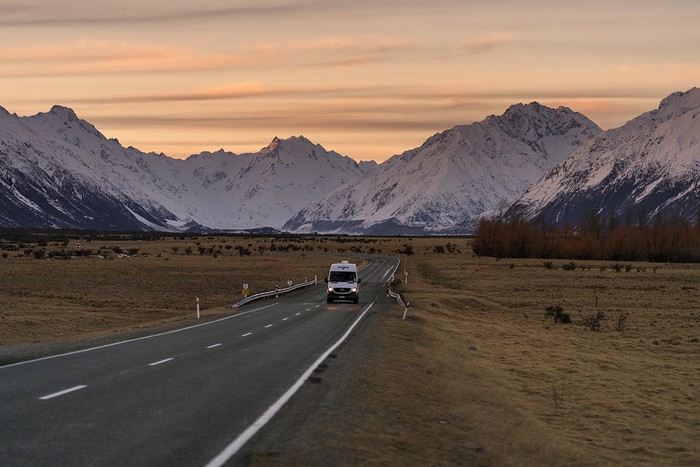
Practical Tips for a Successful Campervan Road Trip
Where to start? Between choosing the right vehicle, the best time to go, parking rules, and tips for where to sleep, here are our practical tips to plan your road trip stress-free.
Duration and Itinerary Choices
Less than 15 days: Focus on one island to avoid spending too much time on the road.
More than 15 days: Consider a North-South combo with a one-way trip (e.g., Auckland to Christchurch).
Book Early
In peak season (November to March), demand is high, especially for family-sized vehicles. Book your campervan ideally 6 to 8 months in advance.
Opt for full insurance to avoid high excess fees and hassles in case of issues. Standard bank insurance rarely covers campervans.
Choosing the Right Vehicle
Watch out for campervans over 3 years old—they can be "tired" in terms of both equipment and driving. If your budget allows, go for a newer model for better reliability and comfort.
Check the depot’s opening hours for pick-up. If you arrive late or after a long trip, it’s better to spend the first night in accommodation rather than driving straight away.
Where to Spend the Night
Freedom camping: Allowed in some remote areas but heavily regulated. Fines for breaking the rules can reach $200. Use comprehensive apps to identify legal spots and avoid penalties!
Basic campsites / DOC: Basic facilities but often in idyllic settings. These are campgrounds managed by the Department of Conservation, perfect for getting close to nature.
Private campgrounds: More expensive but offer hot showers, electricity, playgrounds for kids, pools, and laundry. Ideal for recharging—both your campervan’s batteries and your own.
Respect Nature
New Zealand is known for its pristine landscapes. Manage your waste, use designated dumping areas, and follow local signage. New Zealanders care deeply about keeping their environment clean and warmly welcome responsible tourists. For support, consider a local French-speaking agency like Frogs, which can help with administrative steps, planning your itinerary, and of course, renting a campervan.
Why is New Zealand the perfect country for your first campervan trip?
Safe and Scenic Roads
New Zealand offers a well-maintained road network, usually not too busy outside major cities. This is a huge plus if you're new to driving a campervan. The routes often feature spectacular viewpoints. You'll also find a vast network of campgrounds, and while freedom camping is regulated, there are still plenty of spots where you can sleep for free. Speed limits are reasonable, and the driving culture is pretty relaxed.
Adapted Infrastructure
There are plenty of campervan rental companies offering different models, from converted vans to large family motorhomes. You'll find rental depots in major cities (Auckland, Christchurch, Queenstown), along with shuttle services between the airport and the depot. Campgrounds in New Zealand, whether private or managed by the Department of Conservation (DOC), are easy to find and well-marked. Plus, since New Zealand is a country of campers, you'll often get helpful tips from the locals.
Diverse and Accessible Landscapes
Beaches, volcanoes, deep fjords, or subtropical forests—you can experience a completely different setting in just a few hours of driving. No need to be a 4x4 expert: most roads leading to these stunning sites are campervan-friendly. This variety of landscapes, combined with easy access, makes New Zealand a top choice for a first road trip experience.
The Most Beautiful Places to Discover in a Campervan
To give you an idea, here’s a selection of must-see spots to inspire your next adventure.
1. The Coromandel Peninsula (North Island)
Just a few hours from Auckland, the Coromandel Peninsula is famous for its white sand beaches, hot springs, and lush vegetation. Hot Water Beach is a must-visit—dig your own "thermal bath" on the shore at low tide. You’ll easily find campgrounds by the ocean, perfect for your first taste of campervan life.
2. Rotorua and the Geothermal Wonders (North Island)
A little further south, Rotorua is the geothermal heart of New Zealand. Geysers, bubbling pools, and sulfur lakes with amazing colors—there’s no shortage of things to do. It’s also a major hub for Māori culture. Take the time to visit a traditional village or watch a haka performance. In the evening, relax at a campground with natural hot pools.
3. Tongariro National Park (North Island)
A UNESCO World Heritage site, this volcanic park is a paradise for hikers, especially with the famous Tongariro Alpine Crossing. Even if you're not an experienced hiker, you can enjoy stunning views from the roads or short marked trails. The campgrounds in the area will immerse you in a postcard-worthy setting.
4. Abel Tasman, Coastal Gem (South Island)
After taking the ferry from Wellington to Picton, head to Abel Tasman National Park. Its golden beaches, crystal-clear waters, and coastal trails are perfect for unwinding. One of the perks of a campervan is exploring at your own pace, choosing spots near the beaches or deeper in the forest.
5. Punakaiki and the Pancake Rocks (South Island)
As you drive along the West Coast’s thick rainforests and wild beaches, stop at Punakaiki to see the Pancake Rocks—surprising rock formations that look like stacks of pancakes. A marked trail runs along the coast, letting you watch waves crash into the "blowholes" (marine geysers). Spending the night at a seaside campground, lulled by the sound of waves, is an experience not to be missed.
6. The Franz Josef and Fox Glaciers (South Island)
Further south, the glacier region is a must for lovers of breathtaking landscapes. You can admire the icy giants from a distance on an easy trail or take a helicopter to fly over them—or even walk on them. The campgrounds in Franz Josef or Fox Glacier let you wake up in an alpine atmosphere, contrasting with the lush vegetation around you.
7. Queenstown and Wanaka (South Island)
Queenstown, on the shore of a sparkling lake surrounded by majestic peaks, is known as the adventure capital: bungee jumping, paragliding, rafting—anything’s possible. If you prefer a quieter vibe, Wanaka is just as charming, with its beautiful lake and accessible walks. The road between these two towns is stunning, with plenty of perfect spots for a picnic stop.
8. Te Anau and Milford Sound (South Island)
New Zealand’s fjords are world-famous. Te Anau is the gateway to exploring Milford Sound or, for something wilder, Doubtful Sound. A cruise through these deep fjords, surrounded by towering cliffs, is one of the highlights of any trip to New Zealand. Staying overnight in a campervan in Te Anau saves you a long round trip in a day and lets you set off at dawn for more adventures.
9. Lake Tekapo and Mount Cook (South Island)
In the heart of the Southern Alps, Lake Tekapo charms with its unique turquoise color and its picturesque church by the water. The area is known for its starry skies (it’s an International Dark Sky Reserve). Mount Cook, the country’s highest peak, stands majestically in the background. Several campgrounds offer views of these mountains.
Practical Tips for a Successful Campervan Road Trip
Where to start? Between choosing the right vehicle, the best time to go, parking rules, and tips for where to sleep, here are our practical tips to plan your road trip stress-free.
Duration and Itinerary Choices
Less than 15 days: Focus on one island to avoid spending too much time on the road.
More than 15 days: Consider a North-South combo with a one-way trip (e.g., Auckland to Christchurch).
Book Early
In peak season (November to March), demand is high, especially for family-sized vehicles. Book your campervan ideally 6 to 8 months in advance.
Opt for full insurance to avoid high excess fees and hassles in case of issues. Standard bank insurance rarely covers campervans.
Choosing the Right Vehicle
Watch out for campervans over 3 years old—they can be "tired" in terms of both equipment and driving. If your budget allows, go for a newer model for better reliability and comfort.
Check the depot’s opening hours for pick-up. If you arrive late or after a long trip, it’s better to spend the first night in accommodation rather than driving straight away.
Where to Spend the Night
Freedom camping: Allowed in some remote areas but heavily regulated. Fines for breaking the rules can reach $200. Use comprehensive apps to identify legal spots and avoid penalties!
Basic campsites / DOC: Basic facilities but often in idyllic settings. These are campgrounds managed by the Department of Conservation, perfect for getting close to nature.
Private campgrounds: More expensive but offer hot showers, electricity, playgrounds for kids, pools, and laundry. Ideal for recharging—both your campervan’s batteries and your own.
Respect Nature
New Zealand is known for its pristine landscapes. Manage your waste, use designated dumping areas, and follow local signage. New Zealanders care deeply about keeping their environment clean and warmly welcome responsible tourists. For support, consider a local French-speaking agency like Frogs, which can help with administrative steps, planning your itinerary, and of course, renting a campervan.
West Cork or Kerry in summer: which itinerary to choose for a family road trip?
Hi there,
I’ve just booked our flight tickets for my family.
We’re heading to Ireland for a week between July and August—it’s our first time (with 1 teen and 2 younger kids).
We’ll be landing in Cork where we’ve rented a car. Initially, I was planning to focus our visits and walks on the Ring of Kerry and Dingle, but it looks like the roads get pretty busy in the summer.
So now I’m thinking of sticking to the "West Cork" area (Beara, Sheep’s Head, Mizen Head), which seems quieter.
For those who know the area, is this a good idea, or are we at risk of missing out on more spectacular landscapes? Thanks in advance! Best regards
We’ll be landing in Cork where we’ve rented a car. Initially, I was planning to focus our visits and walks on the Ring of Kerry and Dingle, but it looks like the roads get pretty busy in the summer.
So now I’m thinking of sticking to the "West Cork" area (Beara, Sheep’s Head, Mizen Head), which seems quieter.
For those who know the area, is this a good idea, or are we at risk of missing out on more spectacular landscapes? Thanks in advance! Best regards
Kyushu itinerary in spring: your thoughts?
Hi there,
For our second trip to Japan, we’ll be spending 22 full days in Kyushu. 😎 Here’s our draft itinerary:
1 - FUKUOKA 2 - FUKUOKA 3 - FUKUOKA 4 - FUKUOKA / SASEBO / OJIKA 5 - OJIKA 6 - OJIKA / SASEBO / NAGASAKI 7 - NAGASAKI 8 - NAGASAKI 9 - NAGASAKI / KUMAMOTO +++ car rental +++ 10 - KUMAMOTO / ASO 11 - ASO 12 - ASO / KUROKAWA ONSEN 13 - KUROKAWA ONSEN / KUMAMOTO +++ end of car rental +++ 14 - KUMAMOTO / KAGOSHIMA 15 - IBUSUKI / CHIRAN 16 - SAKURAJIMA (car?) 17 - KAGOSHIMA / YAKUSHIMA 18 - YAKUSHIMA (car?) 19 - YAKUSHIMA (car?) 20 - YAKUSHIMA / KAGOSHIMA 21 - ??? 22 - FUKUOKA
We’ve deliberately skipped the eastern part (from Beppu to Miyazaki…)
We still have a few questions about our itinerary:
Car: For most of our travel, we plan to take the train or bus, except in the Aso region where we’ll rent a car. We’re wondering about Sakurajima and Yakushima: is a car necessary there?
Ojika: Would one night be enough?
Yakushima: Are two full days (plus two half-days) sufficient?
If we keep the schedule as is, we have one extra day to fit in somewhere—any suggestions?
Thanks for your help! 🙂
For our second trip to Japan, we’ll be spending 22 full days in Kyushu. 😎 Here’s our draft itinerary:
1 - FUKUOKA 2 - FUKUOKA 3 - FUKUOKA 4 - FUKUOKA / SASEBO / OJIKA 5 - OJIKA 6 - OJIKA / SASEBO / NAGASAKI 7 - NAGASAKI 8 - NAGASAKI 9 - NAGASAKI / KUMAMOTO +++ car rental +++ 10 - KUMAMOTO / ASO 11 - ASO 12 - ASO / KUROKAWA ONSEN 13 - KUROKAWA ONSEN / KUMAMOTO +++ end of car rental +++ 14 - KUMAMOTO / KAGOSHIMA 15 - IBUSUKI / CHIRAN 16 - SAKURAJIMA (car?) 17 - KAGOSHIMA / YAKUSHIMA 18 - YAKUSHIMA (car?) 19 - YAKUSHIMA (car?) 20 - YAKUSHIMA / KAGOSHIMA 21 - ??? 22 - FUKUOKA
We’ve deliberately skipped the eastern part (from Beppu to Miyazaki…)
We still have a few questions about our itinerary:
Car: For most of our travel, we plan to take the train or bus, except in the Aso region where we’ll rent a car. We’re wondering about Sakurajima and Yakushima: is a car necessary there?
Ojika: Would one night be enough?
Yakushima: Are two full days (plus two half-days) sufficient?
If we keep the schedule as is, we have one extra day to fit in somewhere—any suggestions?
Thanks for your help! 🙂
Summer itinerary in western Crete
Hi there,
I’m reaching out for your advice on a Crete itinerary. We’re a group of 3 (2 adults and 1 teen) and will be traveling for 13 days / 12 nights in early August. To enjoy the trip without rushing too much, we’ve decided to focus on the western part of the island. Before diving into the details of our planned route, here’s a bit about how we like to travel. We’re big fans of hiking, bivouacking in the Pyrenees, or bike touring. We’re well aware that Crete is a popular summer destination, but we’d like to avoid overly crowded spots while still trying to visit places we consider "must-sees"—or at least those we’re eager to discover. For activities, hiking might be tricky due to the heat, but we’re thinking of water-based fun and historical visits: snorkeling, windsurfing or paddleboarding, gorges, and so on. For accommodations, we’ll mix it up between guesthouses, hotels, and private rentals.
Here’s what we’re considering: Day 1: Arrival in the evening in Heraklion – Night in Heraklion. Day 2: Head to Chania / Night in Chania - 3 nights in Falassarna (exploring Balos and the surrounding area) - 3 nights in Paleochora (discovering Elafonissi and nearby) - 3 nights in Sougia (day trip by ferry to Loutro, Agia Roumeli) Then, return to Rethymnon in the morning by road and spend our last night there (after checking various guides and forums, the ferry option seems a bit too restrictive, so we’re planning to drive back to Heraklion for our flight at the end of the day).
I’m a bit unsure—should we dedicate more time to the northern part of the island? What do you think? Thanks in advance for your valuable tips! Stéphanie
I’m reaching out for your advice on a Crete itinerary. We’re a group of 3 (2 adults and 1 teen) and will be traveling for 13 days / 12 nights in early August. To enjoy the trip without rushing too much, we’ve decided to focus on the western part of the island. Before diving into the details of our planned route, here’s a bit about how we like to travel. We’re big fans of hiking, bivouacking in the Pyrenees, or bike touring. We’re well aware that Crete is a popular summer destination, but we’d like to avoid overly crowded spots while still trying to visit places we consider "must-sees"—or at least those we’re eager to discover. For activities, hiking might be tricky due to the heat, but we’re thinking of water-based fun and historical visits: snorkeling, windsurfing or paddleboarding, gorges, and so on. For accommodations, we’ll mix it up between guesthouses, hotels, and private rentals.
Here’s what we’re considering: Day 1: Arrival in the evening in Heraklion – Night in Heraklion. Day 2: Head to Chania / Night in Chania - 3 nights in Falassarna (exploring Balos and the surrounding area) - 3 nights in Paleochora (discovering Elafonissi and nearby) - 3 nights in Sougia (day trip by ferry to Loutro, Agia Roumeli) Then, return to Rethymnon in the morning by road and spend our last night there (after checking various guides and forums, the ferry option seems a bit too restrictive, so we’re planning to drive back to Heraklion for our flight at the end of the day).
I’m a bit unsure—should we dedicate more time to the northern part of the island? What do you think? Thanks in advance for your valuable tips! Stéphanie
Mexico Trip Itinerary: Mexico City, Puebla, Oaxaca, Pacific Coast
Hi there,
We’re planning a 15-day family trip in February 2026 (with 3 teens). We’ll be visiting friends who live in Puebla. Initially, I was thinking of the Yucatán, but after reading up on it, I don’t think it’s the right fit for us (too crowded, too touristy). So, we’re leaning toward something like this: - Mexico City: 2 days (Teotihuacán + city) - Puebla: 3 days - Tehuacán: 2 days (to break up the trip—is this a good choice? Is there enough to do for 2 days?) - Oaxaca: 3 days (Hierve el Agua, Monte Albán, city/tours) - Pacific Coast: 4 days (snorkeling, excursions)
Does this seem balanced? We’d like to end on the coast for some relaxation, ocean time, and fun for the kids. I’ve seen lots of excursions offered along the coast but can’t decide where to stay. Puerto Escondido? Huatulco? The beaches seem better for snorkeling in Huatulco, but I’ve read mixed things, and it’s farther away. What do you think?
For transportation, is this doable by bus? I’m struggling to find a decent bus between Tehuacán and Oaxaca (overnight schedules), and I’m not sure how to get around the coast. Also, how do we handle luggage between cities? We usually rent a car.
Finally, I’d love feedback on the Pacific Coast excursions—I get the feeling some are worth it and others aren’t. Is bioluminescence really magical? Are dolphin-watching tours ethical and not too "factory-like"? (We skipped them in Quebec and just watched whales from shore.) Can you see sea turtles up close?
Thanks for your help!
We’re planning a 15-day family trip in February 2026 (with 3 teens). We’ll be visiting friends who live in Puebla. Initially, I was thinking of the Yucatán, but after reading up on it, I don’t think it’s the right fit for us (too crowded, too touristy). So, we’re leaning toward something like this: - Mexico City: 2 days (Teotihuacán + city) - Puebla: 3 days - Tehuacán: 2 days (to break up the trip—is this a good choice? Is there enough to do for 2 days?) - Oaxaca: 3 days (Hierve el Agua, Monte Albán, city/tours) - Pacific Coast: 4 days (snorkeling, excursions)
Does this seem balanced? We’d like to end on the coast for some relaxation, ocean time, and fun for the kids. I’ve seen lots of excursions offered along the coast but can’t decide where to stay. Puerto Escondido? Huatulco? The beaches seem better for snorkeling in Huatulco, but I’ve read mixed things, and it’s farther away. What do you think?
For transportation, is this doable by bus? I’m struggling to find a decent bus between Tehuacán and Oaxaca (overnight schedules), and I’m not sure how to get around the coast. Also, how do we handle luggage between cities? We usually rent a car.
Finally, I’d love feedback on the Pacific Coast excursions—I get the feeling some are worth it and others aren’t. Is bioluminescence really magical? Are dolphin-watching tours ethical and not too "factory-like"? (We skipped them in Quebec and just watched whales from shore.) Can you see sea turtles up close?
Thanks for your help!