Results for "Perche+|+127+>+346"
21232 results found.
Rando au Maroc en déc/janvier et visite des villes impériales English translation pending
😎bonjour,
Marseillais, Préretraité, donc du temps de libre, organise en décembre ou janvier un séjour au Maroc.
Objectif: Rando treck, et la visite des villes impériales entre autre.
Durée du séjour 15 jours sur place au minimum.
Hébergement suivant les sites tente habitant hôtel..(à discuter entre nous)
En sus on pourrait organiser qqs jours de pêche sur l'océan, dans le sud marocain (bien que ce ne soit pas tout à fait la saison) il y a des contacts habitants sympa au travers de la pêche..
A bientôt...😉
Marseillais, Préretraité, donc du temps de libre, organise en décembre ou janvier un séjour au Maroc.
Objectif: Rando treck, et la visite des villes impériales entre autre.
Durée du séjour 15 jours sur place au minimum.
Hébergement suivant les sites tente habitant hôtel..(à discuter entre nous)
En sus on pourrait organiser qqs jours de pêche sur l'océan, dans le sud marocain (bien que ce ne soit pas tout à fait la saison) il y a des contacts habitants sympa au travers de la pêche..
A bientôt...😉
Que mettre dans sa valise pour 2 semaines en République dominicaine? English translation pending
Salut
Je pars en RD ds 2 semaines.
Quest ce que je dois absolument penser a prendre ? creme solaire evidemment, lotion anti moustiques.
Et puis ?...
Merci ;o)
Je pars en RD ds 2 semaines.
Quest ce que je dois absolument penser a prendre ? creme solaire evidemment, lotion anti moustiques.
Et puis ?...
Merci ;o)
Parc naturel "Los Haitises" en République dominicaine English translation pending
Ce parc naturel vaut-il le coup? et avec qui le visiter?
Conseils sur le Nouveau Brunswick English translation pending
🙂 Bonjour, Je suis de la région le Lanaudière Québec,
J'ai l'intention de visiter le Nouveau Brunswick cet été.
J'aimerais connaître les bons endroits à visiter, (nature, bonne bouffe, plage et endroit pour la pêche au saumon, bon temp pour cette pêche)
Merci gilarc
J'ai l'intention de visiter le Nouveau Brunswick cet été.
J'aimerais connaître les bons endroits à visiter, (nature, bonne bouffe, plage et endroit pour la pêche au saumon, bon temp pour cette pêche)
Merci gilarc
Grand Flamenco Bavaro English translation pending
Pouvez-vous nous éclairer???
Nous avons réservé un séjour à PUNTA CANA pour le mois d'aout pour deux personnes à l'Hotel GRAND FLAMENCO BAVARO.Si vous avez des informations sur cet hotel, merci de nous les communiquer car nous avons entendu des choses très contradictoires le concernant.
Autre chose........Avez-vous tester les excursions:peche au gros, promenade en hélicoptère.....
Avez-vous des suggestions à nous faire?
Merci.
M et G
Nous avons réservé un séjour à PUNTA CANA pour le mois d'aout pour deux personnes à l'Hotel GRAND FLAMENCO BAVARO.Si vous avez des informations sur cet hotel, merci de nous les communiquer car nous avons entendu des choses très contradictoires le concernant.
Autre chose........Avez-vous tester les excursions:peche au gros, promenade en hélicoptère.....
Avez-vous des suggestions à nous faire?
Merci.
M et G
Provence - Cycling Around the Luberon, EuroVelo 8, and Other Bike Routes
Hi there!
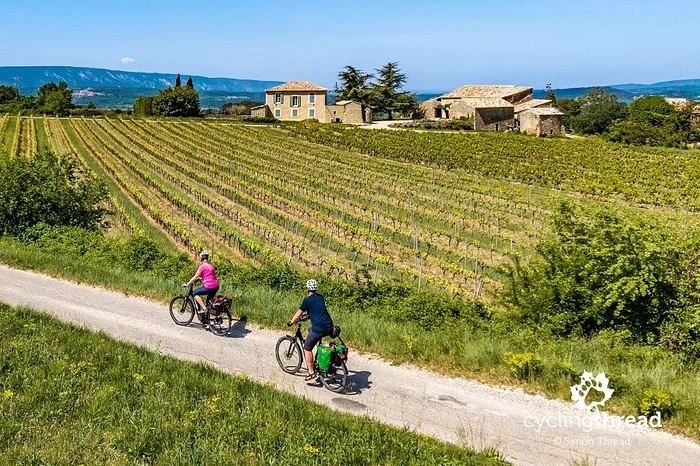
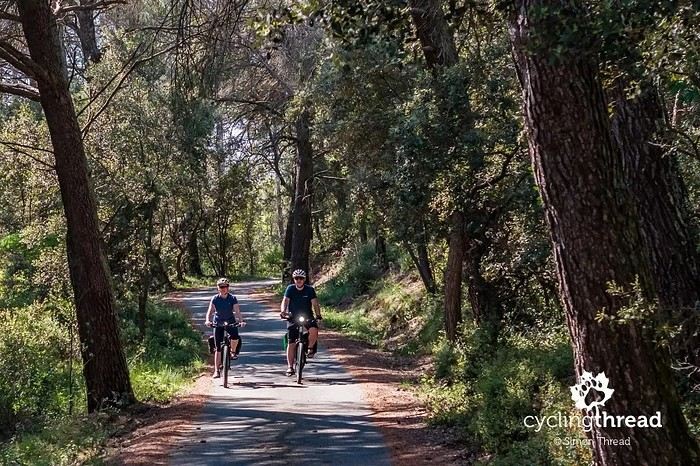
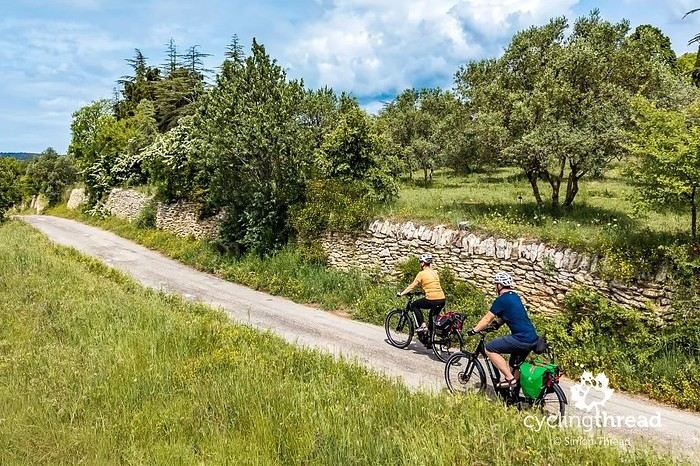
I’m making an exception and creating a separate post this time, since it’s all about France. In May, we spent a week in Provence, specifically in the Luberon, exploring the cycling routes *Autour du Luberon à Vélo*, the *Véloroute du Calavon* (part of EuroVelo 8), and the shorter *Les Ocres à Vélo* route. Together, they gave us an amazing journey through rolling hills, vineyards, lavender fields still green in spring, and some of the most stunning landscapes in southern France.
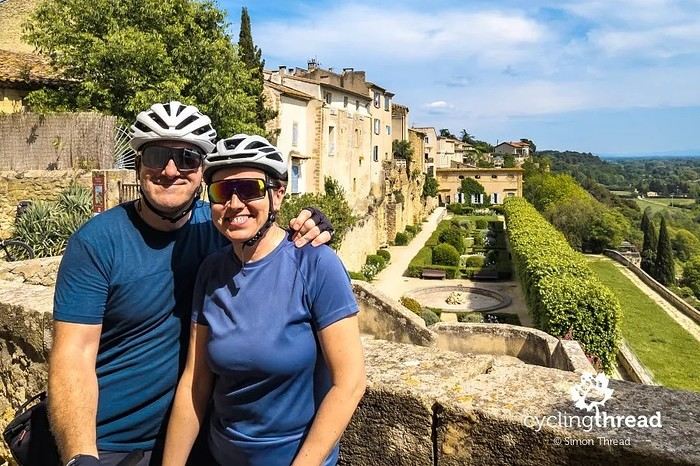
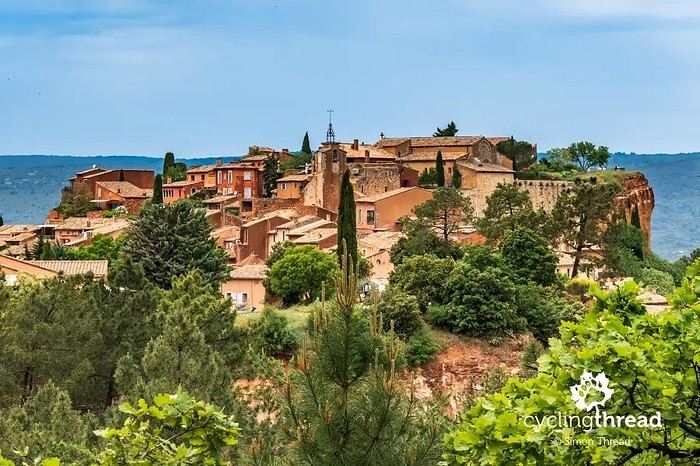
It was, of course, the perched villages that impressed us the most. We visited Gordes, Roussillon, Bonnieux, Lacoste, Lourmarin, Ménerbes, Oppède-le-Vieux, Cucuron, and Lauris. Many of them are among the most beautiful villages in Provence, and it’s hard not to agree with that reputation.
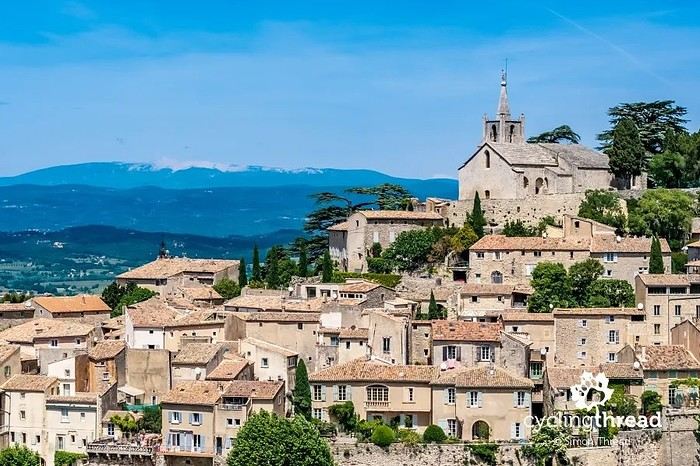
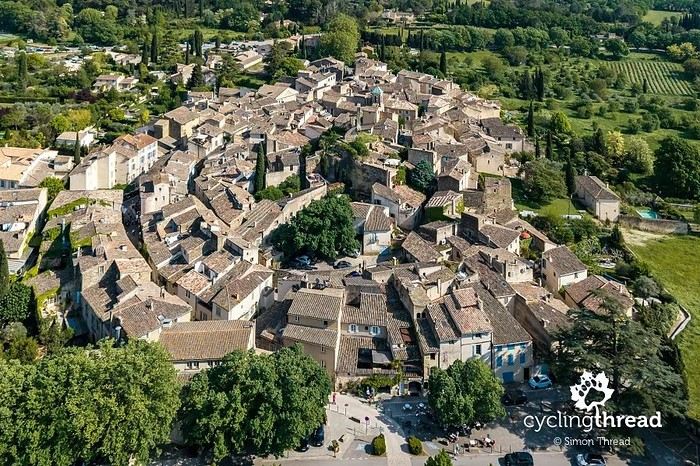
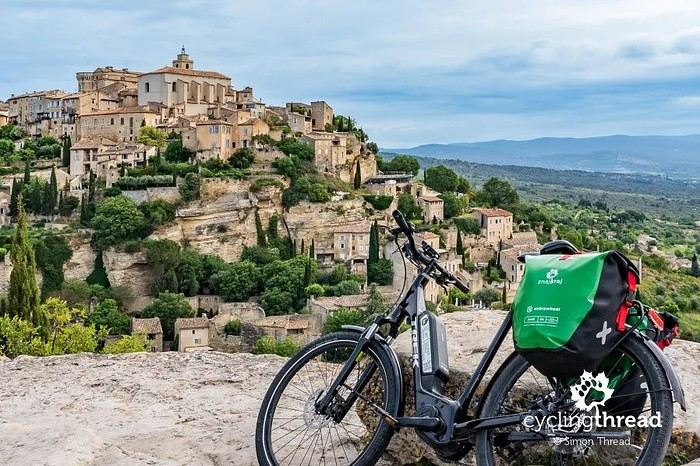
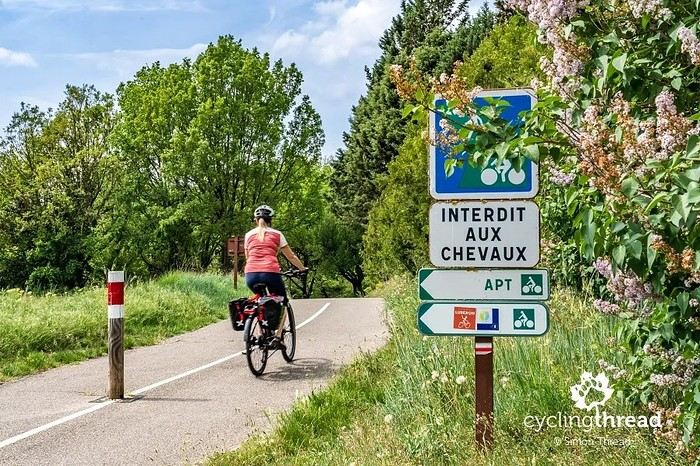
One interesting point is the route of EuroVelo 8 in this part of the region. The official path mainly follows the old railway line of the *Véloroute du Calavon*, which is very comfortable and safe. But in our opinion, cyclists traveling EuroVelo 8 around the Mediterranean would discover even more treasures if the route passed through villages like Bonnieux, Lacoste, or Oppède-le-Vieux.
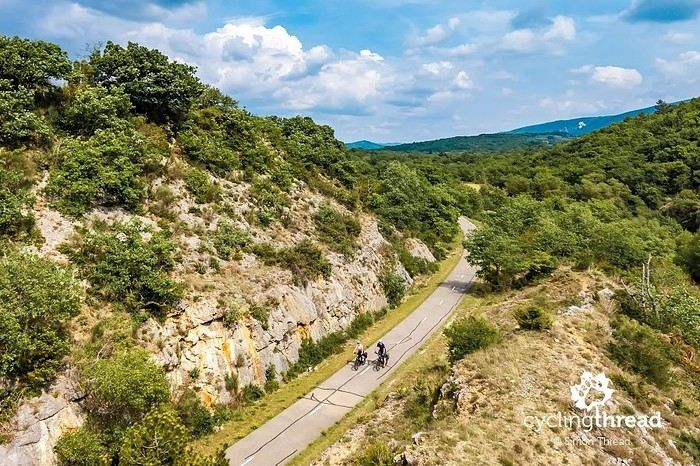
We were also pleasantly surprised by how safe cycling felt. Most of the route takes small local roads, but traffic is light, drivers are respectful, and road design really takes cyclists into account. It’s one of those places where you can ride peacefully even without separated bike lanes.
Our full story:
Around Luberon by bicycle - the most beautiful villages of Provence
You can also find all our cycling travel stories on the forum:
Cycling Thread - Europe’s most beautiful bike routes
S.
I’m making an exception and creating a separate post this time, since it’s all about France. In May, we spent a week in Provence, specifically in the Luberon, exploring the cycling routes *Autour du Luberon à Vélo*, the *Véloroute du Calavon* (part of EuroVelo 8), and the shorter *Les Ocres à Vélo* route. Together, they gave us an amazing journey through rolling hills, vineyards, lavender fields still green in spring, and some of the most stunning landscapes in southern France.
It was, of course, the perched villages that impressed us the most. We visited Gordes, Roussillon, Bonnieux, Lacoste, Lourmarin, Ménerbes, Oppède-le-Vieux, Cucuron, and Lauris. Many of them are among the most beautiful villages in Provence, and it’s hard not to agree with that reputation.
One interesting point is the route of EuroVelo 8 in this part of the region. The official path mainly follows the old railway line of the *Véloroute du Calavon*, which is very comfortable and safe. But in our opinion, cyclists traveling EuroVelo 8 around the Mediterranean would discover even more treasures if the route passed through villages like Bonnieux, Lacoste, or Oppède-le-Vieux.
We were also pleasantly surprised by how safe cycling felt. Most of the route takes small local roads, but traffic is light, drivers are respectful, and road design really takes cyclists into account. It’s one of those places where you can ride peacefully even without separated bike lanes.
Our full story:
Around Luberon by bicycle - the most beautiful villages of Provence
You can also find all our cycling travel stories on the forum:
Cycling Thread - Europe’s most beautiful bike routes
S.
Looking for a 4x4 trail in Picos de Europa, Spain
Hi there,
I’m looking for the start of a trail in the Picos de Europa in Spain that I used over 30 years ago in a 4x4.
It began by passing under a house, and there was a café nearby.
I know it’s not much to go on, but that’s all I’ve got. The fact that the trail started by going under a house isn’t exactly common!
If anyone has any ideas, I’d really appreciate it.
Thanks in advance
I’m looking for the start of a trail in the Picos de Europa in Spain that I used over 30 years ago in a 4x4.
It began by passing under a house, and there was a café nearby.
I know it’s not much to go on, but that’s all I’ve got. The fact that the trail started by going under a house isn’t exactly common!
If anyone has any ideas, I’d really appreciate it.
Thanks in advance
The Arco Seco: A Still Undiscovered Region of Panama
When planning a trip to Panama, you often hear about Panama City, Bocas del Toro, Boquete, or even San Blas. Yet, there’s a region that remains relatively under the radar in travel guides: the Arco Seco.
Located on the Pacific coast, between the provinces of Panamá Oeste, Coclé, Herrera, and Los Santos, the Arco Seco enjoys a generally drier climate than the rest of the country. Even during the rainy season, you’ll often find more sunshine here than in other parts of Panama.
For travelers who love alternating between beaches, nature, hikes, and local discoveries, this region is definitely worth a detour.
A few ideas for visits:
• The beaches of La Ensenada, El Palmar, Punta Barco, and Coronado
• Surfing at El Palmar, one of the most well-known spots on the Pacific coast
• Kitesurfing at Punta Chame, which is highly reputed!
• El Valle de Antón, nestled in an ancient volcanic crater, with its hikes, waterfalls, artisan market, and hot springs
• Various hikes offering stunning panoramas
• The waterfalls in the San Carlos and El Valle areas
• Golf at Vista Mar or Coronado
• Fishing villages where you can still buy freshly caught fish directly from local fishermen
What I particularly love about this region is that it lets you discover a more authentic and peaceful side of Panama while remaining easily accessible from Panama City.
I’ve been living in San Carlos for several years now, and I’m still discovering new places, trails, beaches, and hidden gems.
If anyone is planning a trip to this region and has questions, I’d be happy to share my favorite spots and personal recommendations.
Looking forward to exchanging tips with you!
Joëlle
Located on the Pacific coast, between the provinces of Panamá Oeste, Coclé, Herrera, and Los Santos, the Arco Seco enjoys a generally drier climate than the rest of the country. Even during the rainy season, you’ll often find more sunshine here than in other parts of Panama.
For travelers who love alternating between beaches, nature, hikes, and local discoveries, this region is definitely worth a detour.
A few ideas for visits:
• The beaches of La Ensenada, El Palmar, Punta Barco, and Coronado
• Surfing at El Palmar, one of the most well-known spots on the Pacific coast
• Kitesurfing at Punta Chame, which is highly reputed!
• El Valle de Antón, nestled in an ancient volcanic crater, with its hikes, waterfalls, artisan market, and hot springs
• Various hikes offering stunning panoramas
• The waterfalls in the San Carlos and El Valle areas
• Golf at Vista Mar or Coronado
• Fishing villages where you can still buy freshly caught fish directly from local fishermen
What I particularly love about this region is that it lets you discover a more authentic and peaceful side of Panama while remaining easily accessible from Panama City.
I’ve been living in San Carlos for several years now, and I’m still discovering new places, trails, beaches, and hidden gems.
If anyone is planning a trip to this region and has questions, I’d be happy to share my favorite spots and personal recommendations.
Looking forward to exchanging tips with you!
Joëlle
Ivato scanner for domestic flights - stolen SD cards
Hi! Recently, the domestic-flight terminal at Ivato has been moved to the old "international" airport, complete with its own scanner. On October 13th, I checked my luggage (which I had inspected before leaving my hotel in Tana) for a flight to Sambava. It wasn’t until I arrived at my accommodation in Antalaha and opened it that I discovered it had been searched (normal before boarding a plane), but to my surprise, the case containing my GPS fishfinder had been opened—likely mistaken for a laptop due to the scanner’s open access to all kinds of theft—and three SD cards were stolen. Luckily, two of the SD cards had their micro SDs inserted into the device, so I still had the Navionics micro card (300 €) essential for fishing. Of course, I’m not asking for compensation, just urging caution with checked luggage on "domestic" flights. (This is a copy-paste of my post on *Le Routard*.)
Are kids welcome on boats and in homestays in Indonesia?
Hi there, we're planning a 3-week trip to Indonesia in October 2026 with our kids, who’ll be 5 and a half and 3 and a half years old.
We’re thinking of visiting Komodo—maybe on a cruise—Sulawesi, and Raja Ampat.
We were wondering if it’s doable with young kids? Are they welcome on boats? In homestays?
We’re not the type to shy away from traveling with our kids, but since it *is* pretty far off the beaten path, we’ve got some questions.
Thanks in advance for your feedback! !
Your recommendations for the Eastern Cape
Hello,
We’re planning our second trip to South Africa in July 2026. In 2023, we did a loop from Joburg, Golden Gate, Drakensberg, Hluhluwe, St Lucia, Eswatini, Kruger, Blyde River Canyon, and back to Joburg. This time, we’d like to go to Cape Town and do a road trip to Port Elizabeth, then fly back to Joburg to return to Kruger. At this stage of my planning, here’s what it could look like:
D1 to D4: Cape Town and Cape of Good Hope (Table Mountain, Lion’s Head, Waterfront, Bo-Kaap, Boulders, Cape Point, Chapman’s Peak Drive). I’ve spotted a few places to stay between Camps Bay and Hout Bay (3 nights). D5 and D6: Either Karoo NP or Hermanus and De Hoop. Any opinions to tip the scales? I’ll admit I’m already leaning toward Karoo (the "wild" vibe of the landscapes and wildlife encounters appeal to me much more than the seaside, which feels less exotic). If we go for Karoo, where should we stay? Inside the park or in Beaufort West? I’ve seen good reviews for Ko-ka Tsara Bush Camp, but maybe it’s better to stay in the Sanparks cottages to make the most of the park? (2 nights) Option B is to do Stellenbosch (though vineyards aren’t great in winter) and/or the Whale Route—Betty’s Bay, Hermanus, De Hoop (2 nights near Gansbaai). D7 and D8: Klein Karoo, Oudtshoorn. Staying at De Cango Guest Farm (2 nights). D9 and D10: Knysna, Robberg Nature Reserve, Tsitsikamma (2 nights in Plettenberg Bay and 1 night in PE). D11: Flight from Port Elizabeth to Joburg at 7 AM and drive to Marloth Park.
For Kruger, I’ve booked 2 nights in Marloth Park, 1 night in Skukuza, 2 nights in Satara, and 1 night in Talamati, which we loved. I’ll book the last night in Graskop later since we want to revisit the Blyde Canyon area.
I’d love all the feedback you can give on my itinerary, especially for days 5 and 6. If you have recommendations for accommodations for 4 people, I’d appreciate those too. Thanks! 🙂
We’re planning our second trip to South Africa in July 2026. In 2023, we did a loop from Joburg, Golden Gate, Drakensberg, Hluhluwe, St Lucia, Eswatini, Kruger, Blyde River Canyon, and back to Joburg. This time, we’d like to go to Cape Town and do a road trip to Port Elizabeth, then fly back to Joburg to return to Kruger. At this stage of my planning, here’s what it could look like:
D1 to D4: Cape Town and Cape of Good Hope (Table Mountain, Lion’s Head, Waterfront, Bo-Kaap, Boulders, Cape Point, Chapman’s Peak Drive). I’ve spotted a few places to stay between Camps Bay and Hout Bay (3 nights). D5 and D6: Either Karoo NP or Hermanus and De Hoop. Any opinions to tip the scales? I’ll admit I’m already leaning toward Karoo (the "wild" vibe of the landscapes and wildlife encounters appeal to me much more than the seaside, which feels less exotic). If we go for Karoo, where should we stay? Inside the park or in Beaufort West? I’ve seen good reviews for Ko-ka Tsara Bush Camp, but maybe it’s better to stay in the Sanparks cottages to make the most of the park? (2 nights) Option B is to do Stellenbosch (though vineyards aren’t great in winter) and/or the Whale Route—Betty’s Bay, Hermanus, De Hoop (2 nights near Gansbaai). D7 and D8: Klein Karoo, Oudtshoorn. Staying at De Cango Guest Farm (2 nights). D9 and D10: Knysna, Robberg Nature Reserve, Tsitsikamma (2 nights in Plettenberg Bay and 1 night in PE). D11: Flight from Port Elizabeth to Joburg at 7 AM and drive to Marloth Park.
For Kruger, I’ve booked 2 nights in Marloth Park, 1 night in Skukuza, 2 nights in Satara, and 1 night in Talamati, which we loved. I’ll book the last night in Graskop later since we want to revisit the Blyde Canyon area.
I’d love all the feedback you can give on my itinerary, especially for days 5 and 6. If you have recommendations for accommodations for 4 people, I’d appreciate those too. Thanks! 🙂
Road trip from Nice to Livorno by car, then Corsica
I'd love some destination suggestions for a road trip from Nice to Livorno by car, including the routes, tolls to cross, distance, and estimated travel time. We're planning a 5-day trip, with 2 nights near Nice, 1 night along the way, and finally 2 nights in Livorno. There are 4 of us in a rental car, and we'd like to stay in either an apartment, a mobile home near the sea, or a campsite. Our budget isn't too extravagant!!!! We want to visit the Promenade des Anglais, and I've heard Menton is really interesting. Once we reach Livorno, we'll take the ferry to Corsica for 12 days with the same rental car. We're planning to leave the last week of May and the first two weeks of June 2026, so around 17-18 days total.
Thanks
What to see and do in Agadir?
We're heading to Agadir in early December. What outings do you recommend? Just so you know, I have trouble walking (foot paralysis).
What day trips can we do around Prague?
Hi there
I’ve booked a trip to Prague with my mum in mid-September.
Since I already know the city, I’d love to see something else, but I’m realizing that transport is really slow.
I wanted to go to Karlovy Vary, but it takes longer than I thought… Plus, we won’t be staying near the train station.
So I’m looking for a day trip that’s MAXIMUM 1 hour away by transport.
I really don’t like spending too much time on transport, so if it’s not doable, I’ll just skip it.
If there’s nothing accessible, I won’t bother with day trips—it’s not a big deal.
Any ideas?
Thanks
I’ve booked a trip to Prague with my mum in mid-September.
Since I already know the city, I’d love to see something else, but I’m realizing that transport is really slow.
I wanted to go to Karlovy Vary, but it takes longer than I thought… Plus, we won’t be staying near the train station.
So I’m looking for a day trip that’s MAXIMUM 1 hour away by transport.
I really don’t like spending too much time on transport, so if it’s not doable, I’ll just skip it.
If there’s nothing accessible, I won’t bother with day trips—it’s not a big deal.
Any ideas?
Thanks
Come discover the Gaspésie with me
Introduction
In this travel journal, you’ll find a list of all the activities we did during our road trip through the Gaspésie.
Videos are embedded throughout the summary. Just click on the image to start the video.
To jump to a specific post, here are the relevant links:
Gaspé - Forillon National Park - Interpretation Center Gaspé - Forillon National Park - Mont-Saint-Alban Trail Gaspé - Forillon National Park - La Chute Trail Gaspé - Forillon National Park - Les Graves Trail Percé - Rivière-aux-Émeraudes Waterfall Percé - Bonaventure Island National Park Percé - Hike at the Foot of Percé Rock Percé Geopark - Suspended Glass Platform Percé Geopark - Magic Forest Loop Percé Geopark - Belvedere Trails Percé Geopark - Springs and Les Pieds Croches Trails Percé Geopark - Crevasse Trail Percé Geopark - Grande Coupe Trail Percé Geopark - Grotto Path Bonaventure - Le Malin de la Rivière Bonaventure Maria - Grand Sault Waterfall Carleton-sur-Mer - Les Saults Waterfall - Éperlan Trail Matapédia - Two Rivers Belvedere Saint-Alexis-de-Matapédia - Dream Horizon Belvedere Saint-André-de-Restigouche - Heart of the Plateaus Belvedere Saint-André-de-Restigouche - Picot Waterfalls Saint-Alexis-de-Matapédia - Robitaille Stream Waterfalls Trail Saint-Alexandre-des-Lacs - Philomène Waterfall Saint-Ulric - Ti-Mé Waterfall
In this travel journal, you’ll find a list of all the activities we did during our road trip through the Gaspésie.
Videos are embedded throughout the summary. Just click on the image to start the video.
To jump to a specific post, here are the relevant links:
Gaspé - Forillon National Park - Interpretation Center Gaspé - Forillon National Park - Mont-Saint-Alban Trail Gaspé - Forillon National Park - La Chute Trail Gaspé - Forillon National Park - Les Graves Trail Percé - Rivière-aux-Émeraudes Waterfall Percé - Bonaventure Island National Park Percé - Hike at the Foot of Percé Rock Percé Geopark - Suspended Glass Platform Percé Geopark - Magic Forest Loop Percé Geopark - Belvedere Trails Percé Geopark - Springs and Les Pieds Croches Trails Percé Geopark - Crevasse Trail Percé Geopark - Grande Coupe Trail Percé Geopark - Grotto Path Bonaventure - Le Malin de la Rivière Bonaventure Maria - Grand Sault Waterfall Carleton-sur-Mer - Les Saults Waterfall - Éperlan Trail Matapédia - Two Rivers Belvedere Saint-Alexis-de-Matapédia - Dream Horizon Belvedere Saint-André-de-Restigouche - Heart of the Plateaus Belvedere Saint-André-de-Restigouche - Picot Waterfalls Saint-Alexis-de-Matapédia - Robitaille Stream Waterfalls Trail Saint-Alexandre-des-Lacs - Philomène Waterfall Saint-Ulric - Ti-Mé Waterfall
Holiday in Brittany: Pink Granite Coast and Cornwall
We were invited to a friend’s wedding in this beautiful part of Brittany, so we took the opportunity to spend a few days there—first on the Pink Granite Coast and then in Cornwall.
Our friends, who are from the Trégor region, had found us a really nice little gîte in Tonquédec, just a stone’s throw from the coast. It was the perfect base for exploring the area’s iconic sites. We stayed in a lovely little house that combined authenticity, comfort, elegance, and tranquility.
Our first trip to the coast was to Ploumanac’h, a small village we discovered thanks to Stéphane Bern’s show. It’s an adorable little fishing port where we parked the car before continuing on foot along the sea. It’s charming—more than that, it’s magical!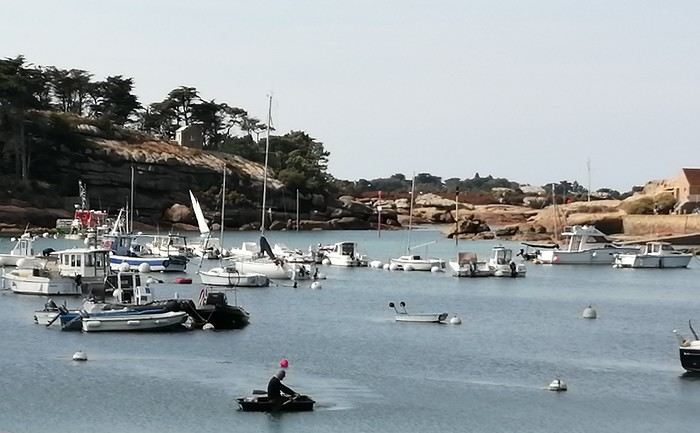
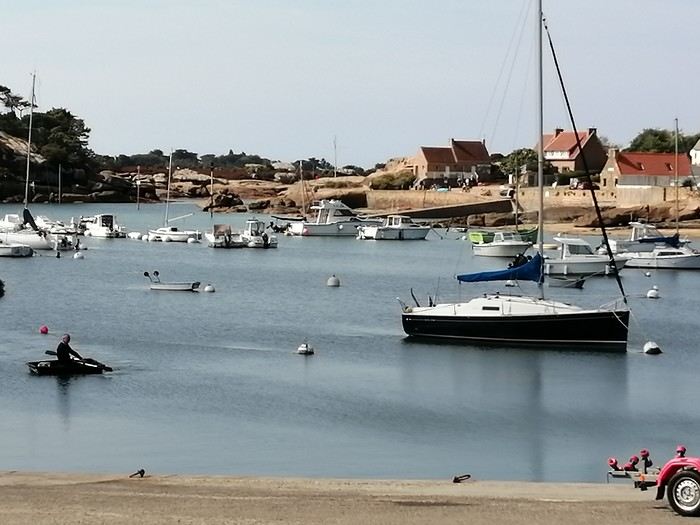
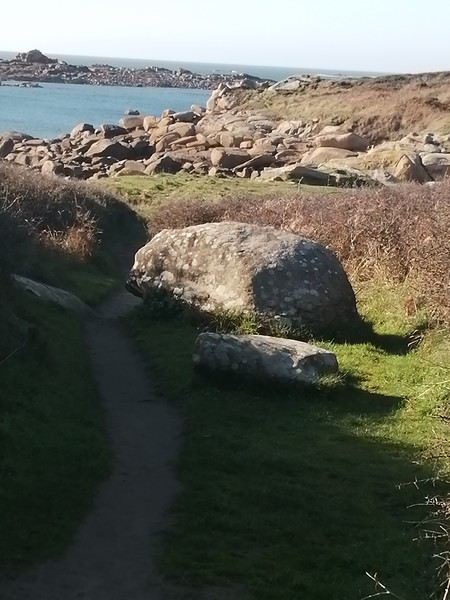
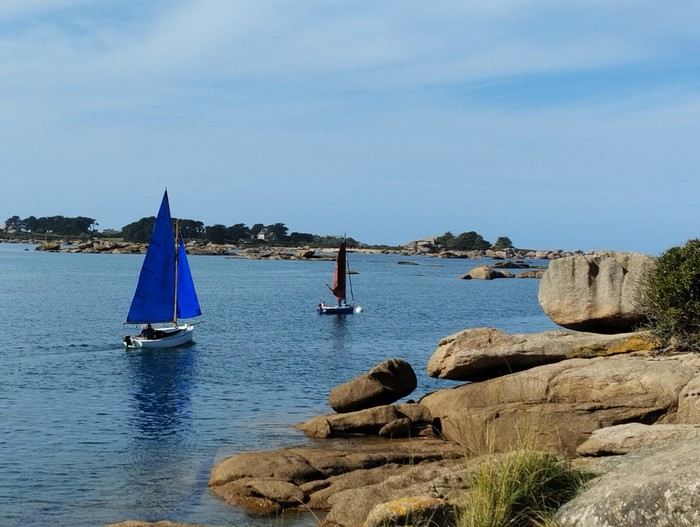
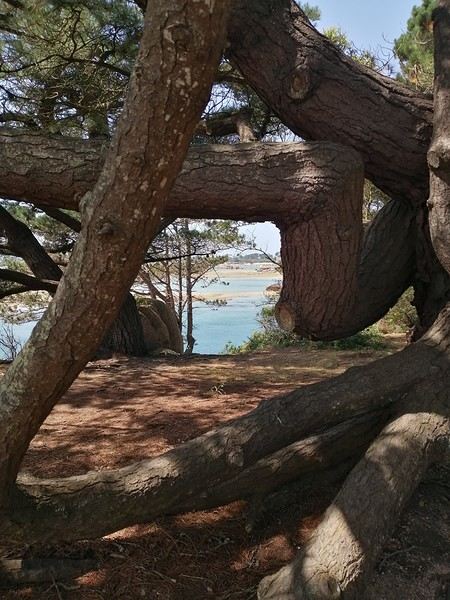
Our first walk, our first hike along the coastal path, and our first photos of these massive rocks bathed in light.
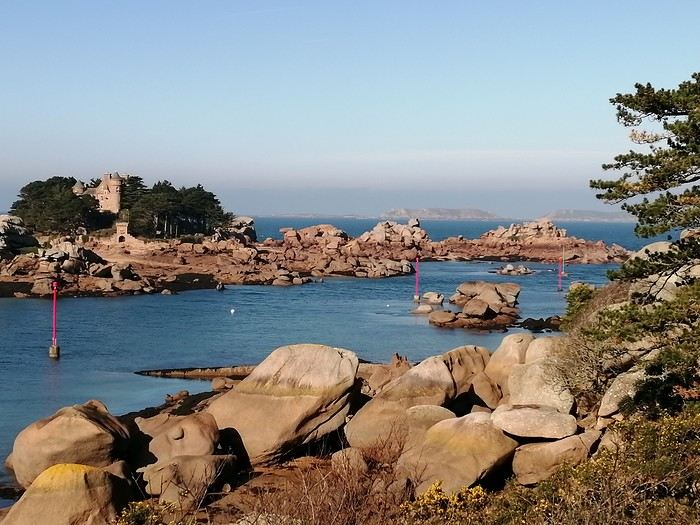
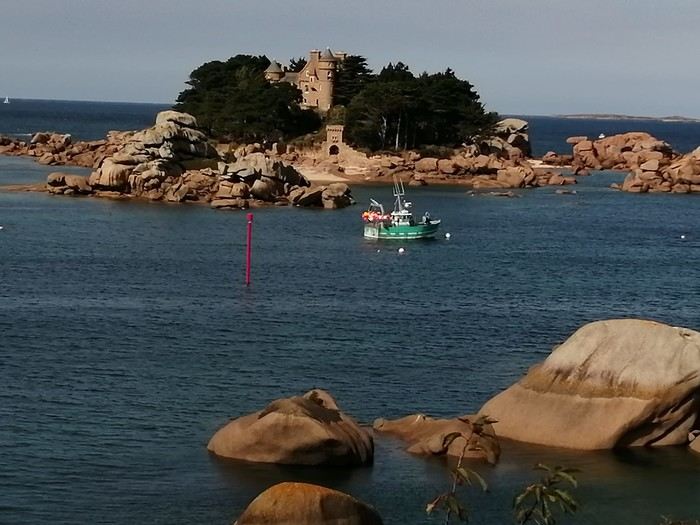
The views change with every turn, and so do the surprises—especially the view of the Château de Costaérès.
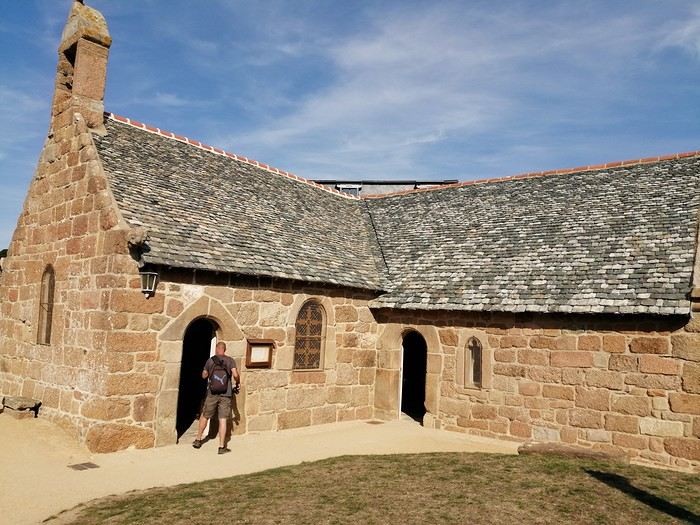
 The path through the woods leads us to the Chapel of Saint Guirec, which overlooks the beach.
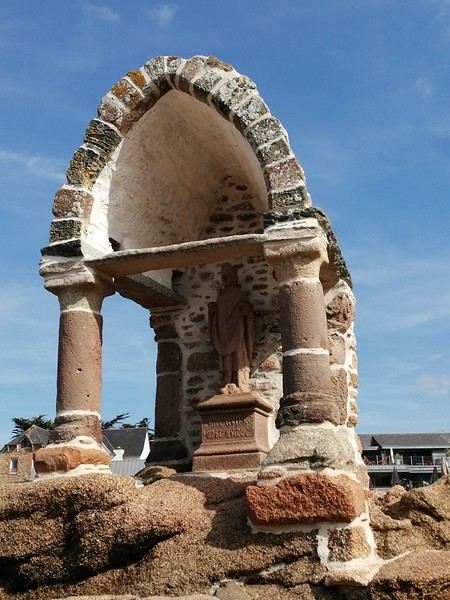
This pretty little beach is famous for its oratory, which sits in the middle of the sand and houses the statue of St. Guirec. In the past, young women hoping to marry within the year would often pray to him—they’d stick a needle into his nose! Today, the statue is made of stone, but back then, it was wooden, which must’ve made it easier.
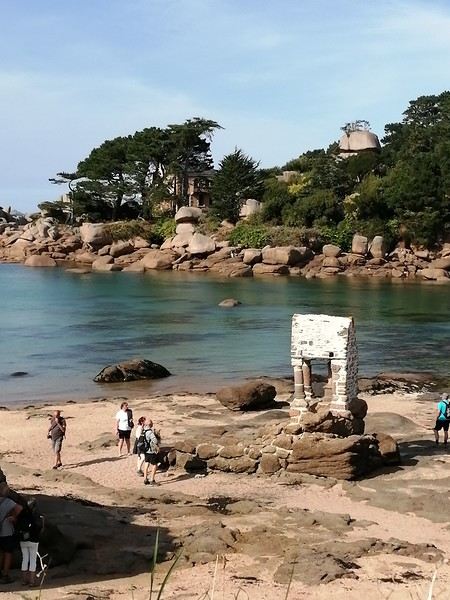
It’s really charming, well-sheltered, and the water is crystal clear. We noticed that everywhere we went!
Our first trip to the coast was to Ploumanac’h, a small village we discovered thanks to Stéphane Bern’s show. It’s an adorable little fishing port where we parked the car before continuing on foot along the sea. It’s charming—more than that, it’s magical!
Our first walk, our first hike along the coastal path, and our first photos of these massive rocks bathed in light.
The views change with every turn, and so do the surprises—especially the view of the Château de Costaérès.
The path through the woods leads us to the Chapel of Saint Guirec, which overlooks the beach.This pretty little beach is famous for its oratory, which sits in the middle of the sand and houses the statue of St. Guirec. In the past, young women hoping to marry within the year would often pray to him—they’d stick a needle into his nose! Today, the statue is made of stone, but back then, it was wooden, which must’ve made it easier.
It’s really charming, well-sheltered, and the water is crystal clear. We noticed that everywhere we went!
A Week in Malta in Spring 2025
Why not Malta? We thought it was an original, off-the-beaten-path destination...
The advantage is there’s a direct flight from Toulouse, our departure city. That’s what convinced us to take a week-long couple’s trip to Malta.
I had booked the accommodations (breakfast included) + an airport/hotel transfer on Booking.
First stop: VILLA DEL PORTO, a very pleasant guest house in a great location. We were welcomed by the owner, who gave us all the info we needed to get around. How to get to Valletta? By ferry shuttle. Valletta Ferry Service - Cospicua.
And for everything else, a brilliant app for the buses that crisscross the island: TALLINJA. I highly recommend this app. We traveled by bus all week without any issues.
The next day, we spent the day in Valletta, the capital. That’s when we realized this destination is actually very popular—streets packed with thousands of tourists! Luckily, we managed to navigate through parallel alleys and find small hostels or bars to eat or grab a drink. The city is stunning and steeped in history.
On the third day, we took the bus to the south of the island: MARSAXLOKK. A charming, authentic fishing port with plenty of waterfront restaurants and souvenir shops. We ate at CAFÉ DE PARIS—a delicious fresh fish, perfectly prepared.
On the way back, we wandered through the beautiful town of Senglea. Then we ordered takeout from D VIRI'S TAKE AWAY near the guest house via email. It was delicious!
On the fourth day, we left Villa del Porto and headed to Valletta by ferry to catch the GOZO FAST FERRY—a 45-minute catamaran ride to the island of Gozo.
After a good lunch by the port, we took the bus to our destination: XLENDI.
A village at the end of a gorgeous bay. We stayed at the San Andrea Hotel—a small room with a balcony and sea view.
Fifth day: Bus to Victoria. A magnificent citadel, a meal at a small bar in Piazza San Frangisk, then we continued by bus to the north, stopping in Marsalforn for coffee by the sea and a short walk to the natural salt pans carved into the rock. Back to the hotel by bus.
Sixth day: A short walk to Xlendi Tower, a watchtower at the entrance of the bay, beautifully restored. Then we set off on a sea excursion in a small boat for six passengers. Honestly, I recommend it! Two hours cruising along the breathtaking coastline and turquoise sea—20 € per person. www.gozoboathire.com
Delicious lunch on the terrace at "The Boathouse Restaurant."
Seventh day: We packed our bags again and returned to Malta by ferry to Cirkewwa. The terminal isn’t very welcoming—you have to take a bus to find a town.
We had lunch in Mellieha, then continued our journey, still using local buses, to RABAT, next to the ancient fortified city of MDINA. Another stunning city we explored at our own pace once the tourists had left.
Eighth day: Bus to the airport.
In conclusion, we’re thrilled with our trip. Of course, we didn’t see all the sites recommended by guidebooks, but we wandered at our own rhythm and came back with a head full of memories, images, and great moments spent in Malta and Gozo.
Villa Del Porto Address: Marina Street 1, KKR 1521 Kalkara, Malta Phone: +356 2166 8420 GPS Coordinates: N 035° 53.399, E 14° 31.557
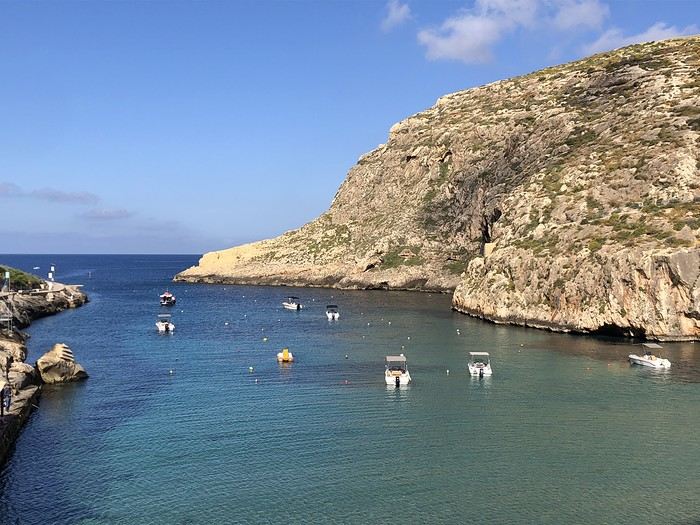 Xlendi Bay
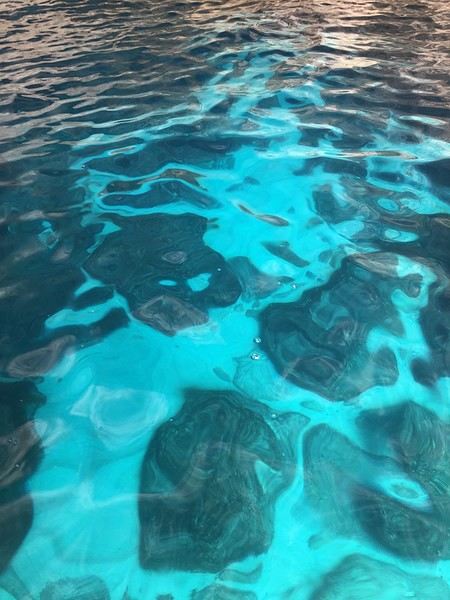 the seabeds in the coves
Villa Del Porto Address: Marina Street 1, KKR 1521 Kalkara, Malta Phone: +356 2166 8420 GPS Coordinates: N 035° 53.399, E 14° 31.557
Xlendi Bay
the seabeds in the coves
What to see and do on the Isle of Skye?
Hi everyone, I’m asking for your help because I’m planning a 5-day trip to Scotland starting from Glasgow. I’d like to visit the Isle of Skye—my problem is, is it accessible without a car? And what can you do on this island?
7-Day Morocco Itinerary Feedback
Hi there,
I’m about to take my nephews to Morocco for a week to celebrate their 18th birthdays during the first week of September. I’ve already planned most of it, but I’d love any advice or tips on my itinerary! Thanks in advance to anyone who replies :)
Day 1: Agadir → Essaouira Morning: Crocoparc/cable car/kasbah (I’d considered Paradise Valley, but it seems less great now? Dirty, drought, etc.?) Depart for Essaouira, lunch in Taghazout around 1 PM. Mid-afternoon to evening in Essaouira, overnight there. Visit the medina, walk along the ramparts and fishing port. Sunset from the Skala du Port or the beach. Dinner at one of the seafood restaurants near the port.
Day 2: Essaouira → Marrakech → Agafay Desert Morning: 🔹 Early departure from Essaouira to Marrakech (~2.5 hours). Afternoon: Explore Marrakech: 🔹 Jemaa el-Fna Square 🔹 Majorelle Garden Late afternoon: 🔹 At 3 PM, depart for the Agafay Desert (~1 hour) for a camel ride + quad excursion. Evening: 🔹 Dinner and overnight in the desert.
Day 3: Agafay → Marrakech → Ouzoud Morning: 🔹 Return to Marrakech from Agafay at 11 AM. Late morning & early afternoon: Last spots in Marrakech: 🔹 Bahia Palace 🔹 Ben Youssef Madrasa Mid/late afternoon: 🔹 Depart for Ouzoud (~2.5 hours). Evening: 🔹 Overnight in Ouzoud. Day 4: Ouzoud → Marrakech Morning: 🔹 Visit Ouzoud Waterfalls. Early afternoon: 🔹 Return to Marrakech (~2.5 hours). Late afternoon/evening: 🔹 Free time in Marrakech to wander the souks and experience Jemaa el-Fna Square at night with its evening atmosphere. Evening: 🔹 Overnight in Marrakech. Day 5: Marrakech → Aït Ben Haddou → Ouarzazate Early morning: 🔹 Depart for Aït Ben Haddou via the Tizi n'Tichka Pass (~3 hours 45 minutes). Midday: 🔹 Visit the Ksar of Aït Ben Haddou. Afternoon: 🔹 Drive to Ouarzazate (~30 minutes), visit the Taourirt Kasbah. Evening: 🔹 Overnight in Ouarzazate. Day 6: Ouarzazate → Agadir Very early departure in the morning. Morning: Visit Agadir’s souk. Afternoon: 🔹 Relax at the hotel pool, jet ski, and overnight stay. Day 7: Agadir Morning off. 🔹 Beach and pool time. Return flight.
Thanks so much!
Day 1: Agadir → Essaouira Morning: Crocoparc/cable car/kasbah (I’d considered Paradise Valley, but it seems less great now? Dirty, drought, etc.?) Depart for Essaouira, lunch in Taghazout around 1 PM. Mid-afternoon to evening in Essaouira, overnight there. Visit the medina, walk along the ramparts and fishing port. Sunset from the Skala du Port or the beach. Dinner at one of the seafood restaurants near the port.
Day 2: Essaouira → Marrakech → Agafay Desert Morning: 🔹 Early departure from Essaouira to Marrakech (~2.5 hours). Afternoon: Explore Marrakech: 🔹 Jemaa el-Fna Square 🔹 Majorelle Garden Late afternoon: 🔹 At 3 PM, depart for the Agafay Desert (~1 hour) for a camel ride + quad excursion. Evening: 🔹 Dinner and overnight in the desert.
Day 3: Agafay → Marrakech → Ouzoud Morning: 🔹 Return to Marrakech from Agafay at 11 AM. Late morning & early afternoon: Last spots in Marrakech: 🔹 Bahia Palace 🔹 Ben Youssef Madrasa Mid/late afternoon: 🔹 Depart for Ouzoud (~2.5 hours). Evening: 🔹 Overnight in Ouzoud. Day 4: Ouzoud → Marrakech Morning: 🔹 Visit Ouzoud Waterfalls. Early afternoon: 🔹 Return to Marrakech (~2.5 hours). Late afternoon/evening: 🔹 Free time in Marrakech to wander the souks and experience Jemaa el-Fna Square at night with its evening atmosphere. Evening: 🔹 Overnight in Marrakech. Day 5: Marrakech → Aït Ben Haddou → Ouarzazate Early morning: 🔹 Depart for Aït Ben Haddou via the Tizi n'Tichka Pass (~3 hours 45 minutes). Midday: 🔹 Visit the Ksar of Aït Ben Haddou. Afternoon: 🔹 Drive to Ouarzazate (~30 minutes), visit the Taourirt Kasbah. Evening: 🔹 Overnight in Ouarzazate. Day 6: Ouarzazate → Agadir Very early departure in the morning. Morning: Visit Agadir’s souk. Afternoon: 🔹 Relax at the hotel pool, jet ski, and overnight stay. Day 7: Agadir Morning off. 🔹 Beach and pool time. Return flight.
Thanks so much!
Newfoundland - Hikes in the Central Region of the Island
A land of adventure, the central region of Newfoundland is a vast area of dense forests and rugged coastlines.
To the north, between April and June, icebergs from Greenland drift along the famous "Iceberg Alley."
Inland, forests, lakes, and rivers dominate—once precious resources for Indigenous peoples and European settlers.
To the east lies Terra-Nova National Park and its typical habitat, made up of islands, ponds, bogs, and forests.
Finally, the southern coast, dotted with spectacular fjords, is home to several isolated fishing villages as well as the Miawpukek First Nation of Conne River, the province’s only recognized reserve.
Source: https://www.exploretnl.ca/region-centre
Below is a list of the hikes we did in this region. Each hike has a link attached so you can quickly access more information about it.
Videos are embedded throughout the summary. Click on the image to start the video.
King's Point - Alexander Murray Trail Grand Falls-Windsor - Thunder Brook Falls Trail King's Point - Rattling Brook Falls Trail Harbour Breton - Gun Hill Lookout Trail Harbour Breton - Deadman's Cove Trail Harbour Breton - Rocky Point Lighthouse Trail Harbour Breton Community Dildo Run Provincial Park - Black Head Trail Twillingate - Lower Little Harbour Trail Twillingate - Rockcut Twillingate Trails Twillingate - Lower Head Loop Trail Twillingate - Cuckhold's Point Trail Twillingate - Top of Twillingate Trail Terra-Nova National Park - Mill Cove Lookout Trail Eastport - Sandy Cove Lookout Trail
To the north, between April and June, icebergs from Greenland drift along the famous "Iceberg Alley."
Inland, forests, lakes, and rivers dominate—once precious resources for Indigenous peoples and European settlers.
To the east lies Terra-Nova National Park and its typical habitat, made up of islands, ponds, bogs, and forests.
Finally, the southern coast, dotted with spectacular fjords, is home to several isolated fishing villages as well as the Miawpukek First Nation of Conne River, the province’s only recognized reserve.
Source: https://www.exploretnl.ca/region-centre
Below is a list of the hikes we did in this region. Each hike has a link attached so you can quickly access more information about it.
Videos are embedded throughout the summary. Click on the image to start the video.
King's Point - Alexander Murray Trail Grand Falls-Windsor - Thunder Brook Falls Trail King's Point - Rattling Brook Falls Trail Harbour Breton - Gun Hill Lookout Trail Harbour Breton - Deadman's Cove Trail Harbour Breton - Rocky Point Lighthouse Trail Harbour Breton Community Dildo Run Provincial Park - Black Head Trail Twillingate - Lower Little Harbour Trail Twillingate - Rockcut Twillingate Trails Twillingate - Lower Head Loop Trail Twillingate - Cuckhold's Point Trail Twillingate - Top of Twillingate Trail Terra-Nova National Park - Mill Cove Lookout Trail Eastport - Sandy Cove Lookout Trail
Feedback on Quebec itinerary in September-October
Hello,
I need some advice because I can't decide on an itinerary. We're going to join our son around September 20th, who's spending a year in Canada on a working holiday visa. I did the classic Quebec loop over 30 years ago, so I’m ruling out the Saguenay Fjord and Lac Saint-Jean right away. Here are the stops (overnights) I’ve tentatively planned:
D1-2-3: Quebec City D4: Malbaie Gorges National Park via Routes 360 and 362 D5: Malbaie Gorges National Park (fishing and canoeing) D6: Tadoussac (walks and whale watching from the shore, hiking up to Cap du Bon Désir) D7: Whale-watching zodiac excursion – ferry – Bic National Park D8: Bic National Park D9: Carleton-sur-Mer via the Matapedia Valley D10: Percé D11: Percé (Bonaventure Island excursion) D12: Forillon National Park D13: Forillon National Park D14: Sainte-Anne-des-Monts via Route 132 D15: Sainte-Anne-des-Monts (Gaspésie National Park) D16: Kamouraska D17: Quebec City D18-19-20: Montreal
I feel like one night in Tadoussac is too short. Wouldn’t it be better to add another night there and only spend one night in Sainte-Anne-des-Monts, skipping Gaspésie National Park? Just to clarify, we love nature and hiking but limit ourselves to about 10 km per day.
Also, I’m wondering about the distances (even though I tried to keep them reasonable), the short stops (max 2 nights except in Quebec City and Montreal, so not much time to settle in), and the weather in Gaspésie in late September-October (my husband doesn’t handle the cold well). Maybe it’d be better to only go as far as Bic National Park, then head back, and add more nights at Malbaie Gorges National Park (I didn’t stay in a park on my first trip, and my son, who got his fishing license, would be proud to bring us dinner 😊), Tadoussac, and maybe around Bic/Rimouski?
One last detail: the plan is to land in Quebec City, rent a car on D4, return it on D17, and take the train or bus to Montreal the next day, where we’ll catch our flight 4 days later. This is to cut down on rental costs and avoid having a car in Quebec City.
Thanks for reading this far—I hope I can count on your advice! 😊
Claire
D1-2-3: Quebec City D4: Malbaie Gorges National Park via Routes 360 and 362 D5: Malbaie Gorges National Park (fishing and canoeing) D6: Tadoussac (walks and whale watching from the shore, hiking up to Cap du Bon Désir) D7: Whale-watching zodiac excursion – ferry – Bic National Park D8: Bic National Park D9: Carleton-sur-Mer via the Matapedia Valley D10: Percé D11: Percé (Bonaventure Island excursion) D12: Forillon National Park D13: Forillon National Park D14: Sainte-Anne-des-Monts via Route 132 D15: Sainte-Anne-des-Monts (Gaspésie National Park) D16: Kamouraska D17: Quebec City D18-19-20: Montreal
I feel like one night in Tadoussac is too short. Wouldn’t it be better to add another night there and only spend one night in Sainte-Anne-des-Monts, skipping Gaspésie National Park? Just to clarify, we love nature and hiking but limit ourselves to about 10 km per day.
Also, I’m wondering about the distances (even though I tried to keep them reasonable), the short stops (max 2 nights except in Quebec City and Montreal, so not much time to settle in), and the weather in Gaspésie in late September-October (my husband doesn’t handle the cold well). Maybe it’d be better to only go as far as Bic National Park, then head back, and add more nights at Malbaie Gorges National Park (I didn’t stay in a park on my first trip, and my son, who got his fishing license, would be proud to bring us dinner 😊), Tadoussac, and maybe around Bic/Rimouski?
One last detail: the plan is to land in Quebec City, rent a car on D4, return it on D17, and take the train or bus to Montreal the next day, where we’ll catch our flight 4 days later. This is to cut down on rental costs and avoid having a car in Quebec City.
Thanks for reading this far—I hope I can count on your advice! 😊
Claire
Family itinerary in Quebec in July: tips for finalizing the last leg after Parc du Bic
Hi there,
We’re heading to Quebec from July 7 to 21 with our two kids (ages 5 and 7) and my wife, and we’re putting together an itinerary while keeping some flexibility (though much less than we’d hoped, since we’re realizing accommodations are already filling up fast!).
Below is our draft plan—pretty far along since we’ve booked 9 out of 14 nights—but it’s definitely not perfect.
We’d love some advice on what to do after Parc du Bic (3 nights to improvise) before heading back to Parc Omega, where we’ve booked a tipi :-)
It seems clear that a 3-day Gaspésie loop isn’t doable (too bad about Percé and Parc Forillon, but I think we’re already covering a lot of ground with this route!). But what about the option of driving up to Sainte-Anne-des-Monts to spend a day in Parc de la Gaspésie before the (long) drive back, and still enjoying part of the coastal road, which looks stunning? Thanks in advance for your thoughts!
3 nights in Montreal (booked) Day 1 to 3 – July 7 to 9: Montreal
2 nights near Lac Saint-Charles, 20 min from Quebec City (booked) Day 4 – July 10: Montreal → Montmorency Falls → Quebec City (~3h drive) Day 5 – July 11: Quebec City
2 nights in the Saguenay region (booked) Day 6 – July 12: Quebec City → Baie-Saint-Paul → Canopée Lit (Saguenay), 20 min from Tadoussac Day 7 – July 13: Day in Tadoussac/Les Bergeronnes for a whale-watching excursion, then back toward the Saguenay Fjord for the evening and overnight stay
1 night in Parc du Bic (booked)
Day 8 – July 14: Ferry from Les Escoumins (2 PM) → Trois-Pistoles → Parc du Bic
3 nights to improvise—is it even feasible to go without reservations in July for a family of 4? Day 9 – July 15: Hikes/activities in Parc du Bic – overnight near Cap-Chat/Sainte-Anne-des-Monts??? Other ideas? Day 10 – July 16: Parc de la Gaspésie? Day 11 – July 17: More hikes? Then drive back toward the Mont-Joli area?
1 night at Parc Omega (booked)
Day 12 – July 18: Long drive back from Mont-Joli? Maybe via Kamouraska for a meal break, then overnight at Parc Omega
2 nights near Montreal or surrounding area
Day 13 – July 19: Visit Parc Omega, then a relaxed drive back via scenic routes to Montreal or nearby
Day 14 – July 20: Last day and night in Montreal or the suburbs, fun activities with the kids
Day 15 – July 21: Flight home in the evening
3 nights in Montreal (booked) Day 1 to 3 – July 7 to 9: Montreal
2 nights near Lac Saint-Charles, 20 min from Quebec City (booked) Day 4 – July 10: Montreal → Montmorency Falls → Quebec City (~3h drive) Day 5 – July 11: Quebec City
2 nights in the Saguenay region (booked) Day 6 – July 12: Quebec City → Baie-Saint-Paul → Canopée Lit (Saguenay), 20 min from Tadoussac Day 7 – July 13: Day in Tadoussac/Les Bergeronnes for a whale-watching excursion, then back toward the Saguenay Fjord for the evening and overnight stay
1 night in Parc du Bic (booked)
Day 8 – July 14: Ferry from Les Escoumins (2 PM) → Trois-Pistoles → Parc du Bic
3 nights to improvise—is it even feasible to go without reservations in July for a family of 4? Day 9 – July 15: Hikes/activities in Parc du Bic – overnight near Cap-Chat/Sainte-Anne-des-Monts??? Other ideas? Day 10 – July 16: Parc de la Gaspésie? Day 11 – July 17: More hikes? Then drive back toward the Mont-Joli area?
1 night at Parc Omega (booked)
Day 12 – July 18: Long drive back from Mont-Joli? Maybe via Kamouraska for a meal break, then overnight at Parc Omega
2 nights near Montreal or surrounding area
Day 13 – July 19: Visit Parc Omega, then a relaxed drive back via scenic routes to Montreal or nearby
Day 14 – July 20: Last day and night in Montreal or the suburbs, fun activities with the kids
Day 15 – July 21: Flight home in the evening
Gaspésie / Quebec / Canada Road Trip - August 2025
Hello!
I’m embarking on a long-awaited dream trip—Canada!
For my first visit to this incredible country, I’ve set my sights on Gaspésie and the city of Quebec.
I’m a huge fan of hiking in nature, and I’m also passionate about Canadian history and its diverse cultures, especially the history and cultures of the First Nations. My trip will be a mix of nature and culture.
I’ll be traveling from August 3rd to 24th, flying from Paris to Quebec City.
I’m looking for one or more travel companions (ages 30–40) who are also planning to spend 3 weeks in Gaspésie this summer (unfortunately, my dates aren’t flexible). The idea is to rent a car together and explore this beautiful region! :)
Here’s my rough itinerary (still fine-tuning it): - 08/03: Arrival in Quebec City - 08/04–08/05: Tadoussac and surrounding area - 08/06–08/08: Gaspésie National Park - 08/09–08/11: Gaspé and Forillon National Park + Gespeg First Nation Pow Wow - 08/11–08/12: Percé and surrounding area - 08/13: Bonaventure River - 08/14: Drive around Chaleur Bay and Matapedia - 08/15–08/17: Hike around Cacouna + WOLASTOQIYIK WAHSIPEKUK First Nation Pow Wow - 08/18–08/20: Hike around Rimouski and Bic National Park - 08/20: Return to Quebec City, stopping to visit Kamouraska - 08/20–08/24: Exploring Quebec City and Wendake
If my itinerary resonates with you and you share my interests, feel free to send me a PM! 🌿🏕️🏞️
I’m embarking on a long-awaited dream trip—Canada!
For my first visit to this incredible country, I’ve set my sights on Gaspésie and the city of Quebec.
I’m a huge fan of hiking in nature, and I’m also passionate about Canadian history and its diverse cultures, especially the history and cultures of the First Nations. My trip will be a mix of nature and culture.
I’ll be traveling from August 3rd to 24th, flying from Paris to Quebec City.
I’m looking for one or more travel companions (ages 30–40) who are also planning to spend 3 weeks in Gaspésie this summer (unfortunately, my dates aren’t flexible). The idea is to rent a car together and explore this beautiful region! :)
Here’s my rough itinerary (still fine-tuning it): - 08/03: Arrival in Quebec City - 08/04–08/05: Tadoussac and surrounding area - 08/06–08/08: Gaspésie National Park - 08/09–08/11: Gaspé and Forillon National Park + Gespeg First Nation Pow Wow - 08/11–08/12: Percé and surrounding area - 08/13: Bonaventure River - 08/14: Drive around Chaleur Bay and Matapedia - 08/15–08/17: Hike around Cacouna + WOLASTOQIYIK WAHSIPEKUK First Nation Pow Wow - 08/18–08/20: Hike around Rimouski and Bic National Park - 08/20: Return to Quebec City, stopping to visit Kamouraska - 08/20–08/24: Exploring Quebec City and Wendake
If my itinerary resonates with you and you share my interests, feel free to send me a PM! 🌿🏕️🏞️
What if your next travel agent was an artificial intelligence?
The chosen title was easy to find: it's from today's French daily newspaper "Le Figaro" (front page, right side, in the "Le Flash actualité" section at 10:31 AM).
Link: https://www.lefigaro.fr/voyages/et-si-votre-prochain-agent-de-voyage-etait-une-intelligence-artificielle-20250414
As some participants had mentioned, a simple query could sometimes yield very satisfying results, even if the initial comments from readers of this article don’t necessarily agree.
Instead of presenting our request in writing, I assume we’ll soon be able to speak to AI orally or even have a conversation with it. Refining our searches to perfection would then be a breeze.
But then, what about travel agencies and travel forums? Will Vfistes, in a twilight atmosphere, keep talking in a closed circle, fewer and fewer of them, until the last one is left monologuing? Will a side effect be that we start addressing our fellow humans in the same cold, dry way we talk to the Machine? Well, some of us have already gotten into that habit... With over 30% of current jobs set to disappear because of AI, will it become possible to quickly and perfectly plan trips we can no longer afford financially? What a paradox!
I admit I haven’t looked into this yet, and one of these days I’ll probably end up talking to the Machine, but for now, I prefer to keep laboriously and methodically planning my upcoming trips, telling myself that at least I’m still good for something...
As some participants had mentioned, a simple query could sometimes yield very satisfying results, even if the initial comments from readers of this article don’t necessarily agree.
Instead of presenting our request in writing, I assume we’ll soon be able to speak to AI orally or even have a conversation with it. Refining our searches to perfection would then be a breeze.
But then, what about travel agencies and travel forums? Will Vfistes, in a twilight atmosphere, keep talking in a closed circle, fewer and fewer of them, until the last one is left monologuing? Will a side effect be that we start addressing our fellow humans in the same cold, dry way we talk to the Machine? Well, some of us have already gotten into that habit... With over 30% of current jobs set to disappear because of AI, will it become possible to quickly and perfectly plan trips we can no longer afford financially? What a paradox!
I admit I haven’t looked into this yet, and one of these days I’ll probably end up talking to the Machine, but for now, I prefer to keep laboriously and methodically planning my upcoming trips, telling myself that at least I’m still good for something...
Short trip to Mauritania (one week) then Morocco
Short stay in Mauritania (one week), then back to Morocco (Dakhla) for a few days before heading to Agadir and flying back to Brussels. Looking for great spots and sights to visit, as well as nice, moderately priced accommodation. What do you recommend? Thanks in advance
Authentic Spain: Immersing Yourself in Regional Diversity
Beyond the traditional tourist circuits, Spain reveals its true essence through its lesser-known regions and preserved traditions. For a unique and authentic experience, we invite you to explore the hidden facets of this fascinating country. You can check out FairMoove’s offers, an eco-responsible and authentic travel agency.
The Hidden Gems of Rural Andalusia
Far from the well-trodden paths of Seville and Granada, the white villages of Andalusia transport you to a timeless Spain. In Ronda, perched on its vertiginous cliffs, the cobbled streets tell centuries of history. In the intimacy of Mijas, artisans keep age-old traditions alive in their workshops, open to curious visitors.
Master potters introduce you to their ancestral craft, sharing techniques passed down through generations. In family-run taverns, tapas are enjoyed to the rhythm of conversations with locals, revealing jealously guarded recipes. Come evening, local flamenco schools open their doors, letting you discover the deep soul of Andalusia through its traditional dances. A Sensory Journey: The Wine Route
The wine regions of Rioja and Ribera del Duero invite you to a truly "non-touristy" authentic experience. In these family-run estates, often centuries old, winemakers share their passion with characteristic generosity. Tours of historic cellars reveal the secrets of traditional winemaking, while guided tastings awaken your senses to the subtleties of local grape varieties.
During harvest season, you can join in the grape picking alongside local families, continuing age-old traditions. Meals shared in the vineyards become moments of conviviality where the wine tells the story of the terroir. Some estates even offer blending workshops where you create your own cuvée under the expert guidance of enologists. From Lively Markets to Traditional Farms: Authentic Gastronomy
In Catalonia, local markets are true theaters of daily life. Beyond Barcelona’s La Boqueria, the markets in Catalan villages offer a more intimate experience. Producers share the stories behind their products—organic vegetables, artisanal cheeses, and traditional cured meats.
In the Balearic Islands, *fincas* turned into agritourism spots keep centuries-old agricultural traditions alive. In Mallorca, join the olive harvest and oil production using ancestral methods. In Menorca, cheesemakers introduce you to the crafting of the famous Mahón-Menorca PDO cheese, a skill passed down through generations.
The Vibrant Soul of Spain’s Autonomous Regions
Each of Spain’s autonomous regions proudly cultivates its unique identity. In Galicia, Celtic traditions blend harmoniously with age-old pilgrimages. Traditional fishing ports welcome you to discover the secrets of sustainable fishing, while local festivities celebrate ancestral legends.
The Basque Country surprises with its ancient language and world-renowned gastronomy. In *txokos*—traditional gastronomic societies—you’ll explore Basque cuisine alongside locals. Local festivals, like Valencia’s Fallas or Seville’s Feria de Abril, immerse you in the excitement of Spanish popular traditions. Community-Based Tourism: A Rewarding Human Experience
Extremadura, a pioneer in community-based tourism, offers homestays that redefine travel. These initiatives not only support the local economy directly but also create authentic connections with communities. You’ll take part in seasonal agricultural work, learn traditional farming and livestock techniques, and share daily life with the families hosting you.
Community-based tourism projects also extend to preserving cultural heritage. Join efforts to restore historic monuments, rehabilitate traditional hiking trails, or pass on endangered artisanal skills.
Responsible Travel to Preserve Authenticity
This immersive approach to travel in Spain helps preserve local traditions and promote sustainable development in communities. By choosing these authentic experiences, you actively contribute to keeping Spain’s cultural heritage alive while enjoying unique moments far from mass tourism. The income generated directly supports local preservation initiatives and the passing down of traditional knowledge. Positive Impact on Local Communities
Authentic tourism allows communities to keep their traditions alive while adapting to modern challenges. Younger generations find new opportunities to carry on ancestral skills, while visitors leave enriched by unforgettable experiences and encounters.
Spain’s regions invite you to discover their differences and similarities, creating a fascinating cultural mosaic where every stone tells a unique story. Each trip becomes an opportunity to learn, share, and support local initiatives that keep authentic Spain alive while preserving its heritage for future generations.
The Hidden Gems of Rural Andalusia
Far from the well-trodden paths of Seville and Granada, the white villages of Andalusia transport you to a timeless Spain. In Ronda, perched on its vertiginous cliffs, the cobbled streets tell centuries of history. In the intimacy of Mijas, artisans keep age-old traditions alive in their workshops, open to curious visitors.
Master potters introduce you to their ancestral craft, sharing techniques passed down through generations. In family-run taverns, tapas are enjoyed to the rhythm of conversations with locals, revealing jealously guarded recipes. Come evening, local flamenco schools open their doors, letting you discover the deep soul of Andalusia through its traditional dances. A Sensory Journey: The Wine Route
The wine regions of Rioja and Ribera del Duero invite you to a truly "non-touristy" authentic experience. In these family-run estates, often centuries old, winemakers share their passion with characteristic generosity. Tours of historic cellars reveal the secrets of traditional winemaking, while guided tastings awaken your senses to the subtleties of local grape varieties.
During harvest season, you can join in the grape picking alongside local families, continuing age-old traditions. Meals shared in the vineyards become moments of conviviality where the wine tells the story of the terroir. Some estates even offer blending workshops where you create your own cuvée under the expert guidance of enologists. From Lively Markets to Traditional Farms: Authentic Gastronomy
In Catalonia, local markets are true theaters of daily life. Beyond Barcelona’s La Boqueria, the markets in Catalan villages offer a more intimate experience. Producers share the stories behind their products—organic vegetables, artisanal cheeses, and traditional cured meats.
In the Balearic Islands, *fincas* turned into agritourism spots keep centuries-old agricultural traditions alive. In Mallorca, join the olive harvest and oil production using ancestral methods. In Menorca, cheesemakers introduce you to the crafting of the famous Mahón-Menorca PDO cheese, a skill passed down through generations.
The Vibrant Soul of Spain’s Autonomous Regions
Each of Spain’s autonomous regions proudly cultivates its unique identity. In Galicia, Celtic traditions blend harmoniously with age-old pilgrimages. Traditional fishing ports welcome you to discover the secrets of sustainable fishing, while local festivities celebrate ancestral legends.
The Basque Country surprises with its ancient language and world-renowned gastronomy. In *txokos*—traditional gastronomic societies—you’ll explore Basque cuisine alongside locals. Local festivals, like Valencia’s Fallas or Seville’s Feria de Abril, immerse you in the excitement of Spanish popular traditions. Community-Based Tourism: A Rewarding Human Experience
Extremadura, a pioneer in community-based tourism, offers homestays that redefine travel. These initiatives not only support the local economy directly but also create authentic connections with communities. You’ll take part in seasonal agricultural work, learn traditional farming and livestock techniques, and share daily life with the families hosting you.
Community-based tourism projects also extend to preserving cultural heritage. Join efforts to restore historic monuments, rehabilitate traditional hiking trails, or pass on endangered artisanal skills.
Responsible Travel to Preserve Authenticity
This immersive approach to travel in Spain helps preserve local traditions and promote sustainable development in communities. By choosing these authentic experiences, you actively contribute to keeping Spain’s cultural heritage alive while enjoying unique moments far from mass tourism. The income generated directly supports local preservation initiatives and the passing down of traditional knowledge. Positive Impact on Local Communities
Authentic tourism allows communities to keep their traditions alive while adapting to modern challenges. Younger generations find new opportunities to carry on ancestral skills, while visitors leave enriched by unforgettable experiences and encounters.
Spain’s regions invite you to discover their differences and similarities, creating a fascinating cultural mosaic where every stone tells a unique story. Each trip becomes an opportunity to learn, share, and support local initiatives that keep authentic Spain alive while preserving its heritage for future generations.
Various questions for a Yukon-Alaska road trip
Hi everyone,
I’m finally heading to the Yukon in May-June 2025 and also Alaska.
My flight is booked, the truck camper too, but I’m a bit stuck on visas:
I’ll arrive in Canada by plane, drive to Alaska by road, and return to Canada by road before flying out again. Is the eTA sufficient?
I’d also love to hear from people who’ve done this trip—great tips, places to stay, warnings, or personal experiences!
What about bear spray? Where can I find it, and how much does it cost?
I’ll be spending a few days in Whitehorse when I arrive on May 8th, and again the weekend of June 20th—any suggestions for accommodation are welcome.
I’m Belgian and flying out of Germany.
St. Lucia and iSimangaliso: Stories from Different Trips
Hello there,

As mentioned in the title, this is a travel journal focused on St. Lucia and iSimangaliso ("this place is miraculous" in Zulu) over various trips spanning about twenty years.
The Elephant Coast stretches from Hluhluwe Umfolozi, through St. Lucia and iSimangaliso, all the way to the Mozambique border near Kosi Bay and Tembe. This region was conquered by the Zulus (for context, in the 19th century, the Zulus were just one Bantu group among many—it was a local Napoleon, Shaka, who was both cruel and inventive, conquering and subjugating all other groups to form the Zulu nation). The Tonga were the big losers in this area, and a certain "animosity" is still very noticeable... With our two guides (one Zulu and the other Tonga), we ran into some Tonga folks—definitely not a warm atmosphere. The Tonga were pushed back into the marshes. Fish traps are their main source of wealth. (iSimangaliso is a lagoon and marshland area with several interconnected lakes—it used to be called Vetland Park, and for good reason.) So, lakes, fishing with fish traps...
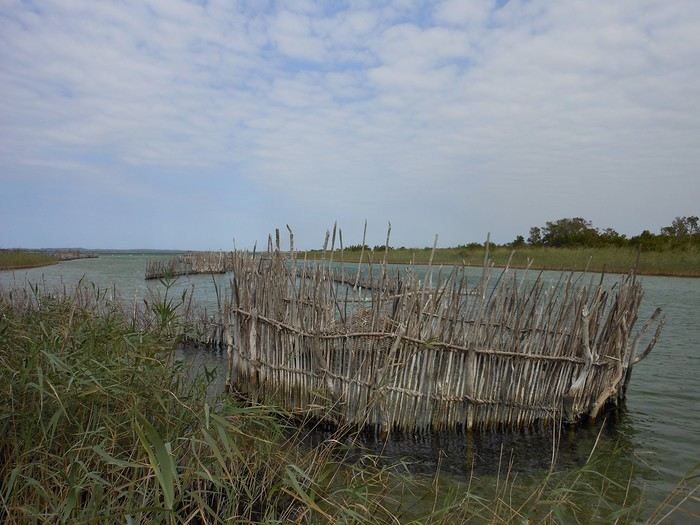
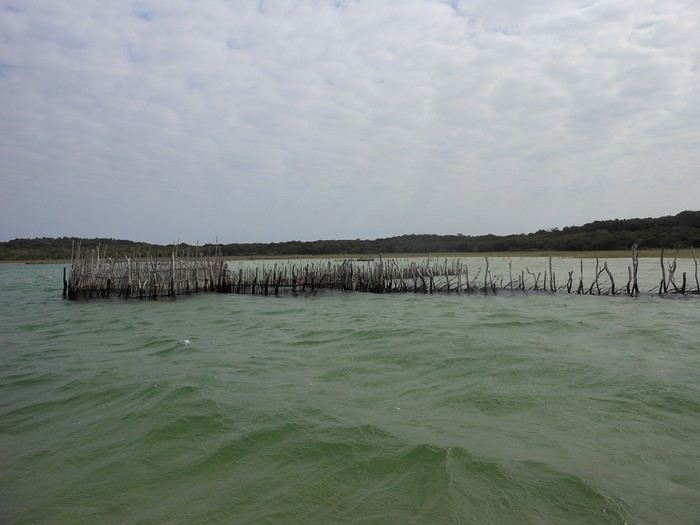
Traditionally done with raffia boats
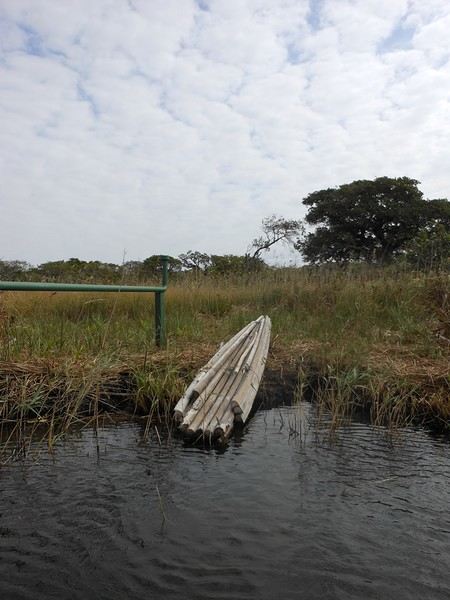
Made from forest raffia
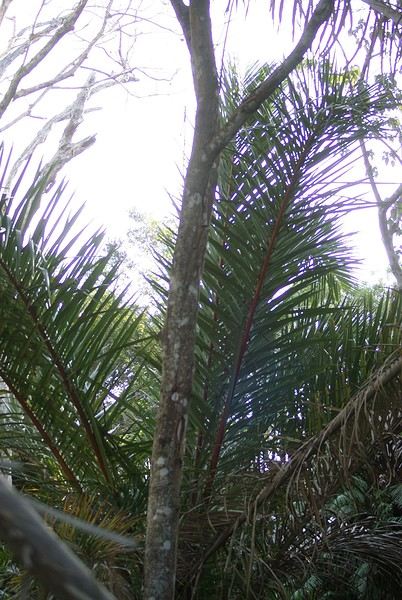
Where we spotted a particularly rare and endemic bird (whose name I can’t remember... and I can’t be bothered to dig through my notes)
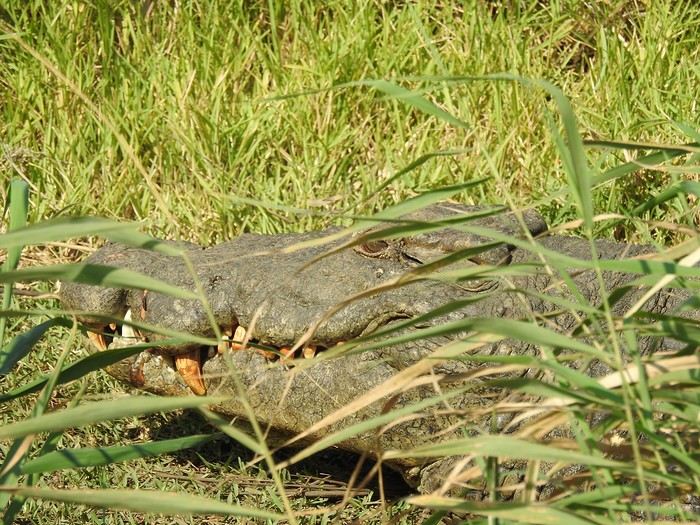
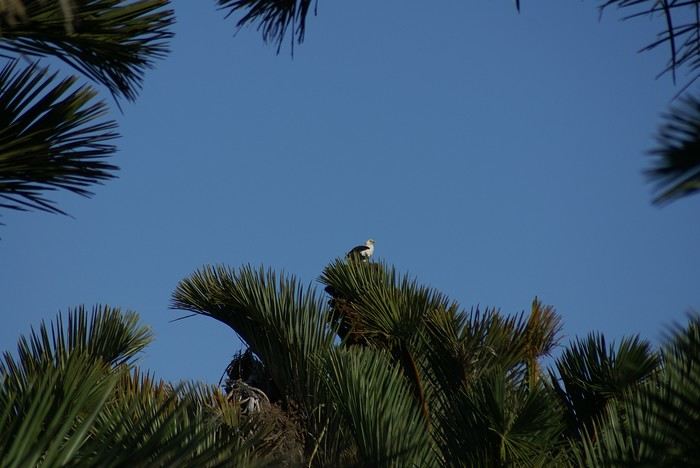 Here, those are eagles
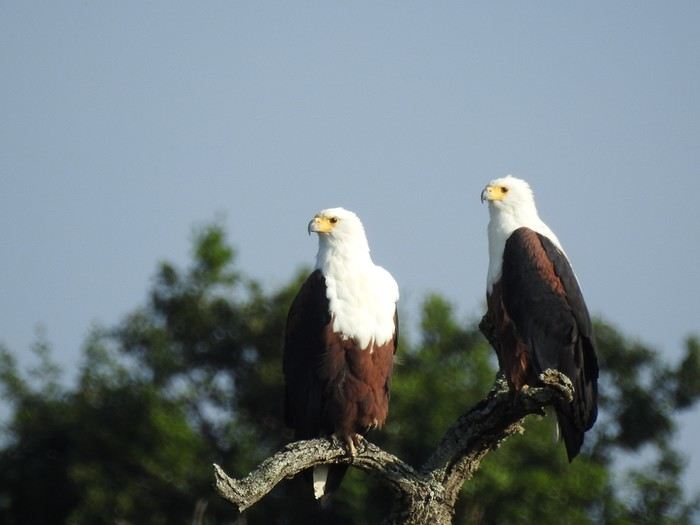
And they’re pretty brave because... they’re not far away...
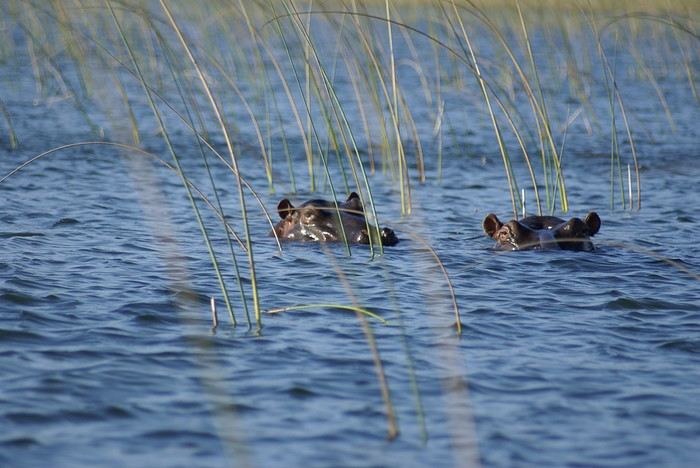
Yet we still swim there... with supervision...
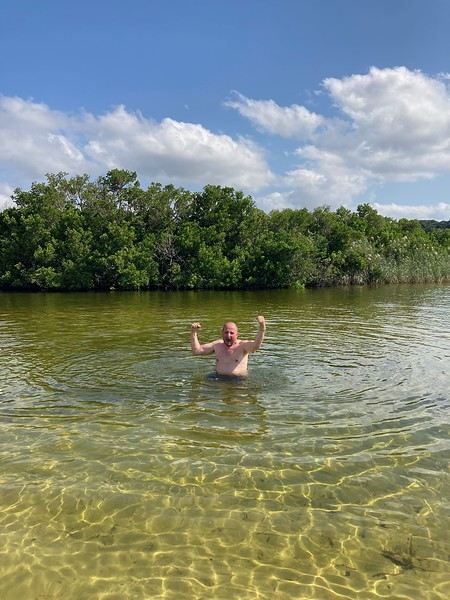
So, between St. Lucia and Mozambique, you’ll find marshes, lagoons, lakes, and coastline, with our Tonga friends, Zulu friends, and—just a bit further up—the Tembe... and their king. (I’m showing off a bit because I got to see a king up close, ate in the same room as him, and even talked to him!)
Originally, the Boers tried to farm there... including sugarcane...
But... between the hippos, snakes, crocs, and malaria-carrying mosquitoes... They lost count of the deaths and disappearances.
The story goes that when Madiba (Mandela) came to power, he passed through the area and convinced them to turn it into a natural space that would attract tourists—and that’s when the big change happened.
And it’s pretty incredible to see how this place has evolved, going from extreme poverty to a certain level of gentrification... How this once "chaotic" area saw shops, roads, and housing spring up (I’m mainly talking about Mtubatuba, the nearby Black town). In fact, in St. Lucia now, the homes that aren’t tourist accommodations can be counted on one hand.
St. Lucia has become a "seaside resort"... very busy during school holidays and certain weekends, increasingly cosmopolitan (20 years ago, speaking French was exotic—now it’s completely ordinary).
As mentioned in the title, this is a travel journal focused on St. Lucia and iSimangaliso ("this place is miraculous" in Zulu) over various trips spanning about twenty years.
The Elephant Coast stretches from Hluhluwe Umfolozi, through St. Lucia and iSimangaliso, all the way to the Mozambique border near Kosi Bay and Tembe. This region was conquered by the Zulus (for context, in the 19th century, the Zulus were just one Bantu group among many—it was a local Napoleon, Shaka, who was both cruel and inventive, conquering and subjugating all other groups to form the Zulu nation). The Tonga were the big losers in this area, and a certain "animosity" is still very noticeable... With our two guides (one Zulu and the other Tonga), we ran into some Tonga folks—definitely not a warm atmosphere. The Tonga were pushed back into the marshes. Fish traps are their main source of wealth. (iSimangaliso is a lagoon and marshland area with several interconnected lakes—it used to be called Vetland Park, and for good reason.) So, lakes, fishing with fish traps...
Traditionally done with raffia boats
Made from forest raffia
Where we spotted a particularly rare and endemic bird (whose name I can’t remember... and I can’t be bothered to dig through my notes)
Here, those are eagles
And they’re pretty brave because... they’re not far away...
Yet we still swim there... with supervision...
So, between St. Lucia and Mozambique, you’ll find marshes, lagoons, lakes, and coastline, with our Tonga friends, Zulu friends, and—just a bit further up—the Tembe... and their king. (I’m showing off a bit because I got to see a king up close, ate in the same room as him, and even talked to him!)
Originally, the Boers tried to farm there... including sugarcane...
But... between the hippos, snakes, crocs, and malaria-carrying mosquitoes... They lost count of the deaths and disappearances.
The story goes that when Madiba (Mandela) came to power, he passed through the area and convinced them to turn it into a natural space that would attract tourists—and that’s when the big change happened.
And it’s pretty incredible to see how this place has evolved, going from extreme poverty to a certain level of gentrification... How this once "chaotic" area saw shops, roads, and housing spring up (I’m mainly talking about Mtubatuba, the nearby Black town). In fact, in St. Lucia now, the homes that aren’t tourist accommodations can be counted on one hand.
St. Lucia has become a "seaside resort"... very busy during school holidays and certain weekends, increasingly cosmopolitan (20 years ago, speaking French was exotic—now it’s completely ordinary).
Information for two weeks in the Seychelles
Hi there, we’re heading to the Seychelles at the end of March for two weeks.
I was thinking 5 days in Praslin, 3 days in La Digue, and 5 days in Mahé. Does that time split sound good to you?!
For accommodation in Praslin, does the Grande Anse area seem nicer than St Anne for a quiet stay?
And on Mahé, is the south coast or the west coast better?
Do you know where the boats usually leave from for island-hopping excursions?
Last question: I’m a fisherman and I’ll have some gear with me. Do you know where the fishing reserves are? Are there any small harbors where I can hop on a boat with locals?
Thanks in advance for your tips!
Layover Taxis in the Canary Islands
Hi there,
We’re leaving Las Palmas on 13/01 for a cruise on the MSC Opera with stops in Fuerteventura, Funchal, Tenerife, Lanzarote, and La Palma. Has anyone taken taxis from these places to explore the islands, and how much should we budget to compare with the ship’s excursions? Can you negotiate the fare? Any drivers you’d recommend?
Thanks for your tips 👍 and happy New Year 2025 😊😊