Results for "parc+Haut-Languedoc+|+127"
63746 results found.
Back to Swedish Lapland: Trekking the Kungsleden and Crossing Sarek
Summer 2022 left me with a sense of unfinished business, so here I am back in Swedish Lapland for summer 2024, ready to attempt the Sarek crossing again—and this time, tackle part of the Kungsleden too.
After much hesitation, my partner Jean Marie and I decided to start with the Kungsleden, which is, from what we’ve read, stunning but very busy (and it really is!!), and finish with the wilder option: SAREK! This park is known as Europe’s last true wilderness—sounds like a dream, right?! The downside of this plan is that there’s no way to resupply in Sarek, and the Kungsleden isn’t exactly set up for long-distance trekking either, so we’ll have to carry a lot of food for the first part of the trip with Sarek in mind. Oh well, we’re motivated!
Our plan is to start in Abisko (the classic route), head to Vakkotavare (also classic, but with some variations to avoid the official trail and the crowds), then continue the Kungsleden from Saltoluokta. Before reaching Aktse, we’ll set off on an east-to-west crossing of Sarek (weather-dependent, since aside from the Skarja hut in the center of the park, there’s no shelter if conditions turn bad). At least we’ll be on the right side of the park to climb Skierfe and enjoy the jaw-dropping view of Rappaladen if we have to bail on Sarek.
All in all, that’s 17 days of trekking, including 1 rest day and 1 buffer day for weather delays.
So if you’re interested, I invite you to follow our fully packed backpacks!
08/03 - Abisko – 5km before Abiskojaure Some info (guides we used for prep, SFT map, sending food to Saltoluokta) 08/04 – 5km before Abiskojaure - on the east shore of Lake Alisjavri 08/05 – East shore of Lake Alisjavri – just before Tjaktja 08/06 – Just before Tjaktja – above the Salka hut via Nallo 08/07 - Salka – just past Singi + side trip to Djalson Lake 08/08 - Singi – Teusajaure 08/09 - Teusajaure - Vakkotavare (end of the first section of the Kungsleden) 08/10 – rest day in Saltoluokta + round trip to the Sámi village of Pietjaure 08/11 – Saltoluokta – Sitojaure 08/12 - Sitojaure - Skierfe - Sarek or no Sarek? 08/13 – Skierfe – somewhere above Rapadalen 08/14 – Somewhere above Rapadalen – above the Skarki hut 08/15 – Above the Skarki hut - Skarja 08/16 – Camping at Skarja 08/17 – Ruohtesvagge 08/18 – Ruohtesvagge - Padjelantaleden 08/19 – Padjelantaleden - Ritsem – End of the trek 08/20–24 - End of the trip (Lullea - Stockholm) And of course, the recap
After much hesitation, my partner Jean Marie and I decided to start with the Kungsleden, which is, from what we’ve read, stunning but very busy (and it really is!!), and finish with the wilder option: SAREK! This park is known as Europe’s last true wilderness—sounds like a dream, right?! The downside of this plan is that there’s no way to resupply in Sarek, and the Kungsleden isn’t exactly set up for long-distance trekking either, so we’ll have to carry a lot of food for the first part of the trip with Sarek in mind. Oh well, we’re motivated!
Our plan is to start in Abisko (the classic route), head to Vakkotavare (also classic, but with some variations to avoid the official trail and the crowds), then continue the Kungsleden from Saltoluokta. Before reaching Aktse, we’ll set off on an east-to-west crossing of Sarek (weather-dependent, since aside from the Skarja hut in the center of the park, there’s no shelter if conditions turn bad). At least we’ll be on the right side of the park to climb Skierfe and enjoy the jaw-dropping view of Rappaladen if we have to bail on Sarek.
All in all, that’s 17 days of trekking, including 1 rest day and 1 buffer day for weather delays.
So if you’re interested, I invite you to follow our fully packed backpacks!
08/03 - Abisko – 5km before Abiskojaure Some info (guides we used for prep, SFT map, sending food to Saltoluokta) 08/04 – 5km before Abiskojaure - on the east shore of Lake Alisjavri 08/05 – East shore of Lake Alisjavri – just before Tjaktja 08/06 – Just before Tjaktja – above the Salka hut via Nallo 08/07 - Salka – just past Singi + side trip to Djalson Lake 08/08 - Singi – Teusajaure 08/09 - Teusajaure - Vakkotavare (end of the first section of the Kungsleden) 08/10 – rest day in Saltoluokta + round trip to the Sámi village of Pietjaure 08/11 – Saltoluokta – Sitojaure 08/12 - Sitojaure - Skierfe - Sarek or no Sarek? 08/13 – Skierfe – somewhere above Rapadalen 08/14 – Somewhere above Rapadalen – above the Skarki hut 08/15 – Above the Skarki hut - Skarja 08/16 – Camping at Skarja 08/17 – Ruohtesvagge 08/18 – Ruohtesvagge - Padjelantaleden 08/19 – Padjelantaleden - Ritsem – End of the trek 08/20–24 - End of the trip (Lullea - Stockholm) And of course, the recap
One-month road trip in Namibia
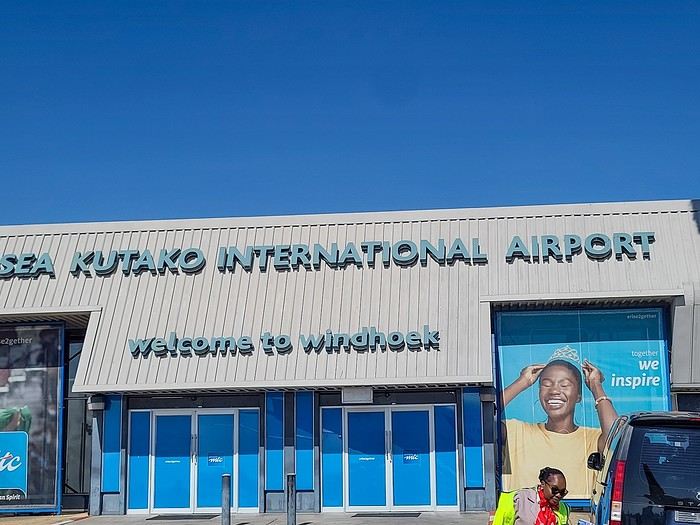
Here we go—finally, the big day has arrived! A trip the whole family (my two kids, my husband, and me) had been looking forward to for so long.
To keep it short, we left from Nice, arrived in Namibia on June 25, 2025, and left again on the 21st—four weeks later.
We used an agency for all the camping reservations, activities, and the car rental. At least that side of things was taken care of. Michaël was our contact throughout the planning and the trip itself.
We spent our first night at Londiningi BB. A bit out of the city center but very quiet. The rooms were spacious and clean, and we could eat on-site that evening. Perfect for recovering from the flight.
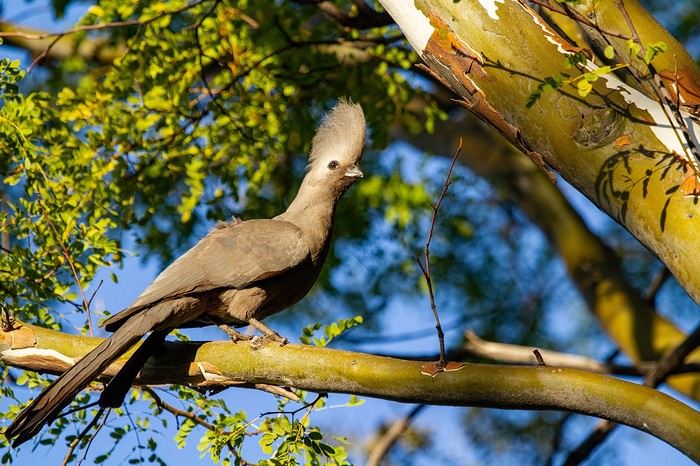
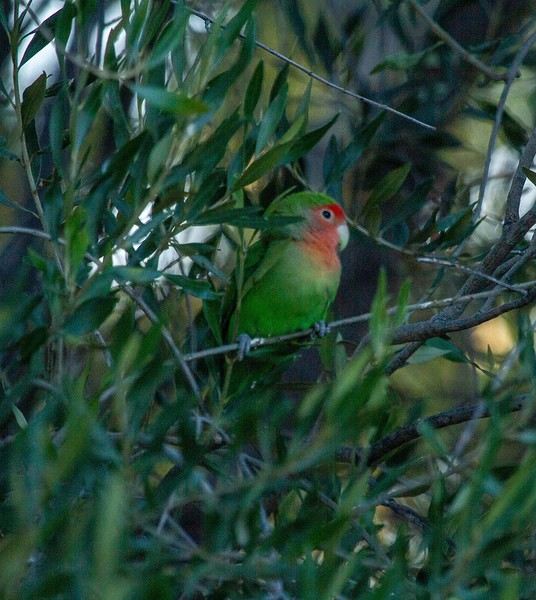
We spent our first night at Londiningi BB. A bit out of the city center but very quiet. The rooms were spacious and clean, and we could eat on-site that evening. Perfect for recovering from the flight.
Tanzania: Discovering Ruaha and Nyerere (formerly Selous)
Hello,
We got back from Tanzania a month ago, on March 5th. I’ve started this trip report at the link the moderator asked me to use:
https://voyageforum.com/forum/decouverte-ruaha-nyerere-ex-selous-en-fevrier-mars-2026-d11466010/
You’ll find a video of our trip on my YouTube channel there.
Now I’ll tell you about our 10-night trip in Tanzania, with 8 nights spent in two parks we didn’t know. Tanzania isn’t new to us—it was even our first African safari destination back in 2012. https://www.youtube.com/@lolodetoul54 Since then, we’ve visited several East and Southern African countries: Kenya, South Africa, Namibia, Botswana, some of them multiple times. We usually travel in September during the dry season. We tried March 2024 for nine nights in the Okavango and loved it, except everything was dry, which wasn’t normal for the rainy season.
So for this second March trip during the wet season, we really got what we asked for… rain. But before that, we had to fight just to get to Tanzania.
Saturday, February 21, 2026:
It’s D-Day—the departure. What a hassle to organize flights to and within Tanzania! I’ll tell you all about it in another post: https://voyageforum.com/forum/toutes-compagnies-aeriennes-tanzaniennes-interdites-d10758360/ On top of that, Rwandair canceled our outbound flight a month before departure. They offered to reschedule us 3-4 days later—ridiculous for a 10-night trip we’d already booked. We had to cancel our tickets and buy new ones with Kenya Airways. We’re still waiting for our refund from Rwandair!!!!!!! So on Saturday, February 1st, our bags were packed. We headed to the Lorraine TGV station, about 30 km from home.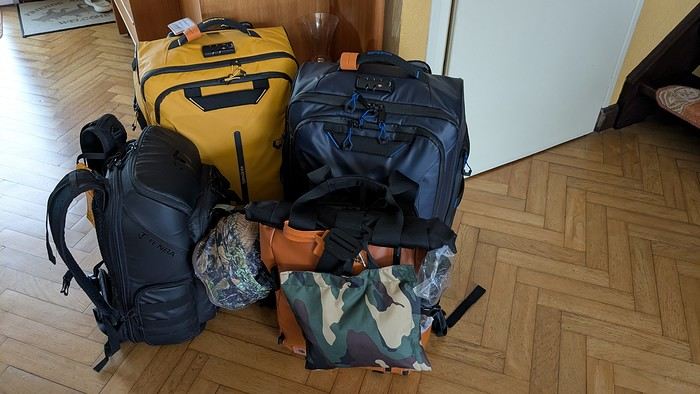 Direct train to Roissy—just 1h15. Quick and efficient.
All that was left was to wait for our overnight flight. We took off on time, just before 11 PM. Smooth flight, nothing unusual. Arrived in Nairobi around 9 AM. A few hours’ wait, then a flight to Dar es Salaam, landing at our first destination around 12:45 PM.
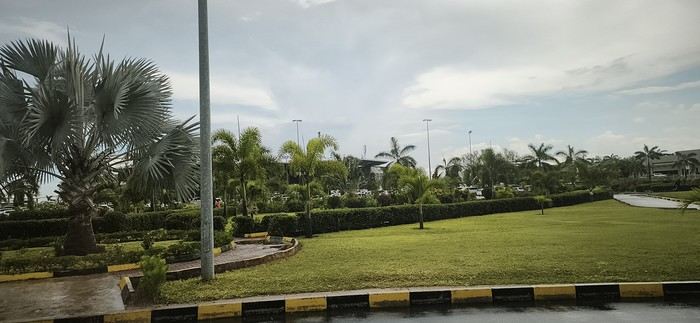
Our local contact, Anne from Asanterra agency, picked us up at the airport. It was hot and humid—it was raining.
Direct train to Roissy—just 1h15. Quick and efficient.
All that was left was to wait for our overnight flight. We took off on time, just before 11 PM. Smooth flight, nothing unusual. Arrived in Nairobi around 9 AM. A few hours’ wait, then a flight to Dar es Salaam, landing at our first destination around 12:45 PM.
Our local contact, Anne from Asanterra agency, picked us up at the airport. It was hot and humid—it was raining.
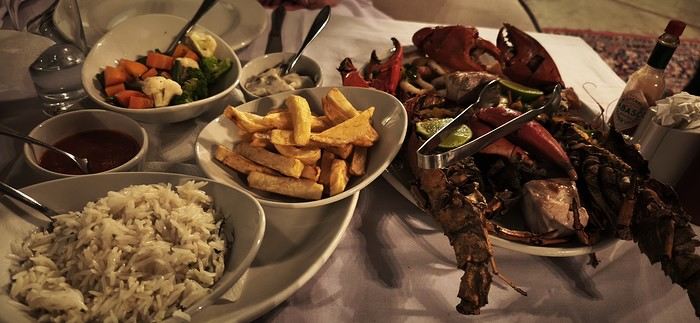
Our first night was at the Alexander Hotel. That evening, we treated ourselves to fish and shellfish at the hotel restaurant:
Sunday, February 22, 2026:
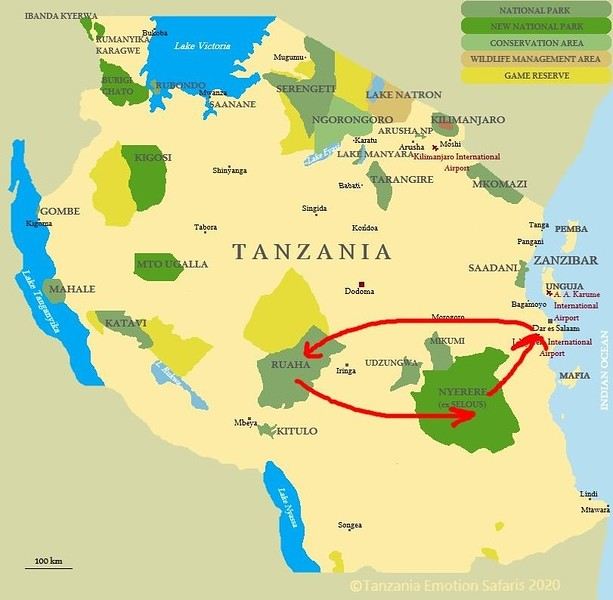
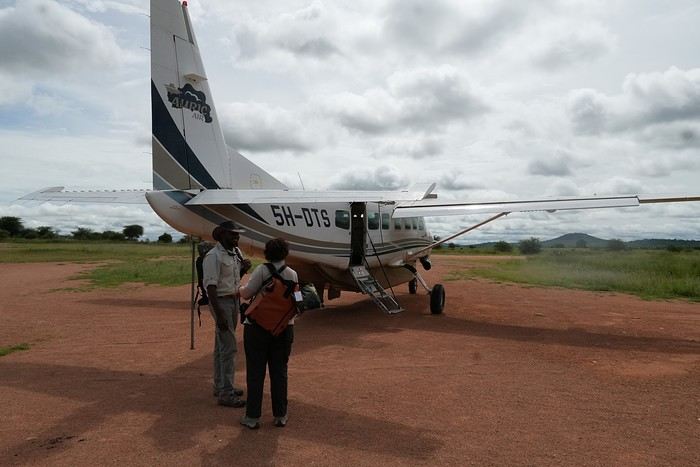
A driver picked us up at dawn to take us to the domestic airport so we could finally head to our first destination: Ruaha National Park. We flew with Auric.air for a 2-hour flight with two stops (Nyerere and Zkima airstrips).
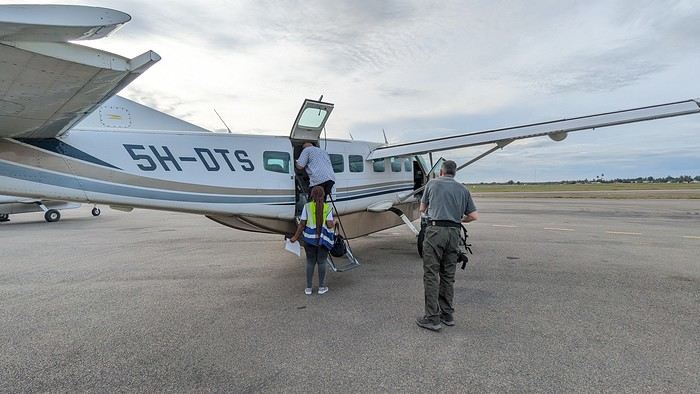
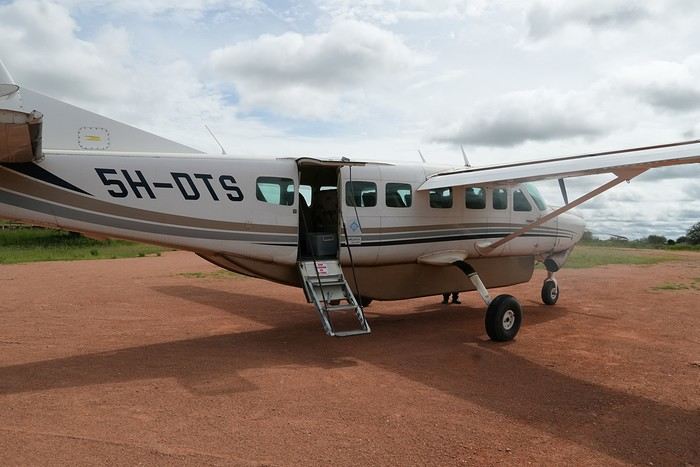
I’m always amazed at how easily these Cessnas take off and land on dirt runways—especially when they’re wet:
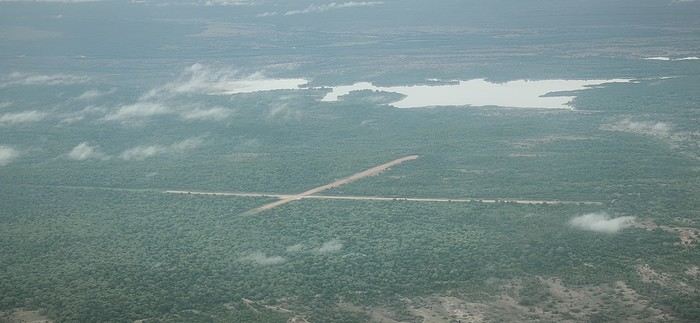
Aerial view of Zkima airstrip, where we’d landed just minutes earlier:
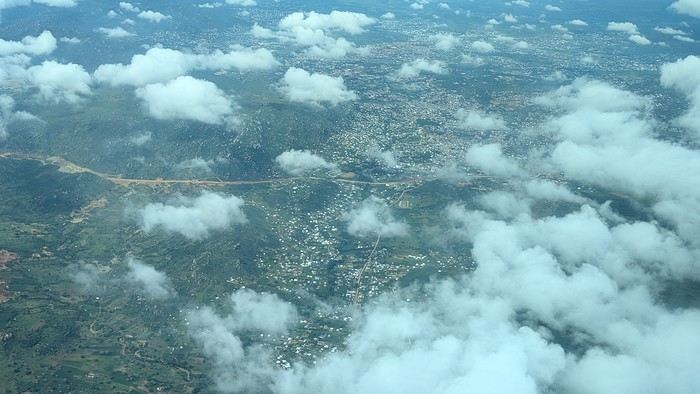
Flyover of Iringa, a "big" city in the country near Ruaha National Park:
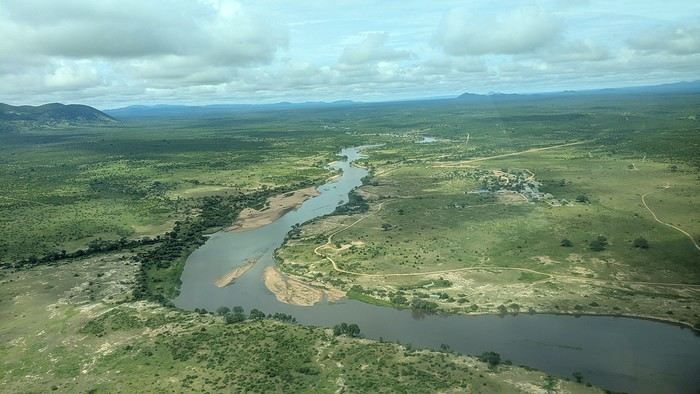
We’re getting close. The plane descends and flies over the Ruaha River, which gave the park its name:
We land for the third and final time that day, reaching our destination: Msembe airstrip, the gateway to Ruaha.
We got back from Tanzania a month ago, on March 5th. I’ve started this trip report at the link the moderator asked me to use:
https://voyageforum.com/forum/decouverte-ruaha-nyerere-ex-selous-en-fevrier-mars-2026-d11466010/
You’ll find a video of our trip on my YouTube channel there.
Now I’ll tell you about our 10-night trip in Tanzania, with 8 nights spent in two parks we didn’t know. Tanzania isn’t new to us—it was even our first African safari destination back in 2012. https://www.youtube.com/@lolodetoul54 Since then, we’ve visited several East and Southern African countries: Kenya, South Africa, Namibia, Botswana, some of them multiple times. We usually travel in September during the dry season. We tried March 2024 for nine nights in the Okavango and loved it, except everything was dry, which wasn’t normal for the rainy season.
So for this second March trip during the wet season, we really got what we asked for… rain. But before that, we had to fight just to get to Tanzania.
Saturday, February 21, 2026:
It’s D-Day—the departure. What a hassle to organize flights to and within Tanzania! I’ll tell you all about it in another post: https://voyageforum.com/forum/toutes-compagnies-aeriennes-tanzaniennes-interdites-d10758360/ On top of that, Rwandair canceled our outbound flight a month before departure. They offered to reschedule us 3-4 days later—ridiculous for a 10-night trip we’d already booked. We had to cancel our tickets and buy new ones with Kenya Airways. We’re still waiting for our refund from Rwandair!!!!!!! So on Saturday, February 1st, our bags were packed. We headed to the Lorraine TGV station, about 30 km from home.
Direct train to Roissy—just 1h15. Quick and efficient.
All that was left was to wait for our overnight flight. We took off on time, just before 11 PM. Smooth flight, nothing unusual. Arrived in Nairobi around 9 AM. A few hours’ wait, then a flight to Dar es Salaam, landing at our first destination around 12:45 PM.
Our local contact, Anne from Asanterra agency, picked us up at the airport. It was hot and humid—it was raining.Our first night was at the Alexander Hotel. That evening, we treated ourselves to fish and shellfish at the hotel restaurant:
Sunday, February 22, 2026:
A driver picked us up at dawn to take us to the domestic airport so we could finally head to our first destination: Ruaha National Park. We flew with Auric.air for a 2-hour flight with two stops (Nyerere and Zkima airstrips).
I’m always amazed at how easily these Cessnas take off and land on dirt runways—especially when they’re wet:
Aerial view of Zkima airstrip, where we’d landed just minutes earlier:
Flyover of Iringa, a "big" city in the country near Ruaha National Park:
We’re getting close. The plane descends and flies over the Ruaha River, which gave the park its name:
We land for the third and final time that day, reaching our destination: Msembe airstrip, the gateway to Ruaha.
What destination for a honeymoon by the sea and mountains?
Hello everyone,
Thanks for this amazing forum—I’ve spent hours browsing through it.
I’m reaching out to ask for your help as we’re looking for a destination for our honeymoon.
We never travel outside Europe, so we’re total newbies, but we want to treat ourselves for this special occasion.
Dates: June 23 → July 8 (possibly until July 12) Duration: 2 to 3 weeks Budget: Not really an issue for this trip
Our plan: - A seaside destination first and foremost, with beautiful beaches - We’d like to do some hiking or at least go on walks with scenic viewpoints - A relaxing trip with sunshine, lush greenery, and stunning landscapes - A safe destination
Our thoughts so far: - New Zealand: our dream, but it seems like the wrong time of year weather-wise ++ - Azores: ruled out due to unpredictable weather—what do you think? - Mauritius/Reunion combo: vetoed by my future wife ^^ - Seychelles: seems like it could work, but I’ve read about a few downsides (no shops to buy food, snorkeling not always amazing, occasional weather/tide issues making swimming tricky)
Other options: - French Polynesia: we’re really dreaming of it, but is 2 weeks too short for such a long trip? - Hawaii: same question—too far? - Sardinia?
Thanks so much for your help, and have a great weekend!
Blanche & Nicolas
Dates: June 23 → July 8 (possibly until July 12) Duration: 2 to 3 weeks Budget: Not really an issue for this trip
Our plan: - A seaside destination first and foremost, with beautiful beaches - We’d like to do some hiking or at least go on walks with scenic viewpoints - A relaxing trip with sunshine, lush greenery, and stunning landscapes - A safe destination
Our thoughts so far: - New Zealand: our dream, but it seems like the wrong time of year weather-wise ++ - Azores: ruled out due to unpredictable weather—what do you think? - Mauritius/Reunion combo: vetoed by my future wife ^^ - Seychelles: seems like it could work, but I’ve read about a few downsides (no shops to buy food, snorkeling not always amazing, occasional weather/tide issues making swimming tricky)
Other options: - French Polynesia: we’re really dreaming of it, but is 2 weeks too short for such a long trip? - Hawaii: same question—too far? - Sardinia?
Thanks so much for your help, and have a great weekend!
Blanche & Nicolas
Everest Base Camp & Gokyo Lakes Trek: Are guides absolutely mandatory?
Hi everyone,
We’re heading out in March for this trek. We’re used to hiking and long-distance treks, but this’ll be our first time in Nepal.
QUESTION: People from Nepal are telling us it’s MANDATORY to have guides! Is this true, or is it just agencies trying to get work for their staff?
The Lonely Planet says: "In April 2023, the government announced that every trekker would need to hire the services of a porter or a licensed guide to obtain the TIMS permit. The law isn’t enforced, and by 2025, there were no longer any obligations for teahouse treks."
What do you think? What’s your experience? Thanks for your feedback.
We’re heading out in March for this trek. We’re used to hiking and long-distance treks, but this’ll be our first time in Nepal.
QUESTION: People from Nepal are telling us it’s MANDATORY to have guides! Is this true, or is it just agencies trying to get work for their staff?
The Lonely Planet says: "In April 2023, the government announced that every trekker would need to hire the services of a porter or a licensed guide to obtain the TIMS permit. The law isn’t enforced, and by 2025, there were no longer any obligations for teahouse treks."
What do you think? What’s your experience? Thanks for your feedback.
Need advice to finalize Malaysia itinerary
Hey everyone,
I’m over in East Borneo in mid-July.
I’m struggling to wrap up the end of my itinerary, even though it’s pretty straightforward (long but simple).
Last year, we did Malaysia (KL and the mainland + around Kuching).
Day 1 – Arrive in Kota Kinabalu early, stroll around town and hit the must-sees. Day 2 – Excursion to Tunku Abdul Rahman Park, snorkeling at 3 islands. Day 3 – Hike around Mount Kinabalu without summiting (450 per person, no way). Day 4 – Poring Hot Springs + evening flight to Sandakan. Day 5-6-7 – Kinabatangan River (still looking for the right guide). Day 8 – Sepilok for the orangutans, the Sun Bear Centre, and Rainforest Discovery Centre. Day 9 – Selingan, turtle island. Day 10 – Head to Semporna. Day 11-12-13-14 – Sipadan, Mabul, Kapalai. Day 15 – Bohey Dulang. Day 16 to Day 25: I’M STUCK.
I looked into Danum Valley, but for 3 days/2 nights, they’re quoting 650 € per person—come on, that’s ridiculous. I checked out a detour into Indonesia (still East Borneo), but I’m having trouble deciding what would be amazing. I read about Sangalaki + Kakaban (2 islands, 1 base) / Mahakam Delta - Kutai (orangutans and river) / Sungai Boh (Dayak Kayan) – jungle & culture. But honestly, I’m struggling to finalize this itinerary. If we venture that way, we’d head back to KK from Balikpapan.
What do you all think? Thanks in advance!
Day 1 – Arrive in Kota Kinabalu early, stroll around town and hit the must-sees. Day 2 – Excursion to Tunku Abdul Rahman Park, snorkeling at 3 islands. Day 3 – Hike around Mount Kinabalu without summiting (450 per person, no way). Day 4 – Poring Hot Springs + evening flight to Sandakan. Day 5-6-7 – Kinabatangan River (still looking for the right guide). Day 8 – Sepilok for the orangutans, the Sun Bear Centre, and Rainforest Discovery Centre. Day 9 – Selingan, turtle island. Day 10 – Head to Semporna. Day 11-12-13-14 – Sipadan, Mabul, Kapalai. Day 15 – Bohey Dulang. Day 16 to Day 25: I’M STUCK.
I looked into Danum Valley, but for 3 days/2 nights, they’re quoting 650 € per person—come on, that’s ridiculous. I checked out a detour into Indonesia (still East Borneo), but I’m having trouble deciding what would be amazing. I read about Sangalaki + Kakaban (2 islands, 1 base) / Mahakam Delta - Kutai (orangutans and river) / Sungai Boh (Dayak Kayan) – jungle & culture. But honestly, I’m struggling to finalize this itinerary. If we venture that way, we’d head back to KK from Balikpapan.
What do you all think? Thanks in advance!
Feedback on 1-month China itinerary
Hi there,
I’d love to get some feedback on our 30-day / 29-night itinerary in China. We’ll be there in September as a family with two kids (6 and 10 years old). Do you think I should cut a few nights between Wulingyuan (Avatar Mountain) and Yangshuo? I’ve planned 15 nights total there. We’ll be on a round-the-world trip starting May 2026 and will need to do schoolwork with the kids. Hoping to fit it in during train rides!! Ever since I started planning this China itinerary, I’ve been discovering completely mind-blowing places I’d never heard of before—30 days feels way too short for China!!!
Here’s our itinerary:
Beijing - 4 nights Forbidden City Great Wall of China Temple of Heaven
Xi’an - 3 nights Terracotta Army Muslim Quarter & Great Mosque
Chengdu - 3 nights Zoo - Research Base of Giant Panda Breeding Wenshu Yuan Temple
Wulingyuan (Avatar Mountain) - 3 nights "Avatar Mountains"
Zhangjiajie - 2 nights Tianmen Mountain
Furong Town - 2 nights
Fenghuang - 2 nights
Guilin - 2 nights Chuanshan Park Guilin Yaoshan Scenic Attraction Reed Flute Cave
Yangshuo - 4 nights Biking along the Yulong River Moon Hill Ruyi Peak Xianggong Hill
Shanghai - 4 nights Shanghai Disneyland Yu Garden / Yuyuan Garden Yuyuan Bazaar
Thanks! Cédric
I’d love to get some feedback on our 30-day / 29-night itinerary in China. We’ll be there in September as a family with two kids (6 and 10 years old). Do you think I should cut a few nights between Wulingyuan (Avatar Mountain) and Yangshuo? I’ve planned 15 nights total there. We’ll be on a round-the-world trip starting May 2026 and will need to do schoolwork with the kids. Hoping to fit it in during train rides!! Ever since I started planning this China itinerary, I’ve been discovering completely mind-blowing places I’d never heard of before—30 days feels way too short for China!!!
Here’s our itinerary:
Beijing - 4 nights Forbidden City Great Wall of China Temple of Heaven
Xi’an - 3 nights Terracotta Army Muslim Quarter & Great Mosque
Chengdu - 3 nights Zoo - Research Base of Giant Panda Breeding Wenshu Yuan Temple
Wulingyuan (Avatar Mountain) - 3 nights "Avatar Mountains"
Zhangjiajie - 2 nights Tianmen Mountain
Furong Town - 2 nights
Fenghuang - 2 nights
Guilin - 2 nights Chuanshan Park Guilin Yaoshan Scenic Attraction Reed Flute Cave
Yangshuo - 4 nights Biking along the Yulong River Moon Hill Ruyi Peak Xianggong Hill
Shanghai - 4 nights Shanghai Disneyland Yu Garden / Yuyuan Garden Yuyuan Bazaar
Thanks! Cédric
Waterways Around the World: January 2026 Photo Contest
The first theme of 2026 is:
"Waterways Around the World".
Water is present almost everywhere on our blue planet, so I’ve narrowed the theme down to waterways—rivers, streams, brooks, and the like.
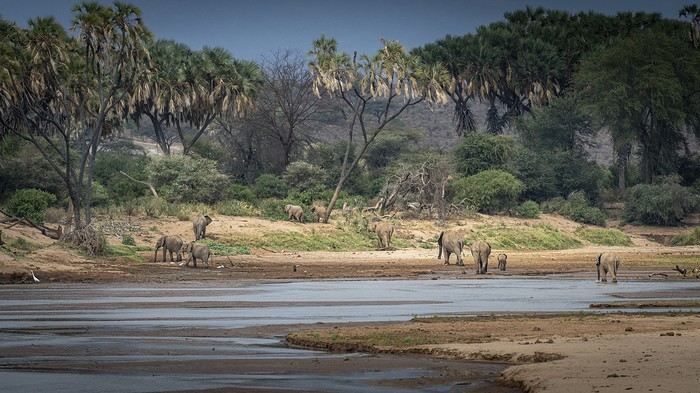
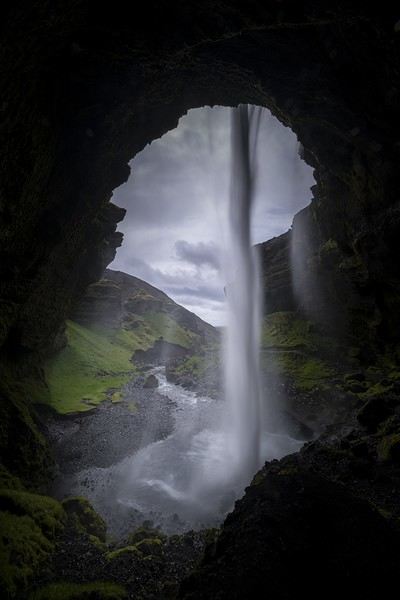
Seas, oceans, lakes, or other stagnant waters won’t be considered for this month’s theme 😅. However, waterfalls and cascades are very welcome 😊!
Practical details:
**Participation** Each VF member can submit up to 3 photos, until Sunday, January 25th at 11:59 PM Paris time. Each photo must be posted in a separate message, with its number (1, 2, or 3). Don’t forget to add a little explanation (commentary, location, etc.).
**Voting** Each VF member can vote for the 3 photos they consider the best, based on their own criteria and the theme.
Voting will take place from Monday, January 26th to Saturday, January 31st at 11:59 PM Paris time.
Photos should be ranked in order of preference: - 1st photo: 3 points - 2nd photo: 2 points - 3rd photo: 1 point
The winner is the photographer whose photo receives the most points.
Results will be published on February 1st. In case of a tie, the number of first-place votes will decide. The winner will have the honor of organizing February 2026’s contest.
Photos that have already been nominated (1st, 2nd, or 3rd place) in another contest are not eligible to participate in this one.
This thread is exclusively for contest photo submissions. All discussions, comments, and chit-chat should take place in the thread: here
Water is present almost everywhere on our blue planet, so I’ve narrowed the theme down to waterways—rivers, streams, brooks, and the like.
Seas, oceans, lakes, or other stagnant waters won’t be considered for this month’s theme 😅. However, waterfalls and cascades are very welcome 😊!
Practical details:
**Participation** Each VF member can submit up to 3 photos, until Sunday, January 25th at 11:59 PM Paris time. Each photo must be posted in a separate message, with its number (1, 2, or 3). Don’t forget to add a little explanation (commentary, location, etc.).
**Voting** Each VF member can vote for the 3 photos they consider the best, based on their own criteria and the theme.
Voting will take place from Monday, January 26th to Saturday, January 31st at 11:59 PM Paris time.
Photos should be ranked in order of preference: - 1st photo: 3 points - 2nd photo: 2 points - 3rd photo: 1 point
The winner is the photographer whose photo receives the most points.
Results will be published on February 1st. In case of a tie, the number of first-place votes will decide. The winner will have the honor of organizing February 2026’s contest.
Photos that have already been nominated (1st, 2nd, or 3rd place) in another contest are not eligible to participate in this one.
This thread is exclusively for contest photo submissions. All discussions, comments, and chit-chat should take place in the thread: here
Sarek / Padjelanta / Stora: Which treks and easy summits in summer?
Hello,
I’m looking for a trek itinerary for two people in Sweden—something authentic, varied, and spectacular (transport from Stockholm). My partner and I have experience in Norway (Dovrefjell and Jotunheimen) and would love to explore Sweden’s landscapes. Naturally, I’ve been considering the Sarek / Padjelanta / Stora Sjöfallet area. I haven’t decided on a specific destination yet, so I have a few questions and would love input from experienced travelers.
- Which region of Sweden should be a priority if we love mountains?
- Starting in mid-July, which summits in the Sarek / Padjelanta / Stora area are interesting and accessible without gear (crampons, rope, ice axe)? We have solid mountaineering experience and want to gain elevation without overloading our packs. Ideally, summits without crevassed glacier crossings and minimal technical climbing (easy scrambling).
- How many days does it take to complete the north-to-south traverse of Sarek?
Thanks for your tips and ideas! :)
I’m looking for a trek itinerary for two people in Sweden—something authentic, varied, and spectacular (transport from Stockholm). My partner and I have experience in Norway (Dovrefjell and Jotunheimen) and would love to explore Sweden’s landscapes. Naturally, I’ve been considering the Sarek / Padjelanta / Stora Sjöfallet area. I haven’t decided on a specific destination yet, so I have a few questions and would love input from experienced travelers.
- Which region of Sweden should be a priority if we love mountains?
- Starting in mid-July, which summits in the Sarek / Padjelanta / Stora area are interesting and accessible without gear (crampons, rope, ice axe)? We have solid mountaineering experience and want to gain elevation without overloading our packs. Ideally, summits without crevassed glacier crossings and minimal technical climbing (easy scrambling).
- How many days does it take to complete the north-to-south traverse of Sarek?
Thanks for your tips and ideas! :)
First family trip to Thailand
Hi there,
We’re planning a trip to Thailand with my husband and our two 7-year-old kids. Three weeks in February/March. Our rough itinerary is: arriving in Bangkok for 3-4 days, then Chiang Mai and the surrounding area, and finally an island in the south.
-We land in Bangkok around 7 AM. Any hotel recommendations? We’d love to rest right after we arrive. Budget is around 40 € per night.
For the rest, I’m open to any tips or suggestions:
-Accommodation in Chiang Mai, and maybe a night in an elephant sanctuary park...
-Should we take the overnight train to Chiang Mai on the way there or on the way back?
-Which island should we choose?
We love authentic experiences and connecting with locals...
Thanks so much!!!
Elodie.
We’re planning a trip to Thailand with my husband and our two 7-year-old kids. Three weeks in February/March. Our rough itinerary is: arriving in Bangkok for 3-4 days, then Chiang Mai and the surrounding area, and finally an island in the south.
-We land in Bangkok around 7 AM. Any hotel recommendations? We’d love to rest right after we arrive. Budget is around 40 € per night.
For the rest, I’m open to any tips or suggestions:
-Accommodation in Chiang Mai, and maybe a night in an elephant sanctuary park...
-Should we take the overnight train to Chiang Mai on the way there or on the way back?
-Which island should we choose?
We love authentic experiences and connecting with locals...
Thanks so much!!!
Elodie.
15-Day Road Trip Recap: Colorado and New Mexico
Hello, here’s a totally subjective recap of our 15-day road trip between Colorado and New Mexico, from late September to mid-October.
Our main interests are culture, museums, and landscapes—no hiking or trails for us. Personally, I’m pretty contemplative, and luckily, there’s always something to see out there! We’re pretty used to the US; we’ve been going there often for a long time (let’s just say we’re not exactly young anymore).
Budget: Even though we don’t set a strict budget beforehand, we try to keep costs as low as possible. This time, we managed to spend around 4000 € for two, all included. To do this: avoid expensive accommodations, staying between 60 and 120 € per night with an average of 90 €/night, mixing Airbnb and motels. And skip the “real” restaurants, which are pretty pricey in the US: sandwiches for lunch, takeout or cooking in the Airbnb in the evening. We shop at Sprouts or Whole Foods—organic-style chains that are pricier than Walmart but better. In the evenings, Sprouts has discounts on items that didn’t sell during the day. Also, avoid toll roads, paid parking, and overly expensive attractions or sites. The dispensary budget is separate…
Route: Denver/Colorado Springs/Alamosa/Raton/Santa Fe/Cuba/Cortez/Grand Junction/Glenwood Springs/Denver This wasn’t too planned in advance—we booked a few nights upon arrival and went with the flow. Flight from CDG to Denver with AF/Delta, car rental at Dollar for a standard SUV. The guy at the Dollar counter upsold me on extra insurance for flat tires (and since I knew we’d be off-roading, I took it). Without telling me, he upgraded me to a Jeep Sahara 4X4 Hybrid. Nice.
Listening to the news upon arrival, the anchor announced, “It’s officially fall now.” We hadn’t really thought about that before leaving, but yeah—it’s the time when the trees turn fluorescent yellow and red. Amazing.
Colorado Springs: Garden of the Gods is a free park with paved trails winding through red/orange rock formations. Magical at sunrise—groups of deer roam around, along with birds and rabbits. It’s small but wow! Didn’t try the Manitou Incline in Manitou Springs, a staircase with thousands of steps going straight up the mountain. Impressive from the bottom, but the parking is paid, which is a downside for those willing to tackle it. The Cog Railway goes up to the summit of Pikes Peak—around $100 when we were there. No thanks. And of course, the parking is paid too. For fans, Maggie’s Farm dispensary is great.
On Route 24, Eleven Mile Canyon Recreation Area is fly-fishing paradise—just like in the movie *A River Runs Through It*. Entry is $11, and a trail follows the river at the bottom of the canyon to the dam. Dozens of people in waders are in the water, casting their lines over and over. You can see the salmon in the clear water, and we had a picnic in the sun, imagining Brad Pitt catching a fish.
Buena Vista: A cute little tourist town with an Outdoor Fair that day—some pretty impressive vehicles for sale, set up for mountain living (like Juniper outfitting a RAM).
Alamosa: The closest town to Great Sand Dunes National Park, crossed by the Rio Grande (and let’s be real—it’s more of a stream than a river!). Park access was free because it was National Park Day. A park with massive dunes—climbing them is pretty exhausting, with lots of wind and sinking sand. Glad we didn’t do it in summer; I can’t imagine how tough it’d be in the heat. It’s a bit deceptive: it looks easy to get to the top of a dune, but it’s really not. The campsites were nice, and it was busy that weekend. We passed the “Point of No Return,” a sandy trail winding through the hills and connecting to Route 559 from above. Didn’t go all the way, but it’s possible the entrance is free from that side. However, you need a 4X4 with good ground clearance. After 1 or 2 km on the trail, you’re alone between the dunes and hills—hardly anyone around. But tricky to turn around or pass other vehicles; the trail isn’t wide. We crossed paths with a Hanomag (registered in the Netherlands—impressive!) coming down without stopping, or risking getting stuck.
On the way out, we took the small Route 403, which quickly turns into a trail crossing the mountain. Entire sections of forest were turning fluorescent yellow with patches of green and red—an incredible sight.
Raton: A small town that probably peaked in the late 19th century and has been in slow decline ever since. The Raton Pass Motor Inn is the kind of place that makes the US legendary—entirely 50s and 60s decor, really well done. I had the Betty Page room—too cool. Felt like we were on Route 66. Even better.
Santa Fe: A small city with no high-rises—almost all low-rise buildings, many in adobe, blending perfectly into the landscape. The old downtown is touristy but nice, with its plaza and church. There’s a really cool vibe—we loved it. For drinks, the bar at the top of La Fonda Hotel was packed for sunset, with a diverse crowd. Not overpriced for the location. SITE Santa Fe is a contemporary art space near the train station. It’s free, and the temporary exhibit was really good—high quality. Museum Hill is, as the name suggests, where several museums are located. We visited the Museum of Indian Art and Culture—great if you’re into “First Nations” history. Saw The Dandy Warhols at The Bridge—an outdoor venue, one of the last concerts of the season before winter makes it too cold. Oddly, there was no bag check, just an ID required (even though it was obvious we were over 21!). Tickets were reasonable, around $30 (concerts in the US can be crazy expensive). The band was good, with fewer than 300 people in front. A sign at the bar warned: Don’t forget you’re at 1,500 meters—alcohol hits harder up here!
Albuquerque: A sprawling city with an old historic center that feels a bit like Disneyland—too perfect for my taste. The real highlight is the Sandia Peak Tramway, which goes up to the old ski resort above the city. Tickets are around $35, and it’s worth it—the ride over the canyons is pretty wild. The ski resort is a bit abandoned; apparently, like elsewhere, there’s no snow anymore. I asked several people about the lack of snow, and the answer was always the same: “It’s cyclical.” Okay then. We arrived for the start of the International Balloon Fiesta (one of the world’s largest hot-air balloon gatherings), hoping to see hundreds of balloons in the sky. Nope—windy today, so no one took off. Bummer.
Las Vegas: New Mexico has its own Las Vegas, but it’s nothing like the other one—a sleepy little town with a perfectly preserved 19th-century Historic Plaza Hotel, brick buildings, and vintage streetlights. Everything is so well-preserved it’s often used as a filming location. NM attracts a lot of productions thanks to tax incentives and its Western landscapes—and it’s cheaper than California! That day, a huge Texas flag was flying in the wind: they were filming the second season of *Ransom Canyon* for Netflix in the town center. If we’d been dressed more “Western,” we could’ve been extras.
Jemez Springs: Its Jemez Hot Springs is super cute—several thermal pools at different temperatures, a New Age vibe. The pools are surrounded by big rocks, and you’re asked to speak softly. A place where you could spend hours. $50 for two hours for two.
Los Alamos: A town made legendary by the bomb, the movie, etc. Heads up: It’s still a research center, and to cross part of the town, you need to show ID. No stopping or taking photos allowed. Other than the Oppenheimer House (currently closed—only the neighboring house is open to visitors), there’s not much to see. There’s a replica of the camp entrance, but it’s been turned into restrooms.
Georgia O’Keeffe Trail (American painter, 1887–1986): Her museum in Santa Fe is pretty good, even if they don’t have tons of works. Entry is $20. Her house in Abiquiu is open for visits, but it’s way overpriced at $65. So we skipped it. You can get an idea of it by stopping at the Welcome Center on Route 84. Further down the same road, Ghost Ranch is worth a visit—beautiful setting, free to enter, with trails to explore and a great atmosphere.
Chaco Culture National Historical Park: A pretty isolated park—25 km of trails to get there, with only a small section paved. The road is decent except for the last few kilometers, which have potholes. I can’t imagine it being accessible after rain, though that doesn’t happen often! This park, in the middle of a desert plain with a few canyons, is one of the rare places where you can find multi-story structures from pre-Columbian civilizations—so, before the “current” tribes. But cruel disappointment: it’s been shut down for a few days. We met a Native ranger—tall, with long hair—who explained that even though he wasn’t being paid, he was still guarding the park and had closed all access to the sites. Darn. Turned around and headed back down the trail.
Same story in the next town, Aztec (a funny name, right?): Aztec Ruins National Monument was closed too.
We passed Ship Rock, the Navajo’s sacred mountain—really impressive. Couldn’t find a trail to get closer, but it’s better from a distance anyway! The town of Shiprock itself is pretty depressing—poor living conditions for some Natives, with rundown mobile homes and piles of junk cars.
Stopped in Cortez to visit Mesa Verde National Park. Ate at Denny’s—hadn’t been there in ages (though it’s the kind of place I should feel at home in!). The customers all looked like they’d stepped out of *The Addams Family*—a little creepy. Or funny, depending on your perspective. For Mesa Verde, after discussing it on this forum with the honorable member Caussat (who didn’t find it that amazing), we were on the fence. Problem solved: it was closed too. Back on the road.
Durango: Really nice with its Main Ave and its shops, cafés—touristy but with local life. Famous for its tourist train to Silverton, but we didn’t do it—way too expensive. Choice between a steam locomotive or diesel (which belches black, stinky smoke—yuck). The diesel should be replaced with electric as soon as they get the funds.
Million Dollar Highway: The road winds through the mountains, and every turn (and there are a lot) is breathtaking—unbelievable landscapes with fluorescent yellow, green, and snow-capped mountains. Just wow.
Silverton: A Western town nestled between two mountains, preserved in its original state despite the tourists arriving by train. Around it, abandoned mines and old wooden ties—must’ve been tough for the 19th-century miners.
Grand Junction: The city is surrounded by giant mesas—pretty impressive. The old downtown is *too* clean—almost sterile.
Colorado National Monument: Just outside the city, a winding road climbs between stunning canyons, with sweeping views of the valley. Entry was free that day due to the shutdown.
Route 330, which we took to get back to the highway, passes through a place called “Cowboy Country”—and it’s true. We saw guys in Stetsons with huge pickups, the road turned into a trail with cows wandering on it, and we had to honk to get them to move. The trail to I-70 was full of potholes—the 4X4 came in handy. Had a picnic by Vega Reservoir: the booth at the entrance was empty, but people left cash in envelopes for camping fees. Anyone passing by could’ve taken it, but it’s an example of US trust and honesty!
Glenwood Springs: A small town famous for its hot springs pool—they claim it’s the largest in the world. I don’t know about that, but it has a great look. Unfortunately, it was closed for maintenance those days! Blew our budget by staying at the Hotel Colorado, a huge 1893 building with a real atmosphere in its grand lobby and fake fireplaces. Fire pits in front of wooden chairs in the garden with mountain views—just really great.
Aspen: The billionaires’ ski resort, but surprisingly, parking was free for 2 hours. Rare to see a place for the super-rich that doesn’t scream “not for you” (like Palm Beach, for example). A former mining town completely redone, every shop occupied by a luxury brand. There’s even a thrift shop run by sweet retirees—funny as hell. Two ski lifts to start directly with your skis, but we didn’t see the price—they were still closed. Lots of houses that aren’t huge but are cute, though looking at real estate prices made us think, “Is there an extra zero on that listing?” A 6-bedroom villa for $52 million? Wow. The mountains around are gorgeous—no wonder it became what it is.
Another fancy resort nearby: Vail, more modern in its construction. The restaurants opted for a “Schwarzwald” decor—kind of odd.
Denver: Nothing really stood out for us in this city, except the Design Museum—the Kirkland, where a local painter collected furniture and supplies from Arts and Crafts to Postmodern. Just really great. Entry is included with a visit to the Denver Art Museum, which has diverse collections—from Impressionism (they have a Manet, a Van Gogh, a Cézanne, several Sisleys) to photography. The best part for me was the “Ancient Americas” totems—huge, impressive wooden sculptures, painted, the kind you’re more used to seeing in Polynesia or Easter Island. Personally, I didn’t know Natives made them too. That’s what museums are for!
Back at the airport, where I had to tag my own luggage (you have to do everything yourself with these US airlines). The tag said SLC/CDG! But we were supposed to connect through JFK. Turns out, they’d put us on a DEN/SLC/CDG flight without telling us. In the end, we gained 30 minutes on our original arrival time in Paris!
There you go—hope this inspires other travelers! !
Our main interests are culture, museums, and landscapes—no hiking or trails for us. Personally, I’m pretty contemplative, and luckily, there’s always something to see out there! We’re pretty used to the US; we’ve been going there often for a long time (let’s just say we’re not exactly young anymore).
Budget: Even though we don’t set a strict budget beforehand, we try to keep costs as low as possible. This time, we managed to spend around 4000 € for two, all included. To do this: avoid expensive accommodations, staying between 60 and 120 € per night with an average of 90 €/night, mixing Airbnb and motels. And skip the “real” restaurants, which are pretty pricey in the US: sandwiches for lunch, takeout or cooking in the Airbnb in the evening. We shop at Sprouts or Whole Foods—organic-style chains that are pricier than Walmart but better. In the evenings, Sprouts has discounts on items that didn’t sell during the day. Also, avoid toll roads, paid parking, and overly expensive attractions or sites. The dispensary budget is separate…
Route: Denver/Colorado Springs/Alamosa/Raton/Santa Fe/Cuba/Cortez/Grand Junction/Glenwood Springs/Denver This wasn’t too planned in advance—we booked a few nights upon arrival and went with the flow. Flight from CDG to Denver with AF/Delta, car rental at Dollar for a standard SUV. The guy at the Dollar counter upsold me on extra insurance for flat tires (and since I knew we’d be off-roading, I took it). Without telling me, he upgraded me to a Jeep Sahara 4X4 Hybrid. Nice.
Listening to the news upon arrival, the anchor announced, “It’s officially fall now.” We hadn’t really thought about that before leaving, but yeah—it’s the time when the trees turn fluorescent yellow and red. Amazing.
Colorado Springs: Garden of the Gods is a free park with paved trails winding through red/orange rock formations. Magical at sunrise—groups of deer roam around, along with birds and rabbits. It’s small but wow! Didn’t try the Manitou Incline in Manitou Springs, a staircase with thousands of steps going straight up the mountain. Impressive from the bottom, but the parking is paid, which is a downside for those willing to tackle it. The Cog Railway goes up to the summit of Pikes Peak—around $100 when we were there. No thanks. And of course, the parking is paid too. For fans, Maggie’s Farm dispensary is great.
On Route 24, Eleven Mile Canyon Recreation Area is fly-fishing paradise—just like in the movie *A River Runs Through It*. Entry is $11, and a trail follows the river at the bottom of the canyon to the dam. Dozens of people in waders are in the water, casting their lines over and over. You can see the salmon in the clear water, and we had a picnic in the sun, imagining Brad Pitt catching a fish.
Buena Vista: A cute little tourist town with an Outdoor Fair that day—some pretty impressive vehicles for sale, set up for mountain living (like Juniper outfitting a RAM).
Alamosa: The closest town to Great Sand Dunes National Park, crossed by the Rio Grande (and let’s be real—it’s more of a stream than a river!). Park access was free because it was National Park Day. A park with massive dunes—climbing them is pretty exhausting, with lots of wind and sinking sand. Glad we didn’t do it in summer; I can’t imagine how tough it’d be in the heat. It’s a bit deceptive: it looks easy to get to the top of a dune, but it’s really not. The campsites were nice, and it was busy that weekend. We passed the “Point of No Return,” a sandy trail winding through the hills and connecting to Route 559 from above. Didn’t go all the way, but it’s possible the entrance is free from that side. However, you need a 4X4 with good ground clearance. After 1 or 2 km on the trail, you’re alone between the dunes and hills—hardly anyone around. But tricky to turn around or pass other vehicles; the trail isn’t wide. We crossed paths with a Hanomag (registered in the Netherlands—impressive!) coming down without stopping, or risking getting stuck.
On the way out, we took the small Route 403, which quickly turns into a trail crossing the mountain. Entire sections of forest were turning fluorescent yellow with patches of green and red—an incredible sight.
Raton: A small town that probably peaked in the late 19th century and has been in slow decline ever since. The Raton Pass Motor Inn is the kind of place that makes the US legendary—entirely 50s and 60s decor, really well done. I had the Betty Page room—too cool. Felt like we were on Route 66. Even better.
Santa Fe: A small city with no high-rises—almost all low-rise buildings, many in adobe, blending perfectly into the landscape. The old downtown is touristy but nice, with its plaza and church. There’s a really cool vibe—we loved it. For drinks, the bar at the top of La Fonda Hotel was packed for sunset, with a diverse crowd. Not overpriced for the location. SITE Santa Fe is a contemporary art space near the train station. It’s free, and the temporary exhibit was really good—high quality. Museum Hill is, as the name suggests, where several museums are located. We visited the Museum of Indian Art and Culture—great if you’re into “First Nations” history. Saw The Dandy Warhols at The Bridge—an outdoor venue, one of the last concerts of the season before winter makes it too cold. Oddly, there was no bag check, just an ID required (even though it was obvious we were over 21!). Tickets were reasonable, around $30 (concerts in the US can be crazy expensive). The band was good, with fewer than 300 people in front. A sign at the bar warned: Don’t forget you’re at 1,500 meters—alcohol hits harder up here!
Albuquerque: A sprawling city with an old historic center that feels a bit like Disneyland—too perfect for my taste. The real highlight is the Sandia Peak Tramway, which goes up to the old ski resort above the city. Tickets are around $35, and it’s worth it—the ride over the canyons is pretty wild. The ski resort is a bit abandoned; apparently, like elsewhere, there’s no snow anymore. I asked several people about the lack of snow, and the answer was always the same: “It’s cyclical.” Okay then. We arrived for the start of the International Balloon Fiesta (one of the world’s largest hot-air balloon gatherings), hoping to see hundreds of balloons in the sky. Nope—windy today, so no one took off. Bummer.
Las Vegas: New Mexico has its own Las Vegas, but it’s nothing like the other one—a sleepy little town with a perfectly preserved 19th-century Historic Plaza Hotel, brick buildings, and vintage streetlights. Everything is so well-preserved it’s often used as a filming location. NM attracts a lot of productions thanks to tax incentives and its Western landscapes—and it’s cheaper than California! That day, a huge Texas flag was flying in the wind: they were filming the second season of *Ransom Canyon* for Netflix in the town center. If we’d been dressed more “Western,” we could’ve been extras.
Jemez Springs: Its Jemez Hot Springs is super cute—several thermal pools at different temperatures, a New Age vibe. The pools are surrounded by big rocks, and you’re asked to speak softly. A place where you could spend hours. $50 for two hours for two.
Los Alamos: A town made legendary by the bomb, the movie, etc. Heads up: It’s still a research center, and to cross part of the town, you need to show ID. No stopping or taking photos allowed. Other than the Oppenheimer House (currently closed—only the neighboring house is open to visitors), there’s not much to see. There’s a replica of the camp entrance, but it’s been turned into restrooms.
Georgia O’Keeffe Trail (American painter, 1887–1986): Her museum in Santa Fe is pretty good, even if they don’t have tons of works. Entry is $20. Her house in Abiquiu is open for visits, but it’s way overpriced at $65. So we skipped it. You can get an idea of it by stopping at the Welcome Center on Route 84. Further down the same road, Ghost Ranch is worth a visit—beautiful setting, free to enter, with trails to explore and a great atmosphere.
Chaco Culture National Historical Park: A pretty isolated park—25 km of trails to get there, with only a small section paved. The road is decent except for the last few kilometers, which have potholes. I can’t imagine it being accessible after rain, though that doesn’t happen often! This park, in the middle of a desert plain with a few canyons, is one of the rare places where you can find multi-story structures from pre-Columbian civilizations—so, before the “current” tribes. But cruel disappointment: it’s been shut down for a few days. We met a Native ranger—tall, with long hair—who explained that even though he wasn’t being paid, he was still guarding the park and had closed all access to the sites. Darn. Turned around and headed back down the trail.
Same story in the next town, Aztec (a funny name, right?): Aztec Ruins National Monument was closed too.
We passed Ship Rock, the Navajo’s sacred mountain—really impressive. Couldn’t find a trail to get closer, but it’s better from a distance anyway! The town of Shiprock itself is pretty depressing—poor living conditions for some Natives, with rundown mobile homes and piles of junk cars.
Stopped in Cortez to visit Mesa Verde National Park. Ate at Denny’s—hadn’t been there in ages (though it’s the kind of place I should feel at home in!). The customers all looked like they’d stepped out of *The Addams Family*—a little creepy. Or funny, depending on your perspective. For Mesa Verde, after discussing it on this forum with the honorable member Caussat (who didn’t find it that amazing), we were on the fence. Problem solved: it was closed too. Back on the road.
Durango: Really nice with its Main Ave and its shops, cafés—touristy but with local life. Famous for its tourist train to Silverton, but we didn’t do it—way too expensive. Choice between a steam locomotive or diesel (which belches black, stinky smoke—yuck). The diesel should be replaced with electric as soon as they get the funds.
Million Dollar Highway: The road winds through the mountains, and every turn (and there are a lot) is breathtaking—unbelievable landscapes with fluorescent yellow, green, and snow-capped mountains. Just wow.
Silverton: A Western town nestled between two mountains, preserved in its original state despite the tourists arriving by train. Around it, abandoned mines and old wooden ties—must’ve been tough for the 19th-century miners.
Grand Junction: The city is surrounded by giant mesas—pretty impressive. The old downtown is *too* clean—almost sterile.
Colorado National Monument: Just outside the city, a winding road climbs between stunning canyons, with sweeping views of the valley. Entry was free that day due to the shutdown.
Route 330, which we took to get back to the highway, passes through a place called “Cowboy Country”—and it’s true. We saw guys in Stetsons with huge pickups, the road turned into a trail with cows wandering on it, and we had to honk to get them to move. The trail to I-70 was full of potholes—the 4X4 came in handy. Had a picnic by Vega Reservoir: the booth at the entrance was empty, but people left cash in envelopes for camping fees. Anyone passing by could’ve taken it, but it’s an example of US trust and honesty!
Glenwood Springs: A small town famous for its hot springs pool—they claim it’s the largest in the world. I don’t know about that, but it has a great look. Unfortunately, it was closed for maintenance those days! Blew our budget by staying at the Hotel Colorado, a huge 1893 building with a real atmosphere in its grand lobby and fake fireplaces. Fire pits in front of wooden chairs in the garden with mountain views—just really great.
Aspen: The billionaires’ ski resort, but surprisingly, parking was free for 2 hours. Rare to see a place for the super-rich that doesn’t scream “not for you” (like Palm Beach, for example). A former mining town completely redone, every shop occupied by a luxury brand. There’s even a thrift shop run by sweet retirees—funny as hell. Two ski lifts to start directly with your skis, but we didn’t see the price—they were still closed. Lots of houses that aren’t huge but are cute, though looking at real estate prices made us think, “Is there an extra zero on that listing?” A 6-bedroom villa for $52 million? Wow. The mountains around are gorgeous—no wonder it became what it is.
Another fancy resort nearby: Vail, more modern in its construction. The restaurants opted for a “Schwarzwald” decor—kind of odd.
Denver: Nothing really stood out for us in this city, except the Design Museum—the Kirkland, where a local painter collected furniture and supplies from Arts and Crafts to Postmodern. Just really great. Entry is included with a visit to the Denver Art Museum, which has diverse collections—from Impressionism (they have a Manet, a Van Gogh, a Cézanne, several Sisleys) to photography. The best part for me was the “Ancient Americas” totems—huge, impressive wooden sculptures, painted, the kind you’re more used to seeing in Polynesia or Easter Island. Personally, I didn’t know Natives made them too. That’s what museums are for!
Back at the airport, where I had to tag my own luggage (you have to do everything yourself with these US airlines). The tag said SLC/CDG! But we were supposed to connect through JFK. Turns out, they’d put us on a DEN/SLC/CDG flight without telling us. In the end, we gained 30 minutes on our original arrival time in Paris!
There you go—hope this inspires other travelers! !
Your recommendations for the Eastern Cape
Hello,
We’re planning our second trip to South Africa in July 2026. In 2023, we did a loop from Joburg, Golden Gate, Drakensberg, Hluhluwe, St Lucia, Eswatini, Kruger, Blyde River Canyon, and back to Joburg. This time, we’d like to go to Cape Town and do a road trip to Port Elizabeth, then fly back to Joburg to return to Kruger. At this stage of my planning, here’s what it could look like:
D1 to D4: Cape Town and Cape of Good Hope (Table Mountain, Lion’s Head, Waterfront, Bo-Kaap, Boulders, Cape Point, Chapman’s Peak Drive). I’ve spotted a few places to stay between Camps Bay and Hout Bay (3 nights). D5 and D6: Either Karoo NP or Hermanus and De Hoop. Any opinions to tip the scales? I’ll admit I’m already leaning toward Karoo (the "wild" vibe of the landscapes and wildlife encounters appeal to me much more than the seaside, which feels less exotic). If we go for Karoo, where should we stay? Inside the park or in Beaufort West? I’ve seen good reviews for Ko-ka Tsara Bush Camp, but maybe it’s better to stay in the Sanparks cottages to make the most of the park? (2 nights) Option B is to do Stellenbosch (though vineyards aren’t great in winter) and/or the Whale Route—Betty’s Bay, Hermanus, De Hoop (2 nights near Gansbaai). D7 and D8: Klein Karoo, Oudtshoorn. Staying at De Cango Guest Farm (2 nights). D9 and D10: Knysna, Robberg Nature Reserve, Tsitsikamma (2 nights in Plettenberg Bay and 1 night in PE). D11: Flight from Port Elizabeth to Joburg at 7 AM and drive to Marloth Park.
For Kruger, I’ve booked 2 nights in Marloth Park, 1 night in Skukuza, 2 nights in Satara, and 1 night in Talamati, which we loved. I’ll book the last night in Graskop later since we want to revisit the Blyde Canyon area.
I’d love all the feedback you can give on my itinerary, especially for days 5 and 6. If you have recommendations for accommodations for 4 people, I’d appreciate those too. Thanks! 🙂
We’re planning our second trip to South Africa in July 2026. In 2023, we did a loop from Joburg, Golden Gate, Drakensberg, Hluhluwe, St Lucia, Eswatini, Kruger, Blyde River Canyon, and back to Joburg. This time, we’d like to go to Cape Town and do a road trip to Port Elizabeth, then fly back to Joburg to return to Kruger. At this stage of my planning, here’s what it could look like:
D1 to D4: Cape Town and Cape of Good Hope (Table Mountain, Lion’s Head, Waterfront, Bo-Kaap, Boulders, Cape Point, Chapman’s Peak Drive). I’ve spotted a few places to stay between Camps Bay and Hout Bay (3 nights). D5 and D6: Either Karoo NP or Hermanus and De Hoop. Any opinions to tip the scales? I’ll admit I’m already leaning toward Karoo (the "wild" vibe of the landscapes and wildlife encounters appeal to me much more than the seaside, which feels less exotic). If we go for Karoo, where should we stay? Inside the park or in Beaufort West? I’ve seen good reviews for Ko-ka Tsara Bush Camp, but maybe it’s better to stay in the Sanparks cottages to make the most of the park? (2 nights) Option B is to do Stellenbosch (though vineyards aren’t great in winter) and/or the Whale Route—Betty’s Bay, Hermanus, De Hoop (2 nights near Gansbaai). D7 and D8: Klein Karoo, Oudtshoorn. Staying at De Cango Guest Farm (2 nights). D9 and D10: Knysna, Robberg Nature Reserve, Tsitsikamma (2 nights in Plettenberg Bay and 1 night in PE). D11: Flight from Port Elizabeth to Joburg at 7 AM and drive to Marloth Park.
For Kruger, I’ve booked 2 nights in Marloth Park, 1 night in Skukuza, 2 nights in Satara, and 1 night in Talamati, which we loved. I’ll book the last night in Graskop later since we want to revisit the Blyde Canyon area.
I’d love all the feedback you can give on my itinerary, especially for days 5 and 6. If you have recommendations for accommodations for 4 people, I’d appreciate those too. Thanks! 🙂
Cape Town to KTP Route
Hi there,
We're considering the following route:
- Cape Town
- West Coast National Park
- Lambert's Bay
- Springbok
- Upington
- KTP
That’s about 1,250 km in total.
We’ve already visited the West Coast National Park.
Is covering such a distance to reach KTP (the main goal of our trip) really worth it—does it offer enough to justify the detour?
Thanks for your input!
Solo backpacking trip to Benin
Hi everyone, thanks for your advice! I’m starting a new thread because it seems my first one about Senegal was deleted—or maybe it’s just my computer acting up again 😉. Anyway, I’ve decided to go to Benin instead. I’ll be there from January 5th to February 2nd—why count the days when you love traveling😄? I’d love all your tips on accommodations, restaurants, and itineraries. I’m basically starting from scratch to plan my trip.
Cantal—have you heard of it?
...
After Southern Tanzania, I’m sharing a travel story about the Cantal region with you...
...
For us, at the start of 2025, Le CANTAL was a true “Terra Incognita”!!
After seeing some tempting TV reports, we decided to fill this gap—especially in terms of landscapes. On the same trip, we’ll also head to the Arcachon Basin, the International Seaplane Gathering in Biscarrosse, and my native Landes region...
So, on May 20th, we left Marseille in the rain and thunder, heading toward Nîmes, Saint-Hippolyte, Mont Aigoual, Florac, and stopping in Marvejols to give my arthritic back a break for the night.
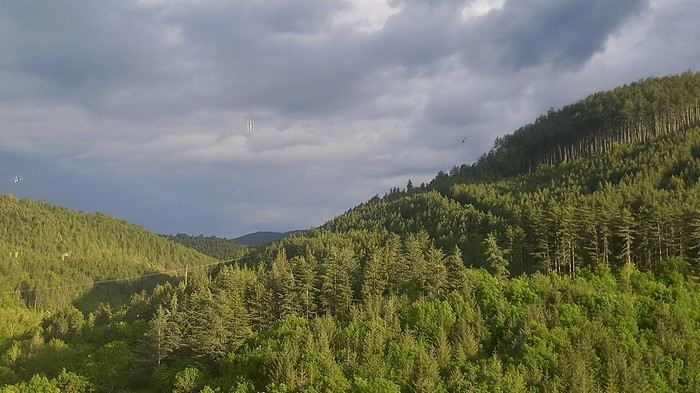
The next morning, we decided to revisit the Parc aux Loups du Gévaudan (Europe’s largest wolf park). As someone used to photo safaris in the wilds of East Africa, I’m not a fan of zoos at all—but I *do* have a deep admiration for wolves!!
Since it’s pretty unlikely I’ll ever see one in the wild, I’ll settle for this Parc aux Loups in Marvejols. This will be our third visit to this incredible gathering of these fascinating canines.
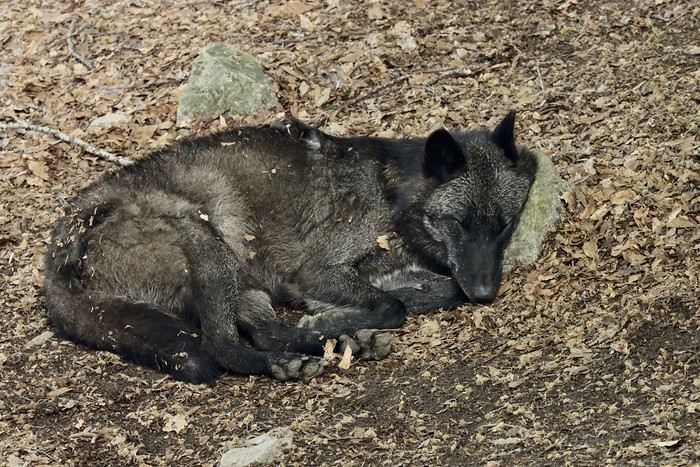
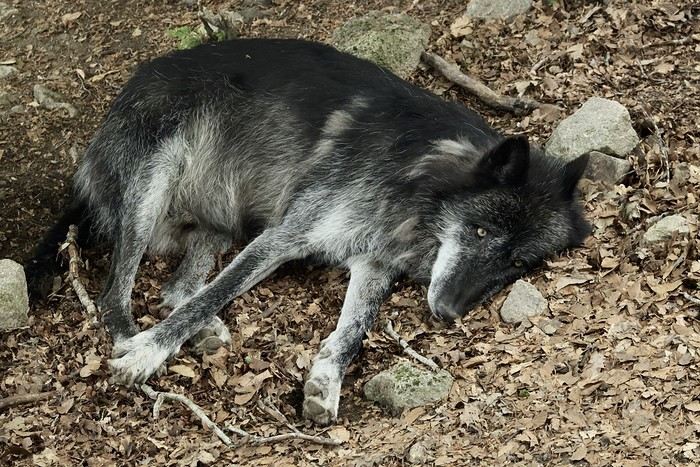
Some are still finishing their chilly night...
...
After Southern Tanzania, I’m sharing a travel story about the Cantal region with you...
...
For us, at the start of 2025, Le CANTAL was a true “Terra Incognita”!!
After seeing some tempting TV reports, we decided to fill this gap—especially in terms of landscapes. On the same trip, we’ll also head to the Arcachon Basin, the International Seaplane Gathering in Biscarrosse, and my native Landes region...
So, on May 20th, we left Marseille in the rain and thunder, heading toward Nîmes, Saint-Hippolyte, Mont Aigoual, Florac, and stopping in Marvejols to give my arthritic back a break for the night.
The next morning, we decided to revisit the Parc aux Loups du Gévaudan (Europe’s largest wolf park). As someone used to photo safaris in the wilds of East Africa, I’m not a fan of zoos at all—but I *do* have a deep admiration for wolves!!
Since it’s pretty unlikely I’ll ever see one in the wild, I’ll settle for this Parc aux Loups in Marvejols. This will be our third visit to this incredible gathering of these fascinating canines.
Some are still finishing their chilly night...
...
Places and activities to see and do in Quebec
Hi everyone,
If I want to take a seaplane tour... is it necessarily around Mauricie, or do you have other spots to recommend? If I want to see whales... it's around Grandes-Bergeronnes from land. If I want to see belugas... it's around Baie-Sainte-Catherine. If I want to see seals... where is it? If I want to see moose... it's in Gaspésie. If I want to see bears... it's around Saint-Jean-des-Piles on the banks of the St. Maurice River. If I want to visit the Museum of First Peoples' Civilizations... where is it? If I want to go canoeing... it's around Lac de la Mauricie or Mont-Tremblant. If I want to see a beautiful waterfall, it's Montmorency Falls. If I want to eat the best poutine, where is it?
Just to remind you, my round trip is: Montreal – Mauricie – Lac Saint-Jean – Tadoussac – Gaspésie – Charlevoix – Quebec City... but I'm really hesitating between Montreal, Mauricie, Charlevoix, Quebec City, the Saguenay Fjord, Lac Saint-Jean, Tadoussac, the Gaspésie ferry, and back to Montreal.
Thank you for your valuable tips—I’m taking notes! If you have other suggestions, as well as restaurants and accommodations along the way, I’d really appreciate it!
If I want to take a seaplane tour... is it necessarily around Mauricie, or do you have other spots to recommend? If I want to see whales... it's around Grandes-Bergeronnes from land. If I want to see belugas... it's around Baie-Sainte-Catherine. If I want to see seals... where is it? If I want to see moose... it's in Gaspésie. If I want to see bears... it's around Saint-Jean-des-Piles on the banks of the St. Maurice River. If I want to visit the Museum of First Peoples' Civilizations... where is it? If I want to go canoeing... it's around Lac de la Mauricie or Mont-Tremblant. If I want to see a beautiful waterfall, it's Montmorency Falls. If I want to eat the best poutine, where is it?
Just to remind you, my round trip is: Montreal – Mauricie – Lac Saint-Jean – Tadoussac – Gaspésie – Charlevoix – Quebec City... but I'm really hesitating between Montreal, Mauricie, Charlevoix, Quebec City, the Saguenay Fjord, Lac Saint-Jean, Tadoussac, the Gaspésie ferry, and back to Montreal.
Thank you for your valuable tips—I’m taking notes! If you have other suggestions, as well as restaurants and accommodations along the way, I’d really appreciate it!
Motorhome or camper van for a Scotland road trip with 3 adults and a 7-year-old?
Hi there,
I’m trying to plan a family week’s holiday in Scotland. I’d like to rent a motorhome or a camper van.
My partner has never driven a motorhome and the roads are making me nervous…
I’ve seen camper vans, but are they much smaller? There’ll be 3 adults and a 7-year-old.
Some rental companies tell me “no problem with motorhomes,” while others say “definitely not if you’ve never driven one.”
Can you point me in the right direction?
Thanks
Can you point me in the right direction?
Thanks
11 unforgettable days in Oman
We visited the northern/northeast part of Oman, the most touristy area, last February over 11 days there. It’s a great time to go because the temperatures are pleasant and there aren’t too many tourists, even though the country is only just starting to develop its image. 11 days was enough for us to see the essentials, but you can always extend your stay depending on what you want.
2 days in Muscat, 2 days in the desert—we would’ve happily stayed longer—2 days in the mountains, 3 days in the wadis, and the rest for the cities, villages, and the coast.
Oman offers stunning landscapes and a genuinely warm welcome. We always felt safe, never experienced any malicious looks or gestures.
As usual for our trips, we chose to organize everything ourselves but with a guide to better explore and soak up the local culture.
The point of my post isn’t to recount our journey but to encourage and reassure anyone considering this destination.
If I can be of help, I’m happy to answer your questions based on what I know.
2 days in Muscat, 2 days in the desert—we would’ve happily stayed longer—2 days in the mountains, 3 days in the wadis, and the rest for the cities, villages, and the coast.
Oman offers stunning landscapes and a genuinely warm welcome. We always felt safe, never experienced any malicious looks or gestures.
As usual for our trips, we chose to organize everything ourselves but with a guide to better explore and soak up the local culture.
The point of my post isn’t to recount our journey but to encourage and reassure anyone considering this destination.
If I can be of help, I’m happy to answer your questions based on what I know.
Japan & South Korea Cruise Review
Hi everyone,
I’m back from my 10-day cruise to Japan and South Korea and wanted to share my experience. Before leaving, I searched the forums but found very few firsthand accounts of this kind of trip.
Just so you know, a cruise isn’t some slow, easy trip—every port stop is an adventure!
We flew from Marseille with Lufthansa via Frankfurt, with a short 1.5-hour layover that was just enough, though we still had to sprint to make our connection. We’d booked seats with extra legroom, which was great—we were next to premium economy, so we had a good spot. The airline hadn’t sold all the premium seats and kept making announcements to attract takers, but no discounts!
After about 12 hours, we arrived at Tokyo Haneda feeling pretty wiped since we hadn’t slept. The time difference is 7 hours, so we landed in late morning in Japan. We took the free rail shuttle to central Tokyo. The entry process went smoothly thanks to the Japan web app. For the subway, we’d registered our Suica card, but we hadn’t anticipated how tricky transfers could be when stations don’t always have elevators—bit of a hassle, but still cheap! Navigating the subway is super easy, though. We’d bought a SIM card on Amazon beforehand, so everything was smooth.
We’d booked a room at the Grand Hazelmon Hotel, which is near the Imperial Palace. It’s a quiet business district in the evenings and well-connected by subway.
I’d opted for a half-room, so I was worried about space, but it was fine—no smaller than a London or Paris hotel room! Breakfast was included and really good.
We even had dinner there one night—dishes were around 9 € at a 4- or 5-star hotel, so we didn’t hold back.
In the afternoon, we visited the Imperial Palace. You can’t go inside, but it’s a green oasis—surprisingly peaceful despite Tokyo’s 36 million people—and very secure.
I’ll share more of my adventures later!
Just so you know, a cruise isn’t some slow, easy trip—every port stop is an adventure!
We flew from Marseille with Lufthansa via Frankfurt, with a short 1.5-hour layover that was just enough, though we still had to sprint to make our connection. We’d booked seats with extra legroom, which was great—we were next to premium economy, so we had a good spot. The airline hadn’t sold all the premium seats and kept making announcements to attract takers, but no discounts!
After about 12 hours, we arrived at Tokyo Haneda feeling pretty wiped since we hadn’t slept. The time difference is 7 hours, so we landed in late morning in Japan. We took the free rail shuttle to central Tokyo. The entry process went smoothly thanks to the Japan web app. For the subway, we’d registered our Suica card, but we hadn’t anticipated how tricky transfers could be when stations don’t always have elevators—bit of a hassle, but still cheap! Navigating the subway is super easy, though. We’d bought a SIM card on Amazon beforehand, so everything was smooth.
We’d booked a room at the Grand Hazelmon Hotel, which is near the Imperial Palace. It’s a quiet business district in the evenings and well-connected by subway.
I’d opted for a half-room, so I was worried about space, but it was fine—no smaller than a London or Paris hotel room! Breakfast was included and really good.
We even had dinner there one night—dishes were around 9 € at a 4- or 5-star hotel, so we didn’t hold back.
In the afternoon, we visited the Imperial Palace. You can’t go inside, but it’s a green oasis—surprisingly peaceful despite Tokyo’s 36 million people—and very secure.
I’ll share more of my adventures later!
Second trip to Sardinia from 05/01/25 to 05/11/25
Following my first trip from May 1st to 11th, 2025:
-Flight: easyJet Geneva-Olbia 11:50 AM-1:20 PM (306 € for 2) + 102 € for checked baggage (408 € total)
-Flight: easyJet Cagliari-Geneva 12:45 PM-2:25 PM (308 € for 2)
-Car rental: Olbia-Cagliari (rental: 338.31 € + 120 € for one-way drop-off) + 320 € mandatory insurance imposed by Centauro) 778.31 € total
*May 1st: ***OLBIA: arrived at the airport at 3:15 PM: 1-hour delay with EasyJet! 😕 Car rental issue** Big scam with B Rent (hard to find their counter because of poor signage—they demanded an extra 320 €! But after 5.5 hours, Centauro also charged 320 € for insurance!!!) On top of that, we only got the car at 6:30 PM. Due to the delay, we went straight to our accommodation after grocery shopping. -Bandi House via Mastru Giogliu, San Teodoro 0039 338 852 8569 70 € (very nice apartment, spacious, great welcome from Paola but hard to find) -Nearby: San Teodoro: stagno (birds) Lonely Planet p.159
*May 2nd: -Heading to Isola Tavolara: boat from San Paolo. It was a holiday weekend, and all the Sardinians plus tourists were heading to the island. Everyone wanted to visit the cave and all the beaches—so crowded we gave up. Plus, we had to wait for the first departure at 11 AM with a return no earlier than 2 PM, and all boats left at the same time, so everyone ended up at the cave simultaneously! GUIDES: Green Guide p.140 and Lonely Planet p.158 -Capo Coda Cavallo: beautiful spot with a stunning beach (reserve) -EAST COAST: Budoni, Posada, La Caletta (port) with many white sand beaches
*Orosei (Green Guide p.102, Lonely Planet p.201) and Galtelli (lovely medieval village) *Dorgali (Green Guide p.96, Lonely Planet p.205): don’t skip Pasticceria Mulas (exceptional pastries at very reasonable prices) -Agriturismo Nennelle in Loculi: great welcome at this fairly new site—a farm with sheep. Large room with private bathroom and outdoor tables/chairs. Small fridge, kettle, and coffee machine. 54 0039 3495343765 €
***May 3rd:*** -Hike to Gola Su Gorropu: magnificent 4-hour trek (Lonely Planet p.205, Green Guide p.96)
-Arbatax: Rocce Rosse: stunning red porphyry rocks at the end of the port (Green Guide p.87, Lonely Planet p.210) -Aer Sana in Arzana: a remote village with a very narrow, picturesque road (there’s actually a second one). Via Don Bosco No. 12. 68.60 € 0039 347 9601599 Great welcome from Bruna/message—decorated with lots of taste and care. One room with private bathroom and a super well-equipped shared kitchen.
***May 4th:*** -Supramonte National Park and Gulf of Orosei (Green Guide p.98, Lonely Planet p.201) -Arzana-Ussassai-Seui-Sadali-Goldoni -Aritzo: small village on a slope—very friendly locals -Antonio Mura Museum: Sardinian expressionist painter -Ethnographic Museum: quite comprehensive -Spanish Prison "Sa Bovida" (prison under Spanish rule where people were imprisoned for witchcraft) -Antico Restauro: Via Umberto 38, Fonni. Small Sardinian house in the village with little light but tastefully decorated. Warm welcome from Mario Loddo. 65.02 €
*May 5th: Gennargentu Massif and Supramonte -Orgosolo: Lonely Planet p.190, Green Guide p.123 -Nuraghe di Tiscali (Green Guide p.122, Lonely Planet p.207): allow over 1 hour of hiking to reach a slope with a cave (good shoes required) -Arrival in Nuoro: large city. Via Salvatore Manniri 39 (0039 33118617847). French expat living in Sardinia—very large, well-designed apartment on the 5th floor. 73 €
*May 6th: -NUORO (Lonely Planet p.186, Green Guide p.112) .Museum of Sardinian writer Grazia Deledda (1871-1936), Nobel Prize in Literature 1927 .Sardinian Ethnographic Museum -Ulassai: Stazione dell’Arte Maria Lai (1919-2013) (Lonely Planet p.212, Green Guide p.85). Major climbing spot in a charming little village -Jerzu: "La Finestra sulla Volla" Via Umberto I 551 0039 3403754751 72 € apartment with 1 bedroom, 1 bathroom, and 1 kitchen
*May 7th: OGLIASTRA: -Jerzu to Tortolì via Barisardo: quite difficult route through narrow streets in various villages! Return to Porto Corallo, Capo Ferrato (Green Guide p.64) -Hotel in San Vito: "Su Furriadroxiu" Via Lamarmora 35/37 0039 3501041432 61.20 € (Green Guide p.65)
*May 8th: -San Vito -Armungia (Green Guide p.65): small village at 566 m with nuraghe and museum + fresco "Homage to the Sassari Brigade" -Goni: cork oak forests and Nuraghe di Pranu Muteddu (60 aligned menhirs and tombs) (Green Guide p.66, Lonely Planet p.197) -San Vito: restaurant "La Capinera" Via Nazionale 80, 09040: very good -From Villasimius to Costa Rei: Lonely Planet p.65, Green Guide p.60 .Punta Molentis: white sand, rocks, but very touristy -Capo Carbonara: military zone, not much to see -Accommodation in Cagliari: Villa Volta 18, Monserrato 0039 3480640592: 74.70 € Well-equipped studio, city center, quiet
*May 9th: -Visit to Cagliari with underground tunnels Regina at the foot of the citadel (elevator) (Lonely Planet p.48, Green Guide p.32) .Castello, prefecture, San Maria church .Charming and picturesque Villanova district -Barumini (Green Guide p.70, Lonely Planet p.90): Nuraghe di Su Nuraxi, 1500 BC with its tower and fortifications—the largest Sardinian site (UNESCO) Entry: 15 € with mandatory guided tour -Parco della Giara di Gesturi (basaltic plateau): great for hiking Presence of the Sardinian pony: small Sardinian horse -Accommodation in Sanluri: 2 Via Giacomo Mozart 0039 3495343765: 80 €
*May 10th: -Beautiful Isola di San Pietro: ferry from Portovesme to Carloforte (round trip) 33.50 € with car (Green Guide p.318, Lonely Planet p.81) 15 km long and 15 km wide .Carloforte: peaceful little town with its palazzi and colorful houses .Tonnara della Punta: former tuna cannery—can be visited by reservation .Capo Sandalo: with its lighthouse (nice little trail to hike) .La Caletta: beaches and cliffs .Punta delle Colonne: 2 trachyte formations—very pretty
-TOTAL: 2432 € for 2 -1400 km by car: 160 € for gas (between 1.60 and 1.76 €/L) -Food, including 2 restaurants: 265 € -Accommodation via Booking: 685 € -Flights: 614 € for 2 -Car: 708.50 € + one-way drop-off: 120 € + mandatory insurance of 320 € (not planned!)
*May 1st: ***OLBIA: arrived at the airport at 3:15 PM: 1-hour delay with EasyJet! 😕 Car rental issue** Big scam with B Rent (hard to find their counter because of poor signage—they demanded an extra 320 €! But after 5.5 hours, Centauro also charged 320 € for insurance!!!) On top of that, we only got the car at 6:30 PM. Due to the delay, we went straight to our accommodation after grocery shopping. -Bandi House via Mastru Giogliu, San Teodoro 0039 338 852 8569 70 € (very nice apartment, spacious, great welcome from Paola but hard to find) -Nearby: San Teodoro: stagno (birds) Lonely Planet p.159
*May 2nd: -Heading to Isola Tavolara: boat from San Paolo. It was a holiday weekend, and all the Sardinians plus tourists were heading to the island. Everyone wanted to visit the cave and all the beaches—so crowded we gave up. Plus, we had to wait for the first departure at 11 AM with a return no earlier than 2 PM, and all boats left at the same time, so everyone ended up at the cave simultaneously! GUIDES: Green Guide p.140 and Lonely Planet p.158 -Capo Coda Cavallo: beautiful spot with a stunning beach (reserve) -EAST COAST: Budoni, Posada, La Caletta (port) with many white sand beaches
*Orosei (Green Guide p.102, Lonely Planet p.201) and Galtelli (lovely medieval village) *Dorgali (Green Guide p.96, Lonely Planet p.205): don’t skip Pasticceria Mulas (exceptional pastries at very reasonable prices) -Agriturismo Nennelle in Loculi: great welcome at this fairly new site—a farm with sheep. Large room with private bathroom and outdoor tables/chairs. Small fridge, kettle, and coffee machine. 54 0039 3495343765 €
***May 3rd:*** -Hike to Gola Su Gorropu: magnificent 4-hour trek (Lonely Planet p.205, Green Guide p.96)
-Arbatax: Rocce Rosse: stunning red porphyry rocks at the end of the port (Green Guide p.87, Lonely Planet p.210) -Aer Sana in Arzana: a remote village with a very narrow, picturesque road (there’s actually a second one). Via Don Bosco No. 12. 68.60 € 0039 347 9601599 Great welcome from Bruna/message—decorated with lots of taste and care. One room with private bathroom and a super well-equipped shared kitchen.
***May 4th:*** -Supramonte National Park and Gulf of Orosei (Green Guide p.98, Lonely Planet p.201) -Arzana-Ussassai-Seui-Sadali-Goldoni -Aritzo: small village on a slope—very friendly locals -Antonio Mura Museum: Sardinian expressionist painter -Ethnographic Museum: quite comprehensive -Spanish Prison "Sa Bovida" (prison under Spanish rule where people were imprisoned for witchcraft) -Antico Restauro: Via Umberto 38, Fonni. Small Sardinian house in the village with little light but tastefully decorated. Warm welcome from Mario Loddo. 65.02 €
*May 5th: Gennargentu Massif and Supramonte -Orgosolo: Lonely Planet p.190, Green Guide p.123 -Nuraghe di Tiscali (Green Guide p.122, Lonely Planet p.207): allow over 1 hour of hiking to reach a slope with a cave (good shoes required) -Arrival in Nuoro: large city. Via Salvatore Manniri 39 (0039 33118617847). French expat living in Sardinia—very large, well-designed apartment on the 5th floor. 73 €
*May 6th: -NUORO (Lonely Planet p.186, Green Guide p.112) .Museum of Sardinian writer Grazia Deledda (1871-1936), Nobel Prize in Literature 1927 .Sardinian Ethnographic Museum -Ulassai: Stazione dell’Arte Maria Lai (1919-2013) (Lonely Planet p.212, Green Guide p.85). Major climbing spot in a charming little village -Jerzu: "La Finestra sulla Volla" Via Umberto I 551 0039 3403754751 72 € apartment with 1 bedroom, 1 bathroom, and 1 kitchen
*May 7th: OGLIASTRA: -Jerzu to Tortolì via Barisardo: quite difficult route through narrow streets in various villages! Return to Porto Corallo, Capo Ferrato (Green Guide p.64) -Hotel in San Vito: "Su Furriadroxiu" Via Lamarmora 35/37 0039 3501041432 61.20 € (Green Guide p.65)
*May 8th: -San Vito -Armungia (Green Guide p.65): small village at 566 m with nuraghe and museum + fresco "Homage to the Sassari Brigade" -Goni: cork oak forests and Nuraghe di Pranu Muteddu (60 aligned menhirs and tombs) (Green Guide p.66, Lonely Planet p.197) -San Vito: restaurant "La Capinera" Via Nazionale 80, 09040: very good -From Villasimius to Costa Rei: Lonely Planet p.65, Green Guide p.60 .Punta Molentis: white sand, rocks, but very touristy -Capo Carbonara: military zone, not much to see -Accommodation in Cagliari: Villa Volta 18, Monserrato 0039 3480640592: 74.70 € Well-equipped studio, city center, quiet
*May 9th: -Visit to Cagliari with underground tunnels Regina at the foot of the citadel (elevator) (Lonely Planet p.48, Green Guide p.32) .Castello, prefecture, San Maria church .Charming and picturesque Villanova district -Barumini (Green Guide p.70, Lonely Planet p.90): Nuraghe di Su Nuraxi, 1500 BC with its tower and fortifications—the largest Sardinian site (UNESCO) Entry: 15 € with mandatory guided tour -Parco della Giara di Gesturi (basaltic plateau): great for hiking Presence of the Sardinian pony: small Sardinian horse -Accommodation in Sanluri: 2 Via Giacomo Mozart 0039 3495343765: 80 €
*May 10th: -Beautiful Isola di San Pietro: ferry from Portovesme to Carloforte (round trip) 33.50 € with car (Green Guide p.318, Lonely Planet p.81) 15 km long and 15 km wide .Carloforte: peaceful little town with its palazzi and colorful houses .Tonnara della Punta: former tuna cannery—can be visited by reservation .Capo Sandalo: with its lighthouse (nice little trail to hike) .La Caletta: beaches and cliffs .Punta delle Colonne: 2 trachyte formations—very pretty
-TOTAL: 2432 € for 2 -1400 km by car: 160 € for gas (between 1.60 and 1.76 €/L) -Food, including 2 restaurants: 265 € -Accommodation via Booking: 685 € -Flights: 614 € for 2 -Car: 708.50 € + one-way drop-off: 120 € + mandatory insurance of 320 € (not planned!)
Newfoundland - Hikes in the Eastern Part of the Island
The Eastern region is a landscape of protected coasts and bays, charming little fishing villages, exceptional scenic routes, and hiking trails in the heart of preserved habitats where many migratory bird species live, including puffins.
Stretching from Cape Bonavista in the north, where John Cabot landed in 1497, to Fortune and Grand Bank in the south, this part of Newfoundland was the first to be discovered and settled.
Visiting this region is like stepping back in time and discovering the cultural and artistic richness of this province, all at a more relaxed pace.
Source: https://www.exploretnl.ca/region-est
Videos are embedded throughout the summary. Please click on the image to start the video.
Bonavista Peninsula - Trinity - Gun Hill Trail Bonavista Peninsula - Trinity East - Skerwink Trail Bonavista Peninsula - Elliston - Puffin viewing site Bonavista Peninsula - Elliston - Spillars Cove (Cable John Cove) Bonavista - Dungeon Provincial Park Bonavista - John Cabot Municipal Park Bonavista Peninsula - Cape Bonavista Lighthouse St. Lawrence - Cape Chapeau Rouge Trail
Stretching from Cape Bonavista in the north, where John Cabot landed in 1497, to Fortune and Grand Bank in the south, this part of Newfoundland was the first to be discovered and settled.
Visiting this region is like stepping back in time and discovering the cultural and artistic richness of this province, all at a more relaxed pace.
Source: https://www.exploretnl.ca/region-est
Videos are embedded throughout the summary. Please click on the image to start the video.
Bonavista Peninsula - Trinity - Gun Hill Trail Bonavista Peninsula - Trinity East - Skerwink Trail Bonavista Peninsula - Elliston - Puffin viewing site Bonavista Peninsula - Elliston - Spillars Cove (Cable John Cove) Bonavista - Dungeon Provincial Park Bonavista - John Cabot Municipal Park Bonavista Peninsula - Cape Bonavista Lighthouse St. Lawrence - Cape Chapeau Rouge Trail
Newfoundland - Hikes in the Central Region of the Island
A land of adventure, the central region of Newfoundland is a vast area of dense forests and rugged coastlines.
To the north, between April and June, icebergs from Greenland drift along the famous "Iceberg Alley."
Inland, forests, lakes, and rivers dominate—once precious resources for Indigenous peoples and European settlers.
To the east lies Terra-Nova National Park and its typical habitat, made up of islands, ponds, bogs, and forests.
Finally, the southern coast, dotted with spectacular fjords, is home to several isolated fishing villages as well as the Miawpukek First Nation of Conne River, the province’s only recognized reserve.
Source: https://www.exploretnl.ca/region-centre
Below is a list of the hikes we did in this region. Each hike has a link attached so you can quickly access more information about it.
Videos are embedded throughout the summary. Click on the image to start the video.
King's Point - Alexander Murray Trail Grand Falls-Windsor - Thunder Brook Falls Trail King's Point - Rattling Brook Falls Trail Harbour Breton - Gun Hill Lookout Trail Harbour Breton - Deadman's Cove Trail Harbour Breton - Rocky Point Lighthouse Trail Harbour Breton Community Dildo Run Provincial Park - Black Head Trail Twillingate - Lower Little Harbour Trail Twillingate - Rockcut Twillingate Trails Twillingate - Lower Head Loop Trail Twillingate - Cuckhold's Point Trail Twillingate - Top of Twillingate Trail Terra-Nova National Park - Mill Cove Lookout Trail Eastport - Sandy Cove Lookout Trail
To the north, between April and June, icebergs from Greenland drift along the famous "Iceberg Alley."
Inland, forests, lakes, and rivers dominate—once precious resources for Indigenous peoples and European settlers.
To the east lies Terra-Nova National Park and its typical habitat, made up of islands, ponds, bogs, and forests.
Finally, the southern coast, dotted with spectacular fjords, is home to several isolated fishing villages as well as the Miawpukek First Nation of Conne River, the province’s only recognized reserve.
Source: https://www.exploretnl.ca/region-centre
Below is a list of the hikes we did in this region. Each hike has a link attached so you can quickly access more information about it.
Videos are embedded throughout the summary. Click on the image to start the video.
King's Point - Alexander Murray Trail Grand Falls-Windsor - Thunder Brook Falls Trail King's Point - Rattling Brook Falls Trail Harbour Breton - Gun Hill Lookout Trail Harbour Breton - Deadman's Cove Trail Harbour Breton - Rocky Point Lighthouse Trail Harbour Breton Community Dildo Run Provincial Park - Black Head Trail Twillingate - Lower Little Harbour Trail Twillingate - Rockcut Twillingate Trails Twillingate - Lower Head Loop Trail Twillingate - Cuckhold's Point Trail Twillingate - Top of Twillingate Trail Terra-Nova National Park - Mill Cove Lookout Trail Eastport - Sandy Cove Lookout Trail
Australia 2025: Discovering the 5th Continent
Hi everyone.
Because that’s also what sparks the desire in every traveler (well, at least for me) to set foot on Australian soil: discovering a new continent.
Right now, I’ve got some time on my hands—those who follow me know that. A nasty muscle tear (which really doesn’t want to heal) is keeping me grounded for another week, so I’ve decided to open a new travel journal, recounting my recent trip from December 14, 2024, to January 12, 2025, in Australia.
The origins of this trip started last May in Crete, an island I chose for a 10-day break. It’s really lovely, by the way, but that’s not the point… It’s around this time every year that we decide on our next winter destination, and Argentina was at the top of the list—Sydney wasn’t even on the radar… I’d been looking at flights to Buenos Aires for a while, and the prices were shocking… But by the pool one lazy afternoon, scrolling on my iPhone, a promo from Geneva to Sydney caught my eye. The deal ticked two boxes on my traveler’s bucket list: a flight to Australia and a flight with Singapore Airlines, often ranked as the world’s best airline. A quick chat with the missus (well, of course!) and the decision was made: off to the land of kangaroos! Now, once you add luggage and Economy Plus, it still comes to 1600 € per person, but that’s a reasonable price. Either way, we already know what we’re in for—Australia is a budget commitment!

Thanks to 123rf for the image loan 😛
Right now, I’ve got some time on my hands—those who follow me know that. A nasty muscle tear (which really doesn’t want to heal) is keeping me grounded for another week, so I’ve decided to open a new travel journal, recounting my recent trip from December 14, 2024, to January 12, 2025, in Australia.
The origins of this trip started last May in Crete, an island I chose for a 10-day break. It’s really lovely, by the way, but that’s not the point… It’s around this time every year that we decide on our next winter destination, and Argentina was at the top of the list—Sydney wasn’t even on the radar… I’d been looking at flights to Buenos Aires for a while, and the prices were shocking… But by the pool one lazy afternoon, scrolling on my iPhone, a promo from Geneva to Sydney caught my eye. The deal ticked two boxes on my traveler’s bucket list: a flight to Australia and a flight with Singapore Airlines, often ranked as the world’s best airline. A quick chat with the missus (well, of course!) and the decision was made: off to the land of kangaroos! Now, once you add luggage and Economy Plus, it still comes to 1600 € per person, but that’s a reasonable price. Either way, we already know what we’re in for—Australia is a budget commitment!
Thanks to 123rf for the image loan 😛
Newfoundland - Hikes in the Western Part of the Island
INTRODUCTION
Trip taken in 2021, but still relevant for exploring the island of Newfoundland.
We went on multiple hikes in this Canadian province, which offers a unique and breathtaking landscape.
GPS coordinates: 46.20884, -60.24498 Marine Atlantic Ferry
To do this, we traveled to North Sydney, Nova Scotia, to board a Marine Atlantic ferry that took us to Port aux Basques in Newfoundland. The crossing takes about 7 hours.
The ferry *Highlanders* features spacious cabins for two or four people, a restaurant, a retail store, and a play area for kids.
The reclining seats are comfortable and include a headphone jack and a USB charging port.
We went out on the open-air panoramic observation deck several times to admire the Atlantic Ocean, hoping to spot some marine wildlife. Unfortunately, we didn’t see any.
This short video gives you an overview of the facilities. For more details, I invite you to check out Marine Atlantic’s website at the following address: https://www.marineatlantique.ca/.
https://youtu.be/oV9_7AcJnEQ
Trip taken in 2021, but still relevant for exploring the island of Newfoundland.
We went on multiple hikes in this Canadian province, which offers a unique and breathtaking landscape.
GPS coordinates: 46.20884, -60.24498 Marine Atlantic Ferry
To do this, we traveled to North Sydney, Nova Scotia, to board a Marine Atlantic ferry that took us to Port aux Basques in Newfoundland. The crossing takes about 7 hours.
The ferry *Highlanders* features spacious cabins for two or four people, a restaurant, a retail store, and a play area for kids.
The reclining seats are comfortable and include a headphone jack and a USB charging port.
We went out on the open-air panoramic observation deck several times to admire the Atlantic Ocean, hoping to spot some marine wildlife. Unfortunately, we didn’t see any.
This short video gives you an overview of the facilities. For more details, I invite you to check out Marine Atlantic’s website at the following address: https://www.marineatlantique.ca/.
https://youtu.be/oV9_7AcJnEQ
Looking for participants for a Tanzania safari in early 2026
Hello.
I’m looking for participants for a safari in Tanzania in the first quarter of 2026. I’m in direct negotiations with a local guide. Below is the description (via a draft service contract). If you’re interested, reply to me. We’ll then communicate via private email.
Between the undersigned:
Ms./Mr. (provide the provider’s name), representing the company (specify), whose registered office is located at (provide the address), Hereinafter referred to as The Provider
And,
Ms./Mr. (provide the client’s name and contact details), Hereinafter referred to as The Client
The following has been agreed:
I. Purpose This service contract covers the organization of a safari in Tanzania by The Provider for the benefit of The Client.
II. Duration This contract is concluded for a duration of (specify). It takes effect from day J1: (specify the date) and will end on (specify the date). Unless otherwise agreed between the two parties, this contract is not subject to any automatic renewal.
III. Execution Terms The Provider undertakes to carry out the tasks assigned by The Client with professionalism and rigor, in accordance with best practices. They also agree to comply with all applicable regulations and standards for their tasks. To fulfill their duties, The Provider will mobilize all necessary resources. The Client, for their part, agrees to collaborate with The Provider and provide all useful information for the smooth execution of the tasks. IV. Payment The Client will pay The Provider the sum of (specify), according to the following terms: (specify). In case of late payment, The Provider reserves the right to claim penalties in the amount of (specify). V. Confidentiality The Provider agrees not to disclose any information or documents provided by The Client. Upon completion of their task, they will destroy all documents in their possession. VI. Service Details Accommodation during the stay (excluding days 1, 2, and 9): participants will sleep in tents, with 2 people per tent. A sleeping bag and an inflatable mattress will be provided. They will have water for washing and access to toilets. Tents will be set up and taken down during each transfer. It will be possible to charge camera batteries. Day 1: ARRIVAL AND TRANSFER Welcome at Kilimanjaro Airport for transfer to Arusha and overnight at Green Mountain Hotel (breakfast included) - https://greenmountainhotel.co.tz/ Day 2: HIKE ON THE TRAILS OF KILIMANJARO. Pick-up from your hotel in Arusha to the village of Moshi Materuni, at the foot of Kilimanjaro. You’ll begin a day of hiking toward the impressive waterfalls in one of the country’s highest regions, where crystal-clear glacial water cascades from 70 meters high. The beautiful trail leads to the Materuni waterfalls, located at 2,500 meters altitude. To reach these falls, you’ll cross valleys and hills covered in tropical forest, coffee, avocado, and banana plantations. On a clear day, you’ll enjoy a breathtaking view of Kibo, the highest peak of Kilimanjaro. You’ll also learn how to prepare and taste coffee. In the evening, you’ll be picked up in Arusha and spend the night at Green Mountain Hotel. Day 3: HIKE IN A MAASAI VILLAGE After breakfast around 8:30 AM, you’ll be picked up from your hotel for a walking hike in the wild nature of the village. You’ll visit local primary schools, meet traditional healers, and discover their techniques. You’ll also visit one of the local livestock markets. Dinner and overnight at the Maasai village house in Boma. Day 4: WILDLIFE IN 4X4 ALONG THE TARANGIRE RIVER Around 8 AM, you’ll be picked up from your hotel in Arusha and drive for 2 hours to Tarangire National Park for a day of wildlife viewing. The park is known for its dense wildlife along the Tarangire River. It’s home to a large number of elephants in the northern circuit and hosts 550 bird species. You’ll also observe herds of impalas, hartebeests, wildebeests, kudus, oryxes, gerenuks, zebras, buffaloes, and giraffes. Predators like lions, leopards, cheetahs, hyenas, and massive African baobabs can also be spotted. Dinner and overnight at Lake Manyara Fig Tree Lodge. Day 5: LAKE MANYARA PARK - WILDLIFE VIEWING IN THE RIFT VALLEY Around 8 AM, departure from your camp to Lake Manyara Park (at the foot of a 600-meter escarpment in the Great Rift Valley) for a day of safaris. You’ll see giraffes, buffaloes, groups of baboons, tree-climbing lions, and many other animals. Dinner and overnight at Lake Manyara Fig Tree Lodge. Day 6: WILDLIFE IN SERENGETI In the morning, you’ll drive for 5 hours to the magnificent Serengeti National Park, passing through the archaeological site of Olduvai Gorge. This park is arguably the world’s most famous wildlife reserve. It’s home to over 3 million large mammals, and you’ll quickly spot the "Big Five": buffaloes, elephants, black rhinos of the Moru Kopjes, lions, and leopards. Over 500 bird species have been recorded here. You’ll also witness the spectacular wildebeest migration in the western Serengeti. Dinner and overnight at Serengeti Nyani campsite. Day 7: MAGNIFICENT WILDLIFE AT SUNRISE IN SERENGETI Stunning sunrise safaris in the golden savanna of the endless plains of Serengeti National Park, all day long, following the animals’ movements. You’ll spend the night at the campsite and share your exceptional experience so far at Serengeti Nyani campsite. Day 8: MAJESTIC EXCURSION IN THE SERENGETI PLAINS Wake-up at 6 AM, coffee at the campsite, then departure for a sunrise safari in the Serengeti. Our guide will take you to the best spots to admire the sunrise and observe predators, as most of them, like lions, are very active at this time of day. You’ll return to the campsite around 10 AM for brunch, then load your belongings into the jeep for a 2-hour safari on the way to the Ngorongoro Conservation Area. Dinner and overnight at Ngorongoro Simba Lodge. Day 9: SPECTACULAR EXCURSION TO NGORONGORO CRATER Shortly after breakfast, you’ll descend into the Ngorongoro Crater for a sunrise safari in the world’s largest uninterrupted caldera, surrounded by steep walls rising 610 meters from the crater floor. This natural wonder measures 19.2 km in diameter and covers 304 km². You’ll go on safaris and discover rare species like black rhinos, wildebeests, giraffes, ostriches, bustards, lions, cheetahs, and flamingos in the Soda Lake. In the afternoon, you’ll return to Arusha, arriving in the evening for your private activities. Accommodation in half-board (dinner, overnight, breakfast) Day 10: TRANSFER TO KILIMANJARO AIRPORT Breakfast and transfer to Kilimanjaro Airport. VII- RATES: The package price is 2030 USD (approximately per person in a double room). VIII- THE PRICE INCLUDES: - Provision of sealed water bottles for participants - Park entry fees. - Transfer from Kilimanjaro Airport. - Accommodation in Arusha (breakfast included). - Village development fees. - Accommodation in camps/lodges (breakfast, lunch, dinner). - Transport in a 4x4 Land Cruiser with a pop-up roof in national parks. - Government taxes. - Activities detailed in the itinerary. - Safari guides. - Transfer from Arusha to Kilimanjaro Airport on day 10.
IX- THE PRICE DOES NOT INCLUDE: - Alcoholic beverages. - International flights. - Personal items such as visas, laundry, etc. - Tips.
Done at Done at
Date: Date: Provider’s Signature: Client’s Signature:
Between the undersigned:
Ms./Mr. (provide the provider’s name), representing the company (specify), whose registered office is located at (provide the address), Hereinafter referred to as The Provider
And,
Ms./Mr. (provide the client’s name and contact details), Hereinafter referred to as The Client
The following has been agreed:
I. Purpose This service contract covers the organization of a safari in Tanzania by The Provider for the benefit of The Client.
II. Duration This contract is concluded for a duration of (specify). It takes effect from day J1: (specify the date) and will end on (specify the date). Unless otherwise agreed between the two parties, this contract is not subject to any automatic renewal.
III. Execution Terms The Provider undertakes to carry out the tasks assigned by The Client with professionalism and rigor, in accordance with best practices. They also agree to comply with all applicable regulations and standards for their tasks. To fulfill their duties, The Provider will mobilize all necessary resources. The Client, for their part, agrees to collaborate with The Provider and provide all useful information for the smooth execution of the tasks. IV. Payment The Client will pay The Provider the sum of (specify), according to the following terms: (specify). In case of late payment, The Provider reserves the right to claim penalties in the amount of (specify). V. Confidentiality The Provider agrees not to disclose any information or documents provided by The Client. Upon completion of their task, they will destroy all documents in their possession. VI. Service Details Accommodation during the stay (excluding days 1, 2, and 9): participants will sleep in tents, with 2 people per tent. A sleeping bag and an inflatable mattress will be provided. They will have water for washing and access to toilets. Tents will be set up and taken down during each transfer. It will be possible to charge camera batteries. Day 1: ARRIVAL AND TRANSFER Welcome at Kilimanjaro Airport for transfer to Arusha and overnight at Green Mountain Hotel (breakfast included) - https://greenmountainhotel.co.tz/ Day 2: HIKE ON THE TRAILS OF KILIMANJARO. Pick-up from your hotel in Arusha to the village of Moshi Materuni, at the foot of Kilimanjaro. You’ll begin a day of hiking toward the impressive waterfalls in one of the country’s highest regions, where crystal-clear glacial water cascades from 70 meters high. The beautiful trail leads to the Materuni waterfalls, located at 2,500 meters altitude. To reach these falls, you’ll cross valleys and hills covered in tropical forest, coffee, avocado, and banana plantations. On a clear day, you’ll enjoy a breathtaking view of Kibo, the highest peak of Kilimanjaro. You’ll also learn how to prepare and taste coffee. In the evening, you’ll be picked up in Arusha and spend the night at Green Mountain Hotel. Day 3: HIKE IN A MAASAI VILLAGE After breakfast around 8:30 AM, you’ll be picked up from your hotel for a walking hike in the wild nature of the village. You’ll visit local primary schools, meet traditional healers, and discover their techniques. You’ll also visit one of the local livestock markets. Dinner and overnight at the Maasai village house in Boma. Day 4: WILDLIFE IN 4X4 ALONG THE TARANGIRE RIVER Around 8 AM, you’ll be picked up from your hotel in Arusha and drive for 2 hours to Tarangire National Park for a day of wildlife viewing. The park is known for its dense wildlife along the Tarangire River. It’s home to a large number of elephants in the northern circuit and hosts 550 bird species. You’ll also observe herds of impalas, hartebeests, wildebeests, kudus, oryxes, gerenuks, zebras, buffaloes, and giraffes. Predators like lions, leopards, cheetahs, hyenas, and massive African baobabs can also be spotted. Dinner and overnight at Lake Manyara Fig Tree Lodge. Day 5: LAKE MANYARA PARK - WILDLIFE VIEWING IN THE RIFT VALLEY Around 8 AM, departure from your camp to Lake Manyara Park (at the foot of a 600-meter escarpment in the Great Rift Valley) for a day of safaris. You’ll see giraffes, buffaloes, groups of baboons, tree-climbing lions, and many other animals. Dinner and overnight at Lake Manyara Fig Tree Lodge. Day 6: WILDLIFE IN SERENGETI In the morning, you’ll drive for 5 hours to the magnificent Serengeti National Park, passing through the archaeological site of Olduvai Gorge. This park is arguably the world’s most famous wildlife reserve. It’s home to over 3 million large mammals, and you’ll quickly spot the "Big Five": buffaloes, elephants, black rhinos of the Moru Kopjes, lions, and leopards. Over 500 bird species have been recorded here. You’ll also witness the spectacular wildebeest migration in the western Serengeti. Dinner and overnight at Serengeti Nyani campsite. Day 7: MAGNIFICENT WILDLIFE AT SUNRISE IN SERENGETI Stunning sunrise safaris in the golden savanna of the endless plains of Serengeti National Park, all day long, following the animals’ movements. You’ll spend the night at the campsite and share your exceptional experience so far at Serengeti Nyani campsite. Day 8: MAJESTIC EXCURSION IN THE SERENGETI PLAINS Wake-up at 6 AM, coffee at the campsite, then departure for a sunrise safari in the Serengeti. Our guide will take you to the best spots to admire the sunrise and observe predators, as most of them, like lions, are very active at this time of day. You’ll return to the campsite around 10 AM for brunch, then load your belongings into the jeep for a 2-hour safari on the way to the Ngorongoro Conservation Area. Dinner and overnight at Ngorongoro Simba Lodge. Day 9: SPECTACULAR EXCURSION TO NGORONGORO CRATER Shortly after breakfast, you’ll descend into the Ngorongoro Crater for a sunrise safari in the world’s largest uninterrupted caldera, surrounded by steep walls rising 610 meters from the crater floor. This natural wonder measures 19.2 km in diameter and covers 304 km². You’ll go on safaris and discover rare species like black rhinos, wildebeests, giraffes, ostriches, bustards, lions, cheetahs, and flamingos in the Soda Lake. In the afternoon, you’ll return to Arusha, arriving in the evening for your private activities. Accommodation in half-board (dinner, overnight, breakfast) Day 10: TRANSFER TO KILIMANJARO AIRPORT Breakfast and transfer to Kilimanjaro Airport. VII- RATES: The package price is 2030 USD (approximately per person in a double room). VIII- THE PRICE INCLUDES: - Provision of sealed water bottles for participants - Park entry fees. - Transfer from Kilimanjaro Airport. - Accommodation in Arusha (breakfast included). - Village development fees. - Accommodation in camps/lodges (breakfast, lunch, dinner). - Transport in a 4x4 Land Cruiser with a pop-up roof in national parks. - Government taxes. - Activities detailed in the itinerary. - Safari guides. - Transfer from Arusha to Kilimanjaro Airport on day 10.
IX- THE PRICE DOES NOT INCLUDE: - Alcoholic beverages. - International flights. - Personal items such as visas, laundry, etc. - Tips.
Done at Done at
Date: Date: Provider’s Signature: Client’s Signature:
15 days in Texas in October 2022
Ah! This trip to Texas, postponed so many times because of Covid. I wanted to discover this state, but not in the summer due to the temperatures.
I’ll try to dig into my memories since I didn’t take any notes.
Day 1: Departure
Early morning flight from Lyon to Frankfurt (I often fly with Lufthansa). We only have a 50-minute layover, but I trust German organization—it’s not just talk, since it took us only 30 minutes to get to the boarding gate. Arriving in Houston, we’re excited because it’s been 3 years since we last visited the USA, and we’ve missed it.
Everything goes smoothly with the formalities and the car rental, so 1.5 hours after landing, I park near Sam Houston Park to start our discovery. The park is pretty, clean, and has the unique feature of housing some well-preserved Victorian houses. The sun is shining, and it’s always fun to see old wooden houses surrounded by gleaming skyscrapers. A quick drive to the Rothko Chapel, which is dedicated to all faiths. There are also modern artworks in an annex building and outside. Then we head to Pasadena to reach our hotel and go to bed since we’ve been awake for a while!
Hotel: A classic Days Inn. It’s standard, but the beds are comfortable, and it’s a quiet place. The + of the day: We're back in the USA The -: Nothing
Day 2: NASA and then Galveston
Of course, we wake up super early. A quick trip to the nearby Walmart for the usual small purchases. Surprise—I can’t buy a bottle of California white wine because in Texas, there are set hours for buying alcohol. Talk about a bummer for my apéro! Next, we head to Kemah, a small, hyper-touristy port where everything is kitschy but clean and nice. It’s a bit overdone, but since NASA doesn’t open until 10 AM and it’s still early, we might as well enjoy the good weather in a pleasant spot.
We arrive at the NASA Houston center without any issues. It’s smaller than the one in Florida and organized a bit differently. There are trains that take passengers to the different sites, but you need to get tickets (included in the price), and once you’ve finished visiting one site, you have to return to the center to get a ticket for another. Not very practical.
We choose to visit the training center and the rockets, skipping the control room, which, based on the photos, looks like the one at Cape Canaveral. The training center is a cool place because it’s still in use. Engineers are working on machines and computers. We don’t see any astronauts training, but we see the space chair, the shuttle’s robotic arm, and lots of gadgets—this hangar is like Gyro Gearloose’s or Doc’s domain!
Next, we head to the rocket hangar, featuring the Saturn V, the same one as at Cape Canaveral. Finally, we wrap up our tour by returning to the center, where a Boeing 747 with a shuttle attached to its back dominates the outside. We can visit the shuttle, and we don’t miss the chance.
A few exhibits inside complete the experience and satisfy our thirst for knowledge. I love the space exploration era, and gotta say, the Americans do it right. Then we drive to Galveston, about 100 km away. Why Galveston? It’s by the sea, so swimming in late October isn’t unpleasant, and there’s a neighborhood called East End Historic District filled with stunning Victorian houses, each more beautiful than the last. Plus, it’s Halloween season, so the decorations are over the top! They really go all out!
Madame takes a swim, but I find the water too cold for my taste. Apéro (they didn’t trick me twice—I had time to go back to another Walmart!) Dinner + bedtime
Hotel: A classic Quality Inn. No issues. The +: NASA, even if it’s smaller than Cape Canaveral The -: I would’ve preferred the water in the Gulf of Mexico to be a bit warmer
Day 1: Departure
Early morning flight from Lyon to Frankfurt (I often fly with Lufthansa). We only have a 50-minute layover, but I trust German organization—it’s not just talk, since it took us only 30 minutes to get to the boarding gate. Arriving in Houston, we’re excited because it’s been 3 years since we last visited the USA, and we’ve missed it.
Everything goes smoothly with the formalities and the car rental, so 1.5 hours after landing, I park near Sam Houston Park to start our discovery. The park is pretty, clean, and has the unique feature of housing some well-preserved Victorian houses. The sun is shining, and it’s always fun to see old wooden houses surrounded by gleaming skyscrapers. A quick drive to the Rothko Chapel, which is dedicated to all faiths. There are also modern artworks in an annex building and outside. Then we head to Pasadena to reach our hotel and go to bed since we’ve been awake for a while!
Hotel: A classic Days Inn. It’s standard, but the beds are comfortable, and it’s a quiet place. The + of the day: We're back in the USA The -: Nothing
Day 2: NASA and then Galveston
Of course, we wake up super early. A quick trip to the nearby Walmart for the usual small purchases. Surprise—I can’t buy a bottle of California white wine because in Texas, there are set hours for buying alcohol. Talk about a bummer for my apéro! Next, we head to Kemah, a small, hyper-touristy port where everything is kitschy but clean and nice. It’s a bit overdone, but since NASA doesn’t open until 10 AM and it’s still early, we might as well enjoy the good weather in a pleasant spot.
We arrive at the NASA Houston center without any issues. It’s smaller than the one in Florida and organized a bit differently. There are trains that take passengers to the different sites, but you need to get tickets (included in the price), and once you’ve finished visiting one site, you have to return to the center to get a ticket for another. Not very practical.
We choose to visit the training center and the rockets, skipping the control room, which, based on the photos, looks like the one at Cape Canaveral. The training center is a cool place because it’s still in use. Engineers are working on machines and computers. We don’t see any astronauts training, but we see the space chair, the shuttle’s robotic arm, and lots of gadgets—this hangar is like Gyro Gearloose’s or Doc’s domain!
Next, we head to the rocket hangar, featuring the Saturn V, the same one as at Cape Canaveral. Finally, we wrap up our tour by returning to the center, where a Boeing 747 with a shuttle attached to its back dominates the outside. We can visit the shuttle, and we don’t miss the chance.
A few exhibits inside complete the experience and satisfy our thirst for knowledge. I love the space exploration era, and gotta say, the Americans do it right. Then we drive to Galveston, about 100 km away. Why Galveston? It’s by the sea, so swimming in late October isn’t unpleasant, and there’s a neighborhood called East End Historic District filled with stunning Victorian houses, each more beautiful than the last. Plus, it’s Halloween season, so the decorations are over the top! They really go all out!
Madame takes a swim, but I find the water too cold for my taste. Apéro (they didn’t trick me twice—I had time to go back to another Walmart!) Dinner + bedtime
Hotel: A classic Quality Inn. No issues. The +: NASA, even if it’s smaller than Cape Canaveral The -: I would’ve preferred the water in the Gulf of Mexico to be a bit warmer
Feedback on Quebec itinerary in September-October
Hello,
I need some advice because I can't decide on an itinerary. We're going to join our son around September 20th, who's spending a year in Canada on a working holiday visa. I did the classic Quebec loop over 30 years ago, so I’m ruling out the Saguenay Fjord and Lac Saint-Jean right away. Here are the stops (overnights) I’ve tentatively planned:
D1-2-3: Quebec City D4: Malbaie Gorges National Park via Routes 360 and 362 D5: Malbaie Gorges National Park (fishing and canoeing) D6: Tadoussac (walks and whale watching from the shore, hiking up to Cap du Bon Désir) D7: Whale-watching zodiac excursion – ferry – Bic National Park D8: Bic National Park D9: Carleton-sur-Mer via the Matapedia Valley D10: Percé D11: Percé (Bonaventure Island excursion) D12: Forillon National Park D13: Forillon National Park D14: Sainte-Anne-des-Monts via Route 132 D15: Sainte-Anne-des-Monts (Gaspésie National Park) D16: Kamouraska D17: Quebec City D18-19-20: Montreal
I feel like one night in Tadoussac is too short. Wouldn’t it be better to add another night there and only spend one night in Sainte-Anne-des-Monts, skipping Gaspésie National Park? Just to clarify, we love nature and hiking but limit ourselves to about 10 km per day.
Also, I’m wondering about the distances (even though I tried to keep them reasonable), the short stops (max 2 nights except in Quebec City and Montreal, so not much time to settle in), and the weather in Gaspésie in late September-October (my husband doesn’t handle the cold well). Maybe it’d be better to only go as far as Bic National Park, then head back, and add more nights at Malbaie Gorges National Park (I didn’t stay in a park on my first trip, and my son, who got his fishing license, would be proud to bring us dinner 😊), Tadoussac, and maybe around Bic/Rimouski?
One last detail: the plan is to land in Quebec City, rent a car on D4, return it on D17, and take the train or bus to Montreal the next day, where we’ll catch our flight 4 days later. This is to cut down on rental costs and avoid having a car in Quebec City.
Thanks for reading this far—I hope I can count on your advice! 😊
Claire
D1-2-3: Quebec City D4: Malbaie Gorges National Park via Routes 360 and 362 D5: Malbaie Gorges National Park (fishing and canoeing) D6: Tadoussac (walks and whale watching from the shore, hiking up to Cap du Bon Désir) D7: Whale-watching zodiac excursion – ferry – Bic National Park D8: Bic National Park D9: Carleton-sur-Mer via the Matapedia Valley D10: Percé D11: Percé (Bonaventure Island excursion) D12: Forillon National Park D13: Forillon National Park D14: Sainte-Anne-des-Monts via Route 132 D15: Sainte-Anne-des-Monts (Gaspésie National Park) D16: Kamouraska D17: Quebec City D18-19-20: Montreal
I feel like one night in Tadoussac is too short. Wouldn’t it be better to add another night there and only spend one night in Sainte-Anne-des-Monts, skipping Gaspésie National Park? Just to clarify, we love nature and hiking but limit ourselves to about 10 km per day.
Also, I’m wondering about the distances (even though I tried to keep them reasonable), the short stops (max 2 nights except in Quebec City and Montreal, so not much time to settle in), and the weather in Gaspésie in late September-October (my husband doesn’t handle the cold well). Maybe it’d be better to only go as far as Bic National Park, then head back, and add more nights at Malbaie Gorges National Park (I didn’t stay in a park on my first trip, and my son, who got his fishing license, would be proud to bring us dinner 😊), Tadoussac, and maybe around Bic/Rimouski?
One last detail: the plan is to land in Quebec City, rent a car on D4, return it on D17, and take the train or bus to Montreal the next day, where we’ll catch our flight 4 days later. This is to cut down on rental costs and avoid having a car in Quebec City.
Thanks for reading this far—I hope I can count on your advice! 😊
Claire
Looking for participants for a TANZANIA SAFARI in January 2026
Hello.
I’m looking for participants to form a group of 5 to 6 people for a safari in Tanzania during the dry season in January or even February 2026. There are already two of us. This period is ideal for the Great Migration (when animals cross into Kenya, including wildebeest and zebras, with predators like lions around).
Duration: about one week. A 13-day option is available, but it’s more expensive.
Approximate price: 3500 € (flights included).
You can either go through an agency (local or not) or directly contact a guide (like the SO GUIDES association, for example). I have a contact with a guide who has received very positive reviews.
I won’t go into all the details yet. The first step is to form a group so we can negotiate with a provider. After that, we’ll communicate and make decisions together.
You can reach me at this email: jp54pradines@gmail.com (my personal OVS space is no longer valid—this is my partner’s email).
If you’re interested, please contact me quickly. It’s best to book flight tickets as early as possible for better prices.
Here’s an example of a safari package with a guide:
**8-DAY/7-NIGHT WILD ADVENTURE SAFARI**
**Day 1: ARRIVAL AND TRANSFER** Welcome at Kilimanjaro Airport and transfer to Arusha. Overnight at Green Mountain Hotel (breakfast included).
**Day 2: HIKE ON THE TRAILS OF KILIMANJARO** Pickup from your hotel in Arusha to Moshi Materuni village at the foot of Kilimanjaro. Start a day hike to the impressive waterfalls in one of the country’s highest regions, where glacial, crystal-clear water cascades from 70 meters high. The beautiful trail leads to Materuni Waterfalls at 2,500 meters altitude. To reach them, you’ll cross valleys and hills covered in tropical forest, coffee, avocado, and banana plantations. On clear days, you’ll enjoy a breathtaking view of Kibo, Kilimanjaro’s highest peak. You’ll also learn how to prepare and taste coffee. In the evening, return to Arusha for an overnight stay at Green Mountain Hotel.
**Day 3: HIKE IN A MAASAI VILLAGE** After breakfast around 8:30 AM, you’ll be picked up from your hotel for a walking safari in the wild village. Visit local primary schools, meet traditional healers, and learn about their techniques. You’ll also visit one of the local livestock markets. Dinner and overnight at the Maasai village Boma house.
**Day 4: WILDLIFE IN 4X4 ALONG THE TARANGIRE RIVER** Around 8 AM, pickup from your hotel in Arusha for a 2-hour drive to Tarangire National Park for a day of wildlife viewing. The park is famous for its dense wildlife along the Tarangire River. It’s home to a large number of elephants in the northern circuit and over 550 bird species. You’ll also spot herds of impalas, hartebeests, wildebeests, kudus, oryxes, gerenuks, zebras, buffaloes, and giraffes. Predators like lions, leopards, cheetahs, and hyenas are also present, along with massive African baobabs. Dinner and overnight at Lake Manyara Fig Tree Lodge.
**Day 5: LAKE MANYARA PARK – WILDLIFE VIEWING IN THE RIFT VALLEY** Around 8 AM, depart from your camp to Lake Manyara Park (at the foot of a 600-meter escarpment in the Great Rift Valley) for a day of safaris. You’ll see giraffes, buffaloes, baboon troops, tree-climbing lions, and many other animals. Dinner and overnight at Lake Manyara Fig Tree Lodge.
**Day 6: WILDLIFE IN SERENGETI** In the morning, drive for 5 hours to the stunning Serengeti National Park, passing through the Olduvai Gorge archaeological site. This park is arguably the world’s most famous wildlife reserve, home to over 3 million large mammals. You’ll quickly spot the “Big Five”: buffaloes, elephants, black rhinos in the Moru Kopjes, lions, and leopards. Over 500 bird species have been recorded here. You’ll also witness the spectacular wildebeest migration in the western Serengeti. Dinner and overnight at Serengeti Nyani Camp.
**Day 7: MAGNIFICENT SUNRISE SAFARI IN SERENGETI** Enjoy a stunning sunrise safari in the golden savanna of the Serengeti’s endless plains, all day long, following the animals’ movements. Spend the night at the camp and share your incredible experience so far at Serengeti Nyani Camp.
**Day 8: MAJESTIC EXCURSION IN THE SERENGETI PLAINS** Wake up at 6 AM for coffee at the camp, then head out for a sunrise safari in the Serengeti. Our guide will take you to the best spots to admire the sunrise and observe predators, as many of them, like lions, are most active at this time of day. Return to camp around 10 AM for brunch, then load your belongings into the jeep for a 2-hour safari en route to the Ngorongoro Conservation Area. Dinner and overnight at Ngorongoro Simba Lodge.
**Day 9: SPECTACULAR EXCURSION TO NGORONGORO CRATER** Shortly after breakfast, descend into the Ngorongoro Crater for a sunrise safari in the world’s largest uninterrupted caldera, surrounded by steep walls rising 610 meters from the crater floor. This natural wonder is 19.2 km in diameter and covers 304 km². You’ll explore the area on safari and spot rare species like black rhinos, wildebeests, giraffes, ostriches, bustards, lions, cheetahs, and flamingos in the Soda Lake. In the afternoon, return to Arusha, arriving in the evening for your private activities.
**END OF SERVICES**
**RATES:** The package price is 1,800 USD per person in a double room. Since the guide doesn’t handle flight tickets, we’ll need to arrange those ourselves.
You’ll need to add around 1200 €, bringing the total to 3000 €. This is the price for an independent guide. For a travel agency, you’d need to budget at least 3600 €. Plus, with the guide, we get an extra day of activities compared to an agency’s offer.
**PRICE INCLUDES:** - Park entry fees. - Transfer from Kilimanjaro Airport. - Accommodation in Arusha (breakfast included). - Village development fees. - Accommodation in camps/lodges (breakfast, lunch, dinner). - Transport in a 4x4 Land Cruiser with a pop-up roof in national parks. - Government taxes. - Activities detailed in the itinerary. - Safari guides. - You’ll need to add: return trip from Arusha to Kilimanjaro Airport.
**PRICE DOES NOT INCLUDE:** - Alcoholic beverages. - International flights. - Personal items like visas, laundry, etc. - Tips.
Meleji Mollel (the guide).
This package is for a non-private group. If we form our own group, it becomes private, and we can negotiate with the guide—including requesting a French-speaking guide.
So, are you interested? Could you let me know soon, please?
I’m looking for participants to form a group of 5 to 6 people for a safari in Tanzania during the dry season in January or even February 2026. There are already two of us. This period is ideal for the Great Migration (when animals cross into Kenya, including wildebeest and zebras, with predators like lions around).
Duration: about one week. A 13-day option is available, but it’s more expensive.
Approximate price: 3500 € (flights included).
You can either go through an agency (local or not) or directly contact a guide (like the SO GUIDES association, for example). I have a contact with a guide who has received very positive reviews.
I won’t go into all the details yet. The first step is to form a group so we can negotiate with a provider. After that, we’ll communicate and make decisions together.
You can reach me at this email: jp54pradines@gmail.com (my personal OVS space is no longer valid—this is my partner’s email).
If you’re interested, please contact me quickly. It’s best to book flight tickets as early as possible for better prices.
Here’s an example of a safari package with a guide:
**8-DAY/7-NIGHT WILD ADVENTURE SAFARI**
**Day 1: ARRIVAL AND TRANSFER** Welcome at Kilimanjaro Airport and transfer to Arusha. Overnight at Green Mountain Hotel (breakfast included).
**Day 2: HIKE ON THE TRAILS OF KILIMANJARO** Pickup from your hotel in Arusha to Moshi Materuni village at the foot of Kilimanjaro. Start a day hike to the impressive waterfalls in one of the country’s highest regions, where glacial, crystal-clear water cascades from 70 meters high. The beautiful trail leads to Materuni Waterfalls at 2,500 meters altitude. To reach them, you’ll cross valleys and hills covered in tropical forest, coffee, avocado, and banana plantations. On clear days, you’ll enjoy a breathtaking view of Kibo, Kilimanjaro’s highest peak. You’ll also learn how to prepare and taste coffee. In the evening, return to Arusha for an overnight stay at Green Mountain Hotel.
**Day 3: HIKE IN A MAASAI VILLAGE** After breakfast around 8:30 AM, you’ll be picked up from your hotel for a walking safari in the wild village. Visit local primary schools, meet traditional healers, and learn about their techniques. You’ll also visit one of the local livestock markets. Dinner and overnight at the Maasai village Boma house.
**Day 4: WILDLIFE IN 4X4 ALONG THE TARANGIRE RIVER** Around 8 AM, pickup from your hotel in Arusha for a 2-hour drive to Tarangire National Park for a day of wildlife viewing. The park is famous for its dense wildlife along the Tarangire River. It’s home to a large number of elephants in the northern circuit and over 550 bird species. You’ll also spot herds of impalas, hartebeests, wildebeests, kudus, oryxes, gerenuks, zebras, buffaloes, and giraffes. Predators like lions, leopards, cheetahs, and hyenas are also present, along with massive African baobabs. Dinner and overnight at Lake Manyara Fig Tree Lodge.
**Day 5: LAKE MANYARA PARK – WILDLIFE VIEWING IN THE RIFT VALLEY** Around 8 AM, depart from your camp to Lake Manyara Park (at the foot of a 600-meter escarpment in the Great Rift Valley) for a day of safaris. You’ll see giraffes, buffaloes, baboon troops, tree-climbing lions, and many other animals. Dinner and overnight at Lake Manyara Fig Tree Lodge.
**Day 6: WILDLIFE IN SERENGETI** In the morning, drive for 5 hours to the stunning Serengeti National Park, passing through the Olduvai Gorge archaeological site. This park is arguably the world’s most famous wildlife reserve, home to over 3 million large mammals. You’ll quickly spot the “Big Five”: buffaloes, elephants, black rhinos in the Moru Kopjes, lions, and leopards. Over 500 bird species have been recorded here. You’ll also witness the spectacular wildebeest migration in the western Serengeti. Dinner and overnight at Serengeti Nyani Camp.
**Day 7: MAGNIFICENT SUNRISE SAFARI IN SERENGETI** Enjoy a stunning sunrise safari in the golden savanna of the Serengeti’s endless plains, all day long, following the animals’ movements. Spend the night at the camp and share your incredible experience so far at Serengeti Nyani Camp.
**Day 8: MAJESTIC EXCURSION IN THE SERENGETI PLAINS** Wake up at 6 AM for coffee at the camp, then head out for a sunrise safari in the Serengeti. Our guide will take you to the best spots to admire the sunrise and observe predators, as many of them, like lions, are most active at this time of day. Return to camp around 10 AM for brunch, then load your belongings into the jeep for a 2-hour safari en route to the Ngorongoro Conservation Area. Dinner and overnight at Ngorongoro Simba Lodge.
**Day 9: SPECTACULAR EXCURSION TO NGORONGORO CRATER** Shortly after breakfast, descend into the Ngorongoro Crater for a sunrise safari in the world’s largest uninterrupted caldera, surrounded by steep walls rising 610 meters from the crater floor. This natural wonder is 19.2 km in diameter and covers 304 km². You’ll explore the area on safari and spot rare species like black rhinos, wildebeests, giraffes, ostriches, bustards, lions, cheetahs, and flamingos in the Soda Lake. In the afternoon, return to Arusha, arriving in the evening for your private activities.
**END OF SERVICES**
**RATES:** The package price is 1,800 USD per person in a double room. Since the guide doesn’t handle flight tickets, we’ll need to arrange those ourselves.
You’ll need to add around 1200 €, bringing the total to 3000 €. This is the price for an independent guide. For a travel agency, you’d need to budget at least 3600 €. Plus, with the guide, we get an extra day of activities compared to an agency’s offer.
**PRICE INCLUDES:** - Park entry fees. - Transfer from Kilimanjaro Airport. - Accommodation in Arusha (breakfast included). - Village development fees. - Accommodation in camps/lodges (breakfast, lunch, dinner). - Transport in a 4x4 Land Cruiser with a pop-up roof in national parks. - Government taxes. - Activities detailed in the itinerary. - Safari guides. - You’ll need to add: return trip from Arusha to Kilimanjaro Airport.
**PRICE DOES NOT INCLUDE:** - Alcoholic beverages. - International flights. - Personal items like visas, laundry, etc. - Tips.
Meleji Mollel (the guide).
This package is for a non-private group. If we form our own group, it becomes private, and we can negotiate with the guide—including requesting a French-speaking guide.
So, are you interested? Could you let me know soon, please?
Itinerary and tips after our 2-week family trip to Uzbekistan
Hi everyone,
We’re back from our vacation in Uzbekistan with our kids—a wonderful trip with amazing memories! I’m sharing our itinerary and a few tips.
**Khiva + Aral Sea (3 days)**
- Arrived in Urgench at 5 AM on Saturday - Transferred to Khiva and spent the day exploring the city (that’s enough time). Among other sights, we struggled to find the Tash Khauli harem—it’s totally worth it! - Sunday: headed to Moynaq (the ship graveyard of the Aral Sea). On the way, we stopped to visit two fortresses in the desert—there are about fifty in varying states of repair. Really beautiful, especially Ayaz-Kala. We continued to Moynaq on a rough road (4-hour drive). - Monday: visited the ship graveyard and the small museum. There isn’t much to see, but we thought it was worth it to understand the consequences of human activity—a real eye-opener. It’s true that it’s a long drive, so you’ll have to decide for yourselves. On the way back to Nukus, we stopped to visit the Mizdakhan necropolis (worth it, even if it doesn’t compare to Bukhara or Samarkand’s buildings—it’s no match for them ;-)) - Evening: flight to Tashkent (saved us a day of travel to get to Bukhara from Khiva)
**Ferghana Valley (3 days)**
- Tuesday morning: left Tashkent by train to reach Margilan by noon. - Tuesday afternoon and Wednesday: visited Margilan’s market, silk/ceramic workshops, and dutar-making (a traditional two-stringed, bulging violin). Arrived in Kokand in the evening. - Thursday: explored Kokand (the palace is worth it) - Summary: Margilan and Fergana aren’t very pretty—only the workshops are interesting. Don’t miss Kokand. This leg could’ve been done in 2 days. - Left Kokand by overnight train to Bukhara (note on overnight trains: *very* small cabins—but for us, overnight train rides are a must ;-)!)
**Bukhara (3 days)**
- Arrived Friday morning: 3 days there—perfect for seeing (and revisiting) everything at our own pace. - Hired a French-speaking guide for one day—really helpful for understanding the history and politics, and getting a better grasp of Uzbekistan.
**Toward Lake Aydar Kul (2 days)**
- Left Monday morning by car for the lake. On the way, stopped at a renowned ceramicist’s workshop and to see Neolithic petroglyphs. Note on the petroglyphs: there’s apparently a 3 km walk to see quite a few, but we skipped it due to time—we regret it! For the kids, it was like a treasure hunt, searching for the petroglyphs among the rocks—they loved it. - Arrived in the evening at a yurt camp with traditional music. The yurts were fun, but we ate in a very Westernized restaurant with way too many tourist groups for our taste. - The next day: a 2-hour camel ride in the desert to see plants and animals. We saw a few things, but it wasn’t very interesting unless you’re going from point A to point B. Then left the camp for Lake Aydar Kul—we ate at a lakeside restaurant, but it was pointless. There must be nice spots, but this one was a bust. - Drove to Samarkand (4 hours)
**Samarkand (2 days)**
- Wednesday–Thursday: explored this stunning city. Two days are enough to see everything, but three would’ve been better to take more time to wander and revisit certain spots. - Another day with a French-speaking guide—we confirm it’s worth it!
**Urgut (1 day)**
- Friday: 1.5 hours from Samarkand, in the mountains. AMAZING! A 3-hour hike in the mountains with a guide (you can do longer). We stayed in a guesthouse—so peaceful, with the sound of the stream and mountain views. It deserves 2 days. - Left by train that evening for Tashkent
**Tashkent (2 days)**
- Saturday: visited Chorsu Market (incredible—even though we’d been to several markets, Tashkent’s is wild), the TV Tower (for the view, but not much else), and lunch at The Plov Center (at the base of the tower)—a plov factory, so cool! You can see the kitchens, it’s insane! Spent a relaxed afternoon on Broadway: a park with ping-pong tables, archery, ice cream stands—great with the kids. - Sunday: Chimgan—took the cable car at a ski resort (no snow this time of year), had a picnic at the top of the mountain—nice. - Evening: off to Tashkent Airport and goodbye, Uzbekistan!
**A few tips:**
- In cities, *must* download Yandex Go—super practical, fast, and cheap for getting around. - We bought a Ucell SIM card: 80 GB of data for 50,000 sums (around 3 €). We put it in an old phone and connected our two phones to it—so handy! - Uzbeks are *so* nice, welcoming, and helpful. - Thank you, Google Translate—few people speak English. - The beds are hard… I think it’s an Uzbek thing!! - Guesthouses: between 50 and 70 € per night for the four of us. Comfortable enough, private bathroom, but not luxury. - Meals: we mostly looked for Uzbek restaurants without tourists. Around 200,000 sums per meal (about 15 €). If you add wine, it adds up fast—one glass of wine = the price of a dish. - Don’t hesitate to buy from markets for picnics (samsa, dried cheese balls, fruits and veggies, bread). You can even taste before buying. Some good (and not-so-good) discoveries ;) - Everything is very clean: the streets, the cities, the accommodations.
**Special thanks to our organizer, Sardor (fluent in French):**
I contacted him by email before we left; he optimized the program we’d planned. He set us up with French-speaking guides and handled all the transport and activities outside the four main cities. Super available via WhatsApp and phone while we were there. All the drivers/guides were *very* punctual. DM me if you need his info.
There you go. Sorry for the long post, but I looked for some of this info before we left—I figured it might help someone.
Happy travels in Uzbekistan! We’ll remember this trip for a long time!
We’re back from our vacation in Uzbekistan with our kids—a wonderful trip with amazing memories! I’m sharing our itinerary and a few tips.
**Khiva + Aral Sea (3 days)**
- Arrived in Urgench at 5 AM on Saturday - Transferred to Khiva and spent the day exploring the city (that’s enough time). Among other sights, we struggled to find the Tash Khauli harem—it’s totally worth it! - Sunday: headed to Moynaq (the ship graveyard of the Aral Sea). On the way, we stopped to visit two fortresses in the desert—there are about fifty in varying states of repair. Really beautiful, especially Ayaz-Kala. We continued to Moynaq on a rough road (4-hour drive). - Monday: visited the ship graveyard and the small museum. There isn’t much to see, but we thought it was worth it to understand the consequences of human activity—a real eye-opener. It’s true that it’s a long drive, so you’ll have to decide for yourselves. On the way back to Nukus, we stopped to visit the Mizdakhan necropolis (worth it, even if it doesn’t compare to Bukhara or Samarkand’s buildings—it’s no match for them ;-)) - Evening: flight to Tashkent (saved us a day of travel to get to Bukhara from Khiva)
**Ferghana Valley (3 days)**
- Tuesday morning: left Tashkent by train to reach Margilan by noon. - Tuesday afternoon and Wednesday: visited Margilan’s market, silk/ceramic workshops, and dutar-making (a traditional two-stringed, bulging violin). Arrived in Kokand in the evening. - Thursday: explored Kokand (the palace is worth it) - Summary: Margilan and Fergana aren’t very pretty—only the workshops are interesting. Don’t miss Kokand. This leg could’ve been done in 2 days. - Left Kokand by overnight train to Bukhara (note on overnight trains: *very* small cabins—but for us, overnight train rides are a must ;-)!)
**Bukhara (3 days)**
- Arrived Friday morning: 3 days there—perfect for seeing (and revisiting) everything at our own pace. - Hired a French-speaking guide for one day—really helpful for understanding the history and politics, and getting a better grasp of Uzbekistan.
**Toward Lake Aydar Kul (2 days)**
- Left Monday morning by car for the lake. On the way, stopped at a renowned ceramicist’s workshop and to see Neolithic petroglyphs. Note on the petroglyphs: there’s apparently a 3 km walk to see quite a few, but we skipped it due to time—we regret it! For the kids, it was like a treasure hunt, searching for the petroglyphs among the rocks—they loved it. - Arrived in the evening at a yurt camp with traditional music. The yurts were fun, but we ate in a very Westernized restaurant with way too many tourist groups for our taste. - The next day: a 2-hour camel ride in the desert to see plants and animals. We saw a few things, but it wasn’t very interesting unless you’re going from point A to point B. Then left the camp for Lake Aydar Kul—we ate at a lakeside restaurant, but it was pointless. There must be nice spots, but this one was a bust. - Drove to Samarkand (4 hours)
**Samarkand (2 days)**
- Wednesday–Thursday: explored this stunning city. Two days are enough to see everything, but three would’ve been better to take more time to wander and revisit certain spots. - Another day with a French-speaking guide—we confirm it’s worth it!
**Urgut (1 day)**
- Friday: 1.5 hours from Samarkand, in the mountains. AMAZING! A 3-hour hike in the mountains with a guide (you can do longer). We stayed in a guesthouse—so peaceful, with the sound of the stream and mountain views. It deserves 2 days. - Left by train that evening for Tashkent
**Tashkent (2 days)**
- Saturday: visited Chorsu Market (incredible—even though we’d been to several markets, Tashkent’s is wild), the TV Tower (for the view, but not much else), and lunch at The Plov Center (at the base of the tower)—a plov factory, so cool! You can see the kitchens, it’s insane! Spent a relaxed afternoon on Broadway: a park with ping-pong tables, archery, ice cream stands—great with the kids. - Sunday: Chimgan—took the cable car at a ski resort (no snow this time of year), had a picnic at the top of the mountain—nice. - Evening: off to Tashkent Airport and goodbye, Uzbekistan!
**A few tips:**
- In cities, *must* download Yandex Go—super practical, fast, and cheap for getting around. - We bought a Ucell SIM card: 80 GB of data for 50,000 sums (around 3 €). We put it in an old phone and connected our two phones to it—so handy! - Uzbeks are *so* nice, welcoming, and helpful. - Thank you, Google Translate—few people speak English. - The beds are hard… I think it’s an Uzbek thing!! - Guesthouses: between 50 and 70 € per night for the four of us. Comfortable enough, private bathroom, but not luxury. - Meals: we mostly looked for Uzbek restaurants without tourists. Around 200,000 sums per meal (about 15 €). If you add wine, it adds up fast—one glass of wine = the price of a dish. - Don’t hesitate to buy from markets for picnics (samsa, dried cheese balls, fruits and veggies, bread). You can even taste before buying. Some good (and not-so-good) discoveries ;) - Everything is very clean: the streets, the cities, the accommodations.
**Special thanks to our organizer, Sardor (fluent in French):**
I contacted him by email before we left; he optimized the program we’d planned. He set us up with French-speaking guides and handled all the transport and activities outside the four main cities. Super available via WhatsApp and phone while we were there. All the drivers/guides were *very* punctual. DM me if you need his info.
There you go. Sorry for the long post, but I looked for some of this info before we left—I figured it might help someone.
Happy travels in Uzbekistan! We’ll remember this trip for a long time!
Ten dream days at Disney World in Florida
Hi there!
It’s been nearly 6 years since I last posted here or on my travel blog. But I’m back, at least for one post! I’m returning with a dream trip we took in April 2023: a stay at Walt Disney World in Florida.
We went for 10 days. Ten days at an amusement park might seem like a lot, but you should know that Disney isn’t just one park—it’s 4 parks and 2 water parks (only one was open during our trip). So we split those 10 days across 5 parks, which worked out to about 2 days per park.
The four main parks each have a different vibe:
Magic Kingdom: The most famous one, the one that most resembles our Disneyland Paris. It’s home to several "lands" (Adventureland, Frontierland, Fantasyland, Tomorrowland, Liberty Square, and Main Street USA). This is the park where you’ll find the iconic castle, the symbol of the parks. Disney’s Hollywood Studios: It’s a bit like the studios at Disneyland Paris, with the well-known Tower of Terror and Toy Story Land. It also features the stunning Star Wars: Galaxy’s Edge (a must-see, even if you’re not a Star Wars fan). Animal Kingdom: A very nature-focused park, divided into several sections, including representations of Africa and Asia, as well as the breathtaking Pandora – The World of Avatar. Epcot: The park of countries, where different nations are represented around a large circular lake—including France!
 The water park that was open during our stay was Typhoon Lagoon. We spent a morning there lounging and swimming before heading to Disney Springs (the equivalent of Disney Village in France). We’re not big on pools or chilling out, so we didn’t stay long, but there was no time limit.
 We chose to stay at the Disney’s Art of Animation hotel, a Resort (huge, like everything there!) with 4 themed areas: Nemo, Cars, The Lion King, and The Little Mermaid (where the rooms for 4 people or fewer are located).
Here’s the itinerary we followed for those 10 days:
Day 1: Flight at 7:35 AM–4:40 PM (with a layover in London), stroller pickup, then shuttle bus to our hotel Day 2: Day at Magic Kingdom Day 3: Day at Hollywood Studios Day 4: Day at Animal Kingdom Day 5: Day at Epcot Day 6: Day at Hollywood Studios Day 7: Relaxing day at Typhoon Lagoon and Disney Springs Day 8: Day at Magic Kingdom Day 9: Day at Epcot Day 10: Day at Magic Kingdom Day 11: Morning at Hollywood Studios, then shuttle bus to the airport, stroller return at the airport, flight at 7:05 PM–1:50 PM (next day)
We rented the stroller from Kingdom Stroller. The rental process was super easy—everything was done online. On the day we arrived and the day we left, there was no staff at the counter, but the stroller was ready with a tag bearing our name. When we left, we just dropped it off at the designated spot, still with no one checking... We used the Mears Connect shuttle: you pick a day and time for them to pick you up at the airport and your hotel. Everything went smoothly, no surprises.
For planning, you’ll need to decide in advance which parks you’ll visit each day because a reservation is required (just like in Paris now). I’d recommend making a schedule ahead of time. Same goes for restaurants—figure out which ones you’d like to eat at beforehand. Some work like fast food and don’t require reservations, while others, the "Table Service" restaurants, operate like traditional restaurants and need to be booked in advance to guarantee a spot. These can be reserved 60 days before the first day of your visit, and that applies to all the restaurants for your entire stay (e.g., if you’re going from February 1st to 11th, you can make reservations for the whole trip 60 days before February 1st).
Not essential, but we found them super handy: MagicBands. These are connected bracelets you buy on-site (not cheap, of course) that let you, once linked to your account in the app, open your hotel room, enter the parks, validate Lightning Lane reservations at attraction entrances, and even make purchases (if you’ve linked a credit card). We got the cheapest ones and loved them!
As for the trip’s wrap-up, if I were to do it again, ... I’d do almost everything the same: The schedule and restaurant reservations I planned were perfect! ... I’d change one thing: Maybe I wouldn’t plan two full days at Epcot because it was the park we enjoyed the least. Some attractions (like the amazing Guardians of the Galaxy: Cosmic Rewind) were great, but it was really hot, the park isn’t shaded, and it felt stifling when the weather was scorching. That said, I don’t regret it because a big storm hit on our second day, forcing us back to the hotel.
That’s all for now—I’ll be back soon with photos from each park and the hotel. You’ll see, it was incredible! See you soon! :)
Magic Kingdom: The most famous one, the one that most resembles our Disneyland Paris. It’s home to several "lands" (Adventureland, Frontierland, Fantasyland, Tomorrowland, Liberty Square, and Main Street USA). This is the park where you’ll find the iconic castle, the symbol of the parks. Disney’s Hollywood Studios: It’s a bit like the studios at Disneyland Paris, with the well-known Tower of Terror and Toy Story Land. It also features the stunning Star Wars: Galaxy’s Edge (a must-see, even if you’re not a Star Wars fan). Animal Kingdom: A very nature-focused park, divided into several sections, including representations of Africa and Asia, as well as the breathtaking Pandora – The World of Avatar. Epcot: The park of countries, where different nations are represented around a large circular lake—including France!
The water park that was open during our stay was Typhoon Lagoon. We spent a morning there lounging and swimming before heading to Disney Springs (the equivalent of Disney Village in France). We’re not big on pools or chilling out, so we didn’t stay long, but there was no time limit.
We chose to stay at the Disney’s Art of Animation hotel, a Resort (huge, like everything there!) with 4 themed areas: Nemo, Cars, The Lion King, and The Little Mermaid (where the rooms for 4 people or fewer are located).Here’s the itinerary we followed for those 10 days:
Day 1: Flight at 7:35 AM–4:40 PM (with a layover in London), stroller pickup, then shuttle bus to our hotel Day 2: Day at Magic Kingdom Day 3: Day at Hollywood Studios Day 4: Day at Animal Kingdom Day 5: Day at Epcot Day 6: Day at Hollywood Studios Day 7: Relaxing day at Typhoon Lagoon and Disney Springs Day 8: Day at Magic Kingdom Day 9: Day at Epcot Day 10: Day at Magic Kingdom Day 11: Morning at Hollywood Studios, then shuttle bus to the airport, stroller return at the airport, flight at 7:05 PM–1:50 PM (next day)
We rented the stroller from Kingdom Stroller. The rental process was super easy—everything was done online. On the day we arrived and the day we left, there was no staff at the counter, but the stroller was ready with a tag bearing our name. When we left, we just dropped it off at the designated spot, still with no one checking... We used the Mears Connect shuttle: you pick a day and time for them to pick you up at the airport and your hotel. Everything went smoothly, no surprises.
For planning, you’ll need to decide in advance which parks you’ll visit each day because a reservation is required (just like in Paris now). I’d recommend making a schedule ahead of time. Same goes for restaurants—figure out which ones you’d like to eat at beforehand. Some work like fast food and don’t require reservations, while others, the "Table Service" restaurants, operate like traditional restaurants and need to be booked in advance to guarantee a spot. These can be reserved 60 days before the first day of your visit, and that applies to all the restaurants for your entire stay (e.g., if you’re going from February 1st to 11th, you can make reservations for the whole trip 60 days before February 1st).
Not essential, but we found them super handy: MagicBands. These are connected bracelets you buy on-site (not cheap, of course) that let you, once linked to your account in the app, open your hotel room, enter the parks, validate Lightning Lane reservations at attraction entrances, and even make purchases (if you’ve linked a credit card). We got the cheapest ones and loved them!
As for the trip’s wrap-up, if I were to do it again, ... I’d do almost everything the same: The schedule and restaurant reservations I planned were perfect! ... I’d change one thing: Maybe I wouldn’t plan two full days at Epcot because it was the park we enjoyed the least. Some attractions (like the amazing Guardians of the Galaxy: Cosmic Rewind) were great, but it was really hot, the park isn’t shaded, and it felt stifling when the weather was scorching. That said, I don’t regret it because a big storm hit on our second day, forcing us back to the hotel.
That’s all for now—I’ll be back soon with photos from each park and the hotel. You’ll see, it was incredible! See you soon! :)