Results for "Sanya+|+101+>+171"
22113 results found.
Feedback on 10-day Tuscany itinerary with kids
Hi there,
I’ll be traveling to Tuscany with my family (my wife and two kids, aged 6 and 8) from April 26 to May 5. Here’s a rough draft of our potential itinerary—I’d love to hear your thoughts and suggestions so I can tweak and improve it. We haven’t finalized our accommodations yet, but they’ll likely be near Florence (2 nights), Lucca (2 nights), Monteriggioni (2 nights), Pienza, Montalcino, and Greve in Chianti.
- April 26: o Arrival in Florence around 12:00 PM - April 27: o Florence - April 28: o Florence – Pistoia – Lucca - April 29: o Lucca – Pisa – Lucca - April 30: o Lucca – Volterra – San Gimignano – Monteriggioni - May 1: o Monteriggioni – Siena – Monteriggioni - May 2: o Monteriggioni – Abbey of Santa Maria di Monte Oliveto – Baccoleno – Castelmuzio – Chapel of Madonna di Vitaleta (San Quirico d’Orcia) – Pienza - May 3: o Pienza – Montepulciano – Montichiello – Abbey of Sant’Antimo – Bagno Vignoni Thermal Baths – Montalcino - May 4: o Montalcino – Castellina in Chianti – Radda in Chianti – Badia a Coltibuono – Volpaia – Montefioralle – Greve in Chianti - May 5: o Greve in Chianti – Florence airport
Thanks for any insights! 😉
I’ll be traveling to Tuscany with my family (my wife and two kids, aged 6 and 8) from April 26 to May 5. Here’s a rough draft of our potential itinerary—I’d love to hear your thoughts and suggestions so I can tweak and improve it. We haven’t finalized our accommodations yet, but they’ll likely be near Florence (2 nights), Lucca (2 nights), Monteriggioni (2 nights), Pienza, Montalcino, and Greve in Chianti.
- April 26: o Arrival in Florence around 12:00 PM - April 27: o Florence - April 28: o Florence – Pistoia – Lucca - April 29: o Lucca – Pisa – Lucca - April 30: o Lucca – Volterra – San Gimignano – Monteriggioni - May 1: o Monteriggioni – Siena – Monteriggioni - May 2: o Monteriggioni – Abbey of Santa Maria di Monte Oliveto – Baccoleno – Castelmuzio – Chapel of Madonna di Vitaleta (San Quirico d’Orcia) – Pienza - May 3: o Pienza – Montepulciano – Montichiello – Abbey of Sant’Antimo – Bagno Vignoni Thermal Baths – Montalcino - May 4: o Montalcino – Castellina in Chianti – Radda in Chianti – Badia a Coltibuono – Volpaia – Montefioralle – Greve in Chianti - May 5: o Greve in Chianti – Florence airport
Thanks for any insights! 😉
Getting from Tenerife South Airport to the port
Hi everyone,
how do I get from TENERIFE SOUTH Airport to the port of TENERIFE???
Thanks for your reply
Do you know any local agencies in Colombia?
Hello,
We’re a retired couple planning a trip to Colombia in January 2026. We’ve been reading the current travel advisories for the country, and they’re quite alarming. Do you have any recommendations for trustworthy local tour agencies we could contact to help organize visits to safe areas? Thanks so much.
15-Day Road Trip Recap: Colorado and New Mexico
Hello, here’s a totally subjective recap of our 15-day road trip between Colorado and New Mexico, from late September to mid-October.
Our main interests are culture, museums, and landscapes—no hiking or trails for us. Personally, I’m pretty contemplative, and luckily, there’s always something to see out there! We’re pretty used to the US; we’ve been going there often for a long time (let’s just say we’re not exactly young anymore).
Budget: Even though we don’t set a strict budget beforehand, we try to keep costs as low as possible. This time, we managed to spend around 4000 € for two, all included. To do this: avoid expensive accommodations, staying between 60 and 120 € per night with an average of 90 €/night, mixing Airbnb and motels. And skip the “real” restaurants, which are pretty pricey in the US: sandwiches for lunch, takeout or cooking in the Airbnb in the evening. We shop at Sprouts or Whole Foods—organic-style chains that are pricier than Walmart but better. In the evenings, Sprouts has discounts on items that didn’t sell during the day. Also, avoid toll roads, paid parking, and overly expensive attractions or sites. The dispensary budget is separate…
Route: Denver/Colorado Springs/Alamosa/Raton/Santa Fe/Cuba/Cortez/Grand Junction/Glenwood Springs/Denver This wasn’t too planned in advance—we booked a few nights upon arrival and went with the flow. Flight from CDG to Denver with AF/Delta, car rental at Dollar for a standard SUV. The guy at the Dollar counter upsold me on extra insurance for flat tires (and since I knew we’d be off-roading, I took it). Without telling me, he upgraded me to a Jeep Sahara 4X4 Hybrid. Nice.
Listening to the news upon arrival, the anchor announced, “It’s officially fall now.” We hadn’t really thought about that before leaving, but yeah—it’s the time when the trees turn fluorescent yellow and red. Amazing.
Colorado Springs: Garden of the Gods is a free park with paved trails winding through red/orange rock formations. Magical at sunrise—groups of deer roam around, along with birds and rabbits. It’s small but wow! Didn’t try the Manitou Incline in Manitou Springs, a staircase with thousands of steps going straight up the mountain. Impressive from the bottom, but the parking is paid, which is a downside for those willing to tackle it. The Cog Railway goes up to the summit of Pikes Peak—around $100 when we were there. No thanks. And of course, the parking is paid too. For fans, Maggie’s Farm dispensary is great.
On Route 24, Eleven Mile Canyon Recreation Area is fly-fishing paradise—just like in the movie *A River Runs Through It*. Entry is $11, and a trail follows the river at the bottom of the canyon to the dam. Dozens of people in waders are in the water, casting their lines over and over. You can see the salmon in the clear water, and we had a picnic in the sun, imagining Brad Pitt catching a fish.
Buena Vista: A cute little tourist town with an Outdoor Fair that day—some pretty impressive vehicles for sale, set up for mountain living (like Juniper outfitting a RAM).
Alamosa: The closest town to Great Sand Dunes National Park, crossed by the Rio Grande (and let’s be real—it’s more of a stream than a river!). Park access was free because it was National Park Day. A park with massive dunes—climbing them is pretty exhausting, with lots of wind and sinking sand. Glad we didn’t do it in summer; I can’t imagine how tough it’d be in the heat. It’s a bit deceptive: it looks easy to get to the top of a dune, but it’s really not. The campsites were nice, and it was busy that weekend. We passed the “Point of No Return,” a sandy trail winding through the hills and connecting to Route 559 from above. Didn’t go all the way, but it’s possible the entrance is free from that side. However, you need a 4X4 with good ground clearance. After 1 or 2 km on the trail, you’re alone between the dunes and hills—hardly anyone around. But tricky to turn around or pass other vehicles; the trail isn’t wide. We crossed paths with a Hanomag (registered in the Netherlands—impressive!) coming down without stopping, or risking getting stuck.
On the way out, we took the small Route 403, which quickly turns into a trail crossing the mountain. Entire sections of forest were turning fluorescent yellow with patches of green and red—an incredible sight.
Raton: A small town that probably peaked in the late 19th century and has been in slow decline ever since. The Raton Pass Motor Inn is the kind of place that makes the US legendary—entirely 50s and 60s decor, really well done. I had the Betty Page room—too cool. Felt like we were on Route 66. Even better.
Santa Fe: A small city with no high-rises—almost all low-rise buildings, many in adobe, blending perfectly into the landscape. The old downtown is touristy but nice, with its plaza and church. There’s a really cool vibe—we loved it. For drinks, the bar at the top of La Fonda Hotel was packed for sunset, with a diverse crowd. Not overpriced for the location. SITE Santa Fe is a contemporary art space near the train station. It’s free, and the temporary exhibit was really good—high quality. Museum Hill is, as the name suggests, where several museums are located. We visited the Museum of Indian Art and Culture—great if you’re into “First Nations” history. Saw The Dandy Warhols at The Bridge—an outdoor venue, one of the last concerts of the season before winter makes it too cold. Oddly, there was no bag check, just an ID required (even though it was obvious we were over 21!). Tickets were reasonable, around $30 (concerts in the US can be crazy expensive). The band was good, with fewer than 300 people in front. A sign at the bar warned: Don’t forget you’re at 1,500 meters—alcohol hits harder up here!
Albuquerque: A sprawling city with an old historic center that feels a bit like Disneyland—too perfect for my taste. The real highlight is the Sandia Peak Tramway, which goes up to the old ski resort above the city. Tickets are around $35, and it’s worth it—the ride over the canyons is pretty wild. The ski resort is a bit abandoned; apparently, like elsewhere, there’s no snow anymore. I asked several people about the lack of snow, and the answer was always the same: “It’s cyclical.” Okay then. We arrived for the start of the International Balloon Fiesta (one of the world’s largest hot-air balloon gatherings), hoping to see hundreds of balloons in the sky. Nope—windy today, so no one took off. Bummer.
Las Vegas: New Mexico has its own Las Vegas, but it’s nothing like the other one—a sleepy little town with a perfectly preserved 19th-century Historic Plaza Hotel, brick buildings, and vintage streetlights. Everything is so well-preserved it’s often used as a filming location. NM attracts a lot of productions thanks to tax incentives and its Western landscapes—and it’s cheaper than California! That day, a huge Texas flag was flying in the wind: they were filming the second season of *Ransom Canyon* for Netflix in the town center. If we’d been dressed more “Western,” we could’ve been extras.
Jemez Springs: Its Jemez Hot Springs is super cute—several thermal pools at different temperatures, a New Age vibe. The pools are surrounded by big rocks, and you’re asked to speak softly. A place where you could spend hours. $50 for two hours for two.
Los Alamos: A town made legendary by the bomb, the movie, etc. Heads up: It’s still a research center, and to cross part of the town, you need to show ID. No stopping or taking photos allowed. Other than the Oppenheimer House (currently closed—only the neighboring house is open to visitors), there’s not much to see. There’s a replica of the camp entrance, but it’s been turned into restrooms.
Georgia O’Keeffe Trail (American painter, 1887–1986): Her museum in Santa Fe is pretty good, even if they don’t have tons of works. Entry is $20. Her house in Abiquiu is open for visits, but it’s way overpriced at $65. So we skipped it. You can get an idea of it by stopping at the Welcome Center on Route 84. Further down the same road, Ghost Ranch is worth a visit—beautiful setting, free to enter, with trails to explore and a great atmosphere.
Chaco Culture National Historical Park: A pretty isolated park—25 km of trails to get there, with only a small section paved. The road is decent except for the last few kilometers, which have potholes. I can’t imagine it being accessible after rain, though that doesn’t happen often! This park, in the middle of a desert plain with a few canyons, is one of the rare places where you can find multi-story structures from pre-Columbian civilizations—so, before the “current” tribes. But cruel disappointment: it’s been shut down for a few days. We met a Native ranger—tall, with long hair—who explained that even though he wasn’t being paid, he was still guarding the park and had closed all access to the sites. Darn. Turned around and headed back down the trail.
Same story in the next town, Aztec (a funny name, right?): Aztec Ruins National Monument was closed too.
We passed Ship Rock, the Navajo’s sacred mountain—really impressive. Couldn’t find a trail to get closer, but it’s better from a distance anyway! The town of Shiprock itself is pretty depressing—poor living conditions for some Natives, with rundown mobile homes and piles of junk cars.
Stopped in Cortez to visit Mesa Verde National Park. Ate at Denny’s—hadn’t been there in ages (though it’s the kind of place I should feel at home in!). The customers all looked like they’d stepped out of *The Addams Family*—a little creepy. Or funny, depending on your perspective. For Mesa Verde, after discussing it on this forum with the honorable member Caussat (who didn’t find it that amazing), we were on the fence. Problem solved: it was closed too. Back on the road.
Durango: Really nice with its Main Ave and its shops, cafés—touristy but with local life. Famous for its tourist train to Silverton, but we didn’t do it—way too expensive. Choice between a steam locomotive or diesel (which belches black, stinky smoke—yuck). The diesel should be replaced with electric as soon as they get the funds.
Million Dollar Highway: The road winds through the mountains, and every turn (and there are a lot) is breathtaking—unbelievable landscapes with fluorescent yellow, green, and snow-capped mountains. Just wow.
Silverton: A Western town nestled between two mountains, preserved in its original state despite the tourists arriving by train. Around it, abandoned mines and old wooden ties—must’ve been tough for the 19th-century miners.
Grand Junction: The city is surrounded by giant mesas—pretty impressive. The old downtown is *too* clean—almost sterile.
Colorado National Monument: Just outside the city, a winding road climbs between stunning canyons, with sweeping views of the valley. Entry was free that day due to the shutdown.
Route 330, which we took to get back to the highway, passes through a place called “Cowboy Country”—and it’s true. We saw guys in Stetsons with huge pickups, the road turned into a trail with cows wandering on it, and we had to honk to get them to move. The trail to I-70 was full of potholes—the 4X4 came in handy. Had a picnic by Vega Reservoir: the booth at the entrance was empty, but people left cash in envelopes for camping fees. Anyone passing by could’ve taken it, but it’s an example of US trust and honesty!
Glenwood Springs: A small town famous for its hot springs pool—they claim it’s the largest in the world. I don’t know about that, but it has a great look. Unfortunately, it was closed for maintenance those days! Blew our budget by staying at the Hotel Colorado, a huge 1893 building with a real atmosphere in its grand lobby and fake fireplaces. Fire pits in front of wooden chairs in the garden with mountain views—just really great.
Aspen: The billionaires’ ski resort, but surprisingly, parking was free for 2 hours. Rare to see a place for the super-rich that doesn’t scream “not for you” (like Palm Beach, for example). A former mining town completely redone, every shop occupied by a luxury brand. There’s even a thrift shop run by sweet retirees—funny as hell. Two ski lifts to start directly with your skis, but we didn’t see the price—they were still closed. Lots of houses that aren’t huge but are cute, though looking at real estate prices made us think, “Is there an extra zero on that listing?” A 6-bedroom villa for $52 million? Wow. The mountains around are gorgeous—no wonder it became what it is.
Another fancy resort nearby: Vail, more modern in its construction. The restaurants opted for a “Schwarzwald” decor—kind of odd.
Denver: Nothing really stood out for us in this city, except the Design Museum—the Kirkland, where a local painter collected furniture and supplies from Arts and Crafts to Postmodern. Just really great. Entry is included with a visit to the Denver Art Museum, which has diverse collections—from Impressionism (they have a Manet, a Van Gogh, a Cézanne, several Sisleys) to photography. The best part for me was the “Ancient Americas” totems—huge, impressive wooden sculptures, painted, the kind you’re more used to seeing in Polynesia or Easter Island. Personally, I didn’t know Natives made them too. That’s what museums are for!
Back at the airport, where I had to tag my own luggage (you have to do everything yourself with these US airlines). The tag said SLC/CDG! But we were supposed to connect through JFK. Turns out, they’d put us on a DEN/SLC/CDG flight without telling us. In the end, we gained 30 minutes on our original arrival time in Paris!
There you go—hope this inspires other travelers! !
Our main interests are culture, museums, and landscapes—no hiking or trails for us. Personally, I’m pretty contemplative, and luckily, there’s always something to see out there! We’re pretty used to the US; we’ve been going there often for a long time (let’s just say we’re not exactly young anymore).
Budget: Even though we don’t set a strict budget beforehand, we try to keep costs as low as possible. This time, we managed to spend around 4000 € for two, all included. To do this: avoid expensive accommodations, staying between 60 and 120 € per night with an average of 90 €/night, mixing Airbnb and motels. And skip the “real” restaurants, which are pretty pricey in the US: sandwiches for lunch, takeout or cooking in the Airbnb in the evening. We shop at Sprouts or Whole Foods—organic-style chains that are pricier than Walmart but better. In the evenings, Sprouts has discounts on items that didn’t sell during the day. Also, avoid toll roads, paid parking, and overly expensive attractions or sites. The dispensary budget is separate…
Route: Denver/Colorado Springs/Alamosa/Raton/Santa Fe/Cuba/Cortez/Grand Junction/Glenwood Springs/Denver This wasn’t too planned in advance—we booked a few nights upon arrival and went with the flow. Flight from CDG to Denver with AF/Delta, car rental at Dollar for a standard SUV. The guy at the Dollar counter upsold me on extra insurance for flat tires (and since I knew we’d be off-roading, I took it). Without telling me, he upgraded me to a Jeep Sahara 4X4 Hybrid. Nice.
Listening to the news upon arrival, the anchor announced, “It’s officially fall now.” We hadn’t really thought about that before leaving, but yeah—it’s the time when the trees turn fluorescent yellow and red. Amazing.
Colorado Springs: Garden of the Gods is a free park with paved trails winding through red/orange rock formations. Magical at sunrise—groups of deer roam around, along with birds and rabbits. It’s small but wow! Didn’t try the Manitou Incline in Manitou Springs, a staircase with thousands of steps going straight up the mountain. Impressive from the bottom, but the parking is paid, which is a downside for those willing to tackle it. The Cog Railway goes up to the summit of Pikes Peak—around $100 when we were there. No thanks. And of course, the parking is paid too. For fans, Maggie’s Farm dispensary is great.
On Route 24, Eleven Mile Canyon Recreation Area is fly-fishing paradise—just like in the movie *A River Runs Through It*. Entry is $11, and a trail follows the river at the bottom of the canyon to the dam. Dozens of people in waders are in the water, casting their lines over and over. You can see the salmon in the clear water, and we had a picnic in the sun, imagining Brad Pitt catching a fish.
Buena Vista: A cute little tourist town with an Outdoor Fair that day—some pretty impressive vehicles for sale, set up for mountain living (like Juniper outfitting a RAM).
Alamosa: The closest town to Great Sand Dunes National Park, crossed by the Rio Grande (and let’s be real—it’s more of a stream than a river!). Park access was free because it was National Park Day. A park with massive dunes—climbing them is pretty exhausting, with lots of wind and sinking sand. Glad we didn’t do it in summer; I can’t imagine how tough it’d be in the heat. It’s a bit deceptive: it looks easy to get to the top of a dune, but it’s really not. The campsites were nice, and it was busy that weekend. We passed the “Point of No Return,” a sandy trail winding through the hills and connecting to Route 559 from above. Didn’t go all the way, but it’s possible the entrance is free from that side. However, you need a 4X4 with good ground clearance. After 1 or 2 km on the trail, you’re alone between the dunes and hills—hardly anyone around. But tricky to turn around or pass other vehicles; the trail isn’t wide. We crossed paths with a Hanomag (registered in the Netherlands—impressive!) coming down without stopping, or risking getting stuck.
On the way out, we took the small Route 403, which quickly turns into a trail crossing the mountain. Entire sections of forest were turning fluorescent yellow with patches of green and red—an incredible sight.
Raton: A small town that probably peaked in the late 19th century and has been in slow decline ever since. The Raton Pass Motor Inn is the kind of place that makes the US legendary—entirely 50s and 60s decor, really well done. I had the Betty Page room—too cool. Felt like we were on Route 66. Even better.
Santa Fe: A small city with no high-rises—almost all low-rise buildings, many in adobe, blending perfectly into the landscape. The old downtown is touristy but nice, with its plaza and church. There’s a really cool vibe—we loved it. For drinks, the bar at the top of La Fonda Hotel was packed for sunset, with a diverse crowd. Not overpriced for the location. SITE Santa Fe is a contemporary art space near the train station. It’s free, and the temporary exhibit was really good—high quality. Museum Hill is, as the name suggests, where several museums are located. We visited the Museum of Indian Art and Culture—great if you’re into “First Nations” history. Saw The Dandy Warhols at The Bridge—an outdoor venue, one of the last concerts of the season before winter makes it too cold. Oddly, there was no bag check, just an ID required (even though it was obvious we were over 21!). Tickets were reasonable, around $30 (concerts in the US can be crazy expensive). The band was good, with fewer than 300 people in front. A sign at the bar warned: Don’t forget you’re at 1,500 meters—alcohol hits harder up here!
Albuquerque: A sprawling city with an old historic center that feels a bit like Disneyland—too perfect for my taste. The real highlight is the Sandia Peak Tramway, which goes up to the old ski resort above the city. Tickets are around $35, and it’s worth it—the ride over the canyons is pretty wild. The ski resort is a bit abandoned; apparently, like elsewhere, there’s no snow anymore. I asked several people about the lack of snow, and the answer was always the same: “It’s cyclical.” Okay then. We arrived for the start of the International Balloon Fiesta (one of the world’s largest hot-air balloon gatherings), hoping to see hundreds of balloons in the sky. Nope—windy today, so no one took off. Bummer.
Las Vegas: New Mexico has its own Las Vegas, but it’s nothing like the other one—a sleepy little town with a perfectly preserved 19th-century Historic Plaza Hotel, brick buildings, and vintage streetlights. Everything is so well-preserved it’s often used as a filming location. NM attracts a lot of productions thanks to tax incentives and its Western landscapes—and it’s cheaper than California! That day, a huge Texas flag was flying in the wind: they were filming the second season of *Ransom Canyon* for Netflix in the town center. If we’d been dressed more “Western,” we could’ve been extras.
Jemez Springs: Its Jemez Hot Springs is super cute—several thermal pools at different temperatures, a New Age vibe. The pools are surrounded by big rocks, and you’re asked to speak softly. A place where you could spend hours. $50 for two hours for two.
Los Alamos: A town made legendary by the bomb, the movie, etc. Heads up: It’s still a research center, and to cross part of the town, you need to show ID. No stopping or taking photos allowed. Other than the Oppenheimer House (currently closed—only the neighboring house is open to visitors), there’s not much to see. There’s a replica of the camp entrance, but it’s been turned into restrooms.
Georgia O’Keeffe Trail (American painter, 1887–1986): Her museum in Santa Fe is pretty good, even if they don’t have tons of works. Entry is $20. Her house in Abiquiu is open for visits, but it’s way overpriced at $65. So we skipped it. You can get an idea of it by stopping at the Welcome Center on Route 84. Further down the same road, Ghost Ranch is worth a visit—beautiful setting, free to enter, with trails to explore and a great atmosphere.
Chaco Culture National Historical Park: A pretty isolated park—25 km of trails to get there, with only a small section paved. The road is decent except for the last few kilometers, which have potholes. I can’t imagine it being accessible after rain, though that doesn’t happen often! This park, in the middle of a desert plain with a few canyons, is one of the rare places where you can find multi-story structures from pre-Columbian civilizations—so, before the “current” tribes. But cruel disappointment: it’s been shut down for a few days. We met a Native ranger—tall, with long hair—who explained that even though he wasn’t being paid, he was still guarding the park and had closed all access to the sites. Darn. Turned around and headed back down the trail.
Same story in the next town, Aztec (a funny name, right?): Aztec Ruins National Monument was closed too.
We passed Ship Rock, the Navajo’s sacred mountain—really impressive. Couldn’t find a trail to get closer, but it’s better from a distance anyway! The town of Shiprock itself is pretty depressing—poor living conditions for some Natives, with rundown mobile homes and piles of junk cars.
Stopped in Cortez to visit Mesa Verde National Park. Ate at Denny’s—hadn’t been there in ages (though it’s the kind of place I should feel at home in!). The customers all looked like they’d stepped out of *The Addams Family*—a little creepy. Or funny, depending on your perspective. For Mesa Verde, after discussing it on this forum with the honorable member Caussat (who didn’t find it that amazing), we were on the fence. Problem solved: it was closed too. Back on the road.
Durango: Really nice with its Main Ave and its shops, cafés—touristy but with local life. Famous for its tourist train to Silverton, but we didn’t do it—way too expensive. Choice between a steam locomotive or diesel (which belches black, stinky smoke—yuck). The diesel should be replaced with electric as soon as they get the funds.
Million Dollar Highway: The road winds through the mountains, and every turn (and there are a lot) is breathtaking—unbelievable landscapes with fluorescent yellow, green, and snow-capped mountains. Just wow.
Silverton: A Western town nestled between two mountains, preserved in its original state despite the tourists arriving by train. Around it, abandoned mines and old wooden ties—must’ve been tough for the 19th-century miners.
Grand Junction: The city is surrounded by giant mesas—pretty impressive. The old downtown is *too* clean—almost sterile.
Colorado National Monument: Just outside the city, a winding road climbs between stunning canyons, with sweeping views of the valley. Entry was free that day due to the shutdown.
Route 330, which we took to get back to the highway, passes through a place called “Cowboy Country”—and it’s true. We saw guys in Stetsons with huge pickups, the road turned into a trail with cows wandering on it, and we had to honk to get them to move. The trail to I-70 was full of potholes—the 4X4 came in handy. Had a picnic by Vega Reservoir: the booth at the entrance was empty, but people left cash in envelopes for camping fees. Anyone passing by could’ve taken it, but it’s an example of US trust and honesty!
Glenwood Springs: A small town famous for its hot springs pool—they claim it’s the largest in the world. I don’t know about that, but it has a great look. Unfortunately, it was closed for maintenance those days! Blew our budget by staying at the Hotel Colorado, a huge 1893 building with a real atmosphere in its grand lobby and fake fireplaces. Fire pits in front of wooden chairs in the garden with mountain views—just really great.
Aspen: The billionaires’ ski resort, but surprisingly, parking was free for 2 hours. Rare to see a place for the super-rich that doesn’t scream “not for you” (like Palm Beach, for example). A former mining town completely redone, every shop occupied by a luxury brand. There’s even a thrift shop run by sweet retirees—funny as hell. Two ski lifts to start directly with your skis, but we didn’t see the price—they were still closed. Lots of houses that aren’t huge but are cute, though looking at real estate prices made us think, “Is there an extra zero on that listing?” A 6-bedroom villa for $52 million? Wow. The mountains around are gorgeous—no wonder it became what it is.
Another fancy resort nearby: Vail, more modern in its construction. The restaurants opted for a “Schwarzwald” decor—kind of odd.
Denver: Nothing really stood out for us in this city, except the Design Museum—the Kirkland, where a local painter collected furniture and supplies from Arts and Crafts to Postmodern. Just really great. Entry is included with a visit to the Denver Art Museum, which has diverse collections—from Impressionism (they have a Manet, a Van Gogh, a Cézanne, several Sisleys) to photography. The best part for me was the “Ancient Americas” totems—huge, impressive wooden sculptures, painted, the kind you’re more used to seeing in Polynesia or Easter Island. Personally, I didn’t know Natives made them too. That’s what museums are for!
Back at the airport, where I had to tag my own luggage (you have to do everything yourself with these US airlines). The tag said SLC/CDG! But we were supposed to connect through JFK. Turns out, they’d put us on a DEN/SLC/CDG flight without telling us. In the end, we gained 30 minutes on our original arrival time in Paris!
There you go—hope this inspires other travelers! !
Feedback on 6-day Alicante itinerary
Hi everyone!
I’m planning a little trip in October and wanted to share where I’m at with my preparations.
We’re heading to Alicante from October 18th to 23rd and will be staying on C/ Bailén. (We won’t have a car.) We’ve decided to buy a bus and tram card with 20 trips for the two of us to start. Depending on the weather, here’s what we’ve planned: a visit to Alicante including the covered market, the bullring (?), Santa Cruz…
La Illeta del Banyets,
Lucentum,
the MARQ museum,
ELCHE,
Tabarca Island,
Villajoyosa,
Villena Castle,
Orihuela (if we have time).
Any thoughts? Anything that doesn’t seem worth it? I’m bringing my snorkel mask and a wetsuit just in case.
I remember a bit of Spanish—just *unas pocas palabras*—but otherwise, I get by in English. I’m bringing some euros in small bills. I don’t eat gluten, lactose, legumes, or rice—not allergic, but I feel sick if I eat them. If there are any dishes you’d recommend trying (I’ve heard about *patatas bravas*, and there must be seafood and octopus), or anything for my husband, who can eat everything.
We’re hoping to find a holiday vibe with some atmosphere, even though we’ll be there at the end of October.
I remember a bit of Spanish—just *unas pocas palabras*—but otherwise, I get by in English. I’m bringing some euros in small bills. I don’t eat gluten, lactose, legumes, or rice—not allergic, but I feel sick if I eat them. If there are any dishes you’d recommend trying (I’ve heard about *patatas bravas*, and there must be seafood and octopus), or anything for my husband, who can eat everything.
We’re hoping to find a holiday vibe with some atmosphere, even though we’ll be there at the end of October.
Southwest USA in August: possible or not with the heat?
Hi everyone.
For 2026, I’m considering what might be my last long trip to the States.
A loop from Dallas back to Dallas via Houston, San Antonio, Tucson, Albuquerque...
Simple question: Is it doable in August with the extreme heat?
Best,
For 2026, I’m considering what might be my last long trip to the States.
A loop from Dallas back to Dallas via Houston, San Antonio, Tucson, Albuquerque...
Simple question: Is it doable in August with the extreme heat?
Best,
Feedback on first-time Brazil itinerary using public transport
Hello,
We’re planning our first trip to Brazil from October 10 to November 7, 2025.
We’re a couple traveling with light backpacks using local transport.
Here’s our planned route:
Arrival in Rio de Janeiro, 5 days,
Tiradentes, Ouro Preto, Belo Horizonte, 7 days,
Flight from Belo Horizonte to Recife,
Recife, Olinda, 4 days,
Maceió, Penedo, 3 days,
Aracaju, 3 days,
Salvador de Bahia and surrounding areas, 5 days
Departure from Salvador de Bahia to Paris
Thanks in advance for any feedback you can share!
Of course, everything is flexible except for our arrival in Rio and departure from Salvador de Bahia.
Could you also recommend a neighborhood to stay in Rio? Alod
Thanks in advance for any feedback you can share!
Of course, everything is flexible except for our arrival in Rio and departure from Salvador de Bahia.
Could you also recommend a neighborhood to stay in Rio? Alod
Spiders and snakes during a trip to Colombia – arachnophobia and ophidiophobia concerns
Hi everyone, I know arachnophobes will get why I’m asking this: is it reasonable to hope to travel for a month in this country without running into a tarantula? And a follow-up question—since I’m traveling with a friend who’s terrified of seeing a snake—do you often come across reptiles?
Thanks in advance for your answers!
Venice Walking Itinerary
Hi everyone,
I’ve planned a little day trip with my kids (12 and 16 years old) to Venice. The goal is to go for a walk through the city’s streets rather than visiting museums, which would take way too much time. We’d like to pass by the main landmarks, so I’ve put together a small 15 km hike... (thanks to Komoot and visioRando). Could you take a quick look and let me know if I’ve missed anything or made any mistakes?
1. Start at Santa Lucia Train Station 2. Ponte Degli Scalzi 3. Ponte dei Pugni 4. squero de San Trovaso 5 Le rio della Salute 6. Accademia Bridge 7. St. Mark’s Square 8. St. Mark’s Basilica 9. Ponte de la Canonica 10. Ponte de la Pietà 11. Ponte de la Tana 12. The Arsenale 13. Bridge of Sighs 14. Doge’s Palace Then return to the Rialto Bridge via Marzaria dell’Orologio
Also, could you tell me if the Doge’s Palace courtyard is paid entry? Thanks for your help and feedback!
Stéphane.
I’ve planned a little day trip with my kids (12 and 16 years old) to Venice. The goal is to go for a walk through the city’s streets rather than visiting museums, which would take way too much time. We’d like to pass by the main landmarks, so I’ve put together a small 15 km hike... (thanks to Komoot and visioRando). Could you take a quick look and let me know if I’ve missed anything or made any mistakes?
1. Start at Santa Lucia Train Station 2. Ponte Degli Scalzi 3. Ponte dei Pugni 4. squero de San Trovaso 5 Le rio della Salute 6. Accademia Bridge 7. St. Mark’s Square 8. St. Mark’s Basilica 9. Ponte de la Canonica 10. Ponte de la Pietà 11. Ponte de la Tana 12. The Arsenale 13. Bridge of Sighs 14. Doge’s Palace Then return to the Rialto Bridge via Marzaria dell’Orologio
Also, could you tell me if the Doge’s Palace courtyard is paid entry? Thanks for your help and feedback!
Stéphane.
Where to spend 6 weeks in Costa Rica in early 2026 for a retired couple?
We’re a retired couple in our 70s looking to spend six weeks in Costa Rica between mid-January and mid-March 2026. We’d like to stay in comfortable bungalows (2x3 weeks) and rent a car for the entire period. We enjoy light hiking and some beach time, but we also love relaxing on a shaded veranda, reading, and unwinding. Which places would suit these preferences? We have a lot of experience with this kind of stay in the French West Indies or Indian Ocean islands but have never been to Central America. Does anyone have good tips?
Looking for a female travel buddy for Colombia in August 2025
Hi there! I’m 38 and looking for a female travel buddy to explore Colombia this summer. As a travel enthusiast, I’ve been lucky enough to visit many countries and want to keep living this passion. If this project interests you, I’d love to chat!
Absou
Absou
Travel companion for the Perugia area from July 5th to 12th
Hi there.
I’m looking for a travel companion for a week in the Perugia area of Italy.
I’m an early to bed, early to rise kind of person.
Sightseeing, walks, exploring.
Bus from Cebu to Hagnaya
Hi there. Is there a bus from Cebu to Hagnaya port? (to get to Bantayan). I’ve read about it on blogs, but 12Go only shows me taxis.... I’d heard that buses leave from the North Terminal in Cebu, so I’m looking for accommodation in that area... Any up-to-date info would be great....
The great American West in 23 days
Hi there,
I’m right in the middle of planning a trip to the American West—23 days from 07/30 to 08/23.
Departure from Orly to Los Angeles with a layover in San Francisco, and return from Los Angeles to Orly.
Day 1: Orly - San Francisco (1 night)
Day 2 & 3: Los Angeles (2 nights)
Day 4, 5 & 6: San Francisco (3 nights)
Day 7: Lake Tahoe (1 night)
Day 8 & 9: Portland (2 nights)
Day 10, 11 & 12: Seattle (3 nights)
Day 13 & 14: Yellowstone (2 nights)
Day 15 & 16: Salt Lake City (2 nights)
Day 17 & 18: Las Vegas (2 nights)
Day 19 & 20: Grand Canyon (2 nights)
Day 21 & 22: Los Angeles (2 nights)
Day 23: Return flight (1 night in the air)
The flight’s already booked: 2250 € for 3 people. Car’s reserved—just finalized the last booking today: a Rav4 for 23 days from Sixt in Santa Monica, 715 € (all insurance included). Hotels are booked with free cancellation since I keep finding better options, and the itinerary isn’t 100% set yet.
The flight’s already booked: 2250 € for 3 people. Car’s reserved—just finalized the last booking today: a Rav4 for 23 days from Sixt in Santa Monica, 715 € (all insurance included). Hotels are booked with free cancellation since I keep finding better options, and the itinerary isn’t 100% set yet.
What to see and do around Lakes Como, Garda, and Maggiore?
Hi there,
What are the best things to do around Lakes Como, Garda, and Maggiore?
Thanks
Finalizing our Panama itinerary
Hi there,
After a lot of hesitation about our Central America destination (trip in July), we finally decided on Panama.
For this country, we're looking for info to fine-tune our itinerary.
To avoid spending entire days in the car, does anyone have any firsthand experiences or suggestions for towns or villages to stop at: Between Panama City and Valle de Anton? Between Valle de Anton and Pedasí (Santiago, Parita, Chitré)? Between Pedasí (or another nearby village) and Santa Catalina? Is Isla Cébaco worth the detour? (How do you get there?) Is there another departure point for Coiba (other than Santa Catalina)? Between Santa Catalina and David (is Boca Chica worth the detour?) Between David and Boquete? Between Boquete and Bocas del Toro?
Also, we’ve seen that Panama is known for its waterfalls, some of which look stunning—like Cascada Macho de Monte and La Silampa.
Do you know of any waterfalls that are easy to access (we’re traveling with a child) and don’t require hours of hiking?
Thanks in advance if you can help! (Of course, we’re researching everywhere, but nothing beats real-life experiences.) :)
After a lot of hesitation about our Central America destination (trip in July), we finally decided on Panama.
For this country, we're looking for info to fine-tune our itinerary.
To avoid spending entire days in the car, does anyone have any firsthand experiences or suggestions for towns or villages to stop at: Between Panama City and Valle de Anton? Between Valle de Anton and Pedasí (Santiago, Parita, Chitré)? Between Pedasí (or another nearby village) and Santa Catalina? Is Isla Cébaco worth the detour? (How do you get there?) Is there another departure point for Coiba (other than Santa Catalina)? Between Santa Catalina and David (is Boca Chica worth the detour?) Between David and Boquete? Between Boquete and Bocas del Toro?
Also, we’ve seen that Panama is known for its waterfalls, some of which look stunning—like Cascada Macho de Monte and La Silampa.
Do you know of any waterfalls that are easy to access (we’re traveling with a child) and don’t require hours of hiking?
Thanks in advance if you can help! (Of course, we’re researching everywhere, but nothing beats real-life experiences.) :)
What to see in Panama: villages, beaches?
I posted a few questions recently about Costa Rica and Panama, since we're still hesitating between the two for a trip in July.
Our plan would be to drive up through Panama to Bocas del Toro, then fly back (a classic loop).
We have tons of questions, since travel blogs and sites are often so glowing, which is why we'd love to hear real firsthand experiences.
1-We're really drawn to small colonial-style villages. Are there any similar to Casco Viejo in Panama City elsewhere in the country? 2-Which island is worth the detour, and are there any paradise-like beaches (clear water, snorkeling right from the beach) outside of Bocas del Toro and San Blas? 3-Which coast is better between Panama City and Bocas del Toro?
We're traveling with a child, so we'll avoid anything like treks or waterfalls that are hard to access.
Thanks in advance if you can help us out! 🙁
Our plan would be to drive up through Panama to Bocas del Toro, then fly back (a classic loop).
We have tons of questions, since travel blogs and sites are often so glowing, which is why we'd love to hear real firsthand experiences.
1-We're really drawn to small colonial-style villages. Are there any similar to Casco Viejo in Panama City elsewhere in the country? 2-Which island is worth the detour, and are there any paradise-like beaches (clear water, snorkeling right from the beach) outside of Bocas del Toro and San Blas? 3-Which coast is better between Panama City and Bocas del Toro?
We're traveling with a child, so we'll avoid anything like treks or waterfalls that are hard to access.
Thanks in advance if you can help us out! 🙁
Discover the 10 Must-See Spots in Sardinia
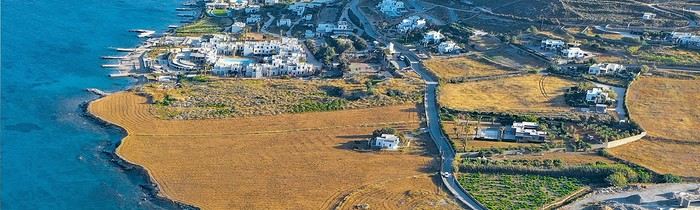
If you're dreaming of idyllic beaches and picturesque villages, you're in the right place! Known for its crystal-clear waters, millennia-old traditions, and preserved nature, Sardinia captivates travelers seeking a change of scenery. Here, you can enjoy a spectacular coastline, but also discover the authentic heart of the island, with its wild mountains and history-laden towns. Visiting Sardinia means taking the time to let yourself be lulled by the song of cicadas and the scent of the maquis. Escape to Sardinia with an all-inclusive stay at a 5-star hotel, allowing you to get away from it all.
To help you plan your itinerary, here’s an overview of ten must-see spots and a few off-the-beaten-path escapes.
Cagliari, the vibrant capital
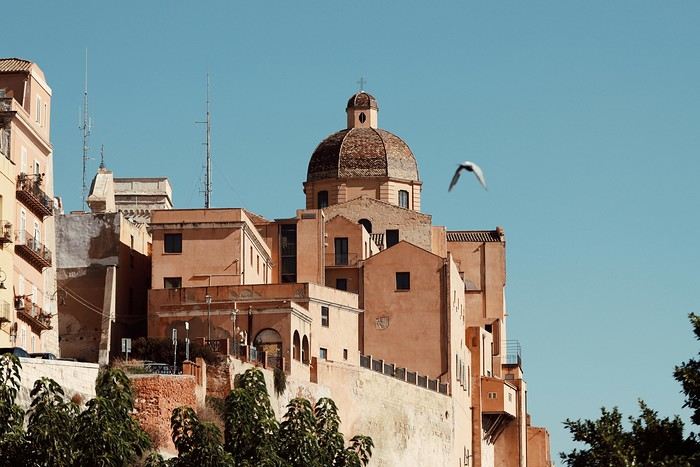
Often the first point of contact with the island, Cagliari charms with its historic center, dominated by the medieval Castello district. Stroll through the narrow streets to reach the Santa Maria Cathedral, then climb up to the Saint-Remy Bastion, where the view of the city and the sea is well worth the effort. Be sure to visit the San Benedetto market, where stalls of cheeses, cured meats, and fish reflect Sardinia’s culinary diversity.
Villasimius, fine sand and turquoise waters
Less than an hour’s drive from Cagliari, the Villasimius area is famous for its dreamy beaches, including Porto Giunco and Simius Beach. The white sand contrasts beautifully with the crystal-clear blue of the sea—a postcard-perfect setting. Diving enthusiasts will be delighted, while hikers can explore Capo Carbonara, a protected area home to pink flamingos.
Costa Smeralda, the glamorous side of the island
Renowned for its prestigious seaside resorts, the Costa Smeralda attracts yachts and lively evenings. Porto Cervo, its iconic port, draws travelers from around the world. Don’t worry—if you venture a little off the beaten path, you’ll find small, wild coves and trails lined with umbrella pines. A stop at a local wine bar to taste a glass of vermentino is highly recommended, if only to admire the view.
The La Maddalena Archipelago, a marine gem
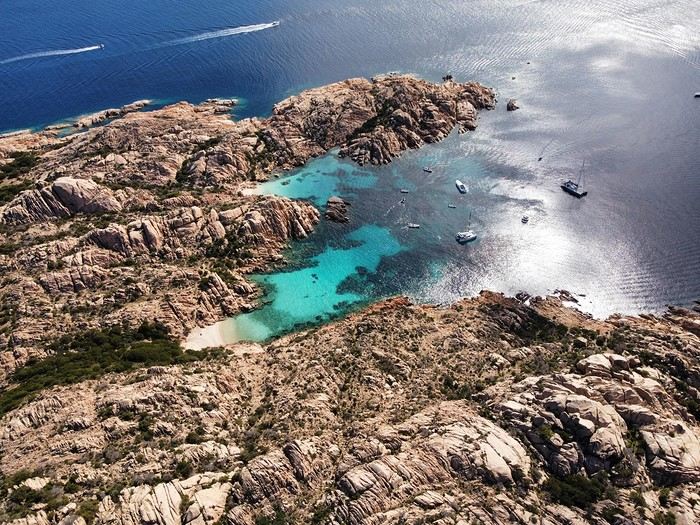
In the northeast, this national marine park comprises several islands with stunning beaches. La Maddalena, the main island, charms with its colorful houses and lively port. Offshore, wonders like Spargi Island or the famous Pink Beach of Budelli await visitors. It’s best to dedicate a full day—or more—to exploring this paradise by boat.
Alghero, the Catalan city
On the northwest coast, Alghero reveals a historic center encircled by ramparts, where the Catalan influence is still strong. Walk along the fortifications to watch the sunset, then sample the local cuisine, focused on seafood and wine. A short drive away, Neptune’s Grotto is a spectacular site: you can reach it via a staircase of 654 steps carved into the cliff or by boat for a more romantic approach.
Bosa, a painting under the open sky
Heading south along the coast from Alghero, you’ll reach Bosa, one of Sardinia’s most charming villages. Its colorful houses line the Temo River, overlooked by the Serravalle Castle. Wander the streets, admiring the vibrant facades, then settle into a small restaurant to taste the famous bottarga. The atmosphere is peaceful—this is la dolce vita.
The Piscinas Dunes, a desert by the sea
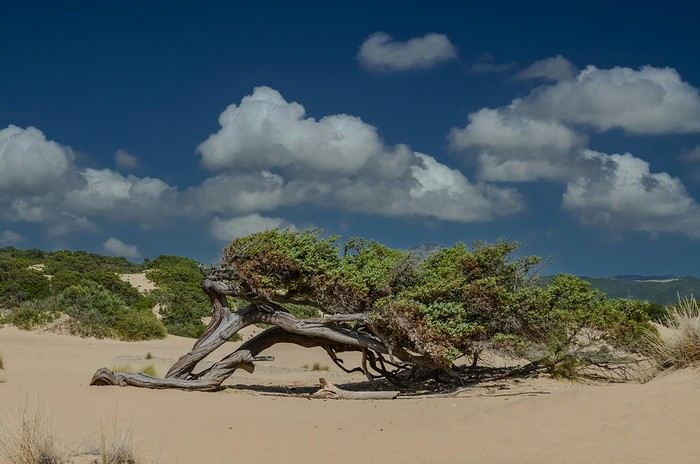
Head southwest to discover Piscinas, a natural site where sand dunes evoke a desert. Between sparse vegetation and turquoise sea, the contrast is simply stunning. The beaches, rarely crowded, offer a soothing tranquility. A perfect spot for lovers of wild landscapes, far from the hustle and bustle of seaside resorts.
Su Nuraxi di Barumini, a prehistoric relic
You can’t truly understand Sardinian history without mentioning the nuraghes, mysterious stone towers left by the Nuragic civilization. In Barumini, you can explore Su Nuraxi, the most famous, a UNESCO World Heritage site. Its millennia-old architecture and vast complex make it a must-visit for anyone wanting to delve into the island’s past.
Orgosolo and the mountainous interior
To experience the deep soul of Sardinia, head to the Supramonte massif. Orgosolo, once a bandit hideout, is known for its mural paintings adorning house facades. These artworks tell the local history, social struggles, and Sardinian pride. The surrounding nature is breathtaking: forests, canyons, and panoramic views invite you to hike.
The Gulf of Orosei, dreamy coves
Finally, it’s hard to miss the beaches of the Gulf of Orosei. Cala Luna, Cala Mariolu, and Cala Goloritzé are among the most beautiful in the Mediterranean. Accessible by boat or on foot, each reveals transparent waters perfect for diving. Time seems to stand still in these wild landscapes, immersing you in the charm of a preserved Sardinia. From its sandy beaches to its rugged mountains, the island offers a stunning array of scenery. Far beyond the Costa Smeralda, Sardinia is full of hidden corners where nature reigns supreme and traditions are still very much alive. Once there, let yourself be swept up by the Sardinian dolce vita, savor its generous cuisine, and soak in its legends.
Happy travels!
Our South Africa Trip Itinerary
Hi everyone,
I’m reaching out today to gather some great tips for the second part of our trip to South Africa, which will take place from 03/21 to 04/11. We don’t want to rush too much either. We’ll start in Cape Town (tickets already booked) since it seems like a good time to visit this region—except for the whales in Hermanus, which we won’t be seeing. Oh, and I almost forgot, we’re renting a car for both legs of the trip for more freedom.
The first part is planned like this:
- 03/21: Arrival in Cape Town, staying until 03/24 - 03/25: Visit to the Cape, including a stop in Simon’s Town - 2 nights in Stellenbosch from 03/26 to 03/28 - 3 nights in Knysna to explore the area from 03/28 to 03/31 - 03/31: Flight from Port Elizabeth to Durban, where we’ll spend one night in Umhlanga
After that, I’m a bit lost 🙂. Next, I was thinking of doing:
2 nights in St. Lucia 2 nights in Eswatini 4 nights in Kruger Park (2 nights in Skukuza and 2 nights in Balule to visit a private reserve) 1 night at Blyde Canyon 1 night somewhere to get closer to Johannesburg (Graskop?) since we’ll need to return the car by around 11:00 AM on 04/11.
So, does the second part make sense or not? I’ve done quite a bit of research, but I’m still a little lost . We can’t wait to be there, and your valuable advice would be very welcome. Thanks so much in advance, and have a great day! Luis
The first part is planned like this:
- 03/21: Arrival in Cape Town, staying until 03/24 - 03/25: Visit to the Cape, including a stop in Simon’s Town - 2 nights in Stellenbosch from 03/26 to 03/28 - 3 nights in Knysna to explore the area from 03/28 to 03/31 - 03/31: Flight from Port Elizabeth to Durban, where we’ll spend one night in Umhlanga
After that, I’m a bit lost 🙂. Next, I was thinking of doing:
2 nights in St. Lucia 2 nights in Eswatini 4 nights in Kruger Park (2 nights in Skukuza and 2 nights in Balule to visit a private reserve) 1 night at Blyde Canyon 1 night somewhere to get closer to Johannesburg (Graskop?) since we’ll need to return the car by around 11:00 AM on 04/11.
So, does the second part make sense or not? I’ve done quite a bit of research, but I’m still a little lost . We can’t wait to be there, and your valuable advice would be very welcome. Thanks so much in advance, and have a great day! Luis
15-Day Itinerary in the American West
Hello,
This isn’t our first trip to the USA, which explains why some "classic" spots are missing from this itinerary.
Could you let me know if anything should be changed, and also share your best recommendations for where to stay and how many nights to spend in each place?
We’re leaving in early September and will be there for 13 days, no kids.
Thanks in advance for your feedback, tips, and great deals!
Arrival in L.A.
Joshua Tree
Flagstaff
Grand Canyon
Bryce Canyon
Zion Ntl. Park
Las Vegas (stopover)
Sequoia Ntl. Park
San Simeon
Santa Barbara (2 nights)
L.A. airport
New Year's Day in Italy
As planned every year for quite some time now, here we are in Italy on the Ligurian Coast to spend a few days and celebrate New Year's 2024/2025.
Our base is in the charming town of Rapallo, between Genoa and La Spezia. We're right on the coast, with our hotel offering a sea view and access to the beach.
Not far from Rapallo, you can find, besides the Cinque Terre, Portofino, Santa Margherita Ligure, Chiavari, and others like Carrara and even Pisa. In short, there's plenty to do.
Five days there with so-so weather, and crowds but nothing overwhelming.
For the trip between home and our base, we're using an electric vehicle. It's manageable without any issues. The hotel has outlets, and otherwise, there are charging points all over Italy. And just to note, Tesla chargers are the best in terms of cost and charging speed.
There you have it.
Once we arrived on Sunday, December 29th, it was time to go for a walk, book a restaurant for Monday evening, and finalize the itinerary.
On Monday the 30th, we were lucky enough to see a beautiful sunrise from our window.
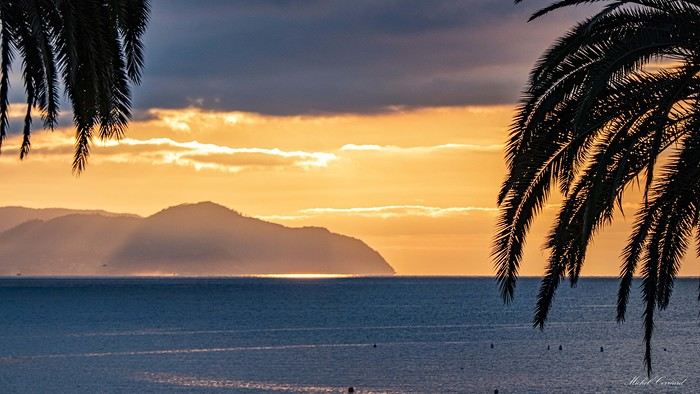

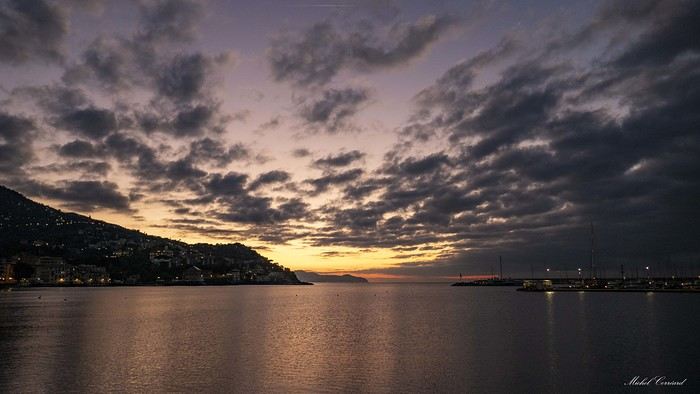
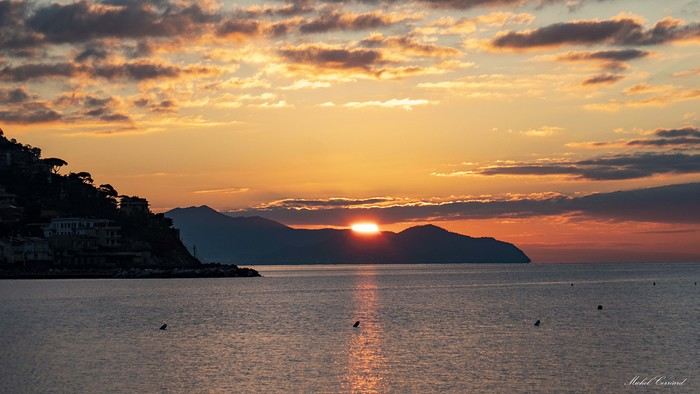
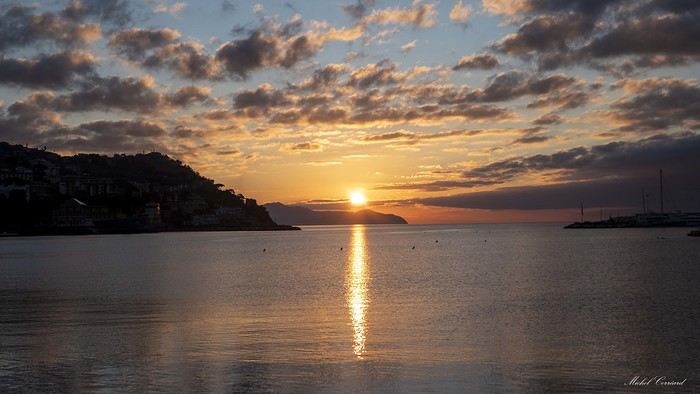
And the town of Rapallo in the early morning!
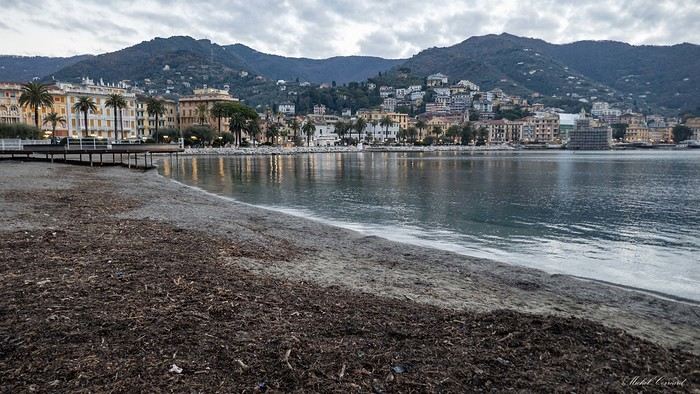
Our base is in the charming town of Rapallo, between Genoa and La Spezia. We're right on the coast, with our hotel offering a sea view and access to the beach.
Not far from Rapallo, you can find, besides the Cinque Terre, Portofino, Santa Margherita Ligure, Chiavari, and others like Carrara and even Pisa. In short, there's plenty to do.
Five days there with so-so weather, and crowds but nothing overwhelming.
For the trip between home and our base, we're using an electric vehicle. It's manageable without any issues. The hotel has outlets, and otherwise, there are charging points all over Italy. And just to note, Tesla chargers are the best in terms of cost and charging speed.
There you have it.
Once we arrived on Sunday, December 29th, it was time to go for a walk, book a restaurant for Monday evening, and finalize the itinerary.
On Monday the 30th, we were lucky enough to see a beautiful sunrise from our window.
And the town of Rapallo in the early morning!
From Caño Cristales to Tayrona Park
After about 12 hours of flying from Toulouse (via Paris), we landed in Bogotá six years after our first trip to Colombia. This time, our journey will be very different, with only this stop in the Colombian capital in common.
Our travel itinerary
Bogotá / La Macarena (Caño Cristales) / Villa de Leyva / Barichara / San Gil / Girón / Mompox / Ciénaga and the Santa Marta lagoon / Minca / Los Naranjos (Tayrona Park) / Bogotá.
Step 1: Bogotá (and Nemecon)
Bogotá (1/3)
This morning, we had a meet-up with Flora from Aventure Colombia, who helped me organize one of our stops, a few transfers, and tomorrow’s day trip, the program of which I changed at the last minute after deciding to skip the visit to the Salt Cathedral of Zipaquirá. Flora is a kind and lovely person, always available, and she did everything to answer my questions and give me advice.
She’s a local contact I highly recommend. Flora can help you plan your trip, whether you want a fully organized tour or, like us, just need assistance with a specific stop or one or more transfers between cities.
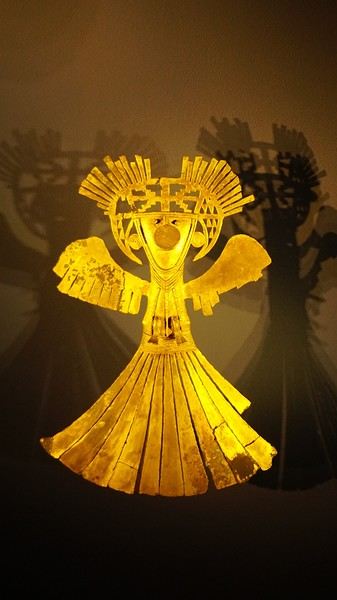
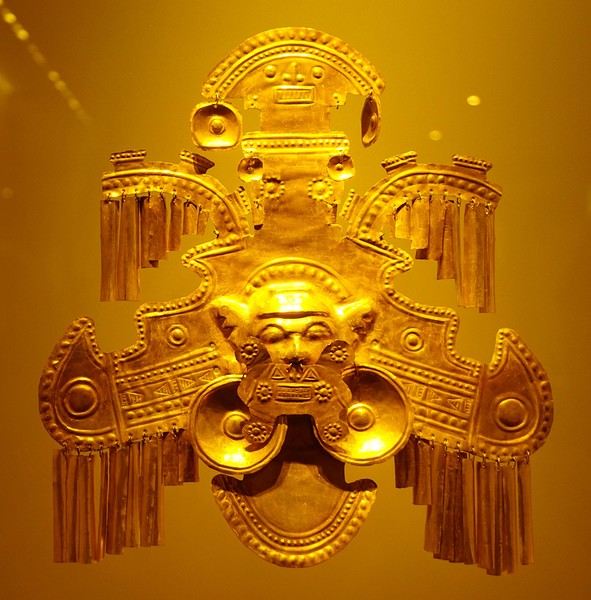
We left Flora after setting a meet-up for our return to Bogotá in a month. As we walked out of her agency, we headed to the wonderful Gold Museum, located just a hundred meters away. I was excited to revisit this amazing museum.
Note: Free entry for those over 60, regardless of nationality. Just show your passport.
Like six years ago, I was amazed by its museography, the beauty of the pieces on display, and that breathtaking shamanic room.
About two hours later, we decided to walk (careful, it’s a climb!) to the Monserrate cable car (3152m). Long wait to buy tickets and board the cable car! Once we arrived, a few raindrops, an impressive panoramic view of Bogotá’s vastness, a quick visit to the basilica (a pilgrimage site for Colombians), a walk through the tourist market, and at the top, plenty of small restaurants where we had our first Colombian meal. After our hearty lunch, we were lucky to see the sun return! No line for the descent. We then headed back to the hotel because Justine wanted to rest and recover from the trip. As for me, I continued my walk. I discovered a really nice craft market recommended by Flora, Pasaje Rivas, returned to Bolívar Square, and wandered through different streets, including the main pedestrian avenue (Calle 7), where there’s always something to see.
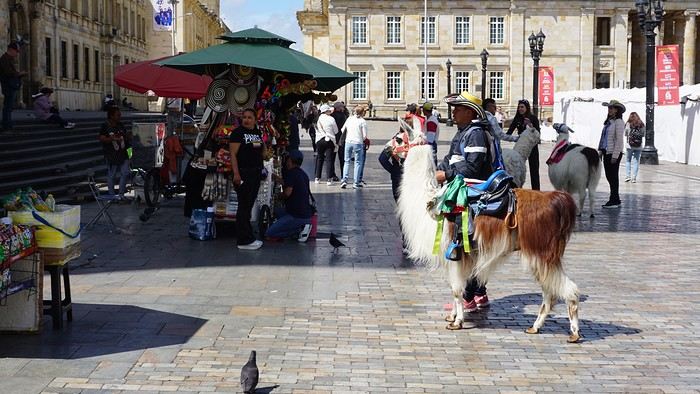
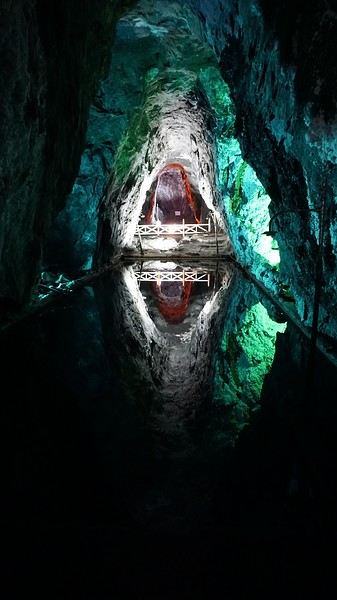
Tomorrow, a change of scenery as we head out for a hike in a small desert (Desierto de Chueca), located about 2 hours from Bogotá in the village of Nemecon. For this outing from Bogotá, with Flora’s help, we booked a car with a driver for the day. Flora also took care of booking the guide (since the site can only be visited with one). Nemecon (2/3) Today, we went to Nemecon to hike about 7.5 km in the ‘Desert of Checua.’ It’s nothing like sandy deserts! Instead, it’s geological formations sculpted by time, wind, and water. After two hours on the road—almost one of them spent navigating traffic jams with cars, trucks, buses, and a continuous flow of motorcycles on either side of our taxi—we reached Nemecon! The village center is really (too?) quiet. We met up with Deisy and headed toward the ‘desert,’ about twenty minutes away on a bumpy dirt road. Once there, a quick briefing, and off we went! Deisy didn’t stop talking (in Spanish) for over 3 hours!!! She told us so much about her region (flower farming, water management, traditions, songs, etc.), the origin of the site, and even mentioned Antonio Banderas, who filmed *The 33* in the village’s salt mine (the story of the survival of 33 Chilean miners after a collapse in their copper and gold mine). One hour of walking to reach the site, one hour to explore it, and one hour to return.
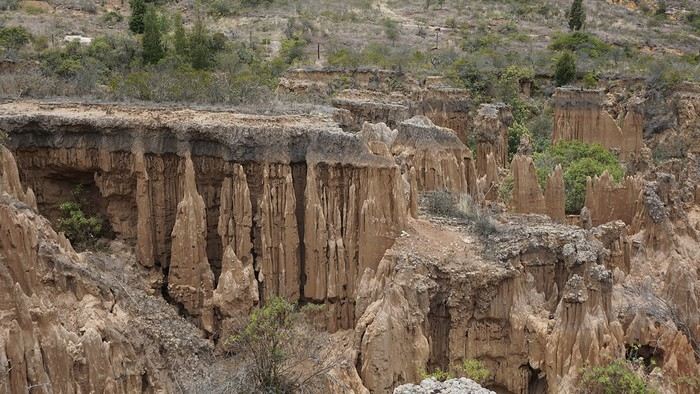
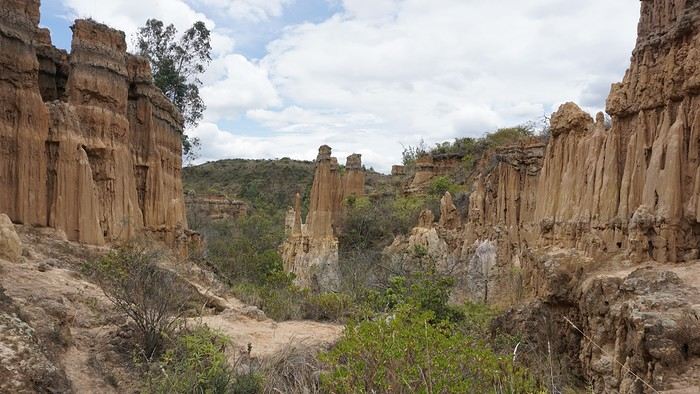
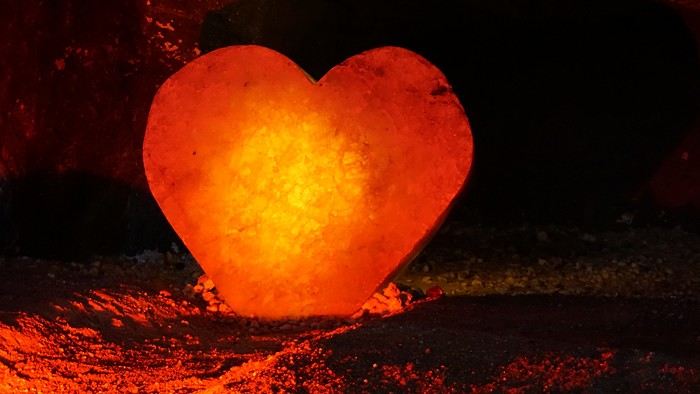
The advantage of this non-stop chatter was that it forced us to brush up on our Spanish at lightning speed. I even wondered if the effort to concentrate wasn’t more exhausting than the physical effort! Especially since on the way back, I got an oral quiz. Deisy wanted to make sure I remembered some of the information she’d given me during the visit: why is this rock white, that one red, and that one black? Back in the village, we had lunch at a restaurant recommended by Deisy before visiting the Nemecon salt mine. Before entering, a guide spent a good half-hour explaining the origin of the salt and the presence of many fossils in the area. Again, concentrating was tough because all the comments were exclusively in Spanish! An hour and a half wandering through the tunnels with a ‘lovely miner’s helmet’ on our heads!
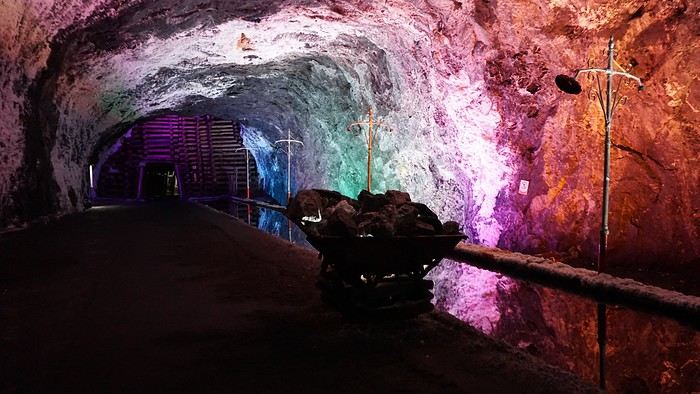
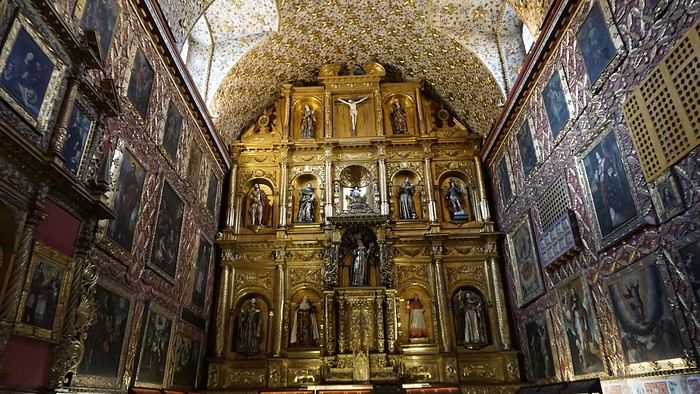
We met our driver at the mine entrance. The return to Bogotá was a bit faster, but traffic in the city center was still heavy! We arrived in front of our hotel between 8:00 and 8:30 PM. It’s been a pretty intense start to the trip! Tonight, our legs are tired. Hopefully, tomorrow will be a bit more relaxed! Bogotá (3/3) We started the day by visiting the Santa Clara Church Museum, located next to the presidential palace. Alejandra (from the local agency ‘Gaia Tours Colombia,’ which organized our stay in Caño Cristales (La Macarena)) had recommended this visit for its rich mural paintings.
A few hundred meters further, after crossing the Plaza Mayor again, we visited the cultural complex housing the Botero Museum, the Mint Museum, and the Bank of the Republic Art Museum. Note that entry is free for all three museums. Botero Museum: There are fewer works by Botero here than in the Medellín museum, but more paintings and sculptures by other artists, all from Botero’s private collection (donated to Colombia). Mint Museum: We limited ourselves to visiting one room (on Flora’s advice) where three gold and gemstone monstrances and a Christ with a crown of emerald thorns are displayed. Photos are not allowed. Art Museum: We visited two temporary exhibitions. Lunchtime came quickly. We had a good meal at a reasonably priced small restaurant in the La Candelaria micro-district, near the Chorro de Quevedo square. We decided to spend the afternoon wandering the streets and alleys of the historic center to discover local street art.
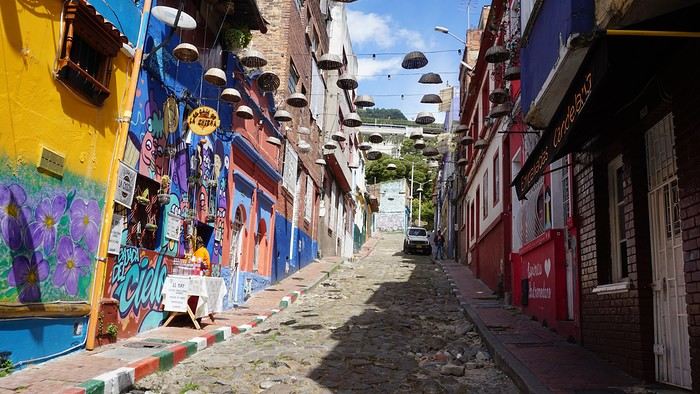
We also passed through very lively pedestrian streets. I also decided to revisit Pasaje Rivas to show Justine all the shops selling more or less artisanal products. Tomorrow morning, we fly to La Macarena at 10:30 AM. Not to dance (you’d be surprised if I told you we were going to take a South American dance class, right?!), but to visit the fabulous Caño Cristales, a river naturally colored by aquatic plants. The planned program includes hiking, horseback riding, canoeing, and swimming among these plants. This site was long inaccessible because the area was controlled by the FARC. Access and tourism development became possible after agreements and amnesty measures between the Colombian government and paramilitary groups. As in other regions, former FARC members have been able to transition into various tourism-related activities.
About two hours later, we decided to walk (careful, it’s a climb!) to the Monserrate cable car (3152m). Long wait to buy tickets and board the cable car! Once we arrived, a few raindrops, an impressive panoramic view of Bogotá’s vastness, a quick visit to the basilica (a pilgrimage site for Colombians), a walk through the tourist market, and at the top, plenty of small restaurants where we had our first Colombian meal. After our hearty lunch, we were lucky to see the sun return! No line for the descent. We then headed back to the hotel because Justine wanted to rest and recover from the trip. As for me, I continued my walk. I discovered a really nice craft market recommended by Flora, Pasaje Rivas, returned to Bolívar Square, and wandered through different streets, including the main pedestrian avenue (Calle 7), where there’s always something to see.
Tomorrow, a change of scenery as we head out for a hike in a small desert (Desierto de Chueca), located about 2 hours from Bogotá in the village of Nemecon. For this outing from Bogotá, with Flora’s help, we booked a car with a driver for the day. Flora also took care of booking the guide (since the site can only be visited with one). Nemecon (2/3) Today, we went to Nemecon to hike about 7.5 km in the ‘Desert of Checua.’ It’s nothing like sandy deserts! Instead, it’s geological formations sculpted by time, wind, and water. After two hours on the road—almost one of them spent navigating traffic jams with cars, trucks, buses, and a continuous flow of motorcycles on either side of our taxi—we reached Nemecon! The village center is really (too?) quiet. We met up with Deisy and headed toward the ‘desert,’ about twenty minutes away on a bumpy dirt road. Once there, a quick briefing, and off we went! Deisy didn’t stop talking (in Spanish) for over 3 hours!!! She told us so much about her region (flower farming, water management, traditions, songs, etc.), the origin of the site, and even mentioned Antonio Banderas, who filmed *The 33* in the village’s salt mine (the story of the survival of 33 Chilean miners after a collapse in their copper and gold mine). One hour of walking to reach the site, one hour to explore it, and one hour to return.
The advantage of this non-stop chatter was that it forced us to brush up on our Spanish at lightning speed. I even wondered if the effort to concentrate wasn’t more exhausting than the physical effort! Especially since on the way back, I got an oral quiz. Deisy wanted to make sure I remembered some of the information she’d given me during the visit: why is this rock white, that one red, and that one black? Back in the village, we had lunch at a restaurant recommended by Deisy before visiting the Nemecon salt mine. Before entering, a guide spent a good half-hour explaining the origin of the salt and the presence of many fossils in the area. Again, concentrating was tough because all the comments were exclusively in Spanish! An hour and a half wandering through the tunnels with a ‘lovely miner’s helmet’ on our heads!
We met our driver at the mine entrance. The return to Bogotá was a bit faster, but traffic in the city center was still heavy! We arrived in front of our hotel between 8:00 and 8:30 PM. It’s been a pretty intense start to the trip! Tonight, our legs are tired. Hopefully, tomorrow will be a bit more relaxed! Bogotá (3/3) We started the day by visiting the Santa Clara Church Museum, located next to the presidential palace. Alejandra (from the local agency ‘Gaia Tours Colombia,’ which organized our stay in Caño Cristales (La Macarena)) had recommended this visit for its rich mural paintings.
A few hundred meters further, after crossing the Plaza Mayor again, we visited the cultural complex housing the Botero Museum, the Mint Museum, and the Bank of the Republic Art Museum. Note that entry is free for all three museums. Botero Museum: There are fewer works by Botero here than in the Medellín museum, but more paintings and sculptures by other artists, all from Botero’s private collection (donated to Colombia). Mint Museum: We limited ourselves to visiting one room (on Flora’s advice) where three gold and gemstone monstrances and a Christ with a crown of emerald thorns are displayed. Photos are not allowed. Art Museum: We visited two temporary exhibitions. Lunchtime came quickly. We had a good meal at a reasonably priced small restaurant in the La Candelaria micro-district, near the Chorro de Quevedo square. We decided to spend the afternoon wandering the streets and alleys of the historic center to discover local street art.
We also passed through very lively pedestrian streets. I also decided to revisit Pasaje Rivas to show Justine all the shops selling more or less artisanal products. Tomorrow morning, we fly to La Macarena at 10:30 AM. Not to dance (you’d be surprised if I told you we were going to take a South American dance class, right?!), but to visit the fabulous Caño Cristales, a river naturally colored by aquatic plants. The planned program includes hiking, horseback riding, canoeing, and swimming among these plants. This site was long inaccessible because the area was controlled by the FARC. Access and tourism development became possible after agreements and amnesty measures between the Colombian government and paramilitary groups. As in other regions, former FARC members have been able to transition into various tourism-related activities.
Flights Cameroon-Bolivia: Which airlines?
Hi there, I'm Cameroonian and I'd like to know if there's a reliable airline where someone can buy their flight ticket and travel without any issues from Cameroon to Bolivia.
Feedback on the boat trip to Tayrona Park (Colombia)
Hi there, I just wanted to warn those who want to reach the beaches of Tayrona Park by lancha.
If you're not a fan of thrills or prone to seasickness, opt for the car instead.
We did this 40-minute lancha trip to Playa Cristal, with rough seas and huge waves that nearly capsized the boat several times.
And we arrived at Playa Cristal completely soaked—though that wasn’t too bad, really...
Anyway, the beaches and the park are amazing.
Anyway, the beaches and the park are amazing.
5 weeks in Guatemala in November 2024
A fantastic trip, dominated by the Altiplano, volcanoes, and especially the Mayan people!
Our route: Antigua – San Lucas de Toliman (Lake Atitlán) – Chichicastenango – Sayaxché – El Remate – Flores – Río Dulce – Livingston – Antigua I won’t describe our trip in detail but will highlight a few points that go beyond the usual routes and really won us over. In Antigua, it’s easy to take a chicken bus from the bus station next to the central market in the eastern part of the city to visit nearby villages. We went to Santa María de Jesús on a Sunday without seeing any other Westerners. We got lost in its colorful market, ate at a *comedor* with local dishes we didn’t find anywhere else, and were surrounded by incredibly welcoming Mayans. Several villages around Lake Atitlán are well-covered by travelers and guides like *Routard* and *Lonely Planet*, but if you want to stay somewhere more authentic, I recommend San Lucas de Toliman (we stayed at *Casa Qatzil*—great place!). It’s in the southeast of the lake, with a market on Tuesdays and Fridays, a central square full of locals (more of those super-friendly Mayans!), and the option to visit other villages by *lancha* (boat) for the day. A walk toward the lake lets you pass by the washhouses, and there are hikes accessible by *pick-up* (shared transport), like the twin volcanoes Tolimán and Atitlán or Cerro del Oro (less challenging!). We loved visiting Santa Catarina Palopó—get lost in its maze of steep alleys, admiring the blue facades with their characteristic paintings. There are direct *chicken bus* connections to Chichicastenango in 1.5 hours. Cheap and convenient, though a bit bumpy! Chichicastenango is famous for its market, described as the largest in Central America, on Thursdays and Sundays. A flood of tourists arrives between 10 AM and 1 PM, shuttled in by organized buses from Lake Atitlán and Antigua. But if you have time, stay overnight the day before and enjoy the market before 10 AM or in the afternoon. This little town (more of those welcoming Mayans!) is worth lingering in for a day or two to visit the cemetery, extraordinarily colorful and a site of Mayan rituals. Also take time to go to *Plaza Baktun*, a site considered sacred in Mayan culture where religious ceremonies take place around seven sculptures several meters tall. The ruins of Aguateca are barely excavated (most structures are still covered in vegetation) and are only accessible by boat, traveling up a tributary of the Río de la Pasión to the sound of howler monkeys and birdsong (1.5 hours from Sayaxché). We felt like we got a sense of daily life in the ancient city—not just its religious dimension—with its ravine for sheltering women and children during attacks, its cliff, and defensive walls. Alone with our *lancha* driver, who acted as our guide in the barely cleared jungle, this site doesn’t overlap with Tikal at all—the vibe is completely different. We stayed in El Remate instead of Flores to visit Yaxhá and Tikal, at *Posada Ixchel* (great place!). This quiet little town lets you stroll along the lake and hike in *Cerro Cahui*, a protected biotope leading to a viewpoint. Plus, it’s on the way to the sites, saving 45 minutes per trip.
Feel free to ask me questions about the places, accommodations, etc.—I’d be happy to answer!
Our route: Antigua – San Lucas de Toliman (Lake Atitlán) – Chichicastenango – Sayaxché – El Remate – Flores – Río Dulce – Livingston – Antigua I won’t describe our trip in detail but will highlight a few points that go beyond the usual routes and really won us over. In Antigua, it’s easy to take a chicken bus from the bus station next to the central market in the eastern part of the city to visit nearby villages. We went to Santa María de Jesús on a Sunday without seeing any other Westerners. We got lost in its colorful market, ate at a *comedor* with local dishes we didn’t find anywhere else, and were surrounded by incredibly welcoming Mayans. Several villages around Lake Atitlán are well-covered by travelers and guides like *Routard* and *Lonely Planet*, but if you want to stay somewhere more authentic, I recommend San Lucas de Toliman (we stayed at *Casa Qatzil*—great place!). It’s in the southeast of the lake, with a market on Tuesdays and Fridays, a central square full of locals (more of those super-friendly Mayans!), and the option to visit other villages by *lancha* (boat) for the day. A walk toward the lake lets you pass by the washhouses, and there are hikes accessible by *pick-up* (shared transport), like the twin volcanoes Tolimán and Atitlán or Cerro del Oro (less challenging!). We loved visiting Santa Catarina Palopó—get lost in its maze of steep alleys, admiring the blue facades with their characteristic paintings. There are direct *chicken bus* connections to Chichicastenango in 1.5 hours. Cheap and convenient, though a bit bumpy! Chichicastenango is famous for its market, described as the largest in Central America, on Thursdays and Sundays. A flood of tourists arrives between 10 AM and 1 PM, shuttled in by organized buses from Lake Atitlán and Antigua. But if you have time, stay overnight the day before and enjoy the market before 10 AM or in the afternoon. This little town (more of those welcoming Mayans!) is worth lingering in for a day or two to visit the cemetery, extraordinarily colorful and a site of Mayan rituals. Also take time to go to *Plaza Baktun*, a site considered sacred in Mayan culture where religious ceremonies take place around seven sculptures several meters tall. The ruins of Aguateca are barely excavated (most structures are still covered in vegetation) and are only accessible by boat, traveling up a tributary of the Río de la Pasión to the sound of howler monkeys and birdsong (1.5 hours from Sayaxché). We felt like we got a sense of daily life in the ancient city—not just its religious dimension—with its ravine for sheltering women and children during attacks, its cliff, and defensive walls. Alone with our *lancha* driver, who acted as our guide in the barely cleared jungle, this site doesn’t overlap with Tikal at all—the vibe is completely different. We stayed in El Remate instead of Flores to visit Yaxhá and Tikal, at *Posada Ixchel* (great place!). This quiet little town lets you stroll along the lake and hike in *Cerro Cahui*, a protected biotope leading to a viewpoint. Plus, it’s on the way to the sites, saving 45 minutes per trip.
Feel free to ask me questions about the places, accommodations, etc.—I’d be happy to answer!
Exploring California's major coastal cities in two weeks
We’d like to do the California coast in two weeks this September.
Two adults, rental car, and Airbnb.
First time except for San Francisco, where we’re starting a cruise.
Is San Francisco-Los Angeles-San Diego doable?
If not, what are the must-sees?
Thanks! !
Domestic flights and itineraries in South Africa
Hi,
We're traveling as a family with 2 kids (7 and 15 years old) in July 2025 for a road trip in South Africa. We have a round-trip ticket from Paris to Johannesburg and are considering taking 2 domestic flights: one between Johannesburg and Cape Town and another between Cape Town and Durban.
Do you know when it's best to book the tickets to get the best fares and which airline to choose? I'm currently finding tickets on Safair for 300 € for 4 between Johannesburg and Cape Town. What do you think?
Also, I have a slight hesitation. We're going for 18 days. Do you think it's better to focus on the northern part of the country, including Kruger, or is it worth visiting the Cape region as well (the kids dream of seeing whales!)?
Thanks so much for your advice. I’d really appreciate it!
Have a great evening,
Sophie
Spending New Year's Eve in Venice?
Hi there,
We have the option to go to Venice from December 31st to January 4th or 5th.
But is it a good idea?
French-speaking guide taxis
Hi everyone!
So happy to be back on this forum—it’s helped me so much before, and I’m thrilled it’s open again! 🙂
I’m currently planning a new cruise for early December and I’d love to know if you can recommend any French-speaking guide taxis in Genoa, Naples, Palermo, Tunis, and Barcelona. A friend joining us has some difficulty walking (but isn’t in a wheelchair), and do you happen to know their rates for about 6 hours?
Thanks in advance for your tips!
3-week itinerary in Panama
Hi everyone,
Planning a trip to Panama... Itinerary still in the works...
I’d love to hear your thoughts on this 3-week plan for February/March 2025:
Day 1: arrive in PC in the late afternoon
Day 2-3: PC
Day 4-5-6: Valle de Anton
Day 7-8-9: Santa Catalina
Day 10-11-12: Boquete
Day 13-14-15: Boca Chica
Day 16-17: Santa Fe
Day 18-19: Gamboa
Day 20: PC
Day 21: flight back to France at 2:00 PM
Thanks for your feedback