Results for "Port-Camargue+|+127"
42871 results found.
6-day road trip in southern and western Turkey: our experience
Hi everyone,
At the end of October 2024, we were lucky enough to spend a little over a week in Turkey—heading to Antalya. We then set off on a 6-day road trip exploring southern and western Turkey! Since planning a trip isn’t always easy, we’re sharing our itinerary and feedback on the different places we visited.
With a few photos, we hope to wow you 😎!
Here’s our loop itinerary starting from Antalya (a packed schedule, but it let us see so much):
Day 1 - Antalya (Kaleiçi, the historic center of Antalya) and Lara Beach
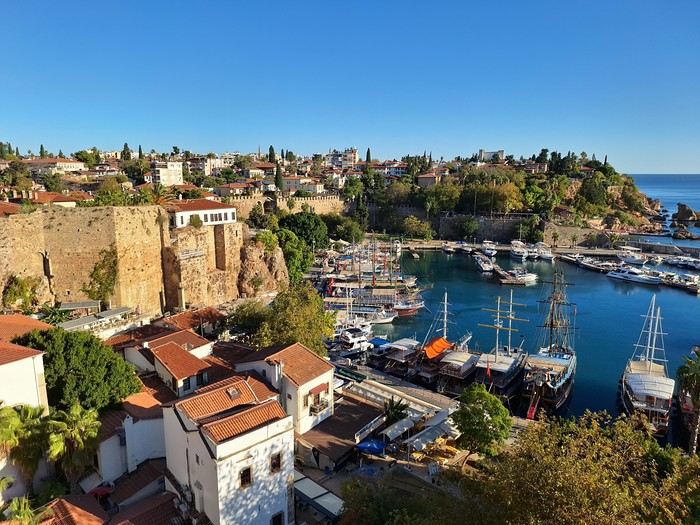
Day 2 - The Lycian site of Myra and the port of Kaş
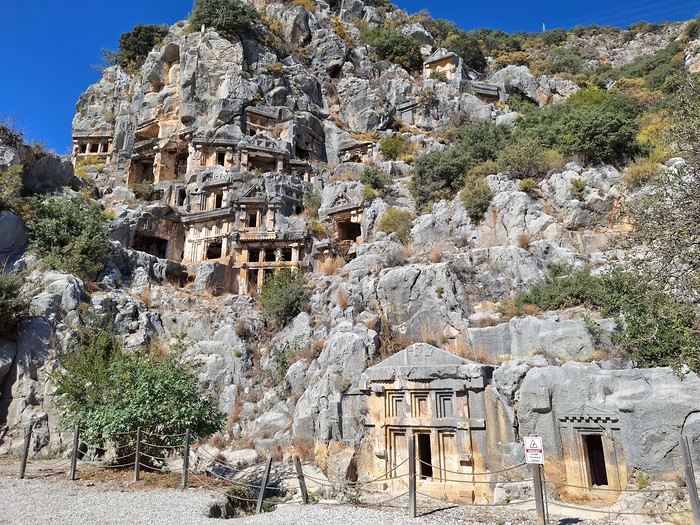
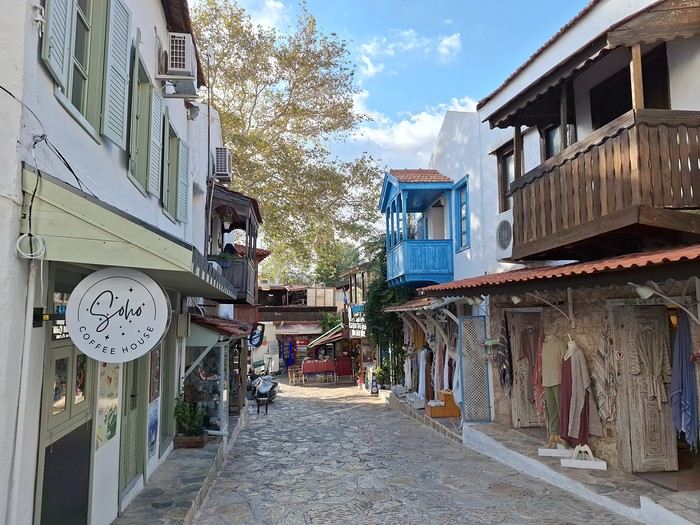
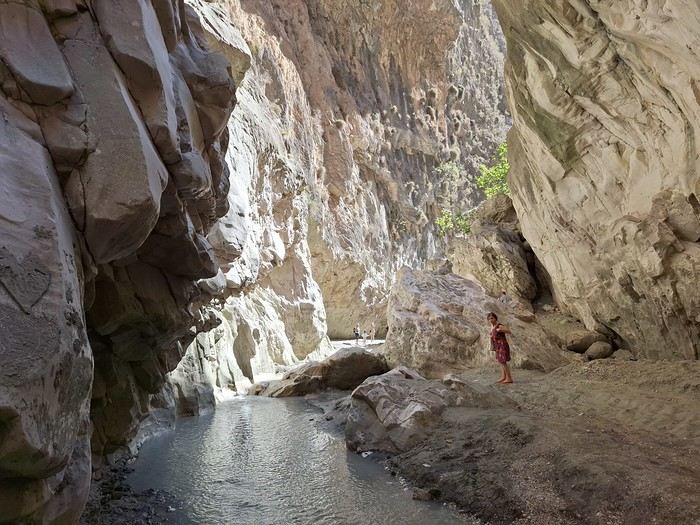
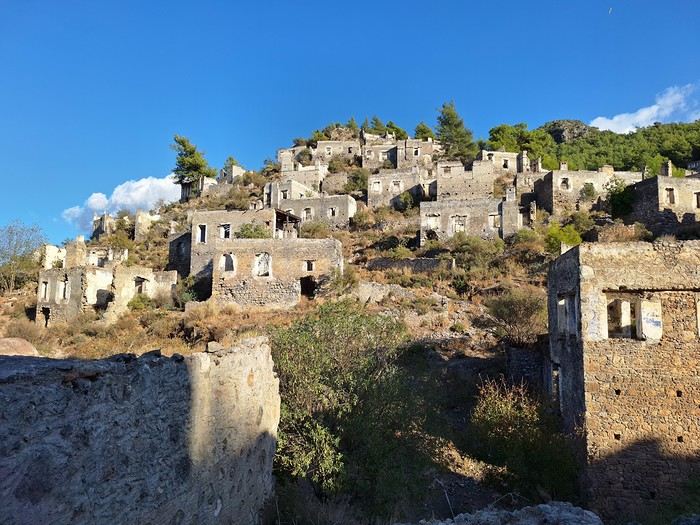
Day 3 - The Turquoise Coast: Kaputaş Beach, the beach and dunes of Patara, the Saklıkent Canyon, the “ghost village” of Kayaköy, the ruins of Telmessos, and the Tomb of Amyntas
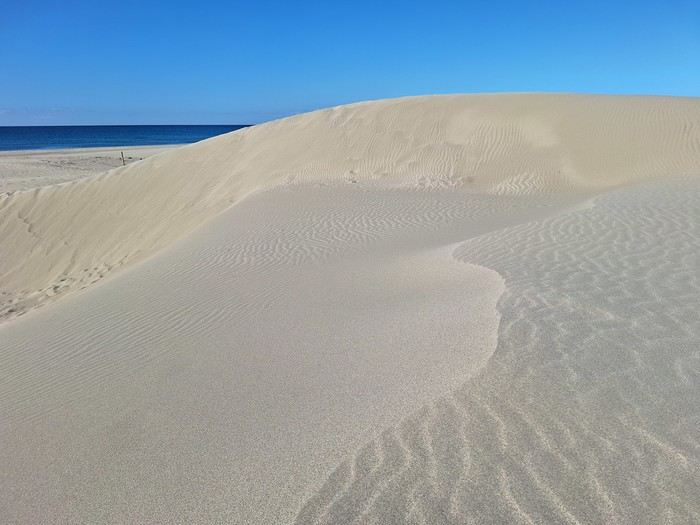
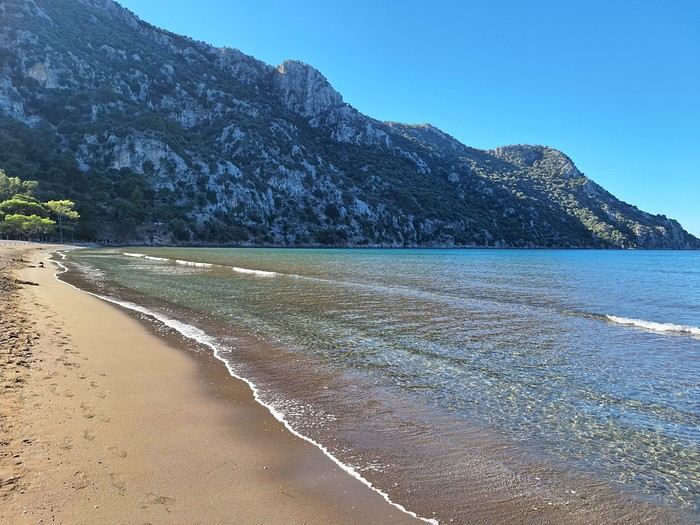
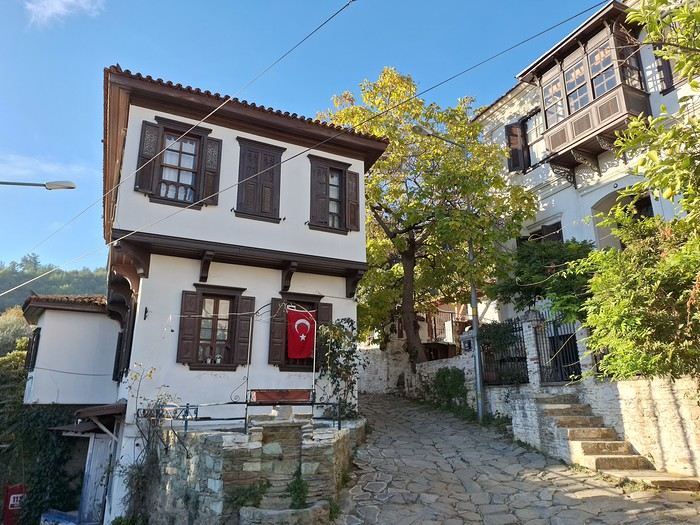
Day 4 - The Iztuzu Beach and the village of Şirince
Day 5 - The ancient city of Ephesus and the rural village of Birgi
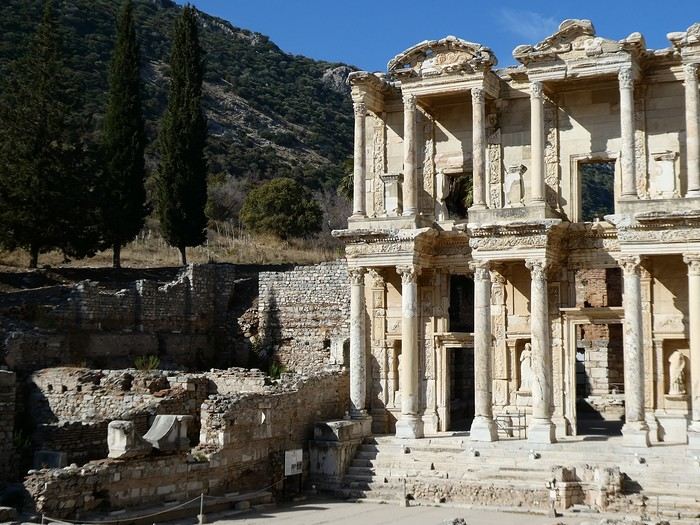
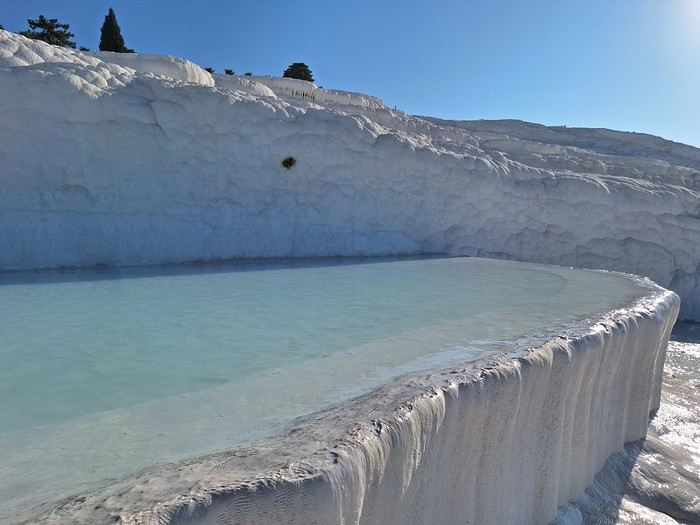
Day 6 - Pamukkale and Hierapolis, then the seaside resort of Side before returning to Antalya (Day 7 in the morning).
So, does this make you want to take a little road trip in Turkey or what 😉?
For each visit, we’ve shared on our personal blog https://ideesdevoyage.fr (type it directly into your address bar) the practical info you need to know (hours, prices, etc.), but most importantly, tips to make the most of your visit (where to park for free, how to avoid crowds, the best time for great lighting, must-see photo spots, and more).
We hope this itinerary and our tips will inspire you and help you plan your future trip to southern and western Turkey.
If you’d like to react or have any questions, don’t hesitate!
At the end of October 2024, we were lucky enough to spend a little over a week in Turkey—heading to Antalya. We then set off on a 6-day road trip exploring southern and western Turkey! Since planning a trip isn’t always easy, we’re sharing our itinerary and feedback on the different places we visited.
With a few photos, we hope to wow you 😎!
Here’s our loop itinerary starting from Antalya (a packed schedule, but it let us see so much):
Day 1 - Antalya (Kaleiçi, the historic center of Antalya) and Lara Beach
Day 2 - The Lycian site of Myra and the port of Kaş
Day 3 - The Turquoise Coast: Kaputaş Beach, the beach and dunes of Patara, the Saklıkent Canyon, the “ghost village” of Kayaköy, the ruins of Telmessos, and the Tomb of Amyntas
Day 4 - The Iztuzu Beach and the village of Şirince
Day 5 - The ancient city of Ephesus and the rural village of Birgi
Day 6 - Pamukkale and Hierapolis, then the seaside resort of Side before returning to Antalya (Day 7 in the morning).
So, does this make you want to take a little road trip in Turkey or what 😉?
For each visit, we’ve shared on our personal blog https://ideesdevoyage.fr (type it directly into your address bar) the practical info you need to know (hours, prices, etc.), but most importantly, tips to make the most of your visit (where to park for free, how to avoid crowds, the best time for great lighting, must-see photo spots, and more).
We hope this itinerary and our tips will inspire you and help you plan your future trip to southern and western Turkey.
If you’d like to react or have any questions, don’t hesitate!
One-Month Itinerary from San Francisco to Seattle via Vancouver BC
Hi there,
I’m planning a month-long trip that’ll take me from San Francisco to Seattle, stopping in Vancouver BC along the way. After tweaking this route every which way and trying to balance must-see spots with more relaxed stops (like the Oregon coast), I’ve landed on this itinerary—I’d love your thoughts!
Days 1 and 2: San Francisco Days 3 and 4: Lassen Volcanic Park Days 5 and 6: Crater Lake Days 7 to 9: Portland Day 10: Astoria or Cannon Beach Day 11: Ruby Beach or Forks (for the Hoh Rain Forest) Days 12 and 13: Port Angeles (for Hurricane Ridge) Day 14: Victoria (Vancouver Island) Days 15 to 17: Ucluelet (Vancouver Island) Days 18 to 20: Vancouver BC Days 21 and 22: North Cascades NP Days 23 to 25: Mt. Rainier Days 26 to 28: Seattle
Of course, there’s travel time built in—for example, the third day on Vancouver Island will mostly be eaten up by getting back to the mainland and Vancouver.
Do you think there are any extra stops or anything I’ve missed? A month feels like a lot and not a lot at the same time… Thanks!
I’m planning a month-long trip that’ll take me from San Francisco to Seattle, stopping in Vancouver BC along the way. After tweaking this route every which way and trying to balance must-see spots with more relaxed stops (like the Oregon coast), I’ve landed on this itinerary—I’d love your thoughts!
Days 1 and 2: San Francisco Days 3 and 4: Lassen Volcanic Park Days 5 and 6: Crater Lake Days 7 to 9: Portland Day 10: Astoria or Cannon Beach Day 11: Ruby Beach or Forks (for the Hoh Rain Forest) Days 12 and 13: Port Angeles (for Hurricane Ridge) Day 14: Victoria (Vancouver Island) Days 15 to 17: Ucluelet (Vancouver Island) Days 18 to 20: Vancouver BC Days 21 and 22: North Cascades NP Days 23 to 25: Mt. Rainier Days 26 to 28: Seattle
Of course, there’s travel time built in—for example, the third day on Vancouver Island will mostly be eaten up by getting back to the mainland and Vancouver.
Do you think there are any extra stops or anything I’ve missed? A month feels like a lot and not a lot at the same time… Thanks!
Taking the train to Cinque Terre during a cruise stop
Hi. I’m going on a cruise in May and have an excursion to Cinque Terre. I’d like to do it on my own by taking the train after getting off the ship. Can anyone tell me how it works, and especially if it’s doable with the ship’s schedule? Thanks for your help!
Our South Africa Trip Itinerary
Hi everyone,
I’m reaching out today to gather some great tips for the second part of our trip to South Africa, which will take place from 03/21 to 04/11. We don’t want to rush too much either. We’ll start in Cape Town (tickets already booked) since it seems like a good time to visit this region—except for the whales in Hermanus, which we won’t be seeing. Oh, and I almost forgot, we’re renting a car for both legs of the trip for more freedom.
The first part is planned like this:
- 03/21: Arrival in Cape Town, staying until 03/24 - 03/25: Visit to the Cape, including a stop in Simon’s Town - 2 nights in Stellenbosch from 03/26 to 03/28 - 3 nights in Knysna to explore the area from 03/28 to 03/31 - 03/31: Flight from Port Elizabeth to Durban, where we’ll spend one night in Umhlanga
After that, I’m a bit lost 🙂. Next, I was thinking of doing:
2 nights in St. Lucia 2 nights in Eswatini 4 nights in Kruger Park (2 nights in Skukuza and 2 nights in Balule to visit a private reserve) 1 night at Blyde Canyon 1 night somewhere to get closer to Johannesburg (Graskop?) since we’ll need to return the car by around 11:00 AM on 04/11.
So, does the second part make sense or not? I’ve done quite a bit of research, but I’m still a little lost . We can’t wait to be there, and your valuable advice would be very welcome. Thanks so much in advance, and have a great day! Luis
The first part is planned like this:
- 03/21: Arrival in Cape Town, staying until 03/24 - 03/25: Visit to the Cape, including a stop in Simon’s Town - 2 nights in Stellenbosch from 03/26 to 03/28 - 3 nights in Knysna to explore the area from 03/28 to 03/31 - 03/31: Flight from Port Elizabeth to Durban, where we’ll spend one night in Umhlanga
After that, I’m a bit lost 🙂. Next, I was thinking of doing:
2 nights in St. Lucia 2 nights in Eswatini 4 nights in Kruger Park (2 nights in Skukuza and 2 nights in Balule to visit a private reserve) 1 night at Blyde Canyon 1 night somewhere to get closer to Johannesburg (Graskop?) since we’ll need to return the car by around 11:00 AM on 04/11.
So, does the second part make sense or not? I’ve done quite a bit of research, but I’m still a little lost . We can’t wait to be there, and your valuable advice would be very welcome. Thanks so much in advance, and have a great day! Luis
Mediterranean Cruise on the MSC Sinfonia
Hi,
We’re leaving at the end of March for a cruise on the MSC Sinfonia. We’ll be departing from Athens, then Izmir, Istanbul, Corfu, Bari, and back to Athens.
Would anyone have any info on the Sinfonia, and especially about the excursions in Corfu and Bari? Can we explore the city on foot, or are there MSC shuttles available?
Thanks for any tips you can share!
Thanks for any tips you can share!
Car rental in Patras-Araxos (northern Peloponnese)
Hi, could you recommend a local and reliable car rental agency, not one of the big international chains, at Patras-Araxos Airport in northern Peloponnese
or a bit further into town?
Thanks.
Choosing between two MSC cruises to Norway
Hi there,
Is it possible to help me choose between two MSC cruises to Norway?
The first one: departs from Copenhagen, then Hellesylt, Nordfjordeid, Flåm, and finally Kiel.
The second one: departs from Warnemünde, then Sandnes, Bergen, Kristiansand, and finally Hamburg.
Note that the price difference is 150 €, with the first one being more expensive.
Cheers,
Unusual Night on a Boat: The New Trend
Looking for a new way to travel that’s both unusual, affordable, and comfortable? Look no further—renting a docked boat is THE trend right now. As accessible as a hotel room, as unique as a treehouse, and with the comfort of a real floating home, this innovative concept is sure to appeal to anyone craving new experiences.
I. Why Spend an Unusual Night on a Boat?
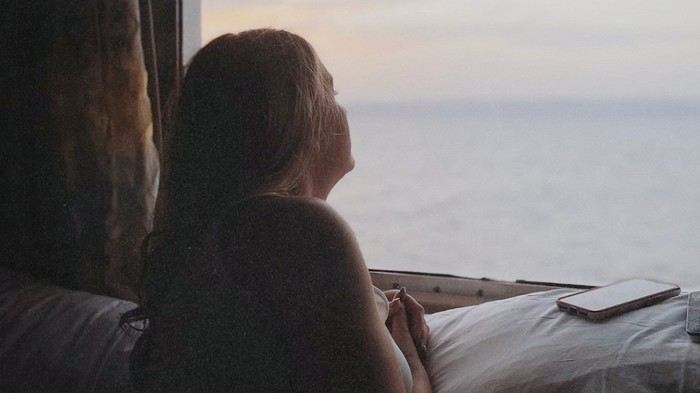
Imagine this: you wake up to the sound of gentle waves, a soft ray of sunlight dancing on the water’s surface as you enjoy breakfast on deck. You’re just steps away from restaurants, shops, and points of interest, since your accommodation is perfectly located in the heart of the harbor. This experience, which few have had the chance to try yet, is within everyone’s reach thanks to docked boat rentals.
Discover why spending an unusual night on a boat is the next big trend. Whether it’s for a romantic weekend, a family vacation, or a getaway with friends, a night on a docked boat offers a one-of-a-kind experience. Unlike a standard hotel room, where walls limit your view, on a boat, it’s the vast expanse of water that surrounds you. It’s a refreshing and calming escape, where simply waking up on the water turns your stay into a memorable moment. Another plus? The variety of boats available.
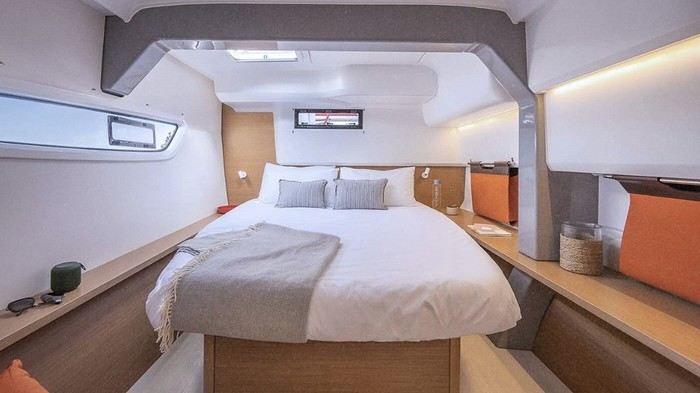
Each type of boat brings its own advantages and a different experience:
Sailboat: Ideal for families or couples looking for an authentic experience. Sailboats offer irresistible nautical charm with their optimized spaces and cozy atmosphere. Catamaran: Spacious and stable, perfect for groups of friends or large families. With its wide outdoor areas, it’s made for socializing. Yacht: Synonymous with luxury and elegance, it’s the perfect choice for marking a special occasion, like a birthday or a marriage proposal. Houseboat: For those who prefer a more nature-focused vibe, houseboats offer a bucolic experience along canals or rivers.
Beyond their unique charm, these boats are often just as affordable as a hotel room. Take, for example, a sailboat in Hendaye priced at 129 € per night for four people. For that price, you’re not just getting an unusual place to stay—you’re getting the equivalent of a floating cottage with a bedroom, bathroom, fully equipped kitchen, and outdoor spaces. It’s the perfect choice for anyone looking to combine comfort, authenticity, and originality.
II. Sleeping on a Boat—Yes, But Where?
Docked boat rentals aren’t limited to just one or two destinations—far from it. With BedBoat, you can explore numerous ports in France and even the Caribbean.
Here’s a look at some top destinations:
Atlantic Coast:
Hendaye: This Basque port offers a picturesque setting between sea and mountains. Perfect for discovering Basque culture and traditions. La Rochelle: With its iconic old port, medieval towers, and cobbled streets, it’s an ideal city for a historic and gastronomic weekend. Arcachon: Known for its oysters and the majestic Dune of Pilat, this destination is a must for nature lovers.
Mediterranean Coast:
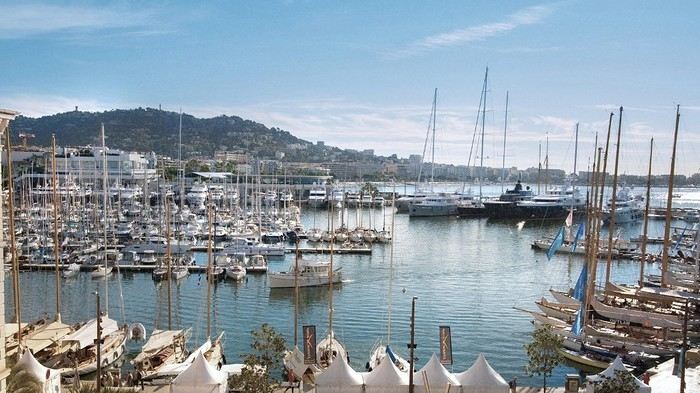
Cannes: Who hasn’t dreamed of spending a night in the port of this legendary city, surrounded by yachts and just steps from the Croisette? Toulon: A dynamic and authentic port, perfect for a getaway between land and sea. Mandelieu-La Napoule: A charming town just a few kilometers from Cannes, known for its peaceful landscapes and seaside château.
The Caribbean:
Martinique and Guadeloupe: Here, the experience takes on a whole new dimension. Picture yourself on a catamaran, lulled by turquoise waters. It’s the ultimate dream for anyone seeking a paradise getaway.
Rivers:
Bordeaux: Docked in the heart of this historic city, your boat lets you explore its vineyards and UNESCO-listed architecture. Lyon: Enjoy the Rhône or Saône rivers for a unique experience in this foodie city. Asnières-sur-Seine: Just a stone’s throw from Paris, discover a surprising stay at the capital’s doorstep. Saint-Florentin: A more rural option for those seeking tranquility and nature.
No matter the destination, spending an unusual night on a boat gives you the luxury of choosing between the buzz of big cities or the peace of more secluded spots. Unlike treehouses, which are often remote, boats let you be right in the heart of the action while still enjoying privacy.
III. BedBoat: An Innovative Startup
Did you know France has over a million boats docked in its ports? Yet, on average, these boats are only used 10 to 15 days a year. Based on this observation, three friends—Félix, Fabian, and Luke—decided to create BedBoat, the first platform dedicated to docked boat rentals.
The idea is simple but brilliant: turn these underused boats into tourist accommodations. This not only helps owners cover their costs but also lets travelers live a unique experience—all without building new infrastructure, making it both an economical and eco-friendly solution. Far from being just a booking platform, BedBoat offers a true immersion into the world of boating. It’s an innovative way to discover France’s and the Caribbean’s most beautiful ports while enjoying all the perks of an unusual stay. For cities, it’s also a great opportunity. Boats allow them to welcome more tourists without overloading the traditional rental market. Everyone wins: owners, travelers, and even locals.
Docked boat rentals are much more than just a trend—they’re a revolution in the world of tourism. Whether you’re looking for a romantic getaway, a family vacation, or a trip with friends, BedBoat opens the door to a whole new world. So, ready to set sail on your next adventure?
I. Why Spend an Unusual Night on a Boat?
Imagine this: you wake up to the sound of gentle waves, a soft ray of sunlight dancing on the water’s surface as you enjoy breakfast on deck. You’re just steps away from restaurants, shops, and points of interest, since your accommodation is perfectly located in the heart of the harbor. This experience, which few have had the chance to try yet, is within everyone’s reach thanks to docked boat rentals.
Discover why spending an unusual night on a boat is the next big trend. Whether it’s for a romantic weekend, a family vacation, or a getaway with friends, a night on a docked boat offers a one-of-a-kind experience. Unlike a standard hotel room, where walls limit your view, on a boat, it’s the vast expanse of water that surrounds you. It’s a refreshing and calming escape, where simply waking up on the water turns your stay into a memorable moment. Another plus? The variety of boats available.
Each type of boat brings its own advantages and a different experience:
Sailboat: Ideal for families or couples looking for an authentic experience. Sailboats offer irresistible nautical charm with their optimized spaces and cozy atmosphere. Catamaran: Spacious and stable, perfect for groups of friends or large families. With its wide outdoor areas, it’s made for socializing. Yacht: Synonymous with luxury and elegance, it’s the perfect choice for marking a special occasion, like a birthday or a marriage proposal. Houseboat: For those who prefer a more nature-focused vibe, houseboats offer a bucolic experience along canals or rivers.
Beyond their unique charm, these boats are often just as affordable as a hotel room. Take, for example, a sailboat in Hendaye priced at 129 € per night for four people. For that price, you’re not just getting an unusual place to stay—you’re getting the equivalent of a floating cottage with a bedroom, bathroom, fully equipped kitchen, and outdoor spaces. It’s the perfect choice for anyone looking to combine comfort, authenticity, and originality.
II. Sleeping on a Boat—Yes, But Where?
Docked boat rentals aren’t limited to just one or two destinations—far from it. With BedBoat, you can explore numerous ports in France and even the Caribbean.
Here’s a look at some top destinations:
Atlantic Coast:
Hendaye: This Basque port offers a picturesque setting between sea and mountains. Perfect for discovering Basque culture and traditions. La Rochelle: With its iconic old port, medieval towers, and cobbled streets, it’s an ideal city for a historic and gastronomic weekend. Arcachon: Known for its oysters and the majestic Dune of Pilat, this destination is a must for nature lovers.
Mediterranean Coast:
Cannes: Who hasn’t dreamed of spending a night in the port of this legendary city, surrounded by yachts and just steps from the Croisette? Toulon: A dynamic and authentic port, perfect for a getaway between land and sea. Mandelieu-La Napoule: A charming town just a few kilometers from Cannes, known for its peaceful landscapes and seaside château.
The Caribbean:
Martinique and Guadeloupe: Here, the experience takes on a whole new dimension. Picture yourself on a catamaran, lulled by turquoise waters. It’s the ultimate dream for anyone seeking a paradise getaway.
Rivers:
Bordeaux: Docked in the heart of this historic city, your boat lets you explore its vineyards and UNESCO-listed architecture. Lyon: Enjoy the Rhône or Saône rivers for a unique experience in this foodie city. Asnières-sur-Seine: Just a stone’s throw from Paris, discover a surprising stay at the capital’s doorstep. Saint-Florentin: A more rural option for those seeking tranquility and nature.
No matter the destination, spending an unusual night on a boat gives you the luxury of choosing between the buzz of big cities or the peace of more secluded spots. Unlike treehouses, which are often remote, boats let you be right in the heart of the action while still enjoying privacy.
III. BedBoat: An Innovative Startup
Did you know France has over a million boats docked in its ports? Yet, on average, these boats are only used 10 to 15 days a year. Based on this observation, three friends—Félix, Fabian, and Luke—decided to create BedBoat, the first platform dedicated to docked boat rentals.
The idea is simple but brilliant: turn these underused boats into tourist accommodations. This not only helps owners cover their costs but also lets travelers live a unique experience—all without building new infrastructure, making it both an economical and eco-friendly solution. Far from being just a booking platform, BedBoat offers a true immersion into the world of boating. It’s an innovative way to discover France’s and the Caribbean’s most beautiful ports while enjoying all the perks of an unusual stay. For cities, it’s also a great opportunity. Boats allow them to welcome more tourists without overloading the traditional rental market. Everyone wins: owners, travelers, and even locals.
Docked boat rentals are much more than just a trend—they’re a revolution in the world of tourism. Whether you’re looking for a romantic getaway, a family vacation, or a trip with friends, BedBoat opens the door to a whole new world. So, ready to set sail on your next adventure?
Planning our Caribbean stopovers
Hi there, we're leaving on January 30th for a Caribbean cruise—there are four couples in our group—and we'd like to organize our own stopovers.
Do you have any great tips for visiting each island, with a preference for landscapes over beaches? Which island has buses to get around, or options for 4x4s/taxis? We're open to all your ideas!
Do you have any great tips for visiting each island, with a preference for landscapes over beaches? Which island has buses to get around, or options for 4x4s/taxis? We're open to all your ideas!
Shipping a 4x4 to Durban from Réunion Island
Hi everyone,
I’m planning a road trip through Southern Africa during the 2025 austral winter—South Africa, Zimbabwe, Zambia, Malawi... and if I feel like it, maybe back to Namibia, Botswana, etc. To make this happen, I’d like to ship my 4x4 in a high-cube container and pick it up in Durban. Has anyone had experience with customs clearance at the port of Durban (South Africa) using a CPD (Carnet de Passage en Douane)? Thanks in advance for any tips or firsthand experience on this!
Have a great day! Salar de Uyuni - Bolivia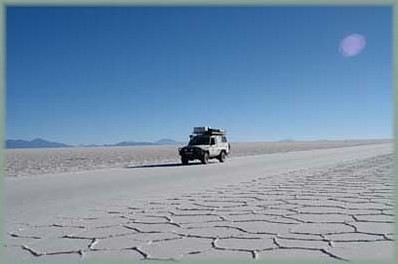
I’m planning a road trip through Southern Africa during the 2025 austral winter—South Africa, Zimbabwe, Zambia, Malawi... and if I feel like it, maybe back to Namibia, Botswana, etc. To make this happen, I’d like to ship my 4x4 in a high-cube container and pick it up in Durban. Has anyone had experience with customs clearance at the port of Durban (South Africa) using a CPD (Carnet de Passage en Douane)? Thanks in advance for any tips or firsthand experience on this!
Have a great day! Salar de Uyuni - Bolivia
NCL Spirit for Northeast Asia
Hi, I'm currently looking into a cruise departing from Taipei with an arrival in Seoul.
It really interests me, and I’ve put a hold on it. However, it’s a guaranteed balcony cabin, which makes me a bit nervous—has anyone had this type of cabin with a bad experience?
Any info on the NCL Spirit?
Regarding the stops, I’d love to know what we can do with an overnight in Osaka, and the same for an overnight in Yokohama (not necessarily Tokyo).
Thanks
Regarding the stops, I’d love to know what we can do with an overnight in Osaka, and the same for an overnight in Yokohama (not necessarily Tokyo).
Thanks
Mora Mora in Boraha, One Week on a Little Malagasy Polynesian Vibe
Just back from a week on Nosy Boraha, better known as Île Sainte-Marie. Mostly on Île aux Nattes, actually, at the very south of the island—literally just a few hundred meters from Sainte-Marie’s airport. Far east of Madagascar, and if you keep going straight, you’ll hit Australia.
We flew in through that airport to avoid a long, rough road trip before and after Tamatave, plus a boat ride that could be short or long (boat time was inversely proportional to the bus ride to the port for the Sainte-Marie ferry). No issues with Tsaradia—departures and returns were on time, service was impeccable, and the ATR plane was smooth. Too bad the prices are so high. We managed a change due to a delayed Kenya Airways flight.
First, we stayed in the northern half, on the west coast of the island, at Natiora Green Lodge. The place is absolutely stunning—a little cove opening onto a small bay dotted with rocky outcrops under lush vegetation. The bungalows are practically on the beach, in a gorgeous, forested setting alive with birdsong. It’s the perfect spot for a pirate crew and just begs for daydreaming. No reef barrier, so it gets deep pretty quickly, but the rocks have healthy coral and plenty of small fish. Great snorkeling—we even saw a turtle. Really, really nice. The only downside is that it’s a bit far from the island’s center and kinda isolated, so eating anywhere but the hotel or going for a walk without a rental car or tuk-tuk is tricky. Not impossible, but harder than if you’re somewhere livelier.
Next, we moved to Île aux Nattes at Baboo Village, which overlooks the channel between Nosy Boraha and Nosy Nato. The bungalows are right on the water, nicely and simply decorated, with a restaurant and terrace right next door. You get to the hotel directly by pirogue from Sainte-Marie’s "embarcadère"—it takes 2-3 minutes, or a little longer if the motor’s acting up. The owner is super friendly and welcoming, with a relaxed, "family/friendly" vibe. There are often a few lemurs in the hotel’s park, adding life to the place, and the vegetation is beautiful once again. The path that circles the island starts right at the hotel entrance, making it easy to reach the island’s dock and the different beaches on the west, east, or even south. Several restaurants are within walking distance, and nothing’s far by pirogue anyway. You can also find the island’s "center" with a few small shops for basic supplies or a meal at a hotely. Since there’s no electricity on the island, the generator at the hotel runs from 6 PM to 10 PM, but you can charge your phone anytime by leaving it at reception. Kayaks are free to use and great for exploring—the whole island is doable, even if you’re not an expert. Just take your time. The upside of Île aux Nattes and Sainte-Marie’s east coast is the reef barrier and lagoon (unlike the west side), which means those gorgeous water colors, accessible coral, and shallow swimming spots. The only downside of Baboo for me, since I love snorkeling, is its location right on the channel. Personally, I prefer the south side of Île aux Nattes (near the Aurora) or the east side (like Kintana) for the lagoon views and easier snorkeling (though my wife didn’t agree). But as I said, those spots are still super easy to reach from Baboo. The west side’s okay, but I like it less—except for the view of Madagascar and the sunset. Again, totally subjective.
On Sainte-Marie, we didn’t try any restaurants other than Natiora’s. Not a ton of options, but it was fine. We weren’t fans of Chez Nono in Baie d’Ampanihy—overpriced for the tiny portions. Sure, the crab was good, but there was so little of it for the price. A bit of a rip-off, since crabs are everywhere and can’t cost much for Nono. On Île aux Nattes, there are plenty of little restaurants. We tried three—Chez Adelaide, La Buvette, and Coco Sud—and every time, we had fish or seafood, and it was always good and generous, with great achards. Prices were very reasonable.
Of course, we soaked up the time, the light, the beauty of the place, the sounds, the smells... just chilling in full *tranquillou billou* mode.
We also did some activities. Snorkeling—I’ll come back to it. In 2019, I thought it was a disaster, with no nice spots and really disappointing. This year, I jumped in everywhere I could and tested spots I’d spotted on Maps or during my last trip. And it was *really* good. Mostly on Île aux Nattes: the south side near the sacred islet, west in front of Kintana, west north of the channel (especially the sand islets), and on Sainte-Marie at Natiora’s rocks. Lots of healthy coral and plenty of fish typical of the area. If you’re into big fish, this isn’t the place, but if you love coral and little critters, it’s awesome. Snorkeling outside the reef was disappointing again, and diving was too. Unless you get lucky, it’s not worth it, in my opinion.
The tour of Île aux Nattes with a meal included was great—perfect for taking breaks whenever you find a pretty spot to snorkel or just relax on a nice beach.
A trip to the sand islets was also really fun. You can’t stay long because it gets super hot, and you’re at the mercy of the tides. There’s a good flock of terns that probably nest there. The coral reefs on the east side of the islet are gorgeous. Really, really nice. Plus, the islets themselves are just stunning.
We chose to go to Ampanihy via the lagoon, hugging the shore—it’s beautiful, with amazing colors, a wilder coastline than the west, and views of seaweed farms. It’s a long trip, though, and at Ampanihy, there’s a pretty beach (but there are tons elsewhere) and a nice mangrove. Maybe it’s better to go by road to the bay and take a boat to explore the lagoon and stop somewhere without going all the way to Ampanihy, saving yourself 2 hours of boat time round-trip. Once there, you can take a little pirogue tour to the beach and through the mangrove. The way we did it, the trip wasn’t essential. As I said, Chez Nono was disappointing—bring a picnic or try Chez Samson instead.
Of course, we visited the pirate cemetery, a place I love even though there’s not much left to see—just a few graves, unfortunately, and some vandalism. The site is still magical, though, and you can let your thoughts drift with La Buse and William Kidd, who passed through here.
We organized all our outings with Crépin, who runs two small boats with his brother. We met him totally by chance, but we don’t regret it. We could adjust the trips based on what we wanted—where to stop or which spot to visit next—and Crépin handled the meals. Prices were super affordable for a full day. I can share his number if you want. We didn’t try anyone else, but I’m sure there are other great operators—I just can’t compare or recommend.
Good prep for anyone looking for an alternative to Nosy Be. Way fewer activities, sure, but also way fewer people and a really nice vibe on Sainte-Marie in general, and Île aux Nattes in particular. The beaches are more beautiful than Nosy Be’s, and there’s a reef and lagoon (it *is* the pirate island, after all). And in whale season, well, the whales.
All in all, a great place to stay for a trip.
We flew in through that airport to avoid a long, rough road trip before and after Tamatave, plus a boat ride that could be short or long (boat time was inversely proportional to the bus ride to the port for the Sainte-Marie ferry). No issues with Tsaradia—departures and returns were on time, service was impeccable, and the ATR plane was smooth. Too bad the prices are so high. We managed a change due to a delayed Kenya Airways flight.
First, we stayed in the northern half, on the west coast of the island, at Natiora Green Lodge. The place is absolutely stunning—a little cove opening onto a small bay dotted with rocky outcrops under lush vegetation. The bungalows are practically on the beach, in a gorgeous, forested setting alive with birdsong. It’s the perfect spot for a pirate crew and just begs for daydreaming. No reef barrier, so it gets deep pretty quickly, but the rocks have healthy coral and plenty of small fish. Great snorkeling—we even saw a turtle. Really, really nice. The only downside is that it’s a bit far from the island’s center and kinda isolated, so eating anywhere but the hotel or going for a walk without a rental car or tuk-tuk is tricky. Not impossible, but harder than if you’re somewhere livelier.
Next, we moved to Île aux Nattes at Baboo Village, which overlooks the channel between Nosy Boraha and Nosy Nato. The bungalows are right on the water, nicely and simply decorated, with a restaurant and terrace right next door. You get to the hotel directly by pirogue from Sainte-Marie’s "embarcadère"—it takes 2-3 minutes, or a little longer if the motor’s acting up. The owner is super friendly and welcoming, with a relaxed, "family/friendly" vibe. There are often a few lemurs in the hotel’s park, adding life to the place, and the vegetation is beautiful once again. The path that circles the island starts right at the hotel entrance, making it easy to reach the island’s dock and the different beaches on the west, east, or even south. Several restaurants are within walking distance, and nothing’s far by pirogue anyway. You can also find the island’s "center" with a few small shops for basic supplies or a meal at a hotely. Since there’s no electricity on the island, the generator at the hotel runs from 6 PM to 10 PM, but you can charge your phone anytime by leaving it at reception. Kayaks are free to use and great for exploring—the whole island is doable, even if you’re not an expert. Just take your time. The upside of Île aux Nattes and Sainte-Marie’s east coast is the reef barrier and lagoon (unlike the west side), which means those gorgeous water colors, accessible coral, and shallow swimming spots. The only downside of Baboo for me, since I love snorkeling, is its location right on the channel. Personally, I prefer the south side of Île aux Nattes (near the Aurora) or the east side (like Kintana) for the lagoon views and easier snorkeling (though my wife didn’t agree). But as I said, those spots are still super easy to reach from Baboo. The west side’s okay, but I like it less—except for the view of Madagascar and the sunset. Again, totally subjective.
On Sainte-Marie, we didn’t try any restaurants other than Natiora’s. Not a ton of options, but it was fine. We weren’t fans of Chez Nono in Baie d’Ampanihy—overpriced for the tiny portions. Sure, the crab was good, but there was so little of it for the price. A bit of a rip-off, since crabs are everywhere and can’t cost much for Nono. On Île aux Nattes, there are plenty of little restaurants. We tried three—Chez Adelaide, La Buvette, and Coco Sud—and every time, we had fish or seafood, and it was always good and generous, with great achards. Prices were very reasonable.
Of course, we soaked up the time, the light, the beauty of the place, the sounds, the smells... just chilling in full *tranquillou billou* mode.
We also did some activities. Snorkeling—I’ll come back to it. In 2019, I thought it was a disaster, with no nice spots and really disappointing. This year, I jumped in everywhere I could and tested spots I’d spotted on Maps or during my last trip. And it was *really* good. Mostly on Île aux Nattes: the south side near the sacred islet, west in front of Kintana, west north of the channel (especially the sand islets), and on Sainte-Marie at Natiora’s rocks. Lots of healthy coral and plenty of fish typical of the area. If you’re into big fish, this isn’t the place, but if you love coral and little critters, it’s awesome. Snorkeling outside the reef was disappointing again, and diving was too. Unless you get lucky, it’s not worth it, in my opinion.
The tour of Île aux Nattes with a meal included was great—perfect for taking breaks whenever you find a pretty spot to snorkel or just relax on a nice beach.
A trip to the sand islets was also really fun. You can’t stay long because it gets super hot, and you’re at the mercy of the tides. There’s a good flock of terns that probably nest there. The coral reefs on the east side of the islet are gorgeous. Really, really nice. Plus, the islets themselves are just stunning.
We chose to go to Ampanihy via the lagoon, hugging the shore—it’s beautiful, with amazing colors, a wilder coastline than the west, and views of seaweed farms. It’s a long trip, though, and at Ampanihy, there’s a pretty beach (but there are tons elsewhere) and a nice mangrove. Maybe it’s better to go by road to the bay and take a boat to explore the lagoon and stop somewhere without going all the way to Ampanihy, saving yourself 2 hours of boat time round-trip. Once there, you can take a little pirogue tour to the beach and through the mangrove. The way we did it, the trip wasn’t essential. As I said, Chez Nono was disappointing—bring a picnic or try Chez Samson instead.
Of course, we visited the pirate cemetery, a place I love even though there’s not much left to see—just a few graves, unfortunately, and some vandalism. The site is still magical, though, and you can let your thoughts drift with La Buse and William Kidd, who passed through here.
We organized all our outings with Crépin, who runs two small boats with his brother. We met him totally by chance, but we don’t regret it. We could adjust the trips based on what we wanted—where to stop or which spot to visit next—and Crépin handled the meals. Prices were super affordable for a full day. I can share his number if you want. We didn’t try anyone else, but I’m sure there are other great operators—I just can’t compare or recommend.
Good prep for anyone looking for an alternative to Nosy Be. Way fewer activities, sure, but also way fewer people and a really nice vibe on Sainte-Marie in general, and Île aux Nattes in particular. The beaches are more beautiful than Nosy Be’s, and there’s a reef and lagoon (it *is* the pirate island, after all). And in whale season, well, the whales.
All in all, a great place to stay for a trip.
Where to stay on the island of Syros in Greece?
Hi there.
I’m planning a 4-day trip to Syros at the end of July. Any great tips or recommendations for a place to stay on the island? We’re a family of 4 with two teens (13 and 15).
Thanks!
Tom
I’m planning a 4-day trip to Syros at the end of July. Any great tips or recommendations for a place to stay on the island? We’re a family of 4 with two teens (13 and 15).
Thanks!
Tom
Getting around the Cyclades islands in Greece
Hi there.
I’m looking for feedback from travelers or tips from locals on how to get around the islands. There are four of us—two teens—and my partner isn’t super comfortable riding a scooter. So, should we rent a car? By the day or for 4 days on each island we’re visiting (Tinos, Paros, Syros)? Is it possible to rent e-bikes? Is that a good idea?
Thanks for your input!
Tom
I’m looking for feedback from travelers or tips from locals on how to get around the islands. There are four of us—two teens—and my partner isn’t super comfortable riding a scooter. So, should we rent a car? By the day or for 4 days on each island we’re visiting (Tinos, Paros, Syros)? Is it possible to rent e-bikes? Is that a good idea?
Thanks for your input!
Tom
ESTA Address for Alaska Cruise Departure
Hi, I’m taking an Alaska cruise departing from Vancouver.
I don’t know how to fill out the U.S. contact point section on the ESTA since I don’t have an address to provide.
Thanks for your help.
Best website to book ferries for the Cyclades
Hi there! We’re planning our trip to the Cyclades in July and I’d love to know the best place to book ferries.
Thanks in advance!
Thanks in advance!
Two weeks in the Cyclades
The Cyclades attract a lot (a LOT) of people in the summer, and it's not always clear how to visit them.
For our first family trip to the Cyclades (in 2016), we took a route that seems great for discovering the islands: - Flight Paris / Santorini (Transavia) - 3 nights in Santorini - Ferry Santorini / Milos - 4 nights in Milos - Ferry Milos / Sifnos - 4 nights in Sifnos - Ferry Sifnos / Athens - 3 nights in Athens - Flight Athens / Paris
Santorini is the postcard image of the Cyclades... but not really any beaches for kids. My tip: you should stay in Oia because it's really "the spot" on the island. We chose the Pension "The Flower": simple but very well located and with a pool for the kids. Another tip: rent a car as soon as you arrive at the airport because the island is vast.
Our favorite moment: Oia around 6:00 AM, a paradise for photographers. It’s nothing like the daytime, or especially the evening when all the crowds rush in for the famous "sunset." Another favorite, the hike between Fira and Oia, 10 km, 4 hours of walking with extraordinary views (especially around Imerovigli). For the rest, we toured the island—it’s nice but nothing to marvel at.
After a 2.5-hour ferry ride, we arrived in Milos, home of the famous Venus de Milo. This is our favorite island in the Cyclades (though we haven’t seen them all!). In the port of Adamantas, we stayed at the Liogerma Hotel (very well located near the port).
Our favorite experience: the boat tour around the island (and swimming at Kleftiko). Absolutely a must-do, but book it as soon as you arrive because it’s often fully booked for the next two days.
I also recommend renting a car to explore this island. Other favorites: the incredible fishing village of Klima with its colorful boat houses, the rocks of Sarakiniko (best in the morning sun), the beach at Tsigrado (with its ladder access through the rocks), Plaka, the caves of Papafragas, the waters of Firopotamos, and Fyriplaka...
Just a 1-hour ferry ride, and you’re already in Sifnos. A small island with a bus network that means you don’t need to rent a vehicle. We stayed in Kamares (Hotel Afroditi).
Sifnos has charming villages typical of the Cyclades (Kastro, Apollonia), beautiful chapels (Chrisopigi, the Church of the Seven Martyrs...), and lovely beaches (Cherronissos, Platis Galios...). Our favorite: hiking around Faros and the Chrisopigi Monastery.
A 3-hour ferry ride takes you back to the port of Piraeus to visit Athens: the Acropolis, its museums, and the Plaka district. A little favorite of ours: the Archaeological Museum, slightly off the tourist trail... With this route, you’ll see the diversity of the Cyclades and Athens without wasting too much time on ferries.
PS: We also did the loop Mykonos / Paros / Amorgos / Mykonos, but that’s a good idea... for a second trip ;)
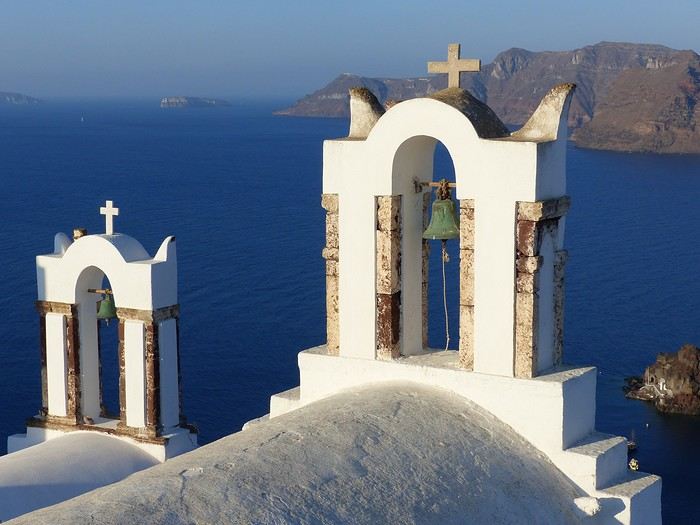
For our first family trip to the Cyclades (in 2016), we took a route that seems great for discovering the islands: - Flight Paris / Santorini (Transavia) - 3 nights in Santorini - Ferry Santorini / Milos - 4 nights in Milos - Ferry Milos / Sifnos - 4 nights in Sifnos - Ferry Sifnos / Athens - 3 nights in Athens - Flight Athens / Paris
Santorini is the postcard image of the Cyclades... but not really any beaches for kids. My tip: you should stay in Oia because it's really "the spot" on the island. We chose the Pension "The Flower": simple but very well located and with a pool for the kids. Another tip: rent a car as soon as you arrive at the airport because the island is vast.
Our favorite moment: Oia around 6:00 AM, a paradise for photographers. It’s nothing like the daytime, or especially the evening when all the crowds rush in for the famous "sunset." Another favorite, the hike between Fira and Oia, 10 km, 4 hours of walking with extraordinary views (especially around Imerovigli). For the rest, we toured the island—it’s nice but nothing to marvel at.
After a 2.5-hour ferry ride, we arrived in Milos, home of the famous Venus de Milo. This is our favorite island in the Cyclades (though we haven’t seen them all!). In the port of Adamantas, we stayed at the Liogerma Hotel (very well located near the port).
Our favorite experience: the boat tour around the island (and swimming at Kleftiko). Absolutely a must-do, but book it as soon as you arrive because it’s often fully booked for the next two days.
I also recommend renting a car to explore this island. Other favorites: the incredible fishing village of Klima with its colorful boat houses, the rocks of Sarakiniko (best in the morning sun), the beach at Tsigrado (with its ladder access through the rocks), Plaka, the caves of Papafragas, the waters of Firopotamos, and Fyriplaka...
Just a 1-hour ferry ride, and you’re already in Sifnos. A small island with a bus network that means you don’t need to rent a vehicle. We stayed in Kamares (Hotel Afroditi).
Sifnos has charming villages typical of the Cyclades (Kastro, Apollonia), beautiful chapels (Chrisopigi, the Church of the Seven Martyrs...), and lovely beaches (Cherronissos, Platis Galios...). Our favorite: hiking around Faros and the Chrisopigi Monastery.
A 3-hour ferry ride takes you back to the port of Piraeus to visit Athens: the Acropolis, its museums, and the Plaka district. A little favorite of ours: the Archaeological Museum, slightly off the tourist trail... With this route, you’ll see the diversity of the Cyclades and Athens without wasting too much time on ferries.
PS: We also did the loop Mykonos / Paros / Amorgos / Mykonos, but that’s a good idea... for a second trip ;)
Review of a cruise on the Costa Fortuna – November-December 2024
I’ve finally gotten around to writing a review of our transatlantic cruise on the Costa Fortuna. We’ve always loved cruises, especially transatlantic ones. In recent years, we were MSC customers (Diamond card). But this year, we decided to return to Costa, though there was one downside: we lost all the points from our old Costa card (I think we were "Gold"). Still, since we’re former customers, the company generously gave us 1 point and the bronze card. It’s better than nothing.
Our departure nearly went wrong. The ship was leaving Marseille on Friday, December 22 at 2:00 PM, and we were told to be at the port by 10:30 AM. This unusual departure time meant we had to travel to Marseille the day before (since we live in the Paris area). So, we booked a flight from Orly to Marseille on the 21st at 5:15 PM. But December 21 was a particularly rough day in France with a big snowstorm. And as everyone knows, planes and trains don’t handle snow very well. At Orly, in the waiting area, everyone was anxious as the minutes ticked by. The departure time kept getting pushed back in 15-minute increments. They eventually let us board the plane with no guarantees. Once inside, the captain announced we were waiting for a takeoff slot. About an hour later, he said the plane needed de-icing and the wait could be long since airport staff were overwhelmed. Miraculously, after what felt like forever, the de-icing truck finally arrived, and we took off—over two hours late. When we landed in Marseille, the terminal was practically empty. Luckily, our hotel wasn’t too far away.
We later found out that passengers who took the train were even less lucky—trains were canceled. Later, at our table, we met a neighbor who had boarded in Malaga by plane because his Paris-Marseille train had turned back. He’d incurred extra costs, lost two days of the cruise, and had quite a bit of stress.
The next day in Marseille, our boarding went smoothly. We were surprised by the large number of passengers. We later learned that 1,300 people had boarded in Marseille. Since the ship wasn’t full (between 2,300 and 2,500 passengers), the French were in the majority (a rare occurrence). We noticed during the cruise that the French are just as loud as the Italians. The only upside? At least we could understand what was being said.
More to come later.....
Our departure nearly went wrong. The ship was leaving Marseille on Friday, December 22 at 2:00 PM, and we were told to be at the port by 10:30 AM. This unusual departure time meant we had to travel to Marseille the day before (since we live in the Paris area). So, we booked a flight from Orly to Marseille on the 21st at 5:15 PM. But December 21 was a particularly rough day in France with a big snowstorm. And as everyone knows, planes and trains don’t handle snow very well. At Orly, in the waiting area, everyone was anxious as the minutes ticked by. The departure time kept getting pushed back in 15-minute increments. They eventually let us board the plane with no guarantees. Once inside, the captain announced we were waiting for a takeoff slot. About an hour later, he said the plane needed de-icing and the wait could be long since airport staff were overwhelmed. Miraculously, after what felt like forever, the de-icing truck finally arrived, and we took off—over two hours late. When we landed in Marseille, the terminal was practically empty. Luckily, our hotel wasn’t too far away.
We later found out that passengers who took the train were even less lucky—trains were canceled. Later, at our table, we met a neighbor who had boarded in Malaga by plane because his Paris-Marseille train had turned back. He’d incurred extra costs, lost two days of the cruise, and had quite a bit of stress.
The next day in Marseille, our boarding went smoothly. We were surprised by the large number of passengers. We later learned that 1,300 people had boarded in Marseille. Since the ship wasn’t full (between 2,300 and 2,500 passengers), the French were in the majority (a rare occurrence). We noticed during the cruise that the French are just as loud as the Italians. The only upside? At least we could understand what was being said.
More to come later.....
Which islands should we prioritize in the Philippines?
We’re planning a month there, and there are definitely some beautiful—*very* beautiful—islands, but which ones to choose? Can you point me to the must-sees, the ones that are easiest to reach by boat, bus, or flight if it saves a ton of time and isn’t too expensive? Also, which island should we start our loop on, given we’re coming from Vietnam and our return flight to Paris is already booked out of Manila?
Thanks in advance for all your tips. Philippe
23-Day Itinerary in the Pacific Northwest (USA) and Western Canada
Hi everyone,
We’re heading to the Pacific Northwest (USA) and Western Canada this summer. We’ve made some progress planning, but we still have a few questions.
Our trip is mostly nature-focused—hiking, wildlife spotting (ideally bears, orcas/whales, otters, etc.), mountains, forests—and a few days in cities, though we’re not big on museums.
We’re looking at flying into Seattle (cheaper than Vancouver), then renting a car and staying in Airbnbs.
A few years ago, we traveled through eastern Canada/USA (Halifax/Montréal/Boston/Halifax) and ended up driving *way* too much and switching accommodations too often. This time, we’d like to settle in a bit more.
Here’s our current plan:
- 2 nights in Seattle to avoid hitting the road right after the flight. One day for a quick city visit, then we’ll leave early after the second night. -> Heading to Olympic National Park from the south.
- 4 nights near Olympic National Park, likely around Forks. -> Then to Port Angeles and a ferry to Vancouver Island via Victoria (maybe 1 night there).
- 7 nights in Port Alberni, which seems like a central base for exploring Vancouver Island (Tofino, Pacific Rim, Cathedral Grove, etc.). We really want to enjoy the area without constantly packing and unpacking.
The issue is, that brings us to 13–14 nights, and we’d like to spend 2 in Vancouver.
We’re wondering if we should head farther north on the island and add a few more days, or reduce our stay in Port Alberni to explore the north as well.
After that, we’d have about a week left. We’re considering a detour near the Canadian Rockies, then slowly making our way back to Seattle via North Cascades National Park.
Anyway, we’d love your input on all this!
Thanks for your suggestions,
Emilie and Thomas
We’re heading to the Pacific Northwest (USA) and Western Canada this summer. We’ve made some progress planning, but we still have a few questions.
Our trip is mostly nature-focused—hiking, wildlife spotting (ideally bears, orcas/whales, otters, etc.), mountains, forests—and a few days in cities, though we’re not big on museums.
We’re looking at flying into Seattle (cheaper than Vancouver), then renting a car and staying in Airbnbs.
A few years ago, we traveled through eastern Canada/USA (Halifax/Montréal/Boston/Halifax) and ended up driving *way* too much and switching accommodations too often. This time, we’d like to settle in a bit more.
Here’s our current plan:
- 2 nights in Seattle to avoid hitting the road right after the flight. One day for a quick city visit, then we’ll leave early after the second night. -> Heading to Olympic National Park from the south.
- 4 nights near Olympic National Park, likely around Forks. -> Then to Port Angeles and a ferry to Vancouver Island via Victoria (maybe 1 night there).
- 7 nights in Port Alberni, which seems like a central base for exploring Vancouver Island (Tofino, Pacific Rim, Cathedral Grove, etc.). We really want to enjoy the area without constantly packing and unpacking.
The issue is, that brings us to 13–14 nights, and we’d like to spend 2 in Vancouver.
We’re wondering if we should head farther north on the island and add a few more days, or reduce our stay in Port Alberni to explore the north as well.
After that, we’d have about a week left. We’re considering a detour near the Canadian Rockies, then slowly making our way back to Seattle via North Cascades National Park.
Anyway, we’d love your input on all this!
Thanks for your suggestions,
Emilie and Thomas
Tips for our Québec itinerary
Hello,
We’re a couple in our 70s planning to visit Québec this summer. We only do short hikes of about 6 km round trip.
What do you think of our itinerary? Thanks so much for your advice!
Day 1: FRANCE/MONTREAL
Days 2 & 3: MONTREAL
Day 4: MONTREAL/BAIE ST PAUL – 2 nights
Day 5: BAIE ST PAUL
Day 6: BAIE ST PAUL/La Malbaie/Port-au-Persil/BAIE STE CATHERINE – 2 nights
Day 7: BAIE STE CATHERINE/TADOUSSAC/BAIE STE CATHERINE
Day 8: BAIE STE CATHERINE/SACRÉ-CŒUR/LES BERGERONNES – 2 nights
Day 9: LES BERGERONNES/ferry LES ESCOUMINS/BIC NATIONAL PARK – 2 nights in Rimouski
Day 10: BIC NATIONAL PARK
Day 11: BIC NATIONAL PARK/CARLETON-SUR-MER – 1 night
Day 12: CARLETON-SUR-MER/PERCÉ – 2 nights
Day 13: PERCÉ
Day 14: PERCÉ/GASPÉ/CAP DES ROSIERS – 1 night
Visit Forillon Park
Day 15: CAP DES ROSIERS/GASPÉSIE PARK – 2 nights in Sainte-Anne-des-Monts Day 16: GASPÉSIE PARK Day 17: GASPÉSIE PARK/KAMOURASKA – 1 night Day 17: KAMOURASKA/QUÉBEC CITY Days 18 & 19: QUÉBEC CITY Day 20: QUÉBEC CITY/AIRPORT MONTREAL for France
Visit Forillon Park
Day 15: CAP DES ROSIERS/GASPÉSIE PARK – 2 nights in Sainte-Anne-des-Monts Day 16: GASPÉSIE PARK Day 17: GASPÉSIE PARK/KAMOURASKA – 1 night Day 17: KAMOURASKA/QUÉBEC CITY Days 18 & 19: QUÉBEC CITY Day 20: QUÉBEC CITY/AIRPORT MONTREAL for France
Review of a cruise on Le Lirica (Greek islands, Egypt)
Hi everyone,
A little feedback on our 12-day cruise in early November on the Lirica.
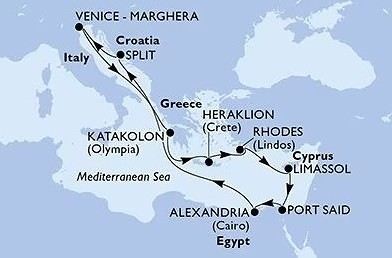

The Lirica is a human-sized ship with 2,500 passengers for an old-school cruise—no extra-charge themed restaurants or bars, but large lounge bars with plenty of seating. We had no trouble grabbing a drink. The meals are decent, the staff is always helpful, but the ship is starting to show its age, and the cabins aren’t exactly fresh anymore. The low point: the shows were the worst we’ve seen in eight cruises—barely up to camping standards.
Day 1 Boarding in Venice. Since the ship now departs from Marghera, there’s a transfer from the terminal to the ship by water shuttle. Day 2 At sea. Day 3 Katakolon We’ve already visited Olympia twice, so we did some shopping at the port and the only shopping street. Day 4 Heraklion Excursion with MSC to the Palace of Knossos and shopping. It’s a bit pricier than doing it on your own, but you get the guide’s explanations.
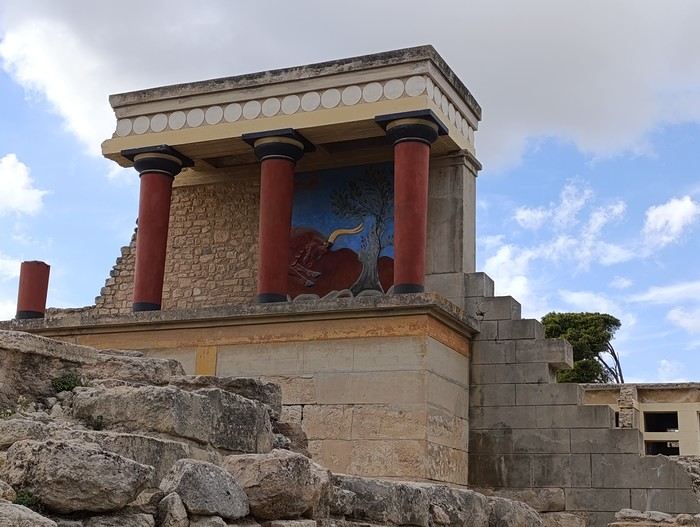
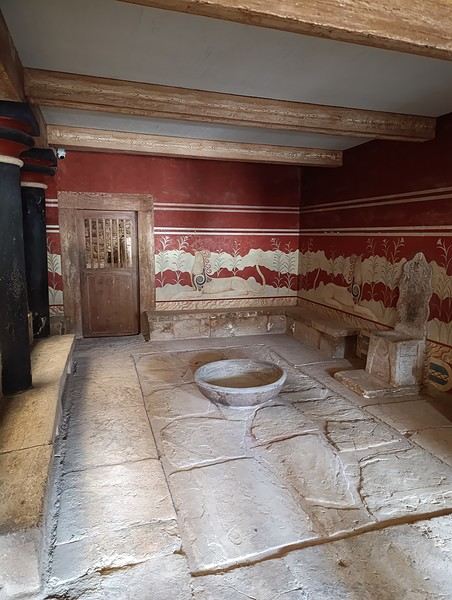
After visiting the palace, we explored Heraklion—a very lively city.
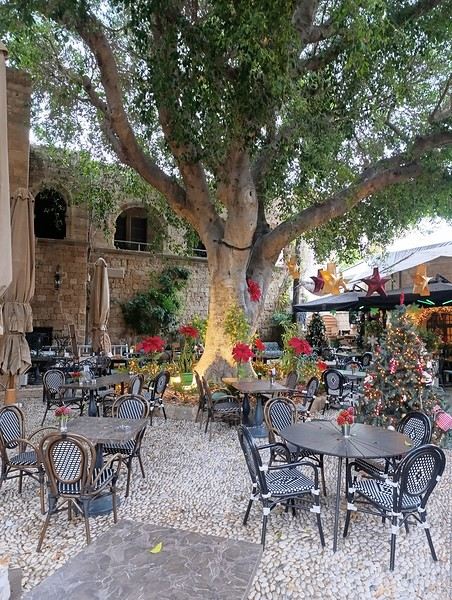
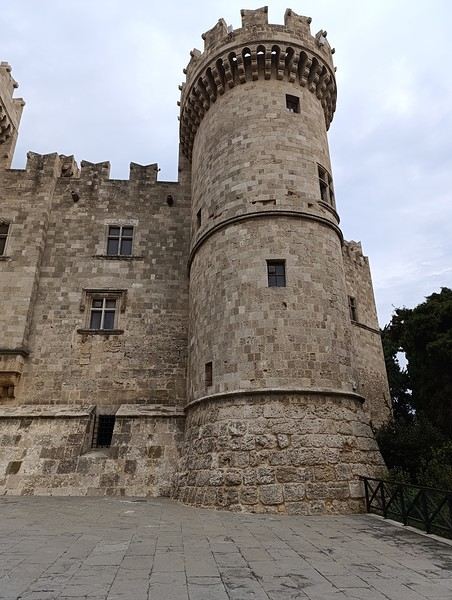
Day 5 Rhodes The ship docks just steps from the old town, a magnificent city surrounded by its ramparts.
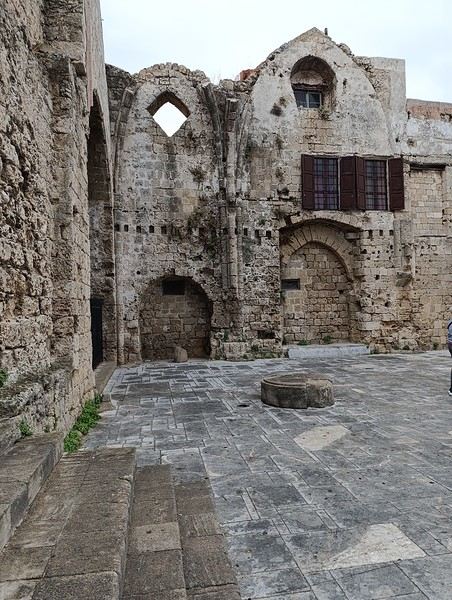
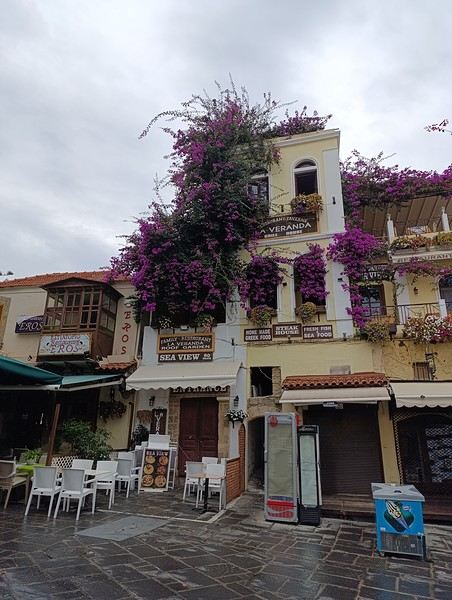
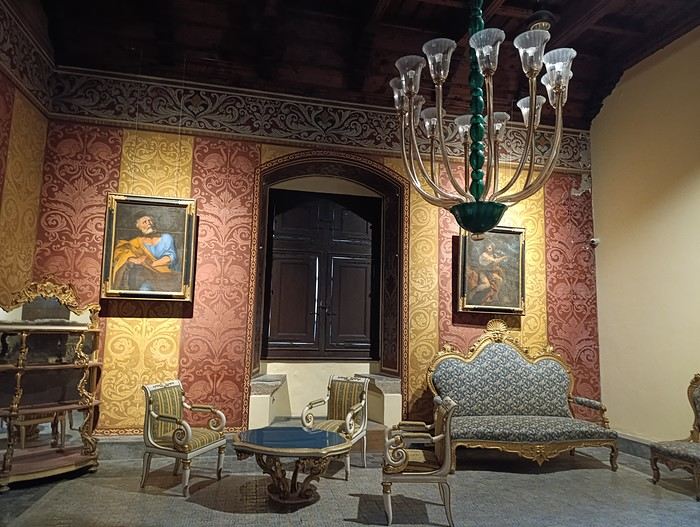
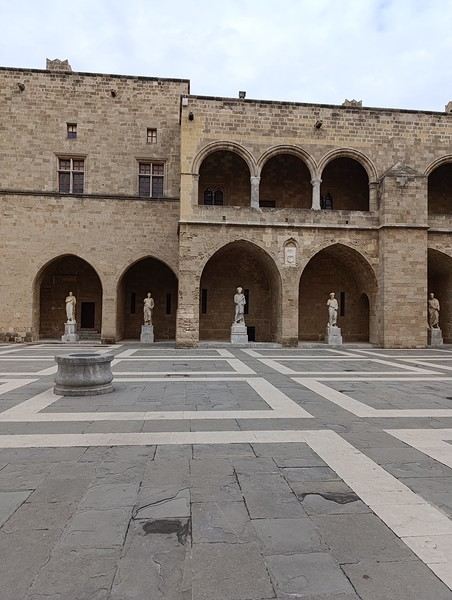
Visit to the Palace of the Grand Masters.
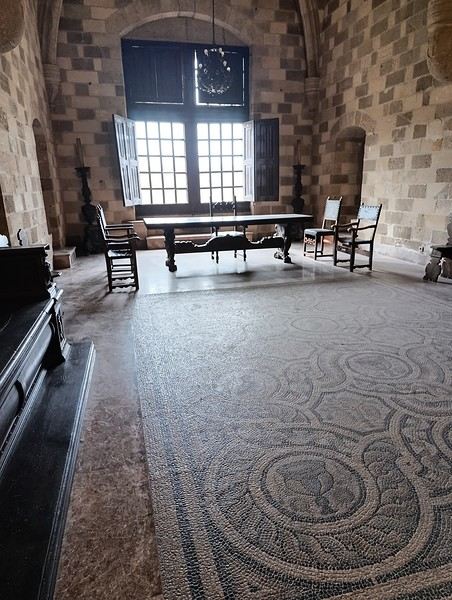
The Lirica is a human-sized ship with 2,500 passengers for an old-school cruise—no extra-charge themed restaurants or bars, but large lounge bars with plenty of seating. We had no trouble grabbing a drink. The meals are decent, the staff is always helpful, but the ship is starting to show its age, and the cabins aren’t exactly fresh anymore. The low point: the shows were the worst we’ve seen in eight cruises—barely up to camping standards.
Day 1 Boarding in Venice. Since the ship now departs from Marghera, there’s a transfer from the terminal to the ship by water shuttle. Day 2 At sea. Day 3 Katakolon We’ve already visited Olympia twice, so we did some shopping at the port and the only shopping street. Day 4 Heraklion Excursion with MSC to the Palace of Knossos and shopping. It’s a bit pricier than doing it on your own, but you get the guide’s explanations.
After visiting the palace, we explored Heraklion—a very lively city.
Day 5 Rhodes The ship docks just steps from the old town, a magnificent city surrounded by its ramparts.
Visit to the Palace of the Grand Masters.
Getting to Pisa during a layover in Livorno
Hi there.
During a layover in Livorno, I’d like to take the train or bus to Pisa.
Could anyone tell me how to get to Livorno train station and then from Pisa station to the Leaning Tower of Pisa?
Thanks in advance for your great tips
Fur seals and seals in Southern Africa: rabies alert
For several years now, increased aggression has been observed in Cape fur seals.
At least 70 unprovoked attacks on humans.
It was recently confirmed that this is due to rabies.
The suspected origin is contamination in Namibia by jackals.
The contagion seems to be spreading.
Preventive vaccination (of the animals) is being considered.
Just a reminder:
Rabies affects all mammals.
Once symptoms appear—sometimes weeks or even months later—death is inevitable.
It’s the bite that transmits the disease.
There are so-called "furious" forms with aggression, but also forms without aggression.
In case of a bite, in addition to standard wound care, tetanus prevention… rabies prevention is essential.
Stay careful out there…
Seeing seals from a boat along the coast isn’t rare in these parts…
Morocco, an encounter...
Hello everyone,
I’ve been to Morocco about fifteen times, but I’ve never posted a travel journal here on Voyage Forum. Why? I have no idea… Maybe because this section was so active, with lots of stories and photos. I thought sharing my adventures in *al Maghrib* wouldn’t be very original. Today, this space feels quieter, so what if I tried to give it a little life back, modestly? With some help…
This trip will be different. From the start of my relationship with Richard, I was determined to introduce him to *my* Morocco. But he was a bit reluctant… He’ll tell you about our 2022 meeting, and I’ll illustrate it with my photos, just like we did with our India travel journal.
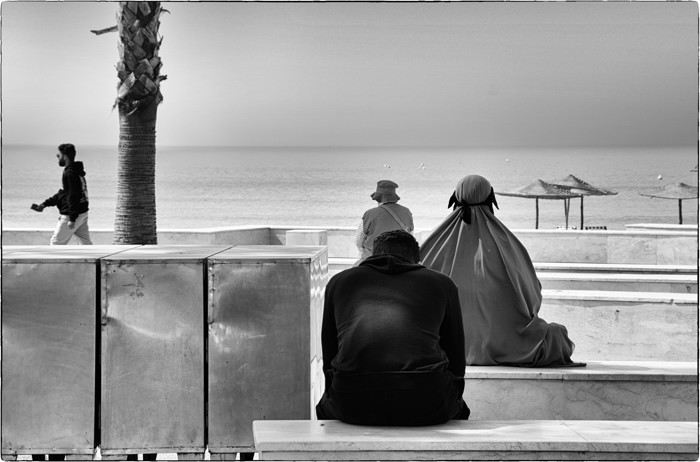
I’ve been to Morocco about fifteen times, but I’ve never posted a travel journal here on Voyage Forum. Why? I have no idea… Maybe because this section was so active, with lots of stories and photos. I thought sharing my adventures in *al Maghrib* wouldn’t be very original. Today, this space feels quieter, so what if I tried to give it a little life back, modestly? With some help…
This trip will be different. From the start of my relationship with Richard, I was determined to introduce him to *my* Morocco. But he was a bit reluctant… He’ll tell you about our 2022 meeting, and I’ll illustrate it with my photos, just like we did with our India travel journal.
What to prioritize in Mauritius?
Hi there, we’re heading to Mauritius in December-January.
The question is: what should we visit first?
Thanks for your tips!
JP
Thanks for your tips!
JP
Mediterranean Cruise on the Tosca Toscana
Hi there,
I’m going on a cruise in March, sailing the Mediterranean on the Tosca Toscana.
I’d love to hear your great tips for life on board and for the different stops: Barcelona, Rome, Palermo, and Civitavecchia.
Thanks in advance!
14-Day Trip Report to Milos and Kimolos in September-October 2021
14-Day Trip Report to Milos and Kimolos in September-October 2021
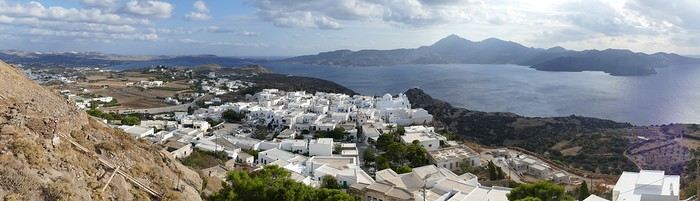
The village of Plaka in Milos
It was with great pleasure that we finally reconnected with our old habits as inveterate travelers! Greece, and more specifically the Greek islands, was the natural choice for us. After having already visited many Greek islands during around 18 trips, we decided to revisit islands we had seen over 40 years ago, like Milos, where our memories were extremely hazy. Our route was well-planned and familiar: a low-cost flight from Basel-Mulhouse to Athens, then a traditional ferry from Piraeus to Milos. Taking a speedboat, which is faster, would have forced us to spend a night in Piraeus. Plus, we felt that the traditional ferry was part of the journey, and with good weather, spending eight hours on deck wasn’t unpleasant at all. Watching the docking maneuvers with the comings and goings of trucks and cars, observing the passengers, reading a book, or admiring the scenery—all of that is part of the travel experience. Milos Island: Accommodation in Adamas We arrived quite late, around 11 PM, in Adamas, the port of Milos. No worries—the friendly couple managing the apartment was waiting for us, and it was just a 10-minute walk from the port. The first two days were spent unwinding, with swimming at the nearby beach, strolling through Adamas, and relaxing.
Discovering Plaka On the third day, we took the path along the small beach west of town toward a French military cemetery! A historical reminder of our presence here during the Crimean War, among others. The path climbs toward a beacon perched on top of a hill before disappearing into the scrubland. We returned to Adamas for lunch on our terrace.
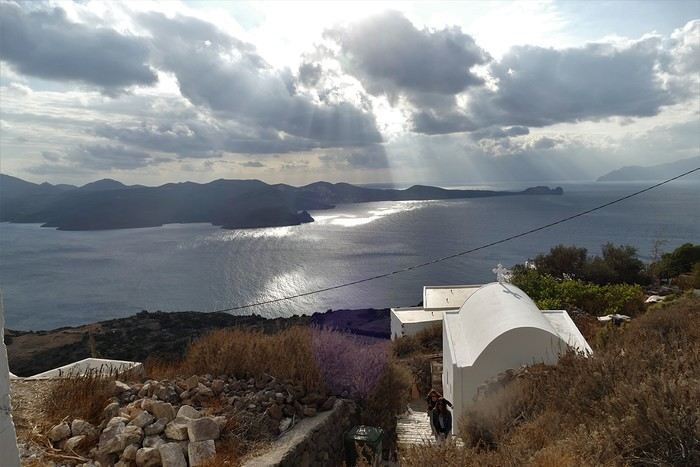
In the afternoon, we visited the hilltop village of Plaka by bus from Adamas. Plaka is the original old town, dominated by a church and, even higher up, the ruins of the Kastro. The view is magnificent. We stopped at a pastry shop in the village to enjoy excellent orange cakes and baklavas. Back in Adamas, we checked out car rental agencies to be more mobile, though the bus network seemed quite extensive. It costs around 40 € per day, plus 8 € if you want to significantly reduce the deductible. Port of Klima.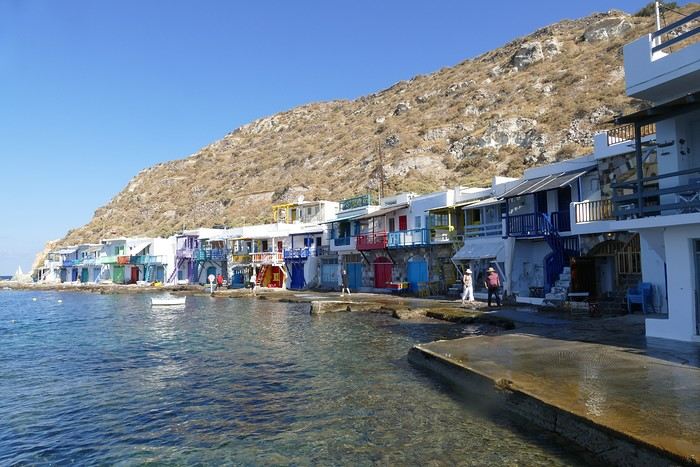
Yesterday’s weather was quite mixed with lots of clouds, but today the sun is shining again. We drove to the small port of Klima, famous for its boat garages called "sirmatas." It’s true that in the morning sun, these boat garages carved into the volcanic tuff are beautifully lit, turning the village into a colorful mosaic. Above the village, a path climbs directly to the magnificent Roman theater overlooking the surroundings and the sea.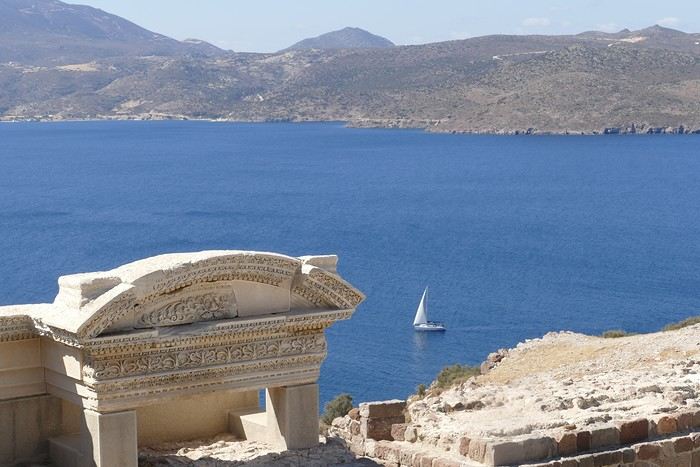 Following the well-marked path, we reached the road leading 200 meters down to the catacombs. It’s an impressive complex of 3rd and 4th-century catacombs, though only a small part is open to visitors—it’s still very moving. In the mid-afternoon, we got back in the car to visit the tiny ports of Firopotamos and Mandraki, which also have their colorful sirmatas. We took the opportunity to swim at the small beach in Mandraki, where the water was warm and calm.
Mandraki Port. We had a decent dinner at a seaside restaurant in Adamas, though you have to be selective—we had a bad experience at Kynigos on the second night!
Moving to Polonia in Eastern Milos, Sarakiniko Site
Following the well-marked path, we reached the road leading 200 meters down to the catacombs. It’s an impressive complex of 3rd and 4th-century catacombs, though only a small part is open to visitors—it’s still very moving. In the mid-afternoon, we got back in the car to visit the tiny ports of Firopotamos and Mandraki, which also have their colorful sirmatas. We took the opportunity to swim at the small beach in Mandraki, where the water was warm and calm.
Mandraki Port. We had a decent dinner at a seaside restaurant in Adamas, though you have to be selective—we had a bad experience at Kynigos on the second night!
Moving to Polonia in Eastern Milos, Sarakiniko Site
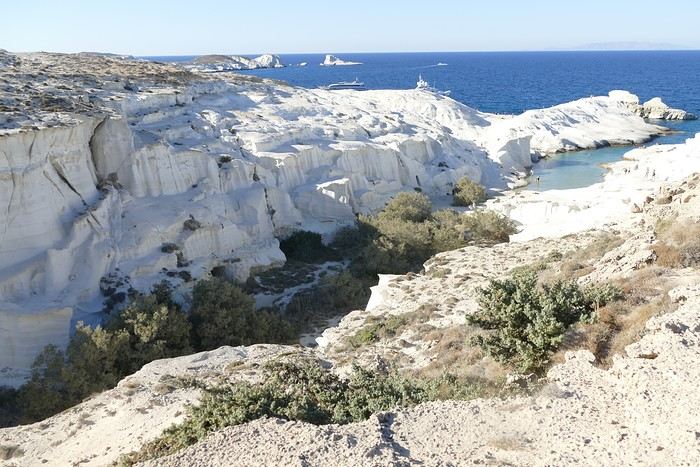
The Sarakiniko site We left Adamas for a second stay on Milos, this time in Polonia. The rental Panda was packed with the four of us and our luggage! Our apartment was in a beautiful house surrounded by a grove, so our lovely terrace was well-shaded. Luckily, there was a small beach nearby, and we went for a swim right away. Apart from us, there were only three other swimmers—definitely the end of the season!
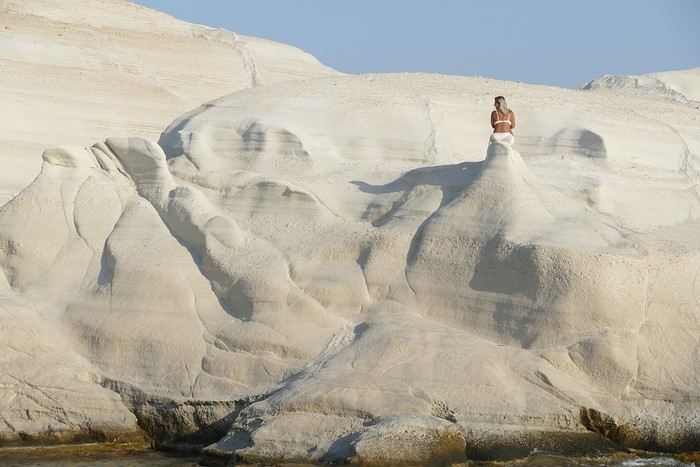
"Fairy chimney"! In the afternoon, we visited the famous Sarakiniko site, Milos’ emblematic spot. Judging by the number of cars in the parking lot, we wouldn’t be alone. As we approached, we heard an indefinable rock/punk/metal music: some young people had brought a sound system and a foghorn and were having fun diving off a fairly high cliff to impress the crowd. It definitely spoiled the visit. Most spots were taken by couples busy taking selfies, so getting photos of the site without tourists was impossible. Still, the site is magnificent, with its white cliffs looking like they’re covered in whipped cream! The sun was still very bright, reflecting strongly off the cliffs, making photography difficult due to the excessive brightness. We had a fish dinner in Polonia at the Enalion restaurant: while the octopus and squid were good, the fish soup tasted more like vegetable soup with a few fish crumbs—too bad.
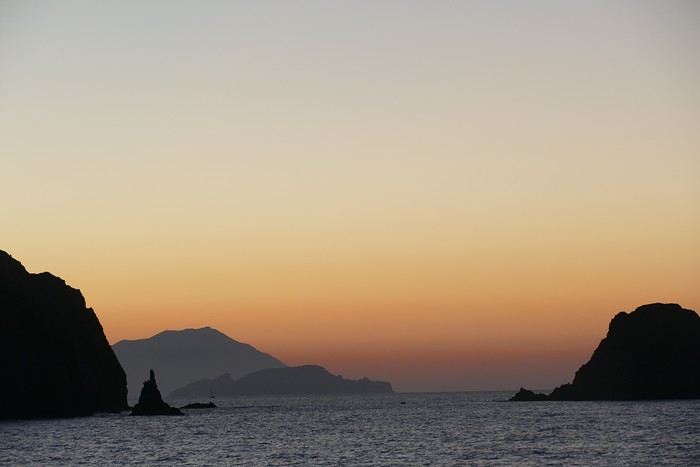
Sunset in Polonia
Ports of Papafranga and Mytikos We continued our exploration of Milos with the Papafranga gorge, a narrow and deep gorge that opens to the sea, where the water is a stunning color. Access via an unstable and dangerous path is prohibited, but that didn’t stop a couple of tourists in flip-flops from venturing in!!! We then swam in the tiny, calm, and sheltered cove of the small port of Mytikos. We returned to Polonia for lunch at Alkis: excellent moussaka. In the late afternoon, Pat and I went out to take some photos just before sunset near the Agios Nikolaos chapel, the beacon, and the new Petakoudia neighborhood next to Polonia to the north.
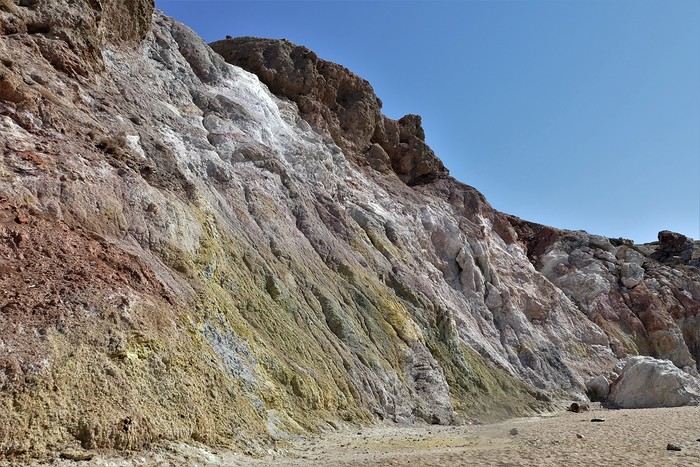
Paleochori Beach
Toward the Multicolored Beach of Paleochori Another sunny day: we still had to discover Paleochori Beach in the south of the island. It was 10:30 AM, and the beach was almost deserted! The water was pleasant, though a bit chilly when we first entered. The beach is bordered by a cliff that, in some places, displays a beautiful multicolored palette. We returned to Polonia in the late afternoon, and Pat and I headed toward Vouddhia Beach south of Polonia—bad choice. The beach is surrounded by a huge mining site served by a dusty road where lines of trucks loaded with ore cross paths. It’s the other side of the coin, and Greece still has progress to make in this area. Dinner at Alki’s was just as good as always. Return to the Sarakiniko Site Early this morning, Pat and I went back to the Sarakiniko site, hoping to take photos in better conditions. While there were fewer people, the parking lot was still full because sunrise is a must in Milos. Still, the conditions were good, and the sunrise spectators left quickly once the sun had risen above the horizon. During the day, an increasingly strong wind cooled the atmosphere, making swimming less enjoyable. Departure for Kimolos Island We changed islands and left Milos for Kimolos, a nearby island—just a 30-minute trip from Polonia’s port. Our apartment was at the entrance of the hilltop village. It’s a village with typical Cycladic architecture, featuring the remains of an old kastro, a few old churches, and windmill towers perched on the hill. We dined in a tiny tavern where the small outdoor tables were squeezed against the walls to let passersby through! As soon as the sun disappeared, it got cold, especially because of the wind. Ports of Kara and Goupa This morning, we explored the small hamlets of Kara and Goupa by Rema Beach, east of the main port. There, we found the sirmatas again—those boat garages partly carved into the volcanic tuff. The path winds between several sirmatas before climbing back up to the Praça road to return to the apartment.
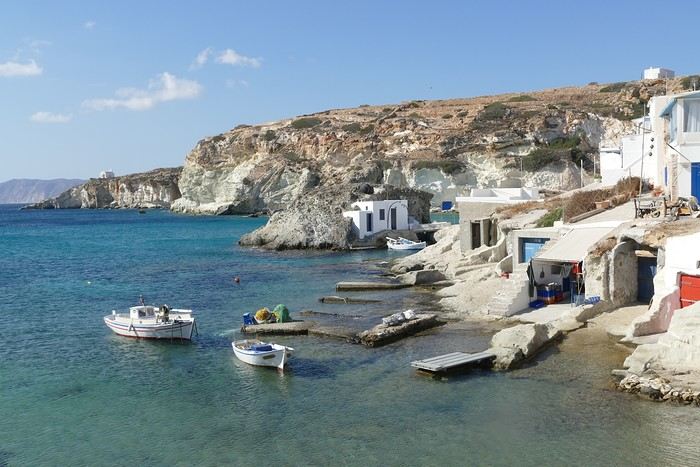
Ports of Kara and Goupa
In the afternoon, we strolled through town, and Pat and I climbed the hill overlooking the village to get a closer look at the few more or less ruined windmills dotting the ridge. Only one mill still had its complete mechanism in place under the roof; the others were empty. The view over the village, port, and sea was beautiful. That evening, we tried another restaurant in the village center, Kali Kardia Bohoris, which was well-frequented by locals, and we didn’t regret it: delicious food, efficient and friendly service, and reasonable prices.
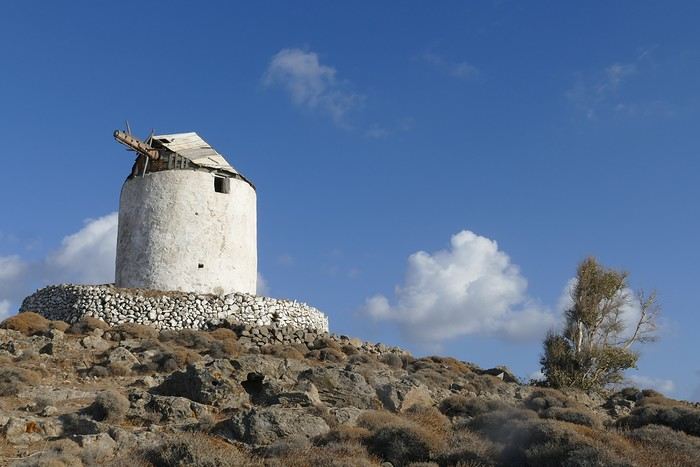
The Kastro Mill
Toward Aliki Beach We walked to Aliki Beach, west of the main village. It’s a large sandy beach shaded by tamarisk trees, but the strong wind prevented us from enjoying it. In the afternoon, I set off on a hike toward the fairy chimney at Skiadi (1.5 hours one way). The paths were very well-marked with signs indicating the trail number and the time to reach the destination. The countryside was beautiful but very dry at this time of year, and as always in Greece, many white chapels dotted the landscape. The numerous dry stone walls testify to the immense labor done by the island’s inhabitants over the centuries! For our last day in Kimolos, we decided to visit the beautiful Praça Beach, one of the most beautiful according to the guides! To get there, we took a path through the interior before joining the paved road near a large dump overflowing with various waste. It’s the flip side of the scenery, and Greece still has progress to make in this area. In the end, Praça Beach left us underwhelmed. The environment, marred by mining operations, detracts from the charm of the beautiful sandy beach. End of the Trip, Return to Piraeus and France And that’s it—we took the Zanteferries ferry back to Piraeus, arriving after a calm and sunny 10-hour journey. We had dinner at Souvlaki Street on the port and spent a good night at the Faros I Hotel in Piraeus—a great spot, close to the port, very clean, and reasonably priced. We flew from Athens to Basel-Mulhouse EuroAirport without any issues. N.B. Budget: around 1850 € all included for 14 days per couple The photo album is available by clicking this link: https://photos.app.goo.gl/wRpxRipg4erpzGj99
The village of Plaka in Milos
It was with great pleasure that we finally reconnected with our old habits as inveterate travelers! Greece, and more specifically the Greek islands, was the natural choice for us. After having already visited many Greek islands during around 18 trips, we decided to revisit islands we had seen over 40 years ago, like Milos, where our memories were extremely hazy. Our route was well-planned and familiar: a low-cost flight from Basel-Mulhouse to Athens, then a traditional ferry from Piraeus to Milos. Taking a speedboat, which is faster, would have forced us to spend a night in Piraeus. Plus, we felt that the traditional ferry was part of the journey, and with good weather, spending eight hours on deck wasn’t unpleasant at all. Watching the docking maneuvers with the comings and goings of trucks and cars, observing the passengers, reading a book, or admiring the scenery—all of that is part of the travel experience. Milos Island: Accommodation in Adamas We arrived quite late, around 11 PM, in Adamas, the port of Milos. No worries—the friendly couple managing the apartment was waiting for us, and it was just a 10-minute walk from the port. The first two days were spent unwinding, with swimming at the nearby beach, strolling through Adamas, and relaxing.
Discovering Plaka On the third day, we took the path along the small beach west of town toward a French military cemetery! A historical reminder of our presence here during the Crimean War, among others. The path climbs toward a beacon perched on top of a hill before disappearing into the scrubland. We returned to Adamas for lunch on our terrace.
In the afternoon, we visited the hilltop village of Plaka by bus from Adamas. Plaka is the original old town, dominated by a church and, even higher up, the ruins of the Kastro. The view is magnificent. We stopped at a pastry shop in the village to enjoy excellent orange cakes and baklavas. Back in Adamas, we checked out car rental agencies to be more mobile, though the bus network seemed quite extensive. It costs around 40 € per day, plus 8 € if you want to significantly reduce the deductible. Port of Klima.
Yesterday’s weather was quite mixed with lots of clouds, but today the sun is shining again. We drove to the small port of Klima, famous for its boat garages called "sirmatas." It’s true that in the morning sun, these boat garages carved into the volcanic tuff are beautifully lit, turning the village into a colorful mosaic. Above the village, a path climbs directly to the magnificent Roman theater overlooking the surroundings and the sea.
Following the well-marked path, we reached the road leading 200 meters down to the catacombs. It’s an impressive complex of 3rd and 4th-century catacombs, though only a small part is open to visitors—it’s still very moving. In the mid-afternoon, we got back in the car to visit the tiny ports of Firopotamos and Mandraki, which also have their colorful sirmatas. We took the opportunity to swim at the small beach in Mandraki, where the water was warm and calm.
Mandraki Port. We had a decent dinner at a seaside restaurant in Adamas, though you have to be selective—we had a bad experience at Kynigos on the second night!
Moving to Polonia in Eastern Milos, Sarakiniko SiteThe Sarakiniko site We left Adamas for a second stay on Milos, this time in Polonia. The rental Panda was packed with the four of us and our luggage! Our apartment was in a beautiful house surrounded by a grove, so our lovely terrace was well-shaded. Luckily, there was a small beach nearby, and we went for a swim right away. Apart from us, there were only three other swimmers—definitely the end of the season!
"Fairy chimney"! In the afternoon, we visited the famous Sarakiniko site, Milos’ emblematic spot. Judging by the number of cars in the parking lot, we wouldn’t be alone. As we approached, we heard an indefinable rock/punk/metal music: some young people had brought a sound system and a foghorn and were having fun diving off a fairly high cliff to impress the crowd. It definitely spoiled the visit. Most spots were taken by couples busy taking selfies, so getting photos of the site without tourists was impossible. Still, the site is magnificent, with its white cliffs looking like they’re covered in whipped cream! The sun was still very bright, reflecting strongly off the cliffs, making photography difficult due to the excessive brightness. We had a fish dinner in Polonia at the Enalion restaurant: while the octopus and squid were good, the fish soup tasted more like vegetable soup with a few fish crumbs—too bad.
Sunset in Polonia
Ports of Papafranga and Mytikos We continued our exploration of Milos with the Papafranga gorge, a narrow and deep gorge that opens to the sea, where the water is a stunning color. Access via an unstable and dangerous path is prohibited, but that didn’t stop a couple of tourists in flip-flops from venturing in!!! We then swam in the tiny, calm, and sheltered cove of the small port of Mytikos. We returned to Polonia for lunch at Alkis: excellent moussaka. In the late afternoon, Pat and I went out to take some photos just before sunset near the Agios Nikolaos chapel, the beacon, and the new Petakoudia neighborhood next to Polonia to the north.
Paleochori Beach
Toward the Multicolored Beach of Paleochori Another sunny day: we still had to discover Paleochori Beach in the south of the island. It was 10:30 AM, and the beach was almost deserted! The water was pleasant, though a bit chilly when we first entered. The beach is bordered by a cliff that, in some places, displays a beautiful multicolored palette. We returned to Polonia in the late afternoon, and Pat and I headed toward Vouddhia Beach south of Polonia—bad choice. The beach is surrounded by a huge mining site served by a dusty road where lines of trucks loaded with ore cross paths. It’s the other side of the coin, and Greece still has progress to make in this area. Dinner at Alki’s was just as good as always. Return to the Sarakiniko Site Early this morning, Pat and I went back to the Sarakiniko site, hoping to take photos in better conditions. While there were fewer people, the parking lot was still full because sunrise is a must in Milos. Still, the conditions were good, and the sunrise spectators left quickly once the sun had risen above the horizon. During the day, an increasingly strong wind cooled the atmosphere, making swimming less enjoyable. Departure for Kimolos Island We changed islands and left Milos for Kimolos, a nearby island—just a 30-minute trip from Polonia’s port. Our apartment was at the entrance of the hilltop village. It’s a village with typical Cycladic architecture, featuring the remains of an old kastro, a few old churches, and windmill towers perched on the hill. We dined in a tiny tavern where the small outdoor tables were squeezed against the walls to let passersby through! As soon as the sun disappeared, it got cold, especially because of the wind. Ports of Kara and Goupa This morning, we explored the small hamlets of Kara and Goupa by Rema Beach, east of the main port. There, we found the sirmatas again—those boat garages partly carved into the volcanic tuff. The path winds between several sirmatas before climbing back up to the Praça road to return to the apartment.
Ports of Kara and Goupa
In the afternoon, we strolled through town, and Pat and I climbed the hill overlooking the village to get a closer look at the few more or less ruined windmills dotting the ridge. Only one mill still had its complete mechanism in place under the roof; the others were empty. The view over the village, port, and sea was beautiful. That evening, we tried another restaurant in the village center, Kali Kardia Bohoris, which was well-frequented by locals, and we didn’t regret it: delicious food, efficient and friendly service, and reasonable prices.
The Kastro Mill
Toward Aliki Beach We walked to Aliki Beach, west of the main village. It’s a large sandy beach shaded by tamarisk trees, but the strong wind prevented us from enjoying it. In the afternoon, I set off on a hike toward the fairy chimney at Skiadi (1.5 hours one way). The paths were very well-marked with signs indicating the trail number and the time to reach the destination. The countryside was beautiful but very dry at this time of year, and as always in Greece, many white chapels dotted the landscape. The numerous dry stone walls testify to the immense labor done by the island’s inhabitants over the centuries! For our last day in Kimolos, we decided to visit the beautiful Praça Beach, one of the most beautiful according to the guides! To get there, we took a path through the interior before joining the paved road near a large dump overflowing with various waste. It’s the flip side of the scenery, and Greece still has progress to make in this area. In the end, Praça Beach left us underwhelmed. The environment, marred by mining operations, detracts from the charm of the beautiful sandy beach. End of the Trip, Return to Piraeus and France And that’s it—we took the Zanteferries ferry back to Piraeus, arriving after a calm and sunny 10-hour journey. We had dinner at Souvlaki Street on the port and spent a good night at the Faros I Hotel in Piraeus—a great spot, close to the port, very clean, and reasonably priced. We flew from Athens to Basel-Mulhouse EuroAirport without any issues. N.B. Budget: around 1850 € all included for 14 days per couple The photo album is available by clicking this link: https://photos.app.goo.gl/wRpxRipg4erpzGj99
21-Day Trip to La Gomera and La Palma
Travel Journal: 21 Days in La Gomera and La Palma
From February 6 to February 26, 2024
Tuesday, February 6 We left around 9 AM with our car, along with Pierre-Paul and Patricia, heading to the Bluepark parking lot in Bartenheim. As expected, we were awaited and left promptly for EuroAirport Basel. Took off at 12:25 PM for a 4-hour-15-minute flight under excellent conditions. Beautiful arrival in Tenerife with Teide in sight under a clear blue sky. Fifteen minutes later, we waited for bus No. 40 to Los Cristianos with quite a few other tourists, but we managed to find four seats. From the bus station, it was a 20-minute walk to our hotel. We checked into a lovely apartment for the four of us, complete with all the comforts. Outside, it was quite warm—at least 25°C! After dropping off our luggage, we went for a stroll. The immediate surroundings of the hotel held no interest for us: a modern, concrete area filled with hotels, bars, tourist agencies, and unappealing restaurants all offering the same bland international cuisine. Pat went to cool off at the pool, unfortunately overrun by loud, drunk English tourists. I took a walk to the paseo maritimo that leads to the port, skirting the seafront. The promenade was pleasant, but it could have been any seaside resort in the world—same old scene: a succession of bars with blaring music where many elderly people sipped cold beers waiting for the sunset, the backdrop a wall of resort-style hotels resembling rabbit hutches! Upon reaching the port, I scouted the route we’d take the next day to the Fred Olsen ferry. Back at the apartment, in the early evening, we looked for a non-touristy restaurant for dinner. Monique stopped a woman to ask her opinion! In this area, she told us, there’s no restaurant that serves Canarian or Spanish cuisine! The only place with decent restaurants is at the port. Off we went to the port, where we sat down at Al Bordo restaurant and ordered a seafood paella for four. Excellent, and at a very reasonable price (36 € for two). We returned to the hotel along the seafront.
Wednesday, February 7
Woke up at 6 AM. Had breakfast in the apartment with what we’d bought the day before at a supermarket. It was still dark when we left on foot toward the port, walking along the calm seafront at this early hour. Forty minutes later, we arrived and waited 10 minutes before the ferry docked. At 9:30 AM, we left the port of Los Cristianos for a 50-minute crossing on a calm sea under a beautiful blue sky. There were quite a few people on this large ferry, but many had no luggage, meaning they were visiting La Gomera for the day and would take the ferry back in the evening. Upon disembarking, we went straight to our rental car agency to pick up the car we’d booked online a few months earlier. It was a nice Peugeot 2008, spacious enough for the four of us and our luggage. We immediately took the beautiful road from San Sebastián that climbs directly into the mountains toward our rental in Vallehermoso. The road was in perfect condition—it seemed brand new, like all the others we’d take on this island later. This side of the island is very arid with little vegetation, and the terrain is particularly rugged, as it is throughout the island. We stopped at our first miradors, which would be followed by many more throughout our Canarian trip. Our first visit was to the small village of Agulo, perched on a promontory above the sea and at the foot of a high cliff. The village features typical Canarian houses with windows flush with the façade and black volcanic stone masonry on white or reddish-brown walls. The first recommended restaurant was already booked for a group, so we settled for the shaded terrace of the excellent El Alameda bar-restaurant. From Agulo, you can access the Abrante viewpoint via a winding road, where the view of Agulo, 600 meters below, is exceptional. A glass ledge over the void lets you test your fear of heights!
We drove to Vallehermoso to do our grocery shopping at the supermarket—a habit that would continue until the end of the trip. Our little house, "Casa rural El Encatadora," is located in a beautiful flower-filled valley a few kilometers west of Vallehermoso. Each of us had a bedroom with an en-suite bathroom, plus a living room, kitchen, and a small terrace overlooking the quiet street at the valley’s end, which didn’t bother us at all.
Thursday, February 8 The good weather seemed to follow us since our arrival in the Canary Islands. This morning, we took the road—still as beautiful and new—toward Arure, high up to the west. The landscape was magnificent, with breathtaking glimpses of the sea far below. In Arure, we parked in front of Conchita’s bar, where a hike (Rother No. 30) starts toward two viewpoints: Alojera, which we reached after 45 minutes on a lovely path. Monique, tired from the first steep climb, stopped at the first viewpoint and hitchhiked back to Arure. Meanwhile, we continued toward the second viewpoint, Los Barranquillos, where the view of the surroundings was partially hidden by misty clouds rising from the sea. The entire mountain is sculpted by ancient, endless terraces climbing until the slope becomes too steep for construction—visible traces of the hard work of past inhabitants trying to survive in a harsh environment. We had a decent lunch at La Conchita bar, then drove to the small seaside town of Puerto la Caleta, sheltered by an immense cliff plunging into the sea. Black sand beach, rough sea—despite our encouragement, Pat didn’t dare to swim! As for the old village of Caleta, it’s perched on the mountainside, and visiting it requires climbing steep, stair-filled alleys to discover a few traditional houses. Back at the casa, dinner in, and card games...
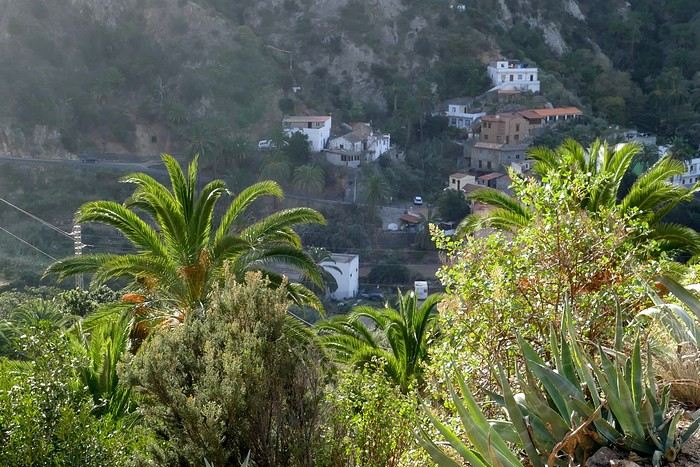 Vallehermoso
Friday, February 9 This morning, the sky was overcast, and the peaks around us were shrouded in clouds. We took the same road as yesterday to hike Las Creces. Quickly gaining altitude, we entered a thick fog—visibility was very limited. We stopped at the Las Creces parking lot; visibility improved, and the sun wasn’t far off. The hike is entirely within a beautiful laurel forest, with the sun playing hide-and-seek, but it wasn’t cold despite the altitude. After finishing the loop trail, we decided to picnic—not there, as it was too chilly—but on Vallehermoso’s beach, where we found a nice picnic area sheltered by large black rocks. A short digestive walk on the surrounding hill to admire the little beach from above. Back in Vallehermoso, we did some grocery shopping, then tried to return to the casa—only to find ourselves locked out because we’d left the key in the lock inside! After several attempts and with the help of Yéli, a relative of the owner we called for help, we were finally able to get back in!
Saturday, February 10
It rained last night, and the sky remained overcast. Monique decided to rest this morning. PP, Pat, and I set off on the hike that starts from the house toward the Marichal reservoir. The sun wasn’t far off, and by 11 AM, it was fully out. The pleasant hike passed by many flower-filled gardens and orchards—orange, lemon, and mandarin trees in fruit. The path climbed gently toward the reservoir, where the view of the Cano rock dominating the landscape was magnificent. The last part of the climb was a bit tough, overgrown with lush vegetation, and the trail was slippery from last night’s rain. We descended via a different, much more pleasant path and returned to the casa just in time for lunch, prepared by Monique. This valley is rich with its many farmers and market gardeners who’ve cultivated the entire valley, taking advantage of the water flowing down from the mountain, captured upstream and redistributed through countless pipes snaking along the paths. Numerous tanks also store water during dry periods. The houses are scattered across both sides of the valley, and these colorful little homes add a beautiful touch to the landscape. The many palm trees give this valley a distinctly tropical feel—you could almost imagine yourself in the Caribbean. Add to that some salsa music drifting from a hut where farmers were working, and the picture is complete. A well-chilled beer apéro capped off a lovely morning. The afternoon was dedicated to rest, relaxation, reading, and games.
Sunday, February 11 The blue sky returned, though a few clouds still capped the highest peaks. Today, we visited Garajonay National Park, which covers the highest central mountains. Up there, we were above the clouds, and the panoramas from the various viewpoints were stunning: first, Cherelepin, accessible from the Laguna Grande parking lot, then Alto de Garajonay, offering an exceptional view of Teide—over 3,000 meters high—emerging from the clouds on Tenerife, far in the distance. We continued to the Los Roques viewpoints, then stopped for lunch at the Degollada de Peraza restaurant, where the view of the barranco was impressive. We descended toward San Sebastián and checked into our new lodging, La Cabezada, located in the countryside about 3 km above San Sebastián. It’s a small apartment adjacent to the owner’s, with a lovely terrace overlooking the surrounding mountains and surrounded by a beautiful garden. Apéro, then dinner on our beautiful terrace.
Monday, February 12 This morning, we went down to visit San Sebastián de La Gomera: its old tower, main street with some beautiful traditional houses, and the Church of the Assumption. Back at the casa for lunch. In the afternoon, Pat, PP, and I set off on the short hike from San Sebastián beach to La Guancha beach. We drove down and parked on the beach. The path climbs along the hill overlooking San Sebastián, passes by the tall Christ statue dominating the landscape, and roughly follows the coast down to the isolated Guancha beach. A beautiful hike under a hot sun, and a swim was welcome, even if the beach and sea access weren’t very comfortable due to large pebbles and quickly deepening water. Apart from two nudist bathers, there was no one on this beach. We returned the same way.
Tuesday, February 13 Rest day. We went down to town to stroll and do some shopping. I took the opportunity to visit the parador, beautifully situated above the city in a lovely garden overlooking the port and town. Together, we went for a cuba libre at the "Cuba Libre" bar, then had lunch at Breñusca (mediocre paella!). Back at the casa, then we went back down to town to see a carnival parade, a "passacalles," which actually passed an hour earlier than scheduled. Oh well.
Wednesday, February 14 Each to their own program this morning. Pat went swimming at San Sebastián beach, Monique rested at the casa, and PP and I set off on the hike from Playa de Avalos to the Ermita de Guadalupe on Playa del Cangrejo. It wasn’t easy to find the right road or the parking spot, but we managed. The path seemed to have suffered landslides, according to a sign at the trailhead! We decided to check it out, ready to turn back if it seemed too dangerous. In the end, apart from one or two slightly tricky spots where we had to climb a pile of rocks, the trail remained passable, though a bit vertigo-inducing in places. The narrow path clings to very vertical cliffs nearly 300 meters above sea level! But what a magnificent view. At one point, the trail runs alongside a wall of basaltic pipes. We returned via the drivable track that parallels the trail a bit lower. Back at the house for lunch. In the late afternoon, we returned to town to attend the "Entierro de las Sardinas" (Burial of the Sardine), which closes the Canarian carnival festivities. While waiting, we strolled through the parador’s gardens and had mojitos in town. Around 9 PM, we heard the noise and cries of the mourners. The procession advanced, led by a large papier-mâché sardine on a float, surrounded by wailing mourners. The procession headed toward the sea, where the sardine was burned, and a mini fireworks display ended the procession. It was all very good-natured, and everyone had fun. We ended the evening with dinner at a good fish restaurant, El Pajar.
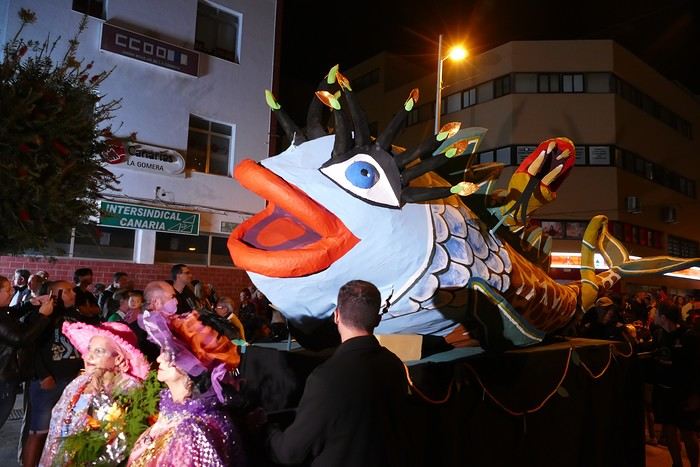 Entierro de la Sardina in San Sebastián de La Gomera
Thursday, February 15
Woke up at 5:15 AM. The only suitable ferry was at 7 AM, which would get us to La Palma by late morning rather than evening. We packed our bags, had breakfast, then headed to the port, left our rental car, and boarded the ferry to Tenerife, from where we’d continue to La Palma. Calm sea, beautiful sun—by 10:30 AM, we disembarked in La Palma. We picked up our car and immediately headed to our new apartment in Breña Alta. It’s a large apartment with a superb terrace facing the sea, fully equipped and very comfortable. The hosts recommended Casa Goyo restaurant, near the airport and close to us. It’s a restaurant with many small rooms, some of which can be reserved for families. The fish-based cuisine (chipirones, pulpo) was excellent, hearty, and reasonably priced. Since it’s in the airport’s flight path, we occasionally heard planes landing. Quick and efficient service. Afterward, we visited Santa Cruz de La Palma, which reminded us of the historic quarters of La Orotava in Tenerife or the capital of Gran Canaria.
Friday, February 16
Beautiful weather, blue sky. We headed to the San Bartolo viewpoint toward the northeast coast, then to the lovely village of San Andrés, which we explored. From there, we walked along the shore to the natural pools of Charco Azul, where we swam in the cool but "swimmable" sea. Back in San Andrés for lunch at the "San Andrés" restaurant on the beautiful church square. Very good fish-based meal. We got back in the car and continued along the north coast to the port of Espindola and the natural pools of Fajana near the Cumplida lighthouse. A fairly strong wind whipped up beautiful waves crashing onto the rocky coast in bursts of foam. Back in Santa Cruz, we stopped at the Mercadona supermarket to buy fresh shrimp for dinner.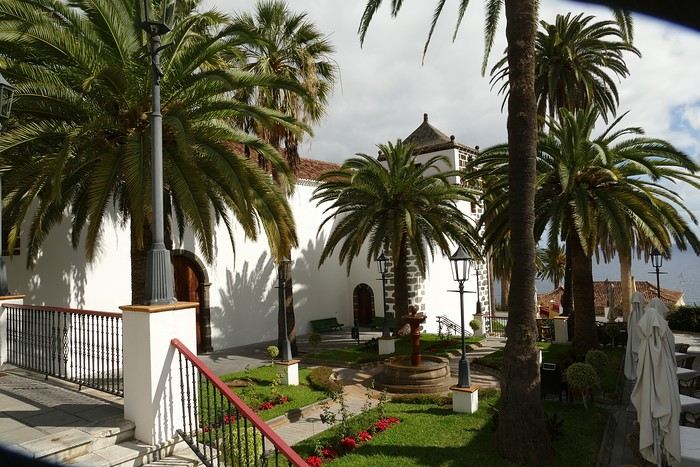 San Andrés
Saturday, February 17
Uniform blue sky, even on the heights. We took the beautiful road that winds up to the summit of the Caldera de Taburiente. Several viewpoints offer 360° views of the entire island and beyond: you can make out La Gomera, El Hierro, and, of course, Tenerife with the perfect triangle of Teide. We parked at the Los Andes viewpoint parking lot and started our hike to Pico de la Cruz along a trail following the ridge, offering superb views into the caldera. We got back in the car and passed by the Roque de los Muchachos astronomical complex, composed of numerous observatories, some with very aesthetic mirror telescopes. We hiked from the Roque de los Muchachos parking lot to the various viewpoints, always as impressive. Picnic on site, then back to Santa Cruz. We stopped by our car dealer because the oil warning light came on—better safe than sorry. The representative reassured us but preferred to give us a Fiat Cross SUV instead.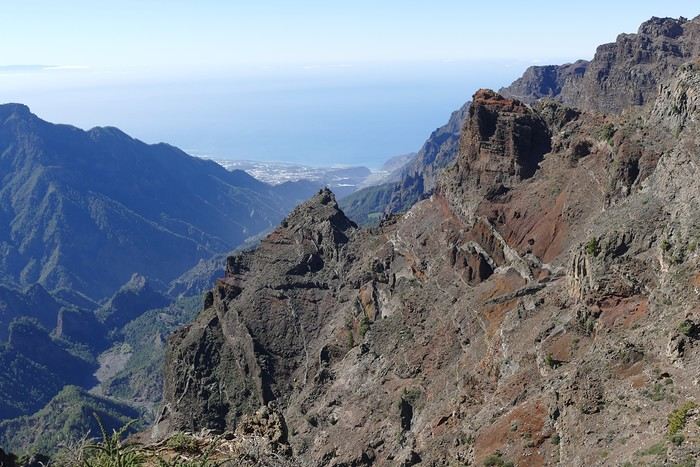 The Caldera de Taburiente
Sunday, February 18 The weather was a bit mixed, with cloudy patches. We set off to hike the Barranco de la Cuba de Galga. Unfortunately, the Los Tilos trail had been closed for several months due to a major landslide. The parking lot by the road was already quite full, and indeed, we crossed paths with many hikers along the way—it’s an easy hike with little elevation gain, which is rare here in La Palma! The beautiful path winds through a very narrow, deep gorge covered in lush tropical vegetation—you’d think you were in a Southeast Asian forest, especially with the humidity in the gorge bringing out earthy and floral scents. Halfway through, Monique turned back while the rest of us continued to the Cuba de Galga. A light drizzle accompanied us on the return. For lunch, we went to Chipi Chipi restaurant in the heights of Santa Cruz. The cool air forced us to leave the lovely terrace for the slightly noisy dining room. The meal was very good and hearty. Afternoon spent resting at our house.
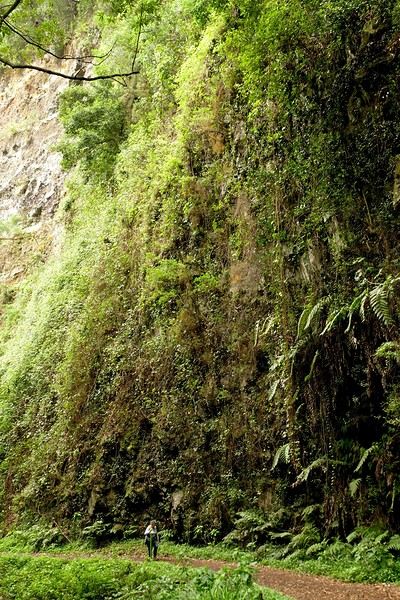 La Cuba de la Galga
Monday, February 19 A few clouds still clung to the nearby mountain peaks. We headed south to Los Canarios. We stopped in front of the small San Antonio Abad church, where a path leads to the viewpoint in 15 minutes. Then we visited the San Antonio Volcano Interpretation Center and climbed to the viewpoint via the trail along the crater’s edge, offering a plunging view into the crater. Then PP, Pat, and I headed toward the Teneguía volcano but turned back given the remaining distance and the intense heat bearing down on us! Plus, the landscape was rather arid and not very interesting. We got back in the car and drove down to the salt flats at the island’s southern tip. The ocean crashes here in large waves, exploding against the volcanic rocks and feeding a "blowhole" carved into the rock. We stopped for drinks at the salt flats restaurant, then headed home.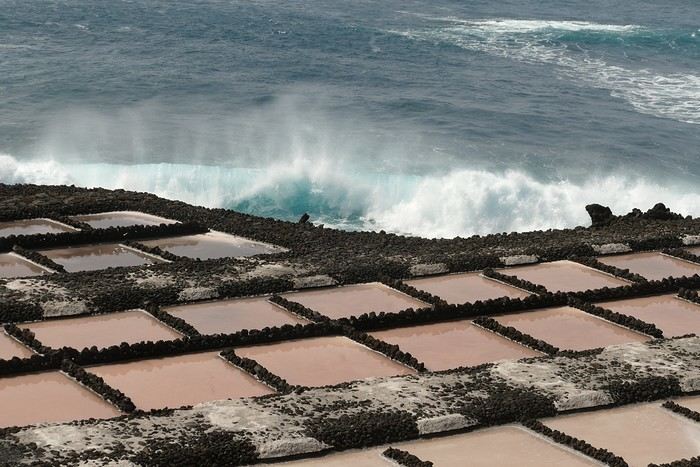 The salt flats in Fuencaliente
Tuesday, February 20 Beautiful weather with a few clouds clinging to the mountains, as usual. A relaxed morning since my parking reservation at La Cumbrecita didn’t start until 1 PM. It takes about 30 minutes from Santa Cruz to reach the valley floor via a beautiful but narrow road toward the end, though there’s very little traffic. Meanwhile, the clouds had disappeared, and the view from the La Cumbrecita viewpoint was superb. We recognized Pico de la Cruz in the distance, where we’d been a few days earlier. We then took the path leading to the Las Chozas viewpoint through a magnificent Canarian pine forest. We picnicked on site, then took the path to the Los Roques viewpoint. We returned the same way since the direct route was closed for construction. Back in Santa Cruz, we visited the Sanctuary of Las Nieves, with its beautiful golden Baroque altar.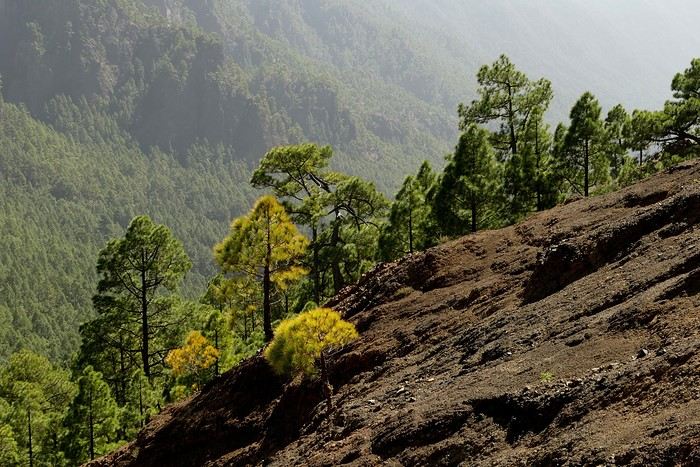 Hike from La Cumbrecita
Wednesday, February 21 After packing our things and loading the car, we left Santa Cruz under a very blue sky for Los Llanos de Aridane, where we stopped to visit this lovely town. The Church of Nuestra Señora de los Remedios has a beautiful coffered ceiling and an original papier-mâché Christ statue from the 16th century. Around it, colorful old Canarian houses brighten the streets of the town center. We took the opportunity to stroll, do some shopping, and finally sat down at La Pergola restaurant for a mediocre lunch. We got back in the car to check into our new house in Arecida. On the way, we stopped at the Mirador del Time, which once again offered an impressive panorama, allowing us—for the first time—to see the damage caused by the Tajogaite volcano eruption in 2021. You can clearly see the still-smoking crater and the large black lava flow covering the landscape down to the sea. We really liked our new accommodation: a local house that’s been renovated on the heights of Arecida, not far from the Canarian pine forest. From several terraces, we have a 360° view of the sea and mountains. We even have a private pool! There are two beautiful, brand-new bedrooms, each with its own bathroom—the best. Plus, we’re on the GR 131 trail that runs along the Barranco de las Angustias toward the northeast.
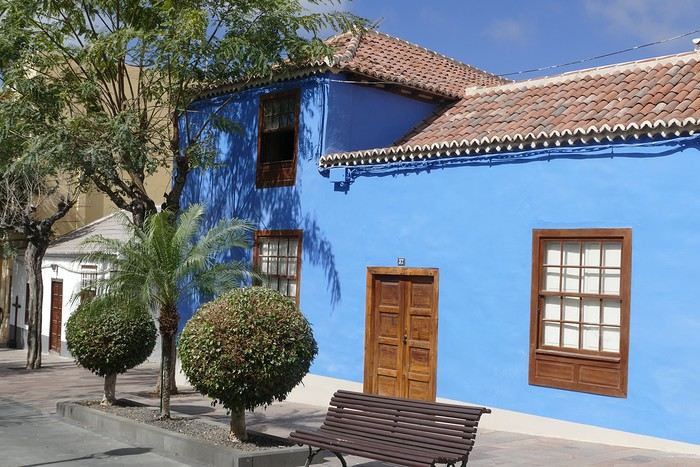 Los Llanos de Aridane
Thursday, February 22 Once again, beautiful weather greeted us when we woke up. We started the GR 131 with the goal of reaching the Torre del Time viewpoint—about 400 meters of elevation gain. The path, quite steep at first, winds through a superb Canarian pine forest. A few viewpoints let you appreciate the sheer drop of the Barranco de las Angustias—watch out for vertigo! At the Torre del Time viewpoint, there’s a nearly 1,000-meter vertical drop. We returned via another path, the PLP1, which meanders first through this beautiful forest, then along lovely flower-filled gardens adjacent to beautiful properties that cascade from the forest down to the road serving these neighborhoods. This afternoon, we tried to get closer to the area devastated by the 2021 lava flows. Several roads are still closed or reserved for residents, while others—brand new—have been rebuilt to open up this densely populated and cultivated region. In some places, the lava flow slightly diverted, sparing some properties that logically should have disappeared. Now, they’re encircled by a massive cooled lava field. In other spots, twisted and charred metal scraps or greenhouse remains protrude from the lava—all that’s left of the former banana plantations. A little higher up, you can see the slightly smoking crater of Tajogaite, responsible for this disaster. Back to Casa Barreros.
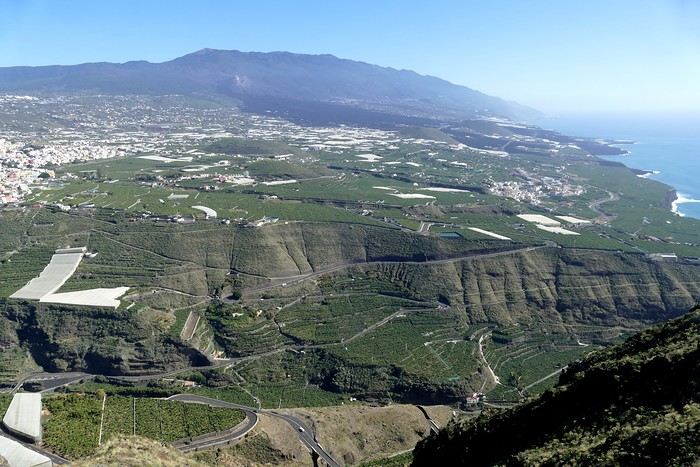 View of Los Llanos and, in the background, the 2021 lava flow
Friday, February 23
Though the sky was still blue, the temperature had dropped due to a chilly wind. By midday, it still rose to 22°C. Today, we headed north, specifically to the town of Tijarafe, where a very narrow road descends to the small port, Porís de Candelaria. The 3.7-kilometer road drops 700 meters in elevation, with gradients up to 30%—it was going to be intense! Indeed, the descent was scary, with the void right next to the very narrow road where passing was impossible except at a few rare spots. Everything went well—there was little traffic at this early hour. From the parking lot at the bottom, a path leads to Porís de Candelaria. It’s surprising to see this small fishing hamlet nestled in the shelter of an immense cave opening onto the sea, which was quite rough today. The sun, at this time of year, would appear late in the cave, which remained in shadow for much of the day. We returned via the same road, strolled through the small town of Puntagorda, and had lunch at El Jardín de los Naranjos restaurant—excellent meal.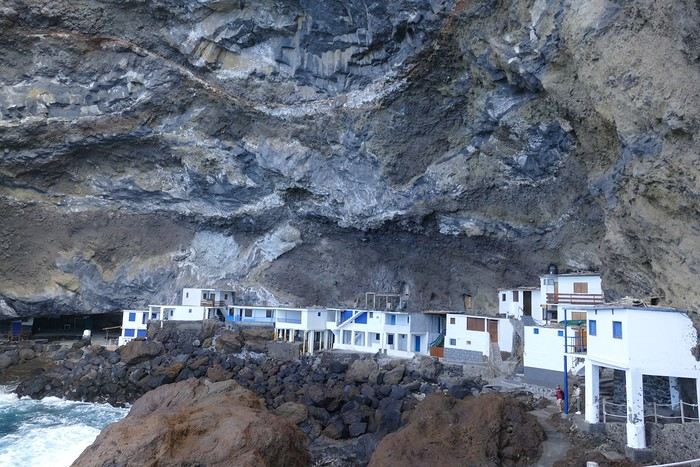 Fishing hamlet of Candelaria
Saturday, February 24 The air was still cool, but the sun was beautiful. While Monique stayed home to rest, the three of us headed to the village of Las Tricias to hike the Buracas Caves trail. We left the car parked on the LP1 road and took the small paved road down to the sign marking the trail’s start. The signage for all the trails we took here, as in La Gomera, was very well done. The path descended steadily, then more steeply toward the caves where the island’s first inhabitants lived—some petroglyphs are still visible in certain caves. The path then climbed back up, passing magnificent dragon trees and more or less elaborate huts occupied by Germans who’ve lived here for many years. Back at Casa Barreros for some rest.
Sunday, February 25 The weather once again blessed us with a beautiful day. This morning, we visited the local produce market held on weekends in Puntagorda. You’ll find agricultural products, crafts, and food to keep you going. A little further on, there’s a glass viewpoint overlooking the barranco plunging toward the sea, with a view of the thrill-seekers trying the zip line right next to it. Lunch at Naranjos—definitely a good spot—with their shrimp and spice tagliatelle. Back home for an afternoon of relaxation.
Monday, February 26 We left Arecida under a cloudy sky. Driving up from Los Llanos de Aridane toward the east, an enormous cascade of clouds poured from the mountain peaks into the Los Llanos plain—very impressive. Arriving in Santa Cruz, we went for a stroll, did some last-minute shopping, then had a final good-quality paella at La Chalana on the paseo maritimo. We left the car in the parking lot and took the 5 PM Olsen ferry to Tenerife on a slightly choppy sea, but the ferry didn’t rock too much. Arriving at 7:15 PM, we dropped off our things near the port in our reserved apartment and went for dinner at Abordo—rubbery chipirones. A digestive stroll among the ever-increasing number of tourists in Los Cristianos—restaurants were packed to the brim, the season is in full swing here. Gone is the calm of La Gomera and La Palma, and the laid-back tourism of German hikers among whom a few French were hiding!
Tuesday, February 27 To make our homemade breakfast more enjoyable, we went to buy pastries at the local bakery, then took one last walk on the paseo along the beaches, mingling with the many mobility scooters driven by elderly or disabled people, joggers, and tourists. Last apéro near the bus station, then off to the airport. After a smooth 4-hour-30-minute flight, we arrived in Basel-Mulhouse at 10:20 PM.
THE END
Conclusion A fantastic trip to two islands with magnificent and diverse nature, where landscapes range from desert-like to tropical depending on exposure to winds and clouds. Thanks to the many beautiful viewpoints, you can truly appreciate these exceptionally dynamic reliefs. A hiker’s paradise, the trails are all very well marked, though the choice of easy or moderate paths for "casual walkers" is quite limited. Another notable advantage, in our opinion, is that these islands are very lightly developed—you’ll hardly see any of those ugly hotel blocks that spoil the landscapes of some other Canary Islands. It’s true that the beaches on these two islands don’t meet traditional international tourism criteria: they’re small, with black sand, and often difficult to access. Special mention for the quality of the road network (except for a few small local roads), which seems brand new, well-paved, and well-signposted. We also enjoyed exceptional weather for February, with fewer than three days of gray or rainy weather out of 21.
Almost all the accommodations we chose met or exceeded our expectations, often at reasonable prices: an average of 98 € per night for an apartment or house with two bedrooms for four people.
All photos can be viewed by clicking this link: https://photos.app.goo.gl/G44pPk4g9PW1rNzg8
Tuesday, February 6 We left around 9 AM with our car, along with Pierre-Paul and Patricia, heading to the Bluepark parking lot in Bartenheim. As expected, we were awaited and left promptly for EuroAirport Basel. Took off at 12:25 PM for a 4-hour-15-minute flight under excellent conditions. Beautiful arrival in Tenerife with Teide in sight under a clear blue sky. Fifteen minutes later, we waited for bus No. 40 to Los Cristianos with quite a few other tourists, but we managed to find four seats. From the bus station, it was a 20-minute walk to our hotel. We checked into a lovely apartment for the four of us, complete with all the comforts. Outside, it was quite warm—at least 25°C! After dropping off our luggage, we went for a stroll. The immediate surroundings of the hotel held no interest for us: a modern, concrete area filled with hotels, bars, tourist agencies, and unappealing restaurants all offering the same bland international cuisine. Pat went to cool off at the pool, unfortunately overrun by loud, drunk English tourists. I took a walk to the paseo maritimo that leads to the port, skirting the seafront. The promenade was pleasant, but it could have been any seaside resort in the world—same old scene: a succession of bars with blaring music where many elderly people sipped cold beers waiting for the sunset, the backdrop a wall of resort-style hotels resembling rabbit hutches! Upon reaching the port, I scouted the route we’d take the next day to the Fred Olsen ferry. Back at the apartment, in the early evening, we looked for a non-touristy restaurant for dinner. Monique stopped a woman to ask her opinion! In this area, she told us, there’s no restaurant that serves Canarian or Spanish cuisine! The only place with decent restaurants is at the port. Off we went to the port, where we sat down at Al Bordo restaurant and ordered a seafood paella for four. Excellent, and at a very reasonable price (36 € for two). We returned to the hotel along the seafront.
Wednesday, February 7
Woke up at 6 AM. Had breakfast in the apartment with what we’d bought the day before at a supermarket. It was still dark when we left on foot toward the port, walking along the calm seafront at this early hour. Forty minutes later, we arrived and waited 10 minutes before the ferry docked. At 9:30 AM, we left the port of Los Cristianos for a 50-minute crossing on a calm sea under a beautiful blue sky. There were quite a few people on this large ferry, but many had no luggage, meaning they were visiting La Gomera for the day and would take the ferry back in the evening. Upon disembarking, we went straight to our rental car agency to pick up the car we’d booked online a few months earlier. It was a nice Peugeot 2008, spacious enough for the four of us and our luggage. We immediately took the beautiful road from San Sebastián that climbs directly into the mountains toward our rental in Vallehermoso. The road was in perfect condition—it seemed brand new, like all the others we’d take on this island later. This side of the island is very arid with little vegetation, and the terrain is particularly rugged, as it is throughout the island. We stopped at our first miradors, which would be followed by many more throughout our Canarian trip. Our first visit was to the small village of Agulo, perched on a promontory above the sea and at the foot of a high cliff. The village features typical Canarian houses with windows flush with the façade and black volcanic stone masonry on white or reddish-brown walls. The first recommended restaurant was already booked for a group, so we settled for the shaded terrace of the excellent El Alameda bar-restaurant. From Agulo, you can access the Abrante viewpoint via a winding road, where the view of Agulo, 600 meters below, is exceptional. A glass ledge over the void lets you test your fear of heights!
We drove to Vallehermoso to do our grocery shopping at the supermarket—a habit that would continue until the end of the trip. Our little house, "Casa rural El Encatadora," is located in a beautiful flower-filled valley a few kilometers west of Vallehermoso. Each of us had a bedroom with an en-suite bathroom, plus a living room, kitchen, and a small terrace overlooking the quiet street at the valley’s end, which didn’t bother us at all.
Thursday, February 8 The good weather seemed to follow us since our arrival in the Canary Islands. This morning, we took the road—still as beautiful and new—toward Arure, high up to the west. The landscape was magnificent, with breathtaking glimpses of the sea far below. In Arure, we parked in front of Conchita’s bar, where a hike (Rother No. 30) starts toward two viewpoints: Alojera, which we reached after 45 minutes on a lovely path. Monique, tired from the first steep climb, stopped at the first viewpoint and hitchhiked back to Arure. Meanwhile, we continued toward the second viewpoint, Los Barranquillos, where the view of the surroundings was partially hidden by misty clouds rising from the sea. The entire mountain is sculpted by ancient, endless terraces climbing until the slope becomes too steep for construction—visible traces of the hard work of past inhabitants trying to survive in a harsh environment. We had a decent lunch at La Conchita bar, then drove to the small seaside town of Puerto la Caleta, sheltered by an immense cliff plunging into the sea. Black sand beach, rough sea—despite our encouragement, Pat didn’t dare to swim! As for the old village of Caleta, it’s perched on the mountainside, and visiting it requires climbing steep, stair-filled alleys to discover a few traditional houses. Back at the casa, dinner in, and card games...
VallehermosoFriday, February 9 This morning, the sky was overcast, and the peaks around us were shrouded in clouds. We took the same road as yesterday to hike Las Creces. Quickly gaining altitude, we entered a thick fog—visibility was very limited. We stopped at the Las Creces parking lot; visibility improved, and the sun wasn’t far off. The hike is entirely within a beautiful laurel forest, with the sun playing hide-and-seek, but it wasn’t cold despite the altitude. After finishing the loop trail, we decided to picnic—not there, as it was too chilly—but on Vallehermoso’s beach, where we found a nice picnic area sheltered by large black rocks. A short digestive walk on the surrounding hill to admire the little beach from above. Back in Vallehermoso, we did some grocery shopping, then tried to return to the casa—only to find ourselves locked out because we’d left the key in the lock inside! After several attempts and with the help of Yéli, a relative of the owner we called for help, we were finally able to get back in!
Saturday, February 10
It rained last night, and the sky remained overcast. Monique decided to rest this morning. PP, Pat, and I set off on the hike that starts from the house toward the Marichal reservoir. The sun wasn’t far off, and by 11 AM, it was fully out. The pleasant hike passed by many flower-filled gardens and orchards—orange, lemon, and mandarin trees in fruit. The path climbed gently toward the reservoir, where the view of the Cano rock dominating the landscape was magnificent. The last part of the climb was a bit tough, overgrown with lush vegetation, and the trail was slippery from last night’s rain. We descended via a different, much more pleasant path and returned to the casa just in time for lunch, prepared by Monique. This valley is rich with its many farmers and market gardeners who’ve cultivated the entire valley, taking advantage of the water flowing down from the mountain, captured upstream and redistributed through countless pipes snaking along the paths. Numerous tanks also store water during dry periods. The houses are scattered across both sides of the valley, and these colorful little homes add a beautiful touch to the landscape. The many palm trees give this valley a distinctly tropical feel—you could almost imagine yourself in the Caribbean. Add to that some salsa music drifting from a hut where farmers were working, and the picture is complete. A well-chilled beer apéro capped off a lovely morning. The afternoon was dedicated to rest, relaxation, reading, and games.
Sunday, February 11 The blue sky returned, though a few clouds still capped the highest peaks. Today, we visited Garajonay National Park, which covers the highest central mountains. Up there, we were above the clouds, and the panoramas from the various viewpoints were stunning: first, Cherelepin, accessible from the Laguna Grande parking lot, then Alto de Garajonay, offering an exceptional view of Teide—over 3,000 meters high—emerging from the clouds on Tenerife, far in the distance. We continued to the Los Roques viewpoints, then stopped for lunch at the Degollada de Peraza restaurant, where the view of the barranco was impressive. We descended toward San Sebastián and checked into our new lodging, La Cabezada, located in the countryside about 3 km above San Sebastián. It’s a small apartment adjacent to the owner’s, with a lovely terrace overlooking the surrounding mountains and surrounded by a beautiful garden. Apéro, then dinner on our beautiful terrace.
Monday, February 12 This morning, we went down to visit San Sebastián de La Gomera: its old tower, main street with some beautiful traditional houses, and the Church of the Assumption. Back at the casa for lunch. In the afternoon, Pat, PP, and I set off on the short hike from San Sebastián beach to La Guancha beach. We drove down and parked on the beach. The path climbs along the hill overlooking San Sebastián, passes by the tall Christ statue dominating the landscape, and roughly follows the coast down to the isolated Guancha beach. A beautiful hike under a hot sun, and a swim was welcome, even if the beach and sea access weren’t very comfortable due to large pebbles and quickly deepening water. Apart from two nudist bathers, there was no one on this beach. We returned the same way.
Tuesday, February 13 Rest day. We went down to town to stroll and do some shopping. I took the opportunity to visit the parador, beautifully situated above the city in a lovely garden overlooking the port and town. Together, we went for a cuba libre at the "Cuba Libre" bar, then had lunch at Breñusca (mediocre paella!). Back at the casa, then we went back down to town to see a carnival parade, a "passacalles," which actually passed an hour earlier than scheduled. Oh well.
Wednesday, February 14 Each to their own program this morning. Pat went swimming at San Sebastián beach, Monique rested at the casa, and PP and I set off on the hike from Playa de Avalos to the Ermita de Guadalupe on Playa del Cangrejo. It wasn’t easy to find the right road or the parking spot, but we managed. The path seemed to have suffered landslides, according to a sign at the trailhead! We decided to check it out, ready to turn back if it seemed too dangerous. In the end, apart from one or two slightly tricky spots where we had to climb a pile of rocks, the trail remained passable, though a bit vertigo-inducing in places. The narrow path clings to very vertical cliffs nearly 300 meters above sea level! But what a magnificent view. At one point, the trail runs alongside a wall of basaltic pipes. We returned via the drivable track that parallels the trail a bit lower. Back at the house for lunch. In the late afternoon, we returned to town to attend the "Entierro de las Sardinas" (Burial of the Sardine), which closes the Canarian carnival festivities. While waiting, we strolled through the parador’s gardens and had mojitos in town. Around 9 PM, we heard the noise and cries of the mourners. The procession advanced, led by a large papier-mâché sardine on a float, surrounded by wailing mourners. The procession headed toward the sea, where the sardine was burned, and a mini fireworks display ended the procession. It was all very good-natured, and everyone had fun. We ended the evening with dinner at a good fish restaurant, El Pajar.
Entierro de la Sardina in San Sebastián de La GomeraThursday, February 15
Woke up at 5:15 AM. The only suitable ferry was at 7 AM, which would get us to La Palma by late morning rather than evening. We packed our bags, had breakfast, then headed to the port, left our rental car, and boarded the ferry to Tenerife, from where we’d continue to La Palma. Calm sea, beautiful sun—by 10:30 AM, we disembarked in La Palma. We picked up our car and immediately headed to our new apartment in Breña Alta. It’s a large apartment with a superb terrace facing the sea, fully equipped and very comfortable. The hosts recommended Casa Goyo restaurant, near the airport and close to us. It’s a restaurant with many small rooms, some of which can be reserved for families. The fish-based cuisine (chipirones, pulpo) was excellent, hearty, and reasonably priced. Since it’s in the airport’s flight path, we occasionally heard planes landing. Quick and efficient service. Afterward, we visited Santa Cruz de La Palma, which reminded us of the historic quarters of La Orotava in Tenerife or the capital of Gran Canaria.
Friday, February 16
Beautiful weather, blue sky. We headed to the San Bartolo viewpoint toward the northeast coast, then to the lovely village of San Andrés, which we explored. From there, we walked along the shore to the natural pools of Charco Azul, where we swam in the cool but "swimmable" sea. Back in San Andrés for lunch at the "San Andrés" restaurant on the beautiful church square. Very good fish-based meal. We got back in the car and continued along the north coast to the port of Espindola and the natural pools of Fajana near the Cumplida lighthouse. A fairly strong wind whipped up beautiful waves crashing onto the rocky coast in bursts of foam. Back in Santa Cruz, we stopped at the Mercadona supermarket to buy fresh shrimp for dinner.
San AndrésSaturday, February 17
Uniform blue sky, even on the heights. We took the beautiful road that winds up to the summit of the Caldera de Taburiente. Several viewpoints offer 360° views of the entire island and beyond: you can make out La Gomera, El Hierro, and, of course, Tenerife with the perfect triangle of Teide. We parked at the Los Andes viewpoint parking lot and started our hike to Pico de la Cruz along a trail following the ridge, offering superb views into the caldera. We got back in the car and passed by the Roque de los Muchachos astronomical complex, composed of numerous observatories, some with very aesthetic mirror telescopes. We hiked from the Roque de los Muchachos parking lot to the various viewpoints, always as impressive. Picnic on site, then back to Santa Cruz. We stopped by our car dealer because the oil warning light came on—better safe than sorry. The representative reassured us but preferred to give us a Fiat Cross SUV instead.
The Caldera de TaburienteSunday, February 18 The weather was a bit mixed, with cloudy patches. We set off to hike the Barranco de la Cuba de Galga. Unfortunately, the Los Tilos trail had been closed for several months due to a major landslide. The parking lot by the road was already quite full, and indeed, we crossed paths with many hikers along the way—it’s an easy hike with little elevation gain, which is rare here in La Palma! The beautiful path winds through a very narrow, deep gorge covered in lush tropical vegetation—you’d think you were in a Southeast Asian forest, especially with the humidity in the gorge bringing out earthy and floral scents. Halfway through, Monique turned back while the rest of us continued to the Cuba de Galga. A light drizzle accompanied us on the return. For lunch, we went to Chipi Chipi restaurant in the heights of Santa Cruz. The cool air forced us to leave the lovely terrace for the slightly noisy dining room. The meal was very good and hearty. Afternoon spent resting at our house.
La Cuba de la GalgaMonday, February 19 A few clouds still clung to the nearby mountain peaks. We headed south to Los Canarios. We stopped in front of the small San Antonio Abad church, where a path leads to the viewpoint in 15 minutes. Then we visited the San Antonio Volcano Interpretation Center and climbed to the viewpoint via the trail along the crater’s edge, offering a plunging view into the crater. Then PP, Pat, and I headed toward the Teneguía volcano but turned back given the remaining distance and the intense heat bearing down on us! Plus, the landscape was rather arid and not very interesting. We got back in the car and drove down to the salt flats at the island’s southern tip. The ocean crashes here in large waves, exploding against the volcanic rocks and feeding a "blowhole" carved into the rock. We stopped for drinks at the salt flats restaurant, then headed home.
The salt flats in FuencalienteTuesday, February 20 Beautiful weather with a few clouds clinging to the mountains, as usual. A relaxed morning since my parking reservation at La Cumbrecita didn’t start until 1 PM. It takes about 30 minutes from Santa Cruz to reach the valley floor via a beautiful but narrow road toward the end, though there’s very little traffic. Meanwhile, the clouds had disappeared, and the view from the La Cumbrecita viewpoint was superb. We recognized Pico de la Cruz in the distance, where we’d been a few days earlier. We then took the path leading to the Las Chozas viewpoint through a magnificent Canarian pine forest. We picnicked on site, then took the path to the Los Roques viewpoint. We returned the same way since the direct route was closed for construction. Back in Santa Cruz, we visited the Sanctuary of Las Nieves, with its beautiful golden Baroque altar.
Hike from La CumbrecitaWednesday, February 21 After packing our things and loading the car, we left Santa Cruz under a very blue sky for Los Llanos de Aridane, where we stopped to visit this lovely town. The Church of Nuestra Señora de los Remedios has a beautiful coffered ceiling and an original papier-mâché Christ statue from the 16th century. Around it, colorful old Canarian houses brighten the streets of the town center. We took the opportunity to stroll, do some shopping, and finally sat down at La Pergola restaurant for a mediocre lunch. We got back in the car to check into our new house in Arecida. On the way, we stopped at the Mirador del Time, which once again offered an impressive panorama, allowing us—for the first time—to see the damage caused by the Tajogaite volcano eruption in 2021. You can clearly see the still-smoking crater and the large black lava flow covering the landscape down to the sea. We really liked our new accommodation: a local house that’s been renovated on the heights of Arecida, not far from the Canarian pine forest. From several terraces, we have a 360° view of the sea and mountains. We even have a private pool! There are two beautiful, brand-new bedrooms, each with its own bathroom—the best. Plus, we’re on the GR 131 trail that runs along the Barranco de las Angustias toward the northeast.
Los Llanos de AridaneThursday, February 22 Once again, beautiful weather greeted us when we woke up. We started the GR 131 with the goal of reaching the Torre del Time viewpoint—about 400 meters of elevation gain. The path, quite steep at first, winds through a superb Canarian pine forest. A few viewpoints let you appreciate the sheer drop of the Barranco de las Angustias—watch out for vertigo! At the Torre del Time viewpoint, there’s a nearly 1,000-meter vertical drop. We returned via another path, the PLP1, which meanders first through this beautiful forest, then along lovely flower-filled gardens adjacent to beautiful properties that cascade from the forest down to the road serving these neighborhoods. This afternoon, we tried to get closer to the area devastated by the 2021 lava flows. Several roads are still closed or reserved for residents, while others—brand new—have been rebuilt to open up this densely populated and cultivated region. In some places, the lava flow slightly diverted, sparing some properties that logically should have disappeared. Now, they’re encircled by a massive cooled lava field. In other spots, twisted and charred metal scraps or greenhouse remains protrude from the lava—all that’s left of the former banana plantations. A little higher up, you can see the slightly smoking crater of Tajogaite, responsible for this disaster. Back to Casa Barreros.
View of Los Llanos and, in the background, the 2021 lava flowFriday, February 23
Though the sky was still blue, the temperature had dropped due to a chilly wind. By midday, it still rose to 22°C. Today, we headed north, specifically to the town of Tijarafe, where a very narrow road descends to the small port, Porís de Candelaria. The 3.7-kilometer road drops 700 meters in elevation, with gradients up to 30%—it was going to be intense! Indeed, the descent was scary, with the void right next to the very narrow road where passing was impossible except at a few rare spots. Everything went well—there was little traffic at this early hour. From the parking lot at the bottom, a path leads to Porís de Candelaria. It’s surprising to see this small fishing hamlet nestled in the shelter of an immense cave opening onto the sea, which was quite rough today. The sun, at this time of year, would appear late in the cave, which remained in shadow for much of the day. We returned via the same road, strolled through the small town of Puntagorda, and had lunch at El Jardín de los Naranjos restaurant—excellent meal.
Fishing hamlet of CandelariaSaturday, February 24 The air was still cool, but the sun was beautiful. While Monique stayed home to rest, the three of us headed to the village of Las Tricias to hike the Buracas Caves trail. We left the car parked on the LP1 road and took the small paved road down to the sign marking the trail’s start. The signage for all the trails we took here, as in La Gomera, was very well done. The path descended steadily, then more steeply toward the caves where the island’s first inhabitants lived—some petroglyphs are still visible in certain caves. The path then climbed back up, passing magnificent dragon trees and more or less elaborate huts occupied by Germans who’ve lived here for many years. Back at Casa Barreros for some rest.
Sunday, February 25 The weather once again blessed us with a beautiful day. This morning, we visited the local produce market held on weekends in Puntagorda. You’ll find agricultural products, crafts, and food to keep you going. A little further on, there’s a glass viewpoint overlooking the barranco plunging toward the sea, with a view of the thrill-seekers trying the zip line right next to it. Lunch at Naranjos—definitely a good spot—with their shrimp and spice tagliatelle. Back home for an afternoon of relaxation.
Monday, February 26 We left Arecida under a cloudy sky. Driving up from Los Llanos de Aridane toward the east, an enormous cascade of clouds poured from the mountain peaks into the Los Llanos plain—very impressive. Arriving in Santa Cruz, we went for a stroll, did some last-minute shopping, then had a final good-quality paella at La Chalana on the paseo maritimo. We left the car in the parking lot and took the 5 PM Olsen ferry to Tenerife on a slightly choppy sea, but the ferry didn’t rock too much. Arriving at 7:15 PM, we dropped off our things near the port in our reserved apartment and went for dinner at Abordo—rubbery chipirones. A digestive stroll among the ever-increasing number of tourists in Los Cristianos—restaurants were packed to the brim, the season is in full swing here. Gone is the calm of La Gomera and La Palma, and the laid-back tourism of German hikers among whom a few French were hiding!
Tuesday, February 27 To make our homemade breakfast more enjoyable, we went to buy pastries at the local bakery, then took one last walk on the paseo along the beaches, mingling with the many mobility scooters driven by elderly or disabled people, joggers, and tourists. Last apéro near the bus station, then off to the airport. After a smooth 4-hour-30-minute flight, we arrived in Basel-Mulhouse at 10:20 PM.
THE END
Conclusion A fantastic trip to two islands with magnificent and diverse nature, where landscapes range from desert-like to tropical depending on exposure to winds and clouds. Thanks to the many beautiful viewpoints, you can truly appreciate these exceptionally dynamic reliefs. A hiker’s paradise, the trails are all very well marked, though the choice of easy or moderate paths for "casual walkers" is quite limited. Another notable advantage, in our opinion, is that these islands are very lightly developed—you’ll hardly see any of those ugly hotel blocks that spoil the landscapes of some other Canary Islands. It’s true that the beaches on these two islands don’t meet traditional international tourism criteria: they’re small, with black sand, and often difficult to access. Special mention for the quality of the road network (except for a few small local roads), which seems brand new, well-paved, and well-signposted. We also enjoyed exceptional weather for February, with fewer than three days of gray or rainy weather out of 21.
Almost all the accommodations we chose met or exceeded our expectations, often at reasonable prices: an average of 98 € per night for an apartment or house with two bedrooms for four people.
All photos can be viewed by clicking this link: https://photos.app.goo.gl/G44pPk4g9PW1rNzg8
Entry requirements for Senegal by motorcycle
Hi,
I’ve read on several forums and blogs that to enter Senegal by motorcycle, some say you need a CPD, others say an ATA carnet, and others say no carnet at all.
What’s the real deal? My bike is over 10 years old.
Thanks