Results for "Jardins+Agdal+|+1+>+66"
26926 results found.
Retour de l'Iberostar Hacienda Dominicus (Bayahibe) English translation pending
😉 salut à tous,
je voulais vous livrer mon témoignage sur le séjour que je viens de passer à l'hotel Iberostar Hacienda Dominicus à Bayahibé.
je suis parti début novembre et j'ai passé un séjour de réve : l'hotel est somptueux sur tous les points (calme absolu mais possibilité de faire la fête, jardins magnifiques, personnel adorable, nourriture, buffet, et resto excellents...j'ai du prendre 3 kgs !!😊), la plage magnifique... bref je pense que c un des meilleurs 5* de la république, sans surprises...c'était presque mm du luxe😏
les cockails, le bar, les restos sont à volonté, la piscine énorme et trés bien entretenue (tout comme la plage). Les chambres hypers grandes, propres (nettoyés à fond tous les jours, la clim est au top, surtout qd dehors il fait 30° !), le lit est immense, pleins de rangements... bref c mieux qu'a la maison !!
le pays est magnifique et le coin Bayahibé est superbe. j'ai pu discuter avec des personnes séjournant à Punta Cana et il me semble (attention je ne critique pas) que le coté Caraibe est plus apréciable (mer plus calme, les excursions proposés sont les mm sauf qu'il ne faut pas faire 2 heures de bus le matin et le soir). POur les excursions, j'ai fait les 2 iles : Saona et Catalinita (superbes fonds sous marins) et catalina (plage superbe).. le mieux est de le faire en bateau rapide. Puis j'ai visité les terres par une excursions en 4x4, le pays est trés pauvre, mais la nature verdoyante et les habitants trés chaleureux !
je conseille de ne pas passer par les excursions de l'hotel pour les "petits budgets" car le village de bayahibé est "bondé" de dominicains qui se feront la joie de faire les mm excursions pour un prix divisé par 2 !!😮 (on a payé 25$ la journée contre 35$ la 1/2j par l'hotel)...
j'ai pleins de trucs a dire mais je m'y perd un peu... le mieux c que je me rend disponible pour vos interrogations sur l'hotel, la région, les trucs à savoir... je mettrai plus tard des photos sur le site.
PS: Corsair au top pour le vol et attention si vous séjournez a Bayahibé.. il faut attérir à la Romana, et non à Punta Cana ou mm Saint Domingue, pour éviter de se taper 2 heures de bus en plus (20 minutes de la Romana pour se rendre à l'hotel)
Bye😛
Nicolas, Marseille
je voulais vous livrer mon témoignage sur le séjour que je viens de passer à l'hotel Iberostar Hacienda Dominicus à Bayahibé.
je suis parti début novembre et j'ai passé un séjour de réve : l'hotel est somptueux sur tous les points (calme absolu mais possibilité de faire la fête, jardins magnifiques, personnel adorable, nourriture, buffet, et resto excellents...j'ai du prendre 3 kgs !!😊), la plage magnifique... bref je pense que c un des meilleurs 5* de la république, sans surprises...c'était presque mm du luxe😏
les cockails, le bar, les restos sont à volonté, la piscine énorme et trés bien entretenue (tout comme la plage). Les chambres hypers grandes, propres (nettoyés à fond tous les jours, la clim est au top, surtout qd dehors il fait 30° !), le lit est immense, pleins de rangements... bref c mieux qu'a la maison !!
le pays est magnifique et le coin Bayahibé est superbe. j'ai pu discuter avec des personnes séjournant à Punta Cana et il me semble (attention je ne critique pas) que le coté Caraibe est plus apréciable (mer plus calme, les excursions proposés sont les mm sauf qu'il ne faut pas faire 2 heures de bus le matin et le soir). POur les excursions, j'ai fait les 2 iles : Saona et Catalinita (superbes fonds sous marins) et catalina (plage superbe).. le mieux est de le faire en bateau rapide. Puis j'ai visité les terres par une excursions en 4x4, le pays est trés pauvre, mais la nature verdoyante et les habitants trés chaleureux !
je conseille de ne pas passer par les excursions de l'hotel pour les "petits budgets" car le village de bayahibé est "bondé" de dominicains qui se feront la joie de faire les mm excursions pour un prix divisé par 2 !!😮 (on a payé 25$ la journée contre 35$ la 1/2j par l'hotel)...
j'ai pleins de trucs a dire mais je m'y perd un peu... le mieux c que je me rend disponible pour vos interrogations sur l'hotel, la région, les trucs à savoir... je mettrai plus tard des photos sur le site.
PS: Corsair au top pour le vol et attention si vous séjournez a Bayahibé.. il faut attérir à la Romana, et non à Punta Cana ou mm Saint Domingue, pour éviter de se taper 2 heures de bus en plus (20 minutes de la Romana pour se rendre à l'hotel)
Bye😛
Nicolas, Marseille
Que visiter au Caire? English translation pending
😇Je part en Egypte eu mois de mars en voyage organisé. J'ai une journée libre au Caire et plusieurs activités sont proposées: le musée gréco-romain, les catacombes, la forteresse, le pilié de Pompéi et les jardins du palais de Montaza.
Est-ce que quelqu'un connait ces sites? Avez-vous des suggestions ou commentaires.
Merci à l'avance..
Rose-Marie
Est-ce que quelqu'un connait ces sites? Avez-vous des suggestions ou commentaires.
Merci à l'avance..
Rose-Marie
Informations pratiques et culturelles sur le Japon English translation pending
bonjour, cet été, je souhaite partir au japon. Je suis donc à la recherche de tuyau pratique (hébergement....) mais aussi d'info culturelle (les livres ne suffisent pas) sur les jardins, les temples, les spectacles... Et surtout, j'aimerais entrer en contacte avec de japonais, ou des gens connaissant bien le pays. merci et à bientôt
Combined trip to the two islands: Mauritius and Réunion
Hi everyone, we’re planning a trip to Réunion for 6 nights and Mauritius for 7 nights in March 2027. I’m starting to look into it now. We’re not hikers, so I’d love to hear your thoughts!
Should we book flights and small hotels separately, or go for a flight-and-stay package? We don’t want to blow our budget (around 2800 € per person). Thanks! Gigi
Should we book flights and small hotels separately, or go for a flight-and-stay package? We don’t want to blow our budget (around 2800 € per person). Thanks! Gigi
Feedback on second Japan trip itinerary
Hi there,
Barely back from my trip (autumn 2025) and I already want to go again!
I’ve already done a 3-week stay (Tokyo-Kamakura-Nikko-Japanese Alps-Kyoto-Osaka-Koyasan-Nara).
So this time, a different trip: Day 1: departure Day 2: arrive in Osaka (stroll around the center in the afternoon) Day 3: day trip to Minoh Falls + Katsuo-ji Temple Day 4: Universal Studios. 1h20 train in the evening to Okayama Day 5: visit Okayama (Korakuen Gardens and the castle), then a 25-minute train to Kurashiki (evening stroll) Day 6: 45-minute bus to Fukuyama (day trip to Tomo no Ura). 20-minute train in the evening to Onomichi Day 7: electric bike excursion on the Shimanami Kaido (70 km round trip), return to Onomichi in the evening Day 8: stroll around the heights of Onomichi. In the afternoon, 1h20 train to Takehara Day 9: stroll in Takehara. In the afternoon, train to Hiroshima Day 10: day trip to Miyajima Day 11: explore Hiroshima, then train to Kyoto Day 12: Kyoto (Kinkaku-ji and Ryoan-ji area in the morning). Bus to Takao/Togano in the afternoon Day 13: Kyoto (northeast area—Shugakuin Imperial Villa and nearby temples in the morning), relaxed return to Gion in the afternoon via less crowded neighborhoods/temples Day 14: day trip to Uji Day 15: Kyoto (northern Arashiyama area in the morning). Train to Nakatsugawa in the afternoon Day 16: Day 1 of the Nakasendo Trail to Nagiso Day 17: Day 2 to Kiso Fukushima Day 18: Day 3 to Matsumoto (with train from Narai-juku) Day 19: train to Tokyo Day 20: Tokyo (still figuring this out). I’ve seen Shinjuku, Shibuya, and Asakusa. Day 21: return flight Day 22: arrival
Yes, there are a lot of short transports, but that doesn’t bother me.
Any thoughts? Thanks, Patrick
So this time, a different trip: Day 1: departure Day 2: arrive in Osaka (stroll around the center in the afternoon) Day 3: day trip to Minoh Falls + Katsuo-ji Temple Day 4: Universal Studios. 1h20 train in the evening to Okayama Day 5: visit Okayama (Korakuen Gardens and the castle), then a 25-minute train to Kurashiki (evening stroll) Day 6: 45-minute bus to Fukuyama (day trip to Tomo no Ura). 20-minute train in the evening to Onomichi Day 7: electric bike excursion on the Shimanami Kaido (70 km round trip), return to Onomichi in the evening Day 8: stroll around the heights of Onomichi. In the afternoon, 1h20 train to Takehara Day 9: stroll in Takehara. In the afternoon, train to Hiroshima Day 10: day trip to Miyajima Day 11: explore Hiroshima, then train to Kyoto Day 12: Kyoto (Kinkaku-ji and Ryoan-ji area in the morning). Bus to Takao/Togano in the afternoon Day 13: Kyoto (northeast area—Shugakuin Imperial Villa and nearby temples in the morning), relaxed return to Gion in the afternoon via less crowded neighborhoods/temples Day 14: day trip to Uji Day 15: Kyoto (northern Arashiyama area in the morning). Train to Nakatsugawa in the afternoon Day 16: Day 1 of the Nakasendo Trail to Nagiso Day 17: Day 2 to Kiso Fukushima Day 18: Day 3 to Matsumoto (with train from Narai-juku) Day 19: train to Tokyo Day 20: Tokyo (still figuring this out). I’ve seen Shinjuku, Shibuya, and Asakusa. Day 21: return flight Day 22: arrival
Yes, there are a lot of short transports, but that doesn’t bother me.
Any thoughts? Thanks, Patrick
Kyoto and Osaka Itinerary for a First Trip to Japan
hi everyone, and first of all, I wish you all a happy new year and good health!
This coming October or November, we’re planning our first trip to Japan. The only downside is we’ll only have two weeks off.
For this first visit, I’m thinking of sticking to the Kyoto and Osaka area… saving Tokyo for another trip. Do you think that’s a good choice for a first-time visit?
I’ve put together a little itinerary below to get some feedback from those in the know. I’m only counting the days we’re actually there, not travel days.
Day 1: Kyoto Ginkaku-ji – Philosopher’s Path with stops at a few shrines temples Eikan-dō and Nanzen-ji visit to the Samurai Ninja Museum in the late afternoon
Day 2: Kyoto Fushimi Inari (allow 4 hours for the hike through the park) visit to Sanjūsangen-dō temple Shōseien garden participate in a tea ceremony
Day 3: Kyoto Kiyomizu-dera temple stroll through the historic district up to Kennin-ji temple visit Kennin-ji temple Yasaka-jinja shrine and Gion district in the late afternoon return to the hotel via Pontochō Street
Day 4: Kyoto visit Kinkaku-ji and Nijō Castle visit the Imperial Palace gardens end the day in the shopping streets (Shibkyogoku and Teramachi, among others)
Day 5: Kyoto Arashiyama area Togetsukyo Bridge, walk along the river, visit the Bamboo Forest explore the area up to Otagi Nenbutsu-ji temple
Day 6: Kyoto hike from Kibune to Kurama
Day 7: Kyoto day trip to Nara (full day)
Day 8: stroll around Kyoto before heading to Osaka
Day 9: Osaka Katsuo-ji temple, then head to Minoh Falls and hike back via the Minoh Trail end the day in the Osaka Castle area
Day 10: Osaka Himeji Castle and an afternoon in Osaka
Day 11: Osaka Osaka and return to the airport in the late afternoon for the flight home
Do you think this itinerary is doable? Are some days too relaxed or too packed? I was thinking of adding a trip to Lake Biwa and Uji, but in that case, I’d have to cut some things. Are those places worth dropping some of the planned spots? And if so, which ones would you recommend cutting or shortening?
Thanks in advance—I’m all ears for both positive and negative feedback! stephane
This coming October or November, we’re planning our first trip to Japan. The only downside is we’ll only have two weeks off.
For this first visit, I’m thinking of sticking to the Kyoto and Osaka area… saving Tokyo for another trip. Do you think that’s a good choice for a first-time visit?
I’ve put together a little itinerary below to get some feedback from those in the know. I’m only counting the days we’re actually there, not travel days.
Day 1: Kyoto Ginkaku-ji – Philosopher’s Path with stops at a few shrines temples Eikan-dō and Nanzen-ji visit to the Samurai Ninja Museum in the late afternoon
Day 2: Kyoto Fushimi Inari (allow 4 hours for the hike through the park) visit to Sanjūsangen-dō temple Shōseien garden participate in a tea ceremony
Day 3: Kyoto Kiyomizu-dera temple stroll through the historic district up to Kennin-ji temple visit Kennin-ji temple Yasaka-jinja shrine and Gion district in the late afternoon return to the hotel via Pontochō Street
Day 4: Kyoto visit Kinkaku-ji and Nijō Castle visit the Imperial Palace gardens end the day in the shopping streets (Shibkyogoku and Teramachi, among others)
Day 5: Kyoto Arashiyama area Togetsukyo Bridge, walk along the river, visit the Bamboo Forest explore the area up to Otagi Nenbutsu-ji temple
Day 6: Kyoto hike from Kibune to Kurama
Day 7: Kyoto day trip to Nara (full day)
Day 8: stroll around Kyoto before heading to Osaka
Day 9: Osaka Katsuo-ji temple, then head to Minoh Falls and hike back via the Minoh Trail end the day in the Osaka Castle area
Day 10: Osaka Himeji Castle and an afternoon in Osaka
Day 11: Osaka Osaka and return to the airport in the late afternoon for the flight home
Do you think this itinerary is doable? Are some days too relaxed or too packed? I was thinking of adding a trip to Lake Biwa and Uji, but in that case, I’d have to cut some things. Are those places worth dropping some of the planned spots? And if so, which ones would you recommend cutting or shortening?
Thanks in advance—I’m all ears for both positive and negative feedback! stephane
Off-the-beaten-path itinerary for our second trip to Japan
Hi there! After a wonderful trip in 2024, we’ll be heading back to Japan at the end of July 2026 to reunite with our daughter, who will have been there for a few months.
Last time, we did a route: Tokyo – Japanese Alps – Kyoto – Osaka – Hiroshima. This time, we’ll have 10 days to ourselves before our daughter joins us for a full week. We’re thinking of spending 2 days in Tokyo and 1 day at the end of the trip for shopping.
We’re looking for ideas for a route (by train and bus) that’s a little off the beaten path, especially avoiding the most touristy spots like the best-known temples in Kyoto. Our favorite spots in 2024: Kanazawa, Takayama, and Miyajima Island. We love temples, gardens, and would love to explore the nature, which looks incredible.
Thanks in advance for your tips and suggestions!
Last time, we did a route: Tokyo – Japanese Alps – Kyoto – Osaka – Hiroshima. This time, we’ll have 10 days to ourselves before our daughter joins us for a full week. We’re thinking of spending 2 days in Tokyo and 1 day at the end of the trip for shopping.
We’re looking for ideas for a route (by train and bus) that’s a little off the beaten path, especially avoiding the most touristy spots like the best-known temples in Kyoto. Our favorite spots in 2024: Kanazawa, Takayama, and Miyajima Island. We love temples, gardens, and would love to explore the nature, which looks incredible.
Thanks in advance for your tips and suggestions!
Transport to Baan Kang Wat Market
Hello!
A quick question about Chiang Mai. We’d like to visit the Baan Kang Wat creator market this year. For those who’ve been there before, what transportation did you use? I’m asking because we prefer to just be dropped off, not hire a "driver" for the whole day who waits for us and requires scheduling times, etc.
However, it’s about 20 minutes from the city center (historic square), and I know that in some areas outside Chiang Mai, it’s safer to plan your return trip because there are few taxis, tuk-tuks, or songthaews around, and Grab drivers won’t come if it’s too far. We had that issue at the Queen Sirikit Gardens—our driver warned us no one would come back for us, and sure enough, the place was deserted.
Is that the case there? I saw that it’s not too far from Wat Umong, and we went there by tuk-tuk without any trouble finding one a few hours later to head back, so I’m hopeful.
Thanks in advance for your help, and as always after our trips, I’ll be sure to share feedback on the questions we asked here during our planning!
A quick question about Chiang Mai. We’d like to visit the Baan Kang Wat creator market this year. For those who’ve been there before, what transportation did you use? I’m asking because we prefer to just be dropped off, not hire a "driver" for the whole day who waits for us and requires scheduling times, etc.
However, it’s about 20 minutes from the city center (historic square), and I know that in some areas outside Chiang Mai, it’s safer to plan your return trip because there are few taxis, tuk-tuks, or songthaews around, and Grab drivers won’t come if it’s too far. We had that issue at the Queen Sirikit Gardens—our driver warned us no one would come back for us, and sure enough, the place was deserted.
Is that the case there? I saw that it’s not too far from Wat Umong, and we went there by tuk-tuk without any trouble finding one a few hours later to head back, so I’m hopeful.
Thanks in advance for your help, and as always after our trips, I’ll be sure to share feedback on the questions we asked here during our planning!
Self-organized stopovers in the Canary Islands and Madeira
Hi there! We’d love some tips on organizing stopovers on our own in Santa Cruz de Tenerife, Arrecife, Puerto del Rosario, Santa Cruz de La Palma, Las Palmas, and Funchal. Thanks so much for your help
Two weeks in Corfu with the family – our feedback
Hi everyone,
Here’s a little account of our two-week family trip (with two boys aged 7 and 10) to Corfu. I hope it helps other travelers! We chose Corfu because there are direct flights from Paris, and we were looking for a destination where it’d be easy to swim with the kids. We were there from August 14 to 28.
Since I wasn’t sure about the distances and had read quite a bit about Greek driving and the state of the roads, I decided to split the trip into three parts: Corfu Town, the North, and the South.
Corfu Town (3 nights) Day 1: We landed in the late afternoon. Booked three nights via Booking on the edge of the old town (Sueno Garden Apartment), which is walkable from the airport—no need to rent a car for the first few days or stay in Corfu Town. First evening in the old town, dinner at Pane e Souvlaki on Dimarchiou Square. Touristy, but good vibes.
Day 2: Visited the Old Fort. Nice for the Church of St. George, which looks like an ancient Greek temple, and especially for the 360° view from the top. By 11 a.m., the sun was already beating down. Left the fort and strolled through the People’s Gardens. Lunch at Mouragia a bit further away, then backtracked to let the kids swim at Faliraki Bathing Beach.
Day 3: We took bus line 2A from Spinada (in front of the Old Fort) to the end of the runway (stop ΚΑΛΟΚΑΙΡΙ Ε). Poorly signposted when you’re at the top—you have to go down via the bar. Not well set up, which is a shame. The Panagia Vlacherna Monastery is pretty on its little island, but don’t turn around—the landings are impressive. Returned via the 2A with a stop at Mon Repos Beach, where the kids loved jumping off the pier.
North (6 nights) Day 4: Headed to Sidari, rented a small Fiat Panda from Europcar—no issues with this rental company (I booked late, so it’s probably possible to find cheaper). We’d also booked via Booking at Blue Dreams Apartment, just south of Sidari. A family-run hotel with a nice pool, we had a great stay (it’s just been taken over by Belgians who speak French). We wandered around Sidari to the Canal d’Amour. Not easy to access—you have to walk through all the bars, and the tiny beach is pretty dirty. Still, it’s fun for a swim and exploring the cave.
Day 5: Quick breakfast to be at Cap Drastis by 9 a.m. Parked at the top, but there’s very little space (we couldn’t park on the way back), and it’s a dirt road. The signs saying “To the sea” actually lead to a boat dock for a cape tour. You only see the cape from above, not below. A bit of a letdown, but since it was early and no one was down there yet, we treated ourselves to a quick swim. Brunch back in Sidari at Eviva—I recommend it: not Greek at all, but high quality. Agios Stefanos in the late afternoon after the heat. The port is awful (dirty and uninteresting), but there’s a swimming spot just before the beach, near the old port (park above, by the church). No one was there—great moment with the kids.
Day 6: Left around 9 a.m. for Mount Pantokrator. A bit of a climb at the end in the Fiat Panda—it’s steep! The road is long, but I think it’s worth it for the lunar landscape at the top, the monastery-antenna, and the 360° view. Then down to Kassiopi (we paid 5 euros for the Kassiopi Car Park—I think it’s the best option, as there’s no big free parking like in Sidari) and a swim at Paralia Mpataria (small but nice). Really relaxing in the late afternoon. Walked around the peninsula and saw several dolphin pods with amazing jumps. Unforgettable. Kassiopi is more family-friendly than Sidari and has more charm (Sidari has none, so that’s easy!).
Day 7: Morning off at the hotel, then afternoon at Paralia Kalamaki for the inflatable playground the kids had spotted on the way back from Kassiopi. 10 euros per person for an hour, not many people around 4 p.m., and we had a blast. Shallow sandy beach. Not much marine life, but safe for young kids. Note: free freshwater shower. Dinner at Nikos Family Restaurant in Roda. Great welcome and atmosphere. The stifado and soutzoukakia were delicious, and the Greek desserts were amazing too. Next door, at Roda Park restaurant, there was a Greek party with traditional dancing and plaster plate-smashing. Even though we didn’t eat there, everyone was invited to join in the street—it was fun. Probably touristy, but pretty spontaneous, and it was a good time.
Day 8: I’d booked two dives in Paleokastritsa with Achilleon Diving Center, directly via WhatsApp. Great international vibe, two easy but interesting dives (a barracuda school and a “cow” nudibranch at Colovri Reefs, cool crevasses and holes at Donald’s Place). In the afternoon, we visited the Paleokastritsa Monastery (well-maintained, pretty nice) and spent some time at the beach (very crowded).
Day 9: Day off—we enjoyed the hotel pool and went to Olea next door to buy a small olive wood souvenir. Note that the old man who works the wood doesn’t have many fingers left…
South (5 nights) Day 10: Headed to Lefkimmi. Stopped at Achilleion on the way. I knew from reviews that only the gardens were accessible, but I think it’s worth it, even at 7 euros. We passed by the French military cemetery nearby (nothing special, poorly signposted but quiet and peaceful) and ate at Elia Tavern right next door: super good, best calamari of the trip. We’d booked our accommodation at Villa Rosa South Corfu, a bit outside Lefkimmi, near Alikes. Pretty isolated, but the beach is a 3-minute walk away, right next to the old salt pans. On the way, we saw a poster (use Google Lens to translate) for a local festival near Linia. We went that evening: barbecue, concert, and local dancing. Lots of people, but only locals—it was a great time.
Day 11: Short “hike” to Arkoudilas. We parked at the exit of Kavos, just before The Rose Tree restaurant. Some people drive all the way to the beach, but it’s very rocky. We followed the “Monastery” path to see Cape Asprokavos and the ruins of the monastery nearby. To avoid backtracking, we continued through the woods after the monastery to reach Arkoudilas Beach. Nice shaded walk, but dusty road. Dinner at Agali on the Potami Canal (friendly family vibe, but long wait).
Day 12: Boat trip to Sivota with Pegasus. A wooden boat, human-sized. Crowded, but not cramped. Two swimming stops (Blue Lagoon in the morning and a beach in the afternoon) and a 2-hour stop at noon in Sivota. We knew it’d be touristy, but the vibe was good, with some dancing on the way back. Not too many people at the swimming stops.
Day 13: Kouris Museum in Lefkimmi. Okay, don’t go for the history—the guide cracks more jokes than gives rational explanations. Still, we laughed a lot and had a great time. Lunch at The Village on the main road: very fresh, very good. Perfect homemade dip platter. Not the best location since it’s right on the road, but it’s worth it. Free ice cream for the kids, super-friendly owner. Fresh ratatouille (finally, some veggies!). Afternoon at Paralia Issos. View of Korission Lagoon and a walk through the sand dunes, a bit like the Sahara in places (hard to do before 5 p.m., even 6 p.m., because of the heat).
Day 14: I’d booked a visit/tasting at Pontiglio Winery. Short tour of the small site and tasting of the 4 wines produced there: 2 whites, 1 red, 1 rosé. Fresh homemade snacks, fruit for the kids, great welcome. Then to Paralia Kanoula Beach. Mikro Nisi Bar, sunbeds at 20 euros—expensive. But a nice beach with some rocks, so a bit of marine life. We saw octopuses while snorkeling with the kids—great moment.
Honest take on Corfu The island is dirty—not just at the garbage sites, which aren’t collected often enough and overflow constantly, but everywhere. Not a single square meter without cigarette butts, even if you get off the main paths. Stray cats everywhere, wasps everywhere, sewage smells often.
The natural heritage is stunning but ruined by private encroachment on the coastline. Bars and restaurants take over the land right up to the sea. I’d only been to Santorini and Paros about ten years ago, and I don’t remember it being like this at all. Maybe the Cyclades are different now. From talking to a few tourists here and there, it seems Crete is better managed. We still had a good vacation, even if it was sometimes hard to overlook the dirtiness.
Here’s a little account of our two-week family trip (with two boys aged 7 and 10) to Corfu. I hope it helps other travelers! We chose Corfu because there are direct flights from Paris, and we were looking for a destination where it’d be easy to swim with the kids. We were there from August 14 to 28.
Since I wasn’t sure about the distances and had read quite a bit about Greek driving and the state of the roads, I decided to split the trip into three parts: Corfu Town, the North, and the South.
Corfu Town (3 nights) Day 1: We landed in the late afternoon. Booked three nights via Booking on the edge of the old town (Sueno Garden Apartment), which is walkable from the airport—no need to rent a car for the first few days or stay in Corfu Town. First evening in the old town, dinner at Pane e Souvlaki on Dimarchiou Square. Touristy, but good vibes.
Day 2: Visited the Old Fort. Nice for the Church of St. George, which looks like an ancient Greek temple, and especially for the 360° view from the top. By 11 a.m., the sun was already beating down. Left the fort and strolled through the People’s Gardens. Lunch at Mouragia a bit further away, then backtracked to let the kids swim at Faliraki Bathing Beach.
Day 3: We took bus line 2A from Spinada (in front of the Old Fort) to the end of the runway (stop ΚΑΛΟΚΑΙΡΙ Ε). Poorly signposted when you’re at the top—you have to go down via the bar. Not well set up, which is a shame. The Panagia Vlacherna Monastery is pretty on its little island, but don’t turn around—the landings are impressive. Returned via the 2A with a stop at Mon Repos Beach, where the kids loved jumping off the pier.
North (6 nights) Day 4: Headed to Sidari, rented a small Fiat Panda from Europcar—no issues with this rental company (I booked late, so it’s probably possible to find cheaper). We’d also booked via Booking at Blue Dreams Apartment, just south of Sidari. A family-run hotel with a nice pool, we had a great stay (it’s just been taken over by Belgians who speak French). We wandered around Sidari to the Canal d’Amour. Not easy to access—you have to walk through all the bars, and the tiny beach is pretty dirty. Still, it’s fun for a swim and exploring the cave.
Day 5: Quick breakfast to be at Cap Drastis by 9 a.m. Parked at the top, but there’s very little space (we couldn’t park on the way back), and it’s a dirt road. The signs saying “To the sea” actually lead to a boat dock for a cape tour. You only see the cape from above, not below. A bit of a letdown, but since it was early and no one was down there yet, we treated ourselves to a quick swim. Brunch back in Sidari at Eviva—I recommend it: not Greek at all, but high quality. Agios Stefanos in the late afternoon after the heat. The port is awful (dirty and uninteresting), but there’s a swimming spot just before the beach, near the old port (park above, by the church). No one was there—great moment with the kids.
Day 6: Left around 9 a.m. for Mount Pantokrator. A bit of a climb at the end in the Fiat Panda—it’s steep! The road is long, but I think it’s worth it for the lunar landscape at the top, the monastery-antenna, and the 360° view. Then down to Kassiopi (we paid 5 euros for the Kassiopi Car Park—I think it’s the best option, as there’s no big free parking like in Sidari) and a swim at Paralia Mpataria (small but nice). Really relaxing in the late afternoon. Walked around the peninsula and saw several dolphin pods with amazing jumps. Unforgettable. Kassiopi is more family-friendly than Sidari and has more charm (Sidari has none, so that’s easy!).
Day 7: Morning off at the hotel, then afternoon at Paralia Kalamaki for the inflatable playground the kids had spotted on the way back from Kassiopi. 10 euros per person for an hour, not many people around 4 p.m., and we had a blast. Shallow sandy beach. Not much marine life, but safe for young kids. Note: free freshwater shower. Dinner at Nikos Family Restaurant in Roda. Great welcome and atmosphere. The stifado and soutzoukakia were delicious, and the Greek desserts were amazing too. Next door, at Roda Park restaurant, there was a Greek party with traditional dancing and plaster plate-smashing. Even though we didn’t eat there, everyone was invited to join in the street—it was fun. Probably touristy, but pretty spontaneous, and it was a good time.
Day 8: I’d booked two dives in Paleokastritsa with Achilleon Diving Center, directly via WhatsApp. Great international vibe, two easy but interesting dives (a barracuda school and a “cow” nudibranch at Colovri Reefs, cool crevasses and holes at Donald’s Place). In the afternoon, we visited the Paleokastritsa Monastery (well-maintained, pretty nice) and spent some time at the beach (very crowded).
Day 9: Day off—we enjoyed the hotel pool and went to Olea next door to buy a small olive wood souvenir. Note that the old man who works the wood doesn’t have many fingers left…
South (5 nights) Day 10: Headed to Lefkimmi. Stopped at Achilleion on the way. I knew from reviews that only the gardens were accessible, but I think it’s worth it, even at 7 euros. We passed by the French military cemetery nearby (nothing special, poorly signposted but quiet and peaceful) and ate at Elia Tavern right next door: super good, best calamari of the trip. We’d booked our accommodation at Villa Rosa South Corfu, a bit outside Lefkimmi, near Alikes. Pretty isolated, but the beach is a 3-minute walk away, right next to the old salt pans. On the way, we saw a poster (use Google Lens to translate) for a local festival near Linia. We went that evening: barbecue, concert, and local dancing. Lots of people, but only locals—it was a great time.
Day 11: Short “hike” to Arkoudilas. We parked at the exit of Kavos, just before The Rose Tree restaurant. Some people drive all the way to the beach, but it’s very rocky. We followed the “Monastery” path to see Cape Asprokavos and the ruins of the monastery nearby. To avoid backtracking, we continued through the woods after the monastery to reach Arkoudilas Beach. Nice shaded walk, but dusty road. Dinner at Agali on the Potami Canal (friendly family vibe, but long wait).
Day 12: Boat trip to Sivota with Pegasus. A wooden boat, human-sized. Crowded, but not cramped. Two swimming stops (Blue Lagoon in the morning and a beach in the afternoon) and a 2-hour stop at noon in Sivota. We knew it’d be touristy, but the vibe was good, with some dancing on the way back. Not too many people at the swimming stops.
Day 13: Kouris Museum in Lefkimmi. Okay, don’t go for the history—the guide cracks more jokes than gives rational explanations. Still, we laughed a lot and had a great time. Lunch at The Village on the main road: very fresh, very good. Perfect homemade dip platter. Not the best location since it’s right on the road, but it’s worth it. Free ice cream for the kids, super-friendly owner. Fresh ratatouille (finally, some veggies!). Afternoon at Paralia Issos. View of Korission Lagoon and a walk through the sand dunes, a bit like the Sahara in places (hard to do before 5 p.m., even 6 p.m., because of the heat).
Day 14: I’d booked a visit/tasting at Pontiglio Winery. Short tour of the small site and tasting of the 4 wines produced there: 2 whites, 1 red, 1 rosé. Fresh homemade snacks, fruit for the kids, great welcome. Then to Paralia Kanoula Beach. Mikro Nisi Bar, sunbeds at 20 euros—expensive. But a nice beach with some rocks, so a bit of marine life. We saw octopuses while snorkeling with the kids—great moment.
Honest take on Corfu The island is dirty—not just at the garbage sites, which aren’t collected often enough and overflow constantly, but everywhere. Not a single square meter without cigarette butts, even if you get off the main paths. Stray cats everywhere, wasps everywhere, sewage smells often.
The natural heritage is stunning but ruined by private encroachment on the coastline. Bars and restaurants take over the land right up to the sea. I’d only been to Santorini and Paros about ten years ago, and I don’t remember it being like this at all. Maybe the Cyclades are different now. From talking to a few tourists here and there, it seems Crete is better managed. We still had a good vacation, even if it was sometimes hard to overlook the dirtiness.
Easy hikes in Quebec's national parks?
Hello,
We (a couple aged 60 and 66) are arriving in Montreal on 09/21 to meet up with our son (on a working holiday). Our original plan was to spend the first 3 nights near Parc de la Mauricie, then 3 nights in Quebec City, and the following 3 near Parc des Hautes-Gorges-de-la-Malbaie. The 2 days we’d planned in each park were supposed to be for hiking (including the Acropole des Draveurs) and canoeing if possible.
The issue is that I’ve recently developed frozen shoulder (capsulitis😕), and I likely won’t have recovered by the time we leave. So, we’re scrapping hikes with significant elevation gain, trekking poles, or any risk of falling.
My question is: which hikes of 10–15 km max on easy terrain with beautiful views would you recommend? (We’ll be there in late September, hoping to catch the fall colors already!). For this type of hike, would it be better to swap Parc de la Mauricie for Réserve faunique des Laurentides, Parc de la Jacques-Cartier, or is Mauricie still okay? And should we replace Parc des Hautes-Gorges-de-la-Malbaie with Parc des Grands-Jardins?
Are there spots easier than others for canoeing (I could get in the canoe with my son, but he’d be the only one paddling—I’m light, and he’s strong, but I don’t want to overdo it 😉). Or maybe pedal boats, if that’s still an option this season?
Thanks for your advice after these unexpected changes of plans.
Claire
Your thoughts on my Zanzibar itinerary prep?
Hi there, I’m planning our trip for February 2026. I’ve done my homework, but I’d still love your insights in case I’ve missed anything.
Arrival in Stone Town – 1 night
Jambiani – 6 nights. Activities with a guide: Mnemba, Safari Blue Mangrove, Nakupenda sandbank, etc. Without a guide, we’re thinking of renting bikes on the beach, visiting Maalum Cave, Jozani Forest ??? (no strong opinions), N’tende ??? What do you think? Quad biking?
Nungwi – 3 nights, mostly chilling and a sunset boat ride.
Last day: on the way to the airport, visit Stone Town and a spice farm.
For Jambiani, I was considering Garden Beach Bungalow. Any other accommodation recommendations?
Thanks a million for your feedback...
Arrival in Stone Town – 1 night
Jambiani – 6 nights. Activities with a guide: Mnemba, Safari Blue Mangrove, Nakupenda sandbank, etc. Without a guide, we’re thinking of renting bikes on the beach, visiting Maalum Cave, Jozani Forest ??? (no strong opinions), N’tende ??? What do you think? Quad biking?
Nungwi – 3 nights, mostly chilling and a sunset boat ride.
Last day: on the way to the airport, visit Stone Town and a spice farm.
For Jambiani, I was considering Garden Beach Bungalow. Any other accommodation recommendations?
Thanks a million for your feedback...
5 days in Saint Petersburg in May 2019
Hello there!
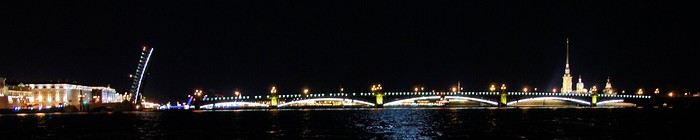
Here’s the recap of a little week we spent as a couple in Saint Petersburg in early May 2019, just before the *annus horribilis* of Covid. Since then, there’s also been the war in Ukraine, which has made things quite complicated, but tourist stays in Russia are still possible (see the discussion thread for the post-2022 situation). Looking back, early May was a bit too soon in the season—the trees were just starting to bud, and the wind was pretty chilly. It’s better to go at the end of May to enjoy the gardens.
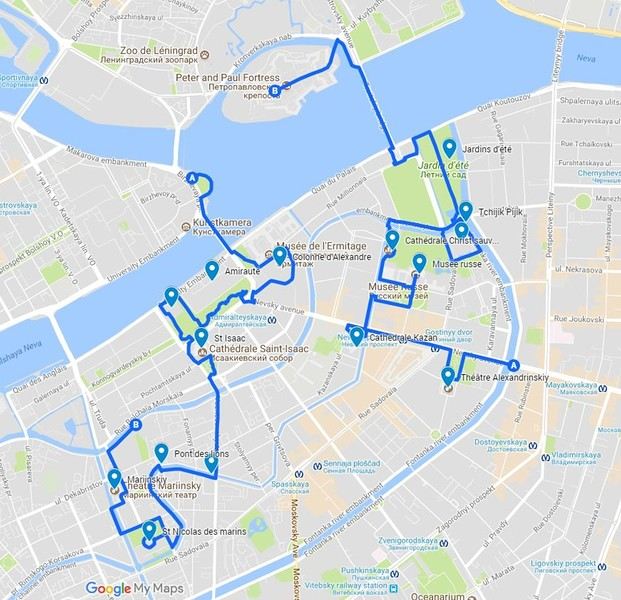
Below is our 5-day itinerary. I’d brought along the inevitable Lonely Planet and the Blue Guide to Saint Petersburg, just to get a basic understanding of the architecture of the buildings I’d be admiring. I’d prepared two complementary routes on G**gle Maps in advance to cover the essentials of the city center in two days. That left the other days completely free for the big highlights: the Hermitage Museum and Peterhof Palace. We tried to adapt based on the weather, visiting Peterhof and its gardens on what was *supposed* to be the nicest day. We’d saved the Hermitage for a day when the weather was really bad, but in the end, we had more or less the same weather every day (sunny but windy and chilly).
Itinerary:
Day 1: City center north of Nevsky Prospect, up to the fortress (Route 1 on the map) Day 2: Peterhof Day 3: City center south of Nevsky Prospect up to Mariinsky (Route 2) Day 4: Canal boat tour during the day + nighttime boat ride on the Neva Day 5: Hermitage
Evening activities:
On the 3rd day, we saw an opera at the Mariinsky I, On the 4th day, we saw a ballet at the Mariinsky II, then headed back to the embankments at half past midnight for a nighttime cruise on the Neva—magical!
Here’s the recap of a little week we spent as a couple in Saint Petersburg in early May 2019, just before the *annus horribilis* of Covid. Since then, there’s also been the war in Ukraine, which has made things quite complicated, but tourist stays in Russia are still possible (see the discussion thread for the post-2022 situation). Looking back, early May was a bit too soon in the season—the trees were just starting to bud, and the wind was pretty chilly. It’s better to go at the end of May to enjoy the gardens.
Below is our 5-day itinerary. I’d brought along the inevitable Lonely Planet and the Blue Guide to Saint Petersburg, just to get a basic understanding of the architecture of the buildings I’d be admiring. I’d prepared two complementary routes on G**gle Maps in advance to cover the essentials of the city center in two days. That left the other days completely free for the big highlights: the Hermitage Museum and Peterhof Palace. We tried to adapt based on the weather, visiting Peterhof and its gardens on what was *supposed* to be the nicest day. We’d saved the Hermitage for a day when the weather was really bad, but in the end, we had more or less the same weather every day (sunny but windy and chilly).
Itinerary:
Day 1: City center north of Nevsky Prospect, up to the fortress (Route 1 on the map) Day 2: Peterhof Day 3: City center south of Nevsky Prospect up to Mariinsky (Route 2) Day 4: Canal boat tour during the day + nighttime boat ride on the Neva Day 5: Hermitage
Evening activities:
On the 3rd day, we saw an opera at the Mariinsky I, On the 4th day, we saw a ballet at the Mariinsky II, then headed back to the embankments at half past midnight for a nighttime cruise on the Neva—magical!
What to see and do around Lakes Como, Garda, and Maggiore?
Hi there,
What are the best things to do around Lakes Como, Garda, and Maggiore?
Thanks
Travel Trends on the Horizon for 2030: What’s in Store for Us!
By 2030, the tourism sector is evolving with the rise of virtual agents, booking via social media, and the transformation of loyalty programs.
A recent study anticipates several major developments in the travel industry by 2030.
Virtual agents powered by artificial intelligence will become personalized assistants, capable of organizing trips based on travelers' individual preferences.
At the same time, social media will position itself as essential booking platforms, making it easier to purchase flight tickets directly through these channels.
Loyalty programs will also undergo a revolution thanks to NFTs, offering monetizable and diverse rewards.
Among the expected innovations are:
Fast and free Wi-Fi available on all flights The ability to explore your room in virtual reality before even arriving Eco-friendly accommodations featuring hanging gardens and green spaces 100% digitalized check-in and check-out, with no need to stop by the front desk Automatic refunds if the price of your ticket drops after purchase
A recent study anticipates several major developments in the travel industry by 2030.
Virtual agents powered by artificial intelligence will become personalized assistants, capable of organizing trips based on travelers' individual preferences.
At the same time, social media will position itself as essential booking platforms, making it easier to purchase flight tickets directly through these channels.
Loyalty programs will also undergo a revolution thanks to NFTs, offering monetizable and diverse rewards.
Among the expected innovations are:
Fast and free Wi-Fi available on all flights The ability to explore your room in virtual reality before even arriving Eco-friendly accommodations featuring hanging gardens and green spaces 100% digitalized check-in and check-out, with no need to stop by the front desk Automatic refunds if the price of your ticket drops after purchase
Great tips and advice for buying tea in China
Hello,
As a tea enthusiast, I’m a bit frustrated that I can’t find anything on this topic in the forum.
I’m familiar with the concept of Chinese tea shops where you can stay a while and sample, but are there any travelers here who have experience or tips to share for finding, buying, and bringing back good tea at fair prices? Tourist traps to avoid, expected level of negotiation, good/bad spots (for tea and maybe even equipment), reasonable prices, visiting gardens independently, etc.
Just to clarify: my budget is limited. I usually spend between 10 and 15 € per 100g on Chinese websites.
For my part, I’d love a closer look at these areas:
Hangzhou and the entire West Lake area for Longjing and maybe Anji bai cha Huangshan and Tangkou for Huangshan mao feng and Qimen/Keemun. Wuyi for yan cha (oolong rock teas) and jin jun mei Xiamen and Anxi for Tie guan yin and white teas (Yin zhen, Bai mu dan, and Shou mei) Shanghai for… everything!
Thanks.
As a tea enthusiast, I’m a bit frustrated that I can’t find anything on this topic in the forum.
I’m familiar with the concept of Chinese tea shops where you can stay a while and sample, but are there any travelers here who have experience or tips to share for finding, buying, and bringing back good tea at fair prices? Tourist traps to avoid, expected level of negotiation, good/bad spots (for tea and maybe even equipment), reasonable prices, visiting gardens independently, etc.
Just to clarify: my budget is limited. I usually spend between 10 and 15 € per 100g on Chinese websites.
For my part, I’d love a closer look at these areas:
Hangzhou and the entire West Lake area for Longjing and maybe Anji bai cha Huangshan and Tangkou for Huangshan mao feng and Qimen/Keemun. Wuyi for yan cha (oolong rock teas) and jin jun mei Xiamen and Anxi for Tie guan yin and white teas (Yin zhen, Bai mu dan, and Shou mei) Shanghai for… everything!
Thanks.
Seoul, South Korea - Feedback
Hi everyone,
I’m planning a short trip of about 7-8 days in Seoul in mid-July.
I’ll be traveling with my 15-year-old daughter, who loves Asian culture.
This will be our first trip to Asia, and I’d really love to experience the authentic side of Asia.
I’ve done some research, and I’m a bit worried that Seoul might just be a big city like ‘New York’ and that we won’t find that authentic feel.
Is it possible to mix modern and authentic without spending too much time on transportation?
I’d really love to make this trip special for my daughter, but I’m honestly worried about ending up surrounded by skyscrapers for a whole week.
Thanks in advance for your help.
I’m planning a short trip of about 7-8 days in Seoul in mid-July.
I’ll be traveling with my 15-year-old daughter, who loves Asian culture.
This will be our first trip to Asia, and I’d really love to experience the authentic side of Asia.
I’ve done some research, and I’m a bit worried that Seoul might just be a big city like ‘New York’ and that we won’t find that authentic feel.
Is it possible to mix modern and authentic without spending too much time on transportation?
I’d really love to make this trip special for my daughter, but I’m honestly worried about ending up surrounded by skyscrapers for a whole week.
Thanks in advance for your help.
Have you considered Reunion Island as a destination?
Reunion Island, a French island located in the Indian Ocean, is characterized by remarkable geographical and cultural diversity. This island offers an immersive experience that harmoniously blends wild nature and human heritage, between active volcanoes, mountainous cirques, impressive waterfalls, and charming villages. This report explores the must-see spots, from the lunar landscapes of Piton de la Fournaise to the mountainous trails of the Mafate cirque, not forgetting the natural pools and tropical gardens. Each section highlights a distinct aspect of this vibrant island, supported by geological and historical information, as well as accounts from those who have visited.
Piton de la Fournaise, which reaches a height of 2,632 meters, is one of the most active volcanoes on our planet. Its frequent eruptions constantly shape the landscape, offering a natural spectacle where burning lava meets the ocean. The trail leading to the Dolomieu crater, though difficult to access, is open to hikers and rewards them with a panorama of vast expanses of solidified lava and volcanic gas emissions. It’s usually best to visit at this time of day to avoid clouds and enjoy the low light that enhances the lunar reliefs.
Volcanic activity has also given rise to unique structures, such as the lava tunnels of Grand Brûlé, where tourists can walk along cooled lava flows. For geology enthusiasts, the site of Cassé de la Rivière de l'Est reveals incredible basaltic organ pipes, testifying to ancient eruptions.
Despite its inactivity, Piton des Neiges (3,071 m) remains the island’s highest peak. Its ascent, via the GR R2 trail, passes through virgin forests before reaching rocky landscapes where sunrise offers a 360° panoramic view of the three cirques. This extinct volcano symbolizes Reunion Island’s geological history, characterized by successive collapses that gave birth to the surrounding cirques.
A UNESCO World Heritage site, the Salazie cirque charms with its lush greenery and hamlets clinging to cliffs. Hell-Bourg, listed among France’s most beautiful villages, delights with its brightly colored Creole houses and picturesque cobblestone streets. The trek to Voile de la Mariée, a famous waterfall, winds through bamboo groves and natural pools perfect for a swim.
Mafate, a preserved haven of tranquility, is accessible only on foot or by helicopter. Places like La Nouvelle or Marla, small villages called "îlets," offer a glimpse into traditional life on Reunion Island. The GR R1 trail, which circles Piton des Neiges, immerses hikers in breathtaking landscapes, alternating between rocky ridges and narrow valleys.
Known for its lentils and wines, Cilaos combines culinary delights with stunning scenery. The healing properties of the thermal springs at Bras-Rouge are highlighted by the trails leading to them, which also offer panoramas like the Col du Taïbit, a privileged access point to Mafate.
This unique spot features pebble beaches, waterfalls by the sea, and a palm forest. Picnickers enjoy its peaceful atmosphere, while local fishermen maintain ancient traditions. Nearby, the Garden of Perfumes and Spices cultivates vanilla, cloves, and turmeric, offering an olfactory experience at the heart of Reunionese agriculture.
Bassin Boeuf, famous for its turquoise waters, is a popular swimming spot, framed by volcanic formations. Further south, the Langevin River creates a series of waterfalls and natural pools, including the famous Trou de Fer, a 300-meter-deep canyon where water cascades in a shimmering curtain.
The island’s capital blends colonial heritage with modernity. The Léon Dierx Museum showcases modern art, while the Grand Marché draws visitors with its spices and local crafts. The Barachois promenade, along the sea, evokes the city’s maritime past with its 18th-century cannons.
The Domaine de Villèle, once a colonial plantation, now houses a museum dedicated to the history of slavery and a geranium distillery. The Chapelle Pointue, with its neo-Gothic style, offers a striking contrast to the brightly colored Tamil temples surrounding it.
The GR R1 and R2 trails are popular with experienced hikers, but more accessible routes like the Piton Maido (2,200 m) are suitable for beginners. The latter offers an unparalleled view of the Mafate cirque at dawn.
The coast of Saint-Gilles offers activities like diving, surfing, and paddleboarding, while ULM flights provide an impressive aerial view of Piton de la Fournaise.
Reunion Island presents itself as a microcosm where every landscape tells a story—geological, cultural, or human. Between the fury of volcanoes and the calm of cirques, between the bustle of markets and the tranquility of natural pools, this destination offers a diverse experience. Travelers are encouraged to mix their activities: morning hikes, cultural visits during the day, and moments of relaxation at dusk. Preserving these wonders relies on responsible tourism, respectful of fragile ecosystems and local communities.
Piton de la Fournaise, which reaches a height of 2,632 meters, is one of the most active volcanoes on our planet. Its frequent eruptions constantly shape the landscape, offering a natural spectacle where burning lava meets the ocean. The trail leading to the Dolomieu crater, though difficult to access, is open to hikers and rewards them with a panorama of vast expanses of solidified lava and volcanic gas emissions. It’s usually best to visit at this time of day to avoid clouds and enjoy the low light that enhances the lunar reliefs.
Volcanic activity has also given rise to unique structures, such as the lava tunnels of Grand Brûlé, where tourists can walk along cooled lava flows. For geology enthusiasts, the site of Cassé de la Rivière de l'Est reveals incredible basaltic organ pipes, testifying to ancient eruptions.
Despite its inactivity, Piton des Neiges (3,071 m) remains the island’s highest peak. Its ascent, via the GR R2 trail, passes through virgin forests before reaching rocky landscapes where sunrise offers a 360° panoramic view of the three cirques. This extinct volcano symbolizes Reunion Island’s geological history, characterized by successive collapses that gave birth to the surrounding cirques.
A UNESCO World Heritage site, the Salazie cirque charms with its lush greenery and hamlets clinging to cliffs. Hell-Bourg, listed among France’s most beautiful villages, delights with its brightly colored Creole houses and picturesque cobblestone streets. The trek to Voile de la Mariée, a famous waterfall, winds through bamboo groves and natural pools perfect for a swim.
Mafate, a preserved haven of tranquility, is accessible only on foot or by helicopter. Places like La Nouvelle or Marla, small villages called "îlets," offer a glimpse into traditional life on Reunion Island. The GR R1 trail, which circles Piton des Neiges, immerses hikers in breathtaking landscapes, alternating between rocky ridges and narrow valleys.
Known for its lentils and wines, Cilaos combines culinary delights with stunning scenery. The healing properties of the thermal springs at Bras-Rouge are highlighted by the trails leading to them, which also offer panoramas like the Col du Taïbit, a privileged access point to Mafate.
This unique spot features pebble beaches, waterfalls by the sea, and a palm forest. Picnickers enjoy its peaceful atmosphere, while local fishermen maintain ancient traditions. Nearby, the Garden of Perfumes and Spices cultivates vanilla, cloves, and turmeric, offering an olfactory experience at the heart of Reunionese agriculture.
Bassin Boeuf, famous for its turquoise waters, is a popular swimming spot, framed by volcanic formations. Further south, the Langevin River creates a series of waterfalls and natural pools, including the famous Trou de Fer, a 300-meter-deep canyon where water cascades in a shimmering curtain.
The island’s capital blends colonial heritage with modernity. The Léon Dierx Museum showcases modern art, while the Grand Marché draws visitors with its spices and local crafts. The Barachois promenade, along the sea, evokes the city’s maritime past with its 18th-century cannons.
The Domaine de Villèle, once a colonial plantation, now houses a museum dedicated to the history of slavery and a geranium distillery. The Chapelle Pointue, with its neo-Gothic style, offers a striking contrast to the brightly colored Tamil temples surrounding it.
The GR R1 and R2 trails are popular with experienced hikers, but more accessible routes like the Piton Maido (2,200 m) are suitable for beginners. The latter offers an unparalleled view of the Mafate cirque at dawn.
The coast of Saint-Gilles offers activities like diving, surfing, and paddleboarding, while ULM flights provide an impressive aerial view of Piton de la Fournaise.
Reunion Island presents itself as a microcosm where every landscape tells a story—geological, cultural, or human. Between the fury of volcanoes and the calm of cirques, between the bustle of markets and the tranquility of natural pools, this destination offers a diverse experience. Travelers are encouraged to mix their activities: morning hikes, cultural visits during the day, and moments of relaxation at dusk. Preserving these wonders relies on responsible tourism, respectful of fragile ecosystems and local communities.
What to do on Easter Sunday in Greece?
Hello.
We’re heading to Greece from April 19th to May 1st.
We were planning to spend 3 days visiting Athens, then exploring the Peloponnese (Mycenae-Epidaurus, Mistra, Lousios Gorge, Olympia, Patras) + Delphi (or the other way around, starting with Delphi—doesn’t matter).
Except I just realized that April 20th is Easter Sunday: no visits to sites/museums in Athens that day... (nor on Saturday late afternoon, as I’d imagined). But Delphi, Mycenae, etc., will likely be closed too (maybe even on Monday the 21st!).
What do you recommend we visit or do? Our trip is mainly focused on archaeological visits (my kids have been looking forward to Athens/Greece for years!).
Thanks in advance! Have a great evening
Except I just realized that April 20th is Easter Sunday: no visits to sites/museums in Athens that day... (nor on Saturday late afternoon, as I’d imagined). But Delphi, Mycenae, etc., will likely be closed too (maybe even on Monday the 21st!).
What do you recommend we visit or do? Our trip is mainly focused on archaeological visits (my kids have been looking forward to Athens/Greece for years!).
Thanks in advance! Have a great evening
Two weeks in Bangkok: your off-the-beaten-path suggestions
Hello,
After a lot of searching, exchanging ideas, and thinking it over, I’ve decided to go back to my original plan of spending two weeks in Bangkok. From January 19th to February 2nd. I’ll also take a quick trip for one night/two days to Ayutthaya (and return to Bangkok, where I’ll have kept the apartment I booked), and possibly the same for Kanchanaburi, depending on how I feel once I’m there—whether I find something more interesting in Bangkok or nearby.
The key word is: taking my time to take photos, observe, taste, savor (in every sense of the word), and most importantly, not rushing.
Beyond the must-see tourist spots, I’d love to wander around the city and maybe within a 40 to 50 km radius for a day trip to discover unusual and lesser-known streets, houses, temples, markets, gardens, and more.
I’ll also be spending two weeks in Chiang Mai and two weeks in Nan.
I’m open to any suggestions. Thank you so much!
Quy Nhon (Vietnam)
For centuries, until its capture by the Vietnamese in 1407, Quy Nhon was Asia’s busiest port. Marco Polo stopped here on his way back from China to Venice. It was the port of Viraja, capital of the Champa kingdom, which explains the many Cham towers found all over the place, including right in the city center. Today, it’s a lovely beach resort, less crowded than others. There’s a gigantic seaside esplanade lined with alternating gardens and hotel towers, with not a single tree (not on the beach either), except at the café-restaurant-terrace of the 4-star hotel Hoang Yen and another one to the right of it. I was lucky to find a brand-new, spotless little hotel run by a very friendly family, the Ngoc Linh, on a quiet little street just 50 meters from the beach. $12 for a single room and $14 for a double. There’s a terrace restaurant. No bikes, but motorbike rentals are available ($10 per day). 6 Tran Van On 0563 54 66 99 or nearby on the esplanade (19 Xuan Dieu).
Beautiful beach establishments north of the city.
That said, it allowed me to indulge my passion for history with the beautiful Cham towers, especially those at Banh It, 20 km north of Quy Nhon on the Mandarin Road (you can see them in the distance as they sit atop a hill, offering a magnificent view of the entire region). Four well-preserved towers (the largest has been very well restored), built in the late 11th to early 12th century. At the foot of the mountain, you’ll find a beautiful 14th-century pagoda and the ruins of Viraja. Right in the middle of the city on Tran Hung Dao, there are also the two beautiful towers of Thap Doi.
Beautiful beach establishments north of the city.
That said, it allowed me to indulge my passion for history with the beautiful Cham towers, especially those at Banh It, 20 km north of Quy Nhon on the Mandarin Road (you can see them in the distance as they sit atop a hill, offering a magnificent view of the entire region). Four well-preserved towers (the largest has been very well restored), built in the late 11th to early 12th century. At the foot of the mountain, you’ll find a beautiful 14th-century pagoda and the ruins of Viraja. Right in the middle of the city on Tran Hung Dao, there are also the two beautiful towers of Thap Doi.
How to visit the Alhambra in Granada (Spain)?
I'm looking for the best option to visit the Alhambra and Nasrid Palaces (guided tour + tickets), because there are so many choices and I'm overwhelmed trying to pick one that's good value for money and won't rip me off. Thanks! Sandrine
Dates for the Most Beautiful Christmas Markets in Europe in 2024
Here are the dates for some of the most beautiful Christmas markets in Europe in 2024 (not an exhaustive list): 🎄🎁❄️
🇩🇪 Berlin (Gendarmenmarkt), Germany - 25 November to 31 December 🇸🇰 Bratislava, Slovakia - 21 November to 6 January 🇧🇪 Bruges, Belgium - 22 November to 5 January 🇧🇪 Brussels, Belgium - 29 November to 5 January 🇭🇺 Budapest, Hungary - 15 November to 1 January 🇩🇪 Cologne, Germany - 18 November to 23 December 🇫🇷 Colmar, France - 26 November to 29 December 🇩🇰 Copenhagen (Tivoli Gardens), Denmark - 16 November to 2 January 🇵🇱 Krakow, Poland - 29 November to 26 December 🇷🇴 Craiova, Romania - 15 November to 5 January 🇩🇪 Dresden (Striezelmarkt), Germany - 27 November to 24 December 🏴 Edinburgh, Scotland - 15 November to 4 January 🇸🇪 Gothenburg (Liseberg), Sweden - 16 November to 30 December 🇩🇪 Hamburg, Germany - 13 November to 29 December 🇫🇮 Helsinki, Finland - 1 December to 22 December 🇫🇷 Le Barcarès, France - 16 November to 5 January 🇧🇪 Liège, Belgium - 29 November to 30 December 🏴 London (Hyde Park), England - 21 November to 5 January 🇱🇺 Luxembourg City, Luxembourg - 23 November to 24 December 🇵🇹 Madeira, Portugal - 1 December to 5 January 🏴 Manchester, England - 8 November to 22 December 🇫🇷 Metz, France - 24 November to 30 December 🇫🇷 Montbéliard, France - 23 November to 24 December 🇫🇷 Mulhouse, France - 22 November to 23 December 🇩🇪 Munich, Germany - 25 November to 24 December 🇩🇪 Nuremberg, Germany - 29 November to 24 December 🇵🇱 Poznan, Poland - 19 November to 23 December 🇨🇿 Prague, Czech Republic - 30 November to 6 January 🇱🇻 Riga, Latvia - 29 November to 2 January 🇫🇮 Rovaniemi, Finland - 30 November to 22 December 🇸🇪 Stockholm (Skansen), Sweden - 30 November to 23 December 🇫🇷 Strasbourg, France - 27 November to 27 December 🇪🇪 Tallinn, Estonia - 22 November to 27 December 🇳🇱 Valkenburg, Netherlands - 16 November to 29 December 🇵🇱 Warsaw, Poland - 29 November to 6 January 🇦🇹 Vienna, Austria - 13 November to 23 December 🇵🇱 Wroclaw, Poland - 29 November to 7 January 🇨🇭 Zurich, Switzerland - 23 November to 24 December
Feel free to suggest other beautiful Christmas markets in Europe with their 2024 dates!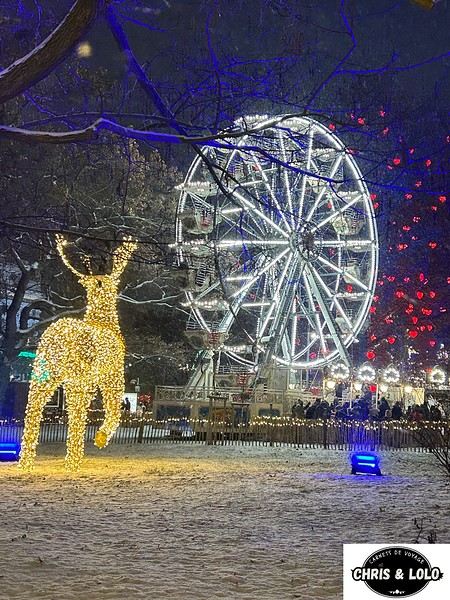
🇩🇪 Berlin (Gendarmenmarkt), Germany - 25 November to 31 December 🇸🇰 Bratislava, Slovakia - 21 November to 6 January 🇧🇪 Bruges, Belgium - 22 November to 5 January 🇧🇪 Brussels, Belgium - 29 November to 5 January 🇭🇺 Budapest, Hungary - 15 November to 1 January 🇩🇪 Cologne, Germany - 18 November to 23 December 🇫🇷 Colmar, France - 26 November to 29 December 🇩🇰 Copenhagen (Tivoli Gardens), Denmark - 16 November to 2 January 🇵🇱 Krakow, Poland - 29 November to 26 December 🇷🇴 Craiova, Romania - 15 November to 5 January 🇩🇪 Dresden (Striezelmarkt), Germany - 27 November to 24 December 🏴 Edinburgh, Scotland - 15 November to 4 January 🇸🇪 Gothenburg (Liseberg), Sweden - 16 November to 30 December 🇩🇪 Hamburg, Germany - 13 November to 29 December 🇫🇮 Helsinki, Finland - 1 December to 22 December 🇫🇷 Le Barcarès, France - 16 November to 5 January 🇧🇪 Liège, Belgium - 29 November to 30 December 🏴 London (Hyde Park), England - 21 November to 5 January 🇱🇺 Luxembourg City, Luxembourg - 23 November to 24 December 🇵🇹 Madeira, Portugal - 1 December to 5 January 🏴 Manchester, England - 8 November to 22 December 🇫🇷 Metz, France - 24 November to 30 December 🇫🇷 Montbéliard, France - 23 November to 24 December 🇫🇷 Mulhouse, France - 22 November to 23 December 🇩🇪 Munich, Germany - 25 November to 24 December 🇩🇪 Nuremberg, Germany - 29 November to 24 December 🇵🇱 Poznan, Poland - 19 November to 23 December 🇨🇿 Prague, Czech Republic - 30 November to 6 January 🇱🇻 Riga, Latvia - 29 November to 2 January 🇫🇮 Rovaniemi, Finland - 30 November to 22 December 🇸🇪 Stockholm (Skansen), Sweden - 30 November to 23 December 🇫🇷 Strasbourg, France - 27 November to 27 December 🇪🇪 Tallinn, Estonia - 22 November to 27 December 🇳🇱 Valkenburg, Netherlands - 16 November to 29 December 🇵🇱 Warsaw, Poland - 29 November to 6 January 🇦🇹 Vienna, Austria - 13 November to 23 December 🇵🇱 Wroclaw, Poland - 29 November to 7 January 🇨🇭 Zurich, Switzerland - 23 November to 24 December
Feel free to suggest other beautiful Christmas markets in Europe with their 2024 dates!
Has anyone done the Canary Islands and Madeira with Costa?
Hi there,
Has anyone taken a cruise to the Canary Islands and Madeira with Costa?
Thanks for your replies!
Jibé
Your thoughts on my 14-day South Africa itinerary for a senior traveler
Hello,
I’m taking advantage of the forum reopening to ask this question:
For her 70th birthday, my mom will receive—as a gift—a trip to South Africa at the end of May 2025. We’ll arrive and depart (13 nights later) from JNB on Air France AF990/AF995. We’ll obviously rent a car for certain parts of the trip. I’ve been to the Cape Town area and as far as Agulhas twice, but she’s never been to South Africa before. She might enjoy a day or two of safari, but it’s not a priority for her. I’m well aware that trying to pack in too much is risky, which is why I’m looking for your advice on itineraries, safety, and health (status of the Marburg virus). So far, which combinations of these visits (in no particular order) would be doable and most enjoyable for her at a reasonable pace:
1-day excursion to Pilanesberg Park (+ Hartbeespoort on the way back if possible), self-drive or with a tour guide? 2 nights around the Panorama Route self-driving Garden Route from/to George/PLZ for 5 nights (what are the must-sees for a first-timer with so little time?) Wine region for 2 nights (is it worth doing both the Stellenbosch bus tour and the Franschhoek Wine Tram the next day, or vice versa)—she loves good wine! Cape Town for 2 nights (is it worth stopping at the Cape of Good Hope if—only if—you’ve maybe already been to Agulhas?).
This would give a final itinerary like this:
Day 1: Morning arrival in JNB—rest day/to be defined Day 2: Guided game drive excursion to Pilanesberg Park Day 3: Flight JNB–Port Elizabeth, pick up rental car, drive to Tsitsikamma Day 4–6: Garden Route: activities to be defined Day 7: Transfer to Franschhoek: Wine Tram in the afternoon Day 8: Taxi to Stellenbosch for the Vine Hopper bus tour Day 9–11: Transfer to Cape Town: activities to be defined Day 12: Flight from Cape Town to Hoedspruit or Nelspruit Day 13: Visit the Panorama Route Day 14: Flight from Hoedspruit or Nelspruit to JNB, then evening flight back to France
Given the time spent on the Garden Route, what are the must-sees? Same question for the Panorama Route? In general, she prefers beautiful walks with incredible landscapes/views and cultural visits over big cats, but it would be a shame not to see some local wildlife like meerkats, whales (I doubt it in May), or penguins during her stay! There you go—feel free to critique (not too harshly, though😛)/advise/improve. Thanks in advance! 🙂
For her 70th birthday, my mom will receive—as a gift—a trip to South Africa at the end of May 2025. We’ll arrive and depart (13 nights later) from JNB on Air France AF990/AF995. We’ll obviously rent a car for certain parts of the trip. I’ve been to the Cape Town area and as far as Agulhas twice, but she’s never been to South Africa before. She might enjoy a day or two of safari, but it’s not a priority for her. I’m well aware that trying to pack in too much is risky, which is why I’m looking for your advice on itineraries, safety, and health (status of the Marburg virus). So far, which combinations of these visits (in no particular order) would be doable and most enjoyable for her at a reasonable pace:
1-day excursion to Pilanesberg Park (+ Hartbeespoort on the way back if possible), self-drive or with a tour guide? 2 nights around the Panorama Route self-driving Garden Route from/to George/PLZ for 5 nights (what are the must-sees for a first-timer with so little time?) Wine region for 2 nights (is it worth doing both the Stellenbosch bus tour and the Franschhoek Wine Tram the next day, or vice versa)—she loves good wine! Cape Town for 2 nights (is it worth stopping at the Cape of Good Hope if—only if—you’ve maybe already been to Agulhas?).
This would give a final itinerary like this:
Day 1: Morning arrival in JNB—rest day/to be defined Day 2: Guided game drive excursion to Pilanesberg Park Day 3: Flight JNB–Port Elizabeth, pick up rental car, drive to Tsitsikamma Day 4–6: Garden Route: activities to be defined Day 7: Transfer to Franschhoek: Wine Tram in the afternoon Day 8: Taxi to Stellenbosch for the Vine Hopper bus tour Day 9–11: Transfer to Cape Town: activities to be defined Day 12: Flight from Cape Town to Hoedspruit or Nelspruit Day 13: Visit the Panorama Route Day 14: Flight from Hoedspruit or Nelspruit to JNB, then evening flight back to France
Given the time spent on the Garden Route, what are the must-sees? Same question for the Panorama Route? In general, she prefers beautiful walks with incredible landscapes/views and cultural visits over big cats, but it would be a shame not to see some local wildlife like meerkats, whales (I doubt it in May), or penguins during her stay! There you go—feel free to critique (not too harshly, though😛)/advise/improve. Thanks in advance! 🙂
Itinéraire d'une semaine pour visiter les lacs italiens en voiture English translation pending
Bonjour à tous
Nous envisageons d'aller visiter les lacs italiens (1ere fois) pour les vacances de la Toussaint, nous disposons d'une petite semaine à partir du 17 octobre. Nous partons en voiture depuis le Var.
J'ai commencé à planifier un petit itinéraire. Qu'en pensez vous? On hésite à inclure Milan! Nous ne savons pas encore si nous devrons rentrer le vendredi ou le samedi soir chez nous.. Donc'il y a 3 possibilités de fin de séjour...
samedi 17 : route tôt vers orta San Giulio. Lac d'orta (5h30) 493km, dejeuner tardif ;parking à l'entrée de la ville. visite village face isola San Giulio. Ascension sacré monte Di orta. . Puis route vers Stresa.30 min, 26 km. nuit à Stresa.
dimanche 18 : iles Borromées, lac Majeur – prendre des tickets pour visiter l'ensemble des îles villas et jardins. Isola Bella puis isola superiore (déjeuner) puis isola madre. nuit à Stresa
Lundi 19 : route vers Menaggio avec visite en route de la ville de Côme. 1h15 de route. Visite de Côme 3h et déjeuner sur place. Puis route vers Lenno 45 min. Arrêt à villa Olmo. Visite du bord du lac. Proximité de l'hôtel. ( ou passage par lac de Lugano avec arrêt shopping store Factory fowtown)? Vous connaissez ce leur de shopping ??
mardi 20 : visite lac de come ( villa del Balbianello. Accès en bateau ou à pied par sentier ) puis villa Carlotta. visite Menaggio en fin de journée.
mercredi 21 : transfert en bateau vers 9h30 vers Bellagio le matin pour visite et dejeuner ( jardin villa melzi, quartier de pescallo et ruelles de Bellagio) , puis l’après midi à Varenna ( village et villa monastero).
jeudi 22 : le matin, route vers Vérone. 3h de route. 200km. Visite Vérone. Puis route vers Sirmione. 40 min. Nuit à Sirmione
vendredi 23 : visite de Sirmione le matin et début après-midi puis retour maison 6h30 de route . 580 km.
Ou
Jeudi 22: route vers Sirmione avec visite de Côme puis Bergame au passage.( 3h de route au total), nuit à Sirmione
Vendredi 23: visite de Vérone et fin de visite Sirmione
Samedi 24: retour maison
Ou
Jeudi 22: route vers Milan. 1h15.,72 km. Visite Milan.
Vendredi 23: visite Milan matin et début après-midi. Retour maison 5h10. 482 km
Je n'arrive pas à me rendre compte si tout est faisable ? Merci pour vos suggestions Marie
Nous envisageons d'aller visiter les lacs italiens (1ere fois) pour les vacances de la Toussaint, nous disposons d'une petite semaine à partir du 17 octobre. Nous partons en voiture depuis le Var.
J'ai commencé à planifier un petit itinéraire. Qu'en pensez vous? On hésite à inclure Milan! Nous ne savons pas encore si nous devrons rentrer le vendredi ou le samedi soir chez nous.. Donc'il y a 3 possibilités de fin de séjour...
samedi 17 : route tôt vers orta San Giulio. Lac d'orta (5h30) 493km, dejeuner tardif ;parking à l'entrée de la ville. visite village face isola San Giulio. Ascension sacré monte Di orta. . Puis route vers Stresa.30 min, 26 km. nuit à Stresa.
dimanche 18 : iles Borromées, lac Majeur – prendre des tickets pour visiter l'ensemble des îles villas et jardins. Isola Bella puis isola superiore (déjeuner) puis isola madre. nuit à Stresa
Lundi 19 : route vers Menaggio avec visite en route de la ville de Côme. 1h15 de route. Visite de Côme 3h et déjeuner sur place. Puis route vers Lenno 45 min. Arrêt à villa Olmo. Visite du bord du lac. Proximité de l'hôtel. ( ou passage par lac de Lugano avec arrêt shopping store Factory fowtown)? Vous connaissez ce leur de shopping ??
mardi 20 : visite lac de come ( villa del Balbianello. Accès en bateau ou à pied par sentier ) puis villa Carlotta. visite Menaggio en fin de journée.
mercredi 21 : transfert en bateau vers 9h30 vers Bellagio le matin pour visite et dejeuner ( jardin villa melzi, quartier de pescallo et ruelles de Bellagio) , puis l’après midi à Varenna ( village et villa monastero).
jeudi 22 : le matin, route vers Vérone. 3h de route. 200km. Visite Vérone. Puis route vers Sirmione. 40 min. Nuit à Sirmione
vendredi 23 : visite de Sirmione le matin et début après-midi puis retour maison 6h30 de route . 580 km.
Ou
Jeudi 22: route vers Sirmione avec visite de Côme puis Bergame au passage.( 3h de route au total), nuit à Sirmione
Vendredi 23: visite de Vérone et fin de visite Sirmione
Samedi 24: retour maison
Ou
Jeudi 22: route vers Milan. 1h15.,72 km. Visite Milan.
Vendredi 23: visite Milan matin et début après-midi. Retour maison 5h10. 482 km
Je n'arrive pas à me rendre compte si tout est faisable ? Merci pour vos suggestions Marie
Camping ou woofing en Martinique English translation pending
Bonjour,
Avec une amie, nous nous rendons en Martinique du 2 novembre au 17 décembre environ. Nous souhaiterions avoir quelques infos sur les campings:
- Est-ce qu'ils existent des campings "longue-durée" où nous pourrions avoir un prix au mois et non à la nuit? - Quels coins nous conseillez-nous? - La voiture est-elle nécessaire où existe-t'il un système de bus pour aller dans différents endroits de l'île?
Aussi, dans l'idéal, nous recherchons plutôt à faire du woofing dans des endroits de permacultures ou éco-construction où nous pourrions planter la tente. Nous avons quelques expériences en métropole et souhaiterions avoir une même expérience en Martinique.
- Connaissez-vous ce genre d'endroits là-bas?
Je vous remercie,
Leïla et Sarah
Avec une amie, nous nous rendons en Martinique du 2 novembre au 17 décembre environ. Nous souhaiterions avoir quelques infos sur les campings:
- Est-ce qu'ils existent des campings "longue-durée" où nous pourrions avoir un prix au mois et non à la nuit? - Quels coins nous conseillez-nous? - La voiture est-elle nécessaire où existe-t'il un système de bus pour aller dans différents endroits de l'île?
Aussi, dans l'idéal, nous recherchons plutôt à faire du woofing dans des endroits de permacultures ou éco-construction où nous pourrions planter la tente. Nous avons quelques expériences en métropole et souhaiterions avoir une même expérience en Martinique.
- Connaissez-vous ce genre d'endroits là-bas?
Je vous remercie,
Leïla et Sarah
Quand l'été s'achève... English translation pending
Ce n’est pas un carnet de voyage.
C’est un petit carnet de vacances.
Et, peut-être, avez-vous aussi vécu des instants, des heures, des jours, des semaines comme les miennes.
Sur place, sans voiture, sans train, sans avion, sans vélo.
Enveloppé de joie, de vie, de sourires, de douceur, de tendresse.
Un été entre parenthèse.
...
Dans la grange, la deuxième couvée d’hirondelles apprend à voler. Les parents perchés sur la poutre, pépient avec ardeur et les oisillons semblent écouter. Encore quinze jours et c’est l’envol pour l’Afrique.
Dans la maison, notre volière estivale, le silence s’est installé. Enfants et petits-enfant ont migré vers la ville. Un silence si parfait que j’entends Tiko, l’animal favori de Petit Jules. Tiko est un escargot des haies. Sa coquille jaune vif cerclée de fines bandes noires à ne pas confondre avec l’escargot des jardins, arbore un minuscule morceau de sparadrap. J’ai la garde de Tiko jusqu’en Octobre, nouvelles vacances d’automne. Il croque la salade vert tendre et l’infime bruit de ses mandibules fait écho aux touches de mon clavier.
Notre saison s’est achevée sur le spectacle de théâtre, rituel familial. Pour la première fois les enfants étaient les seuls scénaristes et je n’ai fait qu’orchestrer les répétitions. L’affiche était : « Les virus et les médecins » et l’action se déroulait en 1398 durant la peste noire entre le médecin à cape et bec noir et le médecin du futur, 2020. Les cinq plus jeunes étaient des virus et avaient fabriqué de larges masques ronds et colorés avec deux trous pour les yeux, attachés avec de la ficelle. C’étaient Zika, Ebola, chikungunya, variole et covid (corona pour les intimes, dans le texte). Tous les adultes présents, les parents, ont beaucoup ri et la parodie était parfaite sans qu'ils en aient conscience.
La conclusion était qu’il fallait utiliser les moyens connus au moyen âge et ceux d’aujourd’hui et ils ont fabriqué sur scène une poudre de rat malade à boire diluée dans de l’eau. Astucieux ces petits. Zika, Ebola, chikungunya, les virus africains, trépignaient en disant « pour nous aussi, on nous oublie toujours, c’est pas juste »
Bref, quelle longue digression pour vous dire que même dans le monde magique de l’enfance, ceux-ci sont bien marqués par l’épidémie dont on nous remplit le tête et les oreilles. Ils appréhendent la rentrée masquée au collège, craignent de ne pas se reconnaître dans les nouvelles classes constituées et se demandent comment les profs les reconnaîtront. Et des questions fusaient : « Comment on va faire l’hiver, faudra mette le masque par-dessus l’écharpe dans le bus ? » « Et quand il pleut, comment mon masque va tenir quand il est tout mouillé » « Et pourquoi on peut manger tous ensemble à la cantine sans masque, on est tous collés à la cantine » « Et si j’ai pas ma règle, je pourrais prendre celle de ma copine ? » « Et Jules, il a dix ans et il sera au collège avec ceux de 11ans, il sera obligé de mettre le masque ? ».
Ici dans notre Morvan écrasé de chaleur, pourtant, tout l’été nous avons voyagé. Voyage immobile, sans avion, sans test, sans masque, dans les rires, les cris, les cavalcades, un bazar, un souk, un cirque permanent.
Italie : pizza maison (ahhh les pizzas de Papiluc!) Japon : sushi (beurq, c’était pas ma fête) Inde :poulet byriani (tu mets pas du piment hein mamido) Russie : pelmini ( 480 pelmini, 32 mains pour les faire, 6h pour les préparer) Argentine : asado (souvent et pratique) Grèce : moussaka France : ratatouille
Ainsi, les enfants fabriquaient les petits drapeaux correspondants pour décorer la table et les adultes inventaient des mini quizz sur chaque pays.
On s’est bien marré et l’été s’achève.
Notre maison, comme un coeur palpitant depuis mars, où se sont retrouvés toutes les générations, est redevenue silencieuse.
Je me sens remplie et vide. J’crois bien que si l’on approche un doigt sur mes antennes, j’vais rentrer dans ma coquille, comme Tiko. Mais pour l’heure, ce n’est pas le temps de l’hibernation et je ne vais pas fabriquer mon épiphragme protecteur.
On est bien sur vf, chuis en vacances, en vacance. Contente de vous retrouver.
Crouchhhh, crouchhhh, Tiko poursuit son festin.
A bientôt !
...
Dans la grange, la deuxième couvée d’hirondelles apprend à voler. Les parents perchés sur la poutre, pépient avec ardeur et les oisillons semblent écouter. Encore quinze jours et c’est l’envol pour l’Afrique.
Dans la maison, notre volière estivale, le silence s’est installé. Enfants et petits-enfant ont migré vers la ville. Un silence si parfait que j’entends Tiko, l’animal favori de Petit Jules. Tiko est un escargot des haies. Sa coquille jaune vif cerclée de fines bandes noires à ne pas confondre avec l’escargot des jardins, arbore un minuscule morceau de sparadrap. J’ai la garde de Tiko jusqu’en Octobre, nouvelles vacances d’automne. Il croque la salade vert tendre et l’infime bruit de ses mandibules fait écho aux touches de mon clavier.
Notre saison s’est achevée sur le spectacle de théâtre, rituel familial. Pour la première fois les enfants étaient les seuls scénaristes et je n’ai fait qu’orchestrer les répétitions. L’affiche était : « Les virus et les médecins » et l’action se déroulait en 1398 durant la peste noire entre le médecin à cape et bec noir et le médecin du futur, 2020. Les cinq plus jeunes étaient des virus et avaient fabriqué de larges masques ronds et colorés avec deux trous pour les yeux, attachés avec de la ficelle. C’étaient Zika, Ebola, chikungunya, variole et covid (corona pour les intimes, dans le texte). Tous les adultes présents, les parents, ont beaucoup ri et la parodie était parfaite sans qu'ils en aient conscience.
La conclusion était qu’il fallait utiliser les moyens connus au moyen âge et ceux d’aujourd’hui et ils ont fabriqué sur scène une poudre de rat malade à boire diluée dans de l’eau. Astucieux ces petits. Zika, Ebola, chikungunya, les virus africains, trépignaient en disant « pour nous aussi, on nous oublie toujours, c’est pas juste »
Bref, quelle longue digression pour vous dire que même dans le monde magique de l’enfance, ceux-ci sont bien marqués par l’épidémie dont on nous remplit le tête et les oreilles. Ils appréhendent la rentrée masquée au collège, craignent de ne pas se reconnaître dans les nouvelles classes constituées et se demandent comment les profs les reconnaîtront. Et des questions fusaient : « Comment on va faire l’hiver, faudra mette le masque par-dessus l’écharpe dans le bus ? » « Et quand il pleut, comment mon masque va tenir quand il est tout mouillé » « Et pourquoi on peut manger tous ensemble à la cantine sans masque, on est tous collés à la cantine » « Et si j’ai pas ma règle, je pourrais prendre celle de ma copine ? » « Et Jules, il a dix ans et il sera au collège avec ceux de 11ans, il sera obligé de mettre le masque ? ».
Ici dans notre Morvan écrasé de chaleur, pourtant, tout l’été nous avons voyagé. Voyage immobile, sans avion, sans test, sans masque, dans les rires, les cris, les cavalcades, un bazar, un souk, un cirque permanent.
Italie : pizza maison (ahhh les pizzas de Papiluc!) Japon : sushi (beurq, c’était pas ma fête) Inde :poulet byriani (tu mets pas du piment hein mamido) Russie : pelmini ( 480 pelmini, 32 mains pour les faire, 6h pour les préparer) Argentine : asado (souvent et pratique) Grèce : moussaka France : ratatouille
Ainsi, les enfants fabriquaient les petits drapeaux correspondants pour décorer la table et les adultes inventaient des mini quizz sur chaque pays.
On s’est bien marré et l’été s’achève.
Notre maison, comme un coeur palpitant depuis mars, où se sont retrouvés toutes les générations, est redevenue silencieuse.
Je me sens remplie et vide. J’crois bien que si l’on approche un doigt sur mes antennes, j’vais rentrer dans ma coquille, comme Tiko. Mais pour l’heure, ce n’est pas le temps de l’hibernation et je ne vais pas fabriquer mon épiphragme protecteur.
On est bien sur vf, chuis en vacances, en vacance. Contente de vous retrouver.
Crouchhhh, crouchhhh, Tiko poursuit son festin.
A bientôt !
Tourisme entre Le Havre et Lyon English translation pending
Bonjour,
J’atterris au Havre début août pour récupérer mon auto au port.
Ensuite route pour Lyon.
— Avez vous quelques idées touristiques sur la route à me proposer?
J’ai déjà fait les châteaux de la Loire, et la Bretagne.
J’ai repéré sur le forum : ROUEN que je connais pas du tout.
Et après....?
Je suis open pour des visites culturelles 🙂 villes typiques, éviter les villages, pas de déviations routières non plus svp. Je préfère suivre mon tracé.
Merci beaucoup pour vos lumières 😇
L'île de Bréhat, Paimpol et les environs... English translation pending
Sitôt déconfinés, on a mis le cap sur la côte bretonne, projet qui avait dû être reporté pour cause de corona.
Et dès notre arrivée, on a souhaité aller sur l'île de Bréhat pour la découvrir avec le minimum de visiteurs.
Alors, on a commencé par réserver nos billets sur le net, réservation obligatoire pour permettre d'organiser les traversées en respectant au mieux les mesures de sécurité sanitaire.
Dès 9h30, on embarquait à l'Arcouest pour une traversée de 10 minutes en direction de Bréhat.
Notre arrivée au port clos de Bréhat s'est faite dans la brume.
On a posé le pied sur une île mystérieuse.
Ne sachant pas précisément combien de temps il nous faudrait pour faire le tour de l'île à pied, on a fait le choix d'aller d'abord jusqu'au phare du Paon , au nord, à l'opposé de l'embarcadère. On a donc traversé le village, emprunté nombre de petits chemins et admiré les jardins et les sentiers fleuris. Bréhat, c'est l'île des fleurs.
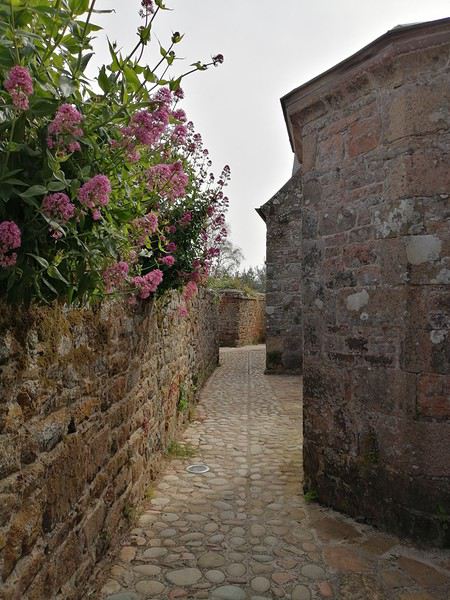
A notre arrivée au phare du Paon la brume commence à se dissiper. On découvre une côte sauvage, magnifique!
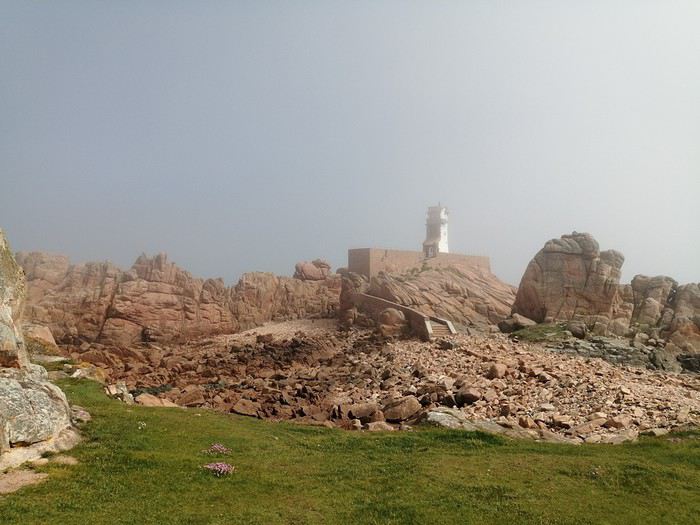
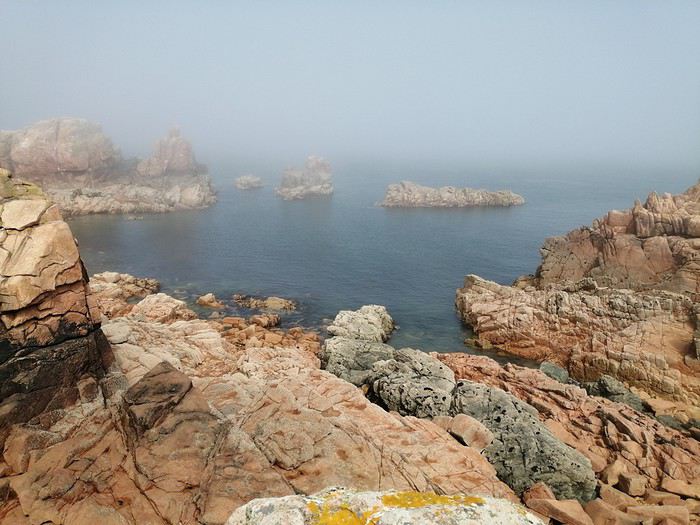
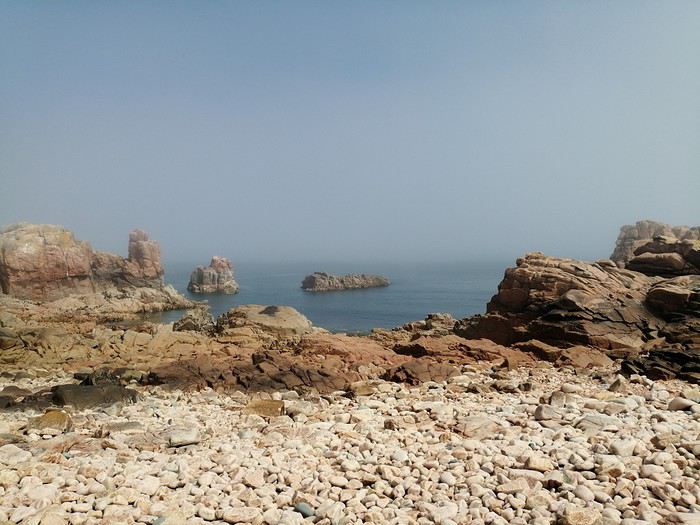
On poursuit notre découverte. Au bord d'un chemin, on complète notre pique- ni que en achetant des fraises du pays.
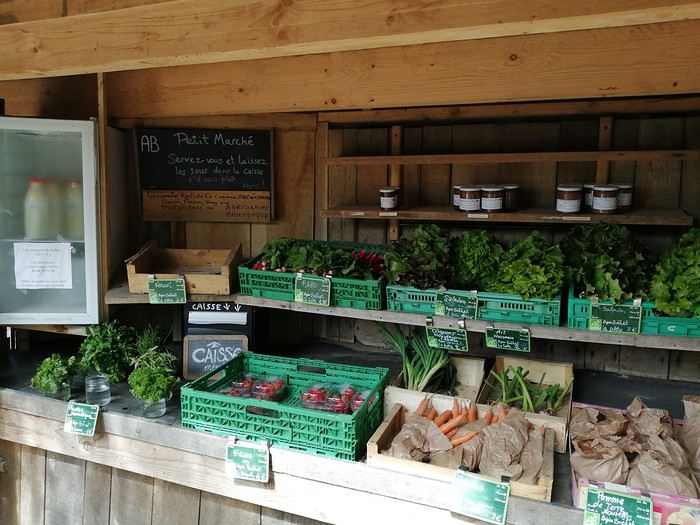 Et on s'installe sur une petite plage, pour recharger les batteries avant de repartir sur les chemins.
Ne sachant pas précisément combien de temps il nous faudrait pour faire le tour de l'île à pied, on a fait le choix d'aller d'abord jusqu'au phare du Paon , au nord, à l'opposé de l'embarcadère. On a donc traversé le village, emprunté nombre de petits chemins et admiré les jardins et les sentiers fleuris. Bréhat, c'est l'île des fleurs.
A notre arrivée au phare du Paon la brume commence à se dissiper. On découvre une côte sauvage, magnifique!
On poursuit notre découverte. Au bord d'un chemin, on complète notre pique- ni que en achetant des fraises du pays.
Et on s'installe sur une petite plage, pour recharger les batteries avant de repartir sur les chemins.