Results for "Airbnb"
4912 results found.
15-Day Road Trip Recap: Colorado and New Mexico
Hello, here’s a totally subjective recap of our 15-day road trip between Colorado and New Mexico, from late September to mid-October.
Our main interests are culture, museums, and landscapes—no hiking or trails for us. Personally, I’m pretty contemplative, and luckily, there’s always something to see out there! We’re pretty used to the US; we’ve been going there often for a long time (let’s just say we’re not exactly young anymore).
Budget: Even though we don’t set a strict budget beforehand, we try to keep costs as low as possible. This time, we managed to spend around 4000 € for two, all included. To do this: avoid expensive accommodations, staying between 60 and 120 € per night with an average of 90 €/night, mixing Airbnb and motels. And skip the “real” restaurants, which are pretty pricey in the US: sandwiches for lunch, takeout or cooking in the Airbnb in the evening. We shop at Sprouts or Whole Foods—organic-style chains that are pricier than Walmart but better. In the evenings, Sprouts has discounts on items that didn’t sell during the day. Also, avoid toll roads, paid parking, and overly expensive attractions or sites. The dispensary budget is separate…
Route: Denver/Colorado Springs/Alamosa/Raton/Santa Fe/Cuba/Cortez/Grand Junction/Glenwood Springs/Denver This wasn’t too planned in advance—we booked a few nights upon arrival and went with the flow. Flight from CDG to Denver with AF/Delta, car rental at Dollar for a standard SUV. The guy at the Dollar counter upsold me on extra insurance for flat tires (and since I knew we’d be off-roading, I took it). Without telling me, he upgraded me to a Jeep Sahara 4X4 Hybrid. Nice.
Listening to the news upon arrival, the anchor announced, “It’s officially fall now.” We hadn’t really thought about that before leaving, but yeah—it’s the time when the trees turn fluorescent yellow and red. Amazing.
Colorado Springs: Garden of the Gods is a free park with paved trails winding through red/orange rock formations. Magical at sunrise—groups of deer roam around, along with birds and rabbits. It’s small but wow! Didn’t try the Manitou Incline in Manitou Springs, a staircase with thousands of steps going straight up the mountain. Impressive from the bottom, but the parking is paid, which is a downside for those willing to tackle it. The Cog Railway goes up to the summit of Pikes Peak—around $100 when we were there. No thanks. And of course, the parking is paid too. For fans, Maggie’s Farm dispensary is great.
On Route 24, Eleven Mile Canyon Recreation Area is fly-fishing paradise—just like in the movie *A River Runs Through It*. Entry is $11, and a trail follows the river at the bottom of the canyon to the dam. Dozens of people in waders are in the water, casting their lines over and over. You can see the salmon in the clear water, and we had a picnic in the sun, imagining Brad Pitt catching a fish.
Buena Vista: A cute little tourist town with an Outdoor Fair that day—some pretty impressive vehicles for sale, set up for mountain living (like Juniper outfitting a RAM).
Alamosa: The closest town to Great Sand Dunes National Park, crossed by the Rio Grande (and let’s be real—it’s more of a stream than a river!). Park access was free because it was National Park Day. A park with massive dunes—climbing them is pretty exhausting, with lots of wind and sinking sand. Glad we didn’t do it in summer; I can’t imagine how tough it’d be in the heat. It’s a bit deceptive: it looks easy to get to the top of a dune, but it’s really not. The campsites were nice, and it was busy that weekend. We passed the “Point of No Return,” a sandy trail winding through the hills and connecting to Route 559 from above. Didn’t go all the way, but it’s possible the entrance is free from that side. However, you need a 4X4 with good ground clearance. After 1 or 2 km on the trail, you’re alone between the dunes and hills—hardly anyone around. But tricky to turn around or pass other vehicles; the trail isn’t wide. We crossed paths with a Hanomag (registered in the Netherlands—impressive!) coming down without stopping, or risking getting stuck.
On the way out, we took the small Route 403, which quickly turns into a trail crossing the mountain. Entire sections of forest were turning fluorescent yellow with patches of green and red—an incredible sight.
Raton: A small town that probably peaked in the late 19th century and has been in slow decline ever since. The Raton Pass Motor Inn is the kind of place that makes the US legendary—entirely 50s and 60s decor, really well done. I had the Betty Page room—too cool. Felt like we were on Route 66. Even better.
Santa Fe: A small city with no high-rises—almost all low-rise buildings, many in adobe, blending perfectly into the landscape. The old downtown is touristy but nice, with its plaza and church. There’s a really cool vibe—we loved it. For drinks, the bar at the top of La Fonda Hotel was packed for sunset, with a diverse crowd. Not overpriced for the location. SITE Santa Fe is a contemporary art space near the train station. It’s free, and the temporary exhibit was really good—high quality. Museum Hill is, as the name suggests, where several museums are located. We visited the Museum of Indian Art and Culture—great if you’re into “First Nations” history. Saw The Dandy Warhols at The Bridge—an outdoor venue, one of the last concerts of the season before winter makes it too cold. Oddly, there was no bag check, just an ID required (even though it was obvious we were over 21!). Tickets were reasonable, around $30 (concerts in the US can be crazy expensive). The band was good, with fewer than 300 people in front. A sign at the bar warned: Don’t forget you’re at 1,500 meters—alcohol hits harder up here!
Albuquerque: A sprawling city with an old historic center that feels a bit like Disneyland—too perfect for my taste. The real highlight is the Sandia Peak Tramway, which goes up to the old ski resort above the city. Tickets are around $35, and it’s worth it—the ride over the canyons is pretty wild. The ski resort is a bit abandoned; apparently, like elsewhere, there’s no snow anymore. I asked several people about the lack of snow, and the answer was always the same: “It’s cyclical.” Okay then. We arrived for the start of the International Balloon Fiesta (one of the world’s largest hot-air balloon gatherings), hoping to see hundreds of balloons in the sky. Nope—windy today, so no one took off. Bummer.
Las Vegas: New Mexico has its own Las Vegas, but it’s nothing like the other one—a sleepy little town with a perfectly preserved 19th-century Historic Plaza Hotel, brick buildings, and vintage streetlights. Everything is so well-preserved it’s often used as a filming location. NM attracts a lot of productions thanks to tax incentives and its Western landscapes—and it’s cheaper than California! That day, a huge Texas flag was flying in the wind: they were filming the second season of *Ransom Canyon* for Netflix in the town center. If we’d been dressed more “Western,” we could’ve been extras.
Jemez Springs: Its Jemez Hot Springs is super cute—several thermal pools at different temperatures, a New Age vibe. The pools are surrounded by big rocks, and you’re asked to speak softly. A place where you could spend hours. $50 for two hours for two.
Los Alamos: A town made legendary by the bomb, the movie, etc. Heads up: It’s still a research center, and to cross part of the town, you need to show ID. No stopping or taking photos allowed. Other than the Oppenheimer House (currently closed—only the neighboring house is open to visitors), there’s not much to see. There’s a replica of the camp entrance, but it’s been turned into restrooms.
Georgia O’Keeffe Trail (American painter, 1887–1986): Her museum in Santa Fe is pretty good, even if they don’t have tons of works. Entry is $20. Her house in Abiquiu is open for visits, but it’s way overpriced at $65. So we skipped it. You can get an idea of it by stopping at the Welcome Center on Route 84. Further down the same road, Ghost Ranch is worth a visit—beautiful setting, free to enter, with trails to explore and a great atmosphere.
Chaco Culture National Historical Park: A pretty isolated park—25 km of trails to get there, with only a small section paved. The road is decent except for the last few kilometers, which have potholes. I can’t imagine it being accessible after rain, though that doesn’t happen often! This park, in the middle of a desert plain with a few canyons, is one of the rare places where you can find multi-story structures from pre-Columbian civilizations—so, before the “current” tribes. But cruel disappointment: it’s been shut down for a few days. We met a Native ranger—tall, with long hair—who explained that even though he wasn’t being paid, he was still guarding the park and had closed all access to the sites. Darn. Turned around and headed back down the trail.
Same story in the next town, Aztec (a funny name, right?): Aztec Ruins National Monument was closed too.
We passed Ship Rock, the Navajo’s sacred mountain—really impressive. Couldn’t find a trail to get closer, but it’s better from a distance anyway! The town of Shiprock itself is pretty depressing—poor living conditions for some Natives, with rundown mobile homes and piles of junk cars.
Stopped in Cortez to visit Mesa Verde National Park. Ate at Denny’s—hadn’t been there in ages (though it’s the kind of place I should feel at home in!). The customers all looked like they’d stepped out of *The Addams Family*—a little creepy. Or funny, depending on your perspective. For Mesa Verde, after discussing it on this forum with the honorable member Caussat (who didn’t find it that amazing), we were on the fence. Problem solved: it was closed too. Back on the road.
Durango: Really nice with its Main Ave and its shops, cafés—touristy but with local life. Famous for its tourist train to Silverton, but we didn’t do it—way too expensive. Choice between a steam locomotive or diesel (which belches black, stinky smoke—yuck). The diesel should be replaced with electric as soon as they get the funds.
Million Dollar Highway: The road winds through the mountains, and every turn (and there are a lot) is breathtaking—unbelievable landscapes with fluorescent yellow, green, and snow-capped mountains. Just wow.
Silverton: A Western town nestled between two mountains, preserved in its original state despite the tourists arriving by train. Around it, abandoned mines and old wooden ties—must’ve been tough for the 19th-century miners.
Grand Junction: The city is surrounded by giant mesas—pretty impressive. The old downtown is *too* clean—almost sterile.
Colorado National Monument: Just outside the city, a winding road climbs between stunning canyons, with sweeping views of the valley. Entry was free that day due to the shutdown.
Route 330, which we took to get back to the highway, passes through a place called “Cowboy Country”—and it’s true. We saw guys in Stetsons with huge pickups, the road turned into a trail with cows wandering on it, and we had to honk to get them to move. The trail to I-70 was full of potholes—the 4X4 came in handy. Had a picnic by Vega Reservoir: the booth at the entrance was empty, but people left cash in envelopes for camping fees. Anyone passing by could’ve taken it, but it’s an example of US trust and honesty!
Glenwood Springs: A small town famous for its hot springs pool—they claim it’s the largest in the world. I don’t know about that, but it has a great look. Unfortunately, it was closed for maintenance those days! Blew our budget by staying at the Hotel Colorado, a huge 1893 building with a real atmosphere in its grand lobby and fake fireplaces. Fire pits in front of wooden chairs in the garden with mountain views—just really great.
Aspen: The billionaires’ ski resort, but surprisingly, parking was free for 2 hours. Rare to see a place for the super-rich that doesn’t scream “not for you” (like Palm Beach, for example). A former mining town completely redone, every shop occupied by a luxury brand. There’s even a thrift shop run by sweet retirees—funny as hell. Two ski lifts to start directly with your skis, but we didn’t see the price—they were still closed. Lots of houses that aren’t huge but are cute, though looking at real estate prices made us think, “Is there an extra zero on that listing?” A 6-bedroom villa for $52 million? Wow. The mountains around are gorgeous—no wonder it became what it is.
Another fancy resort nearby: Vail, more modern in its construction. The restaurants opted for a “Schwarzwald” decor—kind of odd.
Denver: Nothing really stood out for us in this city, except the Design Museum—the Kirkland, where a local painter collected furniture and supplies from Arts and Crafts to Postmodern. Just really great. Entry is included with a visit to the Denver Art Museum, which has diverse collections—from Impressionism (they have a Manet, a Van Gogh, a Cézanne, several Sisleys) to photography. The best part for me was the “Ancient Americas” totems—huge, impressive wooden sculptures, painted, the kind you’re more used to seeing in Polynesia or Easter Island. Personally, I didn’t know Natives made them too. That’s what museums are for!
Back at the airport, where I had to tag my own luggage (you have to do everything yourself with these US airlines). The tag said SLC/CDG! But we were supposed to connect through JFK. Turns out, they’d put us on a DEN/SLC/CDG flight without telling us. In the end, we gained 30 minutes on our original arrival time in Paris!
There you go—hope this inspires other travelers! !
Our main interests are culture, museums, and landscapes—no hiking or trails for us. Personally, I’m pretty contemplative, and luckily, there’s always something to see out there! We’re pretty used to the US; we’ve been going there often for a long time (let’s just say we’re not exactly young anymore).
Budget: Even though we don’t set a strict budget beforehand, we try to keep costs as low as possible. This time, we managed to spend around 4000 € for two, all included. To do this: avoid expensive accommodations, staying between 60 and 120 € per night with an average of 90 €/night, mixing Airbnb and motels. And skip the “real” restaurants, which are pretty pricey in the US: sandwiches for lunch, takeout or cooking in the Airbnb in the evening. We shop at Sprouts or Whole Foods—organic-style chains that are pricier than Walmart but better. In the evenings, Sprouts has discounts on items that didn’t sell during the day. Also, avoid toll roads, paid parking, and overly expensive attractions or sites. The dispensary budget is separate…
Route: Denver/Colorado Springs/Alamosa/Raton/Santa Fe/Cuba/Cortez/Grand Junction/Glenwood Springs/Denver This wasn’t too planned in advance—we booked a few nights upon arrival and went with the flow. Flight from CDG to Denver with AF/Delta, car rental at Dollar for a standard SUV. The guy at the Dollar counter upsold me on extra insurance for flat tires (and since I knew we’d be off-roading, I took it). Without telling me, he upgraded me to a Jeep Sahara 4X4 Hybrid. Nice.
Listening to the news upon arrival, the anchor announced, “It’s officially fall now.” We hadn’t really thought about that before leaving, but yeah—it’s the time when the trees turn fluorescent yellow and red. Amazing.
Colorado Springs: Garden of the Gods is a free park with paved trails winding through red/orange rock formations. Magical at sunrise—groups of deer roam around, along with birds and rabbits. It’s small but wow! Didn’t try the Manitou Incline in Manitou Springs, a staircase with thousands of steps going straight up the mountain. Impressive from the bottom, but the parking is paid, which is a downside for those willing to tackle it. The Cog Railway goes up to the summit of Pikes Peak—around $100 when we were there. No thanks. And of course, the parking is paid too. For fans, Maggie’s Farm dispensary is great.
On Route 24, Eleven Mile Canyon Recreation Area is fly-fishing paradise—just like in the movie *A River Runs Through It*. Entry is $11, and a trail follows the river at the bottom of the canyon to the dam. Dozens of people in waders are in the water, casting their lines over and over. You can see the salmon in the clear water, and we had a picnic in the sun, imagining Brad Pitt catching a fish.
Buena Vista: A cute little tourist town with an Outdoor Fair that day—some pretty impressive vehicles for sale, set up for mountain living (like Juniper outfitting a RAM).
Alamosa: The closest town to Great Sand Dunes National Park, crossed by the Rio Grande (and let’s be real—it’s more of a stream than a river!). Park access was free because it was National Park Day. A park with massive dunes—climbing them is pretty exhausting, with lots of wind and sinking sand. Glad we didn’t do it in summer; I can’t imagine how tough it’d be in the heat. It’s a bit deceptive: it looks easy to get to the top of a dune, but it’s really not. The campsites were nice, and it was busy that weekend. We passed the “Point of No Return,” a sandy trail winding through the hills and connecting to Route 559 from above. Didn’t go all the way, but it’s possible the entrance is free from that side. However, you need a 4X4 with good ground clearance. After 1 or 2 km on the trail, you’re alone between the dunes and hills—hardly anyone around. But tricky to turn around or pass other vehicles; the trail isn’t wide. We crossed paths with a Hanomag (registered in the Netherlands—impressive!) coming down without stopping, or risking getting stuck.
On the way out, we took the small Route 403, which quickly turns into a trail crossing the mountain. Entire sections of forest were turning fluorescent yellow with patches of green and red—an incredible sight.
Raton: A small town that probably peaked in the late 19th century and has been in slow decline ever since. The Raton Pass Motor Inn is the kind of place that makes the US legendary—entirely 50s and 60s decor, really well done. I had the Betty Page room—too cool. Felt like we were on Route 66. Even better.
Santa Fe: A small city with no high-rises—almost all low-rise buildings, many in adobe, blending perfectly into the landscape. The old downtown is touristy but nice, with its plaza and church. There’s a really cool vibe—we loved it. For drinks, the bar at the top of La Fonda Hotel was packed for sunset, with a diverse crowd. Not overpriced for the location. SITE Santa Fe is a contemporary art space near the train station. It’s free, and the temporary exhibit was really good—high quality. Museum Hill is, as the name suggests, where several museums are located. We visited the Museum of Indian Art and Culture—great if you’re into “First Nations” history. Saw The Dandy Warhols at The Bridge—an outdoor venue, one of the last concerts of the season before winter makes it too cold. Oddly, there was no bag check, just an ID required (even though it was obvious we were over 21!). Tickets were reasonable, around $30 (concerts in the US can be crazy expensive). The band was good, with fewer than 300 people in front. A sign at the bar warned: Don’t forget you’re at 1,500 meters—alcohol hits harder up here!
Albuquerque: A sprawling city with an old historic center that feels a bit like Disneyland—too perfect for my taste. The real highlight is the Sandia Peak Tramway, which goes up to the old ski resort above the city. Tickets are around $35, and it’s worth it—the ride over the canyons is pretty wild. The ski resort is a bit abandoned; apparently, like elsewhere, there’s no snow anymore. I asked several people about the lack of snow, and the answer was always the same: “It’s cyclical.” Okay then. We arrived for the start of the International Balloon Fiesta (one of the world’s largest hot-air balloon gatherings), hoping to see hundreds of balloons in the sky. Nope—windy today, so no one took off. Bummer.
Las Vegas: New Mexico has its own Las Vegas, but it’s nothing like the other one—a sleepy little town with a perfectly preserved 19th-century Historic Plaza Hotel, brick buildings, and vintage streetlights. Everything is so well-preserved it’s often used as a filming location. NM attracts a lot of productions thanks to tax incentives and its Western landscapes—and it’s cheaper than California! That day, a huge Texas flag was flying in the wind: they were filming the second season of *Ransom Canyon* for Netflix in the town center. If we’d been dressed more “Western,” we could’ve been extras.
Jemez Springs: Its Jemez Hot Springs is super cute—several thermal pools at different temperatures, a New Age vibe. The pools are surrounded by big rocks, and you’re asked to speak softly. A place where you could spend hours. $50 for two hours for two.
Los Alamos: A town made legendary by the bomb, the movie, etc. Heads up: It’s still a research center, and to cross part of the town, you need to show ID. No stopping or taking photos allowed. Other than the Oppenheimer House (currently closed—only the neighboring house is open to visitors), there’s not much to see. There’s a replica of the camp entrance, but it’s been turned into restrooms.
Georgia O’Keeffe Trail (American painter, 1887–1986): Her museum in Santa Fe is pretty good, even if they don’t have tons of works. Entry is $20. Her house in Abiquiu is open for visits, but it’s way overpriced at $65. So we skipped it. You can get an idea of it by stopping at the Welcome Center on Route 84. Further down the same road, Ghost Ranch is worth a visit—beautiful setting, free to enter, with trails to explore and a great atmosphere.
Chaco Culture National Historical Park: A pretty isolated park—25 km of trails to get there, with only a small section paved. The road is decent except for the last few kilometers, which have potholes. I can’t imagine it being accessible after rain, though that doesn’t happen often! This park, in the middle of a desert plain with a few canyons, is one of the rare places where you can find multi-story structures from pre-Columbian civilizations—so, before the “current” tribes. But cruel disappointment: it’s been shut down for a few days. We met a Native ranger—tall, with long hair—who explained that even though he wasn’t being paid, he was still guarding the park and had closed all access to the sites. Darn. Turned around and headed back down the trail.
Same story in the next town, Aztec (a funny name, right?): Aztec Ruins National Monument was closed too.
We passed Ship Rock, the Navajo’s sacred mountain—really impressive. Couldn’t find a trail to get closer, but it’s better from a distance anyway! The town of Shiprock itself is pretty depressing—poor living conditions for some Natives, with rundown mobile homes and piles of junk cars.
Stopped in Cortez to visit Mesa Verde National Park. Ate at Denny’s—hadn’t been there in ages (though it’s the kind of place I should feel at home in!). The customers all looked like they’d stepped out of *The Addams Family*—a little creepy. Or funny, depending on your perspective. For Mesa Verde, after discussing it on this forum with the honorable member Caussat (who didn’t find it that amazing), we were on the fence. Problem solved: it was closed too. Back on the road.
Durango: Really nice with its Main Ave and its shops, cafés—touristy but with local life. Famous for its tourist train to Silverton, but we didn’t do it—way too expensive. Choice between a steam locomotive or diesel (which belches black, stinky smoke—yuck). The diesel should be replaced with electric as soon as they get the funds.
Million Dollar Highway: The road winds through the mountains, and every turn (and there are a lot) is breathtaking—unbelievable landscapes with fluorescent yellow, green, and snow-capped mountains. Just wow.
Silverton: A Western town nestled between two mountains, preserved in its original state despite the tourists arriving by train. Around it, abandoned mines and old wooden ties—must’ve been tough for the 19th-century miners.
Grand Junction: The city is surrounded by giant mesas—pretty impressive. The old downtown is *too* clean—almost sterile.
Colorado National Monument: Just outside the city, a winding road climbs between stunning canyons, with sweeping views of the valley. Entry was free that day due to the shutdown.
Route 330, which we took to get back to the highway, passes through a place called “Cowboy Country”—and it’s true. We saw guys in Stetsons with huge pickups, the road turned into a trail with cows wandering on it, and we had to honk to get them to move. The trail to I-70 was full of potholes—the 4X4 came in handy. Had a picnic by Vega Reservoir: the booth at the entrance was empty, but people left cash in envelopes for camping fees. Anyone passing by could’ve taken it, but it’s an example of US trust and honesty!
Glenwood Springs: A small town famous for its hot springs pool—they claim it’s the largest in the world. I don’t know about that, but it has a great look. Unfortunately, it was closed for maintenance those days! Blew our budget by staying at the Hotel Colorado, a huge 1893 building with a real atmosphere in its grand lobby and fake fireplaces. Fire pits in front of wooden chairs in the garden with mountain views—just really great.
Aspen: The billionaires’ ski resort, but surprisingly, parking was free for 2 hours. Rare to see a place for the super-rich that doesn’t scream “not for you” (like Palm Beach, for example). A former mining town completely redone, every shop occupied by a luxury brand. There’s even a thrift shop run by sweet retirees—funny as hell. Two ski lifts to start directly with your skis, but we didn’t see the price—they were still closed. Lots of houses that aren’t huge but are cute, though looking at real estate prices made us think, “Is there an extra zero on that listing?” A 6-bedroom villa for $52 million? Wow. The mountains around are gorgeous—no wonder it became what it is.
Another fancy resort nearby: Vail, more modern in its construction. The restaurants opted for a “Schwarzwald” decor—kind of odd.
Denver: Nothing really stood out for us in this city, except the Design Museum—the Kirkland, where a local painter collected furniture and supplies from Arts and Crafts to Postmodern. Just really great. Entry is included with a visit to the Denver Art Museum, which has diverse collections—from Impressionism (they have a Manet, a Van Gogh, a Cézanne, several Sisleys) to photography. The best part for me was the “Ancient Americas” totems—huge, impressive wooden sculptures, painted, the kind you’re more used to seeing in Polynesia or Easter Island. Personally, I didn’t know Natives made them too. That’s what museums are for!
Back at the airport, where I had to tag my own luggage (you have to do everything yourself with these US airlines). The tag said SLC/CDG! But we were supposed to connect through JFK. Turns out, they’d put us on a DEN/SLC/CDG flight without telling us. In the end, we gained 30 minutes on our original arrival time in Paris!
There you go—hope this inspires other travelers! !
Accommodation in Camp's Bay and nearby
Hi,
I’m looking for a safe place to stay in Camp’s Bay or the surrounding area—do you have any recommendations?
The guest house in Camp Bay we used to go to no longer exists.
Thanks for your help!
My Cuba trip experience
Hi everyone.
Here’s my personal account (just my own opinion, of course):
My trip lasted 2 months (January to March 2025). Backpacking, solo, and on a very tight budget (15 € per day on average). I traveled from Havana to: Viñales, Santa Marta/Varadero, Cienfuegos, Trinidad, Sancti Spíritus, Camagüey, Bayamo, Santiago de Cuba, Guantánamo, Baracoa, Moa, Holguín, Santa Clara, Cienfuegos, and back to Havana.
In Cuba, if you stay in *casas particulares*, you’ll have plenty of options. They’re everywhere. When I did door-to-door, I negotiated prices based on my small budget. Not always accepted, but I still managed to find families willing to host me. The island has fewer and fewer tourists each year, so many now prefer to rent a room at a low price rather than leave it empty. Inflation is insane, and Cubans struggle to get by day to day.
Door-to-door works really well (look for the blue logo of a roof on the house, which means it’s licensed to rent to foreigners)—you’ll see them everywhere. If it makes you feel more secure, you can also book through Airb’n’b, but you won’t be able to negotiate there. Important: make sure to get a VPN subscription on your phone, otherwise you won’t be able to book anything (since Airbnb is a U.S. site).
Now, for the West:
- Viñales: very pretty but *super* touristy! So, food prices are a bit high… but it’s the cheapest place to stay I found in the whole country (3 €-4 per night!!!), because there’s so much competition with *casas* (you’ll find them on every street!).
- Cienfuegos: a human-scale city, I really liked it because it’s so peaceful. Waterfront, pretty square, good prices, wide and well-lit streets—very pleasant…
- Trinidad: very expensive and very touristy. Pretty (cobblestone streets, historic center, natural surroundings), but packed with people…
- Havana: easy to find cheap accommodation if you look in Chinatown. However, you shouldn’t mind the noise and street prostitution (getting approached every 10 meters)… Central Havana is the only well-maintained and upscale part of the city (so very expensive, for tourists with money). Outside of that, everything is run-down, in ruins, or very poor (and cheap as a result).
- Varadero: no interest at all. Very expensive, superficial, and ultra-touristy. Absolutely nothing Cuban about the place. If you still want to go, stay 3 km before in Santa Marta—it’s cheaper, and you can easily walk there.
- Santa Clara: a very pretty small city with its central square. Hard to find a good place to eat with electricity—if you can afford it, go to *El Sol* restaurant, no hesitation! Great welcome and a charming spot to enjoy a meal. For accommodation, I recommend a wonderful person, Juan Carlos. *Casa San Lorenzo* on Calle Martí! Always attentive, a great spirit, and good advice…
For the Center:
- Sancti Spíritus: nothing special… just a stopover city.
- Camagüey: a nice city with welcoming people (like everywhere else), but nothing particularly noteworthy.
For the Southeast:
- Bayamo: very small, nothing special.
- Santiago de Cuba: I loved it! It felt like San Francisco with its hilly layout! Lots of street life, musicians, affordable *casas*, easy to make friendly connections, quiet spots by the water, and lively areas downtown (despite the downside of being approached every 2 minutes). And always, a warm welcome from locals (shoutout to the adorable Erika, Souleydis, and her partner—I’m giving a shoutout to *Casa San Pedro* on Calle Princesa!).
- Guantánamo: no interest. Hard to find accommodation or even food. Nothing special and not very pretty either…
- Baracoa: very pretty, though! Kept in its own juice, very typical, authentic, a peaceful waterfront, and stunning natural surroundings… Easy to find cheap accommodation.
- Moa: the only small town where I stayed 3 days and couldn’t find bottled water… Not much interest, except to rest before hitting the road again.
- Holguín: one of the cities I loved! I stayed over 10 days. Human-scale, lots of places to stay and sleep. No one bothers you in the street (except money changers). It’s a great place to live, and the people are very friendly.
Overall positives: no need to worry—Cuba is ultra-safe, no aggression, no risks. Cubans are very welcoming, smiling, and always ready to help. Public transport everywhere—buses, trucks, *collectivos*, *taxi wha-wha*… The ice cream is to die for (just watch out for power outages and freezers). Great breakfasts in *casas*—hearty and delicious… Movie theaters are practically free (in Cuban pesos), so cheap it’d be a shame to skip them (they’re often empty, by the way). Chess clubs in every city, open to everyone and free (they’re really good!). The general vibe is warm and joyful despite the hardships…
Overall negatives: lots of scams, theft, and prostitution. Except in Havana, the rest of the island has no electricity for most of the day. Hard to find good cheap food (without going to big restaurants or hotels). Often mediocre: pasta or pizza usually have no taste. Paranoia among many people who fear crime, even though the country is very safe… Inflation is so bad that many Cubans struggle to eat or get healthcare (medicine is rare and expensive).
That’s a lot to say, but that’s the gist of it… 😊
Here’s my personal account (just my own opinion, of course):
My trip lasted 2 months (January to March 2025). Backpacking, solo, and on a very tight budget (15 € per day on average). I traveled from Havana to: Viñales, Santa Marta/Varadero, Cienfuegos, Trinidad, Sancti Spíritus, Camagüey, Bayamo, Santiago de Cuba, Guantánamo, Baracoa, Moa, Holguín, Santa Clara, Cienfuegos, and back to Havana.
In Cuba, if you stay in *casas particulares*, you’ll have plenty of options. They’re everywhere. When I did door-to-door, I negotiated prices based on my small budget. Not always accepted, but I still managed to find families willing to host me. The island has fewer and fewer tourists each year, so many now prefer to rent a room at a low price rather than leave it empty. Inflation is insane, and Cubans struggle to get by day to day.
Door-to-door works really well (look for the blue logo of a roof on the house, which means it’s licensed to rent to foreigners)—you’ll see them everywhere. If it makes you feel more secure, you can also book through Airb’n’b, but you won’t be able to negotiate there. Important: make sure to get a VPN subscription on your phone, otherwise you won’t be able to book anything (since Airbnb is a U.S. site).
Now, for the West:
- Viñales: very pretty but *super* touristy! So, food prices are a bit high… but it’s the cheapest place to stay I found in the whole country (3 €-4 per night!!!), because there’s so much competition with *casas* (you’ll find them on every street!).
- Cienfuegos: a human-scale city, I really liked it because it’s so peaceful. Waterfront, pretty square, good prices, wide and well-lit streets—very pleasant…
- Trinidad: very expensive and very touristy. Pretty (cobblestone streets, historic center, natural surroundings), but packed with people…
- Havana: easy to find cheap accommodation if you look in Chinatown. However, you shouldn’t mind the noise and street prostitution (getting approached every 10 meters)… Central Havana is the only well-maintained and upscale part of the city (so very expensive, for tourists with money). Outside of that, everything is run-down, in ruins, or very poor (and cheap as a result).
- Varadero: no interest at all. Very expensive, superficial, and ultra-touristy. Absolutely nothing Cuban about the place. If you still want to go, stay 3 km before in Santa Marta—it’s cheaper, and you can easily walk there.
- Santa Clara: a very pretty small city with its central square. Hard to find a good place to eat with electricity—if you can afford it, go to *El Sol* restaurant, no hesitation! Great welcome and a charming spot to enjoy a meal. For accommodation, I recommend a wonderful person, Juan Carlos. *Casa San Lorenzo* on Calle Martí! Always attentive, a great spirit, and good advice…
For the Center:
- Sancti Spíritus: nothing special… just a stopover city.
- Camagüey: a nice city with welcoming people (like everywhere else), but nothing particularly noteworthy.
For the Southeast:
- Bayamo: very small, nothing special.
- Santiago de Cuba: I loved it! It felt like San Francisco with its hilly layout! Lots of street life, musicians, affordable *casas*, easy to make friendly connections, quiet spots by the water, and lively areas downtown (despite the downside of being approached every 2 minutes). And always, a warm welcome from locals (shoutout to the adorable Erika, Souleydis, and her partner—I’m giving a shoutout to *Casa San Pedro* on Calle Princesa!).
- Guantánamo: no interest. Hard to find accommodation or even food. Nothing special and not very pretty either…
- Baracoa: very pretty, though! Kept in its own juice, very typical, authentic, a peaceful waterfront, and stunning natural surroundings… Easy to find cheap accommodation.
- Moa: the only small town where I stayed 3 days and couldn’t find bottled water… Not much interest, except to rest before hitting the road again.
- Holguín: one of the cities I loved! I stayed over 10 days. Human-scale, lots of places to stay and sleep. No one bothers you in the street (except money changers). It’s a great place to live, and the people are very friendly.
Overall positives: no need to worry—Cuba is ultra-safe, no aggression, no risks. Cubans are very welcoming, smiling, and always ready to help. Public transport everywhere—buses, trucks, *collectivos*, *taxi wha-wha*… The ice cream is to die for (just watch out for power outages and freezers). Great breakfasts in *casas*—hearty and delicious… Movie theaters are practically free (in Cuban pesos), so cheap it’d be a shame to skip them (they’re often empty, by the way). Chess clubs in every city, open to everyone and free (they’re really good!). The general vibe is warm and joyful despite the hardships…
Overall negatives: lots of scams, theft, and prostitution. Except in Havana, the rest of the island has no electricity for most of the day. Hard to find good cheap food (without going to big restaurants or hotels). Often mediocre: pasta or pizza usually have no taste. Paranoia among many people who fear crime, even though the country is very safe… Inflation is so bad that many Cubans struggle to eat or get healthcare (medicine is rare and expensive).
That’s a lot to say, but that’s the gist of it… 😊
Backpacking itinerary in Tunisia
Hi there,
I'm urgently planning a trip to Tunisia in November, backpacker-style (no agency, no guide or taxi, public transport, youth hostels or small hotels, local restaurants). I'm not interested in the beach, and I like to take my time at archaeological sites and museums (twice as long as the average visitor). I'm aiming for about two weeks, give or take.
First, I'm trying to roughly outline a route/schedule so I can book my flight as soon as possible (no desert in the south this time—I went there years ago and want to stay independent). I’ve sketched out the following itinerary, knowing that apparently, there are quite a few towns without budget-friendly hotels (even on Airbnb), which means I’ll be staying longer where they’re available. Three questions: 1. Does this seem reasonable overall (time spent in each city)? 2. Should I add other cities, maybe in the northwest? 3. For hotels, in November, is it better to scout options on booking sites first, then book on the spot for cheaper rates (no site commission + possible negotiation)? Also, are hotels not listed online and found randomly on-site much cheaper?
ROUGH ITINERARY (order to be confirmed)
TUNIS 5 days (cheap accommodations: 13 or 19 €) 2 days: Medina, souks, Bardo Museum, Royal Mausoleum of Tourbet El Bey, Zitouna Mosque (exterior) 1 day: Sidi Bou Said 1 day: Carthage 1 day: A-R Dougga (bus to Tebersouk 2h + taxi) – pack a picnic + option: hike to Zaghouan (750m+, 10km round trip) – worth it? Doable alone?
KAIROUAN 2 days (very expensive room: 40-50 €!) Great Mosque, Medina, Three Doors Mosque, medieval cemetery, Sidi Sahbi Mosque...
SOUSSE 3 days (room 15 €) 2 days: Medina, archaeological museum, Port El Kantaoui, the Ribat (fortress), Contemporary Art Museum Dar Am Taïeb, Dar Essid (17th-century traditional house) 1 day: A-R El Jem (60km away) + option: 1 day A-R Monastir? Worth it? + option: 1 day A-R Mahdia (or 2 days sleeping there)?
OPTIONS -> Gabes to mix things up? But is it easy to find cheap lodging and get around/visit alone? -> Other sights or stops to sleep: Sfax, El Kef, others? -> Kerkenna Islands (easy accommodation?)
Thanks for your thoughts and opinions on these options. Once I’ve adjusted the duration, I’ll book my tickets for early November! (By the way, do you think I should arrive and depart from two different airports?)
I'm urgently planning a trip to Tunisia in November, backpacker-style (no agency, no guide or taxi, public transport, youth hostels or small hotels, local restaurants). I'm not interested in the beach, and I like to take my time at archaeological sites and museums (twice as long as the average visitor). I'm aiming for about two weeks, give or take.
First, I'm trying to roughly outline a route/schedule so I can book my flight as soon as possible (no desert in the south this time—I went there years ago and want to stay independent). I’ve sketched out the following itinerary, knowing that apparently, there are quite a few towns without budget-friendly hotels (even on Airbnb), which means I’ll be staying longer where they’re available. Three questions: 1. Does this seem reasonable overall (time spent in each city)? 2. Should I add other cities, maybe in the northwest? 3. For hotels, in November, is it better to scout options on booking sites first, then book on the spot for cheaper rates (no site commission + possible negotiation)? Also, are hotels not listed online and found randomly on-site much cheaper?
ROUGH ITINERARY (order to be confirmed)
TUNIS 5 days (cheap accommodations: 13 or 19 €) 2 days: Medina, souks, Bardo Museum, Royal Mausoleum of Tourbet El Bey, Zitouna Mosque (exterior) 1 day: Sidi Bou Said 1 day: Carthage 1 day: A-R Dougga (bus to Tebersouk 2h + taxi) – pack a picnic + option: hike to Zaghouan (750m+, 10km round trip) – worth it? Doable alone?
KAIROUAN 2 days (very expensive room: 40-50 €!) Great Mosque, Medina, Three Doors Mosque, medieval cemetery, Sidi Sahbi Mosque...
SOUSSE 3 days (room 15 €) 2 days: Medina, archaeological museum, Port El Kantaoui, the Ribat (fortress), Contemporary Art Museum Dar Am Taïeb, Dar Essid (17th-century traditional house) 1 day: A-R El Jem (60km away) + option: 1 day A-R Monastir? Worth it? + option: 1 day A-R Mahdia (or 2 days sleeping there)?
OPTIONS -> Gabes to mix things up? But is it easy to find cheap lodging and get around/visit alone? -> Other sights or stops to sleep: Sfax, El Kef, others? -> Kerkenna Islands (easy accommodation?)
Thanks for your thoughts and opinions on these options. Once I’ve adjusted the duration, I’ll book my tickets for early November! (By the way, do you think I should arrive and depart from two different airports?)
Solo backpacking trip to Benin
Hi everyone, thanks for your advice! I’m starting a new thread because it seems my first one about Senegal was deleted—or maybe it’s just my computer acting up again 😉. Anyway, I’ve decided to go to Benin instead. I’ll be there from January 5th to February 2nd—why count the days when you love traveling😄? I’d love all your tips on accommodations, restaurants, and itineraries. I’m basically starting from scratch to plan my trip.
Accommodation with parking in a good neighborhood in Saga and Northern Kyushu itinerary
Hello everyone, dear community members,
After several trips to Tokyo and the surrounding areas, as well as Osaka Bay, we’re heading to Northern Kyushu for a week in mid-October (we’ll be in China the other week). We’re a couple with two kids, aged 7 and 9. We’ll arrive at Saga Airport and plan to stay there for a few days to explore Arita, Imari, Karatsu, Hirado, and Dazaifu. We’re thinking Saga isn’t too touristy, so it might be a good choice to find accommodation for 3 or 4 days there and immerse ourselves in a typical Japanese city in the evenings with fewer tourists. 1) Is this a good idea?
My second question is: 2) What are the best neighborhoods in Saga where I can find accommodation (preferably an Airbnb) with free parking but still close to the city center, please? 3) Would you recommend Fukuoka instead?
4) Here’s my first draft of the itinerary:
Saga Airport (we leave straight away) → Beppu Onsen (2-hour drive, we stay one night + Mount Yufu) → Kurokawa Onsen (we stay one night + Mount Kuju) → we pass by Mount Aso (just a drive-around and short walk) → then we go to Suizenji Jojuen in Kumamoto (park in a paid parking lot nearby) → return to Saga in the evening, where we stay this time. Stay in Saga for 3 or 4 nights in an Airbnb with convenient parking in the city center, not too far out, and explore the surrounding areas (Imari, Arita, Karatsu, Hirado, Dazaifu...).
Saga to Nagasaki (minimum 2 nights, ideally 3). Then return to Saga. 5) Same question: where to stay in Nagasaki in accommodation where we can park the car for free and be near or easily accessible to the city center? 6) For all these places, what do you recommend doing with the kids?
Thanks so much to everyone!
After several trips to Tokyo and the surrounding areas, as well as Osaka Bay, we’re heading to Northern Kyushu for a week in mid-October (we’ll be in China the other week). We’re a couple with two kids, aged 7 and 9. We’ll arrive at Saga Airport and plan to stay there for a few days to explore Arita, Imari, Karatsu, Hirado, and Dazaifu. We’re thinking Saga isn’t too touristy, so it might be a good choice to find accommodation for 3 or 4 days there and immerse ourselves in a typical Japanese city in the evenings with fewer tourists. 1) Is this a good idea?
My second question is: 2) What are the best neighborhoods in Saga where I can find accommodation (preferably an Airbnb) with free parking but still close to the city center, please? 3) Would you recommend Fukuoka instead?
4) Here’s my first draft of the itinerary:
Saga Airport (we leave straight away) → Beppu Onsen (2-hour drive, we stay one night + Mount Yufu) → Kurokawa Onsen (we stay one night + Mount Kuju) → we pass by Mount Aso (just a drive-around and short walk) → then we go to Suizenji Jojuen in Kumamoto (park in a paid parking lot nearby) → return to Saga in the evening, where we stay this time. Stay in Saga for 3 or 4 nights in an Airbnb with convenient parking in the city center, not too far out, and explore the surrounding areas (Imari, Arita, Karatsu, Hirado, Dazaifu...).
Saga to Nagasaki (minimum 2 nights, ideally 3). Then return to Saga. 5) Same question: where to stay in Nagasaki in accommodation where we can park the car for free and be near or easily accessible to the city center? 6) For all these places, what do you recommend doing with the kids?
Thanks so much to everyone!
Feedback on urban rating site concept
Hi everyone,
I’m new to the forum, and I’m writing today to ask the community for feedback on a site concept I’ve been working on for a few weeks.
The idea is to create a worldwide map (starting with France) where anyone can rate a city—or even a neighborhood in a large city—based on a set of criteria (cleanliness, safety, green spaces, cost of living, etc.) and add a comment highlighting the positives and negatives of the area. It’d be like rating a city or neighborhood the way we currently rate restaurants or hotels.
The goal is to inform other users about the nicer (or less nice) neighborhoods in a country and help them choose where to book their next hotel or Airbnb—so they don’t end up in a sketchy area. Beyond that, it’s also about letting people pick their next travel destination based on what matters most to them (cost of living, safety, shopping, transportation, etc.). Ratings will, of course, be moderated to prevent abuse, and users will need to provide proof (like a utility bill or evidence they’ve visited the city) before they can leave a comment.
I’ve had a test version developed for Paris with the core features, and I’ve named the site CityRate.
I’d love to hear your thoughts and feedback! The site is aimed at both locals looking to move to a new neighborhood or city and travelers who want to carefully choose where to spend their next vacation.
Thanks in advance! 😊
I’m new to the forum, and I’m writing today to ask the community for feedback on a site concept I’ve been working on for a few weeks.
The idea is to create a worldwide map (starting with France) where anyone can rate a city—or even a neighborhood in a large city—based on a set of criteria (cleanliness, safety, green spaces, cost of living, etc.) and add a comment highlighting the positives and negatives of the area. It’d be like rating a city or neighborhood the way we currently rate restaurants or hotels.
The goal is to inform other users about the nicer (or less nice) neighborhoods in a country and help them choose where to book their next hotel or Airbnb—so they don’t end up in a sketchy area. Beyond that, it’s also about letting people pick their next travel destination based on what matters most to them (cost of living, safety, shopping, transportation, etc.). Ratings will, of course, be moderated to prevent abuse, and users will need to provide proof (like a utility bill or evidence they’ve visited the city) before they can leave a comment.
I’ve had a test version developed for Paris with the core features, and I’ve named the site CityRate.
I’d love to hear your thoughts and feedback! The site is aimed at both locals looking to move to a new neighborhood or city and travelers who want to carefully choose where to spend their next vacation.
Thanks in advance! 😊
Traveling to Japan for 2 to 3 months – what are your tips?
Hi there,
A few friends and I are planning our trip to Japan for next autumn. This will be my first time traveling, which is why we’ve decided to go for a big trip of at least 2 months, maybe even 3.
So far, we’ve estimated the budget to be between 7,000 and 10,000 € per person for the stay. I’m not sure if that’s too high or too low, considering we’ll be moving around a lot.
Here’s a summary of the route we’d like to take:
First, we definitely want to visit the classics like Tokyo, Kyoto, etc. Then head toward Mount Fuji with Fujiyoshida and the surrounding area. We’d also like to visit some less touristy, more authentic spots like the Wakayama region. We’d like to check out some mountain or countryside villages like Shirakawa-go for a few hikes. We’re still debating whether to visit Miyajima and Hiroshima since we’re not sure we’ll have enough time. And we sadly had to cut Hokkaido from our list for the same reason.
I won’t go into every detail since we’ve mapped out over twenty places, but those are the main highlights.
As for our travel style:
We want to take our time. Not try to cram in as much as possible without any breaks or enjoyment. Most of the time, we’ll be staying in Airbnbs and youth hostels. For food, we’ll mix it up between restaurants, pre-made meals, and cooking our own. For transportation, we’re considering renting a car to reach villages in the countryside. (I’m a bit nervous about the road rules over there.) For activities, one or two a day seems reasonable. (Both free and paid ones.) But I have no idea how much souvenirs might cost. I’ve often read on forums that it’s between 200 and 600 €?
My questions:
So, that’s the plan. We’re not sure yet if we’ll go for two or three months. It’ll mostly come down to money. We want to be mindful of our budget but still treat ourselves—no regrets about missing out on an activity or restaurant we really wanted to try.
Do you have any advice or suggestions for us? What do you think of our itinerary? For flight tickets, I’m estimating between 650 and 900 € for a round trip. Does that sound about right? But I have no idea which airline to choose?
Thanks so much to anyone who replies—I’d really appreciate it!
A few friends and I are planning our trip to Japan for next autumn. This will be my first time traveling, which is why we’ve decided to go for a big trip of at least 2 months, maybe even 3.
So far, we’ve estimated the budget to be between 7,000 and 10,000 € per person for the stay. I’m not sure if that’s too high or too low, considering we’ll be moving around a lot.
Here’s a summary of the route we’d like to take:
First, we definitely want to visit the classics like Tokyo, Kyoto, etc. Then head toward Mount Fuji with Fujiyoshida and the surrounding area. We’d also like to visit some less touristy, more authentic spots like the Wakayama region. We’d like to check out some mountain or countryside villages like Shirakawa-go for a few hikes. We’re still debating whether to visit Miyajima and Hiroshima since we’re not sure we’ll have enough time. And we sadly had to cut Hokkaido from our list for the same reason.
I won’t go into every detail since we’ve mapped out over twenty places, but those are the main highlights.
As for our travel style:
We want to take our time. Not try to cram in as much as possible without any breaks or enjoyment. Most of the time, we’ll be staying in Airbnbs and youth hostels. For food, we’ll mix it up between restaurants, pre-made meals, and cooking our own. For transportation, we’re considering renting a car to reach villages in the countryside. (I’m a bit nervous about the road rules over there.) For activities, one or two a day seems reasonable. (Both free and paid ones.) But I have no idea how much souvenirs might cost. I’ve often read on forums that it’s between 200 and 600 €?
My questions:
So, that’s the plan. We’re not sure yet if we’ll go for two or three months. It’ll mostly come down to money. We want to be mindful of our budget but still treat ourselves—no regrets about missing out on an activity or restaurant we really wanted to try.
Do you have any advice or suggestions for us? What do you think of our itinerary? For flight tickets, I’m estimating between 650 and 900 € for a round trip. Does that sound about right? But I have no idea which airline to choose?
Thanks so much to anyone who replies—I’d really appreciate it!
Kattegat Tour and Norway’s Majestic Fjords – 32 Days (Denmark, Sweden, Norway)
Kattegat isn’t just the name of the village in the TV series *Vikings*—it’s also the stretch of water separating Denmark from Sweden... the sea, basically! And further north, you’ve got Norway and its fjords!
Originally, I’d planned to just do a loop around Kattegat, with the *Under* restaurant in Lindesnes as our anniversary treat... but along the way, we thought, why not "push" a little further north, keeping an eye on the budget since we’d chosen to travel by car in June 2025 through Scandinavia.
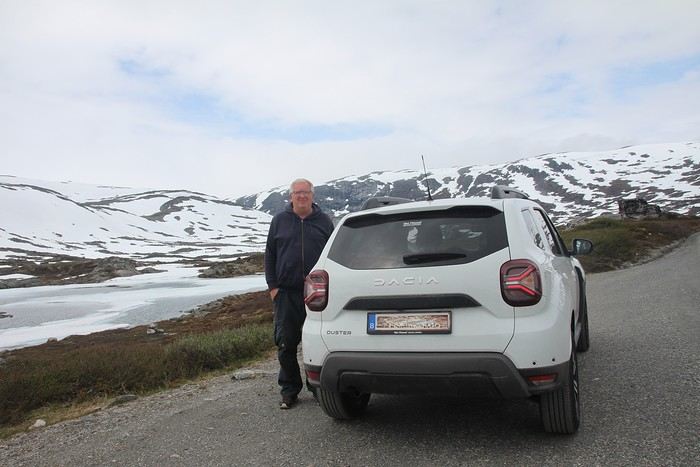
Why by car when most travelers opt for a camper van, while others prefer the comfort of cruises? Well, because we don’t own a camper van, renting one is pricey, and then you’ve got to add fuel costs (those things guzzle gas!), ferry fees, and other "tolls." All things considered, we went for mostly rentals—especially since there were four of us at the start of the trip. We spent the first week in Denmark with our daughter and son-in-law. Then they flew back to Belgium, and we continued our adventure as a couple. For accommodation, we mainly booked Airbnb apartments, which helped keep costs down and, most importantly, let us prepare our own meals (diet, diet!). In this travel journal, you’ll discover (or rediscover, for those who followed my older ones) our unbridled love for theme parks, museums, unique experiences, and—especially in Denmark—Legos! Unfortunately, we didn’t do any hikes this year because the unpredictable weather had made the trails slippery, and since I’d already taken three tumbles during the trip, I didn’t want to risk another! In the end, we traveled for 32 days, covered 6,200 km, and most importantly, discovered the charming country of Denmark, marveled at Norway’s breathtaking fjords—all without suffering the heatwave that hit France and Belgium that June! If you’ve got any questions, don’t hesitate to ask!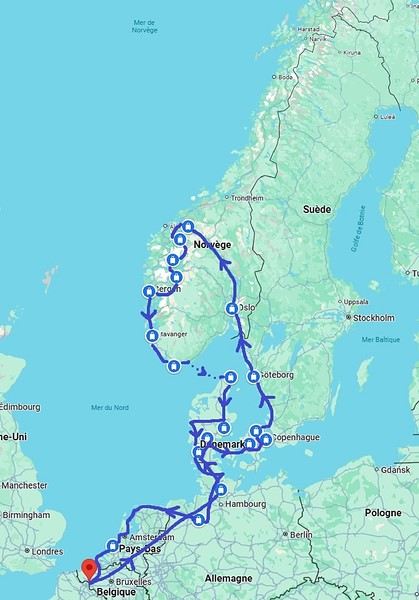
Why by car when most travelers opt for a camper van, while others prefer the comfort of cruises? Well, because we don’t own a camper van, renting one is pricey, and then you’ve got to add fuel costs (those things guzzle gas!), ferry fees, and other "tolls." All things considered, we went for mostly rentals—especially since there were four of us at the start of the trip. We spent the first week in Denmark with our daughter and son-in-law. Then they flew back to Belgium, and we continued our adventure as a couple. For accommodation, we mainly booked Airbnb apartments, which helped keep costs down and, most importantly, let us prepare our own meals (diet, diet!). In this travel journal, you’ll discover (or rediscover, for those who followed my older ones) our unbridled love for theme parks, museums, unique experiences, and—especially in Denmark—Legos! Unfortunately, we didn’t do any hikes this year because the unpredictable weather had made the trails slippery, and since I’d already taken three tumbles during the trip, I didn’t want to risk another! In the end, we traveled for 32 days, covered 6,200 km, and most importantly, discovered the charming country of Denmark, marveled at Norway’s breathtaking fjords—all without suffering the heatwave that hit France and Belgium that June! If you’ve got any questions, don’t hesitate to ask!
3-4 weeks of vacation starting mid-October 2025
Hi there!
Looking for one or more friendly people to share a sunny vacation with!
Available around mid-October for 3-4 weeks of vacation. Open to destinations (Greece, Morocco, Portugal/Spain, Colombia, Argentina, or others).
45 years old, from the Quebec City area, French/English speaker.
What I'm looking for: -Outdoor activities (hiking, snorkeling, horseback riding, etc.) -Cultural visits (museums, shows, fairs, etc.) -Gastronomic experiences (from street food to nice restaurants) -Relaxation time (beach, hot springs, spa, etc.)
Accommodation options: guesthouses, Airbnb, or the occasional hotel room.
I’ve traveled through every Canadian province, lived in the Yukon for several years, visited a few Latin American countries, explored Europe once (Denmark, Sweden, Finland, Estonia, Germany), road-tripped 22,000 km across the USA in two months, and participated in a youth volunteer program in Sri Lanka.
If this speaks to you, let’s chat in DMs!
Looking for one or more friendly people to share a sunny vacation with!
Available around mid-October for 3-4 weeks of vacation. Open to destinations (Greece, Morocco, Portugal/Spain, Colombia, Argentina, or others).
45 years old, from the Quebec City area, French/English speaker.
What I'm looking for: -Outdoor activities (hiking, snorkeling, horseback riding, etc.) -Cultural visits (museums, shows, fairs, etc.) -Gastronomic experiences (from street food to nice restaurants) -Relaxation time (beach, hot springs, spa, etc.)
Accommodation options: guesthouses, Airbnb, or the occasional hotel room.
I’ve traveled through every Canadian province, lived in the Yukon for several years, visited a few Latin American countries, explored Europe once (Denmark, Sweden, Finland, Estonia, Germany), road-tripped 22,000 km across the USA in two months, and participated in a youth volunteer program in Sri Lanka.
If this speaks to you, let’s chat in DMs!
Looking for a travel companion (senior or not) to explore Armenia in September or October
At 70 years old but in great shape and a seasoned long-term traveler, I’m looking for a travel companion to join me in Armenia in September or October. The dates aren’t set in stone, but I’d like to book my flight ticket soon (I live in Auvergne, so departure from Lyon)... After that, I’ll continue to Turkey (where I go very often), stopping in Georgia (where I’ve been twice in recent years), before heading back to Southeast Asia at the beginning of January, as I do every year since retiring 10 years ago :-)
Just so you know, I’m not looking for luxury in hotels, guest houses, or Airbnbs—I love street food and get around by bus or taxi using apps available in the country I’m visiting!
... looking forward to hearing from you :-))
Just so you know, I’m not looking for luxury in hotels, guest houses, or Airbnbs—I love street food and get around by bus or taxi using apps available in the country I’m visiting!
... looking forward to hearing from you :-))
Croatia: which region is ideal for hiking and snorkelling?
Hi there,
Once again, I’m turning to VoyageForum to kick off my trip planning—this time, it’s Croatia!
I’m treating my 29-year-old daughter to a trip where we’d love to combine hiking and snorkelling. I’m not sure if we can focus on just one region, but that’d be ideal since we’ll only have 10–15 days in August this year.
Could anyone point me in the right direction for a first lead?
Are transport links easy to navigate? Is it better to go with Airbnb or a hostel?
Thanks in advance for your tips!
Laurence from Bayonne
Sporty travel companion for visiting A Coruña August-September 2025
Hi everyone,
I’m looking for a travel buddy available from 16/08 to 2/09 who enjoys cycling, hiking, sea swimming, or kayaking to explore A Coruña (accommodation is already booked). Ideally someone who loves natural spaces and heritage. I’d like to meet for a weekend beforehand to get to know each other. Don’t hesitate to get in touch! 🚴♂️🏊♀️🛶
Is it still possible to travel in Ecuador?
Hi everyone, is it still possible to travel in Ecuador outside the Amazon region? If so, do you have a reliable agency to recommend? All your recent experiences from the past few months would be greatly appreciated. Thanks so much
What are your accommodation recommendations in the Faro region this summer?
Hi everyone,
I’m planning a week-long trip to southern Portugal with my two teens. I’m looking for accommodation ideally located near Faro.
What do you think of the towns of Lagos and Albufeira? Is it easy to get around these places using public transport, or is it better to rent a car to make the most of our stay?
If you have any accommodation recommendations (hotel, campsite, Airbnb, or other), I’d love to hear them.
Thanks so much in advance for your tips and valuable feedback!
Hélène
6-Day Itinerary with 3 Teens – First Trip to Florida
Hi everyone,
This summer, from June 29 to July 5, we’re heading to Florida for a week. We’ll start with Miami Beach on the first day. We have two older teens (22 and 17) and our 25-year-old daughter. It’s our first visit to Florida!
I’d love your thoughts on whether I should add or remove any stops. I put this together based on your travel journals...
- **Day 0** – Arrival Saturday, June 28, 2025, evening at Miami Airport + picking up the rental car - **Day 1 / Sun, June 29, 2025**: Morning bike ride to explore Miami Beach, and one night in Miami Beach - **Day 2 / Mon, June 30, 2025**: OCEAN DRIVE, afternoon at South Beach - **Day 3 / Tue, July 1, 2025**: Morning walk in LITTLE HAVANA/Cuban Quarter + afternoon at Crandon Beach - **Day 4 / Wed, July 2, 2025**: Depart for KEY WEST (3.5-hour drive) – stop in Islamorada. Afternoon visit to Old Town and Hemingway Home - **Day 5 / Thu, July 3, 2025**: Morning at Mallory Square – afternoon return toward Miami + one night in Homestead - **Day 6 / Fri, July 4, 2025**: Visit Everglades Alligator Farms and Flamingo - **Day 7 / Sat, July 5, 2025**: Return to Miami Airport
What do you think?
Thanks for your feedback! I’ll also check out your travel journals for more ideas. I’m all ears for great tips if you’ve booked through Booking or Airbnb!
This summer, from June 29 to July 5, we’re heading to Florida for a week. We’ll start with Miami Beach on the first day. We have two older teens (22 and 17) and our 25-year-old daughter. It’s our first visit to Florida!
I’d love your thoughts on whether I should add or remove any stops. I put this together based on your travel journals...
- **Day 0** – Arrival Saturday, June 28, 2025, evening at Miami Airport + picking up the rental car - **Day 1 / Sun, June 29, 2025**: Morning bike ride to explore Miami Beach, and one night in Miami Beach - **Day 2 / Mon, June 30, 2025**: OCEAN DRIVE, afternoon at South Beach - **Day 3 / Tue, July 1, 2025**: Morning walk in LITTLE HAVANA/Cuban Quarter + afternoon at Crandon Beach - **Day 4 / Wed, July 2, 2025**: Depart for KEY WEST (3.5-hour drive) – stop in Islamorada. Afternoon visit to Old Town and Hemingway Home - **Day 5 / Thu, July 3, 2025**: Morning at Mallory Square – afternoon return toward Miami + one night in Homestead - **Day 6 / Fri, July 4, 2025**: Visit Everglades Alligator Farms and Flamingo - **Day 7 / Sat, July 5, 2025**: Return to Miami Airport
What do you think?
Thanks for your feedback! I’ll also check out your travel journals for more ideas. I’m all ears for great tips if you’ve booked through Booking or Airbnb!
What accommodations for the Douaniers trail from Vannes to Saint-Nazaire?
Hi there,
My brother and I (ages 67 and 64) want to hike the Douaniers trail from Vannes to Saint-Nazaire in about 15 days, give or take...? We're looking for info, great tips for accommodations, and anything else if someone has any...?
A huge thank you.
Take care.
Twizzel
Corsica or Italy in May 2025
I’ve been to Corsica once (Bonifacio) and Italy once (Tuscany), and I have great memories of both. I’d love to go back to one of these places, but this time on a road trip (with my car).
I enjoy walking (nothing too intense like 8-hour hikes), wandering around nature or cities at random, local crafts and specialties, a little beach time, lots of food and culinary discoveries, meeting people, music, and dancing (Latin).
This is the first time I’m posting here to find a travel buddy—up until now, I’ve mostly traveled solo or met up with friends already on location. It could be a great way to share the experience. I’m open to some planning to outline the itinerary, but also leaving room to adjust based on what feels good in the moment or any opportunities that come up. So, I’m thinking of booking accommodations last-minute sometimes—Airbnb, guesthouses, hotels, camping, etc.
Everything’s on the table, and I’d love to chat about it.
Hope to see you soon! Raphaël
I enjoy walking (nothing too intense like 8-hour hikes), wandering around nature or cities at random, local crafts and specialties, a little beach time, lots of food and culinary discoveries, meeting people, music, and dancing (Latin).
This is the first time I’m posting here to find a travel buddy—up until now, I’ve mostly traveled solo or met up with friends already on location. It could be a great way to share the experience. I’m open to some planning to outline the itinerary, but also leaving room to adjust based on what feels good in the moment or any opportunities that come up. So, I’m thinking of booking accommodations last-minute sometimes—Airbnb, guesthouses, hotels, camping, etc.
Everything’s on the table, and I’d love to chat about it.
Hope to see you soon! Raphaël
First trip to South Africa: what itinerary?
Hello forum,
We’re a family of 4 adults (2 grown daughters) planning our first trip to South Africa for 3 weeks in August 2025, traveling independently. I’ve been drawing inspiration from several posts on the forum. I’d like to book our flight tickets and nights in Kruger Park as soon as possible since that’s the most urgent part to finalize, if I understood correctly.
Here’s a first draft of our itinerary (with lots of unknowns about what there’ll be to see/do in Eswatini, Lesotho, Durban, etc.—I feel like the Lesotho leg involves a lot of driving).
I’d really appreciate input from the experts to help us craft a great trip. Thanks in advance!
Day 1
Departure from Paris Day 2
Morning Early arrival in Johannesburg Pick up rental car Groceries Afternoon Sightseeing Night in AirBNB near Johannesburg (1/1) Day 3
Morning Drive to Blyde River Canyon (500 km - 6h30) Afternoon Visit the canyon Night in AirBNB near Blyde River Canyon (1/1) Day 4
Morning Drive to central Kruger (200 km - 3h30) Night in Rest Camp (1/2) Day 5
Night in Rest Camp (2/2) Day 6
Morning Drive to southern Kruger (150 km - 3h) Night in Rest Camp (1/3) Day 7
Night in Rest Camp (2/3) Day 8
Night in Rest Camp (3/3) Day 9
Morning Drive to Mbabane (Eswatini) (250 km - 4h) Night in AirBNB or other (1/1) Day 10
Morning Drive to Maputaland (300 km - 4h) Afternoon Swimming (hippos and crocs?) Night in AirBNB or other (1/1) Day 11
Morning Drive to Hluhluwe-Umfolozi (130 km - 2h) Night in Rest Camp (1/2) Day 12
Night in Rest Camp (2/2) Day 13
Morning Drive to Durban (250 km - 3h) Night in AirBNB (1/1) Day 14
Morning First half of drive to Lesotho (225 km - 4h) Night in AirBNB or other (1/1) Day 15
Morning Second half of drive to Lesotho (225 km - 4h) Night in AirBNB or other (1/1) Day 16
Morning First half of drive to Drakensberg (250 km - 4h) Night in AirBNB or other (1/1) Day 17
Morning Second half of drive to Drakensberg (250 km - 4h) Night in AirBNB or other (1/2) Day 18
Night in AirBNB or other (2/2) Day 19
Morning Drive to Johannesburg (300 km - 4h) Night in AirBNB (1/2) Day 20
Night in AirBNB (2/2) Day 21
Morning Departure in early afternoon Day 22
Arrival in Paris
We’re a family of 4 adults (2 grown daughters) planning our first trip to South Africa for 3 weeks in August 2025, traveling independently. I’ve been drawing inspiration from several posts on the forum. I’d like to book our flight tickets and nights in Kruger Park as soon as possible since that’s the most urgent part to finalize, if I understood correctly.
Here’s a first draft of our itinerary (with lots of unknowns about what there’ll be to see/do in Eswatini, Lesotho, Durban, etc.—I feel like the Lesotho leg involves a lot of driving).
I’d really appreciate input from the experts to help us craft a great trip. Thanks in advance!
Day 1
Departure from Paris Day 2
Morning Early arrival in Johannesburg Pick up rental car Groceries Afternoon Sightseeing Night in AirBNB near Johannesburg (1/1) Day 3
Morning Drive to Blyde River Canyon (500 km - 6h30) Afternoon Visit the canyon Night in AirBNB near Blyde River Canyon (1/1) Day 4
Morning Drive to central Kruger (200 km - 3h30) Night in Rest Camp (1/2) Day 5
Night in Rest Camp (2/2) Day 6
Morning Drive to southern Kruger (150 km - 3h) Night in Rest Camp (1/3) Day 7
Night in Rest Camp (2/3) Day 8
Night in Rest Camp (3/3) Day 9
Morning Drive to Mbabane (Eswatini) (250 km - 4h) Night in AirBNB or other (1/1) Day 10
Morning Drive to Maputaland (300 km - 4h) Afternoon Swimming (hippos and crocs?) Night in AirBNB or other (1/1) Day 11
Morning Drive to Hluhluwe-Umfolozi (130 km - 2h) Night in Rest Camp (1/2) Day 12
Night in Rest Camp (2/2) Day 13
Morning Drive to Durban (250 km - 3h) Night in AirBNB (1/1) Day 14
Morning First half of drive to Lesotho (225 km - 4h) Night in AirBNB or other (1/1) Day 15
Morning Second half of drive to Lesotho (225 km - 4h) Night in AirBNB or other (1/1) Day 16
Morning First half of drive to Drakensberg (250 km - 4h) Night in AirBNB or other (1/1) Day 17
Morning Second half of drive to Drakensberg (250 km - 4h) Night in AirBNB or other (1/2) Day 18
Night in AirBNB or other (2/2) Day 19
Morning Drive to Johannesburg (300 km - 4h) Night in AirBNB (1/2) Day 20
Night in AirBNB (2/2) Day 21
Morning Departure in early afternoon Day 22
Arrival in Paris
Discovering South India: Tamil Nadu and Kerala
Hello everyone!
We're off! After exploring the north, the four friends have now discovered the south. We’re excited to share this new travel journal, dedicated to our little group and our strong friendship, written by Richard and illustrated with Kate’s photos. I’ll chime in from time to time with practical tips.
First of all, a big thank you to everyone on VoyageForum who helped us plan this trip. It would’ve been quite different if we’d just relied on guidebooks.
The itinerary lasted just over 3 weeks: Mahabalipuram, Pondicherry, Thanjavur, the Chettinad region, Madurai, Munnar, Munroe Island, Cochin, and Chennai. We traveled by train, taxi, and private car with a driver, took a domestic flight, and stayed in guesthouses, Airbnb apartments, and hotels. For each of us, including flights, the total budget barely reached 2000 €, and we didn’t hold back—knowing we avoid resorts and love street food and small Indian restaurants.
We're off! After exploring the north, the four friends have now discovered the south. We’re excited to share this new travel journal, dedicated to our little group and our strong friendship, written by Richard and illustrated with Kate’s photos. I’ll chime in from time to time with practical tips.
First of all, a big thank you to everyone on VoyageForum who helped us plan this trip. It would’ve been quite different if we’d just relied on guidebooks.
The itinerary lasted just over 3 weeks: Mahabalipuram, Pondicherry, Thanjavur, the Chettinad region, Madurai, Munnar, Munroe Island, Cochin, and Chennai. We traveled by train, taxi, and private car with a driver, took a domestic flight, and stayed in guesthouses, Airbnb apartments, and hotels. For each of us, including flights, the total budget barely reached 2000 €, and we didn’t hold back—knowing we avoid resorts and love street food and small Indian restaurants.
Where to stay in Paris?
Hi there,
I’m Belgian with three kids, and I’m looking for a neighborhood in Paris where we could spend two nights that has the following advantages:
quiet in the evening as central as possible in relation to the main tourist spots safety
Which neighborhood could we stay in to do as much as possible on foot?
We’ll be arriving in Paris by train.
Thanks!
I’m Belgian with three kids, and I’m looking for a neighborhood in Paris where we could spend two nights that has the following advantages:
quiet in the evening as central as possible in relation to the main tourist spots safety
Which neighborhood could we stay in to do as much as possible on foot?
We’ll be arriving in Paris by train.
Thanks!
Visiting Lyon in 2 days with kids
Hi there,
We’d like to spend 2 days in Lyon in May with our 8- and 12-year-old kids, exploring the city on foot.
We’ll arrive on day 1 around 11 AM and leave on day 2 around 6 PM.
I’ve mapped out two routes and was wondering if they’re doable in our 2 days, and if you have any tips or info on visit prices.
We’re not sure where to stay yet, but we’d like to optimize by booking accommodation (hotel or Airbnb) between the two routes, maybe?
Thanks for your help!
I’ve mapped out two routes and was wondering if they’re doable in our 2 days, and if you have any tips or info on visit prices.
We’re not sure where to stay yet, but we’d like to optimize by booking accommodation (hotel or Airbnb) between the two routes, maybe?
Thanks for your help!
First family trip to Tokyo
Hi everyone,
We’re planning a family trip to Tokyo for late October 2026, and I’d love your advice on organizing this stay. Here’s some info to give you a better idea of our situation: • There’ll be two adults (one with a mild mobility impairment, which makes long walks tricky) and a child who’ll be 13 at the time. • We’d like to spend around 15 days there to explore temples, traditional Japanese culture, and, of course, the world of manga and video games.
My questions: 1. Weather in October: What’s the climate like during that period? Should we pack any specific clothing? 2. Flight bookings: When’s the best time to book? And, in your opinion, is it better to fly from Paris or Brussels? 3. Accommodation: We prefer Airbnb-style rentals or similar. Which neighborhoods do you recommend for good location without too much commuting? 4. Trip duration: Are 15 days enough for a first trip? 5. Accessibility: Any specific tips for someone who struggles with long walks (accessible transport, routes, etc.)? 6. Other recommendations: Must-visit spots in Tokyo (or nearby) for a family that loves manga, temples, and Japanese culture?
I’m feeling a bit overwhelmed starting the preparations, so any advice or personal experiences would be super helpful. Thanks in advance for your help!
Looking forward to reading your replies, Sam
We’re planning a family trip to Tokyo for late October 2026, and I’d love your advice on organizing this stay. Here’s some info to give you a better idea of our situation: • There’ll be two adults (one with a mild mobility impairment, which makes long walks tricky) and a child who’ll be 13 at the time. • We’d like to spend around 15 days there to explore temples, traditional Japanese culture, and, of course, the world of manga and video games.
My questions: 1. Weather in October: What’s the climate like during that period? Should we pack any specific clothing? 2. Flight bookings: When’s the best time to book? And, in your opinion, is it better to fly from Paris or Brussels? 3. Accommodation: We prefer Airbnb-style rentals or similar. Which neighborhoods do you recommend for good location without too much commuting? 4. Trip duration: Are 15 days enough for a first trip? 5. Accessibility: Any specific tips for someone who struggles with long walks (accessible transport, routes, etc.)? 6. Other recommendations: Must-visit spots in Tokyo (or nearby) for a family that loves manga, temples, and Japanese culture?
I’m feeling a bit overwhelmed starting the preparations, so any advice or personal experiences would be super helpful. Thanks in advance for your help!
Looking forward to reading your replies, Sam
Travel companions for New Zealand mid-September to mid-October 2025
Hello,
What a fantastic 2025 trip!
I’m looking for one or more travel companions to explore both islands from mid-September to mid-October (right after winter). Goal: Discover, wander without rushing or stress. Soak it all in and feast our eyes. Hikes (intermediate level), visits, and more...
Route not finalized—there are so many magical spots to visit and fly over. (For me, arrival and departure from Auckland.) Transportation not set yet... I love taking local transport (train, bus, plane, boat). A car is possible but not 100% certain. I want to go with the flow. Accommodation: Guesthouses, hotels, Airbnb (no camping).
A trip that brings joy and lets us enjoy ourselves without restrictions. Looking forward to hearing from you! Paace e salute😄
I’m looking for one or more travel companions to explore both islands from mid-September to mid-October (right after winter). Goal: Discover, wander without rushing or stress. Soak it all in and feast our eyes. Hikes (intermediate level), visits, and more...
Route not finalized—there are so many magical spots to visit and fly over. (For me, arrival and departure from Auckland.) Transportation not set yet... I love taking local transport (train, bus, plane, boat). A car is possible but not 100% certain. I want to go with the flow. Accommodation: Guesthouses, hotels, Airbnb (no camping).
A trip that brings joy and lets us enjoy ourselves without restrictions. Looking forward to hearing from you! Paace e salute😄
23-Day Itinerary in the Pacific Northwest (USA) and Western Canada
Hi everyone,
We’re heading to the Pacific Northwest (USA) and Western Canada this summer. We’ve made some progress planning, but we still have a few questions.
Our trip is mostly nature-focused—hiking, wildlife spotting (ideally bears, orcas/whales, otters, etc.), mountains, forests—and a few days in cities, though we’re not big on museums.
We’re looking at flying into Seattle (cheaper than Vancouver), then renting a car and staying in Airbnbs.
A few years ago, we traveled through eastern Canada/USA (Halifax/Montréal/Boston/Halifax) and ended up driving *way* too much and switching accommodations too often. This time, we’d like to settle in a bit more.
Here’s our current plan:
- 2 nights in Seattle to avoid hitting the road right after the flight. One day for a quick city visit, then we’ll leave early after the second night. -> Heading to Olympic National Park from the south.
- 4 nights near Olympic National Park, likely around Forks. -> Then to Port Angeles and a ferry to Vancouver Island via Victoria (maybe 1 night there).
- 7 nights in Port Alberni, which seems like a central base for exploring Vancouver Island (Tofino, Pacific Rim, Cathedral Grove, etc.). We really want to enjoy the area without constantly packing and unpacking.
The issue is, that brings us to 13–14 nights, and we’d like to spend 2 in Vancouver.
We’re wondering if we should head farther north on the island and add a few more days, or reduce our stay in Port Alberni to explore the north as well.
After that, we’d have about a week left. We’re considering a detour near the Canadian Rockies, then slowly making our way back to Seattle via North Cascades National Park.
Anyway, we’d love your input on all this!
Thanks for your suggestions,
Emilie and Thomas
We’re heading to the Pacific Northwest (USA) and Western Canada this summer. We’ve made some progress planning, but we still have a few questions.
Our trip is mostly nature-focused—hiking, wildlife spotting (ideally bears, orcas/whales, otters, etc.), mountains, forests—and a few days in cities, though we’re not big on museums.
We’re looking at flying into Seattle (cheaper than Vancouver), then renting a car and staying in Airbnbs.
A few years ago, we traveled through eastern Canada/USA (Halifax/Montréal/Boston/Halifax) and ended up driving *way* too much and switching accommodations too often. This time, we’d like to settle in a bit more.
Here’s our current plan:
- 2 nights in Seattle to avoid hitting the road right after the flight. One day for a quick city visit, then we’ll leave early after the second night. -> Heading to Olympic National Park from the south.
- 4 nights near Olympic National Park, likely around Forks. -> Then to Port Angeles and a ferry to Vancouver Island via Victoria (maybe 1 night there).
- 7 nights in Port Alberni, which seems like a central base for exploring Vancouver Island (Tofino, Pacific Rim, Cathedral Grove, etc.). We really want to enjoy the area without constantly packing and unpacking.
The issue is, that brings us to 13–14 nights, and we’d like to spend 2 in Vancouver.
We’re wondering if we should head farther north on the island and add a few more days, or reduce our stay in Port Alberni to explore the north as well.
After that, we’d have about a week left. We’re considering a detour near the Canadian Rockies, then slowly making our way back to Seattle via North Cascades National Park.
Anyway, we’d love your input on all this!
Thanks for your suggestions,
Emilie and Thomas
Road trip - Andalusia - Portugal from December 22, 2024 to January 3, 2025
Hi there,
I’m leaving from Tours (Indre-et-Loire 37) on 12/22 for Seville in Andalusia, with a stop in Valladolid to arrive in Seville on 12/23.
I’ve planned some trips to Huelva, Cadiz, Malaga, and maybe Faro in Portugal, as well as Seville—visited it last February but I can show it to a travel companion this time.
I’ll be heading back from Seville on 01/02/25 with a stop in San Sebastian to get back to Tours on 01/03.
I’ve already booked an Airbnb near the Cathedral (a cute little apartment with 2 bedrooms).
Looking forward to sharing this trip!
I’m leaving from Tours (Indre-et-Loire 37) on 12/22 for Seville in Andalusia, with a stop in Valladolid to arrive in Seville on 12/23.
I’ve planned some trips to Huelva, Cadiz, Malaga, and maybe Faro in Portugal, as well as Seville—visited it last February but I can show it to a travel companion this time.
I’ll be heading back from Seville on 01/02/25 with a stop in San Sebastian to get back to Tours on 01/03.
I’ve already booked an Airbnb near the Cathedral (a cute little apartment with 2 bedrooms).
Looking forward to sharing this trip!
Tenerife in February for hiking
I'm planning a 10-day trip to Tenerife to go hiking in February. Is the weather decent without too much fog at this time of year? Is an excursion to Teide National Park doable?
Thanks for your replies.
Accommodation ideas in Flic en Flac, Mauritius for April 2025
Hi there,
We’re rediscovering the island in early April, 20 years later, with our three teenage kids.
We’re looking for a nice place to stay that’s budget-friendly—ideally with a pool, very close to the beach, and three bedrooms since our oldest will be studying for her baccalaureate exams and might stay at the residence from time to time.
Oh, and just to mention... unfortunately, a hotel for five is way out of our budget.
Thanks for your recommendations, and see you Sunday! Family0306
Thanks for your recommendations, and see you Sunday! Family0306
Laos and Cambodia from late December to early February
Hi there,
I’ll be in Laos and then Cambodia from mid-to-late December until early February.
I haven’t been to Laos before, but I already know Cambodia.
I plan to arrive via northern Thailand and leave from Bangkok (it’s a question of flight prices).
I’m used to traveling by local transport and staying in simple guesthouses, with internal flights if needed. Sightseeing, exploring, and connecting with locals are my priorities.
If anyone’s interested in joining for part or all of this trip, we can chat and discuss. I only have a rough itinerary so far.
See you soon,
Francoise
One month in the United States with 3 teens: what to see and where to go?
Hello,
I’m Bruno, and I need some advice for planning a long, amazing trip (at least 1 month) to the United States. I want to show my kids the incredible places I visited nearly 30 years ago! 🤪
How do I travel with 3 teens, who should I call, and what do you recommend?
Things have changed so much since then, and it’s way easier to travel at 20 with just a backpack! ^^
Thanks in advance! 😏
I’m Bruno, and I need some advice for planning a long, amazing trip (at least 1 month) to the United States. I want to show my kids the incredible places I visited nearly 30 years ago! 🤪
How do I travel with 3 teens, who should I call, and what do you recommend?
Things have changed so much since then, and it’s way easier to travel at 20 with just a backpack! ^^
Thanks in advance! 😏