Results for "sécurité"
57583 results found.
Which less touristy regions to visit in Mexico?
Hi everyone,
My partner and I would like to travel to Mexico during the Christmas holidays. We’re well aware that this is a peak tourist season, but it’s the only time of year when we can take a long trip (over two weeks) due to work commitments.
We’re looking to avoid overly touristy areas and travel independently (renting a car). We want to explore Mexico’s history, take our time, and enjoy nature and the sea.
I’ve never been to Mexico before, and I’m considering the following regions (not all of them, of course): Yucatán (outside Quintana Roo), Baja California, Oaxaca, or Chiapas.
I’ve more or less ruled out Chiapas for safety reasons (even though the nature there looks amazing), and I’d love to hear your thoughts on the other regions. From experience, I know that even in highly touristy areas, you can often find quieter spots with good planning and by avoiding the main hotspots. For example, we were in Thailand last year during the same period, and aside from 2-3 places, we had a very peaceful trip—sometimes even being the only Westerners around. Would the same be true for Yucatán or Baja California?
Do you have any recommendations for nice, less touristy spots? What are your thoughts on the regions I mentioned?
Thanks so much for your help, and I hope you have a great weekend!
Is it possible to travel in Central America without a return ticket?
Hi,
My son is finishing up a year of working holiday in Canada soon. His plan is to take a bus from Montreal to Florida on 10/26, stay there for a few days, then fly to Cancun, Mexico. From there, he doesn’t have a precise plan yet, except to head down to Panama if the security situation in the countries he’ll cross allows it. Then, in March 2026, he’ll take a flight to Martinique, where he’d like to either find a sailboat (as crew) for the return transatlantic crossing (option 1) or do a sailing internship that includes the crossing (option 2).
So my questions are: - Will he be able to re-enter Mexico without an exit date or proof of a flight back to Belgium? Would being able to prove his return by sailboat with a specific date (option 2, the sailing internship) make things easier? - Are there any countries to avoid between Mexico and Panama? He’s traveling backpacker-style on a small budget.
Thanks for your answers.
Claire
16-hour layover in Shanghai: Is it worth leaving the airport?
Hi there!
I’m heading to Hanoi next week and we’ve got a 16-hour layover in Shanghai. Is it worth leaving the airport? We’re Belgian, so no visa required.
Thanks! !
I’m heading to Hanoi next week and we’ve got a 16-hour layover in Shanghai. Is it worth leaving the airport? We’re Belgian, so no visa required.
Thanks! !
What's the best option: local SIM card or international plan?
Hi there,
A question for those who’ve looked into this.
What’s more advantageous or preferable: buying a local SIM card for GPS and SMS (we’ll handle calls via WhatsApp), or going with a plan from our mobile provider (Orange) that offers international packages with several options up to 150GB?
Does anyone know the price of SIM cards at Vodacom?
Thanks to anyone who chimes in! 😉
Dan
Thanks to anyone who chimes in! 😉
Dan
Dubai on a budget
Four days of beach relaxation in this truly curious place let me unwind 15 years ago after trekking through Asia or Africa: swimming in clear, clean water and easing jet lag was my goal; seeing that mirage in the middle of the desert also piqued my curiosity... And then Dubai developed, and now I go there once a year for 15 days without ever getting bored!! My backpacker budget doesn’t stop me from enjoying what I love about travel: discovering cultures, architecture, and beaches with turquoise waters.
I’m sharing my favorite spots here for those who love simplicity and the thrill of being amazed! Dubai stretches over 50 km long. I stay in the historic Bur Dubai neighborhood, which is very "Indian" and separated from Deira (the more "Arab/African" district) by a creek.
You cross from one side to the other on abras, small traditional wooden boats that run all day. My hotel is 4 minutes from the Al Ghubaiba bus station, 5 minutes from the Al Ghubaiba metro, and 6 minutes from the Al Ghubaiba boat station!!! It’s easy to get around from here, and at night, it’s lively—safe to go out, with few tourists but mostly the local middle class who built (and are still building) Dubai. It’s simple and very international.
- **Transport:** ...**Getting there:** I fly with Emirates from Paris. Taking the 9:30 PM flight, I sleep on the plane, land at 6:35 AM, exchange 200 euros once I’ve picked up my luggage, change in the restroom, grab a taxi to the hotel, drop off my suitcase, and head straight to the beach! ...**On the ground:** I buy a silver NOL card, which works for buses, metro, and boats. I top it up as needed—it’s valid for 2 years. ...**Taxis:** They have reliable meters. Pink ones are driven by women. Airport-to-hotel fare: 12 €. You’ll find them everywhere, and they don’t complain about short trips. Between 3 PM and 4 PM, it’s trickier because of shift changes.
- **Best times to visit:** For me, it’s April-May and October-November: not too hot for walking but warm enough to swim! Watch out for air conditioning—your worst enemy. It’s everywhere, even at bus stops. Bring a big scarf or sarong to cover your throat and head—going from 32°C to 16°C when you enter a mall, bus, or taxi is pretty harsh!
- **Hotel:** I stay at the Grand Astoria (Fahidi Street) because the value for price and location is great. It’s very clean, and I skip breakfast because near the bus station, there’s a big Carrefour hypermarket where I buy breakfast supplies, water, camel milk, and picnic snacks. There are two nightclubs downstairs—bring earplugs if you want to sleep before 2 AM. Wi-Fi is spotty; you have to change the password every two days. The staff is lovely. Rooms have a TV (4 Indian channels + BBC), a kettle with tea/coffee sachets, and a mini-fridge you fill yourself.
- **Bur Dubai: "My neighborhood"** In the morning, you can see kids in uniforms waiting for the school bus with their parents—second-generation migrants who’ve settled here. They speak English, Arabic, and their mother tongue, have great education, and are in high demand (I see job ads in the local newspapers in the hotel lobby). From the U.S. to the Middle East, Singapore to South Africa, they have bright futures. In the evenings, families stroll along the creek, and it’s common for bench neighbors to ask where you’re from. The whole world crosses paths here. Even with basic English, it’s friendly and warm—the "take care" as people go their separate ways is a nice touch.
Bur Dubai has plenty to explore if you don’t feel like going far: along the creek, there’s a cluster of reconstructed houses forming the Al Shindagha Museum. One ticket lets you visit all the houses, each with a theme tied to the history of the seven emirates (Dubai is one). It takes a full day, but if you stop for lunch, there are tons of restaurants for all budgets, some right by the water.
Walking in the opposite direction, you reach Al Seef, a reconstruction of old Dubai as a small pearl-fishing port. The architecture is lovely, with souvenir shops. My favorite is the Iranian grocery store, where you’ll find camel milk chocolate, black lemon, and sweets with rose, pistachio, and candied apricot. It’s peaceful to walk around here, even as a solo woman. There are free restrooms everywhere, wooden or stone benches, and a nice breeze in the evening. Plenty of waterfront restaurants or places to grab a drink, plus a few towers across the way—nothing spectacular, but they’re prettily lit. There’s a souk with souvenir shops for those who like that!
- **Restaurants:** Bur Dubai has restaurants representing regions of India and the Indian subcontinent. My favorites: Across from the hotel, Paklyari—a Pakistani spot with excellent mutton biryani for 5 €. At Al Seef, Nablus has a great setting by the water. Across in Deira, the Italian restaurant on the 18th floor of the Rotana—go half an hour before sunset for an amazing view of the creek and skyline. The truffle pizza is 24 €. You can take a taxi from Bur, and after dinner, get dropped off at Al Seef to walk back along the creek. For a great thali, Kathhiyawadi is a 10-minute walk from Burjuman metro. My latest discovery: Bordomavi (near the Rashid Al Hadees Masjid 1 bus stop). One of the servers is Algerian and speaks French. You can swim at the small beach with showers/toilets, then have lunch at the restaurant (57 € for two, with starter, main, dessert, and drinks). The setting is peaceful, in a little fishing port with a cool photo op—traditional boats with the modern skyline in the background!
- **Sunset drinks:** The terrace at Concorde Creek View (Bur Dubai) has a creek view, and Canopy by Hilton (Al Seef) overlooks the creek and skyline. You can get a day pass for the pool, including meals and drinks.
- **Lassi:** Near the hotel, SreeRaj Lassi Bar has great ice cream and lassi. *Tip: Everything is takeout-friendly, including leftovers—great for a picnic the next day.
- **Market:** Don’t miss the Waterfront Market—a huge hall where locals buy fish, meat, fruits, and vegetables from all over the world. I love buying fish, shrimp, and cuttlefish, then having it prepared at Yahya’s waterfront restaurant (grilled, in sauce, fried, etc.) with salad, hummus, tabbouleh, and rice. It’s on the way between "my" beach and the hotel, so I stop by easily. I stock up on fruit, and at the Lulu supermarket upstairs, I grab yogurt, water, etc. No need to carry everything—a taxi (available at the main exit) will drop me right at the hotel!
- **Beach:** My favorite: Al Mamzar Park (15-minute taxi ride, 9 €). It has four lifeguarded beaches with showers and restrooms. Opens at 8 AM, but note: Mondays and Wednesdays are for women and young children only! Entry is 1.50 €. On Beach #2, you can rent sun loungers and umbrellas. Beach #3 (the prettiest) has stone tables with benches under big umbrellas—free! I arrive at 8 AM, set up, and walk for an hour along the water, spotting starfish, colorful fish, birds, and occasionally small jellyfish. From bikinis to burkinis, everyone swims as they like! Dubai is judgment-free—no side-eye, just smiles and greetings. I love seeing joyful, full-figured women on women-only days, playing darbuka and singing. Indian women do yoga (even headstands!), Chinese women practice tai chi... I read a lot and swim far out to the buoy limits. Lifeguards keep watch. It’s safe on land too. Once, a 4x4 driver gave me a dirty look for "serving whisky" to my mom from a plastic bottle—until I made him smell it. It was mint tea! Embarrassed, he immediately called his brother, a gym teacher in Poitiers, to apologize in French! People in Dubai are smiley, polite, and very respectful of elders. On weekends, the park is packed with groups and families barbecuing—joyful chaos in every language!
By 1:30 PM, depending on my mood, I’ll get dropped off at the Waterfront Market for fish or a thali restaurant. Sometimes I take the bus—it stops near the abras on the Deira side. Just cross by boat, then it’s a 3-minute walk to the hotel. Takes 45 minutes (vs. 15 by taxi).
For a treat, try Kite Beach (Abu Manara Masjid bus stop). The SoleMio section offers comfy sun loungers, fluffy towels, and umbrellas for 80 € for two in the front row. Go early—you’ll feel like you have the place to yourself, with the Burj Al Arab in the background. It gets busy on weekends.
From there, you can take a taxi to Dubai Mall (not far) to check out the dancing fountains at sunset, for example.
You can also buy day passes at some hotels with sun loungers, towels, pool access, and lunch credit. I tried the Ritz-Carlton—decent (170 € for two, including meals). Lunch was fine, and the view of the lit-up towers at sunset, with the giant wheel, was stunning. I took the metro back in the evening.
There are plenty of free beaches too, like La Mer—worth seeing more for the decor than the beach itself.
- **Even though my main "sightseeing" involves walking around with my head up, admiring the towers in DIFC (amazing), visiting the stunning Mohammed bin Rashid Library (near Creek metro), wandering the souks (including Little India in Bur and the Iranian mosque), or the spice souks in Deira (go early when it’s quiet),** A day trip to Abu Dhabi is worth it. Take the Bur Dubai-Abu Dhabi bus (pay with your NOL card). If you leave early, you’ll see the sunrise over the desert. At the station, buy a bus ticket to the Louvre, cross the footbridge over the highway, and wait for the bus. After the museum, take a taxi to the Grand Mosque, then another taxi back to the bus station. A full but doable day—no need to stay overnight!
In the evening, I love taking the metro (mostly above ground) and passing between the towering, lit-up skyscrapers—it feels like a sci-fi movie. Just missing flying taxis (they’re in the works!)
Sharjah, the closest emirate, has a fantastic Orientalist museum. From Bur Dubai’s maritime station, boats go to Sharjah in 30 minutes, near the aquarium and maritime museum.
- **Shopping:** I buy Indian chai tea spices, incense, camel milk chocolate, Iranian sweets, and fabric from Indian shops selling saris and fabric by the meter. I have a tailor make shirts, tunics, etc. Some shops sell buttons and trimmings to jazz things up.
- **Malls:** To attract customers, mall owners come up with wild ideas: a ski slope at Dubai Mall (worth seeing once), pretty wooden souks at Madinat, and a giant aquarium at Dubai Mall. At sunset, you can watch the dancing fountains to popular global tunes at the foot of the world’s tallest tower. At its base, there’s an excellent Iraqi restaurant, Samad Al Iraki, where the tea server is Tunisian and speaks French! The Ibn Battuta Mall is unique—you can go there straight from Abu Dhabi by bus, for example. Malls have plenty of dining options and are a place to (finally) see locals... though they’re not that interesting. Malls are served by the metro, while buses run along the coast. In Burjuman Mall, there’s a cybercafé on the ground floor where you can print.
A few helpful sites: Visit Dubai - Official Tourism Site RTA (Roads and Transport Authority) - RTA Services
"But what do *you* do in Dubai?" my friends ask, surprised... Yes, I love traveling to countries where I ride on bumpy roads in buses that break down, sleep in places with mosquitoes and cockroaches, and swelter in heat and humidity. But even far from that kind of travel, Dubai has an exotic charm. There’s something for every taste and budget—once you get past the flight ticket (around 680 €, probably cheaper with a layover). Dubai is about relaxing, swimming, being amazed, chatting, and tasting... A safe, clean vacation with no rudeness, and as a woman, it’s a relief to let your guard down. You come back refreshed and at peace!
Hope my experience helps... Next trip: March 2026, with plans to visit the Guggenheim in Abu Dhabi and whatever other curiosities pop up like magic...
Feel free to add to my experience with your own! Happy travels, Laurence
Visiting Auschwitz-Birkenau during a motorcycle trip
Hello! We’re planning a motorcycle trip that will include a visit to Auschwitz-Birkenau in June 2026.
We’re unsure (still debating) whether we should stay at a hotel on-site and get to the memorial with an Uber (leaving our bikes at the hotel) and book a guided tour, or base ourselves in Kraków and take a tour that includes transport.
One thing’s for sure—we’d prefer a guide in French since we don’t speak English 😅.
Could you share your experiences or advice? I understand we need to book online rather than on-site. Thanks in advance for your replies!
Could you share your experiences or advice? I understand we need to book online rather than on-site. Thanks in advance for your replies!
Ryanair increases its cabin baggage size starting today
Diego to Cap Masoala and beyond by bike
Hi everyone,
After a break of a few years, I’m heading back to Madagascar this October. I’d like to travel from Diego to Maroantsetra via Cap Masoala as much as possible by bike—it’s my favorite way to travel. My questions: for the return trip to Diego once I’m in Maroantsetra, is there a possibility to take a flight, since the road option only starts much further south than Tamatave? Or where can I rent or buy a decent bike between Diego and Cap Masoala? For this bike trip, I’m open to any info—I love traveling rough. Someone might even want to join me on this adventure.
After that, I’d also like info on the northeast part (Mozambique Channel side) of Diego, which I’d like to explore by bike as well.
Thanks, and feel free to share any tips—just skip the paternalistic safety advice. Laurent
After that, I’d also like info on the northeast part (Mozambique Channel side) of Diego, which I’d like to explore by bike as well.
Thanks, and feel free to share any tips—just skip the paternalistic safety advice. Laurent
Feedback on urban rating site concept
Hi everyone,
I’m new to the forum, and I’m writing today to ask the community for feedback on a site concept I’ve been working on for a few weeks.
The idea is to create a worldwide map (starting with France) where anyone can rate a city—or even a neighborhood in a large city—based on a set of criteria (cleanliness, safety, green spaces, cost of living, etc.) and add a comment highlighting the positives and negatives of the area. It’d be like rating a city or neighborhood the way we currently rate restaurants or hotels.
The goal is to inform other users about the nicer (or less nice) neighborhoods in a country and help them choose where to book their next hotel or Airbnb—so they don’t end up in a sketchy area. Beyond that, it’s also about letting people pick their next travel destination based on what matters most to them (cost of living, safety, shopping, transportation, etc.). Ratings will, of course, be moderated to prevent abuse, and users will need to provide proof (like a utility bill or evidence they’ve visited the city) before they can leave a comment.
I’ve had a test version developed for Paris with the core features, and I’ve named the site CityRate.
I’d love to hear your thoughts and feedback! The site is aimed at both locals looking to move to a new neighborhood or city and travelers who want to carefully choose where to spend their next vacation.
Thanks in advance! 😊
Hikes from September 15 to 26, 2025
Hi there,
I’m looking for 1 or 2 people who’d like to hike in two regions of Quebec: the Laurentians and Gaspésie/Charlevoix/Saguenay.
I’ve got my flight tickets. I’m coming from France.
I’d love to hike in national parks and other trails. For accommodations: camping, simple lodging, or staying with locals. No big hotels.
We can split the two periods into shorter weeks, like Monday to Friday, if you’re only available for part of my stay.
A quick intro about me: I hike often throughout the year, I’m part of the CAF (French Alpine Club), which organizes hikes of all difficulty levels, with respect for nature and safety rules. I travel with trekking organizations. I’m pretty open-minded, enthusiastic, and I love sharing trails and experiences.
Feel free to reach out if you have any questions. Thanks.
Trip report: Our South Africa journey in July
Hi there,
We’re back from our 3-week trip to South Africa in July. It was a family trip with our four grown-up kids (ages 18 to 25).
First off, I’d like to thank everyone on this forum for their great tips—they really helped us plan this trip!
The trip: We spent 15 days between Port Elizabeth and Cape Town, then a week around Kruger (including Blyde River Canyon). We found South Africans to be welcoming and always ready to help. We never felt unsafe (just followed basic safety rules). The police are very visible, especially on the roads.
Logistics: We’d booked our accommodations in advance but made a few changes on the spot based on how we felt at the time. We rented two vehicles from Firefly (Hertz). No complaints—recent cars, quick returns, and the deposit wasn’t charged. We’d gotten our international driver’s permits... which stayed in France! Luckily, no one asked for them. Driving on the left wasn’t an issue (it wasn’t our first time). The roads we took were in good, even great, condition. Only a few tracks to lodges or parks were rough and required extra caution. Lots of pedestrians on the sides of roads, even highways. And plenty of very slow trucks. But they pull over to let you pass. It’s also common for cars to cross into the opposite lane to overtake, even with white lines. We took two domestic flights: one early in the morning (Johannesburg to Port Elizabeth) and one in the late afternoon (Cape Town to Johannesburg) to save time.
We had some highlights and a few disappointments—all part of the journey! More details coming soon.
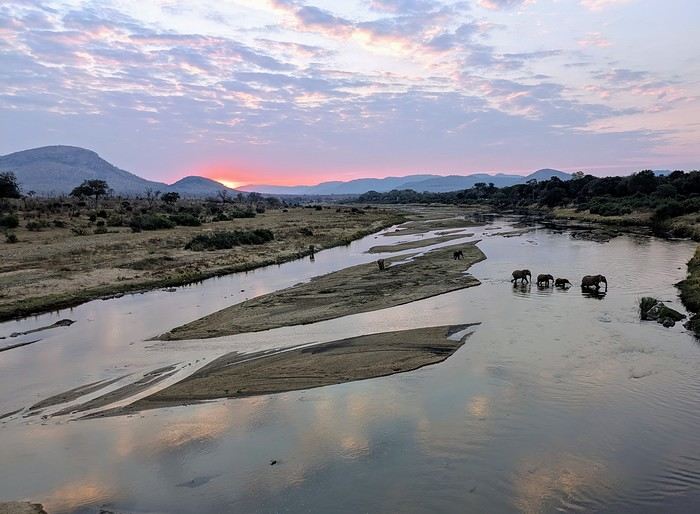
We’re back from our 3-week trip to South Africa in July. It was a family trip with our four grown-up kids (ages 18 to 25).
First off, I’d like to thank everyone on this forum for their great tips—they really helped us plan this trip!
The trip: We spent 15 days between Port Elizabeth and Cape Town, then a week around Kruger (including Blyde River Canyon). We found South Africans to be welcoming and always ready to help. We never felt unsafe (just followed basic safety rules). The police are very visible, especially on the roads.
Logistics: We’d booked our accommodations in advance but made a few changes on the spot based on how we felt at the time. We rented two vehicles from Firefly (Hertz). No complaints—recent cars, quick returns, and the deposit wasn’t charged. We’d gotten our international driver’s permits... which stayed in France! Luckily, no one asked for them. Driving on the left wasn’t an issue (it wasn’t our first time). The roads we took were in good, even great, condition. Only a few tracks to lodges or parks were rough and required extra caution. Lots of pedestrians on the sides of roads, even highways. And plenty of very slow trucks. But they pull over to let you pass. It’s also common for cars to cross into the opposite lane to overtake, even with white lines. We took two domestic flights: one early in the morning (Johannesburg to Port Elizabeth) and one in the late afternoon (Cape Town to Johannesburg) to save time.
We had some highlights and a few disappointments—all part of the journey! More details coming soon.
Access issues with VF from abroad without a VPN: frequent blocks
Hi,
Is VF aware that it’s often blocked from abroad, even when roaming on a French carrier? Either with a "Cloudflare" block or a red message—the same one you get when using a VPN, except there isn’t one here.
Michel
Is VF aware that it’s often blocked from abroad, even when roaming on a French carrier? Either with a "Cloudflare" block or a red message—the same one you get when using a VPN, except there isn’t one here.
Michel
How to choose your accommodation in South African national parks
Hi there,
It’s not always easy to pick where to stay in national parks... like Kruger, for example.
Below is an attempt to decode the different types and options...
Remember, to book in a national park, you do it through the Sanparks website, except in KwaZulu-Natal (KZN Wildlife).
Choosing the type of camp that suits you: · Main Rest Camps, Satellite Camps, Bushveld Camps, Overnight Hides, Bush Lodges, Camp Site, Luxury Lodges Main Rest Camps These camps are usually quite large, even very large, like Skukuza. They have a fence! You can move around freely inside these camps at night with a torch. Staff are available, and there are security guards. Shops are more or less well-stocked but have the basics. You’ll find souvenir shops, restaurants, bars, and most often a pool. Depending on your choice, there are camping spots, chalets, huts, etc., with varying levels of comfort. Shared kitchens, shared bathrooms, or private facilities in each accommodation (see below). This isn’t the "wild" version but rather the more luxurious and secure option. Bushveld Camps Smaller and more intimate, with some amenities, but no restaurants or shops. Check if there’s a fence. Satellite Camps Always close to the main camps (more or less). As a rule, you check in at the main camp. Comfort level is lower than the options above. Check if there’s a fence. Camp Site + Overnight Hide The wildest level. That says it all. Bush Lodges + Luxury Lodges Bush lodges: exclusive environment. Since I haven’t tried them, I can’t give any tips. Luxury lodges: well, the name says it all. This is Kruger’s version of a private game reserve lodge. Game drives with a ranger in an open vehicle. Accommodation ranges from luxurious to very luxurious. Meals and lodging are of the same standard. But even so, the game drive rules are the same. Sure, you get exclusive access to a small area, but you can’t leave the marked trails, and normally, the return time to camp is exactly the same. The rule actually says that exceptionally, if there’s a great opportunity within x meters, they *might* go off-trail. First case in the far south: a very flexible ranger and an amazing game drive. Second case: a mediocre ranger and a boring game drive. Note that some may only offer lodging. Personally, I think the added value can be excessively expensive. Choosing your accommodation within a camp. This depends on the camp. Below is an attempt to decode. Camp site: just a spot, that’s it. Access to facilities like toilets, shared kitchen, etc. Huts: basic amenities, usually just a fan. Safari tent: the name says it all. It’s already set up. Bungalow: well, it’s a bungalow, and a guest house is a bungalow for a group. Decoding: AC = air conditioning. Fan = fan. Private or shared toilets. Private or shared bathroom. Equipped kitchen or shared. Terrace. Perimeter or not. View or not. First 2–5 letters — the type of accommodation.
CK = Campsite EH/EA/EB = Hut (AC, so air-conditioned) ES = Hut (fan only) CTT/ST= Safari Tent LBVST = Safari Tent with bush view LRVST = Safari Tent with river view BD/BA = Bungalow with private (and equipped) kitchen BG/BE = Bungalow with shared kitchen F, G or CO = Guesthouse or Cottages (more than one bedroom)
Number after the letters — number of beds 2, 3, 4, or 6 beds. The base price is for 2 people. There’s an extra charge for each additional person. The last letter, if present, indicates a particular feature.
U = Perimeter — close to the camp’s edge V = Perimeter + view (e.g., river) Z = For disabled access L = Large spot (camping) D = DSTV (television) E = Enclosed veranda
Example: BD3U = 3 people, private kitchen (and bathroom/toilet), perimeter with view.
Paris in 2 days on foot: itinerary and feedback on my route
Hi everyone,
I’d love to get your thoughts on these two routes I’ve planned to see the highlights of Paris in two days.
I don’t want to take any transportation.
I’ll arrive at the hotel by car on Saturday around noon and won’t pick it up again until the next evening to leave.
**First day:** I’m thinking of starting from the hotel, then heading to the Eiffel Tower - Trocadéro - Galeries Lafayette - Élysée Palace - Tuileries Garden - the Louvre (outside only) and finishing at Les Invalides.
12 km
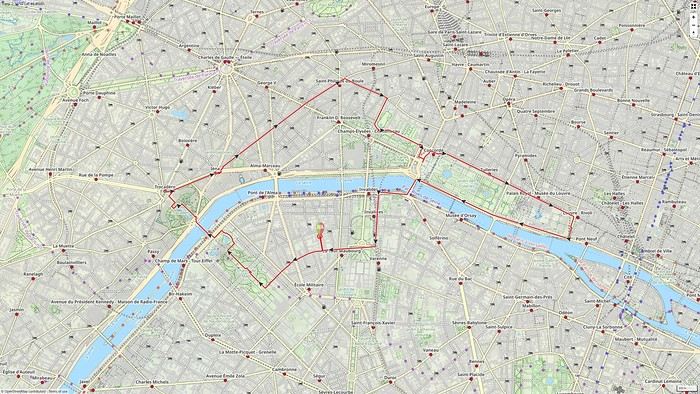
(The route on the map is just for reference to show the places we’ll visit—it might vary by a hundred meters or so.)
**Second day:** Starting from the hotel, we’ll go to Montmartre - Sacré-Cœur Basilica - Pigalle - Notre-Dame Cathedral - Panthéon - Luxembourg Garden.
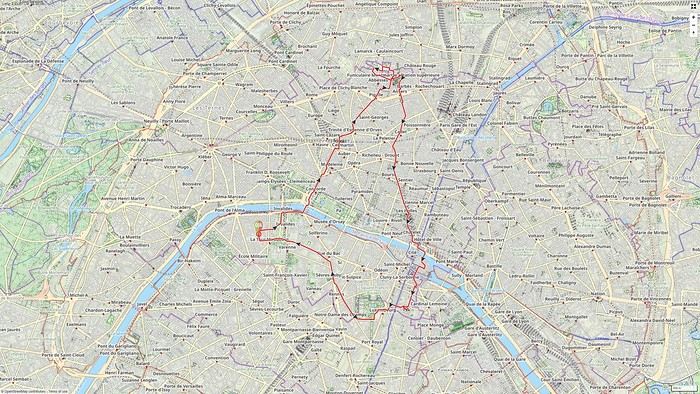
What do you think? Am I missing out on anything great with this route?
Since I’m traveling with two kids, do you see any spots on these routes that might be a bit risky safety-wise? 🏴☠️
We’re not big museum fans, so we’re not planning to visit any—unless it rains, of course! 😄
One last little question: are there any protests planned in Paris on the weekend of August 16-17? 🙂 Thanks for reading! 😎
I’d love to get your thoughts on these two routes I’ve planned to see the highlights of Paris in two days.
I don’t want to take any transportation.
I’ll arrive at the hotel by car on Saturday around noon and won’t pick it up again until the next evening to leave.
**First day:** I’m thinking of starting from the hotel, then heading to the Eiffel Tower - Trocadéro - Galeries Lafayette - Élysée Palace - Tuileries Garden - the Louvre (outside only) and finishing at Les Invalides.
12 km
(The route on the map is just for reference to show the places we’ll visit—it might vary by a hundred meters or so.)
**Second day:** Starting from the hotel, we’ll go to Montmartre - Sacré-Cœur Basilica - Pigalle - Notre-Dame Cathedral - Panthéon - Luxembourg Garden.
What do you think? Am I missing out on anything great with this route?
Since I’m traveling with two kids, do you see any spots on these routes that might be a bit risky safety-wise? 🏴☠️
We’re not big museum fans, so we’re not planning to visit any—unless it rains, of course! 😄
One last little question: are there any protests planned in Paris on the weekend of August 16-17? 🙂 Thanks for reading! 😎
Cycling Thread – Europe’s Most Beautiful Bike Paths
Hi there! I’m Simon, and for years I’ve been exploring some of Europe’s most beautiful and well-equipped bike paths. My passion for cycling led me to start a blog where I share my travel impressions, practical tips, and photos taken along the way. I ride both well-known routes like the Alpe-Adria, the Loire à Vélo, and the Rhein Route, as well as lesser-known but equally charming regions.
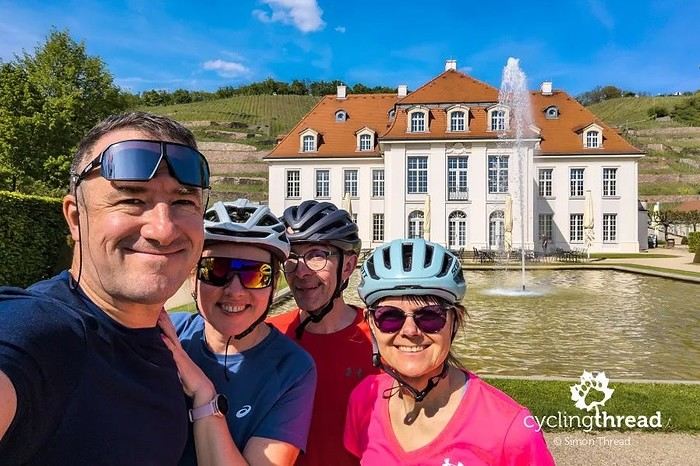
In my stories, I pay special attention to the quality of infrastructure, cyclist safety, and route accessibility—for young and old, experienced riders and beginners alike. I love discovering and sharing spots that are truly welcoming for cycle tourists: well-marked, with rest areas and easy train access.
On the blog, you’ll find ready-to-follow route suggestions, tips for preparing your bike trips, and plenty of inspiration for your next adventures. I travel with my panniers, a camera in the front bag, and always keep an eye out for what’s around me. Feel free to check out my blog, Cycling Thread—you might find some ideas for your next bike getaway! :-)
* * *
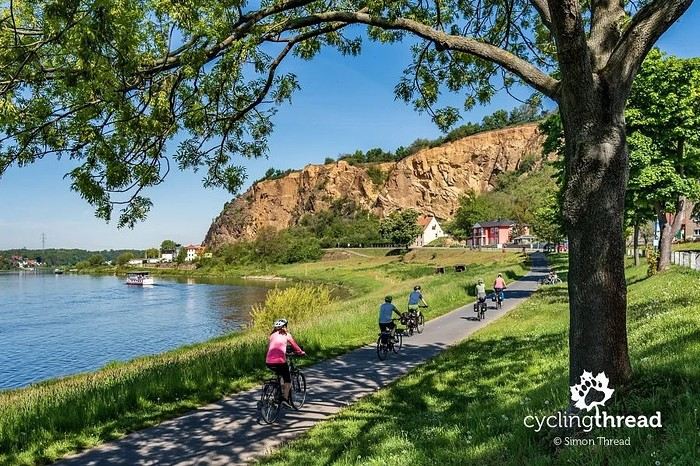
I hope this won’t just be a one-off post—I’ll try to share our bike trips with you here regularly. To start: our May trip on the Elberadweg, the queen of German bike paths, between the stunning city of Dresden and Magdeburg. I invite you to visit:
Elberadweg in Germany – From Dresden to Magdeburg
The Elbe bike path is about 1200 km long, following the river from its source in the Giant Mountains in the Czech Republic to its mouth in Cuxhaven, on the North Sea. The route crosses a variety of landscapes: mountain valleys, vineyards, open plains, and coastline. As is often the case in Germany, the signage is excellent and the route easy to follow.
But what surprised us was the number of cobblestone sections! Sure, the cobblestones are well-laid and fairly smooth—but they’re still cobblestones. And when they disappear, they’re often replaced by concrete slabs, typical of river dikes. That’s just part of the face of this 30-year-old "queen"—a heritage that’s hard to replace entirely with fresh asphalt.
Along the way, don’t miss the many cultural highlights. Dresden impresses with its restored old town, the Frauenkirche, and the Brühl Terraces along the Elbe—it’s one of Germany’s most elegant cities. In Meissen, you can visit the famous porcelain factory and its Gothic cathedral. Wittenberg is a must-stop to follow in Martin Luther’s footsteps, with its castle church and Reformation Museum. And to finish, in Dessau-Roßlau, besides the Bauhaus, don’t miss the stunning Dessau-Wörlitz landscape gardens—one of the oldest English-style parks in Europe.
A few photos to give you a feel for the route and inspire you to check out our blog! :-)
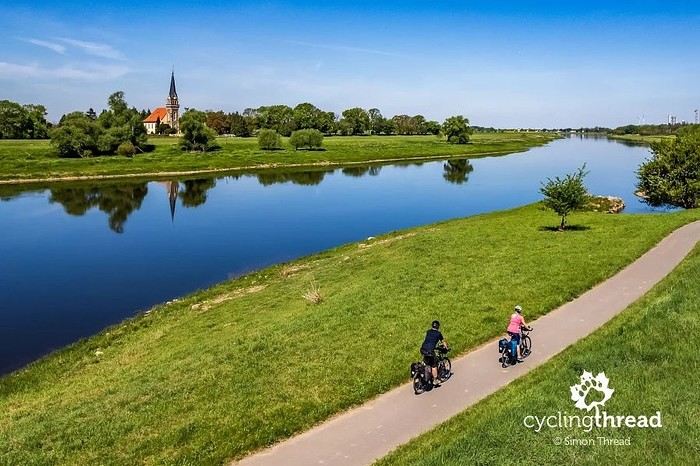
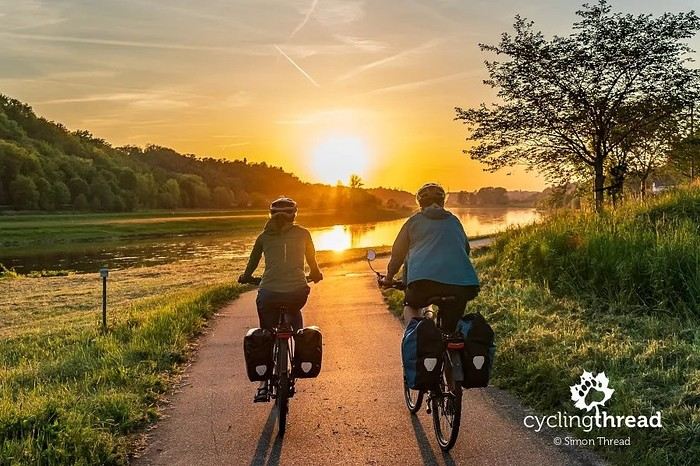
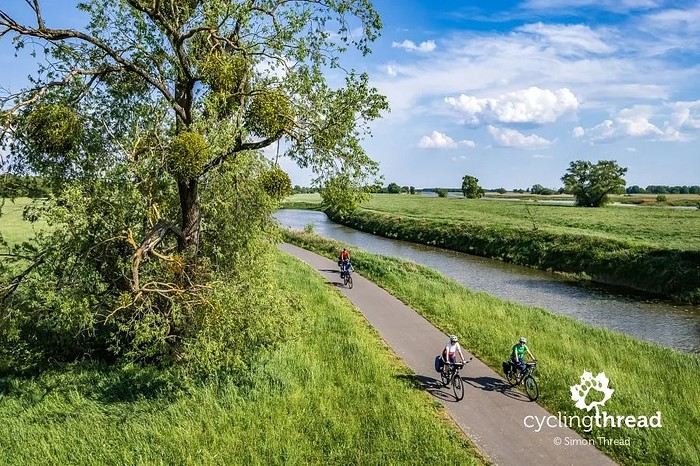
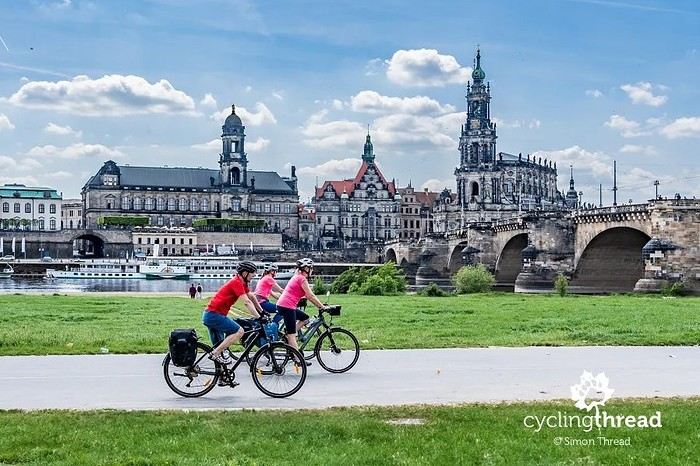
Happy cycling!
Simon
In my stories, I pay special attention to the quality of infrastructure, cyclist safety, and route accessibility—for young and old, experienced riders and beginners alike. I love discovering and sharing spots that are truly welcoming for cycle tourists: well-marked, with rest areas and easy train access.
On the blog, you’ll find ready-to-follow route suggestions, tips for preparing your bike trips, and plenty of inspiration for your next adventures. I travel with my panniers, a camera in the front bag, and always keep an eye out for what’s around me. Feel free to check out my blog, Cycling Thread—you might find some ideas for your next bike getaway! :-)
* * *
I hope this won’t just be a one-off post—I’ll try to share our bike trips with you here regularly. To start: our May trip on the Elberadweg, the queen of German bike paths, between the stunning city of Dresden and Magdeburg. I invite you to visit:
Elberadweg in Germany – From Dresden to Magdeburg
The Elbe bike path is about 1200 km long, following the river from its source in the Giant Mountains in the Czech Republic to its mouth in Cuxhaven, on the North Sea. The route crosses a variety of landscapes: mountain valleys, vineyards, open plains, and coastline. As is often the case in Germany, the signage is excellent and the route easy to follow.
But what surprised us was the number of cobblestone sections! Sure, the cobblestones are well-laid and fairly smooth—but they’re still cobblestones. And when they disappear, they’re often replaced by concrete slabs, typical of river dikes. That’s just part of the face of this 30-year-old "queen"—a heritage that’s hard to replace entirely with fresh asphalt.
Along the way, don’t miss the many cultural highlights. Dresden impresses with its restored old town, the Frauenkirche, and the Brühl Terraces along the Elbe—it’s one of Germany’s most elegant cities. In Meissen, you can visit the famous porcelain factory and its Gothic cathedral. Wittenberg is a must-stop to follow in Martin Luther’s footsteps, with its castle church and Reformation Museum. And to finish, in Dessau-Roßlau, besides the Bauhaus, don’t miss the stunning Dessau-Wörlitz landscape gardens—one of the oldest English-style parks in Europe.
A few photos to give you a feel for the route and inspire you to check out our blog! :-)
Happy cycling!
Simon
My experience hiking the Mercantour independently
I wanted to share an incredible experience I had recently that really left an impression on me: hiking the Mercantour independently. It’s an absolutely stunning mountain range, with varied landscapes that go from lush forests to rocky ridges, passing through high-altitude lakes with unbelievable colors. I chose a one-week route, sleeping under the stars in a bivouac.
It was a pretty demanding adventure, with significant elevation changes and sometimes unpredictable weather. But every effort was rewarded with breathtaking views. I was lucky enough to spot marmots, chamois, and even ibex in the distance. It’s truly a total immersion in nature!
A little tip for those tempted by the adventure: plan your route and gear carefully. Independence requires good preparation. I particularly appreciated having a good water filtration system and lightweight cookware. And for safety, aside from a map and compass (or GPS), I never leave without my two-way radio. In these remote areas where there’s no mobile signal, it’s a real safety net in case of trouble or just to communicate with other hikers if you’re in a group. It can really make a difference!
If any of you have already hiked in the Mercantour or have questions about my experience, don’t hesitate to ask. I’d love to chat with you about this beautiful range or other hiking destinations.
See you on the trails! 🙂
Departure airport for Rivages du Monde cruise to Greenland
Hi everyone,
In a month, I’m heading to Greenland with Rivages du Monde.
My question is: which airport do we fly out of to get to Iceland—Orly or Roissy?
Thanks to anyone who’s already traveled with this tour operator for this destination and can let me know.
Have a great day
11 unforgettable days in Oman
We visited the northern/northeast part of Oman, the most touristy area, last February over 11 days there. It’s a great time to go because the temperatures are pleasant and there aren’t too many tourists, even though the country is only just starting to develop its image. 11 days was enough for us to see the essentials, but you can always extend your stay depending on what you want.
2 days in Muscat, 2 days in the desert—we would’ve happily stayed longer—2 days in the mountains, 3 days in the wadis, and the rest for the cities, villages, and the coast.
Oman offers stunning landscapes and a genuinely warm welcome. We always felt safe, never experienced any malicious looks or gestures.
As usual for our trips, we chose to organize everything ourselves but with a guide to better explore and soak up the local culture.
The point of my post isn’t to recount our journey but to encourage and reassure anyone considering this destination.
If I can be of help, I’m happy to answer your questions based on what I know.
Where to travel in Southeast Asia with a 5-month-old baby?
hi,
I had planned to take a gap year with my 4-year-old daughter starting this fall. A happy but unplanned event is changing the plans: a new baby arriving in just a few days.
So now I’ll be waiting until she’s 5 MONTHS old. Which countries would you recommend for traveling in Southeast Asia where I’d have adequate healthcare infrastructure in case of any issues?
What travel insurance do you suggest?
What itineraries have you done?
thanks
Renting a car in Sri Lanka, how to do it..?
Hi there.
We’re leaving for Sri Lanka in just a few days for three weeks.
After some thought, we’ve decided to rent a car with a driver.
I’m a bit overwhelmed by all the ads, and I’m feeling a little lost about booking confidently from France... Especially since I’m more used to going through big international rental companies. What worries me most is the insurance and the quality/safety of the car—more than the languages spoken or how friendly the driver is.
Do any of you have experiences to share to help me out, please? Thanks in advance! 😊
All Tanzanian Airlines Banned
Hi,
A pretty serious issue has come up in the past few weeks for traveling to Tanzania.
What’s the deal with airlines in Tanzania? https://www.capital.fr/economie-politique/ce-pays-est-tres-touristique-mais-ses-compagnies-aeriennes-sont-placees-sur-liste-noire-par-l-europe-1515325 https://www.charentelibre.fr/tourisme/la-tanzanie-sur-liste-noire-de-l-europe-des-vols-interieurs-a-haut-risque-pour-100-000-touristes-francais-25002566.php
Basically, all airlines have been blacklisted because they don’t meet European safety standards. They’re banned from flying in Europe but continue operating in Tanzania. The main issue is that travel agencies’ civil liability no longer applies to blacklisted airlines. So we can’t allow clients to fly with these carriers. Of course, there’s huge pressure from European agencies, which are forced to disrupt their plans or even cancel trips because of this. Personally, I’ve got a trip planned for February 2026 to the southern parks in Tanzania, so I’ll be keeping an eye on how this develops. Do any of you have updates? Thanks!
Loïc
United States: Sharp Decline in Summer 2025 Bookings
Travel bookings to the United States are seeing a significant drop in France for summer 2025, with over a 30% decrease in the spring and around -11% for summer departures.
Several reasons explain this disengagement:
an unfavorable exchange rate at the start of the year, very high prices on the ground (accommodation, dining), negative experiences with immigration, as well as a political and social context perceived as off-putting (civil rights, safety, tense social climate).
Tourism professionals also note difficulties for Florida and some Southern states, while destinations like New York and Orlando are faring better.
The recent drop in the dollar and airfares could, however, encourage last-minute departures, and tourism stakeholders are betting on a gradual recovery starting this autumn, with major events planned for 2026 like the World Cup or the 250th anniversary of the United States.
Read the article
Traveling to Egypt as a couple in September
Hi everyone,
My partner and I are planning to visit Egypt in September for a week.
We’d most likely start in Hurghada first, and then explore other nearby places to see some legendary spots.
My first question—and probably the most important—is whether it’s safe to travel there in 2025 or if we should be concerned about security?
My second question: if we do go to Hurghada, could you recommend some standout spots not too far away with breathtaking views to make our romantic trip unforgettable?
Thanks in advance for all your tips! 😉
Egypt - Grand Egyptian Museum in Cairo: Opening Postponed to Late 2025
Originally planned for an official opening on July 3, 2025, the Grand Egyptian Museum in Cairo, which has already been partially open since autumn 2024, has had its official inauguration pushed back to the end of the year. This decision, made due to growing tensions in the Middle East, was motivated by the desire to give the event the international dimension it deserves.
Spanning 500,000 m²—larger than the Louvre (which has 360,000 m² of total space, including 73,000 m² of exhibition areas)—the museum will house up to 100,000 artifacts, including the complete collection of Tutankhamun and a monumental statue of Ramses II. It can already welcome 4,000 visitors per day with limited access, with a future capacity estimated at 13,000 per day once fully open.
Read the article
Climbing Vesuvius from Herculaneum: Do I need to book?
Hi there,
I’d like to climb to the top of Vesuvius by taking the bus from Herculaneum.
I’ve figured out how to get there, but what I can’t quite work out is whether I *have* to book on their website or if I can just show up without a reservation.
Thanks!
Where can I find my quiet paradise for retirement?
I’m turning 65 and I’ve had enough! Enough of France that no longer feels like my France, enough of our societies that are too civilized, too globalized, too complicated...
I’d love to find a little quiet corner to spend my final years.
A beautiful, warm spot where dogs can still run freely, where social media doesn’t matter, where money isn’t supposedly the key to happiness, where there aren’t 10,000 people per square meter, no cars, no noise!
Just a tiny garden, a cabin, a stretch of beach nearby, kind and smiling people, a little café to hang out in, and good fruit that still tastes like something...
I mean, I’m not asking for the moon here, am I?
I don’t need much, right?
Who’s got some good ideas for me?
I already know it’s not in Europe, not in the United States, not in Australia, and probably not in Africa.
Can’t wait to read your suggestions! =D
Chiffonnade
Brussels Airlines connection with a 5th-grade class
Hi,
I’m traveling with a 5th-grade class next Wednesday.
We’re flying to Brussels with Brussels Airlines.
Then, 1 hour and 15 minutes after landing, we take off again with the same airline to Prague. (We’ll all have carry-on luggage.)
We have two different flight numbers since it’s two flights, but...
in 1 hour and 15 minutes, will we have to go through security again, or since it’s the same airline, will we just switch planes? Or maybe it’s even possible it’s the same aircraft?
Thanks for your answers.
Teacher Bérengère.
Tips for visiting around Casablanca
Hi there!
I’m heading to Casablanca for 15 days in October 2025—what do you recommend?
Rabat sounds interesting—what about Rabat? Fez?
I’m also really into nature—what are the closest gorges?
Is train travel easy?
I’ll be staying with a friend but I’d love to explore solo. I’m 61, blonde with blue eyes—is that an issue?
Thanks!
Laurence from Bayonne
Is a guide mandatory to visit Ghardaia?
Hi everyone, I’m heading back to Algeria for the fourth time. I’d like to visit Ghardaia. I’ve booked my flight ticket from Oran to Ghardaia, but I read in the latest *Petit Futé* that you need to go through a local travel agency. For the south, I know it’s mandatory, but can anyone give me info about Ghardaia? I’m planning to hire a guide from the hotel where I have my reservation. Thanks!
France-Mongolia Road Trip: Which Route to Choose?
For the first quarter of 2026, I’m planning a 4x4 trip from France to Mongolia. I’ve got two route options: the safer one through the Balkans, Turkey, Georgia... to Mongolia, or the other via Morocco, Tunisia, Egypt, Jordan, Syria, Georgia... to Mongolia.
My question: Is it currently possible to cross Libya? Or are there ferries from Tunisia or Algeria to Egypt?
I’m also looking for a travel companion.
Thanks for your replies