Results for "Quai+Branly+|+127"
10135 results found.
Durée de séjour autorisée au Sénégal avec un passeport français? English translation pending
Bonjour.
Quelle est la durée de séjour autorisée au Sénégal avec un passeport Français.
Je ne trouve pas cette info sur le site du Quai d'Orsay.
Merci
Francis
Parking pour voiture à Savone et plan d'accès au port English translation pending
Nous partons en croisière en Octobre depuis Savone.(Nous y allons en voiture)
Est ce que quelqu'un dispose d'un plan d'accès au port?, le Parking est-il à proximité du quai?
Merci pour ces infos
Situation au Sri Lanka English translation pending
Bonjour,
Je suis très heureuse de pouvoir retourner dans ce beau pays, dès le mois de septembre.
Je viens d'avoir des nouvelles toutes fraiches de mes amis aux sri lanka :
"Ici la situation ne se dégrade pas du tout elle s'améliore plutôt, vous trouverez ci-joint un résume du Quai d'Orsay à l'attention des voyageurs devant se rendre Sri Lanka... donc tout va bien pour le moment, ne vous inquiètez pas...
Paris le 29 juin 2006 Le Quai d'Orsay modifie son avertissement à l'attention des voyageurs devant se rendre Sri Lanka
Le Quai d'Orsay vient de modifier l'avertissement destiné aux voyageurs devant se rendre au Sri Lanka publié sur son site le 27 juin 2006. La situation sur place est stable, sauf dans le Nord et l’Est du pays, et les voyageurs ayant réservé un séjour touristique ou devant se rendre au Sri Lanka pour raisons professionnelles peuvent maintenir leur voyage.
Certains incidents entre les troupes du gouvernement et les terroristes tamouls ont eu lieu, mais ceux-ci étaient concentrés dans le nord et le nord-est du pays, dans des zones interdites aux touristes.
La ville de Colombo n'est pas concernée par les récents incidents et les activités continuent normalement dans la capitale sri lankaise.
Les touristes n’ont jamais été ciblés et la sécurité des visiteurs est assurée. Les heurts n’ont jamais eu de répercussions sur le tourisme au Sri Lanka et les sites culturels ainsi que les plages restent sûrs.
L’office du Tourisme du Sri Lanka à Paris est à la disposition du public pour tout complément d’information.
Renseignements : Office du Tourisme du Sri Lanka 8 rue de Choiseul, 75002 Paris Tel : 01 42 60 49 99 www.srilanka.fr
Service de Presse de l’Office du Tourisme du Sri Lanka : Agence HEREBAN Tél : 01.44.55.34.00 – Fax : 01.44.55.09.25 - E-mail : agence@hereban.fr"
Je suis très heureuse de pouvoir retourner dans ce beau pays, dès le mois de septembre.
Je viens d'avoir des nouvelles toutes fraiches de mes amis aux sri lanka :
"Ici la situation ne se dégrade pas du tout elle s'améliore plutôt, vous trouverez ci-joint un résume du Quai d'Orsay à l'attention des voyageurs devant se rendre Sri Lanka... donc tout va bien pour le moment, ne vous inquiètez pas...
Paris le 29 juin 2006 Le Quai d'Orsay modifie son avertissement à l'attention des voyageurs devant se rendre Sri Lanka
Le Quai d'Orsay vient de modifier l'avertissement destiné aux voyageurs devant se rendre au Sri Lanka publié sur son site le 27 juin 2006. La situation sur place est stable, sauf dans le Nord et l’Est du pays, et les voyageurs ayant réservé un séjour touristique ou devant se rendre au Sri Lanka pour raisons professionnelles peuvent maintenir leur voyage.
Certains incidents entre les troupes du gouvernement et les terroristes tamouls ont eu lieu, mais ceux-ci étaient concentrés dans le nord et le nord-est du pays, dans des zones interdites aux touristes.
La ville de Colombo n'est pas concernée par les récents incidents et les activités continuent normalement dans la capitale sri lankaise.
Les touristes n’ont jamais été ciblés et la sécurité des visiteurs est assurée. Les heurts n’ont jamais eu de répercussions sur le tourisme au Sri Lanka et les sites culturels ainsi que les plages restent sûrs.
L’office du Tourisme du Sri Lanka à Paris est à la disposition du public pour tout complément d’information.
Renseignements : Office du Tourisme du Sri Lanka 8 rue de Choiseul, 75002 Paris Tel : 01 42 60 49 99 www.srilanka.fr
Service de Presse de l’Office du Tourisme du Sri Lanka : Agence HEREBAN Tél : 01.44.55.34.00 – Fax : 01.44.55.09.25 - E-mail : agence@hereban.fr"
Hôtel à Pékin près de la gare ferroviaire English translation pending
bonjours à tous
je cherche un hotel près de la gare ferroviaire à pekin d'où part le transiberien pour oullan bator car mon train est à7h30 du matin et j'aimerais la veille dormir le plus près possible de la gare mais pas sur le quai quand même 😉 .. merci à tous de vos bonnes infos
arvie 😏😏😏
je cherche un hotel près de la gare ferroviaire à pekin d'où part le transiberien pour oullan bator car mon train est à7h30 du matin et j'aimerais la veille dormir le plus près possible de la gare mais pas sur le quai quand même 😉 .. merci à tous de vos bonnes infos
arvie 😏😏😏
Pêche en mer à Punta Cana English translation pending
Mon mari adore la pêche et souhaiterait sortir en bateau à PUNTA CANA
Sommes preneurs de bons tuyaux et de bonnes infos sur les adresses, les tarifs, les jours etc...😉
MERCI BEAUCOUP😎
MERCI BEAUCOUP😎
Résumé d'un séjour à l'hôtel Mélia Cayo Guillermo English translation pending
Nous avons eu le plaisir de passer une très belle semaine, malgré les deux jours de pluie et la température fraîche qui est demeurée avec nous jusqu'à la fin.
Le site est de toute beauté, il y a plein de hamacs dans un environnement rempli de palmiers.Il y a même d'autre hamacs à la plage tout près d'un quai qui avance dans la mer, et qui est tout a fait romantique d'ailleurs le coin mariage de l'hotel est fort occupé, nous avons vu au moins 5 mariages dans la semaine, et nous n'étions pas toujours à l'hotel.
La plage est bien mais sans plus, il y a beaucoup d'algues et le ramassage de ceux-ci ne semble pas être une priorité.Cependant on peut facilement se déplacer soit à gauche vers le sol, ou à droite vers l'ibérostar et même aller très loin pour se trouver un petit coin de sable bien à soi.Évidemment on doit reserver nos chaises que ce soit à la plage, pour un choix de palapas ou à la piscine qui était nettement plus recherchée lors de notre passage.Ne chercher pas d'animation à la plage, elle se situe uniquement à la piscine.
Il y a 3 restaurants à la carte, international, cubain et italien personnellement l'international était mon préféré.Ici je tiens à vous informer qu'on risque de vous dire que les réservations sont complètes, ne vous y fier pas car avec quelques pesos le responsable trouvera une table pour vous accomoder, ce qui devient un peu frustrant à la fin.L'autre bémol se situe au niveau de la propreté il y avait de fortes odeurs près des toilettes du lobby, et sur notre térasse, que nous partagions aves d'autres il y avait un mégot de cigare qui est resté toute la semaine
En conclusion je jugerait l'endroit un bon 4 étoiles car on y mange bien avec des des plats variés, des spectacles intéressants tout les soirs .Si il y a des sujets que je n'ai pas traîtés contacté moi, je me ferai un plaisir de vous informer.😎
Un demi tour de l'Inde en 80 jours (4e épisode) English translation pending
Vendredi 21/10 : pas grand chose à faire dans cette ville sinon tuer le temps en attendant l’heure de prendre le train pour Mumbai. Départ à 17h40. Quand le train arrive en gare, impossible de trouver notre wagon. Evidemment, puisqu’il n’est pas là.
Je râle encore une fois contre ce chef de gare qui m’avait personnellement amené sur le quai à l’endroit précis où devait s’arrêter notre compartiment. Après 5 à 6 minutes où l’on coure dans tous les sens, on raccroche encore 2 wagons parmi lesquels se trouve le nôtre, mais j’ai de sérieux doutes quant à la place qu’on nous attribue car on nous a collé en 1ere classe alors que nous avons payé pour des couchettes en 2TIER AC. Effectivement le contrôleur arrive et nous demande de payer 2.200 rps de supplément. Je refuse énergiquement en lui expliquant gentiment que je n’ai jamais demandé de venir en 1ere classe et que c’est faute de trouver notre couchette qu’un employé de la gare nous a dit de nous installer ici. Après moultes explications, il nous amène enfin à notre place où 2 messieurs sont déjà installés mais qu’ils regagneront leurs couchettes du dessus dès qu’ils auront mangé.. Enfin tout est bien, qui finit bien.
Samedi 22/10 : Arrivée prévue à Mumbai à 8 h 10 et une fois de plus nous arrivons pil poil à l’heure. Direction Regent Hotel où on dépose les bagages. Puis direction Gulfair pour demander si mon compagnon peut changer sa date de retour en France. En effet, il est malade et préfère rentrer. Aucun problème, et pourtant son billet était ni échangeable et non négociable. Ils se sont donc montrés très compréhensifs et ceci sans aucun supplément de prix. Il pourra donc repartir sur le vol de 19 h puisqu’il reste de la place. Vers 15 h je l’amène à l’aéroport où on me demande 60 rps pour pouvoir entrer. Ok je trouve ça bizarre mais puisque c’est affiché en grand et que c’est une taxe gouvernementale, je paie. Avec mon billet que je présente à l’employé on me laisse donc franchir la 1ere porte.. Je marche encore 10 mètres maximum et puis 2e porte. Encore un contrôle et là je suis à nouveau refoulée. J’ai beau présenter mon billet, rien n’y fait, je ne peux pas aller plus loin. Une arnaque de plus donc et celle-ci est gouvernementale. Je n’ai plus qu’à m’en aller et je décide de rentrer en train depuis la gare d’Andheri jusque Churchgate. Pour moi, le vrai voyage commence ici. Je peux prendre le bain de foule comme je les aime. Dans le train plein de sourires. Monsieur tout le monde qui n’a rien à voir avec le monde du tourisme est resté hyper sympa et je m’en réjoui car le secteur touristique lui a bien changé et que ce soit du domaine du privé ou gouvernemental, ça n ‘a pas évolué dans le bon sens. Mais bon, il n’y a pas qu’en Inde que ce phénomène existe et pour les gens qui voyagent depuis de nombreuses années, c’est parfois un peu dur à avaler surtout quand on retourne dans un pays 10 ou 20 ans après. Tellement de choses ont changé que l’image idyllique q’on en a gardé en prend un sérieux coup. Arrivée à Chruchgate, je décide de poursuivre à pied jusqu’à mon hôtel. A Nariman Point, je me fait gentiment draguer par un jeune homme d’à peine 25 ans, ce qui me fait pouffer de rire évidemment. J’ai 60 ans et je sais que les jeunes Indiens sont très en manque donc je ne me fâche pas mais je lui explique gentiment que je suis mariée et il me laisse. Nous partons donc chacun dans une direction opposée. Sur Colaba Causeway, plein de monde, plein d’échoppes en tout genres mais surtout des souvenirs et encore des souvenirs. Je rentre dans un emporium où je dois rassembler tout mon courage pour ne pas succomber à la fièvre acheteuse mais il me reste encore trop de kms à parcourir donc je ferai de mon cœur une pierre et je m’en vais manger au café Léopold plein à craquer. Je rentre à l’hôtel vers 23h30, la rue est presque déserte et pourtant je me sens en parfaite sécurité. Les marchands de souvenirs en tout genres ont quittés les lieux et sur les trottoirs de nombreuses femmes, hommes et enfants dorment à même le pavé sâle et plein de trous. Certains sont plus chanceux et dorment sur de vieux charpoïs usés.
Dimanche 23/10 : Ce matin ma promenade me conduit à Sassan Docks au sud de Colaba. C’est l’endroit où tous les bateaux de pêche de Bombay arrivent avec le fruit de leur travail nocture ou très matinal. A l’entrée du quartier la police m’interdit d’abord l’accès. Devant mon insistance et mon plus beau sourire, on me laisse entrer mais interdit de faire des photos. Ok je promet mais je le regrette aussitôt car c’est un de ces endroits peu commun. Beaucoup de femmes y circulent en effet avec de grands paniers sur la tête, vides ou pleins de grands poissons argentés et ruisselants. Certaines de ces femmes arborent des bijoux magnifiques aux chevilles surtout et aux oreilles ainsi que des bijoux de nez parfois énormes. Elles portent toutes des saris très colorés car elles ont beau travailler dur, elles n’en restent pas moins coquettes. Elles sont très souriantes et certaines se risquent même à me demander de les prendre en photos mais tout est très surveillé ici et je n’ose pas. Plus loin toute une troupe de très jeunes filles et parfois même des fillettes trient des tonnes de crevettes déjà cuites. Certaines autres nettoient des petites pieuvres dans une eau mélangée à l’encre noire qu’elles rejettent. Une de ces toutes jeunes filles insiste pour que je la prenne en photo. Je m’apprête à prendre le risque mais je suis chassée comme une malpropre par un grand type bien habillé qui doit sans doute être le patron. Je longe maintenant un quai où je me fait encore rappeler à l’ordre par la police, pourtant je n’ai rien fait cette fois. Je regarde tout simplement tous ces dows, de très gros bateaux arabes en bois dont certains sont vraiment magnifiques malgré la crasse qui les recouvre. Les équipages sont ravis de l’intérêt que je leur porte et je m’attarde un peu plus longtemps devant celui qui déjà déchargé va bientôt repartir sans doute car par un système des plus ingénieux, on lui déverse une quantité impressionnante de glace dans les cales. En fait il s’agit de faire glisser les glaçons dans une espèce de toboggan rudimentaire qui est en fait une simple toile relevée et maintenue de chaque côté par une rangée d’hommes pendant que de grosses charrettes de bois drôlement bien étudiées, se relayent pour décharger leur lourde cargaison amenée jusque là par un seul homme. Je suis fascinée par tout ce qui se passe sous mes yeux. Quel contraste avec le juteux tourism-business. Ici c’est l’Inde vraie que je côtoie enfin. Les hommes sont fiers du travail qu’ils font et encore une fois on m’invite à les prendre en photo. Je m’exécute en vitesse mais à la sauvette et je finirai quand même par faire quelques clichés de tout ce petit monde qui bosse dur mais est heureux de vivre. Je continue à flâner ici toute la matinée. Cet endroit est vraiment fabuleux, sans doute le plus vivant et le plus authentique de Bombay, et qui se laisse doucement apprivoiser. Après un chicken fried rice, je m’en irai prendre le train pour Aurangabad où je dois arrivers vers 0 h 30. 40 rps pour le taxi jusque Victoria station et 10 rps pour le porteur et me voilà installée pour 8 h et 403 kms dans le 7605 Nandigram Express. Dans mon compartiment je suis entourée par 2 hommes d’affaires très sympas et une jeune femme moderne et énergique avec qui je converse pendant un bon moment. Comme il se fait tard je m’installe à proximité de la gare au Great Pe, jab hotel où je ne passerai qu’une nuit car pas très confortable et surtout pas trop propre pour 650 rps. Mais pour ce soir ça ira.
Samedi 22/10 : Arrivée prévue à Mumbai à 8 h 10 et une fois de plus nous arrivons pil poil à l’heure. Direction Regent Hotel où on dépose les bagages. Puis direction Gulfair pour demander si mon compagnon peut changer sa date de retour en France. En effet, il est malade et préfère rentrer. Aucun problème, et pourtant son billet était ni échangeable et non négociable. Ils se sont donc montrés très compréhensifs et ceci sans aucun supplément de prix. Il pourra donc repartir sur le vol de 19 h puisqu’il reste de la place. Vers 15 h je l’amène à l’aéroport où on me demande 60 rps pour pouvoir entrer. Ok je trouve ça bizarre mais puisque c’est affiché en grand et que c’est une taxe gouvernementale, je paie. Avec mon billet que je présente à l’employé on me laisse donc franchir la 1ere porte.. Je marche encore 10 mètres maximum et puis 2e porte. Encore un contrôle et là je suis à nouveau refoulée. J’ai beau présenter mon billet, rien n’y fait, je ne peux pas aller plus loin. Une arnaque de plus donc et celle-ci est gouvernementale. Je n’ai plus qu’à m’en aller et je décide de rentrer en train depuis la gare d’Andheri jusque Churchgate. Pour moi, le vrai voyage commence ici. Je peux prendre le bain de foule comme je les aime. Dans le train plein de sourires. Monsieur tout le monde qui n’a rien à voir avec le monde du tourisme est resté hyper sympa et je m’en réjoui car le secteur touristique lui a bien changé et que ce soit du domaine du privé ou gouvernemental, ça n ‘a pas évolué dans le bon sens. Mais bon, il n’y a pas qu’en Inde que ce phénomène existe et pour les gens qui voyagent depuis de nombreuses années, c’est parfois un peu dur à avaler surtout quand on retourne dans un pays 10 ou 20 ans après. Tellement de choses ont changé que l’image idyllique q’on en a gardé en prend un sérieux coup. Arrivée à Chruchgate, je décide de poursuivre à pied jusqu’à mon hôtel. A Nariman Point, je me fait gentiment draguer par un jeune homme d’à peine 25 ans, ce qui me fait pouffer de rire évidemment. J’ai 60 ans et je sais que les jeunes Indiens sont très en manque donc je ne me fâche pas mais je lui explique gentiment que je suis mariée et il me laisse. Nous partons donc chacun dans une direction opposée. Sur Colaba Causeway, plein de monde, plein d’échoppes en tout genres mais surtout des souvenirs et encore des souvenirs. Je rentre dans un emporium où je dois rassembler tout mon courage pour ne pas succomber à la fièvre acheteuse mais il me reste encore trop de kms à parcourir donc je ferai de mon cœur une pierre et je m’en vais manger au café Léopold plein à craquer. Je rentre à l’hôtel vers 23h30, la rue est presque déserte et pourtant je me sens en parfaite sécurité. Les marchands de souvenirs en tout genres ont quittés les lieux et sur les trottoirs de nombreuses femmes, hommes et enfants dorment à même le pavé sâle et plein de trous. Certains sont plus chanceux et dorment sur de vieux charpoïs usés.
Dimanche 23/10 : Ce matin ma promenade me conduit à Sassan Docks au sud de Colaba. C’est l’endroit où tous les bateaux de pêche de Bombay arrivent avec le fruit de leur travail nocture ou très matinal. A l’entrée du quartier la police m’interdit d’abord l’accès. Devant mon insistance et mon plus beau sourire, on me laisse entrer mais interdit de faire des photos. Ok je promet mais je le regrette aussitôt car c’est un de ces endroits peu commun. Beaucoup de femmes y circulent en effet avec de grands paniers sur la tête, vides ou pleins de grands poissons argentés et ruisselants. Certaines de ces femmes arborent des bijoux magnifiques aux chevilles surtout et aux oreilles ainsi que des bijoux de nez parfois énormes. Elles portent toutes des saris très colorés car elles ont beau travailler dur, elles n’en restent pas moins coquettes. Elles sont très souriantes et certaines se risquent même à me demander de les prendre en photos mais tout est très surveillé ici et je n’ose pas. Plus loin toute une troupe de très jeunes filles et parfois même des fillettes trient des tonnes de crevettes déjà cuites. Certaines autres nettoient des petites pieuvres dans une eau mélangée à l’encre noire qu’elles rejettent. Une de ces toutes jeunes filles insiste pour que je la prenne en photo. Je m’apprête à prendre le risque mais je suis chassée comme une malpropre par un grand type bien habillé qui doit sans doute être le patron. Je longe maintenant un quai où je me fait encore rappeler à l’ordre par la police, pourtant je n’ai rien fait cette fois. Je regarde tout simplement tous ces dows, de très gros bateaux arabes en bois dont certains sont vraiment magnifiques malgré la crasse qui les recouvre. Les équipages sont ravis de l’intérêt que je leur porte et je m’attarde un peu plus longtemps devant celui qui déjà déchargé va bientôt repartir sans doute car par un système des plus ingénieux, on lui déverse une quantité impressionnante de glace dans les cales. En fait il s’agit de faire glisser les glaçons dans une espèce de toboggan rudimentaire qui est en fait une simple toile relevée et maintenue de chaque côté par une rangée d’hommes pendant que de grosses charrettes de bois drôlement bien étudiées, se relayent pour décharger leur lourde cargaison amenée jusque là par un seul homme. Je suis fascinée par tout ce qui se passe sous mes yeux. Quel contraste avec le juteux tourism-business. Ici c’est l’Inde vraie que je côtoie enfin. Les hommes sont fiers du travail qu’ils font et encore une fois on m’invite à les prendre en photo. Je m’exécute en vitesse mais à la sauvette et je finirai quand même par faire quelques clichés de tout ce petit monde qui bosse dur mais est heureux de vivre. Je continue à flâner ici toute la matinée. Cet endroit est vraiment fabuleux, sans doute le plus vivant et le plus authentique de Bombay, et qui se laisse doucement apprivoiser. Après un chicken fried rice, je m’en irai prendre le train pour Aurangabad où je dois arrivers vers 0 h 30. 40 rps pour le taxi jusque Victoria station et 10 rps pour le porteur et me voilà installée pour 8 h et 403 kms dans le 7605 Nandigram Express. Dans mon compartiment je suis entourée par 2 hommes d’affaires très sympas et une jeune femme moderne et énergique avec qui je converse pendant un bon moment. Comme il se fait tard je m’installe à proximité de la gare au Great Pe, jab hotel où je ne passerai qu’une nuit car pas très confortable et surtout pas trop propre pour 650 rps. Mais pour ce soir ça ira.
Trajet Orly - Roissy (France) English translation pending
Bonsoir,
J'aimerais savoir comment on peut rejoindre Roissy a partir d'Orly et surtout combien de temps ca prend car j'ai pas beaucoup de temps, sachant que le trajet aura lieu en heure de pointe (vers 18 h).
Merci pour vos reponses
J'aimerais savoir comment on peut rejoindre Roissy a partir d'Orly et surtout combien de temps ca prend car j'ai pas beaucoup de temps, sachant que le trajet aura lieu en heure de pointe (vers 18 h).
Merci pour vos reponses
Escale à Casablanca English translation pending
Aux VFistes de l'Europe,
Que faire/Quoi voir durant une escale à Casablanca ? De 8h00 am à 18h00. Y a-t-il des tours opérateurs proposant des excursions qui attendent au quai ? Ou alors, pouvons-nous retenir les services d'un taxi pour la journée avec un prix négocié à l'avance ? Pouvons-nous marcher à partir du quai vers la ville ou est-ce trop loin ou en zone industrielle? Nous ne retenons qu'en dernier recours les services d'excursions proposés sur le bateau.
Merci à l'avance pour toutes informations concernant cette escale.
Bonne journée !
Hal🙂
Que faire/Quoi voir durant une escale à Casablanca ? De 8h00 am à 18h00. Y a-t-il des tours opérateurs proposant des excursions qui attendent au quai ? Ou alors, pouvons-nous retenir les services d'un taxi pour la journée avec un prix négocié à l'avance ? Pouvons-nous marcher à partir du quai vers la ville ou est-ce trop loin ou en zone industrielle? Nous ne retenons qu'en dernier recours les services d'excursions proposés sur le bateau.
Merci à l'avance pour toutes informations concernant cette escale.
Bonne journée !
Hal🙂
Les bateaux ont-ils une âme? English translation pending
Ce soir, à 17h30, un très vieux cargo, que je connais depuis très longtemps, est parti du port ...
Il s'est lentement détaché du quai, comme d'habitude ... il s'est centré dans le bassin, et il a donné trois énormes coups de sirène qui ont fait résonner le quartier, s'envoler les mouettes et trembler les vitres des immeubles avoisinants ...
Puis il s'est dirigé vers la sortie du port, tout doucement ... sa vitesse était imperceptible, peut être un quart de noeud ... Et il redonné de la trompe, par groupes de trois coups, à une dizaine de reprises ...
Tous les sémaphores de sortie du port clignotaient ... Le vieux cargo a longé la grande digue, tout en continuant à sonner ...
Puis les bateaux-pilotes et les remorqueurs sont venus contre son bord, l'accompagnant à la même vitesse imperceptible ... ils ont mis en marche leurs moto-pompes et l'ont salué de leurs immenses panaches d'eau de mer ...
Il a dépassé enfin le phare rouge de sortie du port ... encore quelques coups de corne, gigantesques ...
Il saluait sa propre fin ... la fin de sa vie sur l'eau, cette eau dont il ruisselait à présent, aspergé par les bateaux-pompes ... Il est parti pour son dernier voyage.
La mer était calme comme un lac. Il faisait 28° C.. Frissons
Chris.
Il s'est lentement détaché du quai, comme d'habitude ... il s'est centré dans le bassin, et il a donné trois énormes coups de sirène qui ont fait résonner le quartier, s'envoler les mouettes et trembler les vitres des immeubles avoisinants ...
Puis il s'est dirigé vers la sortie du port, tout doucement ... sa vitesse était imperceptible, peut être un quart de noeud ... Et il redonné de la trompe, par groupes de trois coups, à une dizaine de reprises ...
Tous les sémaphores de sortie du port clignotaient ... Le vieux cargo a longé la grande digue, tout en continuant à sonner ...
Puis les bateaux-pilotes et les remorqueurs sont venus contre son bord, l'accompagnant à la même vitesse imperceptible ... ils ont mis en marche leurs moto-pompes et l'ont salué de leurs immenses panaches d'eau de mer ...
Il a dépassé enfin le phare rouge de sortie du port ... encore quelques coups de corne, gigantesques ...
Il saluait sa propre fin ... la fin de sa vie sur l'eau, cette eau dont il ruisselait à présent, aspergé par les bateaux-pompes ... Il est parti pour son dernier voyage.
La mer était calme comme un lac. Il faisait 28° C.. Frissons
Chris.
Croisière en Egypte: échapper au groupe English translation pending
est-il possible au cour d'une croisière "classique" Louxor/Assouan de pouvoir faire des sorties, visites, balades en dehors du groupe du bateau et de son guide officiel?
Y a t-il beaucoup de temps disponible où l'on est indépendant et libre de faire ce que l'on veut à quai...
Merci
Y a t-il beaucoup de temps disponible où l'on est indépendant et libre de faire ce que l'on veut à quai...
Merci
Idées de pourboires pour employés d'hôtels au Mexique English translation pending
Bonjour!
J'aimerais avoir quelques suggestions de pourboire (autre que l'argent) à donner aux employers de l'hôtel. Je ne sais pas encore à quel hôtel je vais, mais c'est certain que c'est à Riviera Maya.
Merci! 😎
J'aimerais avoir quelques suggestions de pourboire (autre que l'argent) à donner aux employers de l'hôtel. Je ne sais pas encore à quel hôtel je vais, mais c'est certain que c'est à Riviera Maya.
Merci! 😎
Touristes bloqués en RD English translation pending
Voir article de presse ci-dessous:
Les touristes français sont victimes de la cessation de l'activité annoncée samedi par Avione Travel, un tour operator suisse.
Entre 138 et 180 touristes français sont bloqués en République dominicaine du fait de la cessation d'activités du voyagiste suisse Avione Travel, a-t-on appris dimanche auprès du Quai d'Orsay et de sources locales.
"Notre consulat sur place nous a informé que 138 vacanciers français, partis en République dominicaine par le biais d'Avione, n'avaient plus de vol pour rentrer", a indiqué dimanche après-midi une porte-parole du ministère des affaires étrangères français.
Nos sources donnent le chiffre de 180 personnes.
Ces Français étaient partis en vacances avec le Tour operator suisse Avione. Or Avione Travel a annoncé samedi qu'il avait cessé toutes ses activités depuis vendredi, à la suite notamment de la liquidation judiciaire de la compagnie aérienne Aéris et de "problèmes opérationnels" rencontrés avec Eurojet Airlines, les deux compagnies par lesquelles il faisait acheminer ses clients.
Une partie des touristes français sont restés bloqués à l'hôtel Camino del Sol à Cabarette. D'autres Français qui faisaient partie du groupe mais qui résidaient à l'hôtel Paradisio del Sol à Puerto Plata auraient réussi à rentrer.
"De plus, dans un hôtel (Camino del Sol), la direction a exigé des vacanciers qu'ils règlent leur séjour - normalement déjà payé par Avione, - et elle a pour cela fait appel à la police", a ajouté la porte-parole du Quai d'Orsay. L'hôtel exige le règlement d'une somme de 1200 dollars (1020 euros) par personne.
HOMMES EN ARMES
A l'appel de la direction, la police est venue sur place. Des hommes en uniforme avec des armes à feu sont installés dans l'hôtel.
Les autorités françaises, notamment consulaires, sont sur place, ainsi que l'ambassadeur de France en République dominicaine M. Jean-Claude Moyret. Elles essaient notamment d'obtenir la remise des passeports qui ont été confisqués.
Elles s'occupent aussi de rapatrier les Français. Le vol Aeris sur lequel ils devaient rentrer hier a été annulé. Elles essaient donc de les faire repartir sur un vol d'American Airlines, de Corsair ou d'Air Caraïbes, et au plus tard un vol Air France mercredi.
Les touristes français sont victimes de la cessation de l'activité annoncée samedi par Avione Travel, un tour operator suisse.
Entre 138 et 180 touristes français sont bloqués en République dominicaine du fait de la cessation d'activités du voyagiste suisse Avione Travel, a-t-on appris dimanche auprès du Quai d'Orsay et de sources locales.
"Notre consulat sur place nous a informé que 138 vacanciers français, partis en République dominicaine par le biais d'Avione, n'avaient plus de vol pour rentrer", a indiqué dimanche après-midi une porte-parole du ministère des affaires étrangères français.
Nos sources donnent le chiffre de 180 personnes.
Ces Français étaient partis en vacances avec le Tour operator suisse Avione. Or Avione Travel a annoncé samedi qu'il avait cessé toutes ses activités depuis vendredi, à la suite notamment de la liquidation judiciaire de la compagnie aérienne Aéris et de "problèmes opérationnels" rencontrés avec Eurojet Airlines, les deux compagnies par lesquelles il faisait acheminer ses clients.
Une partie des touristes français sont restés bloqués à l'hôtel Camino del Sol à Cabarette. D'autres Français qui faisaient partie du groupe mais qui résidaient à l'hôtel Paradisio del Sol à Puerto Plata auraient réussi à rentrer.
"De plus, dans un hôtel (Camino del Sol), la direction a exigé des vacanciers qu'ils règlent leur séjour - normalement déjà payé par Avione, - et elle a pour cela fait appel à la police", a ajouté la porte-parole du Quai d'Orsay. L'hôtel exige le règlement d'une somme de 1200 dollars (1020 euros) par personne.
HOMMES EN ARMES
A l'appel de la direction, la police est venue sur place. Des hommes en uniforme avec des armes à feu sont installés dans l'hôtel.
Les autorités françaises, notamment consulaires, sont sur place, ainsi que l'ambassadeur de France en République dominicaine M. Jean-Claude Moyret. Elles essaient notamment d'obtenir la remise des passeports qui ont été confisqués.
Elles s'occupent aussi de rapatrier les Français. Le vol Aeris sur lequel ils devaient rentrer hier a été annulé. Elles essaient donc de les faire repartir sur un vol d'American Airlines, de Corsair ou d'Air Caraïbes, et au plus tard un vol Air France mercredi.
Livre: "Aux voyageurs du monde" English translation pending
Bonjour à tous les voyageurs du monde! :-)
J'ai une suggestion de livre très intéressant à vous faire: "Aux voyageurs du monde" écrit par Geneviève Clastres
Vous pouvez trouvez ce livre à Paris, Lyon, Rennes, Toulouse, Fougères et Saint-Malo aux adresses suivantes: La cité des voyageurs
55, rue Sainte Anne 75002 Paris tél: 01.42.86.16.00.
5, quai Jules Courmont 69002 Lyon tél: 04.72.56.94.56.
2, rue Jules Simon BP 10206 35102 Rennes Cedex tél: 02.99.79.16.16.
26, rue des Marchands 31000 Toulouse tél: 05.34.31.72.72.
19, rue Châteaubriand 35300 Fougères tél: 02.99.94.21.91.
17, avenue Jean Jaurès BP 206 35409 Saint Malo Cedex tél: 02.99.40.27.27.
P.S.: Ce livre m'a coûté a l'époque 60F
Bonne lecture à tous!
J'ai une suggestion de livre très intéressant à vous faire: "Aux voyageurs du monde" écrit par Geneviève Clastres
Vous pouvez trouvez ce livre à Paris, Lyon, Rennes, Toulouse, Fougères et Saint-Malo aux adresses suivantes: La cité des voyageurs
55, rue Sainte Anne 75002 Paris tél: 01.42.86.16.00.
5, quai Jules Courmont 69002 Lyon tél: 04.72.56.94.56.
2, rue Jules Simon BP 10206 35102 Rennes Cedex tél: 02.99.79.16.16.
26, rue des Marchands 31000 Toulouse tél: 05.34.31.72.72.
19, rue Châteaubriand 35300 Fougères tél: 02.99.94.21.91.
17, avenue Jean Jaurès BP 206 35409 Saint Malo Cedex tél: 02.99.40.27.27.
P.S.: Ce livre m'a coûté a l'époque 60F
Bonne lecture à tous!
Boat from Bali Padangbai to Lombok Senggigi
Hi there,
We're planning our trip to Indonesia and want to take the boat to get from Bali (Padangbai) to Lombok (Senggigi).
We found a ticket via the 12go.asia website with EKAJAYA Fast Company.
From what I understand, the baggage weight limit is 20 kg per person for the boat. However, we’ll have 2 checked suitcases (from our flight) that should weigh around 30 kg since that’s the max allowed due to our diving gear, etc.
Do they actually weigh the luggage?
What happens if our bags exceed the weight limit? Extra charge?
Have any of you dealt with this situation before?
Review of the CFC RENAISSANCE's 'EN VOGUE' experience
😉Hi there,
A few months ago, CFC put the EN VOGUE experience on sale, departing from Dunkirk.
I booked this package to test the boat and onboard services for myself.
I’d read a lot of reviews mentioning numerous issues on board, so I wanted to see for myself what it was really like…
Okay, I’ll stop rambling… The package included boarding at 6 PM on Friday, dinner, a show, an overnight stay, and breakfast. We chose an interior cabin for this experience—since the boat wasn’t leaving the dock, we didn’t see the point in paying more… All in all, it cost 130 € per person. My mom joined us; she got the same cabin for 130 € with no single occupancy supplement.
We’d checked in online to board faster. We took the train to DUNKIRK, then a taxi to the shuttle pavilion—7 € for the ride. When we arrived at the pavilion, we were told to wait because there was a connection issue with check-in. Great start… After about ten minutes, we were finally allowed to proceed. At the counter, they said they didn’t have our cabin cards and no record of our check-in… Very odd. With no solution, they put us on the bus and said we’d sort it out at reception. Perfect. We went through security, and they confiscated our water bottles—never seen that before! Then they said my mom had a corkscrew in her bag, so they searched it… but there was no corkscrew. Total amateur hour… They eventually dropped it.
We got on the bus for a ten-minute ride… We boarded the ship with a crew member and headed to reception. Turns out, we weren’t the only ones in this situation. The nightmare began… Only two staff members were handling all the issues, and everything seemed complicated. They told my mom her cabin had been given to someone else 😲. That was the last straw…
It took forever—they had to redo the entire check-in. Finally, they told my mom her cabin was good to go; they’d mixed her up with someone else… After a solid half-hour, we could finally head to our cabin.
I’m determined to test everything: the pool, jacuzzi, show, restaurant, spa, etc… TO BE CONTINUED
Okay, I’ll stop rambling… The package included boarding at 6 PM on Friday, dinner, a show, an overnight stay, and breakfast. We chose an interior cabin for this experience—since the boat wasn’t leaving the dock, we didn’t see the point in paying more… All in all, it cost 130 € per person. My mom joined us; she got the same cabin for 130 € with no single occupancy supplement.
We’d checked in online to board faster. We took the train to DUNKIRK, then a taxi to the shuttle pavilion—7 € for the ride. When we arrived at the pavilion, we were told to wait because there was a connection issue with check-in. Great start… After about ten minutes, we were finally allowed to proceed. At the counter, they said they didn’t have our cabin cards and no record of our check-in… Very odd. With no solution, they put us on the bus and said we’d sort it out at reception. Perfect. We went through security, and they confiscated our water bottles—never seen that before! Then they said my mom had a corkscrew in her bag, so they searched it… but there was no corkscrew. Total amateur hour… They eventually dropped it.
We got on the bus for a ten-minute ride… We boarded the ship with a crew member and headed to reception. Turns out, we weren’t the only ones in this situation. The nightmare began… Only two staff members were handling all the issues, and everything seemed complicated. They told my mom her cabin had been given to someone else 😲. That was the last straw…
It took forever—they had to redo the entire check-in. Finally, they told my mom her cabin was good to go; they’d mixed her up with someone else… After a solid half-hour, we could finally head to our cabin.
I’m determined to test everything: the pool, jacuzzi, show, restaurant, spa, etc… TO BE CONTINUED
Munich to Venice by bike: what transport options for the return to France?
Hi there, we’re planning a Munich to Venice bike trip at the end of June 2026. Getting back from Venice to Toulouse by train with 4 bikes isn’t straightforward. What return options have others who’ve done this trip chosen? Any tips or great deals would be much appreciated. Thanks a bunch! !
Naha & Osaka, Japan - June 2025
It’s an understatement to say that Japan is a world apart. All around me, people exclaim: "How lucky you are to be able to go there! I’ve always dreamed of visiting, of finding myself in that culture blending tradition and technology!" Yes, they’re right. Until the moment their dreams become reality and things appear as they truly are, without the filter of fantasized preconceptions. Because in the collective unconscious, Japan indeed seems like a civilization—if not neutral—at least stripped of any social maturation. As if it had emerged all at once from its canonical ages, offering only the best of its traditions, and as if those traditions were undoubtedly the foundation of its extraordinary discipline. Yet, as always, the truth is far more complex. Modern Japan is likely shaped by its millennia-old traditions. But that Japan is also the result of its own uncertainties and contradictions. I’ve always been wary. I’ve never understood why the cleaning women on the platform bow when the train arrives. At some point, too much discipline, too much deference—it makes you smile, it raises questions.
Finally, thanks to F., a dream is coming true! Not the dream of going to Japan—a country I’ve visited more than any other, except for Réunion and the UK—but the dream of completing the fastest round-the-world trip of my career. Indeed, due to the restrictions imposed by the Russians*, the plane flies over the Caucasus and China on the way there; on the return, it gracefully heads toward the Arctic after skirting the Aleutian Islands, Alaska, and Greenland. So, in nearly 26 hours of flight, I complete my 6th round-the-world trip. A round-the-world trip with just one stopover. Or two, if you count our impromptu detour to Okinawa.
(* In response to Western sanctions, Russia closed its airspace to Western airlines on February 28, 2022, except for Air Serbia, Turkish Airlines, Pegasus, and Belavia. This decision adds 2 to 3 hours to flight times and, incidentally, increases operating costs.)
The empire of noise. The empire that dazzles. In Japan, the auditory and visual space is constantly fed. No respite. You have to be strong. Navigating public transport feels like playing the most advanced video game: moving between language barriers and a different organization, the hero tries to ignore the numerous visual and auditory distractions. Mostly auditory, though. Because in Japan, there’s a culture of noise that has undoubtedly inspired our national railways. Everything must be announced. So, here and there, all along the route, we find agents whose sole role is to endlessly repeat safety messages through megaphones more or less suited to the situation. The result is a constant murmur, a kind of tinnitus, a subtle but incessant buzz that fades only at bedtime and returns with a vengeance at first light, when we descend back into the supposedly sterile depths of Osaka’s subway. "To go right, please turn right, kudasaï. When descending the stairs, please mind the steps, kudasaï. To go straight, please take the left corridor, kudasaï." That *kudasaï* ("please" in Japanese), I assure you, has permanently lodged itself in my auditory cells.
Screens are no exception; the brain is constantly stimulated. But paradoxically, passengers massively retreat into their own worlds via their screens. Literally glued to their phones, earbuds firmly in place, people escape into the virtual aisles of a furniture store, a game, a movie... In the train cars, raised voices are rare. The field is clear for announcements and other jingles. Each stop is announced by a little tune unique to each station. Simply incredible.
If we usually judge a country by the welcome its inhabitants offer, in Japan, we’re left wanting. Indeed, the Lost in Translation* spirit doesn’t just apply to verbal exchanges—it applies to everything, especially non-verbal communication. In Japan, me, the slightly North African Corsican, I’m at a loss. I speak loudly, I gesture, in front of a hotel concierge just as lost. Each for our own reasons. Yes, he speaks some English, but we can’t seem to connect. It’s a losing battle trying to find a bit of compassion from a local who’s far from familiar with Western concerns. I try to buy tickets for the World Expo? I run into a systematization as rigid as it is abrupt, which the concierge can’t seem to navigate. While we might still have a shred of common sense, here in Japan, everything is digitized. Soon, no one will be surprised that a QR code becomes essential just to go to the bathroom.
(* Film by Sofia Coppola, released in 2003, which explores isolation, unease, Japanese culture, and language through the experiences of two protagonists.)
In the end, we get that ticket for the Expo. After providing personal information on yet another account created for the occasion, we buy electronic tickets—a QR code, then—to regulate the comings and goings, the souls and aspirations of all these wandering beings scattered across the globe. And it’s probably for the best... Because we’ll be tens of thousands of visitors—100,000 to 150,000 per day—walking the aisles of this enormous improvised amusement park, a kind of delirious superstructure surrounded by the Grand Ring, the largest wooden construction in the world. Inside the park, the pavilions, flagship vessels of their respective countries, compete in ingenuity, proportionate to their GDP, to attract visitors. But you have to wait up to two hours to visit the most popular ones! Fortunately, about a hundred countries can be explored without waiting in shared, more spacious areas. What will I remember from this adventure? The beauty of that wooden structure, despite any environmental or financial considerations—200M € for barely renewable elements; a certain poetry, even magic, in the expression of this event—conversing with Juliette Petit, the splendid representative of Vanuatu, had something indescribable; a close-up experience of Japanese discipline when it came time to return to the subway after that epic evening—thousands upon thousands of people converging at the same time toward a single place without any interruption in the flow.
But my real passion is the countryside. So, I’ll especially remember that brief escape, on the very first day, to the Mino-o waterfall, where the journey itself was already enchanting. Quickly leaving the underground lines, our train speeds through the city’s endless expanse and drops us at the foot of a hill, the abrupt edge of the urban sprawl. The slope was too steep to build anything? We leave behind an impressive hotel, a capitalist eyesore defying the laws of elevation to tackle the climb toward the waterfall. A bucolic walk where the stroller can choose between a paved path or more epic trails. Here and there, stalls, temples, everywhere, a certain serenity. The city’s pulse gives way to a magnificent spectacle magnified by giant sequoias. From the depths of a ravine, we try to glimpse the sky beyond the foliage. Everything is oversized. Here, you can breathe.
***
In reality, Japan has never undertaken any real work of memory. Aside from a few feeble gestures to appease Washington in its choice of Asian partners, one wonders if the Japanese have ever truly grasped the horror they were forced to participate in. While our Judeo-Christian society has more or less assimilated the notions of forgiveness and self-questioning, where does Japanese society stand, juggling a millennia-old Zen philosophy and the unabashed Machiavellianism of an emperor utterly possessed? Is it just me, or does there float in the atmosphere a kind of unease, a malaise, an awkward relationship with reality? For me, bowing to a train as it enters the station is just the result of a poorly directed moral dilemma...
Ah, how distant is the time of sakoku, that closure of the country—both concrete and ideological—that was in vogue for two centuries. Because if no one could enter, no one could leave either! A boon for neighboring countries. But from 1854, following the skirmishes of Commodore Matthew Perry, who demanded Japan’s participation in trade, the country suddenly became aware of the disparities separating it from the West. Bring Japan up to the level of other nations? Industrialization, competition, search for raw materials... Hirohito (1901–1989) emerges on the scene, a bit expansionist and willing to stop at nothing to achieve his goals. Above all, he knew how to use, in his own way, the incredible capacity for self-sacrifice of his people...
We protest, we condemn, we all rally behind an acceptable discourse when it comes to discussing the use of the atomic bomb. Yet, we forget one essential thing: Hiroshima wasn’t enough to make Hirohito yield. While we’re bombarded with anti-fascist elements, as if the sole purpose of school curricula were to prevent us from voting for the National Rally, we completely overlook those events of rare cruelty that took place on the other side of the globe at a time contemporary with Nazi atrocities. Why? Because it was farther away, on the other side of the world? Because we must both condemn the use of nuclear weapons and Nazism? What a dangerous game. Killing civilians is beyond comprehension, everyone agrees on that. But hasn’t Japan ever been guilty of such atrocities? Our empathy is legitimate; it won’t, however, remove from my mind the idea that there was no other solution. Nagasaki is the most telling proof of that.
At least in France, in school textbooks, Hitler will have completely overshadowed the existence of people crueler and more abject than him. Certainly, Adolf was a deeply disturbed man whom events propelled to power. But I’m justified in believing that his approach was probably more humane than that of Joseph Stalin at the height of his art*. And if Hirohito followed the same line as Hitler, in the sense that he represented the superior race, he would apply with conviction what was Stalin’s credo: contempt for his own people when sending them to slaughter, and an even fiercer contempt for the human race when it didn’t have the good fortune to be Japanese. Just look at how China was invaded and by what means millions of Chinese were annihilated, burned, deported, buried alive! Operation Scorched Earth or Three Alls Policy for kill all, burn all, loot all? No comment. Even today, the Japanese are convinced they waged a patriotic war, when clearly, that war served only vague ideological (and certainly economic) interests.
(* "In many ways, Hitler’s National Socialism was far more humane than Communism: it wasn’t unthinkable to speak to the SS or the Gestapo, and dissuading them from sending you to a prison camp wasn’t utopian. To some extent (compared to the Communists), you could still expect a semblance of justice. All those who lived under Hitler and under Communism will tell you: as the front lines shifted, they always managed to end up in Germany, where, though it was a strange place ruled by a madman, life went on. Under Communism, there was no life; totalitarianism was absolute. Probably, Hitler’s conservatism prevented him from fully imitating Bolshevism." Seraphim Rose in The Revolutions of the 19th and 20th Centuries (circa 1970))
In Naha, we visit two strategic sites: the Imperial Navy headquarters and Maeda Escarpment, in Urasoe, better known as Hacksaw Ridge. I love this confrontation with history. In the hand-dug tunnels of the headquarters, we meet Japanese people seeking information. They’re not responsible for this tragedy. Neither are we. I would have liked to tell them that, to hug them, to move on. To finally believe in those peace messages displayed here and there. Yes, it’s curious to read those calls for peace* when no real work of memory** has been undertaken. Two civilizations, two perspectives, a profound misunderstanding. When I analyze the waste of that war—and particularly the waste of those Pacific battles—like Peleliu in autumn 1944 and Okinawa in spring 1945—I can’t bring myself to share in the pathological patriotism that reigns within these walls. There, the room where the last message of Admiral Minoru Ōta was transmitted in Morse, praising the merits of the archipelago’s people. A tangled mix that, yes, is charged with positive emotions but, no, won’t remove from my mind the idea that this people was completely conditioned, completely disconnected from reality. Allying with the Axis powers? Invading the South Pacific? And finding that noble! Everyone sees things through their own lens.
(* Peace Declaration by Denny Tamaki, Governor of Okinawa, June 2020. ** "Recognizing the atrocities committed by one’s country requires a mix of democratic culture and self-confidence that is more the exception than the rule." Dominique Moïsi in Les Échos, April 30, 2015)
Okinawa. 200,000 dead. Stemming from bushido, the way of the warrior, this conditioning reached its peak with the kamikaze philosophy in particular and suicide in general. So, schematically, here’s how things went: as the island was encircled—Peleliu, Iwo Jima, Okinawa—and all hope was lost, the order was given to kill ten American soldiers before taking one’s own life. The deceit of this system, where surrender is synonymous with dishonor, involves creating tunnels and secret pockets where Japanese soldiers hide and from which they emerge. Long before the atomic bomb, the knell of their war had sounded. Hiroshima and Nagasaki are just the result of human pride, of which Hirohito’s reign is the finest example. Why was this henchman of Satan left in place until his death? I don’t understand. While the humiliation inflicted on Germany repeatedly was abject, especially for its people, the absence of any real and pressing accountability for Hirohito in this large-scale carnage he instigated leaves room for the wildest interpretations. As if to underscore my point, Emperor Naruhito visited Okinawa the same day we did, paying his respects to the inhabitants who fell in battle. I looked at the faces in the monorail serving the south of the island. There were elderly people who undoubtedly lost their parents eighty years ago. To what extent can they blame this tragedy on the delusional visions of their leaders?
On Maeda Escarpment, I salute the courage of Desmond Doss, that conscientious objector who fought to serve his country while refusing to ever carry a weapon. There, at the top of a steep ridge, you can see to the north the Allies’ advance, while to the south, the slope is gentler down to Shuri, in front of the headquarters. The underground is a Swiss cheese filled with enemies. Desmond works as a medic. He manages to save 75 wounded from certain death by evacuating them at night from the battlefield using makeshift ropes. Back in Osaka, far from the somewhat dilapidated tropical islands, I rediscover the splendor and grandeur of Japan’s second-largest city. To tell the truth, and this applies to Okinawa too, the density is so insane on this archipelago that you sometimes wonder if it’s not just one giant city spread across the vast territory. Because between Tokyo and Osaka, while there are some mountains and forests, it’s the city that dominates; during rush hour, a rapid train connects the two cities every five minutes. We get lost in rather quiet alleys parallel to the main streets, only to find ourselves in the covered and lively galleries of Dōtonbori. We’re looking for a place to eat—above all, we’re trying to navigate the unlimited options stretching endlessly along the sidewalks. It’s absolutely mind-blowing. And while I introduce F. to a part of history that our Western societies have quickly forgotten, he initiates me into Japanese gastronomy despite my well-known aversion to Asian food. But nothing beats having a master in the field! We feast on okonomiyaki, Japanese pancakes expertly prepared and served on a teppan embedded in our table.
Night falls on Japan, and I still haven’t found the answer. Like in Singapore, one can praise the calm and serenity of human relationships, the delicacy that may just be hypocrisy, the politeness, the discipline. But above all, we notice that in the absence of freedom, in the absence of madness, poetry struggles to take root, boredom looms, as does real madness. Bushido still exists, honor is there and must be preserved. But the youth drowns in electronics and in willingly sterile cults (otaku), unable to discern what’s essential, failing to believe in their dreams. You have to succeed? Young people commit suicide because of school bullying, the slightly older ones because of work-related difficulties or marital problems. Nothing exceptional, we might say—average*—but you’d expect better from a country so well-organized, a country that makes so many Westerners dream. Yes, night falls on Japan. Empire of noise, empire of the senses, a very strange land where you find clean toilets in subway corridors but where the very meaning of life seems stifled by the mirages of technology. Above all, a civilization deprived of a penance that would prove salutary. We’re caught between two waters. Those of a shallow modernity without depth or anchor; those of a past that was majestic but irreparably tainted by the demonic madness of an overly adored emperor.
How can one fully thrive when guilt has no outlet?
(* France and Japan share a common statistic of 17 suicides per 100,000 inhabitants, which, depending on density, means 30 per day in France and 70 in Japan...)
Finally, thanks to F., a dream is coming true! Not the dream of going to Japan—a country I’ve visited more than any other, except for Réunion and the UK—but the dream of completing the fastest round-the-world trip of my career. Indeed, due to the restrictions imposed by the Russians*, the plane flies over the Caucasus and China on the way there; on the return, it gracefully heads toward the Arctic after skirting the Aleutian Islands, Alaska, and Greenland. So, in nearly 26 hours of flight, I complete my 6th round-the-world trip. A round-the-world trip with just one stopover. Or two, if you count our impromptu detour to Okinawa.
(* In response to Western sanctions, Russia closed its airspace to Western airlines on February 28, 2022, except for Air Serbia, Turkish Airlines, Pegasus, and Belavia. This decision adds 2 to 3 hours to flight times and, incidentally, increases operating costs.)
The empire of noise. The empire that dazzles. In Japan, the auditory and visual space is constantly fed. No respite. You have to be strong. Navigating public transport feels like playing the most advanced video game: moving between language barriers and a different organization, the hero tries to ignore the numerous visual and auditory distractions. Mostly auditory, though. Because in Japan, there’s a culture of noise that has undoubtedly inspired our national railways. Everything must be announced. So, here and there, all along the route, we find agents whose sole role is to endlessly repeat safety messages through megaphones more or less suited to the situation. The result is a constant murmur, a kind of tinnitus, a subtle but incessant buzz that fades only at bedtime and returns with a vengeance at first light, when we descend back into the supposedly sterile depths of Osaka’s subway. "To go right, please turn right, kudasaï. When descending the stairs, please mind the steps, kudasaï. To go straight, please take the left corridor, kudasaï." That *kudasaï* ("please" in Japanese), I assure you, has permanently lodged itself in my auditory cells.
Screens are no exception; the brain is constantly stimulated. But paradoxically, passengers massively retreat into their own worlds via their screens. Literally glued to their phones, earbuds firmly in place, people escape into the virtual aisles of a furniture store, a game, a movie... In the train cars, raised voices are rare. The field is clear for announcements and other jingles. Each stop is announced by a little tune unique to each station. Simply incredible.
If we usually judge a country by the welcome its inhabitants offer, in Japan, we’re left wanting. Indeed, the Lost in Translation* spirit doesn’t just apply to verbal exchanges—it applies to everything, especially non-verbal communication. In Japan, me, the slightly North African Corsican, I’m at a loss. I speak loudly, I gesture, in front of a hotel concierge just as lost. Each for our own reasons. Yes, he speaks some English, but we can’t seem to connect. It’s a losing battle trying to find a bit of compassion from a local who’s far from familiar with Western concerns. I try to buy tickets for the World Expo? I run into a systematization as rigid as it is abrupt, which the concierge can’t seem to navigate. While we might still have a shred of common sense, here in Japan, everything is digitized. Soon, no one will be surprised that a QR code becomes essential just to go to the bathroom.
(* Film by Sofia Coppola, released in 2003, which explores isolation, unease, Japanese culture, and language through the experiences of two protagonists.)
In the end, we get that ticket for the Expo. After providing personal information on yet another account created for the occasion, we buy electronic tickets—a QR code, then—to regulate the comings and goings, the souls and aspirations of all these wandering beings scattered across the globe. And it’s probably for the best... Because we’ll be tens of thousands of visitors—100,000 to 150,000 per day—walking the aisles of this enormous improvised amusement park, a kind of delirious superstructure surrounded by the Grand Ring, the largest wooden construction in the world. Inside the park, the pavilions, flagship vessels of their respective countries, compete in ingenuity, proportionate to their GDP, to attract visitors. But you have to wait up to two hours to visit the most popular ones! Fortunately, about a hundred countries can be explored without waiting in shared, more spacious areas. What will I remember from this adventure? The beauty of that wooden structure, despite any environmental or financial considerations—200M € for barely renewable elements; a certain poetry, even magic, in the expression of this event—conversing with Juliette Petit, the splendid representative of Vanuatu, had something indescribable; a close-up experience of Japanese discipline when it came time to return to the subway after that epic evening—thousands upon thousands of people converging at the same time toward a single place without any interruption in the flow.
But my real passion is the countryside. So, I’ll especially remember that brief escape, on the very first day, to the Mino-o waterfall, where the journey itself was already enchanting. Quickly leaving the underground lines, our train speeds through the city’s endless expanse and drops us at the foot of a hill, the abrupt edge of the urban sprawl. The slope was too steep to build anything? We leave behind an impressive hotel, a capitalist eyesore defying the laws of elevation to tackle the climb toward the waterfall. A bucolic walk where the stroller can choose between a paved path or more epic trails. Here and there, stalls, temples, everywhere, a certain serenity. The city’s pulse gives way to a magnificent spectacle magnified by giant sequoias. From the depths of a ravine, we try to glimpse the sky beyond the foliage. Everything is oversized. Here, you can breathe.
***
In reality, Japan has never undertaken any real work of memory. Aside from a few feeble gestures to appease Washington in its choice of Asian partners, one wonders if the Japanese have ever truly grasped the horror they were forced to participate in. While our Judeo-Christian society has more or less assimilated the notions of forgiveness and self-questioning, where does Japanese society stand, juggling a millennia-old Zen philosophy and the unabashed Machiavellianism of an emperor utterly possessed? Is it just me, or does there float in the atmosphere a kind of unease, a malaise, an awkward relationship with reality? For me, bowing to a train as it enters the station is just the result of a poorly directed moral dilemma...
Ah, how distant is the time of sakoku, that closure of the country—both concrete and ideological—that was in vogue for two centuries. Because if no one could enter, no one could leave either! A boon for neighboring countries. But from 1854, following the skirmishes of Commodore Matthew Perry, who demanded Japan’s participation in trade, the country suddenly became aware of the disparities separating it from the West. Bring Japan up to the level of other nations? Industrialization, competition, search for raw materials... Hirohito (1901–1989) emerges on the scene, a bit expansionist and willing to stop at nothing to achieve his goals. Above all, he knew how to use, in his own way, the incredible capacity for self-sacrifice of his people...
We protest, we condemn, we all rally behind an acceptable discourse when it comes to discussing the use of the atomic bomb. Yet, we forget one essential thing: Hiroshima wasn’t enough to make Hirohito yield. While we’re bombarded with anti-fascist elements, as if the sole purpose of school curricula were to prevent us from voting for the National Rally, we completely overlook those events of rare cruelty that took place on the other side of the globe at a time contemporary with Nazi atrocities. Why? Because it was farther away, on the other side of the world? Because we must both condemn the use of nuclear weapons and Nazism? What a dangerous game. Killing civilians is beyond comprehension, everyone agrees on that. But hasn’t Japan ever been guilty of such atrocities? Our empathy is legitimate; it won’t, however, remove from my mind the idea that there was no other solution. Nagasaki is the most telling proof of that.
At least in France, in school textbooks, Hitler will have completely overshadowed the existence of people crueler and more abject than him. Certainly, Adolf was a deeply disturbed man whom events propelled to power. But I’m justified in believing that his approach was probably more humane than that of Joseph Stalin at the height of his art*. And if Hirohito followed the same line as Hitler, in the sense that he represented the superior race, he would apply with conviction what was Stalin’s credo: contempt for his own people when sending them to slaughter, and an even fiercer contempt for the human race when it didn’t have the good fortune to be Japanese. Just look at how China was invaded and by what means millions of Chinese were annihilated, burned, deported, buried alive! Operation Scorched Earth or Three Alls Policy for kill all, burn all, loot all? No comment. Even today, the Japanese are convinced they waged a patriotic war, when clearly, that war served only vague ideological (and certainly economic) interests.
(* "In many ways, Hitler’s National Socialism was far more humane than Communism: it wasn’t unthinkable to speak to the SS or the Gestapo, and dissuading them from sending you to a prison camp wasn’t utopian. To some extent (compared to the Communists), you could still expect a semblance of justice. All those who lived under Hitler and under Communism will tell you: as the front lines shifted, they always managed to end up in Germany, where, though it was a strange place ruled by a madman, life went on. Under Communism, there was no life; totalitarianism was absolute. Probably, Hitler’s conservatism prevented him from fully imitating Bolshevism." Seraphim Rose in The Revolutions of the 19th and 20th Centuries (circa 1970))
In Naha, we visit two strategic sites: the Imperial Navy headquarters and Maeda Escarpment, in Urasoe, better known as Hacksaw Ridge. I love this confrontation with history. In the hand-dug tunnels of the headquarters, we meet Japanese people seeking information. They’re not responsible for this tragedy. Neither are we. I would have liked to tell them that, to hug them, to move on. To finally believe in those peace messages displayed here and there. Yes, it’s curious to read those calls for peace* when no real work of memory** has been undertaken. Two civilizations, two perspectives, a profound misunderstanding. When I analyze the waste of that war—and particularly the waste of those Pacific battles—like Peleliu in autumn 1944 and Okinawa in spring 1945—I can’t bring myself to share in the pathological patriotism that reigns within these walls. There, the room where the last message of Admiral Minoru Ōta was transmitted in Morse, praising the merits of the archipelago’s people. A tangled mix that, yes, is charged with positive emotions but, no, won’t remove from my mind the idea that this people was completely conditioned, completely disconnected from reality. Allying with the Axis powers? Invading the South Pacific? And finding that noble! Everyone sees things through their own lens.
(* Peace Declaration by Denny Tamaki, Governor of Okinawa, June 2020. ** "Recognizing the atrocities committed by one’s country requires a mix of democratic culture and self-confidence that is more the exception than the rule." Dominique Moïsi in Les Échos, April 30, 2015)
Okinawa. 200,000 dead. Stemming from bushido, the way of the warrior, this conditioning reached its peak with the kamikaze philosophy in particular and suicide in general. So, schematically, here’s how things went: as the island was encircled—Peleliu, Iwo Jima, Okinawa—and all hope was lost, the order was given to kill ten American soldiers before taking one’s own life. The deceit of this system, where surrender is synonymous with dishonor, involves creating tunnels and secret pockets where Japanese soldiers hide and from which they emerge. Long before the atomic bomb, the knell of their war had sounded. Hiroshima and Nagasaki are just the result of human pride, of which Hirohito’s reign is the finest example. Why was this henchman of Satan left in place until his death? I don’t understand. While the humiliation inflicted on Germany repeatedly was abject, especially for its people, the absence of any real and pressing accountability for Hirohito in this large-scale carnage he instigated leaves room for the wildest interpretations. As if to underscore my point, Emperor Naruhito visited Okinawa the same day we did, paying his respects to the inhabitants who fell in battle. I looked at the faces in the monorail serving the south of the island. There were elderly people who undoubtedly lost their parents eighty years ago. To what extent can they blame this tragedy on the delusional visions of their leaders?
On Maeda Escarpment, I salute the courage of Desmond Doss, that conscientious objector who fought to serve his country while refusing to ever carry a weapon. There, at the top of a steep ridge, you can see to the north the Allies’ advance, while to the south, the slope is gentler down to Shuri, in front of the headquarters. The underground is a Swiss cheese filled with enemies. Desmond works as a medic. He manages to save 75 wounded from certain death by evacuating them at night from the battlefield using makeshift ropes. Back in Osaka, far from the somewhat dilapidated tropical islands, I rediscover the splendor and grandeur of Japan’s second-largest city. To tell the truth, and this applies to Okinawa too, the density is so insane on this archipelago that you sometimes wonder if it’s not just one giant city spread across the vast territory. Because between Tokyo and Osaka, while there are some mountains and forests, it’s the city that dominates; during rush hour, a rapid train connects the two cities every five minutes. We get lost in rather quiet alleys parallel to the main streets, only to find ourselves in the covered and lively galleries of Dōtonbori. We’re looking for a place to eat—above all, we’re trying to navigate the unlimited options stretching endlessly along the sidewalks. It’s absolutely mind-blowing. And while I introduce F. to a part of history that our Western societies have quickly forgotten, he initiates me into Japanese gastronomy despite my well-known aversion to Asian food. But nothing beats having a master in the field! We feast on okonomiyaki, Japanese pancakes expertly prepared and served on a teppan embedded in our table.
Night falls on Japan, and I still haven’t found the answer. Like in Singapore, one can praise the calm and serenity of human relationships, the delicacy that may just be hypocrisy, the politeness, the discipline. But above all, we notice that in the absence of freedom, in the absence of madness, poetry struggles to take root, boredom looms, as does real madness. Bushido still exists, honor is there and must be preserved. But the youth drowns in electronics and in willingly sterile cults (otaku), unable to discern what’s essential, failing to believe in their dreams. You have to succeed? Young people commit suicide because of school bullying, the slightly older ones because of work-related difficulties or marital problems. Nothing exceptional, we might say—average*—but you’d expect better from a country so well-organized, a country that makes so many Westerners dream. Yes, night falls on Japan. Empire of noise, empire of the senses, a very strange land where you find clean toilets in subway corridors but where the very meaning of life seems stifled by the mirages of technology. Above all, a civilization deprived of a penance that would prove salutary. We’re caught between two waters. Those of a shallow modernity without depth or anchor; those of a past that was majestic but irreparably tainted by the demonic madness of an overly adored emperor.
How can one fully thrive when guilt has no outlet?
(* France and Japan share a common statistic of 17 suicides per 100,000 inhabitants, which, depending on density, means 30 per day in France and 70 in Japan...)
Poutine, souvenirs, and must-see spots in Quebec City?
Hi everyone! We’re nearing the end of our trip and have 3 nights in Quebec City. What are your must-try spots for a good poutine? Our previous attempts haven’t gone well, and where’s the best place to buy souvenirs that actually scream "Quebec"? Also, what are your top picks for sights and walks? We’re thinking Old Quebec, Lévis, and Montmorency Falls. We’ll be there for 3 nights but only have 2 full days. Thanks in advance for your ideas!
Using a Trenord ticket: need practical info
Hi everyone,
I bought a Trenord train ticket online from Milano Centrale station to Como. While I’ve been to Italy several times and taken trains before, this is my first time traveling with this company.
The app says the QR code will be available when the ticket becomes valid, which is at the train’s departure time. But I was wondering if there are turnstiles like the ones in French stations, and I’d like more details on how to use tickets with Trenord. I tried looking for information but couldn’t find everything I needed.
Thanks in advance! 🙂
I bought a Trenord train ticket online from Milano Centrale station to Como. While I’ve been to Italy several times and taken trains before, this is my first time traveling with this company.
The app says the QR code will be available when the ticket becomes valid, which is at the train’s departure time. But I was wondering if there are turnstiles like the ones in French stations, and I’d like more details on how to use tickets with Trenord. I tried looking for information but couldn’t find everything I needed.
Thanks in advance! 🙂
Part 2: Mixed (or even disappointed) review of the NCL Sky Indian Ocean cruise from April 19 to May 3, 2025
Hi there,
I hit my photo limit on the other post, so I’m forced to start a new one to continue this travel journal.
Victoria / Mahé continued:
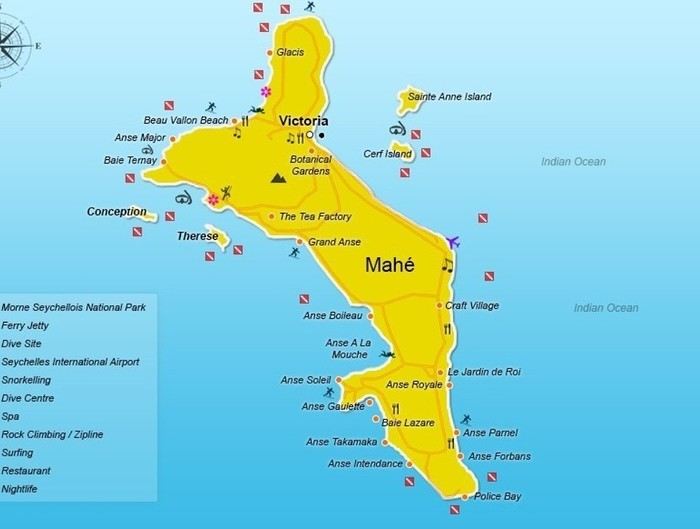
After Anse Intendance, we head to Police Bay, located at the very southern tip of Mahé. Swimming and snorkeling aren’t ideal there (lots of waves)—just for the view!
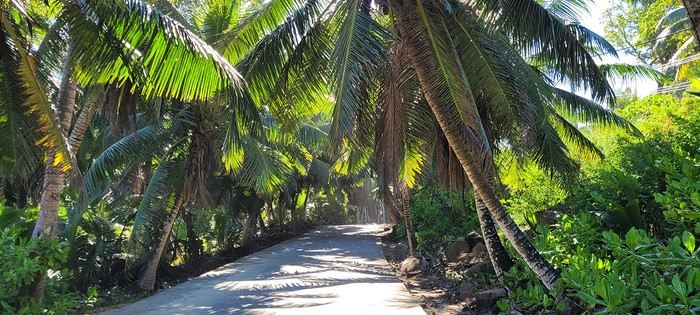
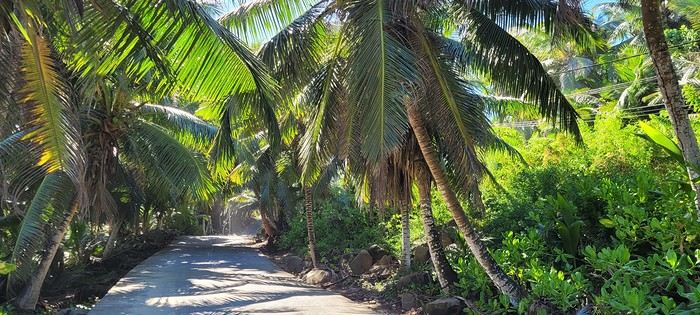
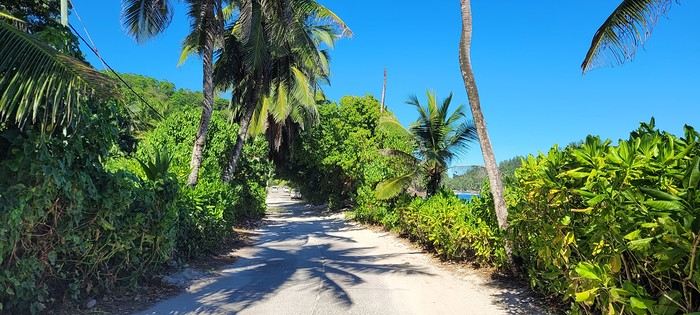
On the way back, we stopped to visit some "typical" Seychellois houses, including one of the oldest.
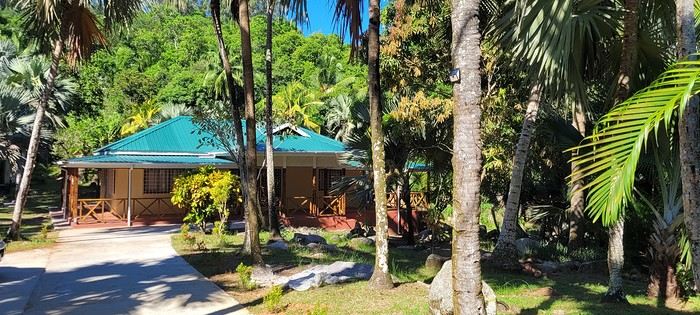
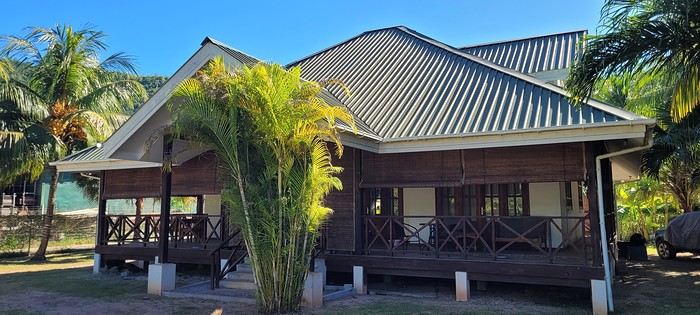
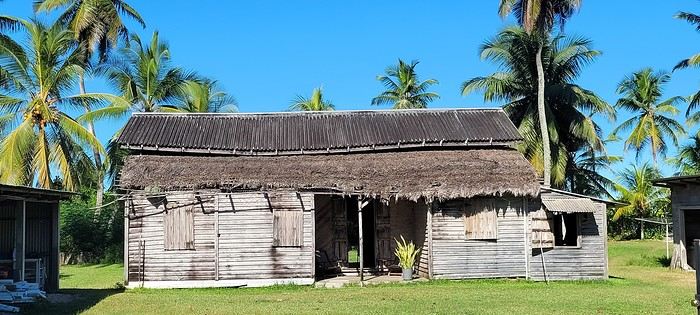
We got back to the port around 6:30 PM, with memories filling our heads.
We were really happy with this day, and our guide/driver was exceptional! We even gave him a nice tip.
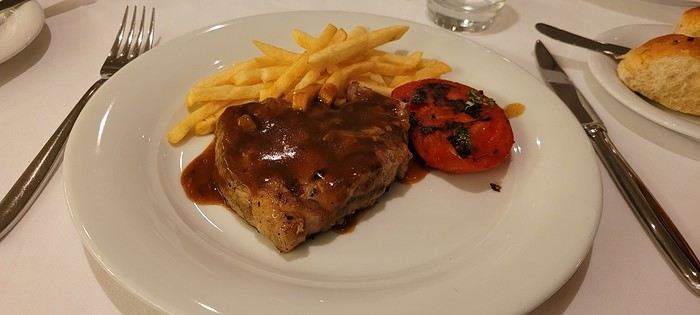
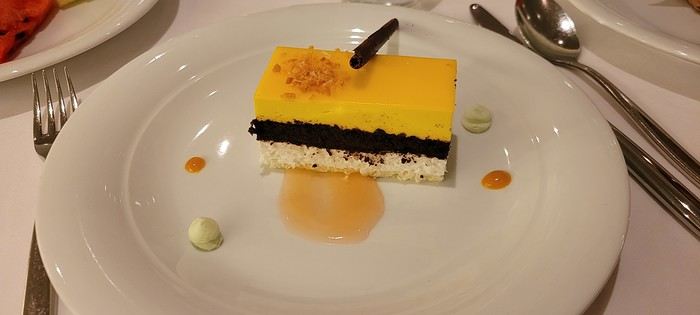
Dinner at the restaurant:
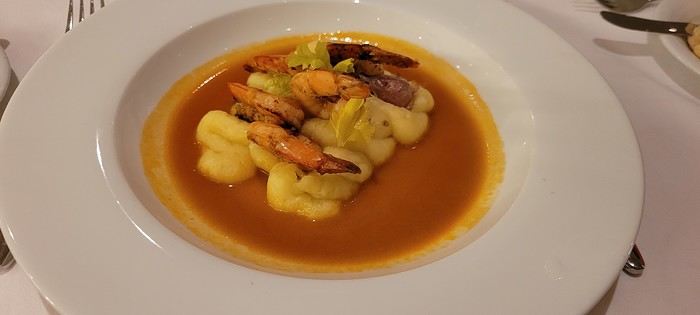
To be continued: Day at sea and Nosy Be
I hit my photo limit on the other post, so I’m forced to start a new one to continue this travel journal.
Victoria / Mahé continued:
After Anse Intendance, we head to Police Bay, located at the very southern tip of Mahé. Swimming and snorkeling aren’t ideal there (lots of waves)—just for the view!
On the way back, we stopped to visit some "typical" Seychellois houses, including one of the oldest.
We got back to the port around 6:30 PM, with memories filling our heads.
We were really happy with this day, and our guide/driver was exceptional! We even gave him a nice tip.
Dinner at the restaurant:
To be continued: Day at sea and Nosy Be
Self-transfer in Jakarta and visa requirements
Hi,
I'm flying from Hanoi with VietJet Air and have a 5h30 self-transfer in Jakarta before continuing to Doha with Qatar Airways.
With checked baggage.
My questions are:
Can I get my visa on arrival, or do I need it before departure?
And do I have enough time to get the visa, collect my bags, and check in for the next flight in 5h30?
If you've done this before, how long do you think these steps take?
Thanks so much in advance for your replies—it's pretty urgent!
Thanks so much in advance for your replies—it's pretty urgent!
Looking for someone to do a French-language tour of Reykjavik in June
Hi,
I’m looking for a tour of Reykjavik with a local from the cruise port at MSC Terminal in June for 4 people—a full city tour with explanations in French.
Thanks
France: Finding a train route with your bike – recap and updates
When you're trying to travel with your bike, SNCF sometimes tells you there's no solution, even though you could combine TGVs, TETs, and TERs.
- We used to check the Swiss CFF website https://www.sbb.ch/fr,
but it’s become useless since the "bike" option for France was removed.
- Next, we go to the Deutsche Bahn website https://www.bahn.com/fr, which has a "bike" option that combines TGVs, TETs (IC), and TERs. Then, you can either: - Buy the ticket directly on the Deutsche Bahn site, or - Note all the trains in the itinerary and, to use your discount cards, go to the SNCF website to purchase all the necessary tickets. The Deutsche Bahn site lets you adjust connection times in the "details" of an itinerary if the suggested one seems too short. I’ve found that 10 minutes is really risky—delays, crowds on the platform making it hard to move quickly, not to mention the line for the elevator and navigating an unfamiliar station. Still, it’s best to double-check that each train allows bikes.
- Now, thanks to the site "Biclous et bidouilles," check it out here:
https://biclousetbidouilles.com/un-site-en-or-pour-voyager-en-ter/
I discovered this site, which helps calculate bike-friendly routes in France:
https://www.horaires-de-trains.fr/horaires-ter.html
I gave it a quick test, but it seems limited to TERs—too bad, since the ideal is to combine all available train options.
One pitfall to avoid: always make sure you’re still on https://www.horaires-de-trains.fr/horaires-ter.html and haven’t accidentally switched to https://www.horaires-de-trains.fr/.
These days, SNCF is gradually converting all its TGVs to INOUI. Normally, they all have bike spaces, so these workarounds might not be needed much longer.
- We used to check the Swiss CFF website https://www.sbb.ch/fr,
but it’s become useless since the "bike" option for France was removed.
- Next, we go to the Deutsche Bahn website https://www.bahn.com/fr, which has a "bike" option that combines TGVs, TETs (IC), and TERs. Then, you can either: - Buy the ticket directly on the Deutsche Bahn site, or - Note all the trains in the itinerary and, to use your discount cards, go to the SNCF website to purchase all the necessary tickets. The Deutsche Bahn site lets you adjust connection times in the "details" of an itinerary if the suggested one seems too short. I’ve found that 10 minutes is really risky—delays, crowds on the platform making it hard to move quickly, not to mention the line for the elevator and navigating an unfamiliar station. Still, it’s best to double-check that each train allows bikes.
- Now, thanks to the site "Biclous et bidouilles," check it out here:
https://biclousetbidouilles.com/un-site-en-or-pour-voyager-en-ter/
I discovered this site, which helps calculate bike-friendly routes in France:
https://www.horaires-de-trains.fr/horaires-ter.html
I gave it a quick test, but it seems limited to TERs—too bad, since the ideal is to combine all available train options.
One pitfall to avoid: always make sure you’re still on https://www.horaires-de-trains.fr/horaires-ter.html and haven’t accidentally switched to https://www.horaires-de-trains.fr/.
These days, SNCF is gradually converting all its TGVs to INOUI. Normally, they all have bike spaces, so these workarounds might not be needed much longer.
Connection at Lyon Part-Dieu
Hi there
I’m traveling from Geneva to Marseille in May and only have 18 minutes to change trains in Lyon. Do you think that’s doable?
Thanks and have a great day
I’m traveling from Geneva to Marseille in May and only have 18 minutes to change trains in Lyon. Do you think that’s doable?
Thanks and have a great day
Italy, My Stress Reliever
It was the start of winter; I was freezing, and the mood wasn’t exactly joyful—Ukraine, 49.3...
So I self-medicated: a week in Italy to hear laughter and that melodic language, and of course, to immerse myself in beauty for a while.
I was looking for a destination: Florence. The choice was biased because I wanted to revisit *Primavera* and *The Birth of Venus*.
Then came the choice of airline: Vueling flies directly to Florence, but you’ve got to know how to handle Vueling—sometimes you make it to your destination, sometimes you’re left at the gate. It’s not expensive, but that’s about all it’s worth. Best to know their rules of the game. Plus, Vueling leaves from Orly, which is super easy to get to by metro.
The gods were with me that day—Vueling actually got me to Florence. On arrival, the temperature was better than forecast, and I knew the days were slightly longer in Italy (and shorter in Stockholm). And the Italian language was floating in the air...
I took the new tram that takes you to the heart of the city, near the great "cheesecake" that’s said to mark the superiority of the Renaissance over Europe’s sublime Gothic cathedrals. I walked around the big pastry and turned onto *my* street, Via dei Servi. Along the way, I stewed over my guilt for not admiring the sublime *Duomo*; I hoped no police had detected my rebellious, deviant mindset.
I’d chosen a hotel on the stunning Piazza della Santissima Annunziata—I’ll even share its name, that’s the VF spirit: it’s the Hotel Due Fontane.
And that’s the real point of this post: until Easter, you can treat yourself to a room in a very charming hotel for around 60 €, breakfast buffet included! To do this, book on Booking.com and make it clear you’ll return the next day with a new reservation at that price. You’ll have left your things in the luggage room to move into a new room in the evening. I didn’t have to play that game since the reception gave me a long-term stay at a reduced rate.
The next day, the kind barista drew a perfect, beautiful flower on my cappuccino. That man was the smile and good cheer of Italy.
Florence had more to offer, and this time I wasn’t being picky like I was with the big white pastry: I had a date with *Primavera* and Venus. Off to the Uffizi; the weather was decent, much warmer than Paris, and the girls were laughing.
Arriving at the Uffizi: had I bought a skip-the-line ticket? What for? I walked in subito and even got the winter discount rate. You’ll agree that when visiting a museum, it doesn’t matter if it’s hot or not. When I got to Botticelli’s room, I love being alone—I have the illusion of owning two of the most beautiful paintings in the world. There was one tourist there that day. We admired *Primavera* and *The Birth of Venus* without getting in each other’s way; those young women painted so long ago show such beauty and radiate such elegance, especially in their faces.
I hesitated about going to the Accademia, but David is worth a revisit. If a skip-the-line ticket is ever needed, it’s here. But no! I walked in subito! Usually, women don’t openly show their attraction, but you might hear "He’s cute" about a man. Around David, it’s amusing to see they’re not immune to the sight.
Off to the Medici Chapels; entrance subita. I felt humbled by the princes’ munificence and the master’s works.
Then it was time for a stroll—maybe a Mannerist painting at Santa Felicita (oh, miracle, it was open), or playing the game of comparing the two crucifixes, including Donatello’s, sipping a Spritz in a little bar with a view of the Ponte Vecchio, wandering Via Roma in the evening among the cheerful crowd and shops decked out for Christmas. Seeing the Church of Santa Maria del Carmine for its frescoes and the Italian Pantheon at Santa Croce (Napoleon’s first girlfriend is buried there). Italy, land of frescoes!
Every evening, until I exhausted my pasta card, I enjoyed spaghetti on *my* Via dei Servi.
The point of this post: you can visit Florence at a very low cost, without impossible queues, and without tourist pressure, in reasonably warm weather until Easter. In May, the Due Fontane charges 220 to 250 €! For the rest, I may have rambled a bit. PS: Vueling stranded me on the way back; my punishment was staying an extra day in this incredibly welcoming city.
The point of this post: you can visit Florence at a very low cost, without impossible queues, and without tourist pressure, in reasonably warm weather until Easter. In May, the Due Fontane charges 220 to 250 €! For the rest, I may have rambled a bit. PS: Vueling stranded me on the way back; my punishment was staying an extra day in this incredibly welcoming city.
Layover in Copenhagen at Ocean Quay: how to get to the Little Mermaid?
Hi everyone,
Little cruise heading north...
First stop: Copenhagen.
There’s a good chance the boat will dock at OCEAN QUAY, which is over 5 km away from the Little Mermaid!
I’m struggling to figure out how to get there by taxi, bus, or shuttle.
Thanks for your tips!
I can still walk, but 5 km through the port area...
Have a great rest of the day!
Costa Cruise Spa Access: how to book?
Hi everyone,
Can anyone give me some info about this Spa Access day? We traveled with Costa until 2017, and back then, spa access wasn’t just for a day—it was for the entire cruise if you were staying in a suite... Times change, I guess. When I check MY COSTA, under Thermal Space Access Day appointments, it’s possible to book every day, even at sea, but with payment required on the site. Do we need to book this day on board if we want to take advantage of the free day? Or do we book it on the site and the freebie is applied automatically? Are sea days included in this case? Since 2017, we’ve been traveling with MSC YC, but this time, we’re going as a family with kids and grandkids, so the YC is a bit too much of a luxury and not really suitable for 3 kids.
Thanks for any feedback!
Can anyone give me some info about this Spa Access day? We traveled with Costa until 2017, and back then, spa access wasn’t just for a day—it was for the entire cruise if you were staying in a suite... Times change, I guess. When I check MY COSTA, under Thermal Space Access Day appointments, it’s possible to book every day, even at sea, but with payment required on the site. Do we need to book this day on board if we want to take advantage of the free day? Or do we book it on the site and the freebie is applied automatically? Are sea days included in this case? Since 2017, we’ve been traveling with MSC YC, but this time, we’re going as a family with kids and grandkids, so the YC is a bit too much of a luxury and not really suitable for 3 kids.
Thanks for any feedback!
Princes' Islands or Bursa near Istanbul?
Hi there, I’ll be in Istanbul from May 8 to 17, 2025.
I’ve got one free day. I’m torn between the Princes' Islands or Bursa.... If you had to choose, where would you go???
Thanks so much for your suggestions and opinions.
Layover in Kotor
Hi everyone,
I’m going on a Costa cruise in May with a stop in Kotor.
Does anyone know if we’ll disembark by tender boats and if we can explore Kotor on our own?
Thanks for your replies!
Have a great evening