Results for "Revel+|+127"
60111 results found.
Australia 2025: Discovering the 5th Continent
Hi everyone.
Because that’s also what sparks the desire in every traveler (well, at least for me) to set foot on Australian soil: discovering a new continent.
Right now, I’ve got some time on my hands—those who follow me know that. A nasty muscle tear (which really doesn’t want to heal) is keeping me grounded for another week, so I’ve decided to open a new travel journal, recounting my recent trip from December 14, 2024, to January 12, 2025, in Australia.
The origins of this trip started last May in Crete, an island I chose for a 10-day break. It’s really lovely, by the way, but that’s not the point… It’s around this time every year that we decide on our next winter destination, and Argentina was at the top of the list—Sydney wasn’t even on the radar… I’d been looking at flights to Buenos Aires for a while, and the prices were shocking… But by the pool one lazy afternoon, scrolling on my iPhone, a promo from Geneva to Sydney caught my eye. The deal ticked two boxes on my traveler’s bucket list: a flight to Australia and a flight with Singapore Airlines, often ranked as the world’s best airline. A quick chat with the missus (well, of course!) and the decision was made: off to the land of kangaroos! Now, once you add luggage and Economy Plus, it still comes to 1600 € per person, but that’s a reasonable price. Either way, we already know what we’re in for—Australia is a budget commitment!

Thanks to 123rf for the image loan 😛
Right now, I’ve got some time on my hands—those who follow me know that. A nasty muscle tear (which really doesn’t want to heal) is keeping me grounded for another week, so I’ve decided to open a new travel journal, recounting my recent trip from December 14, 2024, to January 12, 2025, in Australia.
The origins of this trip started last May in Crete, an island I chose for a 10-day break. It’s really lovely, by the way, but that’s not the point… It’s around this time every year that we decide on our next winter destination, and Argentina was at the top of the list—Sydney wasn’t even on the radar… I’d been looking at flights to Buenos Aires for a while, and the prices were shocking… But by the pool one lazy afternoon, scrolling on my iPhone, a promo from Geneva to Sydney caught my eye. The deal ticked two boxes on my traveler’s bucket list: a flight to Australia and a flight with Singapore Airlines, often ranked as the world’s best airline. A quick chat with the missus (well, of course!) and the decision was made: off to the land of kangaroos! Now, once you add luggage and Economy Plus, it still comes to 1600 € per person, but that’s a reasonable price. Either way, we already know what we’re in for—Australia is a budget commitment!
Thanks to 123rf for the image loan 😛
Once Upon a Time in Bavani...
Imagination or reality, fiction or true story.
Everything blends together, and if the characters really existed, if their story is partly true, I freely transcribed what Surya told me in her English as precarious as mine.
Have I already posted this on vf? I can't find it. Maybe on the small forum Wapiti created to continue our wild stories that went on for pages and pages and no longer pleased anyone on vf.
No matter.
I heard from Bavani—life is crazy, isn’t it?
That’s why I’m bringing her story back.
I’m settling into the -miscellaneous- section; I like being away from the noise.
When the house is overrun with running feet, laughter, arguments, and music, I go to the barn turned into a honey house. It’s cool, it smells of wax and honey, and among the disorder of hive frames, supers, and stacked jars, I refocus.
Here, in -miscellaneous-, no one rants. I can let my fingers glide over the keyboard in peace.
Alright, enough digressions. At the end of the notebook, I’ll tell you what became of this little girl.
Bavani
“Bavani, stop daydreaming, work.”
I’m not daydreaming, I’m thinking.
My teacher is Surya, and she asked us to write a story. She doesn’t like us—I heard her talking to the teacher in the little kids’ class. She said: I stay here because the white people pay better than in government schools, but it’s a shame to teach gypsies. Filthy street urchins.
I’m not a gypsy, I’m a Narikuravar. Grandmother told me: you’re going to this school, you’ll learn English well, and when you come back, you’ll be richer than the others because you’ll beg better from the tourists. Grandmother makes necklaces and sells them, but often she sells nothing at all.
There are lots of tourists in my town, Tiruvannamalai. Before, I lived behind the temple with dad and mom. We had our spot and were happy, especially when mom cooked rice on the brazier. Then we’d lie down, and I’d press my back against mom’s huge belly, and it would move inside. One day, mom told me: stay here, I’ll be back very soon. I waited a long time, and neither dad nor mom came back. After a long time, dad came, and we went to Salem to my grandmother, who’s dad’s mom.
I asked: where’s mom? “Shut up, two was too many.” “Two what? He didn’t say.”
So I went to Salem to grandmother’s hut, and there was no rice, and Muriga came to get me with his minibus. Now I live here. We eat several times a day—yellow rice, then white rice to digest, and eggs and bananas.
And we have to study.
Papom *
.../...
Papom: in common language, it’s the equivalent of -see ya-
No matter.
I heard from Bavani—life is crazy, isn’t it?
That’s why I’m bringing her story back.
I’m settling into the -miscellaneous- section; I like being away from the noise.
When the house is overrun with running feet, laughter, arguments, and music, I go to the barn turned into a honey house. It’s cool, it smells of wax and honey, and among the disorder of hive frames, supers, and stacked jars, I refocus.
Here, in -miscellaneous-, no one rants. I can let my fingers glide over the keyboard in peace.
Alright, enough digressions. At the end of the notebook, I’ll tell you what became of this little girl.
Bavani
“Bavani, stop daydreaming, work.”
I’m not daydreaming, I’m thinking.
My teacher is Surya, and she asked us to write a story. She doesn’t like us—I heard her talking to the teacher in the little kids’ class. She said: I stay here because the white people pay better than in government schools, but it’s a shame to teach gypsies. Filthy street urchins.
I’m not a gypsy, I’m a Narikuravar. Grandmother told me: you’re going to this school, you’ll learn English well, and when you come back, you’ll be richer than the others because you’ll beg better from the tourists. Grandmother makes necklaces and sells them, but often she sells nothing at all.
There are lots of tourists in my town, Tiruvannamalai. Before, I lived behind the temple with dad and mom. We had our spot and were happy, especially when mom cooked rice on the brazier. Then we’d lie down, and I’d press my back against mom’s huge belly, and it would move inside. One day, mom told me: stay here, I’ll be back very soon. I waited a long time, and neither dad nor mom came back. After a long time, dad came, and we went to Salem to my grandmother, who’s dad’s mom.
I asked: where’s mom? “Shut up, two was too many.” “Two what? He didn’t say.”
So I went to Salem to grandmother’s hut, and there was no rice, and Muriga came to get me with his minibus. Now I live here. We eat several times a day—yellow rice, then white rice to digest, and eggs and bananas.
And we have to study.
Papom *
.../...
Papom: in common language, it’s the equivalent of -see ya-
Review of local safari agency Miles to Smile
Hi everyone, this is my first time posting and I’m reaching out for your help,
For our honeymoon, I’d like to go on a safari in Tanzania and I’ve chosen Miles to Smile.
Has anyone already traveled with this local agency?
My exchange with Julie was great—she took the time to talk with me for an hour on the phone to offer a tailor-made safari.
However, she’s asking me to pay 50% of the trip, or even the full amount. She mentioned paying fewer fees by using Wise.
Do you know this agency? What do you think? I’m really afraid it might be a scam and that my dream could turn into a nightmare.
Thanks for your feedback and kindness.
Best regards,
My exchange with Julie was great—she took the time to talk with me for an hour on the phone to offer a tailor-made safari.
However, she’s asking me to pay 50% of the trip, or even the full amount. She mentioned paying fewer fees by using Wise.
Do you know this agency? What do you think? I’m really afraid it might be a scam and that my dream could turn into a nightmare.
Thanks for your feedback and kindness.
Best regards,
Ideas for organized bike trips in France or Italy this summer
Hi everyone,
With summer just around the corner, I’m looking for ideas for organized bike trips in France or Italy. I’m pretty used to traveling independently, but this time I’d like to try something more structured—either in a small group or with minimal logistics (accommodations booked, luggage transport, etc.).
I’m open to different difficulty levels, as long as the setting is pleasant (countryside, seaside, well-known routes, or even a bit more off-the-beaten-path). If you’ve already tried this kind of trip or have good recommendations for agencies or providers, I’d love to hear them!
Thanks in advance for your tips! 🚴♂️☀️
With summer just around the corner, I’m looking for ideas for organized bike trips in France or Italy. I’m pretty used to traveling independently, but this time I’d like to try something more structured—either in a small group or with minimal logistics (accommodations booked, luggage transport, etc.).
I’m open to different difficulty levels, as long as the setting is pleasant (countryside, seaside, well-known routes, or even a bit more off-the-beaten-path). If you’ve already tried this kind of trip or have good recommendations for agencies or providers, I’d love to hear them!
Thanks in advance for your tips! 🚴♂️☀️
Back from Cambodia – between the magic of Angkor and the serenity of Tonlé Sap
Hello everyone!
I just got back from a little trip to Cambodia, and I really wanted to share this experience with you—because honestly, it was wow from start to finish. I set my bags down in Siem Reap, and even though I knew the temples would be amazing… I wasn’t expecting that much beauty.
Angkor Wat, of course, is THE classic, and you quickly understand why. I went super early in the morning to see the sunrise (yes, 4:30 AM wake-up, and no complaining 😊), and I don’t regret a second of it: that soft light, the silhouettes of the towers in the mist… you feel so small. I also loved Bayon, with its mysterious faces, and Ta Prohm, overrun by giant roots—guaranteed Tomb Raider vibes, but without the crowds of Lara Croft.
What I found amazing is that beyond the big temples, there are plenty of quieter, almost forgotten spots where you can sit, listen to the birds, and just soak in the moment. It was hot (really hot!), so I didn’t hesitate to take breaks in the shade with a nice cold mango juice.
For nature, I took a little trip to Tonlé Sap Lake. Very different, more raw, but super interesting. The floating villages are surprising—it makes you think about life at the rhythm of the water, and I was lucky enough to chat a bit with a local thanks to my guide. Authentic, simple, and touching. And then those kids rowing like pros in plastic boats… respect.
In short, this trip did me so much good. Landscapes that filled my eyes, sincere smiles, and that feeling of having brushed against something bigger, something older. Cambodia—I’m not really leaving it behind; I’m bringing a little piece of it with me.
If you’re hesitating about going: just go for it! And if you have any practical questions, I’d be happy to chat 😊
Review of our first experience with CFC
Hi there,
By sheer chance, a family housewarming in Brussels gave us the opportunity to depart from Zeebrugge for our first experience with CFC, allowing us to discover ports we didn’t know (which has become rare).
After some questions before departure while browsing the forums, we discovered this company with great pleasure. Of course, luck may have played a particularly favorable part: dream weather, a sea as calm as a lake, and boarding and disembarking almost as if the ship were reserved just for us, since during our departure from Zeebrugge, only a small number of passengers were taking advantage of the unoccupied cabins from the previous cruise ending in Le Havre.
As a result, we couldn’t get a suite, but our balcony cabin was very functional, with plenty of storage and a whirlpool bath we thoroughly enjoyed.
Admittedly, the carpet was a bit worn, but it wasn’t a big deal. Having a large enough table allowed us to have breakfast in the cabin (our usual habit) in excellent conditions.
The ship, a reasonable size, was pleasant, in great condition, and had many comfortable lounges.
A large enclosed and heated space with a pool, jacuzzi, and deck chairs offered a calm atmosphere without intrusive activities (which is rare).
I won’t mention the entertainment since we barely participated, but I think there was plenty of choice, including a "special bridge" activity.
The restaurant had a lovely setting, with quick service and particularly attentive staff, reminding us of cruises from the past.
The food was good quality and well-presented, though portions were quite small—something big eaters might regret.
We loved the charm of an old-fashioned theater with comfortable seats and a table for drinks.
The shows were fairly high quality, though opinions may vary. They catered mainly to a French-speaking audience, which is quite rare, and featured a live orchestra.
The excursions seemed reasonably priced for what they offered, but we didn’t participate since we prefer organizing things ourselves.
To sum up, we were pleasantly surprised by this "old little ship" with a mostly French-speaking, very attentive staff, all in a great atmosphere.
Exploring the rice terraces of northern Vietnam: what transport options?
Hi everyone,
I’ve got a big project in northern Vietnam—discovering the most beautiful rice terraces before the harvest...
I’m planning to leave around September 15th until October 15th, then spend 15 days exploring the two bays, Lan Ha and Ha Long. In total, 45 days without a visa...
I’m traveling solo and very independent.
But is it possible to do this kind of trip using local trains and buses?
My plan is to leave Hanoi for Nghia Lo (2 days), then Mu Cang Chai (4 days), Sapa (4 days), Bac Ha (2 days), Ha Giang... Hoang Su Phi, then do the Meo Vac loop, Dong Van, etc., to see those stunning karst peaks before heading back to Hanoi.
In my research, I haven’t found any buses or vans going from Hanoi to Nghia Lo, even though it’s super popular for its rice terrace landscapes....
I don’t want a daily driver, but I’m thinking I could use moto-taxis to get around locally once I’m there....
What do you think?
These rice terraces are a dream for me, along with the markets and all the different ethnic groups, not to mention those spectacular rocky peaks...
Is the itinerary too ambitious? I’ve got time on my side.
Do you have any solutions? I’ve browsed the forum a lot, but the discussions are 5 or 6 years old, and I think things have changed since then.
Thanks for your help planning this adventure!
Tasting the World Together
Calm, composed, reflective, dreamy, intuitive, joyful—I feel like (especially in winter) colors and warm seas, shared moments to savor the soul of the world. Why not also the rest of the time in Europe, France, Italy, and other regions of the world? For example, to bathe in gorges with clear waters, marvel at landscapes, taste the harmony of a village, a city (Florence…), a culture…
Currently, I’m finishing writing a novel. I’m also looking for partners for the "Human Source" project I’m developing. It’s about collecting and sharing stories of human transformations, moments of awareness, and offering tools to feel guided through these changes. I also love speaking English.
Let’s chat a bit here, then on WhatsApp or by phone, and then meet somewhere in France for 1 or 2 days. If we click, we can organize a short 4- to 5-day trip somewhere not too far, and maybe then continue on to bigger travels. Interests: - Writing, Reading, Songwriting, Awareness, Dream Symbolism, Wonder, Gentle Joy, Sense of Beauty, English, Various topics on human knowledge, Taking the time to live things fully, Sea, Sun
** I’m not into trekking or sports, but more into leisurely walks, taking my time, and peaceful discovery**
Currently, I’m finishing writing a novel. I’m also looking for partners for the "Human Source" project I’m developing. It’s about collecting and sharing stories of human transformations, moments of awareness, and offering tools to feel guided through these changes. I also love speaking English.
Let’s chat a bit here, then on WhatsApp or by phone, and then meet somewhere in France for 1 or 2 days. If we click, we can organize a short 4- to 5-day trip somewhere not too far, and maybe then continue on to bigger travels. Interests: - Writing, Reading, Songwriting, Awareness, Dream Symbolism, Wonder, Gentle Joy, Sense of Beauty, English, Various topics on human knowledge, Taking the time to live things fully, Sea, Sun
** I’m not into trekking or sports, but more into leisurely walks, taking my time, and peaceful discovery**
E-cigarettes in Thailand: Is it risky to bring one through customs?
Hey everyone!
Apparently, e-cigarettes are banned in Thailand.
But... can you still get through customs with one in your suitcase, just to vape indoors at your hotel or accommodation?
Thanks
AI, the Holy Grail of Travel and Travel Journals?
Three of our grandchildren came to spend the last weekend of the holidays at our house.
With her driver’s license just in hand, the oldest took her sister and a cousin along.
I was talking about VoyageForum, and the conversation turned to AI, which finds writing travel journals a breeze—churning out amazing ads for this or that country and even nudging tourists to visit one place over another.
Jules: "It’s crazy, you can plan and organize everything, then just add your photos and the AI’s text, and boom—you’ve got something great." Héloïse: "What a cheat for yourself and for others." (She’s so wise!) Gaïané: "Ugh, no more surprises. It even picks the restaurants—so lame."
I had this idea to stay on the theme of travel journals:
I found an excerpt from a book (I’ll let you guess the title and author—of course, the kids figured it out in two seconds with their phones), then I wrote my own version, and finally, the AI generated its own using a few keywords.
Here they are:
"We walked at dusk through the thick, dark forest. Sometimes, a clearing would reveal a dreamlike landscape. A magical world, far from humans. A world of frozen waterfalls, stiff fir trees, and sharp peaks slicing through the blinding whiteness of the air.
We gazed, dazzled, at the spectacle, imagining we’d left the human world behind and joined that of the spirits."
"For days, we walked through the half-darkness of dense, untouched forests, then suddenly, a clearing would unveil landscapes you only see in dreams. Sharp peaks piercing the sky, icy torrents, giant waterfalls—an entire fantastical world, blindingly white, rising above the dark line traced by the giant fir trees. We stared at this extraordinary sight, speechless, awestruck, ready to believe we’d reached the limits of the human world and stood at the threshold of the spirits’ realm."
"We walked through the mountain, wild and unyielding, its sharp peaks tearing the sky like honed blades. Giant waterfalls roared and foamed, as if the earth’s hidden forces were pouring out. Higher still, the blinding whiteness belonged to the world of spirits—capricious beings whispering to lost travelers. Faced with this silent vastness, we felt tiny, uninvited guests meditating on the invisible that dwells in these forbidden peaks."
And, amazingly, they unanimously agreed that the author’s excerpt was a thousand times more poetic. Héloïse, my history buff, said: "Nothing replaces the real travel experience." Jules said: "Yeah, but it does the job. Even if the excerpt is cool." And our oldest added: "It makes you want to go there—not at all like the other two versions. Sorry, Mamido."
And then, miracle—Jules asks: "Do you have the book? Can I borrow it?"
I’m so relieved—young people aren’t completely devoured by technology yet. And the forum will keep its charm and usefulness for a long time. Phew!
You agree, right?
Jules: "It’s crazy, you can plan and organize everything, then just add your photos and the AI’s text, and boom—you’ve got something great." Héloïse: "What a cheat for yourself and for others." (She’s so wise!) Gaïané: "Ugh, no more surprises. It even picks the restaurants—so lame."
I had this idea to stay on the theme of travel journals:
I found an excerpt from a book (I’ll let you guess the title and author—of course, the kids figured it out in two seconds with their phones), then I wrote my own version, and finally, the AI generated its own using a few keywords.
Here they are:
"We walked at dusk through the thick, dark forest. Sometimes, a clearing would reveal a dreamlike landscape. A magical world, far from humans. A world of frozen waterfalls, stiff fir trees, and sharp peaks slicing through the blinding whiteness of the air.
We gazed, dazzled, at the spectacle, imagining we’d left the human world behind and joined that of the spirits."
"For days, we walked through the half-darkness of dense, untouched forests, then suddenly, a clearing would unveil landscapes you only see in dreams. Sharp peaks piercing the sky, icy torrents, giant waterfalls—an entire fantastical world, blindingly white, rising above the dark line traced by the giant fir trees. We stared at this extraordinary sight, speechless, awestruck, ready to believe we’d reached the limits of the human world and stood at the threshold of the spirits’ realm."
"We walked through the mountain, wild and unyielding, its sharp peaks tearing the sky like honed blades. Giant waterfalls roared and foamed, as if the earth’s hidden forces were pouring out. Higher still, the blinding whiteness belonged to the world of spirits—capricious beings whispering to lost travelers. Faced with this silent vastness, we felt tiny, uninvited guests meditating on the invisible that dwells in these forbidden peaks."
And, amazingly, they unanimously agreed that the author’s excerpt was a thousand times more poetic. Héloïse, my history buff, said: "Nothing replaces the real travel experience." Jules said: "Yeah, but it does the job. Even if the excerpt is cool." And our oldest added: "It makes you want to go there—not at all like the other two versions. Sorry, Mamido."
And then, miracle—Jules asks: "Do you have the book? Can I borrow it?"
I’m so relieved—young people aren’t completely devoured by technology yet. And the forum will keep its charm and usefulness for a long time. Phew!
You agree, right?
Start of the maple water harvest in Quebec
Hi there,
Maybe you already use it in your recipes? Just to let you know that here in Quebec, the maple water harvest has started in several regions. The next step will be to boil this water to turn it into syrup. A sweet nectar, it works well in salad dressings, desserts, with salmon, and more. 😋
If you ever pass through here, don’t miss the chance to visit one of our wonderful sugar shacks. You can taste maple taffy on snow, among other things. 😄
Cheers! 👋
Maybe you already use it in your recipes? Just to let you know that here in Quebec, the maple water harvest has started in several regions. The next step will be to boil this water to turn it into syrup. A sweet nectar, it works well in salad dressings, desserts, with salmon, and more. 😋
If you ever pass through here, don’t miss the chance to visit one of our wonderful sugar shacks. You can taste maple taffy on snow, among other things. 😄
Cheers! 👋
Traveling Through Painting
For those with an artistic soul, I invite you to a journey through painting to discover my inspirations as a traveling artist.
Traveling through painting
Travel sketches
The cradle of humanity, Africa is also the continent where I was born. My childhood was lulled by the call of the muezzin and the waves of the Atlantic Ocean. The colors and light of Morocco remain etched in my heart forever.
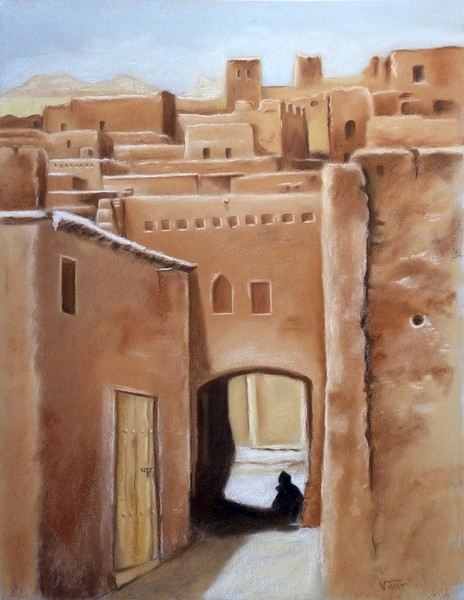 As soon as I had the chance, I crossed the desert to meet Black Africa, whose imprint is very present in the Maghreb, a legacy of caravans and trans-Saharan migrations.
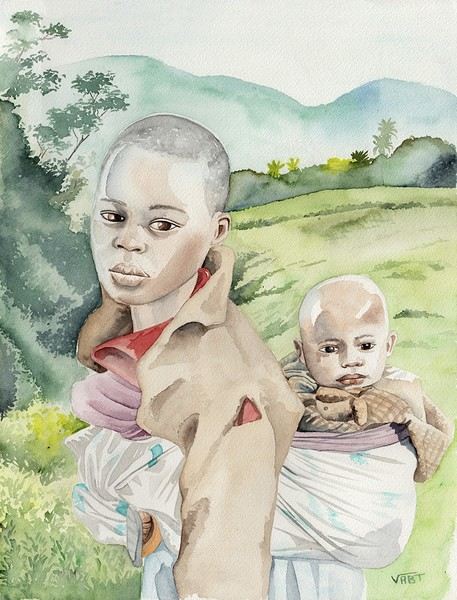
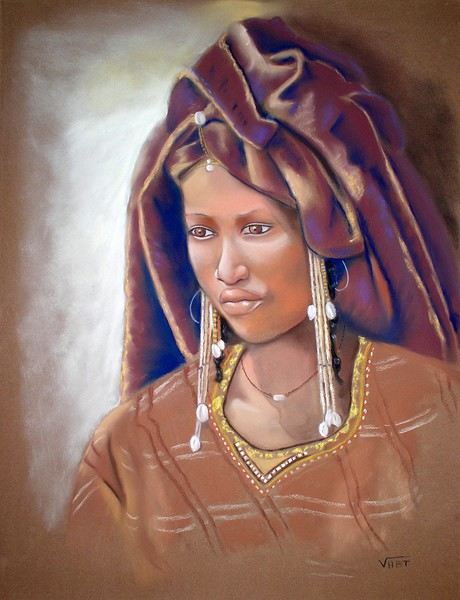 My steps first took me to West Africa, exuberant, rich in encounters and sharing. Later, East Africa allowed me to glimpse another facet of this multifaceted continent. The beauty of the Ethiopians, whose country lies at the heart of human history, the complexity of Malagasy culture—a mix of the different peoples who have landed on the island—the Rwandan people, wounded but capable of resilience...
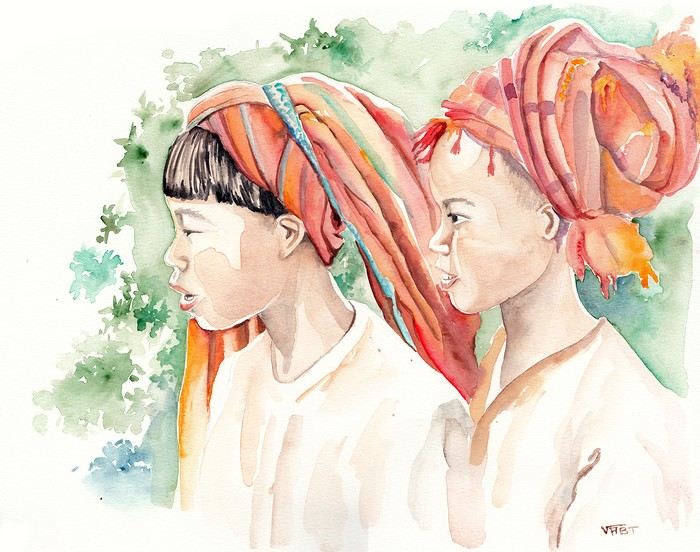

It was through India that I discovered Asia. Nourished by teenage readings about the hippie trail, I had always dreamed of one day exploring this mysterious country. My first solo travel experience was in Rajasthan, trekking on the roof of the world. I only returned when my son was a teenager, not wanting to expose him too young to the chaos of this disorienting country.
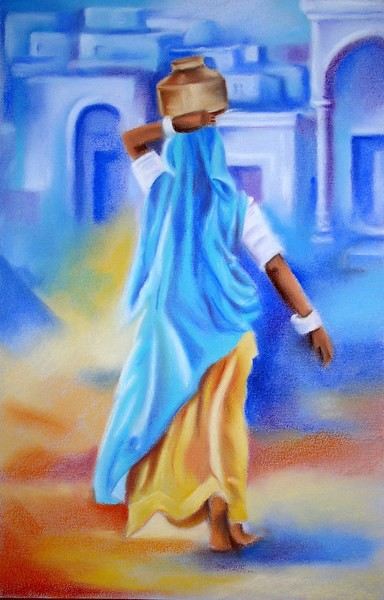
In the meantime, we traveled together through Vietnam, then Thailand and Laos, and finally Myanmar. Later, I returned alone to Cambodia and more recently to Indonesia. Safe and budget-friendly destinations, the routes of Southeast Asia also have the downside of becoming increasingly crowded.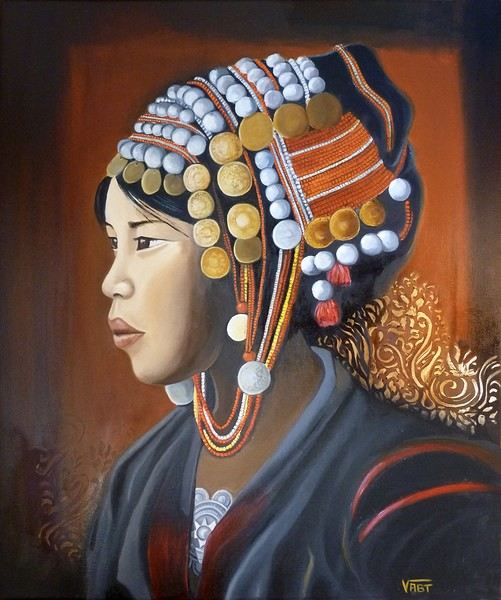
But one can't help being enchanted by the architectural heritage, the temples, the landscapes, and the ever-present spirituality. When you take the time, Asia gradually reveals itself.
The cradle of humanity, Africa is also the continent where I was born. My childhood was lulled by the call of the muezzin and the waves of the Atlantic Ocean. The colors and light of Morocco remain etched in my heart forever.
As soon as I had the chance, I crossed the desert to meet Black Africa, whose imprint is very present in the Maghreb, a legacy of caravans and trans-Saharan migrations.
My steps first took me to West Africa, exuberant, rich in encounters and sharing. Later, East Africa allowed me to glimpse another facet of this multifaceted continent. The beauty of the Ethiopians, whose country lies at the heart of human history, the complexity of Malagasy culture—a mix of the different peoples who have landed on the island—the Rwandan people, wounded but capable of resilience...
It was through India that I discovered Asia. Nourished by teenage readings about the hippie trail, I had always dreamed of one day exploring this mysterious country. My first solo travel experience was in Rajasthan, trekking on the roof of the world. I only returned when my son was a teenager, not wanting to expose him too young to the chaos of this disorienting country.
In the meantime, we traveled together through Vietnam, then Thailand and Laos, and finally Myanmar. Later, I returned alone to Cambodia and more recently to Indonesia. Safe and budget-friendly destinations, the routes of Southeast Asia also have the downside of becoming increasingly crowded.
But one can't help being enchanted by the architectural heritage, the temples, the landscapes, and the ever-present spirituality. When you take the time, Asia gradually reveals itself.
Travel companion for a catamaran cruise in the French West Indies – April/May 2025
LOOKING for a 2nd traveler for a 10-day cruise on a very comfortable catamaran.
Route from Martinique (Le Marin) to Guadeloupe (west coast + Les Saintes and Marie-Galante).
+ 4-night hotel extension in Les Trois-Îlets, Martinique.
FROM APRIL 26 TO MAY 10, 2025.
Contact me via email for more details.
I’ve already done this trip—it’s amazing!
Short trip to Mauritania (one week) then Morocco
Short stay in Mauritania (one week), then back to Morocco (Dakhla) for a few days before heading to Agadir and flying back to Brussels. Looking for great spots and sights to visit, as well as nice, moderately priced accommodation. What do you recommend? Thanks in advance
Two Quebecers Attempting Mount Meru
In 2015, for my 50th birthday, my daughter and I went to Kenya and Tanzania for a safari. Ten years later, for my 60th, a new African adventure: returning to Tanzania, this time to attempt the ascent of Mount Meru.
After watching documentaries and films about Everest climbers, I’ve always been drawn to the idea of experiencing something like that. I’m impressed by those who risk their lives just to chase their dreams and push their limits (my partner would say they’re crazy). I’ve never pretended I could climb the roof of the world. My sights were set on Kilimanjaro instead. But when my daughter planned our adventure, she lowered my ambitions by a few meters by choosing Meru—and I get it. We’re both very active, but we’re not seasoned athletes. And our mountains in Quebec, as beautiful as they are, don’t offer the chance to climb very high to test our endurance against the lack of oxygen.
So, to prepare physically, I worked my 60-year-old legs daily by walking and climbing small hills near home. As for altitude sickness, I’ll have to trust my system and my old lungs, but it still stresses me out. The departure is approaching, and there’s no turning back—I tell myself that at worst, I’ll have tried.
February 2nd, departure day. We leave Montreal on an Air France flight as scheduled. Luckily, because we were worried, our flight times were delayed, and our layover at CDG will be tight. After a 6.5-hour flight to Paris, no messing around—we have just enough time to sit for about thirty minutes before boarding another 8.5-hour flight to Zanzibar, still with Air France. In Zanzibar, we stay on the plane while pale-faced passengers disembark, replaced by sun-kissed travelers (it’s sunny and warm in Zanzibar). We then take a short flight to Kilimanjaro Airport, our final destination. Exhausted but happy to step off the big metal bird, a driver from the agency we chose (Soaring Flamingo) waits to take us to our hotel, the Tulia in Arusha. It’s 2 AM when we finally collapse onto the mattress. Tomorrow, we’ll spend the day recovering from the sleepless flight, relaxing by a murky pool in a beautiful flower-filled courtyard, surrounded by palm trees and the everyday sounds of Africa. At that moment, I feel privileged to share this experience with my daughter, and I think about the mountain that awaits us.
To be continued...
After watching documentaries and films about Everest climbers, I’ve always been drawn to the idea of experiencing something like that. I’m impressed by those who risk their lives just to chase their dreams and push their limits (my partner would say they’re crazy). I’ve never pretended I could climb the roof of the world. My sights were set on Kilimanjaro instead. But when my daughter planned our adventure, she lowered my ambitions by a few meters by choosing Meru—and I get it. We’re both very active, but we’re not seasoned athletes. And our mountains in Quebec, as beautiful as they are, don’t offer the chance to climb very high to test our endurance against the lack of oxygen.
So, to prepare physically, I worked my 60-year-old legs daily by walking and climbing small hills near home. As for altitude sickness, I’ll have to trust my system and my old lungs, but it still stresses me out. The departure is approaching, and there’s no turning back—I tell myself that at worst, I’ll have tried.
February 2nd, departure day. We leave Montreal on an Air France flight as scheduled. Luckily, because we were worried, our flight times were delayed, and our layover at CDG will be tight. After a 6.5-hour flight to Paris, no messing around—we have just enough time to sit for about thirty minutes before boarding another 8.5-hour flight to Zanzibar, still with Air France. In Zanzibar, we stay on the plane while pale-faced passengers disembark, replaced by sun-kissed travelers (it’s sunny and warm in Zanzibar). We then take a short flight to Kilimanjaro Airport, our final destination. Exhausted but happy to step off the big metal bird, a driver from the agency we chose (Soaring Flamingo) waits to take us to our hotel, the Tulia in Arusha. It’s 2 AM when we finally collapse onto the mattress. Tomorrow, we’ll spend the day recovering from the sleepless flight, relaxing by a murky pool in a beautiful flower-filled courtyard, surrounded by palm trees and the everyday sounds of Africa. At that moment, I feel privileged to share this experience with my daughter, and I think about the mountain that awaits us.
To be continued...
Have you considered Reunion Island as a destination?
Reunion Island, a French island located in the Indian Ocean, is characterized by remarkable geographical and cultural diversity. This island offers an immersive experience that harmoniously blends wild nature and human heritage, between active volcanoes, mountainous cirques, impressive waterfalls, and charming villages. This report explores the must-see spots, from the lunar landscapes of Piton de la Fournaise to the mountainous trails of the Mafate cirque, not forgetting the natural pools and tropical gardens. Each section highlights a distinct aspect of this vibrant island, supported by geological and historical information, as well as accounts from those who have visited.
Piton de la Fournaise, which reaches a height of 2,632 meters, is one of the most active volcanoes on our planet. Its frequent eruptions constantly shape the landscape, offering a natural spectacle where burning lava meets the ocean. The trail leading to the Dolomieu crater, though difficult to access, is open to hikers and rewards them with a panorama of vast expanses of solidified lava and volcanic gas emissions. It’s usually best to visit at this time of day to avoid clouds and enjoy the low light that enhances the lunar reliefs.
Volcanic activity has also given rise to unique structures, such as the lava tunnels of Grand Brûlé, where tourists can walk along cooled lava flows. For geology enthusiasts, the site of Cassé de la Rivière de l'Est reveals incredible basaltic organ pipes, testifying to ancient eruptions.
Despite its inactivity, Piton des Neiges (3,071 m) remains the island’s highest peak. Its ascent, via the GR R2 trail, passes through virgin forests before reaching rocky landscapes where sunrise offers a 360° panoramic view of the three cirques. This extinct volcano symbolizes Reunion Island’s geological history, characterized by successive collapses that gave birth to the surrounding cirques.
A UNESCO World Heritage site, the Salazie cirque charms with its lush greenery and hamlets clinging to cliffs. Hell-Bourg, listed among France’s most beautiful villages, delights with its brightly colored Creole houses and picturesque cobblestone streets. The trek to Voile de la Mariée, a famous waterfall, winds through bamboo groves and natural pools perfect for a swim.
Mafate, a preserved haven of tranquility, is accessible only on foot or by helicopter. Places like La Nouvelle or Marla, small villages called "îlets," offer a glimpse into traditional life on Reunion Island. The GR R1 trail, which circles Piton des Neiges, immerses hikers in breathtaking landscapes, alternating between rocky ridges and narrow valleys.
Known for its lentils and wines, Cilaos combines culinary delights with stunning scenery. The healing properties of the thermal springs at Bras-Rouge are highlighted by the trails leading to them, which also offer panoramas like the Col du Taïbit, a privileged access point to Mafate.
This unique spot features pebble beaches, waterfalls by the sea, and a palm forest. Picnickers enjoy its peaceful atmosphere, while local fishermen maintain ancient traditions. Nearby, the Garden of Perfumes and Spices cultivates vanilla, cloves, and turmeric, offering an olfactory experience at the heart of Reunionese agriculture.
Bassin Boeuf, famous for its turquoise waters, is a popular swimming spot, framed by volcanic formations. Further south, the Langevin River creates a series of waterfalls and natural pools, including the famous Trou de Fer, a 300-meter-deep canyon where water cascades in a shimmering curtain.
The island’s capital blends colonial heritage with modernity. The Léon Dierx Museum showcases modern art, while the Grand Marché draws visitors with its spices and local crafts. The Barachois promenade, along the sea, evokes the city’s maritime past with its 18th-century cannons.
The Domaine de Villèle, once a colonial plantation, now houses a museum dedicated to the history of slavery and a geranium distillery. The Chapelle Pointue, with its neo-Gothic style, offers a striking contrast to the brightly colored Tamil temples surrounding it.
The GR R1 and R2 trails are popular with experienced hikers, but more accessible routes like the Piton Maido (2,200 m) are suitable for beginners. The latter offers an unparalleled view of the Mafate cirque at dawn.
The coast of Saint-Gilles offers activities like diving, surfing, and paddleboarding, while ULM flights provide an impressive aerial view of Piton de la Fournaise.
Reunion Island presents itself as a microcosm where every landscape tells a story—geological, cultural, or human. Between the fury of volcanoes and the calm of cirques, between the bustle of markets and the tranquility of natural pools, this destination offers a diverse experience. Travelers are encouraged to mix their activities: morning hikes, cultural visits during the day, and moments of relaxation at dusk. Preserving these wonders relies on responsible tourism, respectful of fragile ecosystems and local communities.
Piton de la Fournaise, which reaches a height of 2,632 meters, is one of the most active volcanoes on our planet. Its frequent eruptions constantly shape the landscape, offering a natural spectacle where burning lava meets the ocean. The trail leading to the Dolomieu crater, though difficult to access, is open to hikers and rewards them with a panorama of vast expanses of solidified lava and volcanic gas emissions. It’s usually best to visit at this time of day to avoid clouds and enjoy the low light that enhances the lunar reliefs.
Volcanic activity has also given rise to unique structures, such as the lava tunnels of Grand Brûlé, where tourists can walk along cooled lava flows. For geology enthusiasts, the site of Cassé de la Rivière de l'Est reveals incredible basaltic organ pipes, testifying to ancient eruptions.
Despite its inactivity, Piton des Neiges (3,071 m) remains the island’s highest peak. Its ascent, via the GR R2 trail, passes through virgin forests before reaching rocky landscapes where sunrise offers a 360° panoramic view of the three cirques. This extinct volcano symbolizes Reunion Island’s geological history, characterized by successive collapses that gave birth to the surrounding cirques.
A UNESCO World Heritage site, the Salazie cirque charms with its lush greenery and hamlets clinging to cliffs. Hell-Bourg, listed among France’s most beautiful villages, delights with its brightly colored Creole houses and picturesque cobblestone streets. The trek to Voile de la Mariée, a famous waterfall, winds through bamboo groves and natural pools perfect for a swim.
Mafate, a preserved haven of tranquility, is accessible only on foot or by helicopter. Places like La Nouvelle or Marla, small villages called "îlets," offer a glimpse into traditional life on Reunion Island. The GR R1 trail, which circles Piton des Neiges, immerses hikers in breathtaking landscapes, alternating between rocky ridges and narrow valleys.
Known for its lentils and wines, Cilaos combines culinary delights with stunning scenery. The healing properties of the thermal springs at Bras-Rouge are highlighted by the trails leading to them, which also offer panoramas like the Col du Taïbit, a privileged access point to Mafate.
This unique spot features pebble beaches, waterfalls by the sea, and a palm forest. Picnickers enjoy its peaceful atmosphere, while local fishermen maintain ancient traditions. Nearby, the Garden of Perfumes and Spices cultivates vanilla, cloves, and turmeric, offering an olfactory experience at the heart of Reunionese agriculture.
Bassin Boeuf, famous for its turquoise waters, is a popular swimming spot, framed by volcanic formations. Further south, the Langevin River creates a series of waterfalls and natural pools, including the famous Trou de Fer, a 300-meter-deep canyon where water cascades in a shimmering curtain.
The island’s capital blends colonial heritage with modernity. The Léon Dierx Museum showcases modern art, while the Grand Marché draws visitors with its spices and local crafts. The Barachois promenade, along the sea, evokes the city’s maritime past with its 18th-century cannons.
The Domaine de Villèle, once a colonial plantation, now houses a museum dedicated to the history of slavery and a geranium distillery. The Chapelle Pointue, with its neo-Gothic style, offers a striking contrast to the brightly colored Tamil temples surrounding it.
The GR R1 and R2 trails are popular with experienced hikers, but more accessible routes like the Piton Maido (2,200 m) are suitable for beginners. The latter offers an unparalleled view of the Mafate cirque at dawn.
The coast of Saint-Gilles offers activities like diving, surfing, and paddleboarding, while ULM flights provide an impressive aerial view of Piton de la Fournaise.
Reunion Island presents itself as a microcosm where every landscape tells a story—geological, cultural, or human. Between the fury of volcanoes and the calm of cirques, between the bustle of markets and the tranquility of natural pools, this destination offers a diverse experience. Travelers are encouraged to mix their activities: morning hikes, cultural visits during the day, and moments of relaxation at dusk. Preserving these wonders relies on responsible tourism, respectful of fragile ecosystems and local communities.
Trip to Oaxaca & Pacific Coast: Transportation Tips and Activity Ideas
Hello!
I’ve just got two tickets for my partner and me to spend 18 days starting from Oaxaca. We arrive on the morning of 10/27 and leave on the afternoon of 11/13.
I’ve already booked a lodge for 7 nights about 20 km from Oaxaca. The idea is to be nearby, especially for Día de los Muertos, which my partner has been dreaming about.
I’ve got a few questions:
- First, do you think renting a car is essential, or are the local bus networks (around Oaxaca) dense and reliable enough? - Roughly how much do taxi rides cost? - After our stay in Oaxaca (where the schedule is still flexible), I plan to head to the Pacific coast around Mazunte, with a goal of visiting a lagoon at night to swim in the bioluminescent algae and possibly witness turtle hatchings. But so far, I haven’t noted much else. Any suggestions for things to do/see around Mazunte, or along the route between Oaxaca and the Pacific coast?
Thanks in advance for your advice—I’ll definitely be back with more questions! :)
I’ve just got two tickets for my partner and me to spend 18 days starting from Oaxaca. We arrive on the morning of 10/27 and leave on the afternoon of 11/13.
I’ve already booked a lodge for 7 nights about 20 km from Oaxaca. The idea is to be nearby, especially for Día de los Muertos, which my partner has been dreaming about.
I’ve got a few questions:
- First, do you think renting a car is essential, or are the local bus networks (around Oaxaca) dense and reliable enough? - Roughly how much do taxi rides cost? - After our stay in Oaxaca (where the schedule is still flexible), I plan to head to the Pacific coast around Mazunte, with a goal of visiting a lagoon at night to swim in the bioluminescent algae and possibly witness turtle hatchings. But so far, I haven’t noted much else. Any suggestions for things to do/see around Mazunte, or along the route between Oaxaca and the Pacific coast?
Thanks in advance for your advice—I’ll definitely be back with more questions! :)
Authentic Greece: Immersion in the Hellenic Soul
Beyond Athens' iconic sites and Santorini's popular beaches, Greece reveals its hidden treasures to those who dare venture off the beaten path. FairMoove travel agency offers eco-responsible stays in Greece for an authentic experience at the heart of Hellenic traditions.
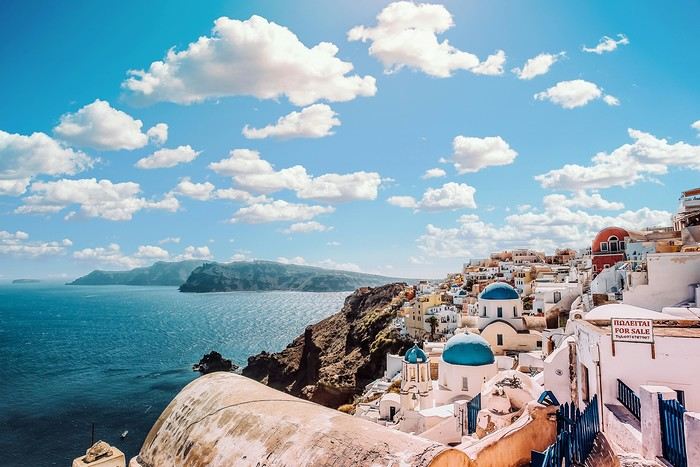
Authentic Peloponnese: A Land of Living Traditions
The Peloponnese peninsula is home to traditional villages where time seems to have stood still. In Dimitsana, perched in the Arcadian mountains, locals keep centuries-old traditions alive in their craft workshops. The cobbled streets echo with the sound of traditional looms, where artisans still create textiles using age-old methods.
In the Mani region, ancient stone towers tell the story of an untamed land. Local families welcome you into their traditional homes to share their culinary art: olive oil preparation, olive bread making, and dolmades crafted according to recipes passed down through generations. The Unknown Islands: Preserved Jewels of the Aegean Sea
Far from Mykonos' hustle and bustle, Ikaria island reveals its longevity secrets. This blue island, known for its inhabitants' exceptional lifespan, invites you to discover a unique way of life. Join the panigiria, traditional festivals where the entire community gathers to dance, sing, and share local dishes prepared in large communal ovens.
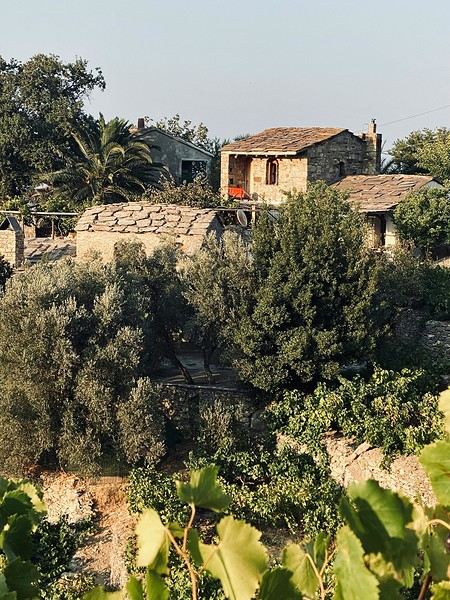
On Lemnos island, fishermen introduce you to their traditional sustainable fishing techniques. The ancient salt pans, still in operation, bear witness to ancestral know-how. In family-run tavernas by the harbor, taste thallasomelo, a unique sea honey produced by bees foraging on wild thyme from coastal cliffs. Greek Macedonia: A Living Heritage
In the northern mountains, the villages of Zagoria preserve their characteristic stone architecture. Eighteenth-century arched bridges still span deep gorges, showcasing a unique construction art. Locals invite you to discover medicinal herb gathering and traditional herbal tea preparation, knowledge passed down through generations.
In Nymfaio, a village perched at 1,350 meters altitude, ecotourism initiatives help preserve the natural habitat of brown bears. Traditional stone guesthouses offer an ideal base for exploring the region and observing wildlife in its natural environment. Agritourism and Authentic Rural Life
Traditional farms in Thessaly open their doors to travelers eager to discover sustainable agriculture. Participate in the autumn olive harvest, traditional feta cheese making, or the cultivation of aromatic herbs that flavor Greek cuisine. These experiences not only support the local economy but also help preserve ancestral farming practices.
Traditional Festivals and Local Celebrations
The Greek calendar is marked by authentic celebrations that vary by region. In Pelion, the Goat Carnival transforms villages into living theater stages, where pagan traditions blend with Christian folklore. On Syros, the rebetiko festival lets you discover this UNESCO-listed music in its original context. Sustainable Initiatives and Heritage Preservation
Many Greek communities are committed to sustainable tourism projects. On Thirassia, Santorini's lesser-known neighbor, a traditional troglodyte house rehabilitation project allows visitors to stay in authentic dwellings while contributing to architectural heritage preservation. Supporting Local Communities
Women's cooperatives, particularly active in rural areas, offer traditional craft workshops. In Arnaia, Chalkidiki, learn to weave on traditional looms or prepare preserves using age-old methods. These initiatives help women maintain economic independence while preserving local traditions.
For more responsible tourism, many accommodations adopt eco-friendly practices. Using local products, sustainable water management, and solar energy production are among the initiatives that help preserve places' authenticity while respecting the environment.
Tips for an Authentic Trip
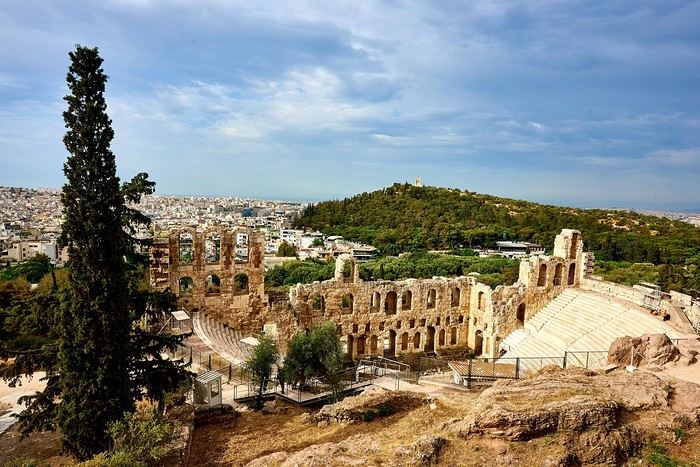
To discover the real Greece, choose off-season stays from October to April. Milder temperatures and fewer crowds allow for more authentic encounters with locals. Opt for small family-run guesthouses and host tables that offer true immersion in local culture.
Greece's regions thus invite you to discover another facet of this millennia-old country, far from tourist clichés. Each village, each island, each mountain holds authentic treasures waiting to be discovered by travelers who respect traditions and the environment.
Authentic Peloponnese: A Land of Living Traditions
The Peloponnese peninsula is home to traditional villages where time seems to have stood still. In Dimitsana, perched in the Arcadian mountains, locals keep centuries-old traditions alive in their craft workshops. The cobbled streets echo with the sound of traditional looms, where artisans still create textiles using age-old methods.
In the Mani region, ancient stone towers tell the story of an untamed land. Local families welcome you into their traditional homes to share their culinary art: olive oil preparation, olive bread making, and dolmades crafted according to recipes passed down through generations. The Unknown Islands: Preserved Jewels of the Aegean Sea
Far from Mykonos' hustle and bustle, Ikaria island reveals its longevity secrets. This blue island, known for its inhabitants' exceptional lifespan, invites you to discover a unique way of life. Join the panigiria, traditional festivals where the entire community gathers to dance, sing, and share local dishes prepared in large communal ovens.
On Lemnos island, fishermen introduce you to their traditional sustainable fishing techniques. The ancient salt pans, still in operation, bear witness to ancestral know-how. In family-run tavernas by the harbor, taste thallasomelo, a unique sea honey produced by bees foraging on wild thyme from coastal cliffs. Greek Macedonia: A Living Heritage
In the northern mountains, the villages of Zagoria preserve their characteristic stone architecture. Eighteenth-century arched bridges still span deep gorges, showcasing a unique construction art. Locals invite you to discover medicinal herb gathering and traditional herbal tea preparation, knowledge passed down through generations.
In Nymfaio, a village perched at 1,350 meters altitude, ecotourism initiatives help preserve the natural habitat of brown bears. Traditional stone guesthouses offer an ideal base for exploring the region and observing wildlife in its natural environment. Agritourism and Authentic Rural Life
Traditional farms in Thessaly open their doors to travelers eager to discover sustainable agriculture. Participate in the autumn olive harvest, traditional feta cheese making, or the cultivation of aromatic herbs that flavor Greek cuisine. These experiences not only support the local economy but also help preserve ancestral farming practices.
Traditional Festivals and Local Celebrations
The Greek calendar is marked by authentic celebrations that vary by region. In Pelion, the Goat Carnival transforms villages into living theater stages, where pagan traditions blend with Christian folklore. On Syros, the rebetiko festival lets you discover this UNESCO-listed music in its original context. Sustainable Initiatives and Heritage Preservation
Many Greek communities are committed to sustainable tourism projects. On Thirassia, Santorini's lesser-known neighbor, a traditional troglodyte house rehabilitation project allows visitors to stay in authentic dwellings while contributing to architectural heritage preservation. Supporting Local Communities
Women's cooperatives, particularly active in rural areas, offer traditional craft workshops. In Arnaia, Chalkidiki, learn to weave on traditional looms or prepare preserves using age-old methods. These initiatives help women maintain economic independence while preserving local traditions.
For more responsible tourism, many accommodations adopt eco-friendly practices. Using local products, sustainable water management, and solar energy production are among the initiatives that help preserve places' authenticity while respecting the environment.
Tips for an Authentic Trip
To discover the real Greece, choose off-season stays from October to April. Milder temperatures and fewer crowds allow for more authentic encounters with locals. Opt for small family-run guesthouses and host tables that offer true immersion in local culture.
Greece's regions thus invite you to discover another facet of this millennia-old country, far from tourist clichés. Each village, each island, each mountain holds authentic treasures waiting to be discovered by travelers who respect traditions and the environment.
In memory of Titi (77310)
Hello,
Some of you may not be aware, but a few days ago, Titi passed away suddenly. He was a very active member of this forum, keeping track of cruise departure schedules for members. Today, I wanted to open this post to inform you and let you share messages that will bring comfort to his partner, Agnés.
Organizing MSC Virtuosa cruise stopovers
Cruise on the MSC Virtuosa with stopovers in Pointe-à-Pitre, Antigua, St Kitts, Philipsburg, and Tortola
from March 8 to 15, 2025.
Is it better to book MSC’s excursions, or are there easy ways to explore on our own in some ports?
Thanks for your feedback!
Danielle
Thanks for your feedback!
Danielle
Which to choose: Bikaner or Jaisalmer (India)?
Hello and happy travels for 2025!
Reading through the discussions, I’m wondering what to pick between Bikaner and Jaisalmer for spending a few days in the desert without running into too many tour groups. Should I skip Jaisalmer? Rent a motorcycle and go solo? I’d love to hear any tips. Thanks
The rule of the three unities
"In one place, in one day, a single deed accomplished,
May hold the theater filled until the end."
- Sunday morning, a chilly dawn - The kitchen - Smell of coffee and toast, a jar of honey on the table.
- Tits pecking at sunflower seeds in the transparent feeder stuck to the window.
- France Musique on the radio: Brahms, violin concerto by the lovely Hilary Hahn - Characters: - An old man in a plush dark blue dressing gown - An old woman in a worn-out duck-blue dressing gown. They dance cheek to cheek, the woman’s head resting on the old man’s broad chest. The old man breathes in the tangled hair of the lady. She smiles. Happy. Tomorrow, they’re off on a trip.
- Sunday morning, a chilly dawn - The kitchen - Smell of coffee and toast, a jar of honey on the table.
- Tits pecking at sunflower seeds in the transparent feeder stuck to the window.
- France Musique on the radio: Brahms, violin concerto by the lovely Hilary Hahn - Characters: - An old man in a plush dark blue dressing gown - An old woman in a worn-out duck-blue dressing gown. They dance cheek to cheek, the woman’s head resting on the old man’s broad chest. The old man breathes in the tangled hair of the lady. She smiles. Happy. Tomorrow, they’re off on a trip.
Visiting French Polynesia or other islands?
Hi,
When I hear our French friends talk about them, they’re the most beautiful islands in the world.
For those of you who’ve traveled extensively, is that really the case?
Are the prices for accommodation, even basic ones, justified? Isn’t a room in a family-run guesthouse at 150/200 € a bit much?
Are there other islands in Polynesia (non-French) that are just as "paradise-like" but more affordable?
I’d love to hear your thoughts.
Sharing our 3-week experience in Brazil
Hello,
We’re a couple in our sixties and we’ve just spent 22 days in Brazil, from October 29th to November 21st.
We flew from Marseille via Lisbon—outbound to Rio, and back from Recife.
Our itinerary:
4 days in Rio
4 days on Ilha Grande
2 days in Paraty
4 days in Salvador
4 days on Boïpeba
4 days in Olinda
The transfer between Boïpeba and Recife took us 2 days—boats, taxis, and a flight.
We stayed in Airbnbs except in Paraty, where we were in a pousada, and during the Boïpeba–Recife transfer, when we booked a hotel near the airport.
Our flights were with Gol and Azul.
Transfers from Rio were arranged through Paraty Tour.
In Rio, we used a local agency to visit Corcovado and Sugarloaf Mountain.
Happy to answer any questions! Marc
Happy to answer any questions! Marc
Japan: First Discovery!
Here’s a little story about my first trip to Japan with my partner.
We went for our first visit from October 29 to November 13, 2024.
I had planned this entire trip back in November 2020, but given the health situation at the time, I had to cancel...
Here’s the classic route we took: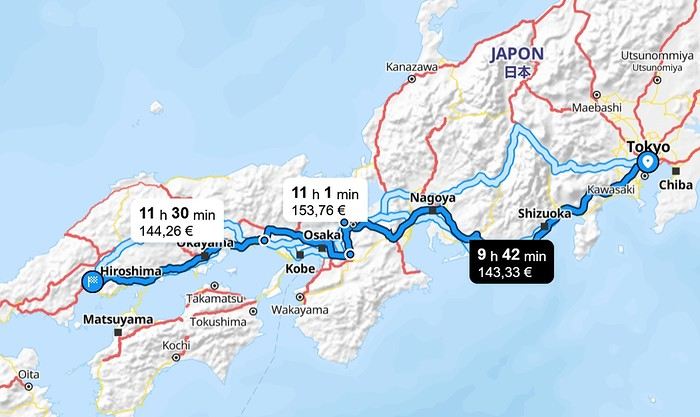
We booked everything ourselves and got a regional pass for the area from Kyoto to Hiroshima. The hotels were reserved 3 months in advance on Book... and Agod... (1030 € for 2 people for 13 nights = 80 €/night). For the flight, we chose a Qatar Airways flight with a layover to break up the long journey (950 € per person). We also got a pass on the same site (Japan-Experience) to take the train connecting Narita Airport to Shibuya Station (the N'EX Narita Express). Since the airport is 75 km from central Tokyo, we opted for this mode of transport, even though there are cheaper alternatives. After reading various posts on VoyageForum, I understood how important it was to have a Welcome Suica card to pay for public transport (subway, tram, bus, boat throughout the country), and we were able to buy one at Narita Airport. It turned out to be super useful! After a long but smooth journey, we found ourselves at Narita Airport in the evening. Even though we had a pass for the Narita Express, we had to go to a counter to make a reservation for the train (mandatory). Then, once we arrived at Shibuya Station, we took the subway for 2 stops and finally reached our hotel, exhausted (Hotel Asia Center of Japan – 270 € for 3 nights with breakfast included).
I had planned this entire trip back in November 2020, but given the health situation at the time, I had to cancel...
Here’s the classic route we took:
We booked everything ourselves and got a regional pass for the area from Kyoto to Hiroshima. The hotels were reserved 3 months in advance on Book... and Agod... (1030 € for 2 people for 13 nights = 80 €/night). For the flight, we chose a Qatar Airways flight with a layover to break up the long journey (950 € per person). We also got a pass on the same site (Japan-Experience) to take the train connecting Narita Airport to Shibuya Station (the N'EX Narita Express). Since the airport is 75 km from central Tokyo, we opted for this mode of transport, even though there are cheaper alternatives. After reading various posts on VoyageForum, I understood how important it was to have a Welcome Suica card to pay for public transport (subway, tram, bus, boat throughout the country), and we were able to buy one at Narita Airport. It turned out to be super useful! After a long but smooth journey, we found ourselves at Narita Airport in the evening. Even though we had a pass for the Narita Express, we had to go to a counter to make a reservation for the train (mandatory). Then, once we arrived at Shibuya Station, we took the subway for 2 stops and finally reached our hotel, exhausted (Hotel Asia Center of Japan – 270 € for 3 nights with breakfast included).
Meteora, Pelion, and the Sporades Islands (2022)
In the summer of 2022, we spent 14 nights in Greece with an itinerary built around three hubs:
- Skopelos (Sporades Islands): 5 nights at the Aperitton Hotel on Skopelos
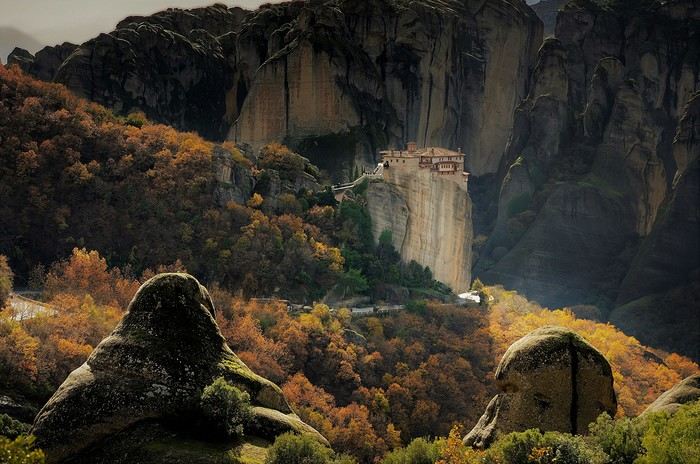
- Meteora: 2 nights at the Doupiani House Hotel in Kastraki
- Pelion: 2 nights at Karavia Lux Inn in Afissos + 5 nights at Akro Rooms Hotel in Agios Ioannis and 1 night in Volos before taking the boat back
We traveled with Transavia (Paris/Skiathos). From there, we took a boat to Skopelos, then another to Volos, and a return boat to Skiathos.
Thoughts on our hotels: Aperitton: Not bad, well-located but a bit "dated" Doupiani: Amazing, top-notch staff, dreamy breakfasts with a view of Meteora Karavia: Luxury, peace, and bliss (plus a great-value dinner option on-site) Akro: Simple and nice, breakfast on the terrace just above the beach
Our highlights: - The magic of Meteora - Exploring Skopelos by scooter, beach to beach - Karavia - The villages of Pelion (Pinakates, Milies, Tsagkarada, Portaria, and Makrinitsa...) - The beaches around Agios Ioannis - Octopus and fish at the local fishermen’s restaurants
Car rental in Volos from Aegean Car Rent: a beat-up 207—avoid! For accommodation prices and restaurant picks, we followed the *Routard* guide’s advice.
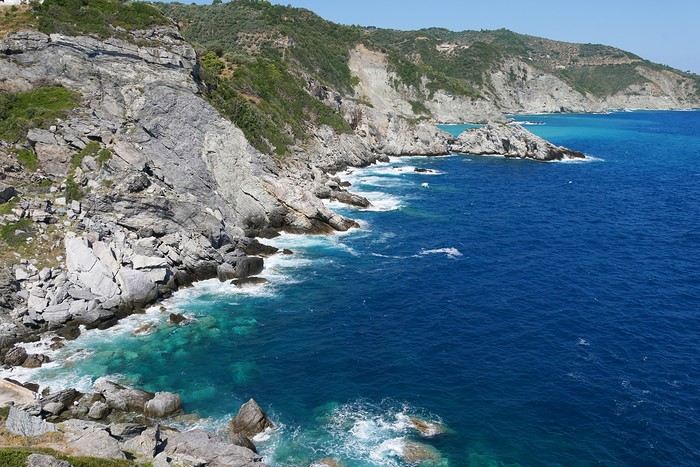
And since a picture’s worth a thousand words, here’s Skopelos to start:
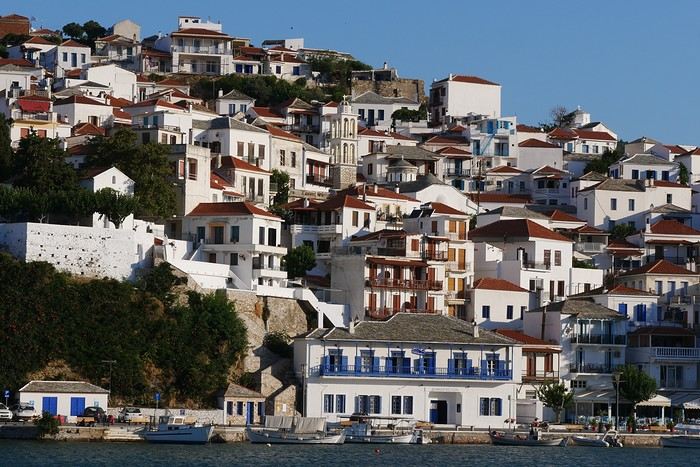
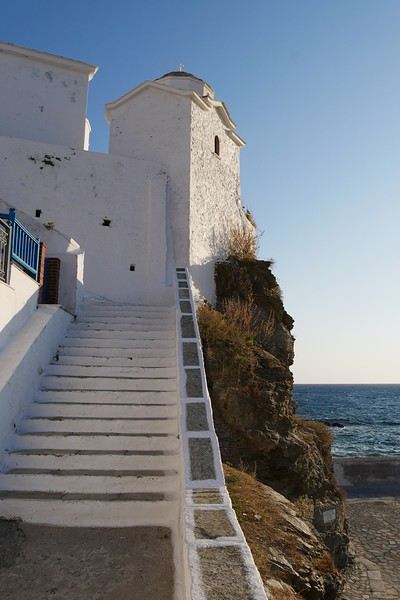
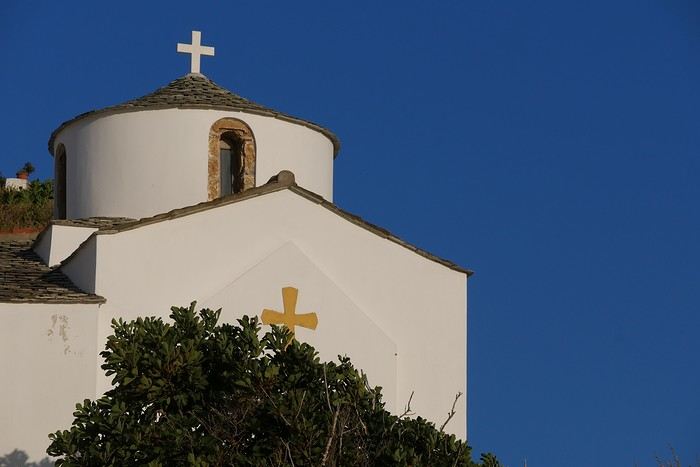
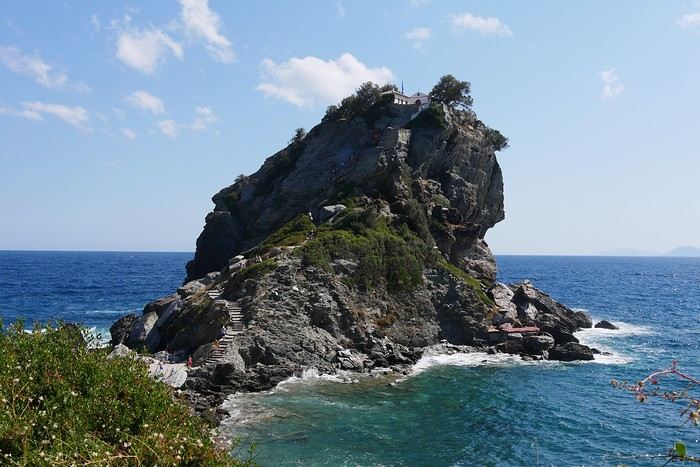
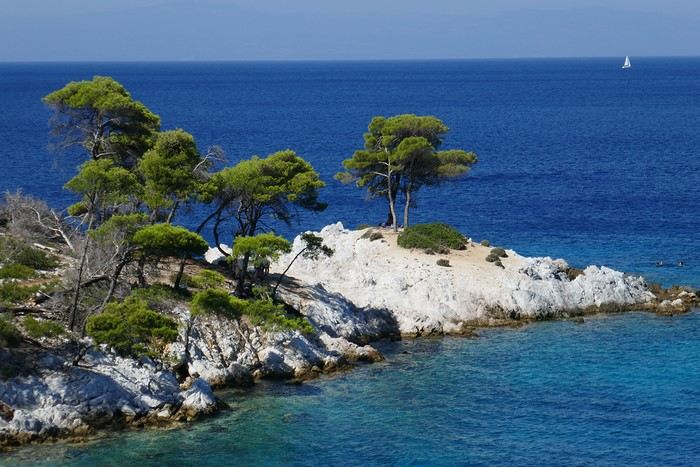
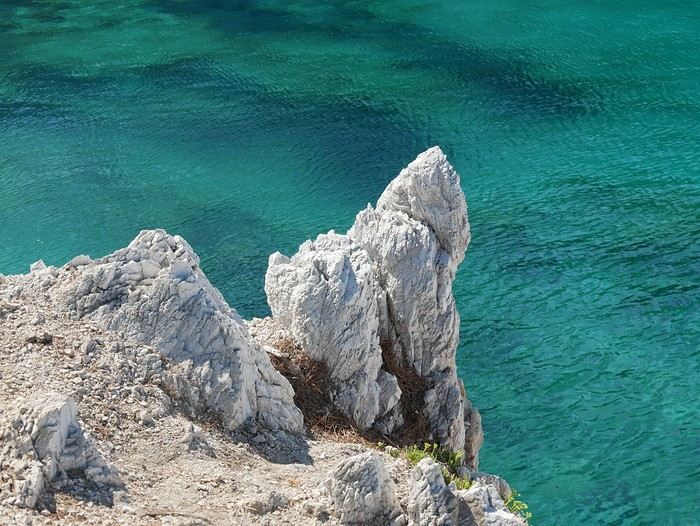
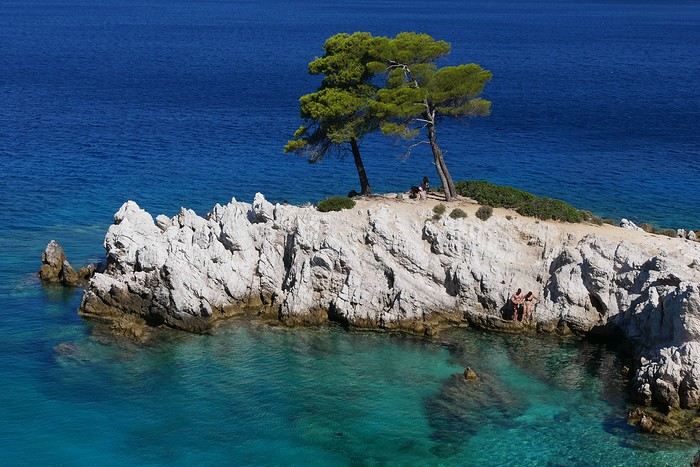
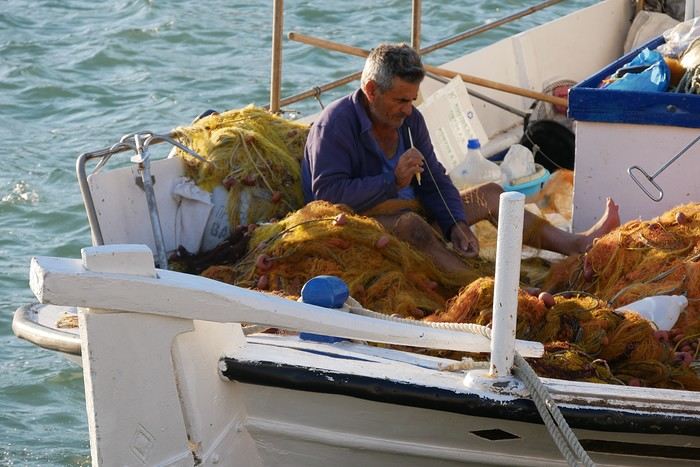
We traveled with Transavia (Paris/Skiathos). From there, we took a boat to Skopelos, then another to Volos, and a return boat to Skiathos.
Thoughts on our hotels: Aperitton: Not bad, well-located but a bit "dated" Doupiani: Amazing, top-notch staff, dreamy breakfasts with a view of Meteora Karavia: Luxury, peace, and bliss (plus a great-value dinner option on-site) Akro: Simple and nice, breakfast on the terrace just above the beach
Our highlights: - The magic of Meteora - Exploring Skopelos by scooter, beach to beach - Karavia - The villages of Pelion (Pinakates, Milies, Tsagkarada, Portaria, and Makrinitsa...) - The beaches around Agios Ioannis - Octopus and fish at the local fishermen’s restaurants
Car rental in Volos from Aegean Car Rent: a beat-up 207—avoid! For accommodation prices and restaurant picks, we followed the *Routard* guide’s advice.
And since a picture’s worth a thousand words, here’s Skopelos to start:
Philippines - Indonesia - Sumatra - Moluccas Islands Trip December 2024
Hi there!
Looking to head off by the end of this year, no later than between December 10th and 15th, for the Philippines.
Any recommendations for regions like the Batanes Islands and Mindanao, away from mass tourism and off the beaten path?
Plan: Beaches, snorkeling, diving, hiking, and visiting the most interesting sites depending on each person’s preferences (I’m not really into old stones but more about nature, jungle, flora, and fauna).
When? Between December 10th and 15th, but no later than December 15th–17th.
Where? Northern Philippines, starting with a few days of beach and relaxation to recharge after the bad weather and winter in France. Then, off to trek in northern Luzon with its stunning rice terraces, followed by the Batanes Islands, which are the epitome of off-the-beaten-path destinations. After that, we’d head down to the Balicas Islands, where you can swim with turtles and where tourism is minimal due to very limited hotel infrastructure (accommodation is in tents by the sea). Next up: the island of Mindanao.
Depending on time and everyone’s interests, we could continue to Sumatra and then the Moluccas Islands, which, unlike the rest of Indonesia, are much less affected by the monsoon.
With whom?
Someone who’s already traveled and hiked beyond just their imagination and dreams . Independent and resourceful (I’m looking for a travel partner, not a tourist to guide). Good-humored and adaptable. Loving adventure and eager to explore off the beaten path.
I’ve traveled a lot and I’m a fan of the unexpected (go where the wind takes you).
If you see yourself in these few lines, it would be a great pleasure to share this new adventure with you for a few days or weeks.... This is just a rough plan I’m proposing, and it can be adjusted based on everyone’s preferences.
Plan: Beaches, snorkeling, diving, hiking, and visiting the most interesting sites depending on each person’s preferences (I’m not really into old stones but more about nature, jungle, flora, and fauna).
When? Between December 10th and 15th, but no later than December 15th–17th.
Where? Northern Philippines, starting with a few days of beach and relaxation to recharge after the bad weather and winter in France. Then, off to trek in northern Luzon with its stunning rice terraces, followed by the Batanes Islands, which are the epitome of off-the-beaten-path destinations. After that, we’d head down to the Balicas Islands, where you can swim with turtles and where tourism is minimal due to very limited hotel infrastructure (accommodation is in tents by the sea). Next up: the island of Mindanao.
Depending on time and everyone’s interests, we could continue to Sumatra and then the Moluccas Islands, which, unlike the rest of Indonesia, are much less affected by the monsoon.
With whom?
Someone who’s already traveled and hiked beyond just their imagination and dreams . Independent and resourceful (I’m looking for a travel partner, not a tourist to guide). Good-humored and adaptable. Loving adventure and eager to explore off the beaten path.
I’ve traveled a lot and I’m a fan of the unexpected (go where the wind takes you).
If you see yourself in these few lines, it would be a great pleasure to share this new adventure with you for a few days or weeks.... This is just a rough plan I’m proposing, and it can be adjusted based on everyone’s preferences.
Traveling to Thimphu (Bhutan) from Kolkata by land
Hi everyone!
So great to be back on this Forum!
My question is in the title: is it possible to reach Bhutan from Kolkata by entering through the Phuntsholing border crossing? If anyone has already done this route, it would really put my mind at ease... 😉
Thanks in advance for all your replies! 🤪
Lydie
Dress code for gala evenings on the Queen Mary 2
We’ve booked the transatlantic crossing on the Queen Mary. I understand that for the gala evenings, we need to wear a tuxedo and an evening gown.
Do we need a very expensive chic evening gown, or can a more modest one still be tasteful? And where can I buy one? I have the same question about the tuxedo. Thanks!
Sargassum in Playa del Carmen in July
Hi everyone,
we’re thinking of heading to Playa del Carmen, Mexico, in early July 2025, but a few people have warned us against it because of the sargassum. Is it really that bad?