Results for "Pont+Avignon+|+127"
26385 results found.
Road trip from Nice to Livorno by car, then Corsica
I'd love some destination suggestions for a road trip from Nice to Livorno by car, including the routes, tolls to cross, distance, and estimated travel time. We're planning a 5-day trip, with 2 nights near Nice, 1 night along the way, and finally 2 nights in Livorno. There are 4 of us in a rental car, and we'd like to stay in either an apartment, a mobile home near the sea, or a campsite. Our budget isn't too extravagant!!!! We want to visit the Promenade des Anglais, and I've heard Menton is really interesting. Once we reach Livorno, we'll take the ferry to Corsica for 12 days with the same rental car. We're planning to leave the last week of May and the first two weeks of June 2026, so around 17-18 days total.
Thanks
Questions for a 15-day itinerary in China
Hi everyone
I’m currently planning my trip to China for next August.
I’m starting from scratch, so I’m counting on your advice and firsthand experiences!
For now, I only know that I’ll arrive in China via Beijing, Shanghai, or Hong Kong and leave 15 days later from another one of these three cities.
In between, I’d love to explore a mountainous and natural region in the countryside.
The Guilin area really appeals to me with its spectacular landscapes.
I still have tons of questions:
- What can you do during this often humid season?
- Is it better to go through a local agency or organize everything yourself?
- What itineraries would you recommend?
Anyway, everything’s still up in the air, and I can’t wait to read your opinions, suggestions, and great tips to help me build this trip!
Review of Renaissance Cruise (Iberian Flavors) from October 18 to 29, 2025
Hi there,
Here’s a little review of our cruise on the Renaissance from October 18 to 29, 2025 (11 nights). It was our first experience with CFC.
Some other forum members were on board too, so we can probably compare notes and correct me if I’m wrong!
The stops were as follows: 10/18 departure from Marseille 10/19 at sea 10/20 Cartagena 10/21 Almería 10/22 Gibraltar 10/23 Cádiz 10/24 at sea 10/25 Leixões (Porto) 10/26 Vigo 10/27 at sea 10/28 at sea 10/29 Dunkirk
First, a quick intro. We’re a family of four with two kids, ages 8 and 11. We booked this cruise in January 2025, right when it went on sale. At the time, it was priced at 763 € per adult (+ 99 € in tips) and 114.45 € per child (under 12, no tips to pay) for an ocean-view cabin (all ocean-view categories were the same price). Since there was also a single-parent offer (meaning one paying adult in the cabin was enough to get the child rate for the accompanying kid), I asked if we could take advantage of this offer to get two double cabins at the same price as one quadruple cabin (to have more space), and yes, it was possible. So we booked two premium ocean-view double cabins side by side. It was the same price as a quadruple. We booked directly through CFC because my husband had a promotional code from his works council. In total, for the four of us, we paid 1830 €, tips included. It’s true we booked early, but the rate was good, and we had the constraint of traveling as a family of four, so cabin choices were more limited. It’s also worth noting that the single-parent offer is limited.
Now, about embarkation: 10/18 Marseille Coming from the north, we took the direct TGV that morning at 7:22 AM, scheduled to arrive in Marseille at 12:24 PM. The trip went smoothly, great weather, and we arrived just one minute late. I had planned to get to the port using the free 35T shuttle from Joliette. To get to the bus stop, there were two options: the metro or walking. Since the weather was beautiful and the kids needed to stretch their legs, we opted for the second option. The route is all downhill, so it was pretty easy even with the suitcases. But I wouldn’t do it the other way around! We arrived at Joliette around 12:50 PM, just in time for the 1:00 PM shuttle, which arrived a few minutes late. Other cruisers got on board too. That day, there were two Costa ships and one MSC ship at the port as well. Traffic was heavy, and the shuttle arrived at the port entrance at 1:30 PM. We were scheduled for 2:30 PM. We were lucky to be at the closest embarkation terminal. So we were among those who had the least walking to do. We dropped off our suitcases and headed to the check-in counter. There were plenty of desks and almost no passengers. So we quickly completed the embarkation formalities—in just a few minutes—and when we boarded, it wasn’t even 2:00 PM yet. We headed to the buffet, where there weren’t many people. As we finished lunch, it was around 3:00 PM when they announced the cabins were ready. We went down to drop off our luggage in the cabins and then went up to the top deck to take some photos. The ship’s daily program said the safety drill would be at 4:00 PM. So we went to deck 6 at the scheduled time. But later, they announced it would actually be at 4:30 PM! In short, we waited 30 minutes for nothing because of a difference between the scheduled and actual time! The drill itself was long. Gathering everyone took about 20 minutes, I think. Just as we finished, they announced the departure, originally scheduled for 5:00 PM, was delayed until 9:00 PM due to latecomers. We went to check out the library, which had tons of board games and books—more than we’d ever seen. What stood out on this first day was that, for the first time, we had a French-speaking embarkation, announcements only in French (except for the safety drill), French-speaking servers, a paper daily program in French, books in French (which we’d never find on another ship), and menus in French. To wrap up the day, we had dinner at Vatel. I had requested the first seating (6:30 PM) and a table for four, and we got it. We were seated upstairs near the window—a very pleasant table that we’d occupy every evening. What was a little surprising, but we got used to it, was that you had to order everything you wanted at once. The portions weren’t big, but you could choose what you wanted. The cheese was French and excellent.
To be continued...
The stops were as follows: 10/18 departure from Marseille 10/19 at sea 10/20 Cartagena 10/21 Almería 10/22 Gibraltar 10/23 Cádiz 10/24 at sea 10/25 Leixões (Porto) 10/26 Vigo 10/27 at sea 10/28 at sea 10/29 Dunkirk
First, a quick intro. We’re a family of four with two kids, ages 8 and 11. We booked this cruise in January 2025, right when it went on sale. At the time, it was priced at 763 € per adult (+ 99 € in tips) and 114.45 € per child (under 12, no tips to pay) for an ocean-view cabin (all ocean-view categories were the same price). Since there was also a single-parent offer (meaning one paying adult in the cabin was enough to get the child rate for the accompanying kid), I asked if we could take advantage of this offer to get two double cabins at the same price as one quadruple cabin (to have more space), and yes, it was possible. So we booked two premium ocean-view double cabins side by side. It was the same price as a quadruple. We booked directly through CFC because my husband had a promotional code from his works council. In total, for the four of us, we paid 1830 €, tips included. It’s true we booked early, but the rate was good, and we had the constraint of traveling as a family of four, so cabin choices were more limited. It’s also worth noting that the single-parent offer is limited.
Now, about embarkation: 10/18 Marseille Coming from the north, we took the direct TGV that morning at 7:22 AM, scheduled to arrive in Marseille at 12:24 PM. The trip went smoothly, great weather, and we arrived just one minute late. I had planned to get to the port using the free 35T shuttle from Joliette. To get to the bus stop, there were two options: the metro or walking. Since the weather was beautiful and the kids needed to stretch their legs, we opted for the second option. The route is all downhill, so it was pretty easy even with the suitcases. But I wouldn’t do it the other way around! We arrived at Joliette around 12:50 PM, just in time for the 1:00 PM shuttle, which arrived a few minutes late. Other cruisers got on board too. That day, there were two Costa ships and one MSC ship at the port as well. Traffic was heavy, and the shuttle arrived at the port entrance at 1:30 PM. We were scheduled for 2:30 PM. We were lucky to be at the closest embarkation terminal. So we were among those who had the least walking to do. We dropped off our suitcases and headed to the check-in counter. There were plenty of desks and almost no passengers. So we quickly completed the embarkation formalities—in just a few minutes—and when we boarded, it wasn’t even 2:00 PM yet. We headed to the buffet, where there weren’t many people. As we finished lunch, it was around 3:00 PM when they announced the cabins were ready. We went down to drop off our luggage in the cabins and then went up to the top deck to take some photos. The ship’s daily program said the safety drill would be at 4:00 PM. So we went to deck 6 at the scheduled time. But later, they announced it would actually be at 4:30 PM! In short, we waited 30 minutes for nothing because of a difference between the scheduled and actual time! The drill itself was long. Gathering everyone took about 20 minutes, I think. Just as we finished, they announced the departure, originally scheduled for 5:00 PM, was delayed until 9:00 PM due to latecomers. We went to check out the library, which had tons of board games and books—more than we’d ever seen. What stood out on this first day was that, for the first time, we had a French-speaking embarkation, announcements only in French (except for the safety drill), French-speaking servers, a paper daily program in French, books in French (which we’d never find on another ship), and menus in French. To wrap up the day, we had dinner at Vatel. I had requested the first seating (6:30 PM) and a table for four, and we got it. We were seated upstairs near the window—a very pleasant table that we’d occupy every evening. What was a little surprising, but we got used to it, was that you had to order everything you wanted at once. The portions weren’t big, but you could choose what you wanted. The cheese was French and excellent.
To be continued...
Namibia: What itineraries for a second trip?
Hello everyone,
We came back enchanted from our first trip to Namibia and we're already thinking of going back. We did the classics: Etosha, Twyfelfontein, Sossusvlei, Deadvlei...
Our guide suggests doing the Caprivi Strip over 10 days, alternating 2 nights in a lodge and 2 nights in a tent. Given that we love landscapes but especially wildlife observation, I wonder if after spending 4 nights in Etosha and having visited Botswana twice, Caprivi offers different animals to see and if the wildlife is generally abundant.
The videos I've seen online don't really captivate me. It seems quite similar to the Okavango Delta.
What do you think?
Are there other circuits we should prioritize?
Both in our seventies, we prefer staying mainly in lodges.
Thanks in advance to those who can give us advice
Looking for a car rental agency in Algiers...
Hi there, we’re planning a road trip in northern Algeria at the end of January – early February.
Anyone have any tips for a car rental agency that’s both reliable and not too expensive? Thanks in advance!
Hitchhiking in the 70s-80s
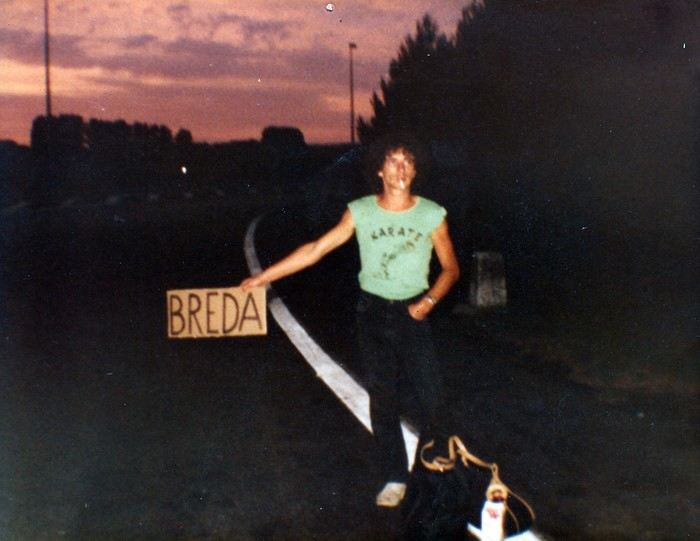
“Hey, your Marker... - My Marker? - The one you used to make hitchhiking signs.”
The marker in question is sitting proudly on the kitchen table. Marielle found it at the bottom of a moving box.
I’ve been meaning to tell the long story of my love affair with hitchhiking for years. Here we go.
To be honest, I’m not quite sure when it started. My earliest memory goes back to a fair with a bike race in my maternal grandparents’ village. I was with my cousin, my little sister, and three girl cousins. There were six of us, ages ranging from six or seven to thirteen or fourteen. Our parents stayed at the fair, and we’d had enough. So we decided to walk home. Only it was four kilometers away. So we hitchhiked. A guy driving an old car picked us all up and dropped us off at the farm. He probably found it amusing to see us thumbing a ride by the side of the road, but maybe it also worried him a bit. With everything you read in the papers...
Around fifteen or sixteen, I started hitchhiking regularly, alone or with a friend, to go to the nearby town. But it was especially when I started boarding school in Orléans that it became more regular. The first year, I’d leave Monday morning and come back Saturday noon by bus. It was an old, uncomfortable bus where we froze in winter. To make matters worse, I often got motion sickness if, as was too often the case, I ended up sitting in the back. In the spring, a high school friend suggested I hitchhike back. It meant a slight detour, but the advantage was taking only national roads.
So that’s how, from the end of tenth grade to twelfth grade, I’d thumb a ride every Saturday on the Pont de Bourgogne. Drivers were used to seeing young people hitchhiking, and it worked pretty well. Our biggest fear? Soldiers! At that time, military service was still mandatory, and on weekends, it wasn’t rare to see them competing with us. They’d keep their uniforms on to go home. That gave people confidence—with everything you read in the papers—and they’d rarely wait more than five minutes. We, with our long hair, were definitely less popular. From time to time, three big red-faced guys in a van coming back from a construction site would flip us off, yelling things like “go get a haircut, you bums!” Those were the good old days.
We still had a good laugh, though. Patrice, the friend I’d hitchhike back from school with on Saturdays, is a musician—I’d later discover he’s an excellent composer. A die-hard Beatles fan, he knows their repertoire by heart and spends his time singing at the top of his lungs while we thumb a ride. One Saturday late morning, we’d been waiting for a while at the exit of Châteauneuf-sur-Loire when a little lady came up to him and asked if he could please sing a little quieter: a baby was sleeping in the house. He put on the most sorry face: “Oh, sorry ma’am, we didn’t realize.” No sooner had the lady gone back inside than he started again. Luckily, a car stopped just then, sparing me the embarrassment of seeing the lady come back out.
Saturday was also the day when the cigarette pack was dangerously low. So before leaving, we’d go buy some “Parisiennes,” the “P4s” as we called them back then. They were slightly thinner cigarettes with a mix of tobacco scraps. Sometimes they tasted like light tobacco, sometimes like dark. Not great, but by the end of the week, our pocket money was gone. They were sold in small packs of four, hence the name P4. We’d only pay 20 centimes. On Saturdays, it was rare for the two of us to manage to scrape together 1.50 F to buy a whole pack of Gauloises...
The last twenty kilometers, I’d usually do alone, Patrice having reached his destination. From time to time, luck would smile on me: an acquaintance would just happen to pass by and stop. One January Saturday, at the exit of Gien, I ran into another guy from Argenton whom I knew a little. That day, the weather was nice, but the temperature was well below zero. It was around noon, and it was the off-peak hour. We were shivering, stamping our feet by the side of the road, when a Citroën “Tube” arrived: it was his father’s boss’s, a mason. They were both sitting in the front, but since they were obese, they had us climb onto the open back. Even though we huddled against the cab to shelter from the wind, the twenty kilometers felt very long, especially since we were only going sixty kilometers an hour. Our hands and cheeks were blue when we finally arrived.
The year I took my baccalaureate, a friend with a 2CV would take me Monday mornings with one or two others we’d pick up in nearby villages. We’d share the gas costs, but it was still cheaper than the bus. And in winter, the bus was my nightmare. You had to get up at five to catch it at six. Not enough sleep, and outside it was freezing or raining—or both. The 2CV was luxury. Plus, Philippe would pick me up at home. On the other hand, since I didn’t have class Saturday mornings—well, I did, but we only had PE the first two hours and nothing after—I’d skip class and slip out right after breakfast to thumb a ride at the Pont de Bourgogne.
Those three high school years were formative in this optional subject that was hitchhiking. Little by little, I learned the rules of the game. First, you shouldn’t walk along the road while thumbing. Cars go too fast and can’t stop easily. Accepting a ride that’s too short is also a no-go. The guy who offers to take you a little way but drops you off at some vague crossroads in the middle of nowhere? No thanks. You need to get dropped off in a town. If it’s a fairly big city, you often have to cross it from one end to the other, but it’s better. At the exit, you have to choose your spot well. Actually, you have to put yourself in the driver’s shoes: they need to see you early enough, not be going too fast, and be able to stop easily without risking an accident. So when leaving a city, it’s better not to go too far. It’s wiser to find a spot where cars go slowly and can stop easily. And preferably near a café. The café is for when you still have a few coins for a coffee and need to warm up. From time to time, you’d run into someone nice who’d make a detour to drop you off at a better spot to start again. Finally, if possible, avoid hitchhiking on Sundays. Cars are packed with whole families who, most of the time, aren’t going far. And then there’s the little worry of those people who rarely leave home: with everything you read in the papers...
During those high school years, it was only short trips, rarely exceeding a hundred kilometers. Later, I aimed bigger, and things were a bit different. In 1973-74, I crossed part of France for the first time on two or three occasions, coming back from the German border or returning to Bordeaux, where we lived briefly. Since there weren’t many highways back then, we took national roads. It was during these trips that I realized it was better to leave in the evening. As I said earlier, Sunday is to be avoided, but on weekdays, there’s another problem: if you leave in the morning, you only make short hops. First, it often takes longer to get going because drivers are people going to work nearby. Which brings us back to those who drop you off in a bad spot, far from everything. There, you have to know how to refuse. You thank the driver for stopping—oh, if only everyone could be like you—while explaining why you’d rather stay put. People don’t take offense, by the way. Those who pick up hitchhikers often hitchhiked themselves when they were in the military or before they had a car. In the late afternoon, you’d often run into salespeople or truckers, in other words, people who drive a lot. At that time, salespeople no longer had appointments and were more relaxed. They wanted to talk about something other than the merits of their products. On the radio, it was time for *Les Grosses Têtes*. You’d also quite often run into small business owners, professionals, or even hippies. The conversations were pleasant and often enriching. A little later in the evening, truckers would take over. They’d already driven a few hundred kilometers, and the depot or customs was still far away. So they’d gladly take a hitchhiker to stay awake at the wheel and chat. The radio with Max Ménier’s show *Les routiers sont sympas*, you’d eventually get tired of it. So a hitchhiker was a change. Others, who’d hit the road at midnight to be at their destination by morning, were nice and offered to let you lie down on the bunk while they drove. When you’d been hitchhiking since six in the evening, freezing in the wind between two vehicles, you weren’t unhappy to take a little nap.
Speaking of Max Ménier, he’d often make announcements for hitchhikers. One evening, I called him. It was getting late, and I still had quite a way to go. No luck: the show had ended for good the day before!
In short, it’s better not to rush, sleep in, and leave after lunch, or better yet, in the late afternoon. Obviously, I’m talking about when you have several hundred kilometers to cover. That’s when you have to play it pro.
First thing, especially at night, but it also applies in the middle of summer when the light is blinding: dress to be seen from far away. I’ll admit I have an advantage over most other hitchhikers: I’m small and don’t scare people. To balance that out, racist drivers often take me for an Arab and are less likely to pick me up, but overall, the balance tips in my favor. Back to the need to be seen: at night, I wear light-colored clothes. In headlights, you can see me from far away.
Second thing: travel light. Forget the big backpack with a frame. Drivers don’t always have room in the trunk or on the back seat, especially if it’s rained and the ground is wet. Plus, it forces them to get out of the car. If they’re nice enough to pick up a hitchhiker, you shouldn’t ask for too much either.
Third thing: bring a cardboard sign and a big marker—like the ones in the photo at the start of this post—to write the name of your destination. In the early 80s, I ran a tourist house in the Cher, but I lived in the Netherlands. In the off-season, it was only open on weekends. On Fridays, I’d leave Holland and return on Mondays. 1200 km round trip. On the way there, in Paris, I’d stand at Porte de la Chapelle. At that spot, the road is very wide, and drivers could stop easily. Obviously, on the sign, I didn’t write Eindhoven, which not everyone knows, and even less Amsterdam because of its seedy reputation. In that case, you’d expect to see a police car stop and two officers in kepis ask for your papers. So as a first destination, I’d write Compiègne. We were well out of Paris, and since it wasn’t too far, a trucker or salesperson was less reluctant to stop. Once past Compiègne, I’d take out my Lille sign. Once in Belgium, it wasn’t really necessary to use a sign anymore, since everyone was going in the same direction. Usually, the guy who picked me up at Porte de la Chapelle would say he wasn’t going far but could take me a little way. Before that, I’d still ask if there was a gas station on the highway where he could drop me off before exiting. While talking, the guy would realize he wasn’t dealing with a dangerous criminal. He’d pretend to check his watch, think for a moment, then say that actually, he was going to Belgium and could take me to the border or a little beyond. To leave Paris on the way back, I’d take the train to Melun, where it was easier to hitchhike than at Porte d’Italie.
Over all those years, I think I was pretty lucky. Or maybe philosophical enough not to imagine a car would stop after a few minutes. An hour’s wait was average. Sure, I sometimes waited three, four, or five hours. Most often at odd hours and in terrible weather. When it doesn’t work, it doesn’t work. But there’s always a moment when things pick up. Sure, when you’re soaked in freezing rain in the early morning after a sleepless night, you’re less philosophical than when I’m writing these lines comfortably at my computer, but it still holds true.
Earlier, I mentioned clothing and the importance of being well-rested before leaving. When you’ve eaten well and just gotten out of the shower, shaved, you’re in a better mood. And somehow, drivers sense it. Or at least, that’s the impression I’ve always had. It’s better to look in shape than disgusted at standing there, half-heartedly thumbing a ride. In short, when I’d start to get fed up with waiting, I’d go into the first café I saw for a coffee. Coming back out, I’d be refreshed, and most of the time, a car would stop within minutes. I’ve often said that when I stood by the side of the road thumbing a ride, I felt a bit like a gambler in front of a slot machine. It was a matter of giving luck a chance. And well, it worked out pretty well.
Then, there are countries where hitchhiking works really well and others where it’s harder. In the 70s-80s, it worked best in Germany and England. In the late afternoon, it wasn’t rare to be invited for tea. Well, that was in England. Tea meant being offered room and board. In Germany, they’d offer you coffee. Once there, they’d first show you the guest room and point out the bathroom before sitting you down in front of a big plate of cold cuts. In the evening, they’d go out in town, and the next morning, they’d usually drop you off at a good spot for hitchhiking. On the other hand, in Mediterranean and Scandinavian countries, you’d better be patient. In Spain or Italy, it’s better to take the train, which was dirt cheap back then. However, if you’re a couple traveling light, it’s already easier in most countries.
In 1982, I went on a trip around Turkey with my girlfriend. We only had two small bags, which was plenty. It was November-December, and we wore our warm, bulky clothes. Leaving Eindhoven at nine in the morning, we arrived in Graz, near the Yugoslav border, at eleven at night. 1300 km in a day! In just four or five vehicles. One to the German border, about fifty kilometers from Eindhoven, the second to Hagen in the Ruhr, the third to Salzburg, and the last to Graz at the Yugoslav border. Record broken. During the night crossing of Yugoslavia, we ran into a trucker close to retirement who lent us the truck’s bunk. So we arrived fresh and rested near Skopje the next morning. We continued to Thessaloniki in northern Greece before taking the train to Istanbul. In Turkey, we traveled a good part of the country by hitchhiking too. With truckers in old, overloaded, slow trucks that climbed hills at fifteen kilometers an hour, but also in cars where five or six people were already crammed in. And every time, we were invited for tea. Once, we were even picked up by a big shot in his Mercedes with a chauffeur. Until then, the average speed was around fifty kilometers an hour. There, we were going two hundred. On a national road, not a nice European highway.
I’ve also hitchhiked in Nepal, from Lumbini, Buddha’s birthplace, to a village on the way to Pokhara. It must have been midday. No bus until the next day. I gave it a try. A small truck overloaded with rice sacks, with two or three young people already perched on top, stopped. I rode on the roof of the cab. At fifty kilometers an hour when it was going well, with a breathtaking view. Coming back from India, I also crossed part of Iran by hitchhiking, from Tehran to the Turkish border. I did this trip with an Austrian I met at the hotel who, like me, had to watch his pennies. We gave it a shot. There was almost no traffic, but to our great surprise, the first car that passed in the area would always stop. They’d just ask for a modest contribution for gas, and it cost next to nothing.
Sometimes, you get scared too. After leaving Turkey in early December 82, we spent about two weeks in the southern Peloponnese harvesting olives. A few days before Christmas, we hitchhiked back to Holland. A girl picked us up in her little Fiat 500. We were driving on a mountain road, and that morning there was a bit of black ice. After crossing a pass, we saw the old Ford Taunus ahead of us at fifty meters start to skid. The driver let out a “heeee!” while grabbing my knees. I reflexively grabbed the wheel. Finally, the Taunus got back on track. And we didn’t swerve. But those few seconds felt very long.
In January 77, while I’d been living in Germany for a few months, I decided to spend a few days in Italy. By hitchhiking, of course. I left in the early afternoon, and by ten at night, I wasn’t far from Frankfurt. I saw a big Mercedes stop. The four or five young people crammed inside were listening to Schlager at full volume. Beer cans littered the floor. They didn’t have a precise destination, and as long as they were going south, that was fine with me. They’d finished their military service that very day and had clearly already celebrated their discharge. The driver was going 160, zigzagging dangerously from one side of the highway to the other. I should have realized he wasn’t entirely sober either. Luckily, there was almost no traffic. Finally, I managed to get dropped off at a gas station just before Frankfurt, relieved. I hope their trip didn’t end tragically.
Another time, coming back from Holland with my wife, we were picked up early in the morning near Senlis by two guys from Lille. They were going to work near Tours and could drop us off at Porte d’Italie. Apparently, they were coworkers but barely knew each other. The driver offered us a beer—at six in the morning, sure!—before opening another can for himself. He was clearly having trouble staying in the right lane. We politely declined, the passenger too. Everyone was tense. Luckily, it was rush hour on the ring road, and we were going slowly. When we got out of the car, the passenger said goodbye with the look of a guy being offered the condemned man’s rum and cigarette.
Finally, there are the annoying remarks from drivers who are either gay when you’re alone or turned on by the sight of your girlfriend when you’re a couple. In those cases, I’d get in the back so the guy wouldn’t feel too confident. And if the conversation got a little too suggestive, we’d deflect until we got dropped off.
And luckily, there are the times, not so rare after all, when you run into really nice people who invite you to eat and sleep at their place and drive you to a good spot the next morning. In Germany and England, that was common. And then there are the big strokes of luck, like during our trip to Turkey when we crossed most of Germany in one car, or that other time when some Germans drove me from the exit of Geneva all the way to the Costa Brava.
Going back to “with everything you read in the papers” and its variant “with everything you see on TV”—and now on the internet—it’s always left me perplexed. Personally, I’ve never heard of hitchhikers assaulting drivers, even if it may have happened. On the other hand, what was most common were hitchhikers being assaulted, especially girls. Anyway, even armed, it seems a bit stupid to assault the driver—wouldn’t that risk causing an accident?
Finally, since that time, I’ve occasionally wanted to hitchhike somewhere far away in France. Most often, too busy with work, it never happened, but the nostalgia hasn’t completely disappeared.
* * *
Other Hitchhikers
And then one day, I... settled down to become a driver myself. Ten years had passed, and you saw fewer and fewer hitchhikers. Or maybe I saw fewer because I had a regular job and wasn’t traveling the same way. And then I understood a few things.
Several times, I was tempted to pick up a hitchhiker, but they didn’t meet the required conditions. They were walking along the road instead of staying at the exit of the previous town. Hard to stop without risking an accident. Or the guy looked really scruffy. Or he was sulking, if not both. Then you think of that famous “with everything you read in the papers.” Not that I was scared, but unfortunately, the few hitchhikers I did pick up later were rarely interesting.
A few years ago, we picked up a young guy at the exit of a small town in Sologne. Not an easy spot for hitchhiking. Bad luck, he was a pretentious little jerk. He was barely 20 or 25 and talked like a bitter old man. He was a waiter in a restaurant. According to him, it was lucky he was there, otherwise the boss would have closed up shop long ago. You’d think he had thirty or forty years of professional experience behind him. As we approached Blois, he started ranting about Arabs, blaming them for all evils. And he laid it on thick. That morning, we were going to a teenager’s funeral who had just committed suicide, so he really got on our nerves, Mr. Know-It-All. Out of anger, I dropped him off next to a shopping center a few kilometers from downtown. Not nice, but it felt good.
Some time ago, we were driving around the Limousin on a Sunday to try out the used Twingo we’d just bought. We picked up a guy in his forties. A German who spoke French well. He started talking about the environment. He was a green Khmer. He got worked up all by himself with his pseudo-eco rant and, after a few kilometers, was almost yelling at us. As we were about to leave the main road for a small one, I dropped him off at a crossroads in the middle of nowhere. Normally, I would have made a little detour to take him to a better spot, but this time, I didn’t feel like doing the... eco-warrior a favor.
On the other hand, I’ve still done my good deed a few times. One June morning, coming back from Orléans, I saw a man in his sixties hitchhiking. The poor guy had had a rough time. He was from Montpellier and was coming back from Caen, where he’d been promised a job. Once there, they bluntly told him the position was already taken, and he had to go back. Except he didn’t have enough money left for the train. He’d spent the night hitchhiking without success. I could only take him as far as Lamotte-Beuvron, where I dropped him off near the fire station. Apparently, there was some vague shelter there or something, but it only opened a few hours later. In the meantime, he settled on the grass in a corner to sleep a little. While he was doing that, I quickly went to the train station to check the price of a ticket to Montpellier. It was within my means. Since he was sound asleep, I slipped the train ticket and 100 francs into his pocket. I couldn’t imagine him continuing to hitchhike all the way to Montpellier. And I bet he didn’t even have a piece of cardboard and a marker!
When we go to Brazil, we usually rent a small car. One day, we were coming back from Paracuru to Fortaleza when we saw a whole family hitchhiking. Two adults and two or three small children. Here near the equator, the sun sets very quickly, and it would soon be night. There was little traffic, and trucks wouldn’t stop because there was no room in the cab. As for the rich people driving big 4x4s, they wouldn’t stoop to picking up the lower classes. The only hope for this kind of family was usually a farmer or artisan who’d let them ride in the back of his pickup. Obviously, they were a bit surprised to see us. Everyone crammed in as best they could in the back of our little car. When we dropped them off, we got a whole string of “Deus lhes abençõe”—God bless you.
Still in Brazil, we were on the road from Barreirinhas to São Luís do Maranhão. About 150 km of deserted road with an isolated mud house here and there. A young woman flagged us down. She was very pregnant and had to get to the clinic twenty or thirty kilometers away to give birth. Someone was supposed to drive her, but the first signs of labor started earlier than expected, and the driver was unavailable. Even driving fast, we weren’t feeling great: it would be just our luck if she gave birth in the car!
Today, we’re in the age of smartphones and carpooling apps. Safety. With everything you see on TV... Three or four years ago, we signed up on a platform. Our first, and only, “client” was a little jerk who didn’t say a word the whole trip. No hello, no goodbye, and certainly no thank you. The next day, we found his Ray-Bans in the car. We didn’t run after him to give them back. Ha!
Norway Cruise: Sightseeing Ideas
Hi, we're going on a cruise to Norway departing from Dunkirk and sailing up the coast—can you share some ideas on what to visit? Thanks!
Gigi
19-day trip to China in summer with a classic itinerary – feedback
Hi there,
A quick recap of our 19-day trip to China – classic itinerary, half-family: dad and 13-year-old son, August 2025.
Arrived in Shanghai, the idea was to explore the city in the evening to help with jet lag. Day 1: Maglev (50 CNY), then metro to the hotel, night cruise on the Huangpu River, admiring the skyline. Day 2: Yuyuan Garden (meh), Lujiazui district, sunset from the top of Jinmao Tower, stroll along the Bund, admiring the skyline. Day 3: Chaos at the Shanghai Museum – should’ve booked in advance. Backup plan: Longhua Temple (nice), Tianzi Fang district (great). Day 4: Aquarium (okay), Pearl Tower, Fake Market (top), then flight to Guilin. Taxi from Guilin to Yangshuo (400 CNY arranged by the hotel). Verdict: Maybe one day too many. Late mornings (jet lag) kept us from visiting the water town. Day 5: Yangshuo – scooter ride (40 CNY) along the Yulong River. Day 6: Early Didi (30 min) to the top of Xiang Gong Shan (ideally for sunrise). Then a walk through the countryside to the Li River, crossing by boat (10 CNY) to Xingping. You can shorten the walk by flagging down a mini-shuttle that shuttles Chinese tourists in the opposite direction. Explored Xingping, scooter ride, 20 CNY viewpoint, sunset from Laozhai Hill, back to Yangshuo. Day 7: Scooter ride to spots we missed on Day 5. Verdict: It’s stunning. Might be worth staying in Guilin the first night and booking a cruise to Yangshuo the next day on the Li River. Day 8: Bus (4/5h, 100 CNY) to Longji/Dazhai. Hotel in Tianzhouzai – I think it’s better to stay in Ping’an, it’s more typical. Dazhai is generally overdeveloped. Day 9: Full-day hike from Dazhai to Ping’an, then bus back to Dazhai. Super nice walk, only crossed paths with 4 people. Day 10: Walk around the top of Dazhai, but the trails are poorly maintained – no loop possible. Verdict: Gorgeous, probably one day too many, but the area is very rainy, so it’s good to have a buffer. Day 11: Private taxi (4/5h, 200 €) to Fenghuang. Explored the town in the evening – really nice. Day 12: Short visit to Fenghuang during the day, then train to Zhangjiajie and Wulingyuan. Hotel pool. Day 13: Early start: Zhangjiajie Park via Wulingyuan entrance, Route A (starting with the cable car). Fabulous. If I did it again, I’d take Route B to get early access to the section near the giant elevator. Day 14: Early start: Zhangjiajie Park via the south entrance – superb. Day 15: Wulingyuan Grand Canyon, glass bridge – nice but not essential. Day 16: Tianmen Mountain in the afternoon. You can leave your luggage at the entrance. Routes A and B sell out quickly. Note that Route C no longer uses buses to the top – there’s a brand-new cable car instead, which I think is actually better than A and B. Really nice, worth doing. Evening flight to Beijing. Verdict: The canyon could be done the same morning as Tianmen Mountain, or even skipped. Day 17: Visited the Forbidden City (book a week in advance!), missed the entry slot for Tiananmen Square (book in advance!) due to security checks. Visited the Lama Temple. Stayed in a hutong. Day 18: Great Wall at Mutianyu. Private taxi (100 € round trip – probably overpaid) to arrive before 7 AM. Then back to Beijing, Temple of Heaven, and finally the modest skyline from the mall at Guomao metro station. Day 19: Fake markets (pointless – they’re stripped of their usual goods compared to Shanghai’s), Summer Palace, then Wangfujing Street. Headed to the airport. Verdict: 3 days is too short for Beijing.
Overall impressions: Highlights: Incredible places (cities and landscapes), often vast and fascinating, a total change of scenery. Very easy and smooth to travel despite the clear language barrier. Excellent food, very affordable, very few scams. Lowlights: Intense heat and humidity in August, *way* too many tourists (99.9% Chinese), a real circus that makes the trip exhausting. Walking is tiring in the long run (even though we’re very active) because it’s all on stone paths and stairs. To avoid crowds, you’d need to wake up early every day – tough with kids, especially with jet lag.
Logistics: - Buses and private taxis arranged last-minute through hotels. - Didi is widely available everywhere, plentiful, and cheap. - Flights and trains booked on Trip.com a month in advance (fills up fast). - Hotels on Booking and Trip.com. Only the one in Yangshuo was booked well in advance – hotel capacity is huge everywhere. - Apps: Didi, Alipay, WeChat, Maps.me, Google Translate. Free 35 GB data plan, SIM card from the airport.
A quick recap of our 19-day trip to China – classic itinerary, half-family: dad and 13-year-old son, August 2025.
Arrived in Shanghai, the idea was to explore the city in the evening to help with jet lag. Day 1: Maglev (50 CNY), then metro to the hotel, night cruise on the Huangpu River, admiring the skyline. Day 2: Yuyuan Garden (meh), Lujiazui district, sunset from the top of Jinmao Tower, stroll along the Bund, admiring the skyline. Day 3: Chaos at the Shanghai Museum – should’ve booked in advance. Backup plan: Longhua Temple (nice), Tianzi Fang district (great). Day 4: Aquarium (okay), Pearl Tower, Fake Market (top), then flight to Guilin. Taxi from Guilin to Yangshuo (400 CNY arranged by the hotel). Verdict: Maybe one day too many. Late mornings (jet lag) kept us from visiting the water town. Day 5: Yangshuo – scooter ride (40 CNY) along the Yulong River. Day 6: Early Didi (30 min) to the top of Xiang Gong Shan (ideally for sunrise). Then a walk through the countryside to the Li River, crossing by boat (10 CNY) to Xingping. You can shorten the walk by flagging down a mini-shuttle that shuttles Chinese tourists in the opposite direction. Explored Xingping, scooter ride, 20 CNY viewpoint, sunset from Laozhai Hill, back to Yangshuo. Day 7: Scooter ride to spots we missed on Day 5. Verdict: It’s stunning. Might be worth staying in Guilin the first night and booking a cruise to Yangshuo the next day on the Li River. Day 8: Bus (4/5h, 100 CNY) to Longji/Dazhai. Hotel in Tianzhouzai – I think it’s better to stay in Ping’an, it’s more typical. Dazhai is generally overdeveloped. Day 9: Full-day hike from Dazhai to Ping’an, then bus back to Dazhai. Super nice walk, only crossed paths with 4 people. Day 10: Walk around the top of Dazhai, but the trails are poorly maintained – no loop possible. Verdict: Gorgeous, probably one day too many, but the area is very rainy, so it’s good to have a buffer. Day 11: Private taxi (4/5h, 200 €) to Fenghuang. Explored the town in the evening – really nice. Day 12: Short visit to Fenghuang during the day, then train to Zhangjiajie and Wulingyuan. Hotel pool. Day 13: Early start: Zhangjiajie Park via Wulingyuan entrance, Route A (starting with the cable car). Fabulous. If I did it again, I’d take Route B to get early access to the section near the giant elevator. Day 14: Early start: Zhangjiajie Park via the south entrance – superb. Day 15: Wulingyuan Grand Canyon, glass bridge – nice but not essential. Day 16: Tianmen Mountain in the afternoon. You can leave your luggage at the entrance. Routes A and B sell out quickly. Note that Route C no longer uses buses to the top – there’s a brand-new cable car instead, which I think is actually better than A and B. Really nice, worth doing. Evening flight to Beijing. Verdict: The canyon could be done the same morning as Tianmen Mountain, or even skipped. Day 17: Visited the Forbidden City (book a week in advance!), missed the entry slot for Tiananmen Square (book in advance!) due to security checks. Visited the Lama Temple. Stayed in a hutong. Day 18: Great Wall at Mutianyu. Private taxi (100 € round trip – probably overpaid) to arrive before 7 AM. Then back to Beijing, Temple of Heaven, and finally the modest skyline from the mall at Guomao metro station. Day 19: Fake markets (pointless – they’re stripped of their usual goods compared to Shanghai’s), Summer Palace, then Wangfujing Street. Headed to the airport. Verdict: 3 days is too short for Beijing.
Overall impressions: Highlights: Incredible places (cities and landscapes), often vast and fascinating, a total change of scenery. Very easy and smooth to travel despite the clear language barrier. Excellent food, very affordable, very few scams. Lowlights: Intense heat and humidity in August, *way* too many tourists (99.9% Chinese), a real circus that makes the trip exhausting. Walking is tiring in the long run (even though we’re very active) because it’s all on stone paths and stairs. To avoid crowds, you’d need to wake up early every day – tough with kids, especially with jet lag.
Logistics: - Buses and private taxis arranged last-minute through hotels. - Didi is widely available everywhere, plentiful, and cheap. - Flights and trains booked on Trip.com a month in advance (fills up fast). - Hotels on Booking and Trip.com. Only the one in Yangshuo was booked well in advance – hotel capacity is huge everywhere. - Apps: Didi, Alipay, WeChat, Maps.me, Google Translate. Free 35 GB data plan, SIM card from the airport.
Hidden gems: should we preserve them or share them?
I’ve kept quiet about them... to preserve them.
Those are the words of a passionate traveler who recently wrote to us.
For years, he’s been discovering rare, authentic places... and chooses to say nothing.
Out of respect. Out of fear of destruction. Out of love for secrecy.
What would you do?
You stumble upon a magical spot, still untouched by mass tourism.
Do you keep it to yourself... or do you open the door, gently, to other travelers?
At DIRECTRAVEL, we’re asking ourselves these questions.
Can sharing be an act of passing something on?
Or is it always the beginning of the end for these preserved places?
Read the article here.
Photo credit: Frédéric Soltan
Photo credit: Frédéric Soltan
Feedback on Japan Itinerary
Hello Hello,
We’re two couples of friends heading to this amazing country and need your help to validate our itinerary.
First, I’ll share the overall plan for our trip. I can go into more detail for each day if everything looks good to you.
Thanks Thanks
30/10 Arrival at HND 31/10 Tokyo: Chiyoda, Yurakucho & Shinjuku 01/11 Asakusa, Ueno, Akihabara & TeamLab Planets 02/11 Day trip to Mount Fuji (Kawaguchiko) 03/11 Yanaka, Ueno, Shibuya & Izakaya 04/11 Ghibli Museum & Kichijoji 05/11 Shopping and Odaiba at sunset 06/11 Departure for Kyoto & first discoveries 07/11 Arashiyama, bamboo grove & zen temples 08/11 Fushimi Inari, Gion 09/11 Kyoto → Himeji → Hiroshima 10/11 Hiroshima (morning) → Osaka (afternoon) 11 & 12/11 Exploring Osaka and return to France 🙂
30/10 Arrival at HND 31/10 Tokyo: Chiyoda, Yurakucho & Shinjuku 01/11 Asakusa, Ueno, Akihabara & TeamLab Planets 02/11 Day trip to Mount Fuji (Kawaguchiko) 03/11 Yanaka, Ueno, Shibuya & Izakaya 04/11 Ghibli Museum & Kichijoji 05/11 Shopping and Odaiba at sunset 06/11 Departure for Kyoto & first discoveries 07/11 Arashiyama, bamboo grove & zen temples 08/11 Fushimi Inari, Gion 09/11 Kyoto → Himeji → Hiroshima 10/11 Hiroshima (morning) → Osaka (afternoon) 11 & 12/11 Exploring Osaka and return to France 🙂
Far from the daily grind*
Hello,
Since I enjoy not only the countryside but also everything related to rail travel, I’m starting this photo thread dedicated to trains in Thailand (I’d guess most of us have taken one at some point...).
Feel free to post your pictures here as long as they fit the theme: rolling stock**, stations**, platforms, tracks (even without a train on them), technical equipment, engineering structures (bridges, viaducts), etc.—all in Thailand.
For each photo, I’ll (or you can) note the station or line where it was taken.
Comments and questions are welcome.
* train ** interiors or exteriors
All aboard!
* train ** interiors or exteriors
All aboard!
Trip report: Our South Africa journey in July
Hi there,
We’re back from our 3-week trip to South Africa in July. It was a family trip with our four grown-up kids (ages 18 to 25).
First off, I’d like to thank everyone on this forum for their great tips—they really helped us plan this trip!
The trip: We spent 15 days between Port Elizabeth and Cape Town, then a week around Kruger (including Blyde River Canyon). We found South Africans to be welcoming and always ready to help. We never felt unsafe (just followed basic safety rules). The police are very visible, especially on the roads.
Logistics: We’d booked our accommodations in advance but made a few changes on the spot based on how we felt at the time. We rented two vehicles from Firefly (Hertz). No complaints—recent cars, quick returns, and the deposit wasn’t charged. We’d gotten our international driver’s permits... which stayed in France! Luckily, no one asked for them. Driving on the left wasn’t an issue (it wasn’t our first time). The roads we took were in good, even great, condition. Only a few tracks to lodges or parks were rough and required extra caution. Lots of pedestrians on the sides of roads, even highways. And plenty of very slow trucks. But they pull over to let you pass. It’s also common for cars to cross into the opposite lane to overtake, even with white lines. We took two domestic flights: one early in the morning (Johannesburg to Port Elizabeth) and one in the late afternoon (Cape Town to Johannesburg) to save time.
We had some highlights and a few disappointments—all part of the journey! More details coming soon.
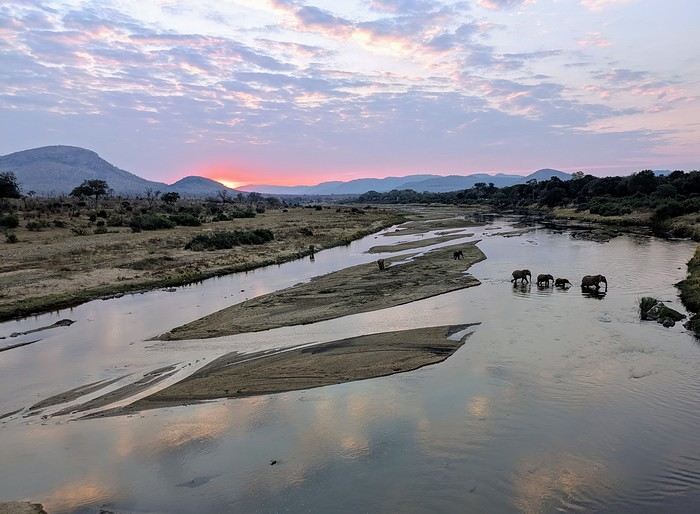
We’re back from our 3-week trip to South Africa in July. It was a family trip with our four grown-up kids (ages 18 to 25).
First off, I’d like to thank everyone on this forum for their great tips—they really helped us plan this trip!
The trip: We spent 15 days between Port Elizabeth and Cape Town, then a week around Kruger (including Blyde River Canyon). We found South Africans to be welcoming and always ready to help. We never felt unsafe (just followed basic safety rules). The police are very visible, especially on the roads.
Logistics: We’d booked our accommodations in advance but made a few changes on the spot based on how we felt at the time. We rented two vehicles from Firefly (Hertz). No complaints—recent cars, quick returns, and the deposit wasn’t charged. We’d gotten our international driver’s permits... which stayed in France! Luckily, no one asked for them. Driving on the left wasn’t an issue (it wasn’t our first time). The roads we took were in good, even great, condition. Only a few tracks to lodges or parks were rough and required extra caution. Lots of pedestrians on the sides of roads, even highways. And plenty of very slow trucks. But they pull over to let you pass. It’s also common for cars to cross into the opposite lane to overtake, even with white lines. We took two domestic flights: one early in the morning (Johannesburg to Port Elizabeth) and one in the late afternoon (Cape Town to Johannesburg) to save time.
We had some highlights and a few disappointments—all part of the journey! More details coming soon.
Driving route from Ulaanbaatar to Lake Baikal
Hello,
We're hitting the road again in 2027 to discover new countries and cultures.
Could anyone give me some tips on driving from Ulaanbaatar to Lake Baikal and the route to take?
Thanks, and safe travels to those who are setting off!
Cantal—have you heard of it?
...
After Southern Tanzania, I’m sharing a travel story about the Cantal region with you...
...
For us, at the start of 2025, Le CANTAL was a true “Terra Incognita”!!
After seeing some tempting TV reports, we decided to fill this gap—especially in terms of landscapes. On the same trip, we’ll also head to the Arcachon Basin, the International Seaplane Gathering in Biscarrosse, and my native Landes region...
So, on May 20th, we left Marseille in the rain and thunder, heading toward Nîmes, Saint-Hippolyte, Mont Aigoual, Florac, and stopping in Marvejols to give my arthritic back a break for the night.
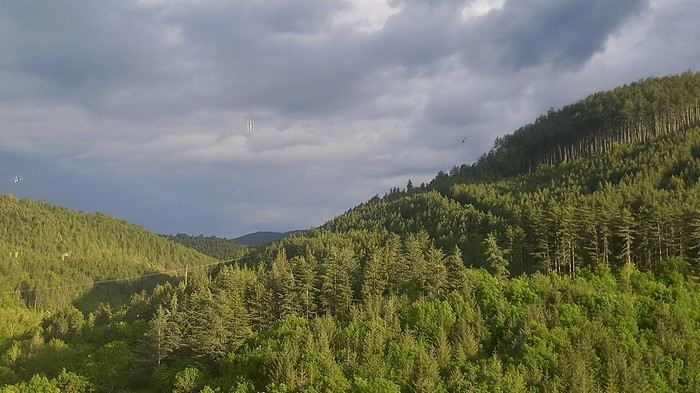
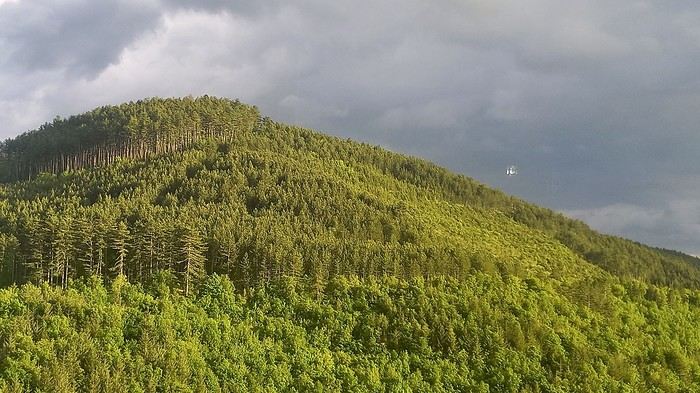
The next morning, we decided to revisit the Parc aux Loups du Gévaudan (Europe’s largest wolf park). As someone used to photo safaris in the wilds of East Africa, I’m not a fan of zoos at all—but I *do* have a deep admiration for wolves!!
Since it’s pretty unlikely I’ll ever see one in the wild, I’ll settle for this Parc aux Loups in Marvejols. This will be our third visit to this incredible gathering of these fascinating canines.
Some are still finishing their chilly night...
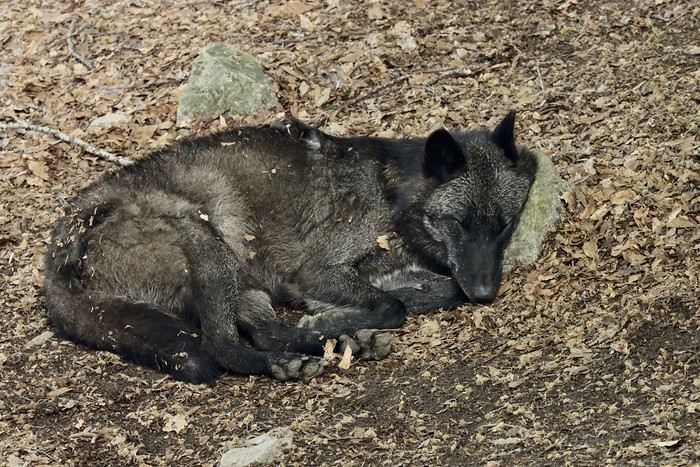
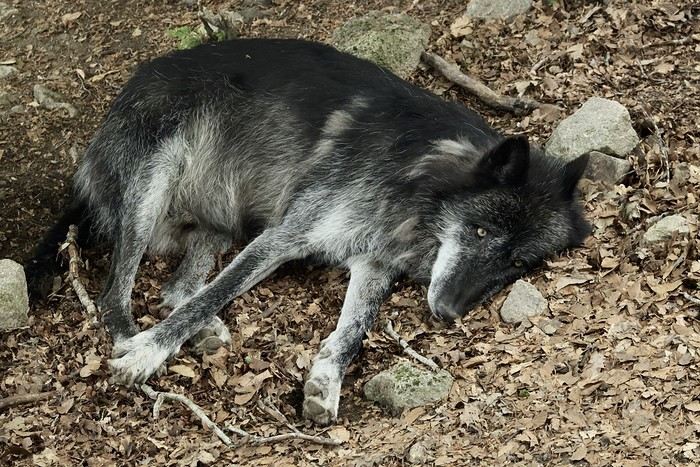
...
After Southern Tanzania, I’m sharing a travel story about the Cantal region with you...
...
For us, at the start of 2025, Le CANTAL was a true “Terra Incognita”!!
After seeing some tempting TV reports, we decided to fill this gap—especially in terms of landscapes. On the same trip, we’ll also head to the Arcachon Basin, the International Seaplane Gathering in Biscarrosse, and my native Landes region...
So, on May 20th, we left Marseille in the rain and thunder, heading toward Nîmes, Saint-Hippolyte, Mont Aigoual, Florac, and stopping in Marvejols to give my arthritic back a break for the night.
The next morning, we decided to revisit the Parc aux Loups du Gévaudan (Europe’s largest wolf park). As someone used to photo safaris in the wilds of East Africa, I’m not a fan of zoos at all—but I *do* have a deep admiration for wolves!!
Since it’s pretty unlikely I’ll ever see one in the wild, I’ll settle for this Parc aux Loups in Marvejols. This will be our third visit to this incredible gathering of these fascinating canines.
Some are still finishing their chilly night...
...
Swedish Lapland - Padjelantaledden solo trek
A travel journal—it’s been a while!
I must say, my personal situation has "changed a bit" since my last journals (my 3 kids are grown up + a divorce finalized in early 2021). So, no more long-haul family trips; now I’m focusing on multi-day hikes for my vacations. I found a hiking buddy in 2021 to join me on the Laugavegur trek in Iceland, but this year, no one was available.
That’s how the idea of a solo trek in Lapland took root—a region I’ve been dreaming about ever since I read Marie Lefevre’s 2012 journal on the topic.
Marie, who I hiked with for the first time in 2015 during my very first multi-day trek, and whom I can never thank enough for sharing her knowledge and saving me so much time.
To build my confidence for this solo trek, I hiked around Cantal in May (okay, I’m capable of spending nights alone in the middle of nowhere without being overly terrified) and camped in the Mercantour in July, where a massive storm made me realize I still had room for improvement in managing wet conditions...
After some research, I bought 2 Nylofume bags—large, ultra-lightweight ones to protect my gear in my backpack—and a set of 4 Aloksak bags in different sizes for my passport, camera, battery, etc. (and I’m so glad I did!!)
Well, I think I’m all set...
My 16/08 - Day 1 - Ritsem – Gisuris (well, almost) Wed 17/08 – Day 2 - Partly in the tent + minimal progress toward Gisuris Thu 18/08 – Day 3 - Gisuris – Laddejakha (23 km) Fri 19/08 – Day 4 – Laddejakha – Arasluokta (13 km) Sat 20/08 - Day 5 - Arasluokta – Staloluokta (12 km) Sun 21/08 – Day 6 - Staloluokta – Duottar (18 km) Mon 22/08 Day 7 - Duottar – Dareluoppal (10 km) Sammarlappa (15.3 km) Tue 23/08 - Day 8 - Sammarlappa – Tarrekaise (12 km) + halfway to Tarrekaise-Nunjes (approx. 3 km) Wed 24/08 – Day 9 – Finish Tarrekaise-Nunjes (approx. 4 km) Kvikkjokk (12.6 km) Thu 25/08 and Fri 26/08 – Around Kvikkjokk Food and gear summary
I must say, my personal situation has "changed a bit" since my last journals (my 3 kids are grown up + a divorce finalized in early 2021). So, no more long-haul family trips; now I’m focusing on multi-day hikes for my vacations. I found a hiking buddy in 2021 to join me on the Laugavegur trek in Iceland, but this year, no one was available.
That’s how the idea of a solo trek in Lapland took root—a region I’ve been dreaming about ever since I read Marie Lefevre’s 2012 journal on the topic.
Marie, who I hiked with for the first time in 2015 during my very first multi-day trek, and whom I can never thank enough for sharing her knowledge and saving me so much time.
To build my confidence for this solo trek, I hiked around Cantal in May (okay, I’m capable of spending nights alone in the middle of nowhere without being overly terrified) and camped in the Mercantour in July, where a massive storm made me realize I still had room for improvement in managing wet conditions...
After some research, I bought 2 Nylofume bags—large, ultra-lightweight ones to protect my gear in my backpack—and a set of 4 Aloksak bags in different sizes for my passport, camera, battery, etc. (and I’m so glad I did!!)
Well, I think I’m all set...
My 16/08 - Day 1 - Ritsem – Gisuris (well, almost) Wed 17/08 – Day 2 - Partly in the tent + minimal progress toward Gisuris Thu 18/08 – Day 3 - Gisuris – Laddejakha (23 km) Fri 19/08 – Day 4 – Laddejakha – Arasluokta (13 km) Sat 20/08 - Day 5 - Arasluokta – Staloluokta (12 km) Sun 21/08 – Day 6 - Staloluokta – Duottar (18 km) Mon 22/08 Day 7 - Duottar – Dareluoppal (10 km) Sammarlappa (15.3 km) Tue 23/08 - Day 8 - Sammarlappa – Tarrekaise (12 km) + halfway to Tarrekaise-Nunjes (approx. 3 km) Wed 24/08 – Day 9 – Finish Tarrekaise-Nunjes (approx. 4 km) Kvikkjokk (12.6 km) Thu 25/08 and Fri 26/08 – Around Kvikkjokk Food and gear summary
The Extraordinary Painted Houses Village of Tam Thanh near Hoi An
Not sure if I’ve already posted this, so here it is again!
https://hiddenhoian.com/travel/tam-thanh-mural-village/
Imagine a peaceful coastal fishing village completely transformed by artists who worked their magic on the walls of 100 residential houses. That’s the remarkable story of the Tam Thanh mural village in Quang Nam province. Once similar to many other coastal villages in the area, it now firmly stands out on the tourist map for day trips from Hoi An. In the summer of 2016, Tam Thanh was selected by a joint Korean-Vietnamese project called “Art For A Better Community.” The village was chosen to be their blank canvas, inspired by the success of mural villages in Korea. The project aimed to make Tam Thanh the first painted village of its kind in Vietnam. The team included five Korean artists and seven Vietnamese artists, along with local volunteers. Their goal was to show Vietnamese people that art could be part of everyday life, no matter their place in society. The effort began with about three weeks of wall washing, followed by painting the walls of over 100 residents’ homes. The project was a success, and the village came alive with the paintings. The entire village is now a breathtaking gallery just waiting to be explored. The murals capture the life and soul of the village, from young children playing to fishermen in the ocean. A mix of fantastic pieces offers stunning backdrops for photos. The painted art around the town hasn’t just had a visual impact—it’s also had a social one. The village was chosen not only for the layout of the houses but also to contribute to economic development opportunities in Tam Thanh. Tourists now visit the once-overlooked village, creating more income for locals and making it a successful “art for a cause” project. For example, one entrepreneurial resident who owned a small local café invested 000,000 VND (390 USD) in a sugarcane press a week before the paintings were completed. Sugarcane juice vendors then multiplied with the growth of tourism (5,000 VND - 0.20 USD). Walking down the village’s single street, it’s common to find locals selling refreshments and handmade crafts. In one house in particular, a tailor and his family are painted on an outer wall with incredible detail. The family started selling tote bags decorated by their young daughter. The price for the bags is 100,000 VND (4 USD). If you’re looking for a way to support the village’s economy, this is it. Since there’s no middleman here, you can be sure your money goes directly to the community. You can have lunch at a house with a terrace right by the beach at the edge of the village.
How to Get There Route No. 1: Cross the large Cua Đai bridge. Once you’ve crossed it, continue toward Duong 129/Duong Ven Bien. Stay on this road for 33 kilometers. Upside: this route has light traffic, no traffic lights, and no trucks or buses. It’s a great direct route to the village but offers little to see along the way. You’ll eventually reach a crossroads. Turn right toward Tam Ky town, while the left will take you toward the Tam Thanh mural village. Stay on Route 608 as it turns twice before reaching a bridge. Cross the bridge, and you’ll arrive at Thanh Nien Road. Finally, turn right to reach the village. This route takes about an hour. Use your best judgment. For reference, it costs about 5,000 VND (0.20 USD) to park a motorbike.
Route #2: Cross the large Cua Đai bridge. Once you’ve crossed it, continue toward Duong 129/Duong Ven Bien. Stay on this road for 12 kilometers, then turn left onto Route 613, where you’ll continue for 1.5 kilometers until you reach Thanh Nien Road. Finally, turn right and drive 23 kilometers to the painted village. For most of the trip, taking Thanh Nien Road will take you through a much more local part of the region. The journey takes about an hour and a half.
https://hiddenhoian.com/travel/tam-thanh-mural-village/
Imagine a peaceful coastal fishing village completely transformed by artists who worked their magic on the walls of 100 residential houses. That’s the remarkable story of the Tam Thanh mural village in Quang Nam province. Once similar to many other coastal villages in the area, it now firmly stands out on the tourist map for day trips from Hoi An. In the summer of 2016, Tam Thanh was selected by a joint Korean-Vietnamese project called “Art For A Better Community.” The village was chosen to be their blank canvas, inspired by the success of mural villages in Korea. The project aimed to make Tam Thanh the first painted village of its kind in Vietnam. The team included five Korean artists and seven Vietnamese artists, along with local volunteers. Their goal was to show Vietnamese people that art could be part of everyday life, no matter their place in society. The effort began with about three weeks of wall washing, followed by painting the walls of over 100 residents’ homes. The project was a success, and the village came alive with the paintings. The entire village is now a breathtaking gallery just waiting to be explored. The murals capture the life and soul of the village, from young children playing to fishermen in the ocean. A mix of fantastic pieces offers stunning backdrops for photos. The painted art around the town hasn’t just had a visual impact—it’s also had a social one. The village was chosen not only for the layout of the houses but also to contribute to economic development opportunities in Tam Thanh. Tourists now visit the once-overlooked village, creating more income for locals and making it a successful “art for a cause” project. For example, one entrepreneurial resident who owned a small local café invested 000,000 VND (390 USD) in a sugarcane press a week before the paintings were completed. Sugarcane juice vendors then multiplied with the growth of tourism (5,000 VND - 0.20 USD). Walking down the village’s single street, it’s common to find locals selling refreshments and handmade crafts. In one house in particular, a tailor and his family are painted on an outer wall with incredible detail. The family started selling tote bags decorated by their young daughter. The price for the bags is 100,000 VND (4 USD). If you’re looking for a way to support the village’s economy, this is it. Since there’s no middleman here, you can be sure your money goes directly to the community. You can have lunch at a house with a terrace right by the beach at the edge of the village.
How to Get There Route No. 1: Cross the large Cua Đai bridge. Once you’ve crossed it, continue toward Duong 129/Duong Ven Bien. Stay on this road for 33 kilometers. Upside: this route has light traffic, no traffic lights, and no trucks or buses. It’s a great direct route to the village but offers little to see along the way. You’ll eventually reach a crossroads. Turn right toward Tam Ky town, while the left will take you toward the Tam Thanh mural village. Stay on Route 608 as it turns twice before reaching a bridge. Cross the bridge, and you’ll arrive at Thanh Nien Road. Finally, turn right to reach the village. This route takes about an hour. Use your best judgment. For reference, it costs about 5,000 VND (0.20 USD) to park a motorbike.
Route #2: Cross the large Cua Đai bridge. Once you’ve crossed it, continue toward Duong 129/Duong Ven Bien. Stay on this road for 12 kilometers, then turn left onto Route 613, where you’ll continue for 1.5 kilometers until you reach Thanh Nien Road. Finally, turn right and drive 23 kilometers to the painted village. For most of the trip, taking Thanh Nien Road will take you through a much more local part of the region. The journey takes about an hour and a half.
Website with suggested visit duration for a country or city
Hi, I’d love to know if there’s a website that gives a rough idea of how much time you should spend visiting a particular city or country.
I know my question is super general, but it’d be really great if such a site existed.
Thanks in advance for your help. Take care and happy travels.
Régine
Thanks in advance for your help. Take care and happy travels.
Régine
Review of a Norway cruise on the Emerald Princess in June 2025 (1)
Hello everyone,
I’ve wanted to take this Norway cruise for a very long time. The first time I booked it was in July 2020 with Azamara. Unfortunately, it was canceled, as everyone remembers. When I tried to book it again, the prices (already a bit high with Azamara) had simply doubled. So, since then, I’ve been keeping an eye out every year for any opportunities...
The last time we sailed with Princess was eleven years ago, and things didn’t go very well. I came back pretty unhappy with their service and quite disappointed. Despite the $600 they gave me as credit for a future cruise, I’d never set foot on one of their ships again.
But this time, the opportunity arose—a fantastic itinerary with lots of stops, a reasonable price for 16 nights (I’ll share the details in the conclusion), and a ship that’s not too big, so to speak, with only 3,000 passengers. I’m not expecting much from the cruise line this time and am boarding the ship with low expectations beyond the itinerary.
Princess has introduced an app to download before the cruise. It’s essential because online check-in is no longer available, and the agency doesn’t send a travel journal. Everything is done through the app. After completing the check-in on the app, we only know that we’ll need to pick up our key, the Medallion, at embarkation by following the blue line in the terminal and presenting our passport.

Up until our departure, the weather forecast for the coming week in Norway is disastrous—rain, rain, and more rain. It was pretty much the same two years ago before our Iceland cruise, and in the end, the weather turned out fine.
If you’re ready to embark on the Emerald Princess to discover this beautiful cruise and the stunning landscapes of Norway, let’s go!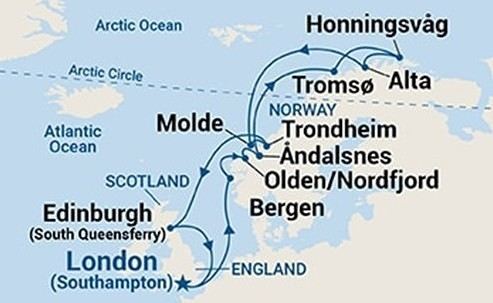
Southampton - Sea day - Bergen - Olden - Åndalsnes - Sea day - Tromsø - Honningsvåg (North Cape) - Alta - Sea day - Molde - Trondheim - Two sea days - Edinburgh - Sea day - Southampton
I’ve wanted to take this Norway cruise for a very long time. The first time I booked it was in July 2020 with Azamara. Unfortunately, it was canceled, as everyone remembers. When I tried to book it again, the prices (already a bit high with Azamara) had simply doubled. So, since then, I’ve been keeping an eye out every year for any opportunities...
The last time we sailed with Princess was eleven years ago, and things didn’t go very well. I came back pretty unhappy with their service and quite disappointed. Despite the $600 they gave me as credit for a future cruise, I’d never set foot on one of their ships again.
But this time, the opportunity arose—a fantastic itinerary with lots of stops, a reasonable price for 16 nights (I’ll share the details in the conclusion), and a ship that’s not too big, so to speak, with only 3,000 passengers. I’m not expecting much from the cruise line this time and am boarding the ship with low expectations beyond the itinerary.
Princess has introduced an app to download before the cruise. It’s essential because online check-in is no longer available, and the agency doesn’t send a travel journal. Everything is done through the app. After completing the check-in on the app, we only know that we’ll need to pick up our key, the Medallion, at embarkation by following the blue line in the terminal and presenting our passport.
Up until our departure, the weather forecast for the coming week in Norway is disastrous—rain, rain, and more rain. It was pretty much the same two years ago before our Iceland cruise, and in the end, the weather turned out fine.
If you’re ready to embark on the Emerald Princess to discover this beautiful cruise and the stunning landscapes of Norway, let’s go!
Southampton - Sea day - Bergen - Olden - Åndalsnes - Sea day - Tromsø - Honningsvåg (North Cape) - Alta - Sea day - Molde - Trondheim - Two sea days - Edinburgh - Sea day - Southampton
Looking for recent feedback on crossing the Sahara and Mauritania in a motorhome
Hello everyone! 👋
First of all, thank you for accepting us into the group. 😊
My name is Gérard, I’m a 77-year-old retiree, and I have a charming young wife of 70 and a sweet little Biewer dog celebrating his first birthday. 🎂🎉
The three of us are planning to leave from Cannes in our motorhome and head to Dakar.
Personally, I know this route very well, having done it three times in a 4x4, the last trip being in 2016.
Regarding Western Sahara, I know it’s not particularly recommended to cross it right now, but I haven’t heard any bad news about it yet.
As for crossing the "no man’s land," I remember it being a very difficult track, impassable with a motorhome. I’ve heard that they’ve recently improved the track and that it might now be possible to cross those 4 km with a motorhome (?)
Actually, I’m reaching out to experienced travelers who could give me their thoughts on crossing at the end of 2025. 🙏
By the way, if other motorhome travelers have the same plan, maybe we could discuss it together? 🤝
As for Mauritania, I know it’s a long stretch of tarmac, and from what I remember—aside from the "Gare du Nord" stop to refuel and enjoy a good tea—you have to switch to "survival mode."
That’s all for my little chat! I hope to gather some useful information.
Thank you all for taking the time to read this, and I wish you a great 14th of July.
Gérard, Martine, and Bahia 🐾
First of all, thank you for accepting us into the group. 😊
My name is Gérard, I’m a 77-year-old retiree, and I have a charming young wife of 70 and a sweet little Biewer dog celebrating his first birthday. 🎂🎉
The three of us are planning to leave from Cannes in our motorhome and head to Dakar.
Personally, I know this route very well, having done it three times in a 4x4, the last trip being in 2016.
Regarding Western Sahara, I know it’s not particularly recommended to cross it right now, but I haven’t heard any bad news about it yet.
As for crossing the "no man’s land," I remember it being a very difficult track, impassable with a motorhome. I’ve heard that they’ve recently improved the track and that it might now be possible to cross those 4 km with a motorhome (?)
Actually, I’m reaching out to experienced travelers who could give me their thoughts on crossing at the end of 2025. 🙏
By the way, if other motorhome travelers have the same plan, maybe we could discuss it together? 🤝
As for Mauritania, I know it’s a long stretch of tarmac, and from what I remember—aside from the "Gare du Nord" stop to refuel and enjoy a good tea—you have to switch to "survival mode."
That’s all for my little chat! I hope to gather some useful information.
Thank you all for taking the time to read this, and I wish you a great 14th of July.
Gérard, Martine, and Bahia 🐾
Holiday in Brittany: Pink Granite Coast and Cornwall
We were invited to a friend’s wedding in this beautiful part of Brittany, so we took the opportunity to spend a few days there—first on the Pink Granite Coast and then in Cornwall.
Our friends, who are from the Trégor region, had found us a really nice little gîte in Tonquédec, just a stone’s throw from the coast. It was the perfect base for exploring the area’s iconic sites. We stayed in a lovely little house that combined authenticity, comfort, elegance, and tranquility.
Our first trip to the coast was to Ploumanac’h, a small village we discovered thanks to Stéphane Bern’s show. It’s an adorable little fishing port where we parked the car before continuing on foot along the sea. It’s charming—more than that, it’s magical!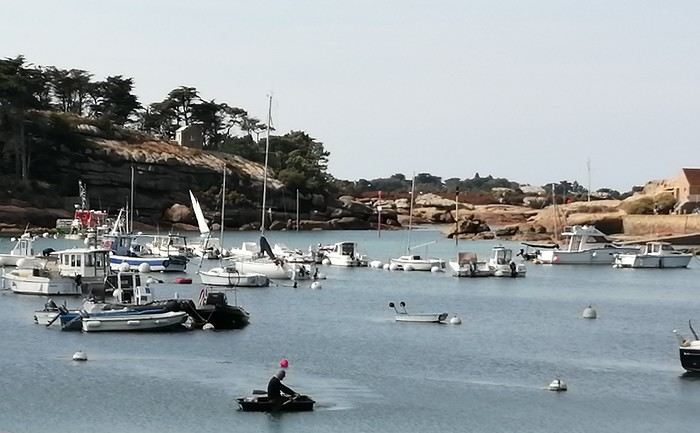
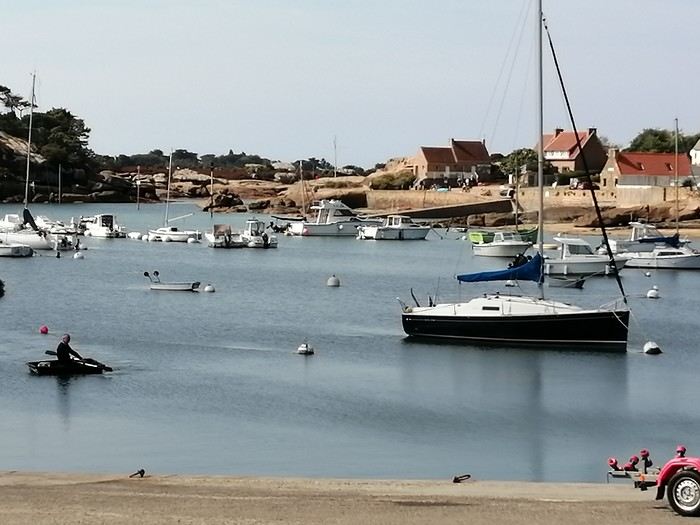
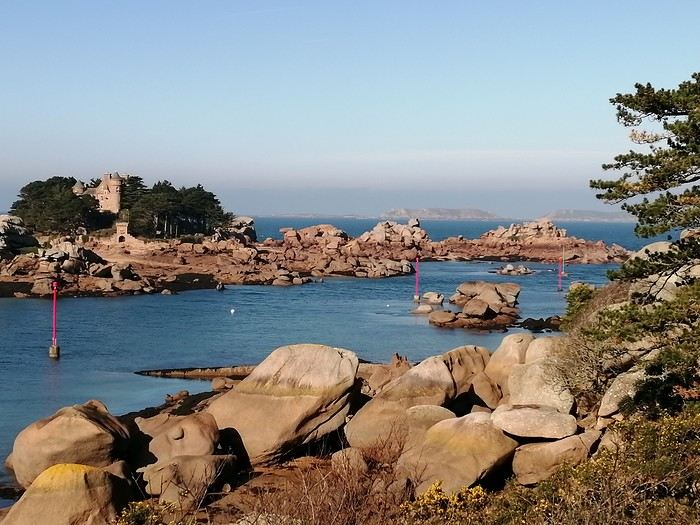
Our first walk, our first hike along the coastal path, and our first photos of these massive rocks bathed in light.
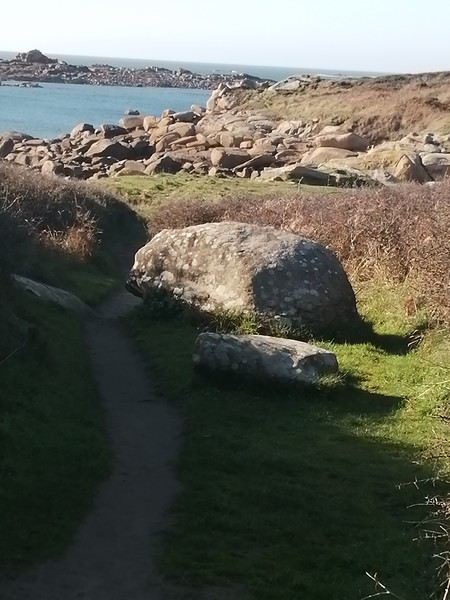
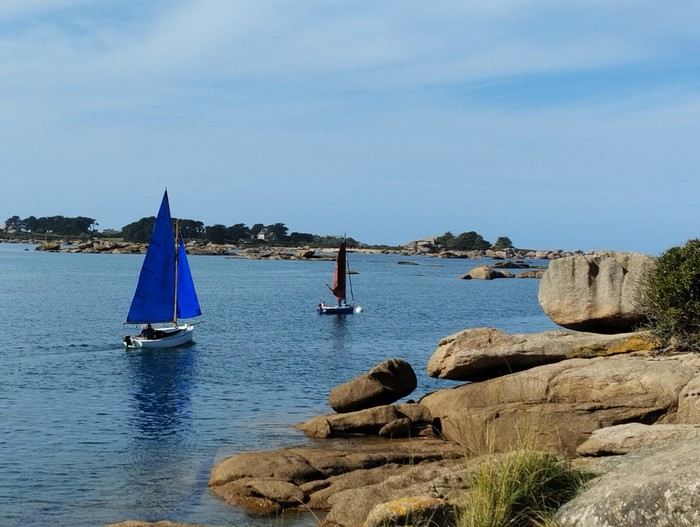
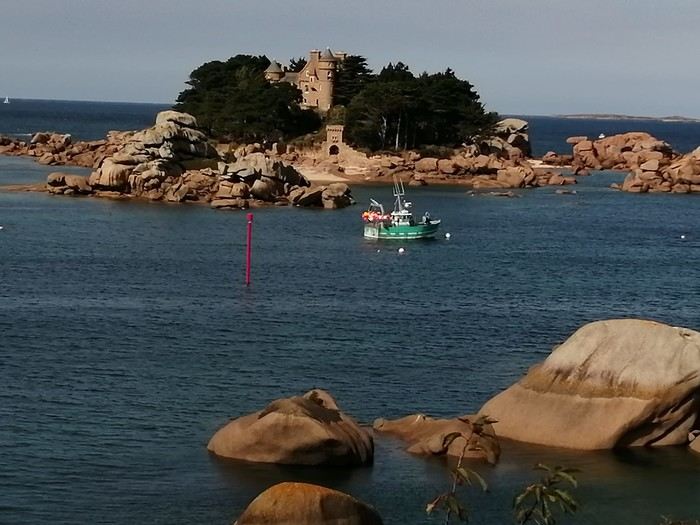
The views change with every turn, and so do the surprises—especially the view of the Château de Costaérès.
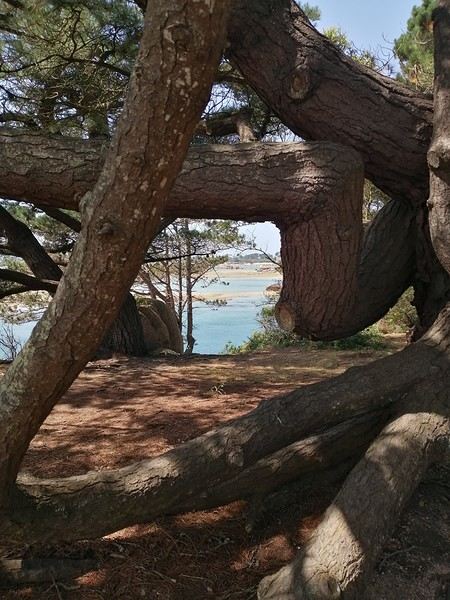
 The path through the woods leads us to the Chapel of Saint Guirec, which overlooks the beach.
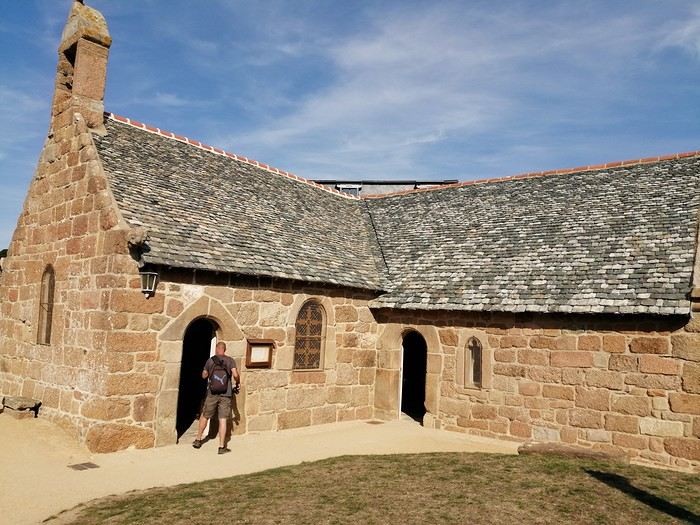
This pretty little beach is famous for its oratory, which sits in the middle of the sand and houses the statue of St. Guirec. In the past, young women hoping to marry within the year would often pray to him—they’d stick a needle into his nose! Today, the statue is made of stone, but back then, it was wooden, which must’ve made it easier.
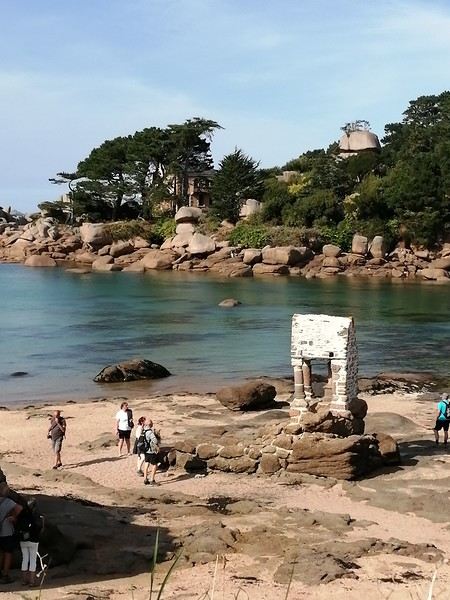
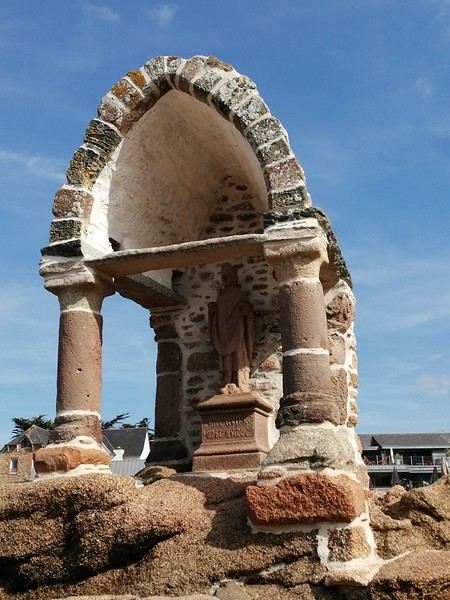
It’s really charming, well-sheltered, and the water is crystal clear. We noticed that everywhere we went!
Our first trip to the coast was to Ploumanac’h, a small village we discovered thanks to Stéphane Bern’s show. It’s an adorable little fishing port where we parked the car before continuing on foot along the sea. It’s charming—more than that, it’s magical!
Our first walk, our first hike along the coastal path, and our first photos of these massive rocks bathed in light.
The views change with every turn, and so do the surprises—especially the view of the Château de Costaérès.
The path through the woods leads us to the Chapel of Saint Guirec, which overlooks the beach.This pretty little beach is famous for its oratory, which sits in the middle of the sand and houses the statue of St. Guirec. In the past, young women hoping to marry within the year would often pray to him—they’d stick a needle into his nose! Today, the statue is made of stone, but back then, it was wooden, which must’ve made it easier.
It’s really charming, well-sheltered, and the water is crystal clear. We noticed that everywhere we went!
Wood in all its forms – July 2025 photography contest
Hi everyone,
This month’s contest theme is WOOD. Wood as a plant material—roots, trunks, branches that make up a tree. Dead or alive, splinters and knots. Sawdust too. Firewood, from the woodshed to the hearth. Wood as a crafting material and all the things it can become: from a spoon to a violin, a boat to a stave church, and so much more—way too long to list! 😉
Technical details:
1. Each of you can post up to 3 photos. One photo per message, numbered 1 to 3. Along with the shot, feel free to share a few written details—location, context, anecdote, or photography technique. Photos can be submitted until Tuesday, July 22 at midnight, Milan time.
2. Voting will take place from Wednesday, July 23 at 00:00 until Tuesday, July 29 at midnight. All forum members can vote for their 3 favorite photos, listing the photographer’s name and the photo number in order of preference: 3 points for first place, 2 for second, and 1 for third.
3. Results will be announced on Wednesday, July 30 during the day. In case of a tie, the number of first-place votes will decide. Photos already featured on a podium are not eligible to compete.
The winner will have the special privilege of organizing August’s contest.
This thread is reserved for contest photos. For other wood-themed photos and general discussions, head here.
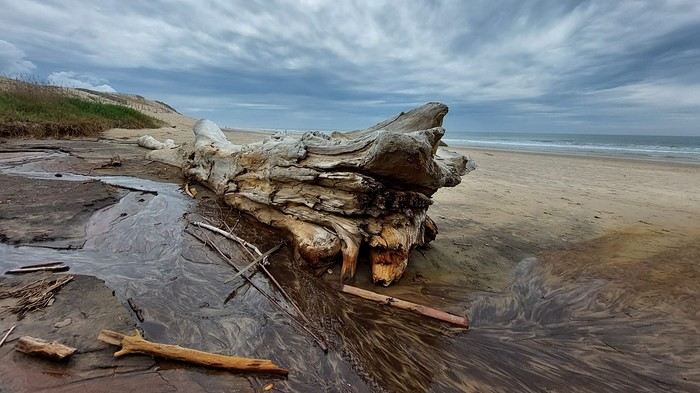
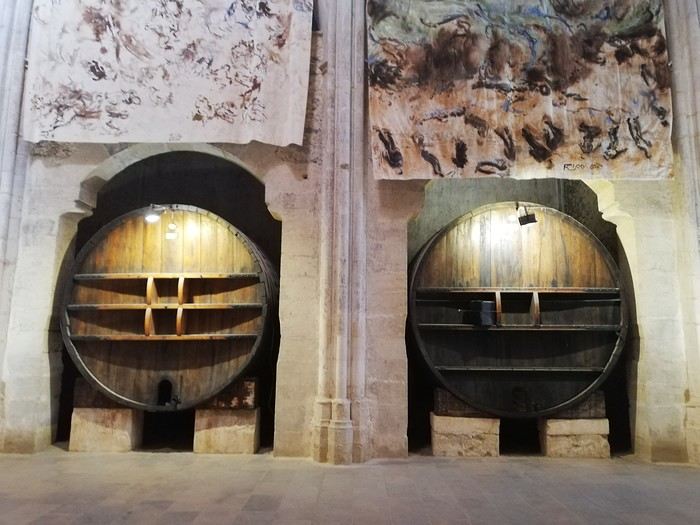
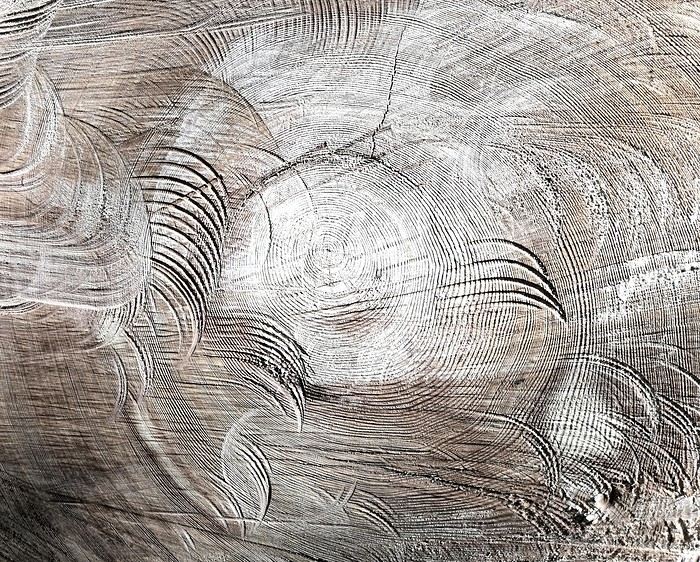
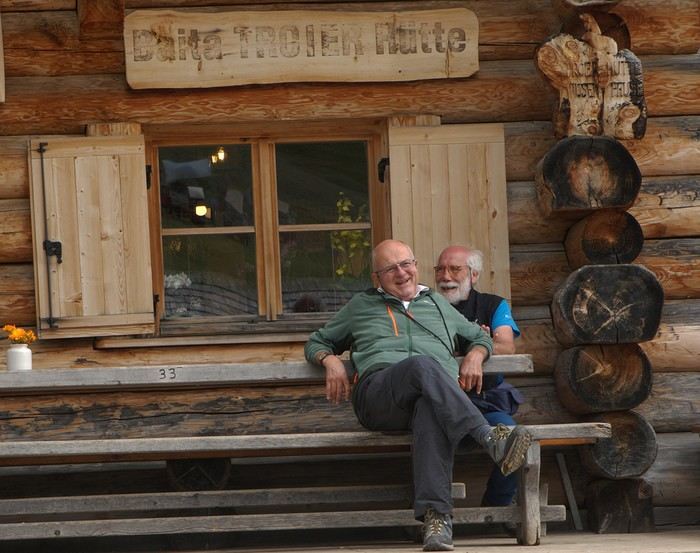
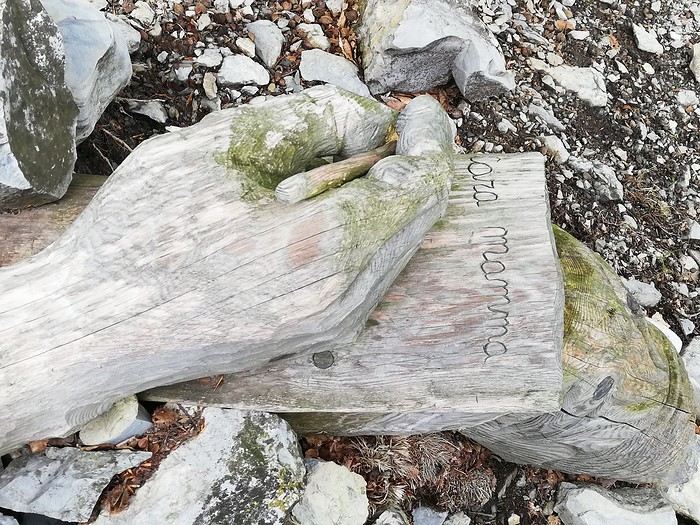

Alright, your turn! 😛
Catherine
This month’s contest theme is WOOD. Wood as a plant material—roots, trunks, branches that make up a tree. Dead or alive, splinters and knots. Sawdust too. Firewood, from the woodshed to the hearth. Wood as a crafting material and all the things it can become: from a spoon to a violin, a boat to a stave church, and so much more—way too long to list! 😉
Technical details:
1. Each of you can post up to 3 photos. One photo per message, numbered 1 to 3. Along with the shot, feel free to share a few written details—location, context, anecdote, or photography technique. Photos can be submitted until Tuesday, July 22 at midnight, Milan time.
2. Voting will take place from Wednesday, July 23 at 00:00 until Tuesday, July 29 at midnight. All forum members can vote for their 3 favorite photos, listing the photographer’s name and the photo number in order of preference: 3 points for first place, 2 for second, and 1 for third.
3. Results will be announced on Wednesday, July 30 during the day. In case of a tie, the number of first-place votes will decide. Photos already featured on a podium are not eligible to compete.
The winner will have the special privilege of organizing August’s contest.
This thread is reserved for contest photos. For other wood-themed photos and general discussions, head here.
Alright, your turn! 😛
Catherine
Africa Round Trip: Questions About Vehicle Type and Roads
Hi there!
I'm considering doing a round trip of Africa, starting in Morocco, then following the west coast down to the south, and finally heading back up along the east coast.
However, I have some big questions about the route:
From what I've gathered after a lot of research, the road seems quite doable without a 4x4 as far as Senegal, or even Benin?
It's between Benin and Namibia that it would get really tough, and I'd either need a 4x4 or to ship my vehicle if I'm in a converted H2L2 van (not 4x4)?
Could someone clarify this for me?
Otherwise, it seems like Southern, Northern, and Eastern Africa are accessible without a 4x4?
As for the vehicle, if a 4x4 is essential, I'm torn between: Kangoo 4x4 Lada Niva 4x4 standard C15 C15 4x4 Renault Trafic 4x4 (H2L2, so still quite large) or a Subaru Libero 4x4
Or would it even be possible with a simple Twingo? ^
But is that enough, or do I absolutely need a 4x4 like a Toyota, Land Rover, or something similar?
Those are my current questions! If anyone has some answers, that would be amazing!
Thanks so much!
I'm considering doing a round trip of Africa, starting in Morocco, then following the west coast down to the south, and finally heading back up along the east coast.
However, I have some big questions about the route:
From what I've gathered after a lot of research, the road seems quite doable without a 4x4 as far as Senegal, or even Benin?
It's between Benin and Namibia that it would get really tough, and I'd either need a 4x4 or to ship my vehicle if I'm in a converted H2L2 van (not 4x4)?
Could someone clarify this for me?
Otherwise, it seems like Southern, Northern, and Eastern Africa are accessible without a 4x4?
As for the vehicle, if a 4x4 is essential, I'm torn between: Kangoo 4x4 Lada Niva 4x4 standard C15 C15 4x4 Renault Trafic 4x4 (H2L2, so still quite large) or a Subaru Libero 4x4
Or would it even be possible with a simple Twingo? ^
But is that enough, or do I absolutely need a 4x4 like a Toyota, Land Rover, or something similar?
Those are my current questions! If anyone has some answers, that would be amazing!
Thanks so much!
First trip to Sardinia from 04/12/24 to 04/21/24
I just got back from Sardinia 2 and wanted to share my little recap with you.
It’s a stunning country, and the people are so welcoming.
We were lucky to see it at the end of April—I wouldn’t go in July or August because it gets overcrowded and loses its charm!!!
SARDINIA 2: 10 days
-Departure from Geneva to Olbia on Friday, 04/12/24 with EasyJet: 1h30 flight -Return from Cagliari to Geneva on Sunday, 04/21/24 with EasyJet: 1h40 flight (Round-trip price: 314 €) -Car rental with Locauto: 250 €, including 51 € for "full" insurance + 87 € (drop-off at a different airport) -Accommodation every night via Booking 13: room + kitchen *OLBIA: Arrival at the airport… wasted time at Locauto because there was only one person at the desk (you can check in online and send the driver’s license and ID, but it was impossible to do!) Headed to our lodging. *COSTA SMERALDA: The part we liked the least… everything feels artificial since the billionaires moved in (Porto Rotondo, Porto Cervo, Baia di Sardinia). We regret not stopping at Golfo Aranci to see its underwater art museum, Mumart. *ARZACHENA and its archaeological park (Tomba dei Giganti: Coddu Ecchju, Li Muri, Nuraghe la Prisgiona) to see in beautiful nature. Coastal road toward Palau (lagoons with lots of birds). *PALAU: Ferries to La Maddalena Island every 15/30 minutes (37 € for 2 people + 1 car). *** La Maddalena is part of an archipelago with 7 large islands and small islets… absolutely stunning… views of Corsica! *** -La Maddalena: A charming little town with narrow streets. -Follow the scenic coastal road that loops around the island for 21 km (gorgeous). -On the east side of the island, take a 600m bridge to Caprera Island (lots of great hiking trails). -Lots of beaches with granite rocks and wild coves. -Return by ferry to Palau. *SANTA TERESA GALLURA: Departure for Bonifacio 2, 4 km to Capo Testa (cape with a lighthouse… granite rocks). Here, there were Roman quarries. *Drive down a beautiful road along the Costa Paradiso (red trachyte). *CASTELSARDO: A fortified hilltop town worth seeing. *PORTO TORRES: Visit the Basilica San Gavino. *STINTINO and its beaches, including La Pelosa with its Genoese tower… too crowded for us! *Viewpoint at Capo Falcone with a view of Parco dell’Asinara (we didn’t have time to go, but it’s a must). *Drive down to Argentiera via small coastal roads (old lead, zinc, and silver mines). A "ghost town" with a museum that’s apparently only open on weekends at this time of year. *Small road (with stunning sea views) toward Grotta di Nettuno (you get there by a long staircase, but it was too windy and closed!). Capo Caccia. *Drive down (along lagoons with birds, including pink flamingos) toward Alghero (historic center: ramparts, bell tower, churches). The city of coral and lobsters! *Drive along the sea to Bosa, a colorful little town (Malvasia vineyards) between the Temo River and the sea. *Road to Montiferru Castle on a volcanic massif—ruins of the castle with a beautiful panorama of rolling hills (cork oak forests, chestnut trees, oaks) and cultivated plots. *** Cuglieri: Olive oil museum *** *Santa Caterina di Pittinuri, S’Archittu (many beaches with limestone cliffs) (many archaeological sites). *SINIS PENINSULA: Cabras and its lagoons with lots of pink flamingos. Archaeological museum with its Nuragic giants. *Archaeological site of Tharros. *ORISTANO: Not much visited, but it has some beautiful buildings. A traditional Sardinian pastry shop—an absolute delight (DELIGIA, Via Figoli 61). *Road surrounded by marshes, along the coast with beautiful little beaches. *Arrival at Costa Verde: The Piscinas dunes and beaches are stunning. Miniera Montevecchio and the surrounding old mines (Iglesiente road) (Naracauli, Ingurtosu). *** Near Guspini, in the mountains, visit the village of Arbus, where many Sardinian knife makers are based. But make the detour to meet Paolo Pusceddu, the master knife maker who opens his workshop and created the *Museo del Coltello Sardo* Via Roma, 15 · +39 349 053 7765. Absolutely fascinating and super interesting… he also sells his knives at very reasonable prices. *Masua (mines) then Pan di Zucchero. *Porto Flavia: Transport of minerals from a port carved into the cliff with two 600m tunnels… the visit is a must. *IGLESIAS: Worth visiting. *ISOLA DI SANT’ANTIOCO: A bridge connects it to Sardinia 2. Drive around the island via small roads. Calasetta (white and blue houses), Nido del Passeri, Cala Lunga, Capo Sperone, Turri. Beautiful beaches and stunning views. *Road to Teulada, then Chia (see the small road from Chia to Tuerredda). *PULA: Archaeological site of Nora. *CAPOTERRA: We ended our trip with a night at an agriturismo in the middle of olive groves, "Azienda Agricola Corte degli Ulivi" (Pixina Sa Murta, Marco: +39 347 246 2361). Unforgettable welcome, eco-friendly place (wooden house with water and electricity self-sufficiency). *Cagliari airport. In total, 1000 km, and we still didn’t finish exploring (the area south of Olbia and the interior are still on the list). The Sardinians are very welcoming. Sardinia 2 is diverse (beaches, countryside, towns, archaeological sites…). We were lucky to visit at the end of April—summer must be awful with the heat and tourist crowds! Easy to visit with kids.
-Departure from Geneva to Olbia on Friday, 04/12/24 with EasyJet: 1h30 flight -Return from Cagliari to Geneva on Sunday, 04/21/24 with EasyJet: 1h40 flight (Round-trip price: 314 €) -Car rental with Locauto: 250 €, including 51 € for "full" insurance + 87 € (drop-off at a different airport) -Accommodation every night via Booking 13: room + kitchen *OLBIA: Arrival at the airport… wasted time at Locauto because there was only one person at the desk (you can check in online and send the driver’s license and ID, but it was impossible to do!) Headed to our lodging. *COSTA SMERALDA: The part we liked the least… everything feels artificial since the billionaires moved in (Porto Rotondo, Porto Cervo, Baia di Sardinia). We regret not stopping at Golfo Aranci to see its underwater art museum, Mumart. *ARZACHENA and its archaeological park (Tomba dei Giganti: Coddu Ecchju, Li Muri, Nuraghe la Prisgiona) to see in beautiful nature. Coastal road toward Palau (lagoons with lots of birds). *PALAU: Ferries to La Maddalena Island every 15/30 minutes (37 € for 2 people + 1 car). *** La Maddalena is part of an archipelago with 7 large islands and small islets… absolutely stunning… views of Corsica! *** -La Maddalena: A charming little town with narrow streets. -Follow the scenic coastal road that loops around the island for 21 km (gorgeous). -On the east side of the island, take a 600m bridge to Caprera Island (lots of great hiking trails). -Lots of beaches with granite rocks and wild coves. -Return by ferry to Palau. *SANTA TERESA GALLURA: Departure for Bonifacio 2, 4 km to Capo Testa (cape with a lighthouse… granite rocks). Here, there were Roman quarries. *Drive down a beautiful road along the Costa Paradiso (red trachyte). *CASTELSARDO: A fortified hilltop town worth seeing. *PORTO TORRES: Visit the Basilica San Gavino. *STINTINO and its beaches, including La Pelosa with its Genoese tower… too crowded for us! *Viewpoint at Capo Falcone with a view of Parco dell’Asinara (we didn’t have time to go, but it’s a must). *Drive down to Argentiera via small coastal roads (old lead, zinc, and silver mines). A "ghost town" with a museum that’s apparently only open on weekends at this time of year. *Small road (with stunning sea views) toward Grotta di Nettuno (you get there by a long staircase, but it was too windy and closed!). Capo Caccia. *Drive down (along lagoons with birds, including pink flamingos) toward Alghero (historic center: ramparts, bell tower, churches). The city of coral and lobsters! *Drive along the sea to Bosa, a colorful little town (Malvasia vineyards) between the Temo River and the sea. *Road to Montiferru Castle on a volcanic massif—ruins of the castle with a beautiful panorama of rolling hills (cork oak forests, chestnut trees, oaks) and cultivated plots. *** Cuglieri: Olive oil museum *** *Santa Caterina di Pittinuri, S’Archittu (many beaches with limestone cliffs) (many archaeological sites). *SINIS PENINSULA: Cabras and its lagoons with lots of pink flamingos. Archaeological museum with its Nuragic giants. *Archaeological site of Tharros. *ORISTANO: Not much visited, but it has some beautiful buildings. A traditional Sardinian pastry shop—an absolute delight (DELIGIA, Via Figoli 61). *Road surrounded by marshes, along the coast with beautiful little beaches. *Arrival at Costa Verde: The Piscinas dunes and beaches are stunning. Miniera Montevecchio and the surrounding old mines (Iglesiente road) (Naracauli, Ingurtosu). *** Near Guspini, in the mountains, visit the village of Arbus, where many Sardinian knife makers are based. But make the detour to meet Paolo Pusceddu, the master knife maker who opens his workshop and created the *Museo del Coltello Sardo* Via Roma, 15 · +39 349 053 7765. Absolutely fascinating and super interesting… he also sells his knives at very reasonable prices. *Masua (mines) then Pan di Zucchero. *Porto Flavia: Transport of minerals from a port carved into the cliff with two 600m tunnels… the visit is a must. *IGLESIAS: Worth visiting. *ISOLA DI SANT’ANTIOCO: A bridge connects it to Sardinia 2. Drive around the island via small roads. Calasetta (white and blue houses), Nido del Passeri, Cala Lunga, Capo Sperone, Turri. Beautiful beaches and stunning views. *Road to Teulada, then Chia (see the small road from Chia to Tuerredda). *PULA: Archaeological site of Nora. *CAPOTERRA: We ended our trip with a night at an agriturismo in the middle of olive groves, "Azienda Agricola Corte degli Ulivi" (Pixina Sa Murta, Marco: +39 347 246 2361). Unforgettable welcome, eco-friendly place (wooden house with water and electricity self-sufficiency). *Cagliari airport. In total, 1000 km, and we still didn’t finish exploring (the area south of Olbia and the interior are still on the list). The Sardinians are very welcoming. Sardinia 2 is diverse (beaches, countryside, towns, archaeological sites…). We were lucky to visit at the end of April—summer must be awful with the heat and tourist crowds! Easy to visit with kids.
What itinerary for 3 weeks in Cambodia?
So, my flight tickets have just been booked for a trip to Cambodia from November 4th to 27th, 2025.
I’ll be traveling solo and want to explore this amazing country while getting a bit off the beaten path.
I’m arriving in Phnom Penh and also departing from Phnom Penh.
My goal is to travel as much as possible by bus and scooter.
What itinerary would you recommend?
What are the must-do things?
I’m open to all tips and info.
Thanks in advance for your help and responses.
What to see and do around Valensole?
Hi there,
We’re heading to Forcalquier as a couple and would love to explore the Valensole area, including the Verdon Gorge, etc. We’ll be there for 5 days, so I’d like to put together a little rundown of things to see, plus the best tips—what to avoid, what to recommend, restaurants, and so on.
Thanks so much!
One-week itinerary in Croatia (Split)
Hi there,
I’m in the middle of planning our trip to Croatia. We’re arriving in early September for a week in Split and leaving from Split as well. We’re a couple with a 20-month-old little girl. We’re renting a car directly at the airport, which I still need to book (I have a GOLD debit card). I hope that won’t be an issue because, logically, with this card, I shouldn’t need to take out extra insurance from the rental company. If you have any recommendations on that, I’d love to hear them.
As for the itinerary I’m planning, I’ve already ruled out Plitvice and Zadar because we don’t want to spend too much time on the road—this is a vacation, after all—and some travelers told me Zadar can be seen quickly and isn’t worth the long drive. For the nights, someone already suggested we spend the last two in Trogir to consolidate.
I particularly love beautiful towns, historic centers, ports, taking photos, shopping, beaches, and seeing stunning places. We’re not big on museums, and hiking with a little one makes long or steep hikes tricky, especially with the heat we might encounter.
Here’s the initial plan I’ve come up with:
Day 1:
Activities: Arrive in Split in the morning, pick up the car, explore the historic center, Marjan Hill... Klis Fortress, and see what else we can add before evening. Night: Initially planned near Plitvice (2 min away).
Day 2:
Activities: Day at Plitvice—check out Entrance 1 or 2 with the baby. Night: Lozovac (2 min from Krka, 16 min from Šibenik, and 1 hour from Zadar).
Day 3: Activities: Zadar and Šibenik. Night: Lozovac (2 min from Krka, 16 min from Šibenik, and 1 hour from Zadar).
Day 4: Activities: Krka National Park (someone recommended going after 4 PM and seeing the "circular" waterfalls) + Primošten. Night: Lozovac (2 min from Krka, 16 min from Šibenik, and 1 hour from Zadar).
Day 5: Activities: Hvar (exploring the island). Night: Jelsa.
Day 6: Activities: Omiš + Starigrad Fortress. Night: Omiš.
Day 7: Activities: Trogir city center, Čiovo Island. Night: Trogir.
I haven’t updated the plan yet because I’m still looking for the best way to optimize it. Someone suggested Makarska and Brač as alternatives to Plitvice.
Given that I’m already planning to visit Hvar with an overnight stay, is it worth adding Brač? If so, maybe taking the ferry without the car—would we still be able to enjoy the day without being too limited? Did I forget anything essential? Thanks in advance—I know answering all these questions can be repetitive, but it’ll save me so much time and help optimize our vacation. I also like to take my time and enjoy being there rather than stressing over preparations, which is why I’m planning just enough. What’s most important to me is optimizing the route and staying in places that let us explore easily. I think we’ll come back another time to enjoy Dubrovnik, which we didn’t include in this itinerary because it’s over two hours away with a border crossing.
What I really want to see: Trogir, Split, Krka, Hvar…
I’m in the middle of planning our trip to Croatia. We’re arriving in early September for a week in Split and leaving from Split as well. We’re a couple with a 20-month-old little girl. We’re renting a car directly at the airport, which I still need to book (I have a GOLD debit card). I hope that won’t be an issue because, logically, with this card, I shouldn’t need to take out extra insurance from the rental company. If you have any recommendations on that, I’d love to hear them.
As for the itinerary I’m planning, I’ve already ruled out Plitvice and Zadar because we don’t want to spend too much time on the road—this is a vacation, after all—and some travelers told me Zadar can be seen quickly and isn’t worth the long drive. For the nights, someone already suggested we spend the last two in Trogir to consolidate.
I particularly love beautiful towns, historic centers, ports, taking photos, shopping, beaches, and seeing stunning places. We’re not big on museums, and hiking with a little one makes long or steep hikes tricky, especially with the heat we might encounter.
Here’s the initial plan I’ve come up with:
Day 1:
Activities: Arrive in Split in the morning, pick up the car, explore the historic center, Marjan Hill... Klis Fortress, and see what else we can add before evening. Night: Initially planned near Plitvice (2 min away).
Day 2:
Activities: Day at Plitvice—check out Entrance 1 or 2 with the baby. Night: Lozovac (2 min from Krka, 16 min from Šibenik, and 1 hour from Zadar).
Day 3: Activities: Zadar and Šibenik. Night: Lozovac (2 min from Krka, 16 min from Šibenik, and 1 hour from Zadar).
Day 4: Activities: Krka National Park (someone recommended going after 4 PM and seeing the "circular" waterfalls) + Primošten. Night: Lozovac (2 min from Krka, 16 min from Šibenik, and 1 hour from Zadar).
Day 5: Activities: Hvar (exploring the island). Night: Jelsa.
Day 6: Activities: Omiš + Starigrad Fortress. Night: Omiš.
Day 7: Activities: Trogir city center, Čiovo Island. Night: Trogir.
I haven’t updated the plan yet because I’m still looking for the best way to optimize it. Someone suggested Makarska and Brač as alternatives to Plitvice.
Given that I’m already planning to visit Hvar with an overnight stay, is it worth adding Brač? If so, maybe taking the ferry without the car—would we still be able to enjoy the day without being too limited? Did I forget anything essential? Thanks in advance—I know answering all these questions can be repetitive, but it’ll save me so much time and help optimize our vacation. I also like to take my time and enjoy being there rather than stressing over preparations, which is why I’m planning just enough. What’s most important to me is optimizing the route and staying in places that let us explore easily. I think we’ll come back another time to enjoy Dubrovnik, which we didn’t include in this itinerary because it’s over two hours away with a border crossing.
What I really want to see: Trogir, Split, Krka, Hvar…
Tips for a 9-night itinerary in Dalmatia
Hi there, we're heading to southern Croatia for nine nights in early September. We land in Dubrovnik and fly out from Split.
I’ve already read a lot of discussions on this forum, and I’ll admit I’m a bit overwhelmed...
I’d love your advice, because I’m not sure if we should visit the islands of Korčula, Hvar, or Brač (with all the ferry hassles, potential delays, or boarding issues), since we’ve rented a car.
Or is the coast so beautiful that there’s already plenty to see without rushing around, and we know we can’t do it all anyway?
At the start of the trip, we’ve planned one night to see the Bay of Kotor, then maybe one night back in Dubrovnik, and after that, we’re unsure.
What do you recommend?
If we stick to the mainland, maybe we could go as far as Krka National Park.
Thanks, and have a great day!
At the start of the trip, we’ve planned one night to see the Bay of Kotor, then maybe one night back in Dubrovnik, and after that, we’re unsure.
What do you recommend?
If we stick to the mainland, maybe we could go as far as Krka National Park.
Thanks, and have a great day!
Hiking from Orléans to Tours: GR 3 or GR 655?
Hi there,
I’m planning a 6-day trip from Orléans to Tours.
There are very few detailed maps to figure out the main stages and what you’ll find along the way. Even though I’ve downloaded the Miam Miam Dodo app, it’s pretty tedious (everything is split into small map sections).
I’ve settled on the first leg: Orléans to Meung-sur-Loire, about 18 km. For the next one, I’m hesitating because I’d like to do around 20–25 km, but I see Beaugency is only about 10 km away, and Mer is almost 30 km. So, I’m stuck.
On top of that, I’m torn between taking the GR 3 route or the GR 655 (south).
If any of you know the area or have already done this hike/pilgrimage, I’d love to hear your tips for this section that goes through Blois and ends in Tours.
For the last legs, I’ve planned Blois -> ? Chaumont (no accommodations) -> Amboise -> Tours, knowing the final stage is about 30 km.
Thanks in advance for your help! 😉
Thanks in advance for your help! 😉
Tips for visiting Peru on this itinerary
Hi there,
I’m planning a trip to Peru and have estimated how many days I’ll spend in each place.
Any advice on must-see sights and tourist traps to avoid?
September–October
5 days in Lima
Bus: 07:00→13:30 or 06:00 to 09:30 (express) (3 hr 30 min journey) 3 days in Paracas (beach)
3 days in Nazca
3 days in Arequipa
3 days in Puno (Lake Titicaca)
5 days in Cusco
Thanks in advance
5 days in Lima
Bus: 07:00→13:30 or 06:00 to 09:30 (express) (3 hr 30 min journey) 3 days in Paracas (beach)
3 days in Nazca
3 days in Arequipa
3 days in Puno (Lake Titicaca)
5 days in Cusco
Thanks in advance
Aloha State: Hawaii February 2025
Alright, I'm diving into this Hawaiian travel journal!
I hope lots of you will follow along because the destination is absolutely charming. 🙂
Just a heads-up—I might take a while to finish it.
The trip took place from February 20th to March 3rd, 2025 (11 days total, with 9 days on-site). It was a trip with my friend Christelle, with whom I’ve already traveled to Iceland and Morocco in recent years. We’re totally on the same wavelength, with the same expectations and desires, which makes things a lot easier (and, as a bonus, it helps cut down the final bill). Being the generous soul I am, I asked Christelle which country she wanted to visit. Her answer: Asia, since I’ve never been, or Namibia... Hawaii is basically the same thing, right?!! All thanks to the search comparator—I stumbled upon round-trip tickets from Paris to Honolulu for 580 € per person during school holidays, with a layover in Canada (I don’t get to choose my vacation dates). We jumped on it on August 28th (didn’t take much convincing). For info, I always check flight tickets during the last week of August or the first half of September because there are always amazing deals.
Nine days on-site is short, so we had to make some tough choices for the islands we’d visit (I’m only listing the main ones): - Oahu: the most urbanized but also home to Honolulu, Pearl Harbor, and some stunning beaches.
Kauai: the Garden Isle. It’s the island from *Jurassic Park*, with lush vegetation—so it’s pretty rainy. Big Island: volcanoes, volcanoes, and more, but also things like night snorkeling with manta rays. Maui: very touristy, with a magnificent volcano, the Road to Hana, and the ultimate spot for whale watching (and we were there right in the middle of whale season).
We limited ourselves to two islands to avoid rushing, and in the end, we picked Kauai (non-negotiable) and Oahu (which saved us an extra domestic flight and, since we were there in winter, let us experience the BIG WAVES on the North Shore). We would’ve loved to visit Big Island, but we’d already seen volcanoes in Iceland, and the island is huge—we just didn’t have enough time. Maui was recently hit by a major wildfire and is also the most expensive island (along with Kauai). We were really hoping to see humpback whales (my favorite animal) on both Oahu and Kauai. Hawaii is far, and it’s worth the effort. The journey went smoothly. I took a 40-minute bus ride and a 1h32 RER trip just to get to Roissy, then a 9h15 flight to Calgary, with a two-hour layover before a 6h45 flight to Honolulu. 11 hours of time difference, arriving at 10 PM local time. And you know what? (spoiler alert) I’d do it a thousand times if I got the chance.
Alright, let’s go—here we go!

The trip took place from February 20th to March 3rd, 2025 (11 days total, with 9 days on-site). It was a trip with my friend Christelle, with whom I’ve already traveled to Iceland and Morocco in recent years. We’re totally on the same wavelength, with the same expectations and desires, which makes things a lot easier (and, as a bonus, it helps cut down the final bill). Being the generous soul I am, I asked Christelle which country she wanted to visit. Her answer: Asia, since I’ve never been, or Namibia... Hawaii is basically the same thing, right?!! All thanks to the search comparator—I stumbled upon round-trip tickets from Paris to Honolulu for 580 € per person during school holidays, with a layover in Canada (I don’t get to choose my vacation dates). We jumped on it on August 28th (didn’t take much convincing). For info, I always check flight tickets during the last week of August or the first half of September because there are always amazing deals.
Nine days on-site is short, so we had to make some tough choices for the islands we’d visit (I’m only listing the main ones): - Oahu: the most urbanized but also home to Honolulu, Pearl Harbor, and some stunning beaches.
Kauai: the Garden Isle. It’s the island from *Jurassic Park*, with lush vegetation—so it’s pretty rainy. Big Island: volcanoes, volcanoes, and more, but also things like night snorkeling with manta rays. Maui: very touristy, with a magnificent volcano, the Road to Hana, and the ultimate spot for whale watching (and we were there right in the middle of whale season).
We limited ourselves to two islands to avoid rushing, and in the end, we picked Kauai (non-negotiable) and Oahu (which saved us an extra domestic flight and, since we were there in winter, let us experience the BIG WAVES on the North Shore). We would’ve loved to visit Big Island, but we’d already seen volcanoes in Iceland, and the island is huge—we just didn’t have enough time. Maui was recently hit by a major wildfire and is also the most expensive island (along with Kauai). We were really hoping to see humpback whales (my favorite animal) on both Oahu and Kauai. Hawaii is far, and it’s worth the effort. The journey went smoothly. I took a 40-minute bus ride and a 1h32 RER trip just to get to Roissy, then a 9h15 flight to Calgary, with a two-hour layover before a 6h45 flight to Honolulu. 11 hours of time difference, arriving at 10 PM local time. And you know what? (spoiler alert) I’d do it a thousand times if I got the chance.
Alright, let’s go—here we go!