Results for "safaris+|+99+>+41"
10014 results found.
Visiting Kenya Without Breaking the Bank
Good evening,
As two senior French couples who are used to traveling independently all over the world, we’d like to visit Kenya next November.
Now, after seeing and reading a bit everywhere, and with the first quotes for a 6/7-day safari, I’m shocked by the prices (like $2,250) for places like Maasai Mara, where entry alone costs $200 per person per day, plus fees for the driver and vehicle.
So if you have any recent great tips or contacts to share to help me out, I’d really appreciate it—because despite the costs, we’d still love to go, while keeping things reasonable.
The most plausible solution is probably renting a vehicle with a driver-guide.
Thanks in advance for all your replies.
Jacques
4x4 Itinerary in Southern Africa: Questions About Travel Times and Distances
Hey everyone,
I’m in the middle of planning a road trip in Southern Africa, and I’m specifically working on the itinerary—especially the distances.
I’ve got the time, but I’m struggling with the transfer days (so much driving just to end up spending the whole day on the road). That’s why I’m trying to analyze travel times, even if it means adding extra stops.
My highlights in Zimbabwe would be: - Hwange - Victoria Falls (and maybe Matusadona) - Mana Pools - Harare - Gonarezhou - Great Zimbabwe
But the distances and travel times seem huge (over 4 hours each time), and I don’t see how to make the drives more chill or shorten them—even if it means adding stops (but which ones?) between each leg.
Would anyone be able to estimate the travel time between these highlights and maybe suggest some nice stops to take breaks?
I’m in the middle of planning a road trip in Southern Africa, and I’m specifically working on the itinerary—especially the distances.
I’ve got the time, but I’m struggling with the transfer days (so much driving just to end up spending the whole day on the road). That’s why I’m trying to analyze travel times, even if it means adding extra stops.
My highlights in Zimbabwe would be: - Hwange - Victoria Falls (and maybe Matusadona) - Mana Pools - Harare - Gonarezhou - Great Zimbabwe
But the distances and travel times seem huge (over 4 hours each time), and I don’t see how to make the drives more chill or shorten them—even if it means adding stops (but which ones?) between each leg.
Would anyone be able to estimate the travel time between these highlights and maybe suggest some nice stops to take breaks?
Back to RUAHA and SELOUS (Southern Tanzania).
...
" We’re ALL different, and so are our expectations when it comes to travel or leisure ". There are—without a doubt—as many ways to experience a trip as there are travelers!! For the two of us, it’s only our love of wild nature that guides us to East Africa. The stated goal of this trip was purely wildlife-focused, and NOT about discovering the country or its people.
...
Hello everyone,
Previously, I shared the account of a trip/safari in southern Tanzania in June 2024, in the Mikumi and Selous reserves.
This time, still in southern Tanzania, I invite you to join us in Ruaha National Park. (Then, depending on the number of images allowed in my quota, at the end of my story, we’ll return to Selous for the second part of the same trip.)
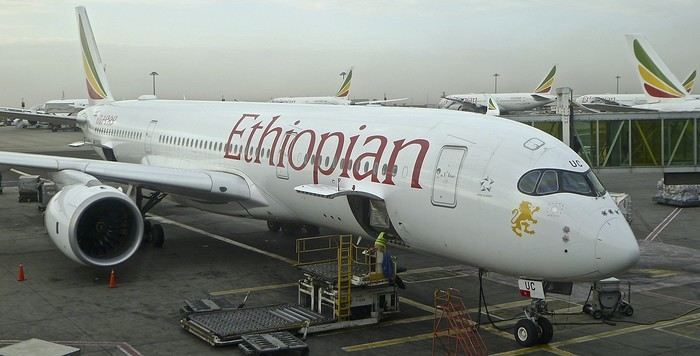
- This trip/safari took place in November 2022. - Our flight started in Marseille, heading to Addis Ababa, then Dar es Salaam (via Ethiopian Airlines). In Dar, we spent one night at a hotel near the airfield.
-1- During the layover in Addis Ababa. The Airbus A-350 in the early morning mist.
Reminder: Click on each image to enlarge it, if needed. .
From Dar es Salaam, if you want to go by road to Ruaha, it’ll take a very long and tiring day. 🤪
On previous trips, we’ve always taken a bush plane for this route. In this case, it took just over an hour and a half, with two short intermediate stops to drop off passengers at other bush airstrips.
Since I’m also passionate about aviation, I love these flights where you can admire the landscapes from low altitude while sitting right behind the pilot 🙂.
-2- These routes mainly use Cessna 208 Caravans.
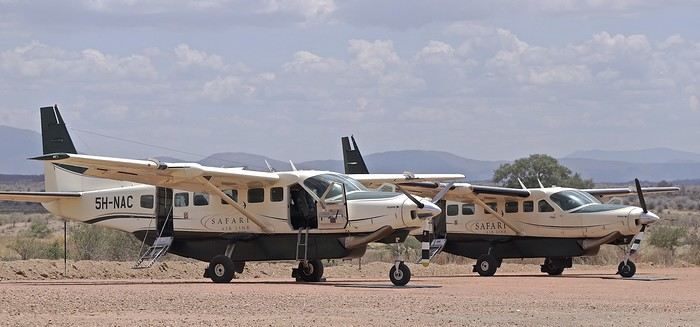
At the Msembe airstrip, we’re greeted around 1:30 PM by a guide and a driver from our chosen lodge. They brought a picnic basket, which we enjoy at a nearby picnic area. We’re by the Ruaha River, completely dry—it’s scorching hot.
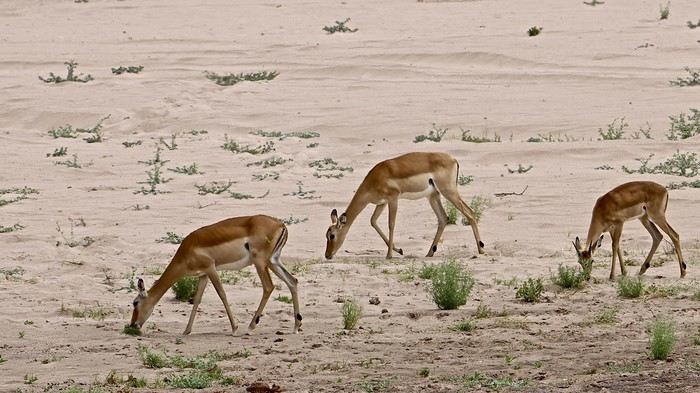
-3- The first mammals we encounter are a pair of female impalas, accompanied by a young male.
Reminder: Click on the image to view it in larger size. 😉
-4- To save the hippopotamus populations from certain death, rangers had to dig holes in the sand with bulldozers. Fortunately, water is present beneath the sand layer.
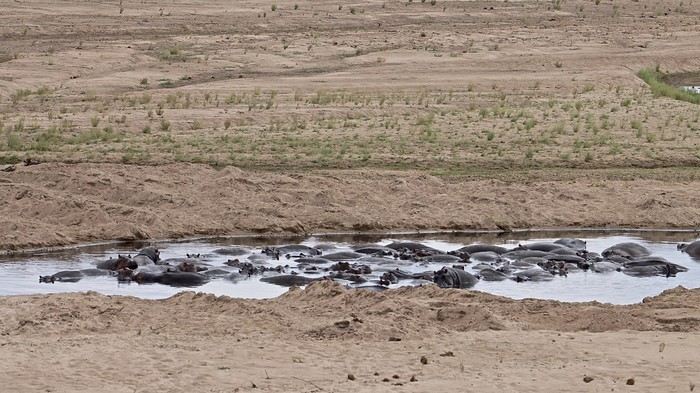
-5- This crocodile doesn’t seem to have been accepted as a swimming neighbor by the hippos...
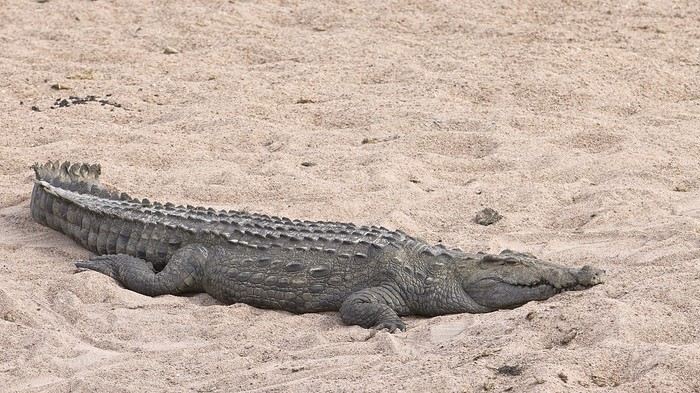
We’ll explore along the river for 2-3 hours before crossing it at a ford toward the southern part of the reserve.
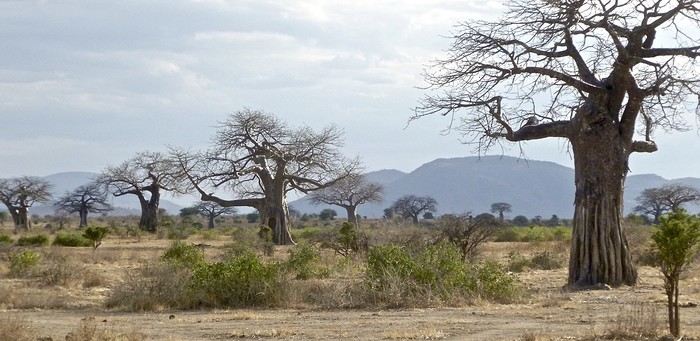
-6- The typical landscape of Ruaha, with its many baobabs.
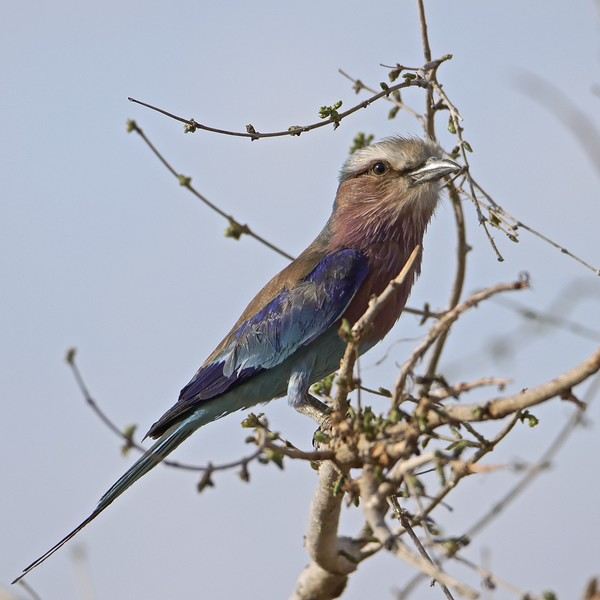
-7- My buddy the R.L.B. is also here to welcome me.... 🙂 🙂
-8- As well as this little bee-eater... 😎
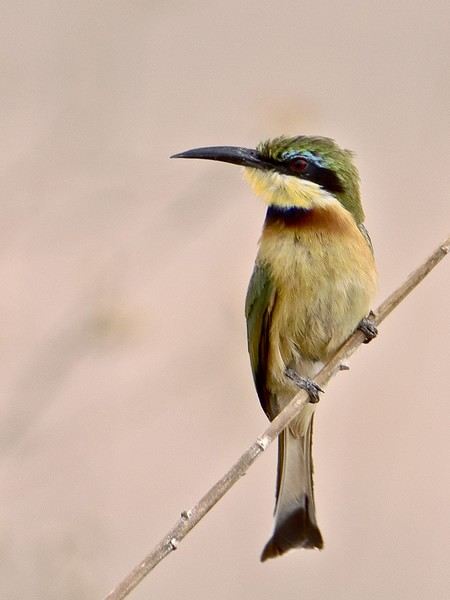
-9- ...which reminds us of the origin of its name...!
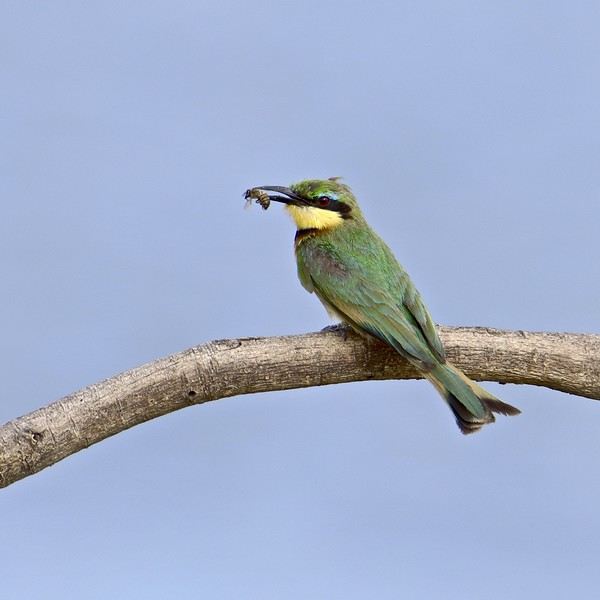
-10- Above a rare waterhole, a fish eagle keeps watch for fish...
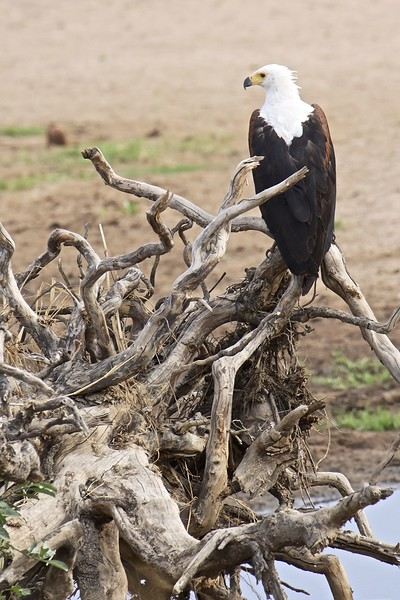
...
*** Please wait until the end of the story for any questions or to share your own experiences in Ruaha. (Or via PM.) Thanks in advance for keeping this account smooth and enjoyable. 😉
...
*** I’m not an ornithologist, but birds are an important and unavoidable part of safari discoveries. You’ll find quite a few in the images of my story. 😎
...
" We’re ALL different, and so are our expectations when it comes to travel or leisure ". There are—without a doubt—as many ways to experience a trip as there are travelers!! For the two of us, it’s only our love of wild nature that guides us to East Africa. The stated goal of this trip was purely wildlife-focused, and NOT about discovering the country or its people.
...
Hello everyone,
Previously, I shared the account of a trip/safari in southern Tanzania in June 2024, in the Mikumi and Selous reserves.
This time, still in southern Tanzania, I invite you to join us in Ruaha National Park. (Then, depending on the number of images allowed in my quota, at the end of my story, we’ll return to Selous for the second part of the same trip.)
- This trip/safari took place in November 2022. - Our flight started in Marseille, heading to Addis Ababa, then Dar es Salaam (via Ethiopian Airlines). In Dar, we spent one night at a hotel near the airfield.
-1- During the layover in Addis Ababa. The Airbus A-350 in the early morning mist.
Reminder: Click on each image to enlarge it, if needed. .
From Dar es Salaam, if you want to go by road to Ruaha, it’ll take a very long and tiring day. 🤪
On previous trips, we’ve always taken a bush plane for this route. In this case, it took just over an hour and a half, with two short intermediate stops to drop off passengers at other bush airstrips.
Since I’m also passionate about aviation, I love these flights where you can admire the landscapes from low altitude while sitting right behind the pilot 🙂.
-2- These routes mainly use Cessna 208 Caravans.
At the Msembe airstrip, we’re greeted around 1:30 PM by a guide and a driver from our chosen lodge. They brought a picnic basket, which we enjoy at a nearby picnic area. We’re by the Ruaha River, completely dry—it’s scorching hot.
-3- The first mammals we encounter are a pair of female impalas, accompanied by a young male.
Reminder: Click on the image to view it in larger size. 😉
-4- To save the hippopotamus populations from certain death, rangers had to dig holes in the sand with bulldozers. Fortunately, water is present beneath the sand layer.
-5- This crocodile doesn’t seem to have been accepted as a swimming neighbor by the hippos...
We’ll explore along the river for 2-3 hours before crossing it at a ford toward the southern part of the reserve.
-6- The typical landscape of Ruaha, with its many baobabs.
-7- My buddy the R.L.B. is also here to welcome me.... 🙂 🙂
-8- As well as this little bee-eater... 😎
-9- ...which reminds us of the origin of its name...!
-10- Above a rare waterhole, a fish eagle keeps watch for fish...
...
*** Please wait until the end of the story for any questions or to share your own experiences in Ruaha. (Or via PM.) Thanks in advance for keeping this account smooth and enjoyable. 😉
...
*** I’m not an ornithologist, but birds are an important and unavoidable part of safari discoveries. You’ll find quite a few in the images of my story. 😎
...
What's the best way to get around Northern India?
Hi,
I’m leaving this Saturday for Northern India from 15/02 to 27/02. I’m planning to visit New Delhi, Agra, Chand Baori, Jaipur, Ranthambore, Bundi, Udaipur, and Jodhpur.
What’s the best way to get around? I was thinking of doing everything by train. Maybe taking the bus for some stretches?
As for renting a car with a driver, it seems expensive, so I’ve pretty much ruled that out. Unless someone’s got space for the same dates?
Thanks for your insights!
What’s the best way to get around? I was thinking of doing everything by train. Maybe taking the bus for some stretches?
As for renting a car with a driver, it seems expensive, so I’ve pretty much ruled that out. Unless someone’s got space for the same dates?
Thanks for your insights!
2-Month South Africa Itinerary
Hi,
We’re a young couple planning to travel to South Africa after spending about three weeks in Namibia. We’ll arrive in Cape Town around mid-December, with no fixed travel duration (though our budget will eventually set a limit).
After browsing through the forum, we’ve realized the country is packed with incredible spots, which makes choosing an itinerary tough. We’re looking for stunning landscapes, hikes, and so on. So, we’d love to hear your thoughts and experiences.
When we arrive in Cape Town, we’d like to settle in and take it easy until New Year’s, exploring at a relaxed pace. We know this period coincides with South African holidays—does that make finding accommodations (availability/prices) more difficult? Do you think it’s possible to stay in a nice place for about 15 days without aiming for the most upscale neighborhoods? Maybe somewhere a bit outside Cape Town, like Fish Hoek, and just visit the city occasionally.
After that, we’ll have plenty of time (about 2 to 2.5 months) to explore the country. We’d like to take our time. In your opinion, is it better to focus on the Cape Town region, or is it reasonable to consider more distant areas like the Drakensberg or Blyde River Canyon? Can everything be done by car if we take our time, or are domestic flights sometimes more practical?
Budget-wise, how much do car rentals cost? For accommodations, we usually look at Airbnb—are they affordable in South Africa? What’s the average nightly rate outside the biggest cities? Are there other platforms you’d recommend for saving on lodging?
Finally, regarding safety, are there any regions to avoid besides Johannesburg?
We know this is a lot of questions, but we’re still in the early planning stages!
Thanks in advance for your advice!
In the midst of Kenya's wildlife, October 2025
Hello everyone,
After sharing some safari photos from southern Tanzania, I’d like to show you those from our latest safari in Kenya in October 2025.
First, I’d like to thank Sylvie56, whose previous travel journals about this country inspired our trip choices. Thanks also for the info you sent us via PM. THANK YOU!
The following account is from a simple wildlife enthusiast. You won’t find anything here but images of landscapes, mammals, and birds. The stated purpose of this trip was purely and solely wildlife-focused. (It was in no way a discovery of the country or its people).
This stay/safari began (and ended) in Nairobi, with flights between France and Kenya operated by Qatar Airways departing from Nice.
Over two weeks, we first visited the reserves of Tsavo West and Tsavo East, then after a long road trip, the two reserves of Buffalo Springs and Samburu.
= Please wait until the end of the journal to ask any specific questions (or send them via PM) to keep the story flowing without interruptions or off-topic comments.
Thanks for your understanding.
...
Previous Kenya safari trip in 2017, here:
http://www.image-nature.com/forum/viewtopic.php?f=162&t=61119
...
After sharing some safari photos from southern Tanzania, I’d like to show you those from our latest safari in Kenya in October 2025.
First, I’d like to thank Sylvie56, whose previous travel journals about this country inspired our trip choices. Thanks also for the info you sent us via PM. THANK YOU!
The following account is from a simple wildlife enthusiast. You won’t find anything here but images of landscapes, mammals, and birds. The stated purpose of this trip was purely and solely wildlife-focused. (It was in no way a discovery of the country or its people).
This stay/safari began (and ended) in Nairobi, with flights between France and Kenya operated by Qatar Airways departing from Nice.
Over two weeks, we first visited the reserves of Tsavo West and Tsavo East, then after a long road trip, the two reserves of Buffalo Springs and Samburu.
= Please wait until the end of the journal to ask any specific questions (or send them via PM) to keep the story flowing without interruptions or off-topic comments.
Thanks for your understanding.
...
Previous Kenya safari trip in 2017, here:
http://www.image-nature.com/forum/viewtopic.php?f=162&t=61119
...
South Africa without a rental car
Hello and happy New Year to everyone,
A friend and I are interested in going to South Africa (or Kenya) for about two weeks (last quarter of 2026) but without renting a car.
Generally, I don’t like organized trips for the entire duration of a trip, and what’s more, this destination is very expensive.
So, I was wondering if it would be a good idea to spend, for example, a week in Cape Town independently and take day trips with a local agency, then do a week-long circuit for a safari in a park, which would leave a bit of freedom to book flights and maybe get advice from local agencies.
Is this a good idea? Is it doable or not?
What do you think? Have any travelers done this kind of trip?
Thanks in advance for your feedback.
Dominique
3-week Sri Lanka itinerary with three kids
Hi there!
I’m planning a trip with my wife and our three kids (ages 9, 6, and 3) from April 16 to May 6.
I’ve started sketching out the itinerary, trying to alternate between visits, hikes, safaris, and downtime. I want to keep the pace relaxed given the kids’ ages.
Could you let me know what you think of this route? I removed Nuwara Eliya, which I had originally planned before Ella, to cut down on stops. I was also wondering if I should break up the Arugam Bay to Colombo leg with an overnight in Galle, since it’s a long drive.
Thanks in advance for your feedback!
Day 1 – 04/16: Wilpattu Arrival at the airport (08:00) + transfer to Wilpattu (180 km, 4–5 h) + afternoon safari Overnight: Wilpattu Day 2 – 04/17: Wilpattu Morning & afternoon safari Overnight: Wilpattu Day 3 – 04/18: Trincomalee Transfer Wilpattu → Trincomalee (200 km, 4–5 h) + beach relaxation Overnight: Trincomalee Day 4 – 04/19: Trincomalee Nilaveli Beach Overnight: Trincomalee Day 5 – 04/20: Trincomalee Pigeon Island snorkeling Overnight: Trincomalee Day 6 – 04/21: Trincomalee Fort Frederick & relaxation Overnight: Trincomalee Day 7 – 04/22: Sigiriya Transfer Trincomalee → Sigiriya (120 km, ~3 h) + visit to Dambulla Overnight: Sigiriya Day 8 – 04/23: Sigiriya Sigiriya Rock Overnight: Sigiriya Day 9 – 04/24: Sigiriya Minneriya safari Overnight: Sigiriya Day 10 – 04/25: Sigiriya Polonnaruwa & village tour Overnight: Sigiriya Day 11 – 04/26: Ella Transfer Sigiriya → Ella (230 km, 5–6 h) + rest Overnight: Ella Day 12 – 04/27: Ella Little Adam’s Peak & Nine Arches Bridge Overnight: Ella Day 13 – 04/28: Ella Ella Rock Overnight: Ella Day 14 – 04/29: Ella Tea Factory & relaxation Overnight: Ella Day 15 – 04/30: Yala Transfer Ella → Yala (110 km, 2–3 h) + afternoon safari Overnight: Yala Day 16 – 05/01: Arugam Bay Transfer Yala → Arugam Bay (80 km, 2.5–3 h) + beach time Overnight: Arugam Bay Day 17 – 05/02: Arugam Bay Surfing & relaxation Overnight: Arugam Bay Day 18 – 05/03: Arugam Bay Local exploration Overnight: Arugam Bay Day 19 – 05/04: Colombo Transfer Arugam Bay → Colombo (320 km, 7–8 h) + rest Overnight: Colombo Day 20 – 05/05: Colombo City tour & shopping Overnight: Colombo Day 21 – 05/06: Colombo Morning return flight from Colombo
Day 1 – 04/16: Wilpattu Arrival at the airport (08:00) + transfer to Wilpattu (180 km, 4–5 h) + afternoon safari Overnight: Wilpattu Day 2 – 04/17: Wilpattu Morning & afternoon safari Overnight: Wilpattu Day 3 – 04/18: Trincomalee Transfer Wilpattu → Trincomalee (200 km, 4–5 h) + beach relaxation Overnight: Trincomalee Day 4 – 04/19: Trincomalee Nilaveli Beach Overnight: Trincomalee Day 5 – 04/20: Trincomalee Pigeon Island snorkeling Overnight: Trincomalee Day 6 – 04/21: Trincomalee Fort Frederick & relaxation Overnight: Trincomalee Day 7 – 04/22: Sigiriya Transfer Trincomalee → Sigiriya (120 km, ~3 h) + visit to Dambulla Overnight: Sigiriya Day 8 – 04/23: Sigiriya Sigiriya Rock Overnight: Sigiriya Day 9 – 04/24: Sigiriya Minneriya safari Overnight: Sigiriya Day 10 – 04/25: Sigiriya Polonnaruwa & village tour Overnight: Sigiriya Day 11 – 04/26: Ella Transfer Sigiriya → Ella (230 km, 5–6 h) + rest Overnight: Ella Day 12 – 04/27: Ella Little Adam’s Peak & Nine Arches Bridge Overnight: Ella Day 13 – 04/28: Ella Ella Rock Overnight: Ella Day 14 – 04/29: Ella Tea Factory & relaxation Overnight: Ella Day 15 – 04/30: Yala Transfer Ella → Yala (110 km, 2–3 h) + afternoon safari Overnight: Yala Day 16 – 05/01: Arugam Bay Transfer Yala → Arugam Bay (80 km, 2.5–3 h) + beach time Overnight: Arugam Bay Day 17 – 05/02: Arugam Bay Surfing & relaxation Overnight: Arugam Bay Day 18 – 05/03: Arugam Bay Local exploration Overnight: Arugam Bay Day 19 – 05/04: Colombo Transfer Arugam Bay → Colombo (320 km, 7–8 h) + rest Overnight: Colombo Day 20 – 05/05: Colombo City tour & shopping Overnight: Colombo Day 21 – 05/06: Colombo Morning return flight from Colombo
Booking Timing for Campsites in Botswana
I’m just starting to plan our trip for late August 2026, but I’ve read multiple times that campsite bookings need to be made *way* in advance if we want to secure a spot—especially in the parks. Before I get too far into my road book, I’d love to get a sense of what “way in advance” actually means.
That leads to another question: what’s the best *channel* for making these reservations? Can I find a list of campsites online?
From what I’ve gathered, there aren’t any fenced campsites—is wild camping allowed?
I’ll admit, I’m short on time, and reading a few threads here has shown me how quick and helpful the experts are 😉.
We’re a group of 4 and plan to rent a 4x4. Rooftop tents seem like the better option given the wildlife (and, well, *people* roaming freely), especially compared to Namibia (which we visited in 2018).
Thanks in advance to everyone!
That leads to another question: what’s the best *channel* for making these reservations? Can I find a list of campsites online?
From what I’ve gathered, there aren’t any fenced campsites—is wild camping allowed?
I’ll admit, I’m short on time, and reading a few threads here has shown me how quick and helpful the experts are 😉.
We’re a group of 4 and plan to rent a 4x4. Rooftop tents seem like the better option given the wildlife (and, well, *people* roaming freely), especially compared to Namibia (which we visited in 2018).
Thanks in advance to everyone!
Organizing a 3-day safari with kids then Zanzibar
Hi everyone,
I’m reaching out for your advice since we’re planning a trip to Tanzania for our 10th wedding anniversary, with a continental part (4 nights) followed by Zanzibar for some relaxation (7 nights). A childhood dream.
My first question is: have families with kids this age already done this trip? Is it relatively safe, because I know that if there’s even the slightest health issue, the infrastructure can be tricky, especially on the mainland in Tanzania. We’ll of course take our precautions (vaccines and Malarone), but I want to make sure we’re not being reckless, as my in-laws seem to suggest (they’ve never traveled).
Also, for the safari, I need your opinions. I’m in advanced talks with the agency *Tanzania Wise Safari*. Has anyone heard of them?
Day 1 - night in Arusha to rest Day 2 - departure for Tarangire and safari (likely in the early afternoon), night in a lodge near the northern part of the lake at the crater entrance Day 3 - crater - night in the same lodge (I want to limit changes for my kids, but I’m not sure if that’s smart) Day 4 - I’m hesitating - what to do in the morning? Lake Manyara? Or return to Arusha at a relaxed pace and spend the night there? The guide suggested Arusha National Park, but I think it’s too much driving for the kids, since there’s already the trip from the crater to Arusha to get to the park. Day 5 - departure for Zanzibar. Do you have a recommended airline?
For flights, I tried a multi-destination option, but it seems complicated.
Thanks so much for your feedback
I’m reaching out for your advice since we’re planning a trip to Tanzania for our 10th wedding anniversary, with a continental part (4 nights) followed by Zanzibar for some relaxation (7 nights). A childhood dream.
My first question is: have families with kids this age already done this trip? Is it relatively safe, because I know that if there’s even the slightest health issue, the infrastructure can be tricky, especially on the mainland in Tanzania. We’ll of course take our precautions (vaccines and Malarone), but I want to make sure we’re not being reckless, as my in-laws seem to suggest (they’ve never traveled).
Also, for the safari, I need your opinions. I’m in advanced talks with the agency *Tanzania Wise Safari*. Has anyone heard of them?
Day 1 - night in Arusha to rest Day 2 - departure for Tarangire and safari (likely in the early afternoon), night in a lodge near the northern part of the lake at the crater entrance Day 3 - crater - night in the same lodge (I want to limit changes for my kids, but I’m not sure if that’s smart) Day 4 - I’m hesitating - what to do in the morning? Lake Manyara? Or return to Arusha at a relaxed pace and spend the night there? The guide suggested Arusha National Park, but I think it’s too much driving for the kids, since there’s already the trip from the crater to Arusha to get to the park. Day 5 - departure for Zanzibar. Do you have a recommended airline?
For flights, I tried a multi-destination option, but it seems complicated.
Thanks so much for your feedback
Tips and addresses for backpackers traveling from Tanzania to South Africa
Since Voyage Forum is restarting after a few years of hiatus, I couldn’t find any recent info about my trip between late November 2024 and January 20, 2025, going from DAR ES SALAAM to the Cape Town area via ZAMBIA and BOTSWANA.
I’m really happy the site is back up, but I’ve noticed more and more people planning their trips down to the day, mentioning what they’ve scheduled and asking for technical advice for their 4x4 routes.
That’s not how I travel at all—I prefer to leave a lot to the unexpected, like public transport (and the weather) and the people you meet along the way.
The tips I’m sharing below come from the current situation, the randomness that makes unplanned trips special, and the strong connections you can make when you take your time without knowing what tomorrow will bring.
😏 TANZANIA: I had booked a TAZARA train ticket via WhatsApp before leaving to go from DAR ES SALAAM to MBEYA near the Zambian border. I’d contacted the station manager in Dar at +255 713 413 141, who kindly confirmed my reservation. Unfortunately, the train was out of service for an indefinite period, so I had to take the bus from the new Mwenge bus station on the city’s outskirts (allow extra time to get there—traffic is heavy). There’s no longer a direct train to ZAMBIA. You have to get off at MBEYA, then take a bus to the TUNDUMA border (2 hours to the bus station, then a 2 km taxi ride to the border). Crossing is easy—visa is free, no no-man’s-land, and you arrive directly in NAKONDE, Zambia. Exchange money on the Zambian side, but don’t change with the first person you see—check the rate first. I preferred to stop for the night in IRINGA since I took the bus at 4 PM. I arrived at 2 AM at Georges’ place, who picked me up directly from the bus station (several km from town). I’d booked the accommodation via Booking under Travellers Backpackers and Free City Tours. Georges and his employee were extremely helpful—they organized my bus trip to MBEYA the next day (bought the ticket and dropped me off, no commission). The place is decent, clean, and comfortable (10 € per night). Georges also organizes tours and safaris in the area (+255 679 529 700 direct). In MBEYA, I stayed at Karibuni Center Hotel (a quiet evangelical convent, very friendly and open to everyone, 13 € per night with breakfast). You can eat at a restaurant across the street. The rooms are clean and quiet (contact +255 754 510 174). To head to Lake MALAWI or the tea fields in TUKUYU, it’s best to take a moto-taxi from MBEYA to the Uyole junction. From there, you’ll find minibuses heading south frequently—change buses in TUKUYU (the tea fields are 4-5 km away).
😏 ZAMBIA: In NAKONDE, I highly recommend Izukanji Lodge—very quiet and clean, 2 km from the station (take a moto-taxi). The main building’s rooms are pricier than the annex across the street (where the restaurant and pool are). The rooms are just as clean and quiet but only 10 €, breakfast included. Contact the manager directly on WhatsApp at +260 979 649 452. If it’s full, try Divine Guest House (+260 973 127 816). The train isn’t always on time—if you catch it on the scheduled day, consider yourself lucky. The stationmaster, Mr. Chulu, is lovely. Contact him on WhatsApp at +260 777 550 302 for real-time updates. First-class berths are great (4 per compartment), 15 € one-way to KAPIRI MPOSHI. There always seems to be space. Book two berths if you want extra comfort. No need to bring food—the dining car serves decent meals, and there’s a bar. In KAPIRI MPOSHI, I stayed at Kapiri Council Lodge, 2 km from the train station. It’s okay, but there are often power outages in the evening, which means no water either. You’ll have to wait until 8 PM. Breakfast is very basic. For LUSAKA, there are plenty of buses in the morning from the downtown bus station (2-3 hours). The best companies are Power Tools (yellow buses) or UBZ if you can find it (the best in Zambia—Western comfort). In LUSAKA, use Yango taxis (download the app—it’s like Uber in Zambia, very affordable). I stayed at Natwange (Hostelworld chain), reachable at +260 966 303 816. It’s a beautiful, quiet place 3-4 km from downtown, very shady, with a pool. The rooms are clean and comfortable, and the food is excellent (great salads). The staff is super friendly, as they are everywhere in the country. There’s also a mini-supermarket nearby with everything, including takeout meals. Book your bus ticket to LIVINGSTONE at least the day before (UBZ). The trip is pleasant. In LIVINGSTONE, many backpackers stay at Jolly Boys—it’s a nice place to relax by the pool with a beer at the end of the day, but it’s mostly a party hostel for young people doing rafting or canyoning on the Zambezi (pricier than elsewhere). For those who prefer peace and quiet, I highly recommend Likute Guest House on the same street, right near Jolly Boys. The rooms are decent for 10 €, breakfast included (same price as a dorm at JB). You can order dinner in advance. The staff is friendly. Great value at Da Canton restaurant on the main road (pizza, pasta, meat, salads, etc.). The Livingstone Museum is worth a visit if you have time. At the bottom of Kapondo Street, you can take a shared taxi to Victoria Falls or even to KAZUNGULA at the Botswana border (cheap—the taxi leaves when full). People short on time often compare the views of Victoria Falls from the Zambian side (20 $) and the Zimbabwean side (30 $). Honestly, they’re very different, and it’s worth seeing the falls from Zimbabwe even if it’s pricier (visa required, easy to get at the border—everything is done on foot). Cross the bridge where you can bungee jump. Take your time at the falls—it’s truly stunning. You can visit Zimbabwe for half a day and stay in Zambia (cheaper, since everything in Zimbabwe is paid in dollars). There’s more water on the Zimbabwean side, but the Zambian side is beautiful too.
😏 BOTSWANA: Crossing the border at KAZUNGULA from Zambia is quick and easy (brand-new bridge over the Zambezi). Visa is free. Don’t exchange money at the border. There’s a shopping center 1 km away (Choppies store) with an ATM (no commission). I hitched a ride with tourists to the bank since they had a car. In the shopping center parking lot, you can easily find a shared taxi to KASANE. In the area, you can get around easily by shared taxi (just give the name of your guesthouse, and the drivers will tell you which vehicle to take). The fare is fixed (0.50 €). I stayed at Elephant Trail GH and Backpackers—a great spot where you can stay in a 4-bed dorm for 10 €. There are also huts for two in the garden (clean and comfortable) with a pool. You can order dinner (great food) or cook your own meals. The place is quiet and friendly (they organize safaris with early-morning pickups for Chobe and evening boat trips in the Kwando marshes to see animals). I preferred flying (Air Botswana) with a friend to MAUN (55 €) instead of taking an 8-10 hour bus (tickets can be bought directly at the airport). In MAUN, I stayed at Jayla Homestay with Mapula (+267 71 658 737)—a wonderful, kind woman always ready to help. The homestay is in a beautiful family home 3-4 km from downtown, past the Kwanokeng gas station. It’s easy to get there by shared taxi from the downtown taxi stand near Shoprite. Mapula cooks refined, varied meals on request. She also organizes safaris in the OKAVANGO with morning pickups from the guesthouse (picnic included) at a great price. Her rooms are comfortable and very clean (microwave, coffee/tea, and kettle available). The day trip by canoe in the OKAVANGO marshes is a must. However, we saw very few animals because the rainy season had started (zebras, giraffes, buffaloes, hippos). The atmosphere, serenity, and changing light throughout the day were remarkable. Direct flight from MAUN to CAPE TOWN with Airlink for 280 € on December 24.
😏 SOUTH AFRICA: In Cape Town, I stayed at Sunflower Stop Backpackers in the Green Point neighborhood—very quiet and safe. This hostel is perfect for meeting travelers of all ages. Everything is nearby (supermarkets, bars, restaurants, the sea, the park, tourist areas, the stadium, Sea Point, and the Waterfront). I spent 13 days in Cape Town and always found something to do—this city is so pleasant to live in, welcoming, and packed with sports and cultural activities. Don’t miss the Minstrel Carnival in early January if you’re in the area. Kalk Bay beach (with its colorful beach huts) is worth the detour on the way to SIMON’S TOWN and Boulders Beach. Stop for lunch at Salt in FISH HOEK—the homemade ravioli and fish are amazing. Everything is excellent there. At Boulders Beach, when you arrive at the main beach after the entrance gate, don’t hesitate to wade into the water up to your waist if the tide is high and head straight past the northern end of the beach—the penguins are farther out. Beautiful beach and sunset at Scarborough Beach. I took the 8-day Bazbus pass (134 €) for the Garden Route and stopped in STELLENBOSCH on the last day of my loop back to Cape Town. This lets you extend the trip to 10 days if you stay 2 nights in STELLENBOSCH, since it’s easy and cheap to get back to Cape Town with an Uber. I really liked this Bazbus option—it’s convenient because they drop you off and pick you up directly at your chosen hostel or hotel. I loved HERMANUS, even though I didn’t see any whales. The atmosphere is very British and classy. The coastline is beautiful and rugged. Don’t miss the walk to Mosselberg, which overlooks the entire bay. MOSSEL BAY is more working-class and run-down—nothing particularly interesting, in my opinion. In WILDERNESS, try to stay at Beach House Backpackers Lodge. The sea view is stunning, even from the dorm. In KNYSNA, Thesen Island is overrated—it’s full of soulless new buildings. Prefer Leisure Island, which is just as busy with wealthy owners but nice for walks and swimming. Head to The Heads to wander the coastal trails with incredible views of the bay. Don’t hesitate to explore the heart of the artistic Concordia neighborhood (Rastafarian) to Judah Square on your own. The locals are warm and laid-back. No need to go through a tour operator. Anchorage restaurant is excellent for refined dishes and a great variety of food. In STELLENBOSCH, I stayed at Just a Bed (booked for one person on Booking). Don’t hesitate to contact the owner—she has several rooms in her guesthouse. The place is cozy and charming. The town is pleasant but feels disconnected from the surrounding population. You can walk to the Lanzerac vineyard, but don’t miss Boschendal a few kilometers away on the way to FRANSCHHOEK. People talk a lot about safety in South Africa, but as long as you respect the local norms, everything goes smoothly—the people are really welcoming, no matter their social background.
😏 TANZANIA: I had booked a TAZARA train ticket via WhatsApp before leaving to go from DAR ES SALAAM to MBEYA near the Zambian border. I’d contacted the station manager in Dar at +255 713 413 141, who kindly confirmed my reservation. Unfortunately, the train was out of service for an indefinite period, so I had to take the bus from the new Mwenge bus station on the city’s outskirts (allow extra time to get there—traffic is heavy). There’s no longer a direct train to ZAMBIA. You have to get off at MBEYA, then take a bus to the TUNDUMA border (2 hours to the bus station, then a 2 km taxi ride to the border). Crossing is easy—visa is free, no no-man’s-land, and you arrive directly in NAKONDE, Zambia. Exchange money on the Zambian side, but don’t change with the first person you see—check the rate first. I preferred to stop for the night in IRINGA since I took the bus at 4 PM. I arrived at 2 AM at Georges’ place, who picked me up directly from the bus station (several km from town). I’d booked the accommodation via Booking under Travellers Backpackers and Free City Tours. Georges and his employee were extremely helpful—they organized my bus trip to MBEYA the next day (bought the ticket and dropped me off, no commission). The place is decent, clean, and comfortable (10 € per night). Georges also organizes tours and safaris in the area (+255 679 529 700 direct). In MBEYA, I stayed at Karibuni Center Hotel (a quiet evangelical convent, very friendly and open to everyone, 13 € per night with breakfast). You can eat at a restaurant across the street. The rooms are clean and quiet (contact +255 754 510 174). To head to Lake MALAWI or the tea fields in TUKUYU, it’s best to take a moto-taxi from MBEYA to the Uyole junction. From there, you’ll find minibuses heading south frequently—change buses in TUKUYU (the tea fields are 4-5 km away).
😏 ZAMBIA: In NAKONDE, I highly recommend Izukanji Lodge—very quiet and clean, 2 km from the station (take a moto-taxi). The main building’s rooms are pricier than the annex across the street (where the restaurant and pool are). The rooms are just as clean and quiet but only 10 €, breakfast included. Contact the manager directly on WhatsApp at +260 979 649 452. If it’s full, try Divine Guest House (+260 973 127 816). The train isn’t always on time—if you catch it on the scheduled day, consider yourself lucky. The stationmaster, Mr. Chulu, is lovely. Contact him on WhatsApp at +260 777 550 302 for real-time updates. First-class berths are great (4 per compartment), 15 € one-way to KAPIRI MPOSHI. There always seems to be space. Book two berths if you want extra comfort. No need to bring food—the dining car serves decent meals, and there’s a bar. In KAPIRI MPOSHI, I stayed at Kapiri Council Lodge, 2 km from the train station. It’s okay, but there are often power outages in the evening, which means no water either. You’ll have to wait until 8 PM. Breakfast is very basic. For LUSAKA, there are plenty of buses in the morning from the downtown bus station (2-3 hours). The best companies are Power Tools (yellow buses) or UBZ if you can find it (the best in Zambia—Western comfort). In LUSAKA, use Yango taxis (download the app—it’s like Uber in Zambia, very affordable). I stayed at Natwange (Hostelworld chain), reachable at +260 966 303 816. It’s a beautiful, quiet place 3-4 km from downtown, very shady, with a pool. The rooms are clean and comfortable, and the food is excellent (great salads). The staff is super friendly, as they are everywhere in the country. There’s also a mini-supermarket nearby with everything, including takeout meals. Book your bus ticket to LIVINGSTONE at least the day before (UBZ). The trip is pleasant. In LIVINGSTONE, many backpackers stay at Jolly Boys—it’s a nice place to relax by the pool with a beer at the end of the day, but it’s mostly a party hostel for young people doing rafting or canyoning on the Zambezi (pricier than elsewhere). For those who prefer peace and quiet, I highly recommend Likute Guest House on the same street, right near Jolly Boys. The rooms are decent for 10 €, breakfast included (same price as a dorm at JB). You can order dinner in advance. The staff is friendly. Great value at Da Canton restaurant on the main road (pizza, pasta, meat, salads, etc.). The Livingstone Museum is worth a visit if you have time. At the bottom of Kapondo Street, you can take a shared taxi to Victoria Falls or even to KAZUNGULA at the Botswana border (cheap—the taxi leaves when full). People short on time often compare the views of Victoria Falls from the Zambian side (20 $) and the Zimbabwean side (30 $). Honestly, they’re very different, and it’s worth seeing the falls from Zimbabwe even if it’s pricier (visa required, easy to get at the border—everything is done on foot). Cross the bridge where you can bungee jump. Take your time at the falls—it’s truly stunning. You can visit Zimbabwe for half a day and stay in Zambia (cheaper, since everything in Zimbabwe is paid in dollars). There’s more water on the Zimbabwean side, but the Zambian side is beautiful too.
😏 BOTSWANA: Crossing the border at KAZUNGULA from Zambia is quick and easy (brand-new bridge over the Zambezi). Visa is free. Don’t exchange money at the border. There’s a shopping center 1 km away (Choppies store) with an ATM (no commission). I hitched a ride with tourists to the bank since they had a car. In the shopping center parking lot, you can easily find a shared taxi to KASANE. In the area, you can get around easily by shared taxi (just give the name of your guesthouse, and the drivers will tell you which vehicle to take). The fare is fixed (0.50 €). I stayed at Elephant Trail GH and Backpackers—a great spot where you can stay in a 4-bed dorm for 10 €. There are also huts for two in the garden (clean and comfortable) with a pool. You can order dinner (great food) or cook your own meals. The place is quiet and friendly (they organize safaris with early-morning pickups for Chobe and evening boat trips in the Kwando marshes to see animals). I preferred flying (Air Botswana) with a friend to MAUN (55 €) instead of taking an 8-10 hour bus (tickets can be bought directly at the airport). In MAUN, I stayed at Jayla Homestay with Mapula (+267 71 658 737)—a wonderful, kind woman always ready to help. The homestay is in a beautiful family home 3-4 km from downtown, past the Kwanokeng gas station. It’s easy to get there by shared taxi from the downtown taxi stand near Shoprite. Mapula cooks refined, varied meals on request. She also organizes safaris in the OKAVANGO with morning pickups from the guesthouse (picnic included) at a great price. Her rooms are comfortable and very clean (microwave, coffee/tea, and kettle available). The day trip by canoe in the OKAVANGO marshes is a must. However, we saw very few animals because the rainy season had started (zebras, giraffes, buffaloes, hippos). The atmosphere, serenity, and changing light throughout the day were remarkable. Direct flight from MAUN to CAPE TOWN with Airlink for 280 € on December 24.
😏 SOUTH AFRICA: In Cape Town, I stayed at Sunflower Stop Backpackers in the Green Point neighborhood—very quiet and safe. This hostel is perfect for meeting travelers of all ages. Everything is nearby (supermarkets, bars, restaurants, the sea, the park, tourist areas, the stadium, Sea Point, and the Waterfront). I spent 13 days in Cape Town and always found something to do—this city is so pleasant to live in, welcoming, and packed with sports and cultural activities. Don’t miss the Minstrel Carnival in early January if you’re in the area. Kalk Bay beach (with its colorful beach huts) is worth the detour on the way to SIMON’S TOWN and Boulders Beach. Stop for lunch at Salt in FISH HOEK—the homemade ravioli and fish are amazing. Everything is excellent there. At Boulders Beach, when you arrive at the main beach after the entrance gate, don’t hesitate to wade into the water up to your waist if the tide is high and head straight past the northern end of the beach—the penguins are farther out. Beautiful beach and sunset at Scarborough Beach. I took the 8-day Bazbus pass (134 €) for the Garden Route and stopped in STELLENBOSCH on the last day of my loop back to Cape Town. This lets you extend the trip to 10 days if you stay 2 nights in STELLENBOSCH, since it’s easy and cheap to get back to Cape Town with an Uber. I really liked this Bazbus option—it’s convenient because they drop you off and pick you up directly at your chosen hostel or hotel. I loved HERMANUS, even though I didn’t see any whales. The atmosphere is very British and classy. The coastline is beautiful and rugged. Don’t miss the walk to Mosselberg, which overlooks the entire bay. MOSSEL BAY is more working-class and run-down—nothing particularly interesting, in my opinion. In WILDERNESS, try to stay at Beach House Backpackers Lodge. The sea view is stunning, even from the dorm. In KNYSNA, Thesen Island is overrated—it’s full of soulless new buildings. Prefer Leisure Island, which is just as busy with wealthy owners but nice for walks and swimming. Head to The Heads to wander the coastal trails with incredible views of the bay. Don’t hesitate to explore the heart of the artistic Concordia neighborhood (Rastafarian) to Judah Square on your own. The locals are warm and laid-back. No need to go through a tour operator. Anchorage restaurant is excellent for refined dishes and a great variety of food. In STELLENBOSCH, I stayed at Just a Bed (booked for one person on Booking). Don’t hesitate to contact the owner—she has several rooms in her guesthouse. The place is cozy and charming. The town is pleasant but feels disconnected from the surrounding population. You can walk to the Lanzerac vineyard, but don’t miss Boschendal a few kilometers away on the way to FRANSCHHOEK. People talk a lot about safety in South Africa, but as long as you respect the local norms, everything goes smoothly—the people are really welcoming, no matter their social background.
Your advice for Namibia itinerary in January
Hi everyone,
We’re heading to Namibia for the first time at the end of January 2026 for 12 nights as a couple, with a 4x4 rental (no tent). We’re planning to stay in lodges, hotels, or similar. Our goal is to explore Namibia and see as many animals as possible.
We were thinking of following this route:
Windhoek to Sesriem – 2 nights
Sesriem to Omaruru – 2 nights
Omaruru to Ongava (ETOSHA) – 2 nights
Ongava to Onguma (ETOSHA) – 2 nights
Onguma to Okonjima – 2 nights
Okonjima to Windhoek – 2 nights (these last two nights near Windhoek at a lodge like Our Habitas)
What do you think of this plan?
I know we’ll miss a lot of must-see spots, but we only have 12 nights, and the distances between the points of interest we’ve chosen are pretty long.
Also, since January/February is the "rainy season," do you think this itinerary is suitable?
Don’t hesitate to tell me if we’re completely off track or if you’d recommend something totally different—we’re open to any suggestions.
Thanks so much for your time and advice!
Joris
We’re heading to Namibia for the first time at the end of January 2026 for 12 nights as a couple, with a 4x4 rental (no tent). We’re planning to stay in lodges, hotels, or similar. Our goal is to explore Namibia and see as many animals as possible.
We were thinking of following this route:
Windhoek to Sesriem – 2 nights
Sesriem to Omaruru – 2 nights
Omaruru to Ongava (ETOSHA) – 2 nights
Ongava to Onguma (ETOSHA) – 2 nights
Onguma to Okonjima – 2 nights
Okonjima to Windhoek – 2 nights (these last two nights near Windhoek at a lodge like Our Habitas)
What do you think of this plan?
I know we’ll miss a lot of must-see spots, but we only have 12 nights, and the distances between the points of interest we’ve chosen are pretty long.
Also, since January/February is the "rainy season," do you think this itinerary is suitable?
Don’t hesitate to tell me if we’re completely off track or if you’d recommend something totally different—we’re open to any suggestions.
Thanks so much for your time and advice!
Joris
My TOP 3 countries visited
Hi everyone,
I feel like I’ve been lucky enough over the past few years to travel—a lot of that’s thanks to retirement... (see my profile!)
So, aside from my beautiful country, France, here’s my totally subjective top 3:
1 – Antarctica
2 – Greenland
3 – Yellowstone Park
Of course, this is just my opinion—human, architectural, cultural, and gastronomic treasures are everywhere on our unique planet, Earth. Have a great day, everyone!
Of course, this is just my opinion—human, architectural, cultural, and gastronomic treasures are everywhere on our unique planet, Earth. Have a great day, everyone!
When is the best time to travel to Namibia?
Hi there,
I’m planning a trip to Namibia in 2026.
I’m torn between visiting the Fish River Canyon and the Caprivi Strip / Victoria Falls.
I’d also love your advice on the best time to travel for wildlife viewing and pleasant weather.
I haven’t chosen a tour operator yet... since I’m traveling solo, I’d prefer a small-group escorted trip. Has anyone traveled with a local agency and what’s your feedback or advice?
Thanks so much!
Trip to Kenya and excursion prices
Hi,
For my husband's 50th birthday, we're going to Mombasa for 10 days and 8 nights in March 2026.
I found a hotel, the Kappa Club Crystal Bay Resort, and online reviews for this hotel recommend a guide named Omar. I contacted him via WhatsApp, and he's offering a 2-day, 1-night safari in Tsavo East, a "blue safari," and a Marafa Canyon day trip for 400 € per person.
I’m asking for help from people who’ve already done these excursions because I have no idea what these offers entail.
Thank you for any advice you can give me about this trip.
Caroline
Tips for preparing a trip to Tanzania
Hi everyone!
My mom (75 years old, in great shape!) and I (40) are planning a trip to Tanzania between October 26th and November 16th (duration: 2 to 3 weeks). Yes, it’s a bit short notice to organize, but we don’t really have a choice :)
Here’s the rough idea:
Exploring the country on the go, with a touch of spontaneity and local encounters (not a 100% fixed itinerary). Personally, I’m used to total improvisation when traveling solo, but in this case, I’d prefer to be a bit more informed/structured.
Potentially climbing Kilimanjaro (for me) before ending with a few relaxing days in Zanzibar.
Maybe renting a 4x4 to stay independent?
No luxury requirements: we prioritize authenticity over comfort (as long as it’s at least clean). We’re not opposed to camping either if it lets us do some cool stuff! Not a huge budget, but this time we’re not completely broke either :)
I’m reaching out to you here for:
Ideas for off-the-beaten-path itineraries.
Advice on whether a guide is necessary in certain places or recommendations for reliable and friendly local contacts/tour operators.
If you have any recommendations, experiences, or great tips, we’re all ears! Thanks in advance for your advice and kindness.
See you soon.
Exploring the country on the go, with a touch of spontaneity and local encounters (not a 100% fixed itinerary). Personally, I’m used to total improvisation when traveling solo, but in this case, I’d prefer to be a bit more informed/structured.
Potentially climbing Kilimanjaro (for me) before ending with a few relaxing days in Zanzibar.
Maybe renting a 4x4 to stay independent?
No luxury requirements: we prioritize authenticity over comfort (as long as it’s at least clean). We’re not opposed to camping either if it lets us do some cool stuff! Not a huge budget, but this time we’re not completely broke either :)
I’m reaching out to you here for:
Ideas for off-the-beaten-path itineraries.
Advice on whether a guide is necessary in certain places or recommendations for reliable and friendly local contacts/tour operators.
If you have any recommendations, experiences, or great tips, we’re all ears! Thanks in advance for your advice and kindness.
See you soon.
Getting by in South Africa without fluent English
Hi,
Is it easy to get by in South Africa if you don’t speak English very well? What’s the best translator to use, please?
Thanks and have a great day
Feedback on our 15-day self-drive trip in South Africa
Hi there
We’re planning to do this route as a self-drive trip. There’ll be six of us, so with a large car—is the drive between Durban and Johannesburg manageable? Thanks for your feedback! Day 2: Cape Town Day 3: Cape of Good Hope Day 4: Hermanus, Cape Agulhas Day 5: Wine Route Day 6: Cape Town → Durban (flight) → St. Lucia Day 7: St. Lucia Day 8: Hluhluwe Day 9: Mlilwane Day 10: Sabi Sand Day 11: Sabi Sand Day 12: Kruger Day 13: Panoramic Route Day 14: Balule → Johannesburg
We’re planning to do this route as a self-drive trip. There’ll be six of us, so with a large car—is the drive between Durban and Johannesburg manageable? Thanks for your feedback! Day 2: Cape Town Day 3: Cape of Good Hope Day 4: Hermanus, Cape Agulhas Day 5: Wine Route Day 6: Cape Town → Durban (flight) → St. Lucia Day 7: St. Lucia Day 8: Hluhluwe Day 9: Mlilwane Day 10: Sabi Sand Day 11: Sabi Sand Day 12: Kruger Day 13: Panoramic Route Day 14: Balule → Johannesburg
All Tanzanian Airlines Banned
Hi,
A pretty serious issue has come up in the past few weeks for traveling to Tanzania.
What’s the deal with airlines in Tanzania? https://www.capital.fr/economie-politique/ce-pays-est-tres-touristique-mais-ses-compagnies-aeriennes-sont-placees-sur-liste-noire-par-l-europe-1515325 https://www.charentelibre.fr/tourisme/la-tanzanie-sur-liste-noire-de-l-europe-des-vols-interieurs-a-haut-risque-pour-100-000-touristes-francais-25002566.php
Basically, all airlines have been blacklisted because they don’t meet European safety standards. They’re banned from flying in Europe but continue operating in Tanzania. The main issue is that travel agencies’ civil liability no longer applies to blacklisted airlines. So we can’t allow clients to fly with these carriers. Of course, there’s huge pressure from European agencies, which are forced to disrupt their plans or even cancel trips because of this. Personally, I’ve got a trip planned for February 2026 to the southern parks in Tanzania, so I’ll be keeping an eye on how this develops. Do any of you have updates? Thanks!
Loïc
A pretty serious issue has come up in the past few weeks for traveling to Tanzania.
What’s the deal with airlines in Tanzania? https://www.capital.fr/economie-politique/ce-pays-est-tres-touristique-mais-ses-compagnies-aeriennes-sont-placees-sur-liste-noire-par-l-europe-1515325 https://www.charentelibre.fr/tourisme/la-tanzanie-sur-liste-noire-de-l-europe-des-vols-interieurs-a-haut-risque-pour-100-000-touristes-francais-25002566.php
Basically, all airlines have been blacklisted because they don’t meet European safety standards. They’re banned from flying in Europe but continue operating in Tanzania. The main issue is that travel agencies’ civil liability no longer applies to blacklisted airlines. So we can’t allow clients to fly with these carriers. Of course, there’s huge pressure from European agencies, which are forced to disrupt their plans or even cancel trips because of this. Personally, I’ve got a trip planned for February 2026 to the southern parks in Tanzania, so I’ll be keeping an eye on how this develops. Do any of you have updates? Thanks!
Loïc
Looking for participants for a Tanzania safari in early 2026
Hello.
I’m looking for participants for a safari in Tanzania in the first quarter of 2026. I’m in direct negotiations with a local guide. Below is the description (via a draft service contract). If you’re interested, reply to me. We’ll then communicate via private email.
Between the undersigned:
Ms./Mr. (provide the provider’s name), representing the company (specify), whose registered office is located at (provide the address), Hereinafter referred to as The Provider
And,
Ms./Mr. (provide the client’s name and contact details), Hereinafter referred to as The Client
The following has been agreed:
I. Purpose This service contract covers the organization of a safari in Tanzania by The Provider for the benefit of The Client.
II. Duration This contract is concluded for a duration of (specify). It takes effect from day J1: (specify the date) and will end on (specify the date). Unless otherwise agreed between the two parties, this contract is not subject to any automatic renewal.
III. Execution Terms The Provider undertakes to carry out the tasks assigned by The Client with professionalism and rigor, in accordance with best practices. They also agree to comply with all applicable regulations and standards for their tasks. To fulfill their duties, The Provider will mobilize all necessary resources. The Client, for their part, agrees to collaborate with The Provider and provide all useful information for the smooth execution of the tasks. IV. Payment The Client will pay The Provider the sum of (specify), according to the following terms: (specify). In case of late payment, The Provider reserves the right to claim penalties in the amount of (specify). V. Confidentiality The Provider agrees not to disclose any information or documents provided by The Client. Upon completion of their task, they will destroy all documents in their possession. VI. Service Details Accommodation during the stay (excluding days 1, 2, and 9): participants will sleep in tents, with 2 people per tent. A sleeping bag and an inflatable mattress will be provided. They will have water for washing and access to toilets. Tents will be set up and taken down during each transfer. It will be possible to charge camera batteries. Day 1: ARRIVAL AND TRANSFER Welcome at Kilimanjaro Airport for transfer to Arusha and overnight at Green Mountain Hotel (breakfast included) - https://greenmountainhotel.co.tz/ Day 2: HIKE ON THE TRAILS OF KILIMANJARO. Pick-up from your hotel in Arusha to the village of Moshi Materuni, at the foot of Kilimanjaro. You’ll begin a day of hiking toward the impressive waterfalls in one of the country’s highest regions, where crystal-clear glacial water cascades from 70 meters high. The beautiful trail leads to the Materuni waterfalls, located at 2,500 meters altitude. To reach these falls, you’ll cross valleys and hills covered in tropical forest, coffee, avocado, and banana plantations. On a clear day, you’ll enjoy a breathtaking view of Kibo, the highest peak of Kilimanjaro. You’ll also learn how to prepare and taste coffee. In the evening, you’ll be picked up in Arusha and spend the night at Green Mountain Hotel. Day 3: HIKE IN A MAASAI VILLAGE After breakfast around 8:30 AM, you’ll be picked up from your hotel for a walking hike in the wild nature of the village. You’ll visit local primary schools, meet traditional healers, and discover their techniques. You’ll also visit one of the local livestock markets. Dinner and overnight at the Maasai village house in Boma. Day 4: WILDLIFE IN 4X4 ALONG THE TARANGIRE RIVER Around 8 AM, you’ll be picked up from your hotel in Arusha and drive for 2 hours to Tarangire National Park for a day of wildlife viewing. The park is known for its dense wildlife along the Tarangire River. It’s home to a large number of elephants in the northern circuit and hosts 550 bird species. You’ll also observe herds of impalas, hartebeests, wildebeests, kudus, oryxes, gerenuks, zebras, buffaloes, and giraffes. Predators like lions, leopards, cheetahs, hyenas, and massive African baobabs can also be spotted. Dinner and overnight at Lake Manyara Fig Tree Lodge. Day 5: LAKE MANYARA PARK - WILDLIFE VIEWING IN THE RIFT VALLEY Around 8 AM, departure from your camp to Lake Manyara Park (at the foot of a 600-meter escarpment in the Great Rift Valley) for a day of safaris. You’ll see giraffes, buffaloes, groups of baboons, tree-climbing lions, and many other animals. Dinner and overnight at Lake Manyara Fig Tree Lodge. Day 6: WILDLIFE IN SERENGETI In the morning, you’ll drive for 5 hours to the magnificent Serengeti National Park, passing through the archaeological site of Olduvai Gorge. This park is arguably the world’s most famous wildlife reserve. It’s home to over 3 million large mammals, and you’ll quickly spot the "Big Five": buffaloes, elephants, black rhinos of the Moru Kopjes, lions, and leopards. Over 500 bird species have been recorded here. You’ll also witness the spectacular wildebeest migration in the western Serengeti. Dinner and overnight at Serengeti Nyani campsite. Day 7: MAGNIFICENT WILDLIFE AT SUNRISE IN SERENGETI Stunning sunrise safaris in the golden savanna of the endless plains of Serengeti National Park, all day long, following the animals’ movements. You’ll spend the night at the campsite and share your exceptional experience so far at Serengeti Nyani campsite. Day 8: MAJESTIC EXCURSION IN THE SERENGETI PLAINS Wake-up at 6 AM, coffee at the campsite, then departure for a sunrise safari in the Serengeti. Our guide will take you to the best spots to admire the sunrise and observe predators, as most of them, like lions, are very active at this time of day. You’ll return to the campsite around 10 AM for brunch, then load your belongings into the jeep for a 2-hour safari on the way to the Ngorongoro Conservation Area. Dinner and overnight at Ngorongoro Simba Lodge. Day 9: SPECTACULAR EXCURSION TO NGORONGORO CRATER Shortly after breakfast, you’ll descend into the Ngorongoro Crater for a sunrise safari in the world’s largest uninterrupted caldera, surrounded by steep walls rising 610 meters from the crater floor. This natural wonder measures 19.2 km in diameter and covers 304 km². You’ll go on safaris and discover rare species like black rhinos, wildebeests, giraffes, ostriches, bustards, lions, cheetahs, and flamingos in the Soda Lake. In the afternoon, you’ll return to Arusha, arriving in the evening for your private activities. Accommodation in half-board (dinner, overnight, breakfast) Day 10: TRANSFER TO KILIMANJARO AIRPORT Breakfast and transfer to Kilimanjaro Airport. VII- RATES: The package price is 2030 USD (approximately per person in a double room). VIII- THE PRICE INCLUDES: - Provision of sealed water bottles for participants - Park entry fees. - Transfer from Kilimanjaro Airport. - Accommodation in Arusha (breakfast included). - Village development fees. - Accommodation in camps/lodges (breakfast, lunch, dinner). - Transport in a 4x4 Land Cruiser with a pop-up roof in national parks. - Government taxes. - Activities detailed in the itinerary. - Safari guides. - Transfer from Arusha to Kilimanjaro Airport on day 10.
IX- THE PRICE DOES NOT INCLUDE: - Alcoholic beverages. - International flights. - Personal items such as visas, laundry, etc. - Tips.
Done at Done at
Date: Date: Provider’s Signature: Client’s Signature:
Between the undersigned:
Ms./Mr. (provide the provider’s name), representing the company (specify), whose registered office is located at (provide the address), Hereinafter referred to as The Provider
And,
Ms./Mr. (provide the client’s name and contact details), Hereinafter referred to as The Client
The following has been agreed:
I. Purpose This service contract covers the organization of a safari in Tanzania by The Provider for the benefit of The Client.
II. Duration This contract is concluded for a duration of (specify). It takes effect from day J1: (specify the date) and will end on (specify the date). Unless otherwise agreed between the two parties, this contract is not subject to any automatic renewal.
III. Execution Terms The Provider undertakes to carry out the tasks assigned by The Client with professionalism and rigor, in accordance with best practices. They also agree to comply with all applicable regulations and standards for their tasks. To fulfill their duties, The Provider will mobilize all necessary resources. The Client, for their part, agrees to collaborate with The Provider and provide all useful information for the smooth execution of the tasks. IV. Payment The Client will pay The Provider the sum of (specify), according to the following terms: (specify). In case of late payment, The Provider reserves the right to claim penalties in the amount of (specify). V. Confidentiality The Provider agrees not to disclose any information or documents provided by The Client. Upon completion of their task, they will destroy all documents in their possession. VI. Service Details Accommodation during the stay (excluding days 1, 2, and 9): participants will sleep in tents, with 2 people per tent. A sleeping bag and an inflatable mattress will be provided. They will have water for washing and access to toilets. Tents will be set up and taken down during each transfer. It will be possible to charge camera batteries. Day 1: ARRIVAL AND TRANSFER Welcome at Kilimanjaro Airport for transfer to Arusha and overnight at Green Mountain Hotel (breakfast included) - https://greenmountainhotel.co.tz/ Day 2: HIKE ON THE TRAILS OF KILIMANJARO. Pick-up from your hotel in Arusha to the village of Moshi Materuni, at the foot of Kilimanjaro. You’ll begin a day of hiking toward the impressive waterfalls in one of the country’s highest regions, where crystal-clear glacial water cascades from 70 meters high. The beautiful trail leads to the Materuni waterfalls, located at 2,500 meters altitude. To reach these falls, you’ll cross valleys and hills covered in tropical forest, coffee, avocado, and banana plantations. On a clear day, you’ll enjoy a breathtaking view of Kibo, the highest peak of Kilimanjaro. You’ll also learn how to prepare and taste coffee. In the evening, you’ll be picked up in Arusha and spend the night at Green Mountain Hotel. Day 3: HIKE IN A MAASAI VILLAGE After breakfast around 8:30 AM, you’ll be picked up from your hotel for a walking hike in the wild nature of the village. You’ll visit local primary schools, meet traditional healers, and discover their techniques. You’ll also visit one of the local livestock markets. Dinner and overnight at the Maasai village house in Boma. Day 4: WILDLIFE IN 4X4 ALONG THE TARANGIRE RIVER Around 8 AM, you’ll be picked up from your hotel in Arusha and drive for 2 hours to Tarangire National Park for a day of wildlife viewing. The park is known for its dense wildlife along the Tarangire River. It’s home to a large number of elephants in the northern circuit and hosts 550 bird species. You’ll also observe herds of impalas, hartebeests, wildebeests, kudus, oryxes, gerenuks, zebras, buffaloes, and giraffes. Predators like lions, leopards, cheetahs, hyenas, and massive African baobabs can also be spotted. Dinner and overnight at Lake Manyara Fig Tree Lodge. Day 5: LAKE MANYARA PARK - WILDLIFE VIEWING IN THE RIFT VALLEY Around 8 AM, departure from your camp to Lake Manyara Park (at the foot of a 600-meter escarpment in the Great Rift Valley) for a day of safaris. You’ll see giraffes, buffaloes, groups of baboons, tree-climbing lions, and many other animals. Dinner and overnight at Lake Manyara Fig Tree Lodge. Day 6: WILDLIFE IN SERENGETI In the morning, you’ll drive for 5 hours to the magnificent Serengeti National Park, passing through the archaeological site of Olduvai Gorge. This park is arguably the world’s most famous wildlife reserve. It’s home to over 3 million large mammals, and you’ll quickly spot the "Big Five": buffaloes, elephants, black rhinos of the Moru Kopjes, lions, and leopards. Over 500 bird species have been recorded here. You’ll also witness the spectacular wildebeest migration in the western Serengeti. Dinner and overnight at Serengeti Nyani campsite. Day 7: MAGNIFICENT WILDLIFE AT SUNRISE IN SERENGETI Stunning sunrise safaris in the golden savanna of the endless plains of Serengeti National Park, all day long, following the animals’ movements. You’ll spend the night at the campsite and share your exceptional experience so far at Serengeti Nyani campsite. Day 8: MAJESTIC EXCURSION IN THE SERENGETI PLAINS Wake-up at 6 AM, coffee at the campsite, then departure for a sunrise safari in the Serengeti. Our guide will take you to the best spots to admire the sunrise and observe predators, as most of them, like lions, are very active at this time of day. You’ll return to the campsite around 10 AM for brunch, then load your belongings into the jeep for a 2-hour safari on the way to the Ngorongoro Conservation Area. Dinner and overnight at Ngorongoro Simba Lodge. Day 9: SPECTACULAR EXCURSION TO NGORONGORO CRATER Shortly after breakfast, you’ll descend into the Ngorongoro Crater for a sunrise safari in the world’s largest uninterrupted caldera, surrounded by steep walls rising 610 meters from the crater floor. This natural wonder measures 19.2 km in diameter and covers 304 km². You’ll go on safaris and discover rare species like black rhinos, wildebeests, giraffes, ostriches, bustards, lions, cheetahs, and flamingos in the Soda Lake. In the afternoon, you’ll return to Arusha, arriving in the evening for your private activities. Accommodation in half-board (dinner, overnight, breakfast) Day 10: TRANSFER TO KILIMANJARO AIRPORT Breakfast and transfer to Kilimanjaro Airport. VII- RATES: The package price is 2030 USD (approximately per person in a double room). VIII- THE PRICE INCLUDES: - Provision of sealed water bottles for participants - Park entry fees. - Transfer from Kilimanjaro Airport. - Accommodation in Arusha (breakfast included). - Village development fees. - Accommodation in camps/lodges (breakfast, lunch, dinner). - Transport in a 4x4 Land Cruiser with a pop-up roof in national parks. - Government taxes. - Activities detailed in the itinerary. - Safari guides. - Transfer from Arusha to Kilimanjaro Airport on day 10.
IX- THE PRICE DOES NOT INCLUDE: - Alcoholic beverages. - International flights. - Personal items such as visas, laundry, etc. - Tips.
Done at Done at
Date: Date: Provider’s Signature: Client’s Signature:
Looking for participants for a TANZANIA SAFARI in January 2026
Hello.
I’m looking for participants to form a group of 5 to 6 people for a safari in Tanzania during the dry season in January or even February 2026. There are already two of us. This period is ideal for the Great Migration (when animals cross into Kenya, including wildebeest and zebras, with predators like lions around).
Duration: about one week. A 13-day option is available, but it’s more expensive.
Approximate price: 3500 € (flights included).
You can either go through an agency (local or not) or directly contact a guide (like the SO GUIDES association, for example). I have a contact with a guide who has received very positive reviews.
I won’t go into all the details yet. The first step is to form a group so we can negotiate with a provider. After that, we’ll communicate and make decisions together.
You can reach me at this email: jp54pradines@gmail.com (my personal OVS space is no longer valid—this is my partner’s email).
If you’re interested, please contact me quickly. It’s best to book flight tickets as early as possible for better prices.
Here’s an example of a safari package with a guide:
**8-DAY/7-NIGHT WILD ADVENTURE SAFARI**
**Day 1: ARRIVAL AND TRANSFER** Welcome at Kilimanjaro Airport and transfer to Arusha. Overnight at Green Mountain Hotel (breakfast included).
**Day 2: HIKE ON THE TRAILS OF KILIMANJARO** Pickup from your hotel in Arusha to Moshi Materuni village at the foot of Kilimanjaro. Start a day hike to the impressive waterfalls in one of the country’s highest regions, where glacial, crystal-clear water cascades from 70 meters high. The beautiful trail leads to Materuni Waterfalls at 2,500 meters altitude. To reach them, you’ll cross valleys and hills covered in tropical forest, coffee, avocado, and banana plantations. On clear days, you’ll enjoy a breathtaking view of Kibo, Kilimanjaro’s highest peak. You’ll also learn how to prepare and taste coffee. In the evening, return to Arusha for an overnight stay at Green Mountain Hotel.
**Day 3: HIKE IN A MAASAI VILLAGE** After breakfast around 8:30 AM, you’ll be picked up from your hotel for a walking safari in the wild village. Visit local primary schools, meet traditional healers, and learn about their techniques. You’ll also visit one of the local livestock markets. Dinner and overnight at the Maasai village Boma house.
**Day 4: WILDLIFE IN 4X4 ALONG THE TARANGIRE RIVER** Around 8 AM, pickup from your hotel in Arusha for a 2-hour drive to Tarangire National Park for a day of wildlife viewing. The park is famous for its dense wildlife along the Tarangire River. It’s home to a large number of elephants in the northern circuit and over 550 bird species. You’ll also spot herds of impalas, hartebeests, wildebeests, kudus, oryxes, gerenuks, zebras, buffaloes, and giraffes. Predators like lions, leopards, cheetahs, and hyenas are also present, along with massive African baobabs. Dinner and overnight at Lake Manyara Fig Tree Lodge.
**Day 5: LAKE MANYARA PARK – WILDLIFE VIEWING IN THE RIFT VALLEY** Around 8 AM, depart from your camp to Lake Manyara Park (at the foot of a 600-meter escarpment in the Great Rift Valley) for a day of safaris. You’ll see giraffes, buffaloes, baboon troops, tree-climbing lions, and many other animals. Dinner and overnight at Lake Manyara Fig Tree Lodge.
**Day 6: WILDLIFE IN SERENGETI** In the morning, drive for 5 hours to the stunning Serengeti National Park, passing through the Olduvai Gorge archaeological site. This park is arguably the world’s most famous wildlife reserve, home to over 3 million large mammals. You’ll quickly spot the “Big Five”: buffaloes, elephants, black rhinos in the Moru Kopjes, lions, and leopards. Over 500 bird species have been recorded here. You’ll also witness the spectacular wildebeest migration in the western Serengeti. Dinner and overnight at Serengeti Nyani Camp.
**Day 7: MAGNIFICENT SUNRISE SAFARI IN SERENGETI** Enjoy a stunning sunrise safari in the golden savanna of the Serengeti’s endless plains, all day long, following the animals’ movements. Spend the night at the camp and share your incredible experience so far at Serengeti Nyani Camp.
**Day 8: MAJESTIC EXCURSION IN THE SERENGETI PLAINS** Wake up at 6 AM for coffee at the camp, then head out for a sunrise safari in the Serengeti. Our guide will take you to the best spots to admire the sunrise and observe predators, as many of them, like lions, are most active at this time of day. Return to camp around 10 AM for brunch, then load your belongings into the jeep for a 2-hour safari en route to the Ngorongoro Conservation Area. Dinner and overnight at Ngorongoro Simba Lodge.
**Day 9: SPECTACULAR EXCURSION TO NGORONGORO CRATER** Shortly after breakfast, descend into the Ngorongoro Crater for a sunrise safari in the world’s largest uninterrupted caldera, surrounded by steep walls rising 610 meters from the crater floor. This natural wonder is 19.2 km in diameter and covers 304 km². You’ll explore the area on safari and spot rare species like black rhinos, wildebeests, giraffes, ostriches, bustards, lions, cheetahs, and flamingos in the Soda Lake. In the afternoon, return to Arusha, arriving in the evening for your private activities.
**END OF SERVICES**
**RATES:** The package price is 1,800 USD per person in a double room. Since the guide doesn’t handle flight tickets, we’ll need to arrange those ourselves.
You’ll need to add around 1200 €, bringing the total to 3000 €. This is the price for an independent guide. For a travel agency, you’d need to budget at least 3600 €. Plus, with the guide, we get an extra day of activities compared to an agency’s offer.
**PRICE INCLUDES:** - Park entry fees. - Transfer from Kilimanjaro Airport. - Accommodation in Arusha (breakfast included). - Village development fees. - Accommodation in camps/lodges (breakfast, lunch, dinner). - Transport in a 4x4 Land Cruiser with a pop-up roof in national parks. - Government taxes. - Activities detailed in the itinerary. - Safari guides. - You’ll need to add: return trip from Arusha to Kilimanjaro Airport.
**PRICE DOES NOT INCLUDE:** - Alcoholic beverages. - International flights. - Personal items like visas, laundry, etc. - Tips.
Meleji Mollel (the guide).
This package is for a non-private group. If we form our own group, it becomes private, and we can negotiate with the guide—including requesting a French-speaking guide.
So, are you interested? Could you let me know soon, please?
I’m looking for participants to form a group of 5 to 6 people for a safari in Tanzania during the dry season in January or even February 2026. There are already two of us. This period is ideal for the Great Migration (when animals cross into Kenya, including wildebeest and zebras, with predators like lions around).
Duration: about one week. A 13-day option is available, but it’s more expensive.
Approximate price: 3500 € (flights included).
You can either go through an agency (local or not) or directly contact a guide (like the SO GUIDES association, for example). I have a contact with a guide who has received very positive reviews.
I won’t go into all the details yet. The first step is to form a group so we can negotiate with a provider. After that, we’ll communicate and make decisions together.
You can reach me at this email: jp54pradines@gmail.com (my personal OVS space is no longer valid—this is my partner’s email).
If you’re interested, please contact me quickly. It’s best to book flight tickets as early as possible for better prices.
Here’s an example of a safari package with a guide:
**8-DAY/7-NIGHT WILD ADVENTURE SAFARI**
**Day 1: ARRIVAL AND TRANSFER** Welcome at Kilimanjaro Airport and transfer to Arusha. Overnight at Green Mountain Hotel (breakfast included).
**Day 2: HIKE ON THE TRAILS OF KILIMANJARO** Pickup from your hotel in Arusha to Moshi Materuni village at the foot of Kilimanjaro. Start a day hike to the impressive waterfalls in one of the country’s highest regions, where glacial, crystal-clear water cascades from 70 meters high. The beautiful trail leads to Materuni Waterfalls at 2,500 meters altitude. To reach them, you’ll cross valleys and hills covered in tropical forest, coffee, avocado, and banana plantations. On clear days, you’ll enjoy a breathtaking view of Kibo, Kilimanjaro’s highest peak. You’ll also learn how to prepare and taste coffee. In the evening, return to Arusha for an overnight stay at Green Mountain Hotel.
**Day 3: HIKE IN A MAASAI VILLAGE** After breakfast around 8:30 AM, you’ll be picked up from your hotel for a walking safari in the wild village. Visit local primary schools, meet traditional healers, and learn about their techniques. You’ll also visit one of the local livestock markets. Dinner and overnight at the Maasai village Boma house.
**Day 4: WILDLIFE IN 4X4 ALONG THE TARANGIRE RIVER** Around 8 AM, pickup from your hotel in Arusha for a 2-hour drive to Tarangire National Park for a day of wildlife viewing. The park is famous for its dense wildlife along the Tarangire River. It’s home to a large number of elephants in the northern circuit and over 550 bird species. You’ll also spot herds of impalas, hartebeests, wildebeests, kudus, oryxes, gerenuks, zebras, buffaloes, and giraffes. Predators like lions, leopards, cheetahs, and hyenas are also present, along with massive African baobabs. Dinner and overnight at Lake Manyara Fig Tree Lodge.
**Day 5: LAKE MANYARA PARK – WILDLIFE VIEWING IN THE RIFT VALLEY** Around 8 AM, depart from your camp to Lake Manyara Park (at the foot of a 600-meter escarpment in the Great Rift Valley) for a day of safaris. You’ll see giraffes, buffaloes, baboon troops, tree-climbing lions, and many other animals. Dinner and overnight at Lake Manyara Fig Tree Lodge.
**Day 6: WILDLIFE IN SERENGETI** In the morning, drive for 5 hours to the stunning Serengeti National Park, passing through the Olduvai Gorge archaeological site. This park is arguably the world’s most famous wildlife reserve, home to over 3 million large mammals. You’ll quickly spot the “Big Five”: buffaloes, elephants, black rhinos in the Moru Kopjes, lions, and leopards. Over 500 bird species have been recorded here. You’ll also witness the spectacular wildebeest migration in the western Serengeti. Dinner and overnight at Serengeti Nyani Camp.
**Day 7: MAGNIFICENT SUNRISE SAFARI IN SERENGETI** Enjoy a stunning sunrise safari in the golden savanna of the Serengeti’s endless plains, all day long, following the animals’ movements. Spend the night at the camp and share your incredible experience so far at Serengeti Nyani Camp.
**Day 8: MAJESTIC EXCURSION IN THE SERENGETI PLAINS** Wake up at 6 AM for coffee at the camp, then head out for a sunrise safari in the Serengeti. Our guide will take you to the best spots to admire the sunrise and observe predators, as many of them, like lions, are most active at this time of day. Return to camp around 10 AM for brunch, then load your belongings into the jeep for a 2-hour safari en route to the Ngorongoro Conservation Area. Dinner and overnight at Ngorongoro Simba Lodge.
**Day 9: SPECTACULAR EXCURSION TO NGORONGORO CRATER** Shortly after breakfast, descend into the Ngorongoro Crater for a sunrise safari in the world’s largest uninterrupted caldera, surrounded by steep walls rising 610 meters from the crater floor. This natural wonder is 19.2 km in diameter and covers 304 km². You’ll explore the area on safari and spot rare species like black rhinos, wildebeests, giraffes, ostriches, bustards, lions, cheetahs, and flamingos in the Soda Lake. In the afternoon, return to Arusha, arriving in the evening for your private activities.
**END OF SERVICES**
**RATES:** The package price is 1,800 USD per person in a double room. Since the guide doesn’t handle flight tickets, we’ll need to arrange those ourselves.
You’ll need to add around 1200 €, bringing the total to 3000 €. This is the price for an independent guide. For a travel agency, you’d need to budget at least 3600 €. Plus, with the guide, we get an extra day of activities compared to an agency’s offer.
**PRICE INCLUDES:** - Park entry fees. - Transfer from Kilimanjaro Airport. - Accommodation in Arusha (breakfast included). - Village development fees. - Accommodation in camps/lodges (breakfast, lunch, dinner). - Transport in a 4x4 Land Cruiser with a pop-up roof in national parks. - Government taxes. - Activities detailed in the itinerary. - Safari guides. - You’ll need to add: return trip from Arusha to Kilimanjaro Airport.
**PRICE DOES NOT INCLUDE:** - Alcoholic beverages. - International flights. - Personal items like visas, laundry, etc. - Tips.
Meleji Mollel (the guide).
This package is for a non-private group. If we form our own group, it becomes private, and we can negotiate with the guide—including requesting a French-speaking guide.
So, are you interested? Could you let me know soon, please?
Sri Lanka itinerary with kids
Hi,
We’re planning a trip to Sri Lanka with our kids in July (ages 5 and 9). Could I get your thoughts on this itinerary?
D0. Arrival in Sri Lanka at 10 PM, hotel nearby (we’re coming from a stopover in Dubai) D1. Depart for Galle, visit Galle in the afternoon. Overnight in Galle D2. Depart for Tangalle, beach time, then drive to Udawalawa. Overnight in Udawalawa D3. Udawalawa NP, then drive to Ella. Overnight in Ella D4. Ella. Overnight in Ella D5. Drive to Kandy. Visit Kandy. Overnight in Kandy D6. Explore Kandy, then drive to Polonnaruwa. Overnight in Polonnaruwa D7. Polonnaruwa. Overnight in Polonnaruwa D8. Minneriya NP, then Sigiriya. Overnight in Polonnaruwa D9. Drive to Trincomalee. Beach time. Overnight in Trincomalee D10. Whale-watching excursion, Pigeon Island. Overnight in Trincomalee D11. Drive to Anuradhapura. Sightseeing. Overnight in Anuradhapura D12. Wilpattu NP D13. Return to the airport. Flight at 5 PM
I’ll admit the last few days feel a bit rushed. We’d be traveling by car with a driver.
Thanks so much for your help! Bruno
D0. Arrival in Sri Lanka at 10 PM, hotel nearby (we’re coming from a stopover in Dubai) D1. Depart for Galle, visit Galle in the afternoon. Overnight in Galle D2. Depart for Tangalle, beach time, then drive to Udawalawa. Overnight in Udawalawa D3. Udawalawa NP, then drive to Ella. Overnight in Ella D4. Ella. Overnight in Ella D5. Drive to Kandy. Visit Kandy. Overnight in Kandy D6. Explore Kandy, then drive to Polonnaruwa. Overnight in Polonnaruwa D7. Polonnaruwa. Overnight in Polonnaruwa D8. Minneriya NP, then Sigiriya. Overnight in Polonnaruwa D9. Drive to Trincomalee. Beach time. Overnight in Trincomalee D10. Whale-watching excursion, Pigeon Island. Overnight in Trincomalee D11. Drive to Anuradhapura. Sightseeing. Overnight in Anuradhapura D12. Wilpattu NP D13. Return to the airport. Flight at 5 PM
I’ll admit the last few days feel a bit rushed. We’d be traveling by car with a driver.
Thanks so much for your help! Bruno
3-Week Itinerary in Sri Lanka with Two Kids
Hi everyone,
We’re heading to Sri Lanka for three weeks in July with two kids (ages 6 and 13). We’ve drafted a rough itinerary but would love to hear from those who’ve already been there 😊 Of course, we want to see everything, but we have to make choices—even though three weeks on the ground lets us do quite a bit. We originally planned a schedule that felt too packed, so we had to cut one stop. We decided to skip Tangalle, even though we were really tempted. The monsoon won’t let us swim there, and the weather in the south is too uncertain, so we preferred to keep our stops on the east coast. Plus, we don’t think it’s reasonable to cut nights from other places. We’ve added a stop in Batticaloa, which we think will be a nice break between Arugam Bay and Sigiriya. What do you think? We’re also debating between Batticaloa and Passikudah. Does the itinerary seem logical to you?
Here it is:
Sri Lanka Itinerary Day 1 Arrival around 1 PM at the airport Night in Negombo Day 2 Drive from Negombo to Galle Visit Galle and surrounding areas Night in Galle Day 3 Visit Galle and surrounding areas Night in Galle Day 4 Visit Galle and surrounding areas Drive from Galle to Udawalawe Night in Udawalawe Day 5 Visit Udawalawe National Park Night in Udawalawe Day 6 Drive from Udawalawe to Ella Night in Ella Day 7 Ella Rock + Nine Arch Bridge Night in Ella Day 8 Visit Haputale Lipton’s Seat and Dambatenne Tea Factory Train ride back from Haputale to Ella Night in Ella Day 9 Little Adam’s Peak + drive from Ella to Arugam Bay Night in Arugam Bay Day 10 Visit Arugam Bay and surrounding areas Night in Arugam Bay Day 11 Visit Arugam Bay and surrounding areas Night in Arugam Bay Day 12 Drive from Arugam Bay to Batticaloa Night in Batticaloa Day 13 Visit Batticaloa Night in Batticaloa Day 14 Drive from Batticaloa to Sigiriya Night in Sigiriya Day 15 Lion Rock and Pidurangala Night in Sigiriya Day 16 Visit Dambulla Drive from Sigiriya to Trincomalee Night in Trincomalee Day 17 Visit Trincomalee and surrounding areas Night in Trincomalee Day 18 Visit Trincomalee and surrounding areas Night in Trincomalee Day 19 Drive from Trincomalee to Anuradhapura Night in Anuradhapura Day 20 Visit Anuradhapura Night in Anuradhapura Day 21 Visit Mihintale Drive from Anuradhapura to Negombo Night in Negombo Day 22 Day in Negombo and return flight
We’d love to hear your thoughts and tips! Thanks in advance!
We’re heading to Sri Lanka for three weeks in July with two kids (ages 6 and 13). We’ve drafted a rough itinerary but would love to hear from those who’ve already been there 😊 Of course, we want to see everything, but we have to make choices—even though three weeks on the ground lets us do quite a bit. We originally planned a schedule that felt too packed, so we had to cut one stop. We decided to skip Tangalle, even though we were really tempted. The monsoon won’t let us swim there, and the weather in the south is too uncertain, so we preferred to keep our stops on the east coast. Plus, we don’t think it’s reasonable to cut nights from other places. We’ve added a stop in Batticaloa, which we think will be a nice break between Arugam Bay and Sigiriya. What do you think? We’re also debating between Batticaloa and Passikudah. Does the itinerary seem logical to you?
Here it is:
Sri Lanka Itinerary Day 1 Arrival around 1 PM at the airport Night in Negombo Day 2 Drive from Negombo to Galle Visit Galle and surrounding areas Night in Galle Day 3 Visit Galle and surrounding areas Night in Galle Day 4 Visit Galle and surrounding areas Drive from Galle to Udawalawe Night in Udawalawe Day 5 Visit Udawalawe National Park Night in Udawalawe Day 6 Drive from Udawalawe to Ella Night in Ella Day 7 Ella Rock + Nine Arch Bridge Night in Ella Day 8 Visit Haputale Lipton’s Seat and Dambatenne Tea Factory Train ride back from Haputale to Ella Night in Ella Day 9 Little Adam’s Peak + drive from Ella to Arugam Bay Night in Arugam Bay Day 10 Visit Arugam Bay and surrounding areas Night in Arugam Bay Day 11 Visit Arugam Bay and surrounding areas Night in Arugam Bay Day 12 Drive from Arugam Bay to Batticaloa Night in Batticaloa Day 13 Visit Batticaloa Night in Batticaloa Day 14 Drive from Batticaloa to Sigiriya Night in Sigiriya Day 15 Lion Rock and Pidurangala Night in Sigiriya Day 16 Visit Dambulla Drive from Sigiriya to Trincomalee Night in Trincomalee Day 17 Visit Trincomalee and surrounding areas Night in Trincomalee Day 18 Visit Trincomalee and surrounding areas Night in Trincomalee Day 19 Drive from Trincomalee to Anuradhapura Night in Anuradhapura Day 20 Visit Anuradhapura Night in Anuradhapura Day 21 Visit Mihintale Drive from Anuradhapura to Negombo Night in Negombo Day 22 Day in Negombo and return flight
We’d love to hear your thoughts and tips! Thanks in advance!
Our South Africa Trip Itinerary
Hi everyone,
I’m reaching out today to gather some great tips for the second part of our trip to South Africa, which will take place from 03/21 to 04/11. We don’t want to rush too much either. We’ll start in Cape Town (tickets already booked) since it seems like a good time to visit this region—except for the whales in Hermanus, which we won’t be seeing. Oh, and I almost forgot, we’re renting a car for both legs of the trip for more freedom.
The first part is planned like this:
- 03/21: Arrival in Cape Town, staying until 03/24 - 03/25: Visit to the Cape, including a stop in Simon’s Town - 2 nights in Stellenbosch from 03/26 to 03/28 - 3 nights in Knysna to explore the area from 03/28 to 03/31 - 03/31: Flight from Port Elizabeth to Durban, where we’ll spend one night in Umhlanga
After that, I’m a bit lost 🙂. Next, I was thinking of doing:
2 nights in St. Lucia 2 nights in Eswatini 4 nights in Kruger Park (2 nights in Skukuza and 2 nights in Balule to visit a private reserve) 1 night at Blyde Canyon 1 night somewhere to get closer to Johannesburg (Graskop?) since we’ll need to return the car by around 11:00 AM on 04/11.
So, does the second part make sense or not? I’ve done quite a bit of research, but I’m still a little lost . We can’t wait to be there, and your valuable advice would be very welcome. Thanks so much in advance, and have a great day! Luis
The first part is planned like this:
- 03/21: Arrival in Cape Town, staying until 03/24 - 03/25: Visit to the Cape, including a stop in Simon’s Town - 2 nights in Stellenbosch from 03/26 to 03/28 - 3 nights in Knysna to explore the area from 03/28 to 03/31 - 03/31: Flight from Port Elizabeth to Durban, where we’ll spend one night in Umhlanga
After that, I’m a bit lost 🙂. Next, I was thinking of doing:
2 nights in St. Lucia 2 nights in Eswatini 4 nights in Kruger Park (2 nights in Skukuza and 2 nights in Balule to visit a private reserve) 1 night at Blyde Canyon 1 night somewhere to get closer to Johannesburg (Graskop?) since we’ll need to return the car by around 11:00 AM on 04/11.
So, does the second part make sense or not? I’ve done quite a bit of research, but I’m still a little lost . We can’t wait to be there, and your valuable advice would be very welcome. Thanks so much in advance, and have a great day! Luis
4-week itinerary in Sri Lanka in March
Hi there,
I’ve sketched out a rough itinerary for Sri Lanka (from late February to late March), starting in Colombo and then going clockwise (so I’d begin with Negombo, Anuradhapura, and I don’t think I’ll head all the way north to Jaffna because that’s a lot of kilometers just for a round trip—unless you can convince me otherwise! ;)). After that, I’ll hit the Cultural Triangle and then the tea plantations in the center of the island. The east coast will depend on how much time I have left and the weather (I’ve heard March can be rough on the east coast). I’ll wrap up my trip with the beaches in the south, back to Colombo. 😊
What do you think of this 4-week itinerary? (On the map, a few points aren’t connected by lines—that means I’m not sure if I’ll go there):
https://www.google.com/maps/d/edit?mid=1TX9sgHSjh9iwINIIknOG4LtCieNdUOw&ll=7.716250171694787%2C81.39557361748045&z=7
Maybe there are a few too many stops, so I’d love some suggestions to streamline this itinerary a bit.
Thanks in advance for your feedback and advice on how many days to spend in each place! :)
Budget for Tanzania with a safari
Hi there,
We’re planning a trip for 2 adults and 2 kids to Tanzania and Zanzibar. I’ve had a quick look, and the prices are starting to get pretty wild.
We’ve got a budget of 8,000 €, and I was thinking of doing three or four days of safari and three or four days in Zanzibar, but even that seems like it might be over budget. Have you got any thoughts? I was also considering heading straight to Zanzibar and doing a one- or two-day excursion by plane instead—maybe that’d be cheaper than staying in a lodge.
Anyway, thanks for sharing your experiences and any price tips, departing from Nice!
Two weeks in Uganda, solo and using public transport
Hi everyone,
I’m taking advantage of the forum’s long-awaited reopening to dive back into my memories and start my first travel journal, destination Uganda!
Why Uganda?
Choosing this destination was almost by chance. I’d already traveled to East Africa two years earlier, to Kenya, and loved the experience. Of course, I wanted to return to the region and see that abundant wildlife I’d enjoyed so much. But Uganda wasn’t really on my radar... While looking for a destination for a two-week trip in May 2023, I came across cheap flights (~400 €) with Kenya Airways to Entebbe. Why not, I thought? I started looking into the country.
How did the trip go?
Most travelers whose posts I read had organized their trip with an agency and/or rented a vehicle, with or without a driver. That’s not at all how I like to explore a country... and besides, I don’t have a license ! Digging a little deeper, I saw that it seemed possible to reach the main sights using local transport, as long as I was ready to put up with the discomfort of the journeys. Challenge accepted! On the other hand, the budget accommodations near the parks that I’d managed to find in Kenya seemed much less common here. The trip was shaping up to be expensive, especially since the highlight—gorilla trekking—requires a permit costing several hundred dollars. Yikes, sticking to a reasonable budget was going to be tricky... In the end, I found a solution. Almost all lodges offer the option to pitch a tent on their grounds for a modest price (between $10 and $20 per night). That would let me enjoy the safaris while keeping this trip "relatively" affordable.
My itinerary
After studying the Lonely Planet East Africa guide, various travel journals and blogs, and the excellent site Safari Bookings, I finally settled on an itinerary (not counting the travel days):
Entebbe – 1 day Ziwa Rhino Sanctuary – 1 day Murchison Falls National Park – 2 days Crater Lakes – 1 day Queen Elizabeth National Park – 2 days Bwindi – 3 days Lake Bunyonyi – 1 day Kampala – 1 day
See you soon for the first stop in Entebbe!
Why Uganda?
Choosing this destination was almost by chance. I’d already traveled to East Africa two years earlier, to Kenya, and loved the experience. Of course, I wanted to return to the region and see that abundant wildlife I’d enjoyed so much. But Uganda wasn’t really on my radar... While looking for a destination for a two-week trip in May 2023, I came across cheap flights (~400 €) with Kenya Airways to Entebbe. Why not, I thought? I started looking into the country.
How did the trip go?
Most travelers whose posts I read had organized their trip with an agency and/or rented a vehicle, with or without a driver. That’s not at all how I like to explore a country... and besides, I don’t have a license ! Digging a little deeper, I saw that it seemed possible to reach the main sights using local transport, as long as I was ready to put up with the discomfort of the journeys. Challenge accepted! On the other hand, the budget accommodations near the parks that I’d managed to find in Kenya seemed much less common here. The trip was shaping up to be expensive, especially since the highlight—gorilla trekking—requires a permit costing several hundred dollars. Yikes, sticking to a reasonable budget was going to be tricky... In the end, I found a solution. Almost all lodges offer the option to pitch a tent on their grounds for a modest price (between $10 and $20 per night). That would let me enjoy the safaris while keeping this trip "relatively" affordable.
My itinerary
After studying the Lonely Planet East Africa guide, various travel journals and blogs, and the excellent site Safari Bookings, I finally settled on an itinerary (not counting the travel days):
Entebbe – 1 day Ziwa Rhino Sanctuary – 1 day Murchison Falls National Park – 2 days Crater Lakes – 1 day Queen Elizabeth National Park – 2 days Bwindi – 3 days Lake Bunyonyi – 1 day Kampala – 1 day
See you soon for the first stop in Entebbe!
Kenya February 2020: From Tsavo to Samburu via Meru National Park
Good evening everyone,
I hope you're all doing well despite this very unusual time…
Here’s a new travel journal to get you back on the Kenyan trails.
It was a really great idea to buy those flight tickets to Nairobi back in December. When Benoit suggested this new safari in February, I hesitated a little (very little): it was the season with particularly high temperatures, and the short rainy season in November/December had been very heavy, raising concerns about the state of the tracks… Given the current situation, no regrets, of course… We quickly organized the safari with our usual guide, and we booked the accommodations ourselves directly. (If we’d waited just a few more weeks, we might’ve regretted it…)
For once, we were able to leave from the airport near where we live (Lorient - Lann Bihoué), which is really convenient: no driving, no parking… We left home at 2 PM on Tuesday, February 18th, and arrived in Nairobi at 6 AM the next morning—perfect. (With a layover in CDG, of course 😉) Upon arrival, after a forehead temperature check by airport staff, we got our visas very quickly (forms filled out before departure). The customs agents congratulated us on our passports full of Kenyan stamps… but we still had to pay the 40 € for the visa.
All that was left was to collect our luggage, and we’d be ready to leave the airport shortly after landing. But there was a small issue: the baggage conveyor belt was broken… Eventually, the suitcases and bags were brought out by hand… Hakuna Matata, as they say here—no problem, as long as they’re all there. Benoit sent a message to Félix, our guide, to come meet us in the airport parking lot. After catching up with our respective families, we set off toward the Mombasa road, heading to Voi.
Traffic in Nairobi is still as heavy as ever, and the pollution is very noticeable (cars, but also cement factories…). The current lockdown has changed things. On social media, Mount Kenya and Kilimanjaro seem visible from Nairobi now!…
The first stop on this safari was a place we hadn’t visited before: the LUMO Community Wildlife Conservancy lumoconservancy.com/. It’s a small reserve located west of Tsavo West and near the Taita Hills. The reserve is managed by the local community, and entry fees are lower than in Tsavo’s national parks. We had initially planned to spend three days in Tsavo East, but since the accommodation wasn’t available for that long, we ended up choosing this option, which turned out to be a great discovery. Since the reserve is small, I think it’s hard to spend more than two days there. The advantage is that, since it’s not a national park, activities like walks or night safaris can be offered.
Alright, here are a few images to set the mood.
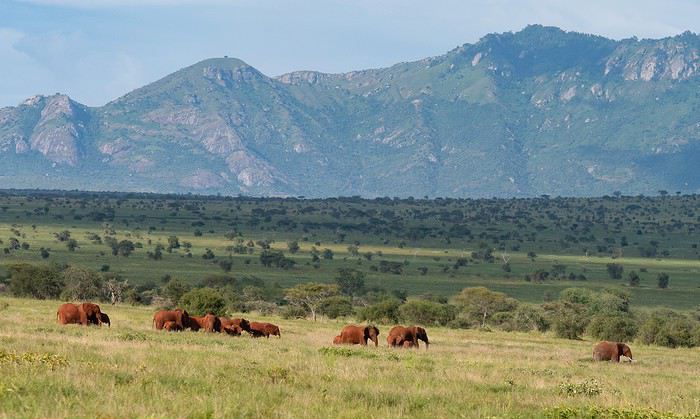
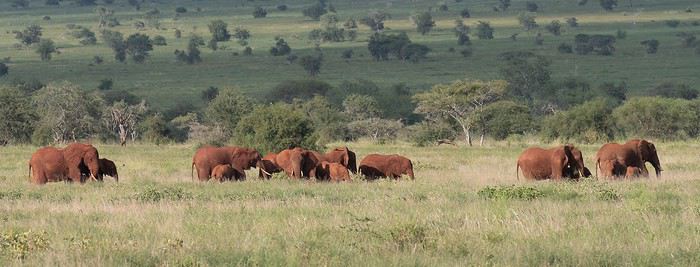
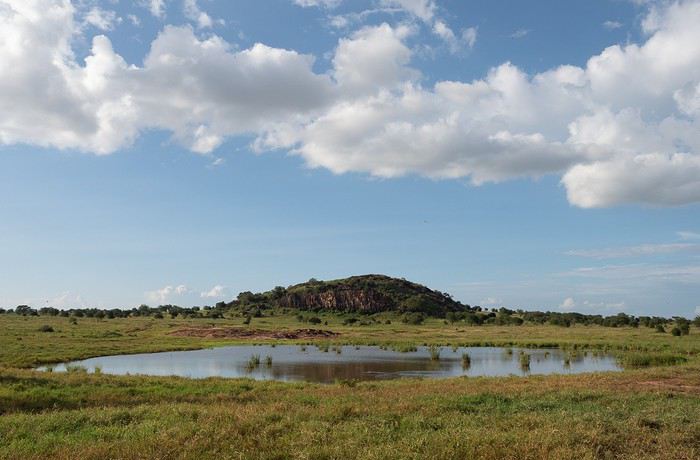
Elephants, but also hartebeests and lots of giraffes in a light we really liked.
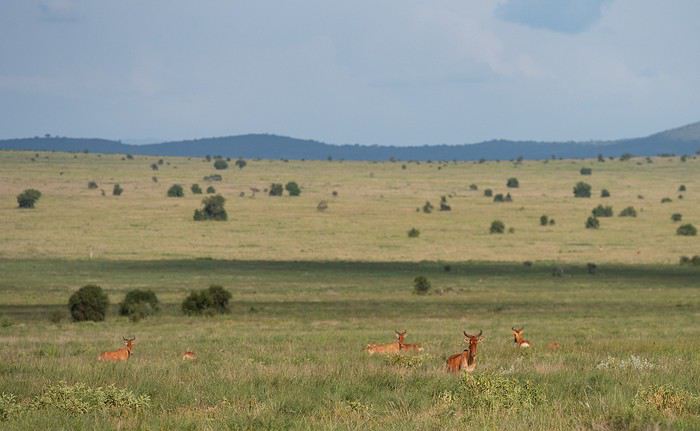
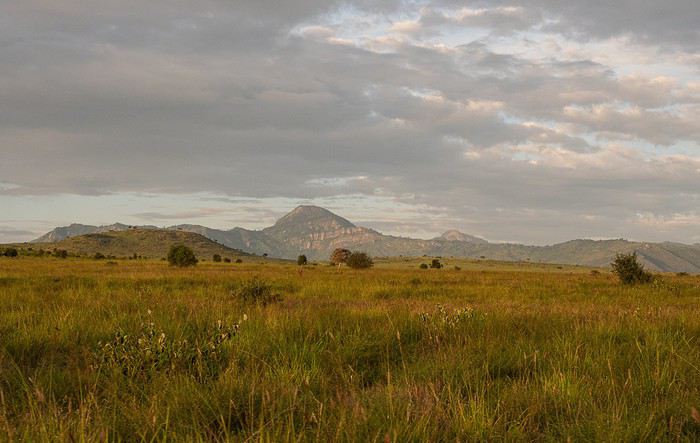
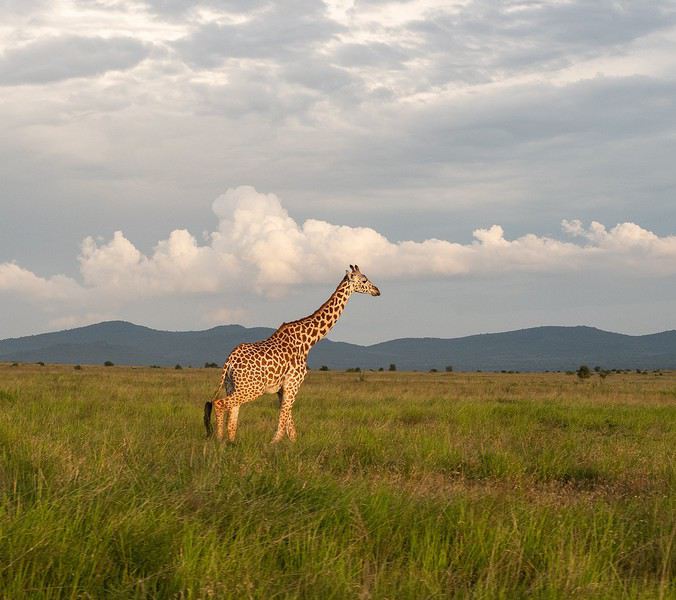
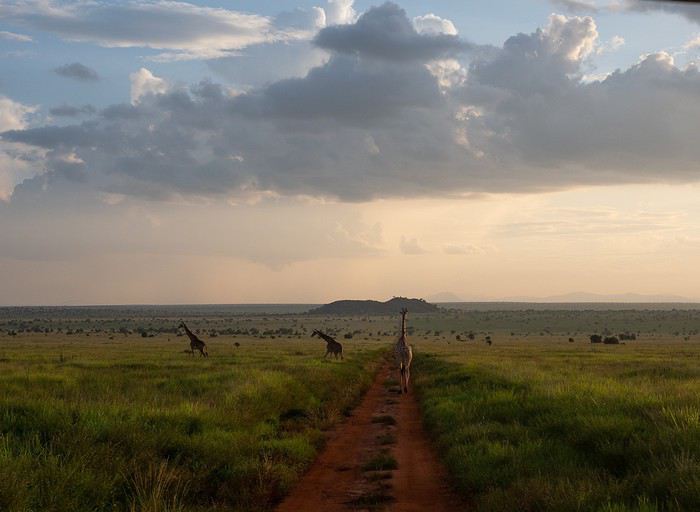
It was a really great idea to buy those flight tickets to Nairobi back in December. When Benoit suggested this new safari in February, I hesitated a little (very little): it was the season with particularly high temperatures, and the short rainy season in November/December had been very heavy, raising concerns about the state of the tracks… Given the current situation, no regrets, of course… We quickly organized the safari with our usual guide, and we booked the accommodations ourselves directly. (If we’d waited just a few more weeks, we might’ve regretted it…)
For once, we were able to leave from the airport near where we live (Lorient - Lann Bihoué), which is really convenient: no driving, no parking… We left home at 2 PM on Tuesday, February 18th, and arrived in Nairobi at 6 AM the next morning—perfect. (With a layover in CDG, of course 😉) Upon arrival, after a forehead temperature check by airport staff, we got our visas very quickly (forms filled out before departure). The customs agents congratulated us on our passports full of Kenyan stamps… but we still had to pay the 40 € for the visa.
All that was left was to collect our luggage, and we’d be ready to leave the airport shortly after landing. But there was a small issue: the baggage conveyor belt was broken… Eventually, the suitcases and bags were brought out by hand… Hakuna Matata, as they say here—no problem, as long as they’re all there. Benoit sent a message to Félix, our guide, to come meet us in the airport parking lot. After catching up with our respective families, we set off toward the Mombasa road, heading to Voi.
Traffic in Nairobi is still as heavy as ever, and the pollution is very noticeable (cars, but also cement factories…). The current lockdown has changed things. On social media, Mount Kenya and Kilimanjaro seem visible from Nairobi now!…
The first stop on this safari was a place we hadn’t visited before: the LUMO Community Wildlife Conservancy lumoconservancy.com/. It’s a small reserve located west of Tsavo West and near the Taita Hills. The reserve is managed by the local community, and entry fees are lower than in Tsavo’s national parks. We had initially planned to spend three days in Tsavo East, but since the accommodation wasn’t available for that long, we ended up choosing this option, which turned out to be a great discovery. Since the reserve is small, I think it’s hard to spend more than two days there. The advantage is that, since it’s not a national park, activities like walks or night safaris can be offered.
Alright, here are a few images to set the mood.
Elephants, but also hartebeests and lots of giraffes in a light we really liked.
Peuples d'Angola English translation pending
Bonjour,
Ceci est ma réponse à quelques uns d’entre-vous...
Je découvre en effet, mes photographies sur le net, je le déplore et regrette la publication de mon texte, de ces photos, elles desservent les populations impliquées, celles-ci ne nécessitent ni lumière, ni notoriété et n’ont nul besoin d’un afflux de visiteurs, bien au contraire, je supprime donc écrit et clichés.
Je souhaite profondément la pérennisation de ces cultures et non leur destruction, elles sont remarquables mais oscillent aujourd’hui entre deux mondes, notre comportement à leur égard n’est pas digne, elles sont en grand danger.
Le constat est accablant, quelques modestes années suffirent.
Nous sommes responsables, nous les touristes, nous les visiteurs étrangers, de la désagrégation de l’équilibre, de la rupture de l’harmonie qui prévalaient chez tous ces peuples, chez les Himba en Namibie, les Hamer, Bana, Mursi... en Éthiopie, chez les pygmées au Cameroun, les Kalash au Pakistan ou les hommes fleurs, les Mentawaï en Indonésie. Partout, le désastre est accompli.
La liste est longue, incomplète, tronquée, planétaire... liste en voie de clôture, tous ces peuples sont sur le chemin d’une assimilation non choisie, imposée.
Le relief, les forêts denses, l’insularité, des abords désertiques ont longtemps protégé ces habitants, leurs modes de vie; c’est fini. Le progrès, à notre image évidemment, les religions, notre civilisation, ses bienfaits, les rattrapent... enfin !
C’est, pour ces peuples, le début d’une décadence, de la déchéance...
Nous sommes en 2020, c’est la fin, le début de la fin... de rares groupes ethniques encore résistent, c’est le cas de ces communautés angolaises, retirées, à l’écart des routes, elles occupent des terres ingrates que personne, aujourd’hui ne désire, ne leur conteste.
Moshimba et Himba forment un même peuple; au gré de l’histoire, des conflits, ils s’établirent au-delà d’un fleuve qui, aujourd’hui fait office de frontière entre deux nations, l’Angola et la Namibie. Himba et Moshimba partagent une même langue d’origine bantoue, les traditions sont semblables.
Le peuple angolais s’est longuement déchiré lors d’une guerre civile insensée, meurtrière, interminable; sans intérêt militaire, ces territoires relativement épargnés se sont récemment ouverts, des évolutions naturellement s’engouffrent, les motocyclettes chinoises, conduites par de jeunes hommes s’immiscent dans le paysage.
Les jeunes filles semblent particulièrement attachées au mode de vie traditionnel, les femmes sont libres, l’argent est rare, partout précieux; l’après-midi, nombre de ces femmes, Moshimba et Muhacahona se retrouvent sous un toit, ouvert aux quatre vents, elles refont le monde, leur monde, elles ne rêvent pas d’occidentaux, le verbe est haut, l’alcool local, bon marché, coule abondamment...
Par le passé, des visiteurs pressés ont accédé à ce village; non loin, se tiennent quelques cases Moshimba, la visite de la communauté peut se réaliser aujourd’hui, à la condition de rétribuer un homme, le chef de ce village, il ne vit pas sur place et conserve naturellement la quasi totalité de la somme convenue, les femmes se laissent photographier, le tarif est fixe.
Loin de la piste principale, nous sommes sur le retour, nous découvrons un dernier campement, c’est un village Muhacahona, Il est seize heures, les hommes sont absents, les femmes sont ivres, l’une d’elles titube, les propos sont décousus et l’entente est impossible, il nous faut partir.
Un ami cher, angolais, me sollicite, il désire créer une structure de tourisme dédiée à ces contrées... espoir de profit, tu nous tiens...Je confirme, c’est le début de la fin.
On remonte le temps: Tanzanie - Kenya 1992 English translation pending
Le carnet de Christian alias Eiger m'a donné une idée. Pourquoi ne pas moi aussi vous raconter mon premier grand voyage qui remonte à 1992 ? Mon premier safari et la découverte de l'Afrique de l'est à jamais enraciné dans mon cœur avec l'Afrique Australe.
Bon à l'époque je débutais dans la photographie, donc c'est pas spécialement brillant et mot est faible ! Les photos ont été à l'époque directement scannées et transférées sur CD par Kodak.
Il restera ancré à tout jamais dans ma mémoire comme mon premier grand voyage ! Ma grand mère, ma mère me traitent de fou 🤪 Mon père ancien marin dans la marchande qui a fait plus de deux fois le tour du monde, m'encourage 🙂
N'ayant pas l'esprit aventureux de certain, un niveau d'anglais moyen et pas de temps à perdre en recherche d'information sur place, je passe par une agence de voyage qui a toujours pignon sur rue et qui organise des voyages en groupe.
Le voyage durera 23 jours et sur la fin les relations furent un peux compliquées.
Le voyage sera découpé comme cela :
Kilimandjaro Safari - Ngorongoro et Serengeti Zanzibar Retour par le Kenya
Bon à l'époque je débutais dans la photographie, donc c'est pas spécialement brillant et mot est faible ! Les photos ont été à l'époque directement scannées et transférées sur CD par Kodak.
Il restera ancré à tout jamais dans ma mémoire comme mon premier grand voyage ! Ma grand mère, ma mère me traitent de fou 🤪 Mon père ancien marin dans la marchande qui a fait plus de deux fois le tour du monde, m'encourage 🙂
N'ayant pas l'esprit aventureux de certain, un niveau d'anglais moyen et pas de temps à perdre en recherche d'information sur place, je passe par une agence de voyage qui a toujours pignon sur rue et qui organise des voyages en groupe.
Le voyage durera 23 jours et sur la fin les relations furent un peux compliquées.
Le voyage sera découpé comme cela :
Kilimandjaro Safari - Ngorongoro et Serengeti Zanzibar Retour par le Kenya