Results for "Brême+|+9+>+196"
6768 results found.
Tarif des songthaews pour visiter Chiang Mai? (Thaïlande) English translation pending
Bonjour a tous..
Je cherche un plan pour me deplacer sur Chiang mai.....A 3 avec un enfant ..le plan moto est a l'eau
je pensais utiliser les songthaews pour visiter le coin ou louer a la journée les services d'un chauffeur
(Songthaews ou voiture ) pour etre plus souple avec mon ptit gars de 4 ans....
Ensuite j'aimerais partir sur chiang rai et me balader une journée dans le triangle d'or.
Connaissez vous le tarif d'un Songthaew a la journee ou un bon plan avec un particulier?
merci....depart J - 5
Je cherche un plan pour me deplacer sur Chiang mai.....A 3 avec un enfant ..le plan moto est a l'eau
je pensais utiliser les songthaews pour visiter le coin ou louer a la journée les services d'un chauffeur
(Songthaews ou voiture ) pour etre plus souple avec mon ptit gars de 4 ans....
Ensuite j'aimerais partir sur chiang rai et me balader une journée dans le triangle d'or.
Connaissez vous le tarif d'un Songthaew a la journee ou un bon plan avec un particulier?
merci....depart J - 5
Vos conseils sur l'Algérie English translation pending
Bonjour à tous !
J'aimerai visiter l'Algérie et je demande donc si quelqu'un pourrait me décrire le pays brièvement ainsi que les principaux sites. (quelques lignes suffiront, merci)
Je me demandais aussi si il existait des attractions plutot "jeunes" dans les grandes villes.
Merci d'avance.😉
J'aimerai visiter l'Algérie et je demande donc si quelqu'un pourrait me décrire le pays brièvement ainsi que les principaux sites. (quelques lignes suffiront, merci)
Je me demandais aussi si il existait des attractions plutot "jeunes" dans les grandes villes.
Merci d'avance.😉
Conseils sur Sapa en Vietnam du Nord English translation pending
Nous comptons nous rendre au Vietnam en avril 2004...voyage pélerinage.
nous pensions faire une petite excursion randonnée-Maichau;mais chantier construction, nous nous tournons donc vers Sapa.
Avez-vous une expérience de cette région ? des photos ?
Nous ne désirons pas faire un trek de plusieurs jours, notre but n'est pas celui-là, mais nous aimons la montagne et la nature. Dur, dur de devoir faire des choix! Nous ne disposons que de 14 jours et nous limiterons notre circuit au Vietnam du nord
Quels sont vos coups de coeur ?
Nous partons à trois avec notre fille de 14 ans .
Merci de votre réponse.
nous pensions faire une petite excursion randonnée-Maichau;mais chantier construction, nous nous tournons donc vers Sapa.
Avez-vous une expérience de cette région ? des photos ?
Nous ne désirons pas faire un trek de plusieurs jours, notre but n'est pas celui-là, mais nous aimons la montagne et la nature. Dur, dur de devoir faire des choix! Nous ne disposons que de 14 jours et nous limiterons notre circuit au Vietnam du nord
Quels sont vos coups de coeur ?
Nous partons à trois avec notre fille de 14 ans .
Merci de votre réponse.
Trouver un job au Québec? English translation pending
bonjour à qui voudra
je suis 1 jeune cuisinier avec 3 ans d'expérience et j'aimerais avoir d'avantage de renseigements sur les emplois à quebec.
y a t'il des restaurants qui seraient près à embaucher 1 jeune français avec, biensûre, contract de travail à l'appui et tout le tralala.
merci d'avance, nicolas
je suis 1 jeune cuisinier avec 3 ans d'expérience et j'aimerais avoir d'avantage de renseigements sur les emplois à quebec.
y a t'il des restaurants qui seraient près à embaucher 1 jeune français avec, biensûre, contract de travail à l'appui et tout le tralala.
merci d'avance, nicolas
Grand Paradise - à Punta Cana English translation pending
bonjour
j'aimerais avoir des détails sur la température et surtout sur l'hotel Grand Paradise Bavaro à Punta Cana.
Nous partons samedi le 17 janvier 2004 et j'aimerais avoir des impressions sur l'endroit choisi.
Merci à l'avance
j'aimerais avoir des détails sur la température et surtout sur l'hotel Grand Paradise Bavaro à Punta Cana.
Nous partons samedi le 17 janvier 2004 et j'aimerais avoir des impressions sur l'endroit choisi.
Merci à l'avance
Retour de El Senador Cayo Coco Cuba English translation pending
Bonjour à vous tous,
Du 8 au 15 novembre 2003, papa, maman, notre fils de 10 ans et notre fille de 5 ans avons séjournés à l’hôtel El Senador de Cayo Coco à Cuba. Notre intention n’est pas de vous faire aimer ou haïr cet hôtel mais plutôt de vous décrire notre semaine, vous en tirerez vos propres conclusions.
Notre vol était un vol de nuit et sommes arrivés à l’hôtel El Senador à 00h30. Nous descendons nos bagages et se rendons à la réception, malheur, le chauffeur du bus nous a laissés au El Senador Emperador et nous sommes inscrit au El Senador Laguna Azul. Nous rembarquons les bagages et le bus nous amènent à la bonne réception. L’attitude de la préposée à la réception était froide, sans mot de bienvenu ou une brève explication du complexe elle se contente de me demander mon nom puis me remet une enveloppe avec une clef genre carte de crédit. Je lui demande où se trouve la chambre et répond avec un geste vers l’extérieur du lobby en disant par-là et à droite. La nuit dans un complexe inconnu de plus de 30 édifices de chambres et plus d’une trentaine de villas, il est difficile de trouver le bon endroit rapidement. Il est près de 00h45 et les enfants ont faim, alors je me dirige vers le Grill qui est supposé être ouvert 24 heures. Il est fermé! Arrivée finalement à la chambre je veux placer les passeports et les cartes de crédits en lieu sûr mais il n’y a pas de serrure au coffre-fort, alors je retourne au Lobby et demande pour une serrure, à la réception on me dit de revenir demain matin. Le lendemain matin je retourne à la réception pour la serrure, venez ce soir monsieur, j’y retourne le soir et on me dit demain matin! J’ai finalement su par un autre client qu’il était plus facile d’avoir les serrures à l’autre réception de l’hôtel, El Senador Emperador à l’autre extrémité du complexe, je m’y rends et enfin j’ai une serrure pour le coffre. Pour le dîner et le souper, nous avons dû traverser complètement le complexe pour rejoindre le seul buffet ouvert. Les autres qui devaient être ouvert étaient tout fermés le midi et le soir. Avec deux enfants il n’est pas toujours facile de faire 10 minutes de marche à la noirceur et ce, lorsqu’il ne pleut pas. Les batteries de la télécommande sont aplats, je me rend à la réception, on me donne une autre télécommande, arrivée à la chambre cette dernière télécommande n’est pas compatible avec la télé. Je retourne à la réception et on me donne une autre télécommande qui enfin fonctionne. Nous arrivons ;a la chambre après un après midi à la mer, mon fil à des crampes au ventre comme moi et mon épouse, j’introduit la carte clef mais n’ouvre pas la porte. Je me rends à la réception et informe la préposée, elle me répond de retourner à la chambre elle va envoyer quelqu’un. Un jardinier me dit Holla, je lui réponds et lui indique mon problème, il me fait signe une minute puis disparaît à l’arrière et sort de la chambre. Pourtant la fenêtre était barrée! Mais ils doivent avoir un truc pour entrer dans une chambre par les fenêtres de balcon. 10 minutes plus tard un membre de la maintenance arrive. C’est un problème de batteries, je reviens qu’il me dit. 10 minutes plus tard il revient avec des batteries, les changent mais aucun résultat, la porte n’ouvre toujours pas. Il change pour d’autres batteries et fait un test, voilà ça fonctionne. Nous allons à la piscine puis revenons à la chambre. La porte n’ouvre pas encore. Je retourne à la réception et l’informe du problème. La préposée reprogramme la carte clef et me dit que tout est correct, que la carte va fonctionner. J’arrive à la chambre et la carte clef ne fonctionne pas, je retourne à la réception. La préposée me dit de retourner à la chambre je vous envois quelqu’un. 5 minutes plus tard un superviseur (chemise jaune) arrive et j’explique le problème et tous ce qui a été fait. Je reviens tout de suite avec un programmeur qu’il me dit. Plus de 30 minutes plus tard il revient avec un programmeur et reprogramme la serrure, enfin nous pouvons entrer.
Le service de serviette de plage est de 09h00 à 17h00, mais c’est plutôt vers les 10h00 quand il les a reçus. Les boutiques étaient fermées du coté El Senador Laguna Azul et à l’autre extrémité du complexe, 1 ou 2 étaient ouvertes et de façon sporadique. Attention à vos enfants, il n’y a aucune surveillance aux piscines et à la plage le seul life gard que nous avons vu jasait dos à la plage avec une petite madame. Le vin est compris aux repas, mais il vaut mieux donner un tip au garçon pour avoir le privilège d’y goûter. Un soir à 21h45 un employé de maintenance est venu frapper à la porte pour savoir si l’air climatisé fonctionnait. Les murs de notre chambre étaient sales, le matelas fini et la toilette faisait continuellement du bruit. Au buffet j’ai été témoin que le garçon à l’arrière du bar du buffet vidait les soucoupes salit de café, passait un linge et remettait les soucoupes dans la pile à coté des tasses que les clients réutilisaient. Les plages du El Senador sont inutilisables le matin à la marrée haute, les villas sont situés dans un marécage plus qu’une lagune avec une senteur d’égout, des rigoles au pied des fenêtre des chambres qui débordent lorsqu’il pleut et etc. Comme ont dit qu’une photo vaut mille mots, nous avons pris quelques photos pour vous démontrer la face cachée de l’hôtel El Senador de Cayo Coco, Cuba. Voici le lien : http://community.webshots.com/user/serglo
Du 8 au 15 novembre 2003, papa, maman, notre fils de 10 ans et notre fille de 5 ans avons séjournés à l’hôtel El Senador de Cayo Coco à Cuba. Notre intention n’est pas de vous faire aimer ou haïr cet hôtel mais plutôt de vous décrire notre semaine, vous en tirerez vos propres conclusions.
Notre vol était un vol de nuit et sommes arrivés à l’hôtel El Senador à 00h30. Nous descendons nos bagages et se rendons à la réception, malheur, le chauffeur du bus nous a laissés au El Senador Emperador et nous sommes inscrit au El Senador Laguna Azul. Nous rembarquons les bagages et le bus nous amènent à la bonne réception. L’attitude de la préposée à la réception était froide, sans mot de bienvenu ou une brève explication du complexe elle se contente de me demander mon nom puis me remet une enveloppe avec une clef genre carte de crédit. Je lui demande où se trouve la chambre et répond avec un geste vers l’extérieur du lobby en disant par-là et à droite. La nuit dans un complexe inconnu de plus de 30 édifices de chambres et plus d’une trentaine de villas, il est difficile de trouver le bon endroit rapidement. Il est près de 00h45 et les enfants ont faim, alors je me dirige vers le Grill qui est supposé être ouvert 24 heures. Il est fermé! Arrivée finalement à la chambre je veux placer les passeports et les cartes de crédits en lieu sûr mais il n’y a pas de serrure au coffre-fort, alors je retourne au Lobby et demande pour une serrure, à la réception on me dit de revenir demain matin. Le lendemain matin je retourne à la réception pour la serrure, venez ce soir monsieur, j’y retourne le soir et on me dit demain matin! J’ai finalement su par un autre client qu’il était plus facile d’avoir les serrures à l’autre réception de l’hôtel, El Senador Emperador à l’autre extrémité du complexe, je m’y rends et enfin j’ai une serrure pour le coffre. Pour le dîner et le souper, nous avons dû traverser complètement le complexe pour rejoindre le seul buffet ouvert. Les autres qui devaient être ouvert étaient tout fermés le midi et le soir. Avec deux enfants il n’est pas toujours facile de faire 10 minutes de marche à la noirceur et ce, lorsqu’il ne pleut pas. Les batteries de la télécommande sont aplats, je me rend à la réception, on me donne une autre télécommande, arrivée à la chambre cette dernière télécommande n’est pas compatible avec la télé. Je retourne à la réception et on me donne une autre télécommande qui enfin fonctionne. Nous arrivons ;a la chambre après un après midi à la mer, mon fil à des crampes au ventre comme moi et mon épouse, j’introduit la carte clef mais n’ouvre pas la porte. Je me rends à la réception et informe la préposée, elle me répond de retourner à la chambre elle va envoyer quelqu’un. Un jardinier me dit Holla, je lui réponds et lui indique mon problème, il me fait signe une minute puis disparaît à l’arrière et sort de la chambre. Pourtant la fenêtre était barrée! Mais ils doivent avoir un truc pour entrer dans une chambre par les fenêtres de balcon. 10 minutes plus tard un membre de la maintenance arrive. C’est un problème de batteries, je reviens qu’il me dit. 10 minutes plus tard il revient avec des batteries, les changent mais aucun résultat, la porte n’ouvre toujours pas. Il change pour d’autres batteries et fait un test, voilà ça fonctionne. Nous allons à la piscine puis revenons à la chambre. La porte n’ouvre pas encore. Je retourne à la réception et l’informe du problème. La préposée reprogramme la carte clef et me dit que tout est correct, que la carte va fonctionner. J’arrive à la chambre et la carte clef ne fonctionne pas, je retourne à la réception. La préposée me dit de retourner à la chambre je vous envois quelqu’un. 5 minutes plus tard un superviseur (chemise jaune) arrive et j’explique le problème et tous ce qui a été fait. Je reviens tout de suite avec un programmeur qu’il me dit. Plus de 30 minutes plus tard il revient avec un programmeur et reprogramme la serrure, enfin nous pouvons entrer.
Le service de serviette de plage est de 09h00 à 17h00, mais c’est plutôt vers les 10h00 quand il les a reçus. Les boutiques étaient fermées du coté El Senador Laguna Azul et à l’autre extrémité du complexe, 1 ou 2 étaient ouvertes et de façon sporadique. Attention à vos enfants, il n’y a aucune surveillance aux piscines et à la plage le seul life gard que nous avons vu jasait dos à la plage avec une petite madame. Le vin est compris aux repas, mais il vaut mieux donner un tip au garçon pour avoir le privilège d’y goûter. Un soir à 21h45 un employé de maintenance est venu frapper à la porte pour savoir si l’air climatisé fonctionnait. Les murs de notre chambre étaient sales, le matelas fini et la toilette faisait continuellement du bruit. Au buffet j’ai été témoin que le garçon à l’arrière du bar du buffet vidait les soucoupes salit de café, passait un linge et remettait les soucoupes dans la pile à coté des tasses que les clients réutilisaient. Les plages du El Senador sont inutilisables le matin à la marrée haute, les villas sont situés dans un marécage plus qu’une lagune avec une senteur d’égout, des rigoles au pied des fenêtre des chambres qui débordent lorsqu’il pleut et etc. Comme ont dit qu’une photo vaut mille mots, nous avons pris quelques photos pour vous démontrer la face cachée de l’hôtel El Senador de Cayo Coco, Cuba. Voici le lien : http://community.webshots.com/user/serglo
J'adore la musique anglaise!!! English translation pending
et vous?
la musique des seventises !
comme les pink floyd, ou supertramp
Climat à Angkor en août? English translation pending
Bonjour à tous,
Pour des raisons professionnelles, je dois prendre 2 semaines de congés en Août 🤪.
Est-il raisonnable d'envisager un voyage à Angkor à cette période ? La mousson est-elle trop violente pour permettre une visite agréable de ce site ... ou est-ce gérable ?
Aucun guide (déjà soigneusement consulté !) ne me renseignera aussi bien que votre expérience vécue .... 🙂
Merci de votre aide.
Pour des raisons professionnelles, je dois prendre 2 semaines de congés en Août 🤪.
Est-il raisonnable d'envisager un voyage à Angkor à cette période ? La mousson est-elle trop violente pour permettre une visite agréable de ce site ... ou est-ce gérable ?
Aucun guide (déjà soigneusement consulté !) ne me renseignera aussi bien que votre expérience vécue .... 🙂
Merci de votre aide.
Infos pratiques l'Asie Sud-Est: budget, visa... English translation pending
Bonjour à tous,
Je viens découvrir au mois de mai la Thaïlande, puis Cambodge, Vietnam, Laos...
Je me pose quelques questions : Y'a t-il beaucoup de touristiques en cette saison, qui puisse nécessiter des réservations de chambres avant le départ ?; Un budget des 30 euros par jours est-il suffisant ? les passages de frontières se font-ils facilement entre ces différents pays, et peut-on acheter ses visas sur place. peut-on descendre le Mékong du laos au Cambodge, sans prendre les "paquebots" de touriste (et en combien de temps) ???A tous merci d’avance 😛
Je viens découvrir au mois de mai la Thaïlande, puis Cambodge, Vietnam, Laos...
Je me pose quelques questions : Y'a t-il beaucoup de touristiques en cette saison, qui puisse nécessiter des réservations de chambres avant le départ ?; Un budget des 30 euros par jours est-il suffisant ? les passages de frontières se font-ils facilement entre ces différents pays, et peut-on acheter ses visas sur place. peut-on descendre le Mékong du laos au Cambodge, sans prendre les "paquebots" de touriste (et en combien de temps) ???A tous merci d’avance 😛
Travel companions for Brazil in November 2026
I'm planning a trip to Brazil as winter approaches, around late October to early November 2026. I don’t have exact dates since I recently retired, so I can stay until mid-December if needed. I’m looking for a travel companion (male or female) for this journey—think relaxed mode, pousadas with locals, parks, seaside, culture, and music.
I’ve already explored the north, like Recife and Fortaleza. What I found most challenging was communicating with locals since I don’t speak Portuguese, and not everyone speaks English. I’m trying to learn now, but the accent isn’t easy!!!! This country is huge, and I’d love to discover the south. The idea is to arrive in São Paulo (without staying long—I’m not a big fan of large cities) and take a flight to Iguazu, then a bus to Paraty and Ilha Grande to enjoy the spots. After that, a bit of Rio is unavoidable, but I’d like to explore off-the-beaten-path places with a guide. To finish, Salvador de Bahia, with a focus on Morro de São Paulo and Boipeba. Maybe a return via Salvador—TAP offers that route. Nothing’s set in stone; we can discuss everything together.
I just got back from Madagascar, where I spent the winter (a place I know well), and I’ve got quite a few trips under my belt. Feel free to email me so we can chat, then we can call or meet—I’m based in Toulouse and can host you.
patricia.wagner31@sfr.fr Have a great day! Vejo você em breve
I’ve already explored the north, like Recife and Fortaleza. What I found most challenging was communicating with locals since I don’t speak Portuguese, and not everyone speaks English. I’m trying to learn now, but the accent isn’t easy!!!! This country is huge, and I’d love to discover the south. The idea is to arrive in São Paulo (without staying long—I’m not a big fan of large cities) and take a flight to Iguazu, then a bus to Paraty and Ilha Grande to enjoy the spots. After that, a bit of Rio is unavoidable, but I’d like to explore off-the-beaten-path places with a guide. To finish, Salvador de Bahia, with a focus on Morro de São Paulo and Boipeba. Maybe a return via Salvador—TAP offers that route. Nothing’s set in stone; we can discuss everything together.
I just got back from Madagascar, where I spent the winter (a place I know well), and I’ve got quite a few trips under my belt. Feel free to email me so we can chat, then we can call or meet—I’m based in Toulouse and can host you.
patricia.wagner31@sfr.fr Have a great day! Vejo você em breve
In Memory of Jamie Muir (1942–2025)
Musician, monk, painter: The metamorphoses of Jamie Muir
James David "Jamie" Muir, a talented drummer and percussionist and brief member of King Crimson, who left the world of pop music and show business to retreat to a Buddhist monastery in Scotland before dedicating himself almost entirely to painting, passed away last year at the age of 81. His artwork was recently featured in two exhibitions in Cornwall and London...
Born in Edinburgh, Scotland, in 1942, Jamie Muir attended the College of Art there in the 1960s. Early on, he was drawn to jazz.
Later settling in London, Jamie Muir played jazz trombone before turning to percussion. Influenced by American drummers like Tony Williams, Kenny Clarke, and Milford Graves, as well as musicians such as Pharoah Sanders and Albert Ayler, he gravitated toward free music, meaning improvisation. It was during this time that he began assembling an arsenal of household objects he later used alongside his standard drum kit: rattles, whistles, horns, chimes, bells, gongs, sheets of metal, shakers, drums, and plastic bottles.
After a brief stint in a multimedia group, Jamie Muir worked with choreographer Lindsay Kemp (as did David Bowie), played music in the short-lived jazz-rock group Sunship (with guitarist Allan Holdsworth, formerly of Soft Machine), and became involved in the ensemble known as The Music Improvisation Society, with Derek Bailey, Hugh Davies, and Evan Parker between 1968 and 1971. The Music Improvisation Society recorded an album for the ECM label in 1971 (never reissued on CD except in Japan) and a posthumous album (1968–71). Both records gained a cult following among fans of experimental and improvised music. After this experience, Muir played in Pete Brown’s Battered Ornaments and then in the band Boris with Jamie Peters, Don Weller, and former Colosseum member Jim Roache. He also briefly joined Assagai, an Afro-rock group featuring South African and Nigerian musicians from the legendary South African band Blue Notes (including drummer Louis Moholo, saxophonist Dudu Pukwana, and trumpeter/flutist Mongezi Feza).
In the summer of 1972, Robert Fripp, leader and guitarist of King Crimson, whom a journalist from *Melody Maker* had suggested meet this percussionist from the English experimental scene, invited Jamie Muir to join the new King Crimson lineup he was assembling: Robert Fripp (guitar, mellotron), David Cross (violin), John Wetton (bass), Bill Bruford (drums), and Jamie Muir (percussion). "King Crimson was the ideal for me because it was a rock band that had more than three brain cells. I was very much more an instrumental style of musician rather than being song-based, and there weren’t many other bands that I would have been any good in. I was extremely pleased and felt completely at home with Crimson." Once formed, the new group honed their sound on stage from early October to mid-December 1972 (see the 1972 live albums in the discography below), before recording the album Larks’ Tongues in Aspic in early 1973. A grand album, one of the band’s best, and one of the best of the 1970s.
However, after a concert at the Marquee Club in London, Jamie Muir left not only the band but also the music world entirely, with immediate effect. During the six months Muir spent with King Crimson, his presence completely upended the group’s philosophy, loosening the notoriously strict rules imposed by Fripp and pushing the boundaries of improvisation. Jamie Muir’s contribution—clearly heard on Larks’ Tongues in Aspic—was to introduce a touch of anarchy into Robert Fripp’s music, which was usually so tight, rational, and meticulously structured.
Muir returned to Scotland, to the Samye Ling Monastery near Eskdalemuir in Dumfries and Galloway (in the south), where he spent several years as a Buddhist monk, the pleasures of his former life giving way to retreat and meditation.
Muir came back to London and music in the 1980s, playing and recording with Derek Bailey and Evan Parker from the Music Improvisation Company, as well as with former King Crimson member Michael Giles on the soundtrack for the independent British film Ghost Dance (1983).
In 1990, Muir left music behind once more and increasingly devoted himself to painting, a discipline he maintained until his death. In his later years, he began exploring digital art as another form of expression.
In recent years, he lived in Penzance, Cornwall, where he passed away in February 2025.
Hery
Discography:
A. Jamie Muir with King Crimson: • Larks’ Tongues In Aspic (1973) • Larks’ Tongues In Aspic (The Complete Recordings) (2023, 4 CDs) • Cosmic Muir (1998, Japan, unofficial release) • The Beat Club Bremen 1972 (1999) • Live at the Zoom Club Frankfurt, Germany (October 13, 1972) (2002, 2 CDs) • Live in Guildford (November 13, 1972) (2003) • Live in Newcastle (December 8, 1972) (2019, mono) B. Jamie Muir and other projects: • The Music Improvisation Company: The Music Improvisation Company (1970) • The Music Improvisation Company: 1968–1971 (1976) • Derek Bailey / Jamie Muir: Dart Drug (1981) • Michael Giles / Jamie Muir / David Cunningham: Ghost Dance (1996) • Evan Parker / Jamie Muir / Paul Rodgers: The Ayes Have It (2001)
Links:
https://www.jamiemuirart.com/
https://www.youtube.com/watch?v=eDyf0ofV5n4 (King Crimson: "Larks' Tongues in Aspic") https://www.youtube.com/watch?v=ZgoKT8hEBFQ&list=RDJ2FjbpvX8dA&index=2 (Michael Giles, Jamie Muir, David Cunningham)
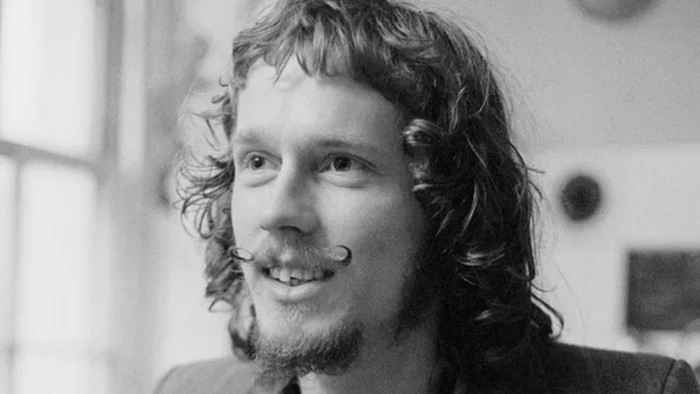 The musician
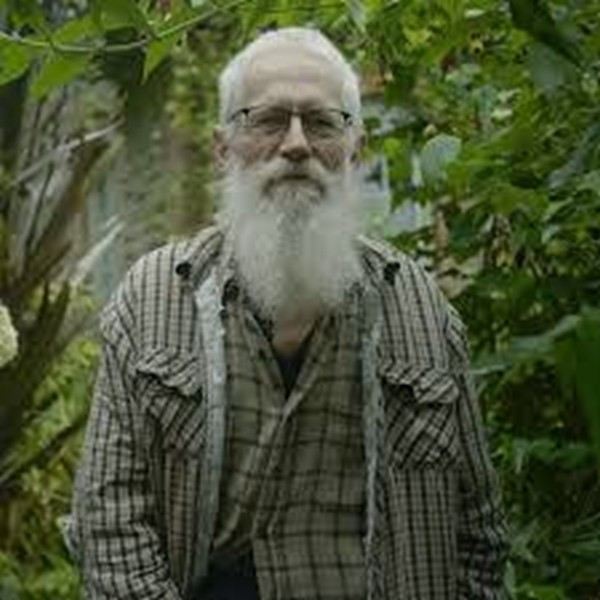 The painter
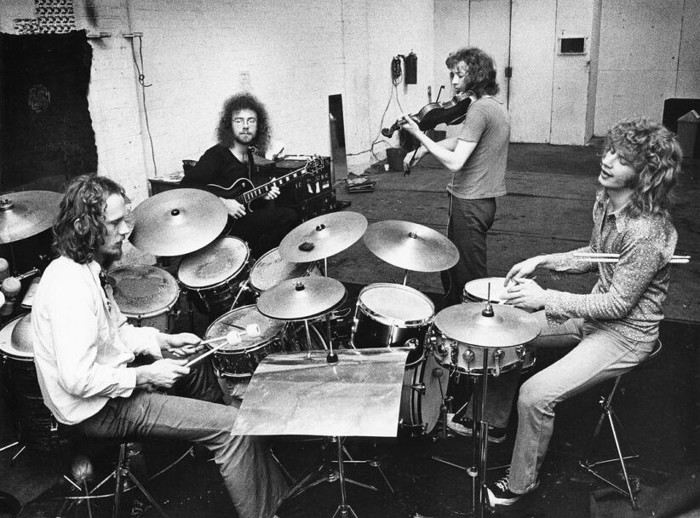 The band (l. to r.: Muir, Fripp, Cross, Bruford)
James David "Jamie" Muir, a talented drummer and percussionist and brief member of King Crimson, who left the world of pop music and show business to retreat to a Buddhist monastery in Scotland before dedicating himself almost entirely to painting, passed away last year at the age of 81. His artwork was recently featured in two exhibitions in Cornwall and London...
Born in Edinburgh, Scotland, in 1942, Jamie Muir attended the College of Art there in the 1960s. Early on, he was drawn to jazz.
Later settling in London, Jamie Muir played jazz trombone before turning to percussion. Influenced by American drummers like Tony Williams, Kenny Clarke, and Milford Graves, as well as musicians such as Pharoah Sanders and Albert Ayler, he gravitated toward free music, meaning improvisation. It was during this time that he began assembling an arsenal of household objects he later used alongside his standard drum kit: rattles, whistles, horns, chimes, bells, gongs, sheets of metal, shakers, drums, and plastic bottles.
After a brief stint in a multimedia group, Jamie Muir worked with choreographer Lindsay Kemp (as did David Bowie), played music in the short-lived jazz-rock group Sunship (with guitarist Allan Holdsworth, formerly of Soft Machine), and became involved in the ensemble known as The Music Improvisation Society, with Derek Bailey, Hugh Davies, and Evan Parker between 1968 and 1971. The Music Improvisation Society recorded an album for the ECM label in 1971 (never reissued on CD except in Japan) and a posthumous album (1968–71). Both records gained a cult following among fans of experimental and improvised music. After this experience, Muir played in Pete Brown’s Battered Ornaments and then in the band Boris with Jamie Peters, Don Weller, and former Colosseum member Jim Roache. He also briefly joined Assagai, an Afro-rock group featuring South African and Nigerian musicians from the legendary South African band Blue Notes (including drummer Louis Moholo, saxophonist Dudu Pukwana, and trumpeter/flutist Mongezi Feza).
In the summer of 1972, Robert Fripp, leader and guitarist of King Crimson, whom a journalist from *Melody Maker* had suggested meet this percussionist from the English experimental scene, invited Jamie Muir to join the new King Crimson lineup he was assembling: Robert Fripp (guitar, mellotron), David Cross (violin), John Wetton (bass), Bill Bruford (drums), and Jamie Muir (percussion). "King Crimson was the ideal for me because it was a rock band that had more than three brain cells. I was very much more an instrumental style of musician rather than being song-based, and there weren’t many other bands that I would have been any good in. I was extremely pleased and felt completely at home with Crimson." Once formed, the new group honed their sound on stage from early October to mid-December 1972 (see the 1972 live albums in the discography below), before recording the album Larks’ Tongues in Aspic in early 1973. A grand album, one of the band’s best, and one of the best of the 1970s.
However, after a concert at the Marquee Club in London, Jamie Muir left not only the band but also the music world entirely, with immediate effect. During the six months Muir spent with King Crimson, his presence completely upended the group’s philosophy, loosening the notoriously strict rules imposed by Fripp and pushing the boundaries of improvisation. Jamie Muir’s contribution—clearly heard on Larks’ Tongues in Aspic—was to introduce a touch of anarchy into Robert Fripp’s music, which was usually so tight, rational, and meticulously structured.
Muir returned to Scotland, to the Samye Ling Monastery near Eskdalemuir in Dumfries and Galloway (in the south), where he spent several years as a Buddhist monk, the pleasures of his former life giving way to retreat and meditation.
Muir came back to London and music in the 1980s, playing and recording with Derek Bailey and Evan Parker from the Music Improvisation Company, as well as with former King Crimson member Michael Giles on the soundtrack for the independent British film Ghost Dance (1983).
In 1990, Muir left music behind once more and increasingly devoted himself to painting, a discipline he maintained until his death. In his later years, he began exploring digital art as another form of expression.
In recent years, he lived in Penzance, Cornwall, where he passed away in February 2025.
Hery
Discography:
A. Jamie Muir with King Crimson: • Larks’ Tongues In Aspic (1973) • Larks’ Tongues In Aspic (The Complete Recordings) (2023, 4 CDs) • Cosmic Muir (1998, Japan, unofficial release) • The Beat Club Bremen 1972 (1999) • Live at the Zoom Club Frankfurt, Germany (October 13, 1972) (2002, 2 CDs) • Live in Guildford (November 13, 1972) (2003) • Live in Newcastle (December 8, 1972) (2019, mono) B. Jamie Muir and other projects: • The Music Improvisation Company: The Music Improvisation Company (1970) • The Music Improvisation Company: 1968–1971 (1976) • Derek Bailey / Jamie Muir: Dart Drug (1981) • Michael Giles / Jamie Muir / David Cunningham: Ghost Dance (1996) • Evan Parker / Jamie Muir / Paul Rodgers: The Ayes Have It (2001)
Links:
https://www.jamiemuirart.com/
https://www.youtube.com/watch?v=eDyf0ofV5n4 (King Crimson: "Larks' Tongues in Aspic") https://www.youtube.com/watch?v=ZgoKT8hEBFQ&list=RDJ2FjbpvX8dA&index=2 (Michael Giles, Jamie Muir, David Cunningham)
The musician
The painter
The band (l. to r.: Muir, Fripp, Cross, Bruford)Africa: A Heartfelt Love for a Continent
“When the Whites came to Africa, we had the land and they had the Bible. They taught us to pray with our eyes closed: when we opened them, the Whites had the land and we had the Bible.” Jomo Kenyatta (p.7)
The Maggi cube, an unchallenged hegemony, and so much more
“The hopeless continent,” headlined The Economist, a British magazine, in July 2000 about Africa. Eleven years later, the same magazine headlined “Africa rising” instead. Images of Africa in the prosperous North constantly oscillate between apocalyptic scenarios and enthusiastic projections. A key issue with such images lies in the generalization they entail. If you look at the continent, considerable contrasts emerge depending on space and time. It’s no surprise that a region of the world encompassing such diverse ecological zones, maintaining such varied ties with other continents, comprising nearly fifty nation-states in sub-Saharan Africa alone, and characterized by a great diversity of languages, belief systems, and historical paths, doesn’t share a single destiny.
And yet, for many people outside Africa, as well as for many Africans, the continent constitutes a single entity, defined by criteria such as skin color, a colonial past, poverty, and the art of survival. Until now, these perspectives were generally accompanied by the idea that Africa had to—or should have—followed a single path together, sometimes called development, sometimes modernization, sometimes liberation, then a market economy. None of these paths delivered on their promises.
The two writers Alain Mabanckou and Abdourahman Waberi—one from Congo, the other raised in Djibouti, both long settled in France and now professors at renowned North American universities (Los Angeles, Washington)—have had enough of pessimistic scenarios: “We are aware that Africa is in the world and the world is in Africa. The same goes for all other continents, as our destinies are inextricably linked for better or worse. We refuse to see Africa as a reservoir of misfortunes or a continent cursed by atavistic misfortune and characterized by ethnic conflicts. [...] It’s this passionate flame we wanted to capture in a book [...] a kind of stroll through African cultures, without any demands, each letter of the alphabet leading us to a notion, a practice, a concept, a moment in history, literature, painting, politics, economics, cuisine, etc.” (p.10-11). Africa, they write, is on the verge of “imposing a signature, a style, a way of being in the world and in relation to the rest of the world.” (p.11) To put words to the continent’s diversity and dynamism, the two authors created a “rambling ABC,” a kind of portrait—or more precisely, a mythography—that lets you see and feel the pulse of a vast continent whose cultural power is unfolding before our eyes. Once marginalized or even mocked, the voice and importance of the Continent in global affairs are now undeniable” (p.11), containing over a hundred entries, mostly concise, written in a relaxed and casual style. The optimistic, even exuberant tone is set from the brief introduction. The duo of authors wants to “sing a love song to the cultures of our continent, to its inhabitants past and present, to its exceptional resources and its spectacular globalization despite a certain pollution that still clouds our skies due to the unmatched duration of dictatorships in some of our regions.” (p.12) In doing so, they don’t want to be too distracted by today’s Afewerki-Biya-Bongo-Déby & Co. ...
Of course, you’ll find tributes to great precursors like Frantz Fanon (“[...] it was a love story and admiration that wasn’t dimmed by the four decades separating his birth from ours. Let’s add that we were born while the native of Fort-de-France had left the world’s stage four years earlier, in the prime of life” p.141), Mongo Beti (“You must read and reread Mongo Beti, a genius who used his fame to support often just causes in Africa, like defending oppressed groups. His place is already in History. His oppressors, like the dictators Ahmadou Ahidjo and Paul Biya, can’t compete in the same category” p.64), the Malian Amadou Hampâté Bâ
(“Posterity remembers him mainly as an tireless defender of African cultures. His plea for the collection and preservation of traditional African knowledge remains a major event for all men and women of good will. One day in 1960, at the UNESCO podium, the native of Bandiagara sounded the alarm: ‘[...] Since we’ve admitted that the humanity of each people is the heritage of all humanity, if African traditions aren’t collected in time and written down, they’ll one day be missing from the universal archives of humanity.’” p.51),
Kwame Nkrumah, “one of the founders of Pan-Africanism, father of Ghana’s independence” (p.239), as well as the historian Cheikh Anta Diop, the writer, poet, and politician Aimé Césaire, and the economist and thinker Samir Amin, but also very warm tributes to certain contemporary African intellectuals like Souleymane Bachir Diagne and Achille Mbembe
(“A few years ago, in dominant economic circles, a rumor often resurfaced, usually disguised as a cold and scientifically proven analysis: Africa is useless. It’s a burden for the rest of the human community. With its 2% share in world trade, it would disappear from stock market radars without anyone noticing. So? Maybe it’ll be pulled up by other continents. Wanting to surpass itself is a crazy bet for Africans, they concluded. Arrogant or clueless, President Nicolas Sarkozy declared before an audience of students and teachers at Cheikh Anta Diop University in Dakar: ‘The African man hasn’t entered history enough [...] He only knows the eternal repetition of time marked by the endless repetition of the same gestures and words.’ That was in 2007. For decades, armed only with reason, an intellectual often steps up to debunk prejudices, lazy readings, and dishonest frameworks used as false fronts by those who, like Nicolas Sarkozy or former journalist Stephen Smith, out of ignorance, contempt, or condescension, distort African reality. This intellectual is none other than the historian and political scientist Achille Mbembe. This heir of Frantz Fanon, Amílcar Cabral, Jean-Marc Ela, and Fabien Eboussi-Boulaga was born in 1957 in Cameroon, in the Bassa region. Marked early by the upheavals of a fratricidal war, Achille Mbembe became the guardian of the memory of martyrs. After brilliant studies in Paris, he went on to teach at the best American universities, but the call of the Continent was stronger than anything else. In Dakar, he once directed CODESRIA (Council for the Development of Social Science Research in Africa) before joining the University of the Witwatersrand in Johannesburg, South Africa. Even though the author of *Critique of Black Reason* (Éditions La Découverte, 2015) spends a few months at Duke University in North Carolina, his observation post remains South Africa. From Johannesburg, Achille Mbembe scrutinizes Africa and the whole world. A lucid observer with an elegant and generous pen, Achille Mbembe knows how to blend big and small history: ‘I was born one day in July, as the month was drawing to a close. It was 1957, in that part of Africa recently named ‘Cameroon,’ a memory of the wonder that seized Portuguese sailors in the 15th century when, sailing up the river near Douala, they couldn’t help but note the presence of a multitude of crustaceans, and named it *Rio dos Camarões*, meaning ‘River of Shrimp.’ I grew up in the shadow of this nameless land, since, in a way, the name it bears is only the product of someone else’s astonishment: a lexical mistake, if you will.’ From this mistake or wound, he made leaven, a springboard to compose a rich work, recognized worldwide. To denounce barriers and barbarians too. But that’s not enough. Among his peers in circles of thought and action, Achille Mbembe passionately and consistently defends human dignity and the beauty of the world. In doing so, he fulfills the mission Frantz Fanon entrusted to him.” (p.227-229),
as well as entries dedicated to lesser-known artists and intellectuals, like the French journalist and activist Rokhaya Diallo, daughter of Senegalese and Gambian parents, or the Ethiopian filmmaker Haile Gerima, who has long lived in the United States. Other names from politics, sports, music, art, and literature: Kofi Annan, p.36; Barack Obama, p.243; Thomas Sankara, p.277; Ousmane Sow, p.285; Yambo Ouologuem, p.250; Léopold Sédar Senghor, p.282; Muhammad Ali, p.30; Nuruddin Farah, p.146; Salif Keita, p.203; Ahmadou Kourouma, p.206; Ngũgĩ wa Thiong’o, p.236; Winnie Mandela, p.224; Kylian Mbappé, p.226 ...
The authors, who resolutely commit to a “mythography” (p.11) of Africa, also pay special attention to local social movements, cultural events, and aspects of daily life. *Y’en a marre*, “which also meant ‘we’re fed up with sitting on our hands’” (p.320-321), emerged about a decade ago in Senegal as a citizen movement of peaceful resistance and symbolizes, the authors emphasize, the fact that African youth are increasingly fed up “with the political circus deployed in Africa since independence, as our parents would say, ‘since the White man left’...” (p.321). A full entry is dedicated to the Maggi bouillon cube, which has flooded African markets for about forty years and enjoys immense popularity (“It’s everywhere in Africa, from Dakar to Djibouti, and from Tangier to Cape Town. It’s in every pot, every stew. Little hands put it in every sauce, every local or adapted dish. An unchallenged hegemony! You’ll find it in diasporas too. The culinary strolls in Paris, in the [...] neighborhood” p.90). Critics blame it not only for impoverishing the aromatic diversity of local dishes but also for being harmful to health. And yet, “he poorest Africans, those who eat only once a day, a few spoonfuls of white beans and a ball of *foufou*, for example, are the most fervent users of the magic cube.” (p.92-93)
For *fonio*, “the new trendy cereal. [...] From the millet family, fonio is probably the oldest cereal cultivated in West Africa, and mainly in its sub-Saharan part, for millennia. [...] Easy to grow, water-efficient, fonio grows everywhere except on clay soils. Long neglected because it was considered the poor man’s crop, fonio is now a source of pride for the farmers who cultivate it and cherish it like the apple of their eye” (p.156-157), the authors immediately offer a detailed recipe, letting the reader know that “e can’t resist sharing this fonio with chicken recipe from Mali with you:
Ingredients: 1 chicken 3 large ripe red tomatoes 4 tbsp tomato paste 4 large onions 1 garlic clove 1/2 cup oil 2 Maggi cubes or salt 2 large carrots 1 turnip 1 large cabbage 2 large potatoes 1 celery stalk 1 packet pre-cooked fonio 4 okra (or okra powder) salt, pepper
Preparation: 1. Prepare the sauce: wash and cut the chicken. Peel the onions, garlic, and vegetables. 2. In a pot, fry the chicken pieces. 3. Dice the onions, tomatoes, carrots, and turnip very small and add them to the pot. 4. Add the tomato paste, salt, and pepper. 5. Simmer for 15 min, then add 2 L of water and the cooked chicken pieces. 6. Simmer for 30 min, then add the crushed garlic and celery, plus the cabbage cut into 4 and the potatoes cut in half. 7. Prepare the fonio: cover it with warm water, let it rest for 15 min, and cook it over low heat. 8. In a small pot, boil the okra and crush them. 9. Mix the crushed okra with the cooked fonio, then salt. Serve hot.” (p.158-159)
The comedy *Black Mic Mac*, released in French theaters in 1986 and addressing France’s increasingly restrictive immigration policy at the time, also gets an entry, as do *Tintin in the Congo*, the popular comic, and *Jip’s Café* (“[...] a little Africa in the heart of Paris, with passersby stopping to admire the ‘ambianceurs’ on the dance floor or attend the cultural events offered by the place” (p.194), an African establishment in Paris that Alain Mabanckou already immortalized in one of his novels.
The duo of authors also tackles thorny subjects like jihadism (p.119), the Rwandan genocide (p.272), the CFA franc (p.82), and dictatorship (p.110). While the two strike the right tone here, many entries leave a slightly bitter taste. Two examples: why doesn’t the text on Barack Obama mention the great disappointment of many people in Africa, who expected more from the African policy of the first U.S. president with African roots than just occasional warm words? Why do the comments on Winnie Mandela gloss over the fact that she was a highly controversial icon of the anti-apartheid movement due to her involvement in kidnappings, acts of torture, and murders of alleged apartheid collaborators? Instead, there’s a compassion that brings tears to the eyes: “She was often reduced to a secondary role, the wife of a great man” or “When victory came, she didn’t taste its fruits. Divorced, isolated. She would never be a ‘first lady’ in an evening gown, posing before a bed of chrysanthemums. They’d keep her far from the circles of power” (p.224-225). At this point, I would’ve liked the authors to take a slightly more critical stance...
That said, these “weaknesses” (if you can call them that) shouldn’t overshadow the book as a whole. It remains an informative, sometimes very entertaining, and often even original work in its own way.
Book information (the original French and the German translation):
Alain Mabanckou/Abdourahman Waberi. Dictionnaire enjoué des cultures africaines. Fayard, 2019. Alain Mabanckou/Abdourahman Waberi. Der Puls Afrikas. Eine Liebeserklärung von A bis Z. Reclam, 2022.
Hery
The Maggi cube, an unchallenged hegemony, and so much more
“The hopeless continent,” headlined The Economist, a British magazine, in July 2000 about Africa. Eleven years later, the same magazine headlined “Africa rising” instead. Images of Africa in the prosperous North constantly oscillate between apocalyptic scenarios and enthusiastic projections. A key issue with such images lies in the generalization they entail. If you look at the continent, considerable contrasts emerge depending on space and time. It’s no surprise that a region of the world encompassing such diverse ecological zones, maintaining such varied ties with other continents, comprising nearly fifty nation-states in sub-Saharan Africa alone, and characterized by a great diversity of languages, belief systems, and historical paths, doesn’t share a single destiny.
And yet, for many people outside Africa, as well as for many Africans, the continent constitutes a single entity, defined by criteria such as skin color, a colonial past, poverty, and the art of survival. Until now, these perspectives were generally accompanied by the idea that Africa had to—or should have—followed a single path together, sometimes called development, sometimes modernization, sometimes liberation, then a market economy. None of these paths delivered on their promises.
The two writers Alain Mabanckou and Abdourahman Waberi—one from Congo, the other raised in Djibouti, both long settled in France and now professors at renowned North American universities (Los Angeles, Washington)—have had enough of pessimistic scenarios: “We are aware that Africa is in the world and the world is in Africa. The same goes for all other continents, as our destinies are inextricably linked for better or worse. We refuse to see Africa as a reservoir of misfortunes or a continent cursed by atavistic misfortune and characterized by ethnic conflicts. [...] It’s this passionate flame we wanted to capture in a book [...] a kind of stroll through African cultures, without any demands, each letter of the alphabet leading us to a notion, a practice, a concept, a moment in history, literature, painting, politics, economics, cuisine, etc.” (p.10-11). Africa, they write, is on the verge of “imposing a signature, a style, a way of being in the world and in relation to the rest of the world.” (p.11) To put words to the continent’s diversity and dynamism, the two authors created a “rambling ABC,” a kind of portrait—or more precisely, a mythography—that lets you see and feel the pulse of a vast continent whose cultural power is unfolding before our eyes. Once marginalized or even mocked, the voice and importance of the Continent in global affairs are now undeniable” (p.11), containing over a hundred entries, mostly concise, written in a relaxed and casual style. The optimistic, even exuberant tone is set from the brief introduction. The duo of authors wants to “sing a love song to the cultures of our continent, to its inhabitants past and present, to its exceptional resources and its spectacular globalization despite a certain pollution that still clouds our skies due to the unmatched duration of dictatorships in some of our regions.” (p.12) In doing so, they don’t want to be too distracted by today’s Afewerki-Biya-Bongo-Déby & Co. ...
Of course, you’ll find tributes to great precursors like Frantz Fanon (“[...] it was a love story and admiration that wasn’t dimmed by the four decades separating his birth from ours. Let’s add that we were born while the native of Fort-de-France had left the world’s stage four years earlier, in the prime of life” p.141), Mongo Beti (“You must read and reread Mongo Beti, a genius who used his fame to support often just causes in Africa, like defending oppressed groups. His place is already in History. His oppressors, like the dictators Ahmadou Ahidjo and Paul Biya, can’t compete in the same category” p.64), the Malian Amadou Hampâté Bâ
(“Posterity remembers him mainly as an tireless defender of African cultures. His plea for the collection and preservation of traditional African knowledge remains a major event for all men and women of good will. One day in 1960, at the UNESCO podium, the native of Bandiagara sounded the alarm: ‘[...] Since we’ve admitted that the humanity of each people is the heritage of all humanity, if African traditions aren’t collected in time and written down, they’ll one day be missing from the universal archives of humanity.’” p.51),
Kwame Nkrumah, “one of the founders of Pan-Africanism, father of Ghana’s independence” (p.239), as well as the historian Cheikh Anta Diop, the writer, poet, and politician Aimé Césaire, and the economist and thinker Samir Amin, but also very warm tributes to certain contemporary African intellectuals like Souleymane Bachir Diagne and Achille Mbembe
(“A few years ago, in dominant economic circles, a rumor often resurfaced, usually disguised as a cold and scientifically proven analysis: Africa is useless. It’s a burden for the rest of the human community. With its 2% share in world trade, it would disappear from stock market radars without anyone noticing. So? Maybe it’ll be pulled up by other continents. Wanting to surpass itself is a crazy bet for Africans, they concluded. Arrogant or clueless, President Nicolas Sarkozy declared before an audience of students and teachers at Cheikh Anta Diop University in Dakar: ‘The African man hasn’t entered history enough [...] He only knows the eternal repetition of time marked by the endless repetition of the same gestures and words.’ That was in 2007. For decades, armed only with reason, an intellectual often steps up to debunk prejudices, lazy readings, and dishonest frameworks used as false fronts by those who, like Nicolas Sarkozy or former journalist Stephen Smith, out of ignorance, contempt, or condescension, distort African reality. This intellectual is none other than the historian and political scientist Achille Mbembe. This heir of Frantz Fanon, Amílcar Cabral, Jean-Marc Ela, and Fabien Eboussi-Boulaga was born in 1957 in Cameroon, in the Bassa region. Marked early by the upheavals of a fratricidal war, Achille Mbembe became the guardian of the memory of martyrs. After brilliant studies in Paris, he went on to teach at the best American universities, but the call of the Continent was stronger than anything else. In Dakar, he once directed CODESRIA (Council for the Development of Social Science Research in Africa) before joining the University of the Witwatersrand in Johannesburg, South Africa. Even though the author of *Critique of Black Reason* (Éditions La Découverte, 2015) spends a few months at Duke University in North Carolina, his observation post remains South Africa. From Johannesburg, Achille Mbembe scrutinizes Africa and the whole world. A lucid observer with an elegant and generous pen, Achille Mbembe knows how to blend big and small history: ‘I was born one day in July, as the month was drawing to a close. It was 1957, in that part of Africa recently named ‘Cameroon,’ a memory of the wonder that seized Portuguese sailors in the 15th century when, sailing up the river near Douala, they couldn’t help but note the presence of a multitude of crustaceans, and named it *Rio dos Camarões*, meaning ‘River of Shrimp.’ I grew up in the shadow of this nameless land, since, in a way, the name it bears is only the product of someone else’s astonishment: a lexical mistake, if you will.’ From this mistake or wound, he made leaven, a springboard to compose a rich work, recognized worldwide. To denounce barriers and barbarians too. But that’s not enough. Among his peers in circles of thought and action, Achille Mbembe passionately and consistently defends human dignity and the beauty of the world. In doing so, he fulfills the mission Frantz Fanon entrusted to him.” (p.227-229),
as well as entries dedicated to lesser-known artists and intellectuals, like the French journalist and activist Rokhaya Diallo, daughter of Senegalese and Gambian parents, or the Ethiopian filmmaker Haile Gerima, who has long lived in the United States. Other names from politics, sports, music, art, and literature: Kofi Annan, p.36; Barack Obama, p.243; Thomas Sankara, p.277; Ousmane Sow, p.285; Yambo Ouologuem, p.250; Léopold Sédar Senghor, p.282; Muhammad Ali, p.30; Nuruddin Farah, p.146; Salif Keita, p.203; Ahmadou Kourouma, p.206; Ngũgĩ wa Thiong’o, p.236; Winnie Mandela, p.224; Kylian Mbappé, p.226 ...
The authors, who resolutely commit to a “mythography” (p.11) of Africa, also pay special attention to local social movements, cultural events, and aspects of daily life. *Y’en a marre*, “which also meant ‘we’re fed up with sitting on our hands’” (p.320-321), emerged about a decade ago in Senegal as a citizen movement of peaceful resistance and symbolizes, the authors emphasize, the fact that African youth are increasingly fed up “with the political circus deployed in Africa since independence, as our parents would say, ‘since the White man left’...” (p.321). A full entry is dedicated to the Maggi bouillon cube, which has flooded African markets for about forty years and enjoys immense popularity (“It’s everywhere in Africa, from Dakar to Djibouti, and from Tangier to Cape Town. It’s in every pot, every stew. Little hands put it in every sauce, every local or adapted dish. An unchallenged hegemony! You’ll find it in diasporas too. The culinary strolls in Paris, in the [...] neighborhood” p.90). Critics blame it not only for impoverishing the aromatic diversity of local dishes but also for being harmful to health. And yet, “he poorest Africans, those who eat only once a day, a few spoonfuls of white beans and a ball of *foufou*, for example, are the most fervent users of the magic cube.” (p.92-93)
For *fonio*, “the new trendy cereal. [...] From the millet family, fonio is probably the oldest cereal cultivated in West Africa, and mainly in its sub-Saharan part, for millennia. [...] Easy to grow, water-efficient, fonio grows everywhere except on clay soils. Long neglected because it was considered the poor man’s crop, fonio is now a source of pride for the farmers who cultivate it and cherish it like the apple of their eye” (p.156-157), the authors immediately offer a detailed recipe, letting the reader know that “e can’t resist sharing this fonio with chicken recipe from Mali with you:
Ingredients: 1 chicken 3 large ripe red tomatoes 4 tbsp tomato paste 4 large onions 1 garlic clove 1/2 cup oil 2 Maggi cubes or salt 2 large carrots 1 turnip 1 large cabbage 2 large potatoes 1 celery stalk 1 packet pre-cooked fonio 4 okra (or okra powder) salt, pepper
Preparation: 1. Prepare the sauce: wash and cut the chicken. Peel the onions, garlic, and vegetables. 2. In a pot, fry the chicken pieces. 3. Dice the onions, tomatoes, carrots, and turnip very small and add them to the pot. 4. Add the tomato paste, salt, and pepper. 5. Simmer for 15 min, then add 2 L of water and the cooked chicken pieces. 6. Simmer for 30 min, then add the crushed garlic and celery, plus the cabbage cut into 4 and the potatoes cut in half. 7. Prepare the fonio: cover it with warm water, let it rest for 15 min, and cook it over low heat. 8. In a small pot, boil the okra and crush them. 9. Mix the crushed okra with the cooked fonio, then salt. Serve hot.” (p.158-159)
The comedy *Black Mic Mac*, released in French theaters in 1986 and addressing France’s increasingly restrictive immigration policy at the time, also gets an entry, as do *Tintin in the Congo*, the popular comic, and *Jip’s Café* (“[...] a little Africa in the heart of Paris, with passersby stopping to admire the ‘ambianceurs’ on the dance floor or attend the cultural events offered by the place” (p.194), an African establishment in Paris that Alain Mabanckou already immortalized in one of his novels.
The duo of authors also tackles thorny subjects like jihadism (p.119), the Rwandan genocide (p.272), the CFA franc (p.82), and dictatorship (p.110). While the two strike the right tone here, many entries leave a slightly bitter taste. Two examples: why doesn’t the text on Barack Obama mention the great disappointment of many people in Africa, who expected more from the African policy of the first U.S. president with African roots than just occasional warm words? Why do the comments on Winnie Mandela gloss over the fact that she was a highly controversial icon of the anti-apartheid movement due to her involvement in kidnappings, acts of torture, and murders of alleged apartheid collaborators? Instead, there’s a compassion that brings tears to the eyes: “She was often reduced to a secondary role, the wife of a great man” or “When victory came, she didn’t taste its fruits. Divorced, isolated. She would never be a ‘first lady’ in an evening gown, posing before a bed of chrysanthemums. They’d keep her far from the circles of power” (p.224-225). At this point, I would’ve liked the authors to take a slightly more critical stance...
That said, these “weaknesses” (if you can call them that) shouldn’t overshadow the book as a whole. It remains an informative, sometimes very entertaining, and often even original work in its own way.
Book information (the original French and the German translation):
Alain Mabanckou/Abdourahman Waberi. Dictionnaire enjoué des cultures africaines. Fayard, 2019. Alain Mabanckou/Abdourahman Waberi. Der Puls Afrikas. Eine Liebeserklärung von A bis Z. Reclam, 2022.
Hery
Need info on the road to White Pocket and Reflection Canyon
Hello, if the off-the-beaten-path enthusiasts are still around 😉, I’d love some info on tackling these trails. I’m not super familiar with the rules, risks, or what to expect—I’m looking for firsthand experience from folks who’ve done it on their own once or multiple times.
KLM: rerouted without notice!
Hi there,
This afternoon I had a flight at 5:10 PM to Amsterdam from Nice (final destination: Berlin). I arrived at the airport a little before 3:00 PM and saw that the flight was now leaving at 6:30 PM. I went to the counter to point out that I wouldn’t have time to make my connection, and they told me I’d be spending the night in Amsterdam.
When the agent checked her computer, she saw that I’d been put on a flight with another airline and asked if I hadn’t received an email.
In the end, I had to change terminals and leave at 7:05 PM with Swiss Airlines, then Air Baltic.
Just to clarify, I checked in less than 24 hours ago for both KLM flights (Nice-Amsterdam and Amsterdam-Berlin) where I had seats assigned. I checked my emails carefully, and I was never notified!
Luckily, the Swiss Airlines flight left later—otherwise, at 3:00 PM, I wouldn’t have had time to check in (I have a checked bag), and I don’t know how I would’ve proven I never got an email. Also, thankfully, I went to the counter much earlier than planned for the 6:30 PM departure.
In the end, I was lucky because with KLM, I would’ve lost a whole day. And it’s a good thing I always travel for at least two full weeks because I’ve often lost a day due to delays—I wouldn’t do that for a week or a weekend getaway...
This is the first time this has happened to me, but there’s a first time for everything!
This afternoon I had a flight at 5:10 PM to Amsterdam from Nice (final destination: Berlin). I arrived at the airport a little before 3:00 PM and saw that the flight was now leaving at 6:30 PM. I went to the counter to point out that I wouldn’t have time to make my connection, and they told me I’d be spending the night in Amsterdam.
When the agent checked her computer, she saw that I’d been put on a flight with another airline and asked if I hadn’t received an email.
In the end, I had to change terminals and leave at 7:05 PM with Swiss Airlines, then Air Baltic.
Just to clarify, I checked in less than 24 hours ago for both KLM flights (Nice-Amsterdam and Amsterdam-Berlin) where I had seats assigned. I checked my emails carefully, and I was never notified!
Luckily, the Swiss Airlines flight left later—otherwise, at 3:00 PM, I wouldn’t have had time to check in (I have a checked bag), and I don’t know how I would’ve proven I never got an email. Also, thankfully, I went to the counter much earlier than planned for the 6:30 PM departure.
In the end, I was lucky because with KLM, I would’ve lost a whole day. And it’s a good thing I always travel for at least two full weeks because I’ve often lost a day due to delays—I wouldn’t do that for a week or a weekend getaway...
This is the first time this has happened to me, but there’s a first time for everything!
Solo travel project in the Himalayas to discover wildlife and flora
Hi everyone,
I’m currently on the lookout for adventure and can’t stop thinking about the Himalayas. My main goal is this: I’d like to make a documentary about the region’s wildlife and flora using my own resources.
For now, I’m planning to stay there for a few months. I’d love to exchange ideas with you all to help me prepare for this trip as best as possible.
I’ve got a few questions in particular: - On this kind of trip, where and how do you find food?
- Which are the quiet spots where you won’t see another soul, and which are the best places to spot wild animals? (I’m guessing the two are connected)
- I’ve read several times that adventure/independent travel can be tricky in certain countries or areas—is that still the case today?
This is also my first solo trip, and I’m wondering if I’m being too ambitious. What do you think?
Thanks in advance for your feedback,
Axel
I’m currently on the lookout for adventure and can’t stop thinking about the Himalayas. My main goal is this: I’d like to make a documentary about the region’s wildlife and flora using my own resources.
For now, I’m planning to stay there for a few months. I’d love to exchange ideas with you all to help me prepare for this trip as best as possible.
I’ve got a few questions in particular: - On this kind of trip, where and how do you find food?
- Which are the quiet spots where you won’t see another soul, and which are the best places to spot wild animals? (I’m guessing the two are connected)
- I’ve read several times that adventure/independent travel can be tricky in certain countries or areas—is that still the case today?
This is also my first solo trip, and I’m wondering if I’m being too ambitious. What do you think?
Thanks in advance for your feedback,
Axel
Spring getaway in search of Moroccan sunshine
Hey fellow travelers!
This isn’t meant to be a full-on travel journal—just a little springtime dip into the Moroccan coast (and maybe a bit more if we click).
For our third trip to this country, we set off for 8 days in early June 2025, *sure* we’d be greeted by non-stop sunshine...
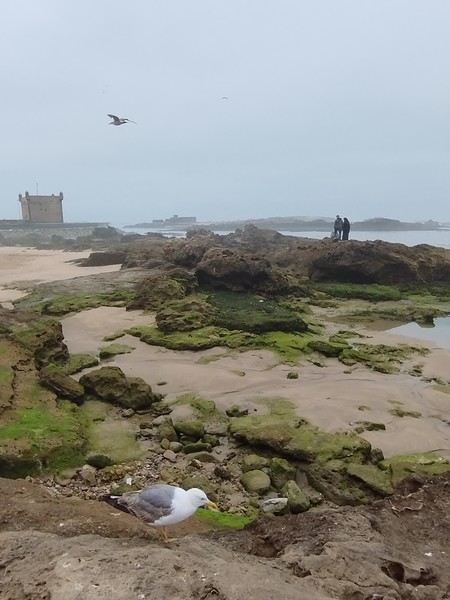
...and well, that didn’t happen! The gray stuck around for a day, then two, then three (while back home in the Landes, we had gorgeous sunshine 🤦♂️😂).
Now, unlike us, the Morocco experts here probably already know this, but apparently, it’s pretty common—especially in spring—when the warm air from inland meets the cool ocean breeze. Locals even have to warm up with hot water bottles, can you believe it? 😄!
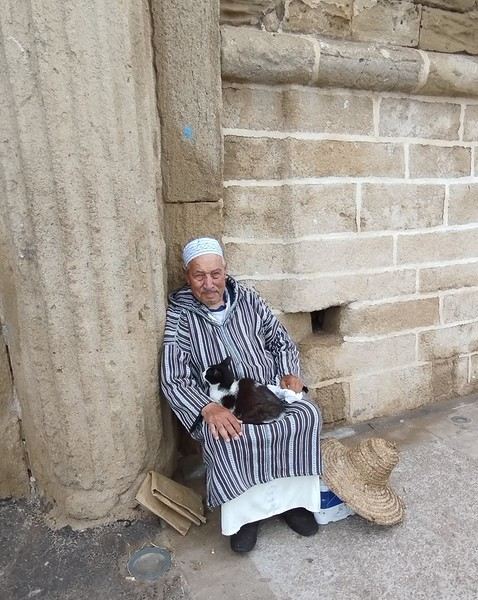
And of course, it had to happen now, since our plan is to follow the coast from Essaouira to Mirleft!!
Oh well, we’ll see how it goes—but luckily, this first stunning sunset made up for the weather 🌅.
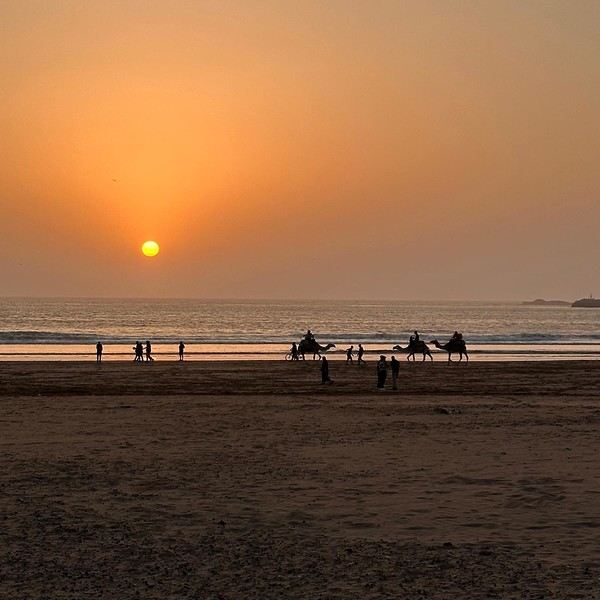
See you soon to anyone who’s up for it! 😊
This isn’t meant to be a full-on travel journal—just a little springtime dip into the Moroccan coast (and maybe a bit more if we click).
For our third trip to this country, we set off for 8 days in early June 2025, *sure* we’d be greeted by non-stop sunshine...
...and well, that didn’t happen! The gray stuck around for a day, then two, then three (while back home in the Landes, we had gorgeous sunshine 🤦♂️😂).
Now, unlike us, the Morocco experts here probably already know this, but apparently, it’s pretty common—especially in spring—when the warm air from inland meets the cool ocean breeze. Locals even have to warm up with hot water bottles, can you believe it? 😄!
And of course, it had to happen now, since our plan is to follow the coast from Essaouira to Mirleft!!
Oh well, we’ll see how it goes—but luckily, this first stunning sunset made up for the weather 🌅.
See you soon to anyone who’s up for it! 😊
Two-week family trip to Colombia in August with 8-year-olds
Hi everyone,
I’d like to share my family trip to Colombia with kids aged 8. After spending hours browsing the forum and only having two weeks there, we decided to focus on two regions: the Coffee Zone for one week and the Caribbean coast for another. We traveled from August 8 to 23.
Day 1 – First stop: Bogotá
We arrived in Bogotá in the evening on an Air France flight—nothing to complain about, decent service, comfortable, and on time. However, the first night was a miss. We’d booked a hotel near the airport (Abitel Prime) for convenience, but the soundproofing was almost nonexistent; we heard planes as if we were on the runway. Luckily, exhaustion helped us sleep well anyway.
Day 2 – Off to the Coffee Zone and Salento
The next morning, we headed to the airport for a domestic flight to Pereira with LATAM. No issues: punctual and efficient, and in 30 minutes, we landed in Pereira. The landing already set a different mood: lush valleys, endless plantations, and humid air. We picked up our rental car from Localiza. Unfortunately, the experience wasn’t smooth—the paperwork took forever, and the wait tested our patience. Finally free, we hit the road to Salento, one of Quindío’s gems. We arrived in the late afternoon and discovered a colorful village bustling with artisan shops and cafés. Our first stroll helped us soak in the atmosphere before dinner at Bambú restaurant—a great surprise with careful cooking and local flavors. We spent the night at Casa Serafín, a charming little hotel, nicely decorated and well-located… but unfortunately very noisy.
Day 3 – The magic of Cocora Valley
This was one of the trip’s highlights. We set off early for Cocora Valley, famous for its giant wax palms, Colombia’s emblem. We chose the 12 km loop recommended by the *Routard*. The landscapes were spectacular: towering palms, rivers, suspension bridges. It felt like walking through a postcard. The weather was perfect. That evening, we dined at Barnabé restaurant—pleasant setting, decent food, but the bill was a bit steep for what it was. Back to Casa Serafín.
Day 4 – Coffee and panoramic views
The plan was a visit to Finca El Ocaso. For 1.5 hours, we followed a passionate guide who explained the entire coffee process, from harvest to cup. Very educational, accessible for both kids and adults, all in a stunning setting. The tour was in English for us, and we translated for our kids, who aren’t bilingual yet. In the afternoon, we climbed to Salento’s viewpoint. The valley view was superb. That evening, we ate at Veggie Garden, a simple and pleasant spot that was a nice change from the heavier meals of previous days.
Day 5 – Horseback ride to Santa Rita Waterfall
We booked a horseback ride with Cocora Magic. It was a real success: calm horses, a beautiful trail, mountain and meadow landscapes, and finally the refreshing and wild Santa Rita Waterfall. Without a doubt, one of the best moments of our time in the region. We even got a bonus ride up a 300-meter hill. We then headed to Filandia, less known than Salento but just as charming. We spent the late afternoon enjoying the pool at MuchoSur Filandia. The hotel is beautiful, in an idyllic setting. However, we also had soundproofing issues and could hear our neighbors.
Day 6 – Rainy detour through Filandia and Manizales
Rain caught up with us in the early morning: torrents of water made it impossible to go out. We stayed at the hotel, reading quietly. By noon, the rain let up: a quick walk in Filandia, a quick lunch, then off to Manizales. We chose to stay at El Otoño hot springs. Great choice: as soon as we arrived, we plunged into the hot pools, perfect after hours on the road.
Day 7 – Hiking and hot springs
In the morning, we hiked the Camino de Super Coco (found somewhat randomly on Google). A pleasant trail with mountain views and a peaceful atmosphere. The afternoon was spent in the hotel’s thermal pools, with a short marked hike down to the river. Dinner on-site at the hot springs’ restaurant. A simple but very relaxing day.
Day 8 – Rain, jacuzzi, and games
We continued to Finca Los Alpes. The rain greeted us again, but this time it turned into an asset: nothing like a steaming jacuzzi with a view of the misty mountains. The kids enjoyed the facilities too: mini-golf, ping-pong, billiards. Dinner and night at the hotel, cozy vibes.
Day 9 – Off to the Caribbean coast
Back to the airport to return the car (still a bit long). Flight to Cartagena with Avianca: punctual and comfortable. Upon arrival, we picked up another car and headed straight to the Hyatt Regency, a modern hotel with a pool. That evening, we dined at the hotel—practical after a travel day.
Day 10 – Colonial Cartagena
We set off to explore Cartagena’s old town. It was enchanting: colorful facades, flowered balconies, colonial charm—just magical. However, the heat was stifling and very humid. Afternoon relaxation by the pool. Dinner at Gestlani, a good restaurant in town.
Day 11 – Road to Barú
A hearty breakfast, then one last swim in the pool before heading to Barú. We checked into Las Islas Hotel. The setting was enchanting: wooden cabins nestled in the vegetation, a private beach, turquoise sea, impeccable service. Dinner at the hotel’s restaurant.
Day 12 – Beach and relaxation
A full beach day in Barú. Warm water, white sand, coconut trees, peace and quiet. A real postcard scene with iguanas and birds.
Day 13 – On to Santa Marta
Another morning at the beach before hitting the road to Santa Marta. The drive was a bit long (6 hours), especially with traffic jams in Barranquilla. It was the longest car ride of the trip. We spent the night at Villa María Tayrona, a beautiful place near the park.
Day 14 – Tayrona Park
We left early for Tayrona Park. We entered through **El Zaino**, parked the car, and set off on a hike to La Piscina (about 2 hours). We stopped along the way at Playa Arenilla, a stunning little beach, to rest. Lunch on-site, a swim, then back by 4 PM. The hike was a bit tiring, but the nature was spectacular: dense jungle, the sound of waves, and even a monkey encounter along the way. Evening and dinner at the hotel.
Day 15 – Last swim and return flight to Bogotá
Our last morning was split between the pool and the beach (the hotel has direct access via a 7-minute trail through vegetation and flowers)—hard to leave this paradise. We drove to Santa Marta’s airport to return the car, then flew back to Bogotá. We spent the night at Casa Dann Carlton, a comfortable hotel. We simply ordered room service, arriving too late to go out.
Day 16 – Bogotá and the end of the trip
Our last day in Colombia. After a good breakfast, we explored La Candelaria. Its cobbled streets and colorful houses were worth the visit. We visited the Botero Museum (free) and the Gold Museum, both fascinating. Back to the airport for our 11:55 PM Air France flight.
That’s a wrap on a varied trip—lush mountains, colorful villages, dream beaches, and tropical jungle. The pace was pretty relaxed, well-suited for our kids. They absolutely loved the trip to Colombia. Driving in Colombia was very easy, and we didn’t regret renting a car at all—it gave us more freedom to get around.
If I were to do it again, here’s what I’d change: - I’d spend less time in the Coffee Zone to stay a bit longer on the Caribbean coast, which was more relaxing for the kids. Or I’d head to Medellín, but I didn’t think the city was very kid-friendly. - Bogotá is a city that deserves a day’s visit, but it’s not a must-see. Maybe I’d have taken the KLM flight from Cartagena to Amsterdam instead.
If you have any questions, don’t hesitate!
Antoine
I’d like to share my family trip to Colombia with kids aged 8. After spending hours browsing the forum and only having two weeks there, we decided to focus on two regions: the Coffee Zone for one week and the Caribbean coast for another. We traveled from August 8 to 23.
Day 1 – First stop: Bogotá
We arrived in Bogotá in the evening on an Air France flight—nothing to complain about, decent service, comfortable, and on time. However, the first night was a miss. We’d booked a hotel near the airport (Abitel Prime) for convenience, but the soundproofing was almost nonexistent; we heard planes as if we were on the runway. Luckily, exhaustion helped us sleep well anyway.
Day 2 – Off to the Coffee Zone and Salento
The next morning, we headed to the airport for a domestic flight to Pereira with LATAM. No issues: punctual and efficient, and in 30 minutes, we landed in Pereira. The landing already set a different mood: lush valleys, endless plantations, and humid air. We picked up our rental car from Localiza. Unfortunately, the experience wasn’t smooth—the paperwork took forever, and the wait tested our patience. Finally free, we hit the road to Salento, one of Quindío’s gems. We arrived in the late afternoon and discovered a colorful village bustling with artisan shops and cafés. Our first stroll helped us soak in the atmosphere before dinner at Bambú restaurant—a great surprise with careful cooking and local flavors. We spent the night at Casa Serafín, a charming little hotel, nicely decorated and well-located… but unfortunately very noisy.
Day 3 – The magic of Cocora Valley
This was one of the trip’s highlights. We set off early for Cocora Valley, famous for its giant wax palms, Colombia’s emblem. We chose the 12 km loop recommended by the *Routard*. The landscapes were spectacular: towering palms, rivers, suspension bridges. It felt like walking through a postcard. The weather was perfect. That evening, we dined at Barnabé restaurant—pleasant setting, decent food, but the bill was a bit steep for what it was. Back to Casa Serafín.
Day 4 – Coffee and panoramic views
The plan was a visit to Finca El Ocaso. For 1.5 hours, we followed a passionate guide who explained the entire coffee process, from harvest to cup. Very educational, accessible for both kids and adults, all in a stunning setting. The tour was in English for us, and we translated for our kids, who aren’t bilingual yet. In the afternoon, we climbed to Salento’s viewpoint. The valley view was superb. That evening, we ate at Veggie Garden, a simple and pleasant spot that was a nice change from the heavier meals of previous days.
Day 5 – Horseback ride to Santa Rita Waterfall
We booked a horseback ride with Cocora Magic. It was a real success: calm horses, a beautiful trail, mountain and meadow landscapes, and finally the refreshing and wild Santa Rita Waterfall. Without a doubt, one of the best moments of our time in the region. We even got a bonus ride up a 300-meter hill. We then headed to Filandia, less known than Salento but just as charming. We spent the late afternoon enjoying the pool at MuchoSur Filandia. The hotel is beautiful, in an idyllic setting. However, we also had soundproofing issues and could hear our neighbors.
Day 6 – Rainy detour through Filandia and Manizales
Rain caught up with us in the early morning: torrents of water made it impossible to go out. We stayed at the hotel, reading quietly. By noon, the rain let up: a quick walk in Filandia, a quick lunch, then off to Manizales. We chose to stay at El Otoño hot springs. Great choice: as soon as we arrived, we plunged into the hot pools, perfect after hours on the road.
Day 7 – Hiking and hot springs
In the morning, we hiked the Camino de Super Coco (found somewhat randomly on Google). A pleasant trail with mountain views and a peaceful atmosphere. The afternoon was spent in the hotel’s thermal pools, with a short marked hike down to the river. Dinner on-site at the hot springs’ restaurant. A simple but very relaxing day.
Day 8 – Rain, jacuzzi, and games
We continued to Finca Los Alpes. The rain greeted us again, but this time it turned into an asset: nothing like a steaming jacuzzi with a view of the misty mountains. The kids enjoyed the facilities too: mini-golf, ping-pong, billiards. Dinner and night at the hotel, cozy vibes.
Day 9 – Off to the Caribbean coast
Back to the airport to return the car (still a bit long). Flight to Cartagena with Avianca: punctual and comfortable. Upon arrival, we picked up another car and headed straight to the Hyatt Regency, a modern hotel with a pool. That evening, we dined at the hotel—practical after a travel day.
Day 10 – Colonial Cartagena
We set off to explore Cartagena’s old town. It was enchanting: colorful facades, flowered balconies, colonial charm—just magical. However, the heat was stifling and very humid. Afternoon relaxation by the pool. Dinner at Gestlani, a good restaurant in town.
Day 11 – Road to Barú
A hearty breakfast, then one last swim in the pool before heading to Barú. We checked into Las Islas Hotel. The setting was enchanting: wooden cabins nestled in the vegetation, a private beach, turquoise sea, impeccable service. Dinner at the hotel’s restaurant.
Day 12 – Beach and relaxation
A full beach day in Barú. Warm water, white sand, coconut trees, peace and quiet. A real postcard scene with iguanas and birds.
Day 13 – On to Santa Marta
Another morning at the beach before hitting the road to Santa Marta. The drive was a bit long (6 hours), especially with traffic jams in Barranquilla. It was the longest car ride of the trip. We spent the night at Villa María Tayrona, a beautiful place near the park.
Day 14 – Tayrona Park
We left early for Tayrona Park. We entered through **El Zaino**, parked the car, and set off on a hike to La Piscina (about 2 hours). We stopped along the way at Playa Arenilla, a stunning little beach, to rest. Lunch on-site, a swim, then back by 4 PM. The hike was a bit tiring, but the nature was spectacular: dense jungle, the sound of waves, and even a monkey encounter along the way. Evening and dinner at the hotel.
Day 15 – Last swim and return flight to Bogotá
Our last morning was split between the pool and the beach (the hotel has direct access via a 7-minute trail through vegetation and flowers)—hard to leave this paradise. We drove to Santa Marta’s airport to return the car, then flew back to Bogotá. We spent the night at Casa Dann Carlton, a comfortable hotel. We simply ordered room service, arriving too late to go out.
Day 16 – Bogotá and the end of the trip
Our last day in Colombia. After a good breakfast, we explored La Candelaria. Its cobbled streets and colorful houses were worth the visit. We visited the Botero Museum (free) and the Gold Museum, both fascinating. Back to the airport for our 11:55 PM Air France flight.
That’s a wrap on a varied trip—lush mountains, colorful villages, dream beaches, and tropical jungle. The pace was pretty relaxed, well-suited for our kids. They absolutely loved the trip to Colombia. Driving in Colombia was very easy, and we didn’t regret renting a car at all—it gave us more freedom to get around.
If I were to do it again, here’s what I’d change: - I’d spend less time in the Coffee Zone to stay a bit longer on the Caribbean coast, which was more relaxing for the kids. Or I’d head to Medellín, but I didn’t think the city was very kid-friendly. - Bogotá is a city that deserves a day’s visit, but it’s not a must-see. Maybe I’d have taken the KLM flight from Cartagena to Amsterdam instead.
If you have any questions, don’t hesitate!
Antoine
Bialowieza from Warsaw (WAW)
Hi there,
When landing in Warsaw (WAW) in the middle of the day, is it possible to reach Bialowieza by public transport before nightfall? Or is it better to spend the night in Warsaw or Bialystok?
In August, is it easy to find accommodation/homestays in Bialowieza without booking in advance? What about the other parks in the area?
Thanks in advance! 🙂
When landing in Warsaw (WAW) in the middle of the day, is it possible to reach Bialowieza by public transport before nightfall? Or is it better to spend the night in Warsaw or Bialystok?
In August, is it easy to find accommodation/homestays in Bialowieza without booking in advance? What about the other parks in the area?
Thanks in advance! 🙂
Germany Eco Vignette Website
Hi everyone.
My family and I have decided to do a little 10-day road trip through Germany, Austria, Italy, Slovenia, and Croatia. Practically all European countries require a vignette to drive on highways or in certain zones. For Germany, an Eco vignette is required to drive in certain areas, like downtown Munich. Would anyone know if this site: https://vignette-allemagne.fr/ is legit? It seems easy to use and quick, but it’s not referenced or mentioned anywhere.
Genuine site or scam? Thanks for your feedback. Best regards,
Stéphane.
My family and I have decided to do a little 10-day road trip through Germany, Austria, Italy, Slovenia, and Croatia. Practically all European countries require a vignette to drive on highways or in certain zones. For Germany, an Eco vignette is required to drive in certain areas, like downtown Munich. Would anyone know if this site: https://vignette-allemagne.fr/ is legit? It seems easy to use and quick, but it’s not referenced or mentioned anywhere.
Genuine site or scam? Thanks for your feedback. Best regards,
Stéphane.
Your tips for exploring Tuscany's natural side in late August
Hi, I'm looking for info on Tuscany with the idea of taking a family vacation at the end of August, but we're not into cities or crowds. We're more into wild nature, beaches, and hiking... I've heard about southern Tuscany—is it too urbanized? Where else should we look? Thanks so much
Feedback on our self-drive trip to Namibia and transfers to Botswana and Zimbabwe
Hi everyone,
Just sharing our experience from our wonderful trip for two, which we’ve just returned from. We decided to get help with the bookings from the agency Tourmaline Safaris, and everything was perfectly organized without any extra costs for the reservations. We chose to alternate nights in rooftop tents, Camping2Go (fitted tents), and guesthouses.
Flight from Paris to Windhoek with a layover in Johannesburg. 4x4 rented from Safari Car Rental—flawless. We had an official translation of our driver’s licenses, but no one asked for them during the trip. Mariental: 1 night in Camping2Go (Anib Lodge) Sersiem: 1 night in a rooftop tent (Oshana Campsite) Solitaire: 1 night in Camping2Go (Nabis Desert Lodge) Swakopmund: 2 nights in a guesthouse (The Stiltz) Spitzkoppe: 1 night in Camping2Go Omaruru: 2 nights in a rooftop tent (Omandumba Cave Camp) Etosha East: 1 night in a rooftop tent (Etosha Safari Village) Etosha West: 2 nights in a rooftop tent (Onguma Tamboti)—game drive and morning walk with them Okahandja: 1 night in Camping2Go Windhoek: 1 night at Londiningi Guesthouse Then... flight to Victoria Falls and transfer by car to Kasane for 2 nights (Water Lily Lodge), followed by a transfer to Victoria Falls for 2 nights at Phe Zulu. All transfers were arranged by Tourmaline, and they were all perfectly on time.
No logistical issues with Tourmaline Safaris, and given that our initial flight was delayed by a day, my checked luggage arrived a week late (Tourmaline arranged for the luggage to be transferred by taxi to Omaruru), and our initial Windhoek-Kasane flight was canceled by Air Botswana without explanation, we were really relieved to have the agency’s local contact to handle these unexpected issues! Delayed luggage seems to be common, but the agency had warned us, so we packed our carry-ons accordingly.
It was very cold at night (June), especially in Omaruru, but luckily we were prepared. Since it had rained a lot this season, Victoria Falls was flowing heavily! So much so that the water mist prevented us from seeing the eastern part of the falls. But a short helicopter tour gave us a better view. Be aware that the entrance fees for the falls are high (50 dollars per person) and only grant one entry—you can’t come in the morning and return in the late afternoon. We stayed from 6 AM to 3 PM in the park, taking breaks at the cafeteria, to see the falls at sunrise, at 11 AM (when the mist partially lifts), and at 3 PM (not much difference from the 11 AM view).
That’s it! A magnificent trip that left us with wonderful memories. Nothing disappointed us.
If you’d like more details, feel free to ask!
Just sharing our experience from our wonderful trip for two, which we’ve just returned from. We decided to get help with the bookings from the agency Tourmaline Safaris, and everything was perfectly organized without any extra costs for the reservations. We chose to alternate nights in rooftop tents, Camping2Go (fitted tents), and guesthouses.
Flight from Paris to Windhoek with a layover in Johannesburg. 4x4 rented from Safari Car Rental—flawless. We had an official translation of our driver’s licenses, but no one asked for them during the trip. Mariental: 1 night in Camping2Go (Anib Lodge) Sersiem: 1 night in a rooftop tent (Oshana Campsite) Solitaire: 1 night in Camping2Go (Nabis Desert Lodge) Swakopmund: 2 nights in a guesthouse (The Stiltz) Spitzkoppe: 1 night in Camping2Go Omaruru: 2 nights in a rooftop tent (Omandumba Cave Camp) Etosha East: 1 night in a rooftop tent (Etosha Safari Village) Etosha West: 2 nights in a rooftop tent (Onguma Tamboti)—game drive and morning walk with them Okahandja: 1 night in Camping2Go Windhoek: 1 night at Londiningi Guesthouse Then... flight to Victoria Falls and transfer by car to Kasane for 2 nights (Water Lily Lodge), followed by a transfer to Victoria Falls for 2 nights at Phe Zulu. All transfers were arranged by Tourmaline, and they were all perfectly on time.
No logistical issues with Tourmaline Safaris, and given that our initial flight was delayed by a day, my checked luggage arrived a week late (Tourmaline arranged for the luggage to be transferred by taxi to Omaruru), and our initial Windhoek-Kasane flight was canceled by Air Botswana without explanation, we were really relieved to have the agency’s local contact to handle these unexpected issues! Delayed luggage seems to be common, but the agency had warned us, so we packed our carry-ons accordingly.
It was very cold at night (June), especially in Omaruru, but luckily we were prepared. Since it had rained a lot this season, Victoria Falls was flowing heavily! So much so that the water mist prevented us from seeing the eastern part of the falls. But a short helicopter tour gave us a better view. Be aware that the entrance fees for the falls are high (50 dollars per person) and only grant one entry—you can’t come in the morning and return in the late afternoon. We stayed from 6 AM to 3 PM in the park, taking breaks at the cafeteria, to see the falls at sunrise, at 11 AM (when the mist partially lifts), and at 3 PM (not much difference from the 11 AM view).
That’s it! A magnificent trip that left us with wonderful memories. Nothing disappointed us.
If you’d like more details, feel free to ask!
Respecting safety rules in safari lodges
I found out that in Namibia, at a camp in the Hoanib River bed... a luxurious camp with no fences but all the comfort, including "facilities" inside...
If my information is correct.
An experienced "tourist" was killed by a lion at night.
This person had left their tent in the middle of the night to answer a call of nature (even though all the amenities were inside the tent; "tent" is actually an understatement for this kind of "accommodation").
The other "campers" and staff intervened, but it was too late.
In this region, there are desert lions. In such a hostile environment, these lions tend to look for the "easy option," so they attack livestock and get closer to humans (opportunity)...
There’s an entire program to protect lions, local populations, and their livestock, including fitting lions with tracking collars.
Why am I writing all this?
In Southern Africa (AFS), in many places, you can find yourself in areas with no fences or protections, whether in private or public camps.
There are safety rules that are clearly laid out.
Only get out of your vehicle in designated areas, and always keep in mind that... wild animals could still be nearby. Even at a picnic stop in Kruger National Park (KNP)...
Don’t leave your tent or the immediate area at night... and even during the day, stay alert.
That’s also why children under 8, 10, or even 16 are often not allowed.
Even if it seems safe... you never know!
Absolute and strict adherence to these rules is essential!
ESSENTIAL!
Personally, I’ve seen lions very close to the "lounge" of a lodge in Addo... with people having breakfast outside, completely unfazed.
I remember that lodge in Maputaland where a tourist who didn’t follow the rules was killed by a lion... (in this case, the lion was identified and killed because it might have returned and also shown its buddies how easy hunting there was).
Another case where a mom decided her child was old enough to sleep alone in their chalet... and the child wandered out at night...
Or those lodges where you’re escorted even for 20 meters by an armed ranger... and not just armed with a slingshot.
Lodges where... YOU DON’T GO OUT AT NIGHT... if you have a problem, you have a whistle, a foghorn, and you wait...
That lodge where lions approached the camp and all the staff were on high alert...
Those places where you could hear the lions’ long and short calls... and the hyenas’ laughter...
I could go on...
And this applies to other animals too...
Anyway,
This little note is probably too schoolmarmish or preachy, but it’s just to remind you that safety rules are there to protect you. Never take them lightly. Never be overconfident.
Ndlelanhle! !
Aloha State: Hawaii February 2025
Alright, I'm diving into this Hawaiian travel journal!
I hope lots of you will follow along because the destination is absolutely charming. 🙂
Just a heads-up—I might take a while to finish it.
The trip took place from February 20th to March 3rd, 2025 (11 days total, with 9 days on-site). It was a trip with my friend Christelle, with whom I’ve already traveled to Iceland and Morocco in recent years. We’re totally on the same wavelength, with the same expectations and desires, which makes things a lot easier (and, as a bonus, it helps cut down the final bill). Being the generous soul I am, I asked Christelle which country she wanted to visit. Her answer: Asia, since I’ve never been, or Namibia... Hawaii is basically the same thing, right?!! All thanks to the search comparator—I stumbled upon round-trip tickets from Paris to Honolulu for 580 € per person during school holidays, with a layover in Canada (I don’t get to choose my vacation dates). We jumped on it on August 28th (didn’t take much convincing). For info, I always check flight tickets during the last week of August or the first half of September because there are always amazing deals.
Nine days on-site is short, so we had to make some tough choices for the islands we’d visit (I’m only listing the main ones): - Oahu: the most urbanized but also home to Honolulu, Pearl Harbor, and some stunning beaches.
Kauai: the Garden Isle. It’s the island from *Jurassic Park*, with lush vegetation—so it’s pretty rainy. Big Island: volcanoes, volcanoes, and more, but also things like night snorkeling with manta rays. Maui: very touristy, with a magnificent volcano, the Road to Hana, and the ultimate spot for whale watching (and we were there right in the middle of whale season).
We limited ourselves to two islands to avoid rushing, and in the end, we picked Kauai (non-negotiable) and Oahu (which saved us an extra domestic flight and, since we were there in winter, let us experience the BIG WAVES on the North Shore). We would’ve loved to visit Big Island, but we’d already seen volcanoes in Iceland, and the island is huge—we just didn’t have enough time. Maui was recently hit by a major wildfire and is also the most expensive island (along with Kauai). We were really hoping to see humpback whales (my favorite animal) on both Oahu and Kauai. Hawaii is far, and it’s worth the effort. The journey went smoothly. I took a 40-minute bus ride and a 1h32 RER trip just to get to Roissy, then a 9h15 flight to Calgary, with a two-hour layover before a 6h45 flight to Honolulu. 11 hours of time difference, arriving at 10 PM local time. And you know what? (spoiler alert) I’d do it a thousand times if I got the chance.
Alright, let’s go—here we go!

The trip took place from February 20th to March 3rd, 2025 (11 days total, with 9 days on-site). It was a trip with my friend Christelle, with whom I’ve already traveled to Iceland and Morocco in recent years. We’re totally on the same wavelength, with the same expectations and desires, which makes things a lot easier (and, as a bonus, it helps cut down the final bill). Being the generous soul I am, I asked Christelle which country she wanted to visit. Her answer: Asia, since I’ve never been, or Namibia... Hawaii is basically the same thing, right?!! All thanks to the search comparator—I stumbled upon round-trip tickets from Paris to Honolulu for 580 € per person during school holidays, with a layover in Canada (I don’t get to choose my vacation dates). We jumped on it on August 28th (didn’t take much convincing). For info, I always check flight tickets during the last week of August or the first half of September because there are always amazing deals.
Nine days on-site is short, so we had to make some tough choices for the islands we’d visit (I’m only listing the main ones): - Oahu: the most urbanized but also home to Honolulu, Pearl Harbor, and some stunning beaches.
Kauai: the Garden Isle. It’s the island from *Jurassic Park*, with lush vegetation—so it’s pretty rainy. Big Island: volcanoes, volcanoes, and more, but also things like night snorkeling with manta rays. Maui: very touristy, with a magnificent volcano, the Road to Hana, and the ultimate spot for whale watching (and we were there right in the middle of whale season).
We limited ourselves to two islands to avoid rushing, and in the end, we picked Kauai (non-negotiable) and Oahu (which saved us an extra domestic flight and, since we were there in winter, let us experience the BIG WAVES on the North Shore). We would’ve loved to visit Big Island, but we’d already seen volcanoes in Iceland, and the island is huge—we just didn’t have enough time. Maui was recently hit by a major wildfire and is also the most expensive island (along with Kauai). We were really hoping to see humpback whales (my favorite animal) on both Oahu and Kauai. Hawaii is far, and it’s worth the effort. The journey went smoothly. I took a 40-minute bus ride and a 1h32 RER trip just to get to Roissy, then a 9h15 flight to Calgary, with a two-hour layover before a 6h45 flight to Honolulu. 11 hours of time difference, arriving at 10 PM local time. And you know what? (spoiler alert) I’d do it a thousand times if I got the chance.
Alright, let’s go—here we go!
Safe spot for camper/RV near Hidroelectrica before Machu Picchu
Hi everyone,
Apart from the road between Cusco and Hidroelectrica—which is tricky but doable—is there a safe place (like a campsite?) to sleep at Hidroelectrica and visit Machu Picchu the next day? Thanks!
Questions about a three-week itinerary in Bali - Lombok - Flores - Komodo
Hello everyone!
In early July, we’re heading to Indonesia for a solid three weeks as a family (my partner and I are in our fifties, and we have two daughters aged 17 and 20). We’ll be arriving and departing from Denpasar. Our itinerary is still entirely up in the air, and we’d like to explore islands other than Bali (we’ve already been there a few years ago).
I’d love to gather your tips and great recommendations to help us plan our route. For now, we’re thinking of visiting Lombok, Flores, and the Komodo archipelago. Here are some of our questions: - I visited Lombok myself back in 1999. I loved it, but I’ve been reading very mixed reviews in recent travel journals. Some are as enthusiastic as I was back then, while others are much more lukewarm (due to the overly strict and visible influence of the island’s governor on the population and because of massive hotel projects—I’m not sure if they’re on hold, underway, or completed). What’s the current situation? Is Lombok still a must-visit? And do you have any tips (hotels, places to visit, health, etc.)? - Still on Lombok, I did the Rinjani trek back then. I remember the hike wasn’t easy, but it wasn’t as tough as what I’ve read in quite a few recent travel journals... My partner and I are in decent shape, but that’s about it, and especially, my partner and our two daughters really don’t like the cold. What’s your experience with this trek? And do you have a trekking agency to recommend? (If we do it, I think we’d want to make sure we have good support, including quality gear, tents, jackets, etc.) - Flores and Komodo would be a completely new experience for all of us. Any tips and recommendations are welcome (sightseeing, accommodations, transport, etc.)! In particular, we’d like to explore the Komodo archipelago with a trusted agency that will take the time to show us the archipelago’s treasures in good conditions (safety and "decent" comfort). Do you know of any such agencies? - Are there other nearby islands you’d recommend? Any advice on places to visit and where to stay?
We’ll have three weeks on the ground... and we like to mix sightseeing with downtime where we just enjoy the moment. So we’re not looking for an overly packed itinerary, but still something rich (no point traveling so far just to lie on a sunbed all day ;-))
Thanks so much in advance for your advice!
Albin
In early July, we’re heading to Indonesia for a solid three weeks as a family (my partner and I are in our fifties, and we have two daughters aged 17 and 20). We’ll be arriving and departing from Denpasar. Our itinerary is still entirely up in the air, and we’d like to explore islands other than Bali (we’ve already been there a few years ago).
I’d love to gather your tips and great recommendations to help us plan our route. For now, we’re thinking of visiting Lombok, Flores, and the Komodo archipelago. Here are some of our questions: - I visited Lombok myself back in 1999. I loved it, but I’ve been reading very mixed reviews in recent travel journals. Some are as enthusiastic as I was back then, while others are much more lukewarm (due to the overly strict and visible influence of the island’s governor on the population and because of massive hotel projects—I’m not sure if they’re on hold, underway, or completed). What’s the current situation? Is Lombok still a must-visit? And do you have any tips (hotels, places to visit, health, etc.)? - Still on Lombok, I did the Rinjani trek back then. I remember the hike wasn’t easy, but it wasn’t as tough as what I’ve read in quite a few recent travel journals... My partner and I are in decent shape, but that’s about it, and especially, my partner and our two daughters really don’t like the cold. What’s your experience with this trek? And do you have a trekking agency to recommend? (If we do it, I think we’d want to make sure we have good support, including quality gear, tents, jackets, etc.) - Flores and Komodo would be a completely new experience for all of us. Any tips and recommendations are welcome (sightseeing, accommodations, transport, etc.)! In particular, we’d like to explore the Komodo archipelago with a trusted agency that will take the time to show us the archipelago’s treasures in good conditions (safety and "decent" comfort). Do you know of any such agencies? - Are there other nearby islands you’d recommend? Any advice on places to visit and where to stay?
We’ll have three weeks on the ground... and we like to mix sightseeing with downtime where we just enjoy the moment. So we’re not looking for an overly packed itinerary, but still something rich (no point traveling so far just to lie on a sunbed all day ;-))
Thanks so much in advance for your advice!
Albin
A Trip to Australia: Tasmania
Sunday, November 26, 2023
Melbourne - Hobart
Flawless journey to Hobart. Our stay in the southernmost land we’ve ever visited. And indeed, everything’s different. The climate—14°C, rain that varies in intensity but never stops, the landscapes… It’s a shock! But, apart from the bad weather, Dom is thrilled.
We’ve also downgraded our accommodations. We’ve got a tiny room, and the bathroom—private, at least—is two hallways away… But the price is reasonable (under 100 €) and the location is central.
We cheered ourselves up by dining at *The Drunken Admiral* (reservations are a must—we barely snagged a table for 8 PM!). The decor is straight out of an old ship, complete with cheeky statues in the style of *Pirates of the Caribbean*… We had fun! The food was decent, but pricey. Dom loved it; I was less impressed.
We bailed on the British series *Emma*, based on Jane Austen. We couldn’t take it anymore. The boredom was so intense that the specter of a collective suicide loomed over us. This show, where the world’s most insufferable bourgeoisie—the English nobility—lives out love stories with such improbable naivety that I wanted to scream, is pure torture. Mercy, I surrender! I’ll tell you anything you want, just make it stop! We got rid of it. We’re safe now!
We’ve also downgraded our accommodations. We’ve got a tiny room, and the bathroom—private, at least—is two hallways away… But the price is reasonable (under 100 €) and the location is central.
We cheered ourselves up by dining at *The Drunken Admiral* (reservations are a must—we barely snagged a table for 8 PM!). The decor is straight out of an old ship, complete with cheeky statues in the style of *Pirates of the Caribbean*… We had fun! The food was decent, but pricey. Dom loved it; I was less impressed.
We bailed on the British series *Emma*, based on Jane Austen. We couldn’t take it anymore. The boredom was so intense that the specter of a collective suicide loomed over us. This show, where the world’s most insufferable bourgeoisie—the English nobility—lives out love stories with such improbable naivety that I wanted to scream, is pure torture. Mercy, I surrender! I’ll tell you anything you want, just make it stop! We got rid of it. We’re safe now!
The 8 Most Beautiful Hikes to Do in Réunion Island
Réunion Island, this paradise in the Indian Ocean, is a must-visit destination for hiking enthusiasts. With its active volcanoes, majestic cirques, and impressive peaks, there’s plenty to delight nature and adventure lovers. This article takes you on a journey to discover the eight most beautiful hikes the island has to offer. Lace up your hiking boots—let’s go!
1- Piton des Neiges: The Summit of Réunion
Piton des Neiges is the highest point on Réunion Island at 3,070 meters. It’s an iconic hike that attracts a large number of hikers every year. Climbing Piton des Neiges is like stepping into a unique atmosphere where volcanic landscapes blend with lush vegetation.
The hike usually starts from the picturesque village of Cilaos. It takes about six hours to reach the summit, so good physical condition is a must. Once at the top, you’ll be rewarded with a breathtaking panoramic view of the entire island. A simple flight from Paris to Saint-Denis and you’re ready for this stunning adventure.
Here are a few tips:
Bring warm clothes—it can get very cold at the summit. Pack enough water and food. Start before dawn to catch the sunrise from the summit.
2- Piton de la Fournaise: A Volcanic Walk
You can’t visit Réunion without stopping by Piton de la Fournaise, one of the world’s most active volcanoes. The hike usually begins at Pas de Bellecombe, accessible after a winding road that already offers spectacular views. The well-marked trail first takes you through lunar landscapes to the Enclos Fouqué, then continues toward the Dolomieu crater. Frequent eruptions often change the scenery, making each visit unique. Piton de la Fournaise is a grand natural spectacle you won’t want to miss during your trip.
Here are a few tips:
Check the volcano’s current activity before heading out. Wear sturdy shoes for walking on solidified lava. Always bring maps or a GPS, as signs may be damaged by eruptions.
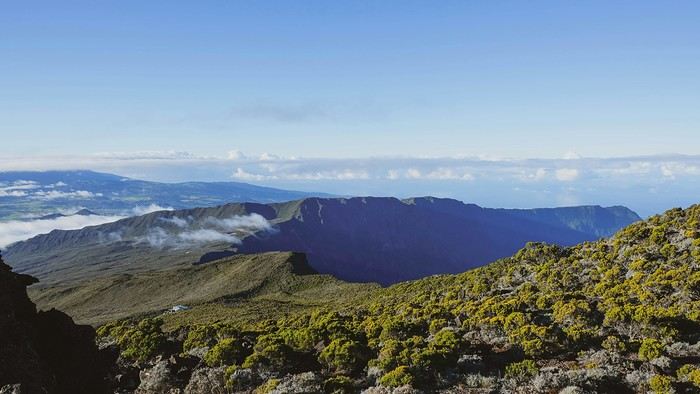
3- Cirque de Mafate: In the Heart of Nature
Accessible only on foot or by helicopter, the Cirque de Mafate is a true paradise for hikers. This isolated area offers a multitude of trails leading to authentic villages, stunning viewpoints, and untouched nature. The Sentier Scout is one of the most popular routes for exploring Mafate. It starts at Le Bélier, passes through the Col des Bœufs, and then descends into the cirque. Get ready to be amazed by the enchanting panoramas and majestic peaks along the way. It’s a full immersion into the tranquility of Mafate.
Here are a few tips:
Wear good hiking shoes, as some sections can be steep. Book your nights in a gîte in advance if you’re planning a multi-day hike. Respect the environment and locals by taking all your trash with you.
4- Cirque de Cilaos: Between Mountains and Vineyards
The Cirque de Cilaos, with its waterfalls and lush forests, also offers magnificent hiking opportunities. One of the most remarkable trails leads to Grand Bénare, the island’s third-highest peak.
The hike usually starts from the Plateau des Chênes. This moderate-difficulty hike takes about five hours to reach the summit. Once there, you’ll be treated to a breathtaking view of the Cirque de Cilaos and Piton des Neiges.
Here are a few tips:
Start early to avoid clouds that can quickly envelop the summit. Don’t forget your camera to capture the stunning landscapes. Visit the vineyards of Cilaos after your hike to taste local wine.
5- Cirque de Salazie: The Valley of Waterfalls
Known for its humid climate, the Cirque de Salazie is filled with impressive waterfalls and lush tropical forests. One of the most popular hikes leads to the Trou de Fer.
The trail starts in Hell-Bourg, ranked among France’s most beautiful villages. After a few hours of hiking through primary forest, you’ll reach a viewpoint offering an incredible view of the Trou de Fer’s abyss and its dizzying waterfalls.
Here are a few tips:
Wear waterproof and mosquito-repellent clothing. Bring a headlamp and compass, as fog can make the trail hard to follow. Check trail conditions before heading out, especially after heavy rain.
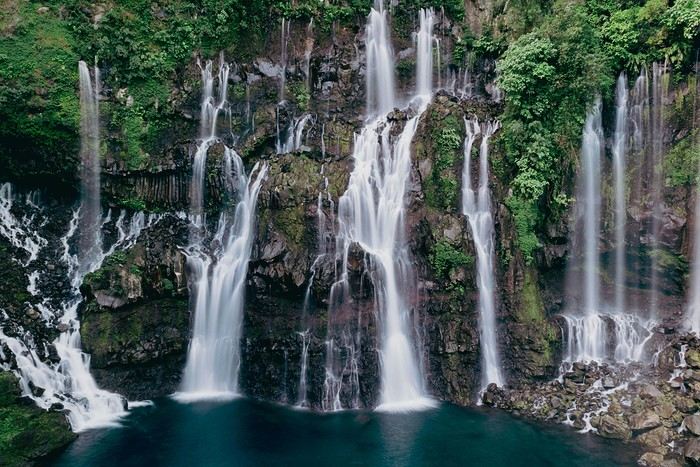
6- Grand Bénare: A Stunning Panorama
Grand Bénare offers a spectacular hike that’s a must-do on Réunion Island. Starting from the well-known viewpoint of Maïdo, the challenging yet rewarding ascent leads to the summit.
Over about ten kilometers of climbing through varied vegetation, the summit reveals a breathtaking panorama of the three cirques—Mafate, Cilaos, and Salazie. It’s a true feast for the eyes and a memorable experience for mountain lovers.
Here are a few tips:
Go when the weather is clear to fully enjoy the view from the summit. Wear good hiking shoes and bring trekking poles to make the climb easier. Don’t underestimate the duration—prepare physically for this long hike.
7- Roche Écrite: Biodiversity at Altitude
Located between the Cirque de Salazie and the Cirque de Mafate, Roche Écrite offers a hike that lets you discover exceptional flora and fauna. The hike often starts at Le Colorado, near Saint-Denis, the island’s capital.
After several hours of walking through tropical forests and varied landscapes, you’ll reach the summit at 2,276 meters. From there, you can enjoy a spectacular view of the two adjacent cirques and even spot Piton des Neiges in the distance. A must for adventurers and budding biologists.
Here are a few tips:
Check the weather forecast before heading out, as conditions can change quickly at altitude. Bring binoculars to observe endemic birds and other wildlife. Take regular breaks to soak in the scenery and recharge your energy.
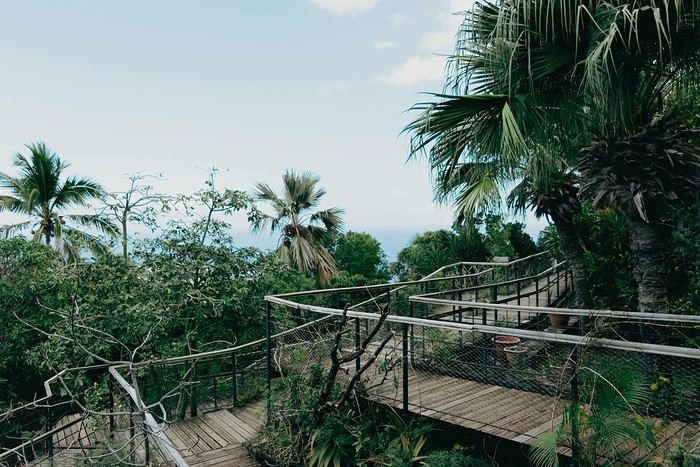
8- Col des Bœufs: The Gateway to Mafate
Col des Bœufs is another popular starting point for accessing the Cirque de Mafate. This comfortable hike offers beautiful views along the way and leads to picturesque villages like Marla and La Nouvelle.
The trail starts gently from the Col des Bœufs parking lot, climbing slightly before revealing a panoramic view of Mafate. Perfect for a relaxed day hike, this route is suitable for all levels of hikers.
Here are a few tips:
Bring a picnic to enjoy a lunch break with a view. Start early to avoid crowds and the afternoon heat. Check local bus schedules to avoid any surprises at the end of your hike.
In conclusion, Réunion Island offers a multitude of exceptional hikes that let you discover breathtaking landscapes—volcanoes, cirques, tropical forests, and waterfalls. Whether you’re a beginner or an experienced hiker, the island will amaze you with the diversity of its trails. Get ready for unforgettable adventures in the heart of preserved nature while admiring the unique beauty of this volcanic island.
1- Piton des Neiges: The Summit of Réunion
Piton des Neiges is the highest point on Réunion Island at 3,070 meters. It’s an iconic hike that attracts a large number of hikers every year. Climbing Piton des Neiges is like stepping into a unique atmosphere where volcanic landscapes blend with lush vegetation.
The hike usually starts from the picturesque village of Cilaos. It takes about six hours to reach the summit, so good physical condition is a must. Once at the top, you’ll be rewarded with a breathtaking panoramic view of the entire island. A simple flight from Paris to Saint-Denis and you’re ready for this stunning adventure.
Here are a few tips:
Bring warm clothes—it can get very cold at the summit. Pack enough water and food. Start before dawn to catch the sunrise from the summit.
2- Piton de la Fournaise: A Volcanic Walk
You can’t visit Réunion without stopping by Piton de la Fournaise, one of the world’s most active volcanoes. The hike usually begins at Pas de Bellecombe, accessible after a winding road that already offers spectacular views. The well-marked trail first takes you through lunar landscapes to the Enclos Fouqué, then continues toward the Dolomieu crater. Frequent eruptions often change the scenery, making each visit unique. Piton de la Fournaise is a grand natural spectacle you won’t want to miss during your trip.
Here are a few tips:
Check the volcano’s current activity before heading out. Wear sturdy shoes for walking on solidified lava. Always bring maps or a GPS, as signs may be damaged by eruptions.
3- Cirque de Mafate: In the Heart of Nature
Accessible only on foot or by helicopter, the Cirque de Mafate is a true paradise for hikers. This isolated area offers a multitude of trails leading to authentic villages, stunning viewpoints, and untouched nature. The Sentier Scout is one of the most popular routes for exploring Mafate. It starts at Le Bélier, passes through the Col des Bœufs, and then descends into the cirque. Get ready to be amazed by the enchanting panoramas and majestic peaks along the way. It’s a full immersion into the tranquility of Mafate.
Here are a few tips:
Wear good hiking shoes, as some sections can be steep. Book your nights in a gîte in advance if you’re planning a multi-day hike. Respect the environment and locals by taking all your trash with you.
4- Cirque de Cilaos: Between Mountains and Vineyards
The Cirque de Cilaos, with its waterfalls and lush forests, also offers magnificent hiking opportunities. One of the most remarkable trails leads to Grand Bénare, the island’s third-highest peak.
The hike usually starts from the Plateau des Chênes. This moderate-difficulty hike takes about five hours to reach the summit. Once there, you’ll be treated to a breathtaking view of the Cirque de Cilaos and Piton des Neiges.
Here are a few tips:
Start early to avoid clouds that can quickly envelop the summit. Don’t forget your camera to capture the stunning landscapes. Visit the vineyards of Cilaos after your hike to taste local wine.
5- Cirque de Salazie: The Valley of Waterfalls
Known for its humid climate, the Cirque de Salazie is filled with impressive waterfalls and lush tropical forests. One of the most popular hikes leads to the Trou de Fer.
The trail starts in Hell-Bourg, ranked among France’s most beautiful villages. After a few hours of hiking through primary forest, you’ll reach a viewpoint offering an incredible view of the Trou de Fer’s abyss and its dizzying waterfalls.
Here are a few tips:
Wear waterproof and mosquito-repellent clothing. Bring a headlamp and compass, as fog can make the trail hard to follow. Check trail conditions before heading out, especially after heavy rain.
6- Grand Bénare: A Stunning Panorama
Grand Bénare offers a spectacular hike that’s a must-do on Réunion Island. Starting from the well-known viewpoint of Maïdo, the challenging yet rewarding ascent leads to the summit.
Over about ten kilometers of climbing through varied vegetation, the summit reveals a breathtaking panorama of the three cirques—Mafate, Cilaos, and Salazie. It’s a true feast for the eyes and a memorable experience for mountain lovers.
Here are a few tips:
Go when the weather is clear to fully enjoy the view from the summit. Wear good hiking shoes and bring trekking poles to make the climb easier. Don’t underestimate the duration—prepare physically for this long hike.
7- Roche Écrite: Biodiversity at Altitude
Located between the Cirque de Salazie and the Cirque de Mafate, Roche Écrite offers a hike that lets you discover exceptional flora and fauna. The hike often starts at Le Colorado, near Saint-Denis, the island’s capital.
After several hours of walking through tropical forests and varied landscapes, you’ll reach the summit at 2,276 meters. From there, you can enjoy a spectacular view of the two adjacent cirques and even spot Piton des Neiges in the distance. A must for adventurers and budding biologists.
Here are a few tips:
Check the weather forecast before heading out, as conditions can change quickly at altitude. Bring binoculars to observe endemic birds and other wildlife. Take regular breaks to soak in the scenery and recharge your energy.
8- Col des Bœufs: The Gateway to Mafate
Col des Bœufs is another popular starting point for accessing the Cirque de Mafate. This comfortable hike offers beautiful views along the way and leads to picturesque villages like Marla and La Nouvelle.
The trail starts gently from the Col des Bœufs parking lot, climbing slightly before revealing a panoramic view of Mafate. Perfect for a relaxed day hike, this route is suitable for all levels of hikers.
Here are a few tips:
Bring a picnic to enjoy a lunch break with a view. Start early to avoid crowds and the afternoon heat. Check local bus schedules to avoid any surprises at the end of your hike.
In conclusion, Réunion Island offers a multitude of exceptional hikes that let you discover breathtaking landscapes—volcanoes, cirques, tropical forests, and waterfalls. Whether you’re a beginner or an experienced hiker, the island will amaze you with the diversity of its trails. Get ready for unforgettable adventures in the heart of preserved nature while admiring the unique beauty of this volcanic island.
Sri Lanka Trip Report – December 2024
Hi there,
I just got back from a trip to Sri Lanka from December 18th to January 1st with 2 adults and 2 kids (12 years old).
If it helps, here’s my itinerary.
We left on December 18th from Madrid with Qatar Airways. No complaints. I booked my tickets back in March for 800 € per person. (I flew from Madrid because I live near the Spanish border and was too worried about strikes in France.) We arrived on December 19th at 4 PM (local time). Before leaving France, I’d booked a taxi through MyTransfer for 59 € to Sigiriya. A van was waiting for us at the airport exit. A never-ending 3-hour drive to Sigiriya. We stayed at Samana Guesthouse—very simple, clean, with a pool and an excellent Sri Lankan breakfast. Shower and straight to bed.
Friday, December 20th: Beautiful weather, but very humid and hot. We visited Lion Rock (36 € for adults) and then Pidurangala. I loved both sites—they’re a must-do in my opinion. Spent the late afternoon by the pool.
Saturday, December 21st: Another gorgeous day. The guesthouse manager offered us a free 2-hour tuk-tuk tour. We first visited a lake, rice fields, the temple, and the Sigiriya market, plus the usual tourist trap—the botanical garden (no pressure to buy anything at the end). Then we took a tuk-tuk to Dambulla Temple, the Golden Buddha, and the wholesale market.
Sunday, December 22nd: Still beautiful weather. I’d booked a taxi for 8 AM. We did all the long trips by taxi to save time. I’d ask for prices from 2 or 3 WhatsApp taxi agencies 2 days or the day before—super responsive, always got replies within 5 minutes. We headed to Ella (4-hour drive) for 22,000 LKR. Arrived in the afternoon at Rest Full Homestay—a small, family-run guesthouse. Clean, cozy, and an amazing Sri Lankan breakfast. In the afternoon, we went to Nine Arches Bridge. It was a Sunday, a Sri Lankan holiday, so it was *packed*—mostly locals and very few white tourists! Even though it was crowded, it was cool because it was all Sri Lankans. We waited an hour for the train. It’s worth seeing, but honestly, I didn’t think it was that amazing. Then we headed to the station to check if we needed to book tickets for the train to Haputale—turns out, no.
Monday, December 23rd: Beautiful weather. We hiked Ella Rock—a gorgeous trek. The final stretch is steep but shaded, so it wasn’t as tough as I’d read. The whole hike is stunning from start to finish. We saw the train pass twice (one blue, one red) and lots of women picking tea. After that, we did Little Adam’s Peak. It’s not hard, but it was *packed* with tourists—meh. Luckily, at the top, you can walk a bit farther (down one side and back up) to get some space to yourself. What I *didn’t* like was the commercial vibe at the big café/restaurant with a pool at the entrance of Little Adam’s Peak. Loud music, all that money being made right next to little souvenir stands run by Sri Lankans or tea-picking women. Felt off. Ended the day buying souvenirs at one of the few shops we found during the trip.
Tuesday, December 24th: Beautiful weather. Took the train to Haputale. We got to the station 30 minutes before the 9:30 AM train. We could’ve taken 2nd or 3rd class—I went with 2nd (160 LKR per person). It was crowded, but we managed to get seats—first 2, then 3. Only a 1-hour ride, but I *loved* it—windows and doors open the whole time. Arrived in Haputale around 11 AM, and the mist was already rolling in. We walked to our guesthouse, The Mist Holiday Bungalow. Simple but clean, with a great view of the tea plantations. The owner’s wife is Vietnamese and used to work for French tour operators, so her French is still pretty good—helpful for us since our English is terrible. They booked us a tuk-tuk for 4:45 AM the next day (2,000 LKR) to Lipton’s Seat. Spent the afternoon wandering around Haputale. Not much charm, but there’s a nice fruit and veggie market and a short walk through the tea plantations.
Wednesday, December 25th: Beautiful weather. The tuk-tuk was on time to take us to Lipton’s Seat. We were the first ones there—the sky was just starting to turn pink. In the end, only about ten of us watched the sunrise. The guesthouse had packed us breakfast, and we walked back down (half on the road, half through the plantations). Didn’t see any tea picking since it was Christmas, but the walk was still incredible. We took detours through villages full of kids. After that, we visited the tea factory. The tour was really interesting, and we took the bus back down to Haputale. Such a great moment—whole families were heading to mass, dressed up and made up. All so beautiful.
At noon, we left for Udawalawe National Park. Taxi for 14,000 LKR. Stayed at River Inn Safari Cottage. *Warning*: It’s the same place as Eagle Safari Cottage. I don’t recommend it. We’d always stayed with families before, but here it was just staff—totally different vibe. The pool was nice but not very clean (water was murky). The bungalow was big and fine, but it was brand new—so new the asphalt floor wasn’t fully dry. It’s in the middle of nowhere, so we had to eat on-site. Couldn’t leave a review on Booking because they never confirmed we’d stayed, and they canceled our reservation the next day.
Thursday, December 26th: Beautiful weather. I’d booked a safari through the hotel for 5:30–10 AM for 54 USD. Honestly, yes, there are a lot of jeeps, but it was great. The kids loved it—we saw everything there was to see. Left by taxi at 11:30 AM for Welligama (12,000 LKR). We didn’t stay in Welligama city but at Coconut Beach, between Welligama and Midigama. *Total crush* on the guesthouse: Sky Mountain Café with View. Such a lovely family. The mom makes amazing meals at reasonable prices. The view from the hill over the sea is unreal. Spent the afternoon walking along the beach.
Friday, December 27th: Beautiful weather. My kids are surfers. Unfortunately, there weren’t any boards their size to rent at Coconut, so we took a tuk-tuk to Welligama Bay (1,000 LKR). They surfed from 8 AM to 5 PM—rental was 5,000 LKR for the day. Meanwhile, we walked the beach and swam. Water was 29°C.
Saturday, December 28th: Beautiful weather, rain from 4 PM until midnight. Same surf day. They were so well-behaved the whole trip, so this was their reward.
Sunday, December 29th: Beautiful weather. Beach day at Coconut. *Warning*: It’s a reef break. For surfers, there are three spots (Coconut Left, Middle, and Right). The boys bodysurfed (with fins) all morning, and at 1 PM, we took the bus to Hikkaduwa. Stayed at Hotel Universal Beach. Nothing special—right on the water, but the rooms were dark even though they were clean. The manager was super nice, but the rest was meh, and breakfast was mediocre compared to what we’d had before (2 eggs and 3 slices of toast). Plus, it was late—8 AM. First impression of Hikkaduwa wasn’t great—way too many Russians for our taste.
Monday, December 30th: Beautiful weather. Spent the whole day exploring. Turtle Beach, then the other side of the beach (toward Galle) near the fishing port. The beach there is much wider, with scattered hotels and super quiet. It’s beautiful—I should’ve booked somewhere in that area. Ended up having a great day away from the crowds.
Tuesday, December 31st: Overcast, then beautiful, rain at 4 PM. Had to end the year (and the trip) with some surf. Rented boards for the kids (3,000 LKR per board for the day). Bad luck—the waves were on a reef break but small. Not great for them, but no big deal. They still got out of the water by 2 PM. Walked the beach (which is gorgeous), had a juice, and went for a swim. Then back to surfing in the rain at 4 PM.
Wednesday, January 1st: Left by taxi at 5 AM (18,000 LKR). Flight at 10 AM. Arrived in Madrid at 8 PM.
We left on December 18th from Madrid with Qatar Airways. No complaints. I booked my tickets back in March for 800 € per person. (I flew from Madrid because I live near the Spanish border and was too worried about strikes in France.) We arrived on December 19th at 4 PM (local time). Before leaving France, I’d booked a taxi through MyTransfer for 59 € to Sigiriya. A van was waiting for us at the airport exit. A never-ending 3-hour drive to Sigiriya. We stayed at Samana Guesthouse—very simple, clean, with a pool and an excellent Sri Lankan breakfast. Shower and straight to bed.
Friday, December 20th: Beautiful weather, but very humid and hot. We visited Lion Rock (36 € for adults) and then Pidurangala. I loved both sites—they’re a must-do in my opinion. Spent the late afternoon by the pool.
Saturday, December 21st: Another gorgeous day. The guesthouse manager offered us a free 2-hour tuk-tuk tour. We first visited a lake, rice fields, the temple, and the Sigiriya market, plus the usual tourist trap—the botanical garden (no pressure to buy anything at the end). Then we took a tuk-tuk to Dambulla Temple, the Golden Buddha, and the wholesale market.
Sunday, December 22nd: Still beautiful weather. I’d booked a taxi for 8 AM. We did all the long trips by taxi to save time. I’d ask for prices from 2 or 3 WhatsApp taxi agencies 2 days or the day before—super responsive, always got replies within 5 minutes. We headed to Ella (4-hour drive) for 22,000 LKR. Arrived in the afternoon at Rest Full Homestay—a small, family-run guesthouse. Clean, cozy, and an amazing Sri Lankan breakfast. In the afternoon, we went to Nine Arches Bridge. It was a Sunday, a Sri Lankan holiday, so it was *packed*—mostly locals and very few white tourists! Even though it was crowded, it was cool because it was all Sri Lankans. We waited an hour for the train. It’s worth seeing, but honestly, I didn’t think it was that amazing. Then we headed to the station to check if we needed to book tickets for the train to Haputale—turns out, no.
Monday, December 23rd: Beautiful weather. We hiked Ella Rock—a gorgeous trek. The final stretch is steep but shaded, so it wasn’t as tough as I’d read. The whole hike is stunning from start to finish. We saw the train pass twice (one blue, one red) and lots of women picking tea. After that, we did Little Adam’s Peak. It’s not hard, but it was *packed* with tourists—meh. Luckily, at the top, you can walk a bit farther (down one side and back up) to get some space to yourself. What I *didn’t* like was the commercial vibe at the big café/restaurant with a pool at the entrance of Little Adam’s Peak. Loud music, all that money being made right next to little souvenir stands run by Sri Lankans or tea-picking women. Felt off. Ended the day buying souvenirs at one of the few shops we found during the trip.
Tuesday, December 24th: Beautiful weather. Took the train to Haputale. We got to the station 30 minutes before the 9:30 AM train. We could’ve taken 2nd or 3rd class—I went with 2nd (160 LKR per person). It was crowded, but we managed to get seats—first 2, then 3. Only a 1-hour ride, but I *loved* it—windows and doors open the whole time. Arrived in Haputale around 11 AM, and the mist was already rolling in. We walked to our guesthouse, The Mist Holiday Bungalow. Simple but clean, with a great view of the tea plantations. The owner’s wife is Vietnamese and used to work for French tour operators, so her French is still pretty good—helpful for us since our English is terrible. They booked us a tuk-tuk for 4:45 AM the next day (2,000 LKR) to Lipton’s Seat. Spent the afternoon wandering around Haputale. Not much charm, but there’s a nice fruit and veggie market and a short walk through the tea plantations.
Wednesday, December 25th: Beautiful weather. The tuk-tuk was on time to take us to Lipton’s Seat. We were the first ones there—the sky was just starting to turn pink. In the end, only about ten of us watched the sunrise. The guesthouse had packed us breakfast, and we walked back down (half on the road, half through the plantations). Didn’t see any tea picking since it was Christmas, but the walk was still incredible. We took detours through villages full of kids. After that, we visited the tea factory. The tour was really interesting, and we took the bus back down to Haputale. Such a great moment—whole families were heading to mass, dressed up and made up. All so beautiful.
At noon, we left for Udawalawe National Park. Taxi for 14,000 LKR. Stayed at River Inn Safari Cottage. *Warning*: It’s the same place as Eagle Safari Cottage. I don’t recommend it. We’d always stayed with families before, but here it was just staff—totally different vibe. The pool was nice but not very clean (water was murky). The bungalow was big and fine, but it was brand new—so new the asphalt floor wasn’t fully dry. It’s in the middle of nowhere, so we had to eat on-site. Couldn’t leave a review on Booking because they never confirmed we’d stayed, and they canceled our reservation the next day.
Thursday, December 26th: Beautiful weather. I’d booked a safari through the hotel for 5:30–10 AM for 54 USD. Honestly, yes, there are a lot of jeeps, but it was great. The kids loved it—we saw everything there was to see. Left by taxi at 11:30 AM for Welligama (12,000 LKR). We didn’t stay in Welligama city but at Coconut Beach, between Welligama and Midigama. *Total crush* on the guesthouse: Sky Mountain Café with View. Such a lovely family. The mom makes amazing meals at reasonable prices. The view from the hill over the sea is unreal. Spent the afternoon walking along the beach.
Friday, December 27th: Beautiful weather. My kids are surfers. Unfortunately, there weren’t any boards their size to rent at Coconut, so we took a tuk-tuk to Welligama Bay (1,000 LKR). They surfed from 8 AM to 5 PM—rental was 5,000 LKR for the day. Meanwhile, we walked the beach and swam. Water was 29°C.
Saturday, December 28th: Beautiful weather, rain from 4 PM until midnight. Same surf day. They were so well-behaved the whole trip, so this was their reward.
Sunday, December 29th: Beautiful weather. Beach day at Coconut. *Warning*: It’s a reef break. For surfers, there are three spots (Coconut Left, Middle, and Right). The boys bodysurfed (with fins) all morning, and at 1 PM, we took the bus to Hikkaduwa. Stayed at Hotel Universal Beach. Nothing special—right on the water, but the rooms were dark even though they were clean. The manager was super nice, but the rest was meh, and breakfast was mediocre compared to what we’d had before (2 eggs and 3 slices of toast). Plus, it was late—8 AM. First impression of Hikkaduwa wasn’t great—way too many Russians for our taste.
Monday, December 30th: Beautiful weather. Spent the whole day exploring. Turtle Beach, then the other side of the beach (toward Galle) near the fishing port. The beach there is much wider, with scattered hotels and super quiet. It’s beautiful—I should’ve booked somewhere in that area. Ended up having a great day away from the crowds.
Tuesday, December 31st: Overcast, then beautiful, rain at 4 PM. Had to end the year (and the trip) with some surf. Rented boards for the kids (3,000 LKR per board for the day). Bad luck—the waves were on a reef break but small. Not great for them, but no big deal. They still got out of the water by 2 PM. Walked the beach (which is gorgeous), had a juice, and went for a swim. Then back to surfing in the rain at 4 PM.
Wednesday, January 1st: Left by taxi at 5 AM (18,000 LKR). Flight at 10 AM. Arrived in Madrid at 8 PM.
3 months in Southeast Asia with family
Hey everyone, so happy the site is back!
After traveling solo across Iran and the Stan countries from one end to the other,
this time I’m heading to Southeast Asia with my wife and our 3-year-old.
I went to the Philippines almost 10 years ago and actually met some forum members there. It was love at first sight.
I’ve booked tickets from January 10 to March 31 for Bangkok (amazing price from Milan). I was thinking of spending: 3 weeks in Thailand 3 weeks in Vietnam 1 month in the Philippines.
Don’t worry, I won’t spam the forum with a thousand messages asking how to get from point A to point B :)))
I’m reaching out to the experts or regulars here for suggestions and ideas!
For Thailand, Obviously, some beautiful beaches wouldn’t hurt for a bit of relaxation. I was thinking of Koh Phayam or Koh Kood (or Koh Chang). If anyone knows a nice spot, even if it’s not on an island, I’m all ears. It’s tricky to ask this for Thailand, but I’m looking for a bit of tranquility (so I’ll probably avoid Phuket, Koh Samui, etc.). (Though I know sometimes you just need to get off the beaten path to find some peace, but I’m not sure if that’s the case in Thailand.)
Vietnam—I have no idea!! A friend mentioned Danang, which could be a good base to explore the countryside/inland areas.
And the Philippines—I had a huge crush on the country (Bantayan, Dumaguete, Sipalay, Siquijor) and really want to go back, maybe to new places/islands.
I have one constraint: We’ll stay in the same place each time. With a kid, it’s tough to move every 2 days (unlike when I’m solo), and I hope this will let us connect with locals by staying put for 3 weeks at a time. (Plus, my budget is pretty tight, so the idea is to negotiate a good price for 3 weeks in the same accommodation.) (My rough budget is 1000 € per month for the three of us: 450 € for lodging, 450 € for food, and 100 € for a scooter. This doesn’t include boat, bus, etc. transfers.)
If you have any ideas, tips, or experiences to share, I’m all ears! I’m totally open to shortening or extending our stays in each country, even if it means skipping one of the three.
After traveling solo across Iran and the Stan countries from one end to the other,
this time I’m heading to Southeast Asia with my wife and our 3-year-old.
I went to the Philippines almost 10 years ago and actually met some forum members there. It was love at first sight.
I’ve booked tickets from January 10 to March 31 for Bangkok (amazing price from Milan). I was thinking of spending: 3 weeks in Thailand 3 weeks in Vietnam 1 month in the Philippines.
Don’t worry, I won’t spam the forum with a thousand messages asking how to get from point A to point B :)))
I’m reaching out to the experts or regulars here for suggestions and ideas!
For Thailand, Obviously, some beautiful beaches wouldn’t hurt for a bit of relaxation. I was thinking of Koh Phayam or Koh Kood (or Koh Chang). If anyone knows a nice spot, even if it’s not on an island, I’m all ears. It’s tricky to ask this for Thailand, but I’m looking for a bit of tranquility (so I’ll probably avoid Phuket, Koh Samui, etc.). (Though I know sometimes you just need to get off the beaten path to find some peace, but I’m not sure if that’s the case in Thailand.)
Vietnam—I have no idea!! A friend mentioned Danang, which could be a good base to explore the countryside/inland areas.
And the Philippines—I had a huge crush on the country (Bantayan, Dumaguete, Sipalay, Siquijor) and really want to go back, maybe to new places/islands.
I have one constraint: We’ll stay in the same place each time. With a kid, it’s tough to move every 2 days (unlike when I’m solo), and I hope this will let us connect with locals by staying put for 3 weeks at a time. (Plus, my budget is pretty tight, so the idea is to negotiate a good price for 3 weeks in the same accommodation.) (My rough budget is 1000 € per month for the three of us: 450 € for lodging, 450 € for food, and 100 € for a scooter. This doesn’t include boat, bus, etc. transfers.)
If you have any ideas, tips, or experiences to share, I’m all ears! I’m totally open to shortening or extending our stays in each country, even if it means skipping one of the three.
Review Request - 19-Day Quebec Road Trip
We’ve got our tickets—we’re leaving from August 5th to the 24th!
We’ve got a few hesitations about our itinerary, so we’re here to ask for tips and feedback. This forum has been a huge help for other trips.
Here’s our draft plan:
3 days - Montreal 2 or 3 days in Mauricie 3 days in Quebec City, including one day for Jacques-Cartier Park 2 days in Charlevoix 3 days in Saguenay Fjord 2 days in Tadoussac 2 days in Bas-Saint-Laurent 1 day to return to Montreal—our flight leaves at 11 PM
Maybe we’re being too ambitious? Should we cut some stops? We’d still like to avoid driving too much in one go this year. Thanks for your suggestions! Artlou
3 days - Montreal 2 or 3 days in Mauricie 3 days in Quebec City, including one day for Jacques-Cartier Park 2 days in Charlevoix 3 days in Saguenay Fjord 2 days in Tadoussac 2 days in Bas-Saint-Laurent 1 day to return to Montreal—our flight leaves at 11 PM
Maybe we’re being too ambitious? Should we cut some stops? We’d still like to avoid driving too much in one go this year. Thanks for your suggestions! Artlou