Results for "Guéret+|+127"
10840 results found.
Need advice for a trip to Thailand with kids
Hi everyone,
We’re heading to Thailand with our four kids (ages 18, 17, 12, and 10) from August 3rd to 15th, 2026. I’ve been there twice before, but that was over 20 years ago, so I’m completely out of the loop !
We arrive in Bangkok on the morning of the 3rd and leave on the evening of the 15th.
Here’s our rough itinerary—I’d love your thoughts: 1 night in Bangkok on the 3rd (with a little sightseeing during the day), then the Grand Palace, reclining Buddha, and a floating market on the 4th. On the evening of the 4th, we take an overnight train to Chiang Mai. We’ll stay in Chiang Mai from the 5th to the 8th. On the evening of the 8th, we take an overnight train back to Bangkok. On the morning of the 9th, we head to Koh Samui. We’ll stay there from the 9th to the 12th, then return to Bangkok on the 13th. We’ll spend the afternoon of the 13th, the 14th, and the 15th in Bangkok before flying back to France 🙁.
So here are my questions: - Do you think this "itinerary is doable"? - Do you think it’s necessary to travel first class, or is second class with Air Co sufficient for the Bangkok to Chiang Mai trip? - Any recommendations for a great hotel with a pool, super central, so we can do most things on foot and visit the night market in Chiang Mai? - Any recommendations for a great hotel with a pool, super central, so we can do most things on foot and visit the night market in Bangkok? - Any recommendations for a great hotel with a pool, super central, so we can do most things on foot and visit the night market in Koh Samui?
For hotels, we’d like to spend a maximum of 200 € per night for the six of us.
Thanks in advance for your help! Mathilde
We’re heading to Thailand with our four kids (ages 18, 17, 12, and 10) from August 3rd to 15th, 2026. I’ve been there twice before, but that was over 20 years ago, so I’m completely out of the loop !
We arrive in Bangkok on the morning of the 3rd and leave on the evening of the 15th.
Here’s our rough itinerary—I’d love your thoughts: 1 night in Bangkok on the 3rd (with a little sightseeing during the day), then the Grand Palace, reclining Buddha, and a floating market on the 4th. On the evening of the 4th, we take an overnight train to Chiang Mai. We’ll stay in Chiang Mai from the 5th to the 8th. On the evening of the 8th, we take an overnight train back to Bangkok. On the morning of the 9th, we head to Koh Samui. We’ll stay there from the 9th to the 12th, then return to Bangkok on the 13th. We’ll spend the afternoon of the 13th, the 14th, and the 15th in Bangkok before flying back to France 🙁.
So here are my questions: - Do you think this "itinerary is doable"? - Do you think it’s necessary to travel first class, or is second class with Air Co sufficient for the Bangkok to Chiang Mai trip? - Any recommendations for a great hotel with a pool, super central, so we can do most things on foot and visit the night market in Chiang Mai? - Any recommendations for a great hotel with a pool, super central, so we can do most things on foot and visit the night market in Bangkok? - Any recommendations for a great hotel with a pool, super central, so we can do most things on foot and visit the night market in Koh Samui?
For hotels, we’d like to spend a maximum of 200 € per night for the six of us.
Thanks in advance for your help! Mathilde
Warnings About the Vosges Massif Crossing with TopoGuide ref. 502
Hi there,
This August, I hiked the Vosges section (Vosges massif) of the GR5 (Lauterbourg-Wissembourg-gr53-gr5-Belfort) using the TopoGuide "Traversée du Massif des Vosges" (ref 502, April 2024 edition). My experience was partly ruined by a few things I feel I should share here to help others avoid the same pitfalls—or at least disappointments.
Having used "TopoGuide" books before, I’d always trusted them for organizing treks lasting several weeks, or even months.
Beyond the satisfactory mapping (reproductions of IGN 1:25,000 maps), these guides include route descriptions that are usually enough to find your way. On that point, I have no serious criticism of the Vosges crossing guide.
In addition to the route details, the guide provides "average" time estimates for traveling from point A to point B—useful info for gauging effort and planning likely stages. However, I eventually realized I couldn’t rely on these time estimates. I’d assumed they were calculated by the FFRP, considering that 100m of positive elevation gain roughly equals 1km on flat terrain, with an average walking speed of 4km/h. So, I’d recommend anyone using this guide to recalculate all the time estimates to avoid nasty surprises on tight stages. 🤪
Another key feature of the guide, in my opinion, is its info on accommodation options—especially budget-friendly ones suited for long-distance hikers on a tight budget. A section called "préparation des étapes" includes a table with a column meant to highlight "refuges" and "gîtes d'étapes." That column had me feeling optimistic: these budget accommodations were listed as plentiful along the route. After all, we were in the territory of the famous Club Vosgien—it made sense there’d be plenty of hiker-friendly lodging options. The reality on the ground was quite different. The TopoGuide wasn’t really to blame here, except that a serious warning wouldn’t have hurt. First, regarding the "refuges," most were run by associations. With rare exceptions, the volunteers only opened them on weekends. You can’t really blame people for not volunteering on weekdays, but it makes things tricky when the info about weekend-only openings often turns out to be wrong. As for the "gîtes d'étape," I was mostly disappointed when I was told that a place was booked for weeks: the vast majority of what was listed as a "gîte d'étape" turned out to be "gîtes ruraux." The advice here? If you don’t want to—or can’t—camp, double-check all the accommodation details before you set off. It’s time-consuming and tedious, but if you can, camping is still the best option. 😐 On a brighter note, during the first part of my trip, I came across several cabins that offered alternatives to camping. 🙂
P.S.: Even the youth hostel in Saverne was closed in the middle of August... 😕
Having used "TopoGuide" books before, I’d always trusted them for organizing treks lasting several weeks, or even months.
Beyond the satisfactory mapping (reproductions of IGN 1:25,000 maps), these guides include route descriptions that are usually enough to find your way. On that point, I have no serious criticism of the Vosges crossing guide.
In addition to the route details, the guide provides "average" time estimates for traveling from point A to point B—useful info for gauging effort and planning likely stages. However, I eventually realized I couldn’t rely on these time estimates. I’d assumed they were calculated by the FFRP, considering that 100m of positive elevation gain roughly equals 1km on flat terrain, with an average walking speed of 4km/h. So, I’d recommend anyone using this guide to recalculate all the time estimates to avoid nasty surprises on tight stages. 🤪
Another key feature of the guide, in my opinion, is its info on accommodation options—especially budget-friendly ones suited for long-distance hikers on a tight budget. A section called "préparation des étapes" includes a table with a column meant to highlight "refuges" and "gîtes d'étapes." That column had me feeling optimistic: these budget accommodations were listed as plentiful along the route. After all, we were in the territory of the famous Club Vosgien—it made sense there’d be plenty of hiker-friendly lodging options. The reality on the ground was quite different. The TopoGuide wasn’t really to blame here, except that a serious warning wouldn’t have hurt. First, regarding the "refuges," most were run by associations. With rare exceptions, the volunteers only opened them on weekends. You can’t really blame people for not volunteering on weekdays, but it makes things tricky when the info about weekend-only openings often turns out to be wrong. As for the "gîtes d'étape," I was mostly disappointed when I was told that a place was booked for weeks: the vast majority of what was listed as a "gîte d'étape" turned out to be "gîtes ruraux." The advice here? If you don’t want to—or can’t—camp, double-check all the accommodation details before you set off. It’s time-consuming and tedious, but if you can, camping is still the best option. 😐 On a brighter note, during the first part of my trip, I came across several cabins that offered alternatives to camping. 🙂
P.S.: Even the youth hostel in Saverne was closed in the middle of August... 😕
One-week trip to Friuli Venezia Giulia - Italy
Hello,
I’m planning a trip for about ten people—seniors—to Friuli Venezia Giulia in September 2026.
Day 1 – We’ll likely arrive in Treviso and head first to UDINE for two nights. Day 2 – Morning in Udine, then an afternoon visit to Cividale del Friuli. Travel by local train. Day 3 – We’ll leave for a quick visit to Gorizia before heading to TRIESTE for one night. Day 4 – Visit Trieste and Miramare. At the end of the day, take the train to Cervignano, then a local bus to Grado. Stay in Grado for three nights. Day 5 – Explore central Grado and take a boat tour to the island of Barbana. Day 6 – Relaxation day in Grado (as requested by the participants). Day 7 – Visit Aquileia and possibly Palmanova.
Day 8 – Return to the airport or maybe a quick detour to Venice. For the three days in Grado and the surrounding area, I was thinking of hiring a small bus with a driver. It seems like it’d be simpler—what do you think? Any ideas or suggestions? Thanks for your feedback! MADAPOLAM
Day 1 – We’ll likely arrive in Treviso and head first to UDINE for two nights. Day 2 – Morning in Udine, then an afternoon visit to Cividale del Friuli. Travel by local train. Day 3 – We’ll leave for a quick visit to Gorizia before heading to TRIESTE for one night. Day 4 – Visit Trieste and Miramare. At the end of the day, take the train to Cervignano, then a local bus to Grado. Stay in Grado for three nights. Day 5 – Explore central Grado and take a boat tour to the island of Barbana. Day 6 – Relaxation day in Grado (as requested by the participants). Day 7 – Visit Aquileia and possibly Palmanova.
Day 8 – Return to the airport or maybe a quick detour to Venice. For the three days in Grado and the surrounding area, I was thinking of hiring a small bus with a driver. It seems like it’d be simpler—what do you think? Any ideas or suggestions? Thanks for your feedback! MADAPOLAM
Norway Cruise: Sightseeing Ideas
Hi, we're going on a cruise to Norway departing from Dunkirk and sailing up the coast—can you share some ideas on what to visit? Thanks!
Gigi
Accommodation on the River Kwai
Hi everyone,
I’m looking for addresses for guesthouses or, even better, houseboats or rafting houses on the River Kwai, between Kanchanaburi and Sangkhlaburi, to spend a few weeks contemplating this beautiful river.
Thanks for your suggestions!
Premaria
Traveling to Cuba and its impact on ESTA applications
Hi everyone.
For those traveling to Cuba and then planning to go to the USA, you won’t be able to get your ESTA for the United States (same applies) if you’ve been to Cuba after 2021 due to a law passed by Donald Trump (a law that Biden later repealed).
You’ll have no choice but to apply for a visa, which costs 200 € (and approval isn’t guaranteed even after payment).
If you’re in this situation, the process to get this visa will be a real hassle—you’ll need to book an appointment at the U.S. Embassy in Paris. It’s the only embassy in France authorized to handle your application after you’ve filled out the visa request on the official website.
If you try to cheat by applying for an ESTA for the USA, just know that the American administration has ways of finding out if you’ve been to Cuba. 😉
Which neighborhood to stay in Rome based on my criteria?
Hi there, 🙂
I’m about to book 4 nights in the Italian capital and I’m wondering where the best place to stay would be.
- A neighborhood that’s not too noisy - A neighborhood well served by public transport (airport and the city’s main sights) - A neighborhood with restaurants and supermarkets - A neighborhood with relatively reasonable prices
Public transport is essential. We gave this trip as a gift to someone who won’t be able to walk long distances like we usually do.
I also don’t want to be too far from the historic center.
Termini and Monti seem to fit these criteria? Is Termini a bit sketchy? But sketchy like dangerous or sketchy like homeless people just looking for a place to sleep?
We’ll be traveling off-season.
Thanks for your ideas !
I’m about to book 4 nights in the Italian capital and I’m wondering where the best place to stay would be.
- A neighborhood that’s not too noisy - A neighborhood well served by public transport (airport and the city’s main sights) - A neighborhood with restaurants and supermarkets - A neighborhood with relatively reasonable prices
Public transport is essential. We gave this trip as a gift to someone who won’t be able to walk long distances like we usually do.
I also don’t want to be too far from the historic center.
Termini and Monti seem to fit these criteria? Is Termini a bit sketchy? But sketchy like dangerous or sketchy like homeless people just looking for a place to sleep?
We’ll be traveling off-season.
Thanks for your ideas !
Meghalaya: A Very Rainy Week
Friday, April 18
Night in Guwahati
Before leaving the guesthouse, I drop off a small bag that I’ll pick up when I return.
I take a tuk-tuk at 7:40 AM to get to the sumo departure point for Shillong, the capital of Meghalaya.
My bag is loaded onto the roof, my seat is assigned, and we have to wait for the car to fill up.
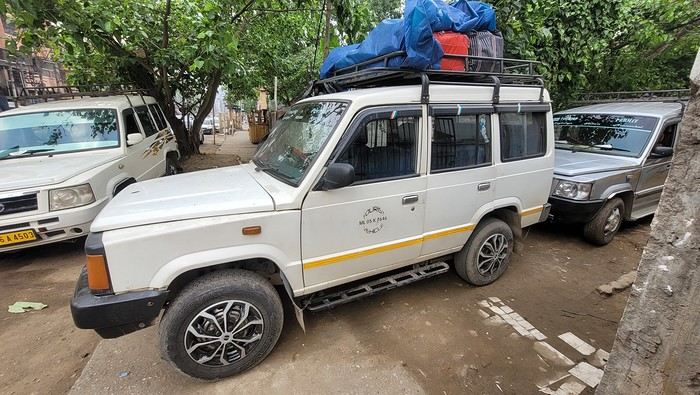
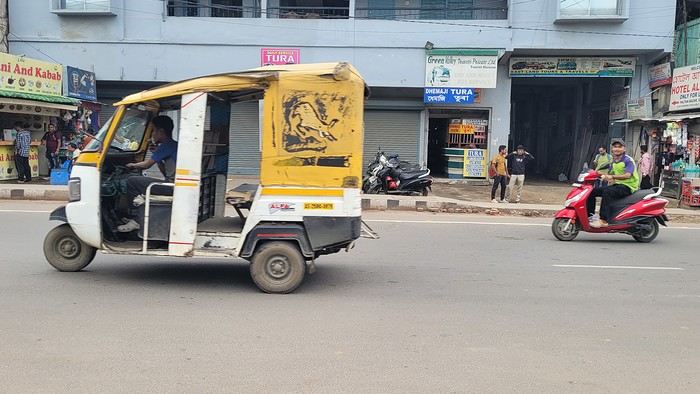
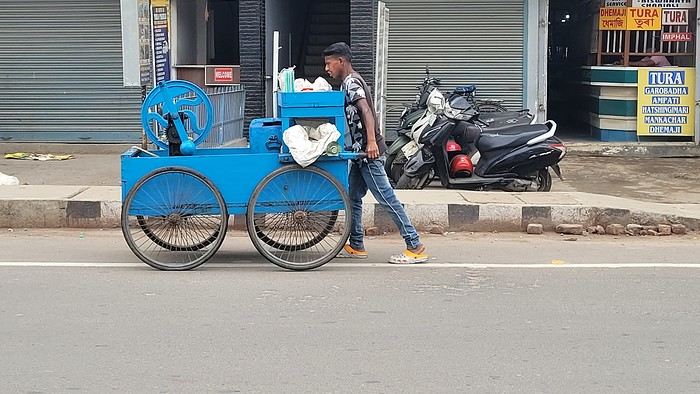
While waiting, I watch the street come to life. I have fun photographing the different modes of transport passing by.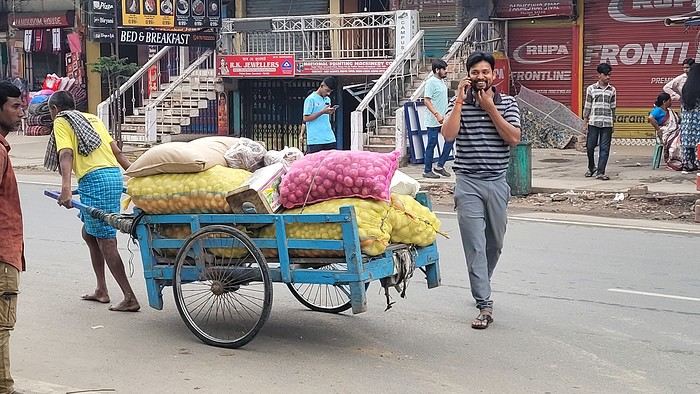
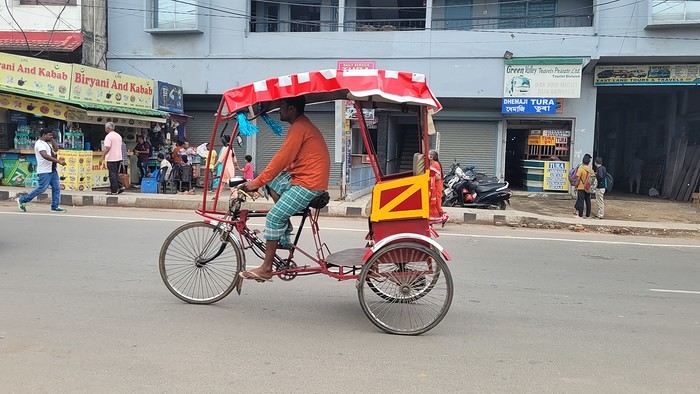
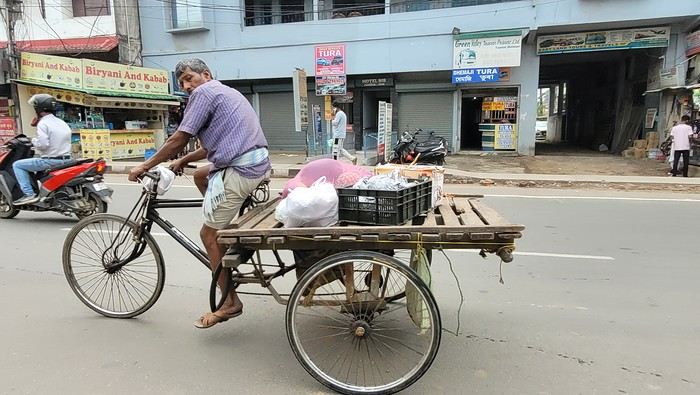
Time passes faster when you’re occupied. We leave at 8:20 AM, and the driver does door-to-door service along the way. We make our first stop for 25 minutes at 9:10 AM, then another for breakfast at 10:10 AM. The scenery is very different from Assam and Nagaland. We drive alongside a pine forest and a large lake. There are beautiful viewpoints, but the driver isn’t stopping for sightseeing, so I have to settle for looking through the car windows.
We finally arrive in Shillong at 11:45 AM. The driver stops in the middle of nowhere, so I have to walk up the street to find a taxi. I flag one down, and he agrees to take me to my new guesthouse, the Rockski Boutique Bed & Breakfast. No sooner do I arrive than a storm with a heavy downpour welcomes me. When I arrived in Guwahati at the end of October, I’d booked a guide with a car for this week. There’s no public transport to get from village to village, so I had to take a car to visit. The tourism manager, Sachin, sent me a message to let me know that the driver, Welbis, will pick me up tomorrow morning at 8 AM. The temperature is much cooler here—only 19°C. At 2:30 PM, the rain stops, and I take the opportunity to explore the city. I start with the cathedral. Today is Good Friday, so I’m going to see how it’s celebrated here. Meghalaya is a Catholic state. The cathedral isn’t far from the guesthouse—it’s huge and all blue.
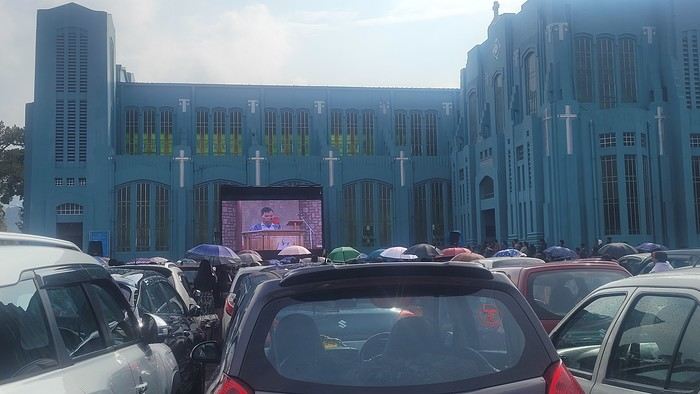
I arrive during mass, and it’s impossible to enter—the faithful are numerous outside in the parking lot. Giant screens broadcast the ceremony.

While waiting, I watch the street come to life. I have fun photographing the different modes of transport passing by.
Time passes faster when you’re occupied. We leave at 8:20 AM, and the driver does door-to-door service along the way. We make our first stop for 25 minutes at 9:10 AM, then another for breakfast at 10:10 AM. The scenery is very different from Assam and Nagaland. We drive alongside a pine forest and a large lake. There are beautiful viewpoints, but the driver isn’t stopping for sightseeing, so I have to settle for looking through the car windows.
We finally arrive in Shillong at 11:45 AM. The driver stops in the middle of nowhere, so I have to walk up the street to find a taxi. I flag one down, and he agrees to take me to my new guesthouse, the Rockski Boutique Bed & Breakfast. No sooner do I arrive than a storm with a heavy downpour welcomes me. When I arrived in Guwahati at the end of October, I’d booked a guide with a car for this week. There’s no public transport to get from village to village, so I had to take a car to visit. The tourism manager, Sachin, sent me a message to let me know that the driver, Welbis, will pick me up tomorrow morning at 8 AM. The temperature is much cooler here—only 19°C. At 2:30 PM, the rain stops, and I take the opportunity to explore the city. I start with the cathedral. Today is Good Friday, so I’m going to see how it’s celebrated here. Meghalaya is a Catholic state. The cathedral isn’t far from the guesthouse—it’s huge and all blue.
I arrive during mass, and it’s impossible to enter—the faithful are numerous outside in the parking lot. Giant screens broadcast the ceremony.
Traveling in Italy: how to avoid ZTL traps in Milan, Como, and elsewhere?
Hi there,
This year, we booked a rental in Colonno, Italy, by Lake Como.
Everything was going well until my wife wanted to see Milan... Out of 11 days, why not spend a day there, even though I’m not really a "city" person? Then I discovered ZTLs (Zona a Traffico Limitato)...
A 90 € fine if you’re unlucky enough to drive into one, and another 90 € if you drive out... While I was looking for info on where to park without risking a fine in Milan (any tips?), I found out that Como also has a ZTL. (Any parking advice there too?)
My question is: is there a map showing all the cities with ZTLs? Because if it means getting hit with hundreds of euros in fines 9 months later... 😕
The more I look for info, the more I come across unsettling stories... Like people who pass a ZTL sign, turn around immediately, and still get hit with two 90 € fines in 3 minutes... I don’t want to ruin the vacation over a small mistake...
Thanks in advance,
This year, we booked a rental in Colonno, Italy, by Lake Como.
Everything was going well until my wife wanted to see Milan... Out of 11 days, why not spend a day there, even though I’m not really a "city" person? Then I discovered ZTLs (Zona a Traffico Limitato)...
A 90 € fine if you’re unlucky enough to drive into one, and another 90 € if you drive out... While I was looking for info on where to park without risking a fine in Milan (any tips?), I found out that Como also has a ZTL. (Any parking advice there too?)
My question is: is there a map showing all the cities with ZTLs? Because if it means getting hit with hundreds of euros in fines 9 months later... 😕
The more I look for info, the more I come across unsettling stories... Like people who pass a ZTL sign, turn around immediately, and still get hit with two 90 € fines in 3 minutes... I don’t want to ruin the vacation over a small mistake...
Thanks in advance,
Khao Sok - Hiking guide and lake tour
Hi everyone,
So happy to discover by chance that VoyageForum is back! We’re leaving in a few days for Thailand with our two kids, aged 12 and 15. We’re considering stopping by Khao Sok but don’t want to do a typical 2D/1N or 3D/2N excursion with an overnight stay on the lake—it’s way out of our budget 🤪. Still, the place seems worth the detour. We’ve planned to spend 2 nights there (arriving in the late afternoon on the first day) and I’d love to do a full-day private boat tour on the lake and a hike (half-day or full-day). Do you think it’s doable to book on the spot if we arrive a bit late on the first day? Or is it better to book in advance? None of the websites for booking these services inspire confidence—I get the feeling it’s a real lottery afterward for getting an interesting and friendly guide. But I’m worried it’ll be the same on-site since everything seems so standardized. Do you have any firsthand experience? Maybe even a Facebook contact or something for a guide? Are the prices still really that expensive if we don’t stay overnight on the lake? I’ll admit I’m not sure if we should even stop there anymore...
Thanks in advance!
Marmite
So happy to discover by chance that VoyageForum is back! We’re leaving in a few days for Thailand with our two kids, aged 12 and 15. We’re considering stopping by Khao Sok but don’t want to do a typical 2D/1N or 3D/2N excursion with an overnight stay on the lake—it’s way out of our budget 🤪. Still, the place seems worth the detour. We’ve planned to spend 2 nights there (arriving in the late afternoon on the first day) and I’d love to do a full-day private boat tour on the lake and a hike (half-day or full-day). Do you think it’s doable to book on the spot if we arrive a bit late on the first day? Or is it better to book in advance? None of the websites for booking these services inspire confidence—I get the feeling it’s a real lottery afterward for getting an interesting and friendly guide. But I’m worried it’ll be the same on-site since everything seems so standardized. Do you have any firsthand experience? Maybe even a Facebook contact or something for a guide? Are the prices still really that expensive if we don’t stay overnight on the lake? I’ll admit I’m not sure if we should even stop there anymore...
Thanks in advance!
Marmite
Driver for independent northern Thailand itinerary
Hello everyone,
Not long ago, I used to travel as a couple, but my husband has since passed away, and I’ve decided to set off again. The trip I took to Cambodia in January 2025 did me a world of good.
I’m now considering Thailand, a destination we never included in our plans because even 15 years ago, people said it was too touristy. Still, I’m thinking about the itinerary below, but I don’t feel up to arranging buses, trains, or guides on my own while I’m there. I’m looking for one or more drivers and have been in touch with an agency, but their offers are just copy-paste group tours that I don’t want.
So, if you have any contacts, experiences, or advice, I’d be so grateful if you’d share them with me. Here’s my rough plan:
Arrival in Bangkok
Ayutthaya (2 nights)
Kanchanaburi (2 or 3 nights)
Sangkhlaburi/Sai Yok (3 nights)
Sukhothai (2 nights)
Lampang (I’ve planned 3 nights, but that might be a bit much—it depends on what time I arrive in the city)
Chiang Mai
Chiang Dao
Pai
Chiang Rai
I was thinking about the Mae Hong Son loop—thoughts?
What do you think about staying overnight at the Golden Triangle?
When I look online, of course, I can find agencies that organize tours to national parks, etc.
I’m retired but in great physical shape. I’d rather go hiking than sit in hot springs with crowds of tourists who’ve all arranged meet-ups. I don’t want to spend a day at an elephant camp, and I don’t want to visit Karen villages.
I’d love to hear your advice.
Thank you all,
Info on Thai Airways / Air France business class
Direct flights PAR / BKK in business class: AIR FRANCE or THAI AIRWAYS – prices, comfort.
Thanks a bunch!
15 days in Turkey with family: Is this itinerary doable?
Hi there.
About a month ago, I posted a potential itinerary for Bulgaria and Istanbul, but in the end, since we found some relatively cheap flight tickets to Istanbul, we decided to go for a trip to Turkey instead.
When? 2 weeks, late August (14th to 29th) Who? Dad, mom, a 17-year-old teen, and an 11-year-old child
Here’s our plan: do you think it’s doable? Any practical tips?
We start with 4 full days in Istanbul (5 nights) Then, we rent a car and head to Ephesus. We stay there for 1 day (2 nights) After that, we drive to Kaş. We stay there for 4 full days (5 nights), enough time to relax a bit, see Kaputaş Beach and Kekova, the site of Myra, the site of Patara, and possibly the site of Çıralı/Olympos—even though it’s a bit far—and Saklıkent Gorge. From Kaş, we spend 2 nights near Denizli to see Pamukkale and Aphrodisias. Is it possible to visit both sites in the same day? Then, we travel from Pamukkale back to Istanbul, return the car, and spend one last night in Istanbul.
Thanks for your thoughts!
When? 2 weeks, late August (14th to 29th) Who? Dad, mom, a 17-year-old teen, and an 11-year-old child
Here’s our plan: do you think it’s doable? Any practical tips?
We start with 4 full days in Istanbul (5 nights) Then, we rent a car and head to Ephesus. We stay there for 1 day (2 nights) After that, we drive to Kaş. We stay there for 4 full days (5 nights), enough time to relax a bit, see Kaputaş Beach and Kekova, the site of Myra, the site of Patara, and possibly the site of Çıralı/Olympos—even though it’s a bit far—and Saklıkent Gorge. From Kaş, we spend 2 nights near Denizli to see Pamukkale and Aphrodisias. Is it possible to visit both sites in the same day? Then, we travel from Pamukkale back to Istanbul, return the car, and spend one last night in Istanbul.
Thanks for your thoughts!
Your thoughts on booking Agoda via Kayak for cheaper rates
hi everyone, here’s the thing
I just made a hotel reservation
on Agoda through Kayak
I found an interesting hotel in Krabi—booking directly through Agoda was 160 € per night, but when I searched the same hotel and dates on Kayak, it showed 136 € per night... So I went with that option via Kayak, and I landed on Agoda with the original price of 160 € crossed out and the new price at 136 €. I completed the payment and instantly received an email from Agoda confirming the booking.
But why such a discount? I’ve got quite a few more bookings to make, and they’re all cheaper through Kayak. I’ve seen negative reviews about Kayak, but only for flights. Plus, at the bottom of Agoda’s site, it says Kayak and Agoda are partners.
I’d love to know if anyone else has used this method and if they had any bad surprises... Like the site canceling the reservation last minute or the price suddenly going up.
Thanks in advance for your thoughts! :)
I found an interesting hotel in Krabi—booking directly through Agoda was 160 € per night, but when I searched the same hotel and dates on Kayak, it showed 136 € per night... So I went with that option via Kayak, and I landed on Agoda with the original price of 160 € crossed out and the new price at 136 €. I completed the payment and instantly received an email from Agoda confirming the booking.
But why such a discount? I’ve got quite a few more bookings to make, and they’re all cheaper through Kayak. I’ve seen negative reviews about Kayak, but only for flights. Plus, at the bottom of Agoda’s site, it says Kayak and Agoda are partners.
I’d love to know if anyone else has used this method and if they had any bad surprises... Like the site canceling the reservation last minute or the price suddenly going up.
Thanks in advance for your thoughts! :)
The Verb That Guides
It’s nighttime and 3 degrees in Tashkent.
Hi there,
Reflection: an act of thought that revisits an object to examine it. The object here is travel (or tourist movement, it doesn’t really matter) and the desire to examine it from the particular angle of the verb that drives it came from reading a sentence by Xrctn in the introduction to his travel journal about Turkmenistan.
Part of that strange category of travelers who like ticking boxes...
Ticking I have no idea how strange that is—I actually get the impression it might be pretty common when I see the diverse mix of trips some people here take. But maybe it’s a different approach that drives these compulsive travelers.
Still, it wouldn’t even occur to me. What does it add?
Connecting Or chaining, assembling, linking. These are my verbs. If I can’t do it—either because finances are tight (I live in one of Europe’s pigsties—a PIIGS country, where the virtuous northern barbarians sent the G&S troika to "nurse us back to health" through austerity, making it all the more pleasant to spend every summer among civilized folks on the terrace of my little white house in Kalymnos overlooking the Aegean), or because I’ve chosen a tricky, unstable direction (Lebanon had to be canceled in summer 2006, Syria too, and Iran right now)—I don’t really feel like traveling. I might just tag along to be nice, but it doesn’t mean anything to me.
If I think about the need behind my verbs—this continuous, meticulous, patient way of traveling—it’s about stripping away sudden, artificial exoticism, weaving small, successive changes, and feeling the presence of the knots too. About understanding, integrating something a little different from the image on a screen.
And you? What’s your guiding verb?
Catherine
Hi there,
Reflection: an act of thought that revisits an object to examine it. The object here is travel (or tourist movement, it doesn’t really matter) and the desire to examine it from the particular angle of the verb that drives it came from reading a sentence by Xrctn in the introduction to his travel journal about Turkmenistan.
Part of that strange category of travelers who like ticking boxes...
Ticking I have no idea how strange that is—I actually get the impression it might be pretty common when I see the diverse mix of trips some people here take. But maybe it’s a different approach that drives these compulsive travelers.
Still, it wouldn’t even occur to me. What does it add?
Connecting Or chaining, assembling, linking. These are my verbs. If I can’t do it—either because finances are tight (I live in one of Europe’s pigsties—a PIIGS country, where the virtuous northern barbarians sent the G&S troika to "nurse us back to health" through austerity, making it all the more pleasant to spend every summer among civilized folks on the terrace of my little white house in Kalymnos overlooking the Aegean), or because I’ve chosen a tricky, unstable direction (Lebanon had to be canceled in summer 2006, Syria too, and Iran right now)—I don’t really feel like traveling. I might just tag along to be nice, but it doesn’t mean anything to me.
If I think about the need behind my verbs—this continuous, meticulous, patient way of traveling—it’s about stripping away sudden, artificial exoticism, weaving small, successive changes, and feeling the presence of the knots too. About understanding, integrating something a little different from the image on a screen.
And you? What’s your guiding verb?
Catherine
Preparing for my first trip to Botswana
Hello everyone,
I’m in the planning stages for a trip to Botswana in October 2025.
This will be an extension of my trip to Namibia in January 2025.
Of course, I have a lot of questions!
First one: For day trips visiting Botswana’s parks in a self-drive setup, do I need accommodation *inside* the parks? Is it possible to visit them on a day-trip basis, like in Kruger Park or Etosha?
Thanks in advance for your answers! Have a great day!
First one: For day trips visiting Botswana’s parks in a self-drive setup, do I need accommodation *inside* the parks? Is it possible to visit them on a day-trip basis, like in Kruger Park or Etosha?
Thanks in advance for your answers! Have a great day!
So where are they and what are they doing?
This catchy and somewhat mysterious title comes from several questions I’ve been asking myself.
VF has been back open for a reasonable number of weeks and months now. The number of visitors overall matches past averages, but the number of members online in the last 24 hours seems relatively lower than what we used to see.
Yet, to my surprise, I’m seeing fewer travel journals, way fewer messages, and way fewer questions. I don’t see many new registered users online, and I notice a number of members who are logged in but either aren’t participating or have stopped participating.
Something’s not adding up for me because, in my opinion, VF is still appealing, and I don’t see which other sites could really compete.
Was there a real break between pre- and post-Covid? Does it just take more time for some people to discover the site or learn that it’s active again? Do people now prefer quick consumption on sites like FB or others I’m not familiar with? Where have the site’s old-timers gone, and what are they doing with their time now? What’s really going on here?
VF has been back open for a reasonable number of weeks and months now. The number of visitors overall matches past averages, but the number of members online in the last 24 hours seems relatively lower than what we used to see.
Yet, to my surprise, I’m seeing fewer travel journals, way fewer messages, and way fewer questions. I don’t see many new registered users online, and I notice a number of members who are logged in but either aren’t participating or have stopped participating.
Something’s not adding up for me because, in my opinion, VF is still appealing, and I don’t see which other sites could really compete.
Was there a real break between pre- and post-Covid? Does it just take more time for some people to discover the site or learn that it’s active again? Do people now prefer quick consumption on sites like FB or others I’m not familiar with? Where have the site’s old-timers gone, and what are they doing with their time now? What’s really going on here?
Stopover between Clarens and Hluhluwe (South Africa)
Hi there, we're traveling in April with our 4-year-old child. We'll be spending a few days in Clarens and would then like to visit Hluhluwe. We don’t want to drive more than 3–4 hours a day, and the driving time is estimated at nearly 7 hours. Do you have any suggestions for a stopover and an Airbnb or guest house (safe town, nature) between Clarens and Hluhluwe where we could spend the afternoon and leave the next day, as well as a safe route? Thanks so much!
What itinerary for three weeks in Madagascar this summer?
Hi there,
I’m planning a 22-day trip to Madagascar this July.
And I could really use some advice 😊
Here’s what I’m sure about: Spending a few days in Nosy Be so my daughter can complete her Open Water certification—so I’m thinking 4 or 5 days there. I think Diego Suarez, Montagne d’Ambre, and Ankarana would suit what we like to do and have the advantage of being close to Nosy Be.
Now, the parts I’m unsure about, especially because of travel times:
My daughters really want to see whales. Is it possible around Nosy Be, or is Sainte Marie *the* must-visit spot? And what’s the weather like at that time of year? If we choose Sainte Marie, maybe do the Pangalanes Canal? Or is the route from Diego to Sainte Marie via the Vanilla Road a must-do?
Another option could be exploring the east with the Tsiribihina River and the Avenue of the Baobabs in Morondava.
Thanks in advance for your tips!
And I could really use some advice 😊
Here’s what I’m sure about: Spending a few days in Nosy Be so my daughter can complete her Open Water certification—so I’m thinking 4 or 5 days there. I think Diego Suarez, Montagne d’Ambre, and Ankarana would suit what we like to do and have the advantage of being close to Nosy Be.
Now, the parts I’m unsure about, especially because of travel times:
My daughters really want to see whales. Is it possible around Nosy Be, or is Sainte Marie *the* must-visit spot? And what’s the weather like at that time of year? If we choose Sainte Marie, maybe do the Pangalanes Canal? Or is the route from Diego to Sainte Marie via the Vanilla Road a must-do?
Another option could be exploring the east with the Tsiribihina River and the Avenue of the Baobabs in Morondava.
Thanks in advance for your tips!
Family boat trip from Manaus (Brazil) to Yurimaguas (Peru)
Hello,
As part of a 10-month trip to explore and discover South America, we’d like to start our journey in northern Brazil since the timing is perfect for traveling up the Amazon. We’re traveling as a family of five with three kids aged 6, 9, and 18.
Our plan is to leave from Manaus and reach Yurimaguas in Peru via the Amazon, mostly by boat. Since we have plenty of time, we can take breaks to explore the different stops along the way that are worth it. The idea is to eventually head to Colombia via Ecuador later on.
So far, we’ve identified the following stops: - Manaus - Tabatinga - Iquitos - Sumiria Reserve (we’d like to stay there for a week) - Yurimaguas.
We’re thinking of traveling in a cabin/hammock for the longest leg (Manaus to Tabatinga) and just in hammocks for the shorter trips (max 3 days).
I have a few questions: 1. From a safety perspective, is the area we’re planning to cross safe, considering we’ll be with our three kids, the youngest being 6? 2. Isn’t this route a bit too ambitious for our kids? 3. We’re considering adding the Santarém/Manaus leg. Is Santarém a city worth adding to the itinerary? 4. Among the planned stops, which ones deserve a special visit? 5. Do the boat trips always include meals on board, or should we be careful when booking? 6. What would be a reasonable estimate for the duration of this trip to fully enjoy it?
I’ve read quite a bit—like trying to board early to get the best hammock spots, and that travel times can vary depending on currents, stops, and potential technical issues. But that’s not a problem since we have all the time in the world! :)
We’d love to hear from anyone who’s traveled in this area before!
Thanks so much in advance for your help in planning our trip.
Rémy, Céline, Antoine, Sacha, and Paul
As part of a 10-month trip to explore and discover South America, we’d like to start our journey in northern Brazil since the timing is perfect for traveling up the Amazon. We’re traveling as a family of five with three kids aged 6, 9, and 18.
Our plan is to leave from Manaus and reach Yurimaguas in Peru via the Amazon, mostly by boat. Since we have plenty of time, we can take breaks to explore the different stops along the way that are worth it. The idea is to eventually head to Colombia via Ecuador later on.
So far, we’ve identified the following stops: - Manaus - Tabatinga - Iquitos - Sumiria Reserve (we’d like to stay there for a week) - Yurimaguas.
We’re thinking of traveling in a cabin/hammock for the longest leg (Manaus to Tabatinga) and just in hammocks for the shorter trips (max 3 days).
I have a few questions: 1. From a safety perspective, is the area we’re planning to cross safe, considering we’ll be with our three kids, the youngest being 6? 2. Isn’t this route a bit too ambitious for our kids? 3. We’re considering adding the Santarém/Manaus leg. Is Santarém a city worth adding to the itinerary? 4. Among the planned stops, which ones deserve a special visit? 5. Do the boat trips always include meals on board, or should we be careful when booking? 6. What would be a reasonable estimate for the duration of this trip to fully enjoy it?
I’ve read quite a bit—like trying to board early to get the best hammock spots, and that travel times can vary depending on currents, stops, and potential technical issues. But that’s not a problem since we have all the time in the world! :)
We’d love to hear from anyone who’s traveled in this area before!
Thanks so much in advance for your help in planning our trip.
Rémy, Céline, Antoine, Sacha, and Paul
Withdrawing Money in Uzbekistan
Hi there,
It’s been a while since I’ve traveled outside an area packed with ATMs, so I’m wondering about Uzbekistan and the best exchange options. The guidebooks aren’t very chatty on the topic.
From what I gather, transport and hotels will be booked and paid via bank transfer to a local agency. For personal expenses, is it better to bring euros, dollars, or can we still find ATMs along the Silk Road cities to withdraw cash with our bank card?
Catherine
It’s been a while since I’ve traveled outside an area packed with ATMs, so I’m wondering about Uzbekistan and the best exchange options. The guidebooks aren’t very chatty on the topic.
From what I gather, transport and hotels will be booked and paid via bank transfer to a local agency. For personal expenses, is it better to bring euros, dollars, or can we still find ATMs along the Silk Road cities to withdraw cash with our bank card?
Catherine
Arriving in Bangkok in January 2025: where to store my winter coat?
Hi, I’m arriving in BKK in early January 2025 for 2 months. What should I do with my warm clothes? A locker? Sell them?
Thanks!
Review of my visit to Angkor
SIEM REAP
You can now rent scooters just about everywhere in Siem Reap, but at rip-off prices—$15–18 a day instead of $5–10 like everywhere else in Indochina. The best options are tuk-tuks or, even better, electric bikes ($12, but with a 50 km range, so they won’t let you go to Banteay Srei or the River of a Thousand Lingas in the Kulen Massif, which are too far). **WARNING:** Wear a helmet, or they *will* catch you. Scooters are banned from going from SR to the stunning temple of Koh Ker in the northeast and continuing to Battambang; no idea why!
My favorite little hotel in Siem Reap? The Neth Socheata, tucked in an alley off Thnou St near the market—lovely rooms, and the owner speaks great English. Then there’s the Ivy Guesthouse with its little garden, but it’s “always full,” according to the owner. For something upscale but still affordable, a fantastic spot is the Pavillon Indochine, tucked away on a quiet side street on the way to the airport—elegant, with incredible attention to decor, a terrace restaurant, garden, pool, etc. Everything you’d want for $70 including breakfast. I also spotted a hostel for backpackers, the Angkor Thom Hostel, with small 6-bed dorms for $4 with a fan or $6 with AC (18 Wat Bo St).
Food-wise, it’s all amazing! Pub Street has turned into a noise nightmare, with speakers blasting what’s supposed to be music but is just *boom, boom, boom, boom, boom*—run away, even though the pizzas at the Italian place Il Forno are really good. The famous and excellent Tigre de Papier has changed its name to Paper Tiger and is still just as good (lunch only, though, because across the street there’s a huge bar blasting *boom boom boom*, so you won’t be able to hear each other during dinner). On the other hand, the Italian-Cambodian El Toro on Pub Street is perfect, with fantastic pizzas and divine lasagna (go to the first-floor dining room—there’s a big bar across the street blasting *boom boom boom*, but at least you can still talk). Due to the lack of customers during COVID, all the French restaurants—Barrio (three times alas!), Les Deux Sœurs, Le Bel Air, and Le Mozart—have closed. The only one left is L’Olivier, which is pricey. I also discovered a great Moroccan restaurant (though run by a Sudanese man and his French wife), Le Tajine, on Strung Thmei St, 09 68 89 78 27. **WARNING:** For tagines and couscous, you need to order at least in the morning; wine and beer are fine. To get there, turn at the corner of the Cineplex behind the big market at the start of Sivatha Boulevard.
I finally went to the Khmer dance show. Beautiful dancers and dances, but **EAT BEFORE OR AFTER**—the meal is so awful that most Westerners leave it on their plates.
THE ANGKOR TEMPLES Use the excellent *Routard Cambodia* guide. Just a few tips: - Start with the pre-Angkorian Roluos group, 15 km before Siem Reap on the road to PP—it’s the “ancestor” of the temples.
- To avoid the big crowds at Angkor Wat, Bayon, and Ta Prohm, go between noon and 2 PM when everyone’s having lunch. - Speaking of lunch, the crowds flock to the hundred or so mediocre food stalls on the left side of Angkor Wat. Instead, head to Angkor Thom after the stunning Pre Rup temples, all the way to the small Sras Srang basin. Along the basin, there are several restaurants with terraces offering first-floor views of the water, and no crowds. Afterward, cross to the other side of the basin—you’ll end up in the countryside with charming villages where locals seem to live as they did during the temples’ golden age (at its peak, the population was estimated at 600,000–800,000, making it the largest city in the world. The theory for the abandonment is water shortages caused by overpopulation).
- I climbed Phnom Bakheng for the famous sunset, but the crowd was so ridiculous that instead of seeing the temple at sunset, you just see the heads and shoulders around you.
- There are tons of small temples that most people skip, and they’re missing out. My favorites: Thommanon, Neak Pean, Ta Som, and especially Pre Rup, an amazing brick complex with 14 towers.
**Big disappointment:** You can no longer climb to the first floor of Bayon, where you used to stand magically among the giant head statues. So, admire the beautiful bas-reliefs on the outside, but there’s no point going inside—you’ll just see a dark, square corridor with nothing interesting.
ANGKOR FURTHER AFIELD The wonderful Banteay Srei temple. A gem! I couldn’t find the bas-relief stolen by Malraux in the 1920s (fun fact: what he was doing in Indochina—stealing a bas-relief to sell for a fortune in France to cover his massive gambling debts on the stock market, where he ruined his very wealthy American wife—was an open secret. But the French authorities in Saigon, who hated him for his leftist views, decided to let him do it and catch him red-handed, which worked perfectly. He avoided jail only because all the leftist intellectuals in Saint-Germain, Sartre, Beauvoir, and co. cried scandal—though the real scandal was the looting).
30 km of excellent paved road further north, a great spot: the Kulen Massif and the River of a Thousand Lingas (at one point, you’ll come to a T-junction—turn left). Along the road at the foot of the massif, on your right, there’s a great restaurant, Bourey Sovann (where the food is excellent). The trail to the river starts just before it on the left. **Warning:** There are two sites for the River of a Thousand Lingas. One is accessible via a private road, so there’s a $20 toll, and you need to arrive before 11 AM because the road is narrow and traffic flows downhill after that. You’ll end up in a site full of shops, snack stalls, and two good restaurants, including one by a beautiful waterfall. However, the thousand lingas aren’t as spectacular there.
Banteay Srei + the River of a Thousand Lingas makes for a fantastic day. **WARNING:** You used to be able to go to the river and waterfall by scooter or tuk-tuk, but it’s now forbidden. So **go by taxi**—otherwise, you’ll be hiking 12 km round trip up a steep trail.
If you leave Siem Reap early, you can even add Beng Mealea temple on the way back, making a triangular route: SR-BS-Khulen-BM-SR (or the reverse).
If you have time, visit Banteay Samré temple, 10 km west of the Angkor Thom complex. A lovely site with very few visitors.
I’ve never been to the famous Preah Khan on a hill overlooking Thailand. There’s a big dispute between the two countries—the Thais insist the temple belongs to them because the entrance is in their country. There have been serious clashes in the recent past, and landmines are still abundant off the marked paths. They even claim the entire Siem Reap province is theirs and should be returned, arguing it was Thai in the past. It takes two days (6–7 hours each way), with an overnight stay in the nearby village (small hotels and one luxury option with a garden and pool, but it’s expensive).
TONLE SAP People talk about “floating villages,” but that’s a big mistake—these are actually villages of astonishing stilt houses, 4 meters high or more, due to the lake’s major floods. The most famous is Chong Khneas, which I skipped because it’s packed with tourists. Instead, I really liked Kampong Phluk, which is much quieter. To get there, continue on the road past the Roluos group until you reach a parking lot with pirogues lined up. They’ll take you down the river, stop at this amazing village for a walk, and then take you to the Tonle Sap, a true inland sea. At one point, you’ll pass through a flooded forest that you can explore by small boat. At the junction of the river and the Tonle Sap, and on the lake itself, there are floating restaurants where the food is great. Note that in the dry season, you can reach the village by scooter.
BACK TO PHNOM PENH AND ON TO SOUTHERN VIETNAM Since I’d planned at least 15 days in the Mekong Delta between Chau Doc and Saigon, I skipped Battambang, etc. With no desire to endure the dusty road from SR to PP again, I simply loaded my bike onto a bus with the great company Rith Monty (book at their office in SR on the small square at the start of Sivatha Boulevard—$10 for the bike and $6 for me), also known as Paramount. Their buses stop on 136 St right in the middle of PP. I’ll also mention the excellent Giant Ibis, with big modern buses that always leave on time—unlike the others.
I spent the night in PP, and the next morning took the fast boat from PP to Chau Doc with Hang Chau Tourist (buying the ticket the day before is recommended—$25—either at your hotel or the port, and they’ll pick you up at your hotel by tuk-tuk to take you to the port). Departure from PP at noon, arrival in Chau Doc around 4 PM. The boat is great—comfortable and fast. A crew member takes your passports for Cambodian exit formalities, and you handle Vietnamese immigration yourself—it all takes 15–20 minutes. The route isn’t on the Mekong but on the Bassac River to the border, then a wide north-south canal to Chau Doc (the arrival is really nice). In the Chau Doc-PP direction, the boat leaves Chau Doc at 7:30 AM.
My favorite little hotel in Siem Reap? The Neth Socheata, tucked in an alley off Thnou St near the market—lovely rooms, and the owner speaks great English. Then there’s the Ivy Guesthouse with its little garden, but it’s “always full,” according to the owner. For something upscale but still affordable, a fantastic spot is the Pavillon Indochine, tucked away on a quiet side street on the way to the airport—elegant, with incredible attention to decor, a terrace restaurant, garden, pool, etc. Everything you’d want for $70 including breakfast. I also spotted a hostel for backpackers, the Angkor Thom Hostel, with small 6-bed dorms for $4 with a fan or $6 with AC (18 Wat Bo St).
Food-wise, it’s all amazing! Pub Street has turned into a noise nightmare, with speakers blasting what’s supposed to be music but is just *boom, boom, boom, boom, boom*—run away, even though the pizzas at the Italian place Il Forno are really good. The famous and excellent Tigre de Papier has changed its name to Paper Tiger and is still just as good (lunch only, though, because across the street there’s a huge bar blasting *boom boom boom*, so you won’t be able to hear each other during dinner). On the other hand, the Italian-Cambodian El Toro on Pub Street is perfect, with fantastic pizzas and divine lasagna (go to the first-floor dining room—there’s a big bar across the street blasting *boom boom boom*, but at least you can still talk). Due to the lack of customers during COVID, all the French restaurants—Barrio (three times alas!), Les Deux Sœurs, Le Bel Air, and Le Mozart—have closed. The only one left is L’Olivier, which is pricey. I also discovered a great Moroccan restaurant (though run by a Sudanese man and his French wife), Le Tajine, on Strung Thmei St, 09 68 89 78 27. **WARNING:** For tagines and couscous, you need to order at least in the morning; wine and beer are fine. To get there, turn at the corner of the Cineplex behind the big market at the start of Sivatha Boulevard.
I finally went to the Khmer dance show. Beautiful dancers and dances, but **EAT BEFORE OR AFTER**—the meal is so awful that most Westerners leave it on their plates.
THE ANGKOR TEMPLES Use the excellent *Routard Cambodia* guide. Just a few tips: - Start with the pre-Angkorian Roluos group, 15 km before Siem Reap on the road to PP—it’s the “ancestor” of the temples.
- To avoid the big crowds at Angkor Wat, Bayon, and Ta Prohm, go between noon and 2 PM when everyone’s having lunch. - Speaking of lunch, the crowds flock to the hundred or so mediocre food stalls on the left side of Angkor Wat. Instead, head to Angkor Thom after the stunning Pre Rup temples, all the way to the small Sras Srang basin. Along the basin, there are several restaurants with terraces offering first-floor views of the water, and no crowds. Afterward, cross to the other side of the basin—you’ll end up in the countryside with charming villages where locals seem to live as they did during the temples’ golden age (at its peak, the population was estimated at 600,000–800,000, making it the largest city in the world. The theory for the abandonment is water shortages caused by overpopulation).
- I climbed Phnom Bakheng for the famous sunset, but the crowd was so ridiculous that instead of seeing the temple at sunset, you just see the heads and shoulders around you.
- There are tons of small temples that most people skip, and they’re missing out. My favorites: Thommanon, Neak Pean, Ta Som, and especially Pre Rup, an amazing brick complex with 14 towers.
**Big disappointment:** You can no longer climb to the first floor of Bayon, where you used to stand magically among the giant head statues. So, admire the beautiful bas-reliefs on the outside, but there’s no point going inside—you’ll just see a dark, square corridor with nothing interesting.
ANGKOR FURTHER AFIELD The wonderful Banteay Srei temple. A gem! I couldn’t find the bas-relief stolen by Malraux in the 1920s (fun fact: what he was doing in Indochina—stealing a bas-relief to sell for a fortune in France to cover his massive gambling debts on the stock market, where he ruined his very wealthy American wife—was an open secret. But the French authorities in Saigon, who hated him for his leftist views, decided to let him do it and catch him red-handed, which worked perfectly. He avoided jail only because all the leftist intellectuals in Saint-Germain, Sartre, Beauvoir, and co. cried scandal—though the real scandal was the looting).
30 km of excellent paved road further north, a great spot: the Kulen Massif and the River of a Thousand Lingas (at one point, you’ll come to a T-junction—turn left). Along the road at the foot of the massif, on your right, there’s a great restaurant, Bourey Sovann (where the food is excellent). The trail to the river starts just before it on the left. **Warning:** There are two sites for the River of a Thousand Lingas. One is accessible via a private road, so there’s a $20 toll, and you need to arrive before 11 AM because the road is narrow and traffic flows downhill after that. You’ll end up in a site full of shops, snack stalls, and two good restaurants, including one by a beautiful waterfall. However, the thousand lingas aren’t as spectacular there.
Banteay Srei + the River of a Thousand Lingas makes for a fantastic day. **WARNING:** You used to be able to go to the river and waterfall by scooter or tuk-tuk, but it’s now forbidden. So **go by taxi**—otherwise, you’ll be hiking 12 km round trip up a steep trail.
If you leave Siem Reap early, you can even add Beng Mealea temple on the way back, making a triangular route: SR-BS-Khulen-BM-SR (or the reverse).
If you have time, visit Banteay Samré temple, 10 km west of the Angkor Thom complex. A lovely site with very few visitors.
I’ve never been to the famous Preah Khan on a hill overlooking Thailand. There’s a big dispute between the two countries—the Thais insist the temple belongs to them because the entrance is in their country. There have been serious clashes in the recent past, and landmines are still abundant off the marked paths. They even claim the entire Siem Reap province is theirs and should be returned, arguing it was Thai in the past. It takes two days (6–7 hours each way), with an overnight stay in the nearby village (small hotels and one luxury option with a garden and pool, but it’s expensive).
TONLE SAP People talk about “floating villages,” but that’s a big mistake—these are actually villages of astonishing stilt houses, 4 meters high or more, due to the lake’s major floods. The most famous is Chong Khneas, which I skipped because it’s packed with tourists. Instead, I really liked Kampong Phluk, which is much quieter. To get there, continue on the road past the Roluos group until you reach a parking lot with pirogues lined up. They’ll take you down the river, stop at this amazing village for a walk, and then take you to the Tonle Sap, a true inland sea. At one point, you’ll pass through a flooded forest that you can explore by small boat. At the junction of the river and the Tonle Sap, and on the lake itself, there are floating restaurants where the food is great. Note that in the dry season, you can reach the village by scooter.
BACK TO PHNOM PENH AND ON TO SOUTHERN VIETNAM Since I’d planned at least 15 days in the Mekong Delta between Chau Doc and Saigon, I skipped Battambang, etc. With no desire to endure the dusty road from SR to PP again, I simply loaded my bike onto a bus with the great company Rith Monty (book at their office in SR on the small square at the start of Sivatha Boulevard—$10 for the bike and $6 for me), also known as Paramount. Their buses stop on 136 St right in the middle of PP. I’ll also mention the excellent Giant Ibis, with big modern buses that always leave on time—unlike the others.
I spent the night in PP, and the next morning took the fast boat from PP to Chau Doc with Hang Chau Tourist (buying the ticket the day before is recommended—$25—either at your hotel or the port, and they’ll pick you up at your hotel by tuk-tuk to take you to the port). Departure from PP at noon, arrival in Chau Doc around 4 PM. The boat is great—comfortable and fast. A crew member takes your passports for Cambodian exit formalities, and you handle Vietnamese immigration yourself—it all takes 15–20 minutes. The route isn’t on the Mekong but on the Bassac River to the border, then a wide north-south canal to Chau Doc (the arrival is really nice). In the Chau Doc-PP direction, the boat leaves Chau Doc at 7:30 AM.
Traveling with Iberia Airlines
Hi everyone,
I’m leaving this Saturday the 30th with Iberia, and they’re not responding to emails or picking up the phone 😐. So I’m trying here with my three questions:
1 - On the way there, I’d like to check a pack of water (Vittel 1.5L x6 bottles) in my hold luggage since it’s not allowed in the cabin. I’d like to know if this is allowed or if there are any restrictions in the hold as well (aside from the maximum weight of the luggage, of course)?
2 - I have a disability, and my health hasn’t been improving, so I’ve needed a cane to get around for a while now. At the airport, they’ll put me in a wheelchair with special assistance (I’m used to it). I’ve brought a folding cane for the trip—am I allowed to have it in my carry-on luggage? (It’s a basic walking cane that folds, no fancy handle that unscrews with a sword inside or anything like that). The wheelchair is great, but before the flight, I’d like to stretch my legs a bit .
(The question might seem silly, but I’ve had some weird surprises at airport security before—a glass knick-knack that confused them for a while, even though it was just a small glass rose under a dome, or another time, my empty hair spray bottle caused a lot of hesitation.)
3 - I never received an invoice for my Iberia flights (booked in February), and I’ll need it (since a small part might be reimbursed by my works council). I’ve checked my Iberia personal space, but there’s no invoice anywhere. Do you know how I can get it? (Given that they don’t respond to emails—or if they do, it’s off-topic—and they don’t answer the phone.)
Thanks so much for your help!
I’m leaving this Saturday the 30th with Iberia, and they’re not responding to emails or picking up the phone 😐. So I’m trying here with my three questions:
1 - On the way there, I’d like to check a pack of water (Vittel 1.5L x6 bottles) in my hold luggage since it’s not allowed in the cabin. I’d like to know if this is allowed or if there are any restrictions in the hold as well (aside from the maximum weight of the luggage, of course)?
2 - I have a disability, and my health hasn’t been improving, so I’ve needed a cane to get around for a while now. At the airport, they’ll put me in a wheelchair with special assistance (I’m used to it). I’ve brought a folding cane for the trip—am I allowed to have it in my carry-on luggage? (It’s a basic walking cane that folds, no fancy handle that unscrews with a sword inside or anything like that). The wheelchair is great, but before the flight, I’d like to stretch my legs a bit .
(The question might seem silly, but I’ve had some weird surprises at airport security before—a glass knick-knack that confused them for a while, even though it was just a small glass rose under a dome, or another time, my empty hair spray bottle caused a lot of hesitation.)
3 - I never received an invoice for my Iberia flights (booked in February), and I’ll need it (since a small part might be reimbursed by my works council). I’ve checked my Iberia personal space, but there’s no invoice anywhere. Do you know how I can get it? (Given that they don’t respond to emails—or if they do, it’s off-topic—and they don’t answer the phone.)
Thanks so much for your help!
Where is it hottest in Morocco in winter?
Hi, where in Morocco is it hottest in January and February? What’s the maximum temperature? Thanks! FanFancom
Our 22-day Ecuador road trip itinerary with a rental car
Hi everyone,
My husband and I are planning to explore Ecuador in the coming year, and to make the most of the trip, we’d like to do it with a rental car. We already have a rough idea of the route we’d take, and I’m reaching out to the community to help us refine this journey. Here’s the plan:
Day 1: Flight to Quito
Days 2 and 3: Exploring Quito
Days 4 and 5: Picking up the rental car and driving to Otavalo and Laguna Cuicocha
Day 6: Drive to Papallacta via Cayambe to enjoy the hot springs in the evening
Days 7 and 8: Drive to Lasso via Malachi – Excursions in Cotopaxi National Park. Laguna Limpiopungo
Days 9 and 10: Laguna Quilotoa
Day 11: Drive to Baños via Latacunga/Ambato to enjoy the hot springs in Baños
Days 12 and 13: Hiking in the Chimborazo Reserve
Day 14: Hiking in Sangay National Park
Day 15: Drive to Guamote to arrive by late afternoon
Day 16: Guamote market in the morning. Drive to Cañar in the afternoon
Day 17: Guided tour of Ingapirca, then drive to Cuenca
Day 18: Visit Cajas National Park early in the morning
Day 19: Exploring Cuenca
Day 20: Returning the rental car and flight to Quito or driving back to Quito (depending on cost)
Day 21: Relaxing in Quito
Day 22: Flight back to France
We won’t be doing any ascents—just hikes in the parks (we’re walkers, but we’re feeling our age and prefer to take it easy now!).
We’d love to hear your thoughts, critiques, or advice... Thanks in advance. Looking forward to reading your replies! martine
We won’t be doing any ascents—just hikes in the parks (we’re walkers, but we’re feeling our age and prefer to take it easy now!).
We’d love to hear your thoughts, critiques, or advice... Thanks in advance. Looking forward to reading your replies! martine
Car rental in Thailand
Hello again!
For an upcoming trip to Thailand, I’m looking for names of reliable car rental companies based in Phuket.
I’d also like to know about local road rules and the current amount of traffic "fines."
Are foreigners targeted or profiled when driving a rental vehicle?
The routes I’d be taking aren’t in Phuket itself—Phuket would just be the arrival point—but rather around Khao Lak, Krabi, Surat Thani, and the inland areas in that region.
Thanks! :)
For an upcoming trip to Thailand, I’m looking for names of reliable car rental companies based in Phuket.
I’d also like to know about local road rules and the current amount of traffic "fines."
Are foreigners targeted or profiled when driving a rental vehicle?
The routes I’d be taking aren’t in Phuket itself—Phuket would just be the arrival point—but rather around Khao Lak, Krabi, Surat Thani, and the inland areas in that region.
Thanks! :)
The Island of Pelops
October 7, 2023, is a sunny day in Milan. Since morning, in this light, I’m WhatsApping with Afrooz in Tehran, and I decide to call her. A lively, joyful conversation—French with that Farsi accent becomes a wonderful language. Suddenly, everything feels possible. Isfahan, Shiraz, Damavand, Yazd, Yazd, Yazd—a delicious word savored endlessly—become within reach. Iran, so longed for, is finally here. Pure joy, absolute enthusiasm. Six months to plan and relish a trip before living it.
Then I open *Le Monde*.
Aaaaaaaaaaaaaaaaaaaaaaaaaaaaaaaaaaaaaaaaaaaaaaaaaaaaaaaaaaaaaaaaaaaaaaaa
Frozen. Empty. No. We decide to wait, not to give up right away, pretending to believe—just a little, just to keep from collapsing—that with this wretched human race, the worst isn’t necessarily certain. It is.
So... meh, Madeira? The Azores? Uzbekistan (a pale substitute)? New Zealand? Greece. Again, always. Nestling into the only European promise we’ve been given. Indulging in illusions, for the pleasure of it.
So, train from Milan to Ancona (9 AM–12 PM), a typically Marchigiano lunch (Italy is paradise for food lovers), a stroll through the city, then at 4 PM boarding the *Olympic Champion*. Arrival in Patras the next afternoon, car rental, and off to Lepanto—Nafpaktos today—to reminisce about glorious victories and pay tribute to Cervantes, who lost a hand there before writing.
That’s the plan, anyway. The train is unusually on time. The ferry, replaced in the meantime by the *Hellenic Spirit* (why not? Even if it’s less suited to the season), is 3 hours late, then 4, no 5, then finally 6—oh wait, 7. And on top of that, it’s pouring rain in Ancona, and the port waiting room closes at 6 PM. Great...
At 11 PM, the ferry’s lights emerge in the pitch-black night. We jostle through the downpour, board, and sleep well in a cozy cabin with the white noise of the engines. Then:
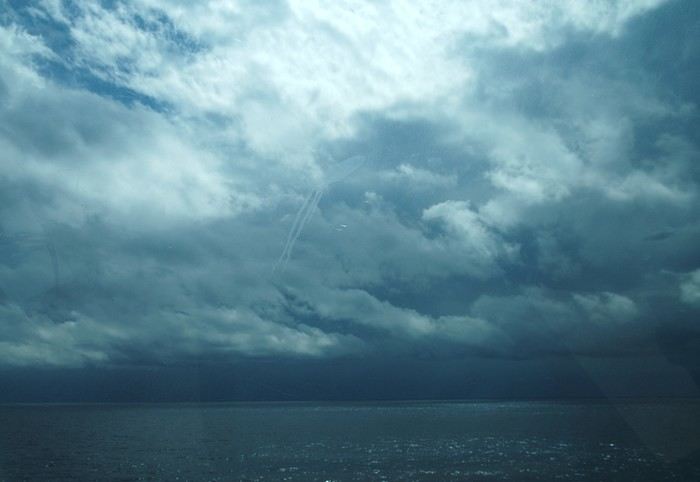 23 hours of rest. Of forgetting.
Then I open *Le Monde*.
Aaaaaaaaaaaaaaaaaaaaaaaaaaaaaaaaaaaaaaaaaaaaaaaaaaaaaaaaaaaaaaaaaaaaaaaa
Frozen. Empty. No. We decide to wait, not to give up right away, pretending to believe—just a little, just to keep from collapsing—that with this wretched human race, the worst isn’t necessarily certain. It is.
So... meh, Madeira? The Azores? Uzbekistan (a pale substitute)? New Zealand? Greece. Again, always. Nestling into the only European promise we’ve been given. Indulging in illusions, for the pleasure of it.
So, train from Milan to Ancona (9 AM–12 PM), a typically Marchigiano lunch (Italy is paradise for food lovers), a stroll through the city, then at 4 PM boarding the *Olympic Champion*. Arrival in Patras the next afternoon, car rental, and off to Lepanto—Nafpaktos today—to reminisce about glorious victories and pay tribute to Cervantes, who lost a hand there before writing.
That’s the plan, anyway. The train is unusually on time. The ferry, replaced in the meantime by the *Hellenic Spirit* (why not? Even if it’s less suited to the season), is 3 hours late, then 4, no 5, then finally 6—oh wait, 7. And on top of that, it’s pouring rain in Ancona, and the port waiting room closes at 6 PM. Great...
At 11 PM, the ferry’s lights emerge in the pitch-black night. We jostle through the downpour, board, and sleep well in a cozy cabin with the white noise of the engines. Then:
23 hours of rest. Of forgetting.
Recommendations for a local agency for a tour in Senegal?
The tours offered by tour operators in France don't work for me, except for TUI—its 15-day itinerary is great but too expensive for my budget.
I’m planning to travel with my sister in March or April 2025 and would love to find a local agency that offers tours, even in small groups. Thanks for your suggestions!
Tanya6675
Le Canal du Midi à vélo de Toulouse à Sète English translation pending
Bonjour,
Nous venons de faire le Canal du Midi à vélo. Voici un petit retour de notre itinéraire, hébergements, restaurants et de nos remarques.
Notre parcours : TOULOUSE - MAS-SAINTES-PUELLES (CASTELNAUDARY) – environ 60 km MAS-SAINTES-PUELLES (CASTELNAUDARY) – CARCASSONNE – environ 40 km CARCASSONNE - ARGENS-MINERVOIS – environ 47 km ARGENS-MINERVOIS – POILHES – environ 41 km POILHES – AGDE – environ 39 km AGDE – SETE – environ 26 km
Nous avons loué nos vélos à TOULOUSE au CANAL A VELO et nous les avons laissés à SETE (nous avons fait un rapatriement de vélos au prix de 80 €).
Nous avons pris l'option "transport de bagages", c'est vraiment bien, on n'a qu'un petit sac à dos pour la journée et les bagages sont livrés tous les jours à votre étape du soir (hôtel ou chambre d'hôte). Vu l'état de certains chemins c'est bien de rouler léger...
Globalement se fut une super expérience. Par contre il faut savoir que de TOULOUSE à CASTELNAUDARY, la piste est bitumée donc très bien. Il y a encore beaucoup de platanes donc de l'ombre et les nombreuses écluses sont autant de haltes sympathiques. Après cela se complique, plus de bitume mais des chemins (souvent très étroits) faits de gravillons, de cailloux, de terre, avec des racines, des trous, des bosses... Donc un VTT est plus que conseillé. Moi j'avais un VTC, il a fait beau donc j'ai pu passer partout, mais s'il pleut je pense que cela doit devenir très galère car qui dit pluie, dit boue... Avec un VTC je pense que certains endroits doivent être impraticables. Il n'y a pas non plus d'indications, mieux vaut avoir une carte (nous avions commandé le "guide n° 1 du Canal à Midi à vélo" sur le site 2pieds2roues qui est bien fait) et nous avons téléchargé l'application "canal du midi" qui permet de préparer les étapes et de voir à quel endroit du parcours vous vous trouvez.
Les Hôtels, chambres d'hôtes de nos étapes : TOULOUSE-HOTEL LA CHARTREUSE-www.chartreusehotel.com (bien, super petit déjeuner) CASTELNAUDARY-(MAS-SAINTES-PUELLES)-LA BONNE PLANQUE-www.labonneplanque.com (super) CARCASSONNE-LE MAGNOLIA-www.le-magnolia.com (super) ARGENS-MINERVOIS-BASTIDE DES MAELS-domainedesmaels.com/bastide.htm (super) POILHES-ATMOSPHERE-www-chambres-hotes.fr (super) AGDE-CHAMBRES ROSA-www.chambresrosa.com (exceptionnel) SETE-HOTEL SABLES D'OR-www.hotel-sablesdor.com (bien)
Nos restaurants : TOULOUSE : LE BISTROQUET (bien) MAS-SAINTES-PUELLES : délicieux cassoulet de notre chambre d'hôte "LA BONNE PLANQUE" CARCASSONNE : LE PLO (dans la cité, très bien) ARGENS-MINERVOIS : LA GUINGUETTE (super sympa) POILHES : LES PLATANES (très bien) AGDE : LARCEN LA SUITE (exceptionnel) SETE : LE MISTRAL (super)
Donc très chouette expérience, dépaysante, avec des paysages très variés.
Cordialement. Muriel.
Nous venons de faire le Canal du Midi à vélo. Voici un petit retour de notre itinéraire, hébergements, restaurants et de nos remarques.
Notre parcours : TOULOUSE - MAS-SAINTES-PUELLES (CASTELNAUDARY) – environ 60 km MAS-SAINTES-PUELLES (CASTELNAUDARY) – CARCASSONNE – environ 40 km CARCASSONNE - ARGENS-MINERVOIS – environ 47 km ARGENS-MINERVOIS – POILHES – environ 41 km POILHES – AGDE – environ 39 km AGDE – SETE – environ 26 km
Nous avons loué nos vélos à TOULOUSE au CANAL A VELO et nous les avons laissés à SETE (nous avons fait un rapatriement de vélos au prix de 80 €).
Nous avons pris l'option "transport de bagages", c'est vraiment bien, on n'a qu'un petit sac à dos pour la journée et les bagages sont livrés tous les jours à votre étape du soir (hôtel ou chambre d'hôte). Vu l'état de certains chemins c'est bien de rouler léger...
Globalement se fut une super expérience. Par contre il faut savoir que de TOULOUSE à CASTELNAUDARY, la piste est bitumée donc très bien. Il y a encore beaucoup de platanes donc de l'ombre et les nombreuses écluses sont autant de haltes sympathiques. Après cela se complique, plus de bitume mais des chemins (souvent très étroits) faits de gravillons, de cailloux, de terre, avec des racines, des trous, des bosses... Donc un VTT est plus que conseillé. Moi j'avais un VTC, il a fait beau donc j'ai pu passer partout, mais s'il pleut je pense que cela doit devenir très galère car qui dit pluie, dit boue... Avec un VTC je pense que certains endroits doivent être impraticables. Il n'y a pas non plus d'indications, mieux vaut avoir une carte (nous avions commandé le "guide n° 1 du Canal à Midi à vélo" sur le site 2pieds2roues qui est bien fait) et nous avons téléchargé l'application "canal du midi" qui permet de préparer les étapes et de voir à quel endroit du parcours vous vous trouvez.
Les Hôtels, chambres d'hôtes de nos étapes : TOULOUSE-HOTEL LA CHARTREUSE-www.chartreusehotel.com (bien, super petit déjeuner) CASTELNAUDARY-(MAS-SAINTES-PUELLES)-LA BONNE PLANQUE-www.labonneplanque.com (super) CARCASSONNE-LE MAGNOLIA-www.le-magnolia.com (super) ARGENS-MINERVOIS-BASTIDE DES MAELS-domainedesmaels.com/bastide.htm (super) POILHES-ATMOSPHERE-www-chambres-hotes.fr (super) AGDE-CHAMBRES ROSA-www.chambresrosa.com (exceptionnel) SETE-HOTEL SABLES D'OR-www.hotel-sablesdor.com (bien)
Nos restaurants : TOULOUSE : LE BISTROQUET (bien) MAS-SAINTES-PUELLES : délicieux cassoulet de notre chambre d'hôte "LA BONNE PLANQUE" CARCASSONNE : LE PLO (dans la cité, très bien) ARGENS-MINERVOIS : LA GUINGUETTE (super sympa) POILHES : LES PLATANES (très bien) AGDE : LARCEN LA SUITE (exceptionnel) SETE : LE MISTRAL (super)
Donc très chouette expérience, dépaysante, avec des paysages très variés.
Cordialement. Muriel.