Results for "Zone+démilitarisée+ou+DMZ+|+8+>+194"
35843 results found.
General 2022+ Update for Russia
This forum was closed for a long time after COVID, then due to its sale by the previous owner. Since 2022, there have been notable changes for Russia. It became possible to travel to Russia as a tourist again after COVID restrictions ended in summer 2022. But before that, in March 2022, the EU and member countries cut air links with Russia, as well as train lines. They also cut Russian banks off from the Euro-American banking network—meaning cards and wire transfers.
EU-based insurers stopped offering policies for Russia. The Green Card for cars in Russia was also discontinued. Then the EU abolished the simplified visa regime agreement with Russia. All in all, a summary of the current practical aspects would be helpful.
I’ve been traveling to Russia regularly for about twenty years, and after the long COVID break, I resumed in autumn 2022.
Visa
The usual paper visa is much more expensive. On one hand, because the previous regime was scrapped, and on the other, because invitations for multi-entry visas are pricier. A single-entry 30-day visa costs 80 €. The multi-entry one is 240 €. To be sure you’ll get a 12-month multi-entry, it’s best to buy a telex invitation from the MID (Russian Ministry of Foreign Affairs), though there are few resellers. Prices vary depending on the seller.
E-visas are now available for Schengen passport holders. A big simplification for trips up to 16 days within a 60-day validity period. You can apply from 40 days up to 5 days before your desired date. Issued in up to four days. The site is https://evisa.kdmid.ru/ Cost: 50 €. Processed through an Emirati bank (United Arab Emirates).
Medical Insurance
Medical insurance with repatriation is required to get a visa. So you’ll need to buy a policy. This brings up payment methods. If you’re already familiar with Russia and have a Russian bank account, you can pay with your Russian card. Otherwise, you’ll have to buy from a site that accepts payments via a Belarusian bank—which means your bank must work with Belarus—or go through https://goingrus.com/fr/insurance
Transport from the EU
Minibus (marshrutka) from Kirkenes (Norway) to Murmansk. Schedules are coordinated with flights from Oslo, which arrive between 11:00 and 12:00. They wait on the right as you exit the airport. Some are chartered by groups and leave directly, but may have space—ask the driver. Otherwise, two companies run the route, with a stop in town at the corner of the Scandic, where they depart around 14:00 or 15:00. Payment in cash (NOK or RUB) to the driver. Main operator: https://borodinbus.com Bus from Tallinn (Estonia) to St. Petersburg. The border crossing is on the Narva River. The Russian road checkpoint has been closed since January 2024 for construction expected to last 2.5 years, so reopening is possible in summer 2026. In the meantime, it’s a two-bus journey: Tallinn-Narva, then walk across the bridge between the Estonian and Russian checkpoints at Ivangorod, followed by another bus. Several companies: Luxexpress, Ecolines, Baltic Shuttle, Anniston, СКСавто. Bus from Riga to Pskov or St. Petersburg (final destination). Departs from Riga’s bus station (behind the train station) daily between 18:00 and 19:00. Arrives in Pskov between 01:00 and 02:00 (Russian time). Company: СКСавто. There’s another bus around 21:00 with Ecolines, but it’s longer, with a long stop at the border. Bus from Gdańsk to Kaliningrad. Several buses per day. From the PKS bus station, behind Gdańsk’s central station, on the other side of the boulevard. From Kaliningrad, a 1-hour flight to St. Petersburg costs around 5000 RUB.
Basically, unless you’re planning to go to Murmansk and the Kola Peninsula—and possibly from Murmansk, flights to Arkhangelsk, then Nenetsia (Naryan-Mar), etc.—the three main crossing points with airports are Tallinn, Riga, and Gdańsk.
The Gdańsk-Kaliningrad bus is the fastest, and the ticket to St. Petersburg is very reasonable.
The Narva-Ivangorod route is the riskiest in terms of potential queues and crossing time. Holiday periods are especially risky. Last mid-June, I took a 14:00 bus from Tallinn. I’d bought a single-berth compartment on the Grand Express St. Petersburg-Moscow train, leaving at 23:00, with the idea of a good night’s rest before a Moscow-Magadan flight. A 7-hour queue at the border meant I arrived at St. Petersburg’s bus station at 23:00—missed the train, had to book a room, and spent time finding a reasonably priced flight to Moscow the next day for the same airport as my Magadan flight.
The Riga-Pskov route is a bit long but relaxed. If you get off in Pskov, you can still get decent sleep between 02:00 and 12:00. The Oktyabrskaya Hotel is cheap. I’ve also stopped in Izborsk. You ask the driver when boarding in Riga. The stop is on the federal highway—cross the road, and the main inn is 200m away. You can explore the medieval site the next morning before taking a bus to Pskov (30 km).
From Pskov, there are fast regional Lastochka trains—three or four per day—to St. Petersburg, taking 3.5 hours. Very comfortable and affordable. Also, two daily flights with Azimuth to Moscow-Vnukovo from 5000 RUB. A one-hour flight. It’s a section of Pskov’s military airfield, just a few kilometers from the city center.
Money
Cash. The EU issued a nonsensical decree: a ban on importing EU currency (euros, zloty, kroner, forints, etc.) except for personal travel use. This doesn’t make sense because as a citizen of a eurozone country, you *have* to have euros—cash or electronic (card). You can’t travel without them. The stipulation about a limit for personal use is absurd because personal use can mean anything from a hostel bed to a luxury hotel room, plus transport (flight tickets, train tickets in Russia), restaurants, etc. Estonian customs officers ask about this at the border when leaving. They ask in Estonian, then Russian, then English, depending. Since I cross with a French passport, I just say, "Sorry, I don’t understand," no matter what. Then they ask with a questioning look, "Euro?" and I shake my head. I haven’t been searched, but they do ask to glance in your bag. Russians with large suitcases often get checked. Cards and phone apps: if you have a Russian bank account.
Telephony and Internet
Roaming works but is pricey. Okay for calls and SMS, but very expensive for data. In that case, use an e-SIM with your home carrier if your phone supports it. Otherwise, look into prepaid rechargeable SIMs in Russia for data only—like SIM cards for mobile modems.
Russian SIM: Since this year (2025), as of March, it’s mandatory to be registered in the EBS (Unified Biometric System) to buy a SIM card. For a non-resident foreigner, this means first registering for a SNILS at an MFC (Multifunctional Center)—also called "My Documents." The SNILS is the pension center, which doesn’t require residency. After getting your SNILS number and certificate, you register on the public services portal, Gosuslugi. Finally, you register in the EBS system (voice sample—you read numbers—and a biometric facial photo).
Personal Car
The Green Card no longer covers Russia, and neither do EU-based insurers. But third-party liability insurance (OSAGO) is mandatory. Since the closure of the Russian checkpoint at Ivangorod for construction and the Finnish border closure, the routes are from Kirkenes in Norway, the Estonia-Pskov route, and—since the Belarus-Russia joint visa this year—the Belarus route, e.g., Poland-Terespol-Brest or Lithuania-Belarus. No OSAGO sales if you cross via Kirkenes. I didn’t see any at Shumilkino, the Russian checkpoint after Estonia toward Pskov. If you have a Russian card, you can buy online, of course. Otherwise, pay in cash on-site at certain company offices (specific forms aren’t available at all agencies) or online by paying to a third-party account outside Russia—with added fees.
EU-based insurers stopped offering policies for Russia. The Green Card for cars in Russia was also discontinued. Then the EU abolished the simplified visa regime agreement with Russia. All in all, a summary of the current practical aspects would be helpful.
I’ve been traveling to Russia regularly for about twenty years, and after the long COVID break, I resumed in autumn 2022.
Visa
The usual paper visa is much more expensive. On one hand, because the previous regime was scrapped, and on the other, because invitations for multi-entry visas are pricier. A single-entry 30-day visa costs 80 €. The multi-entry one is 240 €. To be sure you’ll get a 12-month multi-entry, it’s best to buy a telex invitation from the MID (Russian Ministry of Foreign Affairs), though there are few resellers. Prices vary depending on the seller.
E-visas are now available for Schengen passport holders. A big simplification for trips up to 16 days within a 60-day validity period. You can apply from 40 days up to 5 days before your desired date. Issued in up to four days. The site is https://evisa.kdmid.ru/ Cost: 50 €. Processed through an Emirati bank (United Arab Emirates).
Medical Insurance
Medical insurance with repatriation is required to get a visa. So you’ll need to buy a policy. This brings up payment methods. If you’re already familiar with Russia and have a Russian bank account, you can pay with your Russian card. Otherwise, you’ll have to buy from a site that accepts payments via a Belarusian bank—which means your bank must work with Belarus—or go through https://goingrus.com/fr/insurance
Transport from the EU
Minibus (marshrutka) from Kirkenes (Norway) to Murmansk. Schedules are coordinated with flights from Oslo, which arrive between 11:00 and 12:00. They wait on the right as you exit the airport. Some are chartered by groups and leave directly, but may have space—ask the driver. Otherwise, two companies run the route, with a stop in town at the corner of the Scandic, where they depart around 14:00 or 15:00. Payment in cash (NOK or RUB) to the driver. Main operator: https://borodinbus.com Bus from Tallinn (Estonia) to St. Petersburg. The border crossing is on the Narva River. The Russian road checkpoint has been closed since January 2024 for construction expected to last 2.5 years, so reopening is possible in summer 2026. In the meantime, it’s a two-bus journey: Tallinn-Narva, then walk across the bridge between the Estonian and Russian checkpoints at Ivangorod, followed by another bus. Several companies: Luxexpress, Ecolines, Baltic Shuttle, Anniston, СКСавто. Bus from Riga to Pskov or St. Petersburg (final destination). Departs from Riga’s bus station (behind the train station) daily between 18:00 and 19:00. Arrives in Pskov between 01:00 and 02:00 (Russian time). Company: СКСавто. There’s another bus around 21:00 with Ecolines, but it’s longer, with a long stop at the border. Bus from Gdańsk to Kaliningrad. Several buses per day. From the PKS bus station, behind Gdańsk’s central station, on the other side of the boulevard. From Kaliningrad, a 1-hour flight to St. Petersburg costs around 5000 RUB.
Basically, unless you’re planning to go to Murmansk and the Kola Peninsula—and possibly from Murmansk, flights to Arkhangelsk, then Nenetsia (Naryan-Mar), etc.—the three main crossing points with airports are Tallinn, Riga, and Gdańsk.
The Gdańsk-Kaliningrad bus is the fastest, and the ticket to St. Petersburg is very reasonable.
The Narva-Ivangorod route is the riskiest in terms of potential queues and crossing time. Holiday periods are especially risky. Last mid-June, I took a 14:00 bus from Tallinn. I’d bought a single-berth compartment on the Grand Express St. Petersburg-Moscow train, leaving at 23:00, with the idea of a good night’s rest before a Moscow-Magadan flight. A 7-hour queue at the border meant I arrived at St. Petersburg’s bus station at 23:00—missed the train, had to book a room, and spent time finding a reasonably priced flight to Moscow the next day for the same airport as my Magadan flight.
The Riga-Pskov route is a bit long but relaxed. If you get off in Pskov, you can still get decent sleep between 02:00 and 12:00. The Oktyabrskaya Hotel is cheap. I’ve also stopped in Izborsk. You ask the driver when boarding in Riga. The stop is on the federal highway—cross the road, and the main inn is 200m away. You can explore the medieval site the next morning before taking a bus to Pskov (30 km).
From Pskov, there are fast regional Lastochka trains—three or four per day—to St. Petersburg, taking 3.5 hours. Very comfortable and affordable. Also, two daily flights with Azimuth to Moscow-Vnukovo from 5000 RUB. A one-hour flight. It’s a section of Pskov’s military airfield, just a few kilometers from the city center.
Money
Cash. The EU issued a nonsensical decree: a ban on importing EU currency (euros, zloty, kroner, forints, etc.) except for personal travel use. This doesn’t make sense because as a citizen of a eurozone country, you *have* to have euros—cash or electronic (card). You can’t travel without them. The stipulation about a limit for personal use is absurd because personal use can mean anything from a hostel bed to a luxury hotel room, plus transport (flight tickets, train tickets in Russia), restaurants, etc. Estonian customs officers ask about this at the border when leaving. They ask in Estonian, then Russian, then English, depending. Since I cross with a French passport, I just say, "Sorry, I don’t understand," no matter what. Then they ask with a questioning look, "Euro?" and I shake my head. I haven’t been searched, but they do ask to glance in your bag. Russians with large suitcases often get checked. Cards and phone apps: if you have a Russian bank account.
Telephony and Internet
Roaming works but is pricey. Okay for calls and SMS, but very expensive for data. In that case, use an e-SIM with your home carrier if your phone supports it. Otherwise, look into prepaid rechargeable SIMs in Russia for data only—like SIM cards for mobile modems.
Russian SIM: Since this year (2025), as of March, it’s mandatory to be registered in the EBS (Unified Biometric System) to buy a SIM card. For a non-resident foreigner, this means first registering for a SNILS at an MFC (Multifunctional Center)—also called "My Documents." The SNILS is the pension center, which doesn’t require residency. After getting your SNILS number and certificate, you register on the public services portal, Gosuslugi. Finally, you register in the EBS system (voice sample—you read numbers—and a biometric facial photo).
Personal Car
The Green Card no longer covers Russia, and neither do EU-based insurers. But third-party liability insurance (OSAGO) is mandatory. Since the closure of the Russian checkpoint at Ivangorod for construction and the Finnish border closure, the routes are from Kirkenes in Norway, the Estonia-Pskov route, and—since the Belarus-Russia joint visa this year—the Belarus route, e.g., Poland-Terespol-Brest or Lithuania-Belarus. No OSAGO sales if you cross via Kirkenes. I didn’t see any at Shumilkino, the Russian checkpoint after Estonia toward Pskov. If you have a Russian card, you can buy online, of course. Otherwise, pay in cash on-site at certain company offices (specific forms aren’t available at all agencies) or online by paying to a third-party account outside Russia—with added fees.
Information for a cruise on the Diamond Princess in late May - Japan
Hi, I’m taking a cruise in Japan on the Diamond Princess from May 23 to June 5 and would love to hear from anyone who’s done it. Also, can we pay on board with Euros? Is it easy to use Wi-Fi when we’re ashore? What’s the weather like—do we need warm clothes or not? Are the excursions essential, or can we manage on our own outside of Tokyo, where we have a guide? If not, which excursions would you recommend? Thanks in advance for your replies.
Betty from the islands
Storing a Westfalia van in Antwerp: procedures and cost
I’m planning a 6-month trip to Europe from Canada. I want to ship my Volkswagen Westfalia van from Halifax to Antwerp. Since I’d like to come back the following year, I’m wondering if I can store my van in Antwerp for 6 months at the end of the trip and if it’s worth it price-wise instead of returning by RORO and leaving again. Do I need to clear customs for my van before storing it? Thanks for your answers.
Past trips, future travels
My passion for travel
Travel is an endless source of wonder and discovery for me. It lets me escape the everyday and immerse myself in different cultures, varied landscapes, and unique ways of life. Every destination is an invitation to learn and grow, while fueling an insatiable curiosity.
The types of trips I love I’m especially drawn to trips that combine adventure and cultural immersion. I love discovering places off the beaten path, where authenticity takes precedence over mass tourism. Whether it’s trekking through isolated mountains, exploring historic cities, or staying in remote villages, every trip is a chance to step out of my comfort zone and embrace the world’s diversity.
I also prioritize trips that let me deepen my knowledge in a particular area, like gastronomy, history, or art. Exchanges with locals—whether sharing a meal or taking part in traditional events—are essential to making the experience rich and meaningful.
Trips I’ve taken Among the memorable trips I’ve done, some have been turning points in how I see the world. My journey through the Austrian Alps, for example, didn’t just offer spectacular landscapes—it also let me discover Austrian culture in all its diversity, from festivals to music to cuisine.
I’ve also had the chance to visit more exotic destinations, like Southeast Asia, where I immersed myself in fascinating cultures, learned ancient practices, and met people whose life philosophies really inspired me.
Future travels Looking ahead, I dream of going to Latin America to explore its vibrant cultures and breathtaking landscapes. A road trip through Peru, Bolivia, and Chile is one of my long-term travel goals. I’d also love to discover the Pacific Islands and maybe even take part in volunteer projects with local communities.
I hope my future travels will keep pushing my limits while letting me meet people who share this passion for travel and connection.
The types of trips I love I’m especially drawn to trips that combine adventure and cultural immersion. I love discovering places off the beaten path, where authenticity takes precedence over mass tourism. Whether it’s trekking through isolated mountains, exploring historic cities, or staying in remote villages, every trip is a chance to step out of my comfort zone and embrace the world’s diversity.
I also prioritize trips that let me deepen my knowledge in a particular area, like gastronomy, history, or art. Exchanges with locals—whether sharing a meal or taking part in traditional events—are essential to making the experience rich and meaningful.
Trips I’ve taken Among the memorable trips I’ve done, some have been turning points in how I see the world. My journey through the Austrian Alps, for example, didn’t just offer spectacular landscapes—it also let me discover Austrian culture in all its diversity, from festivals to music to cuisine.
I’ve also had the chance to visit more exotic destinations, like Southeast Asia, where I immersed myself in fascinating cultures, learned ancient practices, and met people whose life philosophies really inspired me.
Future travels Looking ahead, I dream of going to Latin America to explore its vibrant cultures and breathtaking landscapes. A road trip through Peru, Bolivia, and Chile is one of my long-term travel goals. I’d also love to discover the Pacific Islands and maybe even take part in volunteer projects with local communities.
I hope my future travels will keep pushing my limits while letting me meet people who share this passion for travel and connection.
M'Hamid to Sacred Oasis trail – is it doable by motorcycle?
Hi there,
A Morocco fan for 20 years, this time it’s the real deal—my 1200GSA is gonna see some country over 3 weeks. On the southern Morocco side, from M'Hamid to Sacred Oasis, I did this area quite a few years back but in a 4x4. My question is: is this trail rideable by motorcycle? Has anyone already tackled this trail by bike (in good conditions)?
Thanks in advance
A Morocco fan for 20 years, this time it’s the real deal—my 1200GSA is gonna see some country over 3 weeks. On the southern Morocco side, from M'Hamid to Sacred Oasis, I did this area quite a few years back but in a 4x4. My question is: is this trail rideable by motorcycle? Has anyone already tackled this trail by bike (in good conditions)?
Thanks in advance
Great tips and advice for buying tea in China
Hello,
As a tea enthusiast, I’m a bit frustrated that I can’t find anything on this topic in the forum.
I’m familiar with the concept of Chinese tea shops where you can stay a while and sample, but are there any travelers here who have experience or tips to share for finding, buying, and bringing back good tea at fair prices? Tourist traps to avoid, expected level of negotiation, good/bad spots (for tea and maybe even equipment), reasonable prices, visiting gardens independently, etc.
Just to clarify: my budget is limited. I usually spend between 10 and 15 € per 100g on Chinese websites.
For my part, I’d love a closer look at these areas:
Hangzhou and the entire West Lake area for Longjing and maybe Anji bai cha Huangshan and Tangkou for Huangshan mao feng and Qimen/Keemun. Wuyi for yan cha (oolong rock teas) and jin jun mei Xiamen and Anxi for Tie guan yin and white teas (Yin zhen, Bai mu dan, and Shou mei) Shanghai for… everything!
Thanks.
As a tea enthusiast, I’m a bit frustrated that I can’t find anything on this topic in the forum.
I’m familiar with the concept of Chinese tea shops where you can stay a while and sample, but are there any travelers here who have experience or tips to share for finding, buying, and bringing back good tea at fair prices? Tourist traps to avoid, expected level of negotiation, good/bad spots (for tea and maybe even equipment), reasonable prices, visiting gardens independently, etc.
Just to clarify: my budget is limited. I usually spend between 10 and 15 € per 100g on Chinese websites.
For my part, I’d love a closer look at these areas:
Hangzhou and the entire West Lake area for Longjing and maybe Anji bai cha Huangshan and Tangkou for Huangshan mao feng and Qimen/Keemun. Wuyi for yan cha (oolong rock teas) and jin jun mei Xiamen and Anxi for Tie guan yin and white teas (Yin zhen, Bai mu dan, and Shou mei) Shanghai for… everything!
Thanks.
Looking for a travel companion to explore the Pyrenees
Hi there,
I’m suggesting we team up to visit these TWO must-see spots in the Pyrenees—perfect for those who haven’t been yet or want to go back.
We can decide on the meet-up location and dates together.
Also happy to hear your ideas!
See you soon
Layover in Copenhagen at Ocean Quay: how to get to the Little Mermaid?
Hi everyone,
Little cruise heading north...
First stop: Copenhagen.
There’s a good chance the boat will dock at OCEAN QUAY, which is over 5 km away from the Little Mermaid!
I’m struggling to figure out how to get there by taxi, bus, or shuttle.
Thanks for your tips!
I can still walk, but 5 km through the port area...
Have a great rest of the day!
Questions about visiting the Pyramids and the Giza Plateau
Hi there,
I’m making a quick trip to Cairo and plan to visit the pyramids... and I’ve got a few practical questions for those who’ve been before:
- Can you buy tickets online before arriving? If so, what’s the official website?
- If buying on-site, can you pay in euros? Or by credit card? Or do you absolutely need local currency?
- Which entrance is best? The one up top, near the Great Pyramid of Khufu, or the one down by the Sphinx—probably less crowded but seems a bit "jumbled" from a video I saw?
- During Ramadan, I think the site is open from 8 AM to 4 PM. Not keen on sharing the pyramids with busloads of tourists... Would you recommend arriving at 8 AM? What about the morning haze at that time?
- Coming from the "New Cairo" area, is Uber the best way to get to the pyramids? I read there’s a metro not too far from the pyramids, but I have no idea if it goes to New Cairo.
- How much do vendors hassle you on-site? Is it just at the entrance or also inside the site itself?
Thanks so much in advance for your tips and experiences! !
Visa for transit in India en route to Sri Lanka
Hi there,
I’ve been reading conflicting info about whether an Indian visa might be required for a few-hour layover in Mumbai.
Do we need anything besides the Sri Lankan ETA if we’re just transiting through India without leaving Terminal 2 at the airport? We’re flying from Brussels via Frankfurt and then Mumbai with Lufthansa.
Thanks so much—I’m totally lost here! 😅
I’ve been reading conflicting info about whether an Indian visa might be required for a few-hour layover in Mumbai.
Do we need anything besides the Sri Lankan ETA if we’re just transiting through India without leaving Terminal 2 at the airport? We’re flying from Brussels via Frankfurt and then Mumbai with Lufthansa.
Thanks so much—I’m totally lost here! 😅
Baobab forests in Senegal: which ones to visit?
Hello,
In late February, a small group of us who are passionate about botany would like to walk through a baobab forest. However, we’ve read that more and more baobab forests in Senegal have been declassified. Which forests (aside from the treetop adventure park) are still the most interesting to visit?
Is it still possible to see landscapes of baobabs (not just one or two isolated trees)?
Thank you, and have a great evening! Christophe
Thank you, and have a great evening! Christophe
Buying a car in Punta Arenas (Chile) and selling it in Lima (Peru)
Hi there,
Next September (2025), we’re heading to Latin America as a family for a year, and we’re thinking of buying a vehicle (car, van, or camper) in Punta Arenas, Chile, to sell it later in Lima, Peru. While I don’t think buying in Punta Arenas will be too complicated, I’m looking for info on border-crossing requirements (Chile-Argentina / Argentina-Chile / Chile-Bolivia, and Bolivia-Peru), as well as the steps and conditions for selling the vehicle in Peru.
Thanks in advance for your help!
Next September (2025), we’re heading to Latin America as a family for a year, and we’re thinking of buying a vehicle (car, van, or camper) in Punta Arenas, Chile, to sell it later in Lima, Peru. While I don’t think buying in Punta Arenas will be too complicated, I’m looking for info on border-crossing requirements (Chile-Argentina / Argentina-Chile / Chile-Bolivia, and Bolivia-Peru), as well as the steps and conditions for selling the vehicle in Peru.
Thanks in advance for your help!
St. Lucia and iSimangaliso: Stories from Different Trips
Hello there,

As mentioned in the title, this is a travel journal focused on St. Lucia and iSimangaliso ("this place is miraculous" in Zulu) over various trips spanning about twenty years.
The Elephant Coast stretches from Hluhluwe Umfolozi, through St. Lucia and iSimangaliso, all the way to the Mozambique border near Kosi Bay and Tembe. This region was conquered by the Zulus (for context, in the 19th century, the Zulus were just one Bantu group among many—it was a local Napoleon, Shaka, who was both cruel and inventive, conquering and subjugating all other groups to form the Zulu nation). The Tonga were the big losers in this area, and a certain "animosity" is still very noticeable... With our two guides (one Zulu and the other Tonga), we ran into some Tonga folks—definitely not a warm atmosphere. The Tonga were pushed back into the marshes. Fish traps are their main source of wealth. (iSimangaliso is a lagoon and marshland area with several interconnected lakes—it used to be called Vetland Park, and for good reason.) So, lakes, fishing with fish traps...
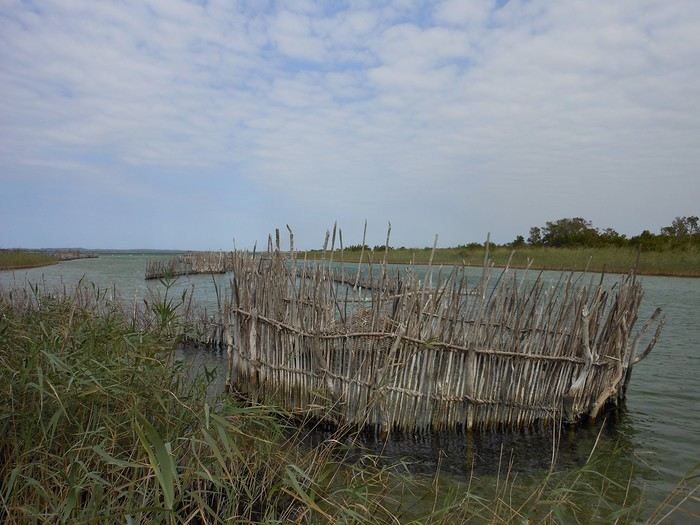
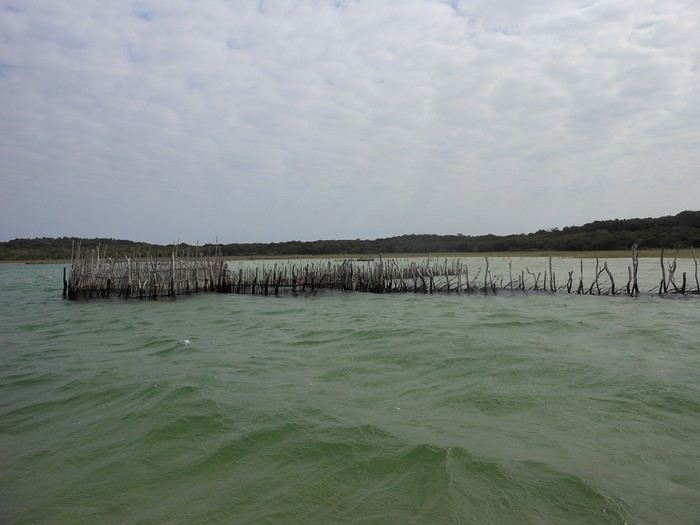
Traditionally done with raffia boats
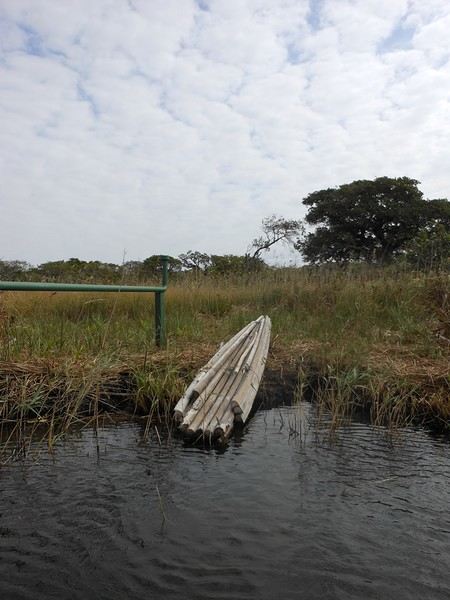
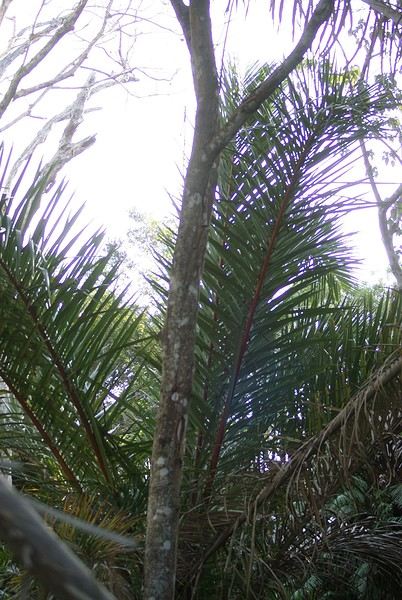
Made from forest raffia
Where we spotted a particularly rare and endemic bird (whose name I can’t remember... and I can’t be bothered to dig through my notes)
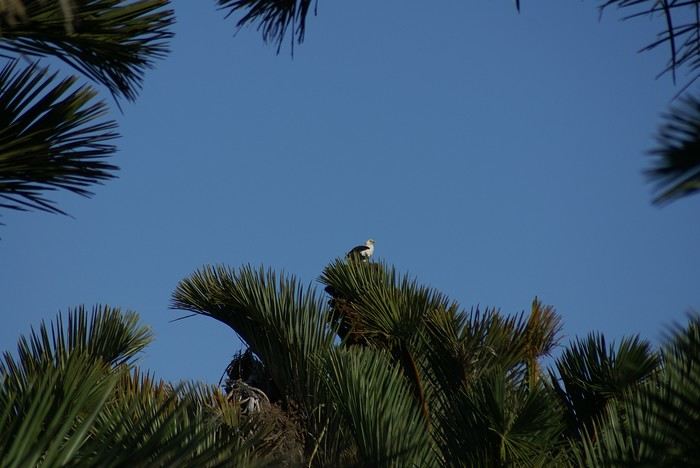 Here, those are eagles
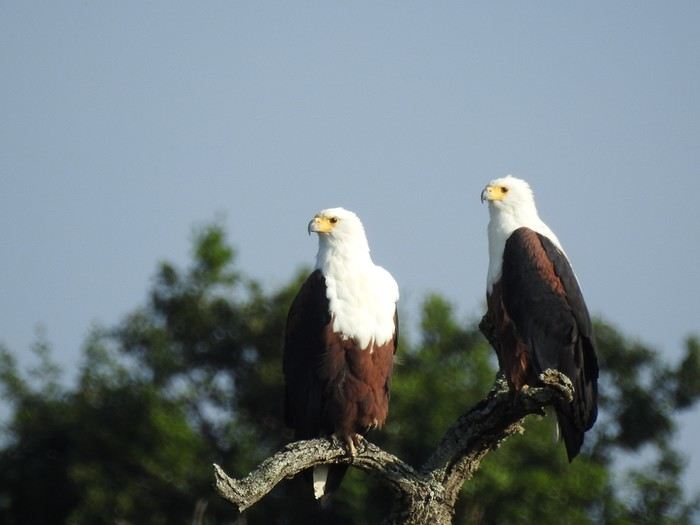
And they’re pretty brave because... they’re not far away...
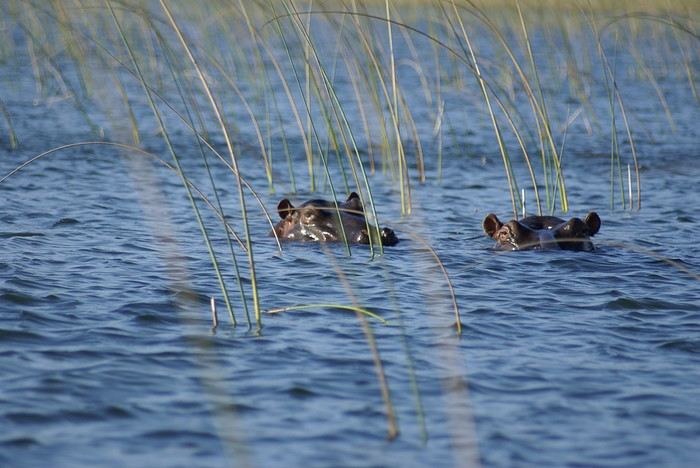
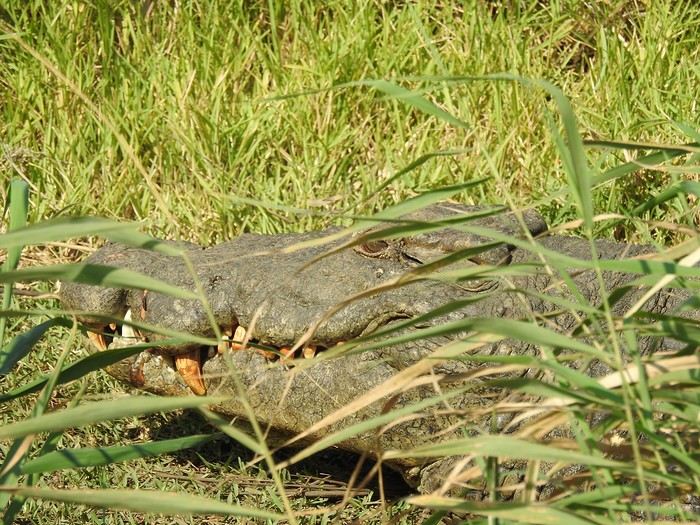
Yet we still swim there... with supervision...
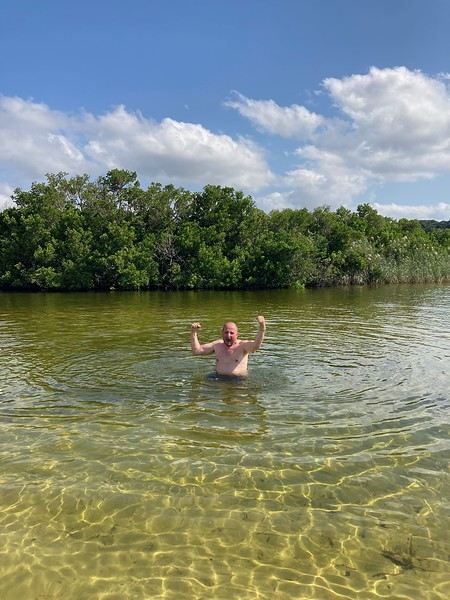
So, between St. Lucia and Mozambique, you’ll find marshes, lagoons, lakes, and coastline, with our Tonga friends, Zulu friends, and—just a bit further up—the Tembe... and their king. (I’m showing off a bit because I got to see a king up close, ate in the same room as him, and even talked to him!)
Originally, the Boers tried to farm there... including sugarcane...
But... between the hippos, snakes, crocs, and malaria-carrying mosquitoes... They lost count of the deaths and disappearances.
The story goes that when Madiba (Mandela) came to power, he passed through the area and convinced them to turn it into a natural space that would attract tourists—and that’s when the big change happened.
And it’s pretty incredible to see how this place has evolved, going from extreme poverty to a certain level of gentrification... How this once "chaotic" area saw shops, roads, and housing spring up (I’m mainly talking about Mtubatuba, the nearby Black town). In fact, in St. Lucia now, the homes that aren’t tourist accommodations can be counted on one hand.
St. Lucia has become a "seaside resort"... very busy during school holidays and certain weekends, increasingly cosmopolitan (20 years ago, speaking French was exotic—now it’s completely ordinary).
As mentioned in the title, this is a travel journal focused on St. Lucia and iSimangaliso ("this place is miraculous" in Zulu) over various trips spanning about twenty years.
The Elephant Coast stretches from Hluhluwe Umfolozi, through St. Lucia and iSimangaliso, all the way to the Mozambique border near Kosi Bay and Tembe. This region was conquered by the Zulus (for context, in the 19th century, the Zulus were just one Bantu group among many—it was a local Napoleon, Shaka, who was both cruel and inventive, conquering and subjugating all other groups to form the Zulu nation). The Tonga were the big losers in this area, and a certain "animosity" is still very noticeable... With our two guides (one Zulu and the other Tonga), we ran into some Tonga folks—definitely not a warm atmosphere. The Tonga were pushed back into the marshes. Fish traps are their main source of wealth. (iSimangaliso is a lagoon and marshland area with several interconnected lakes—it used to be called Vetland Park, and for good reason.) So, lakes, fishing with fish traps...
Traditionally done with raffia boats
Made from forest raffia
Where we spotted a particularly rare and endemic bird (whose name I can’t remember... and I can’t be bothered to dig through my notes)
Here, those are eagles
And they’re pretty brave because... they’re not far away...
Yet we still swim there... with supervision...
So, between St. Lucia and Mozambique, you’ll find marshes, lagoons, lakes, and coastline, with our Tonga friends, Zulu friends, and—just a bit further up—the Tembe... and their king. (I’m showing off a bit because I got to see a king up close, ate in the same room as him, and even talked to him!)
Originally, the Boers tried to farm there... including sugarcane...
But... between the hippos, snakes, crocs, and malaria-carrying mosquitoes... They lost count of the deaths and disappearances.
The story goes that when Madiba (Mandela) came to power, he passed through the area and convinced them to turn it into a natural space that would attract tourists—and that’s when the big change happened.
And it’s pretty incredible to see how this place has evolved, going from extreme poverty to a certain level of gentrification... How this once "chaotic" area saw shops, roads, and housing spring up (I’m mainly talking about Mtubatuba, the nearby Black town). In fact, in St. Lucia now, the homes that aren’t tourist accommodations can be counted on one hand.
St. Lucia has become a "seaside resort"... very busy during school holidays and certain weekends, increasingly cosmopolitan (20 years ago, speaking French was exotic—now it’s completely ordinary).
Transit visas for South Korea and China with a Japanese visa
Hi, I’m Algerian and I have a residence permit in France.
In two months, I’m traveling to Japan with a Japanese visa, and I have a 16-hour layover in Incheon, South Korea. Do I need a visa to leave the airport and visit the area, or not?
On the way back, I have a 20-hour layover in Beijing, and same question—do I need a visa to leave the airport or not?
Thanks for your help!
Thanks for your help!
What itinerary for three weeks in Madagascar this summer?
Hi there,
I’m planning a 22-day trip to Madagascar this July.
And I could really use some advice 😊
Here’s what I’m sure about: Spending a few days in Nosy Be so my daughter can complete her Open Water certification—so I’m thinking 4 or 5 days there. I think Diego Suarez, Montagne d’Ambre, and Ankarana would suit what we like to do and have the advantage of being close to Nosy Be.
Now, the parts I’m unsure about, especially because of travel times:
My daughters really want to see whales. Is it possible around Nosy Be, or is Sainte Marie *the* must-visit spot? And what’s the weather like at that time of year? If we choose Sainte Marie, maybe do the Pangalanes Canal? Or is the route from Diego to Sainte Marie via the Vanilla Road a must-do?
Another option could be exploring the east with the Tsiribihina River and the Avenue of the Baobabs in Morondava.
Thanks in advance for your tips!
And I could really use some advice 😊
Here’s what I’m sure about: Spending a few days in Nosy Be so my daughter can complete her Open Water certification—so I’m thinking 4 or 5 days there. I think Diego Suarez, Montagne d’Ambre, and Ankarana would suit what we like to do and have the advantage of being close to Nosy Be.
Now, the parts I’m unsure about, especially because of travel times:
My daughters really want to see whales. Is it possible around Nosy Be, or is Sainte Marie *the* must-visit spot? And what’s the weather like at that time of year? If we choose Sainte Marie, maybe do the Pangalanes Canal? Or is the route from Diego to Sainte Marie via the Vanilla Road a must-do?
Another option could be exploring the east with the Tsiribihina River and the Avenue of the Baobabs in Morondava.
Thanks in advance for your tips!
Missing middle name on e-ticket
Hi there,
I bought a flight ticket with Air India departing from Paris and arriving in Bangkok with a layover in Delhi. I didn’t include my third given name when booking, but it’s on my passport. Could this cause a problem at boarding?
Also, with an 8-hour layover in Delhi—no need to recheck bags or leave the international zone—do I need an Indian transit visa?
Thanks for your help!
Also, with an 8-hour layover in Delhi—no need to recheck bags or leave the international zone—do I need an Indian transit visa?
Thanks for your help!
Help with itinerary: Rio de Janeiro - Ilha Grande - Paraty - Iguazu Falls
Hi everyone,
Next April, I’m planning a trip (the 1st) to Brazil. I’ll have 12 days there (not counting the 13th day for the return). I’ll arrive on 22/04 in the early evening in Rio de Janeiro. The return flight is from São Paulo on 04/05 in the afternoon. I know 12 days is very little for such a big country, which is why I’ll focus on a relatively small area: the southeast (though "small" is relative!). I’ve started mapping out the main stops for my trip, which would be: - Rio de Janeiro: 4 to 5 days? - Ilha Grande and maybe Paraty: 2 to 3 days - Iguazu Falls: Brazilian and Argentinian sides: 2 days - São Paulo: 1 to 2 days
What do you think? Is this reasonable? There are about 250/260 km between Rio and Paraty. I’d like to make the trip by rental car. What do you think? A car is definitely much more practical and faster than the bus. 12/13 days is short—I can’t afford to lose too much time in transit. To get to Ilha Grande, I understand there’s a ferry that shuttles between the mainland and the island. From which city can you take the ferry? Mangaratiba? Conceição de Jacareí? Angra dos Reis? If I arrive by rental car, where can I park it? I think cars are banned on the island, right? That’s where I’m at with my planning. So many questions! 😕 A big thank you to anyone who takes the time to read my post and shares their valuable tips! 🙂
Next April, I’m planning a trip (the 1st) to Brazil. I’ll have 12 days there (not counting the 13th day for the return). I’ll arrive on 22/04 in the early evening in Rio de Janeiro. The return flight is from São Paulo on 04/05 in the afternoon. I know 12 days is very little for such a big country, which is why I’ll focus on a relatively small area: the southeast (though "small" is relative!). I’ve started mapping out the main stops for my trip, which would be: - Rio de Janeiro: 4 to 5 days? - Ilha Grande and maybe Paraty: 2 to 3 days - Iguazu Falls: Brazilian and Argentinian sides: 2 days - São Paulo: 1 to 2 days
What do you think? Is this reasonable? There are about 250/260 km between Rio and Paraty. I’d like to make the trip by rental car. What do you think? A car is definitely much more practical and faster than the bus. 12/13 days is short—I can’t afford to lose too much time in transit. To get to Ilha Grande, I understand there’s a ferry that shuttles between the mainland and the island. From which city can you take the ferry? Mangaratiba? Conceição de Jacareí? Angra dos Reis? If I arrive by rental car, where can I park it? I think cars are banned on the island, right? That’s where I’m at with my planning. So many questions! 😕 A big thank you to anyone who takes the time to read my post and shares their valuable tips! 🙂
Traveling by bus in Argentina and Chile
Hi there,
We’re heading to Argentina and Chile next February and really want to do the Carretera Austral starting from Coyhaique.
We’d love some info and feedback on bus routes to get to Coyhaique: Buenos Aires to Comodoro (which we’ve found pretty easily so far), or Buenos Aires to Bariloche (same, there are buses).
The tricky part is getting to Coyhaique in Chile, the starting point for the Carretera Austral. We can’t find any routes! Has anyone done this trip before and could share some tips?
Thanks in advance
We’d love some info and feedback on bus routes to get to Coyhaique: Buenos Aires to Comodoro (which we’ve found pretty easily so far), or Buenos Aires to Bariloche (same, there are buses).
The tricky part is getting to Coyhaique in Chile, the starting point for the Carretera Austral. We can’t find any routes! Has anyone done this trip before and could share some tips?
Thanks in advance
Family boat trip from Manaus (Brazil) to Yurimaguas (Peru)
Hello,
As part of a 10-month trip to explore and discover South America, we’d like to start our journey in northern Brazil since the timing is perfect for traveling up the Amazon. We’re traveling as a family of five with three kids aged 6, 9, and 18.
Our plan is to leave from Manaus and reach Yurimaguas in Peru via the Amazon, mostly by boat. Since we have plenty of time, we can take breaks to explore the different stops along the way that are worth it. The idea is to eventually head to Colombia via Ecuador later on.
So far, we’ve identified the following stops: - Manaus - Tabatinga - Iquitos - Sumiria Reserve (we’d like to stay there for a week) - Yurimaguas.
We’re thinking of traveling in a cabin/hammock for the longest leg (Manaus to Tabatinga) and just in hammocks for the shorter trips (max 3 days).
I have a few questions: 1. From a safety perspective, is the area we’re planning to cross safe, considering we’ll be with our three kids, the youngest being 6? 2. Isn’t this route a bit too ambitious for our kids? 3. We’re considering adding the Santarém/Manaus leg. Is Santarém a city worth adding to the itinerary? 4. Among the planned stops, which ones deserve a special visit? 5. Do the boat trips always include meals on board, or should we be careful when booking? 6. What would be a reasonable estimate for the duration of this trip to fully enjoy it?
I’ve read quite a bit—like trying to board early to get the best hammock spots, and that travel times can vary depending on currents, stops, and potential technical issues. But that’s not a problem since we have all the time in the world! :)
We’d love to hear from anyone who’s traveled in this area before!
Thanks so much in advance for your help in planning our trip.
Rémy, Céline, Antoine, Sacha, and Paul
As part of a 10-month trip to explore and discover South America, we’d like to start our journey in northern Brazil since the timing is perfect for traveling up the Amazon. We’re traveling as a family of five with three kids aged 6, 9, and 18.
Our plan is to leave from Manaus and reach Yurimaguas in Peru via the Amazon, mostly by boat. Since we have plenty of time, we can take breaks to explore the different stops along the way that are worth it. The idea is to eventually head to Colombia via Ecuador later on.
So far, we’ve identified the following stops: - Manaus - Tabatinga - Iquitos - Sumiria Reserve (we’d like to stay there for a week) - Yurimaguas.
We’re thinking of traveling in a cabin/hammock for the longest leg (Manaus to Tabatinga) and just in hammocks for the shorter trips (max 3 days).
I have a few questions: 1. From a safety perspective, is the area we’re planning to cross safe, considering we’ll be with our three kids, the youngest being 6? 2. Isn’t this route a bit too ambitious for our kids? 3. We’re considering adding the Santarém/Manaus leg. Is Santarém a city worth adding to the itinerary? 4. Among the planned stops, which ones deserve a special visit? 5. Do the boat trips always include meals on board, or should we be careful when booking? 6. What would be a reasonable estimate for the duration of this trip to fully enjoy it?
I’ve read quite a bit—like trying to board early to get the best hammock spots, and that travel times can vary depending on currents, stops, and potential technical issues. But that’s not a problem since we have all the time in the world! :)
We’d love to hear from anyone who’s traveled in this area before!
Thanks so much in advance for your help in planning our trip.
Rémy, Céline, Antoine, Sacha, and Paul
Countries flown over on Paris - Hanoi flight
Which countries are flown over between Paris and Hanoi?
Ch2
Problem with Sixt in Chile
Hi,
I booked a car with Sixt from Temuco to Puerto Montt from 01/27/25 to 02/17/25.
On Saturday, I got an email canceling the reservation.
But the reservation is still showing up on the website (as of this morning at 9:30 AM).
Can’t reach Sixt Chile.
Sixt France is also in the dark (they can’t contact Chile either).
Has anyone heard anything about this?
Southwest Part 2: 55 Days in Colorado, New Mexico, Arizona, Nevada, and Utah
This travel journal is the second part of the trip whose first part you can find here: 1st part...
Sunday, August 7: the day we discover a magical place... Edmaier's Secret...
We got up at 8:00 AM, had breakfast on the terrace of our tiny house, and then set off again toward yesterday’s trail. This time, we stopped after 4.5 miles on House Rock Valley Road at the Buckskin Gulch Trail parking lot. We weren’t interested in that trail today—the slot canyon is muddy anyway after the recent storms...
Instead, we explored a lesser-known area that became our playground. And what a playground it was, folks—an out-of-this-world spot, THE highlight of our trip!!! 😏
Just imagine being in the middle of these landscapes, and the cherry on top... no one else around!!!!! Well, we did meet a couple who were coming back—it was 9:30 AM 😮. Did they camp there? Did they turn back? 🙁
After paying the entry permit online, we set off with plenty of water (6L for the four of us) plus a gallon we hid along the way for the return trip. 😉 After a one-hour approach hike along a wash, we reached the sea of sand.
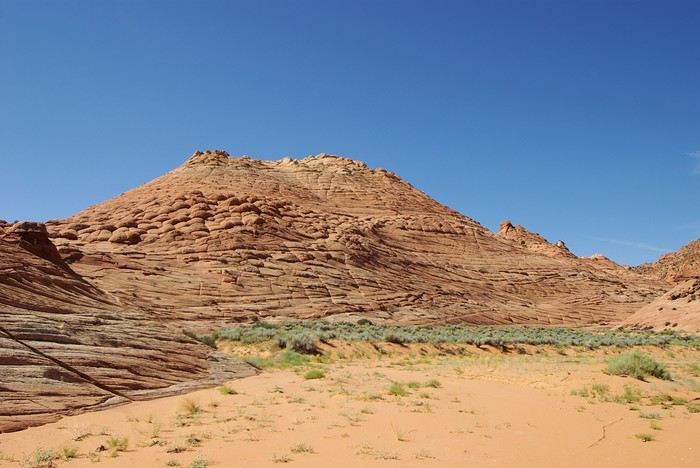
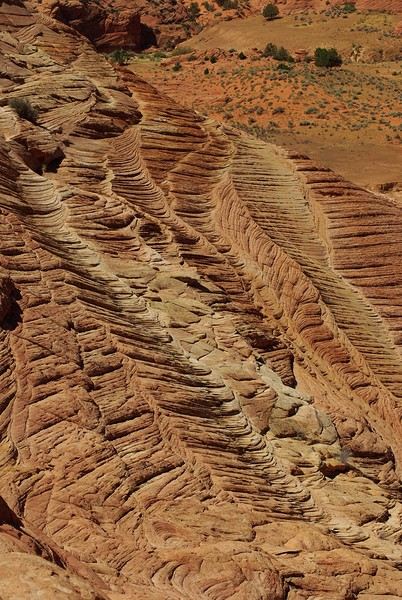
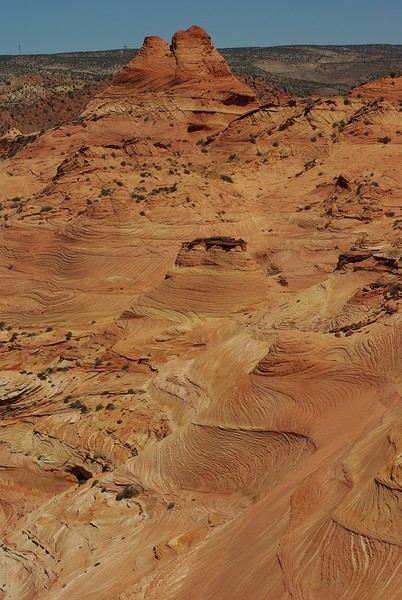
We had to cross it to reach our goal: a strip about 2 km long and 1 km wide that you can explore freely since there’s no marked trail... We entered a few GPS points into our Garmin Etrex, and off we went!!! 😎 It was... magical, enchanting, a true love-at-first-sight moment!
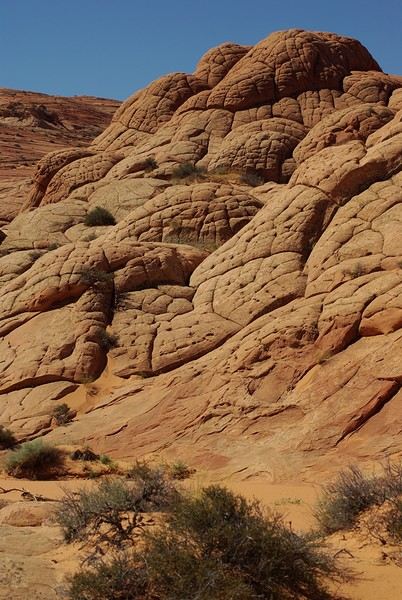
Brain Rock, waves, fine and brittle rock, colors—it goes up, it goes down.
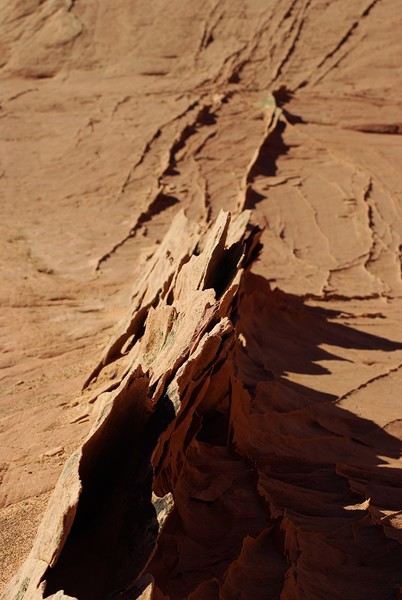
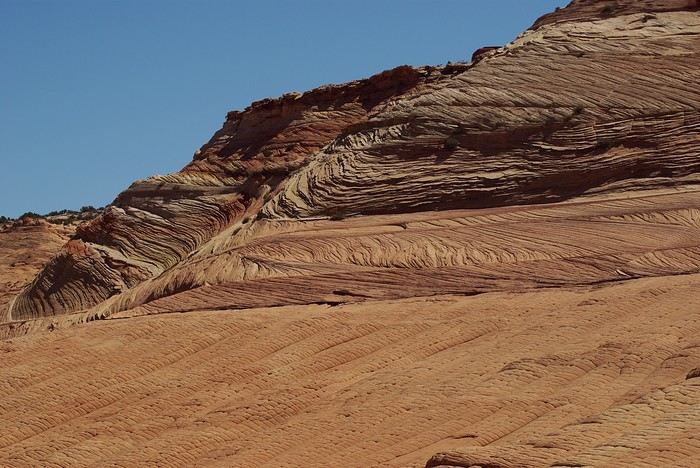
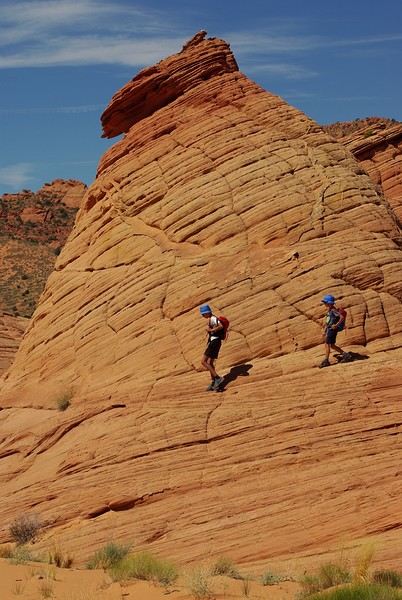
Just thinking about it gives me chills... I remember sitting still for two minutes, taking in these wonders with such emotion that I teared up...
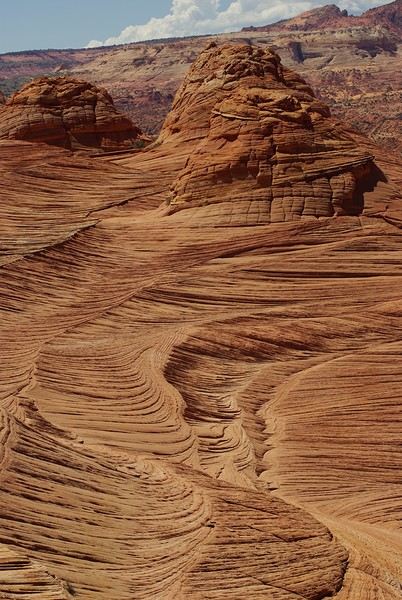
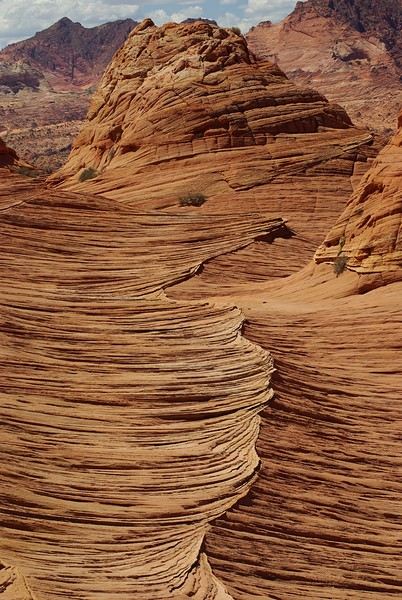
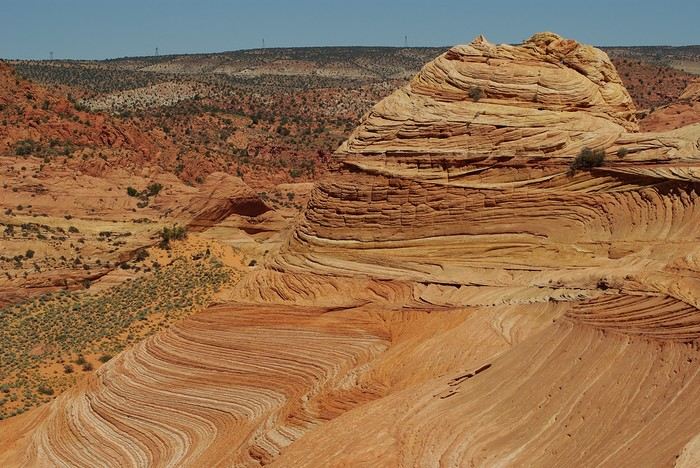
Sunday, August 7: the day we discover a magical place... Edmaier's Secret...
We got up at 8:00 AM, had breakfast on the terrace of our tiny house, and then set off again toward yesterday’s trail. This time, we stopped after 4.5 miles on House Rock Valley Road at the Buckskin Gulch Trail parking lot. We weren’t interested in that trail today—the slot canyon is muddy anyway after the recent storms...
Instead, we explored a lesser-known area that became our playground. And what a playground it was, folks—an out-of-this-world spot, THE highlight of our trip!!! 😏
Just imagine being in the middle of these landscapes, and the cherry on top... no one else around!!!!! Well, we did meet a couple who were coming back—it was 9:30 AM 😮. Did they camp there? Did they turn back? 🙁
After paying the entry permit online, we set off with plenty of water (6L for the four of us) plus a gallon we hid along the way for the return trip. 😉 After a one-hour approach hike along a wash, we reached the sea of sand.
We had to cross it to reach our goal: a strip about 2 km long and 1 km wide that you can explore freely since there’s no marked trail... We entered a few GPS points into our Garmin Etrex, and off we went!!! 😎 It was... magical, enchanting, a true love-at-first-sight moment!
Brain Rock, waves, fine and brittle rock, colors—it goes up, it goes down.
Just thinking about it gives me chills... I remember sitting still for two minutes, taking in these wonders with such emotion that I teared up...
Papua or Papua New Guinea for backpacking?
Hi everyone,
so glad the forum’s back up!
I’m planning a trip for next June but I’m still torn between Papua and Papua New Guinea.
Solo backpacking trip, about 3 weeks (trekking, culture, and a tiny bit of beach time).
It’s still tough to find recent info—anyone know if backpacking is doable there?
Thanks in advance for your tips!
carpediem
What to do in half a day in Singapore?
I’ll be in Singapore for half a day and one evening in March. What do you recommend I see? I was thinking of Garden by the Bay, Cloud Forest, Flower Dome, the OCBC Skyway, and an evening show: Garden Rhapsody and Spectra. End the evening at "Ce La Vi". Does this itinerary seem doable? Any advice is welcome. Thanks
Discovering Sicily
Hi there,
I’ve been wanting to explore Sicily for a long time.
From an all-inclusive hotel so I don’t have to change accommodation every night, and getting around by rental car. About ten days.
Which spot would be best to stay so I can explore without excessive driving?
What are the must-see sites, knowing that Mount Etna is already my top pick?
What are the key things to know about renting and driving a car (laws, speed limits, requirements in certain cities, parking, etc.)?
Gas Stations in Chile
Hi there,
I’m sharing a link to the online site for all gas stations in Chile.
It can be really useful because it shows not only their locations but also the current prices per liter. The site is run by Chile’s National Energy Commission.
https://www.bencinaenlinea.cl/
This info is especially important for those traveling through remote and isolated areas like the high plateaus of the far north, the Austral Highway, Patagonia, and Tierra del Fuego.
Have a great trip and stay safe out there!
Thierry
I’m sharing a link to the online site for all gas stations in Chile.
It can be really useful because it shows not only their locations but also the current prices per liter. The site is run by Chile’s National Energy Commission.
https://www.bencinaenlinea.cl/
This info is especially important for those traveling through remote and isolated areas like the high plateaus of the far north, the Austral Highway, Patagonia, and Tierra del Fuego.
Have a great trip and stay safe out there!
Thierry
Holiday in Brittany with 3 kids (5 months, 4 and 7 years old)
I’m starting to plan our summer 2025 holiday.
Yes, I know, I’m getting a head start 😄, but since I’m pregnant, I’d rather have as much ready as possible before baby arrives at the end of March 👶.
We’re a family of 5, and this year, we’d like to visit Brittany (not too hot—perfect for us! 🌡️). We already know the southern area a bit, as well as the Saint-Malo region, but this time, we’d like to explore the north of Finistère. We’re looking for an area that’s still quite wild, away from the crowds.
We’d also like to find some fun activities to keep our two older kids (4 and 7) busy 👧🧒.
We’re good walkers, and we’ll have a baby carrier for the youngest.
Which area would you recommend? Any ideas for places to visit, beaches, or family-friendly activities?
Thanks in advance for your recommendations! 🙏
Elise
Weather in Extremadura in early January (Spain)
hi,
I'm having trouble getting an idea of what the weather's like in this region in winter. I'm thinking of going there the first week of January after spending New Year's Day in Madrid. Is that a good idea? Is it pleasant to walk around the small towns at this time of year? And by car?
thanks a lot
Weather in the American West in August
Hi there,
I'm still on the fence about heading to the American West next summer... I know it'll be crowded, but what's really making me hesitate is the heat. Is it bearable for hiking?
Thanks for your feedback!
I'm still on the fence about heading to the American West next summer... I know it'll be crowded, but what's really making me hesitate is the heat. Is it bearable for hiking?
Thanks for your feedback!
Eco-lodges: the new hipster trend
Hi there, I’m currently on Isla Fuerte in the Colombian Caribbean. I ended up here kind of by chance, and I stumbled upon one of the very few hotels that accepts credit cards and has branded itself as an "eco-lodge."
At first, I thought the idea of "environmentally friendly" hotels wasn’t too bad... but now it’s become a full-blown trend, and the clientele at these places almost always fits the same profile: thirty-something, eco-conscious, vegan or vegetarian, working remotely or at least glued to their laptop, morning yoga classes, mate at aperitif, and meditation at the end of the day.
Personally, after visiting a few, I’ve found that everything about them feels fake. I’ve even seen "meditation sessions" with music playing, even though the hotel was in the middle of a forest with all the natural sounds around. There’s also a lot to say about their so-called eco-friendly products in the bathrooms.
The rooms, terraces, etc.—where people used to sit, read, or chat—are now called "social spaces" or co-working zones...
I’m not holding back with these hotels, but my take is that eco-hipsterism is really taking off in the hospitality industry.
What do you fellow travelers think?
At first, I thought the idea of "environmentally friendly" hotels wasn’t too bad... but now it’s become a full-blown trend, and the clientele at these places almost always fits the same profile: thirty-something, eco-conscious, vegan or vegetarian, working remotely or at least glued to their laptop, morning yoga classes, mate at aperitif, and meditation at the end of the day.
Personally, after visiting a few, I’ve found that everything about them feels fake. I’ve even seen "meditation sessions" with music playing, even though the hotel was in the middle of a forest with all the natural sounds around. There’s also a lot to say about their so-called eco-friendly products in the bathrooms.
The rooms, terraces, etc.—where people used to sit, read, or chat—are now called "social spaces" or co-working zones...
I’m not holding back with these hotels, but my take is that eco-hipsterism is really taking off in the hospitality industry.
What do you fellow travelers think?