Results for "Capitole+|+127"
25326 results found.
Driving in Albania
Hi everyone,
We’re planning a trip to Albania. We’ve heard that driving there can be challenging. What do you think? I’m also looking for interesting spots to take black-and-white photos—think local people and typical landscapes in the region. Any places you’d recommend? Thanks a bunch!
We’re planning a trip to Albania. We’ve heard that driving there can be challenging. What do you think? I’m also looking for interesting spots to take black-and-white photos—think local people and typical landscapes in the region. Any places you’d recommend? Thanks a bunch!
Sri Lanka itinerary with kids
Hi,
We’re planning a trip to Sri Lanka with our kids in July (ages 5 and 9). Could I get your thoughts on this itinerary?
D0. Arrival in Sri Lanka at 10 PM, hotel nearby (we’re coming from a stopover in Dubai) D1. Depart for Galle, visit Galle in the afternoon. Overnight in Galle D2. Depart for Tangalle, beach time, then drive to Udawalawa. Overnight in Udawalawa D3. Udawalawa NP, then drive to Ella. Overnight in Ella D4. Ella. Overnight in Ella D5. Drive to Kandy. Visit Kandy. Overnight in Kandy D6. Explore Kandy, then drive to Polonnaruwa. Overnight in Polonnaruwa D7. Polonnaruwa. Overnight in Polonnaruwa D8. Minneriya NP, then Sigiriya. Overnight in Polonnaruwa D9. Drive to Trincomalee. Beach time. Overnight in Trincomalee D10. Whale-watching excursion, Pigeon Island. Overnight in Trincomalee D11. Drive to Anuradhapura. Sightseeing. Overnight in Anuradhapura D12. Wilpattu NP D13. Return to the airport. Flight at 5 PM
I’ll admit the last few days feel a bit rushed. We’d be traveling by car with a driver.
Thanks so much for your help! Bruno
D0. Arrival in Sri Lanka at 10 PM, hotel nearby (we’re coming from a stopover in Dubai) D1. Depart for Galle, visit Galle in the afternoon. Overnight in Galle D2. Depart for Tangalle, beach time, then drive to Udawalawa. Overnight in Udawalawa D3. Udawalawa NP, then drive to Ella. Overnight in Ella D4. Ella. Overnight in Ella D5. Drive to Kandy. Visit Kandy. Overnight in Kandy D6. Explore Kandy, then drive to Polonnaruwa. Overnight in Polonnaruwa D7. Polonnaruwa. Overnight in Polonnaruwa D8. Minneriya NP, then Sigiriya. Overnight in Polonnaruwa D9. Drive to Trincomalee. Beach time. Overnight in Trincomalee D10. Whale-watching excursion, Pigeon Island. Overnight in Trincomalee D11. Drive to Anuradhapura. Sightseeing. Overnight in Anuradhapura D12. Wilpattu NP D13. Return to the airport. Flight at 5 PM
I’ll admit the last few days feel a bit rushed. We’d be traveling by car with a driver.
Thanks so much for your help! Bruno
Connecting the Baltic capitals and tips
Hi there,
I’m looking for some info on these capitals I’m visiting in September and the best way to travel between them, spending 3 days in each city: restaurants, weather, and maybe a French-speaking guide if possible.
Thanks.
Discover the 10 Must-See Spots in Sardinia
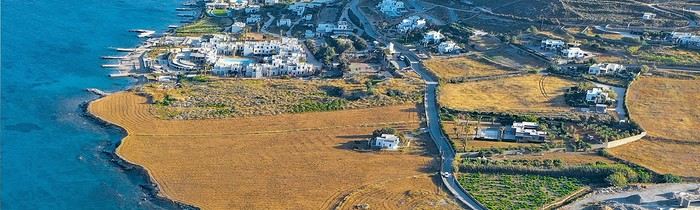
If you're dreaming of idyllic beaches and picturesque villages, you're in the right place! Known for its crystal-clear waters, millennia-old traditions, and preserved nature, Sardinia captivates travelers seeking a change of scenery. Here, you can enjoy a spectacular coastline, but also discover the authentic heart of the island, with its wild mountains and history-laden towns. Visiting Sardinia means taking the time to let yourself be lulled by the song of cicadas and the scent of the maquis. Escape to Sardinia with an all-inclusive stay at a 5-star hotel, allowing you to get away from it all.
To help you plan your itinerary, here’s an overview of ten must-see spots and a few off-the-beaten-path escapes.
Cagliari, the vibrant capital
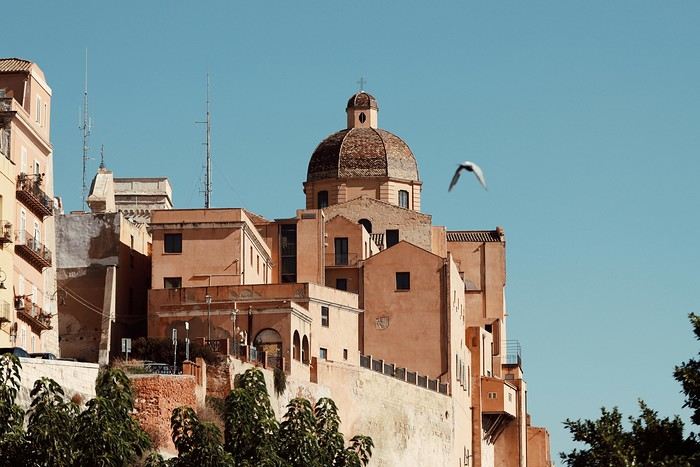
Often the first point of contact with the island, Cagliari charms with its historic center, dominated by the medieval Castello district. Stroll through the narrow streets to reach the Santa Maria Cathedral, then climb up to the Saint-Remy Bastion, where the view of the city and the sea is well worth the effort. Be sure to visit the San Benedetto market, where stalls of cheeses, cured meats, and fish reflect Sardinia’s culinary diversity.
Villasimius, fine sand and turquoise waters
Less than an hour’s drive from Cagliari, the Villasimius area is famous for its dreamy beaches, including Porto Giunco and Simius Beach. The white sand contrasts beautifully with the crystal-clear blue of the sea—a postcard-perfect setting. Diving enthusiasts will be delighted, while hikers can explore Capo Carbonara, a protected area home to pink flamingos.
Costa Smeralda, the glamorous side of the island
Renowned for its prestigious seaside resorts, the Costa Smeralda attracts yachts and lively evenings. Porto Cervo, its iconic port, draws travelers from around the world. Don’t worry—if you venture a little off the beaten path, you’ll find small, wild coves and trails lined with umbrella pines. A stop at a local wine bar to taste a glass of vermentino is highly recommended, if only to admire the view.
The La Maddalena Archipelago, a marine gem
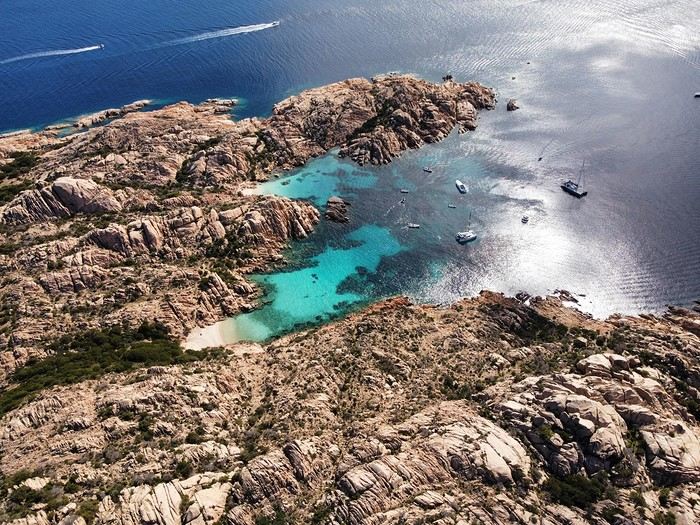
In the northeast, this national marine park comprises several islands with stunning beaches. La Maddalena, the main island, charms with its colorful houses and lively port. Offshore, wonders like Spargi Island or the famous Pink Beach of Budelli await visitors. It’s best to dedicate a full day—or more—to exploring this paradise by boat.
Alghero, the Catalan city
On the northwest coast, Alghero reveals a historic center encircled by ramparts, where the Catalan influence is still strong. Walk along the fortifications to watch the sunset, then sample the local cuisine, focused on seafood and wine. A short drive away, Neptune’s Grotto is a spectacular site: you can reach it via a staircase of 654 steps carved into the cliff or by boat for a more romantic approach.
Bosa, a painting under the open sky
Heading south along the coast from Alghero, you’ll reach Bosa, one of Sardinia’s most charming villages. Its colorful houses line the Temo River, overlooked by the Serravalle Castle. Wander the streets, admiring the vibrant facades, then settle into a small restaurant to taste the famous bottarga. The atmosphere is peaceful—this is la dolce vita.
The Piscinas Dunes, a desert by the sea
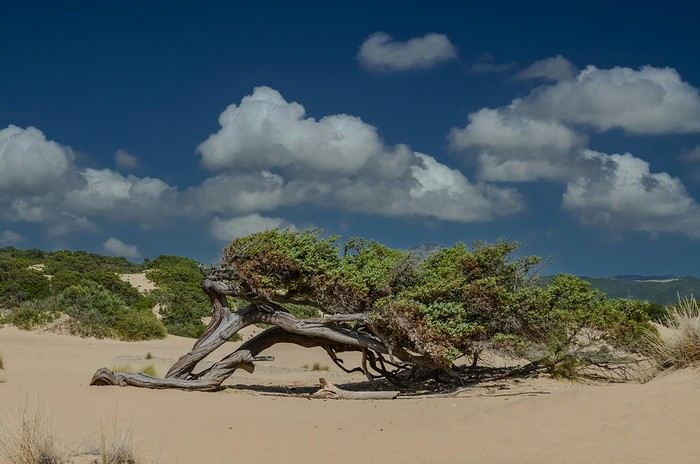
Head southwest to discover Piscinas, a natural site where sand dunes evoke a desert. Between sparse vegetation and turquoise sea, the contrast is simply stunning. The beaches, rarely crowded, offer a soothing tranquility. A perfect spot for lovers of wild landscapes, far from the hustle and bustle of seaside resorts.
Su Nuraxi di Barumini, a prehistoric relic
You can’t truly understand Sardinian history without mentioning the nuraghes, mysterious stone towers left by the Nuragic civilization. In Barumini, you can explore Su Nuraxi, the most famous, a UNESCO World Heritage site. Its millennia-old architecture and vast complex make it a must-visit for anyone wanting to delve into the island’s past.
Orgosolo and the mountainous interior
To experience the deep soul of Sardinia, head to the Supramonte massif. Orgosolo, once a bandit hideout, is known for its mural paintings adorning house facades. These artworks tell the local history, social struggles, and Sardinian pride. The surrounding nature is breathtaking: forests, canyons, and panoramic views invite you to hike.
The Gulf of Orosei, dreamy coves
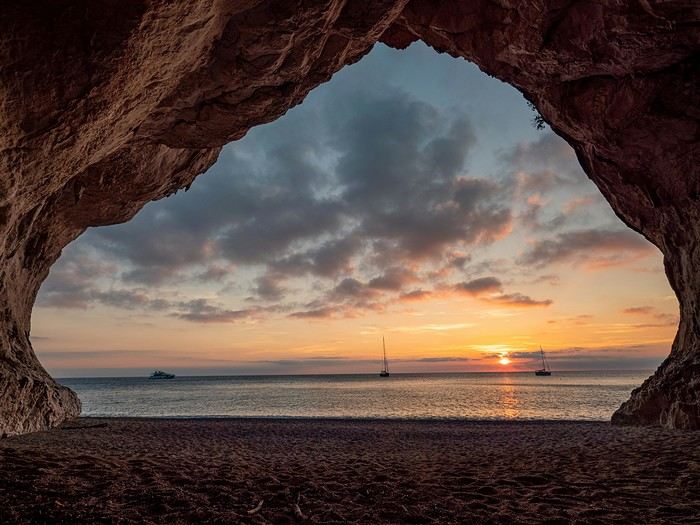
Finally, it’s hard to miss the beaches of the Gulf of Orosei. Cala Luna, Cala Mariolu, and Cala Goloritzé are among the most beautiful in the Mediterranean. Accessible by boat or on foot, each reveals transparent waters perfect for diving. Time seems to stand still in these wild landscapes, immersing you in the charm of a preserved Sardinia. From its sandy beaches to its rugged mountains, the island offers a stunning array of scenery. Far beyond the Costa Smeralda, Sardinia is full of hidden corners where nature reigns supreme and traditions are still very much alive. Once there, let yourself be swept up by the Sardinian dolce vita, savor its generous cuisine, and soak in its legends.
Happy travels!
Finding Faroese kronur and a SIM card in the Faroe Islands
Hi there,
I’m coming with my little batch of questions, thinking it’s more sociable to ask here than my favorite AI.
1) In the Faroe Islands, you pay in Danish kroner—that’s clear—and mostly by card. But there are also Faroese kronur, and I’d love to bring some back. Are they available at ATMs? There don’t seem to be any real exchange bureaus in the capital.
2) The Faroe Islands aren’t part of the EU roaming agreement. Local SIM cards are supposedly available everywhere, but does anyone have an idea of prices or an operator to recommend?
Michel
I’m coming with my little batch of questions, thinking it’s more sociable to ask here than my favorite AI.
1) In the Faroe Islands, you pay in Danish kroner—that’s clear—and mostly by card. But there are also Faroese kronur, and I’d love to bring some back. Are they available at ATMs? There don’t seem to be any real exchange bureaus in the capital.
2) The Faroe Islands aren’t part of the EU roaming agreement. Local SIM cards are supposedly available everywhere, but does anyone have an idea of prices or an operator to recommend?
Michel
Family road trip in the Balkans for 16/17 nights
Hi there,
I’m planning a family road trip (with young kids) next August in Montenegro, Bosnia, and Dubrovnik. Not sure if it’s doable to combine all three in 16/17 nights.
Here’s my first draft itinerary:
Day 1: Arrival in Dubrovnik. Head to Mostar (Blagaj village, Kravica waterfalls, Počitelj) in Bosnia. 3 nights. 2h35 drive Day 4: Head to Sarajevo (city), stopping by Jablanica Lake for 2 nights. 2h00 drive. Unsure if we should go all the way to the capital. Day 6: Head to Durmitor National Park (Zabljak) for 3 nights (hike, Durmitor Ring, Tara Canyon, Black Lake). 4h00 drive (anything worth seeing along the way?) Day 9: Head to the Bay of Kotor (between Kotor and Budva) for 4 nights. 3h00 drive. Day 13: Morning departure for Mljet Island (Croatia) for 3 nights. 5h00 drive (via Trebinje in Bosnia). Day 16: Head back to Dubrovnik (city + Lokrum Island) for 1/2 nights. Day 17/18: Return flight
What do you think?
Day 1: Arrival in Dubrovnik. Head to Mostar (Blagaj village, Kravica waterfalls, Počitelj) in Bosnia. 3 nights. 2h35 drive Day 4: Head to Sarajevo (city), stopping by Jablanica Lake for 2 nights. 2h00 drive. Unsure if we should go all the way to the capital. Day 6: Head to Durmitor National Park (Zabljak) for 3 nights (hike, Durmitor Ring, Tara Canyon, Black Lake). 4h00 drive (anything worth seeing along the way?) Day 9: Head to the Bay of Kotor (between Kotor and Budva) for 4 nights. 3h00 drive. Day 13: Morning departure for Mljet Island (Croatia) for 3 nights. 5h00 drive (via Trebinje in Bosnia). Day 16: Head back to Dubrovnik (city + Lokrum Island) for 1/2 nights. Day 17/18: Return flight
What do you think?
Princes' Islands or Bursa near Istanbul?
Hi there, I’ll be in Istanbul from May 8 to 17, 2025.
I’ve got one free day. I’m torn between the Princes' Islands or Bursa.... If you had to choose, where would you go???
Thanks so much for your suggestions and opinions.
Oman for backpackers: trip report
So happy to be back with you all that I’m rushing to share my trip report!
We chose to stay exactly 14 days to avoid paying for a visa. As a result, we didn’t have time to explore the south—we’ll be back because Oman is a great destination in January. Temperatures were a perfect 25–27°C during the day. No rain for us, but it can happen.
We bought the *Évasion Oman* guidebook. We started with the Jebels (the mountains), abandoned villages, then the desert, wadis along the coast, and finished in the capital. For us, it was easier to go from cold (2,000 meters, after all) to hot before returning to our freezing Normandy in January.
The people were incredibly welcoming and lovely. We camped in natural camping areas where you can make a fire (free, no facilities or water). Easy to find—just search "camping" on Google Maps (an essential app). We traveled as a group of five and rented a 4x4 seven-seater from Europcar before leaving (price included our insurance): 800 euros for 14 days. Essential for getting everywhere, as there are lots of dirt tracks. We brought our camping gear from France since the baggage allowance is 30 kg. Oh, and also two liters of rum and a box of white wine—also essential.
Food was tricky if you don’t like spicy dishes or just chicken. You have to eat at international restaurants, which cost about the same as back home. We’d packed vacuum-sealed meat for the first three days and a few cans. For beaches, stick to the ones marked on Google for swimming—otherwise, they can be dirty and full of oil.
We arrived at 6:30 AM, bought a SIM card (make sure to remove yours before arriving and tape it to the back of your phone), exchanged money (not great rates at the airport—better in malls or souks; no exchanges in banks), and picked up the car. Then we headed to a Carrefour supermarket, but it was closed. We drove to Jebel Al Akhdar, the Sayq Plateau, where we found markets along the way. There are also bazaar shops where you can get gas bottles—they’re everywhere in mid-sized towns. There are even hypermarkets.
We hiked the well-marked old Sayq trail (red and white markings). Our return was improvised. We camped on the plateau and got cold—bring 0°C sleeping bags! The next day, we visited the abandoned villages of Wadi Bani Habib: juniper forests, canyon viewpoints. Then Birkat Al Maws on the way down—a beautiful palm grove. Next, Nizwa Hotel. The beds were really hard there—ask to see the rooms and test the beds before booking. There’s always availability, with prices starting at 35 euros for two.
On the third day, we went to Jebel Shams. Hiked along the canyon starting from Ghul, then descended. Camped on the road to Balha Fortress, which we visited the next morning (stunning!). Then we explored Nizwa before heading to the Wahiba Desert. Camped along the way, then drove to our accommodation: two days in the desert. We found the Thousand Nights Camp 40% cheaper a month before. Note: you have to leave by 1 PM in a convoy to reach the hotel.
On the sixth day, we hiked in the desert on our own because the activity prices were outrageous.
On the seventh day, we headed to a wadi, Bani Khalid, then to Sur, a seaside hotel. We booked just one room for five of us—hotel apartments are huge, and since we had our camping mattresses, it wasn’t a problem to set up in the living room. There’s even a kitchen. In cities, camping spots are poorly located—near intersections, etc.
Beach time and sightseeing on the eighth day, then we drove to the white sand beach in Fins, where we stayed for two nights (we left the tents set up but empty). This was our favorite campsite—go all the way to the end of the road, there’s a small cove and a stunning spot.
On the ninth day, we visited Wadi Shab and the Salma Plateau to find the tombs. The hike up from Fins was way too long—probably better to take the route suggested in the guidebook for a round trip. Meh, no one really enjoyed it.
On the tenth day, we went to Wadi Al Arbiyyin and drove to Seeb Al Mouj to book a diving trip. Stayed at Al Ferdous Hotel Apartments until the end—well-located for visiting Muscat and a great value. Just make sure to check the room first, as some beds are very hard and others aren’t.
Eleventh day: diving and beach time.
Twelfth day: visited the Grand Mosque (unlucky—first day it became paid, and not just a little: 8 OMR). Then explored the old city.
Thirteenth day: the Grand Opera and beach at The Village, where we found a great pizzeria: pizzawifi.com.
Fourteenth day: And that’s it—back home, thrilled to have discovered this magical country. We’ll be back!
We bought the *Évasion Oman* guidebook. We started with the Jebels (the mountains), abandoned villages, then the desert, wadis along the coast, and finished in the capital. For us, it was easier to go from cold (2,000 meters, after all) to hot before returning to our freezing Normandy in January.
The people were incredibly welcoming and lovely. We camped in natural camping areas where you can make a fire (free, no facilities or water). Easy to find—just search "camping" on Google Maps (an essential app). We traveled as a group of five and rented a 4x4 seven-seater from Europcar before leaving (price included our insurance): 800 euros for 14 days. Essential for getting everywhere, as there are lots of dirt tracks. We brought our camping gear from France since the baggage allowance is 30 kg. Oh, and also two liters of rum and a box of white wine—also essential.
Food was tricky if you don’t like spicy dishes or just chicken. You have to eat at international restaurants, which cost about the same as back home. We’d packed vacuum-sealed meat for the first three days and a few cans. For beaches, stick to the ones marked on Google for swimming—otherwise, they can be dirty and full of oil.
We arrived at 6:30 AM, bought a SIM card (make sure to remove yours before arriving and tape it to the back of your phone), exchanged money (not great rates at the airport—better in malls or souks; no exchanges in banks), and picked up the car. Then we headed to a Carrefour supermarket, but it was closed. We drove to Jebel Al Akhdar, the Sayq Plateau, where we found markets along the way. There are also bazaar shops where you can get gas bottles—they’re everywhere in mid-sized towns. There are even hypermarkets.
We hiked the well-marked old Sayq trail (red and white markings). Our return was improvised. We camped on the plateau and got cold—bring 0°C sleeping bags! The next day, we visited the abandoned villages of Wadi Bani Habib: juniper forests, canyon viewpoints. Then Birkat Al Maws on the way down—a beautiful palm grove. Next, Nizwa Hotel. The beds were really hard there—ask to see the rooms and test the beds before booking. There’s always availability, with prices starting at 35 euros for two.
On the third day, we went to Jebel Shams. Hiked along the canyon starting from Ghul, then descended. Camped on the road to Balha Fortress, which we visited the next morning (stunning!). Then we explored Nizwa before heading to the Wahiba Desert. Camped along the way, then drove to our accommodation: two days in the desert. We found the Thousand Nights Camp 40% cheaper a month before. Note: you have to leave by 1 PM in a convoy to reach the hotel.
On the sixth day, we hiked in the desert on our own because the activity prices were outrageous.
On the seventh day, we headed to a wadi, Bani Khalid, then to Sur, a seaside hotel. We booked just one room for five of us—hotel apartments are huge, and since we had our camping mattresses, it wasn’t a problem to set up in the living room. There’s even a kitchen. In cities, camping spots are poorly located—near intersections, etc.
Beach time and sightseeing on the eighth day, then we drove to the white sand beach in Fins, where we stayed for two nights (we left the tents set up but empty). This was our favorite campsite—go all the way to the end of the road, there’s a small cove and a stunning spot.
On the ninth day, we visited Wadi Shab and the Salma Plateau to find the tombs. The hike up from Fins was way too long—probably better to take the route suggested in the guidebook for a round trip. Meh, no one really enjoyed it.
On the tenth day, we went to Wadi Al Arbiyyin and drove to Seeb Al Mouj to book a diving trip. Stayed at Al Ferdous Hotel Apartments until the end—well-located for visiting Muscat and a great value. Just make sure to check the room first, as some beds are very hard and others aren’t.
Eleventh day: diving and beach time.
Twelfth day: visited the Grand Mosque (unlucky—first day it became paid, and not just a little: 8 OMR). Then explored the old city.
Thirteenth day: the Grand Opera and beach at The Village, where we found a great pizzeria: pizzawifi.com.
Fourteenth day: And that’s it—back home, thrilled to have discovered this magical country. We’ll be back!
Biking and Beer in Belgium
"The Most Refreshing Way to Travel Around Belgium"
This is the title of the guide published by Pierre Pauquay at Éditions HELVETIQ Sàrl, Lausanne, Switzerland, 2023.
I set off for Belgium with my camper van and my electric-assist bike, eager to deepen both my theoretical and practical knowledge of this country’s emblematic beverage while exploring the land. This guide became my trusted companion throughout the journey, which took place from June 4 to July 4, 2024.
Out of the 40 routes presented, I chose 21, covering a broad swath of Belgium—both Wallonia (14 routes) and Flanders (6 routes), plus one route around the Brussels-Capital region with a visit to the famous Grimbergen brewery.
Every route included a stop at a brewery, whether lesser-known or famous, artisanal or industrial, family-run or Trappist.
In total, I logged 1,111.2 km of biking over 58 hours and 42 minutes of pedaling, averaging 3 hours of cycling per ride of 55.6 km. I visited 21 breweries, toured a few, and had just one flat tire (I didn’t count the number of beers, but I tasted them all...).
I wasn’t always able to park my camper van near the brewery planned for that day’s route, but I made sure to enjoy the famous nectar only after completing the physical exercise required by the loops.
Traveling by camper van, I needed routes that formed a loop, starting and ending in the same place. Except in Brussels, I never had to rely on campsites for a safe night’s stay. I always found a welcoming public or private parking spot, secure enough to prepare for the next day’s ride.
I discovered Belgium from top to bottom, through hills (not very high) and valleys (very flat and often windy), at my own pace. I stopped whenever a photo caught my eye, grabbed a bite or a drink in the villages I passed through, and often felt like I was truly part of the landscape, in sync with the country’s rhythm and curious to see how people lived...
More to come, with photos in a future post...
Thanks for reading...
Discover Japan with the "Immersion in Japan" tour
Set off on a journey to the heart of Japan with the "Immersion in Japan" tour. Over thirteen days, explore a country where tradition and modernity intertwine harmoniously. This trip will take you through dynamic metropolises, picturesque villages, majestic mountains, and spiritually charged places, offering a comprehensive glimpse into the many facets of this fascinating destination.
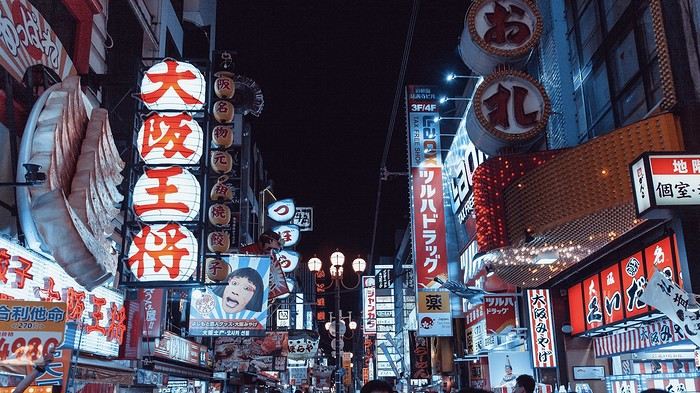
Your adventure begins in Osaka, Japan’s third-largest city, famous for its lively atmosphere and gastronomy. The Dotonbori district, with its colorful neon lights, restaurants serving takoyaki and okonomiyaki, and karaoke bars, provides a vibrant first taste of contemporary Japan. On the second day, you head to Himeji, home to the famous White Heron Castle, a majestic and perfectly preserved fortress. This visit is a dive into feudal Japan.
Next, you reach Kyoto, the former imperial capital and a cultural gem. Every street corner breathes history and elegance. You stroll through the Arashiyama bamboo grove, visit the Golden Pavilion (Kinkaku-ji), and participate in a tea ceremony, an experience steeped in serenity. A trip to Nara, where sacred deer roam freely in the parks, completes your exploration. The Great Buddha of Nara, housed in the Todai-ji temple, impresses with its size and splendor.
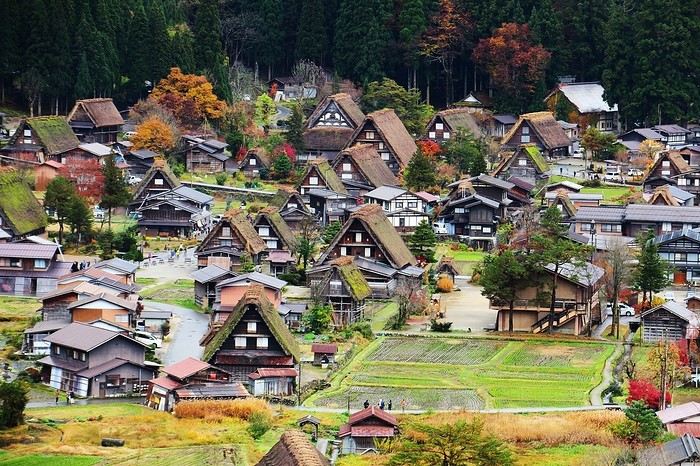
The journey continues in the Japanese Alps, in Takayama and Shirakawago. These picturesque villages, with their thatched-roof houses, seem frozen in time. A UNESCO World Heritage site, Shirakawago is a true treasure of authenticity. You spend a night in Gero Onsen, a renowned hot spring resort, where you can enjoy relaxing hot baths and savor refined Japanese cuisine served in a traditional ryokan.
Finally, Tokyo, the bustling capital, awaits with its many faces. From the futuristic Akihabara district, dedicated to geek culture enthusiasts, to the traditional charm of Asakusa and the Senso-ji temple, every moment is a discovery. A side trip to Kamakura, famous for its Great Buddha and temples, adds a spiritual dimension to your stay.
This trip wouldn’t be complete without immersive experiences. Learn to wield a katana in a samurai workshop, take a cooking class to master the art of sushi, or explore the world of manga with a drawing lesson. Each activity is designed to deepen your connection to the local culture.
The carefully selected accommodations blend modern comfort with Japanese charm. From contemporary hotels in Kyoto and Tokyo to traditional ryokans in the mountains, every night is an experience in itself. With a passionate local guide and free time to explore at your own pace, this tour offers the perfect balance between adventure and relaxation.
The "Immersion in Japan" tour is much more than just a trip. It’s an invitation to discover the soul of a country rich in contrasts, through diverse landscapes, living traditions, and fascinating modernity. Whether you're a culture lover, nature enthusiast, or simply in search of wonder, this journey promises a memorable and transformative experience.
Your adventure begins in Osaka, Japan’s third-largest city, famous for its lively atmosphere and gastronomy. The Dotonbori district, with its colorful neon lights, restaurants serving takoyaki and okonomiyaki, and karaoke bars, provides a vibrant first taste of contemporary Japan. On the second day, you head to Himeji, home to the famous White Heron Castle, a majestic and perfectly preserved fortress. This visit is a dive into feudal Japan.
Next, you reach Kyoto, the former imperial capital and a cultural gem. Every street corner breathes history and elegance. You stroll through the Arashiyama bamboo grove, visit the Golden Pavilion (Kinkaku-ji), and participate in a tea ceremony, an experience steeped in serenity. A trip to Nara, where sacred deer roam freely in the parks, completes your exploration. The Great Buddha of Nara, housed in the Todai-ji temple, impresses with its size and splendor.
The journey continues in the Japanese Alps, in Takayama and Shirakawago. These picturesque villages, with their thatched-roof houses, seem frozen in time. A UNESCO World Heritage site, Shirakawago is a true treasure of authenticity. You spend a night in Gero Onsen, a renowned hot spring resort, where you can enjoy relaxing hot baths and savor refined Japanese cuisine served in a traditional ryokan.
Finally, Tokyo, the bustling capital, awaits with its many faces. From the futuristic Akihabara district, dedicated to geek culture enthusiasts, to the traditional charm of Asakusa and the Senso-ji temple, every moment is a discovery. A side trip to Kamakura, famous for its Great Buddha and temples, adds a spiritual dimension to your stay.
This trip wouldn’t be complete without immersive experiences. Learn to wield a katana in a samurai workshop, take a cooking class to master the art of sushi, or explore the world of manga with a drawing lesson. Each activity is designed to deepen your connection to the local culture.
The carefully selected accommodations blend modern comfort with Japanese charm. From contemporary hotels in Kyoto and Tokyo to traditional ryokans in the mountains, every night is an experience in itself. With a passionate local guide and free time to explore at your own pace, this tour offers the perfect balance between adventure and relaxation.
The "Immersion in Japan" tour is much more than just a trip. It’s an invitation to discover the soul of a country rich in contrasts, through diverse landscapes, living traditions, and fascinating modernity. Whether you're a culture lover, nature enthusiast, or simply in search of wonder, this journey promises a memorable and transformative experience.
A Turquoise Dream Come True in Uzbekistan - 2022
We took this trip from September 12 to October 7, 2022. I didn’t post this travel journal earlier in Voyage Forum because the site wasn’t back up yet (and also because I was short on time).
Then, at the end of 2024, I made a promise to a friend: to publish my travel journal on VF. So here it is!
 We took off from Paris in the late afternoon on September 12 and arrived in Tashkent around 7:15 AM on the 13th.
This trip was the result of long contemplation and preparation (it was originally planned for the year of the lockdown (2020) and was prepared with the help and advice of Nasrullo Jumanov from Turquoise Travel.
Stages and Itinerary
Stage 1: Tashkent - September 13 and 14
Stage 2: Ferghana Valley – September 15 to 17
Stage 3: Nukus and Moynaq - September 18 and 19
Stage 4: Mysterious Khiva - September 20 to 22
Stage 5: Holy Bukhara - September 23 to 26
Stage 6: Asraf - September 27 and 28
Stage 7: Mythical Samarkand - September 29 to October 2
Stage 8: Tersak (via Shakhrisabz and Urgut) – October 3 and 4
Stage 9: Samarkand – October 5 and 6
Stage 10: Tashkent/Istanbul/Paris – October 6 and 7
Stage 1: Tashkent
September 13
At the airport exit, we were greeted by the owner of our B&B (B&B Gulnara).
Today was all about recovery and our first steps in the capital. Our first currency exchange made us feel like sudden millionaires.
Our first stroll down the avenue leading to Chorsu Market introduced us to the fact that 80 to 90% of the cars here are white Chevrolets.
A walk under the arcades facing Chorsu: hardware stores, cabinetmakers, lute makers (one of them gave me a little concert/demo of a few string instruments).
We took off from Paris in the late afternoon on September 12 and arrived in Tashkent around 7:15 AM on the 13th.
This trip was the result of long contemplation and preparation (it was originally planned for the year of the lockdown (2020) and was prepared with the help and advice of Nasrullo Jumanov from Turquoise Travel.
Stages and Itinerary
Stage 1: Tashkent - September 13 and 14
Stage 2: Ferghana Valley – September 15 to 17
Stage 3: Nukus and Moynaq - September 18 and 19
Stage 4: Mysterious Khiva - September 20 to 22
Stage 5: Holy Bukhara - September 23 to 26
Stage 6: Asraf - September 27 and 28
Stage 7: Mythical Samarkand - September 29 to October 2
Stage 8: Tersak (via Shakhrisabz and Urgut) – October 3 and 4
Stage 9: Samarkand – October 5 and 6
Stage 10: Tashkent/Istanbul/Paris – October 6 and 7
Stage 1: Tashkent
September 13
At the airport exit, we were greeted by the owner of our B&B (B&B Gulnara).
Today was all about recovery and our first steps in the capital. Our first currency exchange made us feel like sudden millionaires.
Our first stroll down the avenue leading to Chorsu Market introduced us to the fact that 80 to 90% of the cars here are white Chevrolets.
A walk under the arcades facing Chorsu: hardware stores, cabinetmakers, lute makers (one of them gave me a little concert/demo of a few string instruments).
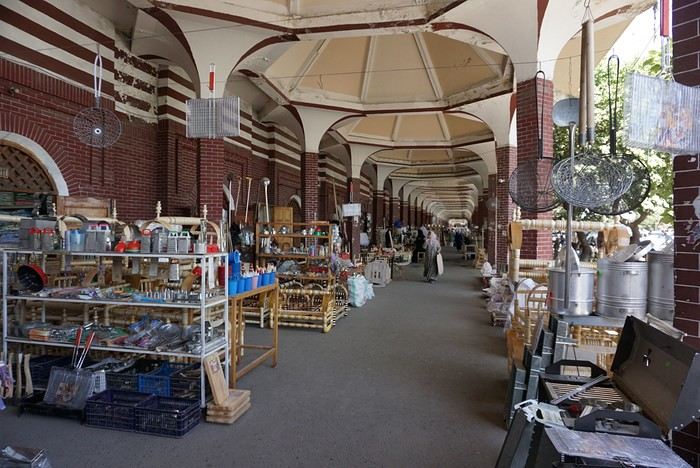
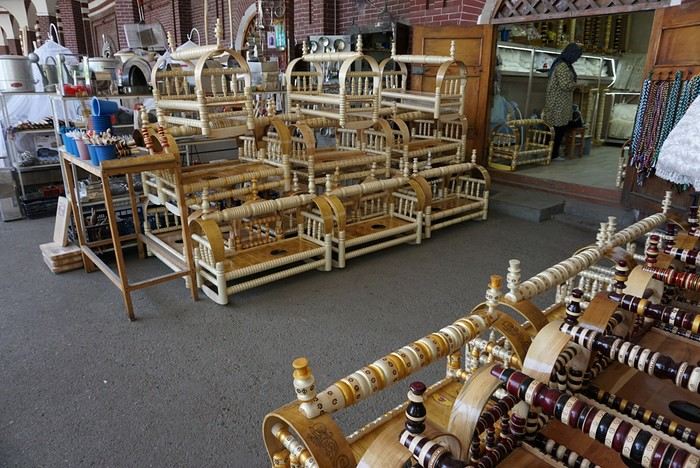
As we entered the market, many vendors called out to us, including this florist who asked where we were from: ‘France? Ah! Macron! PSG!’ He then recited a list of players from the Parisian team as well as past (Platini, Zidane, etc.) and current (Giroud, Griezmann, Mbappé, etc.) French national team players. Since we’re more into rugby (we live near Toulouse), he knew more players than I did!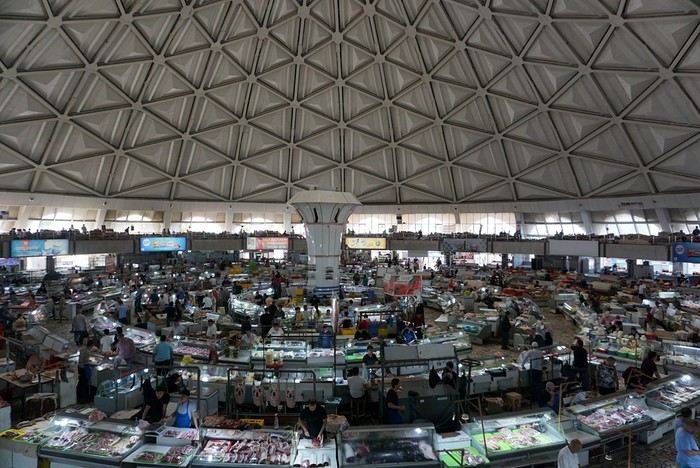
The market sprawls outside around the large circular, multi-story hall. We bought some grapes and bottles of freshly squeezed pomegranate juice for just a few sums. This evening, we had a meet-up with Nasrullo. The reunion was very warm: we’d been exchanging messages for over two years, and I’d been ‘torturing’ him with changes to our itinerary and trip duration. We were finally eager to meet, and honestly, I wasn’t disappointed—in fact, it was the opposite. Nasrullo was very attentive throughout our trip and always made sure, even from a distance (and most often from a distance!), that everything went smoothly. His goal was for us to leave delighted with our trip and, why not, indirectly become ambassadors for this destination. September 14 Breakfast with Nasrullo, then we set off with him by taxi to explore some of the capital’s sites.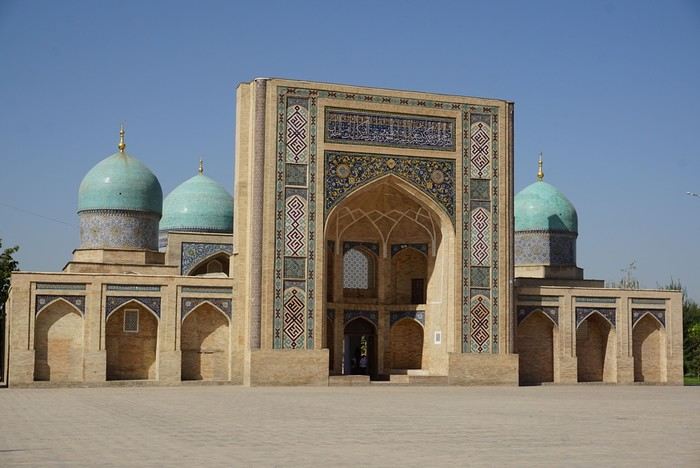
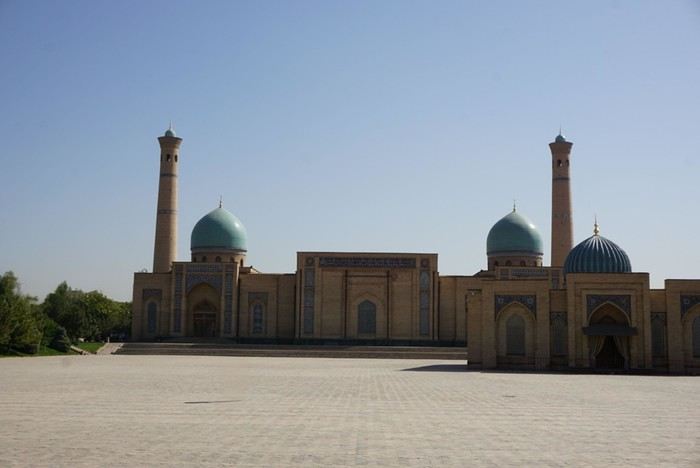
We started by visiting the Khazrati Imam complex, which includes the mausoleum of Kaffal Shashi, the Barak Khan and Muyi Muborak madrasas, and the great Khazrati Imam Mosque with its immense prayer hall.
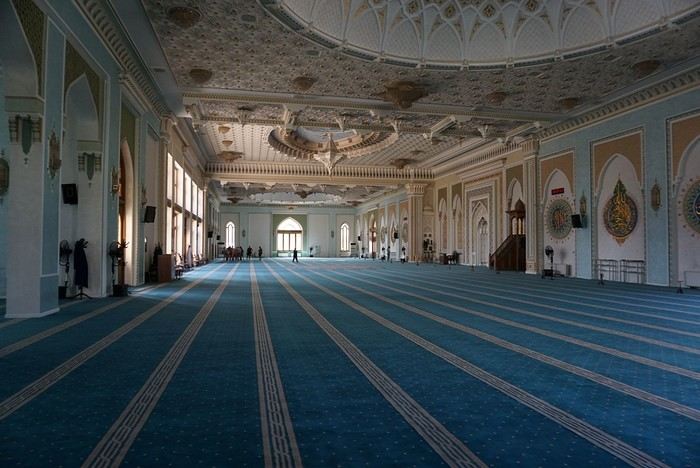
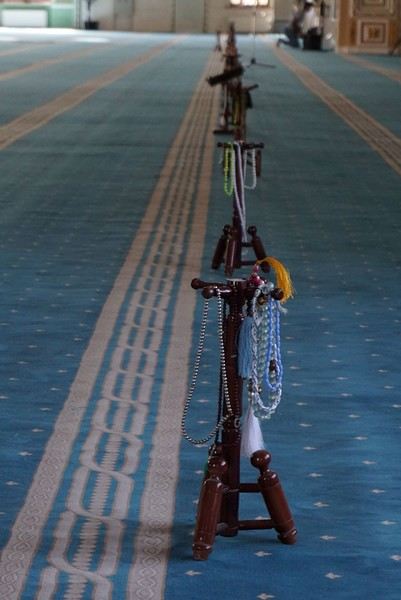
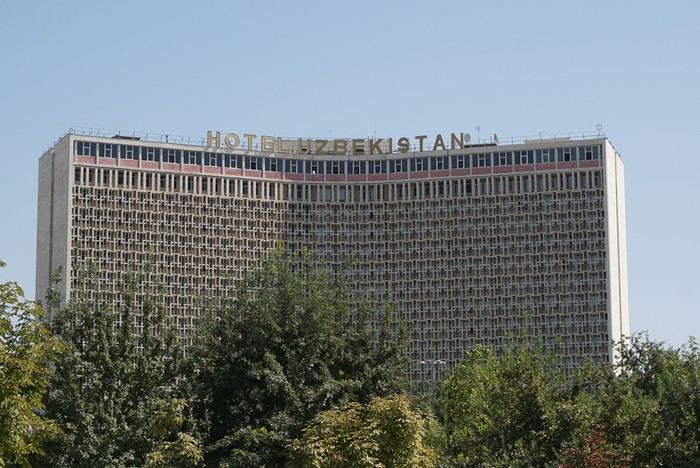
In the Muyi Muborak madrasa, now a museum, you can see the oldest Quran in the world. It was written by three religious scholars, including the secretary of the Prophet Muhammad, on large ‘pages’ made of antelope skin. Next, we explored Soviet-era Tashkent, discovering its parks, canals, and squares: Independence Square with its storks and phoenixes, Amir Temur Square with its large statue and, in the background, the massive Soviet-era hotel that has become one of Tashkent’s iconic buildings. Nasrullo took us through Broadway Boulevard and along what he calls ‘Tashkent’s Montmartre’… Well, it’s far, very far from Montmartre (in every sense of the word!). Then we took the metro to Chorsu station. Rush hour is pretty much the same everywhere in the metro… When we arrived at Chorsu, it was time to say goodbye. Nasrullo had to head back to Samarkand. Before leaving, he recommended some chaikhanas at the end of the galleries facing the market. We ate there for just a few euros (2 or 3 € for two people). After eating, we headed back to our room to cool off (our B&B is about a 10-minute walk away).
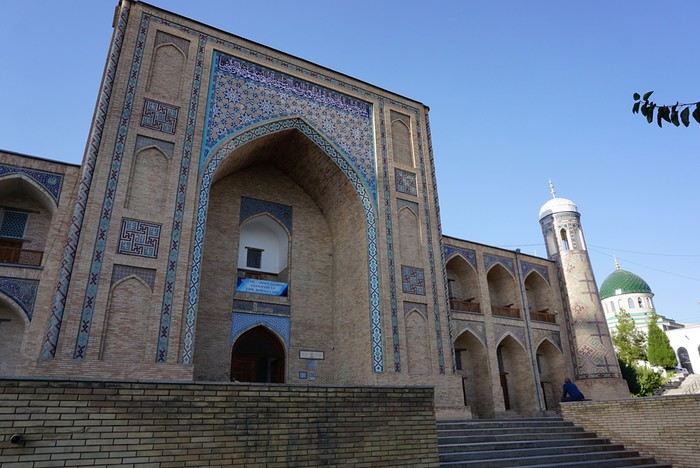
Around 4 PM, we set off to visit the Kokeldash Madrasa, which is still active. On the way, we stopped to watch some bread vendors and take a few photos. We were hesitating about buying some for our evening picnic when a young woman approached us. In perfect English, she asked: ‘Are you looking for something? Do you want to buy bread? Which one? How much?’ She then spoke to one of the vendors and negotiated the price. ‘Do you want one?’ And she took two. She paid directly. I took out my wallet to reimburse her, but she refused. It’s on the house! Then the vendor asked where we were from. And off we went again: Macron, PSG, football players… We’ll have to get used to it. The young woman smiled at the questions and comments, barely gave us time to thank her, and left as quickly as she had approached us.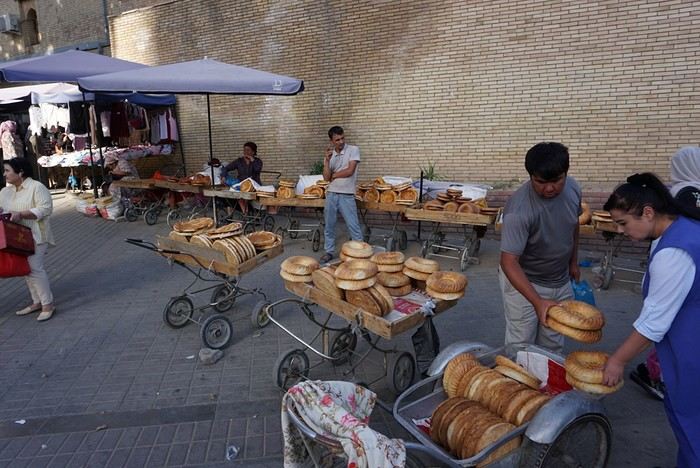
We continued our walk. Visited the madrasa. Then we crossed the boulevard to see the Tashkent Circus. I would’ve loved to go in and visit, but the ticket seller wouldn’t hear of it. We carried on around what should’ve been a park with old-fashioned rides and attractions. All we found was a construction site. Oh well! Back at our hotel, a message from Nasrullo was waiting for us. He had managed to change our train ticket for the next day. Instead of taking the 6:00 AM train, we’d take the 8:00 AM one. And instead of second class, we’d be in first class! Great! This evening, we had a picnic at one of the breakfast tables in the B&B courtyard. Under a shelter, the owner and his family were celebrating a birthday. The owner started by offering us some tea. Then they brought us some fruit (watermelon and melon). Finally, after the song, candles, and cake cutting, they brought us two generous slices of that beautiful birthday cake. Delicious!
We took off from Paris in the late afternoon on September 12 and arrived in Tashkent around 7:15 AM on the 13th.
This trip was the result of long contemplation and preparation (it was originally planned for the year of the lockdown (2020) and was prepared with the help and advice of Nasrullo Jumanov from Turquoise Travel.
Stages and Itinerary
Stage 1: Tashkent - September 13 and 14
Stage 2: Ferghana Valley – September 15 to 17
Stage 3: Nukus and Moynaq - September 18 and 19
Stage 4: Mysterious Khiva - September 20 to 22
Stage 5: Holy Bukhara - September 23 to 26
Stage 6: Asraf - September 27 and 28
Stage 7: Mythical Samarkand - September 29 to October 2
Stage 8: Tersak (via Shakhrisabz and Urgut) – October 3 and 4
Stage 9: Samarkand – October 5 and 6
Stage 10: Tashkent/Istanbul/Paris – October 6 and 7
Stage 1: Tashkent
September 13
At the airport exit, we were greeted by the owner of our B&B (B&B Gulnara).
Today was all about recovery and our first steps in the capital. Our first currency exchange made us feel like sudden millionaires.
Our first stroll down the avenue leading to Chorsu Market introduced us to the fact that 80 to 90% of the cars here are white Chevrolets.
A walk under the arcades facing Chorsu: hardware stores, cabinetmakers, lute makers (one of them gave me a little concert/demo of a few string instruments).As we entered the market, many vendors called out to us, including this florist who asked where we were from: ‘France? Ah! Macron! PSG!’ He then recited a list of players from the Parisian team as well as past (Platini, Zidane, etc.) and current (Giroud, Griezmann, Mbappé, etc.) French national team players. Since we’re more into rugby (we live near Toulouse), he knew more players than I did!
The market sprawls outside around the large circular, multi-story hall. We bought some grapes and bottles of freshly squeezed pomegranate juice for just a few sums. This evening, we had a meet-up with Nasrullo. The reunion was very warm: we’d been exchanging messages for over two years, and I’d been ‘torturing’ him with changes to our itinerary and trip duration. We were finally eager to meet, and honestly, I wasn’t disappointed—in fact, it was the opposite. Nasrullo was very attentive throughout our trip and always made sure, even from a distance (and most often from a distance!), that everything went smoothly. His goal was for us to leave delighted with our trip and, why not, indirectly become ambassadors for this destination. September 14 Breakfast with Nasrullo, then we set off with him by taxi to explore some of the capital’s sites.
We started by visiting the Khazrati Imam complex, which includes the mausoleum of Kaffal Shashi, the Barak Khan and Muyi Muborak madrasas, and the great Khazrati Imam Mosque with its immense prayer hall.
In the Muyi Muborak madrasa, now a museum, you can see the oldest Quran in the world. It was written by three religious scholars, including the secretary of the Prophet Muhammad, on large ‘pages’ made of antelope skin. Next, we explored Soviet-era Tashkent, discovering its parks, canals, and squares: Independence Square with its storks and phoenixes, Amir Temur Square with its large statue and, in the background, the massive Soviet-era hotel that has become one of Tashkent’s iconic buildings. Nasrullo took us through Broadway Boulevard and along what he calls ‘Tashkent’s Montmartre’… Well, it’s far, very far from Montmartre (in every sense of the word!). Then we took the metro to Chorsu station. Rush hour is pretty much the same everywhere in the metro… When we arrived at Chorsu, it was time to say goodbye. Nasrullo had to head back to Samarkand. Before leaving, he recommended some chaikhanas at the end of the galleries facing the market. We ate there for just a few euros (2 or 3 € for two people). After eating, we headed back to our room to cool off (our B&B is about a 10-minute walk away).
Around 4 PM, we set off to visit the Kokeldash Madrasa, which is still active. On the way, we stopped to watch some bread vendors and take a few photos. We were hesitating about buying some for our evening picnic when a young woman approached us. In perfect English, she asked: ‘Are you looking for something? Do you want to buy bread? Which one? How much?’ She then spoke to one of the vendors and negotiated the price. ‘Do you want one?’ And she took two. She paid directly. I took out my wallet to reimburse her, but she refused. It’s on the house! Then the vendor asked where we were from. And off we went again: Macron, PSG, football players… We’ll have to get used to it. The young woman smiled at the questions and comments, barely gave us time to thank her, and left as quickly as she had approached us.
We continued our walk. Visited the madrasa. Then we crossed the boulevard to see the Tashkent Circus. I would’ve loved to go in and visit, but the ticket seller wouldn’t hear of it. We carried on around what should’ve been a park with old-fashioned rides and attractions. All we found was a construction site. Oh well! Back at our hotel, a message from Nasrullo was waiting for us. He had managed to change our train ticket for the next day. Instead of taking the 6:00 AM train, we’d take the 8:00 AM one. And instead of second class, we’d be in first class! Great! This evening, we had a picnic at one of the breakfast tables in the B&B courtyard. Under a shelter, the owner and his family were celebrating a birthday. The owner started by offering us some tea. Then they brought us some fruit (watermelon and melon). Finally, after the song, candles, and cake cutting, they brought us two generous slices of that beautiful birthday cake. Delicious!
Discovering Mongolia authentically: your tips
Hi everyone,
Happy to be back on our travel exchange and advice site.
There are four of us heading to Mongolia from June 22 to July 15, 2025.
We’ve wanted to visit Mongolia for a long time, but for various reasons, the trip kept getting postponed.
This year is the one. The flight tickets are booked, and we’re in touch with several agencies to organize what seems like a classic itinerary (Gobi, Khangai, and Lake Khuvsgul), including attending a Naadam festival outside the capital.
Yes, but here’s the thing—with so much hope riding on this destination, I’m afraid of being disappointed by what we’ll find.
Let me explain. The way we travel has changed over time. Discovering a country these days seems to be more about influencers than travel guides. Consumer-focused travel seems to have taken over from genuine exploration.
So, if you have any tips for helping us discover authentic sites and avoid certain mistakes… we’re all ears.
Thanks in advance for your replies, and happy holidays to everyone.
Notre-Dame’s reopening in Paris set to boost tourism
Notre-Dame Cathedral in Paris will reopen to the public on December 8th after five years of intensive restoration. The announcement has already sparked significant interest among both international tourists and French visitors.
Before the tragic fire on April 15, 2019—which deeply moved people and mobilized numerous patrons—Notre-Dame was one of Paris’s most iconic sites. With 12 million annual visitors, according to data from the Parisian Tourism Economic Observatory, it was the capital’s most popular cultural attraction, even outranking prestigious landmarks like the Louvre Museum.
The reopening of this Gothic masterpiece could mark a new chapter in Paris’s tourist appeal. Read more...
Before the tragic fire on April 15, 2019—which deeply moved people and mobilized numerous patrons—Notre-Dame was one of Paris’s most iconic sites. With 12 million annual visitors, according to data from the Parisian Tourism Economic Observatory, it was the capital’s most popular cultural attraction, even outranking prestigious landmarks like the Louvre Museum.
The reopening of this Gothic masterpiece could mark a new chapter in Paris’s tourist appeal. Read more...
Traveling to Thimphu (Bhutan) from Kolkata by land
Hi everyone!
So great to be back on this Forum!
My question is in the title: is it possible to reach Bhutan from Kolkata by entering through the Phuntsholing border crossing? If anyone has already done this route, it would really put my mind at ease... 😉
Thanks in advance for all your replies! 🤪
Lydie
15-Day Itinerary for Cambodia
Hello,
My wife and I are planning a 15-day trip to Cambodia. Could you share some itinerary ideas with us? Thanks
Discovering Sicily
Hi there,
I’ve been wanting to explore Sicily for a long time.
From an all-inclusive hotel so I don’t have to change accommodation every night, and getting around by rental car. About ten days.
Which spot would be best to stay so I can explore without excessive driving?
What are the must-see sites, knowing that Mount Etna is already my top pick?
What are the key things to know about renting and driving a car (laws, speed limits, requirements in certain cities, parking, etc.)?
Public transport between Bayahibe and Las Terrenas
Hi there,
We’re heading to the Dominican Republic for two weeks in January. We’d like to get from Bayahibe to Las Terrenas using public transport. Is it doable in a day? Thanks for your help!
Solo trip to Mongolia in winter
Hello, so happy to be back on the forum! I’m heading off alone in mid-January for 5 weeks in Mongolia. I’d love all your tips—transport, accommodation, you name it…
For the cold, I think I’m used to it since I used to travel in Siberia, but that’s over now.
Looking forward to hearing from you! M
For the cold, I think I’m used to it since I used to travel in Siberia, but that’s over now.
Looking forward to hearing from you! M
Chichicastenango beyond the market (Guatemala)
Hi everyone,
We’re spending a few days in Chichicastenango at Hotel Giron (highly recommend!). We’ll be wandering around the cemetery, the central park, and Pascual Abaj. Any other suggestions that don’t involve too much travel time?
Thanks!
Engineering internship in an African country
Hello,
As part of my engineering degree, I need to complete a three-month internship abroad. I’d prefer to do it in an English-speaking African country, though I’m also open to French-speaking ones. Below is a non-exhaustive list of countries I’m currently considering. I should mention that I’m African myself—I’m from the Central African Republic and I’m studying in France.
I’d love to hear your thoughts on the best country to choose based on criteria like safety, infrastructure, and hospitality. Which countries would you recommend, friends?
Thanks in advance for your feedback!
Countries:
South Africa, Ghana, Gabon, Ivory Coast, Angola, Tanzania, Senegal, Uganda, Mozambique, Cameroon, Benin
Ethiopia and Two Endemic Animals
The reopening of the forum is great news—let's keep it going! I’m going to share a little story about this 12-day trip, which was my second-to-last journey and my most recent one in Africa for now.
I went to this country for one very specific reason: to see two endemic animal species. A little suspense… you’ll find out what they are soon if you don’t already know!
The country is poor, very poor even. And it hits you even harder when you arrive in the capital: a massive open-air construction site that gives an impression of prosperity. A lot of roads were built by the Chinese, but to be honest, they’re far from perfect… and I mean *far*!
When it comes to restaurants, it’s pretty much the same story. Most offer endless menus, but in reality, there aren’t many choices. Once, I was flat-out told: “No rice today!” Ordering a dish? It’s a real gamble! The food is *very* spicy—I’m warning you, it’s intense! There’s chili in almost everything, so it’s best to ask beforehand if you don’t want your mouth on fire. Actually, this was the first time I didn’t like the food in a country I visited. Had to happen eventually, right?
Their national dish? Injera. A large flatbread topped with sauces, vegetables, and meat. The taste is really unique—some love it, others… not so much.
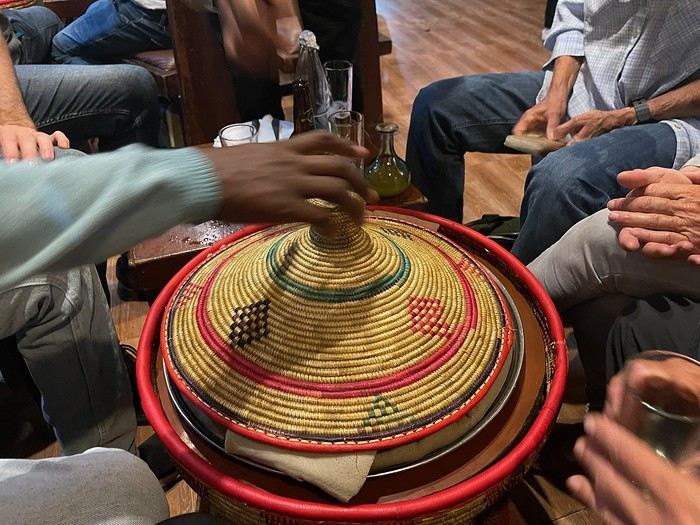
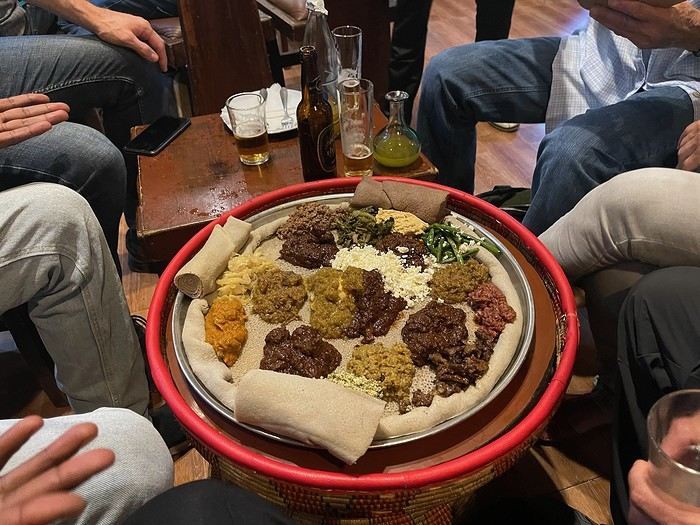
I went to this country for one very specific reason: to see two endemic animal species. A little suspense… you’ll find out what they are soon if you don’t already know!
The country is poor, very poor even. And it hits you even harder when you arrive in the capital: a massive open-air construction site that gives an impression of prosperity. A lot of roads were built by the Chinese, but to be honest, they’re far from perfect… and I mean *far*!
When it comes to restaurants, it’s pretty much the same story. Most offer endless menus, but in reality, there aren’t many choices. Once, I was flat-out told: “No rice today!” Ordering a dish? It’s a real gamble! The food is *very* spicy—I’m warning you, it’s intense! There’s chili in almost everything, so it’s best to ask beforehand if you don’t want your mouth on fire. Actually, this was the first time I didn’t like the food in a country I visited. Had to happen eventually, right?
Their national dish? Injera. A large flatbread topped with sauces, vegetables, and meat. The taste is really unique—some love it, others… not so much.
Road trip in Iceland with my daughter from May 6 to 13, 2023
Hello everyone,
I’m happy to be back at my keyboard to share a few adventures. 😉
Right now, two more trips are in the works for 2025, but for the moment, I’d rather share than ask questions.
Like many of you, Iceland has been a longtime love of mine. My first trip there was in February 2016, when we went as a family of five—including our three daughters, who were 1, 6, and 5 at the time. It was a very short stay with just one place to stay, north of the capital. We explored the south, from Vik to Grindavik, and of course, I was left wanting more. We returned in April 2018 during a stopover on our way back from New York. We spent three days near Borgarnes, but fatigue and the weather kept me from doing everything I’d planned. After my mom passed away in January 2023, I decided to go back to Iceland for a full week. Just to clear my head... I thought I’d go alone, but in the end, my 8-year-old daughter (at the time) is a huge horseback riding fan, so I decided to take her along. This road trip came together quickly thanks to another well-known French-speaking forum for Iceland lovers. As usual, I quickly checked availability on Booking and flights with Icelandair. Booked the flight, then the accommodations—with quite a few changes right up until departure. Goals for this trip:
Go where I haven’t been yet. Do a road trip because I love them. Go horseback riding with my daughter.
Icelandair was booked for May 6–13, 2023. Accommodations were reserved on Booking, and once again, I rented a 4x4 from Blue Car Rental, which I really like. Not wanting to deal with boredom while there, I got all the insurance and the option to skip the counter. My English isn’t great…
I’m happy to be back at my keyboard to share a few adventures. 😉
Right now, two more trips are in the works for 2025, but for the moment, I’d rather share than ask questions.
Like many of you, Iceland has been a longtime love of mine. My first trip there was in February 2016, when we went as a family of five—including our three daughters, who were 1, 6, and 5 at the time. It was a very short stay with just one place to stay, north of the capital. We explored the south, from Vik to Grindavik, and of course, I was left wanting more. We returned in April 2018 during a stopover on our way back from New York. We spent three days near Borgarnes, but fatigue and the weather kept me from doing everything I’d planned. After my mom passed away in January 2023, I decided to go back to Iceland for a full week. Just to clear my head... I thought I’d go alone, but in the end, my 8-year-old daughter (at the time) is a huge horseback riding fan, so I decided to take her along. This road trip came together quickly thanks to another well-known French-speaking forum for Iceland lovers. As usual, I quickly checked availability on Booking and flights with Icelandair. Booked the flight, then the accommodations—with quite a few changes right up until departure. Goals for this trip:
Go where I haven’t been yet. Do a road trip because I love them. Go horseback riding with my daughter.
Icelandair was booked for May 6–13, 2023. Accommodations were reserved on Booking, and once again, I rented a 4x4 from Blue Car Rental, which I really like. Not wanting to deal with boredom while there, I got all the insurance and the option to skip the counter. My English isn’t great…
Disparition de Keith Tippett (Grande-Bretagne) English translation pending
« With his mutton-chop sideburns and penchant for countrymen’s tweed jackets, waistcoats and collarless shirts, Keith Tippett suggested a quirky Edwardian gentleman farmer more than an experimental music firebrand. » (John Fordham, The Guardian, juin 2020)
Entre jazz libre et rock progressif
Un grand nom du jazz britannique vient de disparaître. En juin, le compositeur, improvisateur et pianiste anglais Keith Tippett est mort à l’âge de 72 ans. Curieux de tous les styles et tous les genres, infatigable à la quête de nouvelles expériences musicales, il est une figure pionnière de la scène anglaise de jazz libre depuis le début des années 70. Mais il se fait surtout connaître pour avoir fondé le méga-orchestre CENTIPEDE, comprenant une cinquantaine de musiciens, et par sa participation à trois albums du groupe de rock progressif KING CRIMSON. Sa discographie est immense...
Né à Bristol en 1947, Keith Tippett étudie le piano et l’orgue d’église et forme son premier groupe quand il est adolescent. En 1967, il s‘installe à la capitale britannique, la date qui équivaut au début de sa vie musicale professionnelle. Déjà sa première formation, le KEITH TIPPETT GROUP, un sextet comprenant notamment le saxophoniste Elton Dean, le trompettiste Mark Charig et le tromboniste Nick Evans, atteint un certain degré de notorité. Le groupe enregistre deux disques de jazz-rock qui font date, You are here...I am There en 1970, et Dedicated to You, but You weren’t Listening en 1971, auquel participe aussi Robert Wyatt, entre autres. A cette époque également, Keith Tippett collabore à la chanteuse Shelag McDonald et effectue plusieurs sessions de King Crimson où il laisse son imparable touche pianistique : faut écouter p.ex. la pièce Cat Food ou aussi Lizard, really great !)...
En 1970 de même, Keith Tippett fonde un orchestre hors du commun comprenant d’une cinquantaine de musiciens issus des scènes jazz et rock britannique, CENTIPEDE, laissant un double album, Septober Energy, qui reste unique en son genre : une composition déclinée en quatre parties, chacune faisant intervenir les musiciens soit en solo, en duos, en trios, en quartets, en orchestre complet, mélangeant et mariant différents styles – jazz, classique, rock, free music, etc. Peu de temps après, Keith Tippett crée une autre formation, OVARY LODGE, avec le contrebassiste Roy Babington, le batteur Frank Perry et – plus tard – le bassiste sud-africain, Harry Miller. Sa femme, la vocaliste et percussionniste Julie Tippetts (née Driscoll) y participe également : qui ne se souvient pas d‘une voix soul, celle de Julie, accompagnée du groupe Brian Auger & The Trinity ayant eu plusieurs hits à l‘époque : This Wheel‘s on Fire, Road to Cairo, Season of the Witch... Ce quartet s’oriente vers une musique entièrement improvisée, au croisement du free et de la musique contemporaire, préfigurant même l’ambient.
En 1976, Keith Tippett joue en duo avec un autre pianiste britannique, Stan Tracey, et en 1978, il forme sa deuxième grande formation, ARK, un big-band de 22 musiciens, cette fois issu du jazz et des musiques improvisées, se déplaçant musicalement entre Charles Mingus et Sun Ra. Cette grande formation comprend notamment des membres d’OVARY LODGE et du Chris McGregor’s Brotherhood of Breath, n’ayant enregistré, tout comme CENTIPEDE, qu’un seul double album, Frames (Music for an Imaginary Film). Par la suite, le pianiste crée d’autres formations orchestrales qui, même sans avoir dépassé le nombre de participants d’ARK et de CENTIPEDE, témoigne d’une densité et d’un foisonnement musicaux tout aussi impressionnants, comme le KEITH TIPPETT SEPTET, le KEITH TIPPETT TAPESTRY ORCHESTRA, VIVE LA BLACK et le KEITH TIPPETT OCTET. En somme, une carrière musicale qui présente diverses formes musicalement assez contrastées...
A l’opposé de ces grandes formations, le fécond talent pianistique de Keith Tippett s’exprime également sous la stricte forme du solo piano, une démarche qu’il initie à partir des années 80 avec le double album The Unlonely Raindancer et qu’il développe dans les décennies suivantes au sein de sa série de disques solistes Mujician I, II, III (August Air) et IV (Live in Piacenza) et dans d’autres albums comme The Dartington Concert, Friday the 13th et Live in Triest. Ce sont tous des albums qui illustrent toute l’amplitude créative de Keith Tippett sur le piano, rayonnant d’un lyrisme brûlant, d’un souffle vital et d’une inventivité infaillible, souvent le traitant d’un "piano préparé à la John Cage" (le son des cordes étant modifié par des pièces de bois et autres objets). MUJICIAN devient aussi le nom de l’un des groupes les plus éloquents du pianiste, un quartet improvisé d’harmonie intuitive, avec le saxophoniste Paul Dunmall, inspiré de Coltrane, le virtuose de basse, Paul Rogers, et le batteur Tony Levin...
Au cours de sa longue carrière, Keith Tippett multiplie les rencontres musicales sous plusieurs formes, en duos, en trios, etc. etc., et participe, de la même façon, dans différentes formations d‘amis musiciens, dont Elton Dean (Quartet, Quintet, Ninesense), Harry Miller (Isipingo), le violoniste de King Crimson, David Cross (Low Flying Aircraft), le bassiste de Soft Machine, Hugh Hopper (Hopper-Dean-Tippett-Gallivan), Paul Dunmall ou en duo avec le pianiste Howard Riley, le saxophoniste Andy Sheppard, ou encore avec sa femme Julie, avec laquelle il enregistre plusieurs albums (Couple in Spirit). En 2000, il écrit une musique pour un quartet à cordes contemporain, le Kreutzer Strings Quartet (Linuckea. Let The Music Speak).
Toute sa vie (musicale), Keith Tippett a la vision idéaliste que les gens qui écoutent de la musique entrent dans un espace sacré. Il envisage d'atteindre ses objectifs humanistes et musicaux sans tout compromis. Sa classe pianistique, ses compétences artistiques ne sont pas toujours reconnues et la reconnaissance que son travail mérite ne lui est pas toujours témoignée. A cet égard, Keith Tippett n’est certainement pas le seul. En Grande-Bretagne et ailleurs, on ne traite pas toujours les trésors nationaux comme il faut. En tout cas, Keith Tippett en est un...
Quel que soient les projets musicaux dans lesquels il s’investit, Keith Tippett laisse des traces immanquables et remarquées, avec son jeu de piano aussi endiablé que raffiné, fécond et innovant, son swing habité et hypnotique. Par sa mort, la musique du XXe siècle perd l’un de ses plus inspirés serviteurs. Les traces qu’il laisse, en Grande-Bretagne et ailleurs, sont profondes et durables, mes souvenirs de plusieurs concerts que j’ai pu voir – en particulier à Berlin – restent inoubliables : THANK YOU, KEITH TIPPETT !!!
Hery
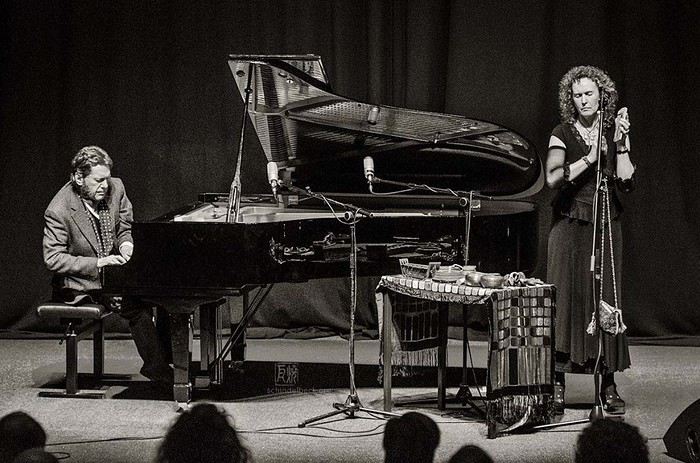
(Keith Tippett et sa femme Julie : © Frank Schindelbeck)
https://www.youtube.com/watch?v=JW2qdrPBikA
(Keith Tippett solo, live in Italy)
Entre jazz libre et rock progressif
Un grand nom du jazz britannique vient de disparaître. En juin, le compositeur, improvisateur et pianiste anglais Keith Tippett est mort à l’âge de 72 ans. Curieux de tous les styles et tous les genres, infatigable à la quête de nouvelles expériences musicales, il est une figure pionnière de la scène anglaise de jazz libre depuis le début des années 70. Mais il se fait surtout connaître pour avoir fondé le méga-orchestre CENTIPEDE, comprenant une cinquantaine de musiciens, et par sa participation à trois albums du groupe de rock progressif KING CRIMSON. Sa discographie est immense...
Né à Bristol en 1947, Keith Tippett étudie le piano et l’orgue d’église et forme son premier groupe quand il est adolescent. En 1967, il s‘installe à la capitale britannique, la date qui équivaut au début de sa vie musicale professionnelle. Déjà sa première formation, le KEITH TIPPETT GROUP, un sextet comprenant notamment le saxophoniste Elton Dean, le trompettiste Mark Charig et le tromboniste Nick Evans, atteint un certain degré de notorité. Le groupe enregistre deux disques de jazz-rock qui font date, You are here...I am There en 1970, et Dedicated to You, but You weren’t Listening en 1971, auquel participe aussi Robert Wyatt, entre autres. A cette époque également, Keith Tippett collabore à la chanteuse Shelag McDonald et effectue plusieurs sessions de King Crimson où il laisse son imparable touche pianistique : faut écouter p.ex. la pièce Cat Food ou aussi Lizard, really great !)...
En 1970 de même, Keith Tippett fonde un orchestre hors du commun comprenant d’une cinquantaine de musiciens issus des scènes jazz et rock britannique, CENTIPEDE, laissant un double album, Septober Energy, qui reste unique en son genre : une composition déclinée en quatre parties, chacune faisant intervenir les musiciens soit en solo, en duos, en trios, en quartets, en orchestre complet, mélangeant et mariant différents styles – jazz, classique, rock, free music, etc. Peu de temps après, Keith Tippett crée une autre formation, OVARY LODGE, avec le contrebassiste Roy Babington, le batteur Frank Perry et – plus tard – le bassiste sud-africain, Harry Miller. Sa femme, la vocaliste et percussionniste Julie Tippetts (née Driscoll) y participe également : qui ne se souvient pas d‘une voix soul, celle de Julie, accompagnée du groupe Brian Auger & The Trinity ayant eu plusieurs hits à l‘époque : This Wheel‘s on Fire, Road to Cairo, Season of the Witch... Ce quartet s’oriente vers une musique entièrement improvisée, au croisement du free et de la musique contemporaire, préfigurant même l’ambient.
En 1976, Keith Tippett joue en duo avec un autre pianiste britannique, Stan Tracey, et en 1978, il forme sa deuxième grande formation, ARK, un big-band de 22 musiciens, cette fois issu du jazz et des musiques improvisées, se déplaçant musicalement entre Charles Mingus et Sun Ra. Cette grande formation comprend notamment des membres d’OVARY LODGE et du Chris McGregor’s Brotherhood of Breath, n’ayant enregistré, tout comme CENTIPEDE, qu’un seul double album, Frames (Music for an Imaginary Film). Par la suite, le pianiste crée d’autres formations orchestrales qui, même sans avoir dépassé le nombre de participants d’ARK et de CENTIPEDE, témoigne d’une densité et d’un foisonnement musicaux tout aussi impressionnants, comme le KEITH TIPPETT SEPTET, le KEITH TIPPETT TAPESTRY ORCHESTRA, VIVE LA BLACK et le KEITH TIPPETT OCTET. En somme, une carrière musicale qui présente diverses formes musicalement assez contrastées...
A l’opposé de ces grandes formations, le fécond talent pianistique de Keith Tippett s’exprime également sous la stricte forme du solo piano, une démarche qu’il initie à partir des années 80 avec le double album The Unlonely Raindancer et qu’il développe dans les décennies suivantes au sein de sa série de disques solistes Mujician I, II, III (August Air) et IV (Live in Piacenza) et dans d’autres albums comme The Dartington Concert, Friday the 13th et Live in Triest. Ce sont tous des albums qui illustrent toute l’amplitude créative de Keith Tippett sur le piano, rayonnant d’un lyrisme brûlant, d’un souffle vital et d’une inventivité infaillible, souvent le traitant d’un "piano préparé à la John Cage" (le son des cordes étant modifié par des pièces de bois et autres objets). MUJICIAN devient aussi le nom de l’un des groupes les plus éloquents du pianiste, un quartet improvisé d’harmonie intuitive, avec le saxophoniste Paul Dunmall, inspiré de Coltrane, le virtuose de basse, Paul Rogers, et le batteur Tony Levin...
Au cours de sa longue carrière, Keith Tippett multiplie les rencontres musicales sous plusieurs formes, en duos, en trios, etc. etc., et participe, de la même façon, dans différentes formations d‘amis musiciens, dont Elton Dean (Quartet, Quintet, Ninesense), Harry Miller (Isipingo), le violoniste de King Crimson, David Cross (Low Flying Aircraft), le bassiste de Soft Machine, Hugh Hopper (Hopper-Dean-Tippett-Gallivan), Paul Dunmall ou en duo avec le pianiste Howard Riley, le saxophoniste Andy Sheppard, ou encore avec sa femme Julie, avec laquelle il enregistre plusieurs albums (Couple in Spirit). En 2000, il écrit une musique pour un quartet à cordes contemporain, le Kreutzer Strings Quartet (Linuckea. Let The Music Speak).
Toute sa vie (musicale), Keith Tippett a la vision idéaliste que les gens qui écoutent de la musique entrent dans un espace sacré. Il envisage d'atteindre ses objectifs humanistes et musicaux sans tout compromis. Sa classe pianistique, ses compétences artistiques ne sont pas toujours reconnues et la reconnaissance que son travail mérite ne lui est pas toujours témoignée. A cet égard, Keith Tippett n’est certainement pas le seul. En Grande-Bretagne et ailleurs, on ne traite pas toujours les trésors nationaux comme il faut. En tout cas, Keith Tippett en est un...
Quel que soient les projets musicaux dans lesquels il s’investit, Keith Tippett laisse des traces immanquables et remarquées, avec son jeu de piano aussi endiablé que raffiné, fécond et innovant, son swing habité et hypnotique. Par sa mort, la musique du XXe siècle perd l’un de ses plus inspirés serviteurs. Les traces qu’il laisse, en Grande-Bretagne et ailleurs, sont profondes et durables, mes souvenirs de plusieurs concerts que j’ai pu voir – en particulier à Berlin – restent inoubliables : THANK YOU, KEITH TIPPETT !!!
Hery
(Keith Tippett et sa femme Julie : © Frank Schindelbeck)
https://www.youtube.com/watch?v=JW2qdrPBikA
(Keith Tippett solo, live in Italy)
Louer une voiture à l'île d'Andros English translation pending
Bonjour nous sommes du Canada et nous prévoyons visiter l'île d'Andros en août-septembre 2021.Premièrement j'aimerais savoir quel genre de véhicule louer sur l'île? Comment sont les chemins?On écrit que ce n'est pas tous asphalté.Merci
Quel itinéraire pour une semaine sur le Canal du Midi? English translation pending
Bonjour,
Nous planifions un voyage en Europe en 2021 - nous venons du Québec. On souhaite prendre une semaine pour faire une croisière fluviale en péniche sur le Canal du midi. Mais nous ne savons pas quel itinéraire privilégier (départ, arrivée, étapes, visites, etc.)
C'est notre première expérience en péniche, mais nous voyageons régulièrement en Europe.
On privilégie un trajet allers simple plutôt qu'un aller-retour. Aussi, nous risquons d'arriver directement d'un aéroport et celui qui nous semble le plus direct serait celui de Toulouse.
À part cela, nous serons deux couples dans la cinquantaine qui aiment profiter des bonnes choses de la vie.
Merci
Nous planifions un voyage en Europe en 2021 - nous venons du Québec. On souhaite prendre une semaine pour faire une croisière fluviale en péniche sur le Canal du midi. Mais nous ne savons pas quel itinéraire privilégier (départ, arrivée, étapes, visites, etc.)
C'est notre première expérience en péniche, mais nous voyageons régulièrement en Europe.
On privilégie un trajet allers simple plutôt qu'un aller-retour. Aussi, nous risquons d'arriver directement d'un aéroport et celui qui nous semble le plus direct serait celui de Toulouse.
À part cela, nous serons deux couples dans la cinquantaine qui aiment profiter des bonnes choses de la vie.
Merci
Quelles balades insolites dans Paris intra-muros? English translation pending
Bonjour à tous,
Pour certains d'entre vous, jimagine que c'est déjà la rentrée, pour moi c'est la semaine prochaine. Comme on ne pourra plus voyager avant un certain temps (taf et Covid), j'aimerais bien connaître des balades à faire dans Paris, parce qu'en fait je me rend compte qu'en dehors des lieux connus et du quartier où je travaille, je ne connais pas bien la capitale😐. Donc, je voulais demander aux Parisiens et à ceux qui connaissent bien Paris de me conseiller des balades d'une dizaine de kilomètres dans Paris intra-muros histoire de découvrir un Paris insolite. Si c'est limité à un quartier ou à une thématique, c'est super. Ça peut être par exemple le Paris des Africains (avec des lieux de rencontres typiques, des marchés, des cafés, etc.), le Paris des ouvriers (cafés, vieilles usines ou résidences...), le Paris du jazz (caveaux, thème de la nuit...), le Paris d'un écrivain en particulier (sa maison, sa rue, ses adresses préférées...). Je suis ouverte à tout, et de toute façon, ce n'est pas que pour moi, j'imagine que vos suggestions intéresseront beaucoup de monde. Un itinéraire écrit serait bien mais avec un plan ce serait encore mieux😛
Merci d'avance!!! 🙂
Pour certains d'entre vous, jimagine que c'est déjà la rentrée, pour moi c'est la semaine prochaine. Comme on ne pourra plus voyager avant un certain temps (taf et Covid), j'aimerais bien connaître des balades à faire dans Paris, parce qu'en fait je me rend compte qu'en dehors des lieux connus et du quartier où je travaille, je ne connais pas bien la capitale😐. Donc, je voulais demander aux Parisiens et à ceux qui connaissent bien Paris de me conseiller des balades d'une dizaine de kilomètres dans Paris intra-muros histoire de découvrir un Paris insolite. Si c'est limité à un quartier ou à une thématique, c'est super. Ça peut être par exemple le Paris des Africains (avec des lieux de rencontres typiques, des marchés, des cafés, etc.), le Paris des ouvriers (cafés, vieilles usines ou résidences...), le Paris du jazz (caveaux, thème de la nuit...), le Paris d'un écrivain en particulier (sa maison, sa rue, ses adresses préférées...). Je suis ouverte à tout, et de toute façon, ce n'est pas que pour moi, j'imagine que vos suggestions intéresseront beaucoup de monde. Un itinéraire écrit serait bien mais avec un plan ce serait encore mieux😛
Merci d'avance!!! 🙂
Une semaine à Prague entre amies English translation pending
Bonjour à tou(te)s :)
Après tant de voyages, voilà que je poste mon tout premier post sur ce forum, pour recevoir vos précieux conseils concernant cette ville qui m'attire depuis tant d'années.
Désolée par avance pour ce long message ^^
J'aurais plusieurs questions concernant Prague (j'ai fais mes propres recherches en parallèle, mais il est toujours plus "rassurant" d'avoir de "vrais" avis).
Je pars donc, visiter la Capitale Tchèque, pour la première fois, début Novembre, avec une amie.
Ma première question sera donc la suivante : La ville est elle "safe" le soir ? Y'a t-il des coins, à éviter ? Nous n'avons pas prévu de sortir faire la fête, mais je ne compte pas partir de Prague sans avoir été boire une bonne bière (ou deux) :)
Nous partons pour 7 jours, mais je ne trouve que des itinéraires pour 3/4j sur Internet. J'ai essayé de faire un petit mix de tout ce que j'ai pu trouver. Il ne me restera plus qu'à mettre tout ça en ordre pour planifier nos journées au mieux.
Y'a t-il des choses touristiques ou non, à n'absolument pas rater ? Ou au contraire des choses un peu "surcotées" à laisser de côté ?
J'ai pour le moment mit dans la liste : - Château de Prague - Old town square + Astronomical clock - Letna Park - John Lennon Wall - St Vitus Cathedral - Wenceslas Square - National Museum - Municipal House - Zoo - Pretrin Tower - Dancing house - Museum Achemists and Magicians of Old Prague
Nous aimerions également pouvoir nous rendre à un match de hockey (je ne sais pas si la saison aura reprit, à cause du COVID... Nous aviserons sur place).
Et également pouvoir faire un ou deux "day trips". Lesquels seraient, selon-vous les meilleurs choix à cette période de l'année (peut-être avez-vous, d'autres suggestions ?) - Cesky Krumlov - Karlovy Vary - Kutna Hora - National Park Bohemian Switzerland - Aquaplace - Dresden - Pilsen
Y'a t-il des choses/lieux/activités/restaurants/bars totalement insolites ?
Je vous remercie par avance pour votre aide/suggestions :)
Bonne journée,
Après tant de voyages, voilà que je poste mon tout premier post sur ce forum, pour recevoir vos précieux conseils concernant cette ville qui m'attire depuis tant d'années.
Désolée par avance pour ce long message ^^
J'aurais plusieurs questions concernant Prague (j'ai fais mes propres recherches en parallèle, mais il est toujours plus "rassurant" d'avoir de "vrais" avis).
Je pars donc, visiter la Capitale Tchèque, pour la première fois, début Novembre, avec une amie.
Ma première question sera donc la suivante : La ville est elle "safe" le soir ? Y'a t-il des coins, à éviter ? Nous n'avons pas prévu de sortir faire la fête, mais je ne compte pas partir de Prague sans avoir été boire une bonne bière (ou deux) :)
Nous partons pour 7 jours, mais je ne trouve que des itinéraires pour 3/4j sur Internet. J'ai essayé de faire un petit mix de tout ce que j'ai pu trouver. Il ne me restera plus qu'à mettre tout ça en ordre pour planifier nos journées au mieux.
Y'a t-il des choses touristiques ou non, à n'absolument pas rater ? Ou au contraire des choses un peu "surcotées" à laisser de côté ?
J'ai pour le moment mit dans la liste : - Château de Prague - Old town square + Astronomical clock - Letna Park - John Lennon Wall - St Vitus Cathedral - Wenceslas Square - National Museum - Municipal House - Zoo - Pretrin Tower - Dancing house - Museum Achemists and Magicians of Old Prague
Nous aimerions également pouvoir nous rendre à un match de hockey (je ne sais pas si la saison aura reprit, à cause du COVID... Nous aviserons sur place).
Et également pouvoir faire un ou deux "day trips". Lesquels seraient, selon-vous les meilleurs choix à cette période de l'année (peut-être avez-vous, d'autres suggestions ?) - Cesky Krumlov - Karlovy Vary - Kutna Hora - National Park Bohemian Switzerland - Aquaplace - Dresden - Pilsen
Y'a t-il des choses/lieux/activités/restaurants/bars totalement insolites ?
Je vous remercie par avance pour votre aide/suggestions :)
Bonne journée,
Mexique fin janvier 2021 English translation pending
Salut a tous,
j'ouvre ce topic car j’espère partir au Mexique du 23 Janvier 2021 au 13 Février 2021. Meme si je sais que rien n'est sur pour le moment, je me prépare tout de même.
- Ma première question est au niveau du climat. Je trouve un peu de tout sur le net, je préfère donc demander a ceux qui l'ont vécu. Fin Janvier et début Février, quelles températures fait-il a Mexico, Oaxaca et Mérida ?
- Je vais prendre des vols internes, notamment avec Aero Mexico et Viva Aerobus. Ces compagnies sont-elles fiables ?
- Je vais rester 7 jours complets a Mexico (-1 jour pour aller a Teotihuacan), donc 6 jours pleins, ça suffit pour cette grande capitale ? Que me conseillez-vous de voir de pas trop touristique ?
- Trouve-t-on des Uber partout au Mexique, ou seulement a Mexico ?
- Quels marchés locaux pourriez-vous me conseiller a Oaxaca et Mérida ?
J'aurais surement d'autres question au fil du temps, mais je pense que c'est déjà pas mal😎
Merci :)
j'ouvre ce topic car j’espère partir au Mexique du 23 Janvier 2021 au 13 Février 2021. Meme si je sais que rien n'est sur pour le moment, je me prépare tout de même.
- Ma première question est au niveau du climat. Je trouve un peu de tout sur le net, je préfère donc demander a ceux qui l'ont vécu. Fin Janvier et début Février, quelles températures fait-il a Mexico, Oaxaca et Mérida ?
- Je vais prendre des vols internes, notamment avec Aero Mexico et Viva Aerobus. Ces compagnies sont-elles fiables ?
- Je vais rester 7 jours complets a Mexico (-1 jour pour aller a Teotihuacan), donc 6 jours pleins, ça suffit pour cette grande capitale ? Que me conseillez-vous de voir de pas trop touristique ?
- Trouve-t-on des Uber partout au Mexique, ou seulement a Mexico ?
- Quels marchés locaux pourriez-vous me conseiller a Oaxaca et Mérida ?
J'aurais surement d'autres question au fil du temps, mais je pense que c'est déjà pas mal😎
Merci :)
Train et bus pour Budapest English translation pending
Bonsoir, je pars pour Budapest fin août une semaine et je souhaiterai visiter Budapest 2 jours l’Autriche deux jours et Prague 2 jours et 1 jour Bratislava je souhaiterai avoir les connexions entre ses villes train et bus c’est quoi le plus rapide et les visites importantes de ses villes merci.
Passer 4 jours à Terrasini ou Castellamare? (Italie) English translation pending
Bonjour,
Je vais passer 3 semaines en Italie à partir de vendredi, dont 1 semaine à Noto et 2 en itinérance sur la côte ouest et la côté nord. J'hésite entre passer 4 jours à Castellamare ou à Terassini.
Un avis sur ces villes et le choix à faire?
Merci,
Bonne soirée