last edited Dec 11, 2019
Health and Safety in Oceania
Location Map of Oceania
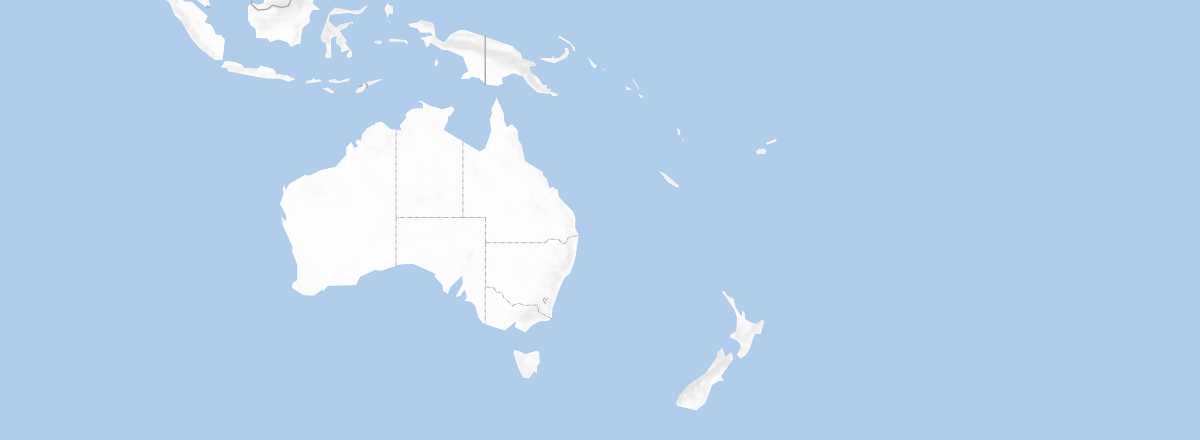 Oceania
Open the interactive map
Oceania
Open the interactive map
Official Recommendations
In France, both for individuals and professionals, the "travel advice" from the Ministry of Foreign Affairs regarding precautions for each country has legal weight. A similar online travel advice system exists in several countries:
Precautions
Apart from Papua New Guinea, which requires certain health and safety precautions, the Pacific region is relatively peaceful for travellers. At most, you’ll need to watch out for natural hazards if you venture off the beaten track: desert regions (and unfriendly critters) in Australia, seismic zones in New Zealand, active volcanoes on some islands, and cyclones in part of the region from September to December.
Health
Diseases and Hygiene
While there are few issues in Australia, New Caledonia, New Zealand, French Polynesia, and a few other islands, conditions differ elsewhere, particularly regarding mosquito-borne diseases. Dengue fever is present in Fiji, Cook Islands, Vanuatu, and Samoa, while malaria is found in the Solomon Islands, Papua New Guinea, and Vanuatu. Good mosquito protection is essential for these countries, as is a malaria prophylaxis locally, such as in PNG.
Hygiene also varies: no particular risks in Australia, New Caledonia, etc., but elsewhere, avoid tap water and be cautious with food. Note that medical care in Australia remains expensive.
Safety
Crime and Delinquency
While crime isn’t necessarily high, it exists everywhere, particularly in cities and tourist areas. As always, a little caution (and common sense) will usually keep you out of trouble.
It’s also best to avoid walking alone on deserted beaches at night. In Fiji, it’s better to avoid going out alone after dark, and taxis are recommended for nighttime travel.
Unlike other Pacific islands, Papua New Guinea has a high crime rate, especially in its capital. Stay vigilant and always check what to do (or avoid) to prevent issues.
Socio-Political Risks
Though Fiji, the Solomon Islands, and parts of PNG have experienced political unrest in recent years, the situation has generally calmed. However, always check the current situation if planning to visit these countries. No issues for other Pacific islands.
Climate and Nature
Australia:
Like United States, Australia offers vastly different climates and landscapes depending on the region. If travelling independently in the central desert areas, take all necessary precautions, stay hydrated, and protect yourself from the sun. Be careful not to get lost while hiking in national parks.
Additionally, cyclones affect the northern and northwestern coasts (September–December), bushfires are common in the southeast during the Australian summer, and strong currents along the west coast can make swimming dangerous.
Other Islands:
In New Zealand, the South Island presents the most "risks," including possible earthquakes, and the wild southern tip requires caution when hiking.
For other Pacific islands, active volcanoes (Hawaii, Papua New Guinea, Vanuatu) and cyclone risks in the southern region (November–April) are the main concerns.
Animals
Australia:
While urban areas pose no danger, the bush requires some caution. You might encounter unfriendly snakes, and in the northern parts, crocodiles in rivers or along beaches make swimming off-limits. Coastal areas also host sharks (and jellyfish). Prevention is well-established, and following recommendations will eliminate any risk of bad encounters.
Other Islands:
Few risks beyond mosquitoes carrying dengue or malaria in many islands.