last edited Aug 28, 2020
Safari: Precautions and Safety
Location Map of Destinations
 Destinations
Open the interactive map
Destinations
Open the interactive map
Regarding Animals
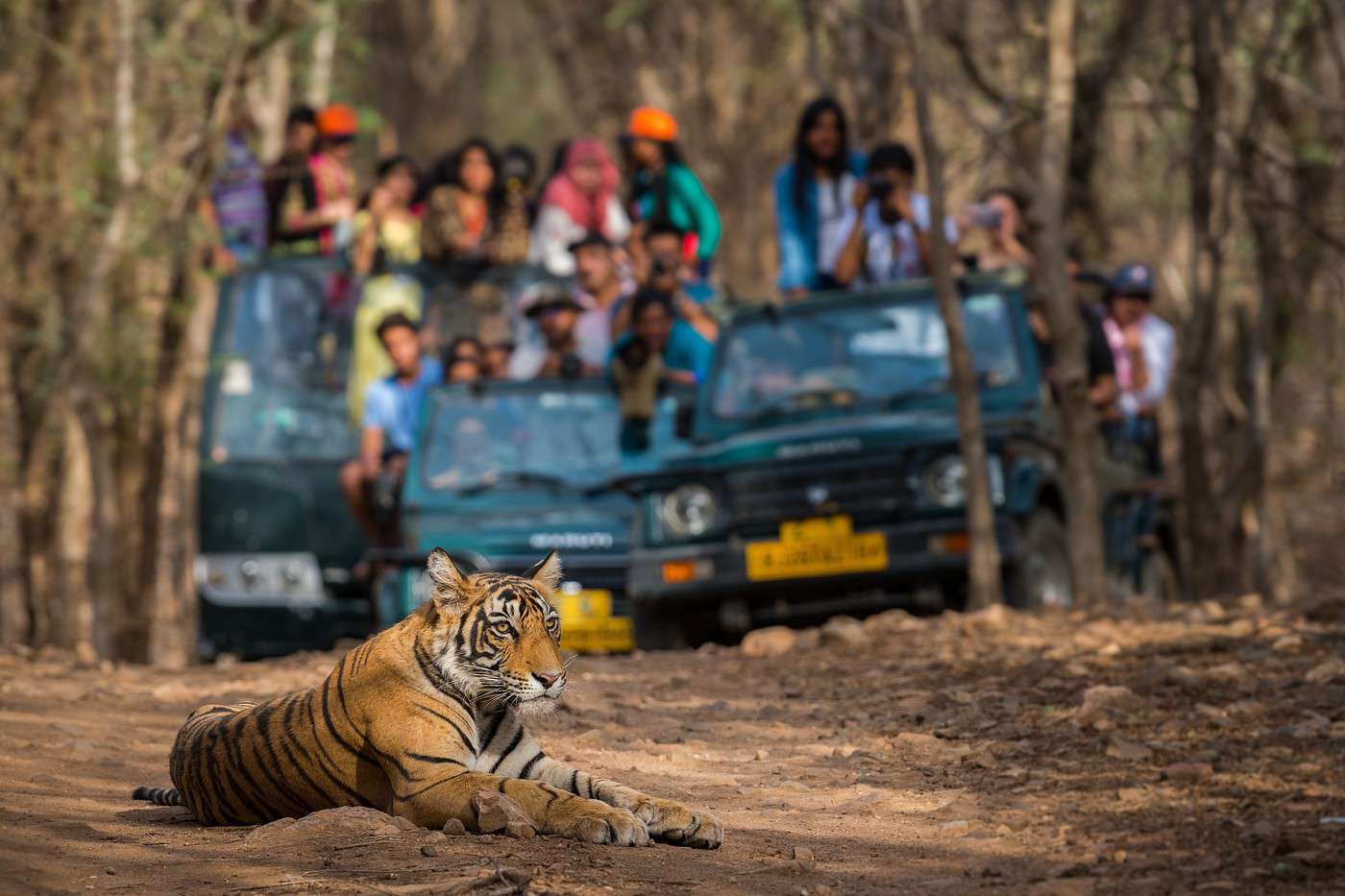
Precautions are necessary both during excursions and at stops, including to preserve the animals' tranquility. Even if some visitors tend to forget, the animals are at home in the bush. Therefore, it is up to humans to adapt, not the other way around. Logically, for both safety and animal protection, it is imperative to follow your guide's instructions and respect the internal regulations of parks and reserves.
If you are not accompanied and visiting a reserve alone with your vehicle, it is still preferable to know some basic rules about animal behavior.
Much like humans, each species operates based on "distances" relative to others. Thus, an intruder approaching within a certain distance will disturb the animal, causing it to move away. If the distance is reduced further, fear may set in, prompting the animal to flee. And if this distance becomes extremely close (and suddenly so), the fear can turn to panic, leading the animal to attack.
Of course, these distances vary from one species to another, depending on the situation (young, sick animal, etc.), but also on the animal's perception of the intruder. Strangely enough, most animals do not see humans in the same way whether they are on foot or in a vehicle. Whether through adaptation or evolution, the fact is that 4x4s and other minibuses have long been perceived as entirely harmless by animals. This is why you can approach within a few centimeters of notoriously dangerous predators (as long as they haven’t decided to climb onto the car’s hood), whereas on foot, the minimum safe distance would be 20 or 30 meters! Knowing this, it is therefore imperative not to leave your vehicle in such situations...
By Car
A few rules for those traveling in their own vehicle, starting with the most important: never get out of the car to get closer to the animals. Likewise, if nature calls, stop in a very flat and open area, far from bushes or tall grass that could hide animals. And, of course, stay as close to the vehicle as possible.
In case of a breakdown, it is also imperative to stay inside your car and not set off on foot to look for help. If you don’t have a phone or radio, wait patiently for another vehicle to pass by (hence the usefulness of always having a small water reserve).
Some animals may occasionally show aggression or even charge a vehicle. Though rare, it is possible.
Among the wildlife, three species pose this danger: elephants, buffalo, and rhinoceroses. There is no general rule, and risks vary depending on the individual and the situation (alone, with young, sick, etc.). Most of the time, however, things will be limited to an intimidating display, which can already be quite impressive. Still, there’s no need to wait for the next phase—in all cases, the best course is to slowly move away from the animal.
Lastly, always stay on the tracks, respect the park’s regulations, and remember that the animals are at home. So, do not frighten them or cut off their path if they cross in front of you.
On Foot
At the Stop
At a Lodge
Most lodges are fenced, so there is little chance of coming face-to-face with large animals. If not, guards are present. As a last resort, if you must move around at night, bring a flashlight and do not hesitate to make noise to scare off animals.
However, more than with large mammals, you are most likely to encounter monkeys. Naturally curious and sometimes thieving, some do not hesitate to enter rooms or bungalows. Hence the importance of keeping doors and windows closed, even when you are inside. As for snakes and other small creatures, while encounters are possible, they are rather rare.
One last obvious point: refrain from leaving your lodge alone at night to take a walk in the wild...
While Camping
There are two scenarios: either fenced and/or guarded sites, or open ones. In the first case, as with lodges, there is very little risk of a "bad" encounter.
If the tent is set up in an open space, the support team will have chosen a suitable location and set up the camp accordingly. Sometimes, a person is assigned to keep watch at night, and a lamp left on permanently in the middle of the camp helps keep animals away.
Nevertheless, it is common for animals, large or small, to approach during the night, either out of curiosity or habit. Again, there is little risk as long as you have not kept food in your tent. For added safety, it is also best to avoid camping too close to water, a path likely used by animals, or bushes where some may find food. In any case, your guide will tell you what to do or not do.
As for small creatures, to avoid their nuisance, it is better to sleep on a camp bed rather than directly on the ground. Likewise, always shake out your belongings to remove any potential intruders and use a stick rather than your hands if in doubt.
Finally, no solo nighttime walks outside the campsite, and if you must move around inside, always bring a flashlight and make some noise.