last edited Apr 28, 2026
Money, Budget, and Shopping for Thailand
Location Map of Thailand
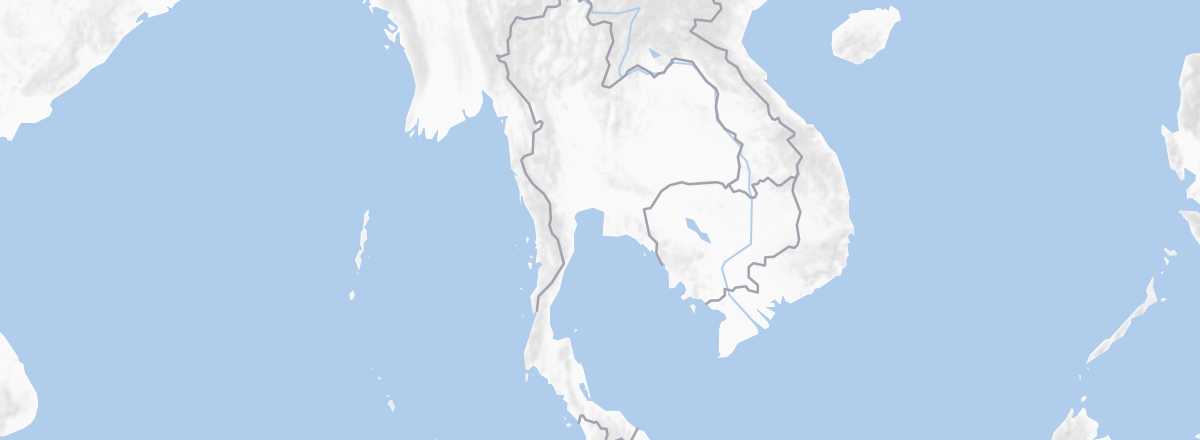 Thailand
Open the interactive map
Thailand
Open the interactive map
Money
Currency
- Currency: baht (100 satang).
- Banknotes: 20, 50, 100, 500, and 1,000 baht.
- Coins: 25 and 50 satang + 1, 2, 5, and 10 baht.
- Exchange:
Since all banknotes feature the king’s portrait and the monarchy is highly sacred in Thailand—even with the current sovereign being somewhat "eccentric" and autocratic—crumpling or stepping on one is legally considered "lèse-majesté," with potential penalties. It’s worth knowing.
Exchange
Major foreign currencies are easily exchanged in Thailand. Exchange bureaus (banks or private changers) are plentiful, especially in cities and tourist areas, so there’s no issue there. ATMs are also widely available for withdrawing baht, though it’s best to avoid small, repeated withdrawals due to bank fees—the same fees that apply when paying by card.
Which currency to bring
If you’re coming from the eurozone, euros will work fine as they’re widely accepted. No need to burden yourself with US dollars, which would add an extra conversion fee. However, bring large denominations (exchange rates are sometimes better) and ensure bills are in good condition, or they may be refused.
Payment methods
Thailand is increasingly becoming a cashless society, with card payments and now bank apps that scan merchants’ QR codes for direct payments growing in popularity.
That said, even as digital payments surge, you’ll still need cash for small daily purchases, markets, and street food—especially if you venture off the beaten path. Always keep some cash on hand.
Cards, including contactless, are accepted in many urban and tourist areas. There’s also the bank app system for scanning QR codes to pay for goods or services. While primarily designed for locals, there’s now an official app for tourists called TAGTHAi, which links to your card to create a virtual wallet for payments. Similar apps exist for urban transport.
Returning home
Outside Thailand, the baht is difficult to exchange. Spend everything or convert your remaining baht before departure. That said, if you’re traveling next to Laos, Thai currency can occasionally be used there.
Budget
Thailand remains an affordable destination for Western travelers, offering good value for money. You can live on 40 to 50 € a day (for two people) in backpacker mode. For a bit more comfort, 60 to 80 € is often enough. In short, it’s a budget-friendly destination where you can travel without (too many) sacrifices.
What can be expensive
- The islands and the south compared to the north, which is roughly a third cheaper.
- Dual pricing ("local" vs. "foreigner") for national park entry, which can add up over time.
- Frequent small withdrawals or card payments due to bank fees.
- Taxis in the most tourist-heavy areas.
- Alcohol, which is heavily taxed in the country.
What can be inexpensive
- Accommodation, food (especially street food), and local transport.
- Domestic flights if booked in advance.
Price range
- Budget double room: 10 to 15 € in a small guesthouse.
- Mid-range double room: For 30 to 40 €, you’ll find quality establishments.
- Snacks/meals (local): 2 to 3 € at markets or street stalls, or 6 to 7 € in local eateries.
- Meals (tourist-oriented): 15 to 20 € for a full meal in a tourist-friendly restaurant.
- Budget car rental: Small city cars around 20–25 € per day.
- Two-wheeler rental: Under 5 € per day for a bicycle, 8–10 € for a scooter.
- Long-distance buses: Roughly 2–3 € per hour for basic services, slightly more for standard or minivans, and 6–10 € for "VIP" buses with reclining seats (which can replace a hotel for overnight trips).
- Trains: Similar pricing to buses, depending on class.
- Urban transport: Less than 1 € per ticket for public transit.
Bargaining and tipping
Bargaining is common in Thailand, as in the region, especially in markets and souvenir shops. A fair compromise often settles around half the initial asking price. Note that many items have a "local" price and a higher "tourist" price—always ask around.
Tipping isn’t mandatory or deeply ingrained in Thai culture, but it’s often expected in tourist areas. In restaurants (unless service is included), you can add 10%, give 1 € to hotel staff used to visitors, 1–2 € for massages, round up to the nearest 10 baht for taxis, or 5–6 € for private guides or drivers.
Shopping and souvenirs
Options include textiles, clothing, silks, and traditional crafts—especially wood or ceramic items—best found and negotiated in markets. However, few tourists know that it’s technically illegal to bring Buddha statues taller than 12 cm without a permit, regardless of value. These are considered sacred objects, not tourist souvenirs.