last edited May 30, 2026
Money, Budget, and Shopping in Turkey
Location Map of Turkey
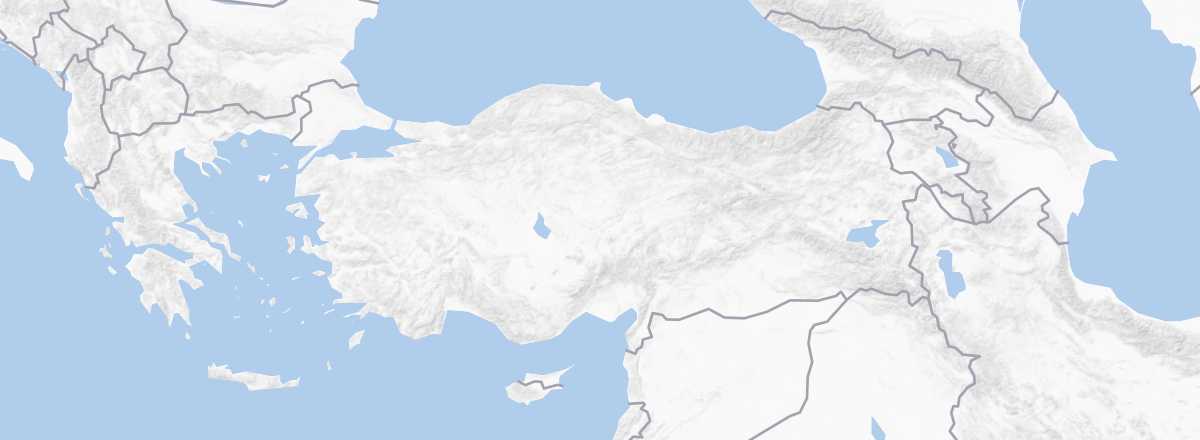 Turkey
Open the interactive map
Turkey
Open the interactive map
Money
Currency
- Currency: Turkish lira (100 kuruş).
- Banknotes: 5, 10, 20, 50, 100 and 200 TRY.
- Coins: 1, 5, 10, 25 and 50 kr + 1 TRY.
- Exchange:
Exchange
Major currencies, including the euro, can be exchanged without issue at exchange bureaus or banks that offer this service. You can also withdraw money from the many ATMs, which are generally easy to find. However, keep in mind that inflation is relatively high in the country, so if you stay for a long time, it’s best not to exchange all your money at once.
Which currency to bring
The currency from your home country: euro, Swiss franc, Canadian dollar, etc. Everything can be exchanged without difficulty.
Payment methods
As one of the world’s top tourist destinations, welcoming millions of visitors, Turkey offers a wide range of payment options. Beyond cash, which is still useful for small daily purchases, tips, and some bazaar shopping, credit cards—including contactless—are now widely accepted. So, no problem using your Visa or Mastercard, though over time, be mindful of the fees this payment method may incur.
Additionally, like in many countries, there’s now the option to pay via smartphone using a QR code through an app you download beforehand. This system is growing among merchants and is open to foreigners, even if they don’t have a local bank account.
Finally, in cities and tourist areas, it’s possible to pay for many things in euros, even if prices aren’t directly displayed in that currency. This can be handy, though it’s sometimes wise to check the exchange rate offered for the transaction.
Upon return
Since the Turkish lira is difficult to exchange—especially at a good rate—outside the country, it’s best to spend it all or convert any remaining local currency before leaving.
Budget
The budget for a trip to Turkey varies depending on the type of stay and the season. However, the country remains affordable compared to Western Europe, despite recurring inflation, which means some tourist services or site entry fees are directly priced in euros.
Plan roughly 45 €–50 per day per person for a "backpacker" trip for two, using public transport, eating at markets or small restaurants, and staying in mid-range hotels. For more comfort and activities, budget at least 60 €–70 per day to be comfortable.
What can be expensive
- Peak season during the summer months, when prices rise.
- Museum, site, and monument entry fees, which have increased significantly for foreigners—at least 25 € for the most famous ones. This makes pass options, like in Istanbul, worth considering if you plan to visit everything.
- A hot-air balloon ride in Cappadocia, costing at least 150 € per person.
- Alcohol, which is heavily taxed.
- Istanbul and tourist-heavy areas (Cappadocia, coastal regions) if you stay long or frequent places catering to visitors.
What can be affordable
- Sleeping, eating, and getting around like a local.
- Trains, which offer a good balance of quality, duration, and price in Turkey.
- Domestic flights, which are reasonably priced given the distances and time saved.
- Off-season travel, particularly April–May and September–October, offering a good mix of weather and budget.
Price range
- Double room in a "backpacker" hotel or homestay: around 20 €–30 per night on average.
- Same in a "tourist" hotel: around 40 €–50 for a good mid-range option.
- Snacks or meals in a "local" restaurant: 5 €–12.
- Meals in a "tourist" restaurant: around 15 €–20 for a basic option.
- Budget car rental: depending on the season, around 30 €/day for a compact car.
- Bus: from 1 €–2 per hour for standard buses to at least double for express/comfort lines. Still very affordable.
- Train: quite economical, with 5 €–6 per hour for high-speed or long-distance night trains. Half that for regional trains.
- Domestic flights: between 50 € and 100 € for major routes with Pegasus or Turkish Airlines Group.
- Urban taxi: around 12 €–15 for a 10-kilometer ride.
- Public transport: very affordable, often less than 1 € per ticket.
Bargaining and tips
Bargaining
Bargaining is part of Turkish culture, at least in certain places or situations. It primarily applies to purchases in bazaars and artisan shops, not in shopping malls, for example.
To bargain well, first decide on the maximum amount you’re willing to spend and research prices beforehand (fixed-price stores, the internet, hotel staff). Only start negotiating if you’re genuinely interested, and don’t haggle over a few cents. After the initial price is given (avoid stating yours first), you can usually offer a third, aiming to settle at 50–60% of the starting price. Bargaining takes time but should remain enjoyable, often involving tea and a sense of mutual exchange.
Tips
While not mandatory or automatic like in some countries, tipping is deeply rooted in local culture and greatly appreciated, especially in tourism and service sectors. In restaurants, it’s customary to leave (in cash) 5–10% of the bill. For taxis, you can round up the fare, and in hotels, leave around 1 € each time for staff. On excursions, a few euros for guides and drivers. In all cases, have small bills ready.
Shopping and souvenirs
With its many bazaars (starting with those in Istanbul) and rich, varied craftsmanship, Turkey is a paradise for shoppers and souvenir hunters.
Beyond the countless trinkets (not always Turkish) you’ll be offered, consider focusing on carpets, ceramics, beautiful mosaic glass lamps, gold or silver jewelry, objects made from meerschaum, onyx, or copper. Don’t forget spices, Turkish delight, tea, or coffee to enjoy in the Turkish style. And much more to discover (and negotiate) as you wander through bazaars and markets.