last edited Aug 26, 2020
Camel Treks
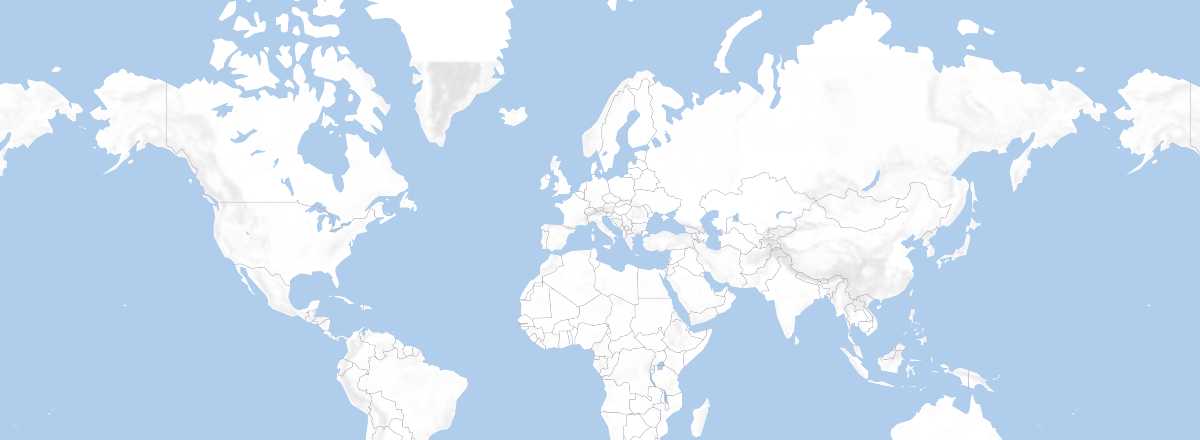
Location Map of Destinations
 Destinations
Open the interactive map
Destinations
Open the interactive map
Types of Camel Treks
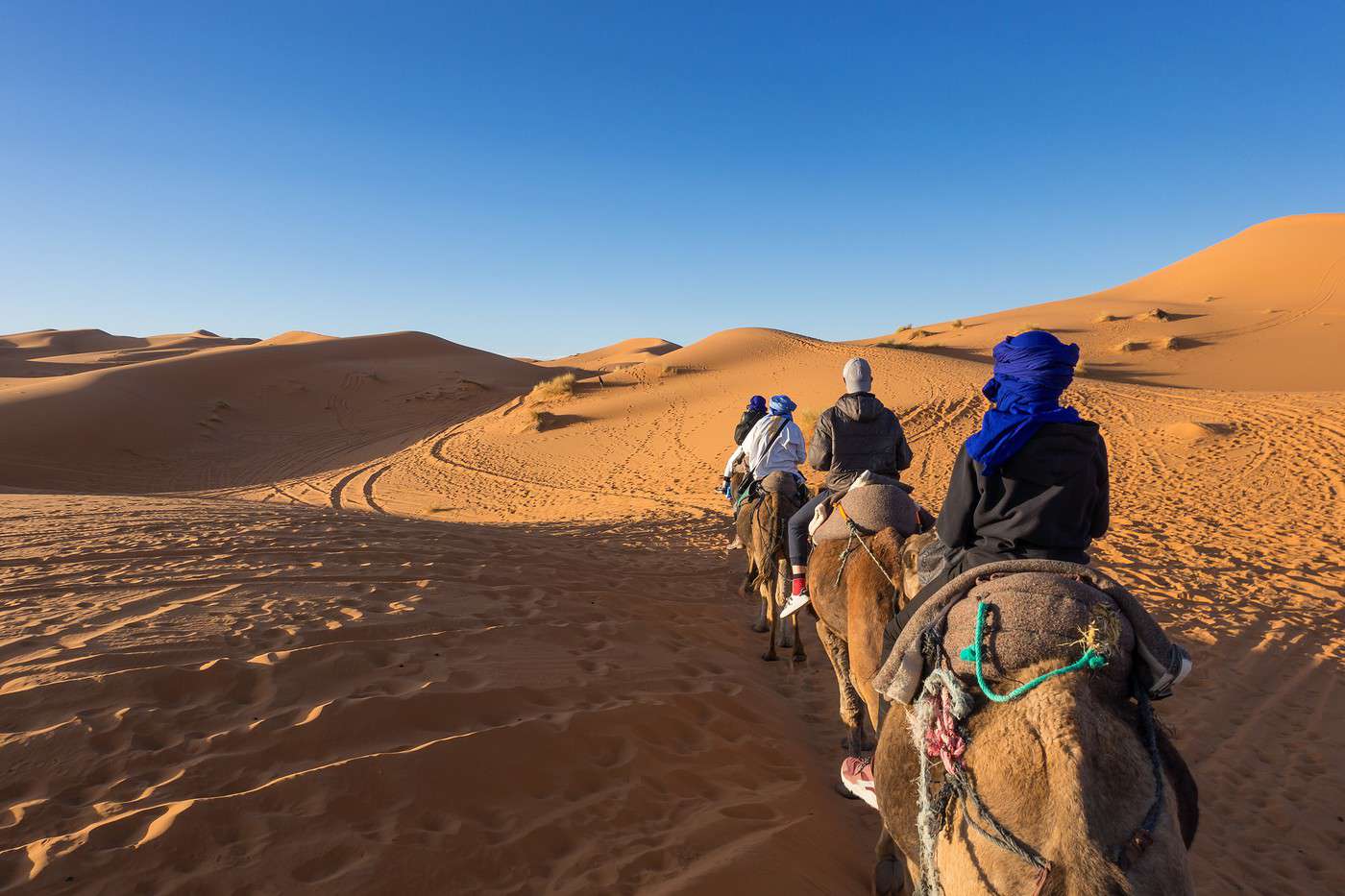
Travelling by camel—or more precisely, by dromedary—isn’t the most common way to get around. In the vast majority of cases, the trip will consist of short rides along the edge of the desert, primarily the Sahara. However, there’s also a market for multi-day or even multi-week camel treks.
Duration
Short Rides
These are just a few hours long, enough to get a taste. In this case, you’ll easily find local agencies in all tourist spots (not all of which are in the Sahara, by the way), from Morocco to Egypt, including Tunisia and Jordan, offering this type of ride. It might even be included in your package if you’re travelling with a generalist tour operator.
For this kind of trip, there’s nothing particular to organise. Budget a few euros for a one- or two-hour ride, depending on the location (and your bargaining skills).
2- or 3-Day Treks
Already more interesting in terms of experience (if only because you’ll experience the desert at night), as well as the places and people you’ll discover. In a way, this can be ideal for those who don’t want to spend too much or aren’t big fans of this type of adventure. But as always, it’s best to test the waters with a short ride first to see if you’re really interested.
This type of trek is usually offered by local agencies, as well as by European adventure tour operators, often combined with other activities.
Long-Duration Treks
For a week, two, or even longer. These are aimed at a motivated and trained audience, as the circuits often require active participation and a high degree of adaptability. The reward? Unique experiences, often far from the beaten path. Like the shorter options, these are offered by specialised desert agencies. Given the logistical challenges and the difficulty of finding enough participants, it’s best to book with tour operators who plan these adventures well in advance if you want to be sure to go.
Who to Book With?
Local or "International" Agencies
Organising Your Own Trek
While it’s certainly possible to find your own camels and guides before setting off, this really only applies to a very small group of people—those who genuinely want to explore almost unknown areas.
Even if the experience of organising it yourself can be thrilling (though for longer treks, everyone is often involved), it’s far from improvised. It requires time, money, and comes with risks, from simple scams to much more serious issues. So, it’s often simpler to use existing structures that already offer plenty of options (including "custom" ones).
Country-Specific Options
Sahara
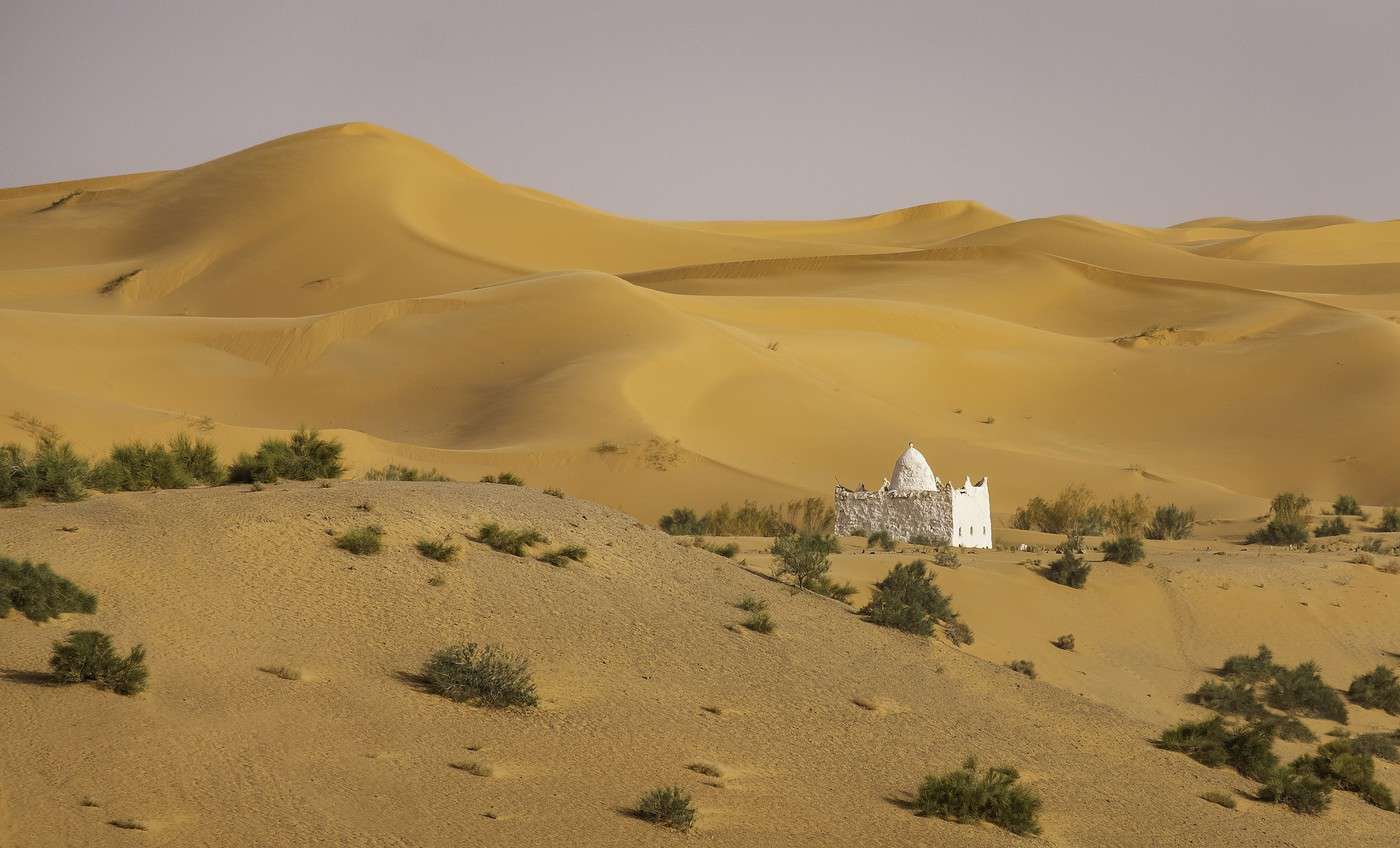
The Sahara, of course, offers the most opportunities, though security issues in many areas have significantly reduced the options.
Camel treks are a bit of a cliché of the Sahara, with caravans of camels (actually dromedaries) against a backdrop of dunes. From short one-hour rides to multi-day treks, everything is possible in the Sahara—but only in very specific places and under particular conditions for the longer treks.
Algeria
The south has always been a prime area for camel treks, with plenty of multi-day options for motivated travellers. There’s a lot to do in the Hoggar, Tassili, and around Tamanrasset and Djanet. The only issue is the security risks, which at times make such experiences impossible or severely limited.
Egypt
The Sahara here isn’t very suitable for camel rides (too arid). There are only a few short options along the Nile or in the Sinai.
Libya
The country no longer has much of a camel-riding tradition (except in the Tadrart region in the southwest), and the ongoing security situation hasn’t helped tourism.
Mali
Traditionally, like Niger, Mauritania, and southern Algeria, Mali has always been a hub for camel treks, especially in the Adrar des Ifoghas region. Unfortunately, the country’s situation and real risks no longer allow treks or tourism in much of the country.
Morocco
There’s plenty of choice, primarily "tourist" treks lasting a few hours or days, starting from southern oases like M’Hamid or Merzouga. Morocco is particularly good for a first taste of camel treks.
Mauritania
Of all the countries, this one has the strongest camel-riding tradition. There are many interesting options, especially in the Adrar region, designed for both seasoned trekkers and beginners. The only issue, once again, is security.
Niger
The Aïr Massif offers the best opportunities, though they’re not always the easiest. Unfortunately, like Mali, the country’s situation and real risks no longer allow treks or tourism in much of the country.
Chad
There are superb multi-day options in the north (Tibesti) for desert lovers, though these always depend on the current security situation.
Tunisia
In many ways, Tunisia remains an excellent place for camel treks. It’s a cheap and easy destination to travel in, offering a wide range of camel rides, especially from Douz and the surrounding area. Both short rides and multi-day treks are possible for all tastes and levels. The only downside is that, despite the dunes, the Sahara here isn’t the most spectacular.
Sudan
While it’s possible to organise treks, the country is tough to travel in, with ongoing security concerns and administrative constraints on movement. Best to avoid.
Elsewhere in the World
Practical Camel Tips
Organisation and Equipment
A few useful tips for multi-day treks.
Organisation
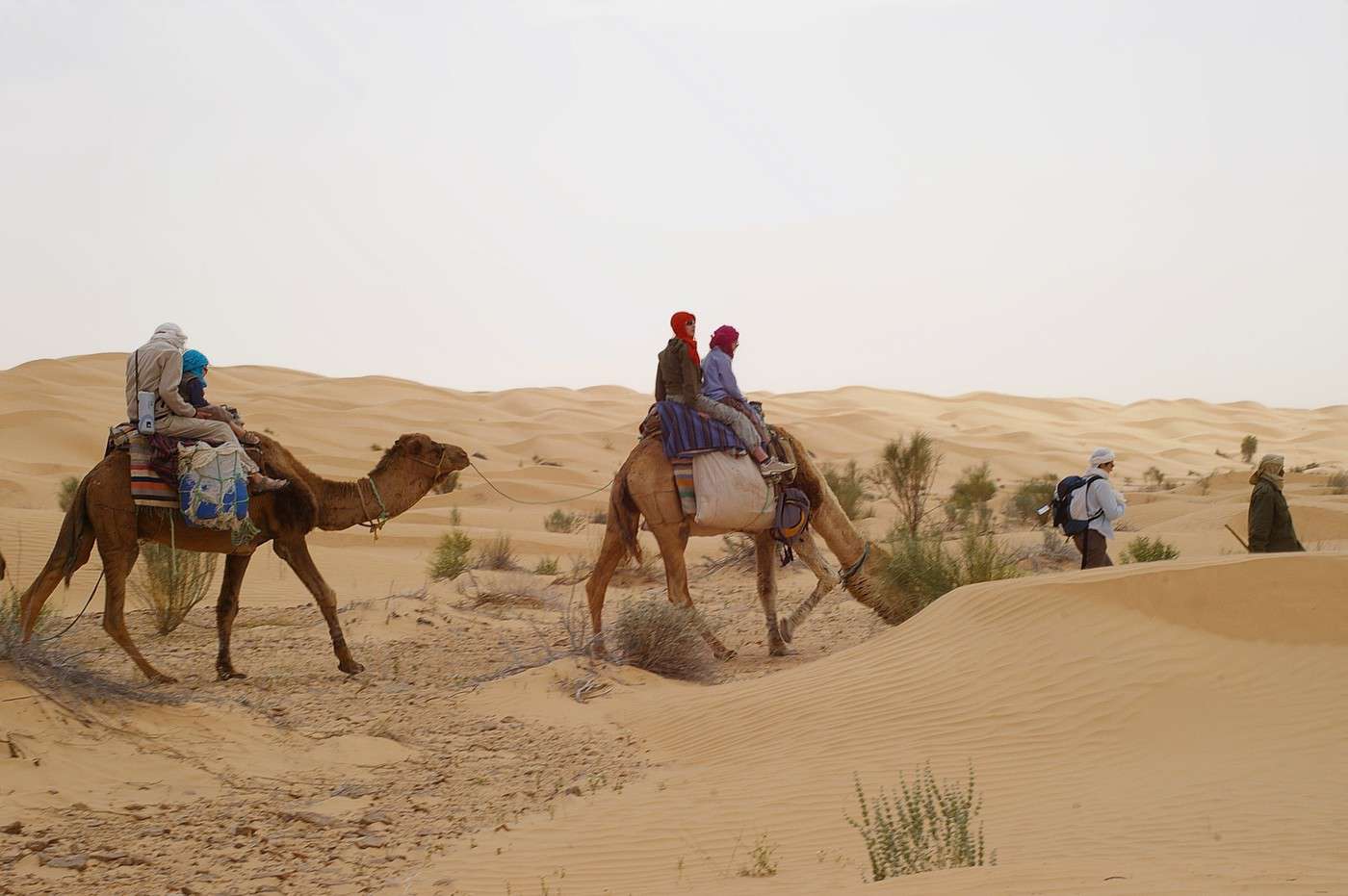
For camel treks, it’s important to know you won’t spend all your time on the camel. You’ll often walk alongside it.
Generally, a trek can quickly become tiring because you’re constantly exposed to heat and wind without the protection (or supplies) a vehicle offers. Plus, if you venture off the usual tourist routes, you might encounter guides who set a pace that’s not always easy for beginners. So, it’s best to know what to expect before fully appreciating the desert’s splendours.
In practice, the group (usually 5 or 6 to a maximum of 15 participants) is always accompanied by a guide and one camel handler for every 3 or 4 animals. Not all camels are for riding—some are just for carrying luggage.
Finally, keep in mind that time is always a bit unpredictable in the desert, and depending on the stages, you might sometimes have to travel for more than 10 or 12 hours before reaching the next camp.
Equipment
For multi-day treks—otherwise, for a few hours, all you need is water and good sun protection. For longer trips, travel light (and smart), bringing only the essentials in soft duffel bags or frameless backpacks so they can be easily secured to the animals’ saddles.