last edited Sep 15, 2020
Itinerary: "Marrakech-Casablanca and the Imperial Cities"
Features
Around 1,300 km over fifteen days. This journey can also be easily done by train and bus.
Route: Marrakech > El Jadida > Casablanca > Rabat-Salé > Meknès, Volubilis, Fez > Ifrane and Ifrane National Park > Khénifra National Park > Beni Mellal > Ouzoud Waterfalls > Aït Bougmez Valley > Marrakech.
Highlights
Marrakech, the Atlantic coast, and the Atlas Mountains in a single trip for a mix of culture, nature, and relaxation.
Itinerary and Stages
- Day 1 to 3: Marrakech.
-- Marrakech: a must-see with its rich heritage, medina, and lively atmosphere.
- Day 4: Marrakech > El Jadida (approx. 200 km)
-- El Jadida: El Jadida is a tourist-recognized city thanks to its UNESCO-listed Portuguese ruins. The small seaside resort of Azemmour is nearby.
- Day 5: El Jadida > Casablanca > Rabat-Salé (approx. 200 km)
-- Casablanca: the country’s economic capital. Almost all its buildings date from the 20th century, and its new districts, with contemporary architecture, compete in opulence and modernity. It’s quite far from the "traditional" image one might have of a Moroccan city...
- Day 6: Rabat and Salé
-- Rabat: the Kingdom’s capital is an important city whose most remarkable monuments perfectly illustrate architectural excellence from the Middle Ages to today. Rabat is a UNESCO World Heritage site.
-- Salé: the city faces Rabat, with which it is "indissociable." Its heritage is one of the attractions of the Rabat-Salé conurbation.
- Day 7: Rabat-Salé > Meknès (approx. 150 km)
-- Meknes: a neighbor of Fez and, like it, an imperial city with a rich historical and cultural heritage that has earned it UNESCO status.
- Day 8 and 9: Meknès > Volubilis (8)/Fez (9) > Meknès
-- Volubilis: this Roman city is a UNESCO World Heritage site and one of the best-preserved ancient sites in all of North Africa.
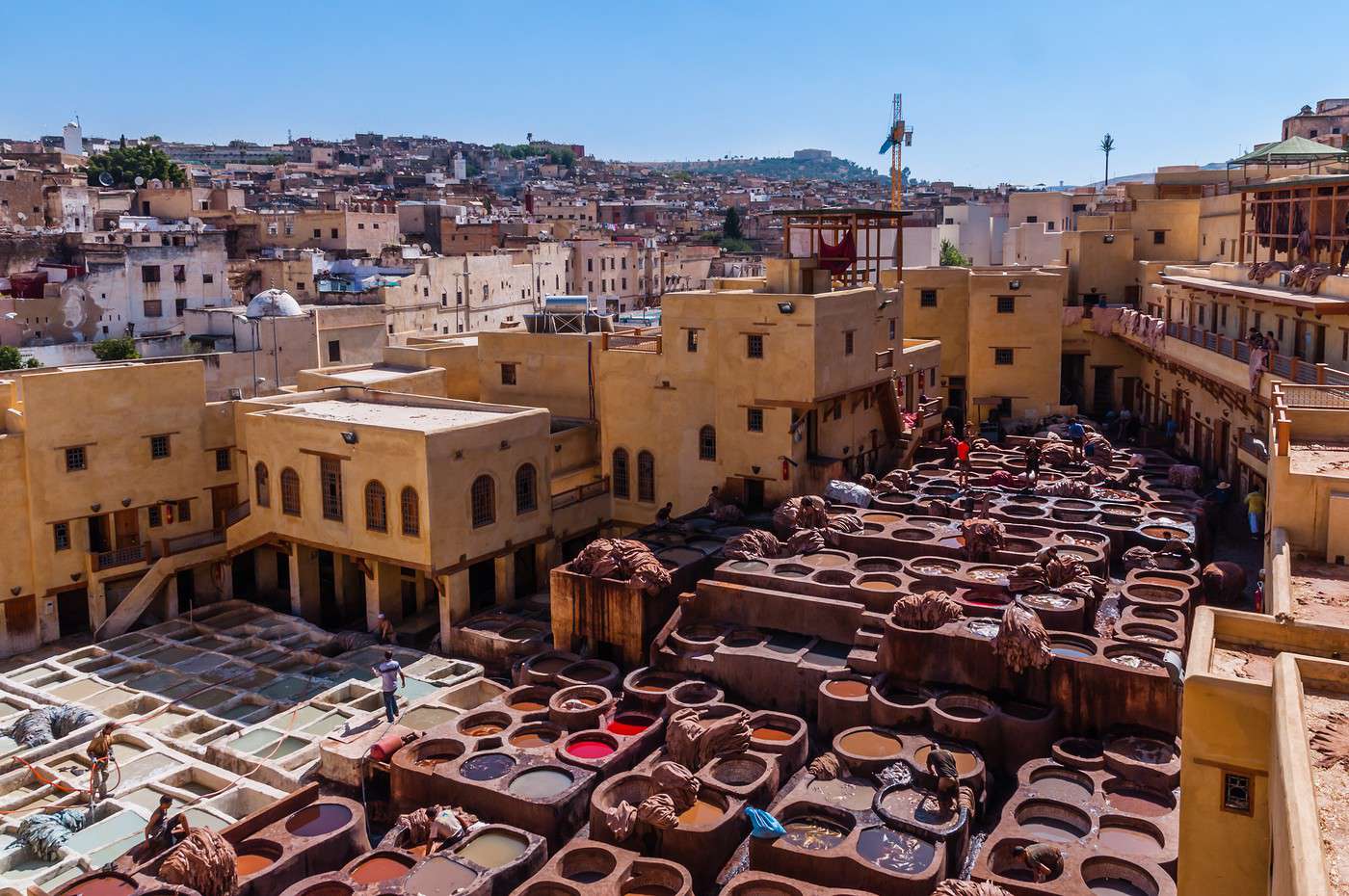
-- Fez: a very beautiful imperial city, like Meknès, with significant cultural heritage and a medina listed as a UNESCO World Heritage site.
- Day 10: Meknès > Ifrane (approx. 100 km)
-- Ifrane: nestled in the heart of the mountains, the town and its surrounding landscapes resemble Europe.
- Day 11: Ifrane National Park
-- Ifrane National Park: the park is home to the largest cedar forest in the Maghreb. It offers stunning landscapes, several lakes, and is a popular spot for hiking and mountain fishing.
- Day 12: Ifrane > Khénifra National Park (approx. 100 km)
-- Khénifra National Park: the newest of Morocco’s national parks, in a mountainous area where you can hike and observe a rich variety of wildlife.
- Day 13: Khénifra National Park > Beni Mellal > Ouzoud Waterfalls > Aït Bougmez Valley (approx. 300 km)
-- Beni Mellal: a major town in the center of the country with a fairly impressive kasbah.
-- Ouzoud Waterfalls: at 110 meters high, these are the most famous waterfalls in Morocco and the tallest in North Africa.
- Day 14: Aït Bougmez Valley
-- Aït Bougmez Valley: one of the most beautiful valleys in the High Atlas. With its stunning landscapes and traditional villages, it offers plenty of hiking opportunities.
- Day 15: Aït Bougmez Valley > Marrakech (approx. 200 km)