last edited Mar 18, 2026
Money, Budget, and Shopping in the Dominican Republic
Location Map of Dominican Republic
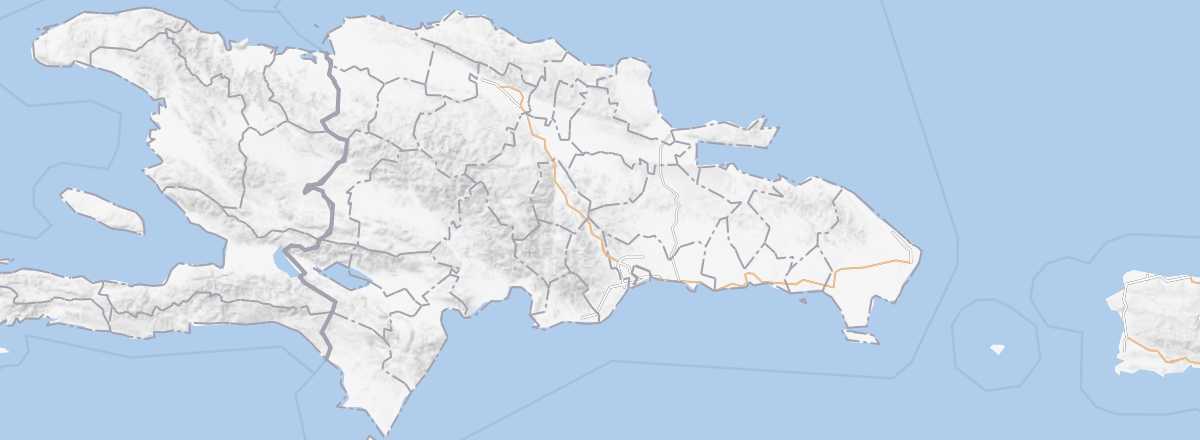 Dominican Republic
Open the interactive map
Dominican Republic
Open the interactive map
Money
Currency
- Currency: Dominican peso (100 centavos).
- Banknotes: 50, 100, 200, 500, 1,000, and 2,000 RD$.
- Coins: 1, 5, 10, and 25 RD$.
- Exchange:
Exchange
There’s generally no issue exchanging major currencies. You’ll easily find exchange bureaus at ports and airports, in most banks, hotels, and many tourist spots. Still, always check the rates offered—airports and hotels don’t always have the best deals.
ATMs are also widely available across the country, and most banks have them. There’s also a small black market or street exchange, but it’s mostly a tourist trap and best avoided.
Which currency to bring
While the official currency is the Dominican peso, in tourist areas, you can often pay in US dollars or euros (and occasionally Canadian dollars) at most shops, stores, and even restaurants or bars, where change is usually given in pesos. In fact, for larger amounts, prices are often listed directly in these foreign currencies rather than the local one.
It’s also worth comparing exchange rates for prices in foreign currencies to get the best deal. If exchanging cash into pesos, it’s better to exchange euros directly to avoid extra fees rather than converting to US dollars first. The same applies to Canadians with Canadian dollars. The best approach is to bring euros in cash, with a small amount of US dollars for entry/exit taxes or emergencies.
Payment methods
Card payments, as well as cash in foreign currencies, are widely accepted on the island, and contactless payments are now common too. Still, keep some pesos for small expenses, and watch out for bank fees if you make too many small purchases or withdrawals.
Returning home
The Dominican peso isn’t easily exchangeable at good rates outside the country. It’s simplest to end your trip with euros or dollars, which you can always use or exchange easily for another trip if you have any left.
Budget
Compared to many other islands in the region, the Dominican Republic is a relatively affordable destination for independent travelers. Those not staying in all-inclusive resorts, where expenses differ, can budget around 50 to 60 € per day for two people traveling "local." For a bit more freedom and to enjoy activities like diving, it’s better to plan for 60 to 80 € per day minimum. In the low season, prices for accommodations, restaurants, and rentals—especially those catering to tourists—are generally 20 to 25% cheaper.
As for all-inclusive resorts, while the upfront cost is often very low, extra expenses and add-ons on-site can quickly inflate your budget. Anything not included is often just as expensive, if not more, than in Europe or North America.
What can be expensive
- Staying long-term in beach resorts.
- Organized excursions from hotels and all their extras.
- Peak season.
What can be affordable
- Eating, sleeping, and traveling "local" (buses, guaguas).
- All-inclusive deals in promotions or off-season.
Price range
- Local hotel room: 30/40 € for a double, a good first option.
- "Tourist" hotel room: at best around 100 € for a double in resort complexes.
- All-inclusive: expect starting offers around 1,000/1,200 € per week.
- "Local" restaurant meal: 5 or 6 €, sometimes even less.
- "Tourist" restaurant meal: a good first option around 15 €.
- Budget car rental: around 40 € per day, or 60/70 € for a small 4x4.
- 100 km by bus or guagua minibus: 4 or 5 € per 100 km, depending.
Bargaining and tips
Bargaining
Bargaining is common for many things when prices aren’t displayed. For visitors, this mostly applies to souvenirs in shops. You can also negotiate for multi-day stays in guesthouses during the off-season. For transport, aside from taxis and moto-taxis (where you should agree on a price beforehand), there’s no bargaining—just make sure the fare matches what other passengers are paying. That said, if the price works for you, there’s no need to haggle, especially over small amounts.
Tips
Nothing is mandatory, especially in restaurants where the bill includes a 10% service charge—though you can leave extra if you’d like.
For all-inclusive resorts, many guests, particularly North Americans, are used to tipping hotel staff (bartenders, servers, housekeeping, etc.). Since wages are low, tipping is appreciated. However, while you can be generous, there’s no need to leave disproportionately large tips like you might in Europe or North America. The amount should reflect the service provided and the local cost of living. Even if some staff may pressure you for more, 1 or 2 € per day per employee seems reasonable.
As for gifts, while the gesture may seem kind, the Dominican Republic isn’t Cuba; Dominicans’ needs are different from those of Cubans, and money will always be more appreciated.
Shopping and souvenirs
You can shop in malls (open daily until 8 or 9 PM), boutiques (8:30/9:00 AM to 5:00/6:00 PM on weekdays, until 1:00 PM on Saturdays; closed Sundays), or markets. Logically, markets offer the best prices, and bargaining is possible.
What to bring back
- Haitian handicrafts: With colorful naïve paintings and small metal sculptures, Haitian crafts are well-represented in Dominican markets and shops.
- Jewelry and semi-precious stones: Santo Domingo is the land of larimar, a semi-precious blue stone even honored with two museums. It’s widely used in jewelry, giving unique pieces. Alongside these typical items, you’ll also find the usual range of jewelry, as well as amber-based creations, another local specialty.
- Ceramics and small handicrafts: You’ll find various ceramic objects depicting Dominican landscapes, as well as pottery and wooden sculptures.
- Cigars: Dominican cigars are major competitors to Cuban ones. There are several brands, many varieties, and different qualities, with prices to match. You can visit several museums in the country, as well as factories near Santiago, the main production area.
- Music: Merengue and bachata are two typical music styles from the Dominican Republic.
- Taíno replicas: These are various objects replicating the craftsmanship of the Taíno, the island’s first inhabitants.
- Rum: The national drink, even honored with a museum in the capital. Dominican rum is known for its smoothness and unique aromas, as it’s distilled and aged in oak barrels.
- Wickerwork: There’s a local craft production of baskets, bags, and hats made from guano or reeds.