last edited Feb 19, 2026
Health and Safety in the Dominican Republic
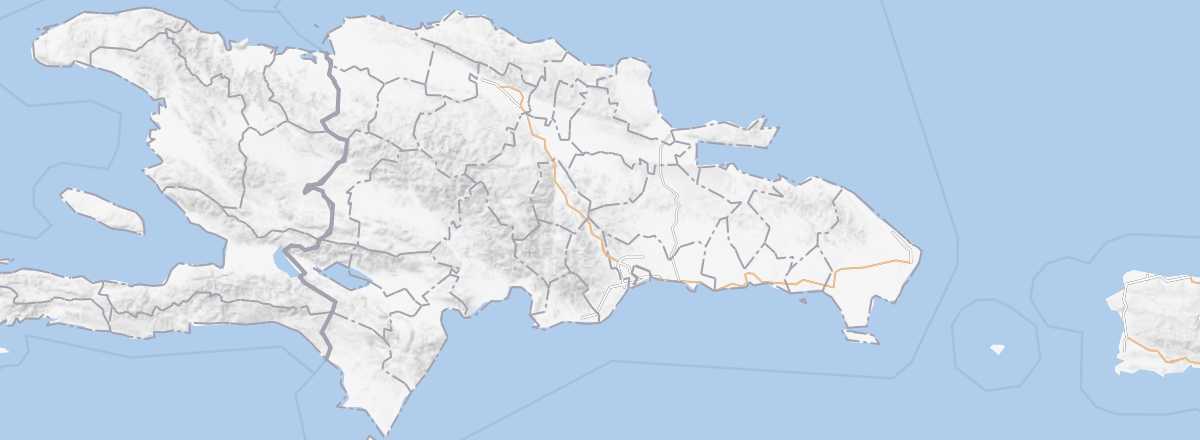
Location Map of Dominican Republic
 Dominican Republic
Open the interactive map
Dominican Republic
Open the interactive map
Official Recommendations
In France, both for individuals and professionals, the "travel advice" from the Ministry of Foreign Affairs regarding precautions for each country has legal value. A similar online travel advice system exists in several countries:
Health
Diseases
The Dominican Republic does not pose significant health risks, especially in the most tourist-heavy areas. While cases of malaria, dengue, Zika, or chikungunya spread by certain mosquitoes are occasionally reported, these typically occur in the western part of the country, near the border with Haiti.
That said, bringing mosquito repellent and wearing appropriate clothing, particularly in the evening, is still a good idea to prevent bites anywhere in the country. It’s also wise to ensure your vaccinations are up to date, even though nothing is officially required to enter the country.
Hygiene
As always, good personal and especially food hygiene is essential if you’re not used to "eating local." Avoid tap water, which may not be safe to drink, and steer clear of dishes or foods that don’t seem fresh—if only to dodge the occasional bout of traveler’s diarrhea. Additionally, there’s a common food poisoning in the Caribbean called ciguatera, caused by eating certain toxic coral fish.
Also, make sure to stay hydrated and protect yourself from the sun in hotter regions or seasons, and don’t forget to wash your hands regularly.
Local Healthcare Facilities
Local healthcare facilities, particularly private ones, are generally well-equipped and of good quality. Many hotel complexes also have a clinic that can handle basic issues. However, it’s important to know that private healthcare in the Dominican Republic is (very) expensive, with a system increasingly resembling the U.S. model. As always, comprehensive travel insurance is highly recommended.
Safety
Crime and Delinquency
Like many places, crime has risen in the Dominican Republic in recent years, partly due to drug trafficking, which is strictly punished by local authorities.
While tourist areas are only moderately affected, it’s still wise to stay cautious, avoid flaunting wealth, and use hotel safes. Steer clear of deserted beaches, isolated areas at night, and solo hikes. That said, with basic common sense and precautions, you can clearly enjoy a peaceful stay.
Sex Tourism
The Dominican Republic is one of the destinations where prostitution and sex tourism are fairly common, though local laws impose severe prison sentences for any relations with minors. Additionally, European and Canadian laws allow for the prosecution of their citizens upon return if evidence of underage relations abroad is found.
Scams and "Tourist" Harassment
As in many heavily touristed places worldwide, small scams can target visitors. Keep an eye on your bank card during transactions to avoid fraud or cloning. Generally, be wary of "overly helpful" people around hotels, airports, beaches, or tourist spots. Without being paranoid, scams—especially in "romantic" encounters—can happen.
In another area, there have been reports in recent years of real estate scams, including timeshares, targeting foreigners interested in buying a second home in the country.
Sociopolitical Issues
There are no major risks in this area, though it’s still best to avoid crowds during social movements, which can occur from time to time.
Climate and Nature
Beyond the usual precautions for swimming in the sea, the main natural risk in the Dominican Republic is hurricanes and their direct consequences, such as flooding or landslides. Cyclones are most common between August and October, though the season runs from June to November. Authorities take steps to inform and protect the population. More broadly, the island is in a seismic zone, particularly in its western part bordering Haiti.
Animals
In addition to mosquitoes and other biting insects (treat with repellent), be cautious on beaches or near rivers—wear shoes or use a towel to avoid contact with sand or soil where parasites may lurk. Otherwise, there’s little to worry about beyond the occasional stray dog, which can sometimes be aggressive or carry diseases.
Foreign Consulates in the Country
If you run into trouble while traveling abroad, your country’s consular services can assist. Also, if you’re an EU citizen and your country isn’t represented, you can contact any other EU member state’s representation.
France
Consulate General: Calle las Damas n° 42, Zona Colonial, BP 780, Santo Domingo. Tel.: +1 809 695 4330.
Four honorary consuls are also attached to the French embassy, located in Las Terrenas (tel.: +1 809 240 6111), Bávaro Punta Cana (tel.: +1 809 552 1223), La Romana (tel.: +1 809 836 3842), and Santiago (tel.: +1 809 581 7772).
Belgium
Belgium has no official representation in the Dominican Republic, as it’s covered by Jamaica. However, there is an honorary consulate at 207 Padre Billini, Ciudad Colonial, D.N. Santo Domingo. Tel.: +1 809 687 2244.
Canada
Consulate General: Av. Winston Churchill 1099 Torre Citigroup en Acropolis Center, 18th floor, Ensanche Piantini, Santo Domingo. Tel.: +1 809 262 3100.
There is also a representation in Punta Cana (tel.: +1 809 455 1730) and a Canadian consulate in Puerto Plata (tel.: +1 809 586 5761).
Switzerland
Consulate General: Ave. Jimenez Moya 71, (Churchill esq. Desiderio Arias), Santo Domingo. Tel.: +1 809 533 3781.