last edited Aug 3, 2026
Getting Around Guatemala
Road Network and Traffic
In Guatemala, the main road network between major cities isn’t too bad, though it’s often congested. However, as in many other countries, secondary roads require much more caution. During the rainy season, some routes may be cut off due to flooding or landslides. Additionally, traffic rules are loosely followed by most drivers, and road signage is minimal. Outside urban areas, it’s best to avoid driving at night.
Car Rental
You can rent a car in Guatemala with your national driver’s license if the rental is for less than a month. Expect to pay around $40–50 USD per day for a basic compact car. If the driver is under 25, additional mandatory insurance will likely apply.
Practically speaking, a 4x4 isn’t necessary unless you plan to drive on unpaved roads. For safety, avoid driving at night and always use guarded parking. Crossing borders with a rental vehicle is almost never allowed by agencies, and if it is, get written confirmation.
That said, renting a car isn’t always the best or only option for exploring Guatemala. The country is relatively small, local transport is inexpensive, and tour or hotel vehicles for excursions are often affordable. You can also hire a taxi for the day at a reasonable cost. This way, you avoid the hassles of driving.
Buses and Shared Vehicles
Buses
Like in many countries, there are two types of buses: basic ones, which are the cheapest but slowest, and "express" or similar services, which offer better comfort for a slightly higher price. Both tend to operate mostly in the morning.
Chicken Buses
Chicken buses are recycled American school buses, often with worn-out mechanics, used for local transport over short distances. They’re the most economical way to get around—less than $2 USD per hour of travel (40–50 km max). Beyond the price, they offer a unique experience and a chance to meet locals.
However, these buses don’t run on fixed schedules and usually leave only when full enough to be profitable. The driver and assistant’s pay depends on how full the bus is, leading to overcrowding (sometimes three people per seat) and a frantic race to pick up passengers first. Direct routes between cities aren’t always available—you might need to switch buses at a major junction.
First-Class Buses
Less colorful than chicken buses, these "classic" buses are about two to three times more expensive but far more comfortable and faster, making them a good option for travelers. They connect major cities, mostly over long distances, with several companies operating across the country.
Shuttles
Also called "agency vehicles," these minibuses fill gaps in public transport and are a profitable business for tourism professionals. You’ll find them in places like Antigua, Chichi (on market days), Panajachel, and the international airport.
Shuttles offer comfortable transport tailored to tourists (locals rarely use them), with convenient schedules, hotel pickups, and direct routes. You can book them online, through any agency or hotel, or hop on if there’s space. Many companies operate locally.
Prices are fixed and posted, typically three to four times higher than local buses. Shorter or high-demand routes are proportionally more expensive. For example, Antigua to the airport or Flores to Tikal costs around $15 USD for under an hour, while Antigua to Tikal is about $60 USD for a ten-hour trip.
In short, shuttles are a good option for quick, comfortable travel if you’re not strictly looking for the cheapest transport (though they’re still affordable). They’re especially useful for long distances, though they do keep travelers in a bubble, disconnected from the country and its people.
Cycling
Guatemala isn’t an easy country for bike travel unless you’re motivated or experienced. Between the terrain, altitude (many roads wind between 1,500 and 3,000 meters), rainy season (May to October), traffic, and safety risks, it’s not ideal for exploring the whole country this way. That said, short mountain bike rides around Lake Atitlan, Tikal, or Antigua are still an option.
Hitchhiking
For safety reasons, hitchhiking is not recommended. Additionally, it’s usually paid (at bus fare rates), and public transport is inexpensive.
Trains
There are no longer any operational trains in the country.
Boats
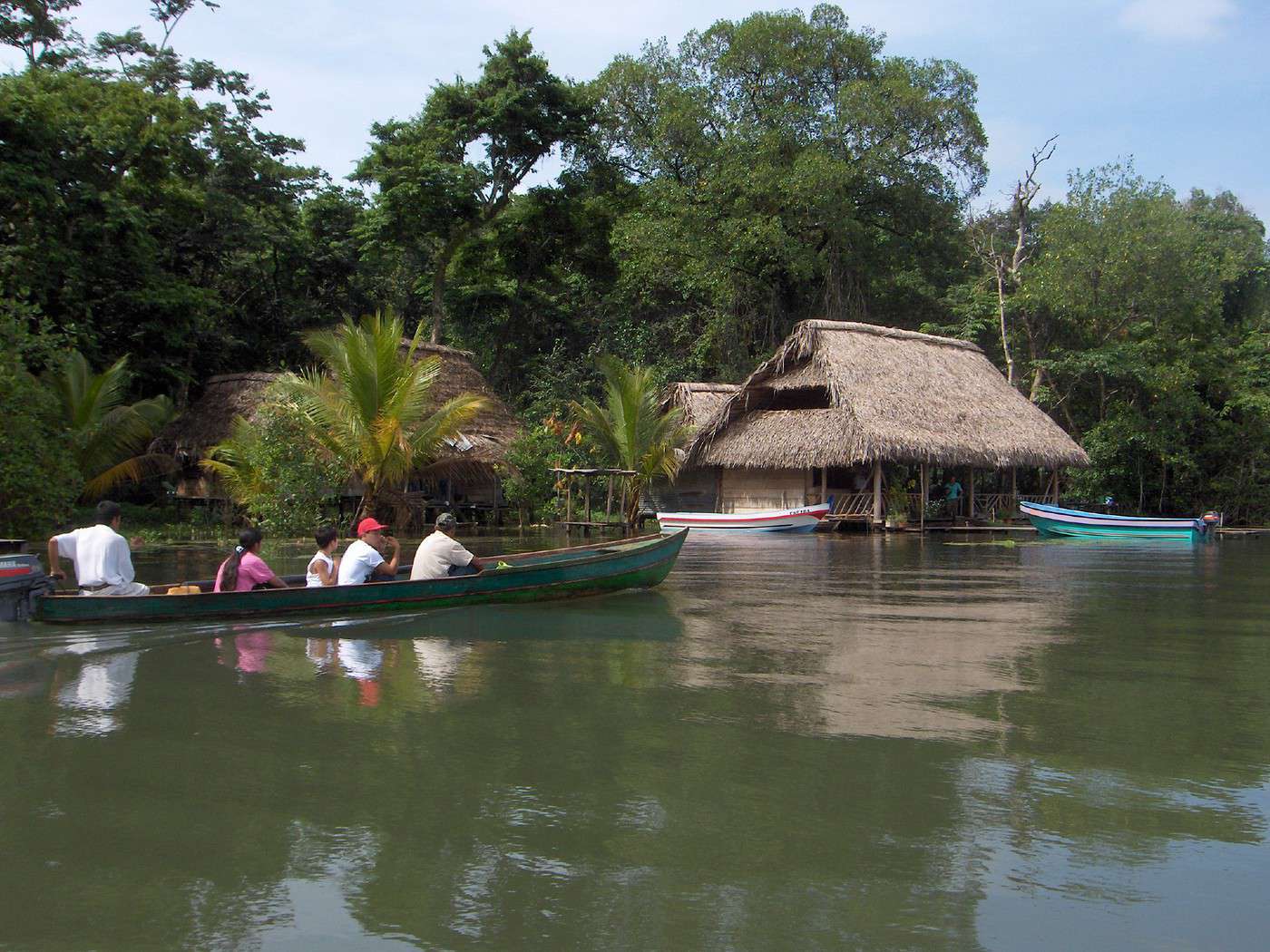
There are opportunities for water travel, whether to navigate Lake Atitlan, reach Livingston (and Belize) from Puerto Barrios, travel up the Rio Dulce, or cross into Mexico from Petén. Options include regular services, agency boats, or chartering a "lancha" for the occasion.
Domestic Flights
The country is small, and the only domestic route is between Guatemala City and Flores, which can be a time-saver for reaching Tikal from the capital region. Flights take just under an hour and cost around $120 USD one way.
In Towns
Beyond urban buses (camionetas, colectivos, or the capital’s Transmetro), you’ll find taxis (some with meters) in all cities, as well as fixed-price ride-hailing apps in larger ones—those in the capital are usually pricier than in other areas.
In recent years, tuk-tuks, like those in Asia, have become common in Guatemalan cities and even villages. These motorized tricycle taxis are very affordable, averaging $1–2 USD per ride (if you negotiate well), and a great way to get around town.
What to Choose for Getting Around?
For most travelers, buses are the best way to explore Guatemala. With chicken buses, first-class options, and shuttles, you have plenty of choices to reach almost anywhere affordably. It’s up to you to decide based on your budget and preferences for comfort or speed—mixing options is always an option.
Distances Between Cities
Distances (km) between major cities in the country:
| Antigua | Chichi. | Coban | Flores | Guate. | Monter. | Panaj. | P. Barrios | Quetzal. | |
|---|---|---|---|---|---|---|---|---|---|
| Antigua | 110 | 235 | 510 | 35 | 115 | 80 | 335 | 165 | |
| Chichicastenango | 110 | 190 | 450 | 130 | 215 | 40 | 430 | 90 | |
| Coban | 235 | 190 | 260 | 210 | 355 | 235 | 290 | 215 | |
| Flores | 510 | 450 | 260 | 490 | 620 | 495 | 285 | 475 | |
| Guatemala Ciudad | 35 | 130 | 210 | 490 | 135 | 110 | 300 | 195 | |
| Monterrico | 115 | 215 | 355 | 620 | 135 | 195 | 435 | 240 | |
| Panajachel/Atitlan | 80 | 40 | 235 | 495 | 110 | 195 | 405 | 85 | |
| Puerto Barrios | 335 | 430 | 290 | 285 | 300 | 435 | 405 | 495 | |
| Quetzaltenango | 165 | 90 | 215 | 475 | 195 | 240 | 85 | 495 |