last edited Aug 20, 2020
Geography and Environment of Panama
Location Map of Panama
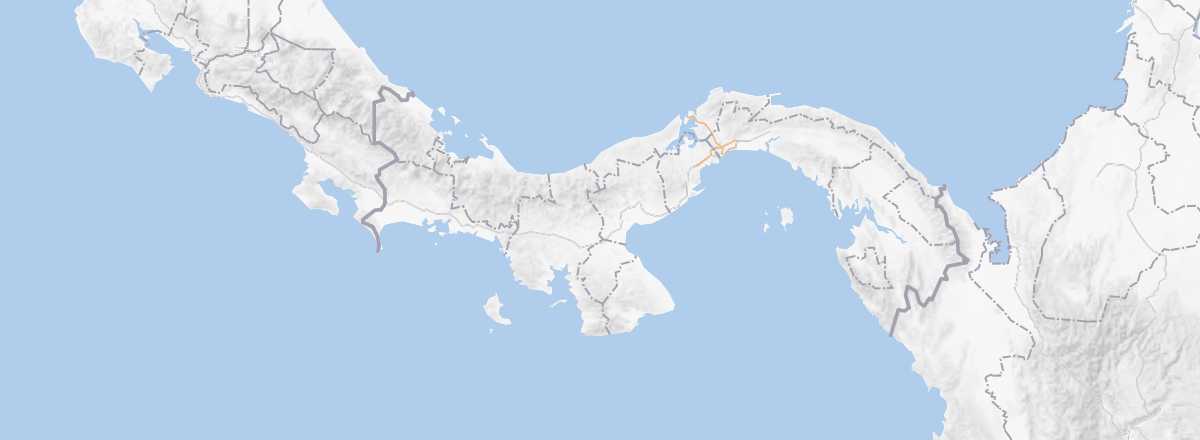 Panama
Open the interactive map
Panama
Open the interactive map
Country Physiognomy
Natural Zones
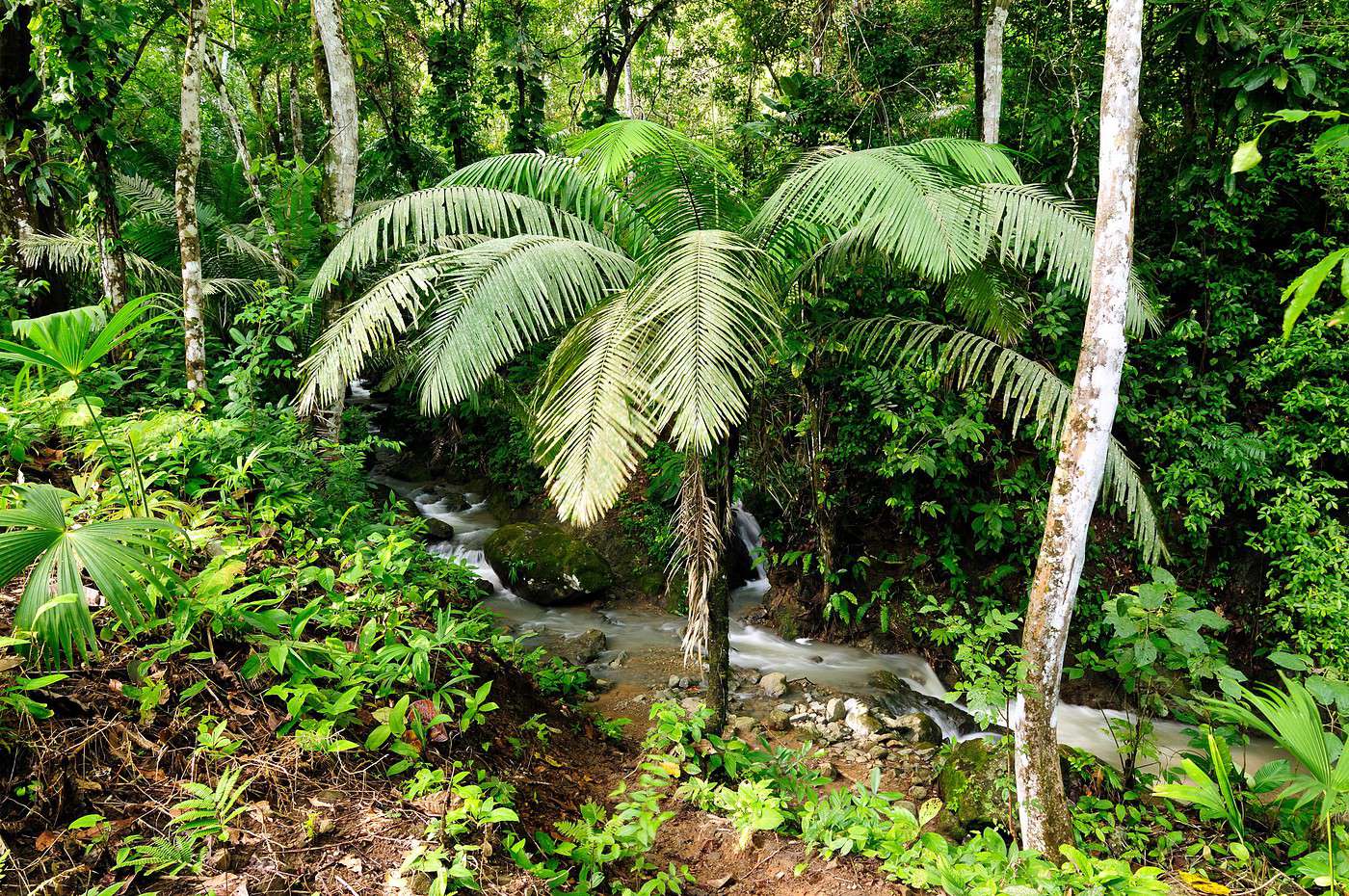
Although Panama is a "natural" country, it has far fewer parks and reserves than its Costa Rican neighbour. Moreover, proportionally speaking, the areas are not well developed for trekking circuits or other outdoor activities. In short, the options are somewhat limited, with the Boquete region (the best), the islands, and the eastern part of the country, which is not always recommended.
- Bastimentos: While Colón is the main island of the Bocas del Toro archipelago, Bastimentos is the quietest, as much of it is classified as a national park.
- La Amistad National Park: Straddling Panama and Costa Rica, this UNESCO World Heritage site boasts great plant diversity and offers multiple trekking opportunities.
- Coiba National Park: This UNESCO-listed park, formed by Coiba Island, is ideal for diving and is home to whales, turtles, sharks, and more.
- Darien National Park: This vast UNESCO-listed park, bordering Colombia, is rich in wildlife and flora. It is part of the Darién region, and like most of this area, requires certain safety precautions.
- Soberanía National Park: This large forested area between Panama City and Gatun Lake is renowned for its birdlife. Hiking, particularly birdwatching, is possible from Gamboa.
- Baru Volcano: The volcano near Boquete is the country’s highest peak and is designated a national park. It can be reached on foot.