last edited Aug 20, 2020
Getting Around in French Guiana
Road Network and Traffic
While the road network is generally good, it is mostly limited to the coast, with National Routes 1 and 2 connecting the two ends of the department from Saint-Laurent to Saint-Georges. Beyond that, roads are scarce, replaced by dirt tracks or, in the Amazonian region, non-existent, with air travel or canoes taking over. Note the risk of traffic jams in Cayenne during rush hours.
Car and Camper Van
Rental
There are several car rental agencies in the department, mainly in Cayenne (including at the airport), Kourou, or Saint-Laurent. However, prices remain quite high, starting at around 50 € per day for a standard model. It’s often more cost-effective to share the expense with others.
Buses and Shared Vehicles
Buses
Since 2010, the department has (finally) established an intercity minibus network, the TIG (see network, schedules, and fares), which operates using some "Taxi Co" vehicles. This network has several routes connecting coastal towns from Saint-Laurent to Saint-Georges, with frequent services and theoretically fixed schedules. The only downside is the price, which can be off-putting and was set to avoid undercutting the "Taxis Co," which are only slightly more expensive. Expect to pay 15 € for Cayenne-Kourou (60 km), 25 € for Cayenne-Saint-Laurent (255 km), or 30 € for Saint-Georges from Cayenne (185 km).
Shared Taxis
Called "Taxis Co," these are minibuses with around ten seats (the same as those used for the TIG) that depart when full and connect the main towns. Their prices are just as high as the TIG’s (or vice versa).
Two Wheels
Motorcycle
Bicycle
Cycling, or even mountain biking, isn’t necessarily the best way to explore the region, given the hot, humid climate and the limited road network. In any case, watch out for theft and the driving habits of some motorists.
Hitchhiking
For those with time and a taste for hitchhiking, it may be the best way to get around in French Guiana, at least along the Cayenne-Kourou-Saint-Laurent route, where there’s some traffic, especially early in the morning or late afternoon. However, avoid hitchhiking in the evening for safety reasons. Otherwise, carpooling is also developing in the department, with several specialized organizations.
Trains
There are no trains in French Guiana.
Waterways
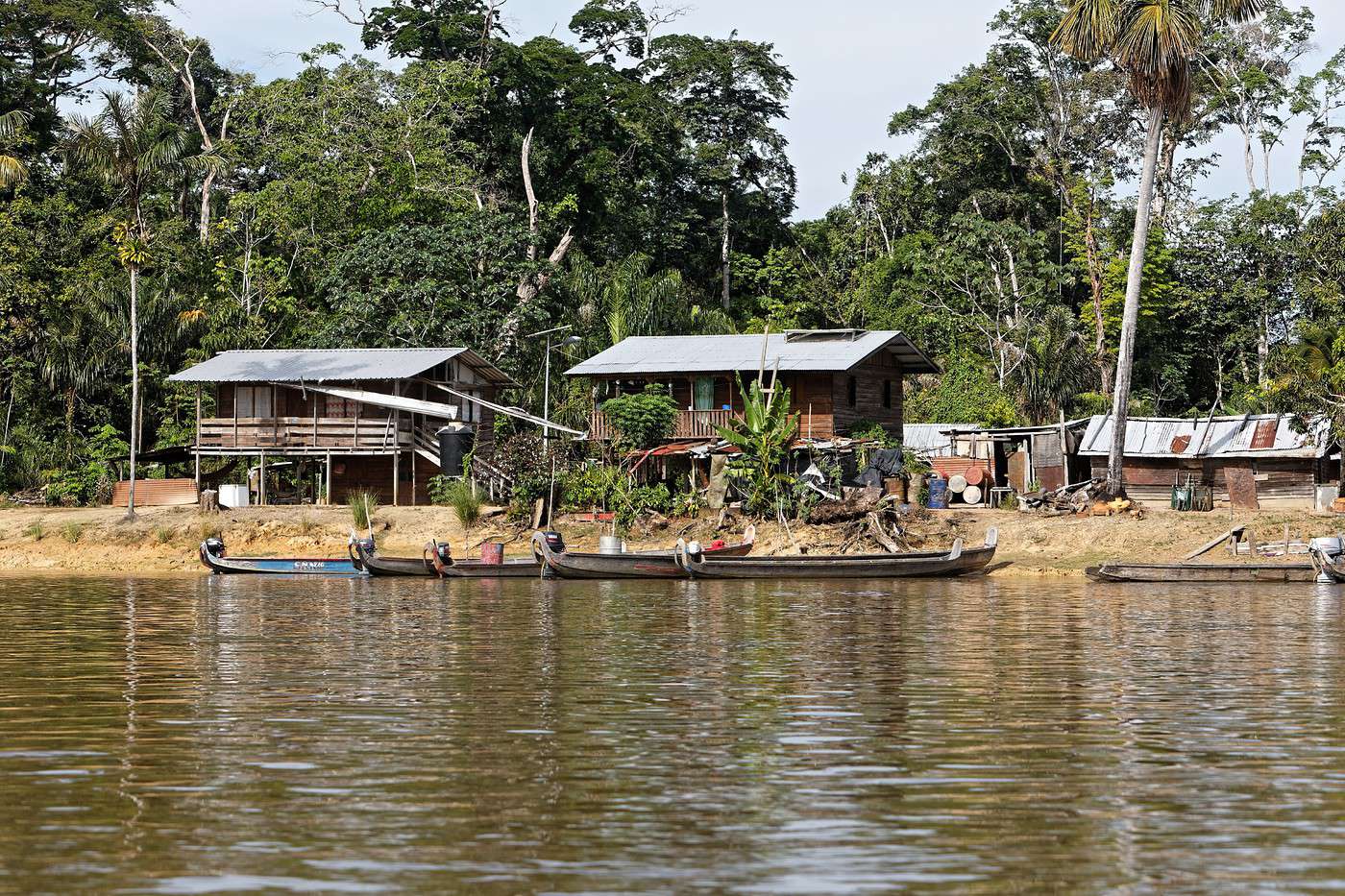
Since the road network is limited to the coastal area, the only way to travel inland is by motorized canoe (or plane). Apart from "canoe-taxis," which allow you to cross the Maroni for a few euros to reach Suriname or the Oyapock for Brazil, or to travel from Saint-Laurent to Apatou (3 hours for 20 €), there are no regular services. To travel up the Maroni, Mana, and other rivers, you’ll either need to use a local agency or try to find opportunities on your own. Generally, the maximum capacity of a canoe is around fifteen people.
The first option is the simplest and, logically, the most expensive. All agencies offer trips ranging from a few hours to several days, with appropriate organization. As for finding opportunities on your own, it’s entirely possible since there’s quite a bit of traffic on the rivers. However, this requires some time, flexibility with accommodation if needed, bringing or arranging your own food, and knowing the prices (even if "canoe-hitchhiking" exists) and negotiating them well. For example, expect to pay between 50 and 100 € for Saint-Laurent to Maripasoula, taking 2, 3, or 4 days depending on the direction and stops. Don’t forget that freight canoes or private ones aren’t there for tourism, and they decide the itinerary.
More generally, it’s important to know that you won’t be able to go everywhere, as the southern part of French Guiana is off-limits to visitors and requires prefectural authorization to preserve local populations and ecosystems.
Domestic Flights
It’s Air Guyane Express, based in Cayenne, that operates domestic flights in the department (serving 5 airports) with a fleet of around ten small aircraft. Expect to pay between 75 and 100 € for a one-way flight to Saül or Maripasoula from Cayenne.
In Town
Taxis
Urban Buses
SMTC buses provide service within Cayenne and its suburbs (with improvements expected). There are 7 lines, and a single ticket costs 1.10 € at full fare.
What to Choose for Getting Around?
Given the cost of transport, the ideal option is, of course, to have "motorized" contacts on the ground. Otherwise, it all depends on your planned itinerary, available time, and whether you prefer to explore from a fixed or mobile base.
If you plan many trips along the coast, renting a car is preferable, especially if traveling in a group. Otherwise, buses or minibuses are better if you only need to move from one stop to another. For those with time or flexibility, hitchhiking or carpooling are also viable options. For exploring the interior, whether independently or through an agency, traveling by canoe one way and plane the other offers experiences that go far beyond simple transportation. In short, French Guiana is one of those destinations where the choice of transport can vary greatly from one traveler to another.
Distances Between Towns
Distances (km) between the main towns in the department:
| Cayenne | Iracoubo | Kourou | Maripas. | St-Georges | St-Laurent | Sinnamary | |
|---|---|---|---|---|---|---|---|
| Cayenne | 145 | 60 | 550 | 185 | 255 | 115 | |
| Iracoubo | 145 | 75 | 410 | 320 | 110 | 30 | |
| Kourou | 60 | 75 | 490 | 235 | 190 | 50 | |
| Maripasoula* | 550 | 410 | 490 | 730 | 300 | 440 | |
| Saint-Georges | 185 | 320 | 235 | 730 | 430 | 290 | |
| Saint-Laurent | 255 | 110 | 190 | 300 | 430 | 140 | |
| Sinnamary | 115 | 30 | 50 | 440 | 290 | 140 |
Maripasoula*: estimate via Saint-Laurent and the Maroni River.