last edited Jul 27, 2020
Climate and Weather in Greece
Location Map of Greece
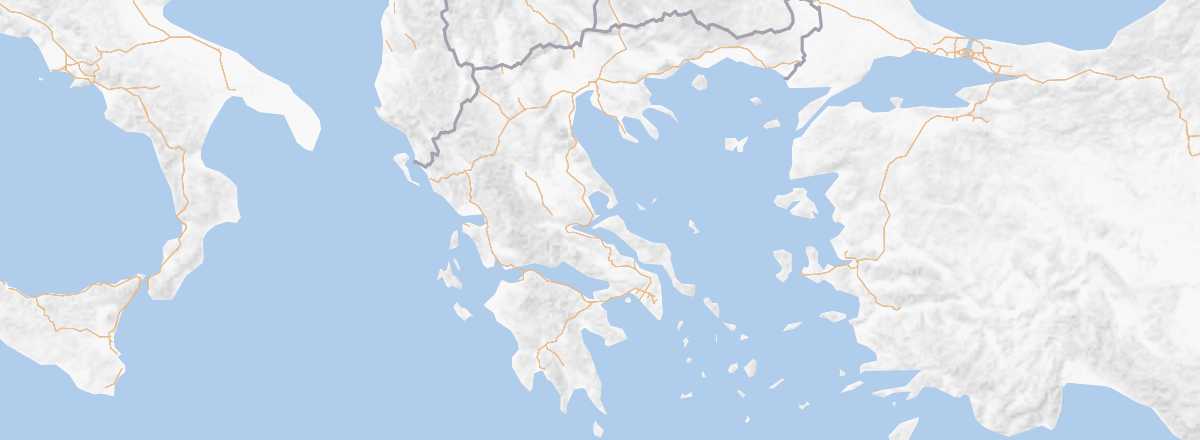 Greece
Open the interactive map
Greece
Open the interactive map
Climate Overview
Greece enjoys a sunny Mediterranean climate, with generally pleasant temperatures and relatively little rainfall. However, there are differences between the coastline and the mountainous inland areas.
After a typically short spring, the country experiences a dry and hot—or even very hot—summer, though coastal areas benefit from sea breezes that make the climate more bearable but also make the sea rougher. At higher altitudes, temperatures are naturally lower and can feel quite cool in the evenings. Winters are mild and pleasant along the coast but much harsher in the mountains, where snowfall is common (Greece has several ski resorts). November to March is also the rainy season, particularly on the country’s western side.
Best Time to Visit Greece for Climate
Climatically, spring (April–June) and autumn (September–October) are ideal times to visit. These seasons help you avoid the intense summer heat (and crowds) as well as winter rains.
| Jan. | Feb. | Mar. | Apr. | May | Jun. | Jul. | Aug. | Sep. | Oct. | Nov. | Dec. | |
|---|---|---|---|---|---|---|---|---|---|---|---|---|
| Inland climate | / | |||||||||||
| Coastal climate |
: very favorable | : favorable | : moderately favorable | : unfavorable.
Sea Temperatures Throughout the Year
| Jan. | Feb. | Mar. | Apr. | May | Jun. | Jul. | Aug. | Sep. | Oct. | Nov. | Dec. | |
|---|---|---|---|---|---|---|---|---|---|---|---|---|
| Athens | 15 | 14 | 15 | 16 | 18 | 21 | 24 | 24 | 23 | 21 | 18 | 16 |
| Cyclades | 16 | 15 | 16 | 17 | 19 | 21 | 24 | 25 | 24 | 23 | 20 | 18 |
| Heraklion | 16 | 15 | 16 | 17 | 19 | 22 | 24 | 25 | 24 | 23 | 21 | 18 |
| Thessaloniki | 13 | 13 | 13 | 14 | 18 | 21 | 24 | 24 | 23 | 19 | 17 | 14 |