last edited Dec 11, 2019
Responsible Tourism
Contributionsversion #1created Dec 11, 2019Report this pageLatest contributions in this guideContributors to this guide
Location Map of Destinations
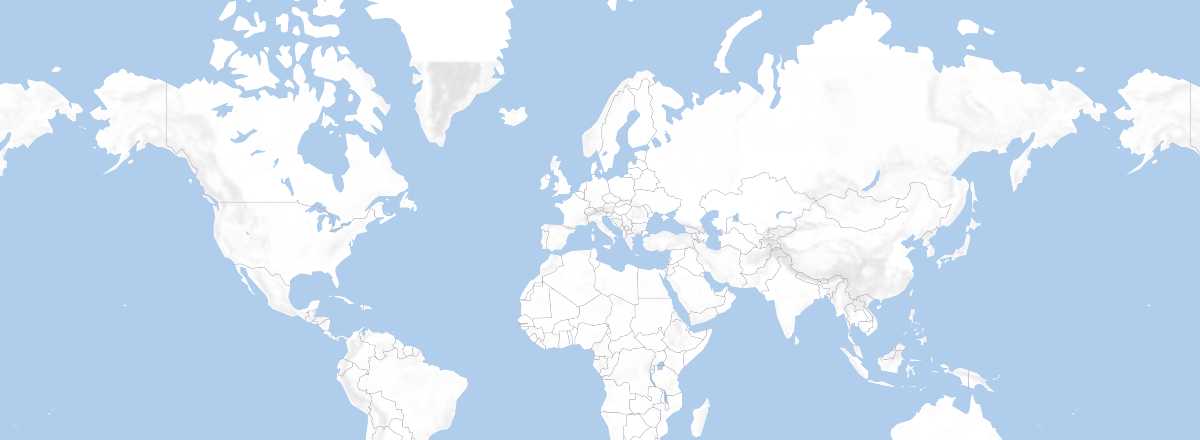 Destinations
Open the interactive map
Destinations
Open the interactive map
Sustainable, Fair, Alternative, etc...
"Travel also means respecting and, if possible, understanding the environment—both human and natural—that surrounds us."
One could say that these are the principles on which concepts like ecotourism, sustainable tourism, fair tourism, and responsible tourism were founded. Even if, today, some tourism professionals use these terms as mere advertising slogans, they originally implied a very specific approach to travel. Here are a few definitions to help clarify...
Sustainable tourism... According to the World Tourism Organization, it "meets the needs of tourists and host communities while protecting the environment and creating opportunities for the future."
"Integrated" tourism... Originally experimented in Casamance, Senegal, it is based on integrating tourism activities into local life and serving development. A precursor to sustainable tourism, it opposes enclave tourism.
Fair tourism... A recent concept inspired by fair trade. It ensures fair compensation for hosts in destination countries and reduces the uncertainties of trade between wealthy consumer regions and poorer producer regions.
Alternative tourism... It highlights all elements that make up a country's identity. It assumes that activities are primarily managed by local populations.
Ecotourism... A concept created to describe discovery travel in preserved nature, visiting relatively untouched natural environments. One of its foundations is the conservation of natural habitats, combined with financial support.
Citizen tourism... Defined by activist associations that do not hesitate to boycott countries or regions they deem politically incorrect.
"Traveler's Charter"
A code of conduct with general rules that should be applied with discernment depending on the country and region.
Respect for Minorities
Attention, Tourists!
Tourism is one of the world’s largest industries. The wealthiest countries determine the nature of tourism, whose human, social, and ecological impacts—sometimes considerable—are borne by host countries, particularly their indigenous minority populations. These groups are especially vulnerable: pastoral peoples in Kenya or Tanzania expropriated to make way for nature reserves; golf courses built on the sacred burial sites of the Mohawk in Canada; Karen refugees displayed as "giraffe women" in a human zoo in Thailand... These situations, among many others, are unacceptable.
Tourism in territories inhabited or used by indigenous peoples should not be possible without their free and informed consent. Stay vigilant—indigenous peoples are not exotic objects to be treated as part of the landscape.
For More Information
Survival International: A global organization supporting indigenous peoples. It defends their right to decide their own future and helps secure their lives, lands, and fundamental rights. Survival International: 45 rue du Faubourg du Temple, 75010 Paris. Tel.: 01 42 41 47 62.
Also see Amnesty International and Human Rights Watch.
Against Child Sex Tourism
End Child Prostitution And Trafficking
Whether in France or abroad, you may encounter individuals seeking contact with children during their travels...
Who Are the "Sex Tourists"?
According to an ECPAT study: 7% are under 30, 18% between 30 and 40, 33% between 40 and 50, 24% between 50 and 60, and 18% over 60. They are mostly men from all social classes. This includes occasional pedophiles passing through; habitual pedophiles frequenting countries where child exploitation is easily accessible; violent, sadistic pedophiles against whom children have no defense; and "everyman"—tourists, business travelers, etc.—who, far from the moral constraints of their home country, engage in sexual relations with children as if drawn to this new "experience." They mainly come from Europe, Japan, Australia, the Middle East, the United States, and Canada.
The Victims
According to UNICEF, over 2 million children under 16 are victims of commercial sexual exploitation worldwide each year. Both girls and boys, exploited by prostitution networks, range in age from 3 to 16/17. These children often come from very poor families and live in developing countries, primarily tourist destinations.
In Latin America and the Caribbean, child sex tourism is increasing, particularly in Brazil, the Dominican Republic, and Cuba. In Africa, while prostitution already exists in some countries, the growth of international tourism raises concerns about increased exploitation, especially in Kenya. In Eastern Europe, with the rise of mafias, more children are being drawn into prostitution networks. In Asia, UNICEF estimates that one million children are victims of the sex trade. Tourist flows are shifting from Thailand, the Philippines, and India to newer destinations like Cambodia and Vietnam.
The Causes
The causes of child prostitution are numerous. Poverty is a recurring factor. Unemployment drives families to place their children in the hands of recruiters who offer them "work" and pay parents an advance. Lack of education and vocational training also contribute to children’s exclusion and entry into prostitution. The same goes for the allure of consumer goods, for both parents and children.
Corruption allows prostitution network leaders to bypass laws that could condemn them and enables Westerners who are arrested to evade responsibility. Additionally, mafia networks often organize these activities at national, regional, and international levels. Other reasons include the normalization of sexual relations between adults and children, as well as demand—without which the market would not exist.
It is also worth noting that the growth of sex tourism has sometimes been deliberate; some countries have not hesitated to promote this activity to address economic problems. Prostitution has even been used as a marketing tool or attraction, sometimes relayed by Western travel agencies or magazines specializing in this type of tourism.
The Solutions
Globally, ECPAT fights against child sex tourism. Originating the "Inform Tourists" campaign in recent years, they also work to ensure that existing laws—both in Western countries, particularly within the European Union, and locally—are enforced. They continue their campaigns with media and tourism professionals to raise public awareness. They also support local and international organizations’ efforts on the ground. Finally, through various field projects, including some aimed at the parents of prostituted children, they aim to develop prevention at all levels.
The Laws
Legislatively, many countries worldwide—both Western and developing—have strengthened their laws, including extraterritorial clauses within the European Union. Penalties for child sexual abuse abroad range from imprisonment to the death penalty, depending on the country. In France, the law of February 1, 1994, allows any French citizen who commits child sexual abuse abroad to be tried in France. This procedure was first applied in 1997 against seven "sex tourists," with sentences of up to 15 years in prison.
In Conclusion
Addressing child prostitution is an urgent issue, alongside long-term political, economic, and social actions to foster harmonious development in countries and international relations—where the poorest of the poor cannot be excluded with impunity.
Given the harsh economic realities of some countries, tourism can be seen as an opportunity for growth and wealth. Its sustainable commercial development will necessarily depend on respect for host countries and their environment.
It is at the intersection of this quest for humanity and a well-understood "commercial sense" that we must rise to the challenges of tourism that drives development. This shared wealth requires respect for the traditions, heritage, environment, and, above all, the people—men, women, and children—who live in these countries.
For More Information
ECPAT (End Child Prostitution And Trafficking): Its goal is to fight by all legal means against the sexual exploitation of children, particularly in developing countries. ECPAT France: c/o Groupe Développement, Bât 106, BP 07, 93352 Le Bourget, tel.: 01 49 34 83 13.
Also see UNICEF for its work on behalf of children, and the World Tourism Organization and its dedicated web section on the topic.
Endangered Species
So that travel no longer rhymes with plunder...
"You Might Become a Trafficker Without Knowing It"
Since June 1, 1997, within the European Union, trading in endangered species is an offense that can be severely punished with fines. The import of over 800 species of animals and plants is prohibited, and more than 20,000 other species are controlled under European legislation.
For a long time, the European Union was the world’s largest importer of live big cats and parrots, the second-largest of primates, boas, and pythons, and the third-largest of turtles and plants. It still plays a major role in the international trade of wild fauna and flora, which generates an annual turnover of nearly 15 billion €—hence the exemplary value of European regulations in this area.
Some Examples
When traveling abroad, think carefully before buying...
Elephant ivory... Although the international ivory trade has been banned since 1990, carved ivory objects are still sold in African and Asian markets.
Objects made from sea turtle shell... Items made from sea turtles, including whole shells, stuffed animals, jewelry, combs, and sunglasses, cannot be brought into the European Union. These items may be seized.
Corals... Coral reefs are fragile ecosystems on which many marine species depend. Many countries prohibit the harvesting, sale, and export of corals. Before bringing these marine treasures into the European Union, check the required permits.
Plant species... The trade of orchids, cycads, cacti, and certain other plants is strictly regulated. Only specimens reproduced in artificial environments can be imported into the European Union.
Live wild animals... Parrots and other live birds, monkeys, snakes, and chameleons are commonly sold in tourist markets. Think carefully before bringing a live animal home. The trade of some species is prohibited, and for others, you need a permit. Find out before you leave.
For More Information
WWF - World Wide Fund for Nature: The WWF is the world’s largest private nature conservation organization: 5 million members, 30 national organizations, over 3,500 staff, 1,300 conservation programs, and a presence in more than 100 countries.
Also see Greenpeace for its widely recognized work in this area.
Counterfeiting Is a Crime
Under the law of February 5, 1994, counterfeiting is a criminal offense. You can be arrested at customs for possession if you have bought even one fake item in any country, regardless of its value, including for personal use.
In addition to immediate confiscation of the counterfeit item, you may also be fined based on the average price of the copied product. Furthermore, legal proceedings that could result in up to 3 years in prison may be initiated.