last edited Aug 18, 2020
Ports and Ferries in Greece
General Information
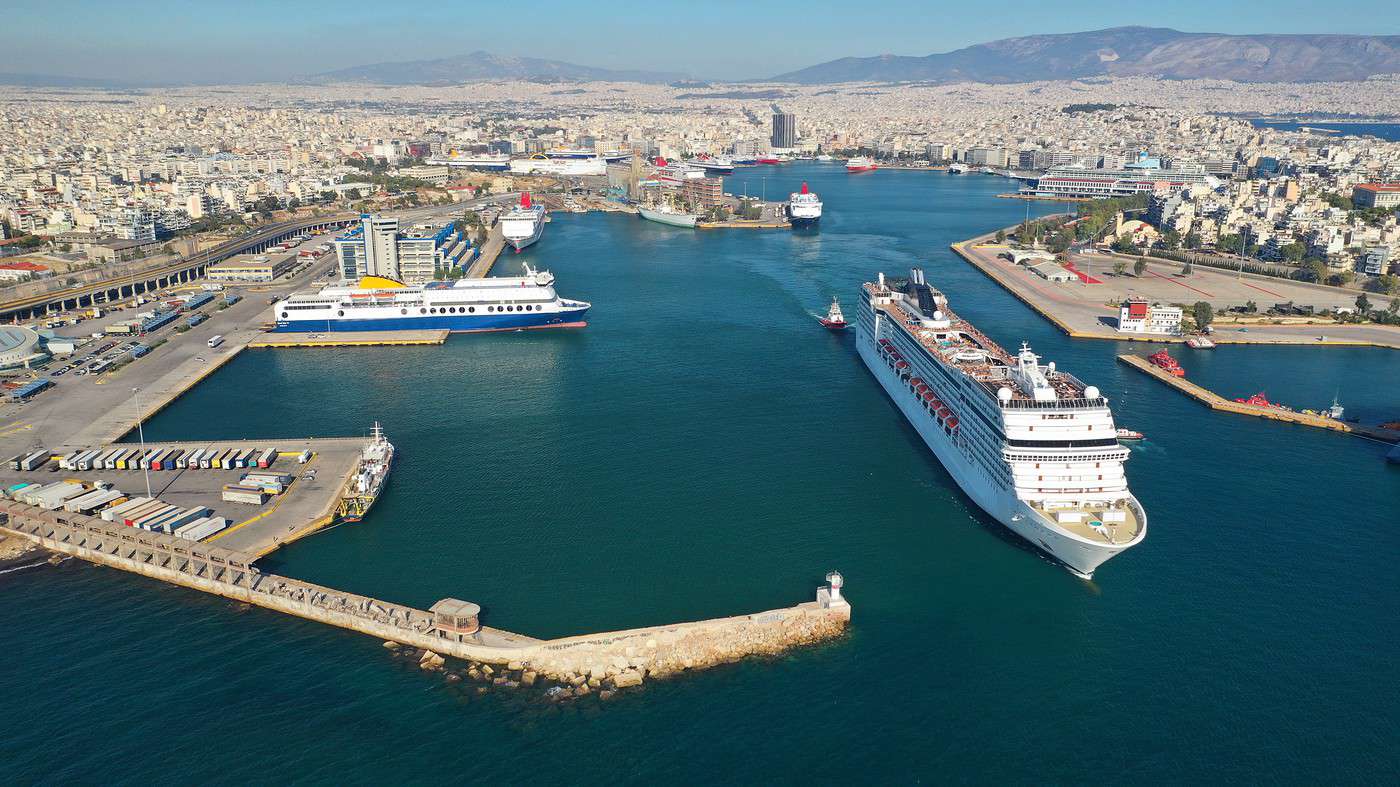
With over a hundred routes, more than ten companies, and 75 ports, Greece is one of the world’s top countries for internal ferry connections (in addition to a few routes to/from Italy and Turkey). Almost all inhabited islands—or at least all the tourist ones—have at least one regular link, which will at least take you to/from another busier port.
Ferry Companies
There are eleven companies that operate regular ferry routes, sometimes seasonal, within Greece.
- Aegean Speed Lines: A small company based in Piraeus with 5 Cycladic islands on its schedule, served by fast boats.
- Anek Lines: A Cretan company offering Athens and around ten other islands from Crete. Also operates Italy-Greece routes.
- Blue Star Ferries: From Piraeus (and occasionally Rafina), around ten "multi-stop" routes (up to 10 stops) mainly to the Cyclades or the Dodecanese.
- Golden Star Ferries: Just one route running Rafina-Andros-Tinos-Mykonos.
- Hellenic Seaways: Fast boats and around a dozen mainland-island or inter-island routes, notably via Syros, covering around forty ports in total.
- Kefalonian Lines: Founded in 2013, this company handles connections to Zakynthos and Kefalonia from the mainland.
- Minoan Lines: With its subsidiaries, it is one of Europe’s largest ferry companies. However, it only operates (large) Italy-Greece and Athens-Crete routes.
- Nel Lines: Originally from Lesbos, Nel Lines offers extensive coverage of the Aegean Sea, both internally and to/from the mainland, notably via Syros.
- SeaJets: Around twenty ports from Crete or Piraeus.
- Superfast Ferries: A company more or less associated with Anek or Blue Star Ferries on various domestic and international routes.
- Zante Ferries: Based in Piraeus, it serves the Cyclades, including some internal routes.
Routes from the Mainland
Departure Ports
Athens Area
With Piraeus, Rafina, and Lavrio, the Greek capital has three ferry departure ports.
Piraeus: Around twelve kilometers southwest of the capital, Piraeus is Athens’ maritime port and the country’s main one, with routes to most islands (except the Ionians). You can reach it from the city center by metro or by bus if coming from the airport (also possible by metro via Athens).
Rafina: This is somewhat Athens’ second ferry port, around thirty kilometers to the east. Ferries depart from here to around ten Cycladic islands.
Lavrio: Around sixty kilometers southeast of Athens, near Cape Sounion. Besides a link to Kavala (east of Thessaloniki), it serves certain islands in the northern Aegean and especially the Cyclades.
Mainland Greece and the Peloponnese
Outside Athens and its surroundings, a few other ports offer connections, usually to nearby islands.
Peloponnese: Ermioni and Porto Heli serve the Saronic islands (Hydra, Poros, and Spetses). It’s also from the small town of Kyllini, on the west coast, that connections to the Ionian islands operate.
Northern and Eastern Coasts: On the northern coast, the ports of Thessaloniki and especially Kavala provide departures to several islands in the northern Aegean (Chios, Ikaria, Lesbos, Limnos, Samos, etc.). To the east, Volos and Agios Konstantinos focus on the nearby Sporades.
Regular Routes
Crete
Kissamos, Chania, Heraklion, and Sitia, all on the island’s north coast, have connections to Piraeus operated by three or four companies. Journeys generally take between 7 and 9 hours.
Cyclades
Close to Attica, the Cyclades are well served from Athens/Piraeus (around twenty islands), as well as from Lavrio and Rafina (around ten islands each). The choice is therefore substantial, with most companies present, offering competition, and crossings available by fast hydrofoils or "classic" ferries. Expect between 2 and 5 hours at sea to reach most islands.
Some islands are served from both Piraeus, Rafina, and Lavrio, so it may be useful to compare offers. Across this vast archipelago, Andros, Folegandros, Ios, Katapola, Koufonissi, Milos, Mykonos, Naxos, Santorini, Paros, Serifos, Sifnos, Syros, and Tinos are the best connected to the mainland.
Dodecanese
This group of around fifteen islands between Crete and Turkey is served from Athens/Piraeus by Blue Star and Anek. They require at least 9–10 hours at sea. Kos and, logically, Rhodes are the best-served islands.
Ionian Islands
These are the islands off the west coast. It’s from the small port of Kyllini that you can reach the islands of Kefalonia or Ithaca with Kefalonian Line.
Northern Aegean
These are the northernmost islands. They are served from the Athens area, departing from Piraeus and Lavrio, as well as from the northern coast with Thessaloniki and especially Kavala. Hellenic Seaways and Nel Lines are the two main carriers in this area. The islands of Chios and Ikaria have the best connections. Journeys can often be quite long, exceeding 10 hours at sea.
Saronic Islands
This is the archipelago closest to Athens, between Attica and the Peloponnese. Hellenic Seaways handles crossings from Piraeus as well as from the ports of Ermioni and Porto Heli (in the Peloponnese) for the southernmost islands (Hydra, Poros, and Spetses). Crossings are quick, between 10 minutes and 2 hours depending on the route.
Sporades
These few islands are quite close to the mainland. They are served in 2–3 hours by Hellenic Seaways from the ports of Volos and Agios Konstantinos, which face them.
"Inter-Mainland Greece" Routes
Although not numerous, there are also several regular routes connecting two ports on mainland Greece, often as an intermediate stop en route to an island. From Piraeus, you can go to Ermioni and Porto Heli in the Peloponnese (the two towns are also connected to each other), or travel from Lavrio (near Athens) to Kavala (east of Thessaloniki).
Inter-Island Routes
While mainland-island connections are fairly good, those between islands are logically more limited—or at least targeted—especially in the off-season when demand is lower and some routes are suspended. Nevertheless, with a bit of research and by combining certain routes, you can often find solutions that avoid having to transit through Athens to get from one island to another. Note that many inter-island routes involve numerous intermediate stops on different islands (sometimes more than ten!) between their departure and arrival points. Main connections:
With Aegean Speed Lines
- (Piraeus) - Paros - Naxos - (Piraeus).
- (Piraeus) - Milos - Sifnos - Serifos - (Piraeus).
With Anek Lines
- (Piraeus) - Milos - Santorini - Kasos - Karpathos - Chalki - Rhodes.
- (Piraeus) - Milos - Santorini - Anafi - Crete - Kasos - Karpathos - Rhodes.
With Blue Star
- (Piraeus) - Syros - Tinos - Mykonos.
- (Piraeus) - Syros - Paros - Naxos - Ios - Santorini - Anafi.
- (Piraeus) - Syros - Paros - Naxos - Santorini - Amorgos - Iraklia - Schinoussa - Koufonissi - Donoussa - Astypalaia.
- (Piraeus) - Santorini - Kos - Rhodes.
- (Piraeus) - Patmos - Leros - Kos - Rhodes - Syros - Amorgos.
- (Piraeus) - Kalymnos - Kos - Rhodes - Astypalaia - Patmos - Lipsi - Leros - Nisyros - Tilos - Symi - Kastellorizo.
- (Piraeus) - Psara - Chios - Lesbos - Samos - Lemnos - (Kavala).
- (Rafina) - Mykonos - Paros - Naxos - Ios.
With Golden Star Ferries
- (Rafina) - Andros - Tinos - Mykonos.
With Hellenic Seaways
- (Piraeus) - Syros - Mykonos - Ikaria - Samos - Chios - Lesbos - (Kavala).
- (Piraeus) - Chios - Lesbos.
- (Piraeus) - Aegina - Poros.
- (Piraeus) - Aegina - Agistri.
- (Piraeus) - Poros - Hydra - Ermioni - Spetses - (Porto Heli).
- (Volos) - Skiathos - Glossa - Skopelos - Alonissos.
- Syros - Kythnos - Kea - (Lavrio).
- Syros - Tinos - Andros.
- Syros - Paros - Serifos - Sifnos - Kimolos - Milos.
- Syros - Paros - Naxos - Ios - Sikinos - Folegandros - Kimolos - Milos.
With Nel Lines
- (Piraeus) - Syros - Ikaria - Fourni - Samos.
- Syros - Kythnos - Kea.
- Syros - Mykonos - Paros - Naxos - Ios - Sikinos - Folegandros - Kimolos - Milos.
- Syros - Paros - Serifos - Sifnos - Kimolos - Milos.
- Syros - Tinos - Andros.
- Syros - Paros - Naxos - Donousa - Katapola - Koufonissi - Schinoussa - Iraklia - Naxos - Paros - Syros.
- Syros - Mykonos - Paros - Naxos - Folegandros - Sikinos - Ios - Thirasia - Santorini - Anafi.
With SeaJets
- (Piraeus) - Tinos - Mykonos - Naxos - Santorini.
- (Piraeus) - Sifnos - Milos - Folegandros - Santorini - Ios - Naxos - Mykonos.
- (Piraeus) - Milos - Folegandros - Santorini - Amorgos - Koufonissi - Naxos - Mykonos.
- (Piraeus) - Sifnos - Milos - Folegandros - Santorini - Ios -
- (Rafina) - Tinos - Mykonos - Paros - Naxos - Ios - Santorini.
- Crete - Santorini - Ios - Naxos - Mykonos.
With Zante Ferries
- (Piraeus) - Kythnos - Serifos - Sifnos - Milos - Kimolos - Folegandros - Sikinos - Ios - Santorini.
How It Works and Pricing
Among the key things to know about ferry routes:
1- Quite logically, many routes to tourist islands see their frequencies increase in high season, just as their schedules vary. Similarly, some routes, especially inter-island ones, only operate during the summer. And of course, depending on sea conditions, there can be delays or cancellations at any time.
2- Depending on the company and route, there may be fast boats like hydrofoils or catamarans, as well as "classic" ferries. The former are generally twice as fast but also twice as expensive as the latter, which are less dependent on sea conditions.
3- While there are no all-inclusive passes covering all islands, most companies offer category discounts or various promotions. As with air travel, it’s best to buy a round-trip ticket rather than two separate tickets for the same destination to save money.
4- Some routes are in high demand during peak season (including mid-July to mid-August), so it’s wise to plan accordingly and book as early as possible. Generally, tickets can be purchased at travel agencies or directly from the companies, including online.
5- Many routes, especially those connecting "secondary" islands, actually involve several islands (sometimes up to ten) with more or less long stops at each. It’s good to know if you’re traveling to the end of the line.
Pricing
Although prices rise in season, ferry connections remain mostly affordable as long as you’re traveling without a vehicle and opt for deck class. This is especially true from Athens/Piraeus when heading to tourist islands like Rhodes, Crete, or Santorini, which are also accessible by plane for roughly the same price range. For these islands, you can find tickets for 40–50 € per trip.