last edited Dec 11, 2019
Health and Safety in Namibia
Location Map of Namibia
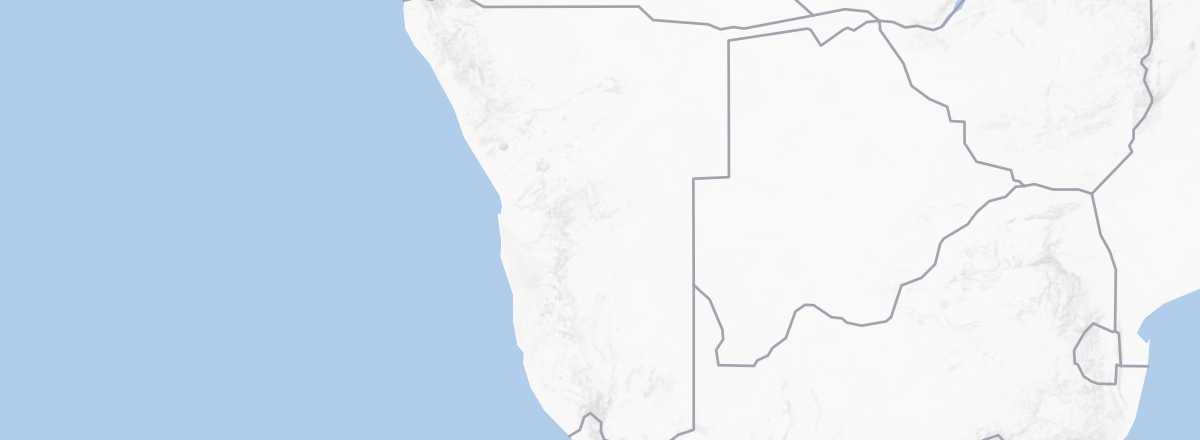 Namibia
Open the interactive map
Namibia
Open the interactive map
Official Recommendations
In France, both for individuals and professionals, the "travel advice" from the Ministry of Foreign Affairs regarding precautions for each country has legal value. A similar online travel advice system exists in several countries:
Health
If arriving from a country with a risk of yellow fever, a yellow fever vaccination certificate is mandatory to enter Namibia. Otherwise, no vaccinations are required, though it is still advisable to be up to date with your "basic vaccinations."
Diseases
The country's health situation is generally satisfactory (at least outside the poorest areas). However, there are very localized risks of malaria in the northern/northeastern regions, particularly during the rainy season (November–April), where precautions are advisable. Some cases of cholera are also regularly reported in the most unsanitary or disadvantaged neighborhoods.
It is also important to note that HIV/AIDS has a devastating impact on the Namibian population. Despite ongoing programs and initiatives, the infection rate remains one of the highest in the world, with between 15 and 20% of the population infected.
Hygiene
As is often the case, good personal and food hygiene is essential if you are not accustomed to "eating local." In such cases, avoid dishes or foods that do not appear completely fresh, if only to prevent traveler’s diarrhea. Tap water is potable in areas typically frequented by tourists. Purifying tablets and filtering straws are only truly necessary if you venture far off the beaten path.
Healthcare Facilities on Site
Facilities are generally good and numerous in the country, primarily in cities and especially in the private sector, as the public system suffers from a lack of resources and staff. As a result, tourists tend to favor private healthcare. In this context, as in many countries, healthcare, hospitalization, and emergency interventions—especially in remote areas—can be (very) expensive. Payment capability is often assessed before any action is taken. In short, having good travel insurance is essential.
Safety
Crime and Delinquency
While not as severe as in other countries in the region like South Africa, Namibia experiences urban crime (with very little risk in rural areas) that has been increasing over time, partly due to growing social inequalities. Theft, sometimes violent—especially at ATMs—is on the rise. It is important to remain vigilant day and night in cities and avoid displaying wealth in public. Additionally, it is best to avoid walking alone at night and only use taxis recommended by an agency or hotel. When driving, it is also advisable to keep windows and doors locked in cities. Venturing alone into townships is strongly discouraged.
Scams and "Tourist" Harassment
Socio-Political Risks
Since the internal tensions in neighboring Angola, which occasionally spilled over into the Caprivi Strip in the northeast with the presence of armed groups, have ended, there are no longer any issues.
Climate, Nature, and Wildlife
Namibia is a vast, sparsely populated country with immense desert areas where climate, nature, and even wildlife can pose dangers if not approached with caution. Distances and time—especially in emergencies—differ from what one might be used to. In all cases, and particularly when traveling independently by car, it is essential to take precautions, be well-equipped according to your plans (always carrying water and even extra fuel), gather information, and follow advice from professionals. It is also useful to inform someone of your itinerary, especially if venturing off the beaten path.
In this environment, Namibian roads remain dangerous, with many accidents involving other vehicles or caused by speed and/or poor road conditions. Here too, it is best to take precautions and, above all, be reasonable and realistic about what you can or want to do.
Foreign Consulates on Site
If you encounter problems while traveling abroad, your country’s consular services can assist you. It is also worth noting that if you are a citizen of the European Union and your country is not represented, you can contact any other EU member state’s representation.
France
Embassy: 1 Goethe Street, PO Box 20484, 9000 Windhoek. Tel.: +264 61 27 67 00.
Since 2015, the French Consulate General in Johannesburg, South Africa, has been responsible for all consular activities in Namibia.
Other Countries
- Belgium:
- Canada:
- Switzerland: