last edited Dec 11, 2019
Getting Around Botswana
Location Map of Botswana
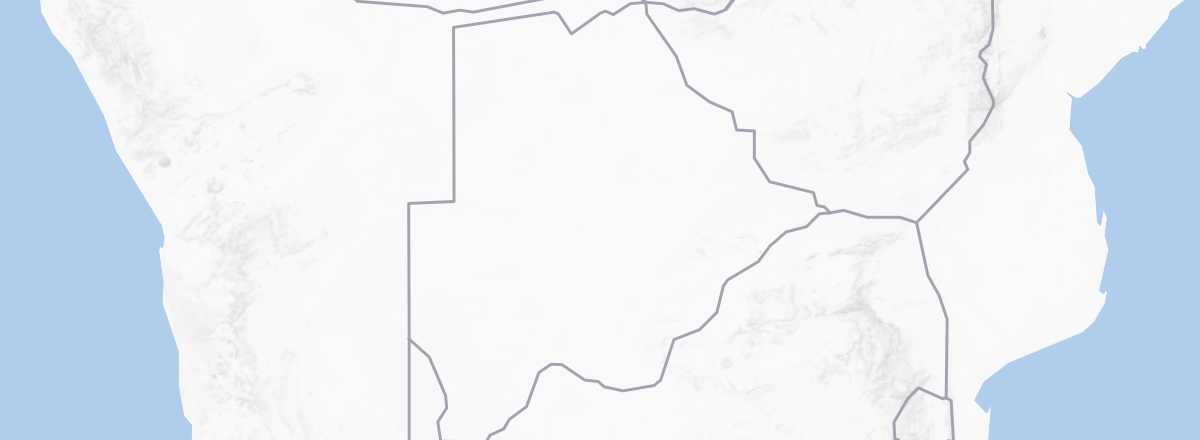 Botswana
Open the interactive map
Botswana
Open the interactive map
Road Network, Traffic
Driving is on the left in Botswana. Apart from a few major paved roads, most of the network consists of dirt tracks, including in tourist areas. The speed limit on paved roads is 120 km/h.
Car, Camper Van
With limited public transport, unless you only want to stay in cities (missing out on all the main attractions) or opt for an organised tour, Botswana is a country best explored by car—not necessarily a 4x4, depending on your plans.
Rental
Vehicle rental agencies are easy to find in Gaborone and other major towns. They offer both standard vehicles and 4x4s, some with a "roof tent"—useful for camping (additional equipment is usually provided). An international driving permit is required to rent, and some agencies also require at least one year of driving experience, or even a minimum age of 23 for the driver.
As with most tourist services in the country, rental prices are quite high. Expect around 50 €/day for a standard vehicle and at least double that for a 4x4. These rates lead some visitors to rent their vehicle directly in South Africa, where prices are lower—just make sure the chosen agency allows driving in Botswana.
4x4 or Not 4x4?
Buses and Shared Vehicles
Like many countries in the region, buses are limited to major routes and serve main towns, with "express" services (fast and relatively comfortable) or more "local" buses. Prices are generally reasonable—expect around 2 € per 100 km. One of the main companies is Seabelo.
In addition to buses, there are local minibus/taxi collectivos—cheaper, less comfortable, and more crowded. However, no matter the public transport option, accessing the heart of national parks or natural sites is nearly impossible.
Two Wheels
Motorcycle
Bicycle
Hitchhiking
Far from ideal for getting around. Traffic is often sparse, the climate is harsh, and hitchhiking is usually paid at bus-fare rates.
Trains
With fewer than 900 km of tracks, Botswana’s rail network has always been limited, concentrated in the east along the route (Mafikeng, South Africa) – Gaborone – Francistown – (Bulawayo, Zimbabwe). Despite various national and international projects, passenger services have been inconsistent, with interruptions and restarts over the years. Currently, there is no passenger service, though it may resume soon. The national company Botswana Railways manages the network, though Zimbabwe’s railways have also regularly operated some routes.
Boats
Beyond canoe safaris or traditional boats in the Okavango Delta or on the Chobe River, there are no other water-based transport options.
Domestic Flights
Excluding small charter or on-demand companies (Sefofane, Mack Air, Moremi Air...) that operate mainly for safaris, the domestic network is very limited. Air Botswana offers flights between the capital and Maun, Kasane, or Francistown, plus a Kasane-Maun route. Frequencies are low, with at most one flight per day. While flying saves time over long distances, a Gaborone-Kasane ticket costs roughly 100 € one way.
In Towns
Taxis
Other Means
What to Choose for Getting Around?
Public transport is limited in Botswana and does not provide access to parks or natural sites. Unless you only want to stay in cities, the country is best explored by car—not necessarily a 4x4 (depending on your plans). A vehicle with a "roof tent" can also be a good option for camping.
Distances Between Cities
Distances (km) between the main towns in the country:
| Francistown | Gaborone | Ghanzi | Kasane | Maun | Tsabong | |
|---|---|---|---|---|---|---|
| Francistown | 435 | |||||
| Gaborone | 435 | 670 | 925 | 855 | 520 | |
| Ghanzi | 670 | |||||
| Kasane | 925 | |||||
| Maun | 855 | |||||
| Tsabong | 520 |