last edited Dec 11, 2019
Money, Budget, and Shopping in Botswana
Location Map of Botswana
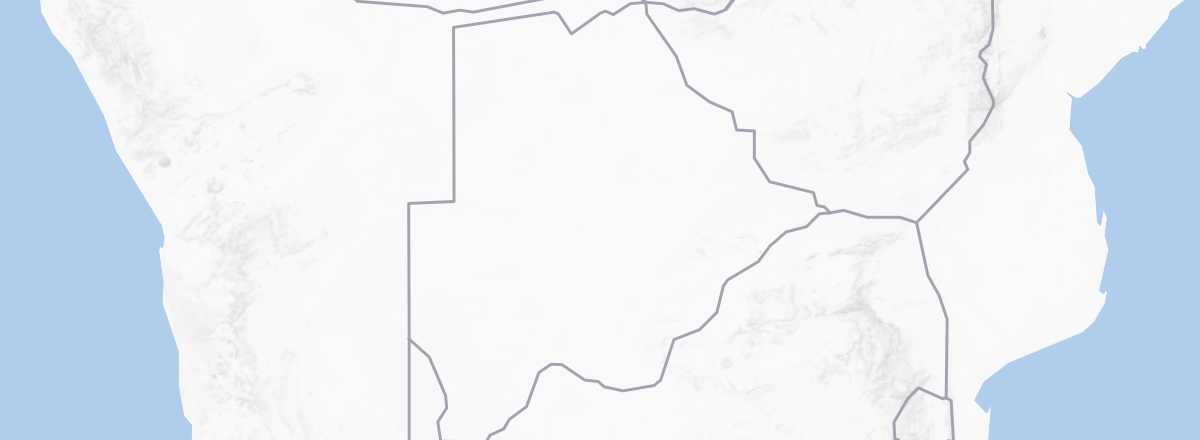 Botswana
Open the interactive map
Botswana
Open the interactive map
Money
Currency
- Currency: Pula (100 thebe)
- Banknotes: 10, 20, 50, 100 and 200 pula
- Coins: 5, 10, 25 and 50 thebe + 1, 2 and 5 pula
- Exchange:
The pula has been Botswana’s currency since 1976, when it replaced the South African rand, which was then in use in the country.
Exchange
You can exchange major currencies at banks (generally open on weekdays until mid-afternoon and Saturday mornings) and other exchange bureaus in cities. Alternatively, as always, you can withdraw cash using a bank card at ATMs, which are usually guarded by security.
Which currency to bring
Euros are easily exchanged in Botswana, so there’s no need to bring US dollars.
Payment methods
All payment methods are accepted in the country, and many merchants or service providers prefer credit cards—especially Visa. However, outside urban areas, including in parks and other tourist sites, cards are far less accepted. You’ll need to pay in cash (euros, rand, or US dollars are often also accepted), so plan accordingly.
Returning home
While you can exchange local currency upon departure, exchange rates may not always be favorable. As usual, it’s simplest to exchange money as you need it.
Budget
For a long time, Botswana has focused on luxury tourism, targeting a high-spending clientele for its safaris. Officially, the goal is also to protect the natural environment from mass tourism. So, it’s no surprise that a stay here can be quite expensive, though the services are generally high quality. In short, Botswana is a destination with a good value-for-money ratio—if you have the means.
For a budget-friendly trip, eating only local food, using public transport, and staying in campsites outside parks or in the cheapest guesthouses, you can get by on around 35 €–40 per day per person (for two). However, the country’s main draw is its parks and reserves, and visiting them drives up costs. You can stick to the basics with day trips from cities, focusing on the essentials without overnight stays—though this can feel frustrating. For a real safari, budget at least 200 €/day per person for a "basic" experience over at least 3 or 4 days. For a more standard experience, expect to pay double that.
What can be expensive
- Flights to get there.
- The destination overall.
What can be affordable
- Eating and traveling "local."
- Some campsites.
Price range
- Camping: highly variable, averaging 10 €–20 for two, though privatized campsites in parks have driven prices up, sometimes to 30 €–40 per person per night.
- Double room in a "tourist" hotel: prices start around 40 € for decent guesthouses (slightly less for out-of-the-way options).
- Snacks, local restaurant meals: under 5 €.
- Tourist restaurant meals: around 10 € and up for a full meal.
- Budget car rental: around 50 €/day.
- Budget 4x4 rental: at least double the cost of a standard vehicle, starting at 100 € minimum.
- 100 km by bus: around 2 € on average per 100 km.
- Urban taxi:
- Urban bus:
Bargaining and tips
Bargaining
This isn’t a common practice in the country. You’ll only negotiate for handicrafts and souvenirs at markets or with street vendors.
Tips
In restaurants, it’s customary to leave a tip of around 10% of the bill. Elsewhere, tipping isn’t mandatory, though a small amount is always appreciated. On a safari, a tip for the guide or driver is typically around 5 € per day per person.