last edited Jan 8, 2020
History of South Africa
Location Map of South Africa
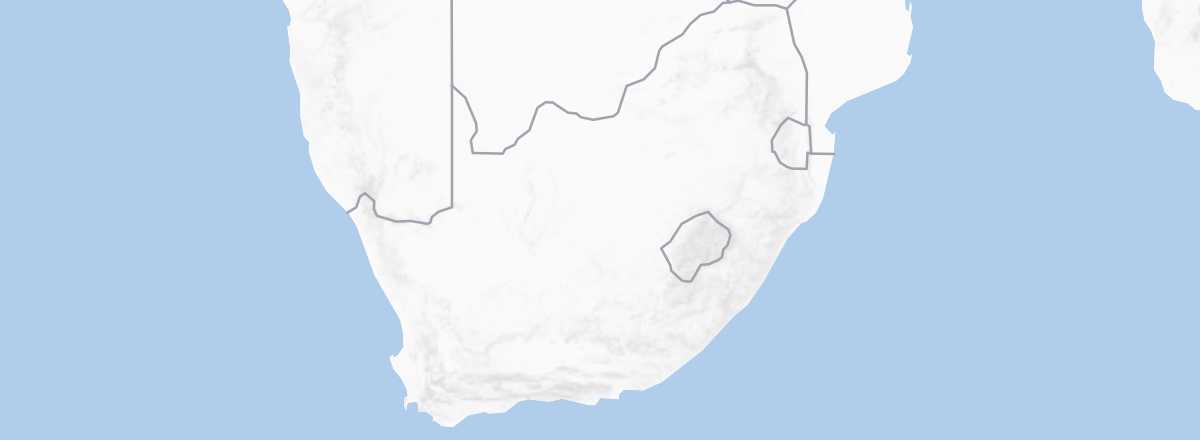 South Africa
Open the interactive map
South Africa
Open the interactive map
History of South Africa
Key Dates
- 4th–6th centuries: While the region was inhabited by the Bushmen (also called San) and the Khoikhoi, the first Bantu populations arrived and quickly (peacefully) gained dominance over the others.
- 11th–14th centuries: With the Kingdom of Mapungubwe, this part of Africa experienced growth and traded with regions as distant as India and China. However, a climate shift forced the population to disperse by the late 14th century.
- 1488: The Portuguese explorer Bartolomeu Dias was the first European to land in the region. He was followed in 1497 by Vasco de Gama, who became the first to round the Cape of Good Hope, opening the sea route to India.
- 16th century: For practical reasons—difficult landings and strained relations with local populations—the Portuguese preferred to colonize present-day Mozambique and lost interest in the region.
- Mid-17th century: The Dutch supplanted the Portuguese on the trade route to India and established their first trading post (present-day Cape Town) in the Cape Peninsula.
- Late 17th century: The Cape trading post became a Dutch settlement colony, notably with the arrival of French Huguenots between 1685 and 1688. They were the ones who founded South Africa’s wine industry.
- Early 18th century: Tensions arose between the colonists and representatives of their homeland, specifically the Dutch East India Company (VOC), which managed the territory more as a maritime resupply point than a colony.
- 18th century: Throughout the century, Dutch presence expanded inland due to the migrations of the "Trekboers" (nomadic farmers), whose sole aim was to escape the control of Cape authorities.
- 1814: Taking advantage of the VOC’s bankruptcy (in 1798) and the decline of the Netherlands, the British annexed the Cape Colony, which did not please the Boer settlers, leading to growing tensions.
- 1834: Increasingly at odds with the authorities—particularly over religious issues—the Boers decided to migrate north in what became known as "the Great Trek". On several occasions, they clashed with indigenous populations.
- Mid-19th century: A series of treaties and conflicts unfolded between the British and the Xhosa people. Meanwhile, the Boers established several Boer republics (Orange, Transvaal, etc.) in the north and northeast of the country.
- 1877–1881: For political (unifying the colony) and economic (discovery of diamond deposits) reasons, the British annexed the economically weakened Transvaal, which was in conflict with the Zulus, with whom the British were already at war. This context led to the First Boer War (1880–81), in which the British were defeated and subsequently restored Transvaal’s independence.
- 1899–1902: The Second Boer War stemmed primarily from the discovery of gold mines in Boer territories in 1886. The British won, re-annexing the Transvaal and the Orange Free State and interning Boer populations in concentration camps, which resulted in thousands of deaths.
- 1910: The Union of South Africa was founded as a Commonwealth member, uniting the Cape, Orange, Transvaal, and Natal colonies.
- 1913: The first segregation laws against Black people were enacted, and in 1912, a Bantu political party, the African National Congress (ANC), was formed to defend the interests of the Black majority against the white minority.
- Interwar period: Afrikaner (white) nationalism grew with the creation of movements like the Broederbond, which laid the groundwork for the official implementation of racial segregation in the country.
- 1948: With the rise of the National Party, the system of apartheid was officially established and later intensified in the following years.
- 1949: Despite opposition from the UN (and indigenous populations), South Africa annexed South West Africa (present-day Namibia), which remained under its control until Namibia’s independence in 1990.
- 1961: By referendum, the independent Republic of South Africa was proclaimed, and the country withdrew from the Commonwealth. The ANC’s armed struggle against the white government began.
- 1966–1978: Apartheid continued with the establishment of Bantustans (autonomous regions). The country also saw several Black popular movements, the most significant being the Soweto Uprising in 1976.
- 1980s: While South Africa faced international embargoes, frequent states of emergency, and supported anti-communist guerrillas in Angola and Mozambique, limited rights were granted to Indian and mixed-race populations under the new 1983 constitution.
- 1989: F. W. de Klerk, an advocate for reform, was elected head of the country as anti-apartheid opposition grew, including among a minority of white South Africans.
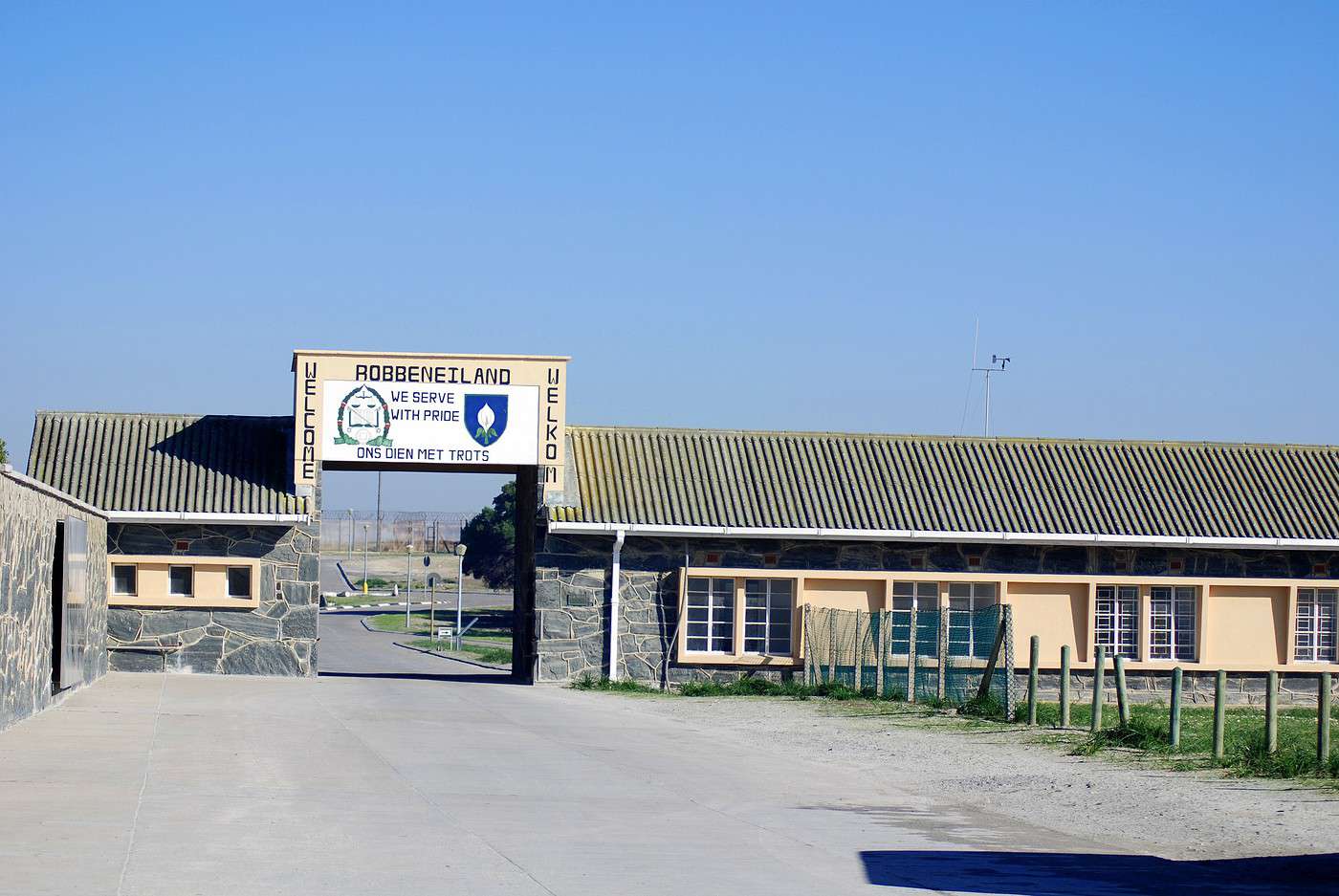
- 1990: The government recognized the ANC and other opposition movements. It also released Nelson Mandela, imprisoned since 1963 as a leader of the anti-apartheid struggle.
- 1991: Apartheid was officially abolished in South Africa, leading to the lifting of international sanctions.
- 1992–1994: De Klerk and Mandela were jointly awarded the Nobel Peace Prize amid tensions between the ANC and the Inkatha (Zulu party).
- 1994: South Africa held its first multiracial elections and rejoined the Commonwealth. Mandela was elected president, with De Klerk as vice president.
- 1998–2004: Thabo Mbeki, whom Mandela had designated as his successor, served two terms. Despite its multiracial government, the country remained one of the most unequal and faced severe socio-economic challenges, eventually forcing Mbeki to resign under pressure from his party.
- 2009: Jacob Zuma, a former vice president, and the ANC won the election. He was re-elected in 2014 despite a mixed record and the violent suppression of the 2012 Marikana miners' strike.