last edited Dec 11, 2019
Overview of Curaçao
Location Map of Curaçao
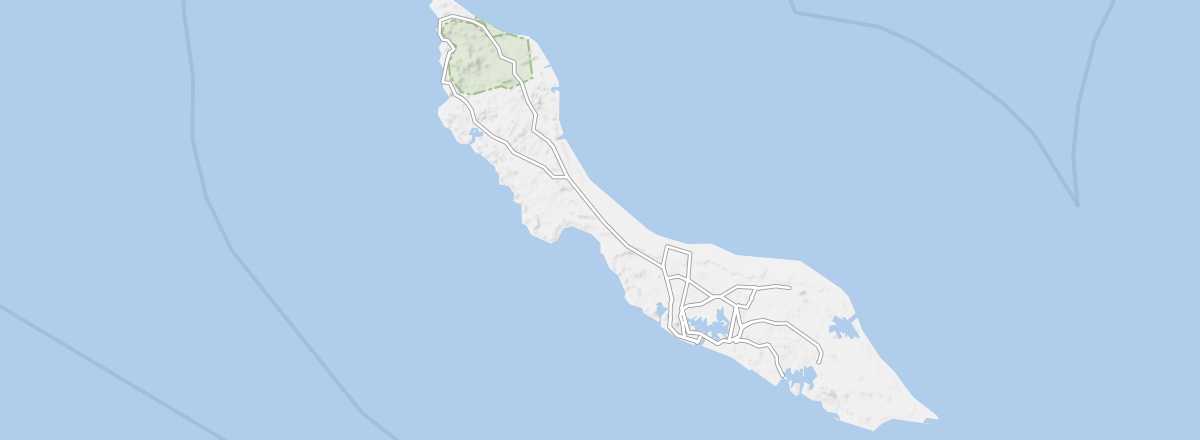 Curaçao
Open the interactive map
Curaçao
Open the interactive map
Quick Overview
Like its neighbor Aruba, though to a lesser extent, this former island of the Dutch Antilles is a holiday destination and a stop for cruise ships.
Key Facts
- Type of place: country.
- Latitude/longitude: 12.10' N, 69.00' W.
- Local time:
- Capital: Willemstad.
- Nature of the state: autonomous state.
- Official languages: Dutch, English, and Papiamento.
- Currency: Netherlands Antillean guilder.
- Population: 150,241 inhabitants (2018).
- Area: 444 km².
- Density: 338 inhabitants/km².
- Highest point: Mt. Christoffel (372 m).
- Lowest point: sea level.
- Coastline: 364 km.
- Driving: on the right.
Tourism
Alongside the oil industry and financial services (including those linked to tax havens), tourism is one of the island’s main resources. As is often the case in the region, beach tourism dominates, with many US cruise ships making stops here. However, tourist numbers in Curaçao remain fairly modest compared to other Caribbean islands, particularly its neighbor Aruba, which attracts twice as many visitors.
Each year, around 400,000 visitors travel to Curaçao (432,000 in 2018), primarily from the United States, Canada, and the Netherlands.
Travel Essentials
- Destination: for beginner travelers.
- By air: France-Willemstad.
- Entry requirements: passport.
- Currency to bring: US dollars.
- Exchange rate:
- Daily "backpacker" budget:
- Best for accommodation:
- Best for getting around:
- Risks: very low health risks and low security risks.
- Best time for climate/crowds/prices: mid-April to June and mid-August to mid-October offer the best balance.
- Interests (out of ): Nature / ; Adventure ; Culture ; Relaxation-holidays
Addresses in France
Tourist Office: online only (in English).
Addresses in Belgium, Switzerland, and Quebec
Socio-Economic Statistics
- "Quality of life":
- GDP per capita: $22,600 (2012)
- Average monthly income:
- Inflation: +2.6% (2013)
- "Official" unemployment: 13% (2013)
- Population below the poverty line:
- Life expectancy: 78.6 years (2018)
- Migration rate per 1,000 inhabitants: -1.3 (2017)
- Population growth: +0.39% (2018)
- Literacy rate:
- Urban population: 89.1% (2018)
- Press freedom:
- Political regime:
Sources: World Bank, Human Development Indicators, RSF, The Economist, The World Factbook