last edited Aug 27, 2020
Tents
Location Map of Destinations
 Destinations
Open the interactive map
Destinations
Open the interactive map
Introduction
Even if you're not a camping enthusiast, every traveller will consider sleeping in a tent (or even under the stars) at some point during a trip. Whether for pleasure, to save money, or simply because there are no other options.
Of course, bringing your own tent often means having your own vehicle, though there are also models designed for backpackers. That said, if camping is only an occasional part of your trip, there’s no need to carry unnecessary gear—you can rent equipment in many countries, and it’s usually provided for organised treks and hikes.
Quality and general criteria
Criteria
Generally, to choose the right tent, consider its weight and bulk (both have improved in recent years thanks to new materials), its surface area (which has increased), its resistance (inner layer, double roof, floor) to tears and the elements, its waterproofing, breathability (airflow), and, most importantly, the conditions in which you’ll use it and how you’ll transport it (whether you’re travelling with a vehicle or not). In short, it’s a lot like choosing a sleeping bag.
Number of places
Some tents are single-person, but even if you’re travelling alone, it’s still better to opt for a two- or three-person model (for a child), if only to have more space for yourself or your belongings. A good average size is around 2 metres long, 1.20–1.50 m wide, and 1.00–1.20 m in central height, which already offers plenty of room.
In short, since lightweight and compact two-person models are now widely available, it’s worth taking advantage of them. On the other hand, avoid large "family" tents if you’re not travelling by vehicle—they’re impractical.
Different uses
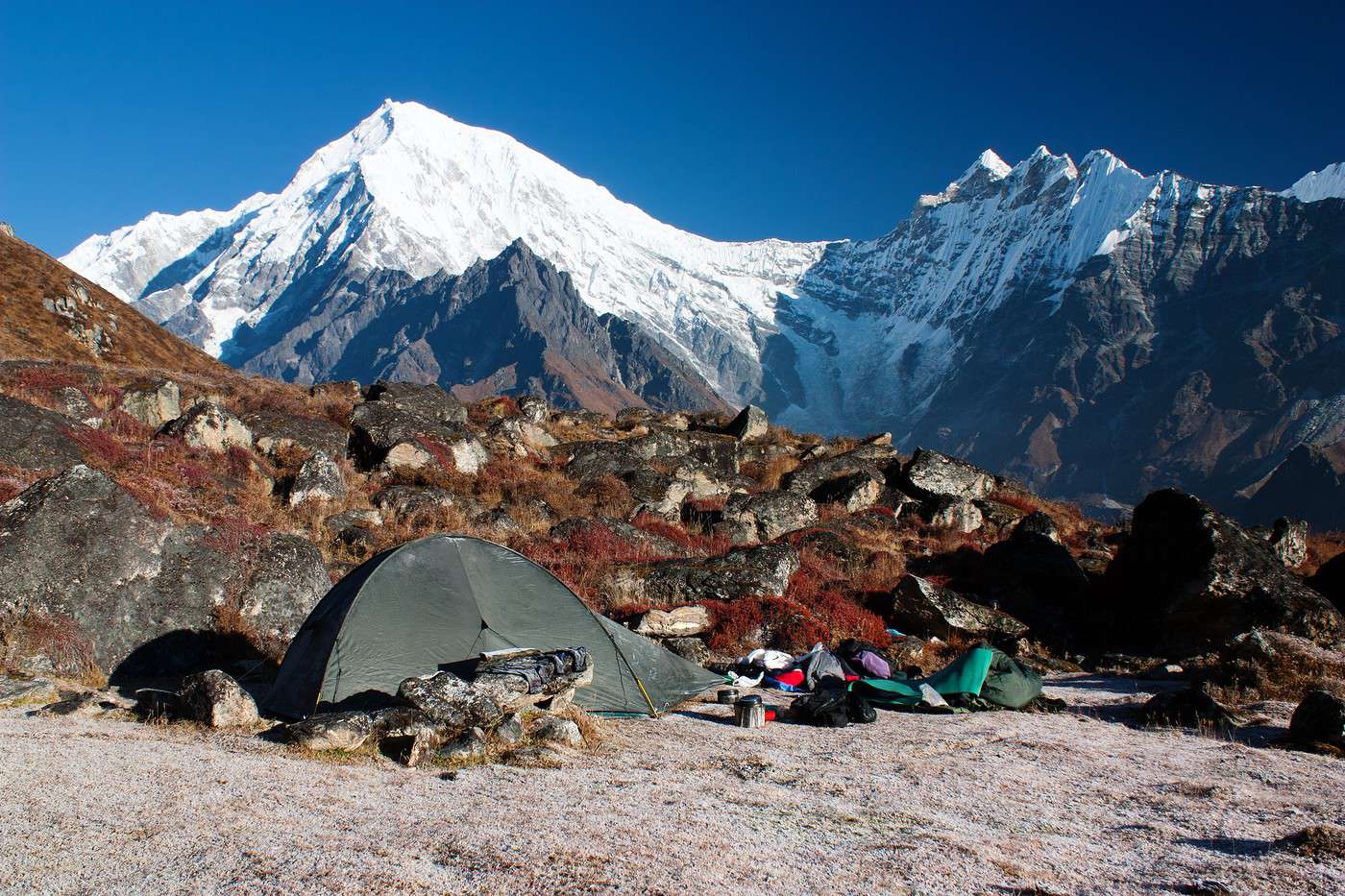
Logically, there are different types of tents suited to specific activities or travel styles. So, of course, it’s best to choose what you really need.
First, "altitude, expedition, or extreme" tents—the most "high-performance" and therefore the most expensive (up to over 1,000 €)—aren’t really necessary for the vast majority of travellers. Instead, "hiking" or even "camping" tents are preferable.
Hiking tents
You can choose between "lightweight" or "comfort" models, both prioritising a good weight-to-volume ratio for easier carrying.
For "lightweight" tents, expect to pay between 100 and 200 € for a good option (though you can find some starting at 50 €), and they usually weigh 1–2 kg.
"Comfort" models generally have vestibules, more space, and better performance in tougher conditions. Naturally, they’re also more expensive than the previous category (150–250 € for a solid choice) and bulkier, weighing around 3–4 kg.
Camping or leisure tents
More basic, less high-performance, and heavier (2–5 kg) than hiking tents, but still perfectly adequate for many classic uses, including hiking. Plus, there’s a wide range of options in the 50–100 € range.
It’s worth noting that this category also includes the now-famous "instant-setup" tents from Décathlon (40–60 €). While they’ve revolutionised camping, their transport can be tricky if you’re not travelling by vehicle or need to take a flight.
Different models
A-frame
This used to be the most common model, though it’s not very wind- or cold-resistant. In any case, opt for an A-frame with a vestibule to cook sheltered. Best for "basic" use.
Igloo or dome
This has now become the standard model, thanks to its ease and speed of setup. Igloo tents have two poles that cross in the centre. Some have inflatable poles that form a dome shape, offering more central space—especially in height—and better resistance to strong winds. Highly recommended.
Tunnel
These tents are quite expensive but very resistant to extreme weather conditions. The tent and double roof are sewn together, allowing good airflow.
Bivouac
Essentially a tent-sleeping bag hybrid, usually designed for one person. Two hoops hold the fabric, just over 2 metres long, less than 1 metre wide, and barely 50 cm high (claustrophobes beware!). The whole thing weighs under 1 kg but comes at a relatively high price (minimum 75 €). A possible solution for solo travellers.
Miscellaneous tips
In all cases, opt for poles and structures made of fibre or aluminium—lightweight and durable, and quick to set up.
Don’t forget your torch or, even better, a headlamp, which keeps your hands free for setting up the tent at night.
For maintenance, the golden rule is to let your tent dry before packing it away. If you have to pack it wet, take it out as soon as possible to air it and only fold it once it’s dry. Don’t forget to waterproof it regularly with an appropriate product (around 10 €). Finally, for repairs, various small products or special kits are available for just a few euros.
As for packing it in your bag (horizontal is better for weight distribution), like with a sleeping bag, the top of the bag or under the flap are the best spots. That said, the shape of "instant-setup" tents makes them difficult to fit on a backpack, and they may even need to be separated from the rest of your luggage when checking in for a flight.