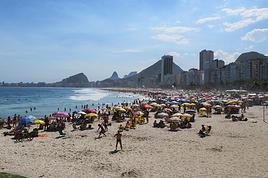
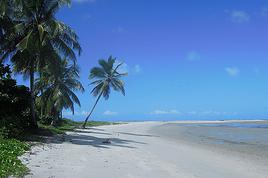
Je pars début juillet au Brésil pour 2 mois.
Je compte emporter des euros.
Quelle est la meilleure solution pour changer des euros contre des rials : la banque ou le bureau de change ?
Si c’est le bureau de change, y a t-il des différences importantes d’un bureau de change à un autre ? Si oui, pouvez-vous m’indiquer un bureau de change avec un taux avantageux, dans le centre de Rio ou du côté de Copacabana ?
Je pars début juillet au Brésil pour 2 mois.
Je compte emporter des euros.
Quelle est la meilleure solution pour changer des euros contre des rials : la banque ou le bureau de change ?
Si c’est le bureau de change, y a t-il des différences importantes d’un bureau de change à un autre ? Si oui, pouvez-vous m’indiquer un bureau de change avec un taux avantageux, dans le centre de Rio ou du côté de Copacabana ?
Merci d’avance.
Cordialement,
Dominique
Le plus pratique cela reste le retrait aux distributeurs, ce n'est pas si onéreux que cela et il y a des distributeurs partout.
La monnaie c'est le REAL. Il y a des bureaux de change sur Copacabana, vous trouverez sans problèmes. Ne faites pas le change à l'hôtel ce n'est jamais très avantageux.
Ils ne savaient pas que c'était impossible, alors ils l'ont fait.
"Le rial est le nom de la monnaie de plusieurs pays : le rial iranien en Iran; le rial omanais en Oman; le rial qatari au Qatar; le rial yéménite au Yémen; le rial "
"Le rial est le nom de la monnaie de plusieurs pays : le rial iranien en Iran; le rial omanais en Oman; le rial qatari au Qatar; le rial yéménite au Yémen; le rial "
Tout le monde peut se tromper. Inutile d’etre moqueur de la sorte.
Ils ne savaient pas que c'était impossible, alors ils l'ont fait.
Oups... vous avez raison. C'est une erreur regrettable. D'autant que les caractères e et i sont assez éloignés sur le clavier. La prochaine fois, je relirai avec plus d'attention mes messages.
Cordialement,
Dominique
Effectivement la banque via un distributeur est vraiment le moyen le plus simple, pour un coût (frais d'opération) assez faible mais ta banque prend quand même une belle commission car le cours du réal donné n'est pas le cours réel. Mais cela évite d'avoir à se retrouver face à quelqu'un. Par contre, fais attention de ne pas trop tirer d'argent car cela prend de la place et peut attirer les voleurs.
Malheureusement, je ne connais pas Rio pour te dire où aller.
Il y a une 3ème option, toujours en activité, le cours parallèle à la banque centrale qui peut être très intéressant, mais là encore, je te déconseille si tu n'es pas accompagné d'une personne de confiance car généralement il faut changer plusieurs centaines d’euros en même temps. Et du coup se retrouver avec une montagne de réais après...
Merci pour ces informations.
J'ai une mauvaise habitude : j'évite d'utiliser ma carte bancaire hors Europe. Je privilégie les espèces. J'opterai donc pour les bureaux de change.
De plus, je crois qu'il y a des limitations drastiques quant aux montants des retraits aux distributeurs.
Il n'est jamais trop tard pour changer les mauvaises habitudes.
Surtout quand elles font au mieux économiser des clopinettes, au pire perdre beaucoup d'argent (vol de tout ton liquide ou changeur malhonnête)
C'est fini le temps où toutes les banques faisaient leur beurre avec les commissions même si certaines continuent.
Les meilleures de ce point de vue sont les
banques en ligne.
(Fortuneo boursorama etc)
Moins de 2%, pas de fixe au distributeur juste la commission.
Carte gratuite, pas besoin de domicilier son salaire, pas de frais de tenue de compte et en plus, on t'offre généralement quelques dizaines d'euros à l'ouverture...
Mais qui vous dit que c'etait dans un sens ironique !!!
On peut repondre dans le sens de la plaisanterie .
On peut repondre aussi : pauvre c.. , ici ce sont des reais.
Je privilégie les espèces. J'opterai donc pour les bureaux de change.
De plus, je crois qu'il y a des limitations drastiques quant aux montants des retraits aux distributeurs.
Bonjour,
Tu pourras faire jouer la concurrence et tu perdras un tout petit moins d'argent. 😉
Les billets d'€ verts en bon état sont appréciés dans cette profession.
Moi j ai l option zero frais avec ma CB a l etranger. Donc je retire toujours aux distributeurs, sans frais. C'est plus pratique que de se promener avec tout son cash.
Par contre je lis plus haut que le taux de change au distributeur ne serait pas le bon? Ah bon? Jamais vu ça encore. C'est plutot dans les bureaux de change qu'on se fait souvent avoir a ce niveau la...
J'en suis à ma 4ème expérience au Brésil, et désormais je fonctionne de la manière suivante. Avant le départ je budgétise approximativement le voyage selon la durée et les activités au programme : nourriture, courses, visites, transports, souvenirs, etc... et pars avec uniquement des €uros en espèces (et une CB). Une fois sur place, je récupère dans Réais dans un bureau de change. Je ne change pas tout mon argent, mais seulement par tranches de 400 / 500 €uros en fonction du l'avancement du voyage et des dépenses.
Cette solution est la moins onéreuse. Car avec les taux de commission appliqués par les banques françaises (l'Ecureuil et la Poste en ce qui nous concerne), retirer des réais revient cher. Par exemple, 15€ de frais pour un retrait de 500€, 15€ de frais... Après on peut également payer en carte bancaire, mais là aussi il y a des frais, certes moindres.
L'inconvénient, c'est qu'il faut d'entrée se trimbaler avec une forte somme d'argent sur soi...
Concernant les bureaux de change, ils sont nombreux sur Avenida Nossa Senhora de Copacabana. Le meilleur taux que j'ai pu obtenir était 1€ = 4,50 R$
Stef
Marseille, ma ville
Rio de Janeiro 2008 & 2011
Cyclades 2016
Bonjour Stéphane,
Merci pour votre réponse.
Je suis actuellement au Brésil, à Olinda. Comme vous le recommandez, je suis venu avec des euros.
A l'aeroport de Rio, j'ai changé auprès de porteurs : ils proposaient 4,30 au lieu de 3,80 pour les banques, et ce dans le meilleur des cas.
Ensuite, j'ai changé dans une agence de voyages à Rio, à un cours un peu supérieur au taux interbancaire Euro Real, soit 4,68. Mais, c'est grâce à une amie franco brésilienne.
Cordialement,
Dominique
Ensuite, j'ai changé dans une agence de voyages à Rio, à un cours un peu supérieur au taux interbancaire Euro Real, soit 4,68. Mais, c'est grâce à une amie franco brésilienne.
Oui c'est très fluctuant en ce moment... La veille de mon retour en France j'avais aperçu 4,67 dans un bureau de change...
Stef
Marseille, ma ville
Rio de Janeiro 2008 & 2011
Cyclades 2016
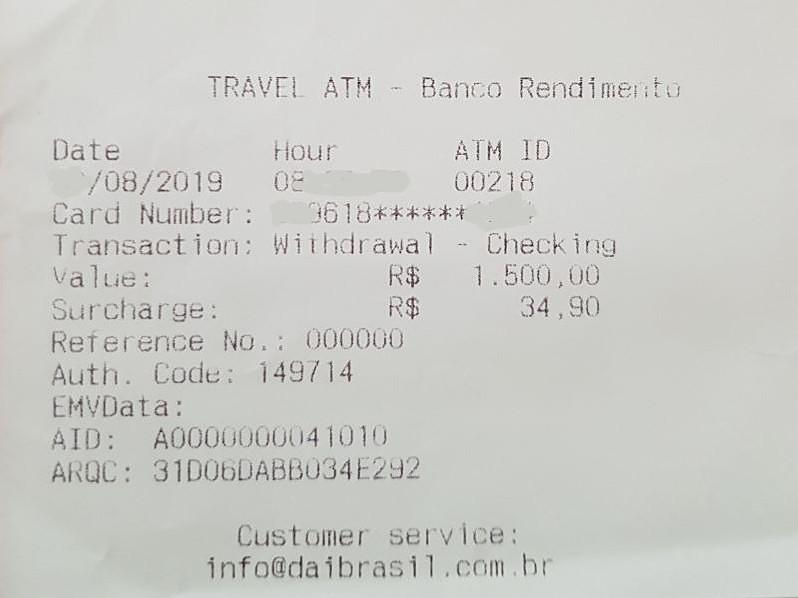
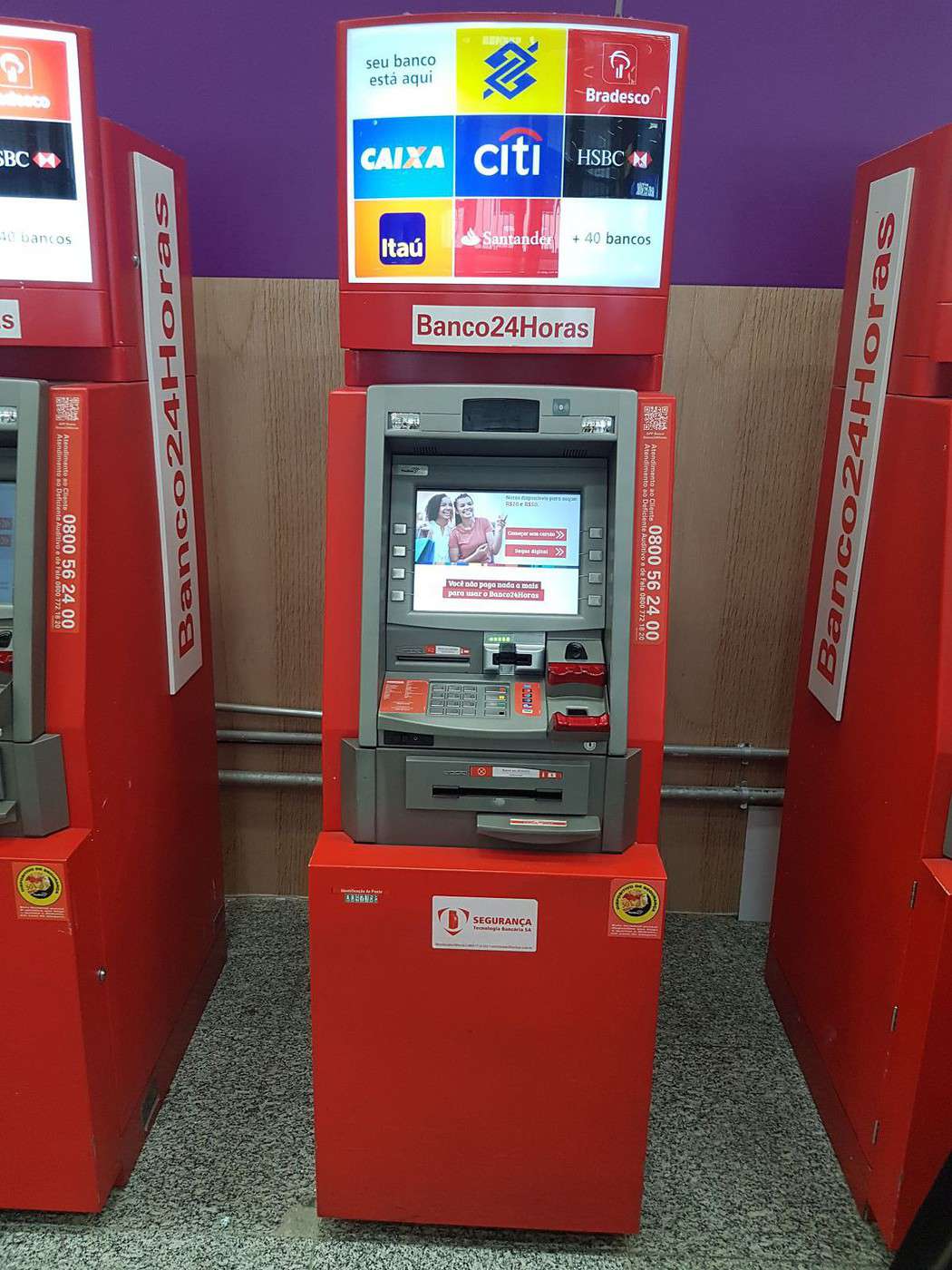
Oui : il y a de plus en plus de banques françaises qui ne prennent pas ou peu de frais (<2%). Mais il ne faut pas rêver : tout service se paie, et l'argent que ne reçoivent plus les banques étrangères est refacturé au moment du retrait ! Exemple : 34 R$ (7€) au Banco24Horas de l'aéroport de Rio. Sans prévenir avant (c'est illégal), et malgré ce qui est affiché en gros pour nous mettre en confiance "Vocë não paga nada a mais..." (vous ne payez rien de plus...). Je n'ai trouvé que Bradesco en ville pour ne pas facturer. De manière générale, il faut éviter tous les distributeurs multi-banques (les plus nombreux bien sûr).
Sinon on trouve des très bons taux de change en ville (<1%), mais attention au risque de vol dans la rue !
A Salvador, vous trouvez les meilleurs taux d'échange chez le bureau de change de Lucas.
On le trouve à la largo de Sao Fransico (quand on se trouve devant l'église de Sao Francisco au Pelourinho, avec le dos à l'église vous le verrez à 50m à main gauche, 2 maisons avant le Banco do Brasil, il y à un long couloir à entrer et au fond il y à 4 marches à subir)
SI vous avez trop d'argent a changer et que vous avez peur de vous balader dans la rue il vient mème faire l'échange dans votre hotel (dans le périmètre du Pelourinho).
Les tarifs sont bien plus intéressants que n'importe quel banque en France ou ici à Salvador.
Rappel : le moyen de savoir si on a vraiment un bon taux de change est de le connaître avant. Attention : au Brésil, il varie tous les jours. Calculez donc le matin combien vaut votre argent (ex: si le taux est à 4,65€/R$, et que vous avez 100€, cela vaut 465R$. Pour ma part, j'ai trouvé 450R$ dans une agence de voyage à Barra.
Nous allons nous rendre à Foz do Iguazu depuis Sao Paulo en bus et donc allons par a suite faire le coté argentin. Nous aurons donc besoin d'échanger des euros…
Nous partons au Brésil dans 8 jours mon épouse et moi et j'aimerais avoir vos conseils sur le change des euros. Devons nous le faire à notre arrivée à…
J ai changé des dollars a Salvador pour 2.18 r$ et si quelqu'un peut m indiquer un endroit pour changer des dollars à un taux intéressant. Dans un bureau de…
J'ai lu qu'il était plus avantageux de faire son change au Brésil qu'en France mais les messages dataient... Est-ce toujours le cas? D'autre part, j'ai lu…
Hi everyone,
We’re planning 40 days in Uruguay and Argentina in February and March, trying to avoid as much rain as possible.
We’re thinking of starting in Buenos Aires, then heading to Bariloche, and from there flying to Córdoba, Mendoza, or Salta. Maybe by bus or renting a car to explore each region.
Do you have any suggestions or tips for us? We love picturesque, historic cities and landscapes. As seasoned travelers, we’re used to planning our trips ourselves.
Thanks in advance!
Hello,
my wife and I will be in Cusco for a week in March 2027.
I’d like to organize the visit to the site on our own, combining the Sacred Valley and Machu Picchu.
We’d leave Cusco on Day 1 to arrive at the site in the morning, then stay in Aguas Calientes or Ollantaytambo, and on Day 2 return to Cusco while visiting the Sacred Valley.
Is this doable?
Looking forward to hearing from you.
Cédric.
Hello,
We’re spending 3 weeks in Rio between February 20 and March 15, 2027, to visit our son and daughter-in-law. We’re thinking of one or two "escapes" from Rio—3-day trips to get away from the city (so not too far, max 3–4 hours by car or bus). We’re all ears for suggestions! We love beautiful nature and authentic experiences, not so much the touristy spots... even though those spots are often in beautiful places, we’d rather avoid them.
Thanks for your insights!
Catherine
Hello,
we’re arriving in Fortaleza on February 14, 2027, and planning to rent a car to drive to João Pessoa in two stages. We’ll leave from there on the 20th or 21st to head to Rio. Our questions:
- Which stop between Fortaleza and João Pessoa would be the most enjoyable?
- How long does it take to drive from Fortaleza to João Pessoa?
- Are there any easy hikes (no guide needed) around João Pessoa?
Thanks for all your replies—I’m hoping for lots!
Catherine
Hi there,
I’m planning a trip with my partner (no kids this time—thanks, Grandma!) for two weeks to celebrate her 40th birthday. I’ve been thinking about Chile. We’re looking at leaving around September 18, 2027, starting in the south and returning in early April.
Here’s what I had in mind:
8 nights in a van in the Lake District and the start of the Carretera Austral (up to the Chaitén area). We’re set to arrive in Puerto Montt around 2:00 PM. We don’t want to go too far south since we’re planning to explore the heart of Patagonia (Chile and Argentina) with the kids when they’re older. The idea is to spend 3 nights discovering the lakes (up to Cochamó) and 3 nights in Pumalín Park. I’ve also added two transition nights.
7 nights in the Atacama to experience another side of Chile (San Pedro), taking a domestic flight from Puerto Montt to Calama in the early afternoon. We’ll depart for France in the early evening from Santiago.
IMPORTANT NOTICE for those planning to take a bus to another city, state, or destination from Salvador!
Starting January 20, 2026, the intercity bus station Rodoviária is changing its address!
The Rodoviária is leaving the Iguatemi area and will now be located in ÁGUAS CLARAS (about twenty kilometers from downtown Salvador).
A brand-new station (the most modern in Brazil) has just been set up there, accessible by car/taxi/Uber/metro.
Allow for much more transfer time (especially during rush hours), so leave early if you're heading to Chapada Diamantina or other Brazilian cities by bus.
Remember, there are also private transfers (even French-speaking ones) that can take you directly from your hotel in Salvador to your hotel in Chapada. Sure, it’ll be more expensive, but you’ll save on transfer time and comfort.
Tropical greetings from Salvador,
@ivanbahiaguide
Loyal member of the French-Speaking Brazil Forums for over 15 years already 😊 🇧🇷
Hello,
We’re thinking of spending 1 month in Chile, maybe doing a loop?
From 12/23 to 01/22.
What are the must-see sights, given we’re more interested in the country’s cultural side than the beaches?
Thanks
Hi everyone,
We're planning a trip to southern Chile in November. Here's our tentative itinerary:
Day 1: Arrival in Santiago, then a flight the next day to Balmaceda where we'll pick up a rental car to reach Coyhaique.
Day 3: Walk in the Coyhaique National Reserve, then continue to Puerto Chacabuco. Return to Coyhaique for the second night.
Day 4: Drive to Villa Cerro Castillo for a hike in the national park. Continue to Puerto Tranquilo and stay there for 3 nights.
Day 5: Boat tour on Laguna San Rafael.
Day 6: Day trip to Monte San Valentin Glacier.
Day 7: Excursion to the Marble Chapels, then drive to Puerto Guadal. We'll stay there for 3 nights.
Day 8: Walk along Lago Carrera and return to Puerto Guadal.
Day 9: Rio Baker Valley and, if possible, a glacier excursion.
Day 10: Drive to Cochrane and hike in Tamango National Reserve. We'll stay 2 nights in Cochrane.
Day 11: Walk in the Chacabuco Valley.
Day 12: Drive to Caleta Tortel. We'll stay there for 2 nights.
Day 13: Cruise in the Rio Baker delta.
Day 14: Return to Cochrane.
Day 15: Return to Balmaceda in two stages.
Day 16: Continue the return journey.
Day 17: Return the rental car and head back to Santiago.
After this, we're also planning to explore northern Santiago. I'll post about that part once I have a clearer idea of the route.
What do you think of this itinerary? Is it doable in 17 days?
Thanks in advance for your tips and recommendations.
martine
Hi everyone! So happy to be back on this forum—it’s packed with such useful info! 🙂 My husband and I are planning a 2.5-week self-drive trip to Colombia at the end of the year, including some domestic flights. My first question is: is it possible, easy, and safe to do a road trip in Colombia?
Below is our draft itinerary (with questions at each stop):
29/11: France → Colombia. Overnight in Bogotá.
30/11: Exploring Bogotá: La Candelaria and Montserrate.
01/12: Gold Museum (closed on Mondays). Drive to Zipaquirá (1.5 hrs) to visit the Salt Cathedral. Then drive to Villa de Leyva (3 hrs). Explore the town. Overnight in Villa de Leyva.
02/12: Return to Bogotá via Laguna de Guatavita (5 hrs). Is it worth the detour? Overnight in Bogotá.
03/12: Flight to Pereira. Drive to Salento. Overnight in Salento.
04/12: Cocora Valley (hike among the wax palms) followed by a drive around the area. Are there any waterfalls or other sights nearby?
05/12: Visit a coffee finca—any recommendations? Then explore the surroundings: Filandia, Manizales, waterfalls? Hot springs? Which ones?
06/12: Flight to Medellín.
07/12: Exploring Medellín: Centro, Plaza Botero, Comuna 13. How do you visit Comuna 13? Is it easy to get around Medellín? Metro? Buses?
08/12: Drive to Guatapé (2 hrs). Visit the town, stroll around the lake, then El Peñol. Overnight in Guatapé.
09/12: Return to Medellín.
10/12: Flight to Santa Marta. Drive to a hotel near Tayrona Park.
11/12: Tayrona—El Zaino entrance.
12/12: Tayrona—Palangana entrance, then Bahia Concha and Santa Marta. What do you think?
13/12: Drive to Minca (45 mins). Can we reach the village by car? Pozo Azul and Marinka waterfalls. Overnight in Minca (or back in Tayrona?).
14/12: Drive to Puerto Nao (5 hrs). Stop in Ciénaga on the way + boat tour in Nueva Venecia and/or Buena Vista? Not enough time? Overnight in Puerto Nao.
15/12: Exploring Cartagena: Centro, Getsemaní, the walls + La Boquilla if we have time.
16/12: La Boquilla (is it really worth it?) if we didn’t have time yesterday, then back to the beach.
17/12: Return to France.
So, what do you think? Is this doable, or should we tweak it? Thanks in advance for your invaluable feedback and tips! 🙂
Hi there, I’ll be in Brazil from December 10th to the end of February.
I’ve sketched out a rough itinerary but I’m not sure how to arrange it—considering the climate, year-end holidays, and Carnival.
Basically, I’m thinking of the Amazon, the Northeast coast with Lençóis Maranhenses National Park (but skipping Chapada Diamantina),
Ouro Preto, Paraty, and Ilha Grande—but no Rio visit.
Is this doable in 3 months?
Which direction should I take for this itinerary?
Thanks in advance!
Hi everyone, does anyone know the agency Ventura Travel Agency (not ventura travel)? After lots of research and quotes, it’s the only one offering Uyuni at a reasonable price while meeting all the criteria: transfer to the border, private-room accommodation, and a very fair rate. Other agencies or guides either offer shared rooms, no border transfer, or prices that are way too high. But I’d love to hear some reviews about this agency. Thanks in advance!
Hi everyone,
We're planning a trip to Chile to visit the Atacama Desert and then head toward Putre, Lauca, Salar de Surire, etc.
Which would be the better time to go, April or November?
Is an SUV enough?
Looking forward to your tips!
Hi everyone, French travelers in Chile—what credit cards do you use for your various car rentals in the country? I’m traveling in September and was planning to switch my regular debit card (a VISA PREMIER in deferred debit mode) for the deposit guarantee.
My rentals are with Figal in Punta Arenas, Econautos in Arica, and Chilean Rent a Car in Temuco, and all of them want the deposit on a credit card. For me, deferred debit *should* work, but I’ve read comments saying the opposite.
How’s it actually working on the ground with these rental companies right now? Will a deferred debit card work, or not at all?
In France, banks don’t issue credit cards, right—or am I mistaken?
Hi everyone, is it still possible to travel in Ecuador outside the Amazon region? If so, do you have a reliable agency to recommend? All your recent experiences from the past few months would be greatly appreciated. Thanks so much
Hi,
We’re heading to Buenos Aires for 3 days in November and would like to do a guided tour of a few neighborhoods. There are "free" tours, but none in French. Does anyone have a guide to recommend so we can really get to know the city beyond just the architecture?
Thanks
Hi there,
I’m desperately looking for info on the schedules and routes of (shared) boats to visit the islands of Lake Titicaca.
From what I’ve found, there’s a *combi* (bus) that leaves from Puno to go to Llachon. Where do you catch it? What are the schedules and frequency? Does it take about 1 hour?
Then in Llachon, you can take a boat to Amantani (45 min). Same question—where do you check for frequency and schedule?
After that, from Amantani, boats go to Taquile and then Uros. Do you have enough time to visit the islands between two boats? Frequency and schedule?
The goal is to do this tour independently (no agency) over 2 days. Thanks for any tips you might have!
I just got back from a trip to Bolivia and wow—what a wake-up call. It’s not the easiest country, but it’s absolutely stunning.
I started with Isla del Sol, perfect for easing into the altitude at a relaxed pace. Try to stay in the northern part of the island—it’s quieter and the views are insane. And the trout there? Unreal. Quick tip: bring cash in small bills; they almost never have change, and cards are rarely accepted.
Next up, La Paz. The city’s pretty wild, built in every direction. I did a few hikes in the area, including the famous Charquini Lagoon (the blue lake) at over 5,000 m—let’s just say I struggled 😅 but it was so beautiful it was totally worth it.
After that, I headed to Sajama. It’s cool, especially for the hot springs, and I stayed in Tomarapi. But honestly, if you’re short on time, you can skip it without too many regrets.
The highlight of the trip: the Salar. I did it starting from Tupiza, and I *highly* recommend going Tupiza → Uyuni. Way less crowded at the start and the landscapes are super varied. For the tour, I used SplitYourGuide to find a group, and it worked out great. Super handy for splitting costs and meeting people.
I wrapped up in Sucre—this city is gorgeous, all white, with such a chill vibe. And the salteñas + ice cream? Next level 😋
Bottom line: Bolivia’s a bit rough around the edges, sometimes exhausting (shoutout to the altitude), but it’s 1000% worth it.
If you’ve got questions or need tips, I’m happy to help!
Martin
I was planning to go to Réunion and stay in half-board accommodation with non-professionals, but it seems that’s not really the custom there—or maybe my budget isn’t big enough.
So, since I’ve already traveled around Ecuador and Peru, I’m now looking at Argentina, especially for its mountains (like the ones in Réunion that tempted me, even though—frustratingly—I could only admire them from below).
I plan to get around by bus and don’t know in advance where I’ll sleep, so I won’t book ahead. If I like a place, I might stay for several days.
I know that in Chile, it’s easy to find half-board accommodation, but what about in Argentina?
I’d like to stay with locals in half-board without it being a professional setup. I’m not sure if this is common practice there. It’s up to me to find someone willing to host me.
What do you think?
What would be a fair price (keeping in mind that 40 to 50 € is the max I can spend on accommodation, breakfast, and dinner)?
Hi everyone,
We’re heading to Patagonia for three weeks in November, starting from Coyhaique in Chile.
We won’t have a car, and I’m struggling to find information about transportation options for a few parts of the itinerary we’d like to do:
1) From Perito Moreno (the town, near Los Antiguos), we’d like to travel down Ruta 40 to visit Perito Moreno National Park and then cross into Chile via the Paso Roballos (at the latitude of Bajo Caracoles) to reach the road to Cochrane. Without a car, it seems we’ll need to use private agencies to get to the national park—do you have any recommendations or suggestions? Also, does anyone know if it’s possible to cross into Chile via Paso Roballos (from Bajo Caracoles) without a rental car? That is, without having to go all the way down to El Chaltén or back up toward Perito Moreno/Los Antiguos, etc.?
2) The second stretch that seems a bit tricky (though still easier, in theory) is from Caleta Tortel to Villa O’Higgins on the Chilean side. Do we have to go back through Cochrane, or are there ways to get directly from Tortel to Villa O’Higgins?
3) Finally, we’d like to hike into Argentina (El Chaltén) from O’Higgins. Any recommendations for this? Do we need to go through an agency? What’s the estimated duration of the trek?
As you’ve probably gathered, we want to visit some off-the-beaten-path spots but don’t have a car, so we’re looking for the best possible compromises.
Thanks so much in advance for all your suggestions!
Thomas
Hi,
we’re planning a round trip from San Pedro de Atacama, Chile, to Salta, Argentina, in two months. On the way there, we’ll take the northern route via Susques, Route 27, then 52. But for the return, we were thinking of taking the southern route via San Antonio de los Cobres, Route 51, then 23. Is it similar to the northern route in terms of road surface? How busy is it, and are there gas stations? Basically, should we be worried about doing it in an SUV that’s supposedly 4x4 but has regular road tires and no second spare wheel, obviously...
I’ve seen that we can stop over in San Antonio de los Cobres.
Thanks for your feedback.
Raf.
Hi,
we’ll be in Calama at the end of March 2026, and I’m looking for a reliable car rental there for a 7-day road trip to Salta, Argentina. But I’m struggling with the car rental agencies in Calama because the reviews can be scary. I saw Gyg, which has great ratings, but I’m a bit wary (5/5 from 59 reviews—either the guy’s amazing or it’s fake...), but I can’t find any recent reviews on VF in general.
For Punta Arenas, I booked with Dachelet and didn’t have any issues with email exchanges.
Thanks in advance.
Raf.
I’m planning the trip of my dreams for next November—Chile!
I’d love to get your thoughts on my potential itinerary. I know it’s a big investment in terms of both time and money, so every bit of feedback, suggestion, or info helps immensely. Thank you in advance!!
1-Flight to Santiago
2-Explore Santiago
3-Explore Santiago
4-Bus from STG to Valpo (2h) + visit Valparaíso + night in Viña
5-Visit Valparaíso + bus back to STG (2h)
6-Flight to Calama + bus to San Pedro + explore and acclimate in San Pedro + car rental in the afternoon (+Chaxa?)
7-(Very early) Valle del Arcoíris + Laguna Cejar + Valle de la Luna
Good evening,
We’d love to go in November to enjoy some beautiful beaches for about two weeks, preferably around Bahia, as November/December seems like a great time.
We’ve already traveled to Brazil several times and know the south of Rio as well as the region between São Luís and Fortaleza, and Chapada Diamantina...
What advice would you give us: the south with Itaparica, Morro de São Paulo, Boipeba, Barra Grande—or all four? Or maybe the north?
Thanks in advance for your help
Hi everyone, it’s been a while since I last posted!
First time in South America for me, my wife, and our 7-year-old son. I’ve put together this itinerary and would love to hear your thoughts:
Bogotá 28/07 – 30/07: Arrival. Which neighborhood and outings would you recommend?
Flight to
2 Filandia 30/07 – 03/08: (255 €). Waterfalls and horseback riding,
Cocora Valley,
Hiking,
Nearby villages.
Flight to
3 Tayrona 03/08 – 07/08: Hotel La Casablanca
Hike with Tierra Nevada and the Kogui village (any feedback?). Return by inner tube for the little one.
Short night hike.
Second hike to La Piscina, etc., return by 🐎.
4 Cartagena 07/08 – 10/08: Air-conditioned bus.
Staying in Getsemaní? Mangroves & the Castle, exploring the city.
5 Bogotá 10/08 – 12/08
Feel free to share your feedback!
Have a great day!
Hi,
During an upcoming trip to Peru, we’ll have one day to explore around Arequipa (excluding Colca Canyon) with a car and driver.
We’ve got a few options:
- Toro Muerto petroglyphs and dinosaur footprints at Querulpa
- Ruta del Sillar and Quebrada de Culebrillas
We’re a group of 6 friends with an average age of 70, all mobile, and we’re planning a trip to Peru in September/October 2026. Below is an idea of what we’re looking for: a French-speaking guide, accommodation in 3-star hotels or homestays with comfort.
Duration: 16 to 20 days on-site.
Visit the main sites with immersion in the culture and way of life.
Which francophone agency in Peru would you recommend? Thanks
Hi there!
I’m putting together my itinerary for Brazil, looking for beautiful natural spots with wildlife, flora, and great hikes...
I’ve come across the Cananeia / Super Agui / Ilha do Mel region and the PETAR / Intervales / Alto Ribeira area.
Has anyone here been to these places? If so, do you have any recommendations for accommodations and activities?
Thanks in advance!
Best,
Olivier 🌍