Chauffage d'un camping-car au gas-oil du véhicule
by Mejico
This discussion is in French, the community’s main language.
Original post
Je dois changer mon camping-car et le nouveau a un chauffage qui fonctionne sur le gas-oil du véhicule (et non sur les bouteilles de gaz propane).
Quelqu'un a-t-il déjà testé ce système ? Qu'en pensez-vous ? Est-ce plus ou moins économique que le chauffage sur bouteilles de gaz ?
Merci
2009 / Croisière Dolce Vita sur la COSTA CONCORDIA
Camping-car CHALLENGER MAGEO 118
J'ai une chaudière gaz-oil sur mon véhicule. Cela fonctionne très bien.
En terme d'économie je ne peux te répondre car je n'ai jamais eu de chauffage sur bouteille de gaz.
http://afrique-a-coeur.com/cariboost1/
Découvrir.
bonjour mejico, nous avons sur notre CC le chauffage au gasoil, c ' est super , efficace, et je ne pense pas que la consommation soit énorme.
marie
Pas de problème. De toute façon le prix du gaz suit celui du pétrole et puis. Avantage pour le gaz-oil : selon le pays il n'est pas toujours évident de changer une bouteille de gaz reprise ensuite en France, car les normes de sécurité sont quelquefois olé ! olé !
Bonjour.
S'agit-il d'un chauffage gas oil à air pulsé ou à circulation d'eau (avec petit(s) radiateur(s) pulsant de l'air genre le modèle Helios) ?
Dans les deux cas, c'est très efficace en terme de chaleur, c'est relativement économique (ça dépend du froid et du règlage du thermostat) mais la consommation électrique au démarrage peut être élevée : si la batterie est faible, il est recommandé de démarrer le chauffage quand on roule ou quand branché sur le secteur. Aucun souci pour chauffer le véhicule pendant qu'on roule, pas besoin de système spécial comme avec un Truma à gaz. En altitude, si séjour long au-dessus de 1500 m, pour une bonne efficacité de la combustion et éviter l'encrassement, il peut être nécessaire de prévoir un kit altitude adaptant le pompage du GO à la raréfaction de l'oxygène.
Mais attention, dans les deux cas (air pulsé seul ou circulation d'eau) : il faut que l'installation soit faite par un vrai pro : montage de la pompe à gas oil sur silent block, ajout de silencieux d'échappement et d'admission, ... , optimiser les angles et dérivations sur le circuit d'air pulsé, longueur du circuit hydraulique si à eau, et préférer montage de la chaudière sous le châssis). Sinon le risque de bruit est important, surtout quand les ventilateurs d'air pulsé sont en route (préférer ceux ayant plusieurs régimes de marche et un thermostat de réglage). Pour ma part, j'ai fait installer un Eberspächer Hydronic (circulation d'eau) complété par un échangeur thermique pour l'eau chaude et par des radiateurs ventilateurs Helios : je m'en sers surtout avant de se coucher et/ou le matin au réveil, la nuit je mets au minimum (thermostat sur 15° et un seul aérotherme sur petite vitesse). A l'extérieur, on entend un peu le bruit de la chaudière jusqu'à 4 ou 5 mètres du CC. A l'intérieur c'est très atténué, ce que l'on entend le plus c'est la mise en route du ventilateur d'air pulsé. Mais pour nous c'est OK pour dormir, sauf quand le ou les aérothermes ne sont pas sur la plus petite vitesse ou que le thermostat et le froid extérieur les fait fonctionner en permanence et qu'on n'est pas assez fatigué par nos activités sportives ! Donc si vous êtes très sensible au bruit la nuit, rester au gaz, sinon pas de problème si l'installation est bien faite. Le gros avantage du GO, pour moi, c'est que, vu que mon frigo est à compression, je n'ai plus qu'une petite bouteille Camping Gaz de 2,7 kg pour le réchaud et plus de souci à l'étranger même en long voyage (2ème bouteille en secours juste au cas) et de plus gain de poids et de place par rapport à deux bouteilles classiques. Autre avantages = - la compacité du système : la chaudière est minuscule (sous le châssis), l'échangeur thermique est très petit (dans un coffre), et les aérothermes Helios sont pas grands non plus. - il y a un chauffage de base grâce à la circulation d'eau et la chaleur est bien répartie dans le véhicule, même quand les aérothermes ne fonctionnent pas. - la chaudière est près des évacuations douche et évier et près du réservoir d'eaux usées qui se trouvent donc un - tout petit - peu réchauffés. Malheureusement, je n'ai aucune donnée chiffrée autre que celle du fabriquant sur la consommation gas oil (réservoir commun avec le moteur) et électrique.
Dans les deux cas, c'est très efficace en terme de chaleur, c'est relativement économique (ça dépend du froid et du règlage du thermostat) mais la consommation électrique au démarrage peut être élevée : si la batterie est faible, il est recommandé de démarrer le chauffage quand on roule ou quand branché sur le secteur. Aucun souci pour chauffer le véhicule pendant qu'on roule, pas besoin de système spécial comme avec un Truma à gaz. En altitude, si séjour long au-dessus de 1500 m, pour une bonne efficacité de la combustion et éviter l'encrassement, il peut être nécessaire de prévoir un kit altitude adaptant le pompage du GO à la raréfaction de l'oxygène.
Mais attention, dans les deux cas (air pulsé seul ou circulation d'eau) : il faut que l'installation soit faite par un vrai pro : montage de la pompe à gas oil sur silent block, ajout de silencieux d'échappement et d'admission, ... , optimiser les angles et dérivations sur le circuit d'air pulsé, longueur du circuit hydraulique si à eau, et préférer montage de la chaudière sous le châssis). Sinon le risque de bruit est important, surtout quand les ventilateurs d'air pulsé sont en route (préférer ceux ayant plusieurs régimes de marche et un thermostat de réglage). Pour ma part, j'ai fait installer un Eberspächer Hydronic (circulation d'eau) complété par un échangeur thermique pour l'eau chaude et par des radiateurs ventilateurs Helios : je m'en sers surtout avant de se coucher et/ou le matin au réveil, la nuit je mets au minimum (thermostat sur 15° et un seul aérotherme sur petite vitesse). A l'extérieur, on entend un peu le bruit de la chaudière jusqu'à 4 ou 5 mètres du CC. A l'intérieur c'est très atténué, ce que l'on entend le plus c'est la mise en route du ventilateur d'air pulsé. Mais pour nous c'est OK pour dormir, sauf quand le ou les aérothermes ne sont pas sur la plus petite vitesse ou que le thermostat et le froid extérieur les fait fonctionner en permanence et qu'on n'est pas assez fatigué par nos activités sportives ! Donc si vous êtes très sensible au bruit la nuit, rester au gaz, sinon pas de problème si l'installation est bien faite. Le gros avantage du GO, pour moi, c'est que, vu que mon frigo est à compression, je n'ai plus qu'une petite bouteille Camping Gaz de 2,7 kg pour le réchaud et plus de souci à l'étranger même en long voyage (2ème bouteille en secours juste au cas) et de plus gain de poids et de place par rapport à deux bouteilles classiques. Autre avantages = - la compacité du système : la chaudière est minuscule (sous le châssis), l'échangeur thermique est très petit (dans un coffre), et les aérothermes Helios sont pas grands non plus. - il y a un chauffage de base grâce à la circulation d'eau et la chaleur est bien répartie dans le véhicule, même quand les aérothermes ne fonctionnent pas. - la chaudière est près des évacuations douche et évier et près du réservoir d'eaux usées qui se trouvent donc un - tout petit - peu réchauffés. Malheureusement, je n'ai aucune donnée chiffrée autre que celle du fabriquant sur la consommation gas oil (réservoir commun avec le moteur) et électrique.
Je peux résister à tout, sauf à la tentation.
Oscar Wilde
https://www.escapades-nature-camping-car.fr/forum/
Personnellement, je viens de quitter un Benimar avec chauffage GO et ai maintenant un chauffage gaz, les différences que j'ai remarquées sont de deux ordres:
1° la régulation au GO est moins silencieuse qu'au gaz, le ron ron est un peut plus fort mais n'empèche pas de dormir.
2° On peut fonctionner en roulant ce qui est appréciable l'hiver lorsqu'il fait très froid dehors et les pompes délivrant du GO sont faciles à trouver.
Maintenant le problème du gaz, les bouteilles sont à changer au moins toutes les semaines, attention pour les balades à l'Etranger l'hiver. Mais le Truma assure avec le même appareil, le chauffage et l'eau chaude.
Donc avis neutre.
Bonnes balades
Maintenant le problème du gaz, les bouteilles sont à changer au moins toutes les semaines, attention pour les balades à l'Etranger l'hiver. Mais le Truma assure avec le même appareil, le chauffage et l'eau chaude.
Donc avis neutre.
Bonnes balades
Merci pour toutes tes précisions.
Mon camping-car sera un CHALLENGER MAGEO 118 avec système de chauffage DUALTOP à air pulsé. Le camping-car est acheté neuf, donc tout le système est monté d'origine en usine. Voilà, j'espère que j'en serai content.
Sinon, comme la bouteille de gaz ne me sert que pour le frigo et les plaques de gaz, le concessionnaire m'a dit que je pouvais mettre deux bouteilles de gaz TWINY l'une sur l'autre dans le compartiment de bouteille de gaz (à la place d'une grande de 13 kg). Comme ça, je fonctionne sur l'une et je garde l'autre en réserve (et ça ne me prend pas de place dans la soute).
@+
@+
2009 / Croisière Dolce Vita sur la COSTA CONCORDIA
Camping-car CHALLENGER MAGEO 118
bonjour,
Nous avons un chauffage gazoil à air pulsé pour notre petit cc et nous en sommes très content surtout que nous avons qu'une bouteille de gaz.
http://www.aventureuse-balade.net/
Nous avons un chauffage gazoil à air pulsé pour notre petit cc et nous en sommes très content surtout que nous avons qu'une bouteille de gaz.
http://www.aventureuse-balade.net/
rafisa
bjr
Mon CC est équipé depuis 2003 d'un chauffage gas-oil Wesbasto.
J'en suis satisfait, car on échappe à la contrainte de la bouteille de gaz française, non compatible à l'étranger.
La seule obligation : avoir une réserve de batterie cellule importante : personnellement je suis équipé en cellule de 2 batteries de 100A/h.
Bien à vous
Domobile
bonjour Mejico je suis sur le point d'acheter un camping car capucine vilamobil 393 de fin 2006 ford, le chauffage est un westabo a Go, et donc tout les conseils sont bons pour ce type de chauffage, en ce qui concerne le gaz sur mon pilote pas de problème la nuit a mettre en marche et pas de bruit comme j'ai compris au gazoil si on a pas de bonne batteries il faut démarrer le CC et ça la nuit c'est embêtant donc a réfléchir évidement les batteries devrons êtres de bonnes qualitées, quelqu'un peut t'il me donner des renseignements sur le vilamobil 393, sa puissance et sa cylindré sachant qu'il aura double roue et un garage et une puissance de 135cv 6 vitesses, et me parler de ses defauts et qualités.on ma dit qu'il était fabriqué sur la même chaine que le rimor merci a tous et continuez a alimenter vos conseils encore merci😏.
Bonjour,
Voyageant souvent hors Europe, et ne trouvant pas sur le marché classique du camping-car ce que je souhaitais, j'ai choisi de le faire fabriquer en 2003. Les petits artisans que sont 3CCARTIER (www.3ccartier.com) et BRISEBRAS AGENCEMENT (www.brisebrasagencement.com) m'ont installé un chauffage gas-oil du type Webasto à eau chaude couple à un circuit d'eau d'eau avec mini-radiateurs autour de la cellule (type ALDE).
La chaudière est installée sous le chassis, sa prise d'air est dans le moteur. Il n'y a dans la cellule que le ballon d'eau chaude et le circuit du type chauffage central.
Avantage : hormis le bruit très modéré de la chaudière extérieure, il n'y a pas le bruit des souffleries des convecteurs. Possibilité de chauffer en roulant avec circuit été (uniquement ballon eau chaude) et circuit hiver (eau chaude et chauffage)
Inconvénient : toujours le même : consommation électrique importante compensée par deux batteries de 100 Ah. N'ayant pas de TV, nous tenons 3 jours en hiver sans circuler.
Un autre inconvénient est souvent cité : le problème de l'altitude. Personnellement, mon Wesbasto n'étant pas équipé de "kit altitude" (je crois que Webasto n'en propose pas) il a toujours fonctionné quelque soit l'altitude, même très elevé : 4200 m dans les Andes.
Bien à vous.
Domobile
Bonjour,
Je viens de me faire membre de ce forum.
Pr ma part, nous utilisons mon époux et moi-même un motorhome depuis seulement le mois d'octobre dernier. Le chauffage utilise le gas-oil du véhicule, système wébasto. Lors des quelques utilisations, nous avons pu constater que cela marche très bien et apparemment ne consomme presque rien, un peu bruyant toutefois lors du démarrage.
L'expérience nous confirmera sans doute cela... Il s'agit d'un Chausson Welcome 72.
Puisque vous avez déjà utilisé un motorhome, pourriez-vous nous faire part de votre expérience générale du motorhome s'il vous plaît?
Bien à vous, Huguette
HH
salut si tu a acheté le mageo 118 je voudrais ton avis sur l'évacuations des eaux (evier cuisine, douche) car moi j'ai des problèmes.... merci
RICHARD
Salut Richard
J'ai mon MAGEO 118 depuis 1 mois 1/2. Pour l'instant, je n'ai pas rencontré de problème. Pourvu que ça dure...
Concernant l'évacuation des eaux, pas de soucis pour moi. A un moment, j'ai cru que j'avais un problème dans la douche, mais l'évacuation se fait en fait correctement ; il est vrai cependant que le camping-car doit être bien droit par rapport au sol pour que les deux bondes évacuent à plein. Le mécano m'a expliqué que la bonde qui se situe plus vers l'avant du véhicule est raccordée à celle qui est plus vers l'arrière et que l'évacuation totale se fait en fait par celle qui est vers l'arrière du camion. Donc, la C.C. ayant déjà plutôt tendance à être incliné vers l'avant, il faut bien le positionner pour que le sol dans la douche soit de niveau. De cette manière, l'évacuation est correcte. Voilà, c'est tout ce que j'ai pu apprendre sur cette évacuation de douche.
Pour la cuisine, aucun problème. L'eau s'évacue parfaitement.
Sinon, en es-tu content sur un plan général ?
Et quelle est ta consommation en gas-oil ?
@+
BRUNO
Sinon, en es-tu content sur un plan général ?
Et quelle est ta consommation en gas-oil ?
@+
BRUNO
2009 / Croisière Dolce Vita sur la COSTA CONCORDIA
Camping-car CHALLENGER MAGEO 118
Bonsoir
Moi aussi je l'ai depuis debut avril, en ce qui concerne l'évacuation des eaux, il est vrai que si tu n'est pas d'aplomb hé bien on es dans la merde!!!! avant j'avais un genesis 38 et je n'avais aucun problème d'evacuation !!! de ce coté la je suis un peu décu, mais bon le lit central est apréciable, ainsi que les lanterneaux qui par rapport au 38, on y vois beaucoup plus clair, salle de bain est wc séparé, ca c'est tres bien, bon globalement je suis assez satisfait, je rentre de corse ou je n'ai eu aucun problèmes, ha je trouve la table un peu petite pour 4.... je trouve que le chaufage gasoil chauffe beaucoup mieux que le gaz
Quand a ma consommation je fais a peu pres du 11l de moy, je pense que c'est correct....
salutations
RICARDO
salutations
RICARDO
RICHARD
Bonsoir
Moi, c'est mon premier camping-car, donc je ne peux pas encore comparer... Mais je suis vraiment satisfait du MAGEO 118. Bon, c'est vrai qu'il y a deux ou trois détails que j'aurais corrigé, comme par exemple :
- le placard sous l'évier (pas pratique du tout et pratiquement inutilisable)
- l'emplacement du robinet de la cuisine (on l'accroche facilement en passant à côté et si on n'a pas pensé à rabattre le robinet vers l'intérieur et que par malheur ou maladresse on ouvre l'eau, tout tombe dans le couloir. Cette mésaventure est arrivée, et à ma femme, et à moi ; une fois chacun : 1 partout, la balle au centre !... Bon, maintenant, on fait attention...).
C'est sûr, un camping-car idéal à 100 %, je suppose que ça ne doit pas exister... Mais le MAGEO 118 a quand même beaucoup d'atouts en sa faveur, je trouve. J'ai eu l'occasion de discuter avec d'autres possesseurs sur les aires de stationnement (car c'est là qu'on s'aperçoit qu'il y en a beaucoup ! Beau succès de vente pour CHALLENGER !) et je n'ai eu que de bons échos.
Sinon, je trouve aussi que l'ensemble de la cellule est bien éclairée. C'est agréable, surtout le sun-roof. Ca, c'est génial.
Quant au chauffage au gas-oil, ça me paraît pas mal aussi, même si, premier camping-car oblige, je n'ai pas de comparaison possible avec un système bouteille de gaz. En tout cas, on a pu le tester en avril dans le Nord-Pas de Calais où ça caillait vraiment la nuit (environ 2°), et on n'a pas eu du tout froid.
Au niveau consommation, je suis comme toi : environ 11 litres/100 km. Ca varie après en fonction du chauffage, mais même quand on a beaucoup chauffé dans le Nord, je faisais à peine un peu plus de 12 litres.
Salut et @+
BRUNO
Salut et @+
BRUNO
2009 / Croisière Dolce Vita sur la COSTA CONCORDIA
Camping-car CHALLENGER MAGEO 118
bonjour mejico, je vais répondre a ta question, oui le chauffage gazoil que j'ai sur mon nouveau CC fonctionne très bien il s'allume facilement si cela ne fonctionne pas un voyant rouge s'allume et j'essaye encore et sa démarre le conseille que je te donne et d'après les informations recoltées sur le net quand tu prends du gazoil il doit être 100%a base de pétrole, la marque de mon chauffage "webasto"je l'ai essayé dans les alpes de haute provence l'air chaud arrive par soufflerie un leger bruit de soufle on si fait vite et bien sur suivant la position du bouton le thermostat régule, il te faut assez de courant quand même deux batteries sont nécessaires pour être tranquille le ventillateur cosomme un peu je pense 20watts a l'heure soit 2 ampères environ, la consommation de gazoil varie de 20 a 30 centillitres/heures mon exemple avec un CC ford tdci 2.4l clim mise le jour et chauffage de 3 heures du mat a 7 heures 440 km et 52 litres de gazoil j'ai pas fait 12 litres au 100kmau départ je pensais faire du 14 a 15 litres au 100(vu sur le net pour les fords tdci)et donc ce chauffage en plus ma bien fait hésité mais je ne me suis pas trompé tant mieux j'espère que mes informations s'il arrive tard pour toi serviront a d'autre Camping cariste merci encore pour ce site qui rends de grand service a tout les inscrits a bientôt.😉
bonjour murphy60, je reviens d'une sortie de quatre jours du département 04, nous avons eu de la pluie et du froid la nuit 8° dans le camping Car la première nuit j'ai allumé le chauffage Webasto a 4 heures du matin jusqu'à 7 heures sachant qu'il n'y avait pas donc de soleil dans la journée j'avais fait fonctionner mon groupe 2 heures de 18 a 20 heures, et donc pas de soucis le chauffage a bien fonctionné.Le lendemain même temps mais bien qu'ayant fait une trentaine de km , je me suis posé et je n'ai pas mis le groupe en marche.Vers 3 heures réveillé par le froid je mets le chauffage et au bout d'une heure voyant rouge au tableau me signifiant plus de courant dans la batterie auxiliaire (neuve 80 ampères)vite je sors et je mets le groupe en fonctionnement et tout redevient normale .la veille la télévision a fonctionnait 3 heures +lampe et pompe a eau dans la journée 2 douches, donc limite il y a car le chauffage consomme énormément de courant tout au long de son fonctionnement, heureusement que j'ai un groupe électrogène inverter pour la recharge ainsi voilà mon expérience qui pourra vous servir et ne pas avoir de surprise la nuit.A bientôt de vous lire bonne journée.😉Ps j'étais dans une zone et pas de voisin a déranger par le bruit.
Bonjour,
Il est certain qu'avec une seule batterie de 80A, ce n'est pas suffisant pour faire fonctionner une chauffage gas-oil pendant une nuit entière.
Personnellement avec deux batterie de 130A en cellule, et sans télévision, le chauffage tient trois jours. Ce type de chauffage implique une recharge électrique (panneaux solaires -quoique en hiver, le soleil est moins productif -, branchement 220V, ou circulation routière)
Il suppose une pratique du camping car où l'on roule assez, et non pas une pratique statique.
Au surplus, dans mon cas, ayant une cellule polyester monobloc très isolante, les calories sont moins perdues.
Il n'y a pas de solution miracle et le choix du chauffage dépendra beaucoup de la façon dont l'on pratique ce loisir.
Bien à vous.
Domobile.
bonjour
je viens de voir votre message et ayant moi aussi des problèmes de webasto, j aimerai savoir s il y a des similitudes.
j ai un mageo 119 depuis deux semaines (neuf).
depuis le début en mode chauffage mon webasto fait par intermittence un vrai bruit de perceuse pendant plusieurs minutes. non seulement ça nous empêche de dormir avec le chauffage mais ça nous oblige à quitter les aires où il y a des cc car le bruits est également très gênant de l'extérieur.
notre cc vient de passer une semaine chez le vendeur ou il y a soit disant un employé agrée webasto. il a entendu le bruit aurait trouvé des vis mal serré en nous disant que c était réparé. donc ce soir confiant on repart avec notre cc et rebelote. je n ai plus trop confiance en cet employé qui ne prend pas en compte la réalité de notre problème et le traité par dessus l jambe.
quel était votre problème de webasto ?
je vois qu après une petite visite chez webasto votre problème a été réglé. êtes vous allez chez votre vendeur où un employé était peut être agrée webasto ou qu entendez vous par ne visite chez webasto ?
comment ça s est passé pour la garantie si vous n êtes pas allé chez votre revendeur challenger ?
merci d avance
cordialement
Christophe
Salut TOF , tout d'abord , il est vrai que le bruit de perceuse n'est bien sur pas normal !!! qu'il fasse un peu plus de bruit quan tu le demarre pendant 10 mn , ca c'est normal...par contre quand tu met l'eau chaude c'est pareil ? A moins que tu a l'eau chaude par le gaz...
par contre le mien ne démarré plus simplement , mon vendeur challengeur n'avait de spécialiste , alors il ma envoyer chez webasto a AVIGNON, la réparation a été pris par la garantie , est depuis tout marche impec !!!!
voila , bon maintenant ton camping car est tout neuf , cela devrait s'arrangé ...
Cordialement
RICHARD
bonjour, pour notre ami c'est sur qu'il faut un vrai spécialiste du Wesbato, surtout pas de bricollage, si tu as une assurance avec un contrat défense juridique, tu l'es appelle car cela peut être pris en charge et un expert viendra constater sans que tu sortes un euro. Il y a plusieurs modèle et après avoir vu le PDF du Wesbato je peut te dire que c'est compliqué, le mien fait un petit bruit de soufflerie mais ne dérange personne dehors enfin personne ne sait plein, une chose est sur c'est qu'il y a un tas de sécurité qui se déclenche.bonne journée.
Log in first, then come back to this page.
You might also like
Densha Otaku - Lesser-Known Regions
Two weeks under the Puglia sun
Return to Swedish Lapland: Trek on the Kungsleden and Crossing the Sarek
Off on a winter adventure in the American West!
3 weeks in Laos, stress-free
Draw Me Your Japan...
South Africa in safari mode: February/March 2026
Back in Tunisia (live account)
More discussions
Hi,
How do you manage to charge your battery using a solar panel while keeping your vehicle in the shade so it doesn’t turn into an oven?
I have a Renault Trafic, unfortunately black, and my cooler, battery, and BougeRV solar panel.
My battery is mainly used for my electric cooler.
https://www.amazon.fr/dp/B0CQ4LFVVR?ref_=ppx_hzsearch_conn_dt_b_fed_asin_title_3
Thanks in advance! Nath
How do you manage to charge your battery using a solar panel while keeping your vehicle in the shade so it doesn’t turn into an oven?
I have a Renault Trafic, unfortunately black, and my cooler, battery, and BougeRV solar panel.
My battery is mainly used for my electric cooler.
https://www.amazon.fr/dp/B0CQ4LFVVR?ref_=ppx_hzsearch_conn_dt_b_fed_asin_title_3
Thanks in advance! Nath
Hi everyone, I don’t think there’s already a thread on this topic,
we’re planning—two or three years from now (I know, it’s a ways off...)—a cross-Canada trip from east to west, meaning Montréal ====> Vancouver, and leaving the RV in Vancouver. First, we’ll spend a few days visiting Québec City, then pick up the RV in Montréal. The trip will likely be around 5 weeks, late August to early September. If you’ve got any route ideas, we’d love to hear them! Banff is probably a must-see stop for us. Thanks in advance!
Didier and Nicole
Hi everyone,
I recently arrived in Uruguay and I'm currently thinking about the best solution for my South America travel project.
I have a 2013 Fiat Ducato camper van that's currently in France. My initial plan was to have it shipped to Uruguay so I could travel across South America for about a year, then sell it here at the end of the trip.
But now that I'm here, I have a lot of questions about selling a French-registered vehicle in South America, particularly in Uruguay.
So, I'd love to hear from anyone who's been in this situation before:
Is it possible to sell a French-registered vehicle in Uruguay without permanently importing it? Is it common to sell your vehicle to other travelers (French, Europeans, or others) who want to continue traveling with it? Are these kinds of transactions relatively straightforward? What administrative procedures should I expect? What are the risks for the seller and the buyer? Are there any South American countries where this kind of sale is easier than in Uruguay? Based on your experience, would it be wiser to sell my van in France and buy a vehicle locally to travel with?
Any advice, experiences, or recommendations are welcome. Thanks in advance for your help !
Is it possible to sell a French-registered vehicle in Uruguay without permanently importing it? Is it common to sell your vehicle to other travelers (French, Europeans, or others) who want to continue traveling with it? Are these kinds of transactions relatively straightforward? What administrative procedures should I expect? What are the risks for the seller and the buyer? Are there any South American countries where this kind of sale is easier than in Uruguay? Based on your experience, would it be wiser to sell my van in France and buy a vehicle locally to travel with?
Any advice, experiences, or recommendations are welcome. Thanks in advance for your help !
Hello,
Today is January 7th, Orthodox Christmas Day.
It’s the perfect occasion to share on VF a religious site that left a lasting impression on us.
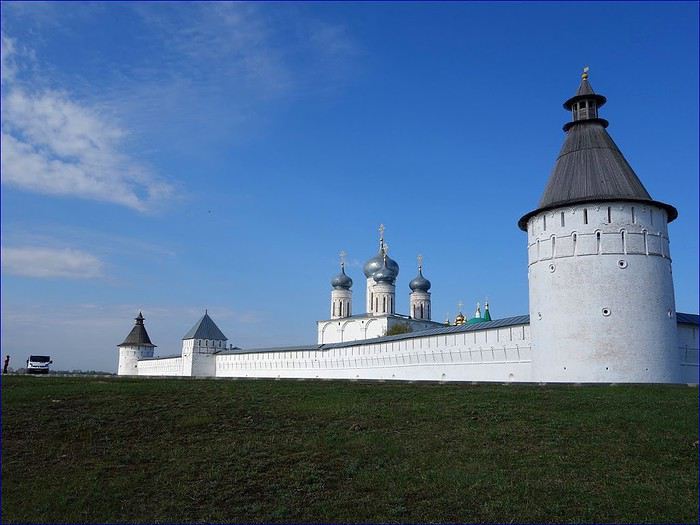
For a long time, we’d admired photos of the Makaryevo Women’s Monastery on Russian websites. They’re always taken from cruise hydrofoils that, in season, depart from Nizhny Novgorod.
This gave us the idea for a crazy challenge: to visit the monastery during a river cruise, with our little plumber’s van that’s become the common thread of our travels!
This challenge seemed impossible to pull off.
The equation was indeed impossible to solve
1. Find a dock 2. Load the van onto a boat 3. Cross the Volga 4. Arrive at sunset 5. Sail past the monastery 6. All with no reliable information. NONE!
Incredibly, every obstacle fell into place one after another! Gifting us unforgettable moments.
The photos follow our exact journey.
1. We arrive on the southern bank of the Volga, searching for a ferry to Makaryevo. First attempt, first failure—we’re way too far east. We find a second ferry, but it serves a different town on the northern bank.
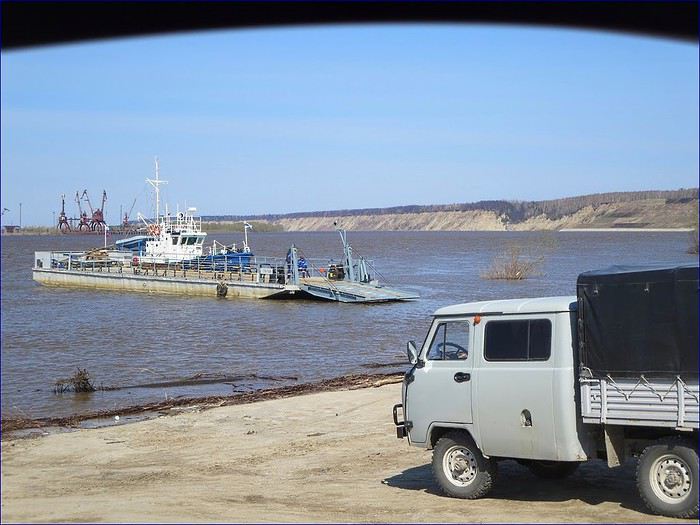
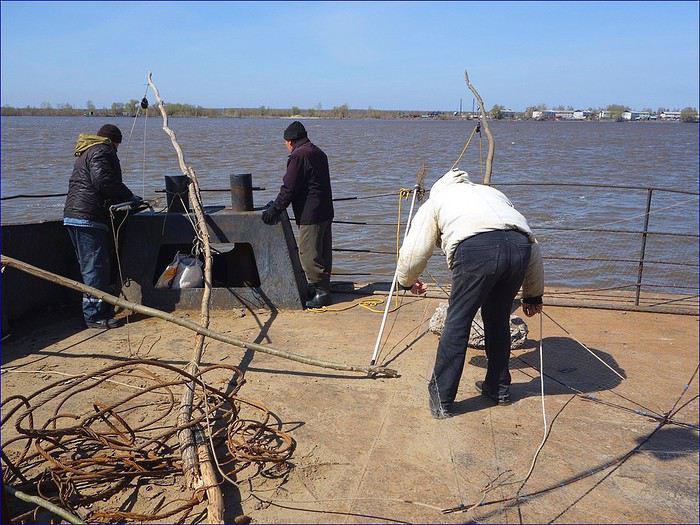
2. We keep going and meet some fishermen. But even they don’t know where to board a vehicle for the monastery.
3. After several fruitless searches, a young man who speaks a few words of English points us to a dock where, in summer, boats *might* serve the monastery. Miraculously, at the end of a rough track, we find an old ferry moored. But no one’s on board, and a chain blocks the entrance.
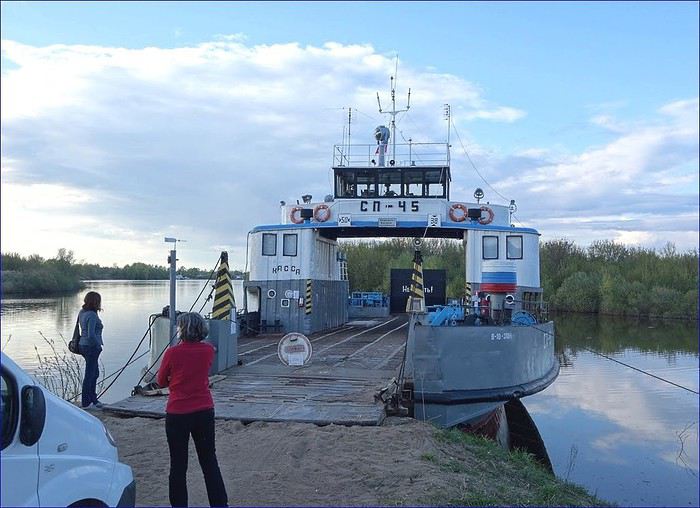
After an hour of waiting, a worker arrives and tells us they *will* cross the Volga tonight,
but the exit ramp at Makaryevo isn’t accessible for our vehicle.
The captain joins him, and seeing our disappointed faces, they confer, discuss,
and load some planks to raise the ramp!
Another miracle!
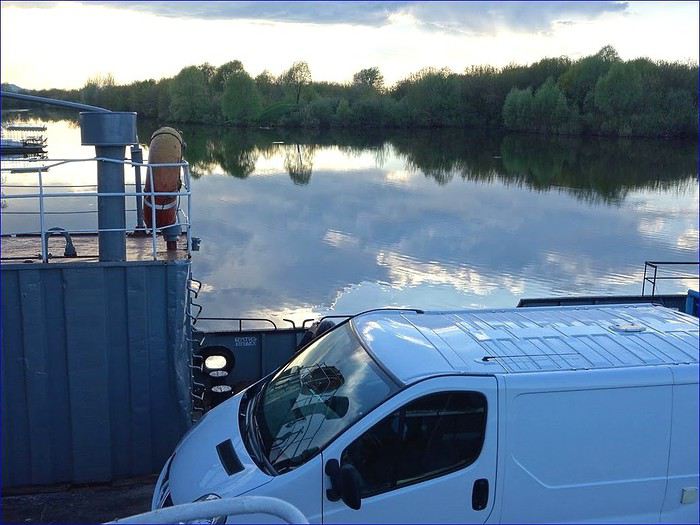
4. We board, with just one passenger accompanying us— the Trafic is the only vehicle on board.

5. The crossing was magical. And longer than expected, since the Volga here is several kilometers wide, and we’re navigating between countless islands!
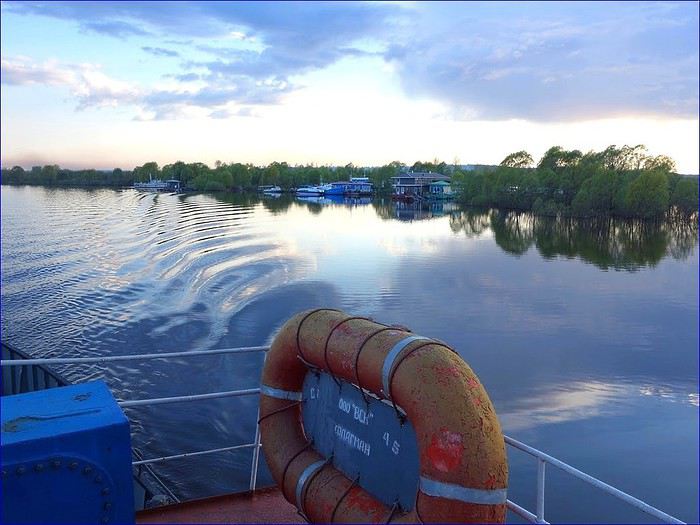
6. Under a sky that gradually clears, we discover there are homes on the river— invisible from the banks—that form small communities where people get around by boat!
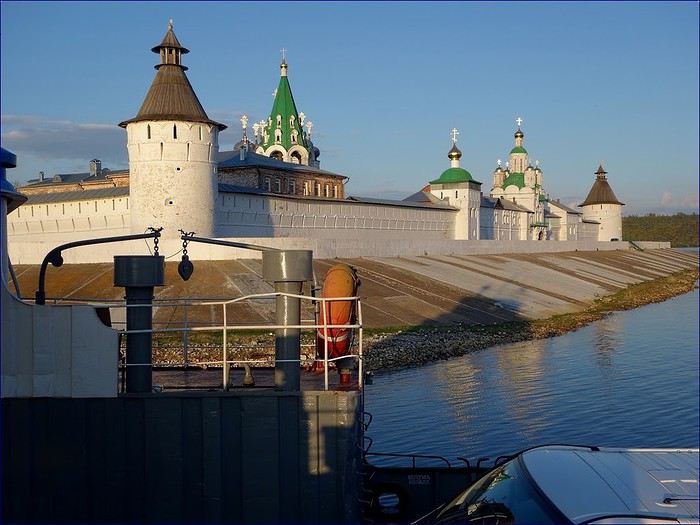
7. Then, suddenly, around a bend in the channel, the monastery appears in the distance on the northern bank.
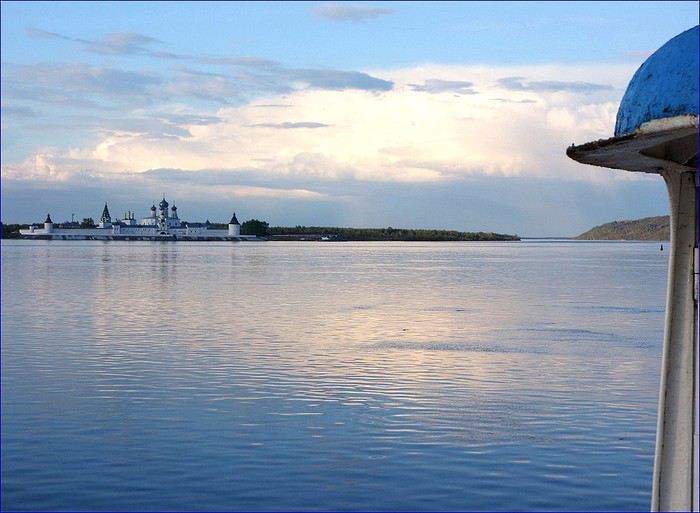
8. At the exact moment our boat rounds the buoy and nears the monastery, the sun breaks through the clouds!
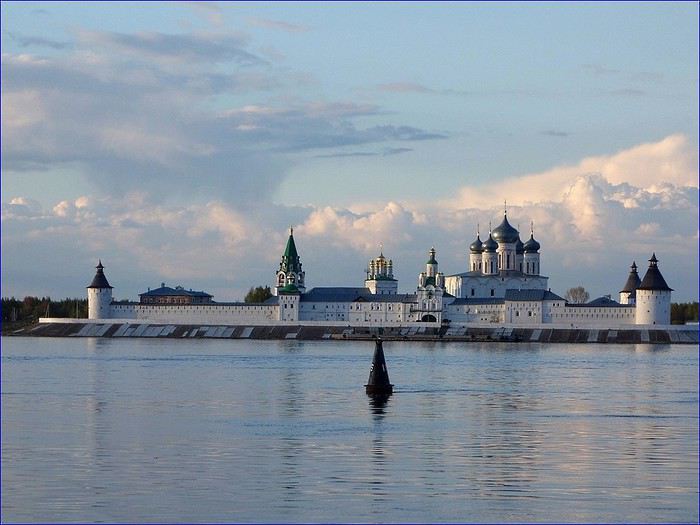
9. A breathtaking sight, with our boat gliding along the monastery walls in absolute silence.
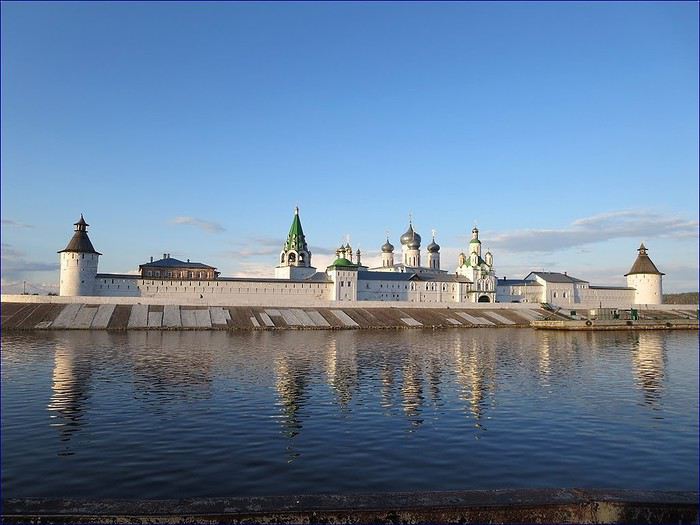
10. The sky, now a deep blue, makes the vibrant colors of the onion domes pop.
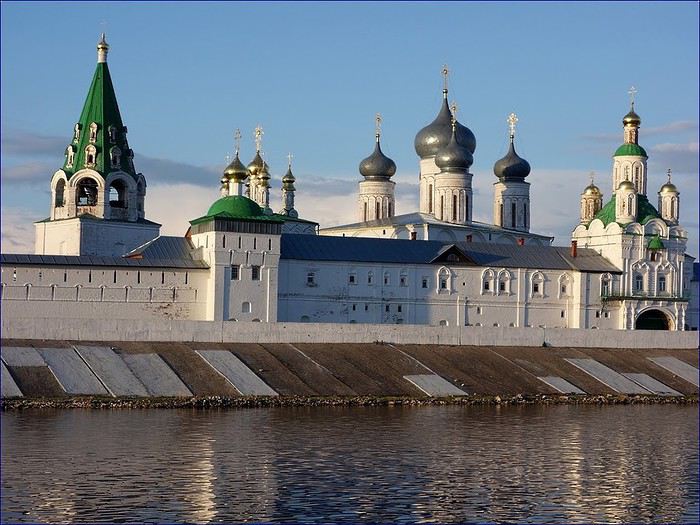
11. We sail slowly past the monastery under extraordinary light— something our little compact camera can’t fully capture.
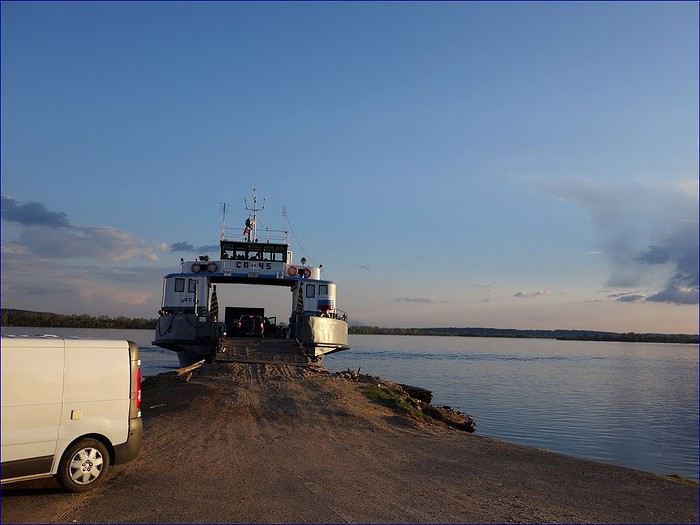
12. As promised, the captain and his crew adjust the exit ramp. You can’t tell from the photo, but even with the planks, it was a close call— the van’s chassis barely cleared the ramp. We thanked them warmly.
13. By the end of the day, the monastery is, of course, closed. But another miracle happens! It turns out the passenger who crossed with us is the mayor’s wife. When Sylvie told her we were from France, she called her husband, who immediately contacted the Mother Superior. Like in a dream, the monastery opens just for us. A nun and a guard come to meet us and take us through the chapels and gardens!
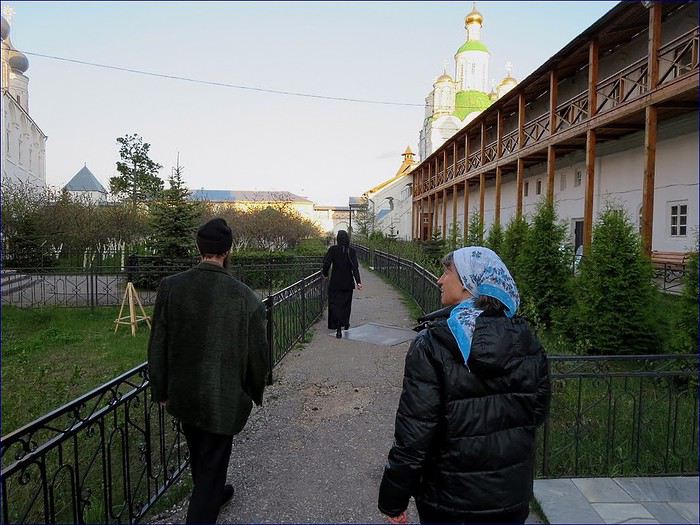
14. A visit all the more intimate since only the silent nuns, deep in prayer, are present in these sacred spaces.
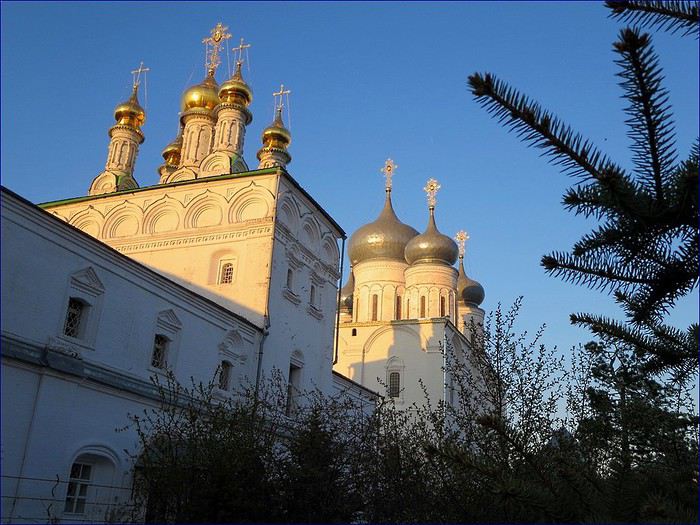
15. After dinner in our little van, we enjoy the exceptional light illuminating the now-closed monastery. We’re the only visitors, and the site feels like a massive ship anchored on the Volga.
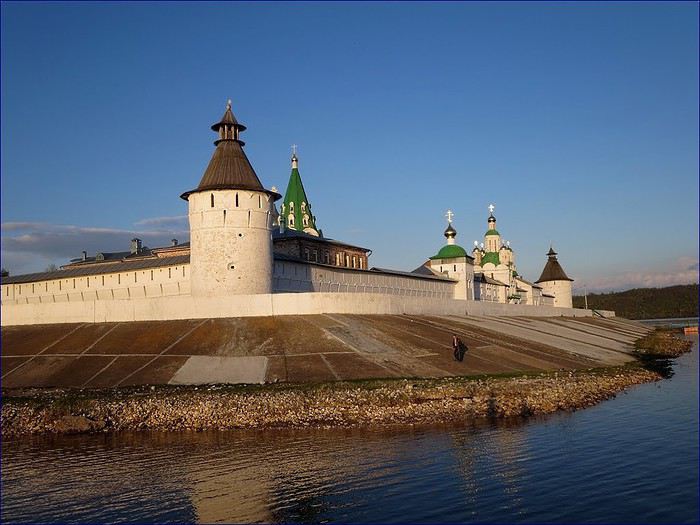
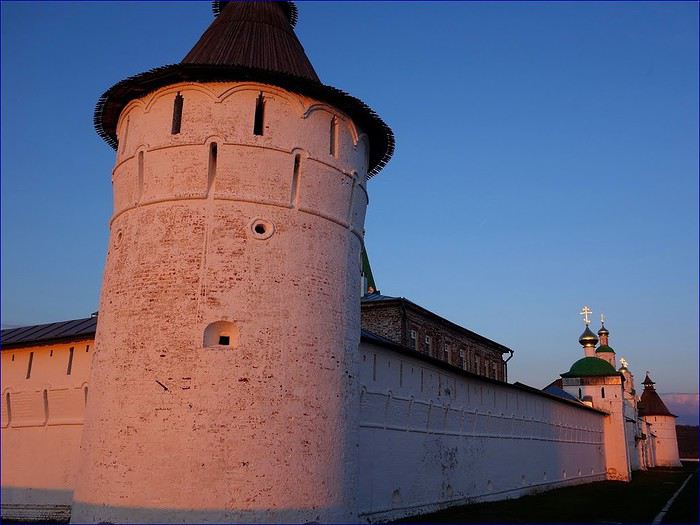
16. The setting sun now bathes the monastery walls in gorgeous pink hues!
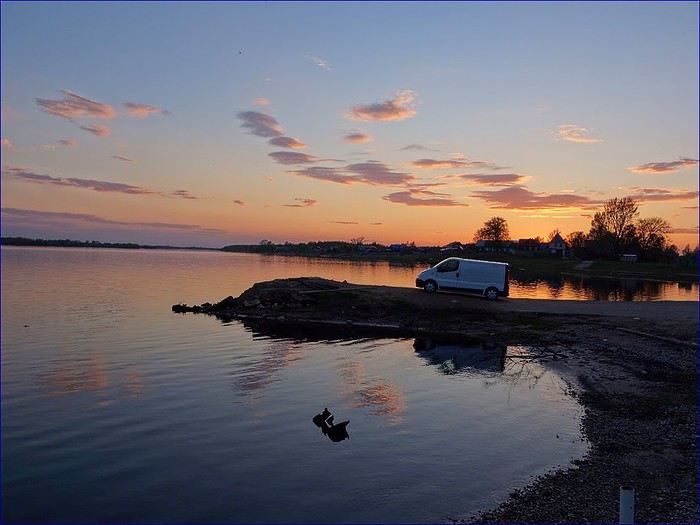
17. Gradually, the legendary Volga itself takes on magical colors! For the night, I’ll just back the van up to level it. It’ll take us a while to fall asleep after such intense moments.
18. Just as inexplicably, the magic continues the next morning! Seeing I’m struggling with my knee, the guard lets us drive slowly along the monastery’s perimeter path. So there we are at dawn, solitary wanderers between the Volga and the monastery walls.
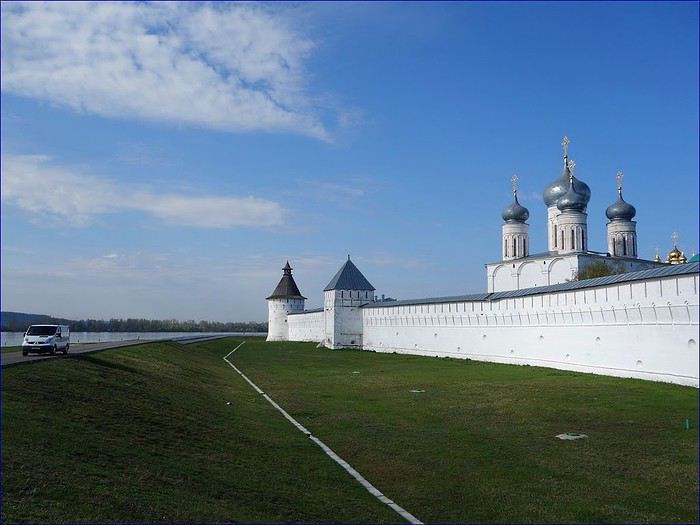
19. The morning light now illuminates the monastery’s eastern façade, which we hadn’t admired yesterday. An exceptional moment.
20. Even more impressive when we realize we’re on the nuns’ prayer path. We cross paths with them—tall, silent, black-clad figures, fully covered.
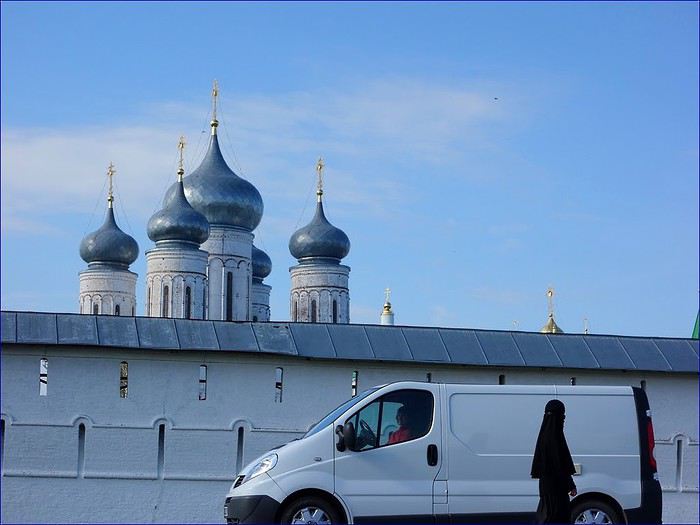
We leave Makaryevo with regret, following the Volga toward Kostroma on the Golden Ring. That’s about all there is to add.
We’ve already taken three long trips through Russia in our little van. The travel journals are shared in the link in our signature.
Best regards, Sylvie & Bernard
Today is January 7th, Orthodox Christmas Day.
It’s the perfect occasion to share on VF a religious site that left a lasting impression on us.
For a long time, we’d admired photos of the Makaryevo Women’s Monastery on Russian websites. They’re always taken from cruise hydrofoils that, in season, depart from Nizhny Novgorod.
This gave us the idea for a crazy challenge: to visit the monastery during a river cruise, with our little plumber’s van that’s become the common thread of our travels!
This challenge seemed impossible to pull off.
The equation was indeed impossible to solve
1. Find a dock 2. Load the van onto a boat 3. Cross the Volga 4. Arrive at sunset 5. Sail past the monastery 6. All with no reliable information. NONE!
Incredibly, every obstacle fell into place one after another! Gifting us unforgettable moments.
The photos follow our exact journey.
1. We arrive on the southern bank of the Volga, searching for a ferry to Makaryevo. First attempt, first failure—we’re way too far east. We find a second ferry, but it serves a different town on the northern bank.

2. We keep going and meet some fishermen. But even they don’t know where to board a vehicle for the monastery.

3. After several fruitless searches, a young man who speaks a few words of English points us to a dock where, in summer, boats *might* serve the monastery. Miraculously, at the end of a rough track, we find an old ferry moored. But no one’s on board, and a chain blocks the entrance.
After an hour of waiting, a worker arrives and tells us they *will* cross the Volga tonight,
but the exit ramp at Makaryevo isn’t accessible for our vehicle.
The captain joins him, and seeing our disappointed faces, they confer, discuss,
and load some planks to raise the ramp!Another miracle!
4. We board, with just one passenger accompanying us— the Trafic is the only vehicle on board.

5. The crossing was magical. And longer than expected, since the Volga here is several kilometers wide, and we’re navigating between countless islands!

6. Under a sky that gradually clears, we discover there are homes on the river— invisible from the banks—that form small communities where people get around by boat!

7. Then, suddenly, around a bend in the channel, the monastery appears in the distance on the northern bank.

8. At the exact moment our boat rounds the buoy and nears the monastery, the sun breaks through the clouds!

9. A breathtaking sight, with our boat gliding along the monastery walls in absolute silence.

10. The sky, now a deep blue, makes the vibrant colors of the onion domes pop.

11. We sail slowly past the monastery under extraordinary light— something our little compact camera can’t fully capture.

12. As promised, the captain and his crew adjust the exit ramp. You can’t tell from the photo, but even with the planks, it was a close call— the van’s chassis barely cleared the ramp. We thanked them warmly.

13. By the end of the day, the monastery is, of course, closed. But another miracle happens! It turns out the passenger who crossed with us is the mayor’s wife. When Sylvie told her we were from France, she called her husband, who immediately contacted the Mother Superior. Like in a dream, the monastery opens just for us. A nun and a guard come to meet us and take us through the chapels and gardens!

14. A visit all the more intimate since only the silent nuns, deep in prayer, are present in these sacred spaces.

15. After dinner in our little van, we enjoy the exceptional light illuminating the now-closed monastery. We’re the only visitors, and the site feels like a massive ship anchored on the Volga.

16. The setting sun now bathes the monastery walls in gorgeous pink hues!

17. Gradually, the legendary Volga itself takes on magical colors! For the night, I’ll just back the van up to level it. It’ll take us a while to fall asleep after such intense moments.

18. Just as inexplicably, the magic continues the next morning! Seeing I’m struggling with my knee, the guard lets us drive slowly along the monastery’s perimeter path. So there we are at dawn, solitary wanderers between the Volga and the monastery walls.

19. The morning light now illuminates the monastery’s eastern façade, which we hadn’t admired yesterday. An exceptional moment.

20. Even more impressive when we realize we’re on the nuns’ prayer path. We cross paths with them—tall, silent, black-clad figures, fully covered.

We leave Makaryevo with regret, following the Volga toward Kostroma on the Golden Ring. That’s about all there is to add.
We’ve already taken three long trips through Russia in our little van. The travel journals are shared in the link in our signature.
Best regards, Sylvie & Bernard

Hi everyone.
We’re planning a two-month trip to Morocco and Mauritania this fall (2026). We’d like to use this trip to get some bodywork and paint done on our VW T4 camper bus.
Does anyone have recommendations for trustworthy auto body shops (either personally tested or firsthand recommendations)?
Thanks in advance.
"Hey fellow road-trippers! 🚐🔥
After 4 years on the road, I’ve noticed something simple: we’re all looking for the same things. Authentic welcomes, great local eateries, and stops that don’t feel like supermarket parking lots.
But it’s always bugged me to see small producers or local guesthouses getting their margins eaten up by big booking platforms.
That’s why I created TerraNomad.
The concept is straightforward:
The pro (farmer, restaurant, small campsite, guesthouse) pays no commission to be on our map. In return, they offer a special welcome or discount to members.
It’s direct, local, and human. We’re starting in France, then heading together toward Morocco, Spain, and Portugal. Quick question: Does this kind of "no-middleman" network speak to you? I’m opening the first 100 Founding Member spots this Friday night (special launch price at 12 € for the year—just 1 € per month). Can’t wait to read your thoughts and see if you’d be up for this adventure! 🌍✋"
The pro (farmer, restaurant, small campsite, guesthouse) pays no commission to be on our map. In return, they offer a special welcome or discount to members.
It’s direct, local, and human. We’re starting in France, then heading together toward Morocco, Spain, and Portugal. Quick question: Does this kind of "no-middleman" network speak to you? I’m opening the first 100 Founding Member spots this Friday night (special launch price at 12 € for the year—just 1 € per month). Can’t wait to read your thoughts and see if you’d be up for this adventure! 🌍✋"
Is it complicated to rent a car and drive in Morocco? Also, is an international driver’s permit mandatory? Thanks
hi
where can you park a camper van in Trieste to sightsee and sleep?
thanks
Hi there,
Does anyone have a good agency recommendation for renting a camper van in Morocco (Marrakech or Essaouira) for about two weeks in March 2026?
Thanks for your tips!
Hi everyone,
We’re a family of four—two adults with two kids aged 4 and 7—about to embark on a year-long round-the-world trip in a camper van. I’m currently planning the Asia leg, which should last about 6 months. We’ll arrive in Thailand in January, head north, then move on to Laos. Ideally, we’d continue to Vietnam, Cambodia, and then return to Thailand to head south into Malaysia. If the budget allows, we’d love to include China and Japan. The big question after lots of research is: how easy is it to temporarily import a vehicle into these countries? The info I’ve found is outdated (2019–2020), and given how quickly regulations change, I’d love to hear from anyone currently (or recently) traveling in these countries with their vehicle. I’ve read that you need a local guide in Vietnam, local license plates in China, and that importing a vehicle into China is quite complicated—are these rules still in place? More generally, is there a recommended route for this part of the world with a camper van?
Thanks in advance!
We’re a family of four—two adults with two kids aged 4 and 7—about to embark on a year-long round-the-world trip in a camper van. I’m currently planning the Asia leg, which should last about 6 months. We’ll arrive in Thailand in January, head north, then move on to Laos. Ideally, we’d continue to Vietnam, Cambodia, and then return to Thailand to head south into Malaysia. If the budget allows, we’d love to include China and Japan. The big question after lots of research is: how easy is it to temporarily import a vehicle into these countries? The info I’ve found is outdated (2019–2020), and given how quickly regulations change, I’d love to hear from anyone currently (or recently) traveling in these countries with their vehicle. I’ve read that you need a local guide in Vietnam, local license plates in China, and that importing a vehicle into China is quite complicated—are these rules still in place? More generally, is there a recommended route for this part of the world with a camper van?
Thanks in advance!
hello fellow travelers
For my golden years, I'd like to drive to India in my 508. I want to avoid Iran and Pakistan. Instead, I’m thinking of going through Turkey, Georgia, Armenia, Azerbaijan, then taking the ferry from Baku to Türkmenbaşy in Turkmenistan, followed by the Silk Road through Central Asia—Uzbekistan and Kyrgyzstan.
After that, China? I’ve seen that some travelers manage to drive through China with their own vehicle... Then Tibet, Nepal, and India... But things get tricky with the Himalayan crossing. I’ve checked on Google—it looks tough.
Any tips or info on these routes? Thanks
After that, China? I’ve seen that some travelers manage to drive through China with their own vehicle... Then Tibet, Nepal, and India... But things get tricky with the Himalayan crossing. I’ve checked on Google—it looks tough.
Any tips or info on these routes? Thanks
Hi,
It seems that vans and campervans aren't allowed on Hurtigruten ferries?
We have a California van with a bike rack—length: 5.70 m / height: 2.20 m / width: 1.95 m.
We'd like to take the ferry from Trondheim to the Lofoten Islands this coming September.
Thanks for sharing any info!
regions Brittany, Rhône-Alpes, and Massif Central (Auvergne Limousin)
Hi fellow travelers,
We’re planning our first trip to Iceland.
We’re considering renting a 4x4 where we could sleep from time to time.
My question is: What’s the current regulation in Iceland? Which areas allow sleeping in your vehicle, and where is it prohibited (requiring you to stay in campgrounds)?
In June, is it possible to find spots without having booked in advance?
Sergio
Hi there,
We’re traveling in our camper van from Haute-Savoie.
We’ve got 2 weeks in April and want to explore northern Portugal.
We’re thinking of:
- Peneda-Gerês National Park - the Douro Valley - Porto
We love nature, hiking, and culture (and also good food and wine).😉
Do you have an itinerary to suggest?
Thanks in advance for your replies
We’re traveling in our camper van from Haute-Savoie.
We’ve got 2 weeks in April and want to explore northern Portugal.
We’re thinking of:
- Peneda-Gerês National Park - the Douro Valley - Porto
We love nature, hiking, and culture (and also good food and wine).😉
Do you have an itinerary to suggest?
Thanks in advance for your replies
Hi there,
We're planning a full week in Iceland in April. Given the short timeframe to prepare, I’m asking for some help on the forum.
We’re considering renting a camper van to be more independent with our travel. - Is this really a good idea at this time of year due to weather conditions (cold nights, poor road conditions, etc.)? - Can we just "park" anywhere for the night to sleep, or do we absolutely have to go to a campsite? What are the approximate rates for a van with 2 people? Do we need to book in advance? - If this mode of transport is recommended, do you have any good places to rent one?
Iceland is still a big island with lots of points of interest, so I think it’ll be tough to see everything in 8 days. - Are there parts of the island we should prioritize in April? We like hiking (nothing too long—6 or 7 hours is out of the question) and unique landscapes. - Are some sites inaccessible at this time of year? - Is Reykjavik worth stopping for a day or two?
Thanks in advance for your answers!
Jeff
We're planning a full week in Iceland in April. Given the short timeframe to prepare, I’m asking for some help on the forum.
We’re considering renting a camper van to be more independent with our travel. - Is this really a good idea at this time of year due to weather conditions (cold nights, poor road conditions, etc.)? - Can we just "park" anywhere for the night to sleep, or do we absolutely have to go to a campsite? What are the approximate rates for a van with 2 people? Do we need to book in advance? - If this mode of transport is recommended, do you have any good places to rent one?
Iceland is still a big island with lots of points of interest, so I think it’ll be tough to see everything in 8 days. - Are there parts of the island we should prioritize in April? We like hiking (nothing too long—6 or 7 hours is out of the question) and unique landscapes. - Are some sites inaccessible at this time of year? - Is Reykjavik worth stopping for a day or two?
Thanks in advance for your answers!
Jeff
Hi there,
Most of the time when I travel, I tow a trailer with an ATV for my local trips... I’d love to hear from anyone who’s traveled with a trailer and a second vehicle of any kind—especially the downsides of towing a trailer in Norway, aside from ferry costs.
Thanks!
Most of the time when I travel, I tow a trailer with an ATV for my local trips... I’d love to hear from anyone who’s traveled with a trailer and a second vehicle of any kind—especially the downsides of towing a trailer in Norway, aside from ferry costs.
Thanks!
hi,
I’m planning a trip to Albania in a camper van, most likely between May, June, and early July (2027), for about 60 days. On the way down, I’ll go as far as Bari (or Brindisi) and cross by ferry, and on the way back, I’ll go through the former Yugoslavia (or maybe take the return ferry?).
Has anyone been there recently? What are the roads like, the must-see spots, and any general tips you can share?
There’ll probably be two of us traveling together.
Thanks
Hi there,
During our last trip to Greece in 2021, we used Anek Lines' open deck offer, which allowed us to spend the night in our van on an open deck by the sea with access to the ferry's bars, restaurant, and showers (on the Ancona-Igoumenitsa route).
From my initial research, it seems this service no longer exists—can anyone confirm this?
Any alternatives?
Thanks
Hi everyone,
I’m planning to drive my camper van to southern Spain in autumn 2026. Ideally, I’d like to find a ferry leaving from France (Marseille or Toulon, doesn’t matter) that drops me off as far south in Spain as possible. I’ve done some research but haven’t had any luck.
Thanks for your tips!
Vanouk
We’d like to spend 15 days in August visiting Normandy by camper van, starting from Lyon.
Has anyone got an itinerary to suggest for exploring Normandy?
We’d like to go to Calvados to visit: Flower Coast, Honfleur, Cabourg, Deauville, D-Day landing beaches
Mont Saint-Michel
Alabaster Coast, Étretat cliffs, and maybe Rouen Fabienne
We’d like to go to Calvados to visit: Flower Coast, Honfleur, Cabourg, Deauville, D-Day landing beaches
Mont Saint-Michel
Alabaster Coast, Étretat cliffs, and maybe Rouen Fabienne
Hi there,
I have a bit of a crazy dream... I'd love to drop everything and hit the road with my wife and kids in a camper van.
I want to visit villages to learn, immerse ourselves in other cultures, and see different perspectives on the world. To teach my kids different values.
Hi everyone,
I’m planning a campervan road trip and would love some tips from those who know these countries: Slovenia, Bosnia and Herzegovina, Croatia, Montenegro, and Slovenia again. At the moment, nothing’s set in stone, but for example, is it better to visit Slovenia or Bosnia? My preferences lean toward landscapes (rivers, sea, lakes)—basically anywhere there’s water! :) Wild camping, cheap or even free spots, and a *very* tight budget—it’s the discovery, curiosity, and meeting locals that drive me. I’ll visit cities and sites only if access is easy (by bike, for example, or by train from an affordable campsite) and if visitors aren’t treated like cash cows. Just reasonable stuff, really. So, any advice is welcome—like swimming spots or easy hikes along coasts or rivers. I love caves and offbeat visits (salt mines in Poland, La Roque Saint-Christophe in France, etc.). Castles and old ruins? Not really my thing... Thanks for your help! Sylvia
Hi, I’m planning to pick up a camper van in Dubai and drive it back to France... is this even possible? What’s the best route? What are the main challenges? Are there secure parking areas along the way? Is diesel fuel available for the whole trip? ... So many questions... Thanks for your help! See you soon!
I'm planning to drive to the UAE by road, going through Iraq. Has anyone done this and can give me some info? Specifically about the border crossings Turkey/Iraq and Iraq/Kuwait.
Hi there,
I’d love to hear your thoughts on a trip to New Zealand in a campervan. Is it a good idea to mix hotels and a car on the North Island and a campervan on the South Island? Or should I do the whole trip in a campervan—though visiting big cities seems trickier that way.
Other questions: which companies do you recommend, and what are the least tiring or most sensible routes? 😄
Thanks for sharing your experiences and ideas!
Hi there,
We’re planning to tour Scandinavia by camper van—Denmark, Sweden, Finland, and Norway (in that order)—for 5 weeks from late May to late June 2026.
I’ve done it before, but that was way back in 1980 😎 and by hitchhiking!
We’d love to hear from anyone who’s done this trip about the best routes, great tips, must-know advice, and what to do or avoid (ferries, campsites, etc.).
Thanks in advance!
hi there,
We’re heading to southern England this summer in our camper van, including a stop in London.
Does anyone have a good experience with a campsite near London that has easy access to public transport to get into the city center? Ideally, we’d like to leave the camper van at the campsite...
Thanks so much in advance for your help!
We’re heading to southern England this summer in our camper van, including a stop in London.
Does anyone have a good experience with a campsite near London that has easy access to public transport to get into the city center? Ideally, we’d like to leave the camper van at the campsite...
Thanks so much in advance for your help!
Hi everyone,
I’m planning a trip with my camper van in autumn 2026 to head to southern Italy from Genoa by ferry.
Ideally, I’d like to leave from Genoa for southern Italy (like Messina) or another city in the boot.
I’ve done some research online but haven’t had any luck.
Can you help or give me some advice?
Thanks in advance!
Vanouk
Hi there, we’ll be in Portugal from March 9 to April 14, 2026. We’ve booked our first five days in Lisbon for sightseeing. After that, we’d like to rent a campervan (RV), but we’re having trouble finding a good site for the rental. The rental would be for about three weeks. Do you have any suggestions for us? We think it’s best to book the campervan before we arrive. And since we’re not mechanics, we need a vehicle in good condition...
Thanks so much for your suggestions. We’re open to everything—even route ideas and places to visit! Pierrette