We’re planning our trip for October 2017!! (Yes, it’s still far off—but planning it is already like a vacation.)
We’re interested in the Ban Gioc Waterfalls, but I can’t quite make up my mind about them.
Will there still be water in October?
Is this stop worth it? (Even if there’s no water?)
Thanks for your replies!
Happy travels to everyone,
Eric
Hi Eric,
It's still the high-water season, so the falls are pretty impressive. The sight of Vietnamese vendors selling cigarettes to the Chinese on the other side from rafts is quite amusing, and for a low price, take a raft to get up close. On the road from Cao Bang, there are very large *noria* (you have to keep an eye out). You’ll pass through the Nung region, where they forge scrap metal, and in some blacksmith villages, they offer homestays. Beautiful landscapes, and along the way—Thong Thué is interesting: market days are on the 2nd, 7th, 12th, 17th, 22nd, and 28th of the lunar month.
We’re interested in the Ban Gioc waterfalls, but I can’t make up my mind about them.
Will there still be water in October?
Is this stop worth it? (Even without water?)
Eric
I biked to Ban Gioc Waterfalls in February 2013 (so during the low-water season), and it’s honestly worth the trip.
Thanks for the info about this Thong Thué market. Unfortunately, I can’t locate it on my maps. Could you give me more details, please? I’d already spotted the one in Trung Khanh but not the one you mentioned. If not, Miss "know-it-all" will send me the directions!! Thanks in advance.
Have a great day,
Eric
Actually, after checking, the village is marked as Thong Huê. Coming from Cao Bang, it’s smaller than Trùng Khành—I’d say about fifteen kilometers, give or take. At that point, Route 206 crosses a river (gorgeous view), and the market is on the right, inside the village. What I also love are the house facades.
Trùng Khanh also has a fantastic market, much larger. I didn’t note the dates, but since it’s a district, it’s probably on Sundays.
I often stop in Thong Hué because it’s two days after the Bao Lac market (5th, 10th, etc.) and the day after the Hung Dao market (6th, 11th, etc.). It makes for some really nice stops... really nice.
Happy researching,
There’s always water, and the road to get there is stunning. Here’s what you can do:
Day 1: Hanoi to Ba Be Lake (overnight in a guesthouse in Pac Noi)
Day 2: Beautiful boat ride on the lake + Nang River (tunnel + Dau Dang waterfalls)
Day 3: Ba Be to Cao Bang
Day 4: Ngom Ngao waterfalls and amazing cave
Day 5: Cao Bang back to Hanoi
Méfiez-vous de la vie, car les ratés ne vous rateront pas!
It's worth going even if the flow isn't strong because the road there offers beautiful landscapes reminiscent of the terrestrial Halong Bay near Ninh Binh.
When you arrive, you need to buy an entrance ticket before walking the path that leads to it.
On one side, Vietnam, and on the opposite bank with cliffs: China is just 50 meters away.
On the way back, you can stop at some caves that local tourists visit.
Then take a different route back to Cao Bang, a drivable track passing through the karst peaks. (If Larsay is reading this, he can provide more details about this route he mapped out for me.)
Actually, the border runs right through the middle of the waterfalls and the river, so half is in Vietnam and half in China.
You can get there via Route 206 Cao Bang-Quang Uyen-Trung Khanh-Ban Gioc and return via Route 207 Bang Ca (that’s where the infamous "Camp No 1" was—a death camp for French officers imprisoned in Cao Bang in October 1950 and at Dien Bien in May 1954)—Dong Deng (Ha Lang)-Quang Uyen-CB
Méfiez-vous de la vie, car les ratés ne vous rateront pas!
There you go!
And it’s on the list provided a few months ago ;)
goo.gl/maps/4F1eZ3uTjoH2
For Jean Pierre:
After checking (and correcting)... it turns out there are two Trùng Khánh.
The one in Rò tẩu (Trùng Khánh) is near Cao Bằng - Lunar Days 1 and 6.
The second one is near Bảo Lạc, Trùng Khánh, Bản Giốc - Lunar Days 5 and 10.
Pour bien aimer un pays il faut le manger, le boire et l’entendre chanter. (Michel Déon)
I passed through Trung Khanh (Ban Gioc) 8 or 9 years ago, and you just reminded me how important and interesting the market was. Looks like I’ll have to go back and check it out again. Especially since in Thong Hue, it’s mostly the houses I really like.
That’ll mean staying with the blacksmiths.
Thanks, Asia, for the details.
Going to Ban Gioc is always interesting, but if you can choose, aren’t they more stunning after September?
Before, you’d drop your pants and dive in to cross into China... We’d go a little past the middle and then rush back... Now you can rent a raft and float near the falls with the Chinese rafts.
The falls didn’t leave me with an unforgettable memory....
I only saw a trickle of water (okay, I’m exaggerating a little😉)—you really have to pick the right moment, and I prefer the Vietnamese side, the small third that I find "romantic" (that’s my soft side talking) over the Chinese side.
As for the rafts, it’s hardly an epic adventure—I would’ve found it more fun to jump in and rush back..😏.
But the blacksmith villages and the markets? Oh YES, I’m a huge fan!
Pour bien aimer un pays il faut le manger, le boire et l’entendre chanter. (Michel Déon)
Hi Jean Pierre,
Thanks for the details. It’s definitely tempting to do these 3 markets in 3 days and maybe combine it with Trung Khanh.
Looking forward to reading more of your great tips.
Eric
Miss Trouve Tout reminded me, as I expected... but she did provide the details 😏
Thanks for the details—it’s hard for me to sort out these markets. I’ll have to ask for a lesson because near Bao Lac, Trung Khanh market, Ban Gioc!!!! I don’t place Bao Lac near Ban Gioc!!!
I’ll dig out my old 1950 military map and hope the names haven’t changed!!!
Have a great day, and thanks again!
Eric
The first small market in Trùng Khánh, now called Po Tau, is at the gates of Cao Bằng. Market days: 1st and 6th day of the lunar month.
The second Trùng Khánh is between Cao Bằng and Ban Gioc. Market days: 5th and 10th day of the lunar month, same as Bao Lạc, which is where the confusion comes from.
Pour bien aimer un pays il faut le manger, le boire et l’entendre chanter. (Michel Déon)
We went there in May 2014. The water level was quite low. We still enjoyed the place and the road leading to it, with a stop at the fascinating Nguom Ngao caves.
Check out our blog here for details and photos.
Have a great day,
Michèle
Michèle
http://mjm-nosvoyages.blogspot.fr/ Ethopie 2020-Birmanie 2017-New York 2015-Sicile 2015-Ouest américain 2015/16/17/18/19 - Madrid/Barcelone - Cinq Terre 2017-Prague 2018-Venise 2019
http://surlarouteasiatique.blogspot.fr/ 2014 : périple de 9 mois Cambodge, Laos, Vietnam et ouest Américain
Personally, I don’t think Ban Gioc Waterfalls are worth it. The road is too long and difficult. The photos make them look amazing, but in reality, I was disappointed. Northern Vietnam has plenty of other more beautiful spots.
Hi Ericat;
We’re planning our trip for July 17.
There are local buses from Hanoi to Cao Bang (My Dinh station – My Dinh bus station). But do you know how to get to the waterfall from there? Can we contact a travel agency, or is it easy to do on our own? If anyone could shed some light, that’d be great!
THANKS
Hi Ericat;
We’re planning our trip for July 17th.
There are local buses from Hanoi to Cao Bang (My Dinh bus station—link My Dinh bus station). But do you know how to get from there to the waterfall? Can we contact a travel agency, or is it easy to do on our own? If anyone could shed some light, that’d be great!
Thanks!
From Cao Bang bus station, there’s a microbus connection (15 seats, usually) to Trùng Khanh, the district capital (about 50 km away), and maybe even directly to Dam Thuy village, where you can find guesthouses a 15-minute walk from the waterfall site. Otherwise, from Trung Khanh, there’s usually a minibus service (12 seats) to Ban Gioc Waterfalls that cost around 20,000–25,000 VND per person in 2013.
This is the best solution. I don’t know of any agencies in Cao Bang, but it shouldn’t be too difficult to find one on the main street before or after the bridge. Otherwise, ask at your hotel (the Huong Sen is great).
Méfiez-vous de la vie, car les ratés ne vous rateront pas!
Hi there,
Just to let you know, we were in Cao Bằng in March 2016 to visit the waterfalls, and for the first time in Vietnam, we had a lot of trouble finding an agency or anything similar. After a day of searching, we asked the reception at the old, big hotel in the center at the corner of the bridge. The young receptionist had a friend with a car... and the next day, he took us there. To communicate, we went through the young woman by phone! It was really nice, and the next day, he drove us to Ho Chi Minh Cave.
With a bit of perseverance, you’ll get there! And it’s worth it.
Have a great trip,
Andre69
Thanks Larsay and Andre69.
I’ll wait until I get there and find a taxi.
Does anyone know the rate for a taxi for the day, and the price of entry to the falls?
Hi André,
We’re planning a future 3-week trip to northern Vietnam and thought about heading to Cao Bằng to see those famous waterfalls.
Are there any other spots around Cao Bằng worth checking out to make the long round trip from Hanoi worthwhile?
Villages, landscapes?
Thanks,
On the road from Hanoi to Cao Bang—the old RC4 or "Bloody Road," which became a dam in 1950—you really need to be a history buff to appreciate it. There are still some beautiful landscapes, though! Around Cao Bang, there are also markets if you head a little north toward China: Po Tau, Tra Linh, Trung Khanh, etc. Otherwise, there’s Ba Bể Lake to the west/southwest, 126 km away (about 3h20 by road). You can stay with locals, take a boat ride on the lake, explore caves, see a small waterfall, and go hiking. Visitors usually love this stop—it all depends on how much time you have.
Happy planning!
Eric
Day 1: Hanoi-BABE (Tay village of Pac Ngoi - Mr. DUY THO's homestay)
Day 2: Boat trip on Nang Lake and River - Dau Dang Cave and Waterfall; a really beautiful day!)
Day 3: Pac Ngoi-Cho Ra-Cao Bang
Day 4: Ban Gioc Waterfalls
Day 5: Pac Ngoi-Halong OR you can continue to Bao Lac, Meo Vac, Dong Van, and Ha Giang
Méfiez-vous de la vie, car les ratés ne vous rateront pas!
Hi there,
To avoid the long Hanoi–Cao Bằng trip, we stopped in Lạng Sơn, which makes for a short but pleasant break (caves to visit and the ruined fort—check out J Larsay’s really helpful posts).
Happy planning!
andre69
Hello,
On the road to Ban Gioc, 36 km from Cao Bang, there’s a Nung village, the blacksmith village of Phuc Sen.
It’s a very old village, with around 400 families who almost all have their own forge.
The Nungs are one of Vietnam’s 54 ethnic minorities, and the people of Phuc Sen have kept their traditional clothing and ancestral customs.
Ask around in Cao Bang—I think there’s a guesthouse in the village. When I passed through, it was in the works... they’d installed the bathrooms, BUT they were still waiting for the plumbing😉.
I’ve always had an issue with the 54 minorities. The thing is, this number includes the Khin, who are actually the Viet—the majority of the population. What’s more, the excellent little booklet *Ethnic Minorities in Vietnam*, published by The Gioi, lists 53, not 54.
Méfiez-vous de la vie, car les ratés ne vous rateront pas!
For me,
There are indeed 54 ethnic groups, including the Kinh, with 53 being minorities.
The Kinh struggle to accept this classification among the 54 ethnic groups.
The Kinh ethnic group, the official name, represents the majority of the population and partly originates, like other ethnic groups, from migrations—Chinese in this case, but much older (258 years before our era).
Vietnam was populated as early as the Neolithic period by populations of Indonesian and Malay origin, ancestors of the highland populations known as Moï or Muong. During the Bronze Age, Chinese populations arrived from the North and blended with those already settled there to form the Viet-Kinh people.
In the revised and corrected 2010 edition, it is well referenced in the list of ethnic groups on page 277. The Kinh ethnic group is classified under the Austro-Asiatic language family—Viet-Muong group on page 12.
However, no chapter is dedicated to them, though the introduction mentions them several times.
Nguyen Van Huy, project leader of the Ethnology Museum, and his team of researchers in *Mosaïque culturel des ethnies du Vietnam* also classify the Kinh as one of the 54 ethnic groups, without dedicating a chapter to them either.
The Kinh, also known as the Viet, speak Vietnamese, a language belonging to the Austro-Asiatic family.
Professor Bui Xuan Dinh from the Vietnam Institute of Social Sciences states:
"The Kinh, or the Viet, are part of the Lac Viet group, which belongs to the larger Bach Viet bloc, composed of several ethnic groups. Each group has its own territory. The ancestors of the Kinh were at the origin of various cultures: Phung Nguyên, Go Mun, Dong Dau, and Dong Son. They primarily practiced flooded rice cultivation and crafts, as evidenced by the Dong Son bronze drums."
Initially, the Kinh mainly lived in the northern regions and the deltas of the North. Then, starting in the 11th century, they began a gradual expansion, first toward the Center and then the South, always in search of new land to clear. By the early 20th century, when the French began establishing large urban centers in the Northwest and the Central Highlands, many Kinh moved there.
Wherever they went, the Kinh quickly adapted to local customs and traditions. It’s no surprise, then, that they manage to coexist so harmoniously with ethnic minorities, sharing their know-how. Bui Xuan Dinh explains: "The Kinh form a single bloc. When they explore new regions, they must adapt as quickly as possible. But they have a special talent for combining their skills with those of the locals to later create a new culture. In the Northeast, for example, the Kinh still practice rice cultivation. However, since these are mountainous regions with particular climatic conditions, they adopt local techniques."
Influenced by Confucianism and Taoism, the Kinh practice ancestor worship. Many are also Buddhist or Catholic.
In Kinh culture, the man is considered the head of the family. In a sibling group, the eldest son has the duty to perform ancestral rites if his grandparents or parents have passed away.
Kinh culture is primarily transmitted orally—it includes a vast collection of tales, legends, proverbs, and folk songs—or in writing. Festivals also play an important role in tradition.
The Kinh have been making pottery for a very long time. They also practice animal husbandry, but above all, they are rice farmers at heart!
Pour bien aimer un pays il faut le manger, le boire et l’entendre chanter. (Michel Déon)
Actually, there are 54 ethnic minorities, because a new one was discovered in 1959—11 families, or 34 people (now 600), the RUC, who lived in caves near the Laotian border in Quang Binh region and practiced foraging, fishing, and hunting (*Courrier du Vietnam* Magazine, June 27 to July 3, 2014)
Méfiez-vous de la vie, car les ratés ne vous rateront pas!
For now, they still aren’t recognized as a distinct ethnic group—researchers prefer to associate them with the Chut ethnic group of the Viet Muong before learning more, which isn’t easy since the Ruc are very secretive.
In 1988, Paris VII University published this book (which, unfortunately, still isn’t available—I’m on the waiting list): *Vietnamese-Ruc-French Lexicon: The Language of an Ethnic Minority in the Mountains of Quảng Bình, Vietnam, with Ethnographic Notes and a Linguistic Introduction*
Pour bien aimer un pays il faut le manger, le boire et l’entendre chanter. (Michel Déon)
Suggestion for Asia7 and Larsay
In Huế, Father Binh, a theology professor at the major seminary located by the road leading to the Thien Mu Pagoda, might be a great help on this topic.
He’s polyglot, fluent in Vietnamese, French, Italian, English, plus a few languages (four for sure) of minorities living along the Vietnam-Laos border, so near or on the Ho Chi Minh Trail.
Le socialisme ne peut fonctionner qu’au paradis où il n’est pas utile, et en enfer où ils l’ont déjà
Hi there,
For those of us who aren’t familiar with VIETNAM, could you explain the difference between ETHNIC GROUPS and MINORITIES? (Maybe I sound silly???🤪)
That said, my trip from south to north is coming up soon... I’d love to meet other travelers to share a moment and chat (since I’m traveling solo). My dates are from APRIL 18 in the south to MAY 16 in the north.
Thanks in advance!
marie
MARIE
"Chaque voyage se vit différemment même si la destination est la même; c'est notre état d'esprit du moment et nos rencontres qui en font la différence"
Father Binh must be around 75 to 80 years old now, so he’s certainly retired;
hopefully enjoying his retirement where he used to teach.
I knew him well and spent a lot of time with him between 1991 and 1996; he lived in a house on the path behind the train station.
First, we’d need to find out if he’s met them or heard of them...
If he has, he’ll share his personal thoughts;
he’s not the type to proselytize—he’s a Vietnamese man of great culture.
Watch out for his tea, though!! It’s *super* strong and gives you a killer headache. 😉 Dilute it before drinking...
Le socialisme ne peut fonctionner qu’au paradis où il n’est pas utile, et en enfer où ils l’ont déjà
Hi,
Great info about the festival in HUE. It takes place from April 28 to May 2;
Personally, I’ll be there from April 27 to 29... (pure coincidence)...
MARIE
MARIE
"Chaque voyage se vit différemment même si la destination est la même; c'est notre état d'esprit du moment et nos rencontres qui en font la différence"
I was lucky enough to take part in the first festival, which began on April 4, 1992;
At the time, there was a French Center in Huế run masterfully by Mr. Philippe Catelin;
he was about 30 years old, a doctor in—I don’t remember what—specializing in the Spanish War! (The one from 1808 to 1813.) So, nothing to do with Vietnam 😉
It’s quite a long story, and it’s starting to feel like ancient history;
it was thanks to Vietnamese people from Huế who worked at EDF (Électricité de France) that this festival came to life, largely sponsored by their company.
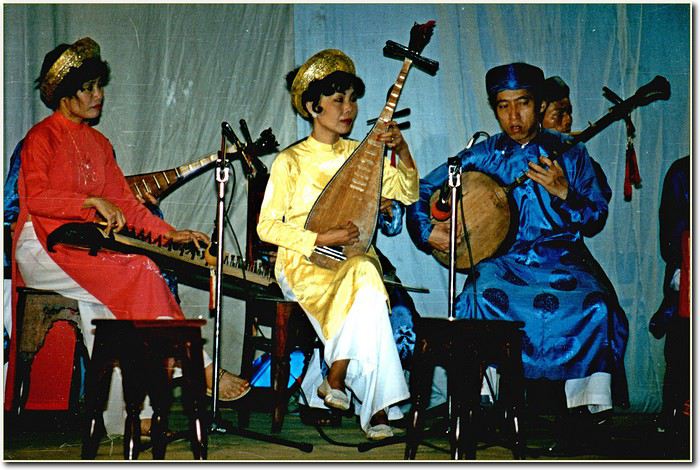
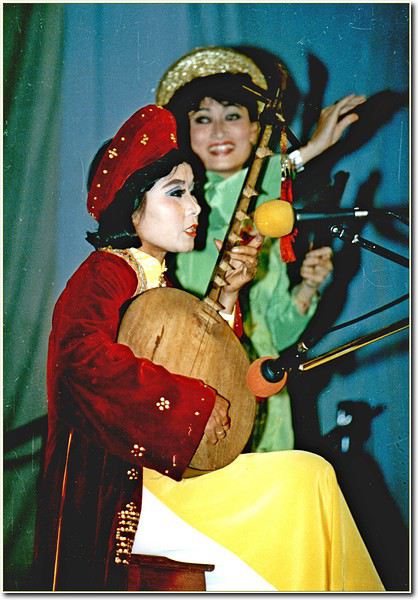
Two photos taken on April 4 or 5, 1992; scans of film photos
Le socialisme ne peut fonctionner qu’au paradis où il n’est pas utile, et en enfer où ils l’ont déjà
Hi and thanks for these really beautiful photos and info.
Best,
Marie
MARIE
"Chaque voyage se vit différemment même si la destination est la même; c'est notre état d'esprit du moment et nos rencontres qui en font la différence"
- Do you happen to know if it’s possible to rent a car for the day (with a driver) in Trung Khanh to visit the Phong Nam Valley and the Ngoc Con Valley? I’m sure there are some in Cao Bang, but are there any in Trung Khanh itself?
- Do you know if the bus from Cao Bang to Ban Gioc stops near the "Khu Bảo Tồn Vượn Cao Vít" nature reserve, which is on the way to the waterfalls? It would really work for us to take the bus to that spot since it’s only 4 km from our hotel.
This would be for a 3-4 day trip to the region next December. My dad speaks Vietnamese, but we haven’t been able to get precise information about this.
Generally, in October, there isn’t much water left,
but based on my last trip this year, the rains came later in Vietnam.
The rainfall was heavy, so the waterfall is still really beautiful.
That said, watch out for storms.
I got stuck for three days and stayed in a homestay the whole time.
Hi there,
Sorry for the late reply, but I came across your message today while checking a new post alert in this thread generated by the site.
Hi Quynh,
- Do you happen to know if it’s possible to rent a car for the day (with a driver) in Trung Khanh to visit Phong Nam Valley and Ngoc Con Valley? There are probably options in Cao Bang, but are there any in Trung Khanh?
- Do you know if the bus from Cao Bang to Ban Gioc stops near the "Khu Bảo Tồn Vượn Cao Vít" nature reserve on the way to the waterfalls? It would be convenient for us to take the bus to that spot since it’s only 4 km from our hotel.
This would be for a 3-4 day trip in the region next December.
My dad speaks Vietnamese, but we haven’t been able to get precise info on this.
The "Khu Bảo Tồn Vượn Cao Vít" is located on the DT211 provincial road, starting from Trung Khanh, while the road to Ban Gioc Waterfalls is on the DT206. The public bus from Cao Bang passes through Trung Khanh before continuing on the DT206 toward Ban Gioc Waterfalls. From what I can tell, the "Khu Bảo Tồn Vượn Cao Vít" is about 4-5 km from Trung Khanh.
As for renting a car with a driver in Trung Khanh, I can’t say for sure, but I assume it’s possible (with services like Grab, for example). If you’re staying at a hotel in Trung Khanh, they probably won’t have too much trouble finding you a car with a driver.
Generally, in October, there isn’t much water left,
but based on my latest trip this year, the rains arrived later in Vietnam.
The rainfall was heavy, so the waterfall is still very beautiful.
However, you need to watch out for storms.
I was stuck for three days and stayed in a homestay the whole time.
Following typhoons No. 10 (Bualoi) and No. 11 (Matmo), Ban Gioc Waterfalls were temporarily closed due to the significant flooding caused by the heavy rains:
(It’s in Vietnamese, but with AI tools now, translation is totally accessible to everyone.)
Generally, rains from typhoons affect the mountainous regions of northern Vietnam in July, August, and September, so the water level at Ban Gioc Waterfalls will be highest from July to September-October. See:
Thanks so much for your reply—looks like I’m getting back to you pretty late too. My apologies for the delay.
It’s been really tough to get info on the questions I asked:
We’ll try to find a car with a driver in Trung Khanh... We’ll see how it goes.
On the other hand, there’s a hotel—the Phong Nam Station—that isn’t responding, despite our booking... Hope it hasn’t closed down.
I doubt you’ll find a car with a driver in Trùng Khánh, a small non-touristy town. Rent in Cao Bằng instead and head down to the excellent 3-star JEANNE hotel (she was Chartron’s nurse). There are several Gioc hotels, including a 3-star one; no need to book ahead—few people spend a night in Ban Gioc since it’s easy to visit in a day with lunch by the falls.
For reference, here’s a reminder of the terrible events of late October 1950:
THE BATTLE OF ROUTE COLONIALE 4
Route Coloniale 4 (RC 4), now Highway 4A from Lạng Sơn to Cao Bằng and 4B from Lạng Sơn to the coast, was a super-strategic road because it runs along the entire Chinese border between the Gulf of Tonkin and Cao Bằng in the northeast, including the three “gates” to China: Móng Cái, Lạng Sơn, and Cao Bằng. This partly explains why, in 1979, the Chinese suddenly bombed and leveled these three cities—plus Lào Cai, the fourth “gate”—before invading the north and suffering a humiliating defeat (50,000 dead and over 400 tanks destroyed).
Many tourists travel from Lạng Sơn to Cao Bằng without knowing—or at all—what happened there in 1950. Yet October 7, 1950, should be a major date in modern history: for the first time, a colonized people in rebellion inflicted a bloody defeat on a colonizing army, which, for France, foreshadowed the inevitable conclusion—delayed by four years due to the stupidity of the governments at the time: Điện Biên Phủ. In fact, the Indochina War was lost at Đông Khê in October 1950.
THE PLAYERS:
On the Asian side: Hồ Chí Minh and Giáp, who had been hiding in the limestone mountains of the northeast since 1941, Viet Minh groups with nothing, and Mao, who was pushing Chiang Kai-shek’s troops back to the Vietnamese border.
On the French side: a government that only cared about Indochina for the billions it brought in, mainly in Vietnam, with big corporations exploiting the three countries (Banque d’Indochine, Brasseries et Glacières d’Indochine, Michelin—rubber plantations—the import-export and maritime shipping companies, etc.), blocking all reforms to keep lining their pockets, and an Expeditionary Corps, the best troops in the world at the time, including the Legion, paratroopers, and Moroccan tabors, led by commanders who would later become famous: Bigeard, Jeanpierre, Trinquier, Faulques, Ponchardier (yes, the brother of the future author of the *Série Noire* novels *Le Gorille*), Élie de Saint Marc, Charton, etc., veterans of Leclerc’s 2nd Armored Division and de Lattre’s 1st Army. Unfortunately for them, this incredible military force was led by a complete incompetent, a protégé of Marshal Juin, General Carpentier, whom de Lattre had fired for incompetence in 1944. This hothead refused to learn about the terrain—crucial in a war like this—or the troops: that was the job of his subordinates. He stayed in his Saigon office, writing glowing reports to the government claiming everything was improving (how history repeats itself; these were the same lies told by U.S. generals during the Vietnam War, with the same results). In fact, just before the disaster, this incompetent told the government he “had the situation well in hand and could likely send troops back to France soon.” The result of his ineptitude: by 1950, he had rarely set foot in Tonkin, except for brief staff meetings, and he refused to listen to the field officers—and French intelligence—who knew exactly what was really happening.
THE SETTING
The northeast is a maze of limestone peaks and deep canyons or valleys, all covered in jungle, riddled with caves, and crisscrossed by a labyrinth of small roads and trails. From Lạng Sơn to Đông Khê, halfway between Lạng Sơn and Cao Bằng, the road follows a valley lined with cultivated hills and has no particularly dangerous spots. From Đông Khê onward, it’s a death trap: the road winds from one pass to another along the river, with limestone cliffs covered in jungle on either side and the river below to the right. Any maneuver is impossible. A small mountain cannon in a cave overlooking the road—and there are hundreds—could destroy the lead and rear trucks of a convoy, and *boom*, no more convoy. Giáp knew this well, but Carpentier didn’t at all, since he’d never been there and refused to listen to the many officers who predicted a catastrophe and recommended evacuating all the posts between Cao Bằng and the impregnable Lạng Sơn before the Viet Minh grew too strong.
THE PRELUDE
In early 1950, Mao’s troops reached the Vietnamese border, pushing back Chiang Kai-shek’s forces in northern Tonkin, which the French managed to disarm, and in northern Thailand, where they settled in the Golden Triangle. In addition to tea plantations, they organized the opium trade, controlling 80% of global production in the 1960s–80s. Mao had now taken over the massive American arms depots and camps in Yunnan, where he invited Giáp to train entire divisions, armed and trained by his generals. French intelligence, no less competent than others, was fully aware of the situation and informed the General Staff, which did nothing except send the Legion to Cao Bằng (the famous 2nd BEP under the command of a legendary warrior, Colonel Charton) and to posts along RC 4, including the main ones: Thất Khê, Na Cham, and Đông Khê (plus smaller ones at the top of each pass). Now well-equipped and trained, the Viet Minh constantly harassed the posts to “get their bearings.” In 1950, some supply convoys lost up to 90% of their trucks between Đông Khê and Cao Bằng.
THE DISASTER
On May 25, 1950, the warning shot: the Viet Minh’s elite 308th Division seized Đông Khê and cut RC 4 in two. The French command was surprised (though intelligence had warned them) to discover that the Viet Minh now had entire, well-equipped divisions. On May 27, the paratroopers of the 3rd BCCP jumped directly onto Đông Khê and recaptured it. On September 15, the Viet Minh took the town back, and it was never retaken. Carpentier decided to evacuate RC 4 between Cao Bằng and Lạng Sơn, which could have been done by airlift, but—ever the genius—he decided it would be done… by road. His plan was for the paratroopers to retake Đông Khê a second time, for a column led by Colonel Lepage to move up the road from Lạng Sơn and link up with the column evacuating Cao Bằng, and for everyone to return calmly to Lạng Sơn. The whole plan hinged on the French retaking Đông Khê.
Charton left Cao Bằng, taking all the civilians with him—which largely explains the evacuation’s failure, and he knew it but refused to abandon them to a certain fate. Of course, nothing went as planned: Despite their heroism, the paratroopers of the 1st BEP couldn’t retake Đông Khê—so RC 4 was still cut off. Lepage’s column was sliced up by the Viet Minh and ended up in a basin south of Đông Khê, at Cốc Xá, hemmed in by sheer cliffs on one side and jungle-covered mountains on the other. Learning that Đông Khê was still in Viet Minh hands, the command—still safely in Lạng Sơn—ordered Charton to take an isolated jungle trail, the Quảng Liêt trail, which bypassed Đông Khê. When he reached the town’s level, as a good soldier, he had everyone climb the ridges overlooking the basin, but Lepage sent desperate distress calls, so Charton also brought his troops down into the Cốc Xá basin to try to rescue him. It was the rendezvous of death: On October 7, 1950, both columns were annihilated at Cốc Xá. The toll: 2,000 French soldiers dead and 3,000 prisoners, fewer than 1,000 of whom were recovered when de Lattre arrived—mostly North Africans, now well-indoctrinated in anti-colonial warfare. The others died of starvation and disease in the Viet Minh’s terrible camps, which Hélie de Saint Marc, who experienced both, said were worse than Nazi concentration camps. Only about a hundred men escaped the trap and managed to reach Thất Khê after days of wandering in the jungle.
THE SHAME
After the disaster, total shame and panic among the French. Though Lạng Sơn was impregnable, the garrison commander, Colonel Constans, decided to abandon it “by surprise,” so he didn’t blow up the huge forts surrounding the city or the massive depots, which were so enormous that they supplied an entire Giáp division for a year. Panic also set in in Hanoi, which the French began evacuating. De Lattre, appointed Commander of the Expeditionary Corps and Governor-General of Indochina, saved the situation in three bloody battles: Vĩnh Yên west of Hanoi, Mạo Khê to the north, and Ninh Bình to the south. But as of October 7, 1950, the Indochina War was lost. Giáp now controlled the entire northeast, from which soldiers (including many Chinese technicians and even troops) and, most importantly, motorized supply convoys instead of porters could move freely all the way to Điện Biên Phủ.
Nothing remains of the large French post at Đông Khê except a small blockhouse made of rubble and a few ammunition bunkers. However, a fantastic walk takes you to Hồ Chí Minh and Giáp’s headquarters during the Battle of RC 4, located in the village of Đức Long. To get there, continue down the street in front of the fort and go straight to the village. At the end of the road, a small sign points left to a path; take it and you’ll enter a maze of concrete trails with caves everywhere—that’s the famous HQ. The yellow stilt house was where Giáp and HCM slept; walk around it and climb the steps. The caves are scattered to the right and left. Return to the road and continue left to reach a small, interesting museum about the October 1950 battle.
The Cốc Xá basin south of Đông Khê
Unforgettable day! Take RC 4 toward Cao Bằng; at a roundabout, turn left onto the old RC 4 and climb the Nguộm Kim Pass, site of the most terrible ambushes on the “Bloody Road.” The views are breathtaking. At the kilometer marker “Cao Bằng 32 km” (there are two houses on the right and one on the left), take a small road to the left (make sure you take the right one by simply asking for “Cốc Xá,” pronounced *Coc Sa*). This road quickly turns into a trail; keep going until you can’t drive any farther in a 4x4. You’re in an idyllic valley with, from left to right, the famous limestone cliffs of Cốc Xá that trapped the French, the trail, a small river, rice paddies, and wooded hills. In the small Tay village, there’s a house-grocery-bar on the left; you have two choices: walk 4 km to the foot of the Cốc Xá cliff where the French were “trapped,” or ask the shopkeeper to call some motorbikes. The local young people, smiling and knowledgeable about the battle’s history, are happy to make 100,000 ₫ per bike (we went by motorbike and walked back—it’s so beautiful, including the Tay women transplanting rice).
If you want to spend a night in Đông Khê, the only decent hotel is the Mai Hiền at the town’s entrance, and the only decent restaurant is the Nhà Hàng Bảo Văn in the town center.
Méfiez-vous de la vie, car les ratés ne vous rateront pas!
Je fais un périple au NE du Vietnam et je veux me diriger vers Caobang pour voir les fameuses chutes de Ban Gioc. Nous avons un véhicule avec chauffeur. Au…
Après avoir chercher quelques discussions sur le sujet sans succès, est ce que quelqu'un aurait il tenté ce circuit? Plutôt que d'aller à Sapa (réputé très…
Je recherche des infos concernant les chutes de Pongour: j'ai cru comprendre qu'un barrage en avait fortement diminué le débit des eaux. Est-vrai? Est-ce que…
Toute la région au nord de Cao Bang étant magnifique, avec les chutes de Ban Gioc en vedette, il est recommandé de la visiter, si possible en combinaison avec…
I’m starting a discussion about guides in the Mekong Delta because we’ve just finished our trip in this region and had a hard time finding a French-speaking guide. We had Thanh—she speaks French really well and travels all over the delta region, including Ho Chi Minh City. She’s super friendly and flexible. I recommend her wholeheartedly. If it can help someone...
Feel free to contact us for her number.
Hi everyone,
I couldn’t find any recent info on Kuching.
Can anyone recommend a hotel or guesthouse for under 100 RM that’s nice and affordable? No dorms, please.
Also, does it rain a lot in November, and is it still worth visiting Semenggoh or Bako?
We’ll be arriving in Phnom Penh this coming January and we’re thinking of starting our trip with a stop in Kampong Cham, then Kratie.
After Kratie, we’re considering heading toward Siem Reap with a stop in Kampong Thom.
That said, I’m not really sure how long the Kratie–Kampong Thom journey might take or how complicated it is.
Does this stop on the way to Siem Reap seem like a good idea to you?
If we don’t visit the Sambor Prei Kuk site, are there still any walks or sights worth checking out in Kampong Thom?
Silly question—backpack or hard-shell suitcase for the Sepilok, Kinabatangan, Tioman, KL trip?
I’m struggling to fit all my son’s and my stuff into the 70L backpack... and I’m thinking a suitcase would be easier, but I’m not sure if it’ll work for getting around.
Hi there,
I didn’t plan to return to Thailand this year, but my health conditions mean it’ll be the best place for me to stay between two trips to India. The tourism setup there is so well-organized that it’s the most "comfortable" country for a short visit. Thailand feels too sanitized for my taste, and there’s too much religion, Buddha, and the King, but it’s still the best option given how my health has been evolving. I’d considered two weeks in ThaTon for hiking, but I got too sick from the burn-offs during my trips to the mountains around Chiang Rai. So I’m not sure where to go this year. Definitely not the sea, touristy spots, or the mountains with burn-offs...
After a stay on Koh Phayam this coming November, I’d like to spend 2 or 3 days on Koh Phra Thong before heading further south.
Do you think it’s doable to leave Koh Phayam early enough to catch the 10 AM boat from Khura Buri to Koh Phra Thong? The next one isn’t until 4 PM, which would cost me a whole day.
I’m planning a trip to Indonesia, specifically Sulawesi and Java, in September for 10 days.
I don’t know this part of the world at all—any advice is welcome!
I’ll be traveling solo and would also love tips on meeting other travelers or locals.
Hello everyone,
Not long ago, I used to travel as a couple, but my husband has since passed away, and I’ve decided to set off again. The trip I took to Cambodia in January 2025 did me a world of good.
I’m now considering Thailand, a destination we never included in our plans because even 15 years ago, people said it was too touristy. Still, I’m thinking about the itinerary below, but I don’t feel up to arranging buses, trains, or guides on my own while I’m there. I’m looking for one or more drivers and have been in touch with an agency, but their offers are just copy-paste group tours that I don’t want.
So, if you have any contacts, experiences, or advice, I’d be so grateful if you’d share them with me. Here’s my rough plan:
Arrival in Bangkok
Ayutthaya (2 nights)
Kanchanaburi (2 or 3 nights)
Sangkhlaburi/Sai Yok (3 nights)
Sukhothai (2 nights)
Lampang (I’ve planned 3 nights, but that might be a bit much—it depends on what time I arrive in the city)
Chiang Mai
Chiang Dao
Pai
Chiang Rai
I was thinking about the Mae Hong Son loop—thoughts?
What do you think about staying overnight at the Golden Triangle?
When I look online, of course, I can find agencies that organize tours to national parks, etc.
I’m retired but in great physical shape. I’d rather go hiking than sit in hot springs with crowds of tourists who’ve all arranged meet-ups. I don’t want to spend a day at an elephant camp, and I don’t want to visit Karen villages.
I’d love to hear your advice.
Thank you all,
Hi,
On September 1st, we're heading to Kalimantan for six weeks, probably from Pontianak to the Derawan Islands.
I've scoured this site, which is usually my go-to 😉, and others like VoyageForum, but recent info is pretty scarce.
I'd love any tips on places you've visited—our itinerary is still a work in progress.
We're two couples traveling with backpacks, using buses, boats, guesthouses, and homestays.
Thanks in advance!
Hi everyone,
Could you share your thoughts on my 3-week itinerary?
We’re a small group (family + friends) of 12 people, planning to leave around January 21, 2027.
Here’s my itinerary:
3 nights in Bangkok
4 nights in Chiang Mai
3 nights on Koh Samui
3 nights on Koh Phangan
4 nights in Krabi
4 nights in Phuket
I’m also open to any great tips you might have...
Thanks, everyone! Alain.
Hi,
From Malacca to get to Jerantut, is it better to go back to KL and take a bus from there, or take a bus to Tampin and then a train? Any feedback on the "Jungle Train"? (duration, price, comfort, etc.). Thanks
Hi there,
We’re planning a 3-week family trip next summer with our three kids, who’ll be 8, 8, and 7 years old.
After some research, we’re leaning toward Malaysia to combine nature/forests and paradise beaches. The idea is to introduce our kids to the country’s culture, nature, and wildlife.
We want a great trip but without splurging on luxury options like high-end lodges and resorts. We’re looking for comfort with a touch of authenticity—basically, a good middle ground.
I’ve started putting together an itinerary and would love your expert advice and tips to help us build this amazing trip with our little ones.
Day 1: Departure from France
Day 2: Kuala Lumpur
Stay at a hotel near the airport or KL Sentral.
Just one night.
Day 3: Morning flight to Sandakan (Borneo).
Stay in Sepilok
Day 4: Sepilok:
* Orangutan Center
* Malayan Sun Bear Center
* Rainforest Discovery Centre
Day 5: Depart for Kinabatangan.
Boat safari in the late afternoon.
Day 6: Sunrise safari.
Jungle walk.
Evening safari.
Day 7: Final safari.
Return to Sandakan.
Flight to Kuala Lumpur, then to Kota Bharu (or overnight transit depending on schedules).
Day 8: Transfer to the port.
Boat to the Perhentian Islands.
Days 9 to 13: Perhentian Besar
5 full days.
* Snorkeling
* Hiking
* Turtle watching
* Wild beaches
* Relaxation
Day 14: Return to the mainland.
Bus or private car to Taman Negara.
Hi there,
I’m planning a family trip (my wife and I, both 47, and our two sons, aged 5 and 12) to Malaysia for the last week of June and the first two weeks of July 2027.
We used to love road trips as a couple, then as a trio, but since our second child arrived, we’ve taken a break with "camping village" style trips.
Now feels like the right time to get back to our old habits, while adjusting the pace for the kids.
We’re craving Asia. We’ve been lucky enough to visit Thailand, Indonesia (Bali and Lombok), and Sri Lanka before.
Friends have raved about Malaysia, so we’re definitely tempted.
For those who know and love Malaysia, what would be a good itinerary starting from Kuala Lumpur, with a maximum of 3-4 stops? We’d like a mix of culture, nature, and relaxation (just to clarify, we’re not big beach fans). All of this without rushing, of course.
Hi everyone,
We’re heading to Flores and then Bali at the end of September.
We’ve already visited both but this time, once we’re in Labuan Bajo, we’d like to take a boat to the Komodo Islands to see the famous Komodo dragons.
I don’t want to sleep on the boat—just a day trip would be perfect.
Does anyone know a reliable and friendly provider to recommend?
Thanks in advance, and have a great summer!
Summer seems to be the best time weather-wise for Bali.
And since summer’s when we can take a long trip, let’s go for Bali... even though we know it’ll be *packed* with people!
So we’ll steer clear of the island’s south...
Our current plan (19 days on the ground, 7 stops):
- 4 Nights (3 days) in Ubud
2 days for rice terraces / activities (Tegallalang, Campuhan Ridge, Monkey Forest, Bird Park, coffee plantation, market (?), dance "pestacle," cooking class and/or spa)
1 day with a driver for the Temples (Pura Gunung Kawi, Tirta Empul Spring, Pura Mengening, Goa Gajah...)
- 2 nights in Sidemen (1 day for Pura Kehen + Batur Caldera + Pura Besakih and 1 day to relax in the rice terraces)
- 3 nights on Gili Meno (Rest and beaches) from Padangbai
- 2 nights in Amed (1 day from Padangbai with the Abang rice terrace and Tirta Gangga baths, and the next day a boat tour in Amed)
- 4 nights in Pemuteran (1 day for transfer and rest, 1 day to visit Kawah Ijen, and 2 days of snorkeling at Menjangan Island)
- 2 nights in Munduk (1 day with the Dayang rice terrace and the 3-waterfall hike, 1 day at Pura Ulun Danu Bratan)
- 2 nights in Jatiluwih (1 day in the rice terraces, and on the last day, we’ll stop by Pura Taman Ayun in Mengwi and Pura Tanah Lot before catching our red-eye flight).
Accommodations in homestays or hotels.
Transportation to be arranged on-site with the lodgings (?)
Boat to Gili Meno to book in advance (?)
Kawah Ijen excursion to plan ahead (?)—check with the homestay (?)
Thanks for your thoughts/comments to help us explore this destination...
After reading and researching, we're planning the following stops in Cambodia in January 2027:
- Phnom Penh
- Kampong Cham
- Kratie
- Siem Reap
- Battambang
- Kampot (round trip)
I'm wondering about the direction of these stops, which could also influence our international flights.
Either a round trip from Phnom Penh in the order above.
Or landing in Siem Reap with the following order:
This second option would save us the Battambang - PP - Kampot trip but means doing a round trip to Battambang from Siem Reap and placing the "highlight of the trip" (Angkor) at the beginning of our stay.
We’ll be arriving in Phnom Penh this coming January and we’re thinking of starting our trip with a stop in Kampong Cham, then Kratie.
After Kratie, we’re considering heading toward Siem Reap with a stop in Kampong Thom.
However, I’m not quite sure how long the Kratie–Kampong Thom journey might take or how complicated it is.
Does this stop on the way to Siem Reap seem like a good idea to you?
If we don’t visit the Sambor Prei Kuk site, are there still some walks and/or things to see in Kampong Thom?
Hi there,
We’re planning to travel from Chiang Rai to Luang Prabang next November.
We’d like to take a slow boat from Chiang Khong—or rather from Huay Xai in Laos—with an overnight stop in Pakbeng.
Could you let us know if the boat still leaves Huay Xai in the late morning? If so, what time roughly, and what’s the price for the trip?
Thanks for your help!
Alod
We (3 adults: 68, 65, and 25 years old) are just back from a short trip to the Philippines, and I’d like to share a little summary of our journey. First of all, I’d like to thank everyone who contributes to this forum about this destination and answers the questions of those who aren’t familiar with it. I should also mention that my comments are personal and don’t reflect anyone else’s opinions. Since I don’t have any literary or photographic talent, I’ll stick to the facts and share a few details about the sights, hotels, and restaurants.
Preparations:
We chose this destination in December and quickly booked our flight tickets (540 € with Turkish Airlines) for a departure on February 16 and return on March 5, 2019. We then contacted two French-speaking tour operators based in Manila, asking them to put together an itinerary based on our wishes (places to visit, type of accommodation) and our budget. We wanted to see the rice terraces in northern Luzon, the hanging coffins in Sagada, before flying to the Visayas (Bohol, Siquijor, etc.), and the Taal Volcano, while limiting our nights in Manila as much as possible. In the end, we opted for Alize, whose itinerary and quote matched our request almost perfectly. Our exchanges helped us refine our circuit.
International flights:
The round-trip flights went smoothly. Turkish Airlines, while not at the level of Asian or Gulf airlines, does the job just fine.
Day 1:
We landed on time (6:15 PM) on Monday, February 16, at Terminal 3. We exchanged our euros (near the car rental counters), and I can confirm the exchange rate was very good. On the way to the St. Giles Hotel (decent and affordable for a transit night), we got our first glimpse of Manila’s dense traffic. The Makati district, where our hotel was located, offers a wide choice of restaurants, so we grabbed a quick bite to recover from the trip.
Day 2:
This day was dedicated to transferring to Banaue. Fortunately, we had a comfortable van and an excellent driver for this journey, which took all day (8 to 9 hours with stops). We got a taste of driving in the Philippines—and it’s terrifying. You wouldn’t want to drive on these roads. The first thing that struck us was the relatively good condition of the roads and the cleanliness (a change from other Southeast Asian countries). This impression lasted throughout our trip. Around 6 PM, we checked into our room at the Banaue Hotel (large, charm-free, but with a beautiful view of the rice terraces).
Day 3:
With the help of a local guide, we took a jeepney to Batad. And then—wow! The rice terraces form an amphitheater overlooking the small village. Under the sun, it’s simply spectacular and breathtaking! Even though we’re familiar with rice terraces (Sapa, Bali, Thailand, etc.), we were dazzled by so much beauty. We spent the day walking along the terrace walls. This place is timeless and fully deserves its UNESCO World Heritage status. However, we returned to the hotel exhausted (due to our ages and lack of exercise). We had dinner with our driver at the Las Vegas restaurant in the center of Banaue. The meal was decent, cheap, and the Filipino owner played the guitar to accompany our dinner.
Day 4:
Today, our driver took us to Sagada. The mountain road offered spectacular landscapes (about 1.5 to 2 hours). Along the way, we stopped in Bontoc to visit the small but interesting anthropological museum. It features old photos and various objects from the Ifugao tribes, as well as a reconstruction of primitive dwellings.
We then went on a short hike in Sagada with a very friendly local guide who explained the region’s funeral rites. The walk started at the communal cemetery before reaching “Echo Valley,” where we saw the first coffins hanging on the cliff. We continued to the “Underground River” and a small waterfall, ending our journey in the “Lumiang Cave” burial cave. All in all, this day was very interesting. On the way back, we made a few photo stops.
In the evening, on our driver’s recommendation, we ate at the “Bistro,” a French enclave in the center of Banaue (good pizza, roasted quail, homemade fries).
Day 5:
Today was a transfer day. To limit fatigue and nights in Manila, our tour operator arranged a flight from Clark to Tagbilaran (Bohol), saving us 2 to 3 hours of driving. But to catch our flight, we had to leave very early: 5:30 AM. Our kind driver dropped us off on time at the airport. To use it, we had to pay a 150 PHP tax per person. The Philippine Airlines flight (15 minutes) left early and was far from full. Upon arrival, we were taken to the Loboc River Hotel, on the banks of the river of the same name. A very charming lodge lost in a tropical garden. We stayed in a stilt cottage overlooking the river. We relaxed a bit in the lovely pool. This place is really great—the staff is charming, and the food is excellent for a reasonable price.
Day 6:
This day was dedicated to exploring Bohol. The program was classic, starting with the tarsier sanctuary. We saw a few specimens in a small garden, each pointed out by a staff member. It was both good and disappointing because the animals were in pseudo-freedom in a small enclosure. Then we went to the “Chocolate Hills” and climbed 240 steps to admire the panoramic view of the hills—but by 10 AM, it was crowded. On the way back, we stopped at the butterfly garden, which was uninteresting: tiny, with few butterflies. We consoled ourselves by photographing beautiful flowers. To please our teen, we stopped at the Loboc Eco Tourism Adventure Park and crossed the river lying down, suspended from a steel cable (300 PHP). Finally, we had the traditional lunch-cruise on the Loboc River. It was a factory-like experience, and the meal was unremarkable. The only good thing was the singer on each boat and the lush vegetation. Afterward, we visited colonial churches and the cathedral, remnants of the Spanish presence, before returning to the hotel for a well-deserved dip in the pool. Note that for those interested, there’s an arena near the hotel where cockfights are held every Sunday—something Filipinos are passionate (if not obsessed) about.
Day 8:
Very early departure for the port. We boarded a *banca* in search of dolphins. After about an hour of sailing, we were lucky enough to spot around a hundred dolphins. Our boat then headed to the small and charming island of Pamilacan. After a walk through the little village, we came across locals traditionally building a boat. They told us it takes about a month to finish their outrigger boat. Then we had to choose our snorkeling spot between the coral garden, the fish park, and the turtle enclosure. Note that a fee is charged for each spot: 150 PHP per place and per person. It felt a bit like we were being ripped off, especially since the spots weren’t amazing—we’d see much better on Apo for much less. We had lunch on the island at one of the many small eateries (350 PHP per person).
Days 9 and 10:
On our return, we were taken to the Bohol Sea Resort on Panglao Island, where we stayed for 2 nights. It’s a small, recent establishment in a quiet corner of the island. It’s relaxing—maybe a bit too much. It has a nice pool and access to Danao Beach, but the view is blocked by a flotilla of boats. We didn’t try their diving school. The meals were good. If we had to do it again, we’d skip this stop to spend more time in Negros.
Days 11 and 12:
We took a fast ferry (Ocean Jet) from Tagbilaran port to Dumaguete and were taken to the Thalatta Resort, about 20 km away near Zamboanguita. We stayed there for 2 nights. Let’s just say it was our favorite. It’s a small place facing Apo Island. The rooms are simple, and the pool, nestled in a magnificent tropical garden, is fantastic. The staff is friendly, and the meals are very good. The hotel has its own diving center (snorkeling gear provided) and its own boats. We booked the Apo Island excursion: 1,350 PHP per person, including lunch. It was incredible: magnificent corals, colorful fish, and turtles of all sizes. The crew was endlessly kind and didn’t hesitate to dive to guide us to the best spots. In short, a perfect day. This site is ranked among the top 5 diving spots in the Philippines.
Since we were lucky enough to be there on a Wednesday morning, we explored the surprising Malapay Market, a 10-minute walk from our hotel. You’ll find numerous stalls selling vegetables, fruits, live or dried fish, and handicrafts. Enclosures are set up for selling livestock (calves, zebu, pigs). There are also restaurants. We were lucky to see two pigs roasted traditionally on a spit. There are few Europeans, and the people are warm. A great moment.
We left this beautiful place with regret because we didn’t have time to visit the island or go swimming with whale sharks.
Days 12 to 15:
From Dumaguete port, we took a short crossing (1 hour with Ocean Jet) to Siquijor Island to reach the Coco Grove Beach Resort. A beautiful hotel nestled in a spacious tropical garden. Several restaurants and bars, 4 pools. Despite the size of the place, it remains intimate. You can snorkel (corals and fish) right in front of the beautiful beach. We stayed in a very pleasant duplex suite. For those interested, there’s a spa and a diving center. You can also take the Apo Island excursion (offered at 1,950 PHP).
We spent our days relaxing between the pool and the beach. In the evening, the sunsets over Negros and Apo were stunning.
We booked an island tour with a comfortable tricycle from the hotel (1,500 PHP). The circuit was classic and allowed us to go around the island. We discovered beaches, the famous 400-year-old ficus tree with its enormous roots, and its equally famous foot bath with its cleaning fish. Then we visited the St. Isidore Convent before heading to the Cambugahay waterfalls and their four pools. The setting is idyllic, and the water is surprisingly good—we had a lot of fun swimming. We had dinner at a restaurant overlooking the island, where you can see Apo, Cebu, and Negros. In the end, Siquijor turned out to be a real little tropical paradise.
Since the hotel restaurants were expensive, we dined at nearby establishments: Fuego (clean, good—excellent raw fish—and quiet), Chekesch (louder), and the very pleasant Baha Bar, which brews its own beer and offers more refined cuisine.
Days 15 to 16:
We left at dawn to return to Dumaguete and its airport by ferry. We had breakfast at the Coco Grande Hotel, an annex of the previous one. The Philippine Airlines flight went smoothly. A driver took us to the town of Taal. We stayed at Paradores Del Castillo, right in the heart of the old town. It’s a charming old house with only 6 rooms. The various rooms are decorated with antiques—a real little museum. The garden is pleasant and opens onto the town.
It’s an old early 19th-century house converted into a hotel, beautifully arranged with 6 rooms in the heart of the city. The restaurant in the garden is very pleasant and offers a panoramic view.
We visited an old Spanish house before heading to the beautiful Basilica of St. Martin of Tours, one of the most beautiful religious buildings in the Philippines. A mass was in progress, allowing us to gauge the Filipinos’ fervor before we could visit. When we left, it was dark, and we could admire the illuminated building. We ended our evening by exploring the night market with its many fruit and skewer stalls. A nice surprise.
In the morning, we were taken to the shores of Taal Lake, an ancient caldera where a second volcano has formed in the middle of the lake, which in turn contains another lake. We boarded a *banca* to reach the island in the middle of the lake. This was followed by an uphill walk, made difficult by the high temperature (36°C) and the dust on the path. The dust was worsened by the many horses carrying (or bringing back) the less courageous. To illustrate the difficulty of the climb, the trail is marked by the Stations of the Cross and its 14 stations. We were panting while our guide trotted far ahead. Our effort was rewarded when we reached the summit and its viewpoints over the inner lake and the surroundings. The wisps of smoke seen here and there confirmed we were on an active volcano. Inside the lake, there are supposedly 45 small volcanoes, one of which emerged during its last eruption in 1911.
On the way back, we had lunch by the lake before returning to Manila and the Bayleaf Hotel, whose main merit is its location in the Intramuros district. In the late afternoon, we walked along the walls of the old city.
We had dinner on the hotel’s panoramic terrace overlooking the city and the bay.
Day 17:
Last day! Our tour operator joined us for a tour of the Intramuros district. He enriched the visit with comments on the history, geopolitics, and economy of the Philippines. We visited the Manila Cathedral, destroyed 7 times in the past (6 earthquakes and the 1945 bombing). It’s beautiful, and its stained glass is magnificent. We couldn’t enter the San Agustin Church, the oldest Catholic building in Manila. We passed by the memorial to the Battle of Manila, which claimed over 100,000 lives. We visited the area around Casa Manila, which was closed on Monday, and had a drink at Barbara’s cabaret, located in a historic house. A very enriching morning.
Then we went to the Mall of Asia, the world’s largest shopping mall, to buy some souvenirs (Kultura store) before being taken to the airport. We exchanged our last pesos at the buying rate right after check-in.
The return flight went smoothly. We regretted not being able to use the facilities of Istanbul’s new airport, as its opening was delayed by another month.
Finances:
In the end, we spent 1,640 € for the international flights, 4,200 € for the stay (hotels, visits, various transports) with the agency (whose professionalism we can only praise), and about 700 € for meals, tips, and souvenirs.
Summary:
Luckily, we had beautiful weather throughout our stay, with temperatures between 26 and 35°C. Discovering the Philippines was a wonderful experience. The diversity of the landscapes, the kindness of the Filipinos, the cleanliness, and the truly delicious fruits (especially pineapples and mangoes). We were never harassed, unlike in many touristy countries. On the other hand, the food, though generally cheap, wasn’t exceptional.
Since this country is so vast, we might return in the near future.
Though I’m not a specialist on this destination, I’m happy to answer your questions based on my experience.
So, my flight tickets have just been booked for a trip to Cambodia from November 4th to 27th, 2025.
I’ll be traveling solo and want to explore this amazing country while getting a bit off the beaten path.
I’m arriving in Phnom Penh and also departing from Phnom Penh.
My goal is to travel as much as possible by bus and scooter.
What itinerary would you recommend?
What are the must-do things?
I’m open to all tips and info.
Thanks in advance for your help and responses.
We got back enchanted from a 6-week trip to Cambodia!
Our itinerary: Kampot - Kampong Chhnang - Battambang - Siem Reap - Kampong Cham - Sen Monorom (Mondulkiri) - Banlung (Ratanakiri) - Kratie - Kampong Thom - Phnom Penh.
We traveled by bus, minivan, boat (between Battambang and Siem Reap), overnight bus, scooter, tuk-tuk, and rickshaw for shorter distances. We stayed in guesthouses, homestays, and even in the jungle during a trek.
While the Angkor temples are fabulous, it’s the people you should visit Cambodia for—the "Land of Smiles" truly lives up to its nickname! Tourists gather in Angkor but are quite rare elsewhere, even though the country is easy to travel around.
I won’t describe our trip in detail but instead highlight a few favorite moments.
From Kampot, don’t hesitate to head out around 6 AM to see the fishermen return and their wives selling their catch (just 10 minutes away by the coast). Guaranteed picturesque!
In Battambang, known for its food scene, we discovered a cooking class with Smokin’ Pot (authentic Khmer cooking class). They pick you up from your guesthouse to shop for ingredients (we made fish amok and beef lok lak) at their village market, then cook and eat together. A private class—just the two of us! They also send the recipes via WhatsApp as a PDF. +855 12 821 400
In Siem Reap, I can recommend a francophone tuk-tuk driver who was very attentive to our wishes. We visited tourist spots but also more remote villages and local grilled-pork restaurants with him. He’s a wealth of information about local life, and chatting with him was a real pleasure—we left with regret! You can reach him on WhatsApp: Vung Hem, +855 96 614 0146.
We did a 2-day, 1-night trek in Mondulkiri. Don’t expect a super dense jungle—it looks more like a forest similar to ours. But Nara, our Bunong ethnic guide, made the experience adventurous and ultimately very immersive! WhatsApp +855 86 630 489
Bee Bee’s Chalets homestay: If you pass through Banlung in Ratanakiri, we *loved* this family and their budget-friendly bungalows. Playing Uno, enjoying Nita’s cooking (ask for her fish amok—amazing!), it was a true homestay experience! Contact Nita on WhatsApp: +855 88 818 5525.
In Kratie, rent a scooter and follow the Mekong north for 40 km at your own pace. Being so close to the locals was a treat! Same goes for heading south if you have time.
Kampong Thom: Head 25 km out to visit the pre-Angkorian temples of Sambor Prei Kuk. Around a hundred monuments spread across three sites… and hardly anyone there!
A few practical tips:
Though prices are often listed in dollars, you can always pay in riels (1 USD = 4000 riels), which is what we preferred.
PassApp: An app to book tuk-tuks or rickshaws (and most importantly, know the price upfront).
Virak Buntham: A bus company connecting several cities, bookable online.
Feel free to ask me questions about places, accommodations, etc.—I’d be happy to answer!
We’re planning our second trip to Thailand (2 weeks on-site, late April/early May) as a family with our 5- and 7-year-olds.
On our first trip, we visited Bangkok, Ayutthaya, the River Kwai, Koh Lipe, Koh Phi Phi, and Khao Lak. We especially loved Koh Phi Phi for its limestone cliffs and lush vegetation, as well as Koh Lipe for its crystal-clear waters and snorkeling.
This time, I’m thinking of spending 7 days on the islands. I was considering Koh Tao and Koh Phangan. We’d like some scenery, snorkeling right from the beach, and a bit of atmosphere—but not too much (just enough to grab dinner in the evening).
For the other part of the trip, we’re torn between Chiang Mai and Khao Sok. One or the other… or both? We don’t want to rush, but we’re really nature-focused, so we won’t be hitting too many temples…
Hi there, I’ll be on vacation in Malaysia in November and plan to spend 5 days in Penang. After that, I’d like to visit some temples and places in Butterworth or nearby, and also explore the city. Since I usually get around on foot, which neighborhood would be best for me—meaning within a 30-minute walk of attractions, street food stalls, bus lines, etc.? Thanks in advance for your help!
Françoise
Hello, it’s been a while since I last asked for your help on this forum—I’ve really missed it! I hope you’re all doing well, whether you're new or returning members.
I’m planning a trip from February 6 to 18, 2027, with my sister (we’re 47 and 50—time flies!). I’ve got my eye on a flight from Paris that lands in Bangkok on February 7 at 3 PM, with a return flight from Bangkok on February 18 at noon.
My sister has never been to this destination, and it’ll be her first time in Asia. Her priorities: beaches, sunshine, and cocktails by the shore. For me, I love that too, but I also enjoy exploring, nature, forests, and a bit of comfort (mixing guesthouses and higher-end hotels with pools). A little evening entertainment would be great, but not too much—good cocktails in a nice atmosphere rather than a rave party ;-). And I can’t help but dream of taking her on a little trek through a tropical forest (guaranteed memories and laughs, though she might curse me at the time) and showing her some karst landscapes.
I’ve been to Thailand before, but it was 15 years ago...
The idea is to give her a taste of Bangkok for 1 or 2 nights, a few days on an island (but which one...?), a tropical forest excursion with 1 or 2 nights on-site (Khao Sok?), and then back to Bangkok.
For the "main" island, even after reading the *Guide du Routard*, I’m still undecided. It’s hard to find a place that ticks all the boxes without feeling as crowded as the French Riviera in August: Koh Lanta? Khao Lak (though it’s not an island)? Koh Tao (I could maybe get my PADI certification, but I’m afraid she’d get bored, and it might be better to save that for a solo trip)? Koh Yao Yai (I worry we’d be bored in the evenings)? What a dilemma!
Thank you if you’ve read this far! Feel free to share any advice—it’ll all be warmly welcomed.
Here’s a rough outline of the itinerary (I’d rather skip a night in Bangkok if needed):
· Saturday, February 6, 2027: departure (overnight flight)
· Sunday, February 7, 2027: arrival at 3 PM, probably at the hotel by 6 PM, evening in Bangkok (overnight in Bangkok)
· Monday, February 8, 2027: day in Bangkok (Wat Pho and a floating market?) (overnight in Bangkok)
· Tuesday, February 9, 2027: travel to Koh Lanta or another island (flight to Phuket or Krabi?) (overnight on island "x")
· Wednesday, February 10, 2027: beach and walks (overnight on island "x")
· Thursday, February 11, 2027: beach and walks (overnight on island "x")
· Friday, February 12, 2027: beach and walks (overnight on island "x")
· Saturday, February 13, 2027: beach and walks (overnight on island "x")
· Sunday, February 14, 2027: beach and walks (overnight on island "x")
· Monday, February 15, 2027: travel to Khao Sok—nighttime excursion to Khao Sok (overnight in Khao Sok)
· Tuesday, February 16, 2027: exploration and hike in Khao Sok (overnight in Khao Sok)
· Wednesday, February 17, 2027: return trip to Bangkok (overnight in Bangkok)
· Thursday, February 18, 2027: return flight to Paris at noon
I’m planning a trip to Cambodia and was set on visiting the Ratanakiri region, which seemed to match what we love most in terms of landscapes: forests, jungle, greenery...
However, as I started looking into the area, I read that deforestation there is massive, and some of the info on the topic is years old—the situation hasn’t improved since, unfortunately.
So my question is: is Ratanakiri still worth visiting, and does it justify the long travel time and distance to get there?
I’ve seen that jungle treks are possible, but from experience, I know guides sometimes hesitate to venture deep into the forest and stick to shorter walks along the edges of parks.
Hi there,
I’ve found so many tips and reviews on this forum, so it’s my turn to contribute a little.
We spent just over two weeks with our family, with the following itinerary:
- Hanoi: 5 days
- Halong Bay: 3 days and 2 nights
- Tam Coc: 3 days
- Mai Chau: 2 days
- Sapa: 3 days
We got around by bike, scooter, Grab, and bus.
Our main accommodations were homestays and hotels in Hanoi.
We visited lots of museums, temples, and neighborhoods in Hanoi.
We did a 2-day, 1-night trek in Sapa with May, a Hmong local, without going through an agency.
A few small regrets: the weather was overcast, and we couldn’t make it to Fansipan, but nothing major 😅. We also couldn’t find transport to get from Sapa to Mu Cang Chai.
Other than that, this trip will stay in our memories for the kindness of the Vietnamese people, the connections we made, the food (street food, homestays...), the coffee 😋, the landscapes, and how easy it was to get around...
Our goal was to take our time and focus only on a small part of northern Vietnam.
If you need any tips or recommendations, don’t hesitate to ask.
Looking forward to hearing from you.
Cédric.
Hi there, we’re landing at Hanoi Airport and would like to head straight to Cao Bang without going into Hanoi. Does anyone know if there are buses that go directly from the airport to Cao Bang (especially in the early afternoon)? Thanks in advance!
Hi everyone,
I’m currently working on a 30-day itinerary for May/June 2027.
10 days in eastern Java (Malang, Bromo, waterfalls, Meru Beriti Park, Banyuwangi, and Ijen), a short transit in Ubud for a few days, then Flores before heading back to Jakarta.
We’ll spend 15 days in Flores (the classic route: Moni, Bajawa, Riung, Ruteng, ending in Labuan Bajo).
I’d love some firsthand feedback on flights to Maumere or Ende from Bali Denpasar. I know there are no direct routes and that you have to connect through Labuan Bajo or Timor (I think), which isn’t an issue in itself.
But I’ve read here and there that flights to these destinations can be delayed—or worse, canceled—and that it’s better to fly in and out of Labuan Bajo, which isn’t exactly ideal...
Thanks for any tips or experiences you can share!
hi everyone,
I want to travel in the north for 3 weeks in September-October 2026 to meet ethnic minorities, photograph mountain rice terraces and their harvest, and revisit Halong Bay—but maybe Lan Ha Bay instead. Can you recommend one or more local agencies?
Thanks, and happy holidays!