j'avais envisagé le gps mais finalement je reste avec mes cartes papiers !
Un des bons critères c'est l'autonomie, les gps automobiles n'ont pas assez d'autonomie donc le geo evadeo est ce qu'il te faut
L'autre critère c'est les cartes. les cartes des gps automobiles ne sont pas celles dont tu as besoin ou plutôt sont insuffisantes. tu fais du tourisme à vélo, ton but est d'emprunter plutôt des routes à faible traffic etc. donc le geo evadeo est fait pour toi.
l'évadeo a un mode vélo et un mode balade et randonnée
le primo a une autonomie de 6 h(250 E)
le ushuaia a une autonomie de 8 h(350 E)
un écran plus grand, l'étanchéité a été renforcée
vraiment c'est le bon choix pour la randonnée à vélo
c'est un bon compromis velo et voiture.
J'ai déjà utilisé Evadeo lors d'une rando de quelques jours à VTT, et c'était plutôt pas mal. Ca n'a pas le charme de la carte papier qui se froisse dans le vent, mais c'est plutôt bien adapté en particulier pour les longues randos à vélo qui nécessiteraient XXX cartes... Le point faible est sans doute (en plus du prix) la durée d'autonomie: il ne faut pas le laisser allumé toute la journée, pouvoir le recharger chaque soir, ou encore avoir des batteries de réserve. Il y a un support spécial vélo pas mal pratique.
Si tu veux plus d'infos, LE spécialiste d'Evadéo fréquente ce forum ! c'est oyoyo (la star du téléshoping 😛).
J'ai testé un équipement qui permet d'accroître l'autonomie d'un GPS : il consiste en un chargeur de 4 piles R6 rechargeables. Sa particularité, c'est que le bloc chargeur et le bloc piles sont séparables, et que l'on peut leur fixer un câble avec embout de type mini-usb.
On peut donc disposer de plusieurs jeux de piles, les changer en cours de journée et les recharger la nuit.
Ce système fonctionne bien avec l'Evadéo et les TomTom, mais pas forcément avec d'autres marques.
Le test est facile à faire : si le GPS ne permet pas la consultation des cartes lorsqu'il est raccordé à la prise USB d'un ordinateur, il y a de grandes chances que cela ne fonctionne pas (comme les Garmin par exemple).
Pour ma part, je l'ai trouvé en grande surface au prix de 50 Euros (4 piles R6 rechargeables incluses et 7 embouts). C'est un appareil de marque blanche.
Nom du produit et du site internet sur message privé.
Utilisant parfois un GPS routier Garmin (on ne m'a pas dit le meilleur de l'ergonomie de l'Evadeo) je le recharge via le port USB, pendant les pauses, sur un boîtier d'alimentation autonome contenant des piles AA, comme par exemple ce modèle:
En été il lui faut environ 4h pour recharger 2 accus. Il faut se méfier des panneaux plus petits que cela qui n'ont pas une capacité de charge suffisante.
Question : ton Garmin Nüvi 255, peux-tu t'en servir pendant la charge via la prise mini-USB ?
Perso, je possède le Nüvi 760, mais lorsque je le recharge sur prise USB, je ne peux pas l'utiliser.
As-tu personnellement testé le chargeur solaire dépliable ? En terme de temps de recharge (8h pour 4 piles) et d'autonomie (même temps d'utilisation après recharge sur secteur ?), est-ce vraiment respecté ?
J'imagine que si on recharge des LR6 de capacité 2700 mAh, c'est plus long que pour des 2000 mAh.
Ch'ti de Lille (où le soleil fait quelquefois un peu défaut pour utiliser un chargeur solaire..., mais qui voudrait s'en servir cet hiver au Sénégal)
ton Garmin Nüvi 255, peux-tu t'en servir pendant la charge via la prise mini-USB ?
Non, il faut donc charger lorsqu'on ne roule pas. Généralement j'ai assez d'autonomie pour utiliser le Nüvi toute la matinée, puis le temps de pause au déjeuner est suffisant pour une recharge quasi-complète pour l'après-midi. Il faut quand même éviter de mettre la luminosité de l'écran au maximum.
Perso, je possède le Nüvi 760, mais lorsque je le recharge sur prise USB, je ne peux pas l'utiliser.
As-tu personnellement testé le chargeur solaire dépliable ? En terme de temps de recharge (8h pour 4 piles) et d'autonomie (même temps d'utilisation après recharge sur secteur ?), est-ce vraiment respecté ?
Oui je l'ai utilisé cet été en Mongolie (48° nord) avec des accus de 2700 à 2850mAh et je dois dire que les promesses sont tenues: on recharge facilement un jeu dans la journée, même par temps couvert. J'aime bien ce chargeur car il est intégré (pas de fils), et suffisamment puissant tout en étant léger (<100g) et costaud (nylon cordura). Il a été développé pour l'armée à l'origine et ce n'est pas un "gadget techno" comme les chargeurs pétales qu'on peut trouver ici ou là. La seule chose qui lui manque est une prise USB en parallèle qui aurait permis de connecter directement un appareil (GPS par exemple) sur le panneau solaire.
en plein soleil, le panneau délivre 400mA sous 3, 6V, soit une puissance de 1, 44W.
Pour l'étanchéité, je ne vois rien d'écrit, mais vue la manière dont la chose est construite je n'aurais aucun problème à laisser le panneau sous la pluie (peut-être en laissant la partie chargeur dans une pochette plastique pour éviter les risques de corrosion sur les contacts -- le boîtier chargeur n'est pas fermé).
Ne pas oublier que les spécifications constructeurs sont données pour un ensoleillement normalisé de 1kW/m2 qui ne correspond pas forcément à celui que l'on retrouve sur le terrain.
En utilisation réelle, la puissance récupérée est encore plus faible. Même en utilisant les bosses du sol, il est difficile de mettre le panneau parfaitement perpendiculaire au soleil. Ce dernier à en outre la fâcheuse habitude de bouger, et à moins de réorienter le panneau en permanence, l'incidence des rayons n'est jamais idéale. Même problème en utilisation mobile, sur un sac ou un vélo l'orientation est encore plus approximative.
Pour un panneau Iowa de 5 W (donc avec les mêmes cellules que celui dont il est question ici) j'avais mesuré 3.5 W au maximum avec un panneau parfaitement orienté sous un soleil de juin à Grenoble en mi-journée.
En utilisation réelle j'estime en tirer environ 2 à 2.5 W (bilan de 3 mois d'utilisation, successivement Ladakh, Pérou, Bolivie) ; soit 2 à 2.5 fois moins que le max théorique.
Je pense raisonnable d'appliquer le même facteur au Iowa AA.
Oui bien sûr, les puissances affichées correspondent toujours à un maximum théorique dans des conditions d'utilisation optimale.
En fait pour le panneau AA cette info n'a pas trop de sens car il n'y a pas de prise pour récupérer le courant (pour moi le panneau aurait été idéal s'il avait eu une sortie sur un port USB)... plus utile est la capacité de charge, et j'ai pu vérifier sur le terrain qu'en conditions réelles il est possible de recharger 4 accus dans la journée.
Y'a quand même un sens à la puissance fournie, car c'est elle qui déterminera la capacité de charge.
Tu charges quelle capacité d'accus ? Tu es sûr qu'ils sont chargés à fond ?
J'ai quand même un doute.
Parce qu'un accu 2500 mAh ça fait 3 Wh (2.5 Ah x 1.2 V), soit 12 Wh pour 4 accus.
Pour charger en 1 journée, disons 8h, il faut que le panneau fournisse 1.5 W (12 Wh / 8h).
C'est à dire que ton panneau doit fonctionner au maximum de sa puissance théorique, toute la journée, avec un soleil bien costaud, parfaitement perpendiculaire. Pas évident à réaliser. Le tout en supposant que le rendement de charge soit de 100%...
Il est donc probable que ta consommation ne soit pas aussi forte que tu le crois.
En tout cas je confirme la qualité des panneaux Iowa Powerfilm, même si je pense qu'il faut quand même faire gaffe à la surface des cellules et garder un peu de marge par rapport à la puissance annoncée.
Ce que je voulais dire c'est que pour mon utilisation quotidienne (GPS + réflexe numérique + éclairage nocturne) je ne manquais pas de charge. Mais effectivement si je suis certains que les accus (2700 à 2850mAh) étaient chargés à fond en fin de journée (il y a un témoin lumineux), par contre souvent ils ne partaient pas de zéro. J'ai le souvenir pourtant une fois d'avoir rechargé complètement dans la journée un jeu de deux (mais pas quatre) accus dont je suis certain qu'ils étaient totalement vide.
Par ailleurs l'ensoleillement en plein été par 48° nord c'est beaucoup plus que 8h par jour (le soleil est au dessus de l'horizon pendant 16h environ). J'accrochais le panneau sur le piquet central de la tente et je le réorientais toutes les quelques heures, quand c'était possible.
bonsoir
je ne sais pas si tu as achete ton GPS mais je peux te dire que l'utilisation de l'EVADEO n'est pas de tout repos
j'ai eu l'evadeo que des m...avec le logiciel CRISTINE remplacé par mon vendeur pour un primo.. vole... dans un camping
j ai achete un premium chéz DK ST MALO 😠en panne au bout de 2 jours ..remplace par DK ROCHEFORT ce dernier fonctionnait bien.... mais on ne pouvait pas l'enregistrer.
je me suis déplace a la boutique IGN de PARIS😕 les coup de fil..les mails ... service apres vente nul.
7 mois apres IGN ma demade de le ramener chez le vendeur avec la facture....
heureusement je l'avai sachete chez DK ANGLETet depuis hier a titre de geste commercial il me l'on echangé contre un M 30 ouf j'en suis la et je ne désespera de découvrir d'autres problemes...
quelqu'un a-t-il connu ses mêmes soucis ;
Jusqu'à présent, nous avons toujours utilisé des cartes papiers ou guides pour organiser nos périples. En prévision de notre projet USA / Canada, je me dis…
Je sollicite vos conseils afin d'éclaircir mes connaissances sur les GPS (Garmin). Je projète de m'équiper d'un GPS et je suis particulièrement intéréssé par…
Mon voyage se précise et devant la multitude de cartes nécessaires pour le parcours je me pose la question de l'achat d'un GPS. je ne suis vraiment pas fan de…
J'utilise le logiciel BaseCamp pour calculer mes itinéraires en vélo. Malheureusement celui-ci n'est pas compatible avec les tablettes tactiles de type android…
Préparant un périple à vélo que j'espère me conduira jusqu'en Finlande, en passant par la Belgique, Allemagne, Danemark et Suède. Je cherche à acquérir un GPS…
Bonjour, je vais faire la traversée du canada en vélo, et j'ai une question qui peut paraitre bête, mais quelqu'un pourrait me dire comment il faut emballer un vélo (dans un carton, avec une mention fragile... je sais pas) pour prendre l'avion. Merci d'avance
This summer, we’re planning to cycle along the EV 19 that follows the Meuse River from Langres all the way to Rotterdam.
My question is about getting back to Nantes.
Do any of you know what the best return option might be? I’d love to hear about your experiences.
I saw that FlixBus doesn’t take bikes.
By train, I think it’s possible but would involve multiple local trains.
We were also wondering if there’s a boat from Rotterdam to Saint-Nazaire that could take passengers with bikes.
Any tips or experiences you can share would be really helpful—thanks in advance!
Have a great evening
I’ve got my flight ticket sorted—departing in mid-November and returning in mid-March. I’ll arrive in Santiago and leave from Buenos Aires.
I’ve already been to southern Argentina, specifically Torres del Paine National Park, and I’d love to go back to do the full W trek (I only did the shorter version last time).
I also want to do some hiking and maybe even tackle a summit. I climb and occasionally do some mountaineering, so I’ll definitely be going with a guide.
I plan to start around Temuco in Chile, with the idea of heading toward the lakes, then taking the Carretera Austral.
I’m not sure if I’ll go all the way to Ushuaia—it’s supposed to not be *that* worth it, except for the bragging rights of saying you’ve been to the end of the world.
I saw there are lakes in Argentina too.
I don’t have a precise itinerary, but what I’d love is, once I reach the southernmost point of my trip, to take a mini-cruise to see some wildlife. Any tips for that?
What kind of sleeping bag did you take? Is a 0°C (32°F) one enough?
And one last question: white gas stove or can I get by with my gas stove?
I’ve gotten used to crossing Europe by bus to return by bike.
It was really convenient to take the bike without having to disassemble it.
But FlixBus no longer accepts bikes...
What alternatives do you know about?
Thanks.
Hi there,
I’m planning to ride the Dutch section of the EuroVelo 19, from Maastricht to Rotterdam.
Since it’s too complicated to bring my bike on the train, I’m looking to rent one locally.
I’d love any tips or bike rental shop recommendations—I’m struggling to find options even in Rotterdam.
The plan is to rent in Rotterdam, take the train to Maastricht with the bike, then cycle back to Rotterdam.
Thanks in advance for any advice or suggestions!
Nath
I’m planning to cycle from Morlaix to Brest (via Roscoff and the V45 coastal route). We’ll start riding on August 16th for 13 days (with stops for island visits, surfing, etc.). Is there a lot of traffic at this time of year? I’ve got two kids, 11 and 13, and we don’t like riding in the middle of cars (we’ve already done the Vélomaritime—Caen to Cherbourg—the Loire route from Orléans to Saumur, the Vélodyssée from Nantes to Royans, and the canals like the Nivernais and Bourgogne, where there were plenty of bike-only lanes, which isn’t the case on this route).
Thanks for your help if you’ve already done this route in late August!
Virginie
Hi there,
I’ve been road cycling for several years, and I’m about to switch to gravel in the next few days—I’m waiting for my bike, which should arrive this week.
I’m planning a bikepacking trip in a few weeks along the Véloroute V81, also known as the Vélosud, from Biarritz to Le Barcarès.
Has anyone here already done this route? Any info is welcome, whether it’s about the route itself, gear, or accommodation. I’ll prioritize staying with locals as much as possible. On that note, I just signed up for the brand-new site *Guidon et Couette* ((www.guidon-et-couette.fr)), which offers free accommodation between cyclists across the country, but there’s almost no one listed along my route!
Thanks in advance.
Laurent.
I’m planning to build a new touring bike.
I want to prioritize lightness.
That said, I’m tempted by a suspension fork that could offer some comfort on rougher roads.
The recent appearance of gravel suspension forks on the market might meet my needs—at least on paper.
I’m particularly considering the RockShox Rudy Ultimate XPLR fork.
Unlike MTB forks, its travel is short: either 30 mm or 40 mm.
It weighs 1400 g, which is 400/500 g more than a steel fork.
Any thoughts or real-world feedback on this?
I’m also wondering about the durability of magnesium (lower leg) for long-distance bike touring.
And what’s the impact of skipping the manufacturer-recommended maintenance every 50 and 200 hours? That’s bound to happen on a long trip unless you carry extra gear.
More generally, how reliable are these kinds of forks?
Hi everyone,
I wanted to share with you the incredible feat my friend José, who’s 72 years old, is currently undertaking. He left Auterive near Toulouse on Monday, May 18, 2026, on his non-electric bike, heading for the North Cape in Norway!
You can follow his route on the link below—he’s currently in Sweden:
https://thierry-thomas.travelmap.net/jose-de-toulouse-a-nord-cap-2026
You can zoom in on the map and click on each stopover town to see the photos
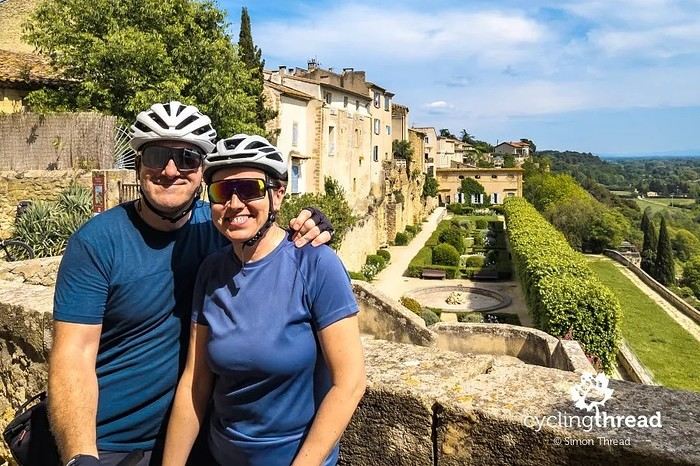
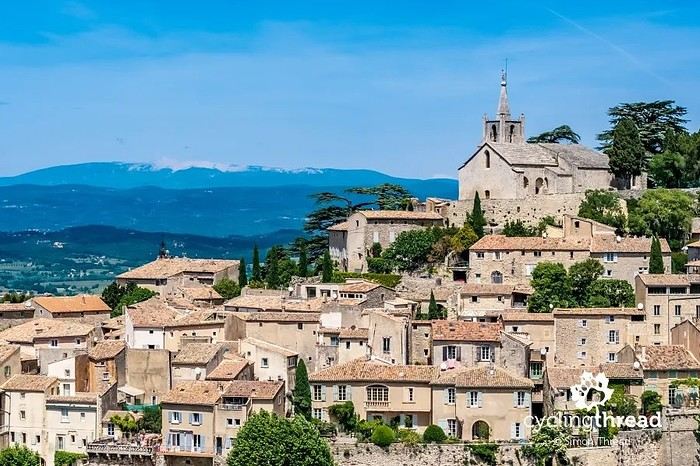
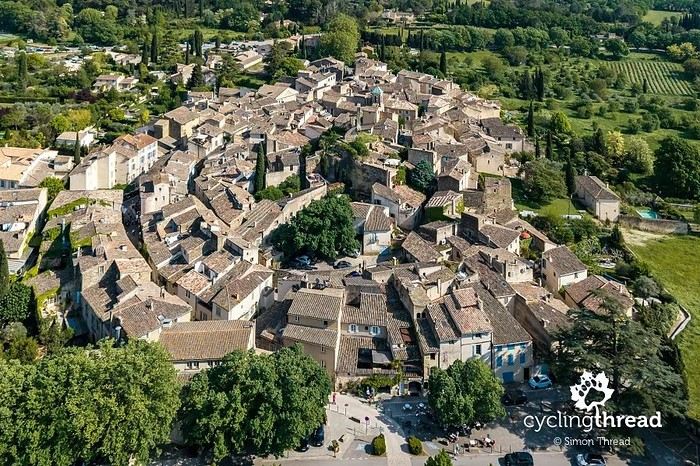
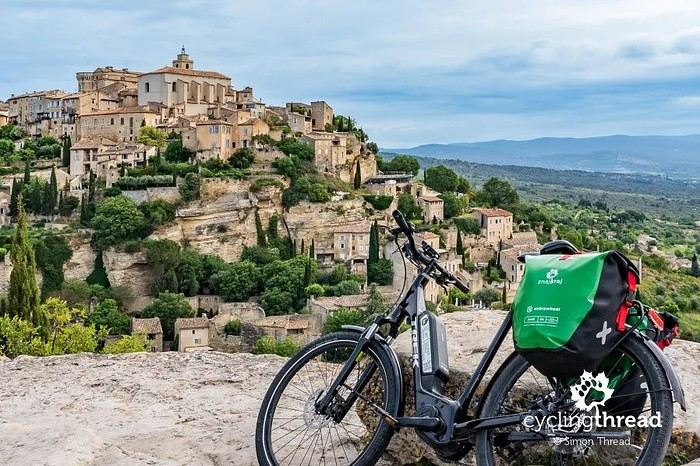
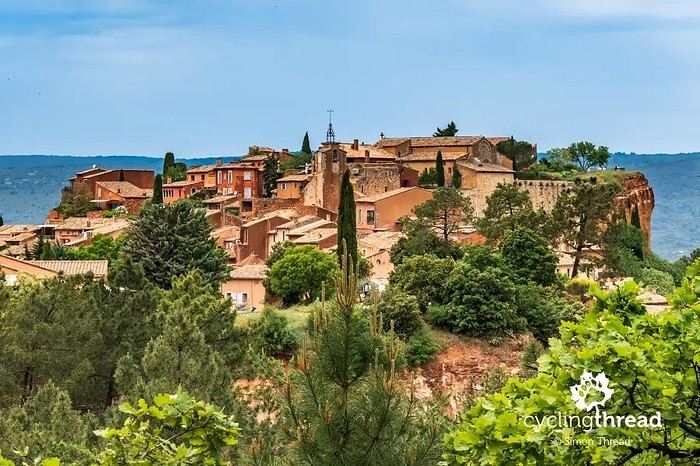
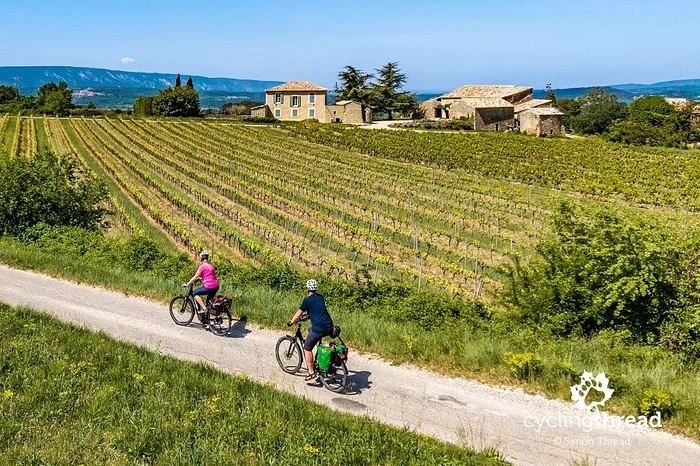
I’m making an exception and creating a separate post this time, since it’s all about France. In May, we spent a week in Provence, specifically in the Luberon, exploring the cycling routes *Autour du Luberon à Vélo*, the *Véloroute du Calavon* (part of EuroVelo 8), and the shorter *Les Ocres à Vélo* route. Together, they gave us an amazing journey through rolling hills, vineyards, lavender fields still green in spring, and some of the most stunning landscapes in southern France.
It was, of course, the perched villages that impressed us the most. We visited Gordes, Roussillon, Bonnieux, Lacoste, Lourmarin, Ménerbes, Oppède-le-Vieux, Cucuron, and Lauris. Many of them are among the most beautiful villages in Provence, and it’s hard not to agree with that reputation.
One interesting point is the route of EuroVelo 8 in this part of the region. The official path mainly follows the old railway line of the *Véloroute du Calavon*, which is very comfortable and safe. But in our opinion, cyclists traveling EuroVelo 8 around the Mediterranean would discover even more treasures if the route passed through villages like Bonnieux, Lacoste, or Oppède-le-Vieux.
We were also pleasantly surprised by how safe cycling felt. Most of the route takes small local roads, but traffic is light, drivers are respectful, and road design really takes cyclists into account. It’s one of those places where you can ride peacefully even without separated bike lanes.
Our full story:
Around Luberon by bicycle - the most beautiful villages of Provence
You can also find all our cycling travel stories on the forum:
Cycling Thread - Europe’s most beautiful bike routes
Hi there, we’re a group of 4 cyclists looking to get from Treviso in Italy to Munich with our 4 non-folding bikes. It seems complicated! Are there any solutions? Thanks so much.
hello fellow cycling enthusiasts
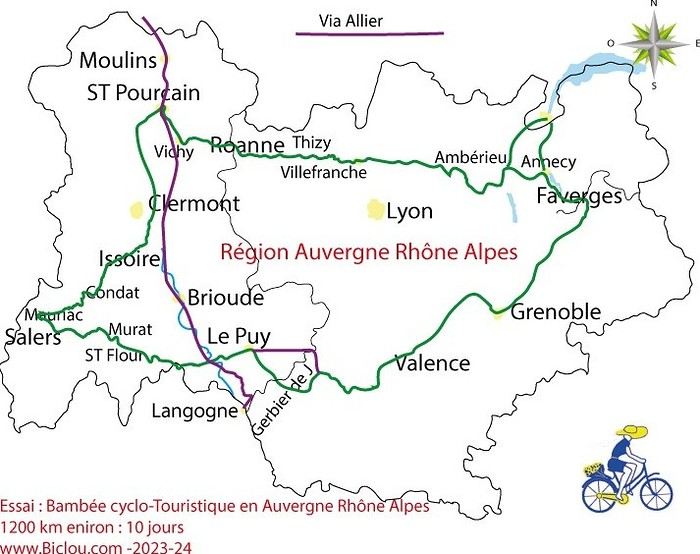
here’s a travel journal of the cycling tour through the Rhône-Alpes Auvergne region by Claudio
zouli
it was the plan
http://cbandiera.free.fr/parcours/auvergne-Ralpes/
the trip was completed
story being posted online soon
1100 km in 11 days
beautiful and varied regions
Hi there, we’re planning a Munich to Venice bike trip at the end of June 2026. Getting back from Venice to Toulouse by train with 4 bikes isn’t straightforward. What return options have others who’ve done this trip chosen? Any tips or great deals would be much appreciated. Thanks a bunch! !
Hi everyone,
Happy owner of a Pegasus Estremo bike with a Rohloff hub, which is giving me trouble with the SF11-NCX-FT-E-LITE 700C TS 300/0 fork (serial number TD01329060). It’s starting to show its age, and I’d like to repair it to extend the life of my beloved bike.
The suspension is gone, and there’s an oil leak from the seals.
Does anyone know how to repair it? Where can I find parts that are about fifteen years old? Or where to find an identical replacement fork? Just to clarify, the Magura HS11 brakes are mounted using Firm Tech, meaning they’re on pivots behind the fork, facing the frame.
Hi, I'd like to know if anyone has done this route recently or has reliable info.
Does the track exist, and most importantly, is there sand (for biking)?
Any info is welcome.
Cheers,
diego ambilobe: mangaoka, manondro, ramena
vohemar sambava: masondrono, tanambao
Hi there,
New to bike touring,
I’d love to start with a section of the Via Rhona to explore and share (route to be decided).
Looking forward to exchanging tips!
I’m landing in Madagascar with a buddy before the end of April 2026. We’re planning to bike around for about twenty days or so. We don’t have a specific goal other than exploring the country and meeting the locals.
Ideally, we’d prefer a loop route starting from Antananarivo with a good chunk of it along the coast. On the bike side, we’re used to riding 6 to 8 hours a day, depending on the needs, encounters, and mood 😉 Any feedback or tips from trips around this length?
A big thank you to Lazarou for all the info you share in this forum!
I'm passionate about Morocco, which I cycled through back in 2009.
Last year, my wife and I explored the High Atlas by tandem. Completely smitten, we're heading back in April (Anti Atlas) and May (High and Middle Atlas), still on our tandem.
Do you have any info on the track between Amezri and Ali Ait Nito? Are the river crossings in the Tessaout still there? It's not easy to navigate with a loaded tandem... especially if the river level is high due to this year's heavy snowmelt!
Thanks in advance for any tips you might have, and best wishes for health in this new year!
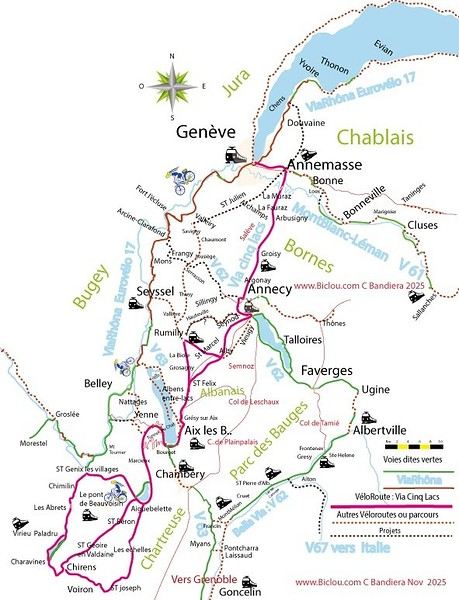
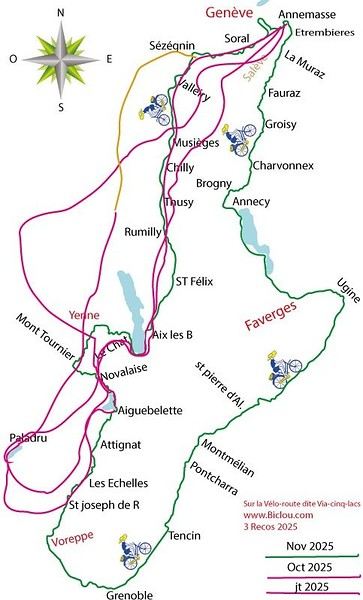
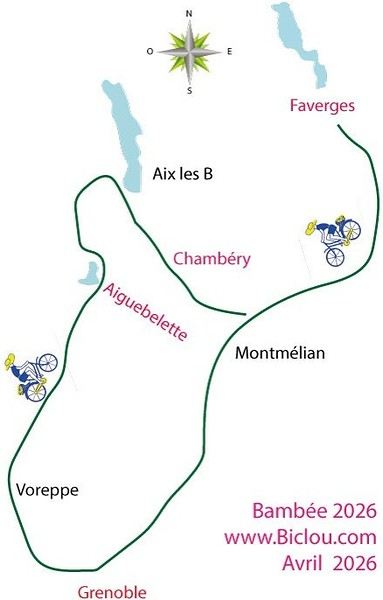
Claudio specializes in the route of the Savoie lakes
Here are his travels
Between Bornes, Chartreuse, the Savoie foothills, and Dauphiné
Five lakes: Léman, Annecy, Paladru, Aiguebelette, Bourget, not to mention a few ponds along the way
Plenty of accommodation options: camping, hotels, and more...
A lovely route not far from his place
Rural and quite peaceful
A road cycling route created by Serge B...
First of all... happy New Year! Wishing you great roads in 2017!
I’ve been traveling for a few years now with a high-quality mountain bike, but it’s equipped with hydraulic disc brakes. I live (pedal) with the constant worry of a breakdown (leak, air bubble, heat causing the fluid to...). My bike mechanic tells me it’s impossible to switch them out for V-brakes.
What do you all think? Am I taking a big risk continuing (alone) with these brakes? Thanks in advance for your great tips!
First post here to share a quick recap of our west-to-east bike trip along Algeria’s coast in January 2025.
It was just the two of us—my partner and I—with French passports and not a word of Arabic. No friends or welcoming hosts in the country.
Under those conditions, we’d strongly advise against going.
Our original plan was to follow the coast from Algiers to Tunis. We ended up cycling from Algiers to Béjaia, then took the train from Béjaia to Annaba (with a stop in Constantine), and finally biked to the border.
We were tailed by police the whole way—whether on our bikes, on the train, or even on foot while exploring towns. On top of that, we couldn’t wild camp and were limited to the few state-approved hotels that accept foreigners. Under those circumstances, connecting with locals was especially tough.
With such an omnipresent and intrusive police presence, we’d definitely recommend against this destination for bike touring. A really sad situation that completely cuts you off from the local population...
We’d been warned, we went to check it out, and we weren’t disappointed!
Hi there,
I’m planning the route to cycle from Lille to Nordkapp with my partner.
Duration: 3 months, from May 1st to July 31st, 2026.
In the attached details below, I need to add some "non-riding" days (rest days, basically).
So I’m looking to "shorten" the trip by taking ferries or trains for some stretches. Which areas could I skip?
Thanks in advance for your great tips.
Have a good evening.
https://www.komoot.com/fr-fr/collection/4023980/-lille-cap-nord-1er-mai-au-31-juillet-2026?ref=collection
I’m planning to bike back from Poland this summer. Does anyone know a way to ship it there without having to take it apart? Otherwise, it’s a real hassle to fine-tune all the settings before departure!
Thanks in advance.
Hi, has anyone recently bought Primus or Butagaz gas, possibly puncture-style, in Dubrovnik or the surrounding area? Same question for Albania... thanks. aichatou
Just a few words about the loop I did by bike in Yunnan.
Entry and exit
I entered China through the Sino-Vietnamese border crossing at Lào Cai / Hekou under the 30-day visa exemption currently available to French nationals and others.
The process was simple and quick. A Chinese police officer even helped me complete my electronic pre-registration at a computer kiosk. I wasn’t aware this formality was required—it’s similar to Thailand’s TM6.
No issues with the bike.
I left the country via the Sino-Laotian border crossing at Mohan / Boten.
The atmosphere was a bit chaotic there, but again, no problems with the bike.
The timing
I visited Yunnan in February 2026.
Weather-wise, at higher altitudes (between 1,500 and 2,000 meters), it was around ten degrees at night and in the mornings, and around twenty degrees at the hottest part of the day.
I had two days of rain, so I took the bus to keep moving. Otherwise, clear blue skies.
Culturally, Chinese New Year fell on February 17th (and the 15 days following), right in the middle of my trip. Because of this, my take on the traffic might be off.
Accommodation and food
I always found a hotel to stay in for prices ranging from 8 to 15 €. Except in Kunming (the capital), where many hotels were fully booked (Chinese New Year). I ended up at a 100 € hotel with great value for money.
A bowl of noodles costs about 1.5 € on average.
Onboard electronics
Since my smartphone doesn’t support eSIMs, I subscribed to a China plan with my carrier. Otherwise, for much cheaper, Alipay offers eSIMs for foreigners that allow access to services usually blocked for Chinese users (WhatsApp, Facebook, etc.).
An internet connection is essential for paying with Alipay or WeChat, as this payment method is widespread.
I only managed to use Alipay.
Either way, always carry cash because sometimes there’s no signal, or the merchant only accepts WeChat.
Also, it’s best to bring a power adapter when you arrive rather than struggling to find one.
Traffic and roads
The Chinese aren’t reckless drivers. They follow traffic rules and watch out for cyclists. This is slightly less true in Xishuangbanna (the region bordering Myanmar and Laos).
In urban areas, there are almost always wide bike lanes, separated from other roads, where bikes, electric mini-scooters, and scooters share the space pretty harmoniously.
The roads are in great condition, and traffic is generally manageable—even light—except for one stretch (Eshan -> Yangwu).
Most traffic is absorbed by expressways, China’s equivalent of highways: toll roads that are off-limits to slow vehicles.
You’re never far from these expressways; sometimes you even ride alongside them, which can be noisy at times.
The climbs are usually reasonable, around 5% to 6%. From what I remember, the steepest section was between Menglun and Mengla, with gradients of 8% to 10%, sometimes more.
Riding at these altitudes—though modest—took a bit of getting used to.
The route
I didn’t plan anything in advance. My only goal was to reach Kunming. I don’t know why, but just hearing the name of that city, like Yunnan, always felt dreamy to me.
Hi! I’m planning to visit the Stockholm Archipelago by bike in early April.
Do you know if the boats will be running between the different islands at that time of year? For those who’ve already been, all your tips and recommendations are welcome—accommodation, etc. Also, do you know where I can rent a bike in Stockholm? Thanks so much in advance for your help!
Hello there, pedal-powered Young Boys!
Claudio (still from Faverges)
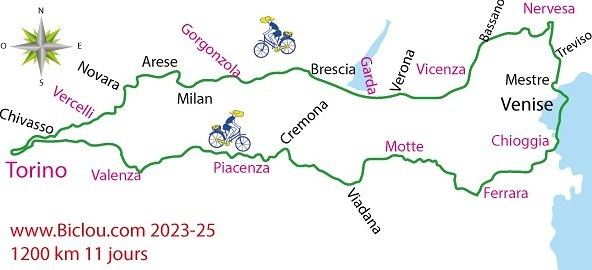
dreaming about a cycling getaway in Italy from Faverges (train all the way to Turin)
from Turin down to Venice along the Po River and back via the Padana (Alta Italia da attraversare – Northern Italy to cross)
The tricky part is getting from Chioggia to Venice.
I read it’s possible by hopping on a boat from island to island,
but it sounds a bit stressful.
Has anyone already tackled this route?