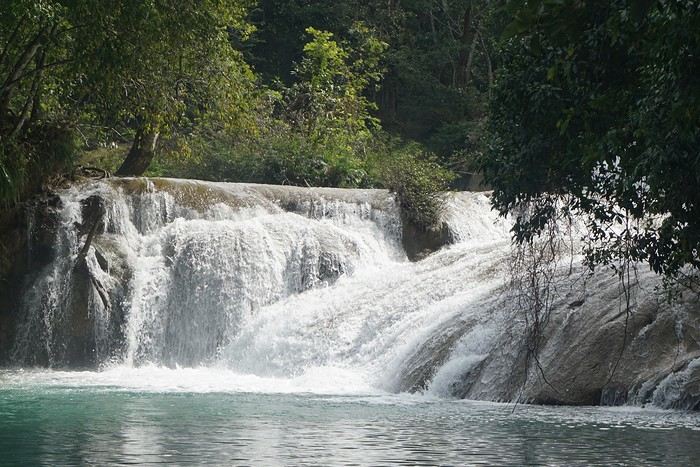
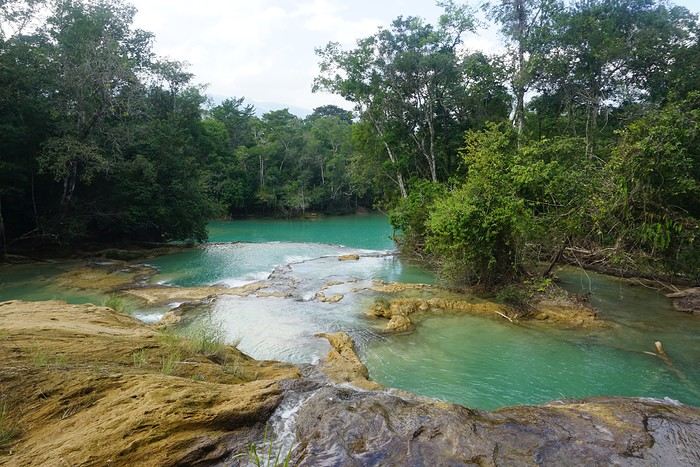
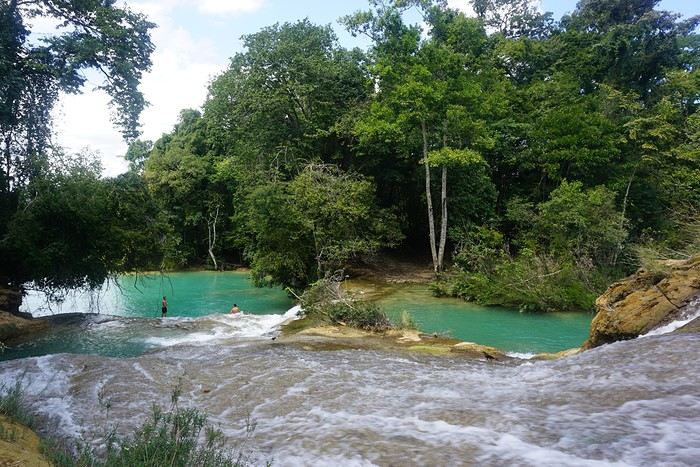
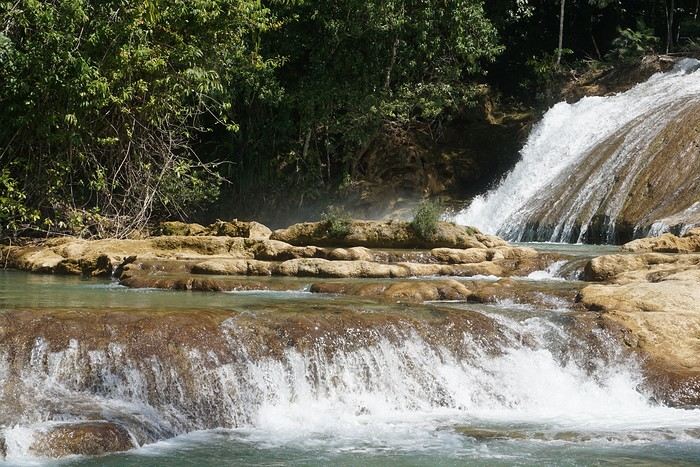
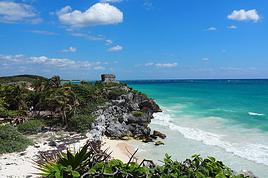
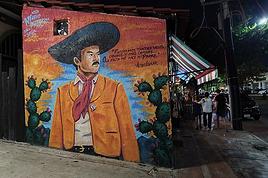
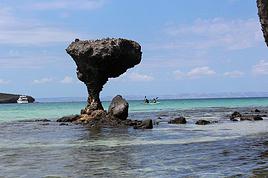
This one-month trip, from January 18 to February 17, 2026, allowed us to visit Mexico City and travel through the states of Puebla, Oaxaca, and Chiapas. We mainly used buses (ADO company) for medium and long distances and colectivos or taxis (or Uber) for shorter trips.
Before leaving, I had contacted several people on the ground: Harry, a Vendéan settled in Oaxaca offering, among other things, discoveries of artisan villages or the Monte Albán site, and Oscar in Comitán de Domínguez. I’ll come back to our meeting with Oscar, who runs a local agency (CVL Travel Turismo Alternativo & Corre la voz) and owns a very pleasant hostel, a real highlight of our trip.
Our journey took place in 8 stages on a loop starting from Mexico City. The connections between each were made by day or night buses depending on the trip duration. I had booked our seats in advance, either directly on the ADO company’s website or through booking platforms depending on the rates offered. Note that by planning ahead, I was able to benefit from very interesting "Early Booking" rates.
There are several comfort classes. For all our trips, I had booked seats in Primera class buses, except for two in GL (Grand Luxe) class. The rates are very reasonable, and the buses turned out to be comfortable or even very comfortable (only the basic seat recline might surprise you).
Our itinerary and number of days per stage:
Stage 1 – Mexico City: 4 days
Stage 2 – Puebla: 2 days
Stage 3 – Oaxaca: 4 days
Stage 4 – San Agustinillo: 4 days
Stage 5 – San Cristóbal de las Casas: 3 days
Stage 6 – Comitán de Domínguez: 6 days
Stage 7 – Palenque: 4 days
Stage 8 – Mexico City: 2 days
If I were to do it again, I’d remove one day from Palenque and add it either to Puebla or San Cristóbal to visit nearby sites or villages, or to San Agustinillo to enjoy one more day by the Pacific Ocean.
Stage 1: Mexico City (2,200 m / 9.2 million inhabitants)
We arrived in the Mexican capital around 10:00 PM. The simplified customs process was very quick. After exchanging some money at the airport, we took a taxi to our youth hostel.
We got around the capital on foot, of course, but also by metro. Signs are very rare, and we took the train in the wrong direction several times. After a few mistakes, we systematically asked on the platform if we were going the right way.
The metro is very affordable. You need to get a rechargeable card (the Tarjeta de Movilidad Integrada) and top it up as needed. This card (less than 1 €) isn’t personal, so there’s no need to get one per person.
Mexico City: Day 1.
Visits and walks of the day (note: many museums are closed on Mondays):
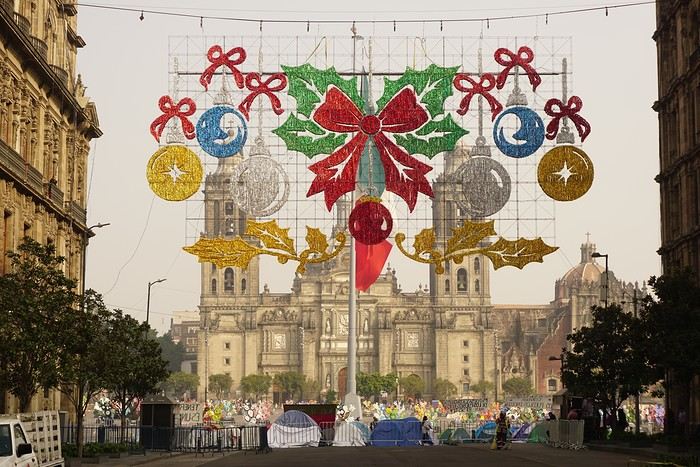
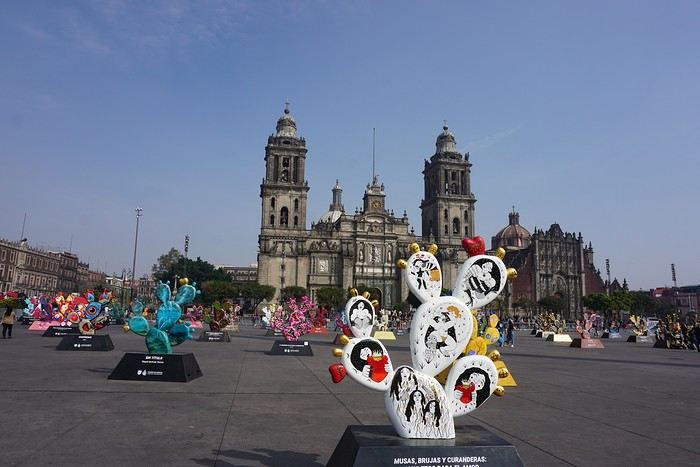
The Zócalo or Constitution Square: it’s one of the most beautiful, largest (195m x 240m), and oldest squares in the world. This is where Cortés decided to build the center of the new Spanish city on the site of the former Tenochtitlan market. Stones from the pyramids were used to pave the esplanade and build the surrounding colonial churches and buildings. During our visit, the huge square was covered with (resin) cacti, the theme of the temporary exhibition at the time. Indeed, temporary events or exhibitions take place here throughout the year. It’s also the endpoint for many protest marches.
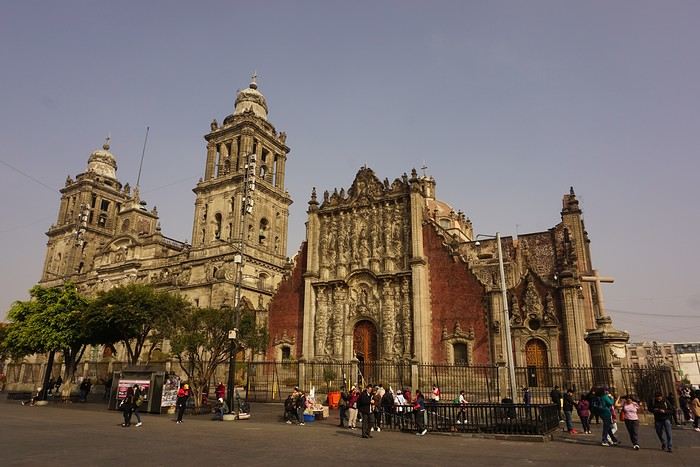
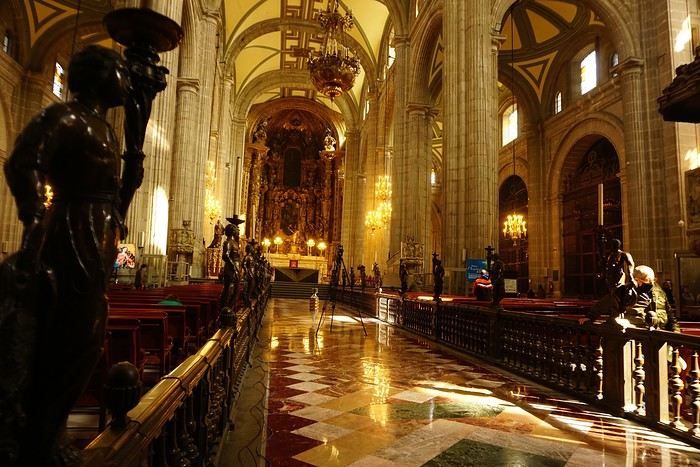
The cathedral: it’s sinking by one centimeter per year despite massive stabilization work (the collapse of many Mexican buildings—30 cm/year—is due to groundwater pumping). It was built starting in 1571 and completed in... 1813.
The modest remains of the Templo Mayor (exterior view): they have high symbolic value, as this monument was the most important in the Mexica Empire.
We then walked through the streets of the historic center to the Santísima Church, unfortunately closed for renovation work.
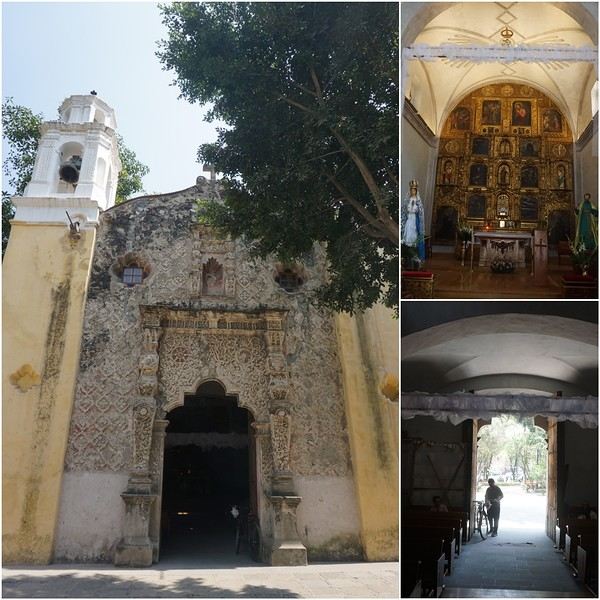
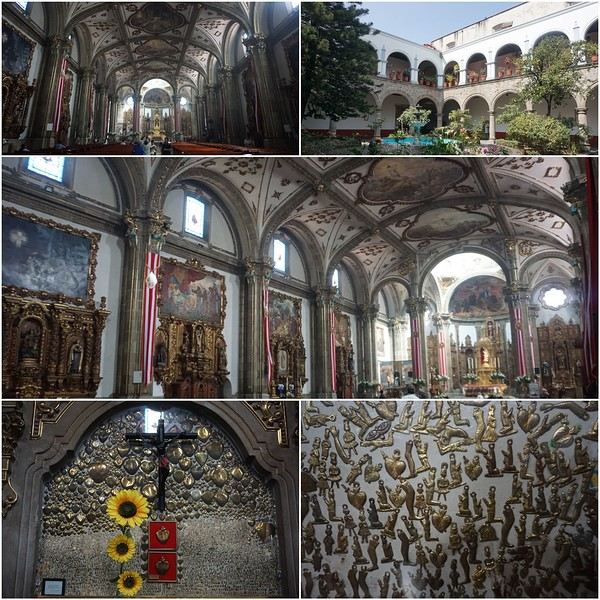
Next, we took the metro to visit one of Mexico’s most important pilgrimage sites: the Insigne y Nacional Basílicas de Santa María de Guadalupe, as well as the Capilla del Cerrito on the hill.
The first, dating from the colonial era, is really leaning a lot.
The second, shaped like a rotunda, is very impressive from the inside.
In the basement, there’s a sacred tunic where, in 1531, an image of the Virgin Mary is said to have appeared. A real mystery for scientists, the garment has never deteriorated since that date. Slow-moving conveyor belts allow pilgrims to admire it, preventing crowds from gathering in front of the image for hours. Well thought out!
From the top of the Capilla del Cerrito, you get beautiful views of huge Mexico City.
Mexico: Day 2
Templo Mayor Museum: we spent almost the whole morning there. As usual, we took our time to explore the archaeological remains and make the most of the content in this splendid museum.
Museo de Bellas Artes: what a lovely surprise! Gorgeous Art Deco interior (free entry)!
We then discovered the park right next door, walked past the Casa de los Azulejos (a little Portuguese vibe in the Mexican capital!) and finished with a visit to another church. After that, we made our way back to our hostel very leisurely, admiring the many Art Deco buildings along the way (unfortunately, most of them are poorly maintained or not at all—what a shame!). We got back to our hostel pretty early because tonight we’ve got a "sporty" evening planned...
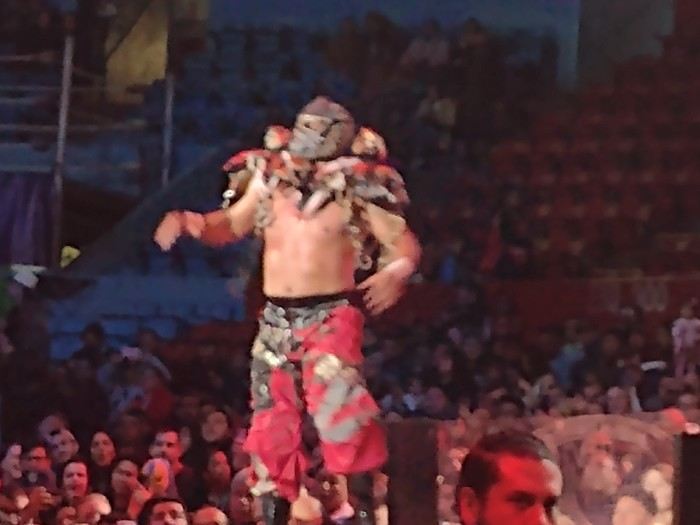
Lucha Libre night: a few days ago, I bought tickets to watch a lucha libre match! Wrestling, basically! What a night!
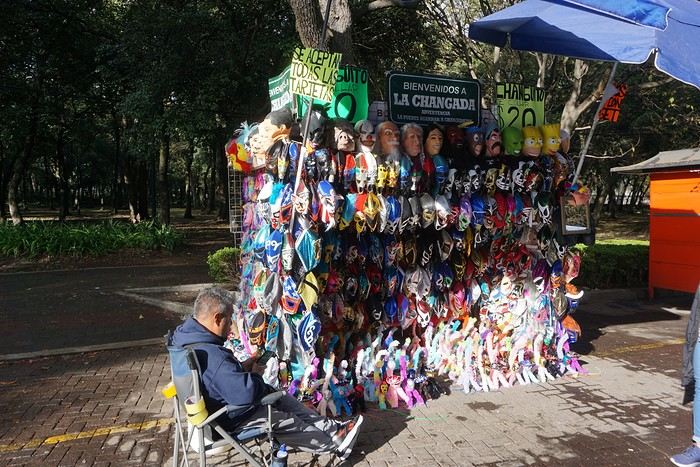
Around the Arena, we found loads of stalls selling wrestler masks. As soon as the security cordon opened, we could enter the venue. People settled in calmly, snacking, drinking beers, taking selfies with their smartphones (cameras and video recorders are banned). Little by little, the arena filled up, and the atmosphere built. One of our neighbors rushed over to a commentator (radio or TV?) for a selfie. The show was almost as much in the crowd as it was in the ring. The matches kept coming. The audience jeered at the referee to count faster, shouted at the wrestlers—whether they were down on the mat or standing on the ropes. As always, there were the good guys and the bad guys. Whistles, cheers, applause, blaring music between matches, entrances onto the ring like superstars! It had everything! Mexicans (men and women, young and old, kids) are *huge* fans of this sport/spectacle!
Mexico: Day 3
Anthropology Museum in Chapultepec Park: The *Guide du Routard* lists this museum as a must-see in Mexico City and even says it alone justifies a trip to Mexico. I agree—it’s a must! That said, I wouldn’t go so far as to say you can head home right after visiting!
To get to the museum from the metro exit, you have to cross a park that’s territory for dog walkers. We counted up to ten dogs per walker! How do they manage—we sometimes struggle with just one! Clearly, it’s a profession!
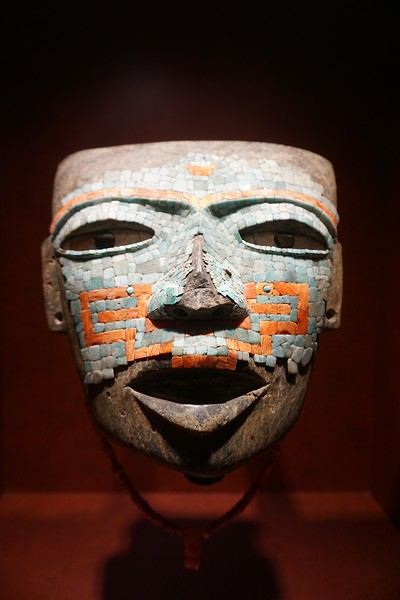
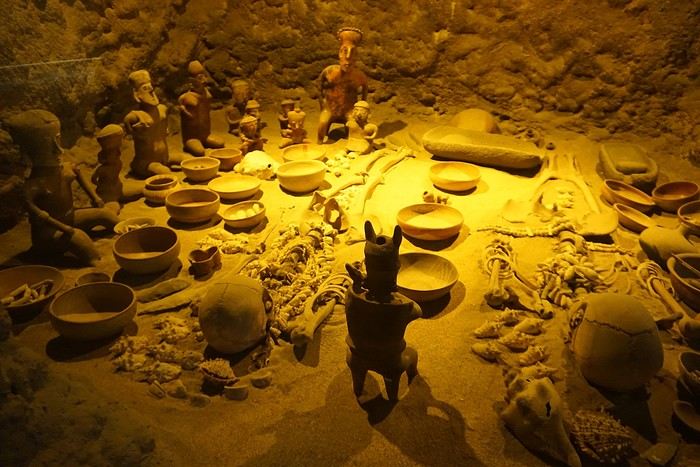
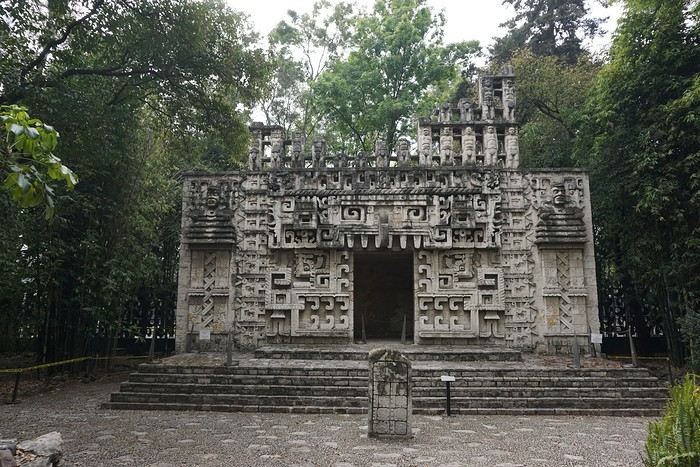
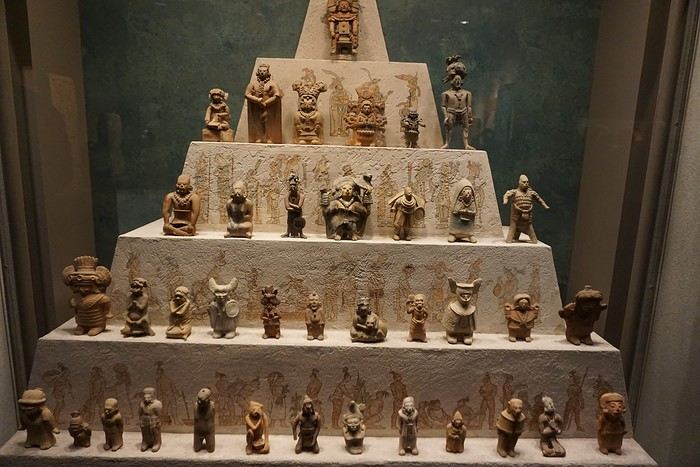
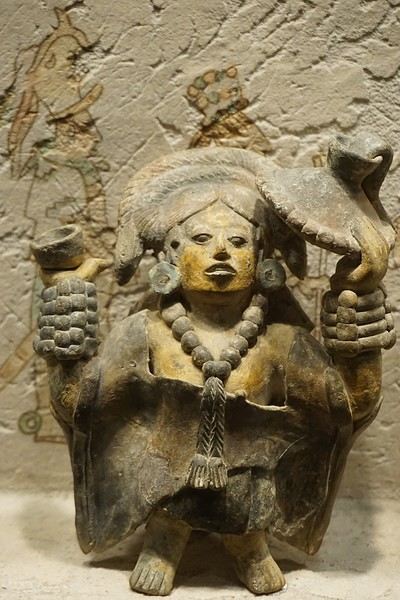
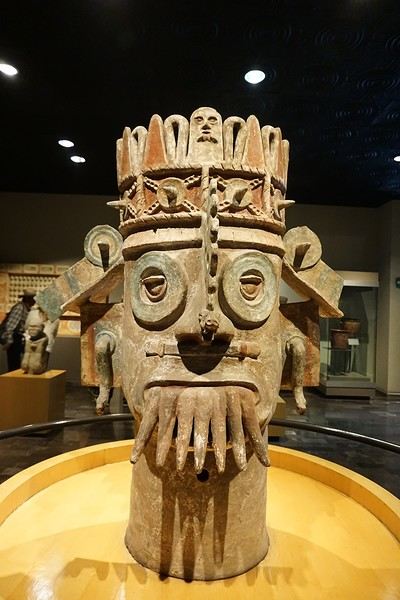
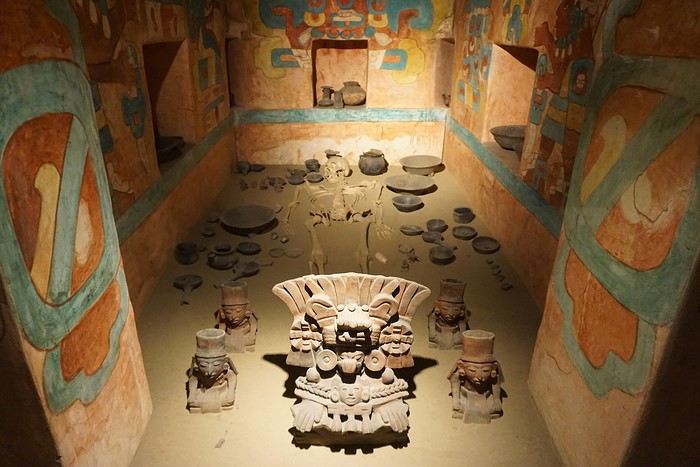
The most visited museum in Mexico City, the succession of rooms takes you from the pre-Columbian era to the Mexica, Zapotec, Mixtec, Olmec, Maya, and other civilizations. In the different sections, we admired pottery, sculptures, reconstructions of tombs and temples from sites like Teotihuacan (we’ll be there tomorrow), Totelca, Oaxaca (where we’ll discover Monte Albán in a few days), the Gulf of Mexico, and the Maya civilization (Palenque, which we’ll visit at the end of our trip).
About 3.5 hours later, it’s lunchtime. We bought an amazing hot sandwich from one of the stands in the park in front of the museum. Maybe it was because we were so hungry, but this *torta*—with ground meat, salad, tomato, and cheese—was one of the best we had on our entire trip!
No sooner had we bought the *torta* than we got caught in a heavy downpour. The *voladores*, Totonac acrobatic dancers who perform right behind the food stands, packed up, probably discouraged by the rain and the tourists scattering.
The sun gradually returned, and we resumed our walk through Chapultepec Park ("Hill of the Grasshoppers"), along the lakes. We hiked up to the castle, but unfortunately, it was too late—it was closed.
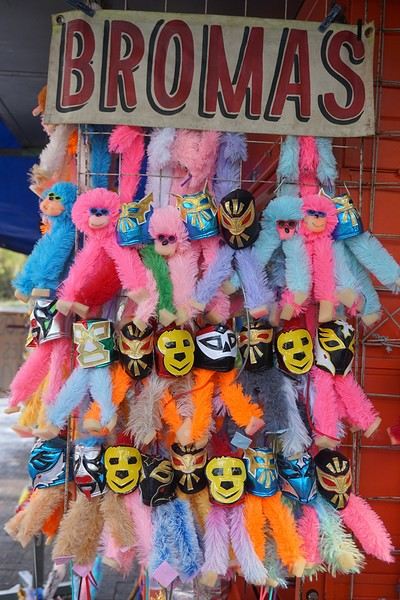
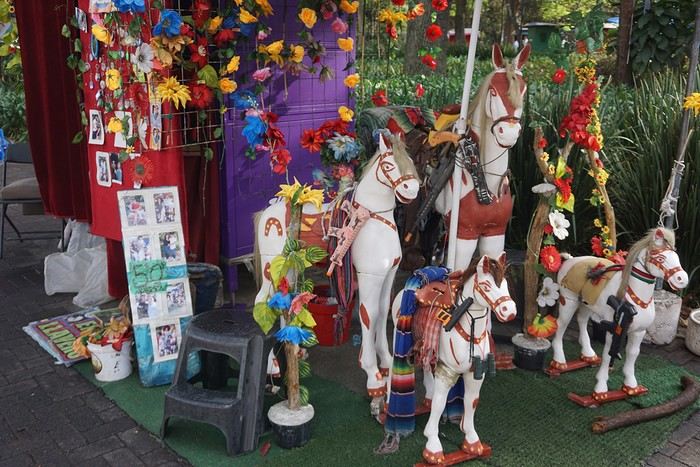
We continued our stroll through the park’s paths, where food stands, drink vendors, stuffed toys, *lucha libre* masks, and toy horses on wheels for photo ops lined up.
From the top of the park, near the massive *Monumento a los Niños Héroes*, we had a view of the upscale Polanco neighborhood and its modern skyscrapers along Paseo de la Reforma.
Mexico: Day 4
For this exceptional day (we really "broke the bank"), I trusted the Secretoo agency. Why this one and not another? Because they commit to paying their guides and providers fairly!
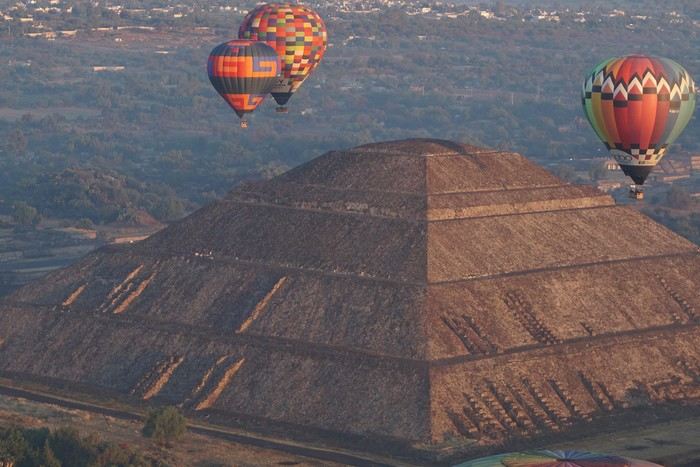
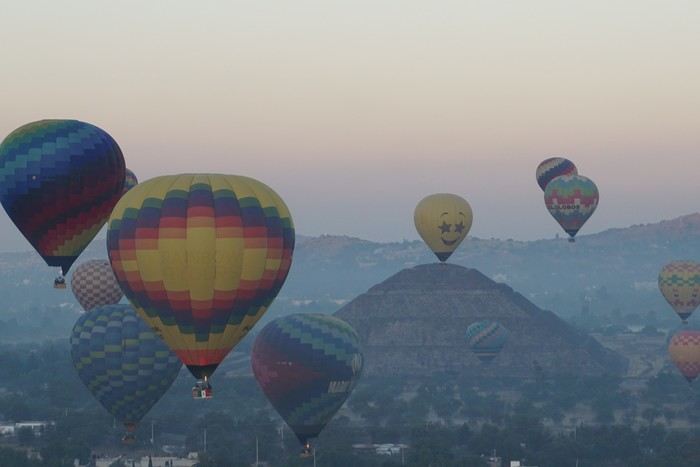
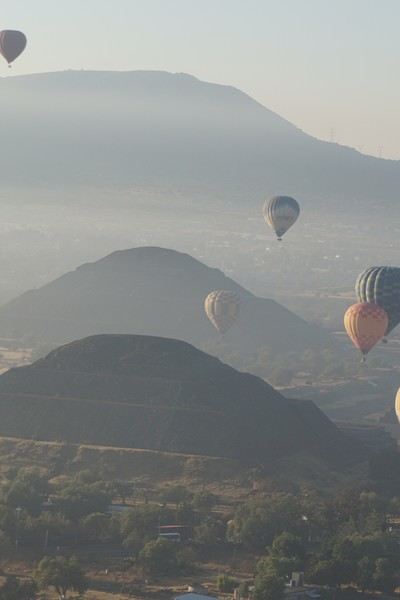
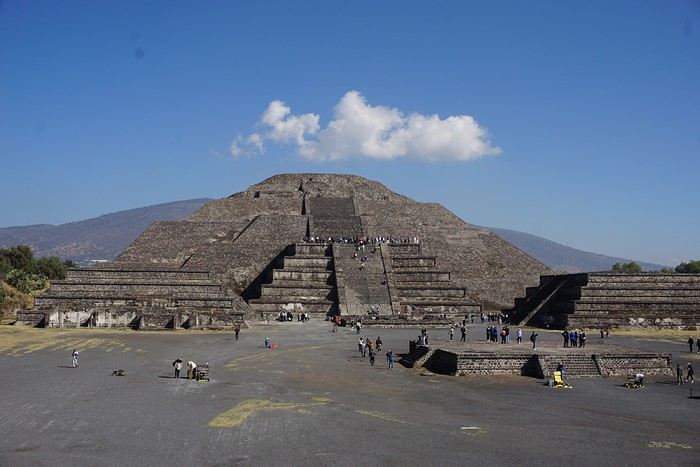
We’re going to have our hot-air balloon baptism over the Teotihuacan site and the Pyramids of the Sun and Moon! We had given up on this experience about a dozen years ago in Burma over the temples of Bagan for budget reasons. In 2019, we should’ve done it over the Wadi Rum desert in Jordan, but the unpredictable weather (too much wind) didn’t allow the flight to go ahead. So this year, we didn’t want to miss the opportunity. As for the budget… Oh well, we’ll cut back on other activities or expenses!
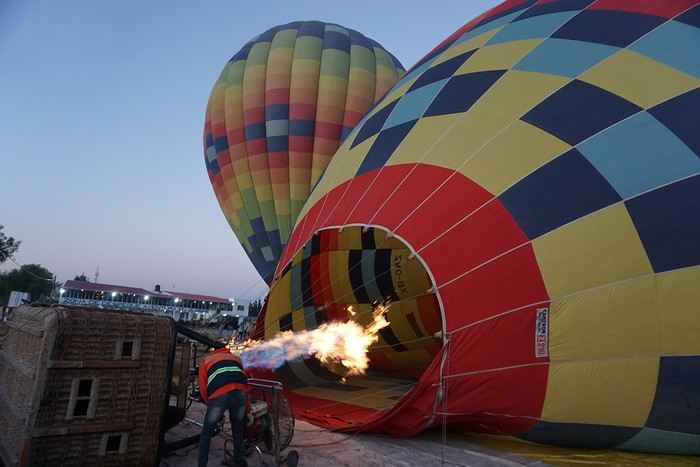
We got up around 4:30 AM. It stings a little, but the motivation is there! We left the hostel at 5:00 AM. About an hour’s drive. Registration, weighing (yes, all passengers are weighed so the pilot knows the total weight to board!), and coffee to warm up (this morning, the temperature was around 8°C).
Then we were allowed to get closer to the baskets and watch the balloon inflation process. The sun began to rise over the volcanoes. It was time to climb into the basket (8 people + the pilot), and off we went for a flyover of the Teotihuacan site!
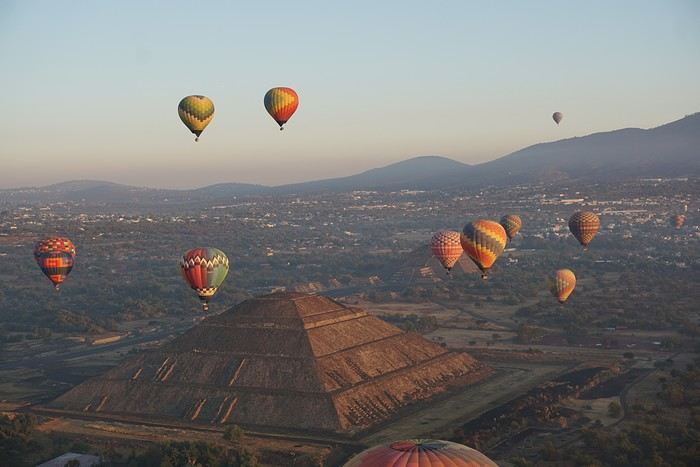
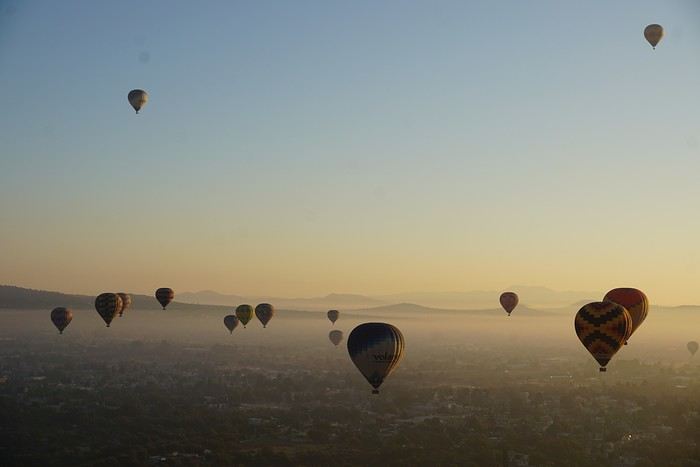
The flight lasted about 45 minutes. We savored every single one because the view was breathtaking. Dozens of hot-air balloons flew over the site. The colors were stunning. The pilot pointed out, in the distance, the smoke rising from the Popocatépetl volcano. All around and below our basket, the scenery was magnificent!
After flying very close over a field of agave and cacti, the landing was smooth, right onto the trailer of the vehicle tasked with recovering the equipment.
We were then taken back to the takeoff site for the hot-air balloon baptism certificate and to share a celebratory toast.
Before starting the on-foot visit of the site, we went to have a great breakfast (huge buffet!) with our French-speaking guide (Orian). I took the opportunity to discover an amazing (and delicious) recipe based on sausages and cactus leaves.
The second part of the morning was dedicated to exploring the site on foot.
Orian explained a lot to us. The three elements that make us up (water, spirit, body), the cycle of eternity around the sky, earth, and water, the designation of totem animals, and everything that guided the destiny of each person in the Maya and Mexica eras, etc.
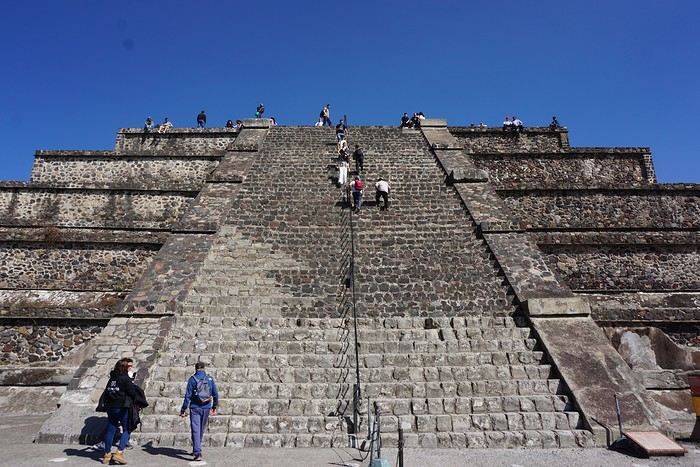
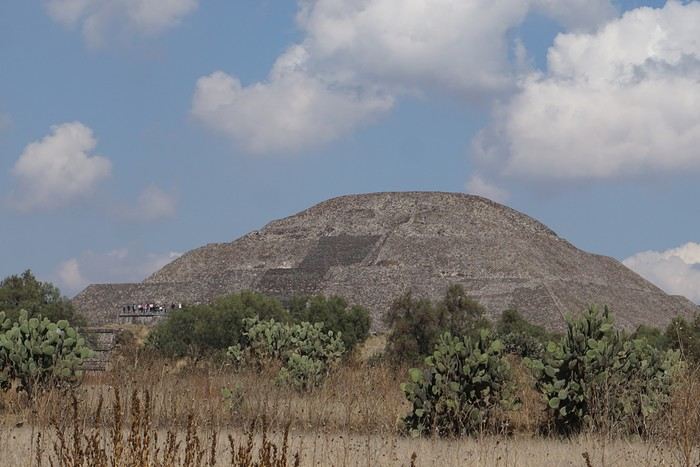
A lovely walk around and on the pyramids. The steep stairs with narrow steps were intentionally designed that way. It forces people climbing up to bow before God (since it’s impossible to climb without keeping your eyes on the next step). And for the descent, you have to step slightly to the side so as never to turn your back to God.
The visit to this site lasted a little over 2 hours.
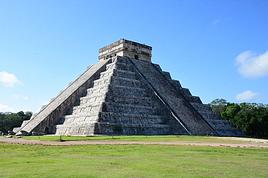
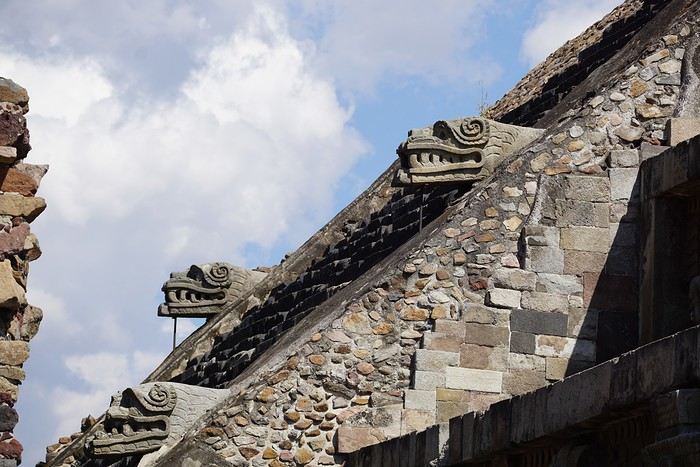
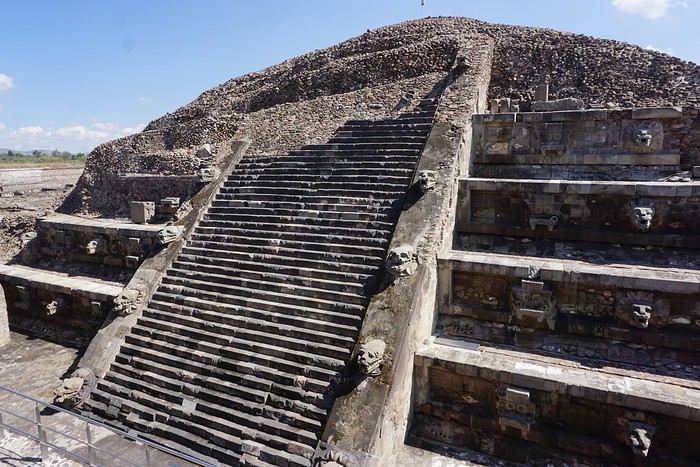
Then we moved on to the ruins of a palace. And finally, according to Orian, the "cherry on top," we made a stop at a third site that was once occupied by the army. On this site stands a pyramid where you can see sculpted heads on one side. Originally, they were all around it. You have to climb the first pyramid, which is right in front of the one with the sculpted heads, to get a great overall view.
It really was a beautiful "cherry on top"! This last visit perfectly wrapped up our program, and it was already time to head back.
A fantastic morning that will undoubtedly remain a cherished memory of our trip for a long time!
We returned to our hostel between 2:30 PM and 3:00 PM. We had lunch and, after a short break, I went back out to explore the Zócalo: end-of-day photos, the lowering of the colors (a huge Mexican flag in the center of the square), and discovering other Art Deco buildings.
Step 1 – Mexico: 4 days
Step 2 – Puebla: 2 days
Step 3 – Oaxaca: 4 days
Step 4 – San Agustinillo: 4 days
Step 5 – San Cristobal de las Casas: 3 days
Step 6 – Comitan de Dominguez: 6 days
Step 7 – Palenque: 4 days
Step 8 – Mexico: 2 days
I’ll be following your travel journal with pleasure and interest—your itinerary is very similar to a trip we’re planning in a few years (when we’re finally free to leave for a month or two at that time... still have to wait!).
It’s great to get feedback that’s different from the usual Yucatan loop, and I can’t wait to read your impressions of the Pacific, among other things.
Step 2: Puebla (2,160 m / 1,690,000 inhabitants)
Puebla – Day 1
After about 2.5 hours by bus (one of our shortest trips), we reached the second stop on our journey.
We dropped off our bags and set out to explore the city. But first, lunch! Today’s menu (starter/soup, main course, dessert, and drink) cost around 5.5 € per person.
Puebla is famous for its baroque art, specialties like spices and chocolate, and its *talaveras*—ceramic tiles that decorate house facades, similar to *azulejos*.
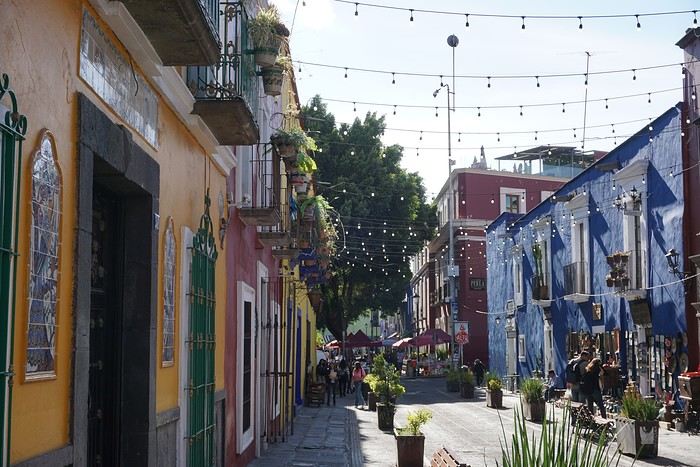
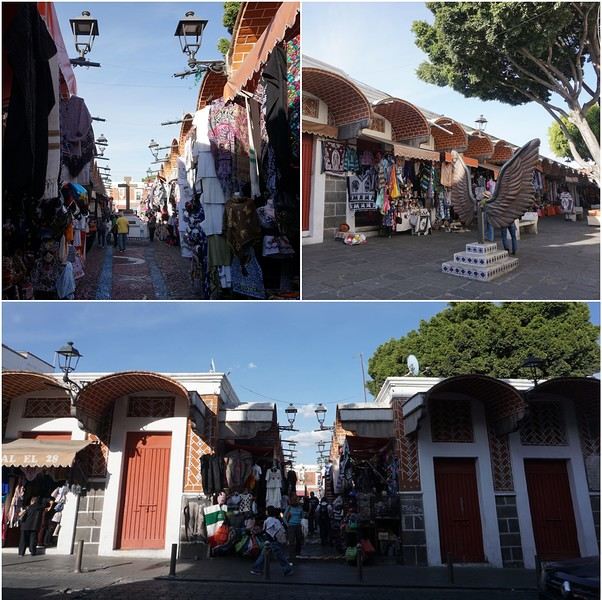
Our walk took us from the Zócalo to the cathedral, from the *barrio de los Sapos* (Frog District) with its colorful houses to the *barrio del Artista*, where we crossed the artisan market of *El Parian* with its unique architecture.
Along the way, we discovered many small squares, all lively with young musicians playing trumpet, violin, trombone, piano, and more. Really nice!
We ended the afternoon on a bench in the Zócalo, watching people pass by while enjoying an ice cream to the sound of *‘Comme d’habitude’* played on the trumpet.
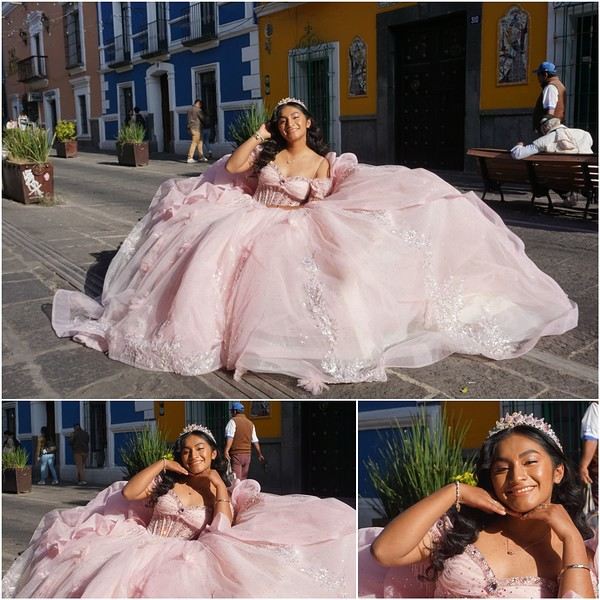
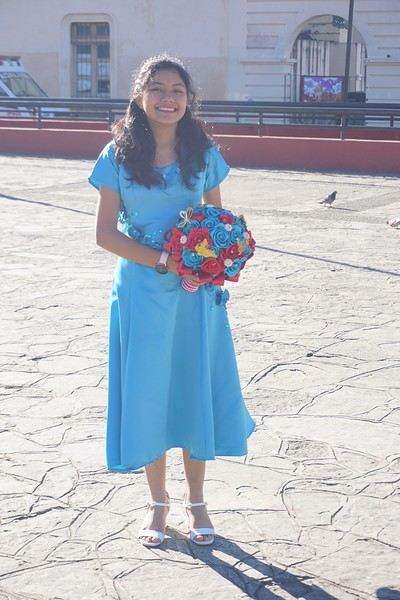
In a street in the *barrio de los Sapos*, we came across a young girl in a princess dress celebrating her 15th birthday (*quinceañera*—a celebration marking a Mexican girl’s transition to adulthood). Charming and smiling, she posed for a photo session with her family, who kindly let me take a few shots too.
Puebla – Day 2
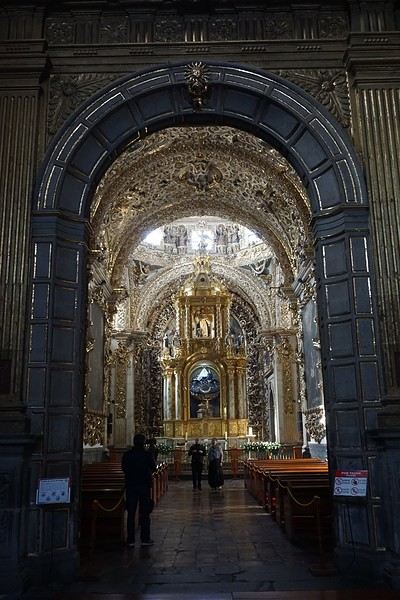
Today, we continued our wanderings through the city. We started with the Church of Santo Domingo and the Chapel of the Rosary, said to be the most golden chapel in Mexico! It’s definitely worth seeing!
Next, we headed to *‘calle de las dulces’* (Candy Street), where shops selling sweets and local treats line the street. Of course, we couldn’t resist trying some Puebla specialties—sweets and pastries!
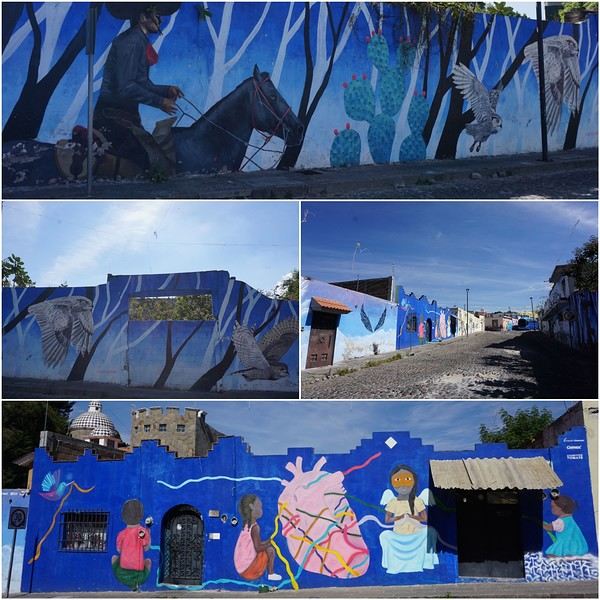
Then we made our way to the *barrio de Xanenetla* to see its murals. By chance, we discovered the city’s ‘secret’ tunnels, which led us to the other side of this colorful neighborhood—though it’s best not to walk there after dark.
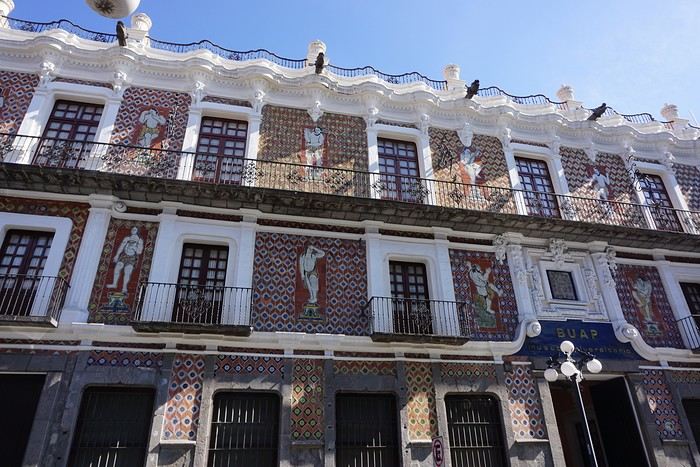
Back in the historic center, we admired the *‘Casa de los Muñecos’* (House of Dolls). The owner had been ordered by the city council to brick up the windows on the top floor of his house because it was taller than the town hall. To get back at them, he had caricatures of the council members made in ceramic and placed on the facade. Quite the atmosphere!
By 1 PM, it was time for lunch. Today, I wanted to try a local specialty: *mole poblano*—a thick sauce made with chili, cocoa, sesame, peanuts, and tomato. Okay, it was good! But I wouldn’t wake up in the middle of the night craving it!
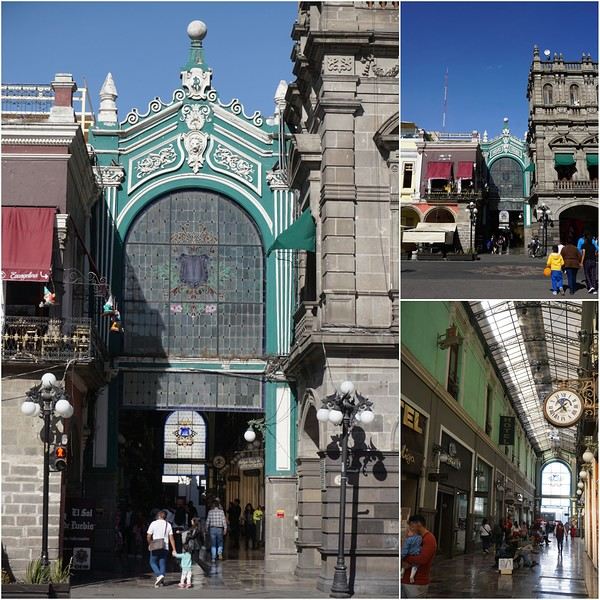
We continued our walk and passed through wrought-iron market halls.
It was crowded and lively. Time for dessert—we caved and got some ice cream scoops!
Then, near the market exit, I found a wallet stuffed with all kinds of cards and a small amount of cash (about 1,200 pesos, just over 60 €). I looked for a security guard—we’d seen one earlier—and explained the situation as best I could. He called his boss on the walkie-talkie. The boss arrived quickly, checked the wallet, saw the cash, and thanked me for returning everything. He assured me they’d find the owner.
The story doesn’t say whether the owner got everything back... It’s reasonable to think the wallet and cards were returned intact. As for the cash? A few days later in Oaxaca, Harry told me it’s likely the security staff split it as a ‘service fee.’ For the sake of optimism, I’ll say everything I found was returned to its rightful owner!
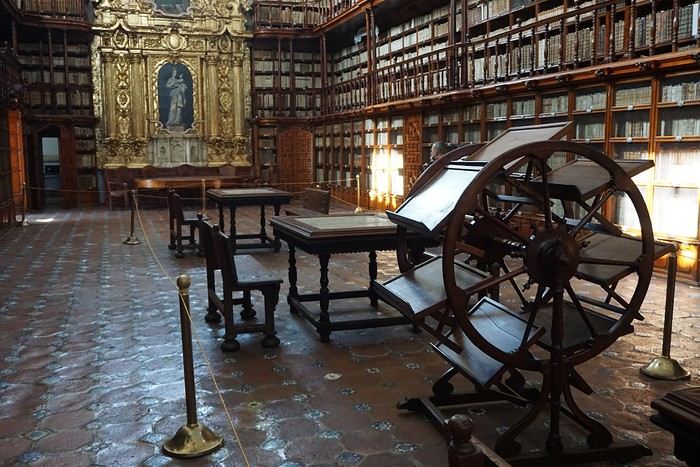
After that, we resumed our walk. Next stop: the oldest public library in the Americas, the *Biblioteca Palafoxiana*, dating back to 1646. It’s listed on UNESCO’s *Memory of the World* register. I’d read you could only admire it from the doorway, but actually, you can walk inside after paying a small entrance fee.
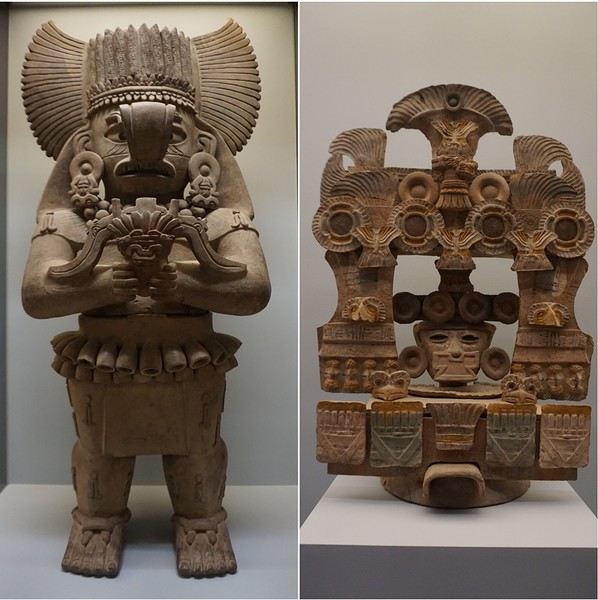
Finally, we ended the day at the *Museo Amparo* (free entry for seniors), which houses the country’s most important collection of pre-Hispanic art.
We settled on the museum’s rooftop terrace on the 3rd floor to enjoy the stunning view of the city’s rooftops and bell towers, and to sip some hot chocolate—an old recipe (chocolate, spices, orange, etc.).
After this great day exploring Puebla, we headed back to our hotel to pack our bags.
Thanks for sharing all this with us. Glad to see you finally got to do that hot-air balloon flight after some frustrations...
« Tout le monde s'interroge sur comment laisser une meilleure planète à nos enfants, mais on devrait plutôt penser à laisser de meilleurs enfants pour notre planète. » Clint Eastwood
Step 3: Oaxaca (1,500m / 271,000 inhabitants)
Oaxaca – Day 1
We start the day with a transfer from the hotel to the bus station (Uber), then continue with a nearly 5-hour bus ride to reach Oaxaca. We head to our new hotel by taxi and drop off our luggage.
Chat with the owners: where are we from, how long are we staying in Mexico, what’s our plan in Oaxaca? And the owner convinces Justine not to follow me on my solo idea to visit the Hierve el Agua site, which was on my itinerary for the day after tomorrow. She gives us the contact info for a local travel agency. We discuss the itinerary and price over WhatsApp. It’s clear that with them, we’ll see more in one day, and it’ll be cheaper than a full day with Harry (budget tip!).
We go for a stroll around the Zócalo, where we have lunch. I use the meal to think over the agency’s proposal and finally confirm our booking. They’ll pick us up in front of our hotel around 8:30 AM. The return to Oaxaca is scheduled for around 7:30 PM.
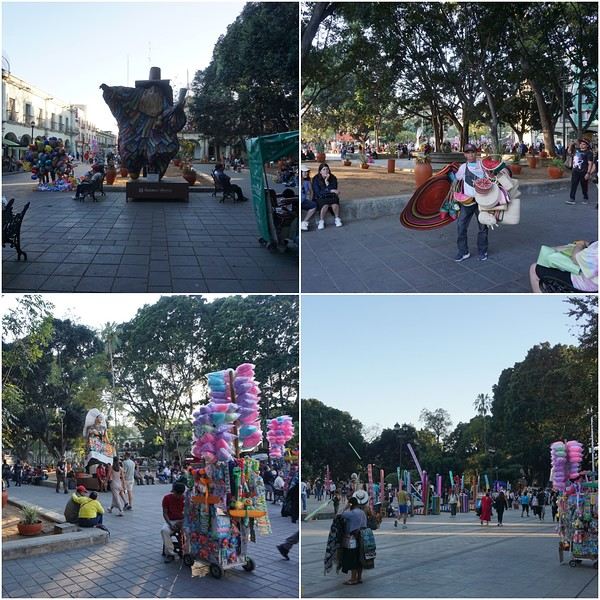
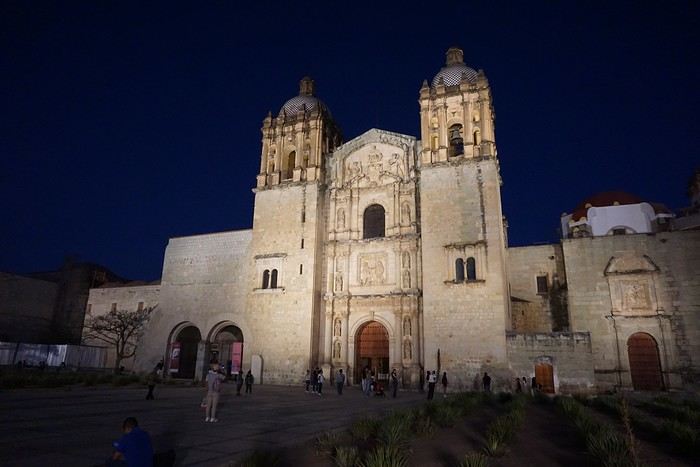
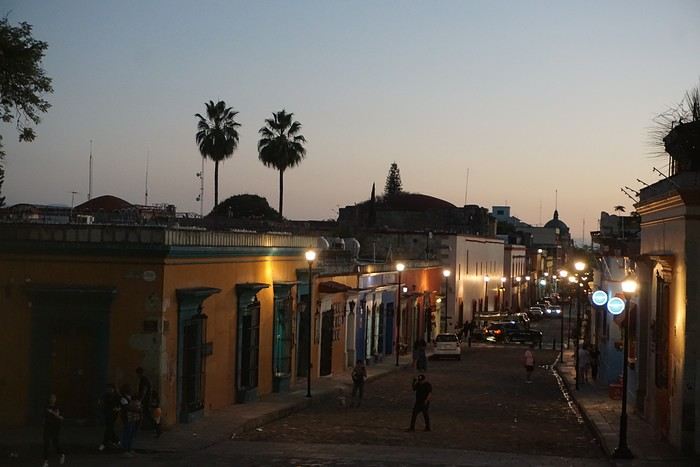
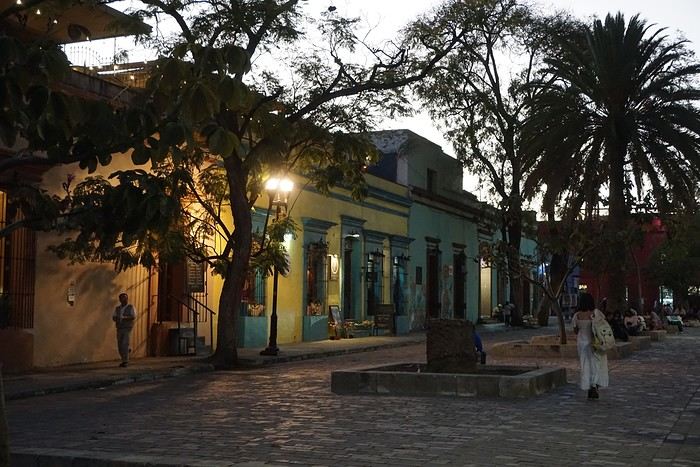
Lots of people are out walking this Sunday afternoon in the historic center. The temperature is very pleasant. It’s definitely the hottest day since we arrived! The vibe is great, with a dance organized in one corner of the square next to the stunning San Domingo Cathedral.
At the end of the day, final arrangements with Harry, with whom we’ll explore local villages and artisans tomorrow.
Oaxaca – Day 2
This morning, we have a meet-up with Harry, a Vendéan who’s been living here for 25 years and has several jobs: archaeologist, guide, and jewelry designer (with his wife) in silver, among others.
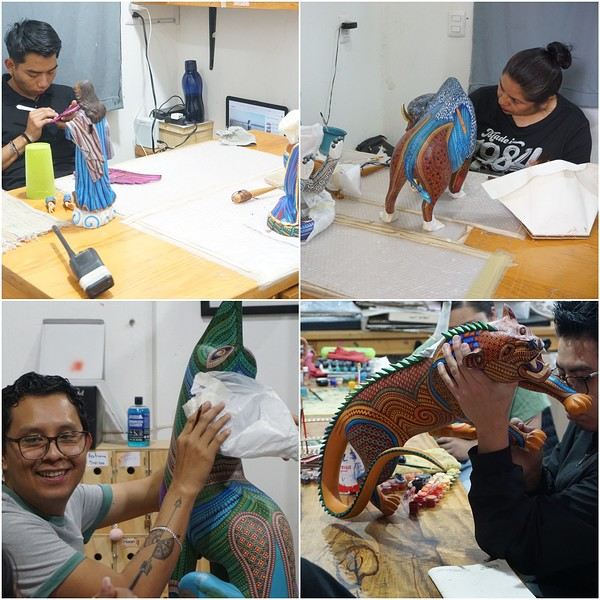
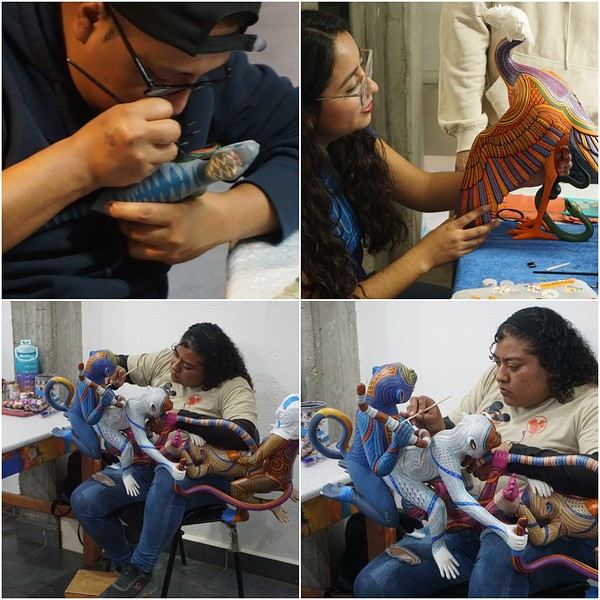
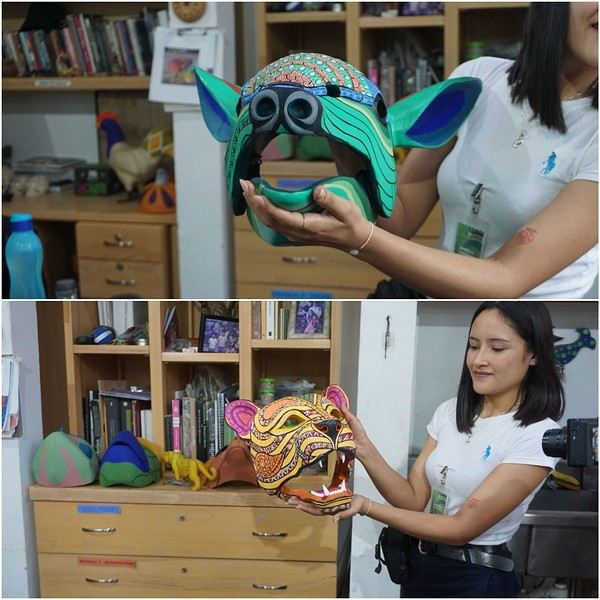
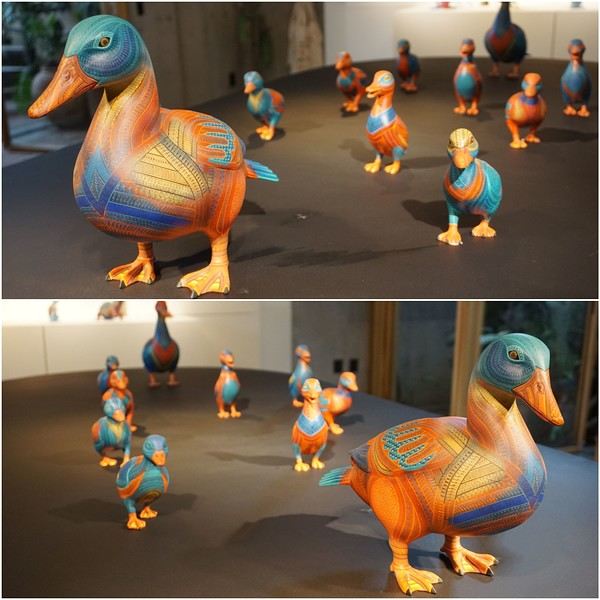
San Martin Ticajete: a village specializing in the production of alebrijes. Harry takes us straight to the workshop of master Jacobo Angeles and his wife Maria. Everything here is truly stunning, even exceptional, but the prices (justified given the quality of the pieces on offer) aren’t within our budget. In this huge workshop, the most experienced artists work on the finest pieces using only natural dyes. These are often special orders, like a surfboard or impressive wooden sculptures.
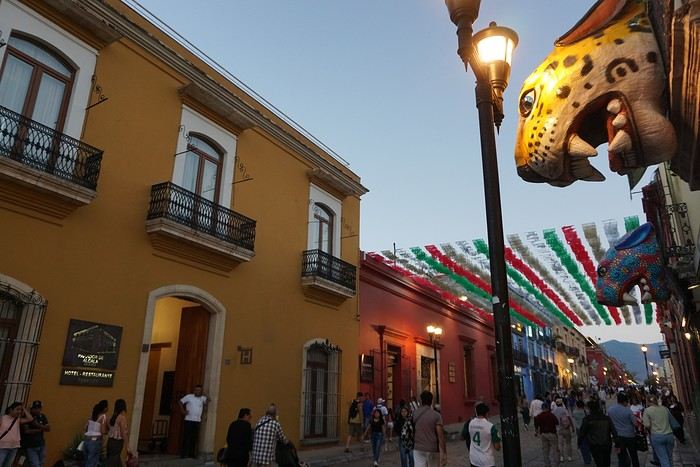
Upstairs in the Master’s workshop, the young woman who’s been guiding us throughout the visit shows us Jacobo Angeles’ two latest creations: two articulated jaguar heads. Absolutely gorgeous! We don’t even ask for the price—just eye candy!
The younger artists in training (since the Master has developed a system for passing on his know-how) are assigned more modest pieces. They paint exclusively with acrylic paint.
Our young guide then tells us our two totem animals based on our birth dates and birth years. Mine are the dog and the iguana, and for Justine, the coyote and a kind of armadillo (we forgot the exact name). She explains the qualities of each animal and lets us reflect on whether we see those same qualities in ourselves. Personally, I’m pretty blown away… but I won’t say more!
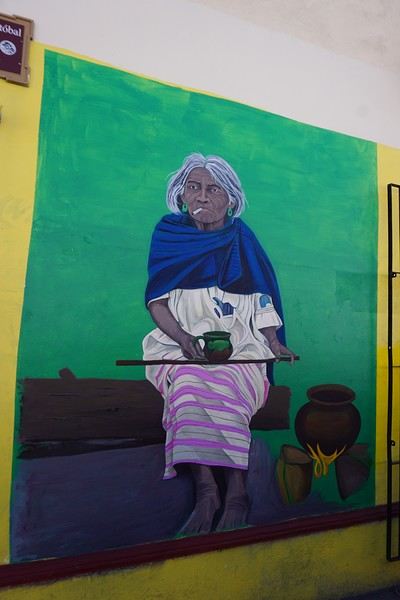
This painting is titled: *Migration*
We then visit another shop in the village. The prices are more affordable, but is it really comparable?
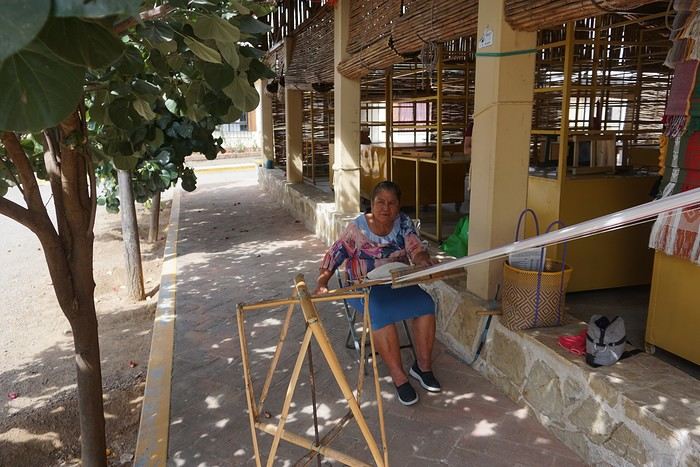
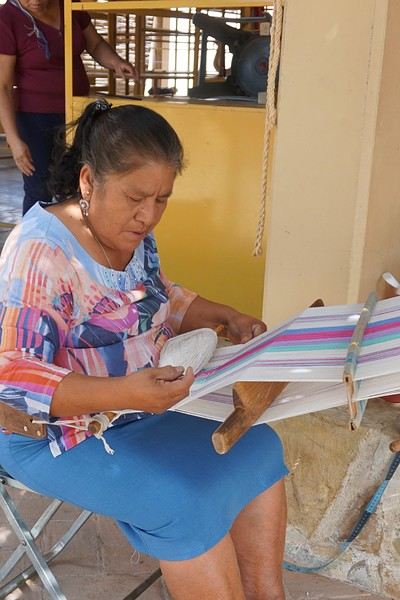
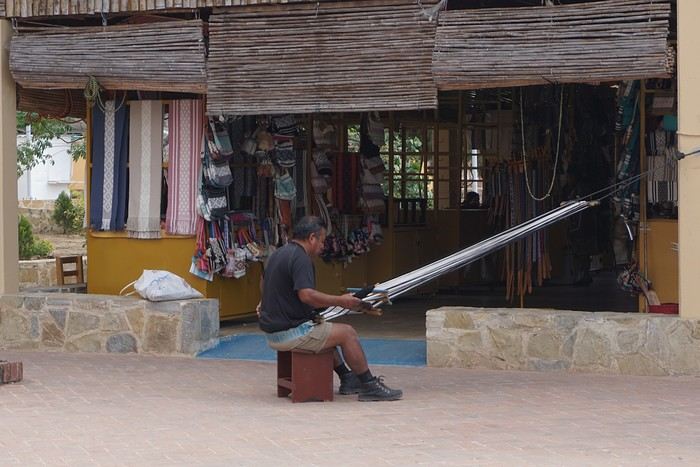
Santo Tomas Jalieza: a village specializing in weaving. We arrived a little too early (11 a.m.), and the activity was just getting started. The backstrap weaving technique limits the width of the pieces to the weaver’s waist size. This was originally a women-only activity, but we see a man setting up and starting to weave. Times are changing!
San Bartolo Coyotepec: here, the specialty is black pottery. This style originated from a firing mistake in one of the village workshops in the early 1960s, and it became a huge success. Sensing a great opportunity, all the potters replicated the “mistake,” which turned into a real local craft. We visit the workshop that started this type of pottery. We were the only visitors, and unfortunately, we didn’t get to see a demonstration of how it’s made. Harry explained that since there are no mechanical wheels here for shaping the pottery, they assemble a series of small clay “coils,” which are then smoothed and sanded.
We end the morning by visiting two shops in the village to compare the products, styles, and craftsmanship (and the prices, of course).
Back in Oaxaca, we say goodbye to Harry and head to a small family-run restaurant near our hotel for lunch. The daily special is simple, good, and really cheap!
We then head toward the Basilica de la Soledad and the Rufino Tamayo Museum of Pre-Hispanic Art.
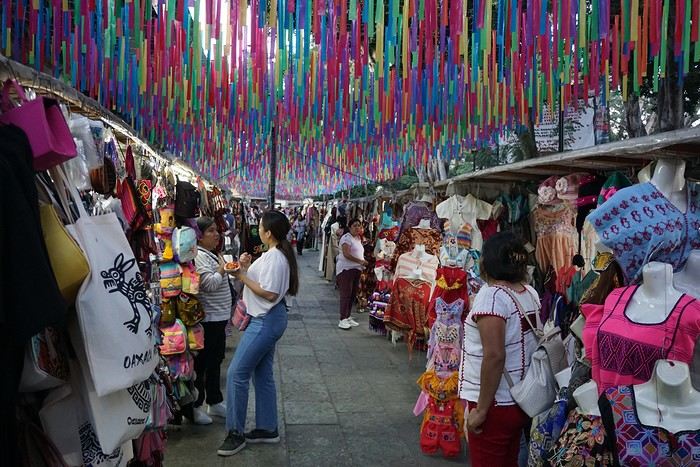
Afterward, I take Justine back to the hotel and go off to find the departure point and schedule for the bus to Monte Alban. On the way back, I stop by the stalls at the Benito Juárez market.
Thanks.
We’d tried paragliding in Colombia (super cool flying above a raptor in the Chicamocha Canyon too!). The hot-air balloon is way more relaxed, but what amazing moments above the Pyramids of the Sun and Moon!
It’s obviously very touristy, but we loved it. Gorgeous! !
Oaxaca – Day 3
Today, we set off on an excursion into the Tiacolula Valley. The local agency’s minibus picks us up in front of our hotel around 9:00 AM.
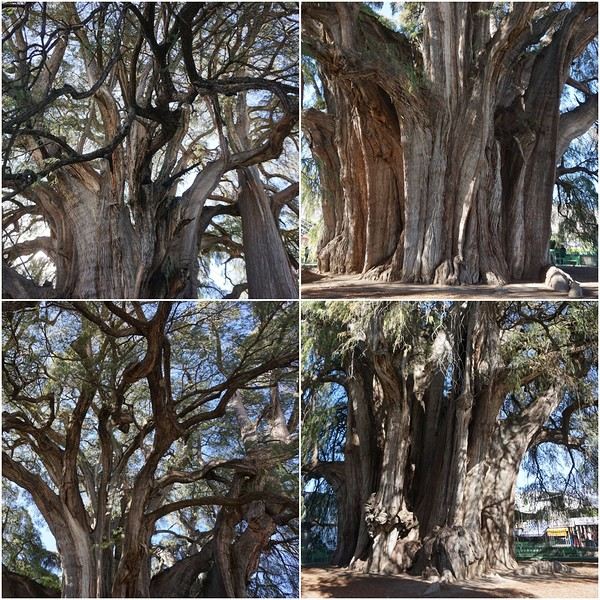
1st stop: the Tree of Tule. We started the day by visiting an impressive old-timer, over 2,000 years old, with a circumference of 64m and between 45 and 60m tall. It’s an ahuehuete, or Montezuma cypress. Just a few dozen meters away, its "son," a mere 1,000 years old.
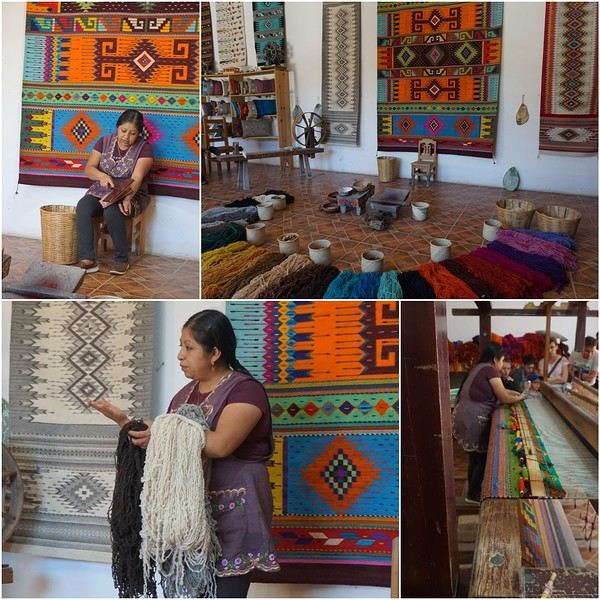
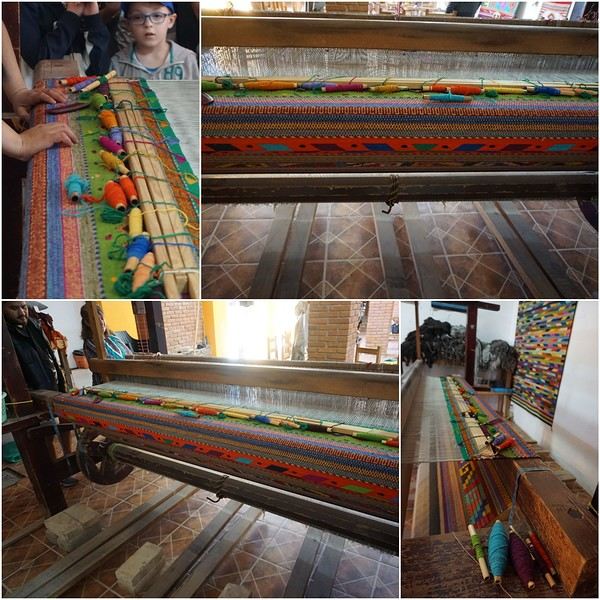
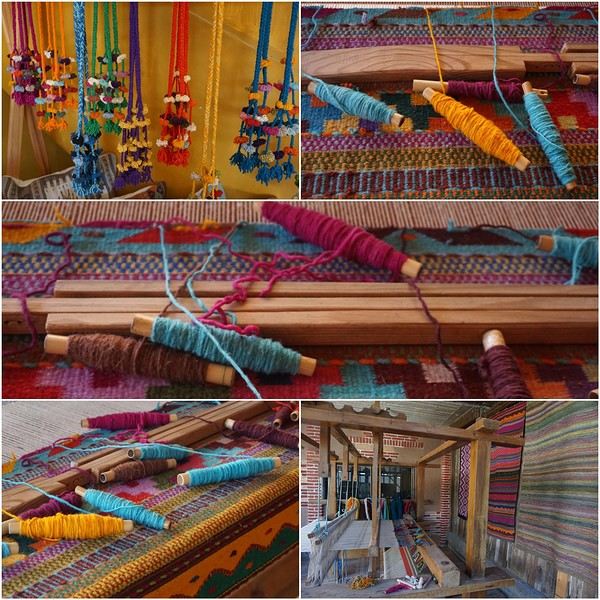
2nd stop: Teotitlan del Valle. We continued with a visit to a wool-weaving workshop. Another demonstration of natural dyes—gorgeous. But the prices were pretty steep.
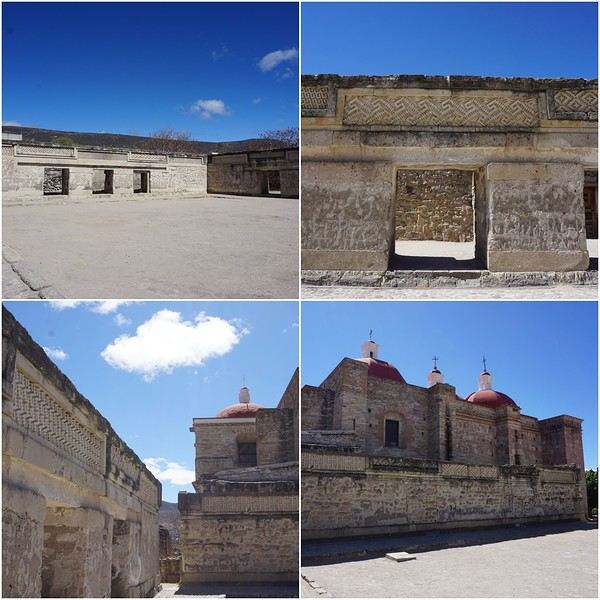
3rd stop: the Mitla archaeological site. I’d read that the site was somewhat interesting and that the free part behind the church might be enough. So, we decided to skip the paid section with the group and used the "free" time to explore the free ruins, the church, and wander through the artisan market stalls.
4th and 5th stops: gotta support local businesses! These two stops were completely pointless and were definitely part of the agency’s commercial agreements—a candle factory and an ice cream (nieve de agua) vendor.
For lunch, we stopped at a restaurant that only offered a buffet. The price was reasonable, especially since it was filling and tasty. I even got to try some local specialties.
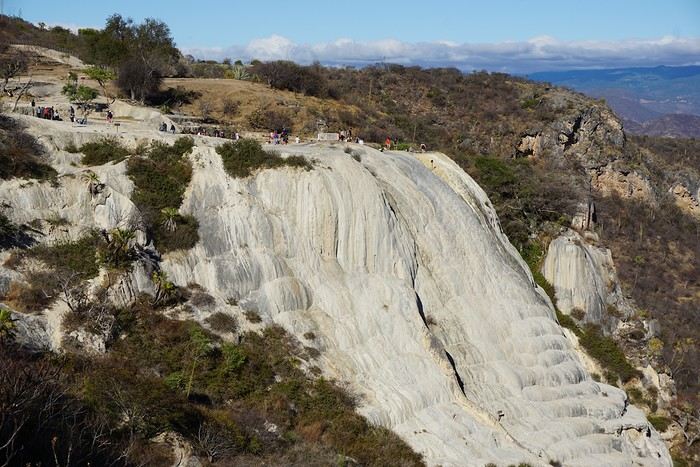
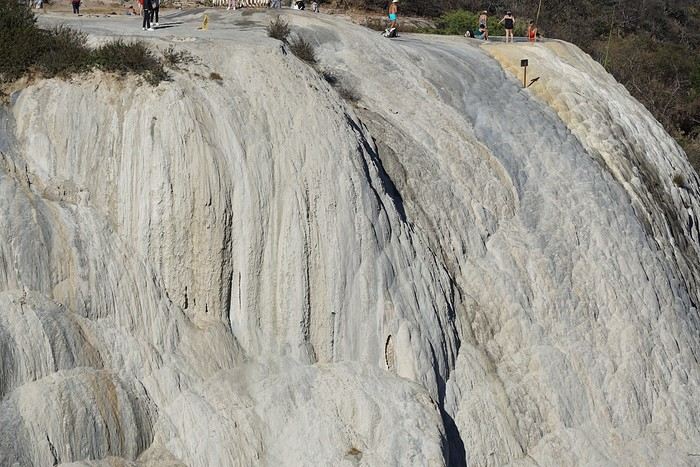
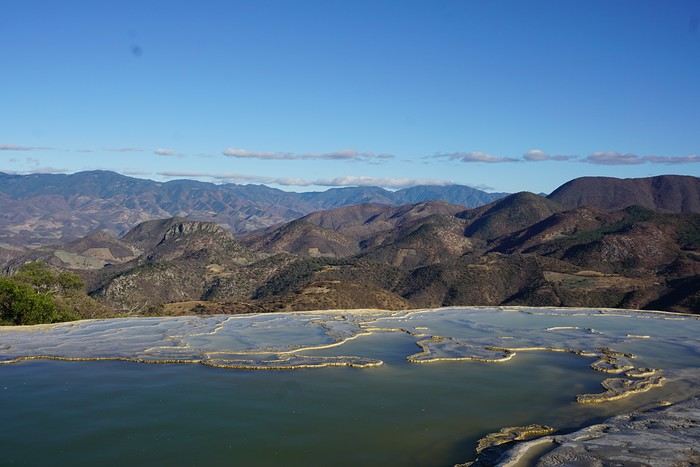
6th stop: Hierve el Agua. The petrified waterfalls of Hierve el Agua were formed over millennia by the runoff of water rich in calcium carbonate. Flowing from the springs, the water trickles through channels before cascading down cliffs over 50 meters high, leaving behind layers of white carbonate that gradually built up. I really loved this spot!
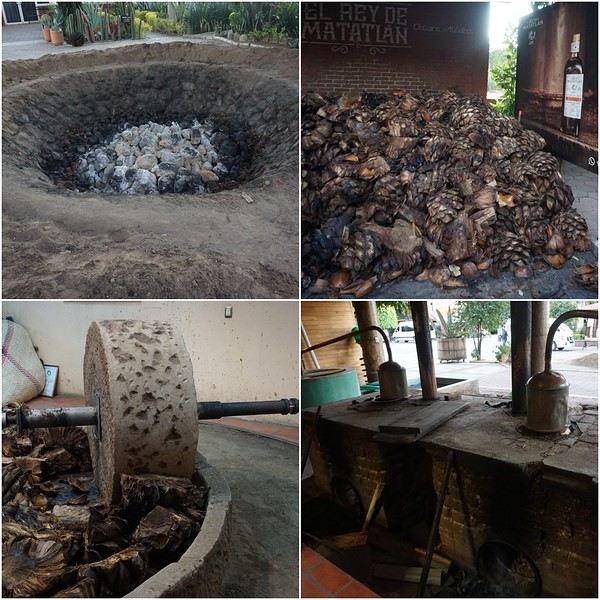
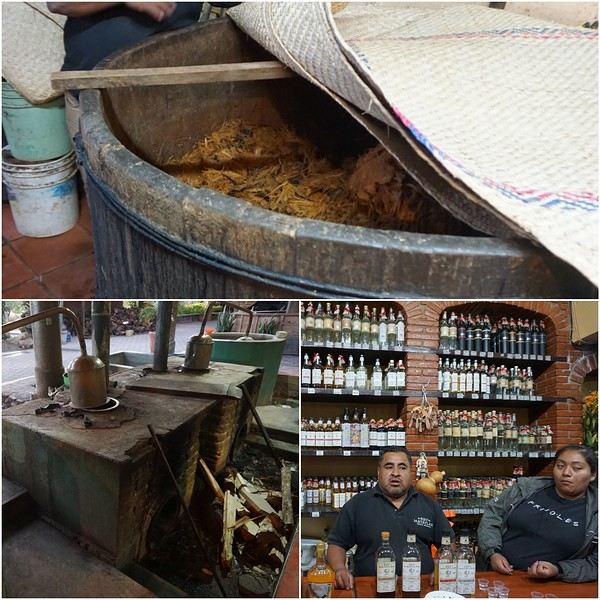
7th and final stop: an artisanal mezcal factory. To wrap up the day, nothing beats a little pick-me-up and a mezcal tasting—this alcohol is made by distilling the fermented heart of various agave plants. The tasting was done with humor. We sampled spirits of different ages, with the oldest described as being on par with cognac. After tasting it, I chimed in to say that cognac is still better. What’s nice here is that the tasting was offered without pressure, with humor, and we never felt obligated to make a purchase.
Back in Oaxaca around 7:30 PM after a packed day with its ups and downs, but overall, the experience was pretty positive. And the price didn’t seem excessive (350 pesos per person, or about 17.50 €, excluding site entries and meals).
Oaxaca – Day 4
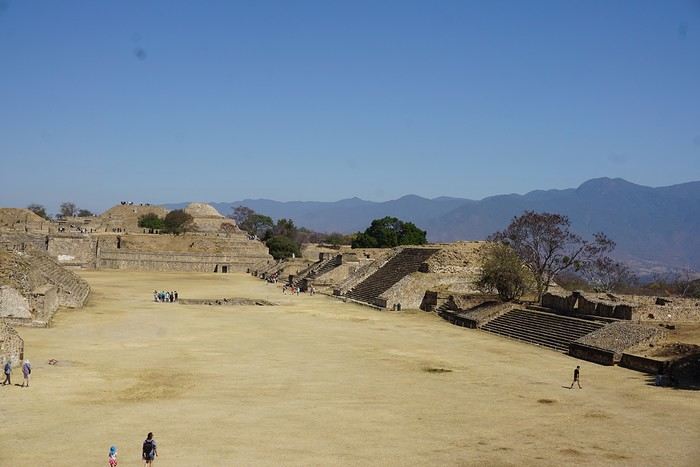
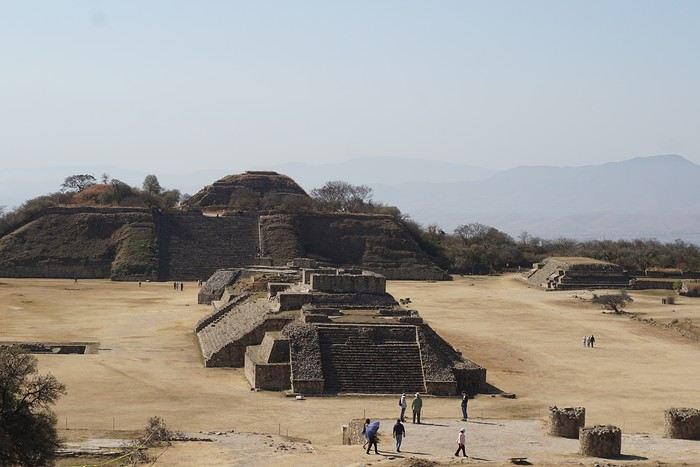
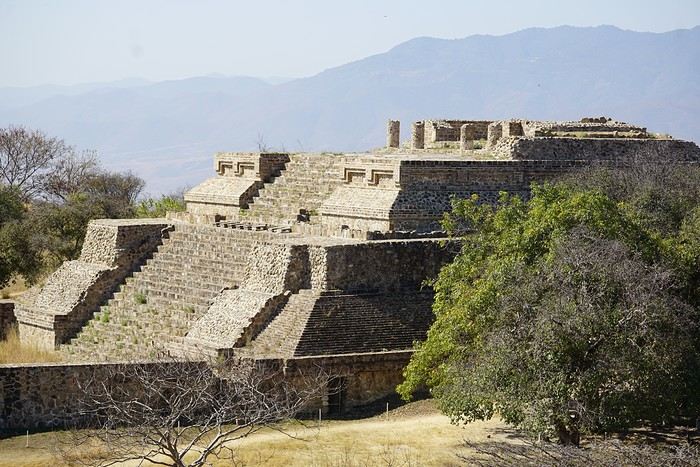
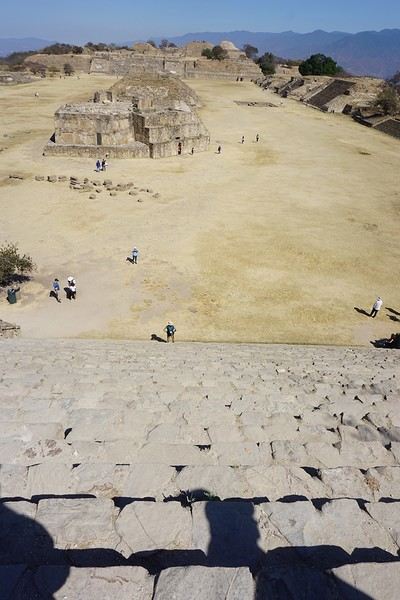
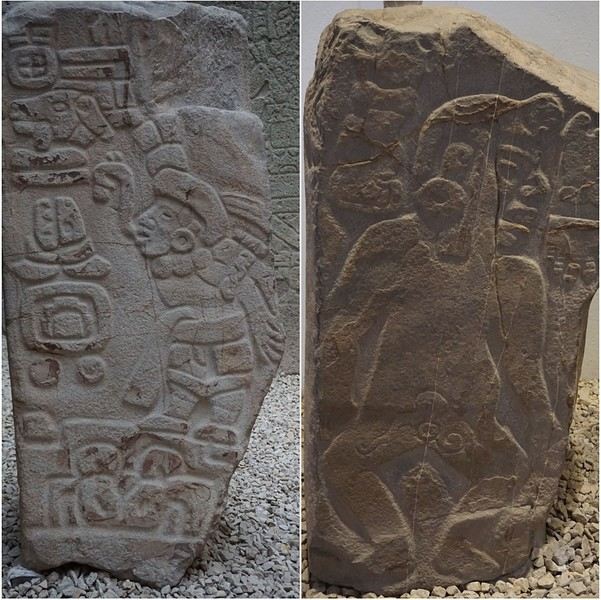
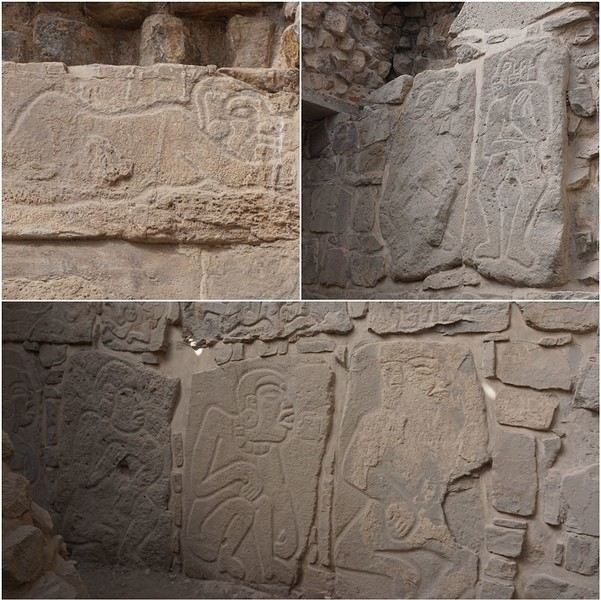
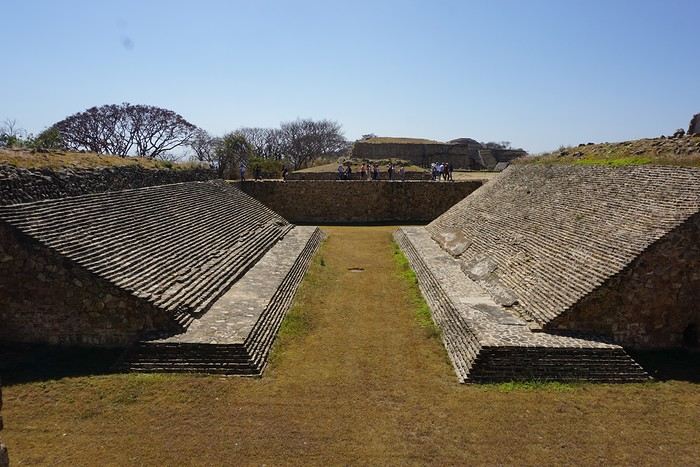
For our last day here, I planned to visit the Zapotec site of Monte Albán, located on Jaguar Hill. We got up pretty early (for retirees on vacation!) and took the 9:00 AM shuttle. It’s really best to go in the morning because there’s little to no shade on the site, and at nearly 2,000 meters above sea level, the sun beats down *fast*. In my opinion, there’s no need to hire a local guide for this visit. A paper guide (like *Le Routard*) is more than enough if you take the time to follow the suggested route and read all the site’s signs (in Spanish and English). So, take your time—after all, when you’re traveling, you *should* be able to, right?!
This city, a cultural center, reached its peak between 350 and 500 AD. At its height, it had up to 24,000 inhabitants. The city was gradually abandoned, becoming a ceremonial center and necropolis. The decline of Monte Albán is thought to have been caused by rapid population growth, drought, and over-exploitation of resources.
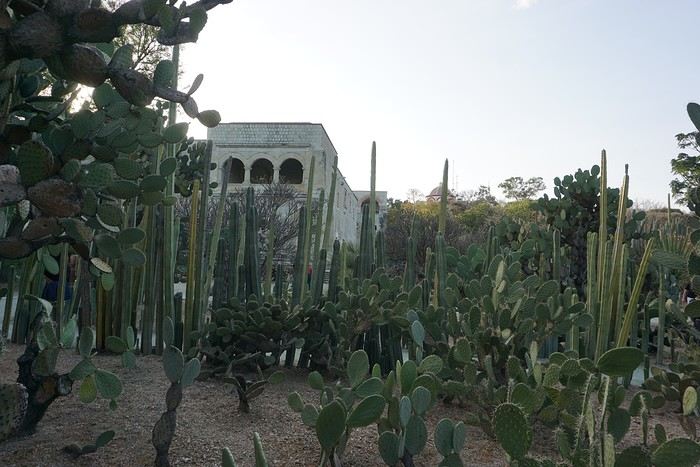
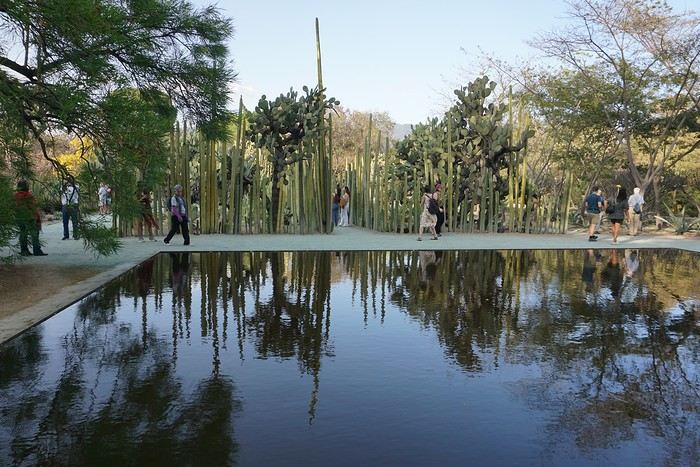
After spending about 3 hours at the site, we headed back to Oaxaca for lunch. Then we went to Benito Juárez Market to do some shopping before visiting the botanical garden. We arrived just in time for the last tour (5:00 PM). Right now, entry is free because the garden is under construction, and only a small part is open to visitors. But hey, it’s free—no complaints here! And what we *did* see was pretty cool (all kinds of cacti, a water feature).
Step 4: San Agustinillo (25m / 290 inhabitants)
We left Oaxaca at 9:00 AM and arrived around 2:30 PM in San Agustinillo (bus then taxi ride).
San Agustinillo – Day 1
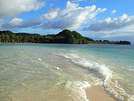
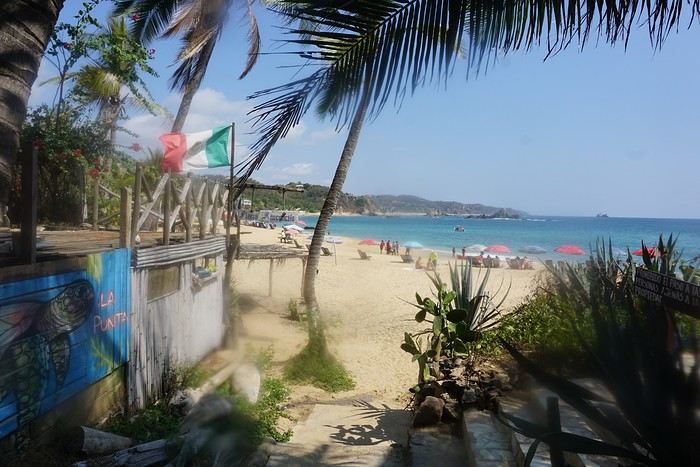
Huge temperature difference from Oaxaca. Here it’s 30°C, and all we wanted to do when we arrived was put on swimsuits and head for a swim. Still, we took the time to grab lunch before hitting the beach, just across the street from our hotel.
We enjoyed our first swim even though the waves and currents are strong on this beach. The next few days, we’ll go a little farther to a more sheltered spot.
San Agustinillo – Day 2
This morning, I decided to go for a little hike to Punta Cometa. Justine, on the other hand, wanted to take a full rest day.
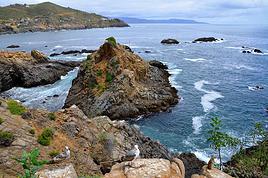
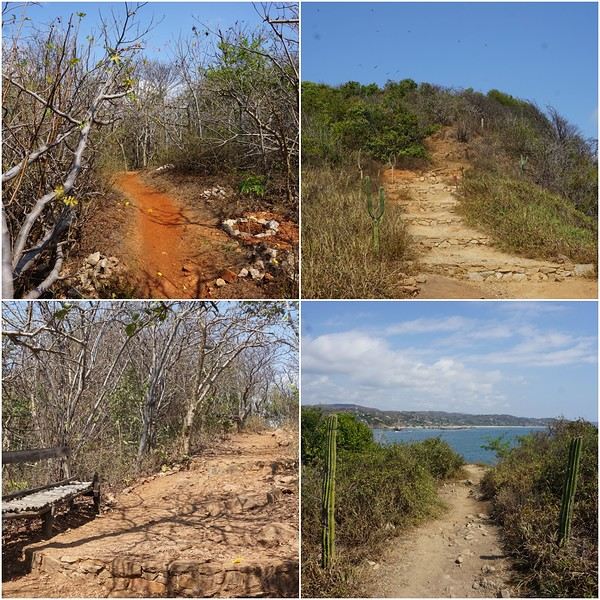
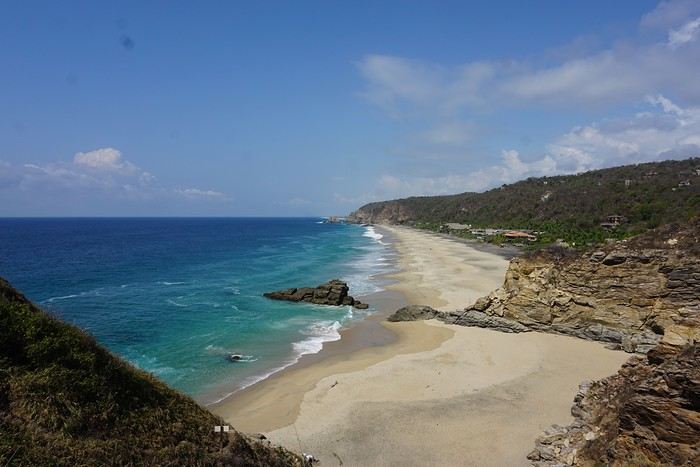
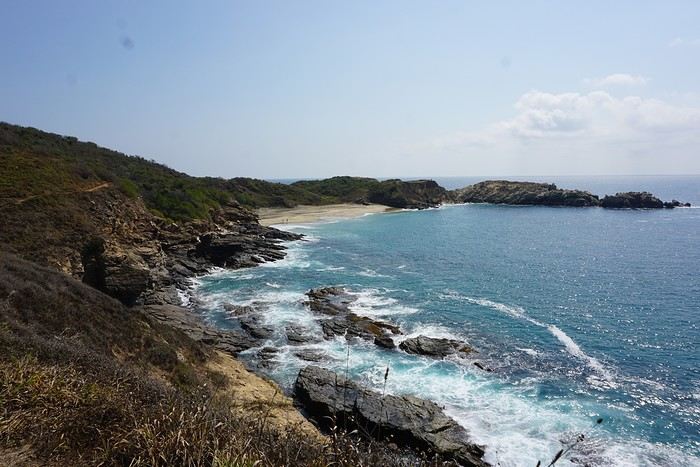
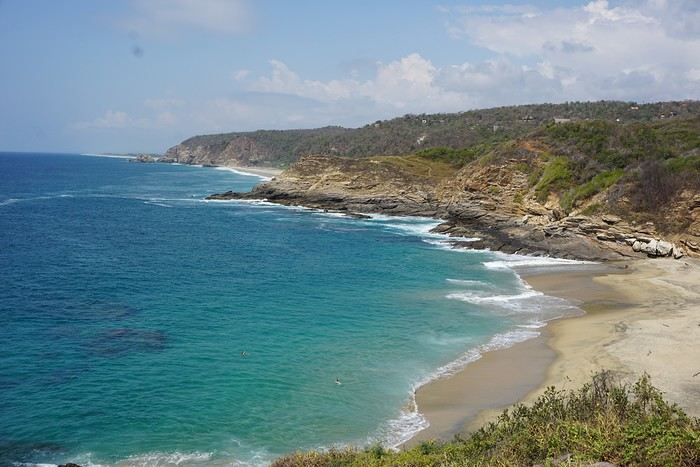
A lovely 3-hour walk in this protected area, whose highest point is an archaeological site (a Mayan observatory you can spot with a lot of imagination). The short hike is really nice, with stunning views from the cliffs and almost deserted beaches. The marked trail lets you walk around the point.
This afternoon, rest and swimming were on the agenda, even though the red flag was flying on three-quarters of the beaches. Luckily, we could swim in the spots sheltered by the rocks.
San Agustinillo – Day 3
To start the day, we visited the La Ventanilla ecological reserve. We flagged down a *camioneta* right in front of the hotel (just a wave of the hand). A few kilometers later, we got dropped off at the reserve’s access road (stops are on demand by pressing one of the buttons/bells on the back). We then had a little over a kilometer to walk.
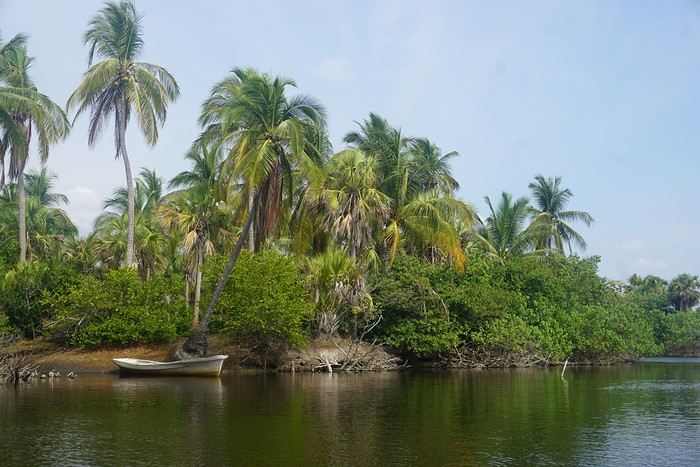
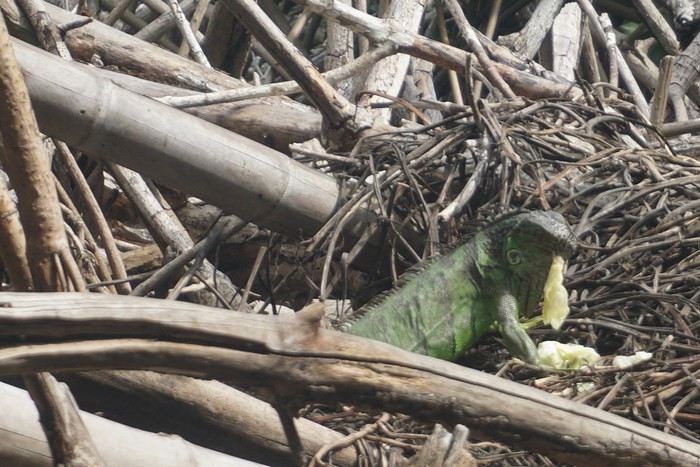
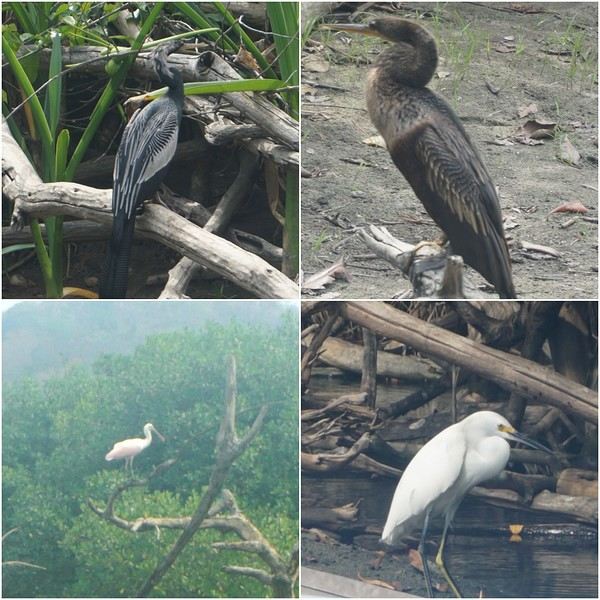
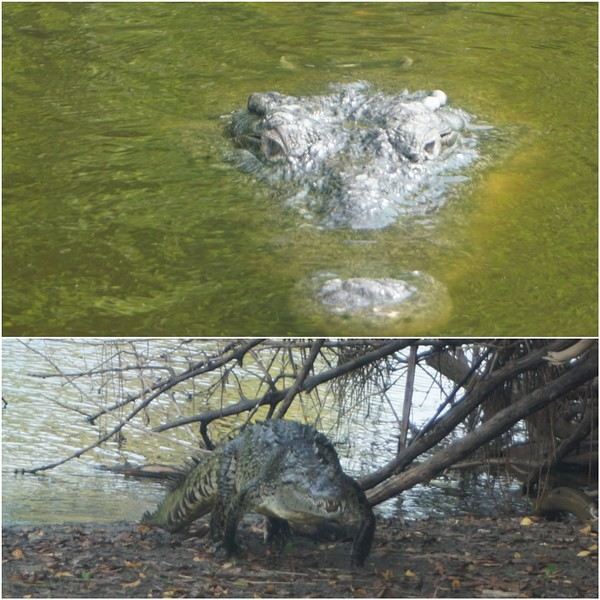
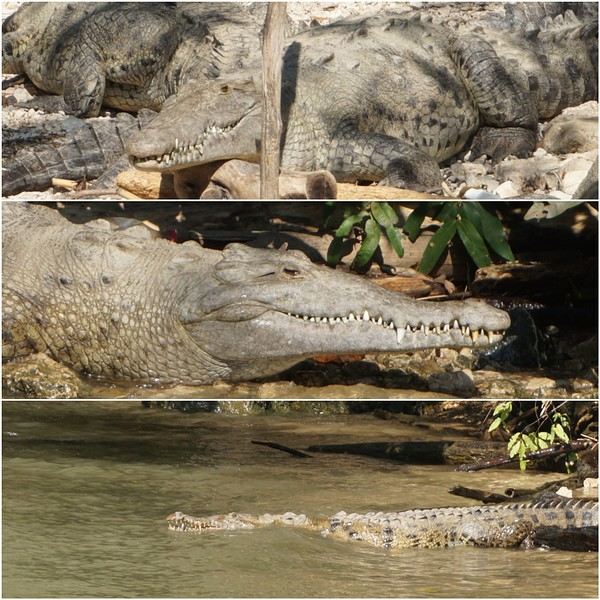
Once there, we bought our tickets for the next tour. The program: a short walk under the coconut trees, then a boat ride in the lagoon to see the mangroves, crocodiles, turtles, iguanas, and some birds.
When we got back, the plan was simple: hammock, reading, swimming, and sunset.
San Agustinillo – Day 4
For our last day, we decided to mix it up with rest and swimming. We rented lounge chairs for the morning (after negotiating since they’re usually rented by the day). Comfortably settled, we alternated between swimming and relaxing while watching the fishermen speed from the middle of the cove to pull their boats as far as possible onto the stretch of beach reserved for them (not without first shooing away a few swimmers).
In the late afternoon, we took a taxi to the Pochutla bus station. I chose to take a ‘grand luxe’ overnight bus (ADO GL) to San Cristobal de las Casas. For this, we had to go to the Huatulco bus station since this class isn’t available from Pochutla.
A little scare on the way between the two bus stations because the road was under construction for long stretches, and the bus couldn’t go faster than 20 km/h. It took us nearly 1 hour 45 minutes instead of one. Good thing I’d planned extra time, or we might’ve missed our connection!
Step 5: San Cristobal de las Casas (2,140m / 158,000 inhabitants)
San Cristobal – Day 1
We left around 9:00 PM and arrived in San Cristobal de las Casas at about 7:00 AM. When we got there, we were surprised to see a kind of carnival float driving by the bus station with music blasting.
We headed to our hostel by taxi: checked in, dropped off our bags, and had breakfast in the cool little kitchen with all the doors open (it was about 5°C outside!).
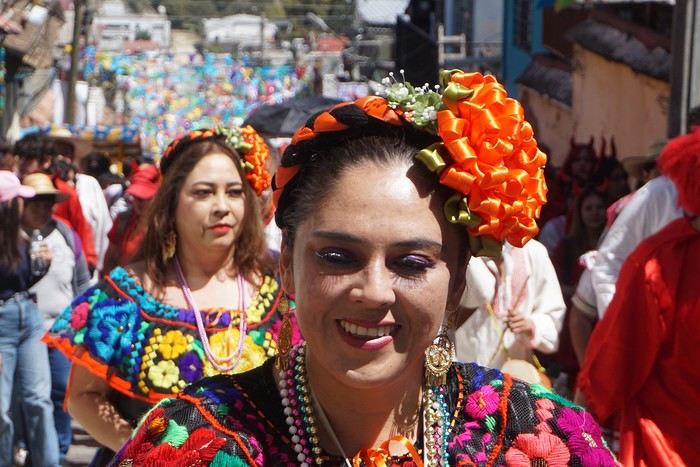
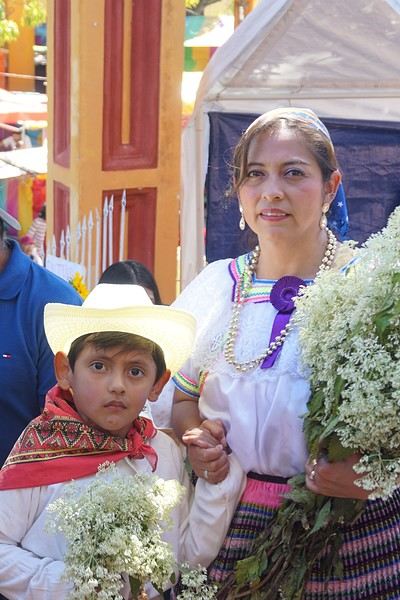
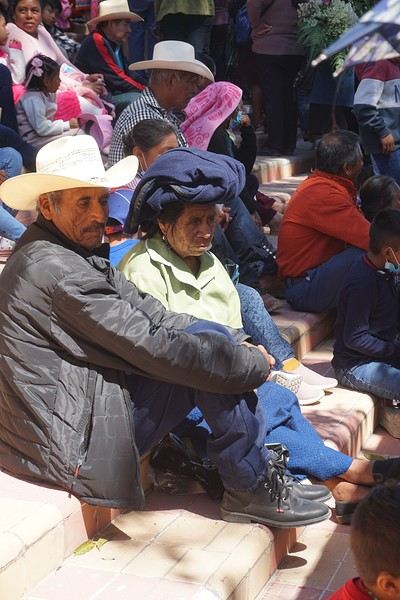
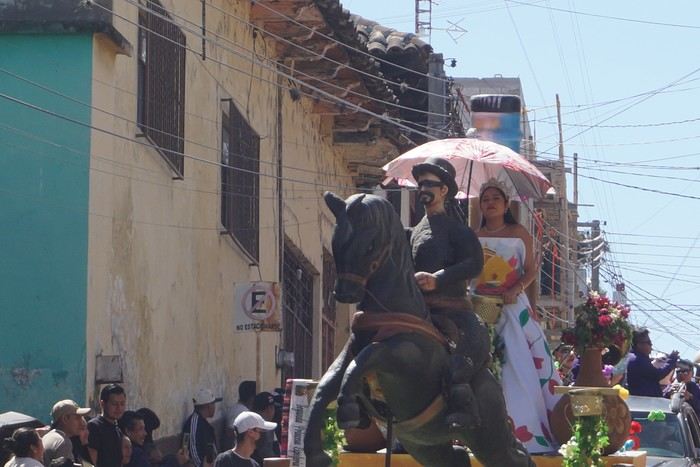
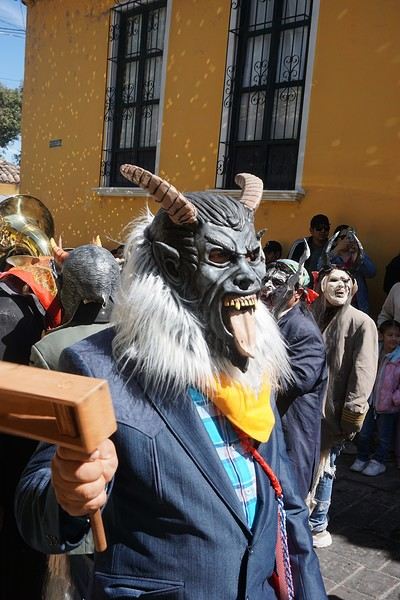
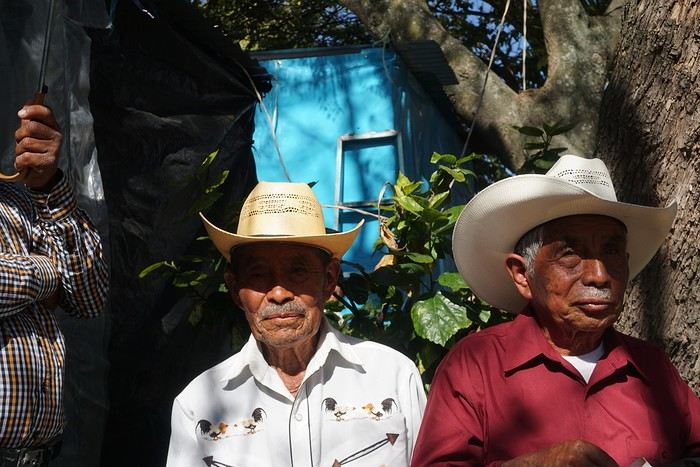
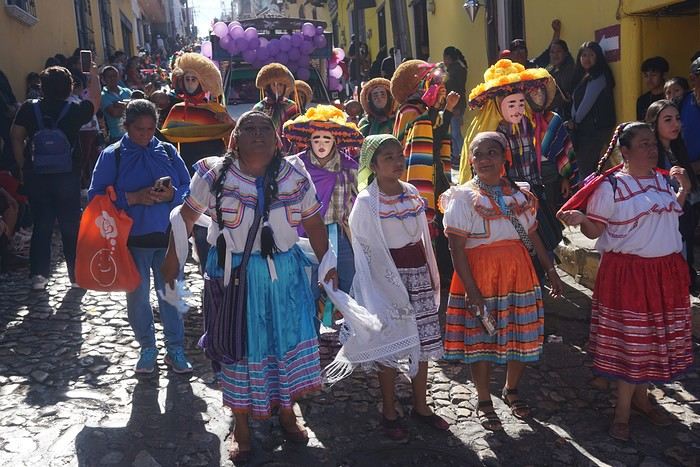
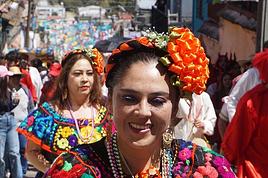
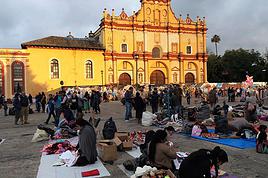
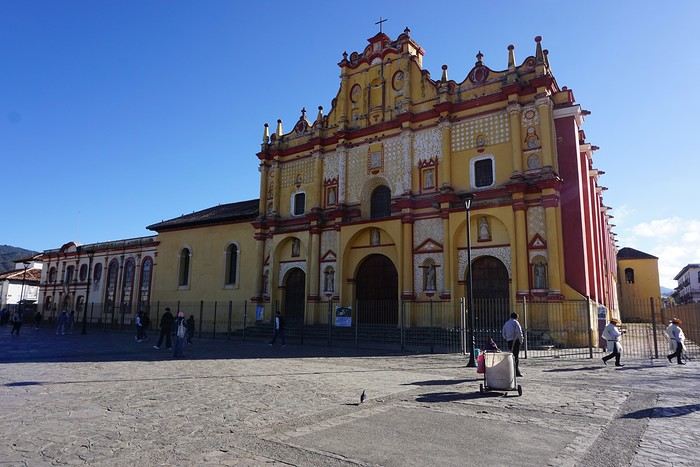
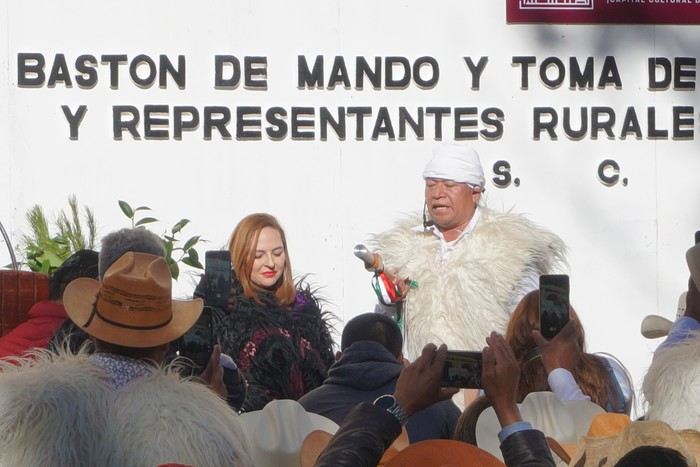
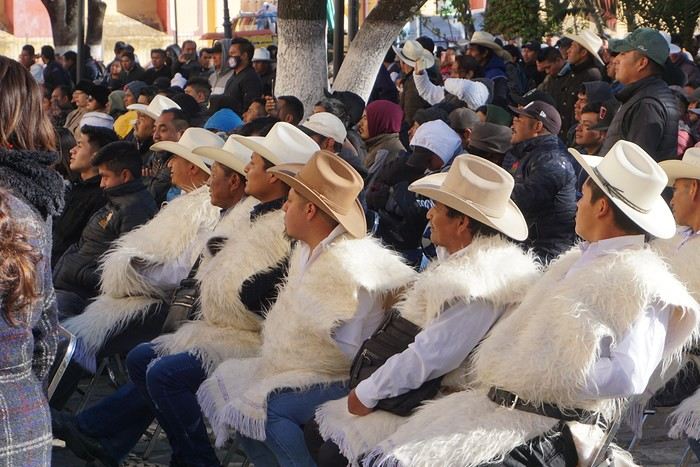
By 9:00 AM, we were already exploring the historic center of this beautiful city. And what a surprise—there was a festival going on (that’s what the float was for when we arrived!). What luck! Several communities from Chiapas were there for their annual "blessing of the staff of power" ceremony. This staff is handed over to a local official (state or city?) and ‘blessed’ by a shaman. Lots of men and women in traditional dress. The municipal and military bands played the flag-raising ceremony and the Mexican national anthem, while the local orchestra played the anthem of Chiapas. Then we watched the parade of officials and the shaman leading the procession, preceded by local musicians.
Couldn’t have started the day any better!
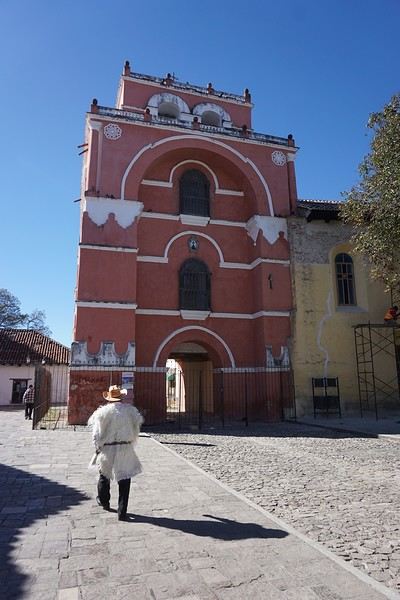
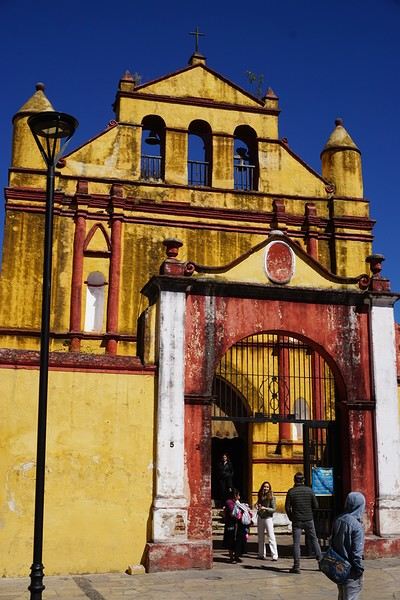
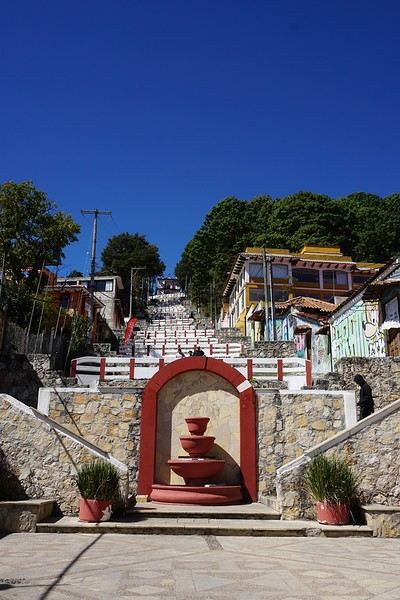
After that, we took a tour of the city in a kind of tourist train/locomotive in front of the artisan market. The thing was so old that after barely 100 meters, it broke down. The driver called his boss, who sent another ‘locomotive.’ We passed by the main squares and churches. At the foot of the huge staircase (about 150 steps) of the San Cristobal church, I promised myself I’d come back and climb it! Then we drove through the oldest neighborhood in the city, according to our driver (fun fact: we were his only two customers). We saw the Lovers’ Square (because the branches of two trees form a heart shape), the Utrilla House (a general and governor of Chiapas from 1879 to 1883), and more.
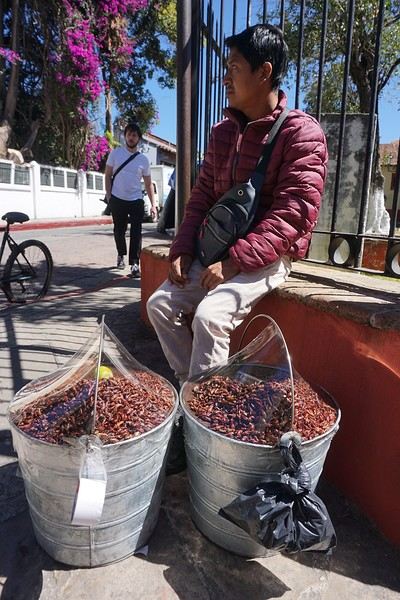
At the end of the tour, we continued our walk. We visited markets and made a few purchases, including some grilled chapulines with lime—though I liked the ones with chili less, since I obviously tried both before buying a small portion. For those who don’t know, chapulines are edible grasshoppers, very popular in the states of Oaxaca and Chiapas. To be honest, they weren’t exactly a ‘culinary’ highlight for me! And Justine didn’t even want to try them!
Before heading back, we stopped for hot chocolate at a very French pastry shop called *La Friandise*. They explain in Spanish what a *friandise* is in France. They even sell croissants, raisin pastries, and—*gasp*—*chocolatines* (pain au chocolat, but they call them chocolatines here!)
San Cristobal – Day 2
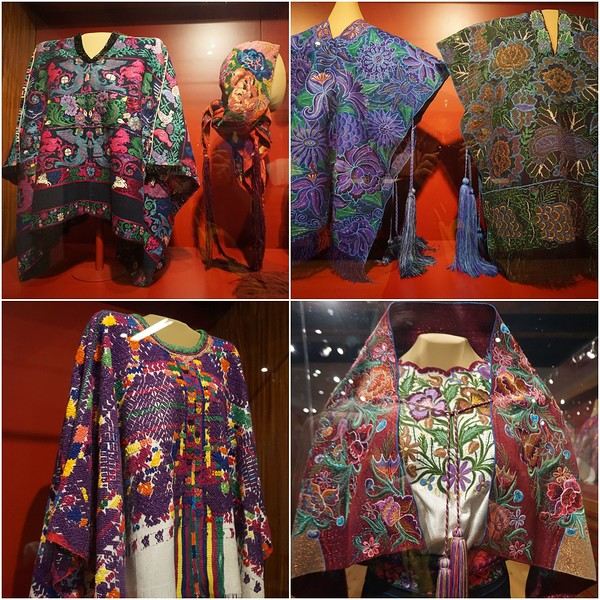
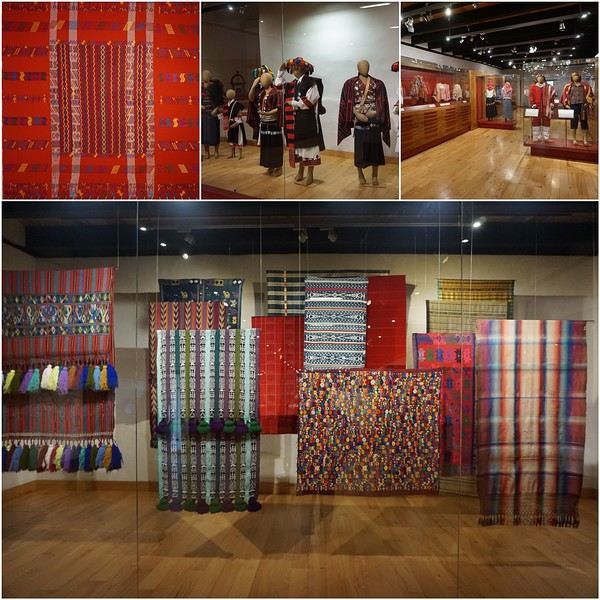
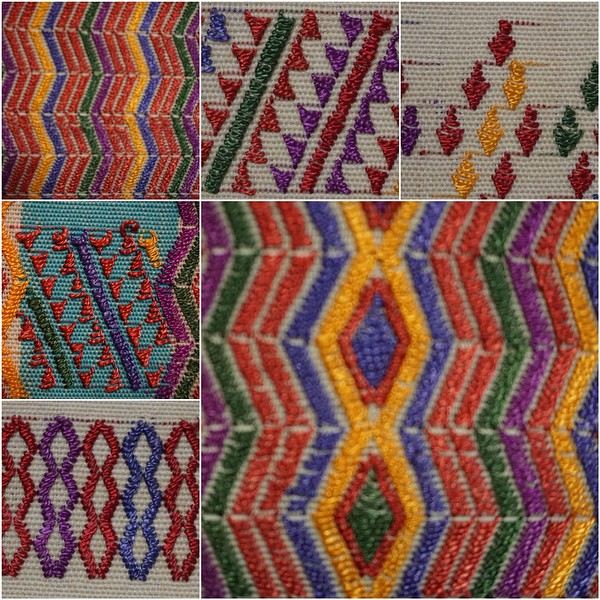
This morning, we started with a visit to the Center of Maya World Textiles: a modern presentation of weavings and clothing by production village.
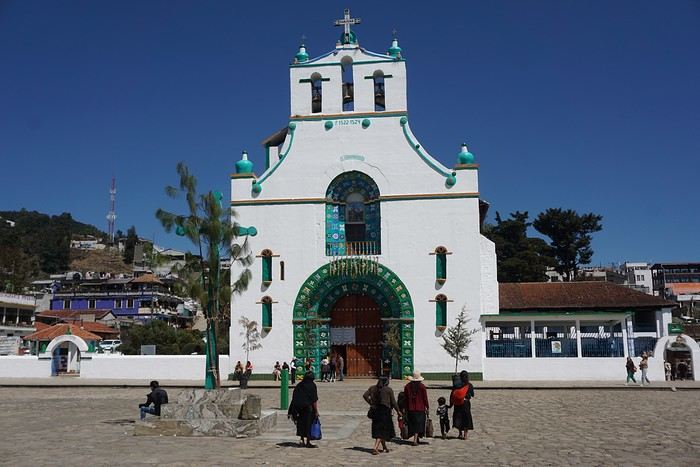
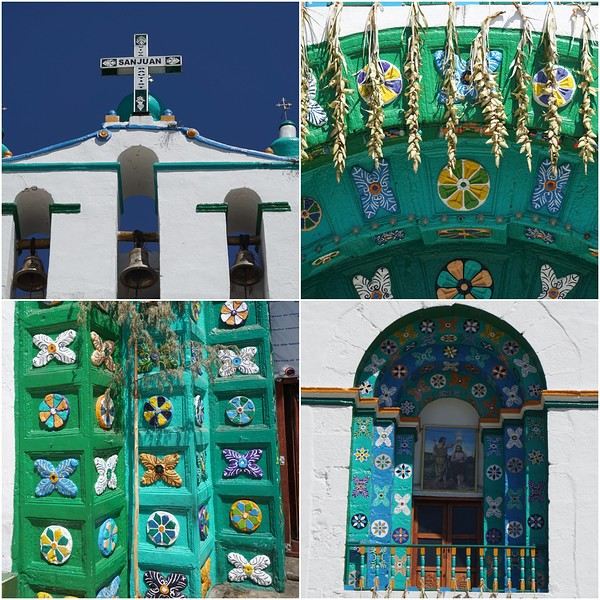
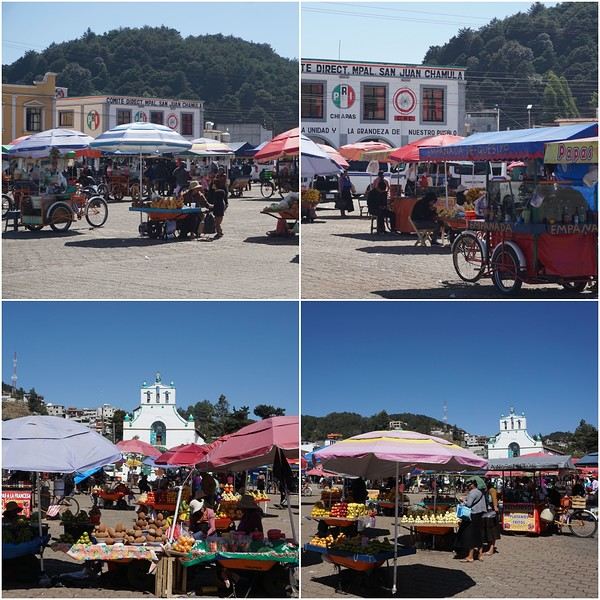
Then, a few hundred meters further, we took a colectivo to reach the Tzotzil village of San Juan Chamula. Here, tourists are barely tolerated. The church at the center of the village is very special. Its last Catholic priest was driven out in 1867, and the bishop can only enter once a year, solely for baptisms. In the meantime? Shamanism takes over! The church benches have been removed. The floor is covered with pine needles and candles. All the saint statues are lined up on one side. Here, saints and Christian religious symbols are tied to the worship of spirits and Maya myths. The smoke from the candles, incantations, and prayers fill the church. The atmosphere is truly unique. Photos and videos are forbidden. Don’t even try to "cheat"—they’re very strict. If you break the rules, they’ll confiscate your devices. Sorry, no photos of the interior.
On the main square in front of the church, there’s a market made up of street vendors on bikes.
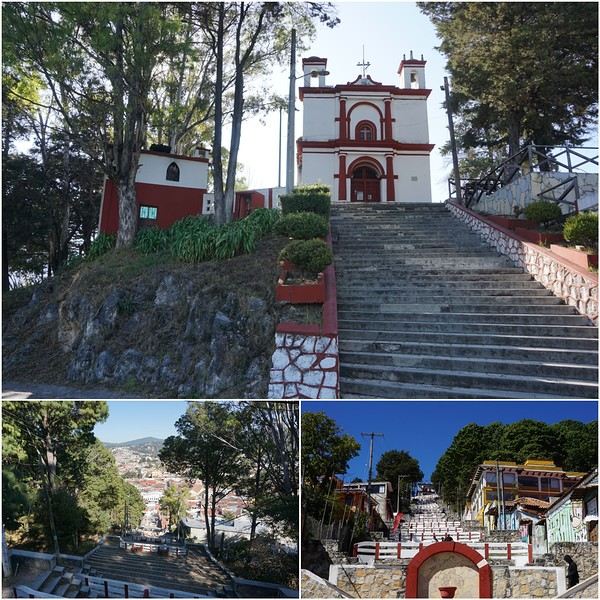
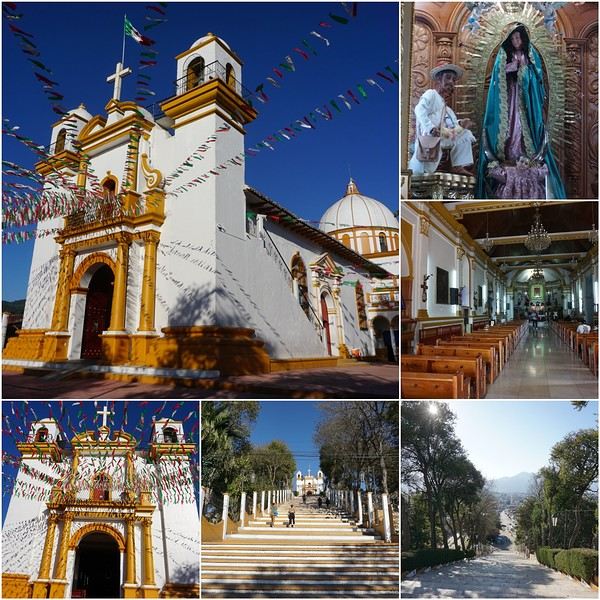
Then, back to San Cristóbal, where I kept my promise. I climbed the stairs leading to the San Cristobal church. And since I had time, I crossed the city to climb up to the church of Our Lady of Guadalupe.
San Cristobal – Day 3
Today we left San Cristóbal for a beautiful hike in the Sumidero Canyon. You can do this trip independently, but I had decided on the day of our arrival to book the excursion through our youth hostel.
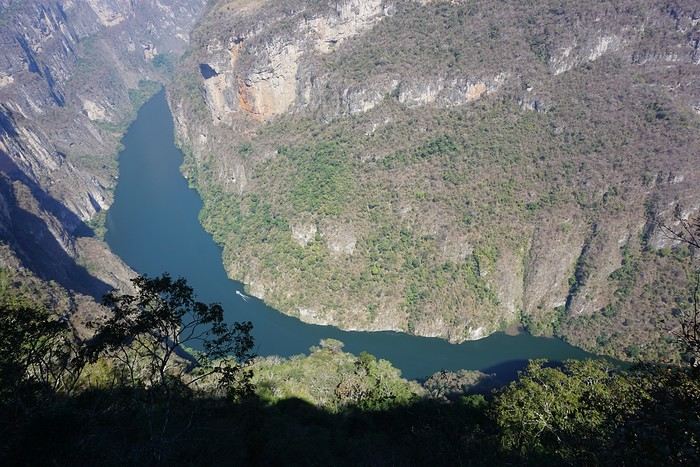
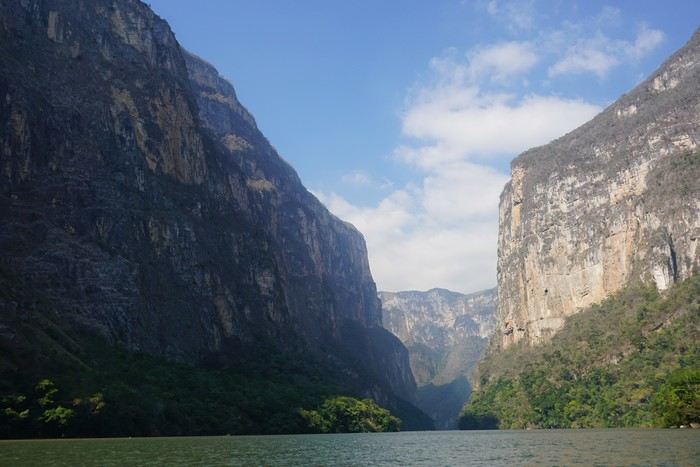
We set off at 9:00 AM, and after a fairly long drive, we reached two viewpoints overlooking the canyon: stunning and impressive views of the Grijalva River.
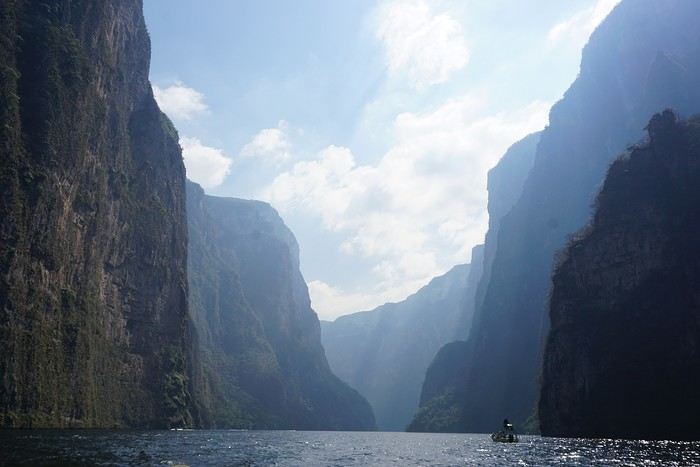
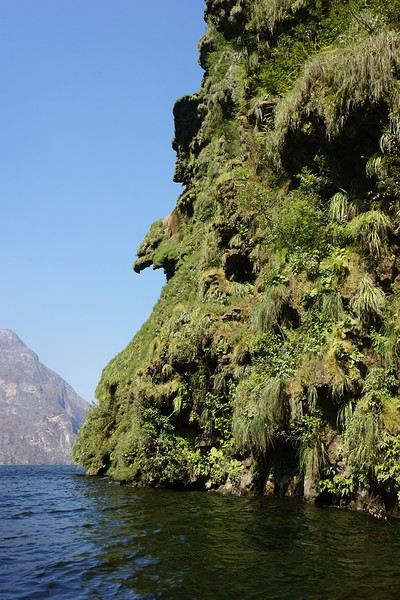
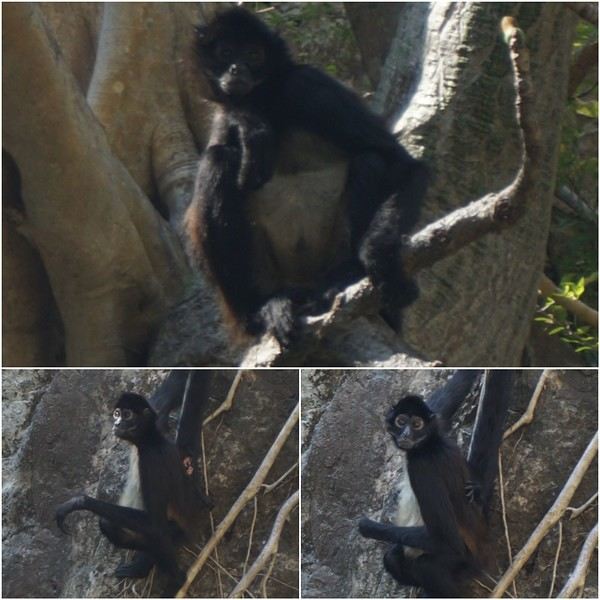
Then we headed to a dock at the very end of the canyon, near the hydroelectric dam, for a more than 2-hour lancha ride: breathtaking cliffs (the tallest peaks at 1000 m), vegetation clinging to them in ways you can’t imagine, traces of waterfalls, a 'nativity tree,' and caves. And the local wildlife: plenty of birds, spider monkeys, and a few crocodiles.
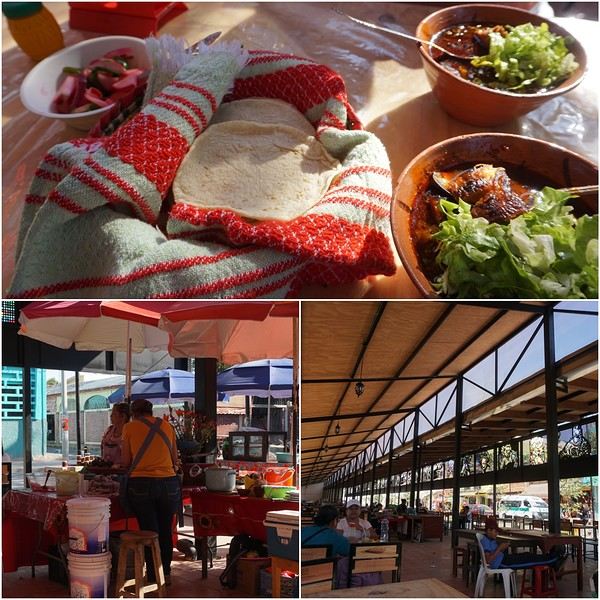
We arrived at the dock around 3:30 PM in the village of Chiapa de Corzo. We declined the meal at the restaurant suggested by our agency at the top of the docks. Instead, we wandered off to explore the village. A few hundred meters later, we found a sort of market hall where cooks were set up. Don’t ask me the name of the local dish we tried! Pork pieces served with salad in a mildly spicy sauce, and of course, tortillas.
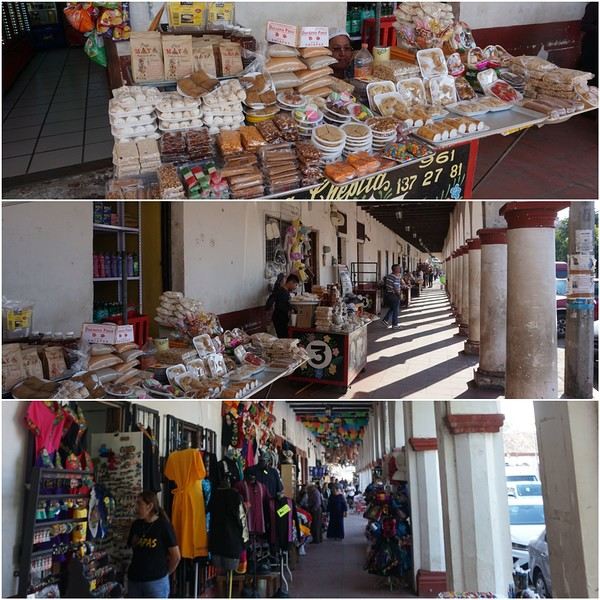
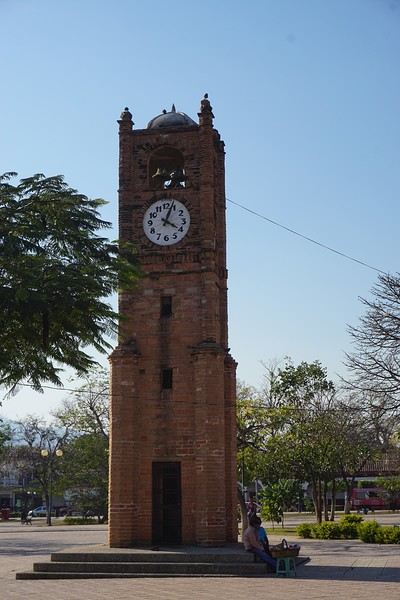
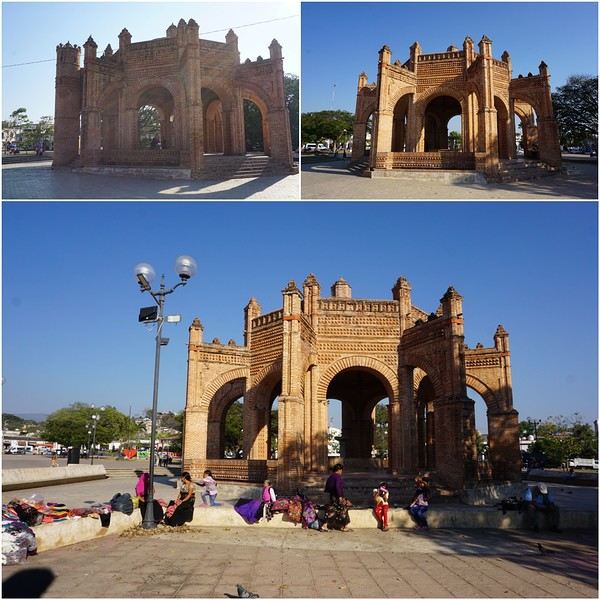
Next, we strolled under arcades lined with vendors (souvenirs, pastries, etc.). Then we made our way to the village square, where an impressive 16th-century Mudéjar-style fountain (La Pila) stands, and right across from it, a charming clock tower.
We left around 4:45 PM and arrived back in San Cristóbal de las Casas about forty minutes later. We happily returned to our 'food HQ' one last time. Tomorrow morning, we’re back on the road—a short 2-hour bus ride to Comitán.
Step 6: Comitán de Domínguez (1,600m / 113,000 inhabitants)
Comitán – Day 1
We have a meet-up with Oscar. Without a doubt, this is the most memorable encounter of our trip! He’s the manager of the agency "CVL Travel Turismo Alternativo & Corre la voz Chiapas" and the owner of the hostel Casa del Sol.
Oscar picked us up at the bus station. As soon as we arrived at his hostel, from our very first conversations, we noticed his kindness, his overflowing joy, and his immense generosity.
We’ve been communicating via WhatsApp for several months. Together, we planned a 4-day excursion into the jungle to discover natural sites (lakes, waterfalls) and do some hiking.
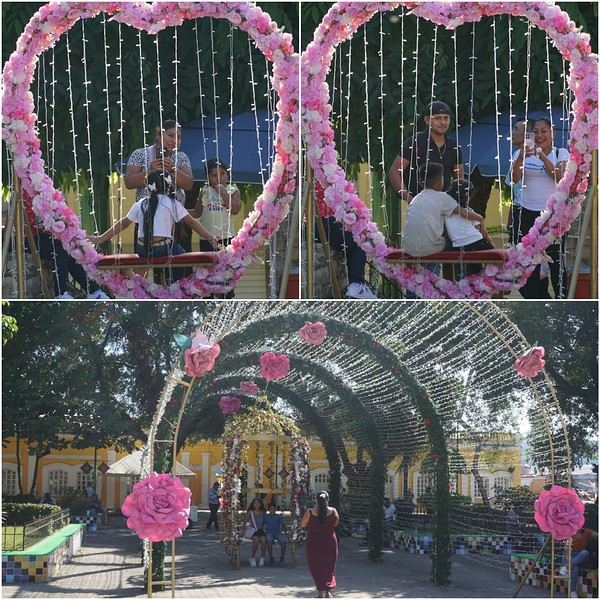
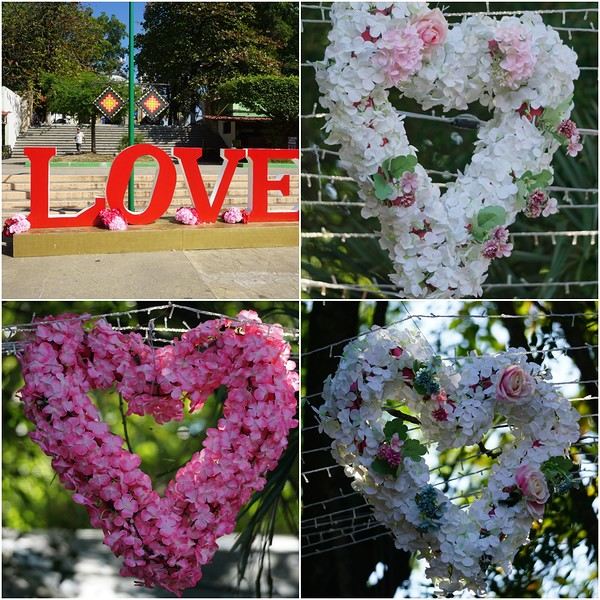
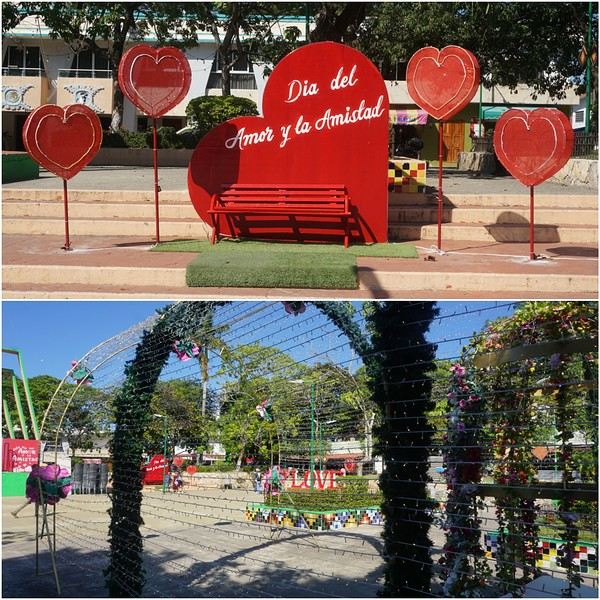
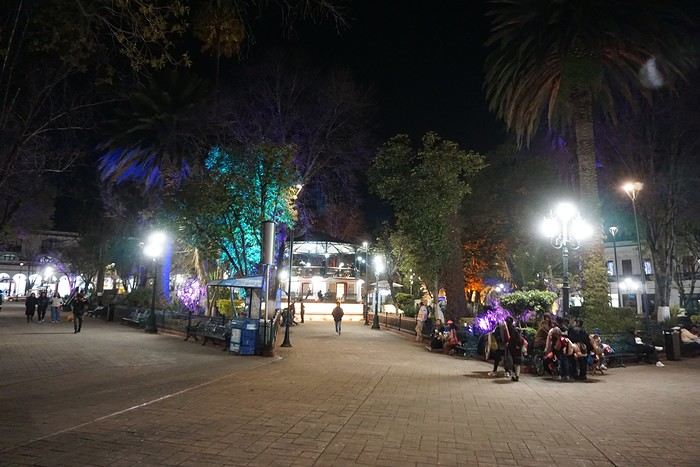
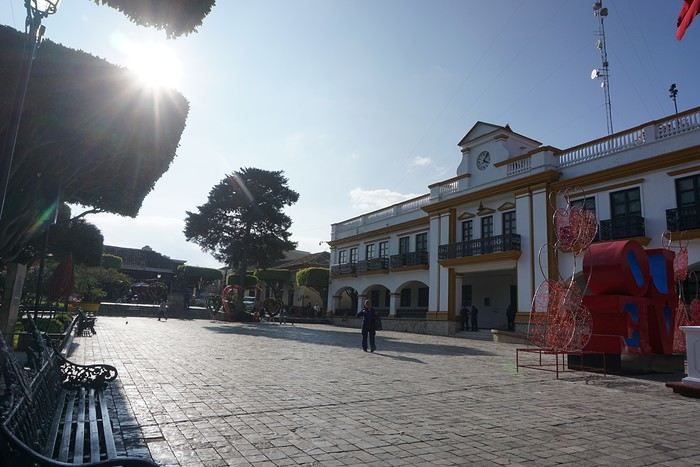
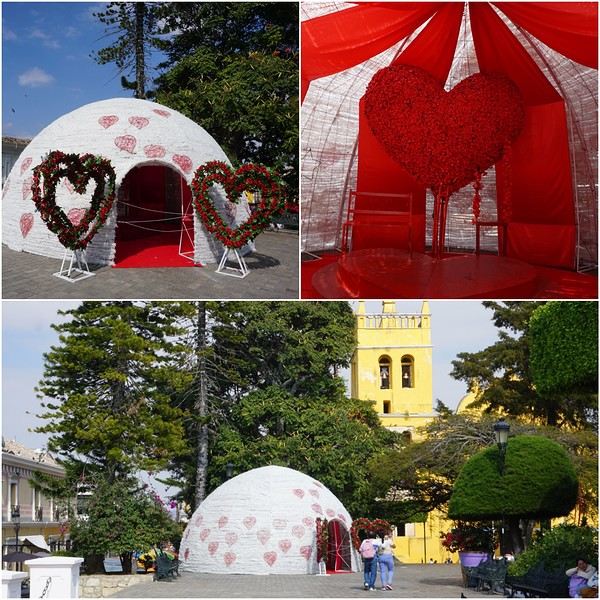
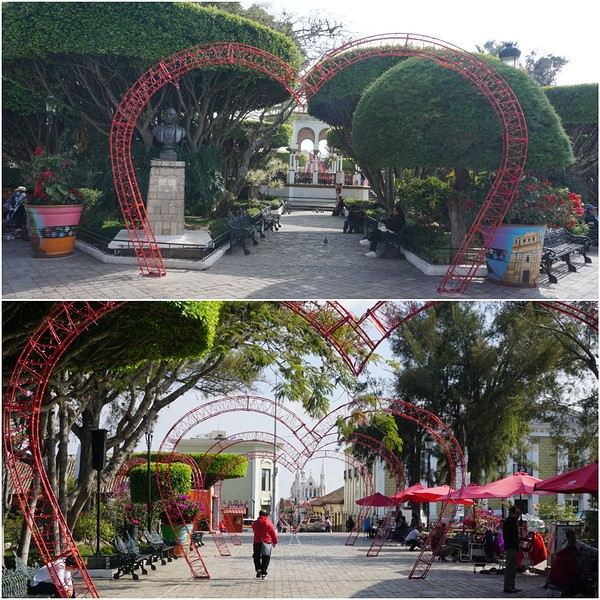
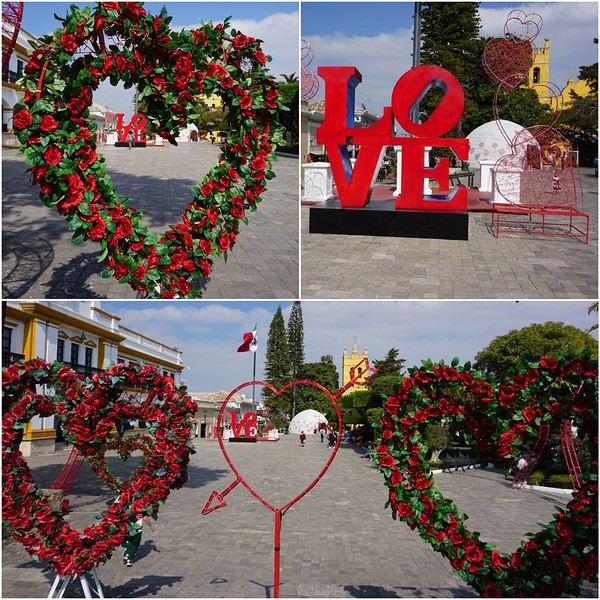
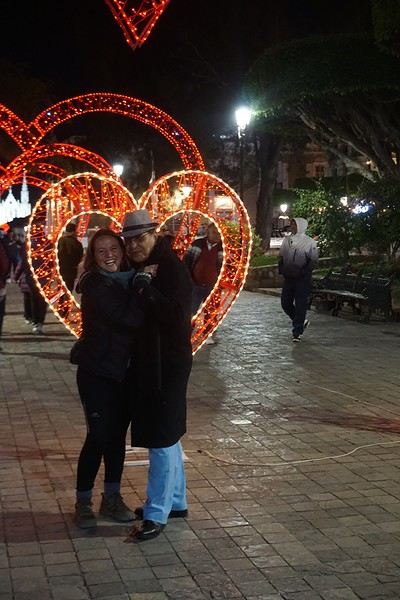
Once settled in and after receiving some tips and information, we head into downtown Comitán. Here, it’s all about love! Just look at how they’re preparing for Valentine’s Day on the zócalo!
Otherwise, at first glance, for a tourist—and according to paper guides—there isn’t much to see or do in this city except watch time go by. But as you’ve gathered, for us, it’s just a transit spot. Or at least, that’s what we thought!
Comitán – Day 2
This morning, we hit the road toward Las Nubes Park. The sky is blue, and I can’t wait to discover these spots in Chiapas that are on our itinerary. But the farther we go, the more the sky clouds over and the rain sets in. No wonder this place is called Las Nubes (the clouds)!
Oscar is really worried about the weather for the next few days. By mid-morning, as we approach the village of Nuevo San Juan Chamula, he pulls over in front of a house and goes to ask a friend for advice. When he comes back, he looks pretty concerned. The rain is supposed to last for several days. After a quick discussion, we make the fast decision to turn back—it’ll be impossible to do our hikes in the forest. No point in stubbornly wasting our time in the jungle! Oscar assures us he’ll suggest some beautiful alternative spots around Comitán instead.
So, we spent the morning on the road, but I think we made the right call. And we never regretted it, since what Oscar came up with instead was absolutely stunning, surprising, and fascinating!
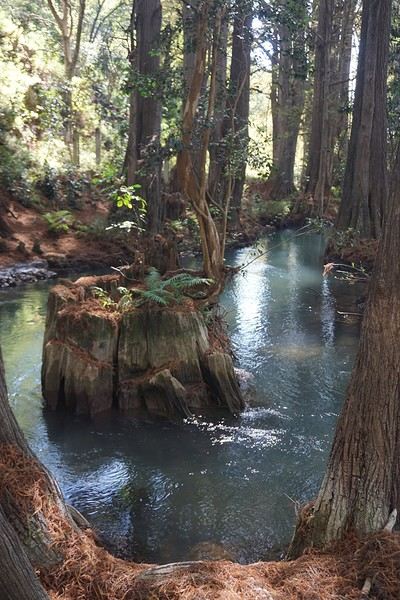
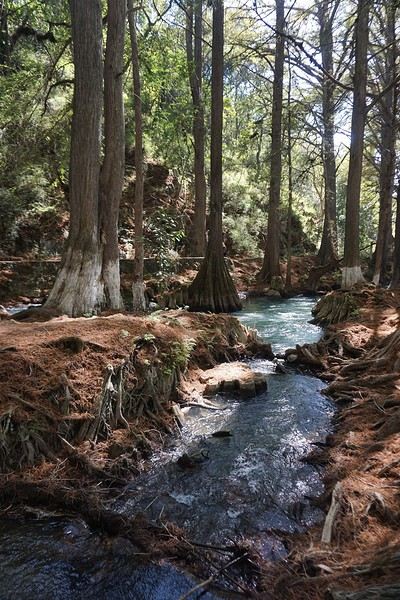
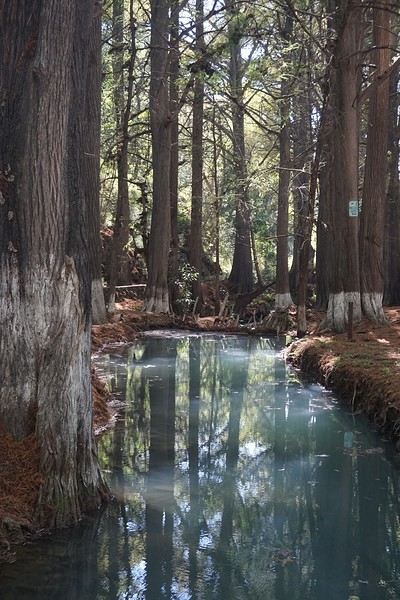
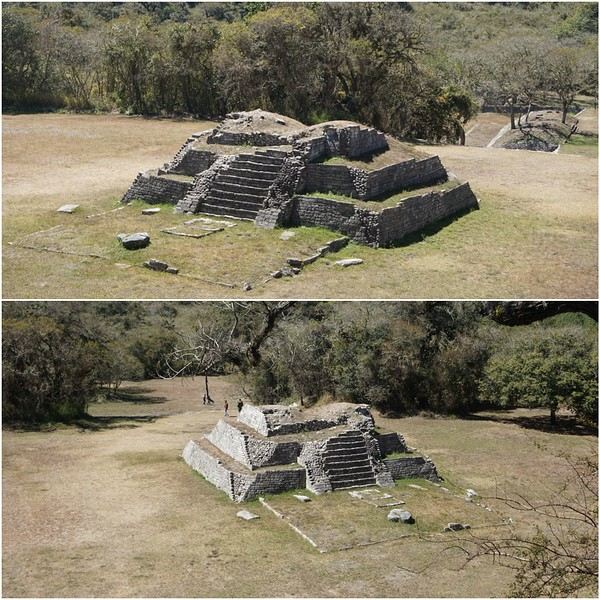
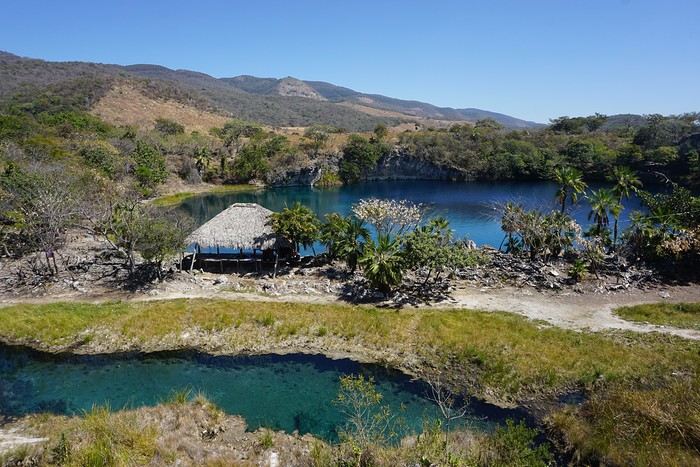
We spend the afternoon at the Lagos de Colón park and at the small Mayan site on the border with Guatemala, El Lagartero.
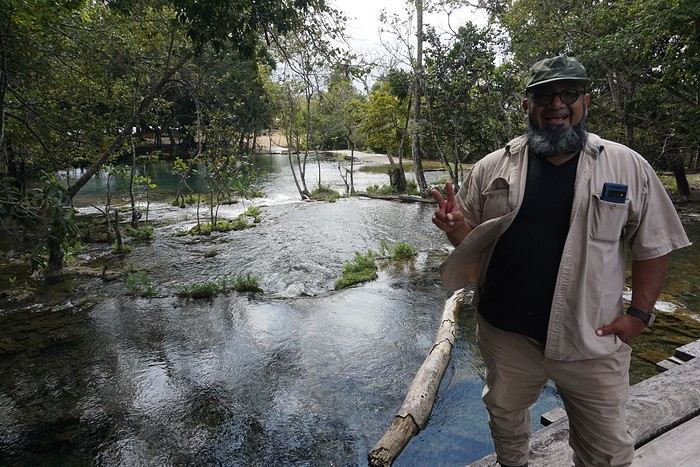
Hi Oscar!
By the end of the day, we head back to Comitán, pick up our room, and eagerly await the next day’s program. Because every day will be a surprise, and we’ll enjoy them all with delight.
Comitan – Day 3
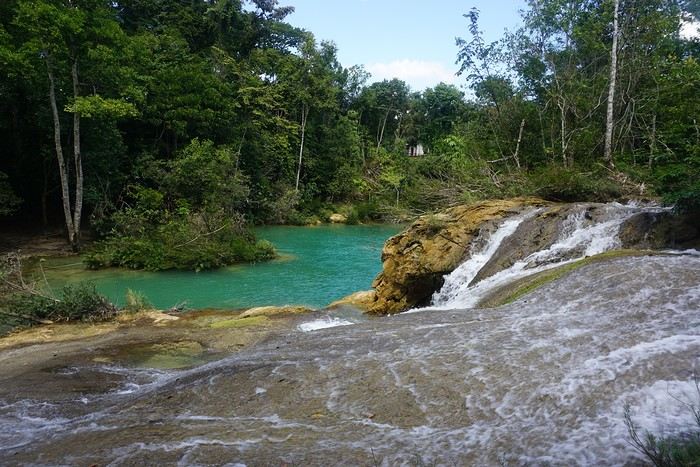
This morning, Mar, a young woman from Majorca, joined us. Such a wonderful encounter—Mar is so radiant and kind. We head toward the stunning Cascadas del Chiflón. While the first three waterfalls are pretty easy to access, the fourth one, where you get thoroughly soaked, is reached by climbing a large staircase with slippery steps. Finally, the climb to the last one (the *quinceañera*) is quite challenging. The last 150 meters are tougher but not impossible. At this final viewpoint, the farthest one, it’s just Mar and me! It’s amazing to enjoy this spectacle in such a peaceful atmosphere, where only the music of the waterfall keeps you company!
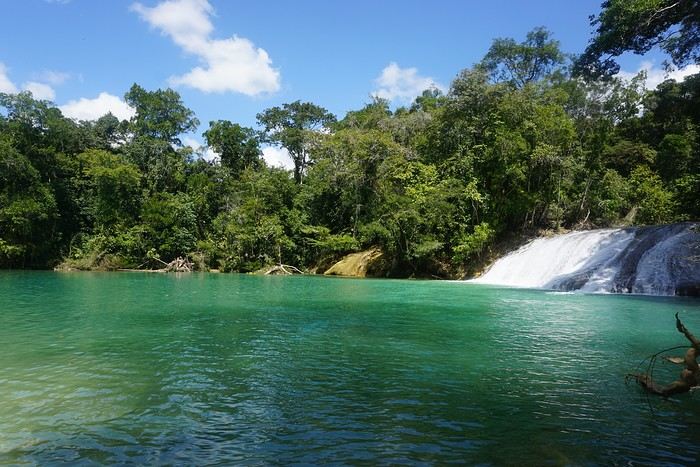
We get back in our car around 1 PM. Oscar has prepared a surprise for us. We’re going for a picnic in a place he won’t tell us anything about. And it’s with awe that we discover the *Ojo de Agua* site. We’re the only ones there, savoring both the picnic (despite a few bees of varying sizes), the beauty, and the tranquility of the place.
Comitán – Day 4
This morning, Oscar made me a gargantuan breakfast, the ‘Oscar Special’: a slice of avocado resting on a fried egg, resting on a slice of cheese, resting on a layer of refried beans (frijoles), resting on a slice of ham, resting on a tortilla. And all that multiplied by three! Needless to say, after polishing that off, I wasn’t hungry for the rest of the day!
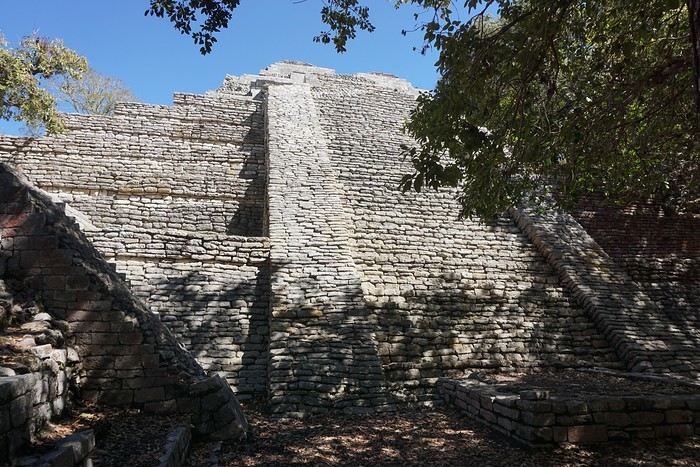
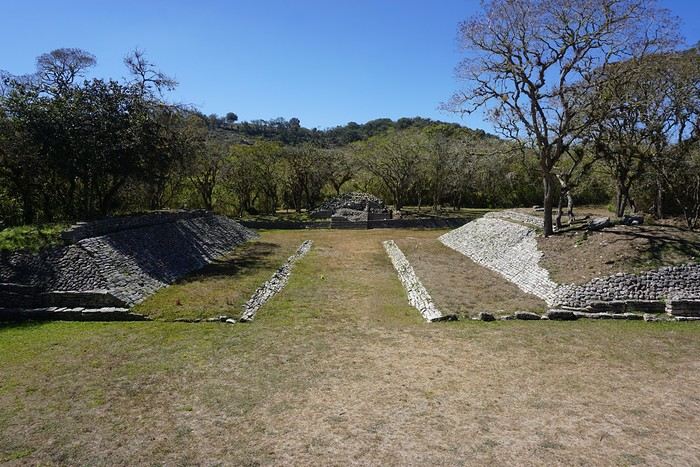
We start the day with Mar, visiting a new Mayan site, much larger than the one from the day before yesterday: Tenam Puente. To give you an idea of its size and importance, there are three ball courts on this site, each bigger than the one we saw at El Lagartero.
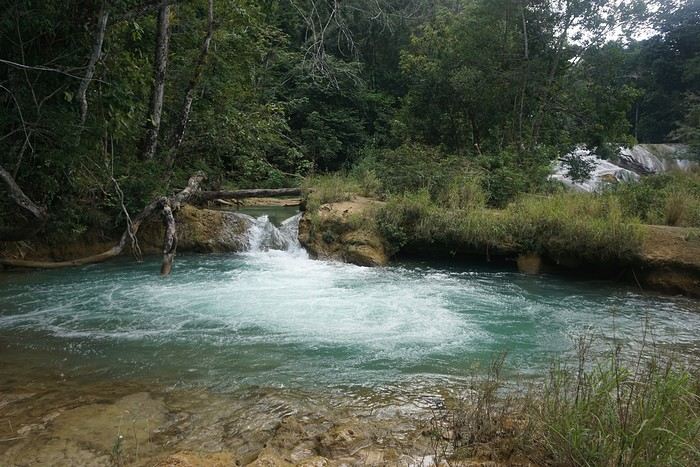
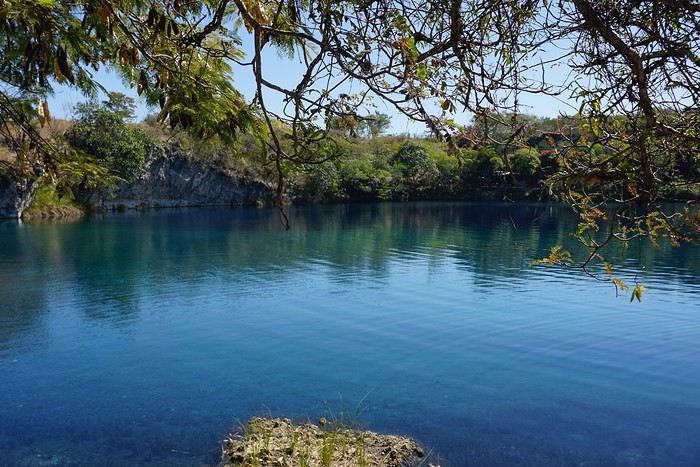
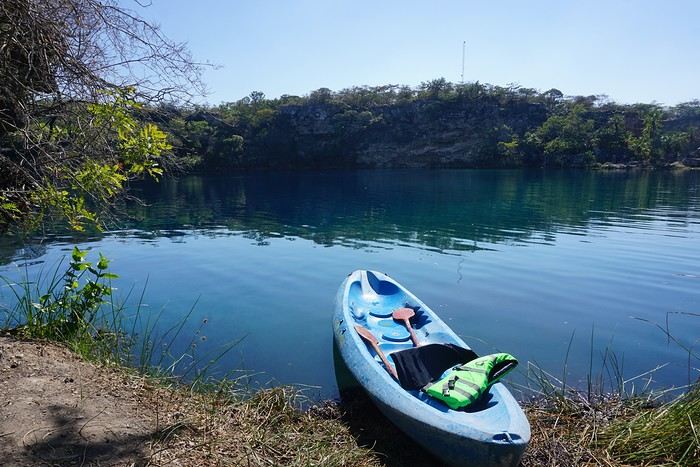
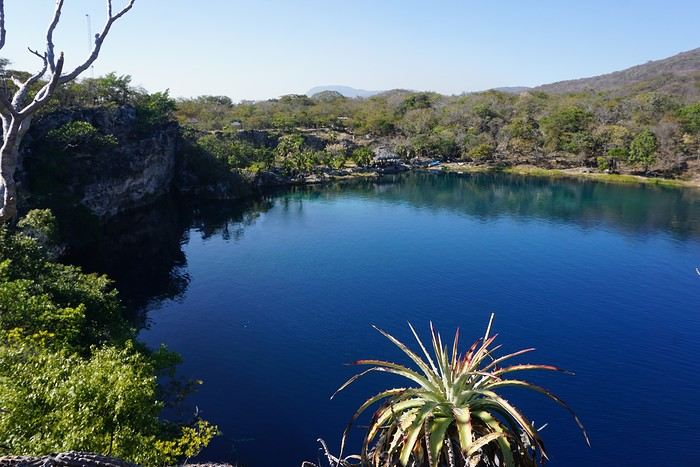
Then we have a picnic (a very light one for me) by the Chucumatiltik cenote. Mar and I take the chance to go for a swim. A cenote is a sinkhole caused by a meteorite impact ‘a few’ years ago, which filled with water. It’s very deep and serves as a ‘playground’ for the local diving school.
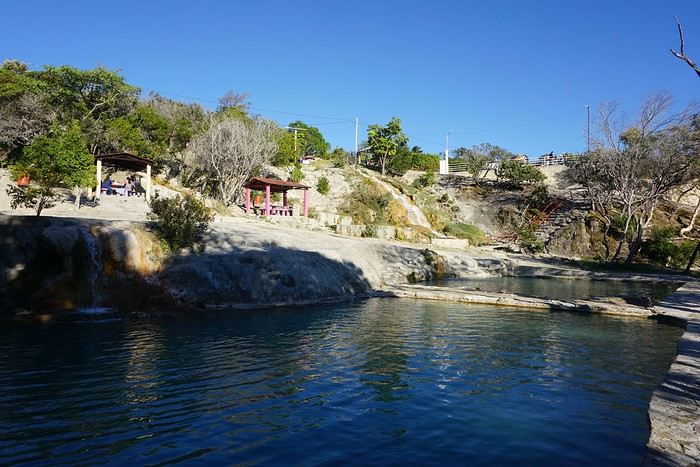
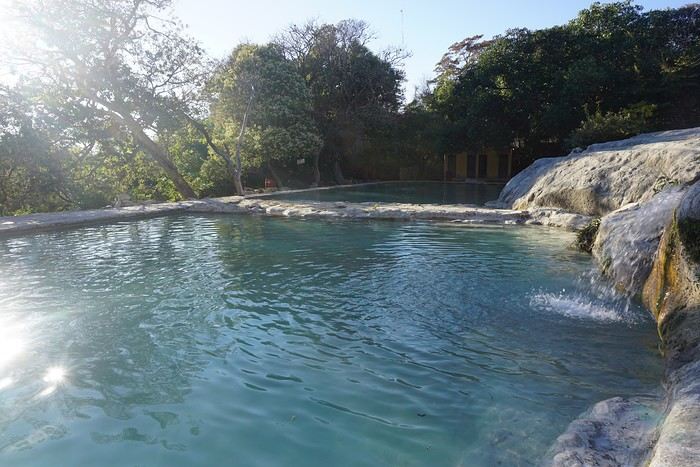
Next up is the surprising Unijab site. It’s a series of more or less natural pools (since the site is developed) where families come to picnic and swim.
Our visits for the day end here, but not the day itself. Because tonight at 8:00 PM, there’s a dance on Comitán’s central square. We’ll grab a bite from one of the street vendors and soak up the local vibe. It was an amazing moment—our presence didn’t go unnoticed since we were apparently the only tourists there.
Comitan – Day 5
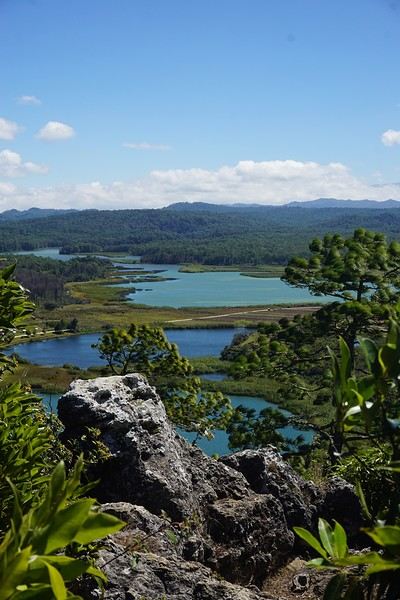
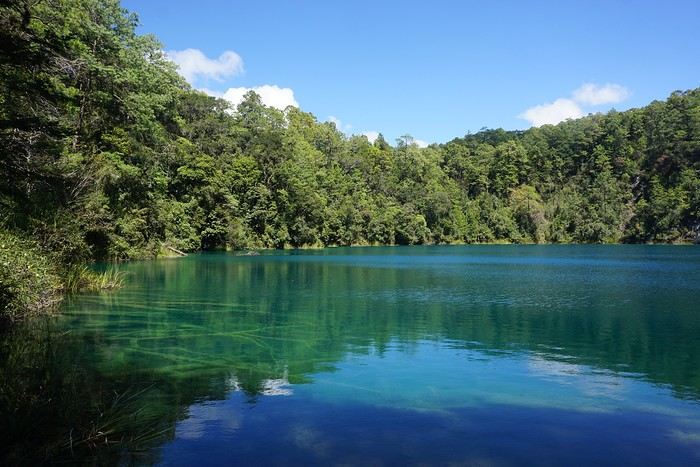
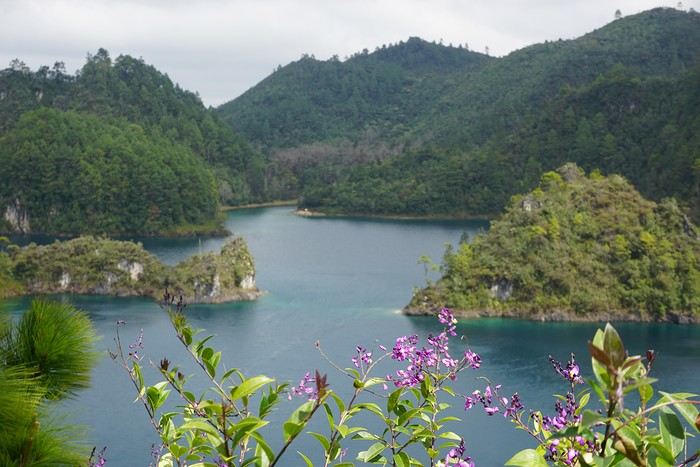
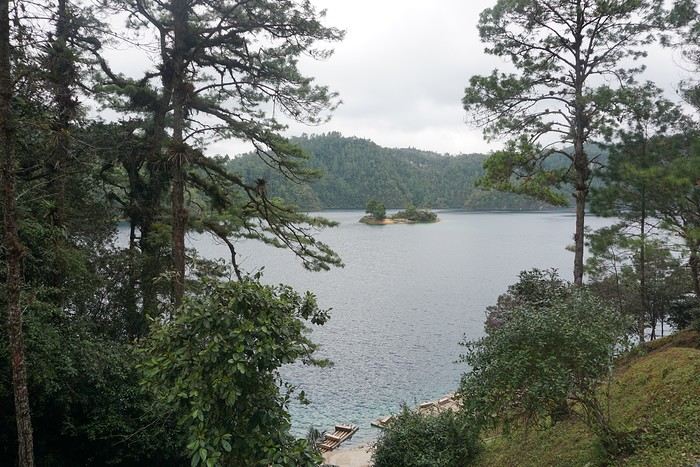
Today, Oscar decided to take us to the lakes park (57 of them!) in Montebello. To start, he showed us one of his favorite spots. To get there, we had to make a short climb at the Las Piñetas site. From the top of this little cliff, we enjoyed a beautiful view of a few lakes and a lagoon.
Then we moved on to other sites. Unfortunately, the weather was a bit unpredictable today. The wind has been blowing hard since this morning, and by midday, the clouds rolled in. No rain, but the air felt chilly.
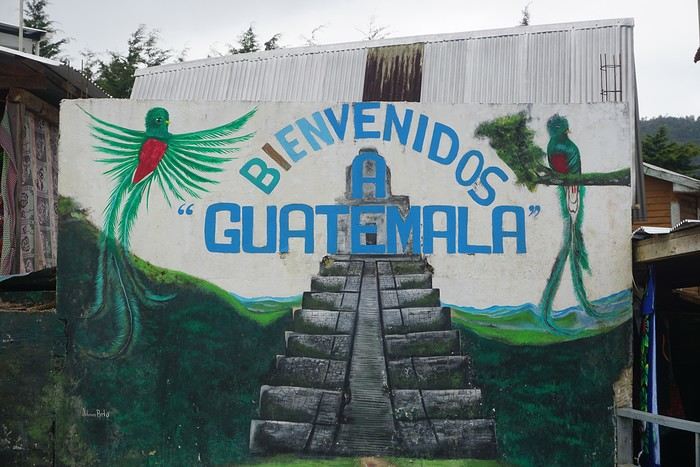
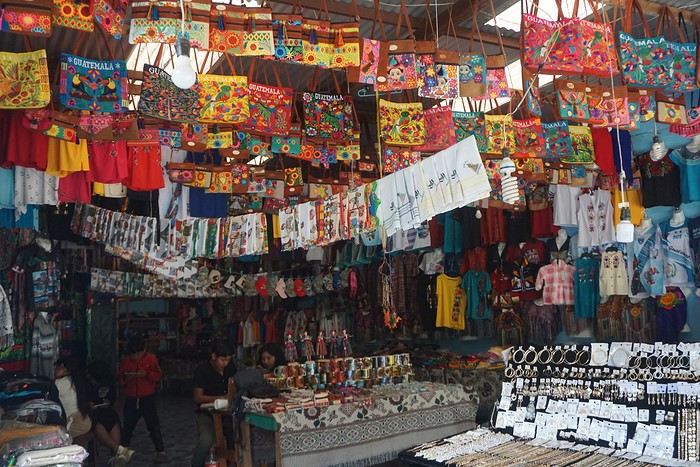
Quick picnic by Lake Tziscao, and since we were just a few meters from the border, we took a few steps into Guatemala: a small artisan market and an international lake.
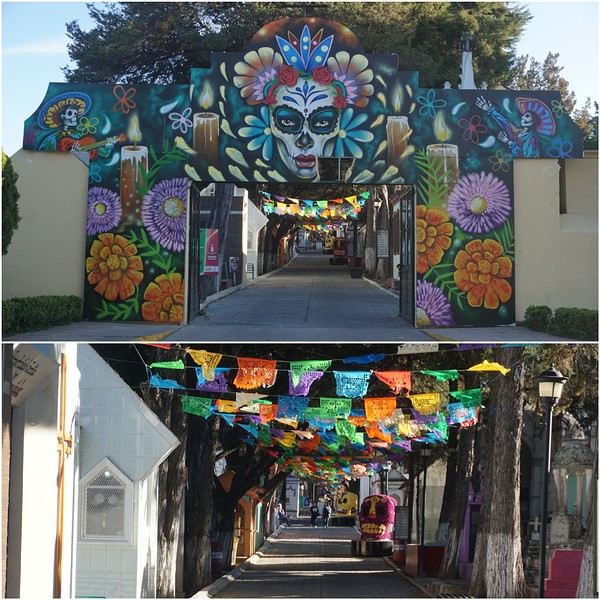
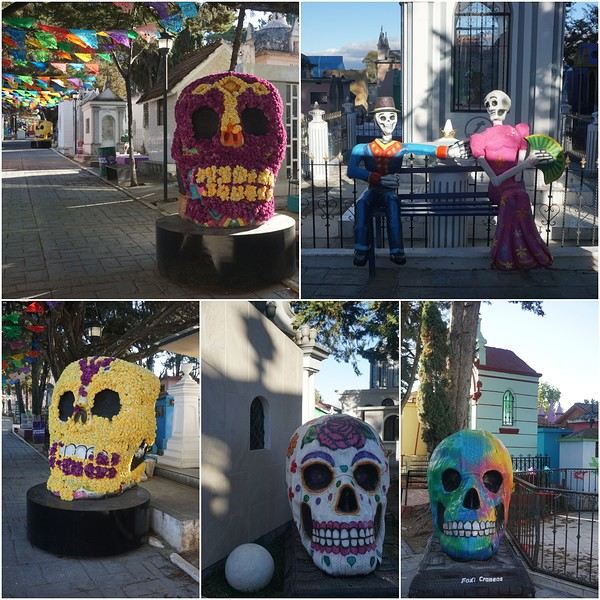
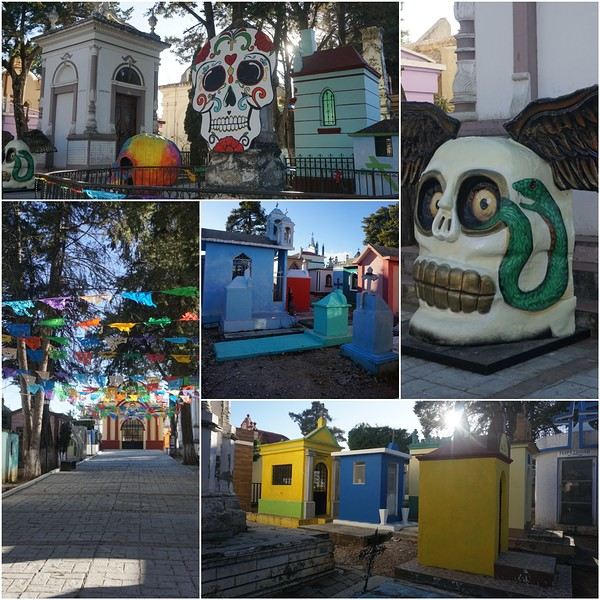
We then headed back to Comitan for a must-see visit in Mexico. We explored the cemetery, where we saw some decorations (permanent?) from the last Day of the Dead celebration.
Comitán – Day 6
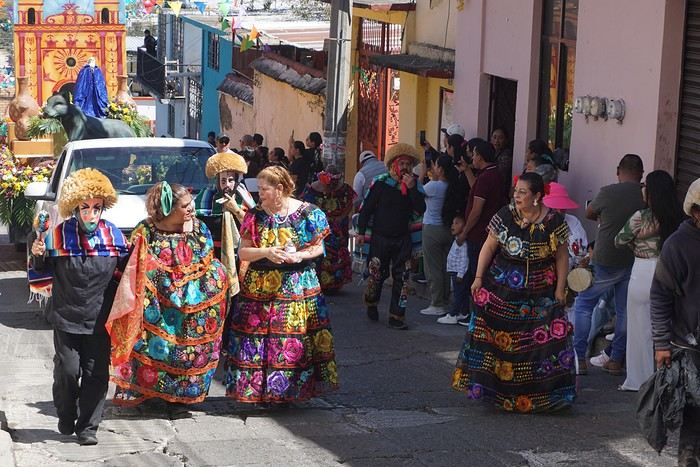
For our last day with him, Oscar had planned to show us the old quarters of his city. But at the last minute, the plan changed. What a lovely surprise for us—and a huge stroke of luck: today is the feast of San Caralampio.
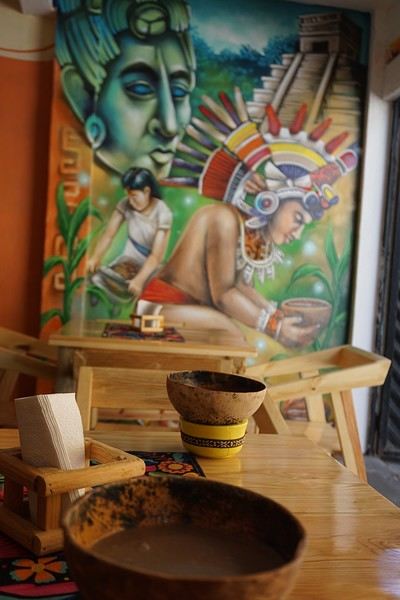
Local drink: pozol de cacao
Old water distribution point, still in use today.
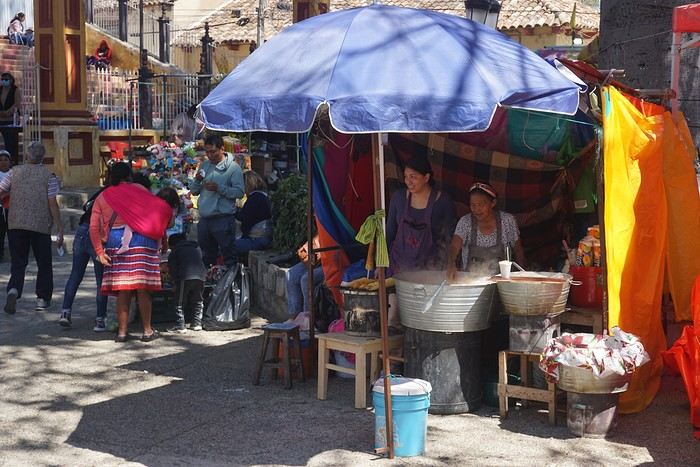
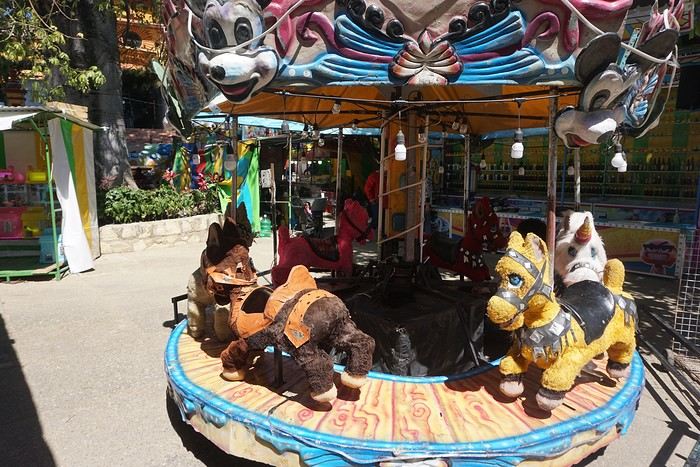
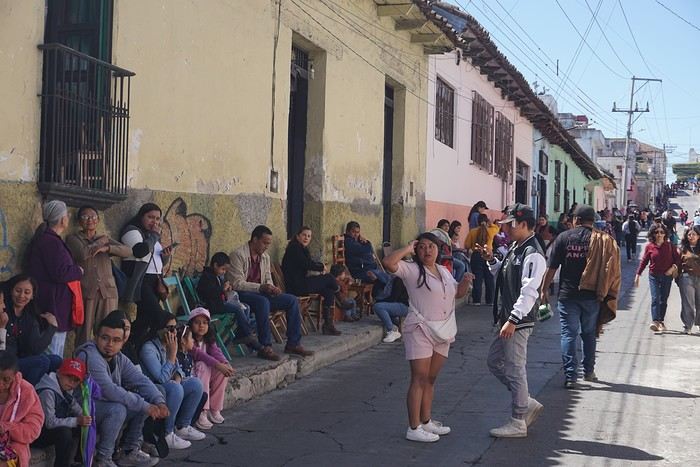
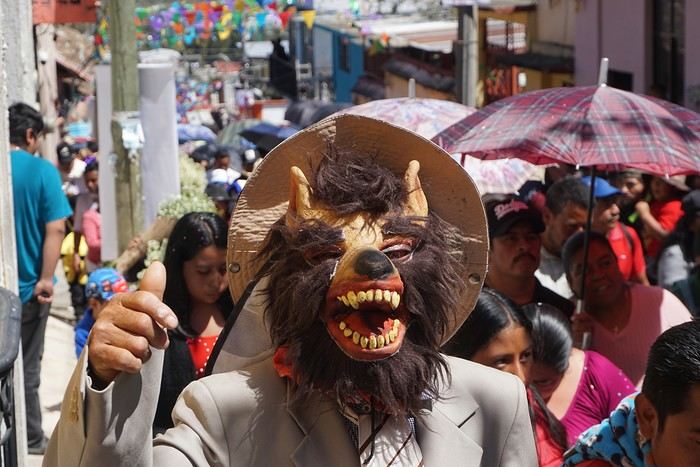
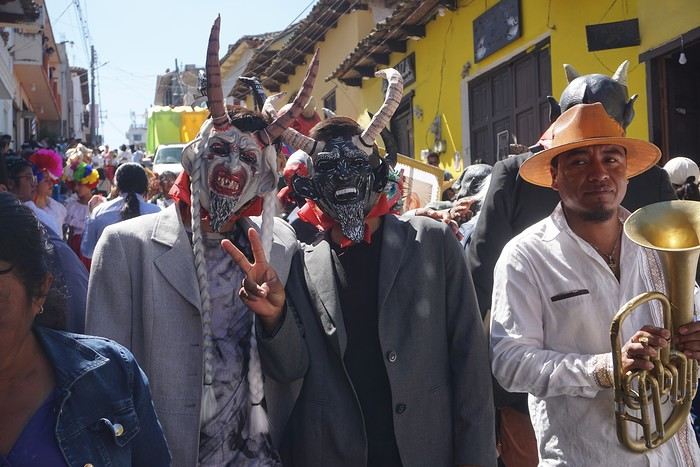
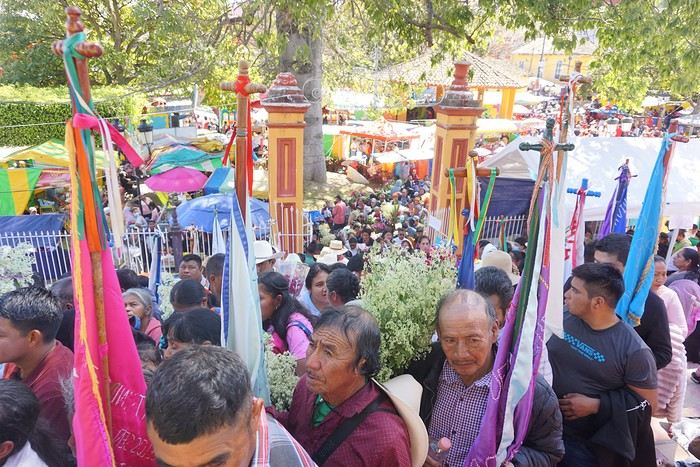
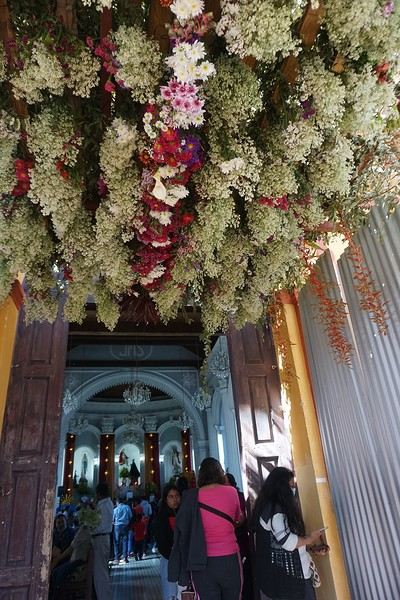
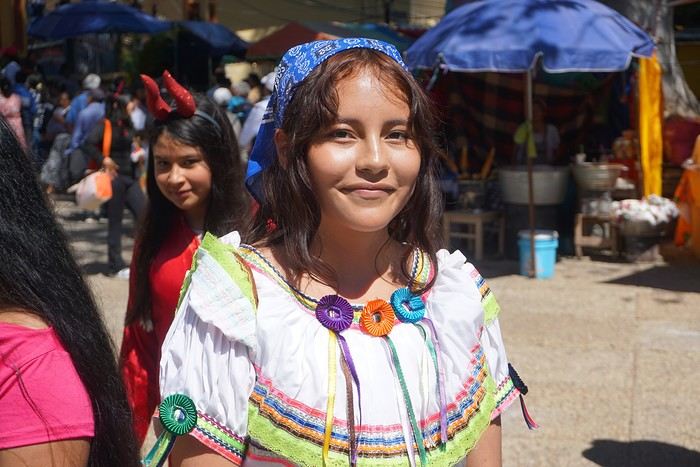
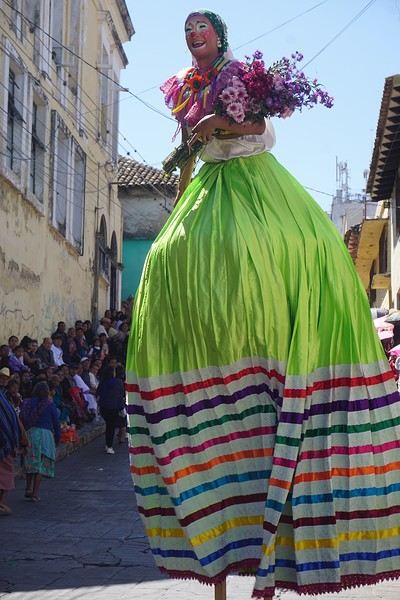
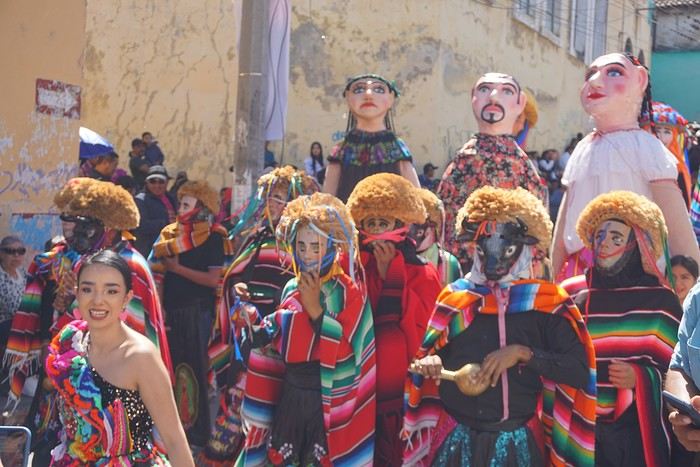
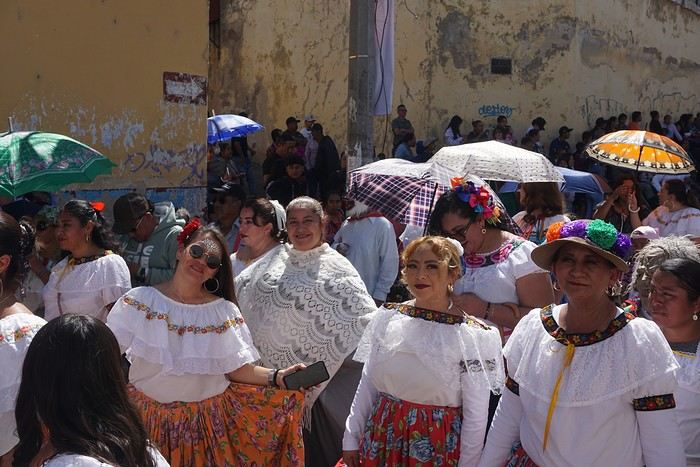
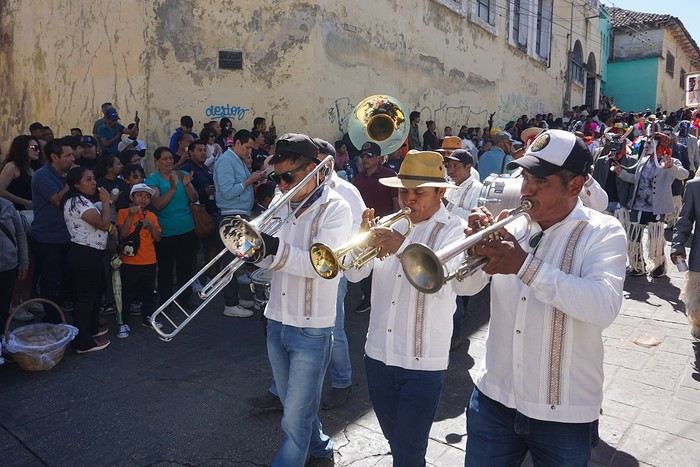
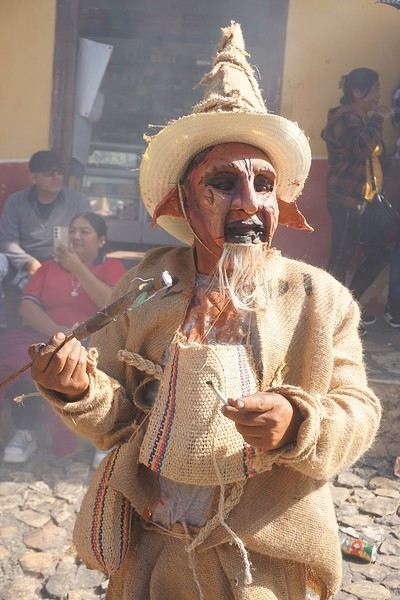
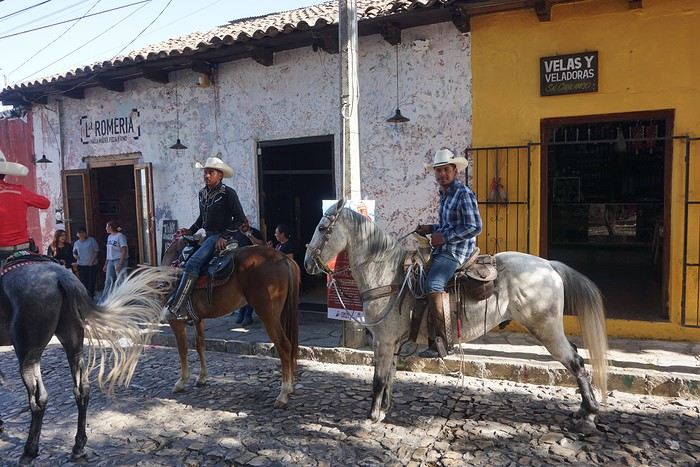
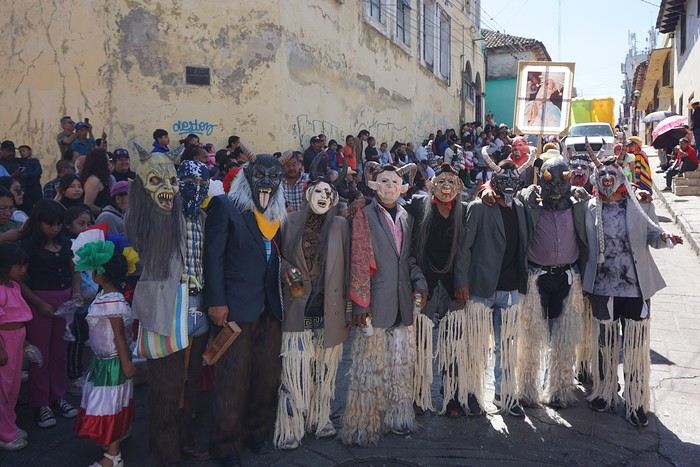
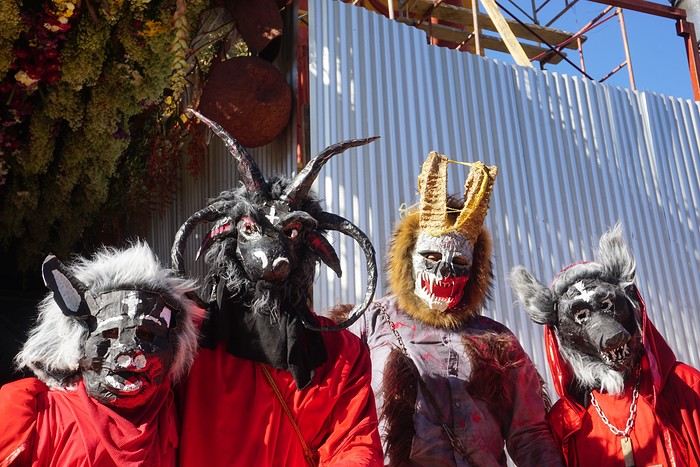
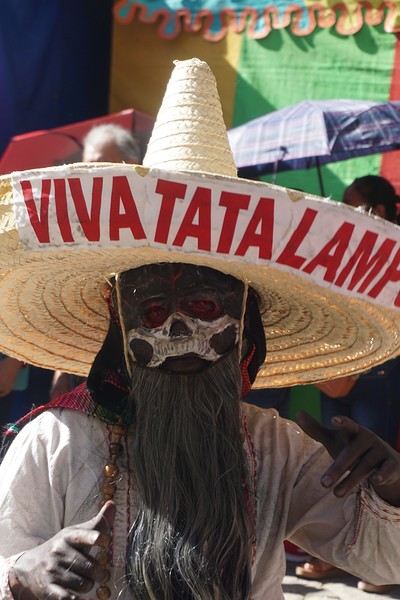
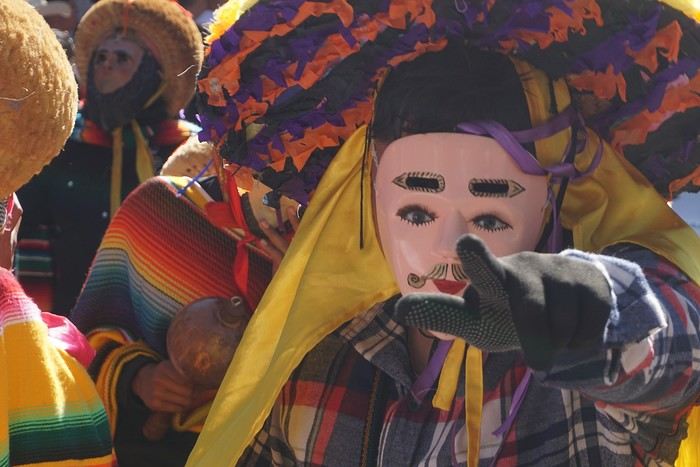
We explore the neighborhood around El Puma Square, dressed up for the celebration: a colorful, musical parade of religious floats, costumed people, and riders. It’s both a religious event and a kind of carnival. The crowd lines the parade route heading toward the flower-covered church of San Caralampio. The fair has set up in El Puma Square at the foot of the church. The atmosphere is incredible. We stayed until it was time to head back to Oscar’s, pack our bags, and make our way to the bus station.
What a wonderful stop! If you decide to travel to Mexico, I can only recommend spending several days in Chiapas, especially in Comitán. We left with regret—Oscar took such good care of us. One thing’s for sure: he made us want to come back to explore, for example, the original plan of discovering the jungle in the Parque de las Nubes.
I’ll remember this part of our trip for a long time, not just for the places we visited but for Oscar’s kindness, his stories, and his contagious laughter. And for his breakfasts too!
Thanks, Oscar!
I loved the feast of San Caralampio so much that I can only suggest checking out the extra photos in my next post.
After about ten hours on the bus (Comitán to San Cristóbal de las Casas—2 hours—then San Cristóbal to Palenque—just over 8 hours), we arrived in the city of Palenque.
Step 7: Palenque (80m / 52,000 inhabitants)
Palenque – Day 1
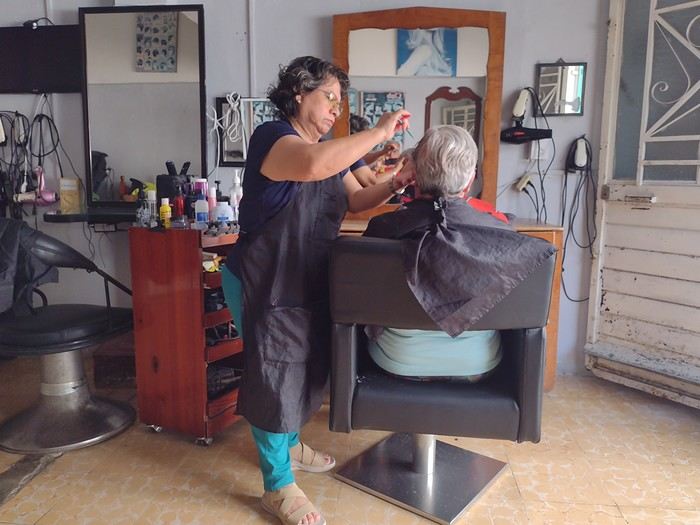
After dropping off our bags and grabbing a light breakfast at the hotel, we head out to explore the city center. We start with a quick stop at a hairdresser near our hotel—now we’re feeling refreshed!
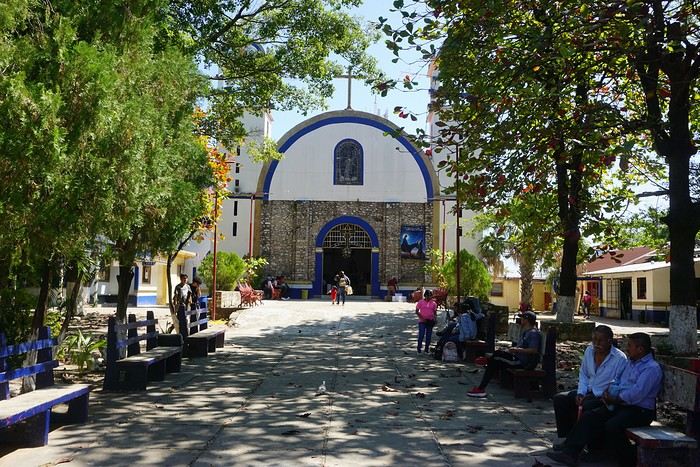
Next, we take a little stroll around the zócalo and visit the church (it’s been a while!).
Then we decide to visit Parque Aluxes. Run by a nonprofit organization, it’s home to animals rescued from illegal trafficking or mistreatment. The association has also worked to create an ecosystem by planting over 10,000 trees. It’s a lovely walk, despite a few sneaky mosquito attacks.
We head back to the city center by colectivo around 3:00 PM and have lunch—a "menú del día" (soup, main dish, dessert—seasonal fruit—and a drink). Then it’s a relaxed return to our hotel to rest up for the amazing day we have planned tomorrow.
Palenque – Day 2
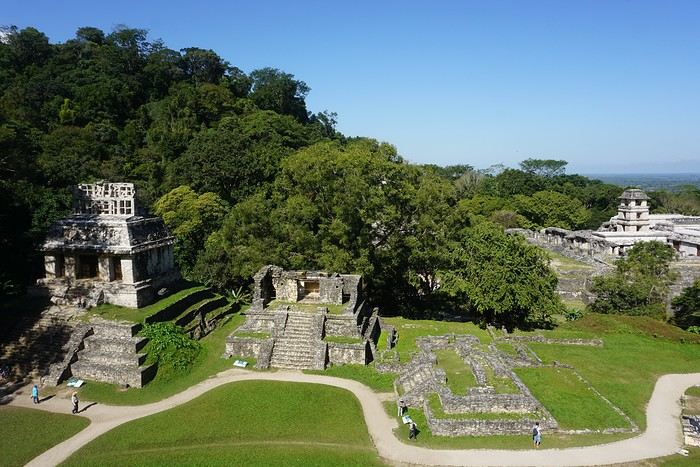
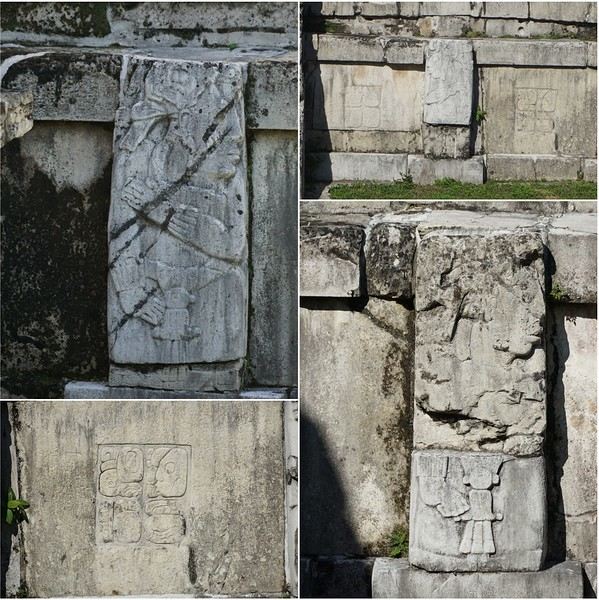
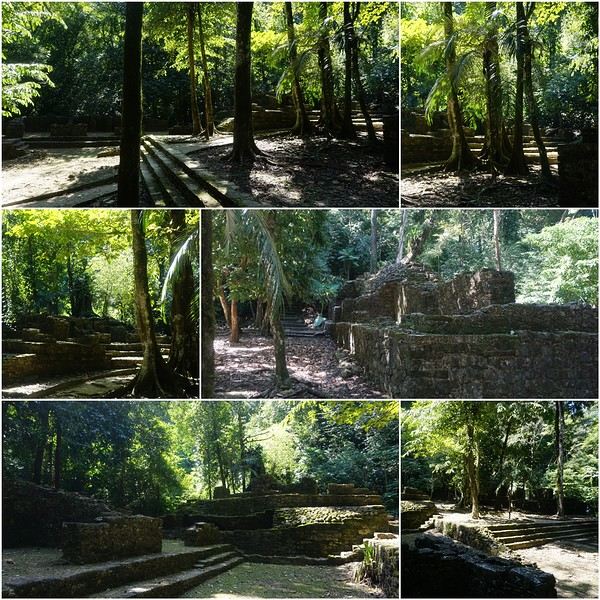
This morning, we set off to explore the stunning Mayan site of Palenque, which spans 1,780 hectares. The excavated archaeological zone represents only a small part of it (10%). It’s estimated that around 1,000 temples are still buried in the jungle. Located in the heart of the lush Chiapas jungle, the ruins of Palenque are said to be one of Mexico’s most impressive and significant archaeological sites. The pre-Hispanic city was founded in the 1st century BCE, but the buildings we can see today date from the 5th to the 8th century. It was one of the most developed cities in the Mayan world, alongside Calakmul and Tikal in Guatemala, with a complex social and religious structure before being mysteriously abandoned.
We take one of the first *colectivos* (with a ‘Ruinas’ sign on the windshield) and arrive around 9:15 AM.
Our walk around the site lasted nearly 3 hours. Impossible to count all the steps we climbed up and down! At the start of the visit, there are a lot of people: visitors and vendors. However, the site is so vast that it’s not too bothersome. And once we passed the central area, many visitors—most of them on organized tours—disappeared.
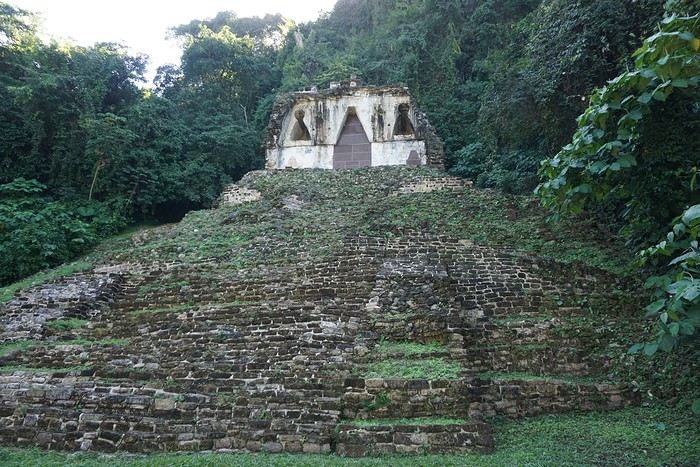
The Temple of the Red Queen (*Reina Roja*): It gets its name from the fact that the queen’s skeleton (wife of Pakal I) was discovered there covered in red cinnabar.
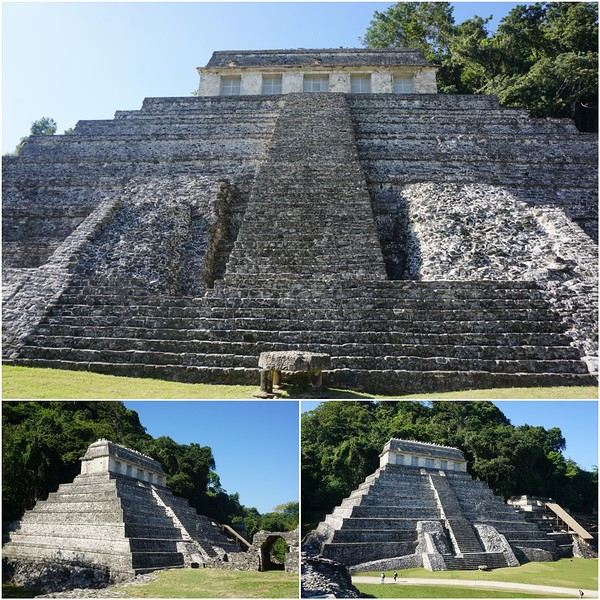
The Temple of the Inscriptions or Temple of Pakal: This is the first pyramid of the Mayan city. It’s named after the 617 glyphs covering its walls and pillars, depicting scenes with human and animal figures that tell the story of Palenque’s Mayan civilization. The treasure found in the crypt is now in the Museum of Anthropology in Mexico City.
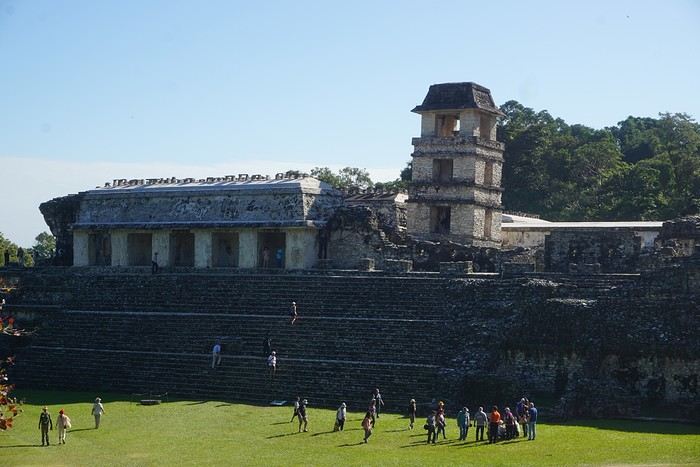
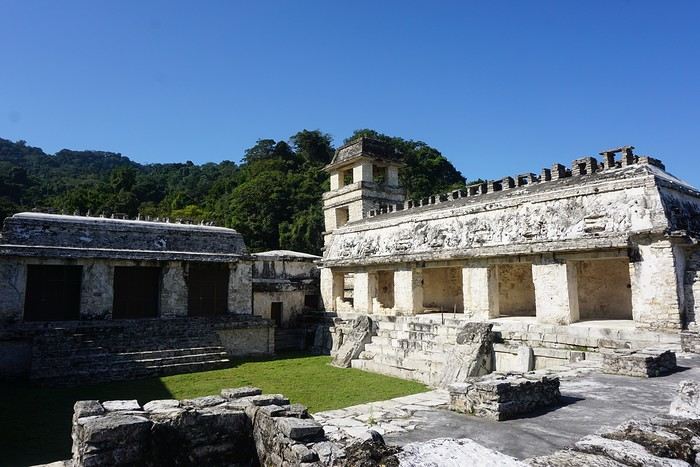
The Palace: This is the most impressive structure on the site. It stands on a trapezoidal base measuring 80 by 70 meters, with many parts decorated with sculptures. The four-story, 15-meter-high tower (*el Observatorio*) was built for observing the sun and stars. It served as both the residence of the ruling class and the center of power, where the king and his priests performed religious rituals.
The Temple of the Sun: Built in the late 7th century on a high four-tiered pyramidal base.
At the end of the visit, we wanted to see the museum. No luck (for once!), as it was closed for maintenance work.
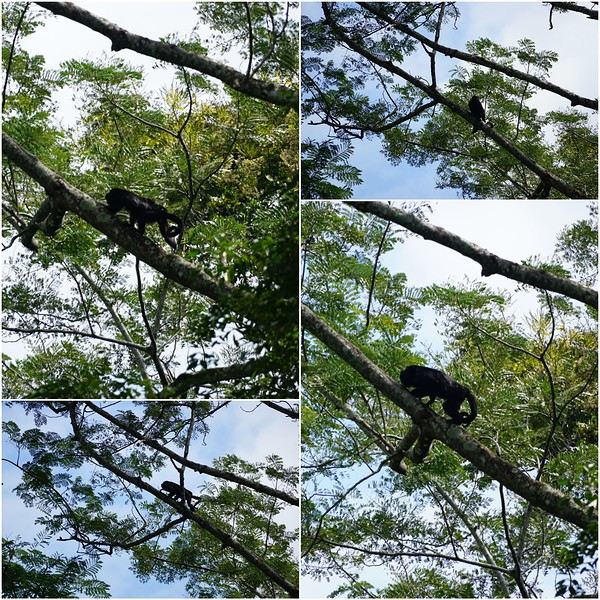
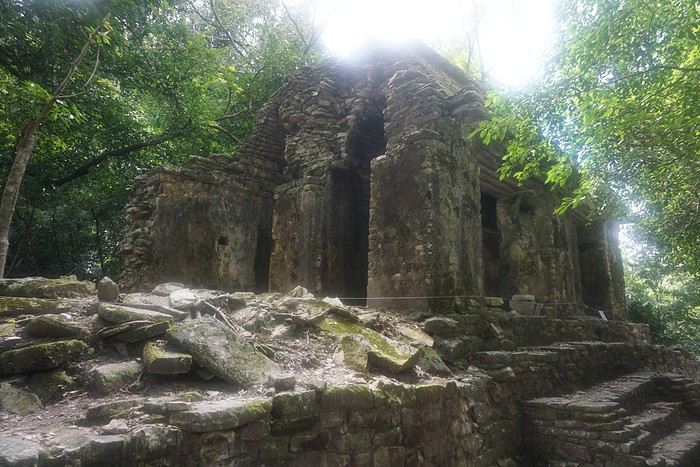
We continued with a lovely walk through the jungle to discover the forgotten temple, taking the *sendero Motiepa*. Along the way, we were lucky enough to see a whole group of howler monkeys. The magical moment of the day: a picnic, just the two of us, on the steps of this temple.
Back in Palenque, we scout out the *colectivos* for tomorrow morning and check their departure times.
Palenque – Day 3
For our last full day in Palenque, we skipped the Agua Azul and Misol-Ha waterfalls. Instead, we opted for Roberto Barrios, which is known to be less touristy. We made this decision in Comitán after talking to Oscar about it.
We hopped on a colectivo at 9:00 AM (they leave every hour starting at 7:00 AM) to reach the small village of Roberto Barrios. There were two couples of tourists, and the other passengers were locals, most of them heading to the market in Palenque. So, we had a few bags and sacks of vegetables at our feet.
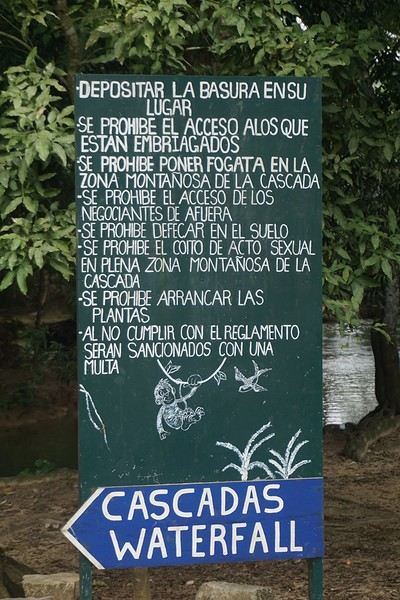
After about thirty kilometers—covered mostly at high speed—we were dropped off in the village, right in front of the site’s ticket office. A few hundred meters later, we were already by the river, with a sign reminding us not to make fires, defecate, or... make love on the site...
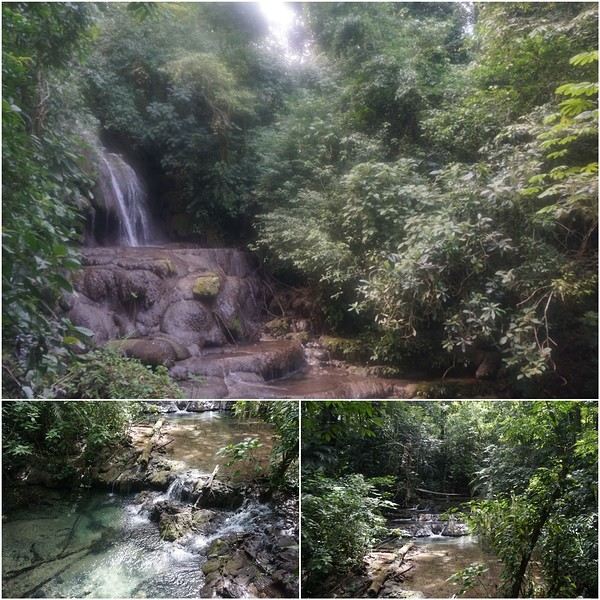
Oscar had assured us the place would be quiet. Well, we practically had it all to ourselves! What a joy to swim and picnic in such a stunning setting! Thanks to Oscar for his great tip!
What a beautiful day! I could use more like this! Tomorrow is our last day in Palenque before taking an overnight bus back to Mexico City.
Palenque – Day 4
We decided to rest before starting our long bus journey.
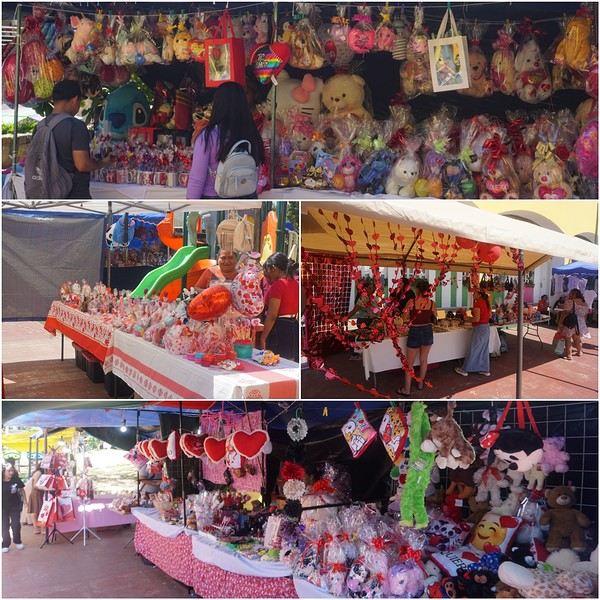
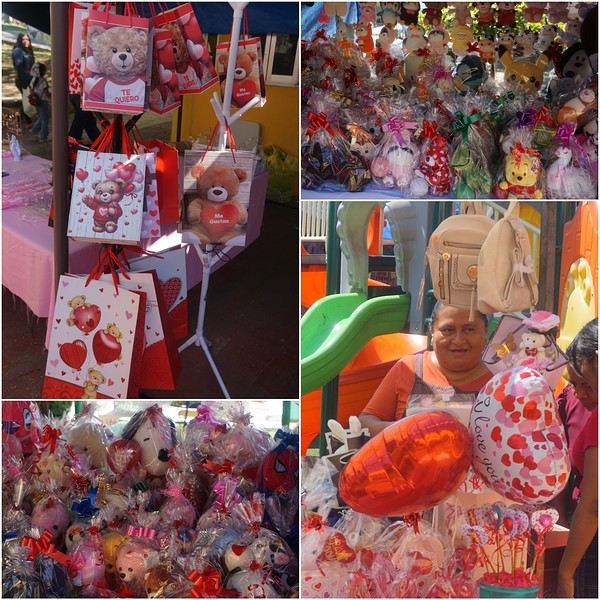
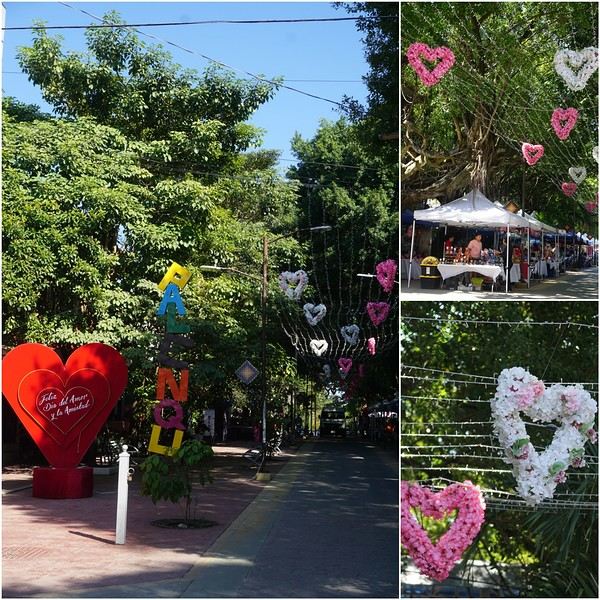
Valentine’s Day in Mexico is the celebration of love and friendship. Remember the photos from Comitan’s square? Here in Palenque, the streets and squares are decorated. There’s even a Valentine’s Day market. We also watch the preparations for a concert in the central square. Shops are covered in hearts. People buy bouquets of flowers, stuffed animals, jewelry, candies, heart-shaped balloons, etc., either from the dedicated market, shops, or street vendors. Some are wearing clothes (jeans, dresses, etc.) with heart patterns. Many young people walk hand in hand with a bouquet of flowers.
To be honest, we still found this last day a bit long. We sat on a bench near the Santo Domingo de Guzmán church and watched time and people go by, as groups for catechism (for children and adults) set up under the trees.
This day was one too many in our itinerary. We could’ve stayed an extra day at one of our previous stops.
Tonight, our bus leaves at 7:30 PM. During the trip, we were checked twice by state police. The second time was much longer because the officer took our passports, photographed them, and showed them to his supervisor, whom he had asked to board the bus. In the end, nothing to report, and we were on our way again about ten minutes later. During the second and final stop in the middle of the night at a bus station, we got off to stretch our legs. A man came over to chat with us. Happy to meet some French people, he told us about his trip to France and showed us photos of the Eiffel Tower. He wanted to give us a Mexico City metro card (but we already had one) and his daughter’s address so she could guide us around the city. We explained that we were at the end of our trip and that our plans for the last two days were already set.
We arrived at Mexico City’s bus station at 9:15 AM after a 13-hour, 45-minute journey. Fortunately, the bus was almost empty, so we were able to settle in comfortably and get some sleep.
We hop into a taxi and head to our hotel to drop off our luggage and negotiate access to the restaurant for breakfast.
Step 8: Mexico and the End of the Trip
Mexico - Penultimate Day
The square in front of the hotel and the surrounding streets are covered by the huge San Lucas market. You can really find everything there. And then, street by street, we end up, by chance, in front of the Museum of Mexico City. You’re starting to know us... ‘Hmm, we didn’t do that one in January!’ We get closer and—surprise—we see musicians getting ready. Free entry. A concert in honor of Adolfo Lopez Villanueva (a former leader and social activist in Mexico who passed away in 2021).
We settle on some steps inside the first courtyard and wait a few minutes. The musicians take their places. And at noon, the concert starts after a few speeches by officials. The conductor is very dynamic and shares his enthusiasm with the audience. At one point, he even turns toward them and gets them to sing along. The concert ends around 1:30 PM.
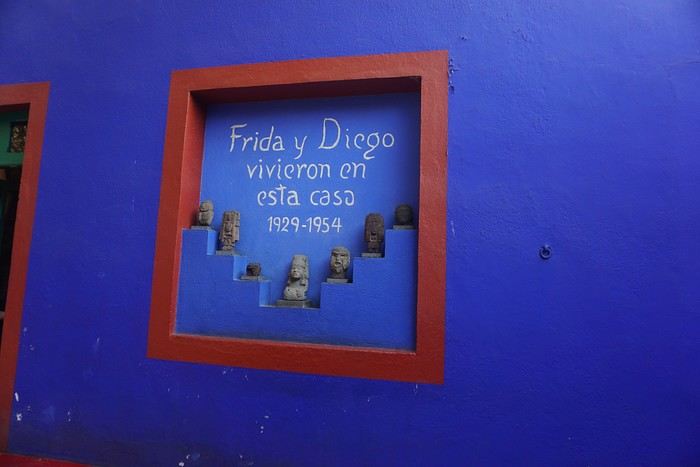
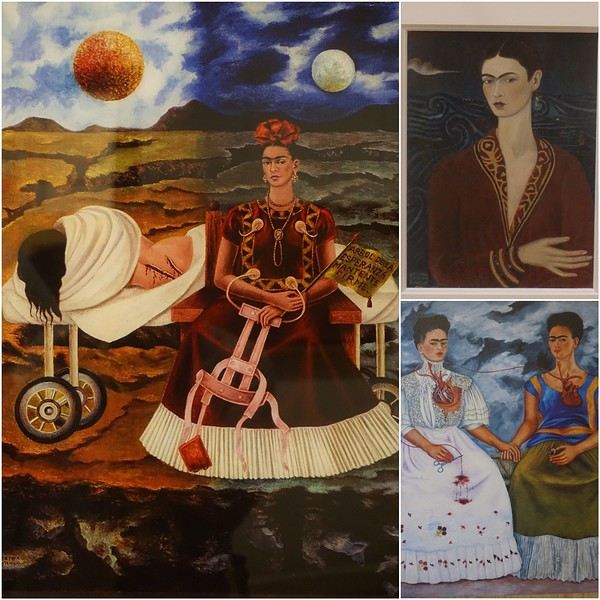
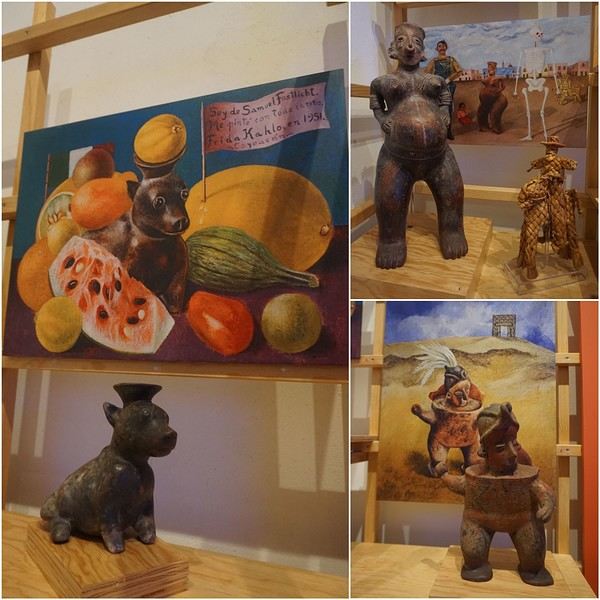
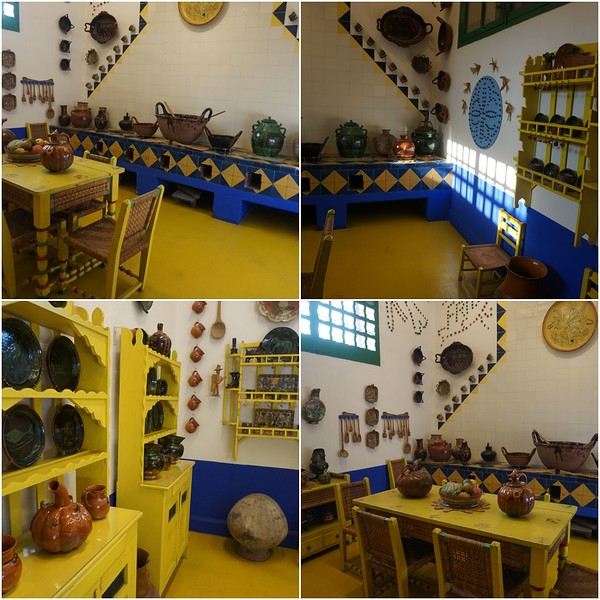
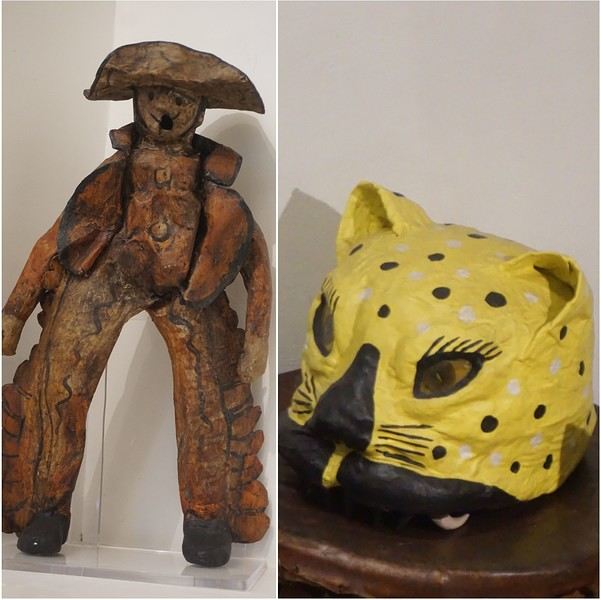
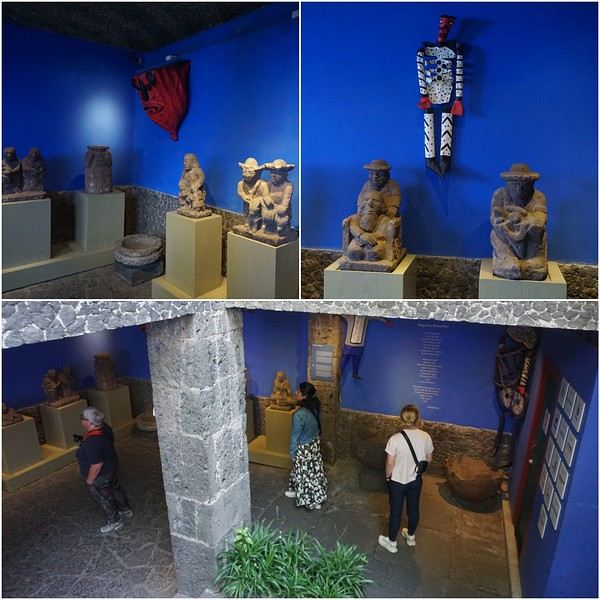
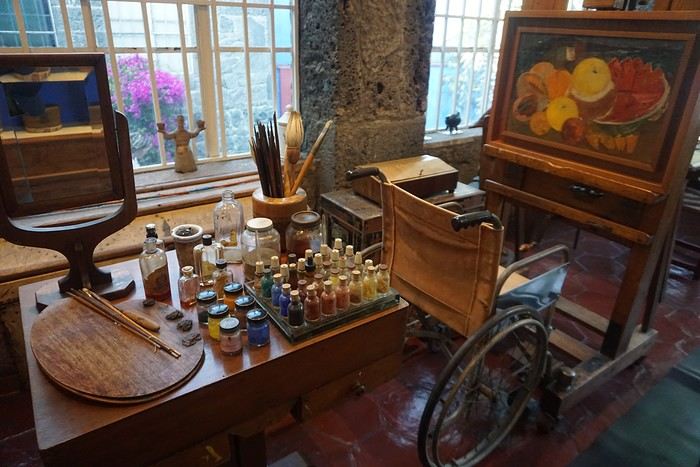
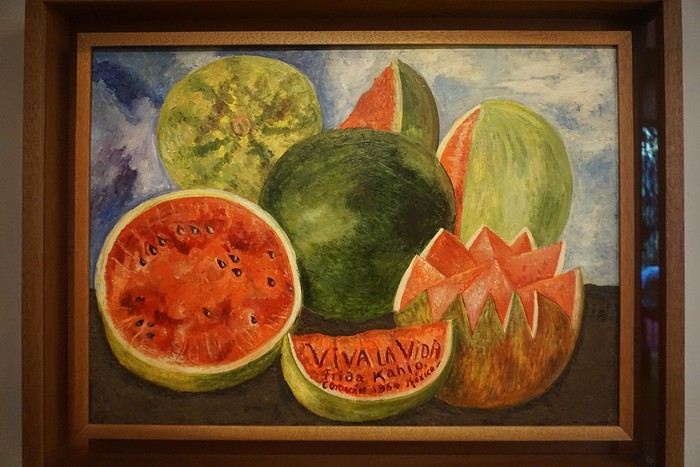
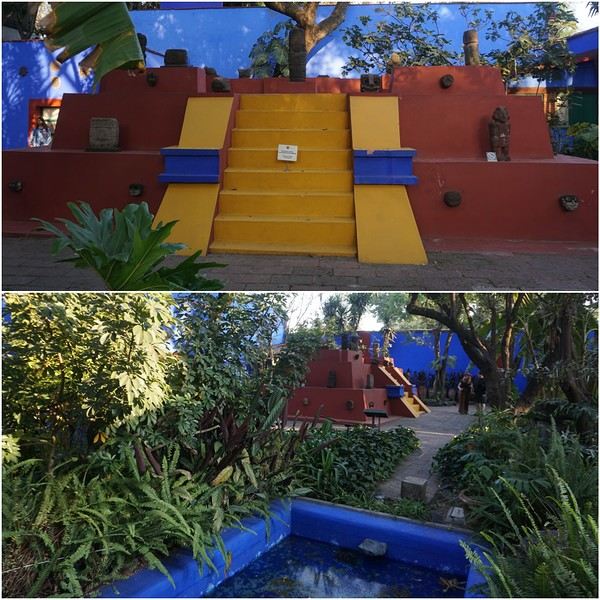
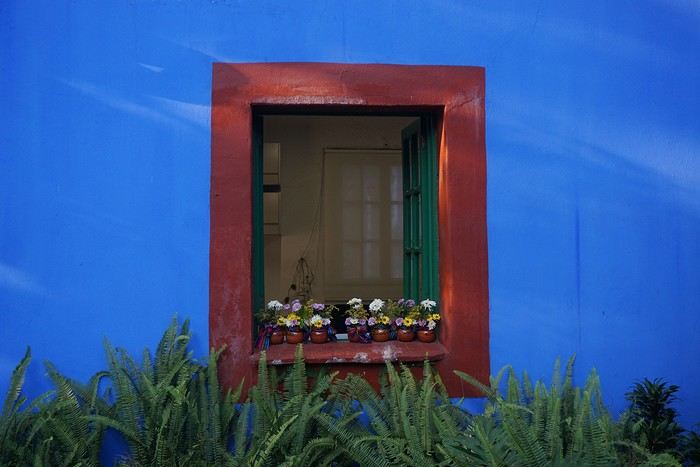
We head back to our hotel, pick up our room, and rest a bit. Because our sightseeing day isn’t over yet. I’ve actually booked tickets to Casa Azul, Frida Kahlo’s house-museum. It’s a really interesting visit that lets you discover the personal world of this feminist icon. It’s a must-see for art and history lovers, offering a fascinating glimpse into the life and work of this iconic Mexican artist, whose influence still endures today.
Mexico - Final Day
This morning, we have a meet-up at 9:00 AM in our hotel lobby for a guided tour of Coyoacan and Xochimilco. We’re happy to reunite with Orian, our guide from Teotihuacan.
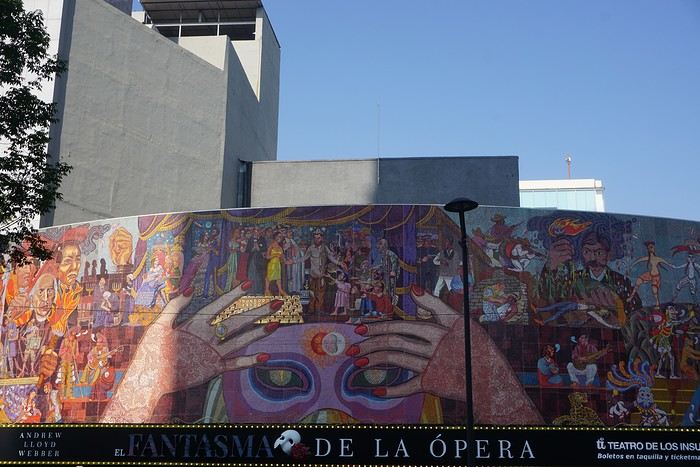
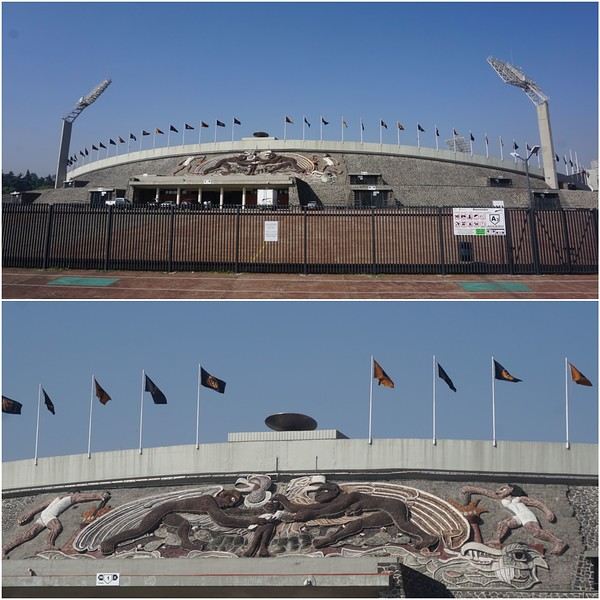
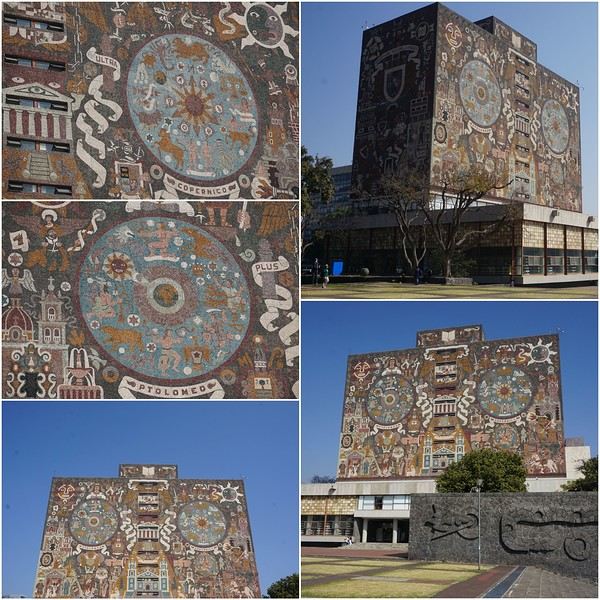
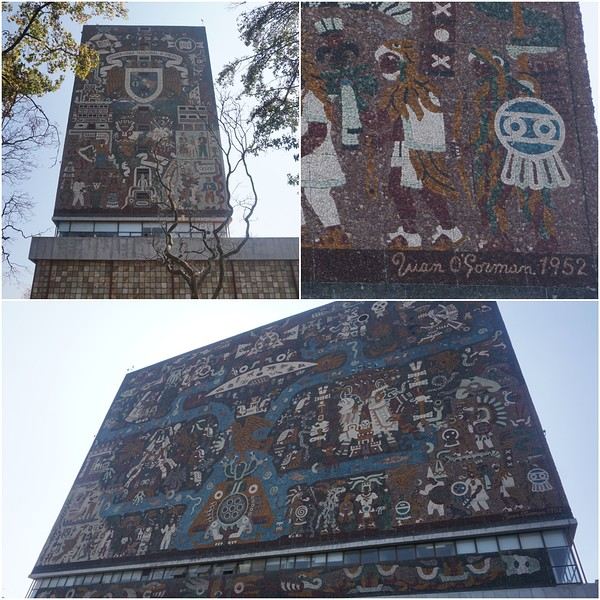
We start the tour with a stop in front of a stunning mosaic mural created by Diego Rivera, Frida Kahlo’s husband. Next, we head to the Olympic Stadium, whose main entrance is adorned with a massive natural stone mural depicting Mexico’s cosmovision. Then, we visit the campus of the National Autonomous University of Mexico. The library is the must-see masterpiece. The mosaics covering its four sides were made with colored stones brought from all over the country. Orian explains each scene, and the entire history of the country unfolds before our amazed eyes. Its architect, Juan O’Gorman, took three years (1953–1956) to complete this project.
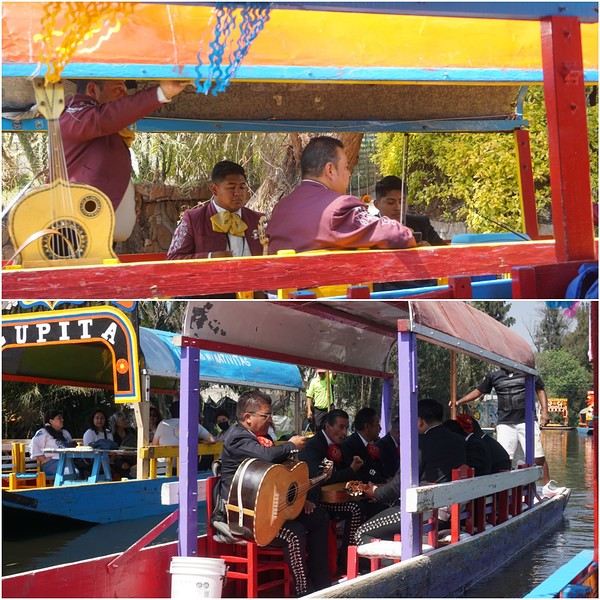
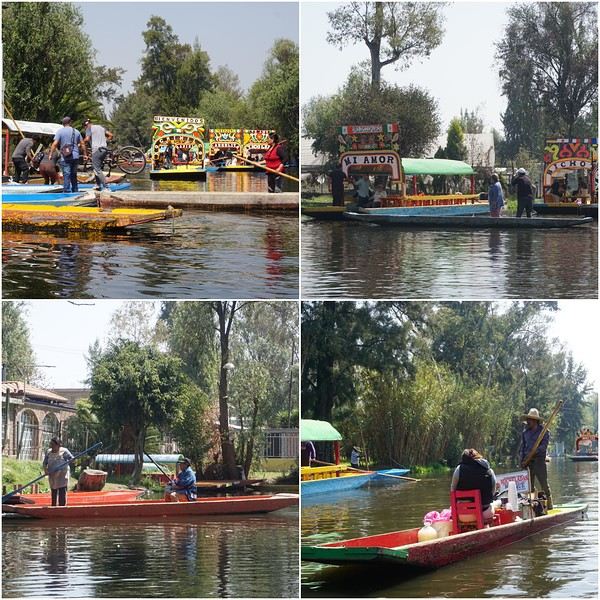
After this visit, we head to Xochimilco and its floating gardens. A brightly colored boat (trajinera) is waiting for us, and off we go on the main canal to the sound of mariachis. They offer to play a few songs for all the tourists—for a fee (we don’t give in). The atmosphere is festive, folkloric… and commercial! We have lunch on the water, and about an hour later, we’re back at our little dock. I would’ve loved to wander through the greenhouses of the florists and market gardeners and step off the super touristy route we were offered. Still, it was interesting to see and fun to watch all those mariachi boats offering their services to every vessel on the canal. What a business!
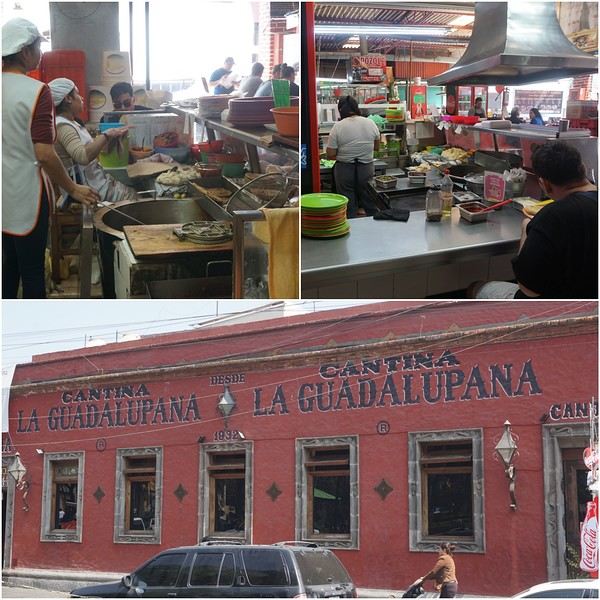
From there, we head to the historic neighborhood of Coyoacan: old streets, the first church built in Mexico by the Spanish (San Juan Bautista), Cortés’ house (now Coyoacan’s town hall), and an artisan market. We end our walk in front of Frida Kahlo’s Casa Azul (closed because it’s Monday—we visited it yesterday for that very reason!).
We return to our hotel in the mid-afternoon. Justine wants to rest, while I head out for one last stroll through Mexico’s streets and avenues, all the way to the Plaza de la Constitución. Beside the cathedral, I watch with curiosity and amusement as shamans purify people with prayers and smoke—those seeking their powers. I take a few last photos and head back to the hotel.
And just like that, our wonderful trip to Mexico comes to an end.
I hope you enjoyed this travel journal. Our adventure will stay with us, as you’ve gathered, thanks to our hot-air balloon ride at sunrise over the pyramids of Teotihuacan. And, of course, our meeting with Oscar, who shared his love for Chiapas with us. Thank you, and see you soon on social media! If you’d like to get in touch with him, feel free to leave me a message—I’ll pass along his contact info.
Lastly, thanks in advance for your reactions, feedback, and any questions you might have.
See you this fall for new travel journals about my next adventure in Central Asia: Kyrgyzstan with my daughter (our first father-daughter trip!), then solo in Uzbekistan, where I’ll have the great pleasure of reuniting with Nasrullo (see my 2022 travel journal on Uzbekistan).
Thanks for this amazing travel journal! I love Mexico—it’s one of the most culturally rich Latin American countries, and I think it’s my favorite.
I spent two months there in 2014, from Mexico City to the Yucatán, mostly the same stops as you + Taxco (a really pretty colonial town).
Reading your first posts, I thought you might’ve skipped the Frida Kahlo Museum, which is definitely a must-see if you’re into art.
At the Palacio Nacional, I also saw Diego Rivera’s stunning murals.
I *love* Mexico City—so many tourists don’t stop there, but it’s such a culturally rich city and deserves a few days. I saw exhibitions there on par with European standards, and there’s always something happening in the Zócalo.
The National Museum of Anthropology is considered one of the best museums in the world.
You often stumble upon festivals—I even came across a funeral once, which was pretty surprising because the music was upbeat, and at first, I didn’t realize it was a funeral. I was told that for a child’s funeral, the music is even more joyful.
I also love Mexican cuisine—it’s so varied and different depending on the region, far from the clichés we have in Europe. It’s even on the UNESCO heritage list.
I’ve been thinking about going back for a while now—the country is huge, there’s so much to discover, and I hope to visit someday for Día de los Muertos. It’s supposed to be an incredible experience.
" Celui qui voyage sans rencontrer l'autre ne voyage pas , il se déplace "
( Alexandra David-Néel )
" Ahora todos quieren ser latinos , no , ey , pero les falta sazon , bateria y reggaeton " ( Bad Bunny )
Thanks Marie.
I totally agree—there’s so much to see and do in Mexico City!
We loved Chiapas, and maybe we’ll go back someday... we’ve even been to Colombia twice!
Other Central and South American countries are tempting too. Can’t go everywhere at a leisurely pace—life’s too short!
I don’t know if you’ve been as far as Comitán in Chiapas, but that area is *really* worth the detour!
Happy travels!
Thanks again, Philippe, for this rich and colorful account.
You can really feel all the joy you experienced along the way and through these encounters—it’s so inspiring!
Such a beautiful destination, one I hope to move to the top of my list before too long...[;)]
And yes, there’s so much to see in Central and Latin America...
I’ve also been to Colombia twice and loved it, and in a completely different style, I’m heading back to Brazil in 2027 if all goes well!
Thanks Babou.
A few years ago, we visited part of Nicaragua and loved—even savored—our stops, especially in El Castillo and Ometepe. All we have from that trip are amazing memories!
Brazil! I’ve already looked into this destination, but it’s so vast and there are so many different beautiful things to see that it’s hard to focus and stay reasonable! Maybe one day!
Good luck with your 2027 prep! !
Other Central and South American countries are tempting me too.
I don’t know if you’ve been to Chiapas as far as Comitán, but that area is really worth the detour!
Yes, I’ve been to Chiapas.
In Central America, the country richest in culture is Guatemala. If you love festivals, there are some beautiful ones there with almost no tourists. In Mexico, in front of the Anthropology Museum, I saw "voladores" for the first time. In Guatemala last year, I attended the Joyabaj fair where the "voladores" performed every day. I spent a week there, and it remains one of the highlights of my trip.
Brazil is another fascinating and culturally rich country. I visited different regions and felt like I was traveling through several countries.
Apart from Venezuela, Honduras, the Dominican Republic, and Ecuador, I’ve been to all the other Latin American countries, spending two months in each. My favorites are Brazil and Mexico, but you’d need a lifetime to discover all their riches (culture, nature, music, traditions, cuisine).
" Celui qui voyage sans rencontrer l'autre ne voyage pas , il se déplace "
( Alexandra David-Néel )
" Ahora todos quieren ser latinos , no , ey , pero les falta sazon , bateria y reggaeton " ( Bad Bunny )
Hi Philippe,
I’m discovering this travel journal after it’s already finished .
Thanks for sharing this varied and colorful trip. All I know from your journey is Palenque… but the rest really makes me want to go
Si tu diffères de moi, mon frère, loin de me léser, tu m'enrichis (Saint Exupéry)
Thanks, Muriel.
We really loved all these stops in Chiapas, especially since we were lucky enough to attend all those evening festivals and dances (in San Cristobal and Comitan).
Visiting these small Mayan sites without anyone else around—what a joy!
And what can we say about meeting Oscar, who shared his love for his state and city so passionately!
Finally, I’ve been wanting to visit Guatemala for many years now. 2027, 2028, ...?
If you have any questions, don’t hesitate!
How lucky to have visited all those countries!
In 2023, we had to cancel a trip to Paraguay/Argentina and the Iguazu Falls. And ever since, I’ve been wondering if Paraguay is even worth visiting.
Otherwise, Guatemala has been calling my name for ages...
But it won’t be this year, or likely next year either.
And ever since, I’ve still been wondering if it’s worth visiting Paraguay.
I’ve been really tempted by Guatemala for a long time...
I made a little trip to Uruguay from Argentina, but I never went to Paraguay. Recently, someone on this forum told me it wasn’t great...
Iguazu Falls is one of the wonders of Latin America. I went there during my stay in Argentina—a country with so much to see that even in two months, I didn’t see it all.
I visited Guatemala last summer. The Tikal site is my favorite Mayan site, along with Palenque.
Thanks! I’m really happy I chose and put together this itinerary where we alternated between cultural moments, nature, and relaxation. Meeting Oscar in Comitán was absolutely great! 😊
Thanks! I’ll now start digging deeper into the trip to Kyrgyzstan with my daughter, even though we already have a pretty solid idea of our ‘route’ and have almost all our bookings done. The highlights will definitely be a 4-day horseback trek and the World Nomad Games week. I’m also preparing for my return to Uzbekistan, following on from Kyrgyzstan, where I’ll be heading solo for 2 weeks. Since my wife and I have already visited the stunning Silk Road cities (see my travel journal *A Turquoise Dream*), this time it’ll be a trip to meet loads of artisans and explore old villages off the beaten track and away from the main Silk Road stops. I’ll still stop for a few days in Bukhara and Samarkand, though. More great travel journals to come! And for 2027... I’m starting to think about what I could suggest to my wife...
And yeah, it’s truly amazing to be able to travel.
If you’ve got any questions, don’t hesitate!
Thanks so much for this travel journal. I really enjoyed this walk, the photos, and the vibe.
Bluequark
Carnets :
Namibie, Laos-Perhentias-BKK, Ouest US, Lanzarote, New-York, Berlin, Cuba, Bardenas Reales, AFS -Lesotho-Swaziland, Japon et le dernier né Colombie: https://voyageforum.com/discussion/ete-2017-trois-semaines-en-colmobie-en-famille-d10108246/
Hi Pascale, and thanks.
Actually, the hot-air balloon flight over Teotihuacan was an amazing memory.
And our stay in Comitan was really great, especially since we were lucky enough to be there for the San Caralampio festival.
Have a nice Sunday.
Hi, this brings back memories.
I spent 2 years working in San Cristóbal. If I asked you what kind of job, I don’t think you’d guess. Well, it was oil exploration for Pemex, back in 1990–91.
So my work zone was in the triangle between San Cristóbal, Ocosingo, and Comitán.
Office in San Cristóbal, with support in Ocosingo and Comitán—actually, rented houses for lodging, complete with a cook and an assistant. I had a house in downtown San Cristóbal with my wife and my 18-month-old son. A gorgeous stone-and-wood house with a huge fireplace. I’d bring back loads of wood in my pickup that my workers cut for me at their camp in the middle of nowhere. I’d also bring back farm chickens and suckling pigs.
I explored all those little villages around San Cristóbal, especially in remote places where no tourist had ever set foot.
From what you wrote, you must’ve been fascinated by Oscar, and that’s not a criticism, but I would’ve cut my time in Comitán to spend two more days in San Cristóbal. You missed all those very typical Indigenous villages around San Cristóbal. And driving up the entire Pacific coast with all those pretty ports. But for that, you need a car—I had my Dodge Ram 4x4.
I could also tell you about my adventures on the U.S. border, Chihuahua, Monterrey...
I’ve lived in Brazil since ’85, but I’ve kept working here and there: Venezuela, Cuba, Ecuador, Peru, Bolivia, Chile, Argentina, Guyana... Not to mention several countries in Africa, Asia, and the Middle East. And now I’m retired on the island of Florianópolis.
See ya!
Thanks for your reply. Indeed, we could have stayed longer in San Cristobal (especially that extra day in Palenque). Initially, I hadn’t planned to spend so much time in Comitan—it was the weather that forced us to change our plans. But I don’t regret it (too much) because we got to visit some great spots we wouldn’t have seen otherwise.
A one-month trip is both long and short at the same time. Impossible to see everything. You always have to make choices to keep a reasonable pace. And there’s a big difference between a first trip to a country where you just see the must-see sights and actually living in a country.
Wishing you a life full of adventures!
Enjoy your retirement on your island!
As for me, I’m diving into planning my next trip, which will be very different: three and a half weeks in Kyrgyzstan (hiking, horse trekking, and the World Nomad Games on the agenda) and just over two weeks in Uzbekistan, for the second time in this country. I’ll take the opportunity to step off the classic (and stunning) Silk Road city tour, explore mountain villages a bit more, and meet artisans in their workshops.
See you around.



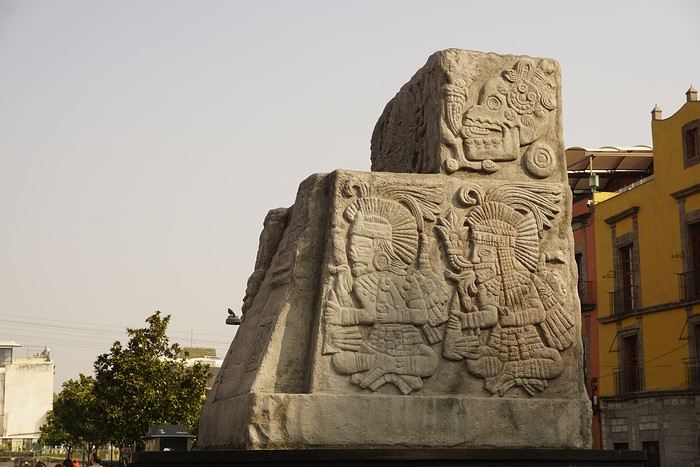 We then walked through the streets of the historic center to the Santísima Church, unfortunately closed for renovation work.
Next, we took the metro to visit one of Mexico’s most important pilgrimage sites: the Insigne y Nacional Basílicas de Santa María de Guadalupe, as well as the Capilla del Cerrito on the hill.
The first, dating from the colonial era, is really leaning a lot.
We then walked through the streets of the historic center to the Santísima Church, unfortunately closed for renovation work.
Next, we took the metro to visit one of Mexico’s most important pilgrimage sites: the Insigne y Nacional Basílicas de Santa María de Guadalupe, as well as the Capilla del Cerrito on the hill.
The first, dating from the colonial era, is really leaning a lot.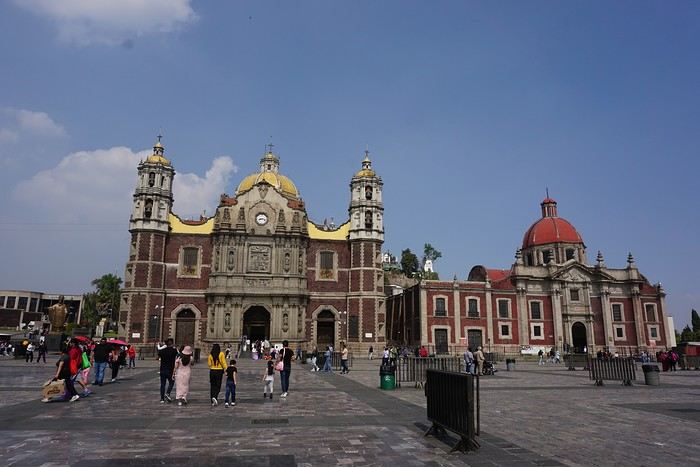
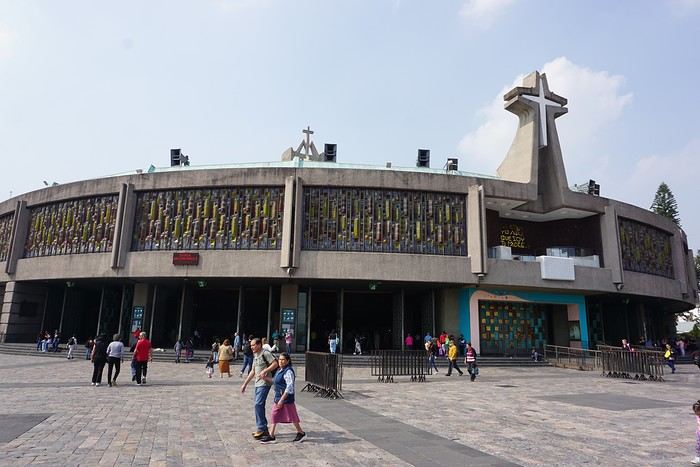
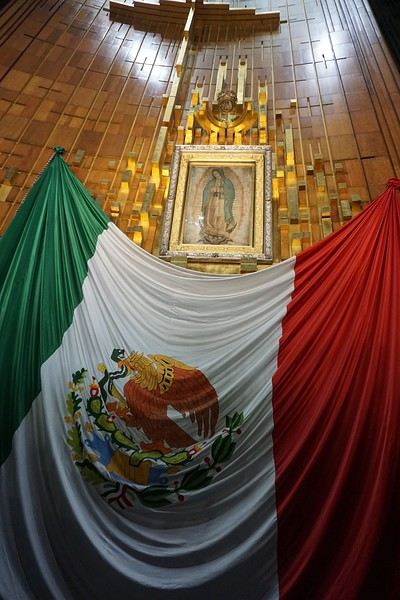 From the top of the Capilla del Cerrito, you get beautiful views of huge Mexico City.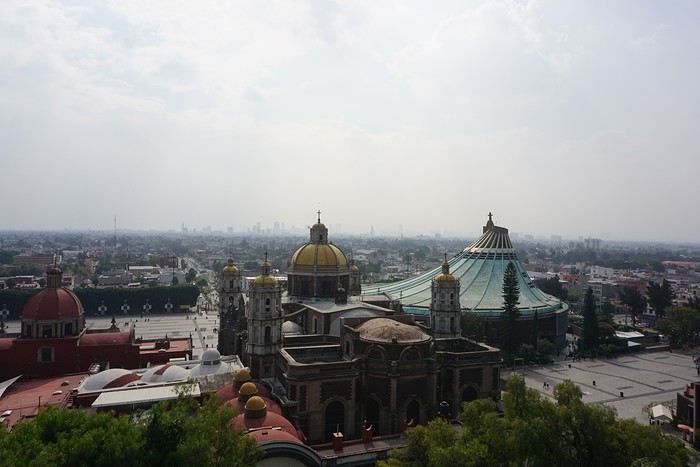
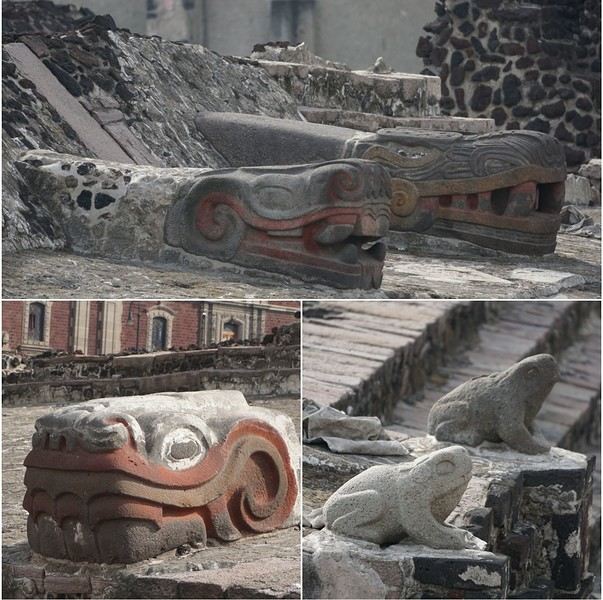

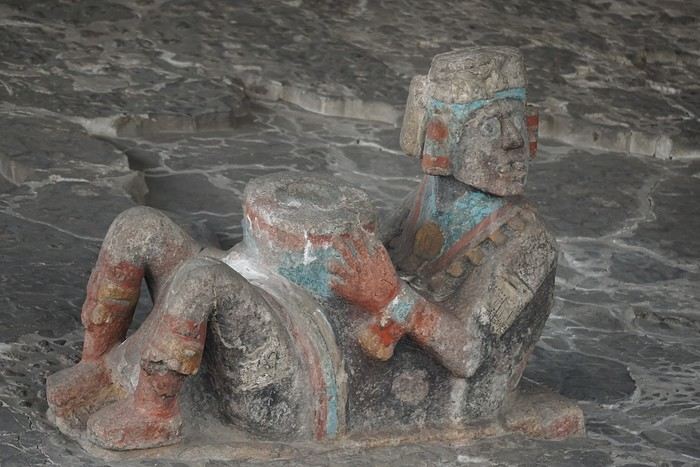
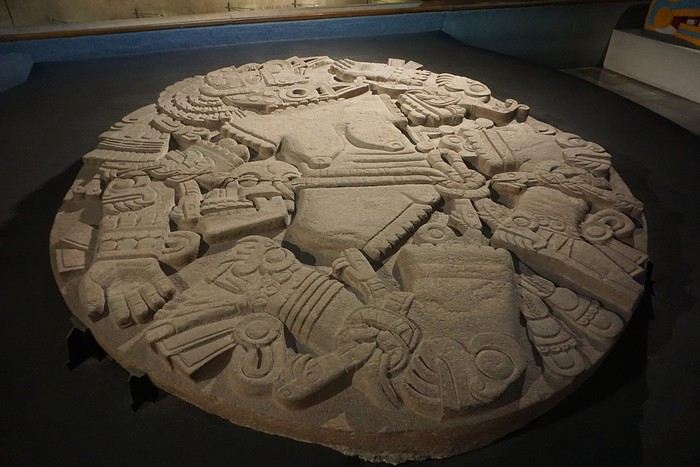
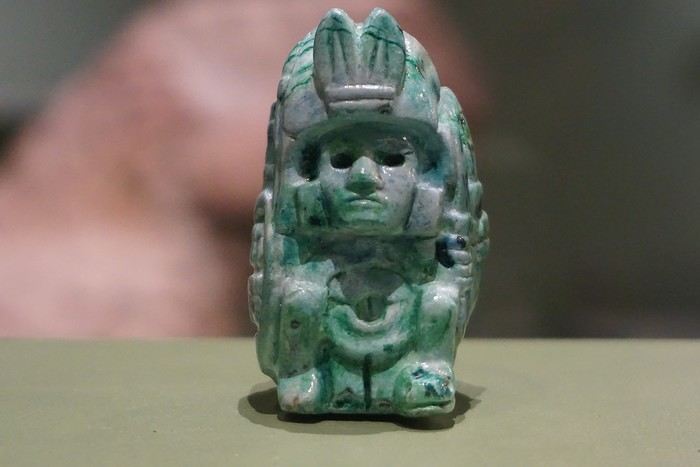
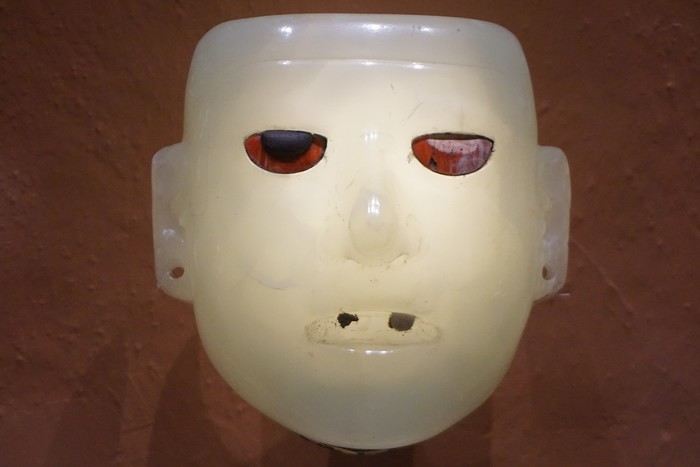
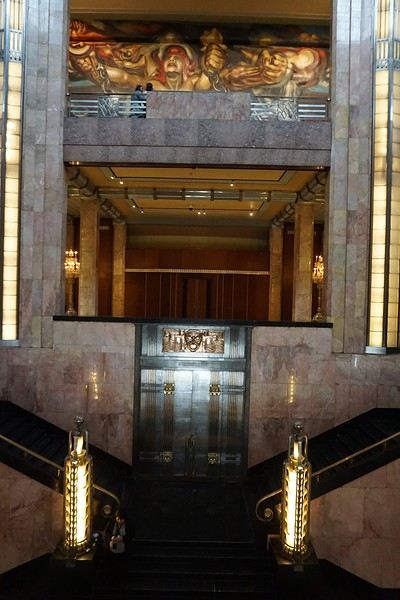 We then discovered the park right next door, walked past the Casa de los Azulejos (a little Portuguese vibe in the Mexican capital!) and finished with a visit to another church. After that, we made our way back to our hostel very leisurely, admiring the many Art Deco buildings along the way (unfortunately, most of them are poorly maintained or not at all—what a shame!). We got back to our hostel pretty early because tonight we’ve got a "sporty" evening planned...
Lucha Libre night: a few days ago, I bought tickets to watch a lucha libre match! Wrestling, basically! What a night!
We then discovered the park right next door, walked past the Casa de los Azulejos (a little Portuguese vibe in the Mexican capital!) and finished with a visit to another church. After that, we made our way back to our hostel very leisurely, admiring the many Art Deco buildings along the way (unfortunately, most of them are poorly maintained or not at all—what a shame!). We got back to our hostel pretty early because tonight we’ve got a "sporty" evening planned...
Lucha Libre night: a few days ago, I bought tickets to watch a lucha libre match! Wrestling, basically! What a night!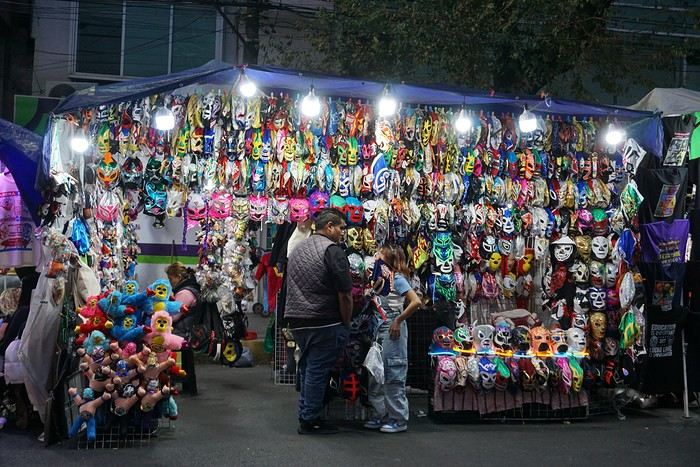
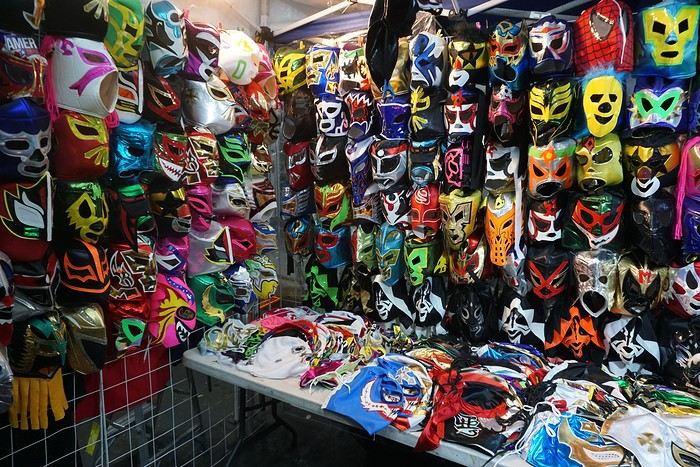 Around the Arena, we found loads of stalls selling wrestler masks. As soon as the security cordon opened, we could enter the venue. People settled in calmly, snacking, drinking beers, taking selfies with their smartphones (cameras and video recorders are banned). Little by little, the arena filled up, and the atmosphere built. One of our neighbors rushed over to a commentator (radio or TV?) for a selfie. The show was almost as much in the crowd as it was in the ring. The matches kept coming. The audience jeered at the referee to count faster, shouted at the wrestlers—whether they were down on the mat or standing on the ropes. As always, there were the good guys and the bad guys. Whistles, cheers, applause, blaring music between matches, entrances onto the ring like superstars! It had everything! Mexicans (men and women, young and old, kids) are *huge* fans of this sport/spectacle!

 This painting is titled: *Migration*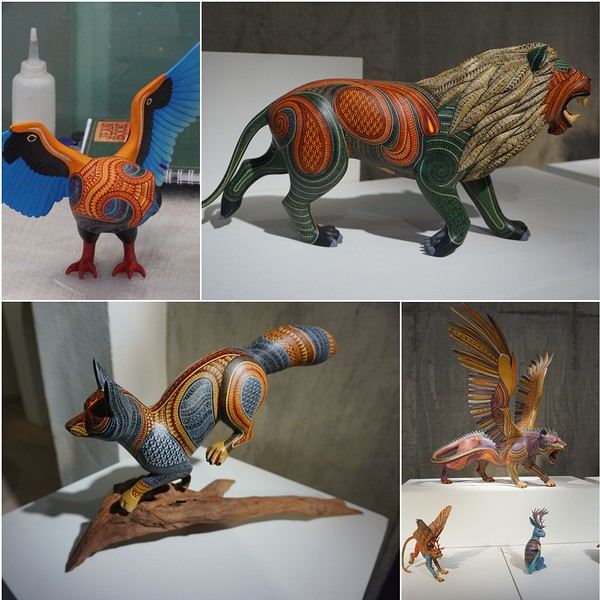



 Hi Oscar!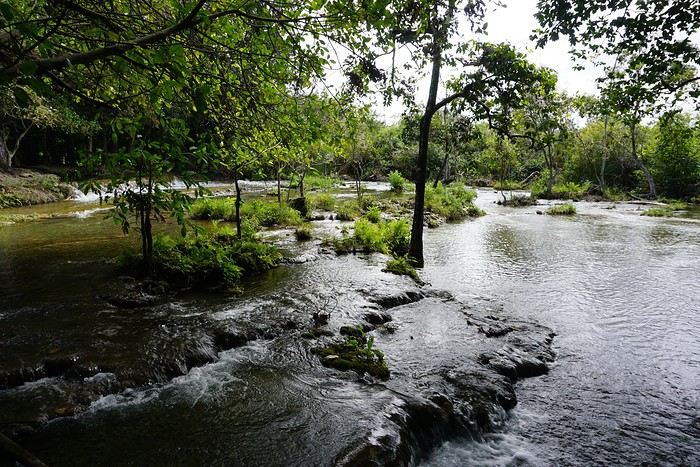
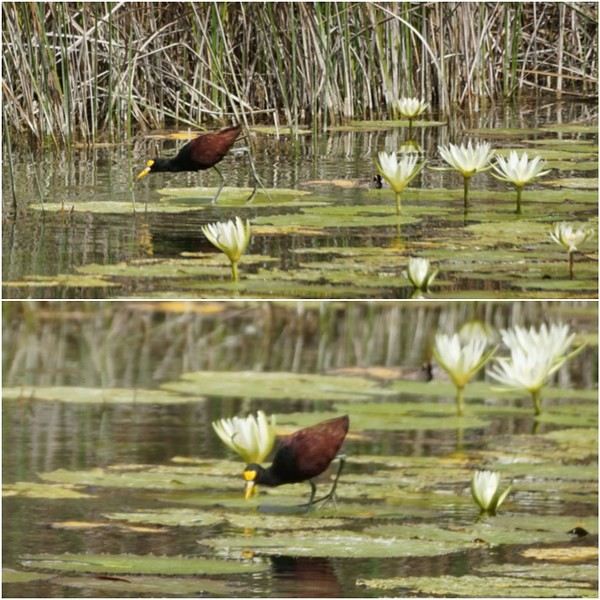
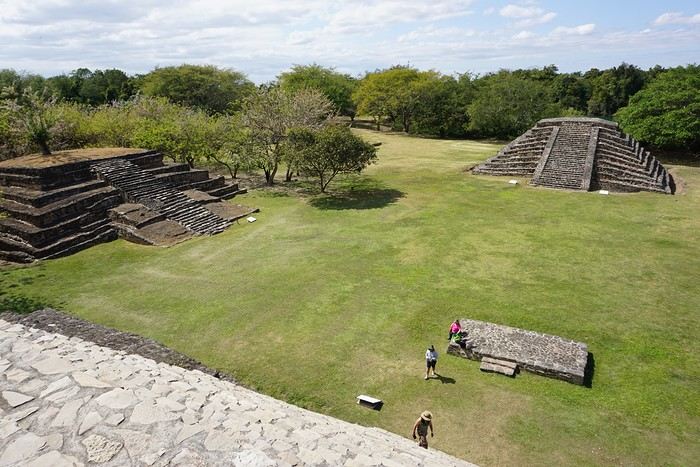
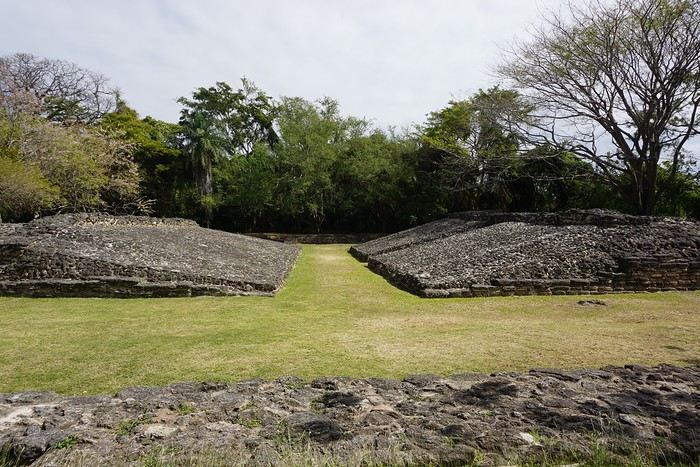
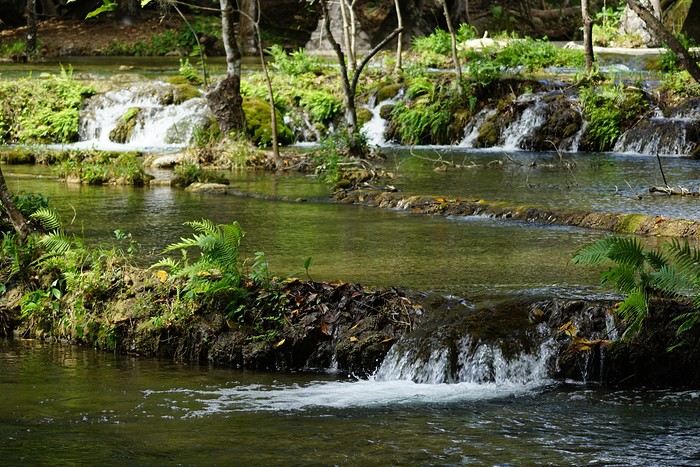
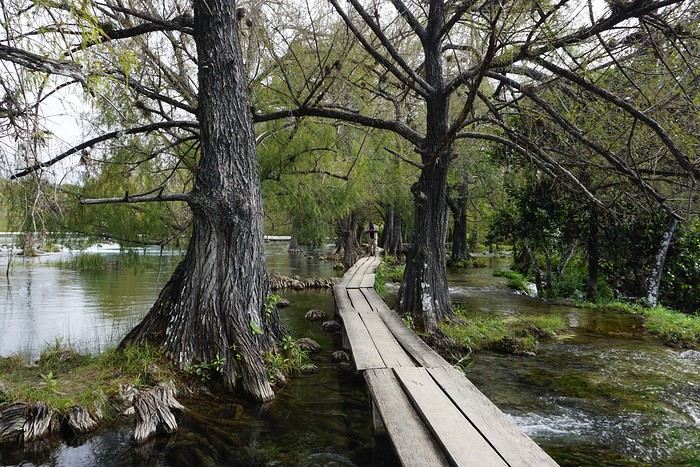
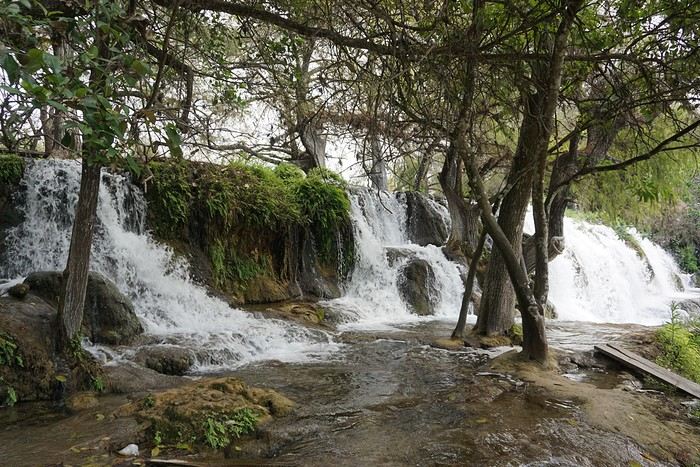
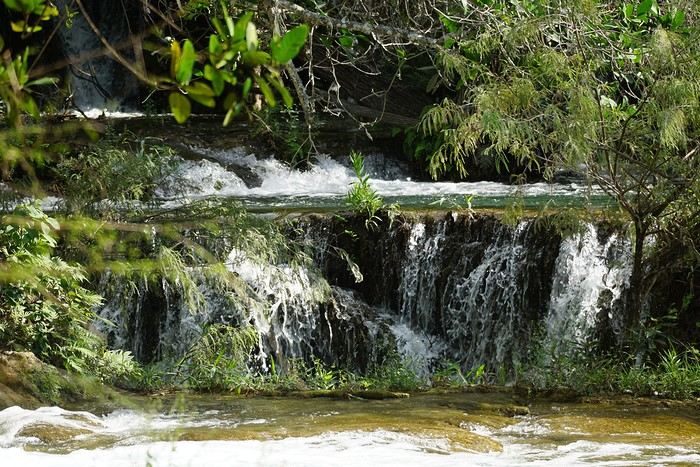
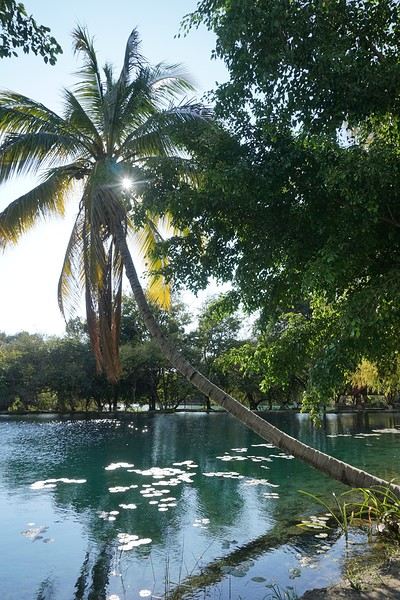
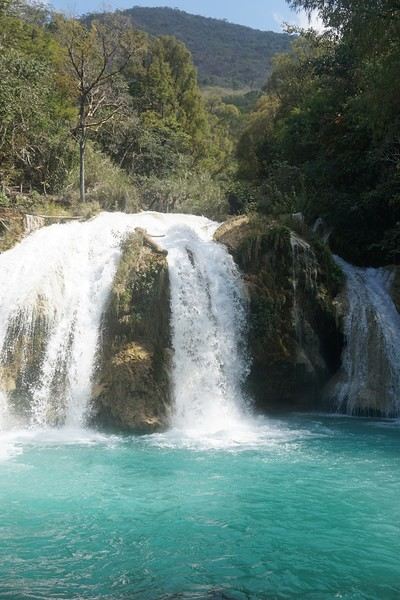
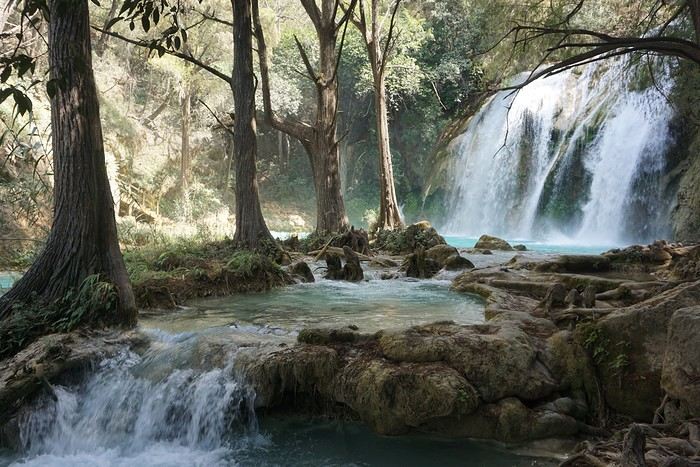
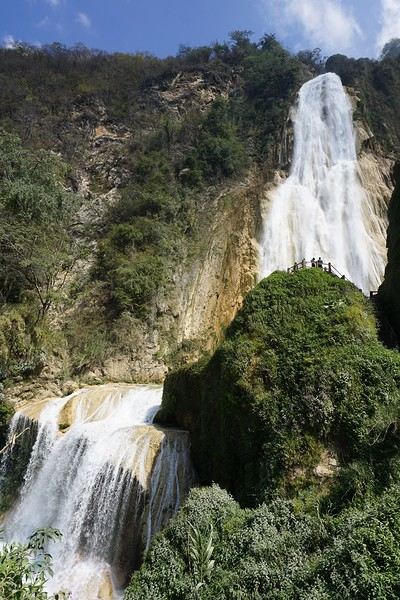
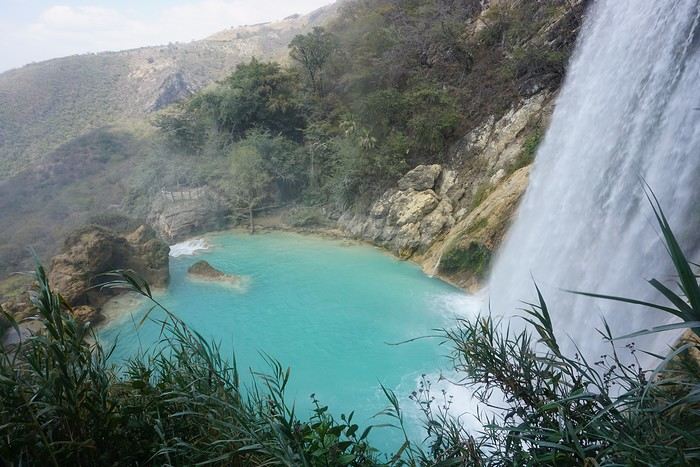
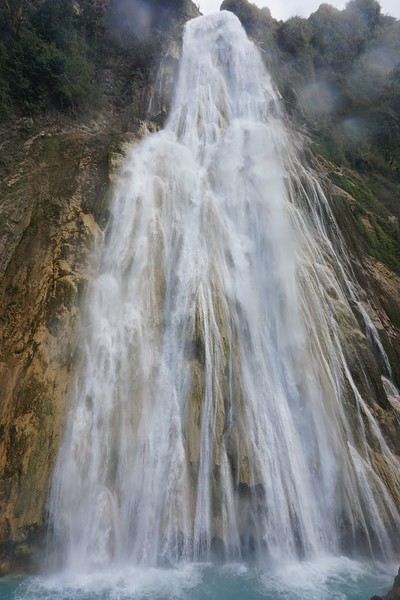
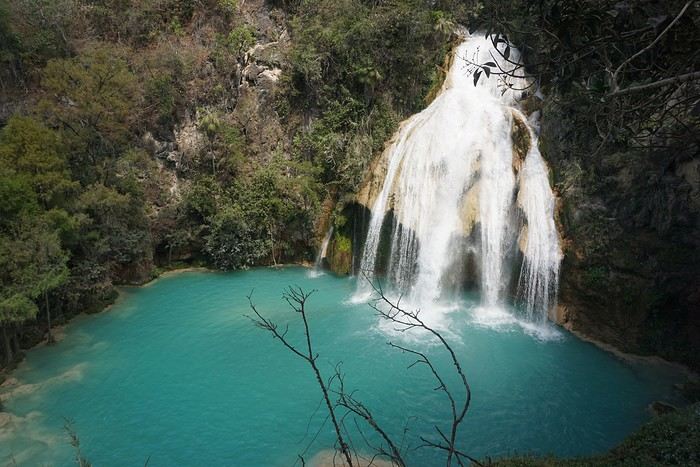
 Mar really stole the show! 😊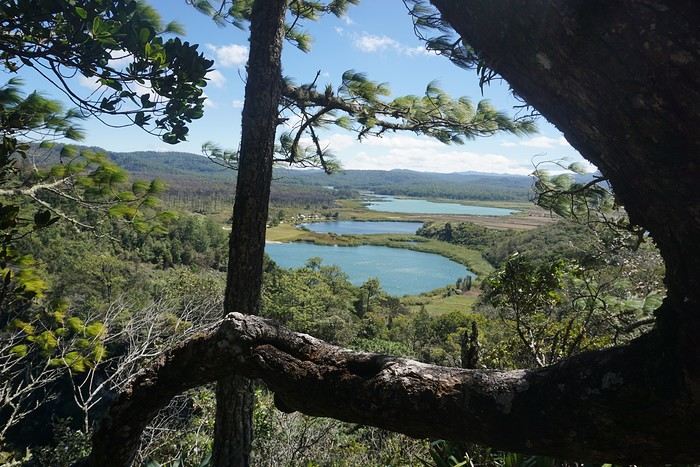
 Local drink: pozol de cacao
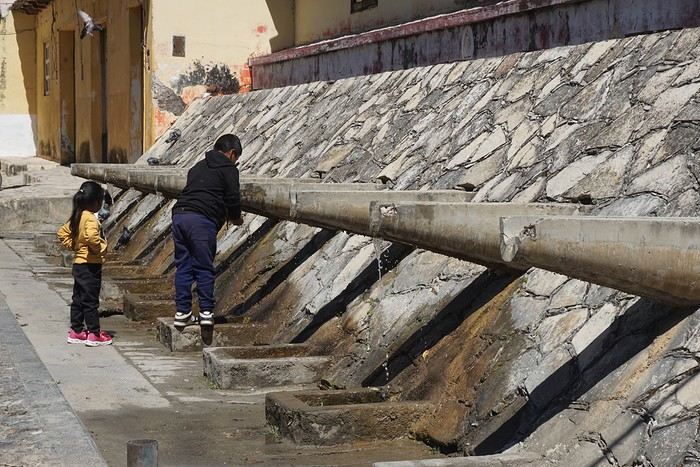 Old water distribution point, still in use today.