Hello,
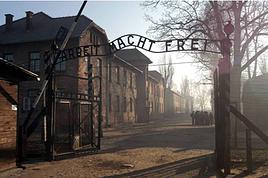
Je part vendredi pour une semaine a Cracovie (avec mes parents.. :( ) puis ensuite normalement je passe par Auchwitz pour visiter, et je rentre a paris
J'ai 17 ans et quelques mois lol
J'aurait aimé savoir ce qu'il y a a faire dans cette ville qui a l'air superbe et animée,
Mon hotel est celui ci http://krakow.zaprasza.net/hotele/jan.html
Auriez vous des endroits sympatique proche de mon hotel (d'apres ce que j'ai comprit il est pres du centre ville), a frequenter (a savoir que je suis pas tout a fait majeur, que je parle seulement français et pas parfaitement anglais) pas forcement quelque chose qui bouge un max, mais pas un bistrot de vilalge non plus.. un truc sympatique, où l'on peut peut-être rencontrer des personnes avec qui il est possible de se comprendre niveau langage?
Niveau "securité" c'est craignos? Enfin je veut dire pas de risque de vol d'effets personnels et autres? On a dit a mes parents de préférer un parking gardé pour la voiture, donc je me pose la question.
ps: la réputation niveau physique des polonaises n'est pas a faire lol, elles sont abordable? ou c'est comme en france il n'y a quasiment aucunes communications? aucun contact, aucuns acceuil etc ? On m'a dit que c'etait un peuple tres chaleureux, est ce vrai?
Merci :)
Sinon si des personnes vont aussi a cracovie la semaine prochaine, laissez un message ;)
Pour savoir quoi visiter à Cracovie et où sortir, tu aurais dû acheter le guide Lonely Planet Pologne. Il est peut-être encore temps...
Sur place, tu auras Cracow in your Pocket, petit guide des loisirs cracoviens en anglais.
On a raison de conseiller les parkings gardés pour la nuit. La réputation du banditisme polonais n'est plus à faire, quoi que personnellement, je n'ai eu à me plaindre d'aucun vol ni agression.
Si tu ne parles ni polonais ni anglais, tu auras du mal à communiquer avec les jeunes. Le français n'est plus étudié que par 7% des gens qui apprennent les langues étrangères. Les plus de 40 ans connaissent surtout le russe.
Les belles Polonaises sont en effet plus nombreuses que les belles Françaises, proportionellement à l'ensemble de la population féminine. Elles ont aussi beaucoup de goût et savent être élégantes avec peu de moyens.
Les Polonais sont chaleureux et hospitaliers, comme les Espagnols et les Italiens. Mais quand il y a la barrière de la langue, c'est plus difficile. Et Cracovie étant envahie par les touristes, on ne te fera donc pas forcément le même accueil que dans un village paumé de la Pologne profonde.
Si tu ouvres tes yeux d'enfant, le voyage commence au seuil de ta maison
Merci :)
Pour ce qui est des espagnols, je les trouve moyennement acceuillant.. lol
En parlant a little english, on peut communiquer un minimum? c'est une langue qu'ils connaissent parfaitement ou il parle anglais aussi bien que nous français?
Tous les Slaves sont forts en langues.
Le niveau en anglais d'un bon élève polonais surpasse de très loin celui d'un bon élève français ayant le même nombre d'années d'études de cette langue à son actif.
Et si tu rencontres une bonne élève de lycée qui étudie le français, tu seras étonné par son niveau.
Il aurait été intéressant d'apprendre à compter en polonais pour tes achats. Trop tard. Tant pis.
Il faut savoir que la majorité des Polonais, en particulier les plus de 40 ans, ne parlent aucune langue étrangère.
Si tu n'as pas trouvé les Espagnols accueillants, c'est certainement parce que tu ne parlais pas leur langue, ou que tu es resté dans des endroits trop touristiques. Peut-être même n'étaient-ce pas de vrais Espagnols, mais des Catalans espagnols, ou des Basques espagnols...
Si tu ouvres tes yeux d'enfant, le voyage commence au seuil de ta maison
Je suis sorti avec une espagnole en france, en dehors de son charme sa famille était tres acceuillante, mais a par ça.. barcelone, voila quoi lol et non je ne parle pas espagnole, mais un petit peu italien
J'aimerait bien tomber sur quelqu'un (quelqu'une 😏) qui etudie le français..
La langue de Barcelone est le catalan, même si la population immigrée originaire du sud de l'Espagne, et donc hispanophone, est nombreuse. Que parlait la famille de ton amie à la maison? Espagnol ou catalan?
Il est évident que lorsqu'on est dans un pays étranger et que l'on a l'intention de payer dans ce pays, il vaut mieux savoir compter dans la langue du pays pour ne pas se faire arnaquer. A chaque nouveau pays que je visite, j'apprends les formules de politesse et les nombres avant de partir.
Dans les restos à touristes de Cracovie, les jeunes serveurs manipulent probablement l'anglais.
Dans les authentiques "bary mleczne" (bars à lait) qui sont les restos populaires où l'on mange ce qui est sur la table de toute famille polonaise, les grosses dames qui sont au comptoir ne s'expriment probablement que dans leur langue maternelle, et le menu n'est pas traduit, d'où l'intérêt du guide Lonely Planet qui traduit les noms des plats polonais tels que le bigos, les golabki, les fasolka po bretonsku, les nalesniki z serem, le barszcz czerwony, les différentes kotlet (de wolaj, schabowy ou mielony), la zupa pomydorowa, la golonka z chrzanem, etc.
Tu as deux grandes librairies sur le Rynek Glowny (la Grand Place) de Cracovie. Tu y fileras peut-être pour acheter un dico. 😏
Si tu ouvres tes yeux d'enfant, le voyage commence au seuil de ta maison
Ahou... j'ai comprit la moitié de ton msg, me faut de toute urgence un dico polonais la lol
Sinon elle habitait en france et parlait français, tout du moins quand j'y était
En polonais a par bonjour, oui non, euh 2-3 autres trucs je ne connait rien :X
La Grand Place (Rynek Glowny), l'une des plus vastes d'Europe, avec: Notre Dame de Cracovie (Kosciol Mariacki), avec son somptueux rétable gothique flamboyant de Witt Stwosz, sa crypte. A chaque heure, une sonnerie interrompue retentit du haut d'une tour, c'est le hejnal, souvenir de l'attaque mongole de 1242 (au cours de laquelle le guêteur avait eu la gorge transpercée par une flêche au moment où il sonnait l'alerte). La Halle aux Draps (Sukiennice), transformée aux rez de chaussée en gigantesque marché aux souvenirs, et à l'étage en musée de peinture.
Pas loin (Ulica Jagiellonska): le Collegium Maius de l'Université Jagellonne (Uniwersytet Jagiellonski), la plus ancienne d'Europe Centrale.
Le Château du Wawel (Zamek na Wawelu), avec: La Cathédrale (Katedra), qui abrite les tombeaux des rois, reines, héros, et poètes polonais, et où Jean Paul II donna sa première messe quand il fut ordonné prêtre (dans la crypte). Il faut grimper aux tours, pour les cloches et la vue sur la ville. le Palais Royal, ses appartements, son trésor, le Dragon de Cracovie (Smok Krakowa), dans une grotte (Smoka Jama) sur un flanc de la colline
2 restos dans le secteur, entre la Grand Place et le Wawel: polonais traditionnel à l'ancienne: Chlopskie Jadlo (le manger du paysan), rue Grodzka polonais populaire bon marché:j'ai oublié son nom. Il est dans la même rue, un peu plus loin direction Wawel, et se trouve facilement. Il y a souvent la queue. Menu non traduit.
Sinon, le resto le plus réputé est Wierzynek, sur la Grand Place.
Autour de la Porte Florian: la Porte Florianne (Brama Florianska) et la rue Florianne (Ulica Florianska) où se trouvent bien des commerces et le célèbre cabaret Pod Baranami (Aux Béliers) la Barbacanne (Barbakan), vestige des anciennes fortifications. On y donne des concerts classiques le soir. le parc Planty, qui fait le tour de la vieille ville la place Matejko (Plac Matejki) où se trouve le mémorial de la bataille de Grünwald, et l'église où Jean Paul II commença sa prêtrise. La maison du célèbre Matejko (peintre patriotique) est dans la rue Florian. le Musée Czartoryski (Muzeum Czartoryski), à la fois musée historique et artistique, abrite les collection de la grande famille princière dont il porte le nom. On y admire la célèbre Dame à l'Hermine (Dama z Gonostajem), de Léonard de Vinci.
Dans le Quartier de Casimir (Karzimierz):
l'ouest chrétien, avec ses églises (Ste Catherine, Très Saint Corps du Christ) et la place Wolnica la partie juive, avec ses synagogues, son musée de d'Histoire et de la Culture des Juifs de Cracovie, et son vieux cimétière (cmentarz) autour de la Synagogue Remu'h (Synagoga Remu'h), où l'on peut rencontrer l'un des Juifs de Schindler. Le nouveau cimetière juif est plus loin, dans la rue Miodowa.
Nowa Huta (Nouvelle Forge):
Uniquement pour voir à quoi ressemblait une ville nouvelle au temps des communistes. Quartier construit en opposition avec la vieille cracovie jugée trop passéiste.
A ne pas manquer aux alentours de Cracovie:
A 15km: Mine de sel (kopalnia) de Wieliczka. Hallucinante visite qui conduit les visiteurs de grotte de sel en grotte de sel jusqu'à 300m sous terre, où se trouve une église entièrement creusée dans le sel, avec une superbe statue de la vierge en cristaux de sel.
On peut s'y rendre par petits bus privés qui démarent dans le quartier de la gare PKP.
A 100km (2h de bus), Zakopane, le Chamonix polonais, au pied des monts Tatras (Tatry), qui marquent la frontière avec la Slovaquie et ressemblent aux Pyrénées. L'architecture des maisons montagnardes polonaise est très particulière et étonnante.
Même si l'on n'est pas randonneur, on peut au moins faire l'excursion au lac Morskie Oko (l'Oeil de la Mer). Une demi heure de mini bus, puis trois quarts d'heure de charette, et enfin 15mn à pied. On peut manger au refuge. Bonne cuisine roborative. On peut aussi monter sur la crête frontalière en téléphérique, depuis Kuznice, jusqu'au Mont Kasprowy (Kasprowy Wierch), à 2000m d'altitude. Sinon, on peut faire du shopping, et acheter de magnifiques pulls en laine tricotés à la main pour un prix dérisoire. Très touristique, mais ça donne une idée de la montagne polonaise. Près de la rue commerçante (Ulica Krupowki), l'ancienne église en bois, et son étonnant cimetière montagnard, où chaque tombe est une oeuvre d'art originale.
à 20km, le Parc National d'Ojcow, avec ses châteaux, ses grottes, ses formations rocheuses étranges
A 60km, Wadowice, la ville natale de Jean Paul II, avec sa maison. Entre cette ville et Cracovie se trouve Kalwaria Zebrzydowska, son sanctuaire favori, avec son chemin de croix jalonné de 11 chapelles.
A 65km, Auschwitz & Birkenau (Oswiecim & Brzezinka), mais tu as déjà prévu la visite des deux camps nazis. On peut y aller en bus (direct) ou en train (1 changement) depuis la Gare Principale de Cracovie (Krakow Glowny)
Si tu ouvres tes yeux d'enfant, le voyage commence au seuil de ta maison
Europe de l'Est › République Tchèque / Pologne / Hongrie · 16 replies
Je m'appelle Kadia, j'ai 20 ans, et je pars la semaine prochaine avec une amie pour un petit séjour en Europe de l'est. On part un peu à l'aveugle donc on a…
Je compte passer une semaine en Pologne début avril. Comme je n'aurai pas beaucoup de temps, je voudrais juste visiter Cracovie et Varsovie. Je sais que ca…
Je vous propose de suivre nos aventures à Gdansk et ses alentours. J'évoquerai ici les endroits visités et les impressions sur le moment! Nous arrivons à…
Nous arrivons a Wroclaw début août, pour une semaine. je recherche des infos et des bonnes idées pour des randos, festivals, curiosités, paysages... en bref de…
UNE SEMAINE EN POLOGNE: KRAKOW et WROCLAW (26 MARS 2017- 02 AVRIL 2017) Quelques mises à jour sur Cracovie et Wroclaw CONCERNANT KRAKOW: Arrivée à l’aéroport:…
Bonjour,
Je cherche des renseignements sur le trajet Pristina - Skopje en bus.
Peut on partir de la gare routière de Pristina?
J'ai également entendu parler d'une gare routière près du théatre....
Si quelqu'un a des informations, je suis preneur, merci !!!!
We want to book our tickets to visit the Acropolis site and the associated museum. For these reservations, we need to specify entry time slots.
For the Acropolis alone: the first slot is at 8:30 AM.
For the museum: 10 AM? 11 AM?
We like to wander around, so here’s our question: if we haven’t finished exploring the site after 1.5 hours, is it possible to go back in after leaving the museum?
We’ll be buying tickets from the official websites—audio guides are mentioned. Any feedback on those? On sites like Get Your Guide, the prices are much higher with the audio guide included, but does that mean better quality?
I'm currently planning a trip to Cyprus for late October. I have a few questions:
- I plan to visit Nicosia, Paphos, and Ayia Napa. What do you recommend in Ayia Napa?
- Is it easy to get around by bus from one city to another? Or do you have any private drivers to recommend?
- Do you have any hotels to recommend?
Any tips or advice is welcome!
Thanks in advance
Hello,
We're heading to Istanbul from October 7th to 12th. I’d love to do a dinner cruise on the Bosphorus on a more intimate boat (no show) with a private table and alcohol (wine, since it’s a birthday dinner). Could anyone recommend a reliable company (I’m not looking for a private yacht either) that organizes this kind of evening?
Thanks in advance,
Hi, I’d like to buy a ticket to go to Terezín from Prague using the Pid Litacka app, but I don’t know which zone to get the ticket for. Thanks for your help! 😊
Hi there,
After booking an Airbnb last January for this summer’s vacation in Sarajevo... My "host" canceled our reservation without any reason—this has never happened to me before.
Of course, now it’s impossible to find a place to stay at a "normal" price in Sarajevo with parking...
So we’re falling back on the capital of the Republika Srpska, Banja Luka, which had already crossed my mind before I booked Sarajevo.
I already have quite a few ideas in mind, without having dug too deep into the region yet.
But if anyone has already been there and has suggestions? Even for restaurants—I’m all ears!
And even if it’s not right next door, I’m planning to spend a day in Sarajevo!
Hi, I’m going to Turkey for 3 weeks. I’ve heard that you can’t book through Booking.com once you’re there and that everything has to be reserved in advance. Is it true that Booking.com doesn’t work in Turkey? Thanks to anyone who’s already been or is there—if it’s true, how do you handle bookings?
I’d love to get your opinions and advice on a destination.
It’s actually for my 19-year-old son who wants to go to Greece with his cousin, who’s the same age.
They’re looking at leaving on October 24th for 7 to 10 days.
For their trip, they want gorgeous beaches where they can swim, beautiful typical villages and historic cities, stunning landscapes, but also lively spots for their nights out. In short, they’re not just going there to laze around—they want to make the most of it...
But here’s the thing: will the weather be too iffy at that time, especially for swimming?
Also, would Crete be the best choice for what they’re looking for?
Then, a travel agent suggested Tenerife instead because of the weather at that time of year—he said the climate there is the same all year round. But will they find landscapes and beaches as beautiful as in Crete?
Hello!
I’m planning a trip to Greece in May or June 2027. We’re independent travelers.
We’ll rent a car after our stay in Athens and book accommodations through Booking or similar sites.
What do you think of this itinerary? We’re taking our time (beach and swimming if the weather allows in May—is the water too cold?)
Athens, 3 days
Nafplio, 3 days (Mycenae, Epidaurus, Archaia)
Mystras, 2 days or Monemvasia, 2 days (Laconia peninsula)?? Dilemma between the two
Return trip from the Peloponnese via the Rio-Antirrio bridge
Nafpaktos, 1 night
Arachova, 2 days (Delphi, Osios Loukas Monastery)
Return to Athens and departure
Is it crowded in May or June for visits to archaeological sites?
Thanks for your suggestions or corrections!
Hi there,
Our first trip to Greece as a couple. We're planning to spend 7 days in Greece from August 30th to September 5th. We'll reserve 2 days for Athens at the end of the trip. For the remaining 5 days, we want to visit an island—any recommendations? Thanks for your tips and details, we really appreciate it.
Hi,
What tips can you give me for dealing with a car rental scam attempt in Lithuania?
In our case, it’s the Avis-Budget agency in Vilnius trying to scam us.
We rented a car at Vilnius Airport for 2 weeks on July 28, 2019, to return it in Tallinn on August 11.
We brought it back on August 11 at the airport, in perfect condition, and with a full tank at the gas station right by Tallinn Airport.
On the parking lot, the receptionist’s booth was closed. So we had to leave the car in the lot and go to the counter inside the airport. The person at the counter told us their colleague had gone for lunch!
But they refused to come out and do the inspection with us because they were alone at the counter.
They told us we could leave and that everything was fine!!!!
Two days later, we got an email from Avis-Budget with two invoices saying the car was damaged—scratched on both sides—and charging us for a full tank of gas. That’s two bills totaling 800 €!!!! Coincidentally, the deposit was 900 €!
It’s clear this isn’t over!!
Have any of you been through the same nightmare? How did you handle it?
Thanks in advance!
I’m spending 2 weeks in Crete in September and will need a rental car.
I usually go with Europcar, but comparing their offer to what Aegean Rentals has, I see Europcar is charging no less than 400 € more for the same car and similar insurance!
I’d love to hear if others have experience with Aegean Rentals, and if so, whether it was a good one?
Hi,
We’re heading to Greece in early October and will be staying in Kineta, north of the Saronic Gulf, and renting a car.
Is it feasible to visit Acrocorinth, Mycenae, Nafplio, and Epidaurus in a single day?
Thanks for your recommendations!
Hi there!
I’m sharing our itinerary for May/June 2027—23 days. This is our first time in Greece, so we’re starting with the must-see spots. We’re planning another trip later to explore the north, Thessaloniki, Macedonia, and some islands.
- Athens, 4 nights
- Corinth area, 2 nights (Heraion of Perachora, Canal, Acrocorinth)
- Nafplio, 3 nights (Mycenae, Epidaurus, Methana peninsula)
- Gefira, 2 nights (Monemvasia)
- Areopoli, 2 nights (Mani). Maybe add an extra night and stay on the peninsula??? Based on my calculations, the Mani loop is about 100 km—doable in a day, but it’d be a quick trip.
- Sparta or Pikoulianika, 2 nights (Mystras)
- Dimitsana, 2 nights (Lousios Gorge, monasteries)
- Olympia, 2 nights (via Lagkadia?)
- Delphi or Arachova, 3 nights (via the west coast, Galaxidi bridge) (Delphi, Hosios Loukas Monastery)
- And back to Athens.
This is just a rough draft for now. We’re planning to stay in hotels or book through Booking.com. What do you think? Thanks for your feedback and suggestions!
Over the past twenty-five years, I’ve traveled the roads between France and Moldova a good ten times, sometimes via Central Europe, other times via the Balkans.
It was while traveling like this—what I call "hitting the road the slow way"—that I realized something simple: our neighbors' neighbors are very clearly our neighbors too. And that’s not insignificant.
After a break of a few years, I’m planning to hit the road again in September, this time heading to Kosovo, crossing through Bosnia-Herzegovina and Montenegro.
Having gotten a bit older, I’ve no intention of rushing—no need to speed ahead of the music! 😄
I’d rather take my time.
I’m not looking to see everything, but to soak in the atmosphere of the places, always leaving room for the unexpected and for encounters.
I’m especially drawn to culturally immersive, authentic, and welcoming regions: lively villages, backroads, preserved landscapes, markets, local festivals, traditions that are still very much alive... and, why not, a few offbeat, forgotten, or slightly secret spots.
If any of you know Bosnia-Herzegovina, Montenegro, or Kosovo a little, I’d love to hear your suggestions for itineraries, stops, backroads, homestays, village festivals, or local contacts, for example.
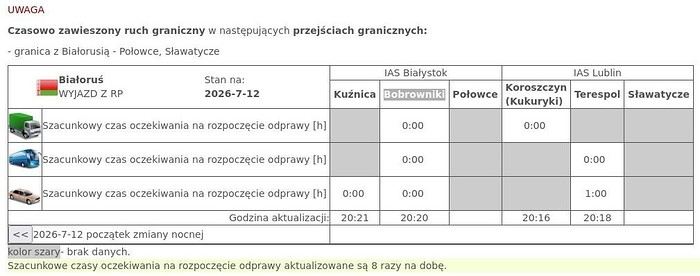
Planning to return to Belarus in mid-August, I just realized that since last September, Poland has reopened several border crossing points, and for buses, this means connections like Białystok-Grodno.
Several bus company routes, like on infobus.eu, take between 3 and 4 hours.
Trains from Warsaw to Białystok take about 1.5 to 2 hours.
This has the advantage of allowing comfortable train journeys with minimal time spent on a bus.
Also, the Terespol-Brest border might have shorter queues if you still prefer a Warsaw-Brest bus.
Note that another route to Minsk, if you have a paper Russian or Belarusian visa, is the Kaliningrad-Minsk train. It’s long—around ten or eleven hours—but you can lie down and sleep. An option if you fly into Gdańsk and then take a short bus to Kaliningrad.
There are also Belavia flights from Minsk to Kaliningrad, but they’re expensive. The route is scenic:
In any case, this adds a few more options compared to what’s been available over the last four years.
Hi there.
I’d like to know what the daily budget is for Greece in December. I’ll be landing in Athens and staying there for a week, then heading to some other islands—I don’t have a set itinerary yet. Also, I’ve heard that in December, or early January, the temperature is around 11–16°C. Is that accurate?
Finally, does anyone have a good recommendation for a cheap but clean hotel near the tourist sites? I don’t need a TV or any other extras. Also, is Greece gay-friendly?
I’d like to know the opening hours of physical stores between Germany and Austria, and between Austria and Slovenia, that sell the PAPER STICKER toll vignettes that still exist for 2026—non-digital ones. I don’t think they’re open 24/7, and I can’t find the info anywhere.
Thanks
Hi there,
We’re planning a 3-week trip in late September with our camper van to explore Bulgaria and Romania.
What routes would you recommend, starting from the South?
Is there an option to take a ferry in Italy, and is it worth it?
Thanks for all your tips!😊
Hi there, we’re a young couple and we’d love to go to the Blue Eye (Syri i Kalter) between today (26/06/26) and tomorrow (27/06/26).
Is anyone heading there and could give us a ride? We’re super friendly!
Thanks so much!
We're back. It's still a bit tough to get precise info, so here's a quick trip report!
A good starting point is Shkoder, a really pleasant city. You can easily explore Shkoder itself in a day or two.
Two accessible spots: Valbona and Theth.
In both cases, local travel agencies in Shkoder or online offer round-trip or one-way access packages. Super handy, especially for Valbona.
Valbona and Theth are both very steep! There aren’t many easy hikes for less sporty folks (like me!).
Valbona: The highlight is the amazing 2.5-hour boat ride across Lake Koman. There are day trips from Shkoder, but you’ll only get a short tour of the lake. The best option is to do the full crossing—so spend a night in Valbona (or two if you want to hike in the valley) and return.
Theth is deeply nestled in the mountains. The village at the end of the valley, which is a dead end, has lots of hotels, but they’re pricey. Other hostels are scattered along the mountainside road, but it’s a steep climb down to the village or to the start of the two easy hikes (waterfalls and the Blue Eye). For us, it was a one-hour descent (and ascent!). It’s fine if you have a car; otherwise, keep an eye out for a taxi (cheap) or try hitchhiking—it works really well.
Access from Shkoder to Theth is through an agency. The road is in great condition, and you can also rent a car for 2-3 days in Shkoder. If we did it again, that’s the option we’d choose.
We didn’t do the trek and returned to Shkoder each time. I can’t speak to its difficulty, but we were there in late May, and even experienced hikers had given up because of heavy rain and snow.
Hope this helps! It’s a stunning region you shouldn’t miss.
We’re a Canadian couple, both 77, and we’re already planning our vacation for fall 2027.
Timeframe: mid-September to mid-October... dates are flexible, and we might stay even longer.
Initially, I had planned this itinerary:
Athens (3), Naxos (4), Paros (4), Santorini (4), then a flight to Istanbul (7–10 days!!). This would let us maximize our flights and experience another culture.
That’s a lot of ferries, though... I’ve already cut out Milos.
Our second option would be to stay 2 x 15 days on two different islands, but I’d still keep Istanbul as our next destination... or maybe 30 days on one island that offers the chance to take day trips to other islands where the ferry ride is no more than 2 to 2.5 hours. For example, Naxos to Paros only takes 30 minutes. We could return the same evening or stay overnight.
Naxos seems like the best option!!!
For Istanbul, of course we want to do a day cruise on the Bosphorus and see Hagia Sophia. If we stay 6–7 days, what would be the other main attractions? Are there any points of interest we can reach by local bus?
Hi there!
We bought our tickets to Greece at the end of November 2025, and let’s just say the geopolitical climate has really taken a turn since then with the war started by the United States against Iran. Not to mention all the other conflicts happening around the world 😕... Anyway!
Our flight from Montreal is on May 1st, and I was wondering how things are currently being experienced in Greece.
We were planning to rent a car and had already booked accommodations on three Cyclades islands!!
The oil shortage is also worrying us...
If you could share some insights on this, that would be great!
A little trip report from an 11-day journey to Albania at the end of April 2026, with two friends in their early sixties and beyond...
Our route: Berat, Gjirokastër, Himarë, Tirana
Here are some opinions, tips, and great deals to share:
Flight Round-trip Beauvais-Tirana: Ryanair, 260 € with checked baggage (20 kg) and seat selection. Flight was fine and on time. 2h 30min flight.
Exchange: 1 € was worth 95 lek in April 2026. We were advised to exchange in the airport hall at the Illiria counter (98 lek outside the security zone), saying we wouldn’t find a better rate. However, the exchange rate was 93 lek for 1 euro, while in the city it was 95...
Car rental at Tirana airport for 9 days via Booking.com: 144 € (56 € for the car rental and 88 € for optional full insurance deductible waiver).
Wheego agency: the car was fine, but be careful when signing the contract—they tried to convince us that the insurance taken through Booking didn’t cover everything and insisted we take their own insurance for 250 €... We refused.
After reading about driving in Tirana, instead of starting our trip by visiting the capital, we decided to head straight to Berat upon arrival and return the car at the end of the trip to explore the city on foot. This turned out to be a great choice!
Accommodations: All our stays were booked via Booking.com. Everyone prefers to be paid in euros and in cash—they mention this when booking.
Berat: 2-hour drive from the airport.
Accommodation: Vila Arben Elezi: 135 € for 3 nights with breakfast and private parking. The room was decent and clean but a bit dark, located slightly below ground level near the parking. However, the breakfast on the rooftop was excellent, especially with the stunning view of the "city of a thousand windows." Great location.
Berat was our favorite—there are lovely walks through the different neighborhoods on both sides of the river, each with a very different vibe. The citadel visit is also fascinating, as it’s like a small town within the fortress.
The walk along the river is pleasant, with plenty of restaurant choices. Other restaurants in the old town are also very nice. The White House Restaurant, on the first floor along the road, is good and offers a great view of the Gorica district.
Gjirokastër:
Accommodation: Te Ajdini Guest House: 120 € for 3 nights with breakfast. A private home stay. There’s free parking just before entering the city, a 5-minute walk from the accommodation, which is very convenient since the cobblestone streets are narrow and parking is tricky. Yes, it’s a climb to get to the place, but everything in this city is uphill... The room was bright and clean. Breakfast was very good, hearty, and served in the courtyard with a view of the castle. The guesthouse is a 5-minute walk from the city center (the bazaar) but in a quiet area.
Restaurants: Rrapi and Kujtimi—good and affordable with their little pergolas.
The old town of Gjirokastër is charming but very touristy, with streets packed with souvenir shops and restaurant tables and chairs. Lots of people.
-The bunker visit (near the tourist office) is very interesting: Cold War Tunnel.
The castle offers a beautiful view of the city.
-Visit to the Ottoman house Skenduli: very well done. Don’t forget to climb the ladder facing a trapdoor in the ceiling to see the roof’s framework—it’s like a forest of beams: impressive!
-The bridge Ura e Ali Pasha: A steep 45-minute climb from the city to the site is worth it, but once you reach the viewpoint (which is stunning), you have to go back down a path to reach the bridge. You can drive to the viewpoint, but parking is very tricky.
Around Gjirokastër:
-Just outside the city: Lake Liqeni i Viroit: a nice, ordinary-looking lake, but at the end, there’s a natural spring making the water crystal clear and a brilliant blue—really spectacular, like photos of Blue Eye near Sarandë.
-Drive to Përmet along the gorges: beautiful viewpoints along the way and lovely countryside.
Himarë:
Accommodation: Vila Kosteli: 120 € for 2 nights with breakfast—slightly overpriced for this type of place but very close to a small beach and not far from the promenade with all the restaurants. Private parking, but very tight (4 cars on a tiny lot along the road). The "sea view" room is a bit obstructed by the building across the street. However, the rooftop breakfast view is beautiful. Friendly staff.
Himarë is a pleasant seaside resort, quite calm (but it was April...). There’s a cute promenade with restaurants along the beach. The castle on the heights of Himarë is worth a visit.
Around Himarë:
-Qeparo is worth a quick stop, but Qeparo village is really worth the detour: a village lost in the heights after a scenic drive up from the coastal road—narrow but well-maintained. Beautiful view from the top and a charming village.
-The Big Bunker and Llogora Panorama: take a right turn several kilometers after Dhermi—a road that climbs steeply from the start... A breathtaking winding road that reaches 900 meters in altitude. The view is stunning.
-Several small villages between Dhermi and Himarë are worth a quick stop.
-Porto Palermo Castle is somewhat disappointing.
Tirana:
Taxi from Tirana airport to the city center: 15 € with electric taxis (Green Taxi, Bee Taxi, Do Taxi).
Accommodation: Hotel Nevi Apartment: 63 € for 2 nights. A private apartment in an older building but very clean and well-equipped, with a kitchen and small enclosed balcony.
Great welcome and contact—the owner even booked a taxi for our departure. Very well located, close to the main square, shops, and restaurants. A small supermarket nearby is perfect for stocking up on breakfast supplies.
The city is lively and dynamic, with plenty of green spaces and promenades. Buildings are popping up everywhere, often with surprising architecture—like a building shaped like a face, a huge golden cube, and many others under construction.
-Sky Tower: at the top, a rotating bar offers a 360° view of the city and its buildings. Drinks are a bit pricier than usual, but it’s totally worth it (6 € for a beer or a glass of white wine, 3 € for coffee). We were there for sunset, and it was amazing! A must-do. Arrive early, as it fills up quickly.
-The House of Leaves: a house used for secret surveillance and interrogations during the dictatorship... A great way to learn about the surveillance systems of that era.
-Bunk’Art 2: a bunker in the heart of the city—very interesting, covering the dictatorship period and its system...
-The Pazari i Ri Bazaar: the new bazaar district. The large hall is worth a visit, but souvenir prices are often higher than elsewhere... The area is nice.
Restaurant: Kastrati Restaurant—a bit like a canteen with lots of traditional dishes. It’s on the first floor of a building. Excellent value for money, and the waitress explains the dishes in French.
That’s a little overview of our trip and my personal impressions!
Albania is a beautiful and pleasant country to visit.
If you have any questions, feel free to ask!
Hi everyone,
We’re thinking of spending 3 weeks in Crete between mid-August and early September, renting a car, quickly exploring a few spots in the east, and focusing on the west, southwest, and south.
I’m worried about the heavy tourist crowds. Is it really more noticeable than elsewhere in Greece? Is there a way to avoid the crowds without missing out on the iconic places, which I imagine are stunning in Crete? Thanks for your thoughts and experiences!
Hi,
I'm heading to Greece via Albania soon. Does anyone have info on transportation from Gjirokastër to Ioannina?
Which company, fares, and schedules—it's not very clear with Google.
I’m just passing through Bratislava quickly (one afternoon, one night, one morning) and I’d love to see the highlights of the city.
I’ve put together a little itinerary—feel free to let me know what you think!
Start at the castle and its beautiful viewpoint
Visit the Baroque gardens
St. Martin’s Cathedral, quick visit
National Theatre
Discover the Cumil statues
Primatial Palace via Hlavné Namestie
Michael’s Gate
Grassalkovich Palace via Obchodna
Walk across Namesti Slobody to head back to the upside-down pyramid
Head down to the Blue Church
Cross the Danube to see Sad Janka Krala, then return via the UFO Bridge
There you go—10 km and a packed day!
What do you think?