Je prépare mon itinéraire pour fin novembre. Pour le nord.
En partant d'Arica, aller jusqu'à Putre, nuit à Putre.
Puis le lendemain faire le parc national Lauca, nuit à Putre.
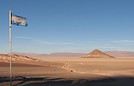
Jour suivant : Salar de Surire.
Est-ce qu'il est possible à cette époque de dormir (sans avoir froid) dans un hébergement de l'office des forêts (et comment réserver) et dès le lendemain rejoindre Iquique en passant par Colchane et les thermes, en ayant dans la voiture des jerrycans ou vaut-il mieux retourner à Putre puis Arica ?
Nous aurons un suv.
Bonjour,
Je réponds à Astrolabe49.
Ce n'est pas une destination usitée, les gens s'arrêtant dans la plupart des cas à San Pedro d'Atacama. A force de chercher dans les forums et aidée de mon ami "google", j'ai trouvé ce blog qui est une mine d'informations et qui répond à mes questions :
https://carnetsdameriquesetdailleurs.fr/crbst_125.html
Ils ont fait avec une berline Putre - Salar de Surire - Colchane. En partant tôt, ça doit donc se faire.
A partir de Colchane jusqu'à Iquique la route est bitumée.
Bonjour Thierry,
Ce que je voulais dire c'est que si eux l'ont fait en berline, moi avec un 4x4 ou un suv, je peux le faire.
Mon principal souci était de savoir si c'était faisable de faire Putre/Colchane dans la journée en passant par Surire.
Nous le ferons la dernière semaine de novembre.
Est-ce que vous avez où on peut louer des bidons d'essence à Calama (c'est là que nous prendons notre véhicule) ?
Merci d'avance.
Anne
Mon principal souci était de savoir si c'était faisable de faire Putre/Colchane dans la journée en passant par Surire.
Cette piste est parfaitement faisable en une journée par contre -par manque de temps- vous n'aurez pas le droit à l'erreur et vous ne pourrez pas rester non plus trop longtemps aux endroits que vous aimerez.
Est-ce que vous avez où on peut louer des bidons d'essence à Calama (c'est là que nous prendons notre véhicule) ?
Il me semble qu'il y a eu un post sur le sujet mais je ne le retrouve pas.
À Calama, certaines pompes à essence doivent en vendre sinon dans les grandes surfaces.
Bonjour
Bien súr que Putre Surire Colchane peut se faire dans la journée mais tout dépend de l état de la route. Novembre est une bonne période hors saison des pluies.
Quant á louer des bidons....achete un bidon chez copec ou a homecenter sodimac ...c est pas bien cher et securisant. Un bidon d essence ne se loue pas
Avex une berline...c est un peu maso et limite serieux quand meme.
Europcar m avait preté un bidon metalique hors d age...il etait perçé..
Attention á ne pas franchir la frontiere Bolivienne (sans le vouloir )toute proche au sud de Surire. On ne plaisante pas avec les frontieres en Amerique du sud.
Adishatz
Bien súr que Putre Surire Colchane peut se faire dans la journée mais tout dépend de l état de la route. Novembre est une bonne période hors saison des pluies.
Quant á louer des bidons....achete un bidon chez copec ou a homecenter sodimac ...c est pas bien cher et securisant. Un bidon d essence ne se loue pas
Avex une berline...c est un peu maso et limite serieux quand meme.
Europcar m avait preté un bidon metalique hors d age...il etait perçé..
Attention á ne pas franchir la frontiere Bolivienne (sans le vouloir )toute proche au sud de Surire. On ne plaisante pas avec les frontieres en Amerique du sud.
Bonjour Anne.
J'ai fait Putre - Salar de Surire - Colchane - Cariquima le 22 novembre dernier en partant à
l'aube, et je suis arrivé en fin d'après-midi à Cariquima. J'ai bénéficié d'une superbe météo,
novembre est normalement une très bonne période. J'ai effectué beaucoup d'arrêts
photos et j'ai roulé tranquillement. J'avais un pick-up 4x4, mais à part un passage très
sablonneux et par sécurité, je suis resté en 2 roues motrices. Je sais que certains l'on fait
en berline, il faut savoir qu'entre Surire et Colchane vous serez très isolée avec un passage
à 4730m et deux gués qui peuvent être plus profonds que prévu. Un véhicule plus haut
est sécurisant et en cas de pluie soudaine le 4x4 sera nécessaire. Comme je voyage seul
je calcule bien tous les risques avant et je mets le maximum de chance de mon côté.
Je n'avais ni GPS ni téléphone, mais j'ai pu suivre la piste sans problème. Ma carte n'était
pas très précise mais j'avais tout mémorisé.
J'avais acheté 2 bidons de 20 l chez Copec à Arica. Le premier jour j'ai fait Arica -Putre.
Le deuxième, Putre - Chungara - Parinacota - Caquena - retour à Putre.
Le soir j'ai vidé un bidon. J'ai fait Putre - Surire - Colchane - Cariquima le lendemain, puis
le jour suivant je suis redescendu par la 15 jusqu'à Huara et la 5 jusqu'à Pozo Almonte où
j'ai fait le plein sans avoir utilisé le deuxième bidon. Je n'ai pas vu d'autres stations durant
ces 3 jours. Quant aux pistes elles changent forcément d'état chaque année, c'est un point
qu'il ne faut jamais oublier. Cordialement, Bernard.
Merci beaucoup à Thierry 6789, Kalchaqui et Titoualsace
Je compte faire le même parcours que Titou en faisant une boucle depuis Calama :
Calama, Iquique, Arica, Putre (2), Colchane, Iquique, Calama.
En ayant fait avant l'Atacama toujours avec la voiture et en réservant une excursion pour faire le salar de Tara. Ensuite avion pour Santiago.
Je compte louer un SUV. J'aurais un GPS et un téléphone.
J'ai une autre question :
à quel moment faut-il faire attention pour ne pas pénétrer par inadvertance en Bolivie ?
Merci encore.
Kénavo !
Anne
Entre Surire et Colchane, je pense que c'est sur ce secteur qu'il y a le plus de chance de se tromper de pays. C'est aussi la zone où il y a le plus de contrebande avec Visvirí.
Rebonjour Anne.
Le dernier panneau se trouve au carrefour de pistes lorsque vous quittez le salar pour
aller vers Colchane ( 90 kms ). Ne vous fiez pas à Google, la piste passe à l'ouest le long
du salar, le carrefour est au sud du salar. Vous pouvez aussi faire le tour du salar par
l'autre côté, c'est la piste à gauche en arrivant au salar depuis le nord. Si vous
faites le tour continuez jusqu'au carrefour mentionné plus haut, ne partez pas vers l'est
sinon c'est la Bolivie.
Le deuxième endroit délicat est après avoir passé le col, la piste descend vers l'est, à un
moment vous rencontrerez une piste, un carrefour en T, là il faut prendre à droite plein
sud. Si vous partez à gauche vous êtes presque tout de suite en Bolivie. Après il suffit
de suivre la piste principale. Cordialement, Bernard.
Je me joins à cette conversation car nous partons à 4 au mois de Mars prochain pour une boucle dans le nord Chilien.
Nous envisageons de faire la route Colchane - Putre, en passant par le salar de Surire et j'ai une interrogation sur le type de véhicule à louer sur place.
J'ai lu tout et son contraire, et j'aurais souhaité savoir si un Pick-up 4x2 (type D-max) est suffisant pour réaliser ce trajet, voir même un SUV ? Ou alors, un 4x4 est il vivement conseillé ?
Cela me permet donc de rebondir, et est-ce que réaliser l'itinéraire suivant, au mois de mars (et donc en fin de saison de pluie) est une chose judicieuse ?
San Pedro de Atacama
Iquique
Colchane
Surire
Putre (Lauca)
Arica
Bonjour Sunny
Rien n'est écrit. Personne ne peut vous garantir des pistes transitables quelque soit la pèriode de l'annèe et encore moins en mars.
Il vous faudra etre flexible dans le cas où les trajets que vous envisagez soient impossibles.
Aller s'aventurer sur la Puna c'est comme une course en montagne. Il convient d'additionner les atouts pour rèussir (un4x4, ètudier l'itinèraire, prèvoir nourriture, vètements chauds, eau, outillage...etc ...etc...) et compter sur un peu de chance.
Si la chance n'est pas de votre cotè....il faudra rester positif et envisager la prochaine fois.
Ceci dit, ,, raisonnablement...en mars, Colchane Surire Putre...´ça passe...
Suerte
La pluviosité est à son maximum en janvier et février, du moins dans ce coin là.
Le trajet entre Putre et Surire ne devrait pas présenter de problème en mars. Par contre, entre Surire et Colchane, il y a deux gués et un col à presque 5000.
Comme tu le dis bien, il faut y aller préparé avec un plan B ou même C au cas où.
Personnellement, entre le 15/décembre et le 15/mars, moi j'essaye d'éviter le plus possible et ce pour une mauvaise expérience.
Cette année, les pluies ont presque emporté Codpa en février et d'autres quebradas ont été réactivées. Le changement climatique est bien présent dans cette zone.
Pour réaliser ce trajet, Colchane - Putre dans la journée, pourriez-vous m'indiquer combien de temps environ faut-il prévoir ? En comptant quelques arrêts, + pause dejeuner.
Bonjour Sunny.
Colchane - Salar de Surire, 90 kms, des passages sablonneux, deux petits gués et un
passage à 4730m, pas mal de cailloux, avec les arrêts photos et autres j'ai mis en gros
4 heures (je l'ai fait en sens inverse).
Salar de Surire - Putre, 130 kms, belle piste large sans problème, en roulant tranquillement
plus les arrêts comptez aussi 4 heures, les derniers kms sont goudronnés sur la route qui
vient de la Bolivie.
Total : 220 kms, partez tôt vers 7 ou 8 h cela vous donne un peu de marge en cas de
crevaison par exemple.
J'ai eu droit à une météo magnifique, si le temps avait été pourri je ne l'aurais pas fait.
J'en garde un merveilleux souvenir.
Cordialement, Bernard.
Alors initialement j'avais prévu de faire l'itineraire dans le sens San Pedro => Arica, mais il serait en fait peut-être plus judicieux de le faire dans le sens Arica => San Pedro ?
Ceci dans le but d'éviter d'aller à Colchane, et que les gardes nous disent que la route n'est pas praticable. Cela impliquerait un retour sur nos pas. Alors que si nous arrivons par Putre, nous pouvons demander l'état de la route, et si non praticable, descendre directement sur Iquique par la grande route
Bonjour.
Si vous venez de San Pedro d'Atacama vous arriverez à Colchane soit par Cariquima soit
en venant d'Huara. Par l'un ou par l'autre vous arriverez par la route 15. La piste part à
gauche quelques kms avant Colchane, il n'y aura personne pour vous empêcher de passer,
si vous dormez à Colchane vous pouvez demander des renseignements mais au final c'est
vous qui devrez décider. La situation sera la même si vous venez d'Arica, donc de Putre.
Pour info voilà ce que j'avais fait.
- Nuit à Arica.
-Plein de carburant plus 2 bidons de 20 litres, 6 grandes bouteilles d'eau, et au cas où
un morceau de tuyau métallique pour avoir plus de levier pour débloquer une roue.
Montée tranquille à Putre avec beaucoup de pauses photos pour m'adapter, visite à
Socoroma. Arica 0 m, Putre 3500 m et seulement 155 kms, donc piano.
-Nuit à Putre, Chungara, 4600 m, Parinacota, Caquena, jour d'acclimatation.
-2ème nuit à Putre, départ à l'aube, salar de Surire, Colchane ( pour voir ), Cariquima.
Salutations, Bernard.
J'ai lu que vers Putre nous pouvons demander l'état de la route au garde parc de la CONAF.
A l'inverse, au niveau de Colchane il n'y a pas de garde ou Carabinieros qui peuvent nous indiquer si la route est praticable ?
Bonjour Sunny.
Je ne sais pas, c'est possible, je ne peux pas vous répondre.
La météo étant belle j'y suis allé sans me poser de questions. Je sais par contre que les
locaux restent souvent évasifs en la matière, ils savent que la météo peut changer très
vite en montagne, leur attitude est compréhensible.
Bernard.
Oui, il est difficile d obtenir des informations sur l'état de la piste. Carabineros ne s engagera jamais ...au mieux....ou vous decouragera au pire.
Ni conaf, ni carabineros ne seront une aide au touriste aventurier.
On s'engage sur la Puna en ne comptant que sur soi méme. Informer ses proches de l'itinéraire projeté est une sage mesure.
Suerte
Oui, il est difficile d obtenir des informations sur l'état de la piste. Carabineros ne s engagera jamais ...au mieux....ou vous decouragera au pire.
Ni conaf, ni carabineros ne seront une aide au touriste aventurier.
On s'engage sur la Puna en ne comptant que sur soi méme. Informer ses proches de l'itinéraire projeté est une sage mesure.
Suerte
200% d'accord avec Kalchaqui, je ne sais pas pourquoi, mais ça sent le vécu.
J'ajouterais néanmoins qu'il y a plus de possibilité de trouver un carabinero -un ami sur son chemin- (chiste interno)- qu'un garde de la CONAF.
Bonjour.
Personnellement moins je vois d'uniformes mieux je me porte. Même si je n'ai pas eu trop
de contrôle au Chili, par contre en Argentine c'était jusqu'à 5 ou 6 par jour certaines fois.
Thierry et Kalchaqui confirment ce que je disais dans mes premiers messages, il faut
décider soi-même et ne pas hésiter. Quand Kalchaqui dit qu'il faut compter que sur soi-même
il a raison. Prévenir des proches est une bonne idée, moi voyageant seul avec mes proches
en europe ce n'est pas possible. Si vous revenez le soir au même endroit vous pouvez
donner votre itinéraire là où vous dormez. Sachez aussi que dans beaucoup de zone avoir
un téléphone ne sert à rien ( sauf satellitaire ).
Ayez un minimum avec vous : bidons de réserve, beaucoup d'eau, de quoi manger, des
vêtements chauds même en été, pourquoi pas une 2ème roue de secours, voyez avec
le loueur, c'est ce que j'avais fait. Une bonne carte papier même si vous avez un GPS, elle
ne tombera jamais en panne et elle ne fait pas d'erreur. Perso je ne roule pas au GPS mais
c'est un choix.
En cas de grosse panne au milieu de rien soyez prêt à marcher très longtemps, donc
toujours être bien acclimaté à l'altitude. Mais dites vous que cela n'arrivera pas, que vous
allez découvrir des endroits extraordinaires et que vous reviendrez avec des étoiles dans
les yeux.
Bernard.
Merci pour vos retours, nous allons donc rester sur notre idée de départ, qui est de faire le trajet Calama => Arica, et donc de faire la route dans le sens Colchane => Putre.
Je me pose une question concernant l'acclimatation cependant,
nous allons passer 4/5 jours sur la région de San Pedro, puis faire étape à Iquique durant 1 jour.
Ensuite nous allons remonter sur Colchane à 3700m (si je ne me trompe pas). Le fait d'être resté en altitude à San Pedro aide t'il le corps à être acclimaté, même si nous redescendons au niveau de la mer à Iquique quelques jours ?
Bonjour Sunny.
Le séjour à SPA vous aidera un peu à un début d'acclimatation ( 2435 m ). Vous irez
probablement voir les lagunes Miscanti y Miniques ( 4200 m ), montez-y doucement et
acclimatez vous.
Le passage par Iquique n'est pas un souci, mais, comme je l'ai déjà dit, prenez votre temps
pour monter à Colchane ( 3720 m ) et forcez vous à boire beaucoup d'eau tout au long
du trajet, c'est vraiment important. Si par moment vous ressentez le manque d'oxygène,
le truc c'est d'inspirer au maximum et expirer, cela 2 ou 3 fois de suite et ça passe, rien
de grave. Cordialement, Bernard.
Suite à nos différents échanges, j'aurais souhaité avoir un petit retour comparatif entre Colchane et Cariquima pour faire étape une nuit ?
Comme je l'avais indiqué plus haut, nous allons faire :
Iquique => Colchane ou Cariquima
Colchane ou Cariquima => Putre
Nous hésitons entre ces deux villages, sont-ils tous les deux assez similaire ou l'un est préférable à l'autre ?
Bonjour Sunny.
J'ai trouvé Cariquima très simple, calme et paisible, un peu en dehors de la route qui,
elle-même, n'est pas très fréquentée. Donc j'ai bien aimé, histoire de feeling.
En fin d'après-midi le vent soufflait très fort et soulevait la poussière et les tôles des toits
claquaient. Ambience hors du temps, genre western spaghetti.
J'ai moins aimé Colchane qui est aligné le long d'une route importante avec du trafic
de et vers la Bolivie.
Les altitudes sont quasi identiques : Colchane 3720m, Cariquima : 3770m.
Cordialement, Bernard.
Moi aussi j'ai largement préféré Cariquima à Colchane. Le 1er ressemble à un petit village blotti autour de son église et sa charmante placette ornée d'énormes cactus.
Colchane est une ville frontière très étalée le long de la route, sans autre intérêt à mon avis que de pouvoir y trouver de l'essence importée artisalement (et sans doute en contrebande) de Bolivie. L'ambiance m'y a semblé bizarre...
Nous partons à 2 dans 1 semaine pour un voyage de 3 semaines au Chili. Je voudrais savoir si les excursions autour de Putre sont faisables hors agences…
En continuation de mon magnifique voyage à SPA: voyageforum.com/... et après mon prochain trip booké pour novembre 2019 en Argentine: voyageforum.com/... Je…
Avant tout je voudrais vous remercier pour la quantité d'informations que j'ai déjà trouvé à travers ce forum! Il me reste malgré tout une zone d'ombre dans…
Nous sommes 2 et nous souhaitons aller de Putre à San Pedro de Atacama fin juillet et nous envisageons de louer un 4X4 et de rouler en fonction de nos envies.…
Nous serons à Putre en Août et voulons retourner à Arica en bus. D'après internet, la compagnie LA PALOMA semble assurer un transfert quotidien. Nous avons…
My partner and I are planning our 3-week trip to Ecuador for the summer of 2027. Yes, we’re getting a head start—we’re planning to visit the Galapagos Islands and want to make the most of our budget.
While researching online, I keep coming across ToutEquateur. Has anyone here used them before?
I’ve seen some interesting prices, especially for Amazon stays and Galapagos cruises, but I’m wondering if it’s worth booking through them or if I could get better deals by contacting lodges or boats directly (though I don’t speak much Spanish).
If you have any firsthand experiences to share, I’d love to hear them.
Hi everyone,
We're planning a trip to southern Chile in November. Here's our tentative itinerary:
Day 1: Arrival in Santiago, then a flight the next day to Balmaceda where we'll pick up a rental car to reach Coyhaique.
Day 3: Walk in the Coyhaique National Reserve, then continue to Puerto Chacabuco. Return to Coyhaique for the second night.
Day 4: Drive to Villa Cerro Castillo for a hike in the national park. Continue to Puerto Tranquilo and stay there for 3 nights.
Day 5: Boat tour on Laguna San Rafael.
Day 6: Day trip to Monte San Valentin Glacier.
Day 7: Excursion to the Marble Chapels, then drive to Puerto Guadal. We'll stay there for 3 nights.
Day 8: Walk along Lago Carrera and return to Puerto Guadal.
Day 9: Rio Baker Valley and, if possible, a glacier excursion.
Day 10: Drive to Cochrane and hike in Tamango National Reserve. We'll stay 2 nights in Cochrane.
Day 11: Walk in the Chacabuco Valley.
Day 12: Drive to Caleta Tortel. We'll stay there for 2 nights.
Day 13: Cruise in the Rio Baker delta.
Day 14: Return to Cochrane.
Day 15: Return to Balmaceda in two stages.
Day 16: Continue the return journey.
Day 17: Return the rental car and head back to Santiago.
After this, we're also planning to explore northern Santiago. I'll post about that part once I have a clearer idea of the route.
What do you think of this itinerary? Is it doable in 17 days?
Thanks in advance for your tips and recommendations.
martine
Hi everyone! So happy to be back on this forum—it’s packed with such useful info! 🙂 My husband and I are planning a 2.5-week self-drive trip to Colombia at the end of the year, including some domestic flights. My first question is: is it possible, easy, and safe to do a road trip in Colombia?
Below is our draft itinerary (with questions at each stop):
29/11: France → Colombia. Overnight in Bogotá.
30/11: Exploring Bogotá: La Candelaria and Montserrate.
01/12: Gold Museum (closed on Mondays). Drive to Zipaquirá (1.5 hrs) to visit the Salt Cathedral. Then drive to Villa de Leyva (3 hrs). Explore the town. Overnight in Villa de Leyva.
02/12: Return to Bogotá via Laguna de Guatavita (5 hrs). Is it worth the detour? Overnight in Bogotá.
03/12: Flight to Pereira. Drive to Salento. Overnight in Salento.
04/12: Cocora Valley (hike among the wax palms) followed by a drive around the area. Are there any waterfalls or other sights nearby?
05/12: Visit a coffee finca—any recommendations? Then explore the surroundings: Filandia, Manizales, waterfalls? Hot springs? Which ones?
06/12: Flight to Medellín.
07/12: Exploring Medellín: Centro, Plaza Botero, Comuna 13. How do you visit Comuna 13? Is it easy to get around Medellín? Metro? Buses?
08/12: Drive to Guatapé (2 hrs). Visit the town, stroll around the lake, then El Peñol. Overnight in Guatapé.
09/12: Return to Medellín.
10/12: Flight to Santa Marta. Drive to a hotel near Tayrona Park.
11/12: Tayrona—El Zaino entrance.
12/12: Tayrona—Palangana entrance, then Bahia Concha and Santa Marta. What do you think?
13/12: Drive to Minca (45 mins). Can we reach the village by car? Pozo Azul and Marinka waterfalls. Overnight in Minca (or back in Tayrona?).
14/12: Drive to Puerto Nao (5 hrs). Stop in Ciénaga on the way + boat tour in Nueva Venecia and/or Buena Vista? Not enough time? Overnight in Puerto Nao.
15/12: Exploring Cartagena: Centro, Getsemaní, the walls + La Boquilla if we have time.
16/12: La Boquilla (is it really worth it?) if we didn’t have time yesterday, then back to the beach.
17/12: Return to France.
So, what do you think? Is this doable, or should we tweak it? Thanks in advance for your invaluable feedback and tips! 🙂
Hi there, I’ll be in Brazil from December 10th to the end of February.
I’ve sketched out a rough itinerary but I’m not sure how to arrange it—considering the climate, year-end holidays, and Carnival.
Basically, I’m thinking of the Amazon, the Northeast coast with Lençóis Maranhenses National Park (but skipping Chapada Diamantina),
Ouro Preto, Paraty, and Ilha Grande—but no Rio visit.
Is this doable in 3 months?
Which direction should I take for this itinerary?
Thanks in advance!
Hi everyone, does anyone know the agency Ventura Travel Agency (not ventura travel)? After lots of research and quotes, it’s the only one offering Uyuni at a reasonable price while meeting all the criteria: transfer to the border, private-room accommodation, and a very fair rate. Other agencies or guides either offer shared rooms, no border transfer, or prices that are way too high. But I’d love to hear some reviews about this agency. Thanks in advance!
Hi everyone,
We're planning a trip to Chile to visit the Atacama Desert and then head toward Putre, Lauca, Salar de Surire, etc.
Which would be the better time to go, April or November?
Is an SUV enough?
Looking forward to your tips!
Hi everyone, French travelers in Chile—what credit cards do you use for your various car rentals in the country? I’m traveling in September and was planning to switch my regular debit card (a VISA PREMIER in deferred debit mode) for the deposit guarantee.
My rentals are with Figal in Punta Arenas, Econautos in Arica, and Chilean Rent a Car in Temuco, and all of them want the deposit on a credit card. For me, deferred debit *should* work, but I’ve read comments saying the opposite.
How’s it actually working on the ground with these rental companies right now? Will a deferred debit card work, or not at all?
In France, banks don’t issue credit cards, right—or am I mistaken?
Hi everyone, is it still possible to travel in Ecuador outside the Amazon region? If so, do you have a reliable agency to recommend? All your recent experiences from the past few months would be greatly appreciated. Thanks so much
Hi,
We’re heading to Buenos Aires for 3 days in November and would like to do a guided tour of a few neighborhoods. There are "free" tours, but none in French. Does anyone have a guide to recommend so we can really get to know the city beyond just the architecture?
Thanks
Hi there,
I’m desperately looking for info on the schedules and routes of (shared) boats to visit the islands of Lake Titicaca.
From what I’ve found, there’s a *combi* (bus) that leaves from Puno to go to Llachon. Where do you catch it? What are the schedules and frequency? Does it take about 1 hour?
Then in Llachon, you can take a boat to Amantani (45 min). Same question—where do you check for frequency and schedule?
After that, from Amantani, boats go to Taquile and then Uros. Do you have enough time to visit the islands between two boats? Frequency and schedule?
The goal is to do this tour independently (no agency) over 2 days. Thanks for any tips you might have!
I just got back from a trip to Bolivia and wow—what a wake-up call. It’s not the easiest country, but it’s absolutely stunning.
I started with Isla del Sol, perfect for easing into the altitude at a relaxed pace. Try to stay in the northern part of the island—it’s quieter and the views are insane. And the trout there? Unreal. Quick tip: bring cash in small bills; they almost never have change, and cards are rarely accepted.
Next up, La Paz. The city’s pretty wild, built in every direction. I did a few hikes in the area, including the famous Charquini Lagoon (the blue lake) at over 5,000 m—let’s just say I struggled 😅 but it was so beautiful it was totally worth it.
After that, I headed to Sajama. It’s cool, especially for the hot springs, and I stayed in Tomarapi. But honestly, if you’re short on time, you can skip it without too many regrets.
The highlight of the trip: the Salar. I did it starting from Tupiza, and I *highly* recommend going Tupiza → Uyuni. Way less crowded at the start and the landscapes are super varied. For the tour, I used SplitYourGuide to find a group, and it worked out great. Super handy for splitting costs and meeting people.
I wrapped up in Sucre—this city is gorgeous, all white, with such a chill vibe. And the salteñas + ice cream? Next level 😋
Bottom line: Bolivia’s a bit rough around the edges, sometimes exhausting (shoutout to the altitude), but it’s 1000% worth it.
If you’ve got questions or need tips, I’m happy to help!
Martin
I was planning to go to Réunion and stay in half-board accommodation with non-professionals, but it seems that’s not really the custom there—or maybe my budget isn’t big enough.
So, since I’ve already traveled around Ecuador and Peru, I’m now looking at Argentina, especially for its mountains (like the ones in Réunion that tempted me, even though—frustratingly—I could only admire them from below).
I plan to get around by bus and don’t know in advance where I’ll sleep, so I won’t book ahead. If I like a place, I might stay for several days.
I know that in Chile, it’s easy to find half-board accommodation, but what about in Argentina?
I’d like to stay with locals in half-board without it being a professional setup. I’m not sure if this is common practice there. It’s up to me to find someone willing to host me.
What do you think?
What would be a fair price (keeping in mind that 40 to 50 € is the max I can spend on accommodation, breakfast, and dinner)?
Hi everyone,
We’re heading to Patagonia for three weeks in November, starting from Coyhaique in Chile.
We won’t have a car, and I’m struggling to find information about transportation options for a few parts of the itinerary we’d like to do:
1) From Perito Moreno (the town, near Los Antiguos), we’d like to travel down Ruta 40 to visit Perito Moreno National Park and then cross into Chile via the Paso Roballos (at the latitude of Bajo Caracoles) to reach the road to Cochrane. Without a car, it seems we’ll need to use private agencies to get to the national park—do you have any recommendations or suggestions? Also, does anyone know if it’s possible to cross into Chile via Paso Roballos (from Bajo Caracoles) without a rental car? That is, without having to go all the way down to El Chaltén or back up toward Perito Moreno/Los Antiguos, etc.?
2) The second stretch that seems a bit tricky (though still easier, in theory) is from Caleta Tortel to Villa O’Higgins on the Chilean side. Do we have to go back through Cochrane, or are there ways to get directly from Tortel to Villa O’Higgins?
3) Finally, we’d like to hike into Argentina (El Chaltén) from O’Higgins. Any recommendations for this? Do we need to go through an agency? What’s the estimated duration of the trek?
As you’ve probably gathered, we want to visit some off-the-beaten-path spots but don’t have a car, so we’re looking for the best possible compromises.
Thanks so much in advance for all your suggestions!
Thomas
Hi,
we’re planning a round trip from San Pedro de Atacama, Chile, to Salta, Argentina, in two months. On the way there, we’ll take the northern route via Susques, Route 27, then 52. But for the return, we were thinking of taking the southern route via San Antonio de los Cobres, Route 51, then 23. Is it similar to the northern route in terms of road surface? How busy is it, and are there gas stations? Basically, should we be worried about doing it in an SUV that’s supposedly 4x4 but has regular road tires and no second spare wheel, obviously...
I’ve seen that we can stop over in San Antonio de los Cobres.
Thanks for your feedback.
Raf.
Hi,
we’ll be in Calama at the end of March 2026, and I’m looking for a reliable car rental there for a 7-day road trip to Salta, Argentina. But I’m struggling with the car rental agencies in Calama because the reviews can be scary. I saw Gyg, which has great ratings, but I’m a bit wary (5/5 from 59 reviews—either the guy’s amazing or it’s fake...), but I can’t find any recent reviews on VF in general.
For Punta Arenas, I booked with Dachelet and didn’t have any issues with email exchanges.
Thanks in advance.
Raf.
I’m planning the trip of my dreams for next November—Chile!
I’d love to get your thoughts on my potential itinerary. I know it’s a big investment in terms of both time and money, so every bit of feedback, suggestion, or info helps immensely. Thank you in advance!!
1-Flight to Santiago
2-Explore Santiago
3-Explore Santiago
4-Bus from STG to Valpo (2h) + visit Valparaíso + night in Viña
5-Visit Valparaíso + bus back to STG (2h)
6-Flight to Calama + bus to San Pedro + explore and acclimate in San Pedro + car rental in the afternoon (+Chaxa?)
7-(Very early) Valle del Arcoíris + Laguna Cejar + Valle de la Luna
Good evening,
We’d love to go in November to enjoy some beautiful beaches for about two weeks, preferably around Bahia, as November/December seems like a great time.
We’ve already traveled to Brazil several times and know the south of Rio as well as the region between São Luís and Fortaleza, and Chapada Diamantina...
What advice would you give us: the south with Itaparica, Morro de São Paulo, Boipeba, Barra Grande—or all four? Or maybe the north?
Thanks in advance for your help
Hi everyone, it’s been a while since I last posted!
First time in South America for me, my wife, and our 7-year-old son. I’ve put together this itinerary and would love to hear your thoughts:
Bogotá 28/07 – 30/07: Arrival. Which neighborhood and outings would you recommend?
Flight to
2 Filandia 30/07 – 03/08: (255 €). Waterfalls and horseback riding,
Cocora Valley,
Hiking,
Nearby villages.
Flight to
3 Tayrona 03/08 – 07/08: Hotel La Casablanca
Hike with Tierra Nevada and the Kogui village (any feedback?). Return by inner tube for the little one.
Short night hike.
Second hike to La Piscina, etc., return by 🐎.
4 Cartagena 07/08 – 10/08: Air-conditioned bus.
Staying in Getsemaní? Mangroves & the Castle, exploring the city.
5 Bogotá 10/08 – 12/08
Feel free to share your feedback!
Have a great day!
Hi,
During an upcoming trip to Peru, we’ll have one day to explore around Arequipa (excluding Colca Canyon) with a car and driver.
We’ve got a few options:
- Toro Muerto petroglyphs and dinosaur footprints at Querulpa
- Ruta del Sillar and Quebrada de Culebrillas
We’re a group of 6 friends with an average age of 70, all mobile, and we’re planning a trip to Peru in September/October 2026. Below is an idea of what we’re looking for: a French-speaking guide, accommodation in 3-star hotels or homestays with comfort.
Duration: 16 to 20 days on-site.
Visit the main sites with immersion in the culture and way of life.
Which francophone agency in Peru would you recommend? Thanks
Hi there!
I’m putting together my itinerary for Brazil, looking for beautiful natural spots with wildlife, flora, and great hikes...
I’ve come across the Cananeia / Super Agui / Ilha do Mel region and the PETAR / Intervales / Alto Ribeira area.
Has anyone here been to these places? If so, do you have any recommendations for accommodations and activities?
Thanks in advance!
Best,
Olivier 🌍
I’ll be in ARICA in northern Chile at the end of May 2026 and want to get to TACNA.
Are there taxis, buses, or collectivos that run the border crossing route?
After that, bus to AREQUIPA (Peru): any bus company you’d recommend?
Hi there,
We’re spending 3 weeks in Brazil, arriving in São Paulo—a couple plus a teen—and we’ll have a rental car.
We especially love nature: hiking, wildlife watching, birds, etc.
We’re planning to wrap up with a week around Paraty and Ilha Grande.
We’re not really into visiting big cities like São Paulo or Rio unless you think we’d be missing out big time.
So we’ve got 2 weeks to explore the south/southwest region of São Paulo.
What do you recommend?
National parks? Off-the-beaten-path nature spots? Iguazu Falls?
Hi there,
Do you have any recommendations for comfortable accommodation in Leyva and Barichara? We're also looking for a guide to explore the areas around these two towns (parks, waterfalls, etc.).
Thanks for your tips!
I visited Colombia in January 2016 and I’m heading back from August 6th to 17th with the same airline to see how things have changed. Starting August 18th, I’ll continue with independent exploration. I prefer slow travel and enjoying places at my own pace.
Any tips—especially for getting around or must-see spots—are welcome!
Thu Aug 06. Fly Montreal to Bogotá 20:55-04:05+1 Air Canada
Fri Aug 07. Bogotá
Sat Aug 08. Bogotá
Sun Aug 09. Bogotá
Mon Aug 10. Fly Bogotá to Medellín
Tue Aug 11. Medellín - Explore Guatapé
Wed Aug 12. Comuna 8 & Hill of Values - PM Fly to Pereira
Thu Aug 13. Montenegro
Fri Aug 14. Salento - Cocora Valley
Sat Aug 15. Fly to Cartagena
Sun Aug 16. Explore Cartagena
Mon Aug 17. Explore Cartagena
Tue Aug 18. Fly Cartagena to Cali 12:20-14:55 Latam
Wed Aug 19. Cali
Thu Aug 20. Cali
Fri Aug 21. Cali
Sat Aug 22. Bus Cali to Popayán 09:00-13:00
Sun Aug 23. Popayán
Mon Aug 24. Popayán
Tue Aug 25. Popayán - Day trip to Silvia (Market Day)
Wed Aug 26. Overland Popayán to Tierradentro by public transportation 4h, 100km
Thu Aug 27. Tierradentro
Fri Aug 28. Tierradentro
Sat Aug 29. Overland Tierradentro to Garzón via La Plata
Sun Aug 30. Bus Garzón to San Agustín 10:30-13:00
Mon Aug 31. San Agustín
Tue Sep 01. San Agustín
Wed Sep 02. San Agustín
Thu Sep 03. San Agustín
Fri Sep 04. Overland San Agustín to Tatacoa Desert via Neiva
Sat Sep 05. Tatacoa Desert
Sun Sep 06. Fly to Bogotá via Neiva 16:00-17:00 Latam
Mon Sep 07. Bogotá
Tue Sep 08. Fly Bogotá to Montreal 09:00-16:30 Air Canada
Hi there,
Three years ago during a trip to Java (no, I didn’t post in the wrong forum!), I came across the address of former miners who had switched to “tourism” and organized nighttime ascents of the Kawah Ijen volcano and descents into the crater.
So I was thinking—maybe there are miners on the salt flats too, either former or still active, who do the same thing. If you’ve had an experience like this, I’d love any tips you can share.
Thanks in advance.
Hi there, since there isn’t much recent info on how to get to MP, I’d love to know if there have been any improvements to the "route" to Hydroelectrica. Is it feasible to drive there in February? And is it still possible to walk all the way to Aguas Calientes? I think I read somewhere that it’s no longer allowed??
Do you think I can buy Machu Picchu entrance tickets last-minute at that time of year, given the weather?
A group of friends and I are heading to Brazil in March 2019 and we’d love to attend the Carnival parade. I could really use your help because I’m struggling to find reviews for online ticket sellers for Carnival.
I came across rio-carnival—is this a reliable agency?
Do you have other agencies to recommend or experiences to share?
Any advice is welcome.