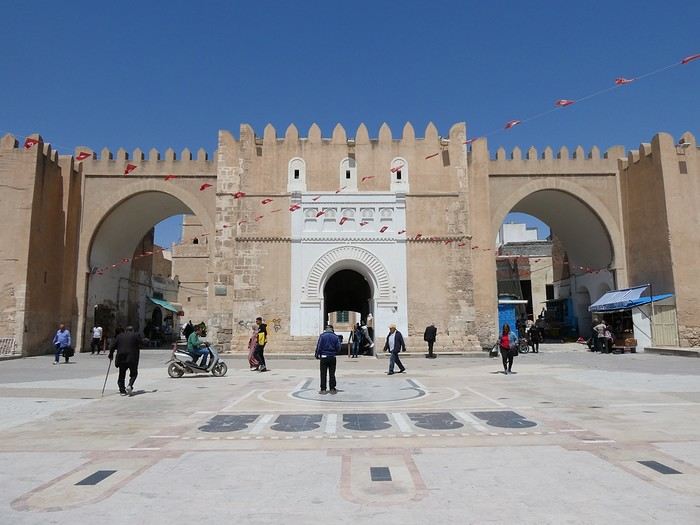
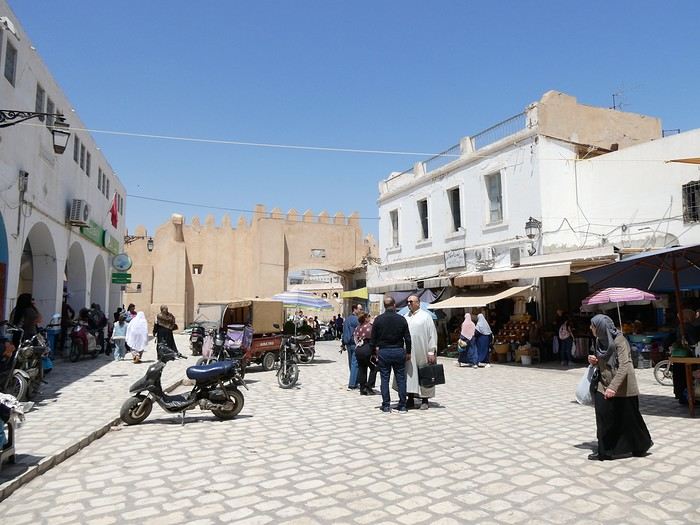
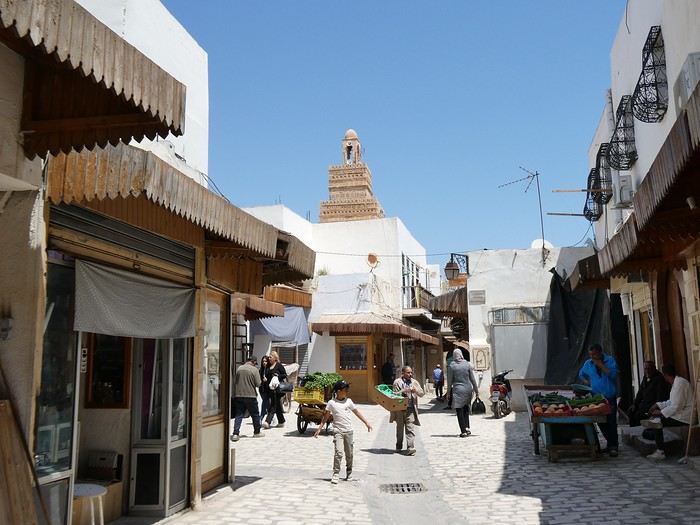
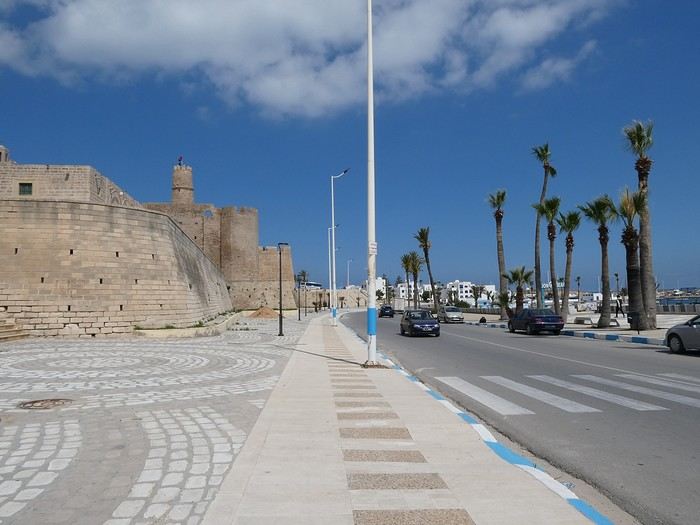
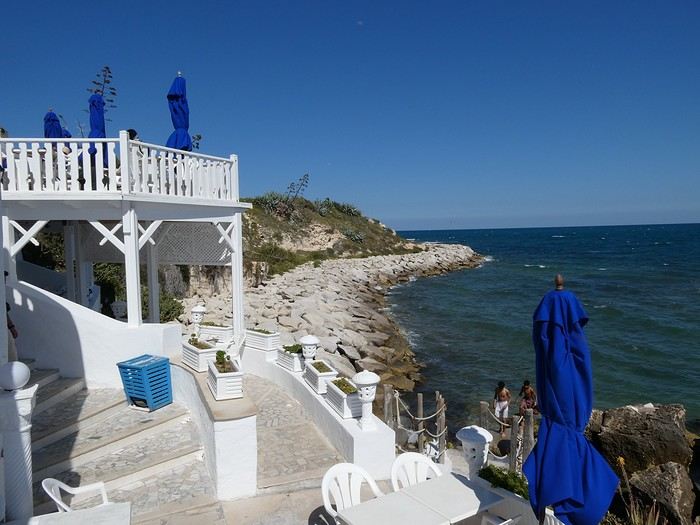
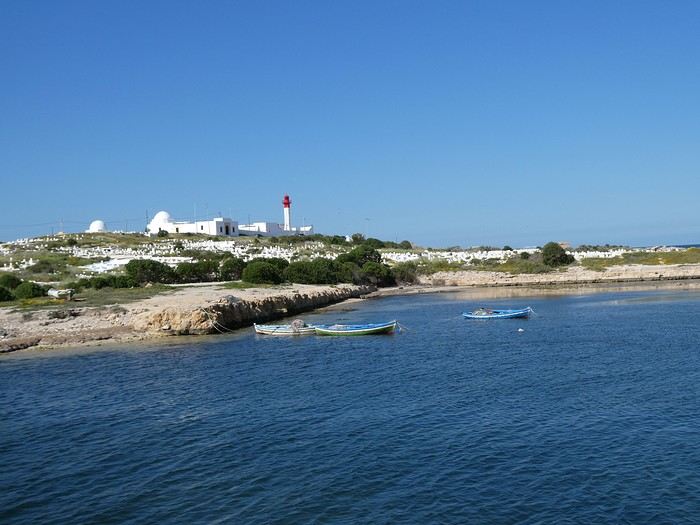
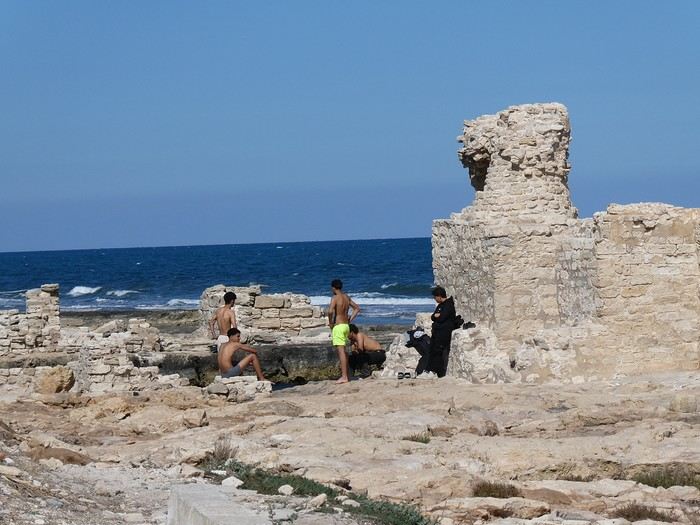
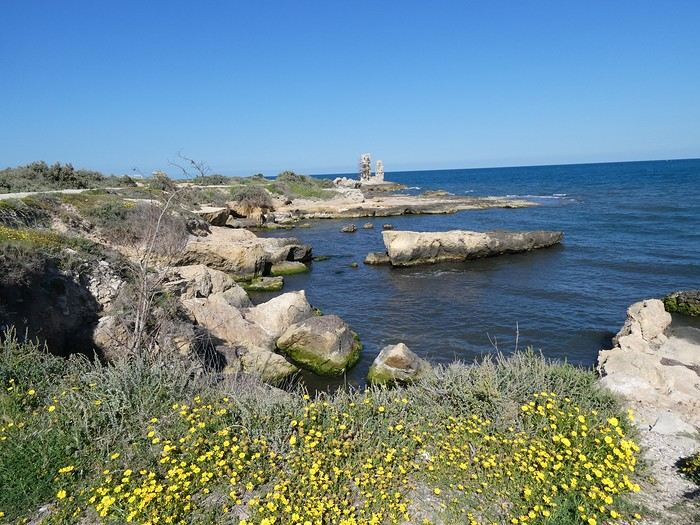
On this forum, I shared my first trip to Tunisia from mid-February to early March (https://voyageforum.com/forum/impressions-tunisiennes-en-direct-d11460662/), a stay I enjoyed so much that six weeks later, I’m back in Tunisia for a full 15 days (I return on April 27).
This time, I landed in Monastir on a direct flight from Nice, again with Tunisair. We left about ten minutes late, and the flight lasted around 1 hour 30 minutes. A meal was served on board (cucumber salad with Edam-like cheese, carrots, and two small portions of dishes I couldn’t identify—semolina with peppers, olives, and parsley, two small rolls, a square of processed cheese, and a chocolate cake). It’s worth noting because it’s not common on flights this short.
In February, France and Tunisia were in the same time zone, but now Tunisia is one hour behind. This time difference and the flight duration work perfectly for a short 15-day trip since it takes me a few days to adjust to jet lag.
Luckily, I’d asked my hotel about the taxi fare from the airport because the drivers (there were several around me) didn’t hesitate to quote outrageous prices. The actual fare is 20 dinars, but one asked for 120 dinars. I refused, and another offered 60 dinars. I replied, "That’s too expensive—I’ll take the metro!" (Having tried the Tunis metro, I had no desire to repeat the experience in Monastir with a suitcase!). I started walking toward the metro, and one of the drivers caught up with me, saying, "20 dinars is fine!" I’ll skip the details, but the negotiation took a little while.
When I arrived at the hotel, I told the receptionist someone had asked for 120 dinars. He put his hands to his head and said, "They’re awful!" He remembered our phone call two days earlier when I’d booked (he’s the one who told me I could take the metro).
The Mezri Hotel isn’t expensive. I got a sea-view room for 75 dinars (22 €). (I’d booked a balcony room for 90 dinars but wouldn’t have had time to enjoy it.) It’s well-located but noisy because there’s no double glazing.
The receptionist is a very kind older gentleman. He called a friend whose wife is from Tozeur to find out if I should take a bus or a *louage* tomorrow and what time.
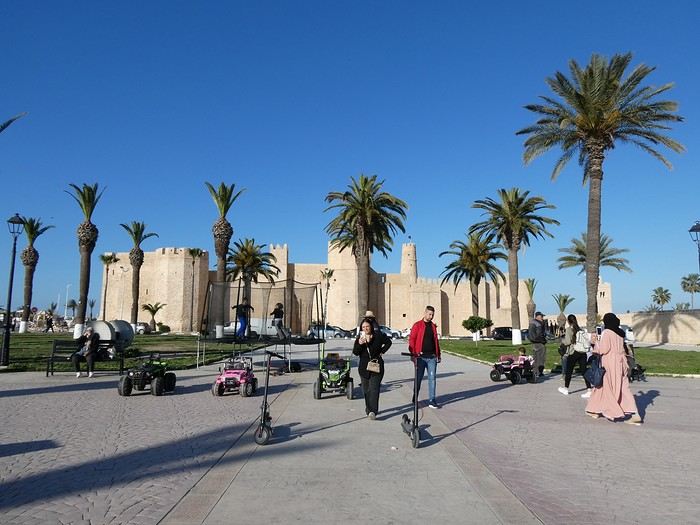
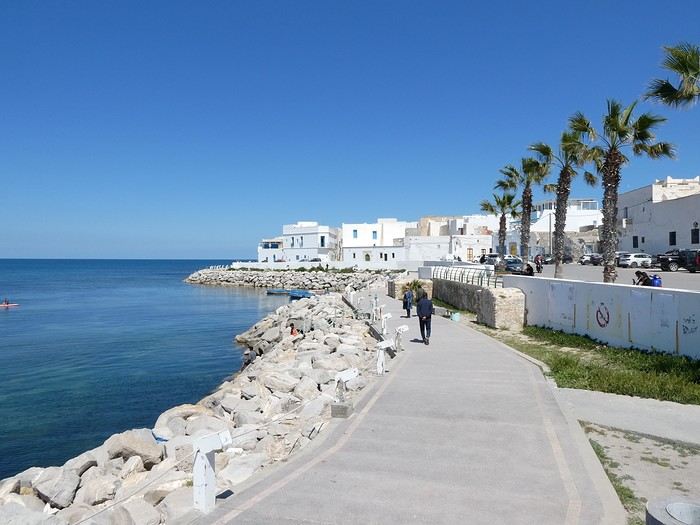
I arrived at the hotel around 7:00 PM and had time to stroll along the corniche to the ribat. Despite some run-down buildings, the seaside seemed livelier and cheerier than Sousse’s.
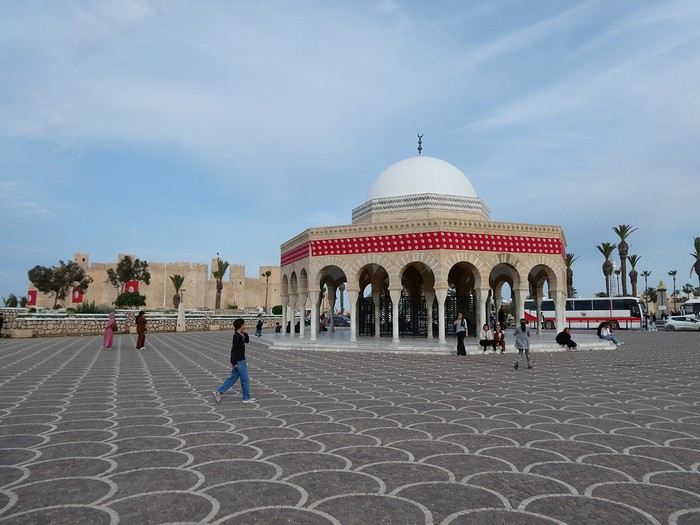
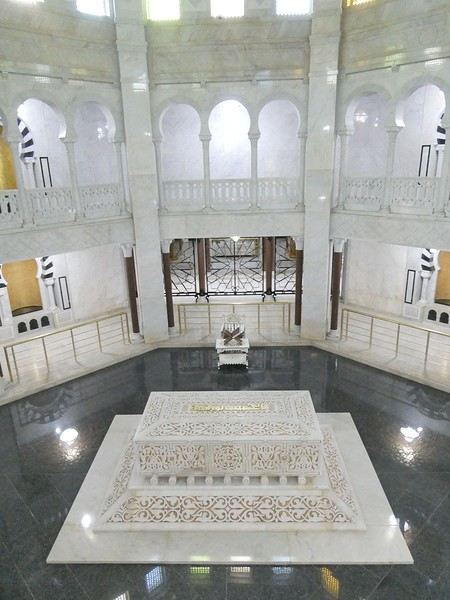
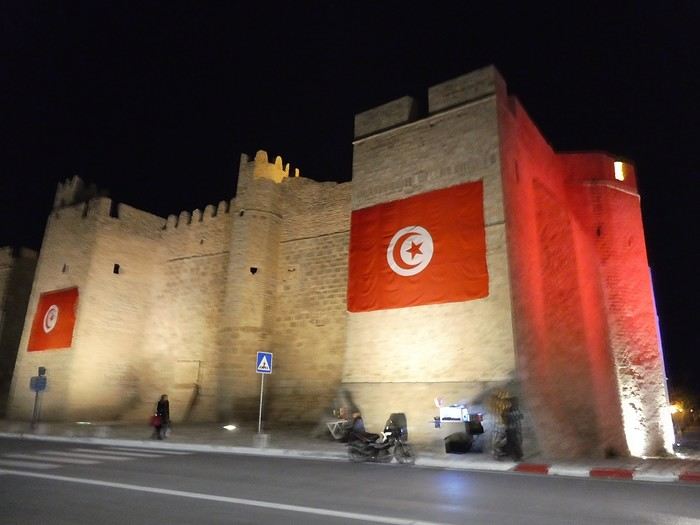
Monastir is the hometown of former president Bourguiba. I passed his mausoleum by taxi. There are Tunisian flags along the avenue by the sea because every year on April 6—the anniversary of Habib Bourguiba’s death—the president of the Republic visits the Bourguiba Mausoleum in Monastir to pay respects.
The taxi driver mentioned other Tunisian presidents. He complained about rising prices and insecurity, blaming President Kaïs Saïed (I’d already heard that security was better under Ben Ali).
At the end of my stay, I’ll take time to explore Monastir, but tomorrow morning, I’m off to Tozeur—a long bus ride awaits me.
TO BE CONTINUED....
" Celui qui voyage sans rencontrer l'autre ne voyage pas , il se déplace "
( Alexandra David-Néel )
" Ahora todos quieren ser latinos , no , ey , pero les falta sazon , bateria y reggaeton " ( Bad Bunny )
Today I traveled from Monastir to Tozeur by bus—it’s a long trip. The bus left around 10:00 AM and arrived around 4:30 PM.
As I’d been told, the bus departs between 8:30 and 10:00 AM. After an hour on the road, it stops for an hour so everyone can eat, and then it doesn’t stop again until Gafsa, then Metlaoui (though some people did get off between those two stops).
The bus is more comfortable than a *louage* but takes longer. The two drivers who took turns drove carefully, though they did check their phones now and then. Still, it’s nothing like the crazy drivers I’ve had in Central America, and the roads are much better here.
Tozeur is in southern Tunisia, near the Algerian border and the Sahara. Before reaching Gafsa, we drove through a sandstorm all the way to Tozeur. It created this whitish, slightly ochre light, and part of the landscape looked like it was in a haze.
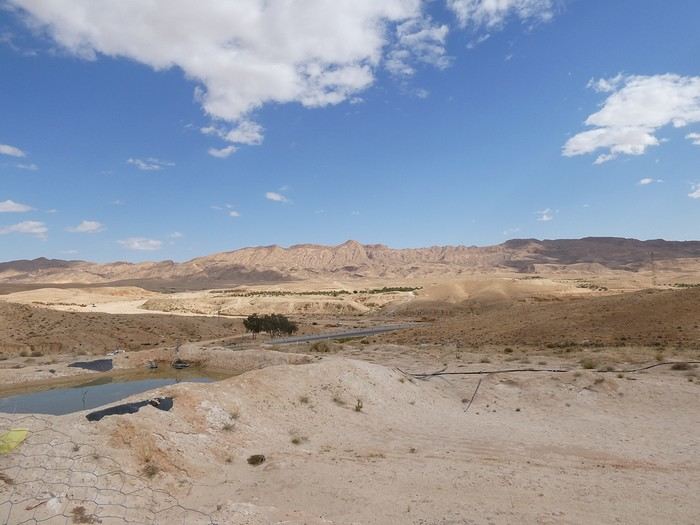
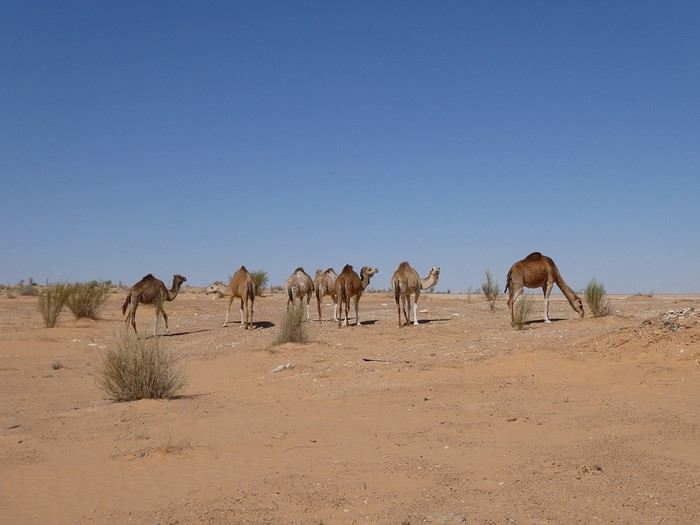
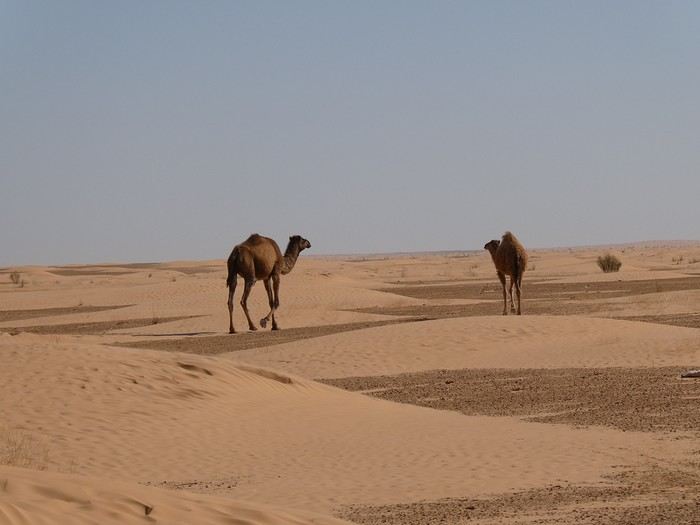
Between Metlaoui and Tozeur, I saw several herds of dromedaries. It’s so different from what I’ve seen in Tunisia so far—the landscape is much more arid (and littered with plastic bags, even in the Tozeur oasis, where I barely stepped in). I’m even surprised there are hotels with pools in this region.
Like during my first trip, I’ve met Tunisians—both men and women—who were really eager to help, even when I didn’t ask. For example, during the bus stop, I was looking at the pastries in the place we’d stopped, and two young women from the same bus (who I hadn’t spoken to) came up to me and asked, "Do you need anything? If you want us to translate for you, we can." I thanked them warmly.
Earlier, before getting on the bus, a man who works at the station asked the driver to put my suitcase in the hold first. I felt a little awkward about it compared to the other passengers, but later, he even came onto the bus to make sure I was inside! And like last time, some Tunisians quickly welcomed me—like a *louage* driver I asked about how to get to Tozeur, who immediately said, "Welcome to Tunisia!" (Though, just like anywhere, there are also some unfriendly Tunisians.)
Since my last trip was during Ramadan, I didn’t get much of a chance to try Tunisian food (aside from pastries). I’m hoping to make up for it this time. Today, I tried dromedary in a jar at the restaurant *Dar Deda*—it’s dromedary meat cooked in a small jar with potatoes, tomatoes, and chili. I thought it lacked flavor, the portions were small, and it was a bit pricey (45 dinars). There aren’t many restaurants in Tozeur, but tomorrow I’ll try the one across the street to taste another local specialty.
Tomorrow, I’m visiting the medina and the palm grove, and I’ll try to figure out how to get to Chott El-Djerid. I saw a few agencies, but they were all closed. I’ve run into some tourists, but not many—there’s a group of Italian bikers at my hotel, dressed like they’re about to do the Paris-Dakar. Their big motorcycles are such a contrast to the old mopeds Tunisians ride, often without helmets and with multiple people on them.
TO BE CONTINUED...
" Celui qui voyage sans rencontrer l'autre ne voyage pas , il se déplace "
( Alexandra David-Néel )
" Ahora todos quieren ser latinos , no , ey , pero les falta sazon , bateria y reggaeton " ( Bad Bunny )
Hi Marie, you’re not going to Chott el Jerid—you cross the chott on your way to Kébili and Douz. That’ll be your route.
You should really check out how to get to the mountain oases instead.
As for food, I’d say the further south you go, the more expensive life gets and the smaller the portions become—especially meat.
You’ve got to learn to make do...
I remember eating well at Tozeurus and a pizzeria near Dar Cheraiet.
What’s the deal with Le Minaret restaurant next to the mosque? Back in the day, the food there was amazing.
This was around the time of Serge and Pierre Maurice and their lovely guesthouse.
La République is a basic but decent restaurant.
La terre entière est ma patrie et la famille humaine est ma tribu.
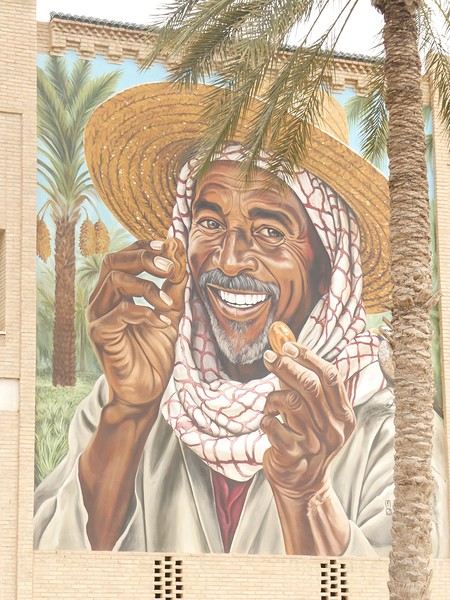
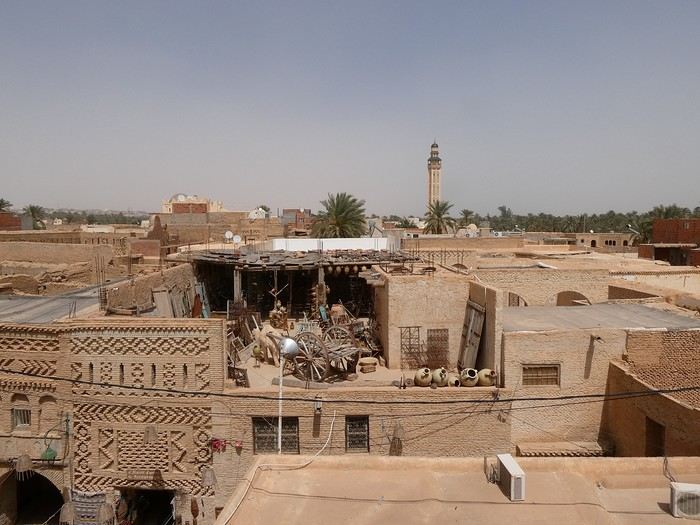
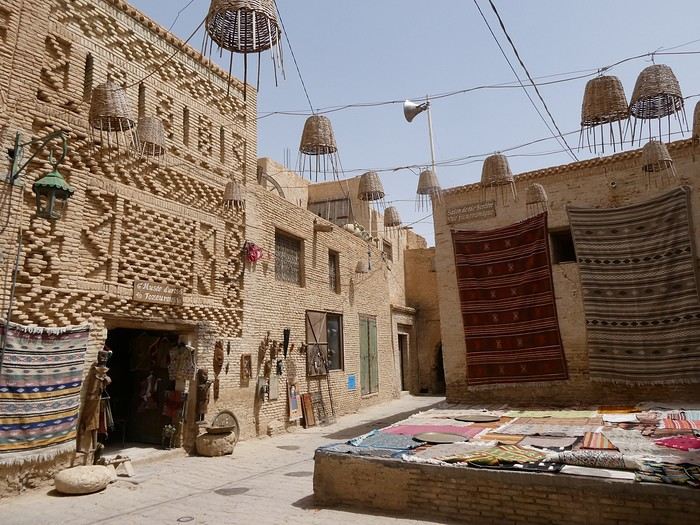
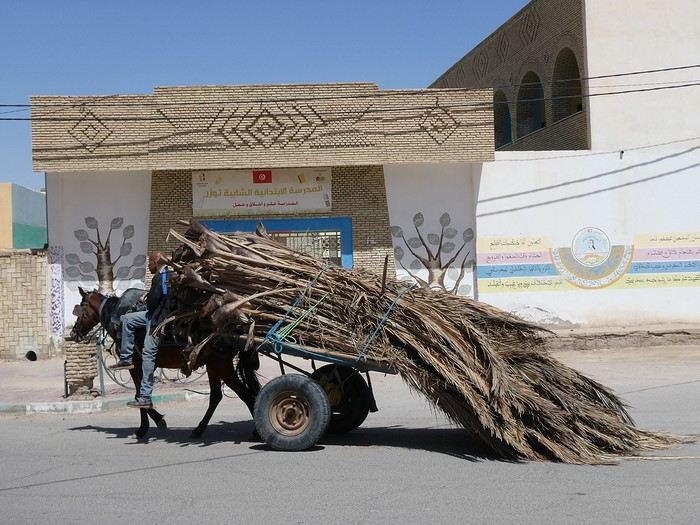
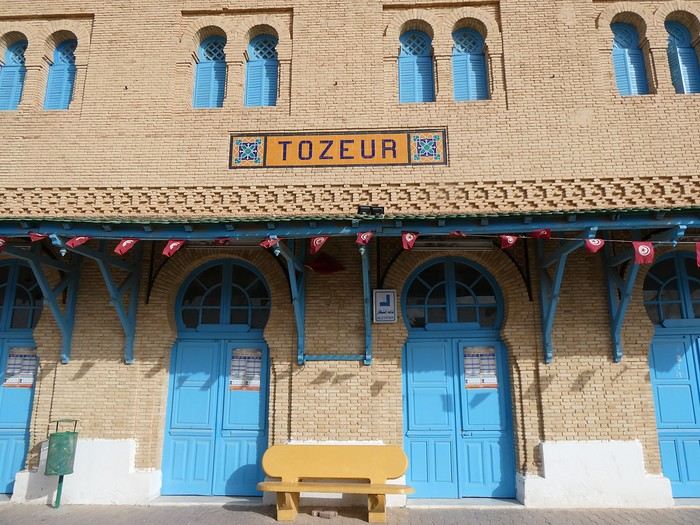
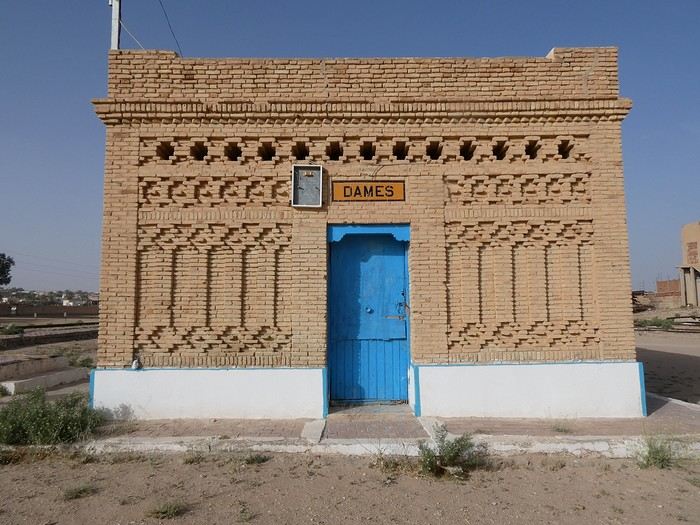
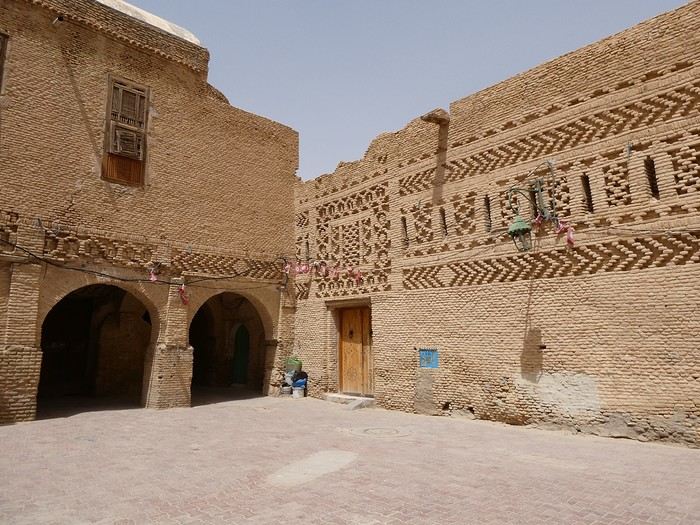
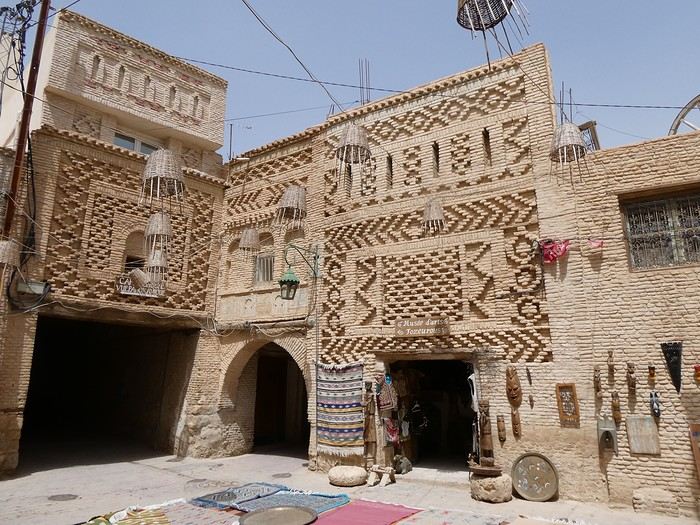
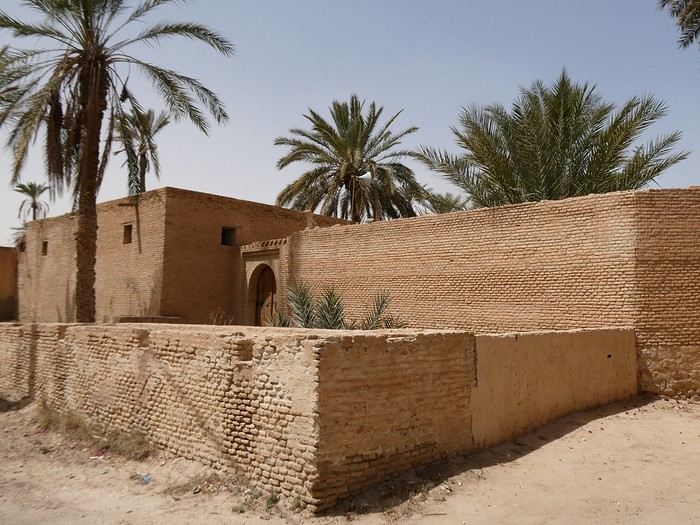
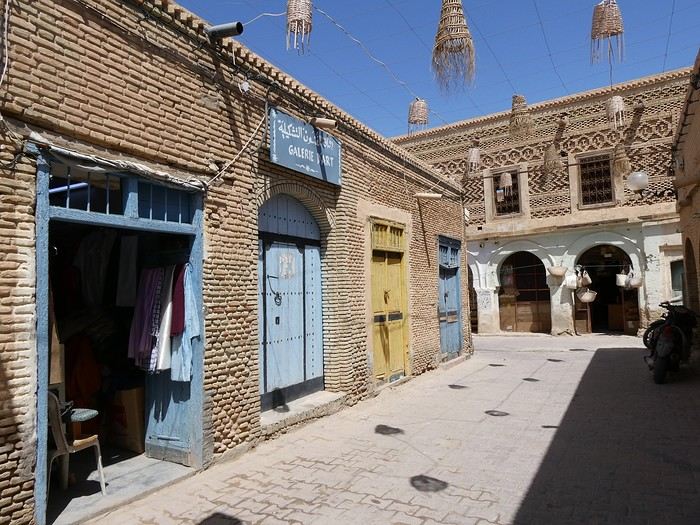
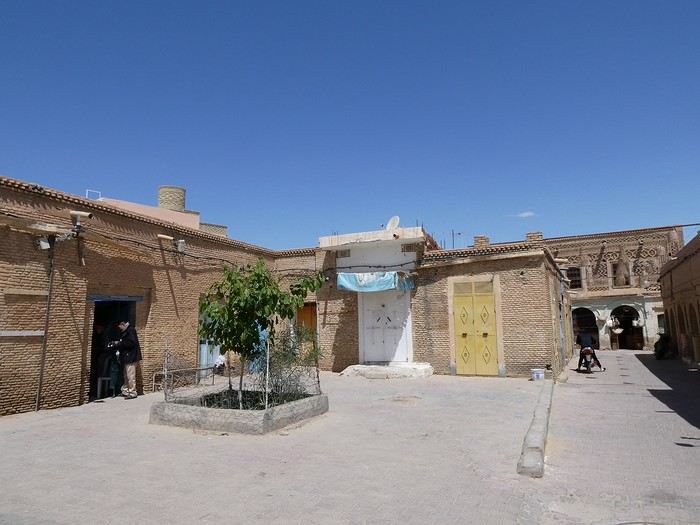
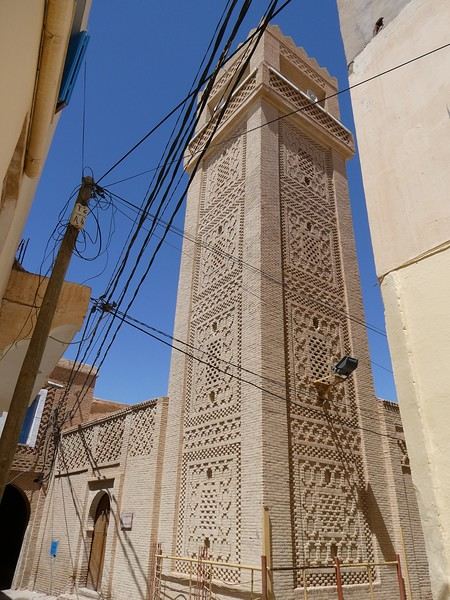
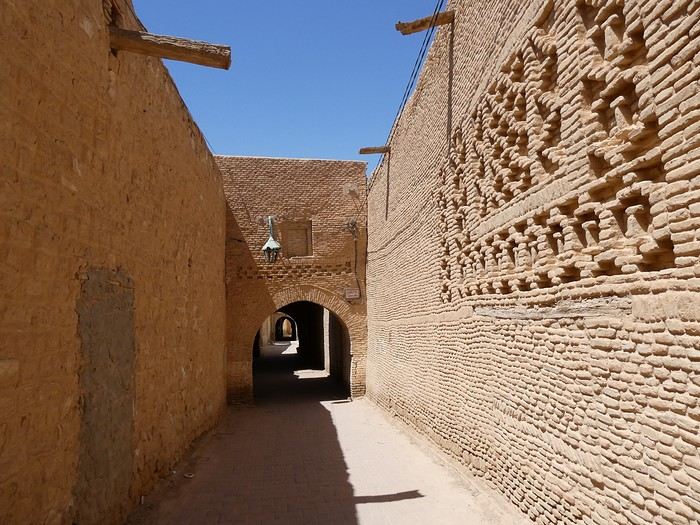
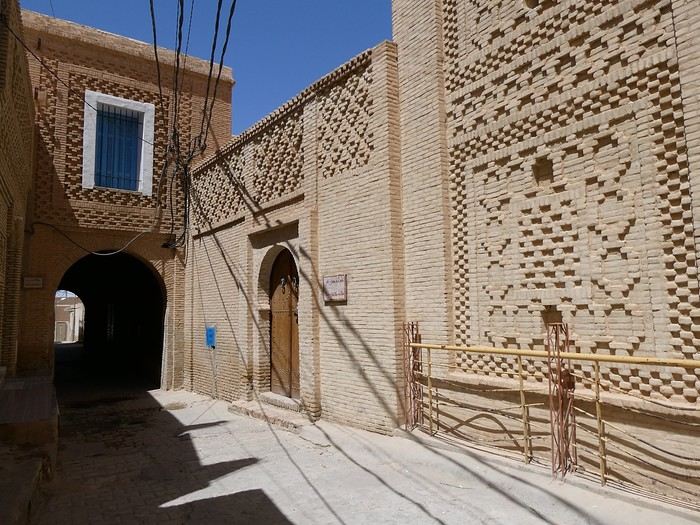
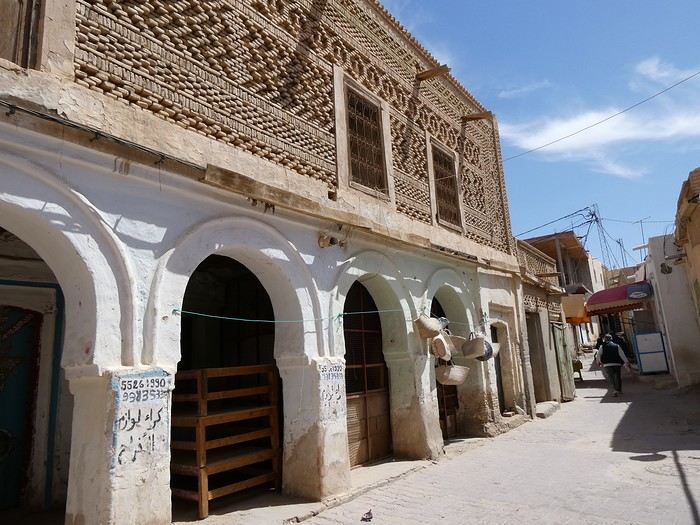
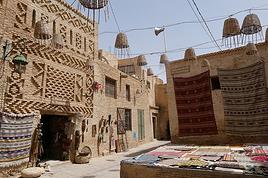
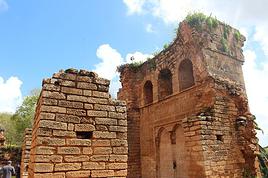
The town has a lot of charm with its sand-colored brick buildings featuring geometric relief patterns.
The train station and its ladies' restroom:
I'm staying at Hôtel El Arich. The room costs 80 dinars (23.57 €), breakfast is included, the hotel is well located, and it offers good value for money.
THE MEDINA ❤️ ❤️
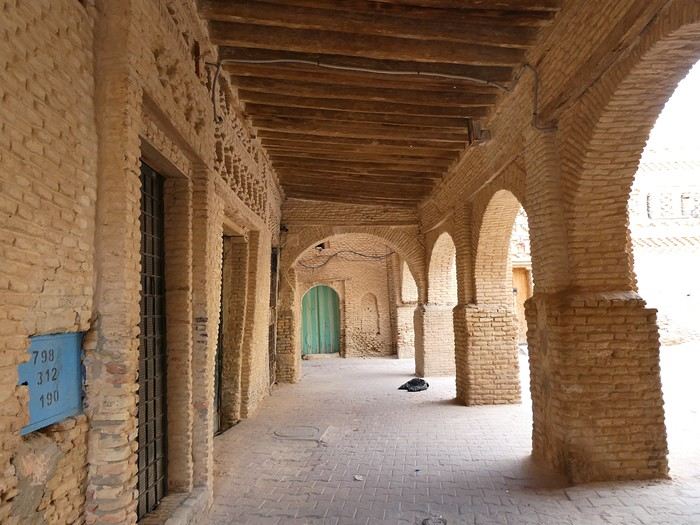
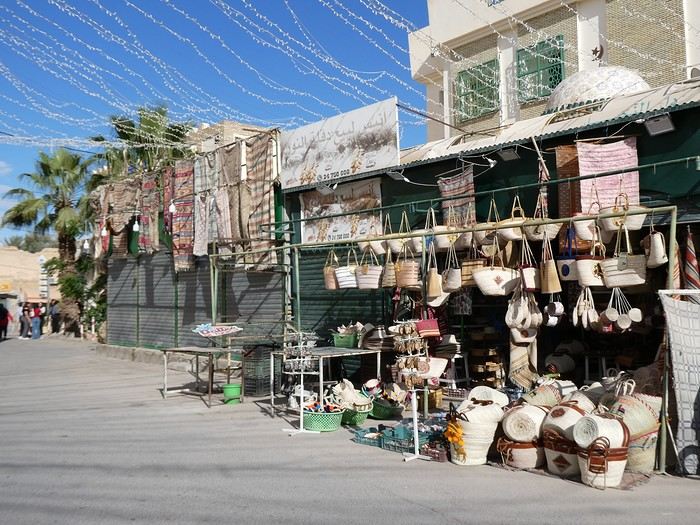
With its light brick walls, it’s very different from the medinas in Tunis, Sousse, or Kairouan. You’ll find religious buildings, stunning doors, a café with a great view, and more.
I spent nearly two hours with a lady painter who served me dates and olives she prepares herself. She shows visitors around the house where she works (Tozart Raoudha Bribech, 5 dinars). You can also enter without taking a tour or buying anything—I didn’t buy anything, just visited the house.
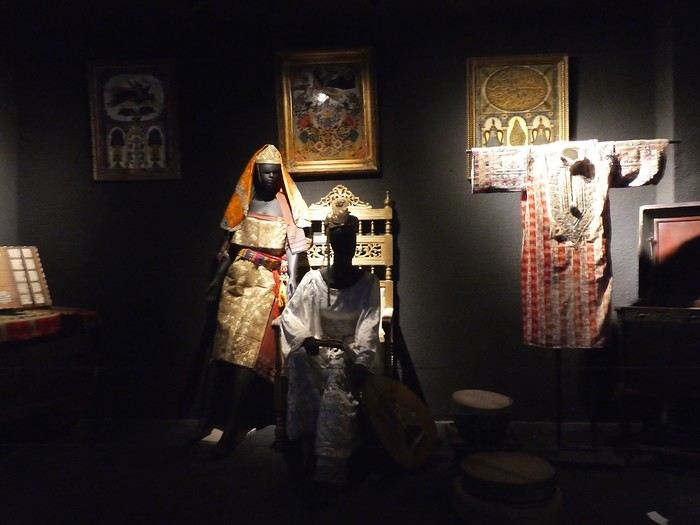
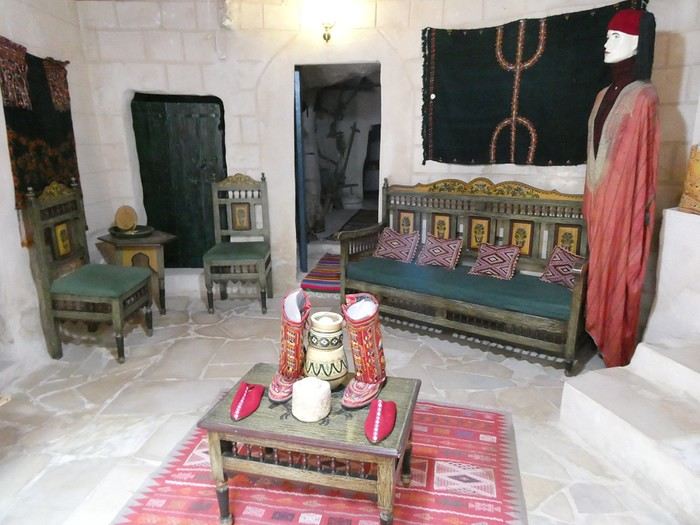
Almost opposite is the small Museum of Popular Arts and Traditions, run by Souad, who wasn’t there. Her husband gave me a tour. You’ll see kitchen utensils, costumes, a loom, and more.
THE PALM GROVE ❤️
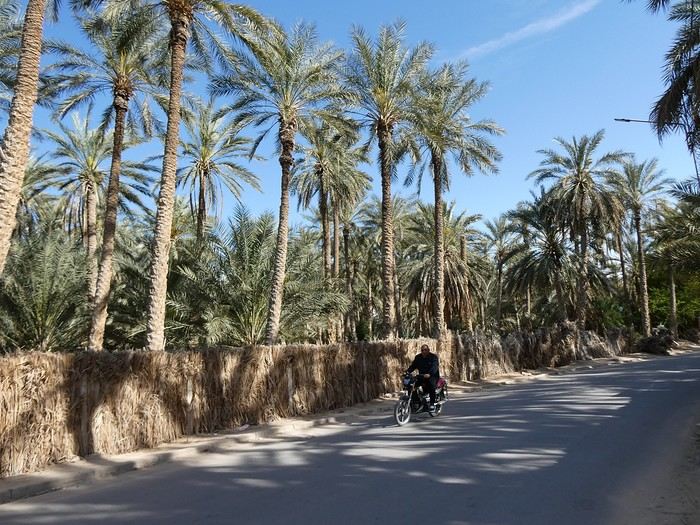
I was there around noon, on foot, and it was pretty hot, so I only saw a small part of this vast oasis.
Some areas are really dirty, with countless plastic bags.
I’ll go back tomorrow morning, earlier.
DAR CHERAIT MUSEUM ❤️
There are two exhibitions—I only did one (entry: 12 dinars each = 3.50 €).
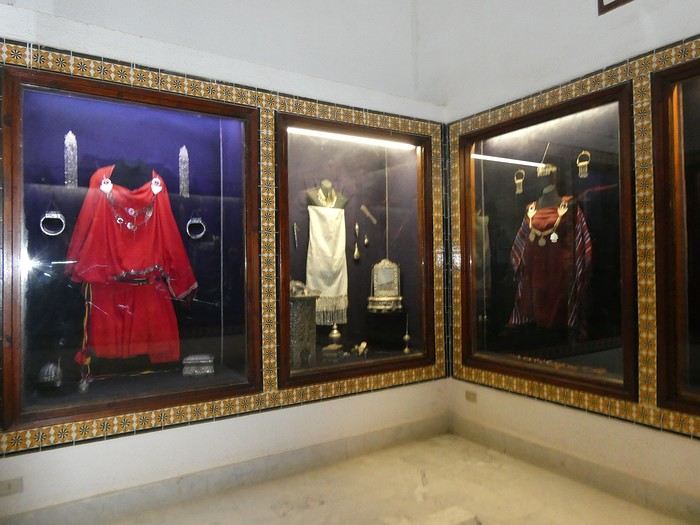
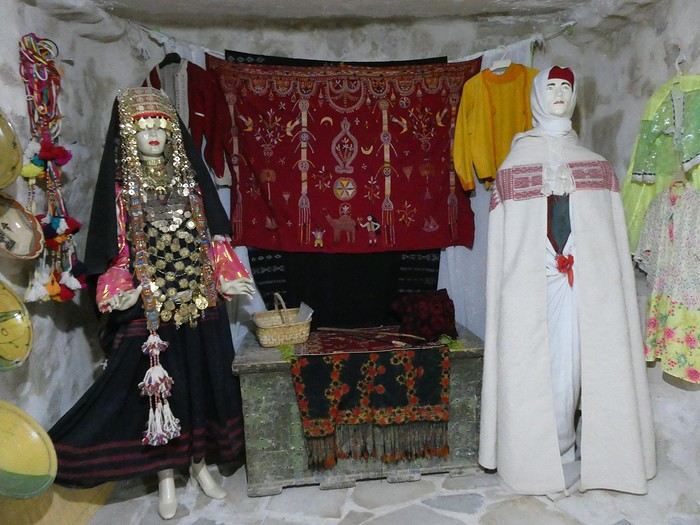
A lovely museum showcasing beautiful costumes, stunning Berber jewelry, and mannequins depicting scenes like a hammam, weaving, and henna for weddings. Too bad there aren’t more explanations.
■ Tonight, I had dinner at Restaurant Tisouros. It was much better and way more filling than yesterday’s restaurant—I couldn’t finish my plate, it was too much! I told the owner (super nice) that I’d be back tomorrow.
I tried "barkoukech," a typical dish from the region made with small semolina pasta balls, sauce, fava beans, and a piece of quail, chicken, octopus, or dried fish. It’s really good but quite spicy—you have to say if you don’t want it too spicy.
■ Tomorrow, I’m going to Chott El Jerid with a tour agency. Prices vary from 180 dinars to 250 dinars depending on the agency. For now, I’m alone, but if other people join, the price should drop. We leave around 3:30 PM for the sunset, and we’ll go by 4x4.
For those without a car, there’s no problem visiting mountain oases or other places in the region with an agency—they even go to Douz.
I plan to visit Mides and Chebika from Tamerza since I’ll be staying there, but if that’s not possible, I’ll go with a tour agency from Tozeur. Souad’s husband also gave me the phone number of a guide in Metlaoui.
You can go to Nefta and Tamerza by *louage* (shared taxi).
Tomorrow morning, I intend to visit a brickworks to see how Tozeur’s famous bricks are made.
TO BE CONTINUED...
" Celui qui voyage sans rencontrer l'autre ne voyage pas , il se déplace "
( Alexandra David-Néel )
" Ahora todos quieren ser latinos , no , ey , pero les falta sazon , bateria y reggaeton " ( Bad Bunny )
Marie, let us know if it's interesting at sunset.
I think it’d be better to do it at sunrise.
Suggesting a 4x4 for this road is just a way to charge a lot for the trip.
It’d be more interesting to do a sunset trip in the sand dunes at Douz. Maybe a night in the desert at this time of year—isn’t it too cold?
What’s really interesting is the trip from the chott to Kébili, the sand rocks, and the hot springs at Debebcha.
Let us know if you’re going that far.
Have a great day tomorrow.
La terre entière est ma patrie et la famille humaine est ma tribu.
, you’ll have to tell us if it’s interesting at sunset.
I think it’d be better at sunrise.
Possible to spend a night in the desert at this time of year, not too cold?
Hi there,
I think all the agencies do it at sunset. The one I’m going with asked me if I’d prefer morning or afternoon. I asked what was best, and they said afternoon, but it’s possible they do it in the afternoon so they have time to visit the mountain oases in the morning.
I think they don’t do desert excursions here—they do them in Ksar Ghilane.
For the weather, even during the day, it’s not that hot.
Otherwise, yeah, the trip to Chott El-Djerid is pretty expensive.
" Celui qui voyage sans rencontrer l'autre ne voyage pas , il se déplace "
( Alexandra David-Néel )
" Ahora todos quieren ser latinos , no , ey , pero les falta sazon , bateria y reggaeton " ( Bad Bunny )
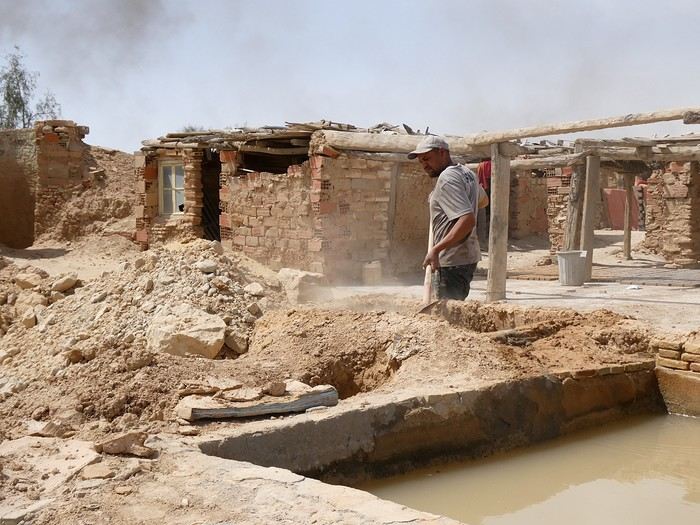
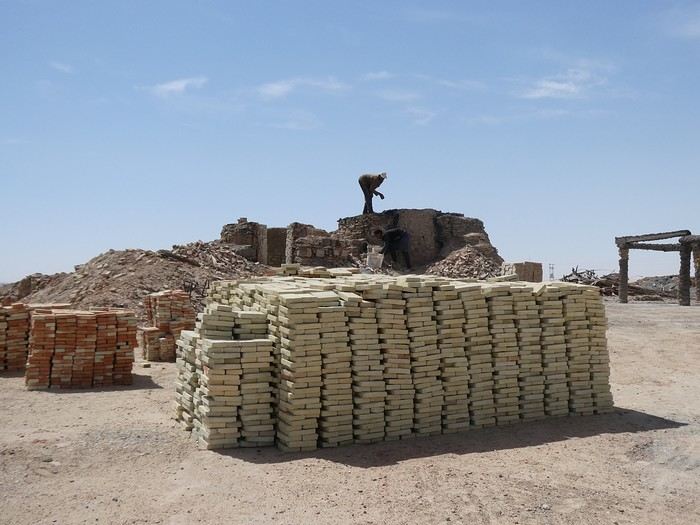
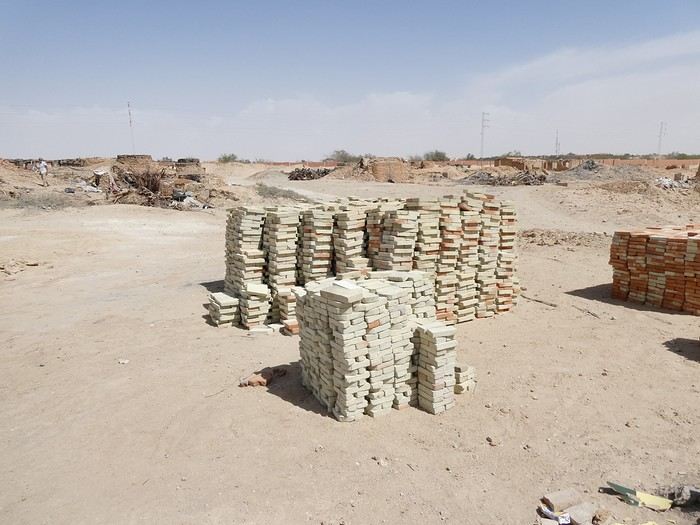
Tozeur is known for its light-colored bricks, some of which form raised geometric patterns.
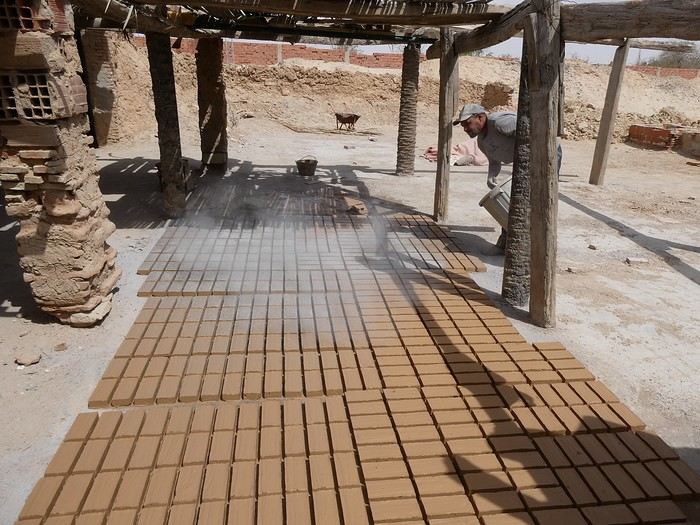
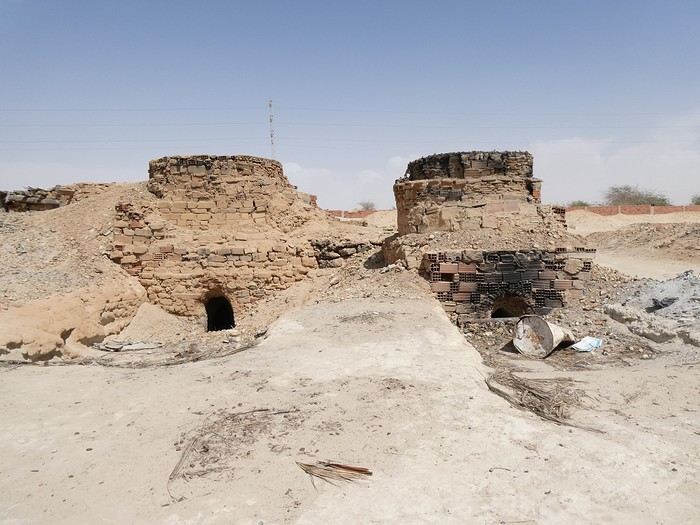
This morning, I went to see the brickworks where these famous bricks are made.
The brickworks aren’t far from my hotel. I first exchanged some money at a currency exchange place along the way. Yesterday, I’d asked the man who works there if it was possible to walk there, and today he asked how my visit went. I told him I was heading there now, and when I was already a little ways off, he called me back to introduce me to a man who works at the brickworks and was just leaving at that moment. So I set off on foot with this 70-year-old man who still makes bricks and walks the route every day.
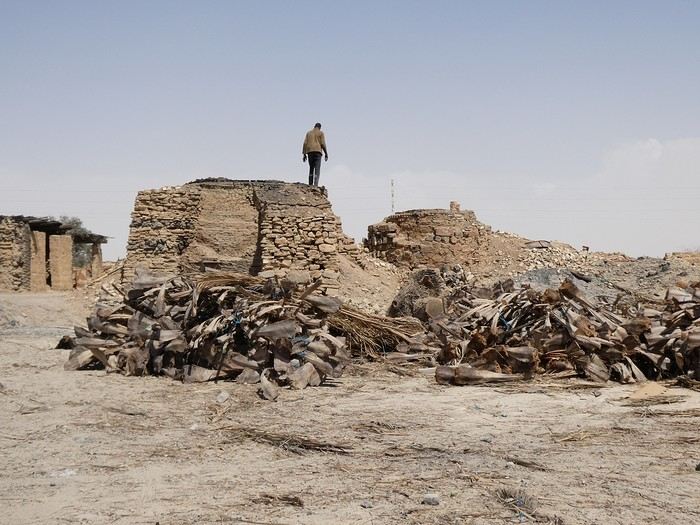
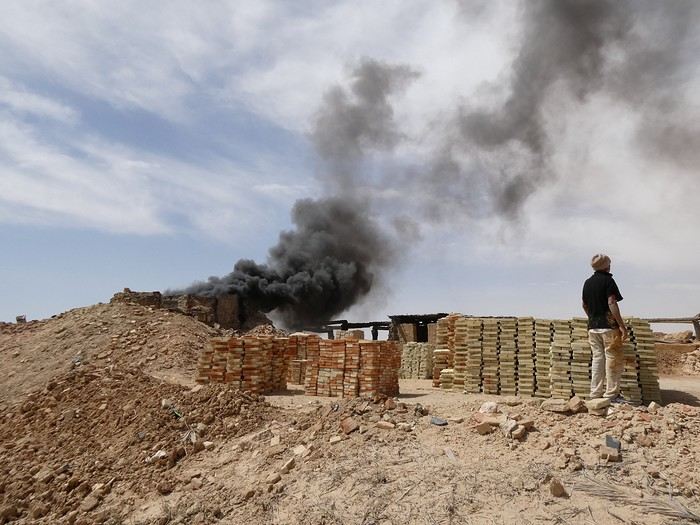
I was lucky because this man spoke French well and was really interesting. Once we arrived, he showed and explained everything to me: the two-colored clays that are mixed, the wooden frames of different shapes and sizes used as molds. I saw a worker covering the bricks with ash to prevent cracking, then they’re fired in a kiln fueled by palm branches and left to cool.
The visit is interesting if someone explains the whole process to you. A young man who was molding the bricks and covering them with ash also gave me some explanations.
I gave the older man a tip because he’d spent quite a bit of time showing and explaining everything to me.
I left on foot again. A little further on, a young man from the brickworks arrived on a motorcycle to offer me a ride back to Tozeur, but I declined, and he headed back toward the brickworks.
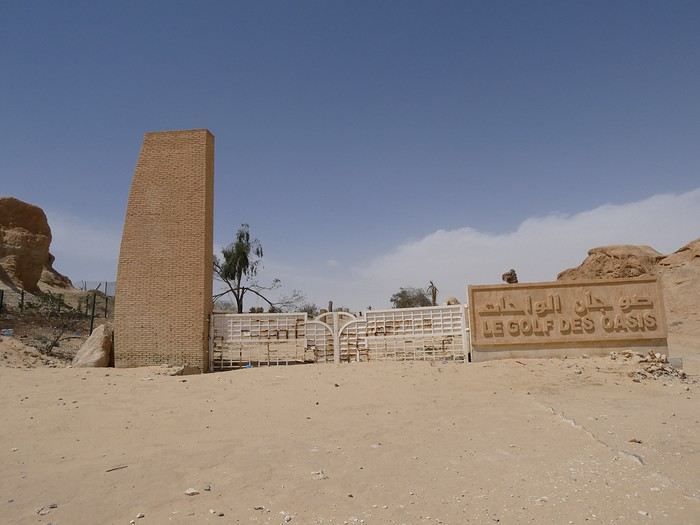
Not far from the brickworks, there’s a somewhat surreal place: the former Golf des Oasis! It’s mind-blowing to see this in a place where there’s sand everywhere! I looked it up online and found articles from the tourist press in 2006 with photos of the golf course’s grass. Today, it seems incredible that such a place could have existed!
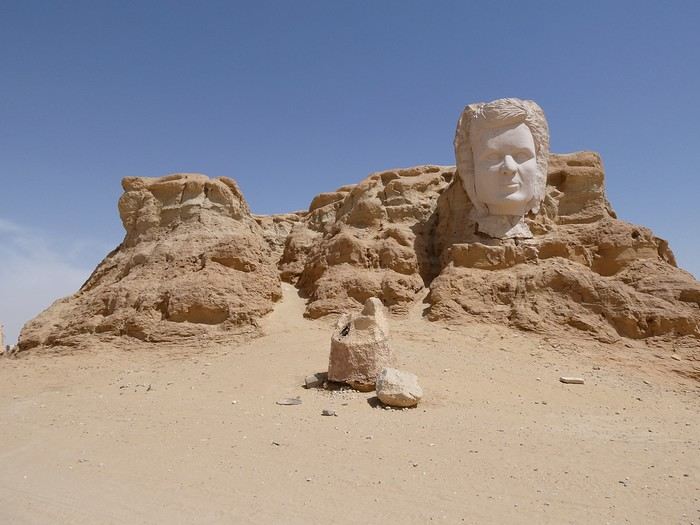
In the same area, there’s a rock with the molded face of a poet from Tozeur—it’s quite curious.
There are also camels for those who want to take a short ride through this arid landscape. I walked part of the way with a man and his camel who were going in the same direction as me. Before, he used to live in tents in the desert, but now he lives in Tozeur. I asked him which he preferred, and he told me it’s better for the kids because there’s no school in the desert (someone else had mentioned that to me yesterday).
Other than that, it’s not just the Golf des Oasis that’s disappeared—there are other fairly large hotels that are closed and even a bit abandoned. I think there must have been more tourists in Tozeur at one time than there are now (right now, there are some, but not that many).
TO BE CONTINUED...
" Celui qui voyage sans rencontrer l'autre ne voyage pas , il se déplace "
( Alexandra David-Néel )
" Ahora todos quieren ser latinos , no , ey , pero les falta sazon , bateria y reggaeton " ( Bad Bunny )
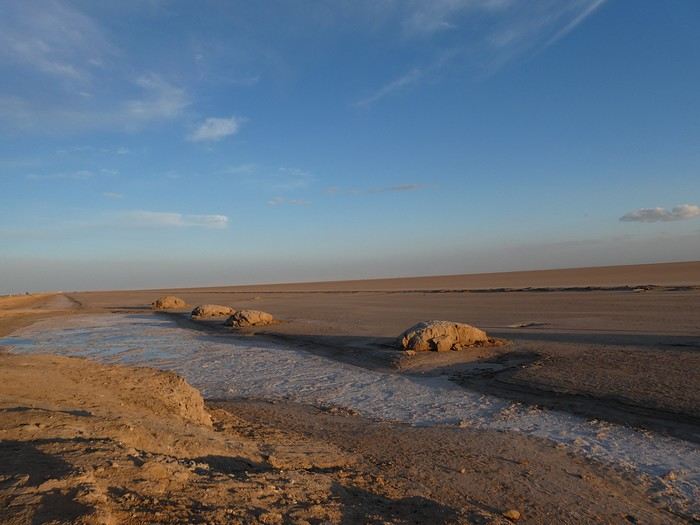
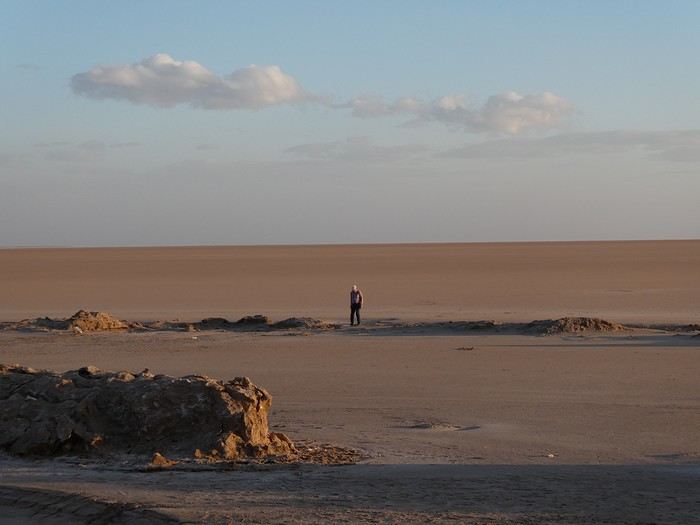
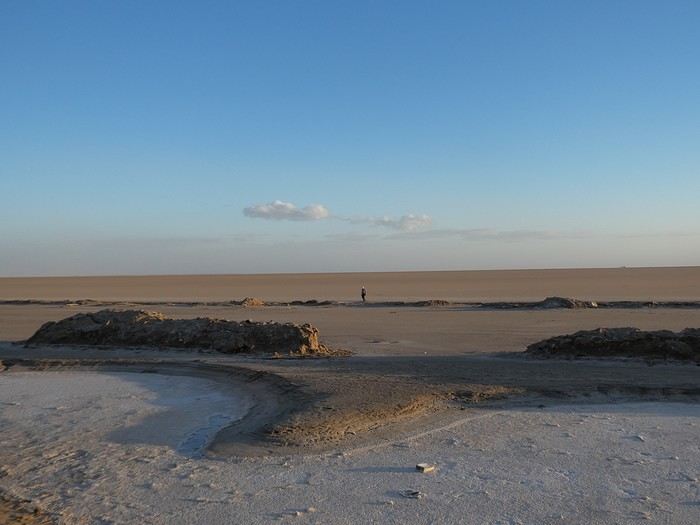
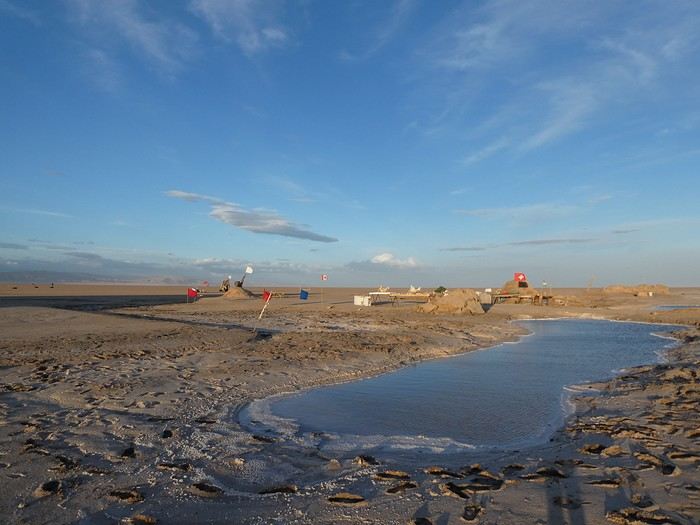
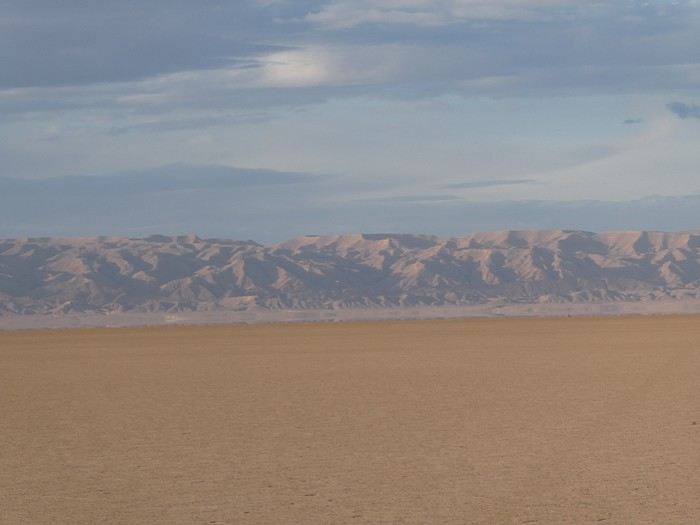
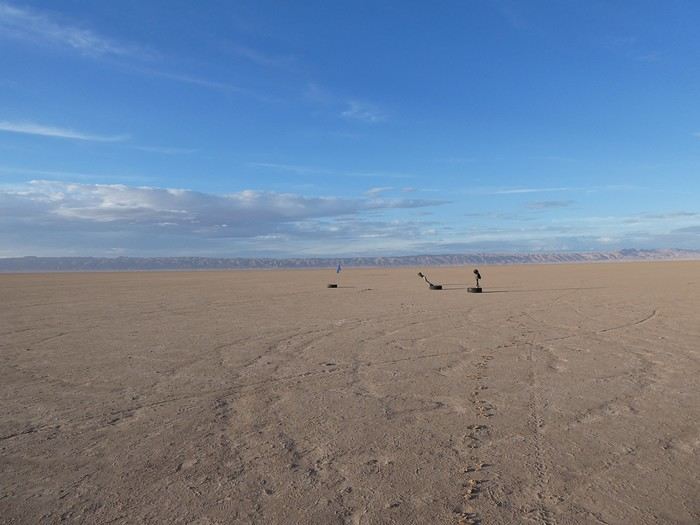
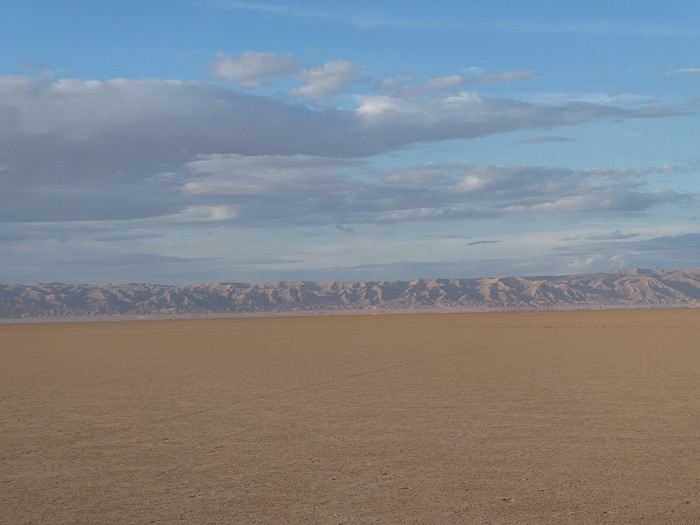
This is a massive salt lake, covering an area of 5,000 km². You can actually see mirages here—it looks like there’s a sheet of water in the distance, but there’s no water at all.
There’s no public transport that stops here, so I went with a tour agency. I was alone, and it was pretty expensive: 180 dinars (53 €) for just over 4 hours. We went in a 4x4 because that’s the only type of vehicle the agency has. Normally, the stop at Chott El-Jerid is included in the excursion to Douz and Ksar Ghilane.
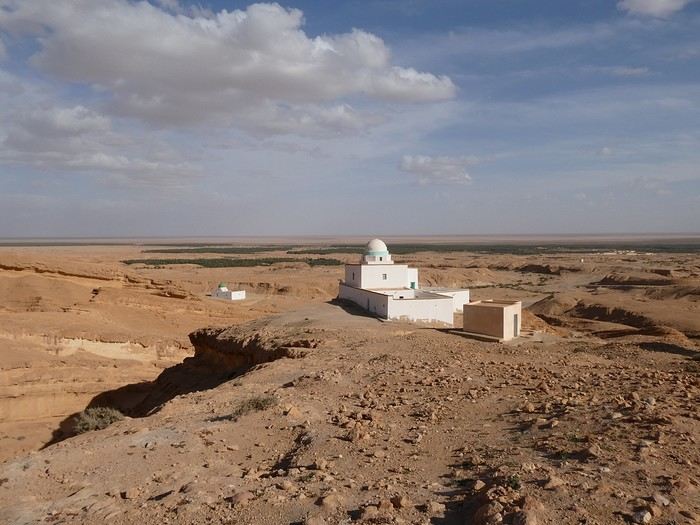
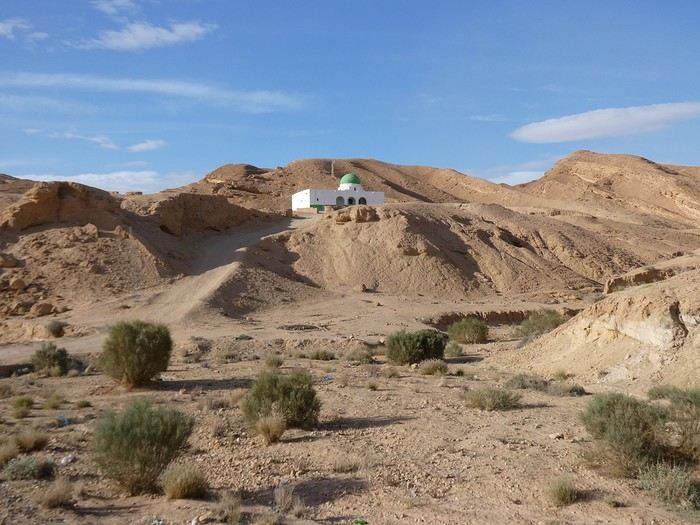
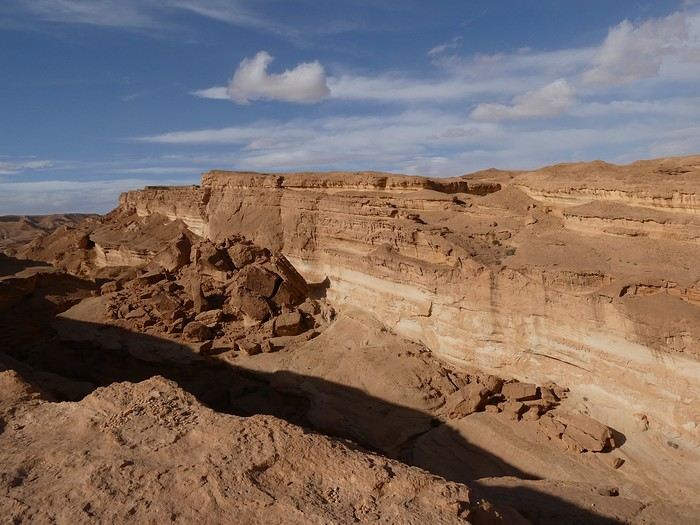
Before arriving at the chott, we stopped at the Sidi Bouhlel canyon, where there are two small, isolated mosques and where some *Star Wars* scenes were filmed.
At the end of the day, the light was gorgeous, but it was *super* windy—cold wind, too. We passed by the place where the salt is harvested. You can’t go in, but you can see the mountains of salt and the trucks loading it up.
For those without a vehicle, the best option is to find people to split the cost of the trip or maybe even go with a taxi.
The guide didn’t give much explanation—too bad, I think he was tired. He’d started the excursions at 7:30 AM with a group of Spaniards in the mountain oases.
I’d originally planned to leave Tozeur tomorrow, but I’m staying another night since I’m heading to Nefta by *louage*. I emailed the hotel in Tamerza to change my stay dates.
TO BE CONTINUED.....
" Celui qui voyage sans rencontrer l'autre ne voyage pas , il se déplace "
( Alexandra David-Néel )
" Ahora todos quieren ser latinos , no , ey , pero les falta sazon , bateria y reggaeton " ( Bad Bunny )
A small town about twenty kilometers from Tozeur, easily accessible by shared taxi (2,500 dinars = 0.70 €).
While the town once saw many tourists, that’s no longer the case today. Many hotels and restaurants are closed. Former French presidents like Jacques Chirac and François Mitterrand are said to have stayed in Nefta. Nowadays, guides waiting for tourists call it the "dead city."
Yet Nefta is worth the detour, if only for its medina with its typical regional architecture—light bricks, vaulted passages, beautiful doors, a charming little square, and more.
Nefta is Tunisia’s second holiest city after Kairouan, with many zaouïas and mosques. The latter are also made of light bricks, with geometric patterns on the minarets.
To get to the Corbeille, you need to take a taxi. I waited at one spot with a shopkeeper who kept me company, telling me about Tunisia’s healthcare system. There were very few taxis, and none were available. I moved to wait somewhere else and asked another shopkeeper if I could walk there. He said he’d take me, closed his shop, and let me ride in his pickup—he wouldn’t accept any money.
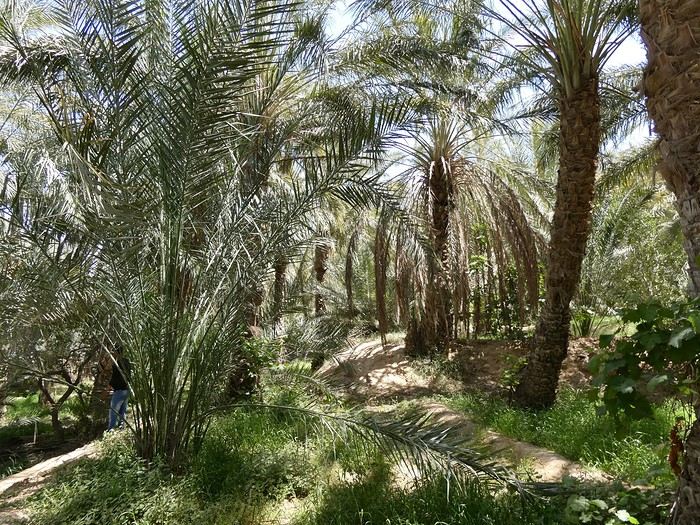
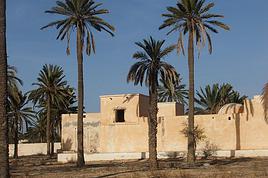
At the Corbeille, a guide was desperately waiting for clients. He offered to show me the small palm grove for 20 dinars, and I agreed. You can see the three layers of cultivation: vegetable crops (peppers, lettuce, etc.), fruit trees (figs, apricots, pomegranates, etc.), and palm trees.
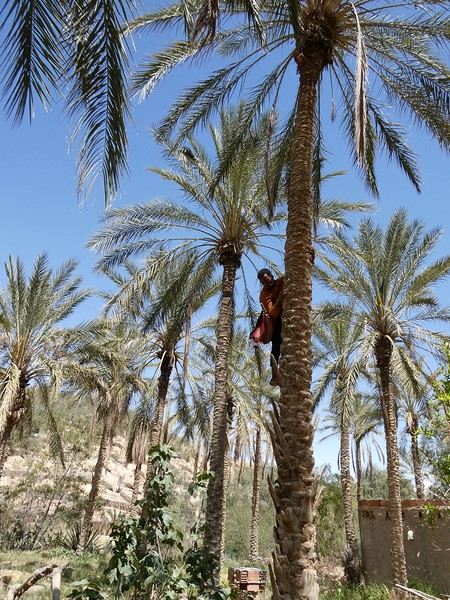
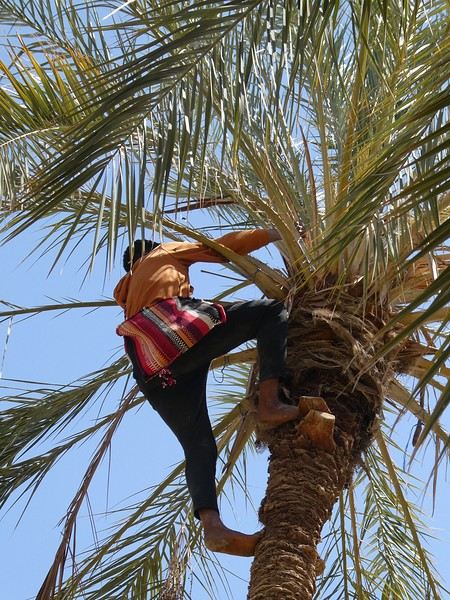
A young man was pollinating the palm trees, climbing barefoot to the top of a female palm with a cloth pouch containing male stems, which he attached to the female stems.
There are also henna plants—I’d never seen them before. The guide, Ali, explained how to prepare henna from these plants and gave me a whole bundle to dry in the sun and try making some.
Ali also explained the irrigation system, and more.
You can explore the basin on your own without a guide, but be very careful of the many stray dogs. At the end of the visit, as we were leaving, a pack of at least six dogs—some looking like Rottweilers—ran toward us, very aggressive. Luckily, Ali grabbed a stick, and they eventually left, but I was really scared (if the dogs attack, there’s no one around to help).
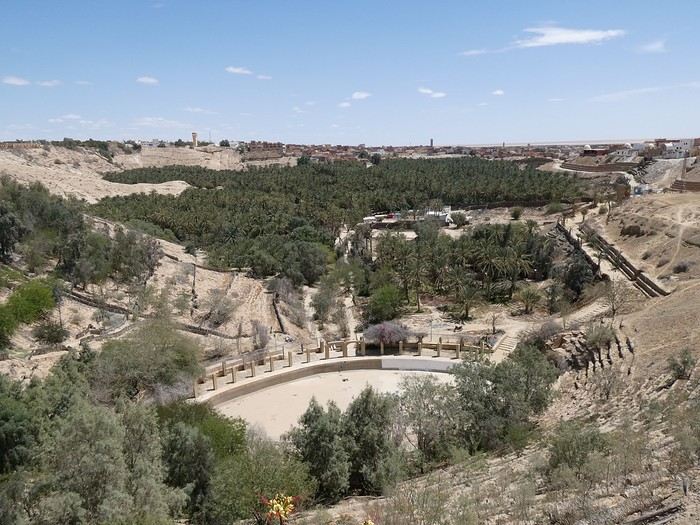
The Corbeille is a basin carved into the rock, planted with palm trees. From where the shopkeeper dropped me off, you get a panoramic view of the basin, the town, and the Chott El-Djerid in the distance.
Ali had mentioned another guide who could take me to Oung Jmel, a chott with Star Wars filming locations. Since it was around 3:30 PM and very hot, I didn’t go, but travel guides say it’s worth it.
For those without a vehicle, it’s entirely possible to visit the main tourist sites by combining shared taxis, travel agencies, or even hitchhiking.
Tomorrow, I’m heading to Tamerza. There’s only one shared taxi at 7:00 AM. I’ll stay overnight in Tamerza, and the only return taxi leaves at noon. I’m not sure if I’ll find a connection to Douz right after.
I don’t know how long I’ll stay in Tamerza, but at least a full day.
TO BE CONTINUED...
" Celui qui voyage sans rencontrer l'autre ne voyage pas , il se déplace "
( Alexandra David-Néel )
" Ahora todos quieren ser latinos , no , ey , pero les falta sazon , bateria y reggaeton " ( Bad Bunny )
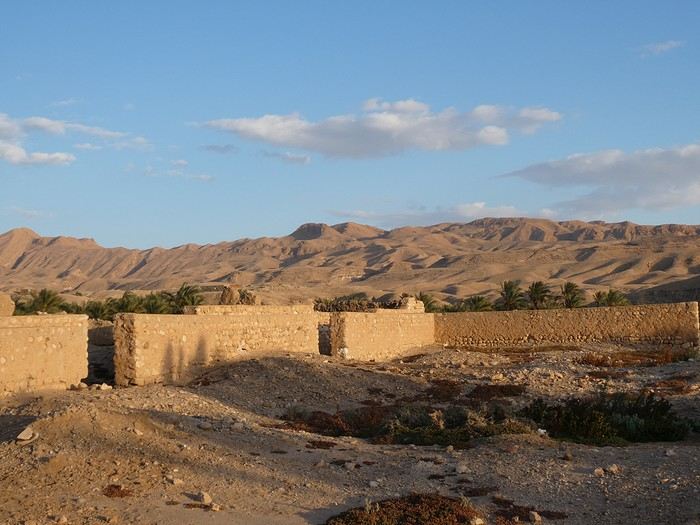
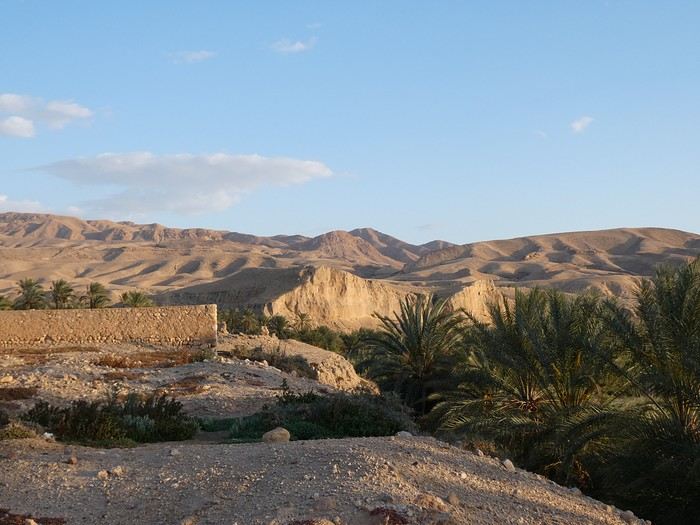
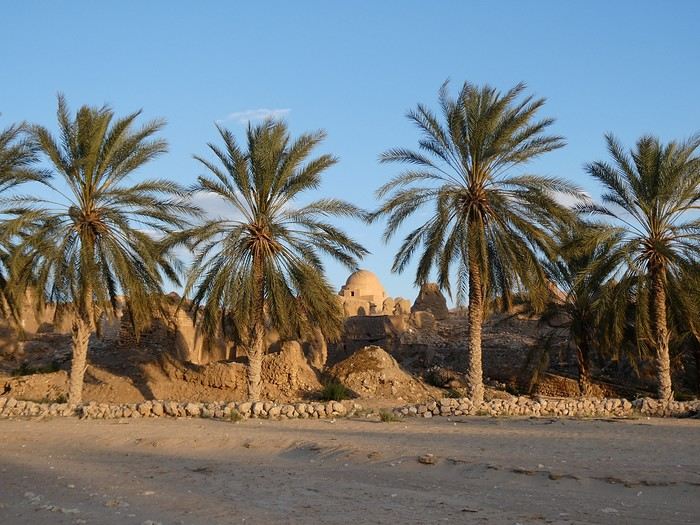
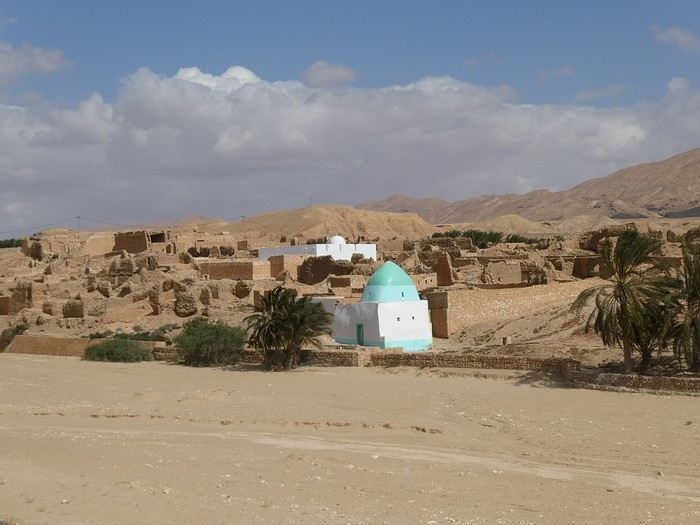
These are Tamerza, Mides, and Chbika, which are a few kilometers from Tozeur and very close to the Algerian border.
TAMERZA
The shared taxi that was supposed to leave at 7:00 AM finally left at 8:30. There were four of us passengers, so it was a comfortable ride (shared taxis can carry 8 or 9 people, including one in the front). The trip took 1 hour and 10 minutes and cost 6 dinars (1.75 €).
Tamerza isn’t far from Tozeur, but in some places, the road isn’t in great condition, and there are curves since we’re in the mountains—so we didn’t drive fast. We’re about ten kilometers from the Algerian border.
The shared taxi dropped me off right in front of the hotel.
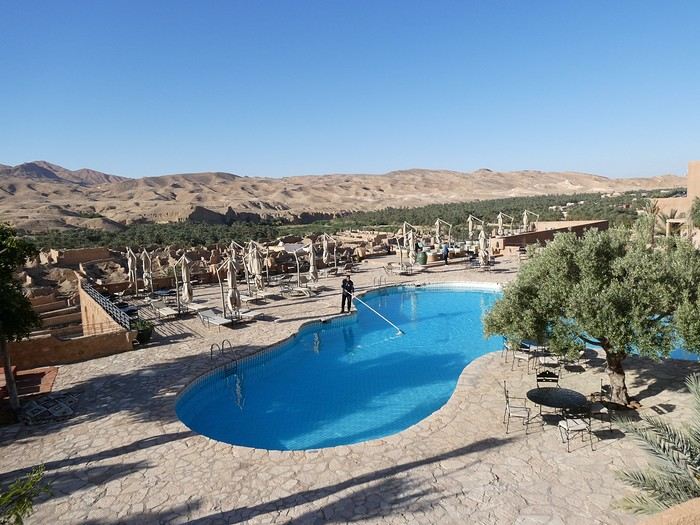
■ I’m staying at the Tamerza Palace, a 4-star hotel that’s absolutely stunning.
The room costs 231 dinars, which is 68 €, and an excellent breakfast is included. It’s cheaper than an Ibis Budget in Europe. For an extra 40 dinars (11.78 €), there’s a very good and varied buffet dinner.
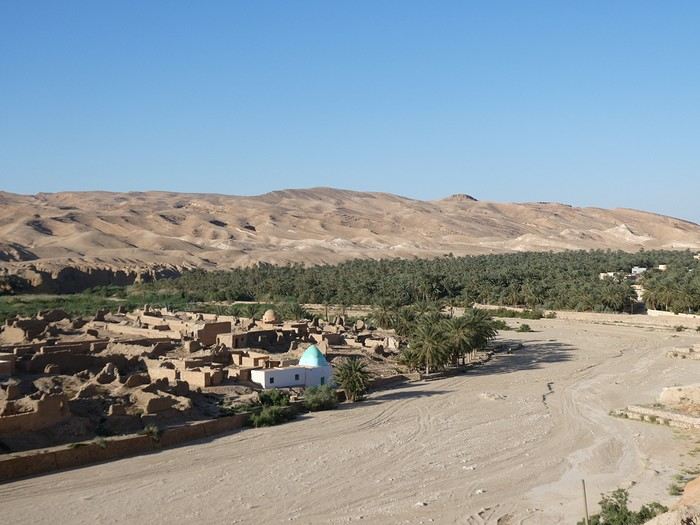
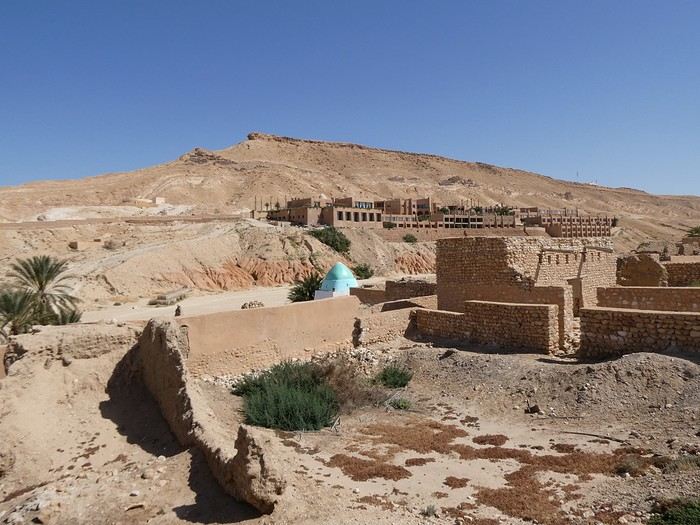
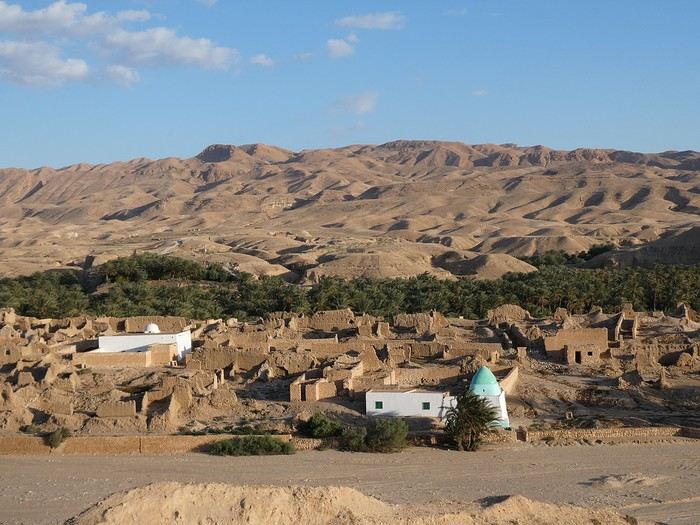
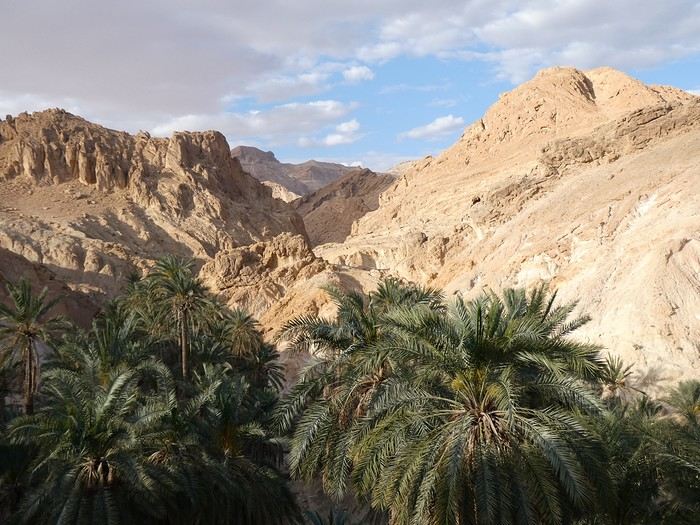
The hotel’s location is exceptional—right in the middle of a mineral landscape, overlooking the old ruined village devastated by floods in the 1960s. At sunset, the light on the desert mountains is gorgeous!
The hotel blends perfectly into the landscape, matching the same color, and inside, the walls of the common areas look like rock.
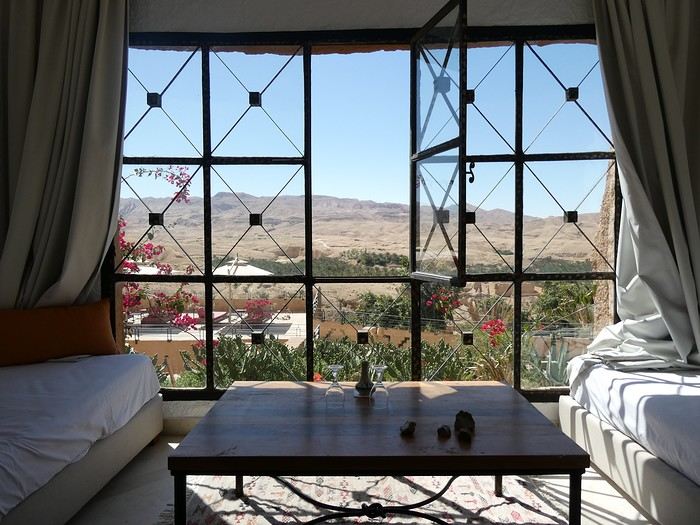
The rooms face the ruins and the mountains. My room is huge, all made of palm wood and wrought iron, with Berber rugs. It has a loggia with a huge bay window and two bench beds. The mountains are right in front, along with the ruins of the village and the three marabouts (sacred sites). I’m tempted to stay longer than planned just to spend a whole day lounging and reading with this view!
The doors of the rooms are traditional Tunisian palm wood doors with nails representing figures to ward off the evil eye or Berber symbols—I love these doors!
The hotel has a pool, which seems a bit odd in such an arid region.
Among the guests, there are a lot of French families of Tunisian origin and a big group of Quebecois. I chatted with a Quebecoise who works in tourism—they’re in Tunisia for three weeks (I’d already met quite a few Quebecois in February).
■ Today, I took a little walk in the palm grove. After the pack of dogs in Nefta yesterday, I didn’t feel like going alone, but I was with a man I’d asked for directions. He insisted on taking me there (for free). He owns several palm trees himself (about 300, I think). Afterward, we had lemonade. Some guides arrived with tourists, and I chatted with one of them. He’s an English teacher (and a guide during school holidays). Too bad he’s not available tomorrow—he’s really nice and interesting. He’s known the man I was with for a long time and told me, "You’re in good hands!" Luckily, so far, I haven’t had any bad encounters—even though people say, "I’ll take you there," or "Get in the car," and I just do it without thinking, even though I don’t know them...
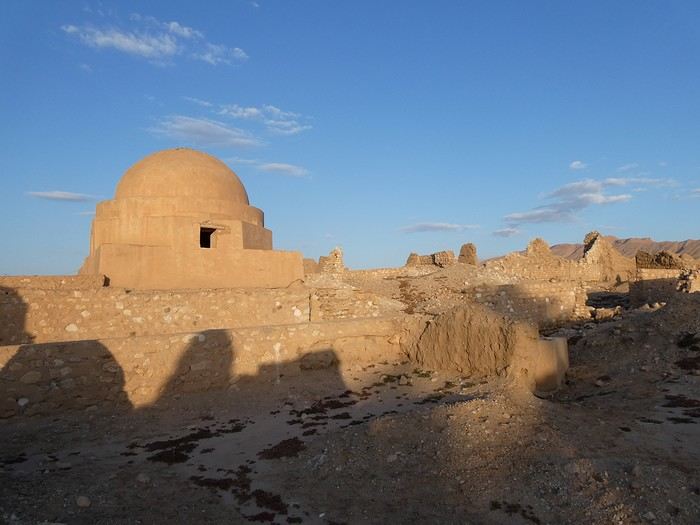
I also walked around the ruins of the old village, where three marabouts remain. One still seems to be in use, I think. I’ll find out more tomorrow since I’ve hired a guide (who works with the hotel) to visit Tamerza, Mides, and Chebika.
Otherwise, the man I met this morning was willing to take me there tomorrow.
I’m supposed to leave the day after tomorrow for Douz, but I haven’t booked anything yet, and I don’t even know what time the shared taxi leaves. Someone told me noon, but I’m not sure.
TO BE CONTINUED...
" Celui qui voyage sans rencontrer l'autre ne voyage pas , il se déplace "
( Alexandra David-Néel )
" Ahora todos quieren ser latinos , no , ey , pero les falta sazon , bateria y reggaeton " ( Bad Bunny )
Hi Marie,
It’s a pleasure following your adventures and encounters! 😊
Can’t wait to see some photos—your story makes me want to know more.
Like Tamerza, for example, which you describe so well.
Hi Marie,
I hope your guide will be great and make this day a special memory of southern Tunisia.
We’ve been going there for about 30 years, and for us and those we introduce to the south, the stop in the mountain oases is always the highlight of the trip—even if we don’t stay at the Tamerza Palace...
But we often spend the evening with a family of guides we know in Chebika, and even though I don’t understand everything that’s said, I always leave with a heavy heart.
I don’t remember seeing dogs in these villages, but I often realize that in many places where I think I’m alone, there’s always someone I didn’t notice.
Ask the Tamerza Palace for info on the Bey’s train—the hotel and train used to work together before. That’d be awesome!
Have a wonderful day.
Thanks for sharing.
La terre entière est ma patrie et la famille humaine est ma tribu.
I don’t remember seeing any dogs in those villages, but I often realize that in many places where I think I’m alone, there’s always someone I didn’t notice.
Hello,
Anyway, the dogs in Nefta didn’t have good intentions—they came running and barking toward us, and they weren’t poodles or chihuahuas. There were Rottweilers.
It’s true that there’s always someone in the plots of land; we could hear a woman singing. But if an attack dog goes for your throat or another vital spot, by the time someone arrives, your chances of getting out alive are slim.
I think there are dogs in all the palm groves. In Tozeur, I was told they come out at night, and there are some in Tamerza too.
You’re the one who told me about the Tamerza Palace on this forum—it’s a great hotel for the price of an Ibis Budget in Europe.
The visit that was supposed to happen this morning will take place this afternoon. There’s no shortage of guides—the hardest part is finding one who’s actually good....
" Celui qui voyage sans rencontrer l'autre ne voyage pas , il se déplace "
( Alexandra David-Néel )
" Ahora todos quieren ser latinos , no , ey , pero les falta sazon , bateria y reggaeton " ( Bad Bunny )
Yes, the Tamerza Palace is a really safe bet—we had a great stay there with my parents.
You should’ve called Hassan, he would’ve been awesome!
Enjoy your walk
La terre entière est ma patrie et la famille humaine est ma tribu.
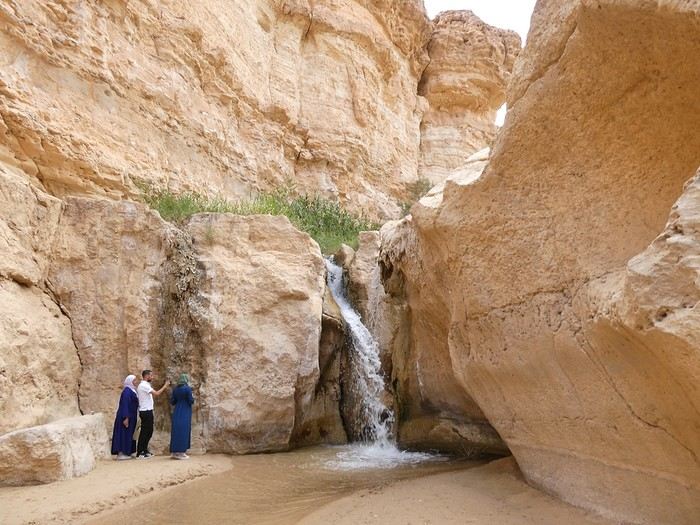
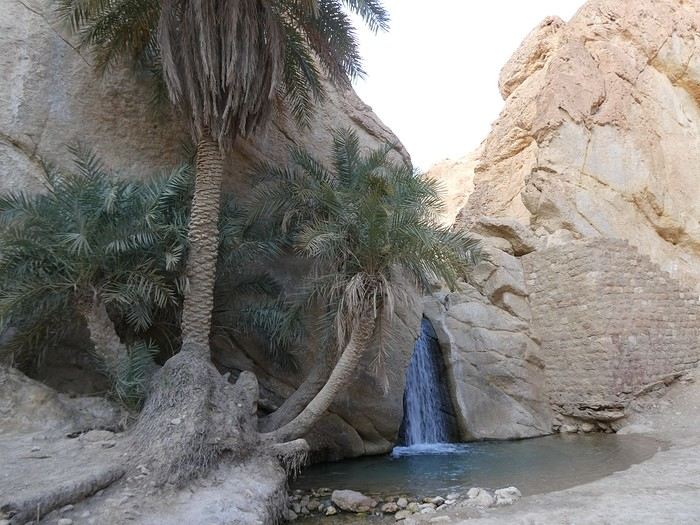
Besides the ruined old village, don’t miss the big waterfall♥️ in the canyon.
The waterfalls and oasis are a real blessing in this region where temperatures can soar above 50°C (122°F) in summer.
There’s a really nice souvenir and tea seller (he also owns sheep), Amir. We chatted in Spanish, and he gave me two delicious teas—mint and mountain herbs. I’d warned him I couldn’t pay because I’d left my bag in the car, but he just said, "You don’t always have to think about money!"
It’s amazing how many Tunisians speak one or more foreign languages fluently without ever studying them at school or setting foot abroad. Later, a guide spoke to me in Spanish with an excellent accent.
Otherwise, in Tamerza, the only place to stay is the Tamerza Palace Hotel. Another hotel mentioned in some travel guides no longer exists.
In Tozeur, a hotel from the same chain, the Tozeur Palace, is opening in a few days.
MIDES ♥️
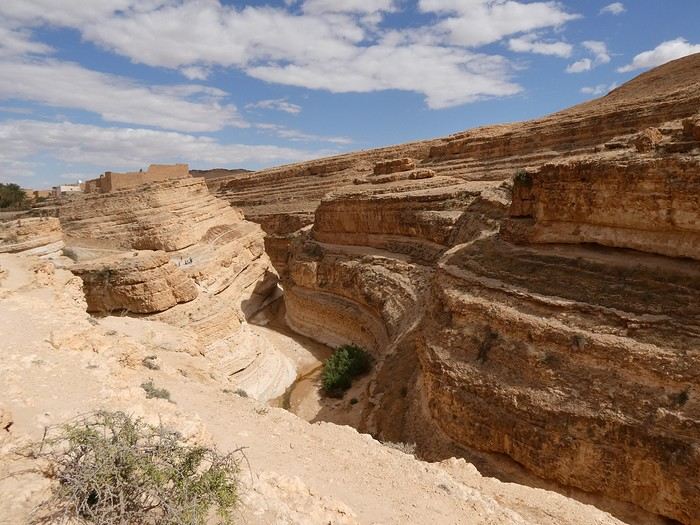
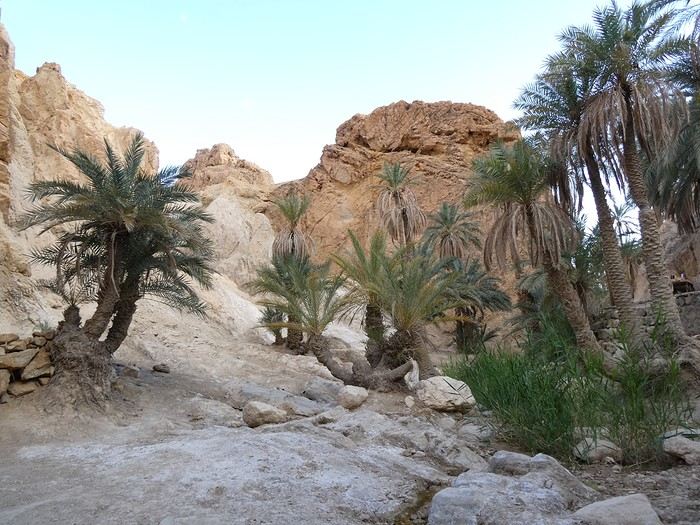
Another mountain oasis. We went to see the canyon from above—you can hike inside, but only with a local guide.
CHBIKA ♥️♥️
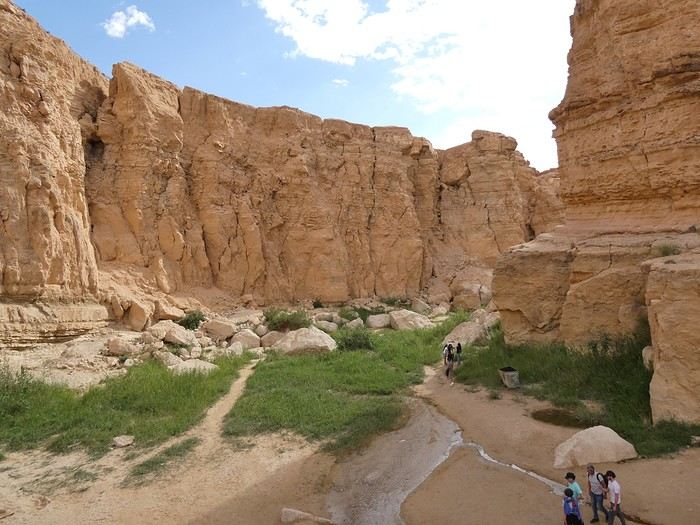
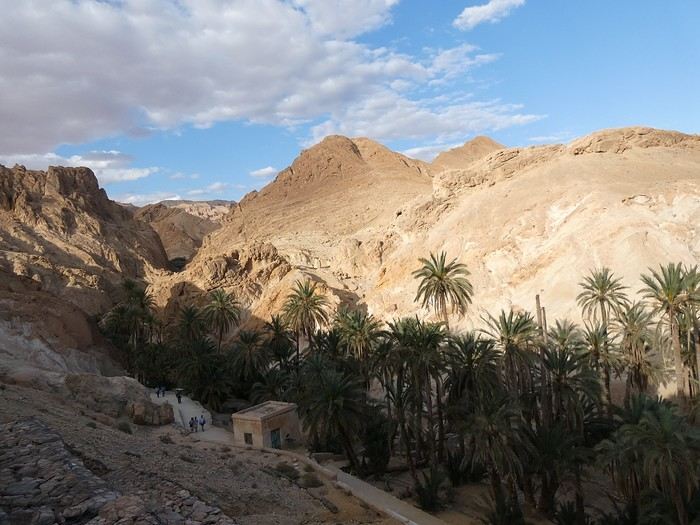
This is the most beautiful of the three oases, with a small canyon, a waterfall, and a promontory offering a stunning panoramic view all the way to nearby Algeria.
I visited these places with a hotel agency—the driver came from Tozeur since he works for a Tozeur-based agency. The hotel reception isn’t allowed to give out names of other guides because they work with this agency, but there’s definitely a way to get there for less. In Tamerza, there’s a woman who runs a *louage* (shared taxi), and I think she can take tourists to Chebika. The hotel has her number, or someone in the village can tell you how to contact her.
I paid 160 dinars (47 €) (they initially asked for 180 dinars). The price is the same whether it’s for one person or several, so since I was alone, it was a bit pricey—but for two or more, it’s not too bad. The guide was more of a driver than a guide, but he was nice.
I’m supposed to leave tomorrow morning at 8:30 with the *louage* woman, so I should have time to reach Douz.
We arrived in Chebika late in the day, and there wasn’t much sunlight left, so the photos aren’t great—but the place is truly beautiful.
TO BE CONTINUED...
" Celui qui voyage sans rencontrer l'autre ne voyage pas , il se déplace "
( Alexandra David-Néel )
" Ahora todos quieren ser latinos , no , ey , pero les falta sazon , bateria y reggaeton " ( Bad Bunny )
Asked at Tamerza Palace for info about the Train du Bey; before, the hotel and the train used to work together.
I forgot to ask—if I remember, I’ll ask tomorrow before leaving—but in Tozeur, Souad’s husband had called a guide from Metlaoui who I’d spoken to, and I’d asked him if the Lézard Rouge was running, and he told me it’s under repair in Tunis.
" Celui qui voyage sans rencontrer l'autre ne voyage pas , il se déplace "
( Alexandra David-Néel )
" Ahora todos quieren ser latinos , no , ey , pero les falta sazon , bateria y reggaeton " ( Bad Bunny )
This morning the hotel was supposed to call the shared-taxi driver to check if she was coming at 8:30, but she only makes the trip if the van is full (8 seats). Since I was the only one, we could’ve paid for all the seats (48 dinars = 14 €), but I didn’t do that because she said there are other louages to Douz in the afternoon, and I’ll admit I’m not upset about spending another morning in Tamerza doing nothing.
As I mentioned earlier, I think this driver can take tourists to Chebika and Mides for much cheaper than an agency driver.
Otherwise, there aren’t many places to stay in the mountain oases, but I was told there’s a guesthouse in Chebika, a bit far from the village.
For Douz, I don’t know if I have a room for today—the hotel hasn’t replied to my email to confirm....
" Celui qui voyage sans rencontrer l'autre ne voyage pas , il se déplace "
( Alexandra David-Néel )
" Ahora todos quieren ser latinos , no , ey , pero les falta sazon , bateria y reggaeton " ( Bad Bunny )
In the end, it was a good thing I didn’t leave Tamerza early because I arrived in Douz around 4:00 PM—a town where there’s not much to do (my stay didn’t coincide with the livestock market, which is worth checking out).
The Tamerza Palace hotel has to call for a *louage* to come to the hotel; otherwise, you have to walk down to the village center.
■ I took the route Tamerza–Tozeur, then Tozeur–Kebili, and Kebili–Douz. The trip isn’t too long, the distances are short, and the *louages* fill up pretty quickly.
Total cost: 26.500 dinars (7.80 €).
There are *louages* that go from Tamerza to a village farther than Mides, so I think you can get from Tamerza to Mides by public transport. For those interested, ask in the village—not at the hotel, which will just refer you to the agency they work with.
■ Through an agency at my Douz hotel, I booked a night in the desert for tomorrow at a camp over 100 kilometers from Douz. The exchange with the salesperson was entirely in Spanish (we also chatted a bit in Italian). Like Amir yesterday, he learned Spanish on his own and has never set foot in Spain—he just had Spanish clients from Zaragoza who came to take piloting lessons in the desert.
But I’m amazed at how many multilingual Tunisians I’ve met (and they speak so well, with almost no conjugation or grammar mistakes)!
After booking, I saw that the camp is listed in the *Lonely Planet* and *Petit Futé* guides. It’s at the foot of Tembaïne Mountain and is quite upscale, but you can also sleep somewhere closer to Douz and cheaper.
For one, two, or three people, you don’t need to book months in advance. The agency rep told me some people reserve two months ahead for a short camel ride!
However, for a group, you’ll need several vehicles, so booking is necessary.
After May 15, it’s no longer possible to go into the desert—even if agencies have clients, they’re not allowed to take them because of the heat.
The Sahara will be a first for me—I hope I’m not disappointed!
Next, I should head to Matmata, which isn’t too far away.
TO BE CONTINUED...
" Celui qui voyage sans rencontrer l'autre ne voyage pas , il se déplace "
( Alexandra David-Néel )
" Ahora todos quieren ser latinos , no , ey , pero les falta sazon , bateria y reggaeton " ( Bad Bunny )
I arrived around 1:00 PM in Matmata. I left the desert camp a little before 8:00 AM.
From the camp to Douz, it takes almost 3 hours (including a stretch through the dunes). Then I took a *louage* to Kebili, another to Gabès, another to New Matmata, and a final one to Old Matmata.
The longest leg was Kebili-Gabès—just over an hour—but the trip flew by. I chatted with a gentleman who told me about Tunisia today and before the Revolution. We also talked about international news, etc. He worked in France for two or three years and knows Egypt, Turkey, and other Maghreb and Middle Eastern countries. Time really flew.
In Gabès, you have to switch *louage* stations, but you can walk there.
I also had to change stations in Kebili. I should’ve taken a taxi, but once all the passengers got out, the driver told me to stay with him and took me to the other station. He asked for my Facebook (which I don’t have), so I gave him my email. When I tried to pay him, he refused, saying, "Now we’re friends!"
The road to Matmata is stunning. I arrived here without booking a hotel.
I was thinking of continuing to Tataouine and the *ksours*, but I only have 5 full days left, and I’m dreading the long trip to Monastir. Maybe I’ll change my plans—visit Sfax, take time to explore Monastir, and maybe Mahdia—and save the *ksours* for another trip, flying into Djerba instead.
I walked from the *louage* station to the hotel (no taxis here) in sweltering heat, and now I can’t even think about what to do next...
TO BE CONTINUED...
" Celui qui voyage sans rencontrer l'autre ne voyage pas , il se déplace "
( Alexandra David-Néel )
" Ahora todos quieren ser latinos , no , ey , pero les falta sazon , bateria y reggaeton " ( Bad Bunny )
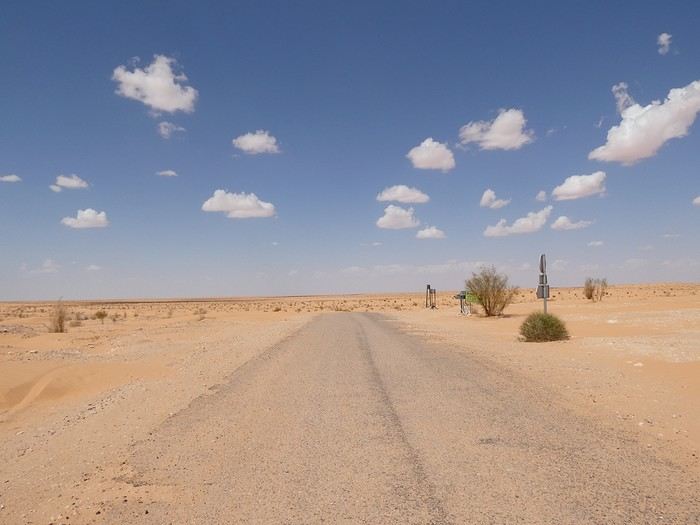
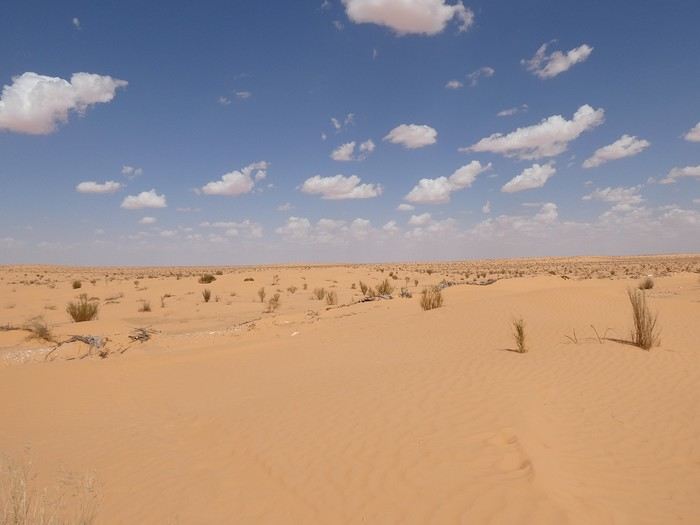
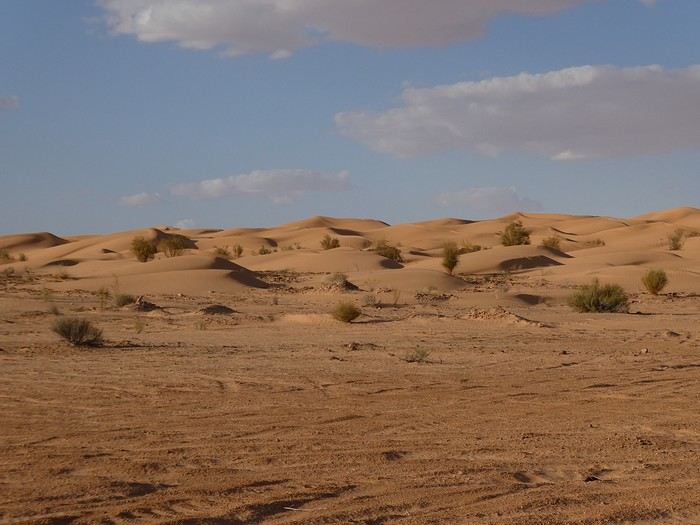
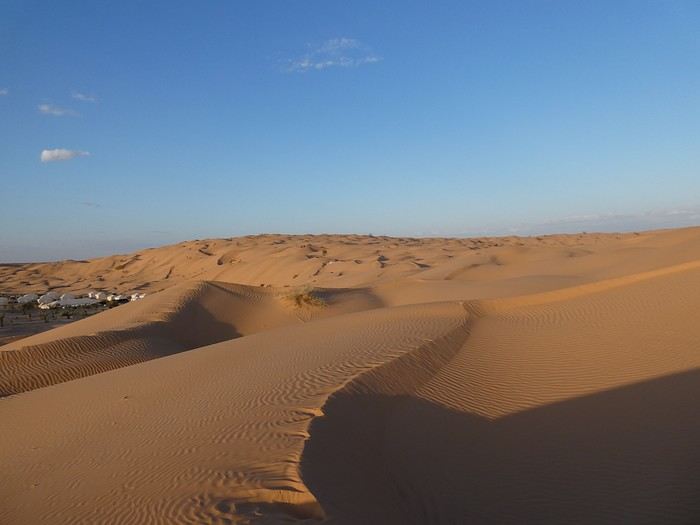
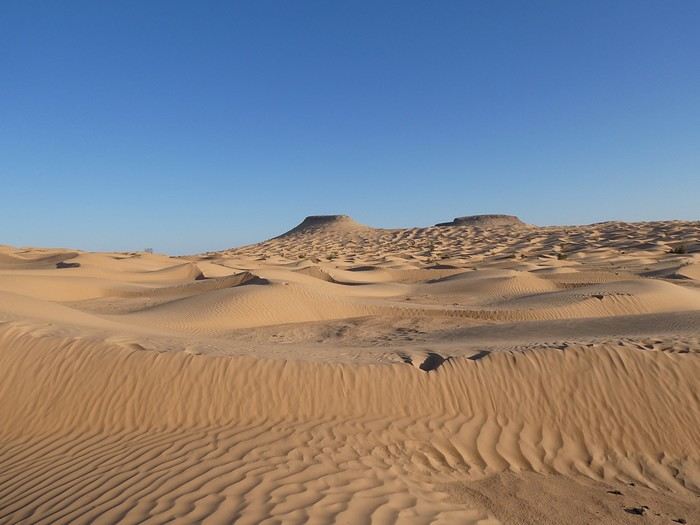
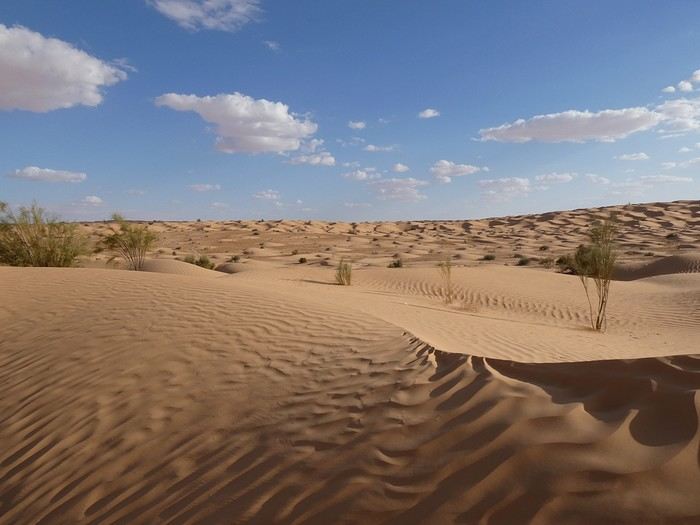
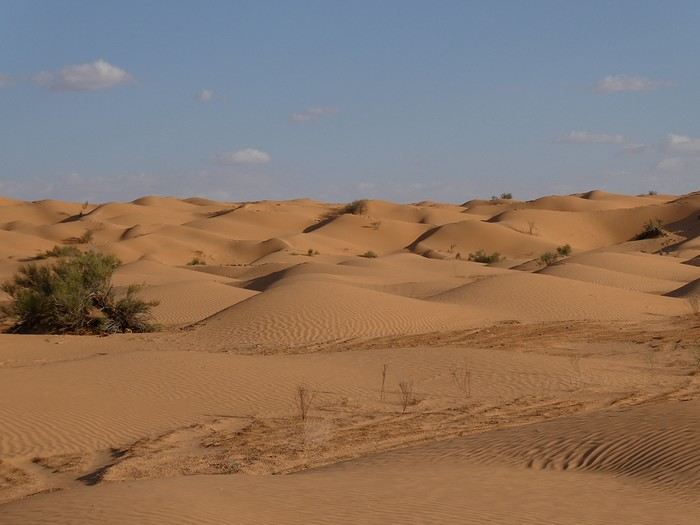
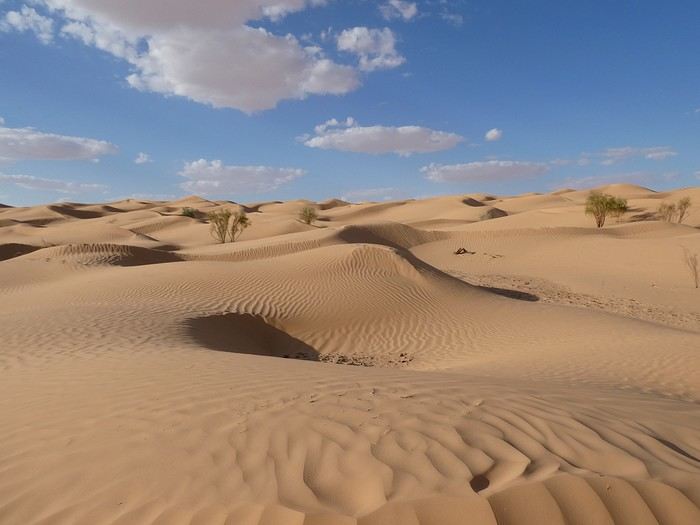
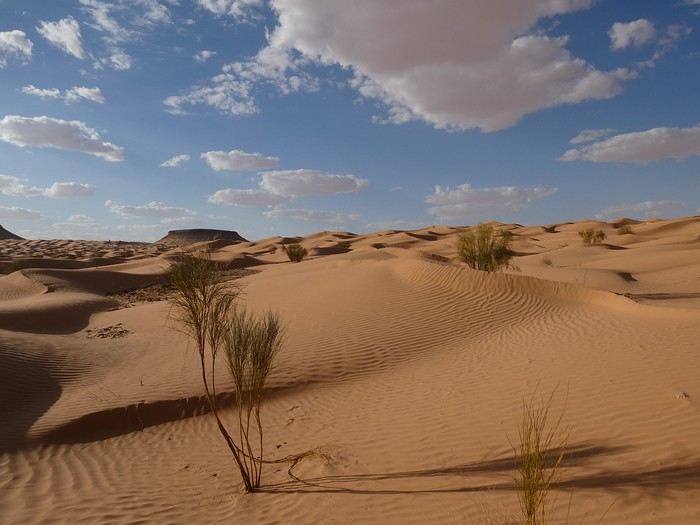
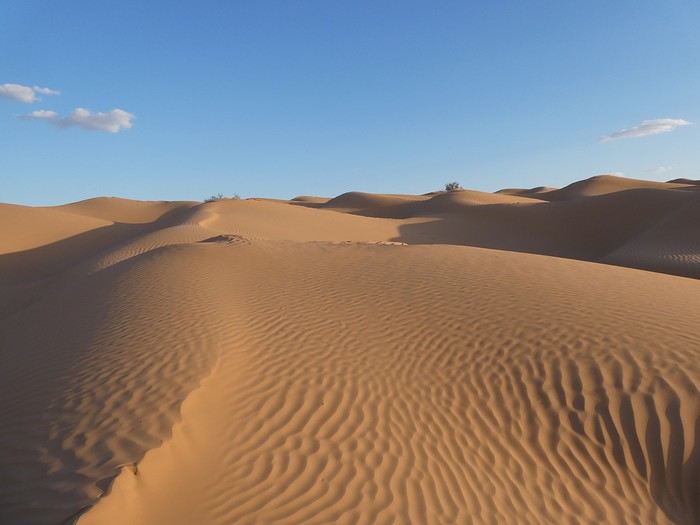
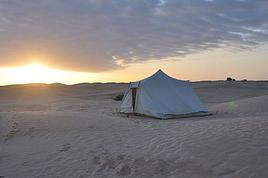
Until now, I only knew the Atacama Desert in Chile—a place with stunning landscapes, but not a sandy desert. So this was my first time in the Sahara, and I loved it!
I’d love to go back, but differently. This time it was the "chill" desert: staying in a camp and traveling by 4x4. Next time, I’d want to do more walking and stay longer.
I thought I’d stay one night, but ended up staying two.
The camp has quite a few tents—there were about fifteen of us, all French (a young couple and a group made up of a family and friends from the Côte d'Azur).
The tents sleep four people and have either private or shared showers and toilets.
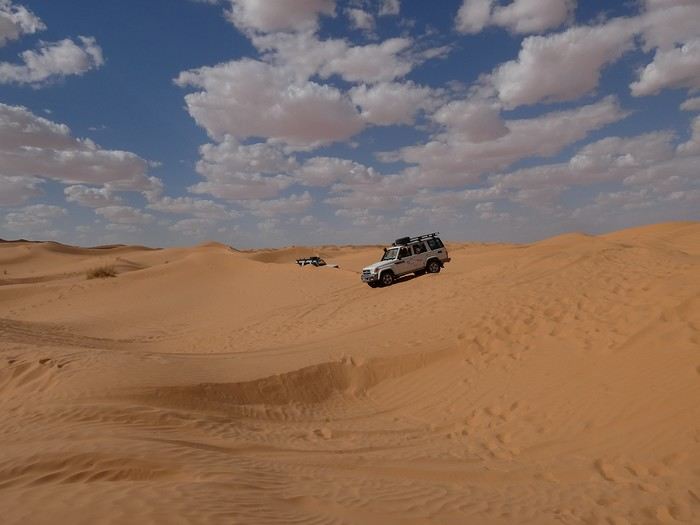
The location is amazing, surrounded by a sea of dunes. To get there, you have to cross big sand dunes—you can also land by small plane!
I made the round trip alone with Ahmed, the owner who took over the business from his father, a pioneer in this type of camp in Tunisia.
Ahmed has the soul of an entrepreneur. He also runs a similar business in Dubai (he’s a resident there and has to return every six months). He loves the desert—it’s his whole life (he knows the deserts of Libya, Algeria, Jordan, Oman, etc.), and he’s passionate about motorsports. He’s even competed in desert rallies.
Three Tunisian tourism ministers have visited his camp (he told me, and I saw articles online about it).
It’s really interesting to talk with him—plus, he’s super nice. He showed me photos of his oldest son, who’s 10 and loves the desert.
I told Ahmed his camp was in the *Petit Futé* guide (I saw it after booking), and he took a photo of me in front of the camp entrance with the book to send to the *Petit Futé* author, who’s visited the camp twice.
As I mentioned, the location is gorgeous—it’s the desert you imagine, with endless sand dunes, silence, stars, birds, etc.
At sunrise and sunset, it’s simply breathtaking!
Now I understand the fascination the desert holds. No photo, no matter how beautiful, can capture the beauty, the vastness of the dunes, or the feelings you experience when you’re there.
Not to mention the thrill of being in a vehicle climbing huge sand dunes (I could tell Ahmed *loves* driving in those conditions).
But I think the desert is best experienced on foot and with fewer people, even though the other tourists there were really nice and invited me to eat with them.
In any case, the desert was my big highlight in Tunisia!
TO BE CONTINUED...
" Celui qui voyage sans rencontrer l'autre ne voyage pas , il se déplace "
( Alexandra David-Néel )
" Ahora todos quieren ser latinos , no , ey , pero les falta sazon , bateria y reggaeton " ( Bad Bunny )
Hi Marie, phew, your second message tonight is so enthusiastic, great!
Actually, if you loved the desert, you can go back by doing hikes starting from Douz.
You can organize that here.
I’m not sure you’ll be able to visit the Ksour and head up to Monastir in 5 days. Maybe start heading toward Mahdia and Monastir instead.
Personally, I wouldn’t recommend Sfax—it’s a very big city and not very interesting.
If you go to Mahdia, I think I already gave you the names of two small guesthouses well located in the medina, nicer than the hotels by the sea, which are pretty far from the city center.
La terre entière est ma patrie et la famille humaine est ma tribu.
I shared earlier how I arrived in Matmata from the desert.
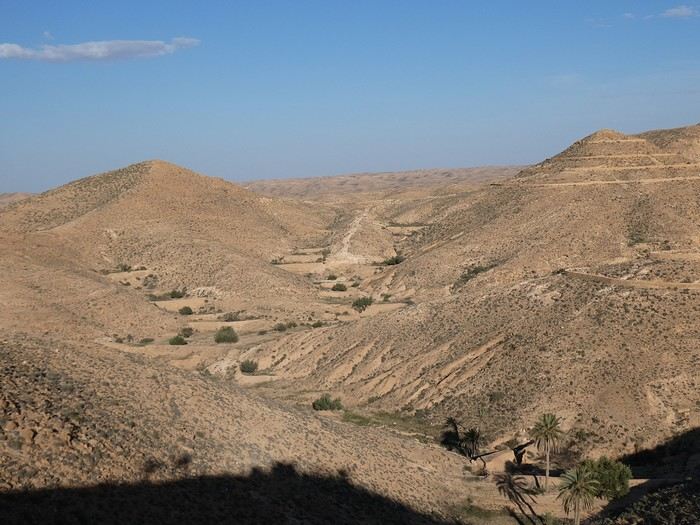
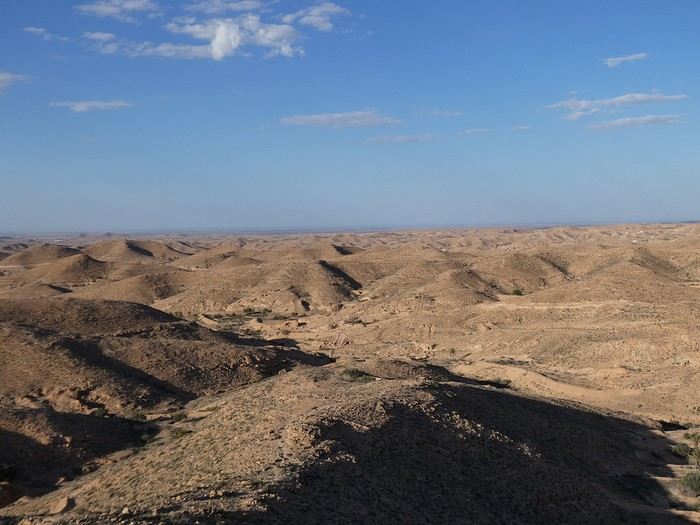
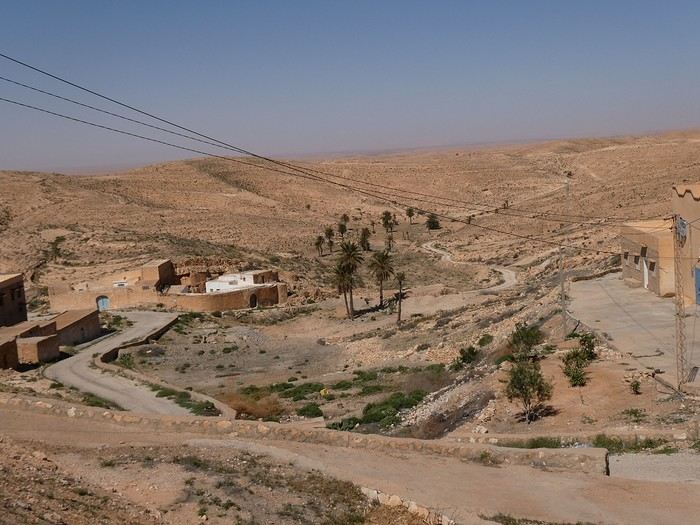
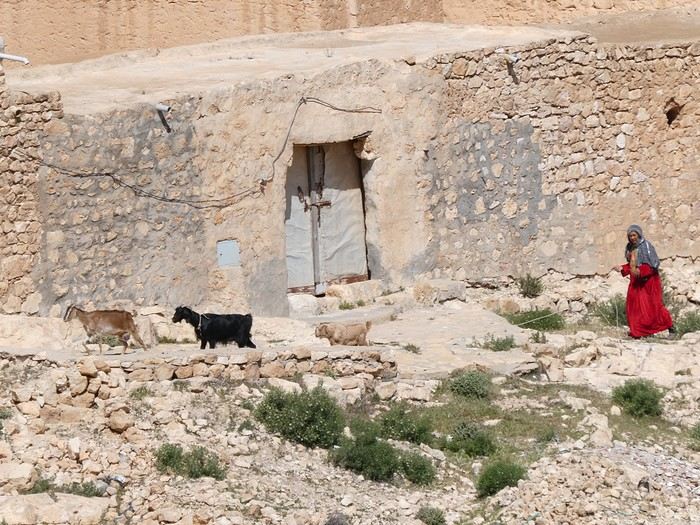
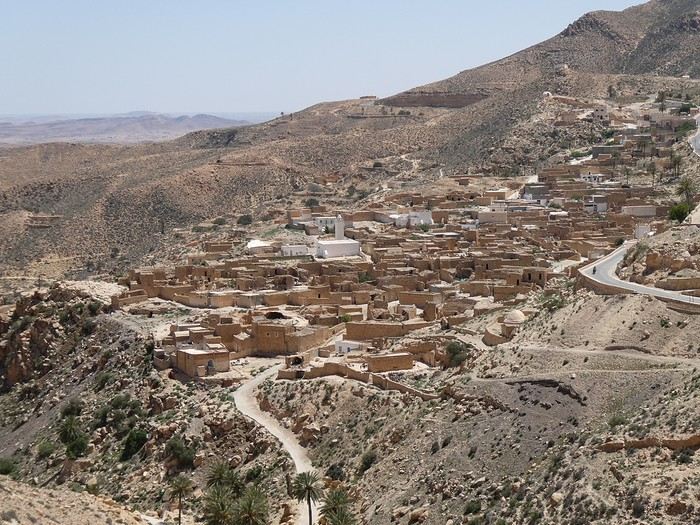
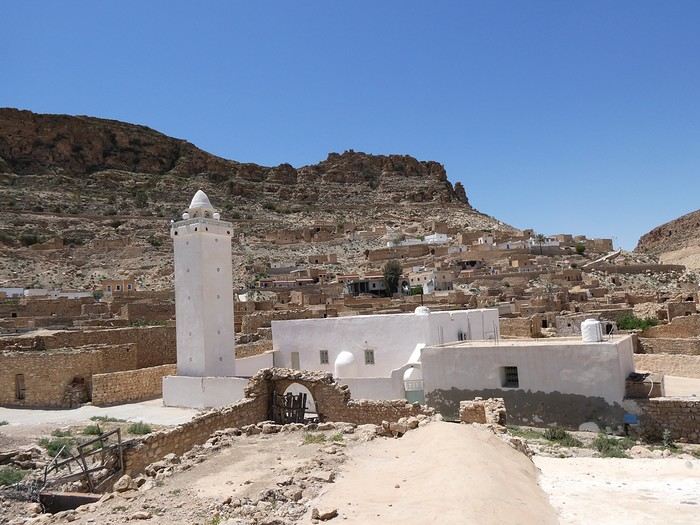
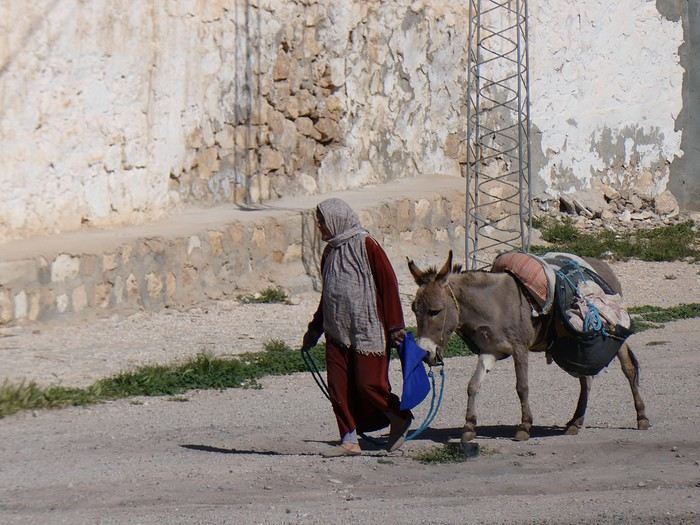
This region of steep valleys and arid hills dotted with olive trees and palm trees is really beautiful. It’s a Berber rural area where you can see shepherds with their sheep or goats, lots of donkeys carrying tools or crops, and so on...
The villagers are mostly elderly, because for younger people there isn’t much to do—just tourism and agriculture. The area has been suffering from drought and lack of rain in recent years.
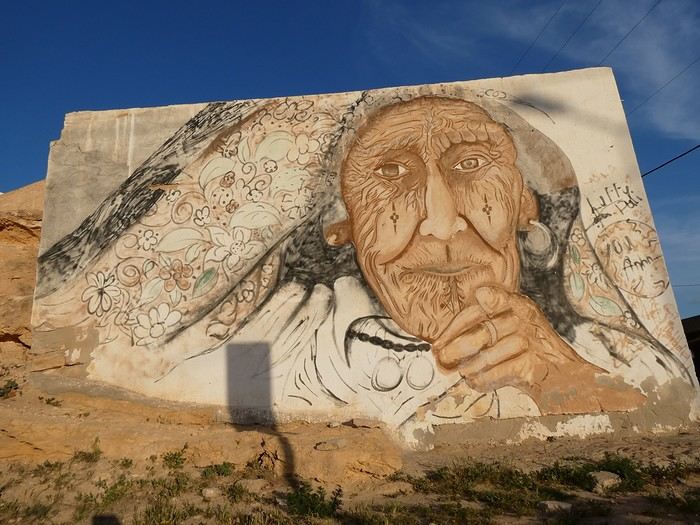
The older women wear traditional outfits (long shawls) and Berber facial tattoos. I had the chance to see one up close for a while—she came to greet a man I was talking to in Tamerzet.
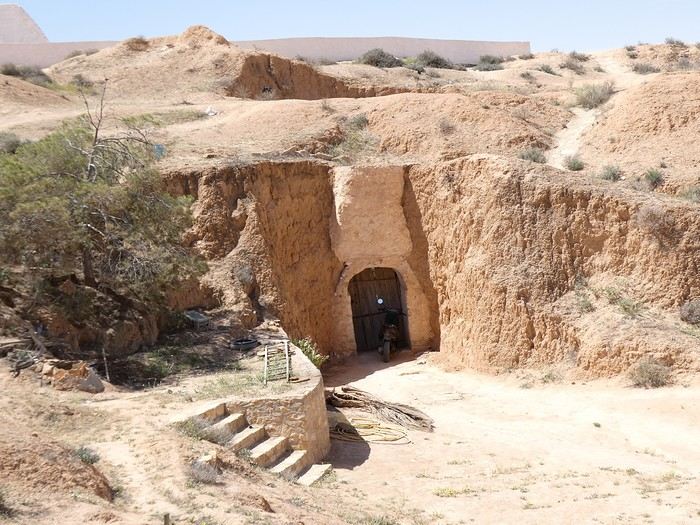
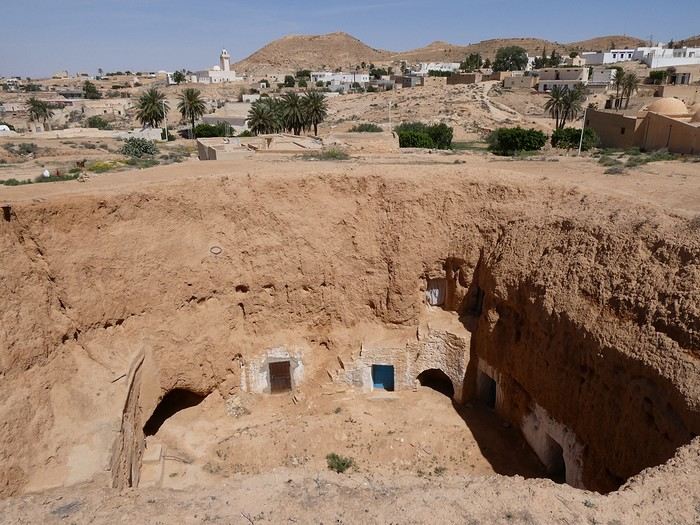
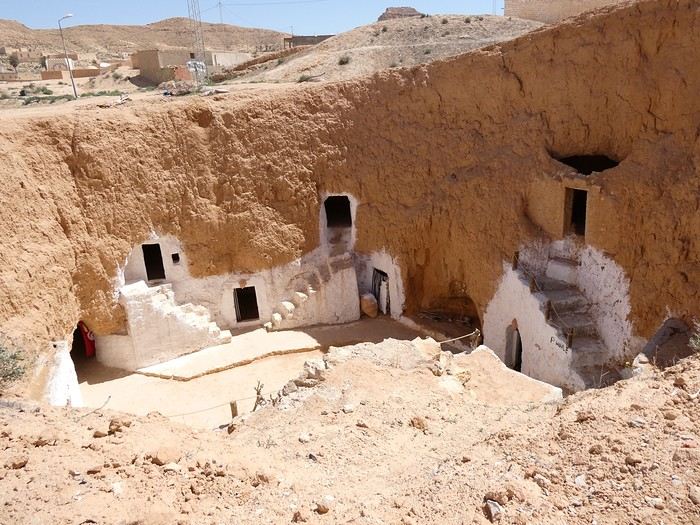
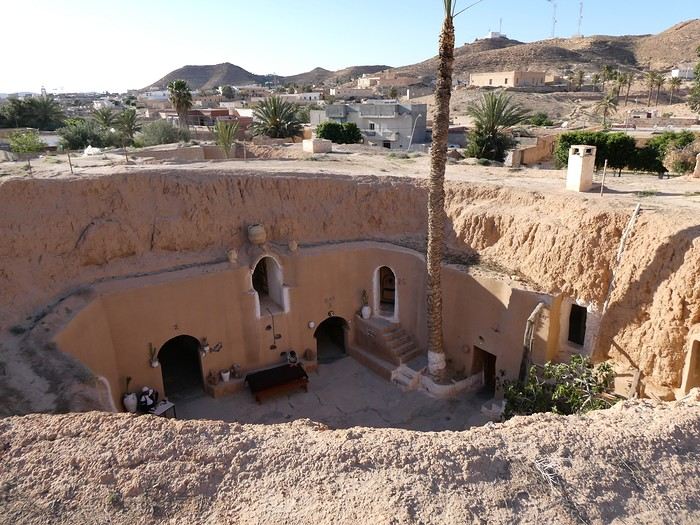
But if Matmata attracts tourists (who often come on organized excursions from Djerba), it’s for its troglodyte dwellings. Apparently, every resident has one.
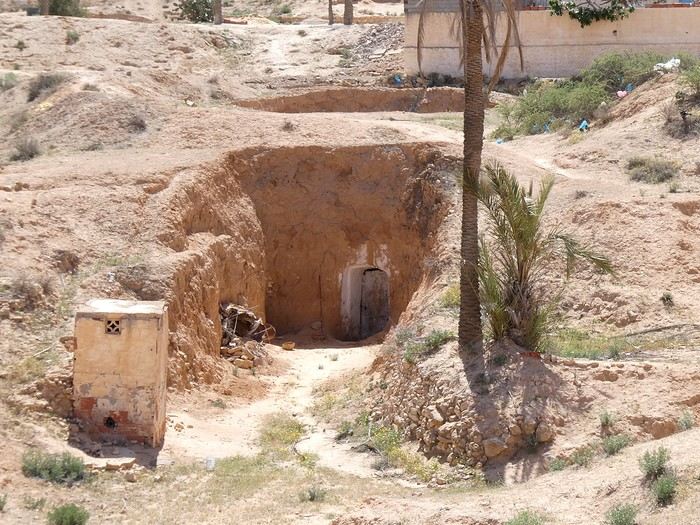
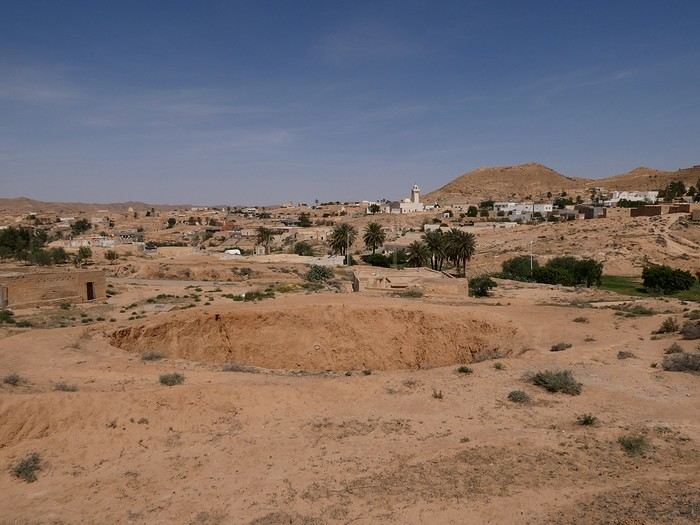
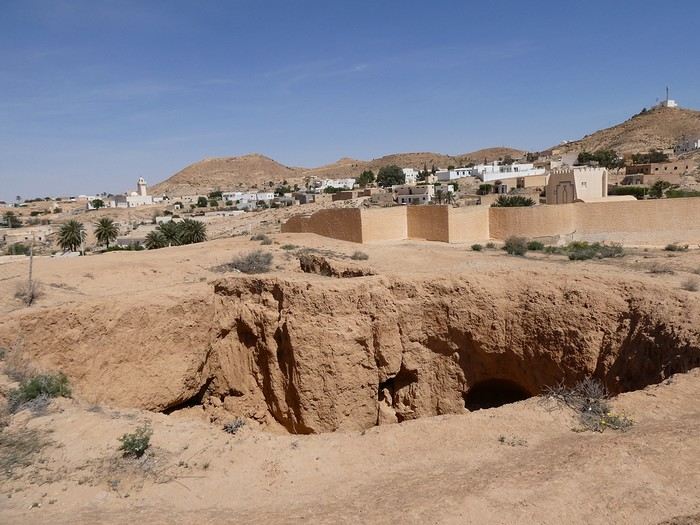
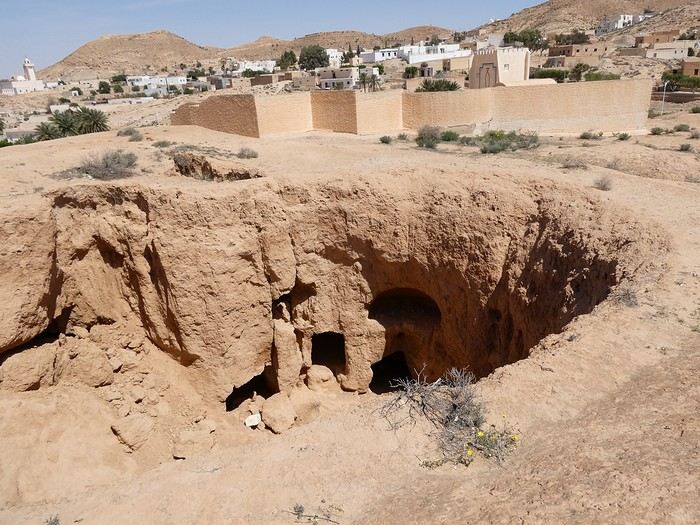
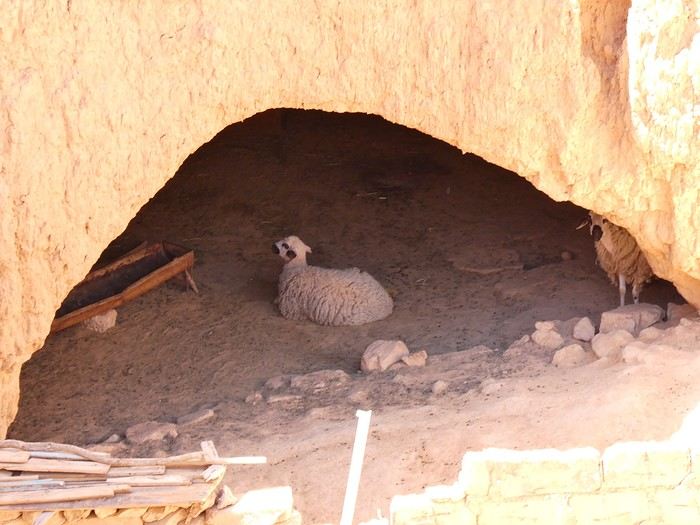
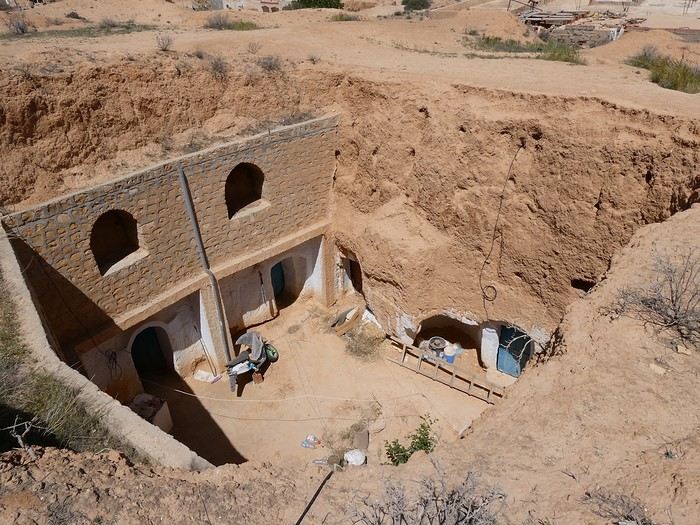
While wandering around the village, I often saw huge holes about ten meters in diameter, with several closed doors at the bottom and others where you could see animals (chickens, goats, sheep, etc.). It’s quite curious—you have to be careful not to get too close to the edge of the hole...
I’ll post photos when I get back to make it clearer.
There’s a bus to Tamezret early in the morning, and I think it returns around noon, but there’s no bus to Toujane. So, I hired a driver to visit these villages about ten kilometers from Matmata. The cost: 130 dinars (38.50 €), which is expensive for Tunisia. I took my time—we left around 8:30 AM and got back around 1:30 PM.
In Tamezret, don’t miss the small Berber museum. The owner is really nice and interesting.
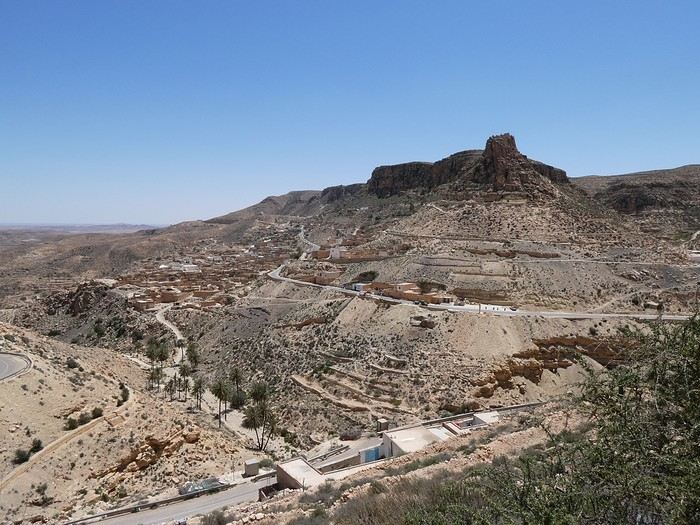
In Toujane, a village on the hillside, the view of the plain stretching to the sea is breathtaking!
After Toujane, on a road leading to Médenine and Tataouine, there are other nice villages, and between New Matmata and Old Matmata, there are also troglodyte dwellings.
Even if you don’t have a vehicle, it’s very easy to find a driver to take you wherever you want.
This region is truly beautiful and worth exploring. Many films have been shot here: *Star Wars*, *The English Patient*, and more...
On another note, I’ve often mentioned how Tunisians are great at learning foreign languages. Well, today I met Malek, a 17-year-old girl who speaks Korean! She was so proud to say a few phrases in Korean to me. She’s learning on her own with the internet. This is the country where I’ve met the most people who speak multiple languages they’ve taught themselves—it’s really impressive!
TO BE CONTINUED...
" Celui qui voyage sans rencontrer l'autre ne voyage pas , il se déplace "
( Alexandra David-Néel )
" Ahora todos quieren ser latinos , no , ey , pero les falta sazon , bateria y reggaeton " ( Bad Bunny )
Few troglodyte houses in Matmata are still actually inhabited.
Monji Bouras in Tamezret and his museum are very interesting.
He offers bed and breakfast.
In the other villages, they’re no longer troglodyte houses but ksour or fortified granaries, which are also no longer inhabited, but some are very well maintained and worth the detour.
La terre entière est ma patrie et la famille humaine est ma tribu.
Few troglodyte houses in Matmata are still actually inhabited.
The driver told me that everyone has a troglodyte house in addition to their main home—he has one himself, but it’s used to keep livestock, as I often saw, and they might also have a room to spend the hottest hours of summer in.
The history of the Tamerzet tunnels is interesting too.
I didn’t know Monji Bouras ran guest rooms—he’s really kind and full of good advice.
I forgot to mention there are troglodyte hotels for those who aren’t claustrophobic.
MATMATA
Troglodyte dwellings.
Here are some of the many holes you’ll find in Matmata—zooming in, you can see sheep in some, while others have chickens, donkeys, etc.
There’s no protection around these holes; some are hotels.
In the first two photos, you can see the entrance and, above it (in the background), the hole.
In the third photo, the hole is in the foreground.
" Celui qui voyage sans rencontrer l'autre ne voyage pas , il se déplace "
( Alexandra David-Néel )
" Ahora todos quieren ser latinos , no , ey , pero les falta sazon , bateria y reggaeton " ( Bad Bunny )
I just read that a few days ago, the Dahar Geopark—which includes Matmata, Tamerzet, and Toujane—was designated a UNESCO Global Geopark. As I mentioned earlier, this region really deserves to be explored. Many tourists just pass through quickly, only stopping long enough to snap a photo from a viewpoint.
■ I’m starting to head back toward Monastir, and today I’m stopping in Sfax.
The trip was by *louage*: Old Matmata to New Matmata (about 20 minutes, 1,600 dinars), then New Matmata to Gabès (around 30 minutes, 2,400 dinars), and Gabès to Sfax (2 hours 10 minutes, 12,250 dinars). Total cost in euros: 4.83 €.
At Old Matmata, you might have to wait until all 8 seats fill up, but if you want to leave right away, you can pay for all 8 seats (1,600 × 8 = 12,800 dinars = 3.80 €).
■ At the entrance to Sfax, the *louage* hit a moped. It wasn’t going too fast, but it didn’t slow down when the moped swerved left. Luckily, the two older men on the moped weren’t hurt.
SFAX
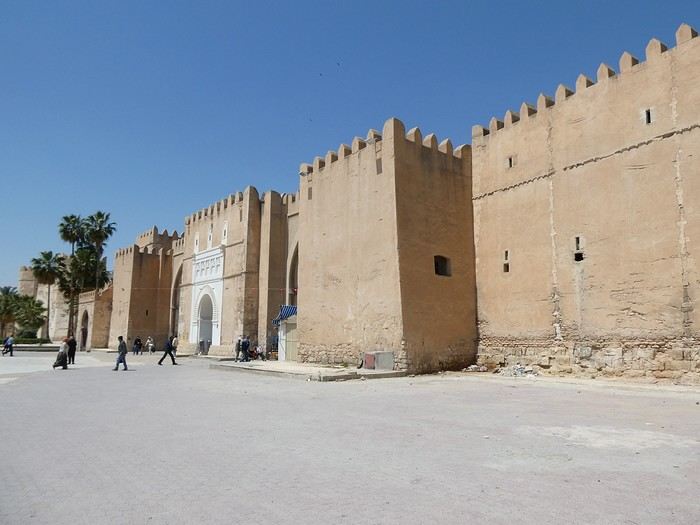
Sfax, the country’s second-largest city, is an industrial port town and not very touristy.
The medina is nice and completely untouristy.
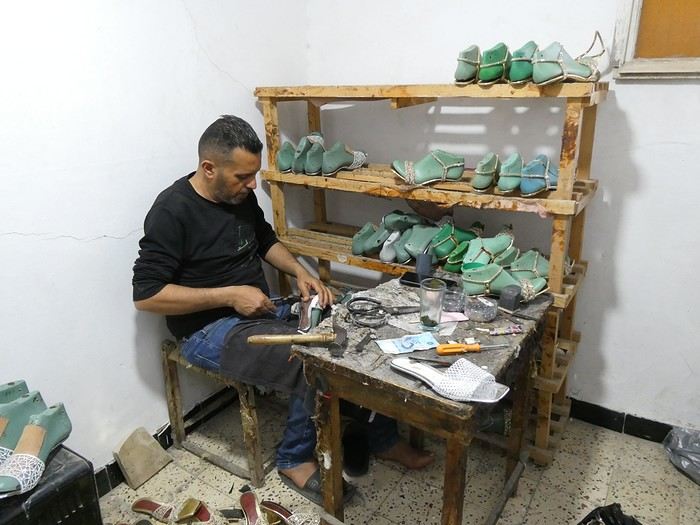
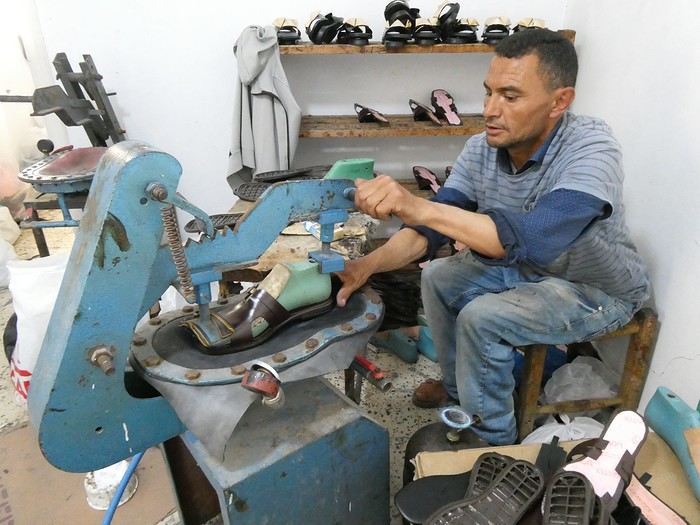
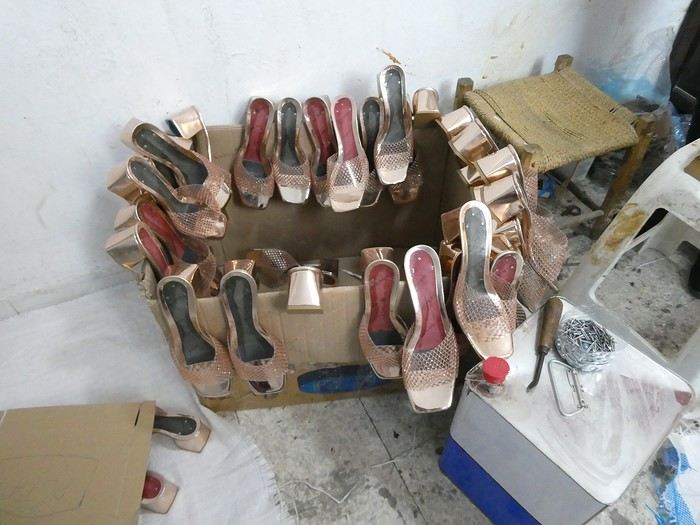
A man I asked for directions said, "Come with me," and of course, I followed! He turned out to be the owner of a shoe workshop and gave me a tour. You have to climb three or four floors of a medina house—the stairs are very narrow and cluttered with bags—and at each level, a different step in the shoe-making process takes place. The shoes are then sold in the shoe souk. One worker makes 100 pairs a day—he works really fast!
I’m not particularly passionate about shoe-making, but it was still interesting. One of the workers asked if I planned to set up a shoe workshop in France!
These men are proud of their work and enjoy showing it off. In Nefta, I was photographing a beautiful door, and the owner—a tailor—asked me to take his photo next to it. Then he showed me the room where he works. In the dyers’ souk in Tunis, someone also invited me in to see the machines dyeing fabric, but the shoe workshop in Sfax is much bigger.
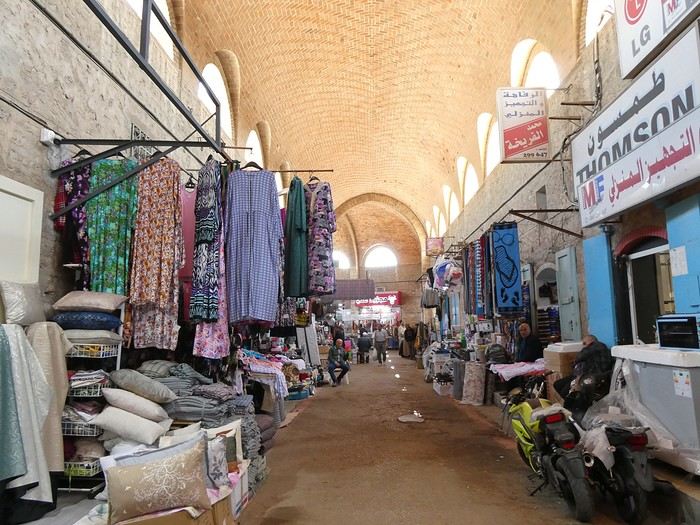
Walking around the medina, you’ll see open doors leading to staircases—these are workshops where the items sold in the souks are made.
There are also quite a few small mosques with prayer rooms open to the street, where you can see people praying during prayer times.
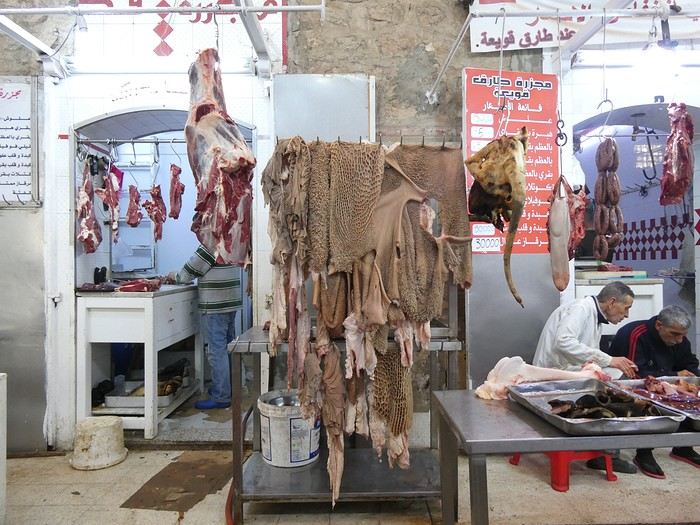
The central market is also worth seeing, with its fishmongers (lots of small sharks). The meat stalls might make your stomach turn a little...
At the Museum of Popular Arts and Traditions (free), there was an exhibition by young Tunisian artists (lots of paintings and sculptures of nude women). There were also videos, but unfortunately, the projectors weren’t working in all the rooms.
The exhibition is part of the Sfax Annual Arts Festival. Tomorrow, a jury will award a prize to the best work. I hope the projectors will be fixed...
The building itself is beautiful (an 18th-century structure).
I recommend taking a break at Café Kemour, frequented by men and women of all ages sipping coffee, tea, or smoking shisha. It’s the prettiest café I’ve seen in Tunisia, with a great view of the Great Mosque’s minaret.
TO BE CONTINUED....
" Celui qui voyage sans rencontrer l'autre ne voyage pas , il se déplace "
( Alexandra David-Néel )
" Ahora todos quieren ser latinos , no , ey , pero les falta sazon , bateria y reggaeton " ( Bad Bunny )
I arrived in Monastir, where I have to catch my return flight on Monday at noon.
The trip from Sfax took a little over two hours, and cost 13,150 dinars (3.85 €).
Along the way, olive trees line both sides of the road—the landscape reminds me of some regions in Spain. About 5 or 6 kilometers before Monastir, there’s a kind of lagoon on both sides of the road where you can spot lots of pink flamingos.
Monastir has quite a few tourists—Russians, French, Italians—and my hotel, which is fully booked, is mostly filled with Algerian and Libyan travelers.
Today, I mostly wandered around the city and along the seaside promenade, which is really pleasant in this warm, sunny weather. I also tried a "bambalouni," a delicious, popular doughnut shaped like a ring—crispy, served hot, and dusted with sugar (1 dinar = 0.30 €).
Tomorrow, I plan to head to Mahdia on the Sahel metro, and on Sunday, I’ll visit Monastir’s ribat, the Bourguiba Mausoleum, and the Bourguiba Museum.
TO BE CONTINUED.....
" Celui qui voyage sans rencontrer l'autre ne voyage pas , il se déplace "
( Alexandra David-Néel )
" Ahora todos quieren ser latinos , no , ey , pero les falta sazon , bateria y reggaeton " ( Bad Bunny )
Hi Marie,
In Mahdia, pretty much everything interesting is in the medina.
Right in front of you when you leave the train station.
If you want to eat with your feet in the water, go have lunch at Café des Grottes (Sidi Salem), then have tea at Café Gamra in Cairo Square—full of charm under the ficus trees—or at Café de la Medina, which is a bit more upscale under the palm trees. (Even if you don’t stay there, you can visit and go up to the terraces!)
There are also *bambalounis* between the market and Skifa el Kahla.
I’m not sure if the ice cream shop at Évelyne la Niçoise will be open—it’s also where her guesthouse is, behind the Great Mosque.
Mahdia’s specialty is silk, and you’ll hear the weaving looms as you walk through the medina. Everyone sells silk scarves and *foutas*.
Don’t miss the marine cemetery, the Punic port (if the wooden walkway is fixed), the ribat, and the small museum with a few mosaics—three very large ones. At the museum, you can also go up to the terraces for the view.
And the beaches! (Some of the most beautiful in Tunisia!) 😍
Have a great day tomorrow! 😊
La terre entière est ma patrie et la famille humaine est ma tribu.
Couldn't connect to this site last night—it keeps glitching...
Yesterday I switched hotels. The room at Hôtel Mezri wasn’t the same as the one I had on April 11th, and since the hotel was fully booked, no other rooms were available.
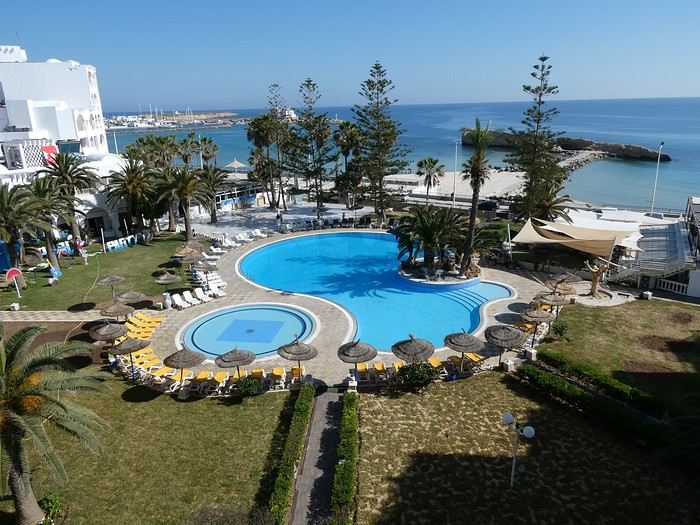
My new hotel is just a few steps from Hôtel Mezri. The room has a large terrace with a panoramic view of the pool and the sea all the way to the Marina.
Yesterday, I met a Spanish woman who was complaining at the reception about issues in her room. She’s traveling solo and is on all-inclusive at this hotel. I’d seen her the day before around 3 PM topless by the pool, and I saw her again yesterday morning when I was leaving for Mahdia—still topless by the pool. She seemed older, but she’s not *that* old; her skin is just prematurely aged from the sun, and she walks with difficulty due to her weight and a damaged kneecap.
She’s spending a full week at this hotel in Monastir before heading back to Asturias. She’s been coming to Tunisia for years, and her favorite spots are Hammamet and Port El Kantaoui. She travels all over the world mainly to sunbathe.
From my terrace, I can see her topless by the pool, and farther out on the beach, I see women swimming in burkinis.
This hotel has Russians, Americans, French people of Tunisian origin, etc. It’s exactly like the hotels you see in travel brochures—big pool, sea view, etc. Personally, I couldn’t spend a full week here (there’s not much to visit in Monastir).
A lot of these tourists stay for several days, like the Spanish woman.
Music is playing by the pool—some Arabic tunes, but mostly Enzo Ramazzotti, Aventura, and other vacation vibes...
The Spanish woman doesn’t know Mahdia. I recommended she go if she likes beaches—it’d get her out of the hotel for a bit (though she did say that after her sunbathing session, she’d take a walk around town).
" Celui qui voyage sans rencontrer l'autre ne voyage pas , il se déplace "
( Alexandra David-Néel )
" Ahora todos quieren ser latinos , no , ey , pero les falta sazon , bateria y reggaeton " ( Bad Bunny )
I went there on the Sahel metro, a relatively modern train. The journey is quite long, and we were advised to take a *louage* instead.
Journey time: 1h20 or 1h30, with numerous stops. There’s a departure every hour.
Ticket price: 1,900 dinars (0.56 €).
Given the length of the trip, it’s best to spend at least one night in Mahdia, a very pleasant seaside town and an important fishing port.
It’s really nice to stroll through its small medina and along the waterfront. Water activities are available (like kayaking, for example).
The cafés are also lovely—like those on Cairo Square and the Sidi Salem café, which reminds me of the Café des Délices in Sidi Bou Saïd.
On Cairo Square, there’s a tout who waits for tourists to take them to silk-weaving workshops where scarves are sold.
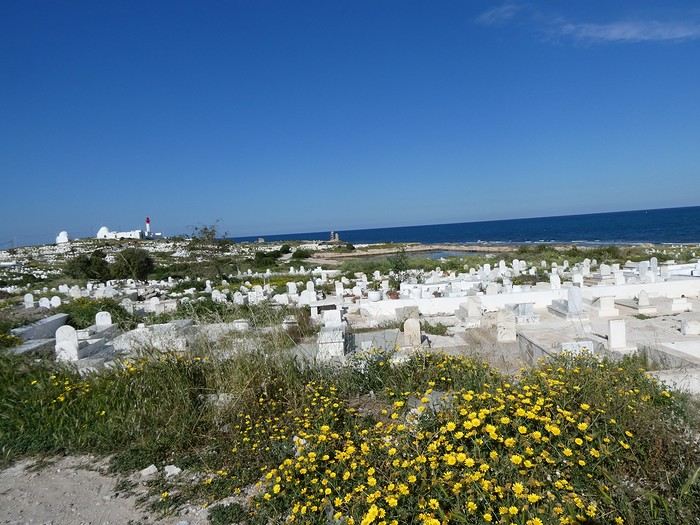
What I loved most was the marine cemetery, with its thousands of white tombs scattered among wildflowers. You have to walk all the way to the lighthouse—it’s a very popular spot for locals and tourists alike.
Mahdia is touristy but calm, not "overrun," at least in April (I imagine it’s different in summer). It’s perfect for those looking to relax in a peaceful setting.
■ I got back from Mahdia around 7:30 PM—it was dark.
I don’t know if I mentioned pedestrian traffic in Tunisia: you never really know who has the right of way. Mopeds come out of nowhere, no car stops at crosswalks, and you just cross however you can. Luckily, cars usually don’t go fast… but at night, it’s worse because mopeds can appear from anywhere with no lights. In front of the metro station, there’s a lot of traffic, so you have to be careful when crossing because some vehicles drive with no headlights.
I also forgot that you have to hurry to get off the train because people rush in and block your way out…
As I’ve been told many times, there’s no discipline—it’s total chaos.
Anyway, now I’m off to visit Monastir.
TO BE CONTINUED...
" Celui qui voyage sans rencontrer l'autre ne voyage pas , il se déplace "
( Alexandra David-Néel )
" Ahora todos quieren ser latinos , no , ey , pero les falta sazon , bateria y reggaeton " ( Bad Bunny )
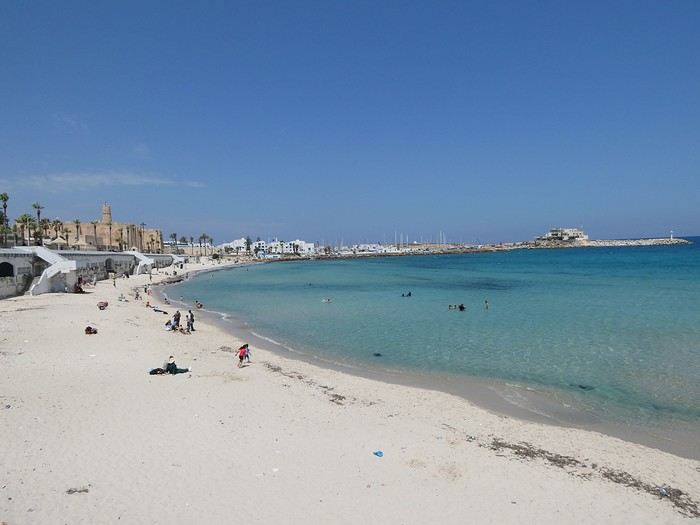
This morning I wrote that the view of the beach and sea from my hotel terrace was really beautiful, so I went down to the beach and what a different story! I’ve never seen such a dirty beach! There’s trash everywhere, even on the steps leading down to the beach—it’s awful! And there aren’t any trash cans anywhere.
Obviously, on such a filthy beach, there aren’t any Western tourists, and I didn’t see any women in swimsuits, either in the water or on the beach (and definitely no topless sunbathing!).
There was a cleaning lady tidying up a building—I thought it was the showers, but it turned out to be a hotel right by the beach. She let me in and went to get a key to show me a room, but I like my current hotel better.
The stairs leading to the area where the ribat is located are also littered with trash.
During my trip in February, I talked about all the trash along the roads with a Tunisian man in a *louage* who was heading back to Paris. A few days ago, I brought it up again in a *louage* with another Tunisian who had lived in France for three or four years. But I’d never discussed it with Tunisians who actually live in Tunisia.
However, in Matmata, at breakfast, a 50-year-old waiter kept me company while talking about Tunisia—especially what’s wrong with the country. One day, he mentioned the endless trash everywhere, and I asked, "And you Tunisians, does it shock you?" He replied, "Of course it shocks us!" The problem, he said, is a lack of education. Even when there are ashtrays, people prefer to stub out their cigarettes on the ground. The topic isn’t taught in schools, etc...
Also worth noting: in convenience stores, they almost always give you a plastic bag, even for a small bottle of water.
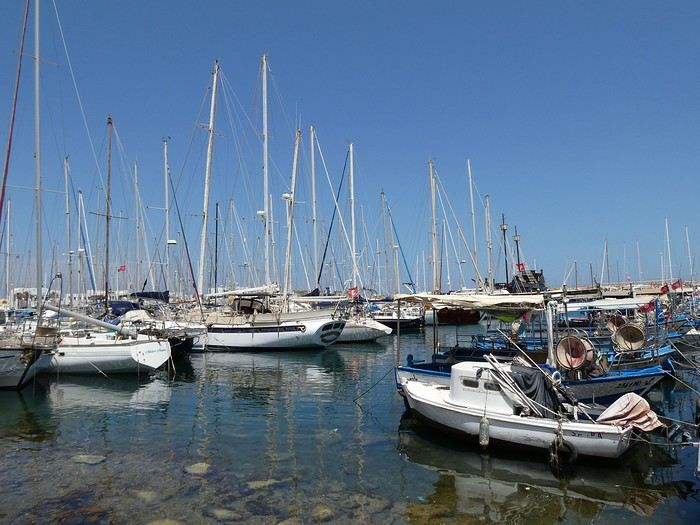
■ The marina looks like European marinas with its sailboats, yachts, and restaurants, and it’s nice to walk around.
■ Bourguiba Museum (10 dinars = 3 €) is in Skanes, housed in the former presidential palace, which later became a summer residence.
I took a taxi there (you have to negotiate the price—the museum isn’t that far). I met a Swiss tourist, a nurse in her fifties traveling alone and staying in Skanes. I asked if she’d visited the museum, and she said, "No, I don’t care!" Talking to her, I think she has the same vibe as the Spanish woman who sunbathed topless by the pool.
I still think it’s a shame to skip the museum of the man considered the father of the nation and, from what I gather, the most popular president among Tunisians.
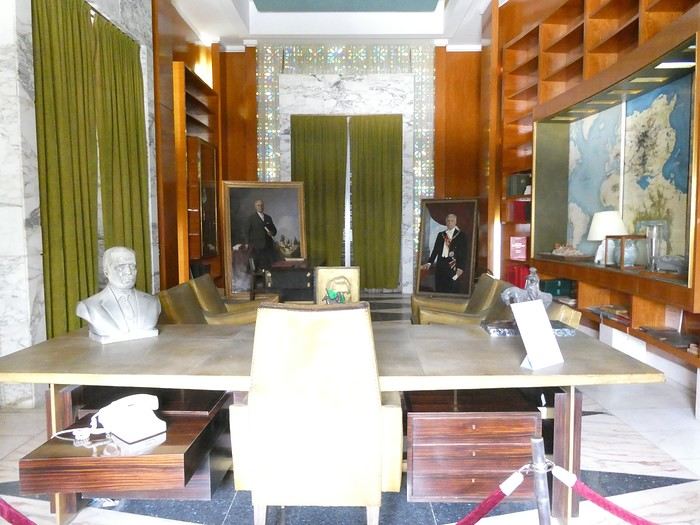
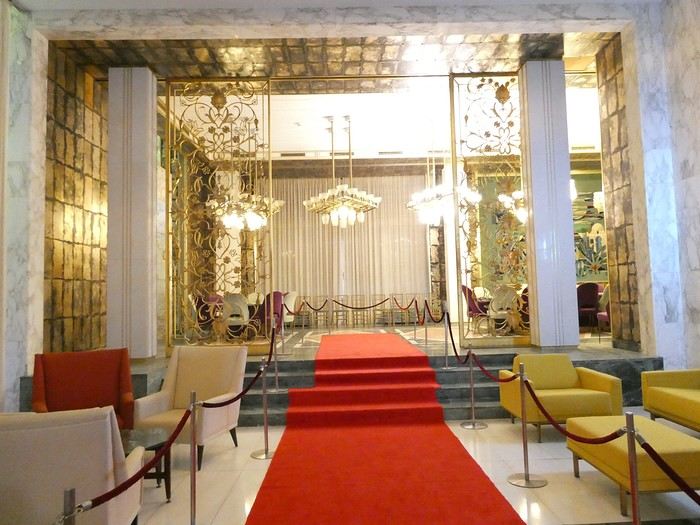
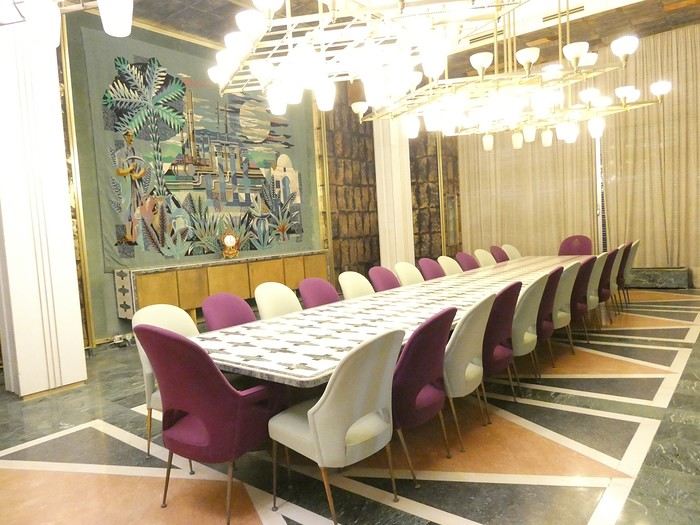
The museum doesn’t have a lot of explanations, but you can see a large reception hall, the president’s bedroom, his office, a bathroom with gold-leaf doors, his car, etc... For design lovers, there’s furniture, chairs, lamps, and other items from the 1960s.
■ Bourguiba Mausoleum (free entry), where the president is buried.
■ The ribat is the oldest in Africa. I didn’t have time to visit it because I came back by bus from the Bourguiba Museum and waited a long time (there’s no schedule, and on Sundays, you never know when it’ll come).
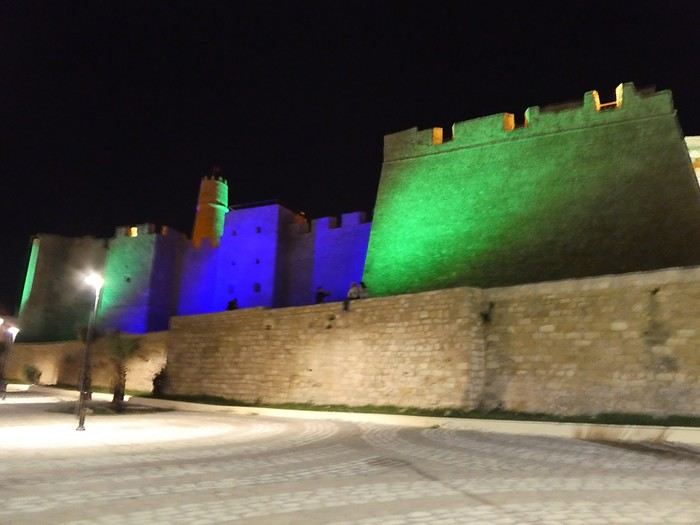
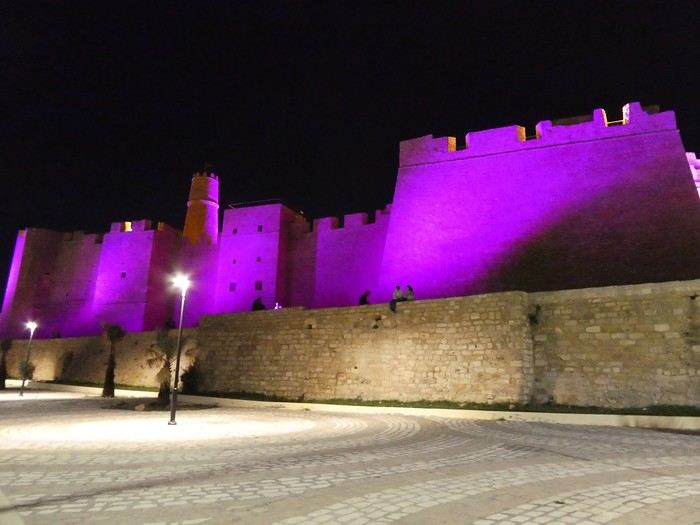
You should see it at night when it’s lit up with changing colors (green, red, pink, etc...).
■ The salt flats
I mentioned that when arriving from Sfax, I saw lots of flamingos on what looked like a lagoon on both sides of the road (I’d also seen them two weeks ago on the way to Tozeur). Well, those lagoons are actually salt flats—a natural salt marsh connected to the sea by two wide canals.
Vacation’s over! I’m heading back to France tomorrow afternoon and going back to work Tuesday morning. In the next few days, I’ll do a recap and add photos to illustrate my posts.
" Celui qui voyage sans rencontrer l'autre ne voyage pas , il se déplace "
( Alexandra David-Néel )
" Ahora todos quieren ser latinos , no , ey , pero les falta sazon , bateria y reggaeton " ( Bad Bunny )
Hi Marie,
Thanks for all the info you share.
We were lucky enough to know Monastir when President Bourguiba was still alive, and things have changed a lot since then...
Back in the 80s, Monastir was an example.
Unfortunately, plastic arrived in Tunisia, and waste is now everywhere since waste disposal infrastructure hasn’t kept up.
I first visited Tunisia in the late 70s, and there was no waste back then—no yogurt pots, milk cartons, disposable diapers, or plastic bags, and very few cans or bottles.
I think it was at the start of Ben Ali’s term that the first incentives appeared, with subsidies for municipalities, but unfortunately, these often just resulted in "environmental boulevards" and nothing more.
Half of Tunisians are dismayed by this problem caused by the other half, but more and more clean-up initiatives are happening in cities, beaches, etc...
Around me, at school, kids are very aware of this issue—though it probably depends on the teachers.
In the summer, beaches in front of hotels are cleaned, but the surrounding areas rarely are.
The beaches likely haven’t been cleaned yet for the summer season.
The hotel on Monastir’s beach is very popular during the summer.
The presidential palace in Skanès has always been President Bourguiba’s summer residence.
As you noticed, Bourguiba’s palace, built in the early 60s, marked a certain independence from beylical palaces and traditional Tunisian architecture—the furnishings and decorations were very modern for the time.
There were beautiful gardens and a musical fountain that drew crowds.
The land around the palace has since been sold to real estate developers under Ben Ali’s rule.
The salt from the salt flats in the village of Sahline is often exported to France for road use.
In Mahdia, didn’t you go see the mosaics at the museum?
Safe travels back home.
La terre entière est ma patrie et la famille humaine est ma tribu.
I didn’t visit the Mhadia museum; I went straight to the medina. I stopped at some cafés, walked along the path leading to the cemetery, etc. Time flew by (I also wasted time changing hotels), and as I mentioned, the metro ride is long.
For the Bourguiba Museum, I read after my visit that there were beautiful ceramic tile panels outside. I didn’t see them—it started raining, and I left quickly. I think they’re still there? The neighborhood around the museum seems upscale, and while I was waiting for the bus, I saw quite a few high-end cars passing by.
About raising kids’ awareness of waste issues, I asked the server, and he told me they don’t discuss it in school (he has kids in school). I told him that in France, it’s talked about throughout their education.
I think they should put out more trash bins. In Tunis, I finished my lemonade and couldn’t find a single bin to throw away my glass. Since I was about to enter a shop, I ended up tossing it onto a pile of trash on the sidewalk... And on Monastir’s beach, I didn’t see any bins either.
I’ve seen a lot of waste in some Central American countries, but in Tunisia, it’s worse—especially since it’s a less poor country with a more educated population than Central America. Either way, it doesn’t give a great impression of the country.
But I think Tunisia’s biggest problem will be the effects of climate change, which are already being felt.
I imagine Monastir gets crowded in the summer. I was told there are a lot of French families of Tunisian origin. Near the marina, it seems there are apartments for rent.
I think I’ll be back in Tunisia soon. I met a lot of tourists who come back regularly—it’s a beautiful country that’s not far away, with no time difference to deal with. Perfect for a short trip.
I won’t be long before I leave the hotel and try to find a taxi on the street. Let’s see what price they’ll quote me (taxis are my nightmare...).
" Celui qui voyage sans rencontrer l'autre ne voyage pas , il se déplace "
( Alexandra David-Néel )
" Ahora todos quieren ser latinos , no , ey , pero les falta sazon , bateria y reggaeton " ( Bad Bunny )
Hi Marie,
A few thoughts on your many posts...
Just so you know, the Mahdia Museum is at the entrance to the medina, next to the Skifa el Kahla. When you're on the terrace, you can see the medina, the borj, the cemetery, and the new town.
I see all the kids in the family doing homework on ecology, cleanliness, and the waste problem.
Sports associations or those linked to the sea organize lots of clean-up operations, and in Mahdia, it's to clean the marine cemetery, the Punic port, the port, and the beaches.
Not much info on the ecological transition.
But it's always been a habit to be very careful with water, and the whole Sahel region has been suffering since hotel complexes like Port El Kantaoui were built. For years, users have been used to storing water to deal with the daily cuts in the late afternoon.
But they still need to supply the pools and other flower-filled gardens of the hundreds of hotels built all over Tunisia.
Many hotels have closed since then, leaving derelict buildings in all the tourist towns...
In Tozeur, the construction of the golf course and its operation disrupted the entire water distribution.
At the time the golf course was being built, users in the mountain oases just a few dozen kilometers away didn’t have water in their homes.
It took me years to realize this!
I know how louages work, but I don’t know what routes they offer, so it’s incomprehensible to me that you’d go from Sfax to Monastir without stopping in Mahdia.
Also, in the south, when you went from Kébili to Gabès to get back to Matmata.
As I’ve already told you, the road and the kilometers worry me, and I always try to do as few as possible.
Yes, the gardens around the presidential palace were dismantled so that real estate developers could make nice speculations. They’re beautiful properties.
Indeed, there are beautiful mural ceramics at the palace and on all the little bungalows around it, made by the Tunisian artist Abdelaziz Gorgi.
If you ever want to go back to see the north and the fertile plains of Kroumirie, it’ll have to be in the spring.
For Djerba, it can be any time of year, and you can also go see the ksour...
We try not to go in the middle of winter—too cold—or in the middle of summer—too hot.
Safe travels and looking forward to hearing from you soon.
La terre entière est ma patrie et la famille humaine est ma tribu.
Gabes is kind of the hub for shared taxis heading south, and you always end up passing through it. If I’d gone from Matmata to Tataouine, I would’ve had to go back through Gabes.
The Kebili-Gabes trip takes 20 or 30 minutes, and the shared taxi fills up fast.
The Sfax-Monastir shared taxi is direct—it doesn’t stop in Mahdia. That’s the advantage of shared taxis over buses: they’re faster because they go straight through.
How shared taxis work is simple: you tell them where you want to go, and they’ll point you to the right route. If it’s direct, they’ll show you the direct shared taxi; otherwise, they’ll tell you where to change. I think going from Tataouine to Monastir would’ve taken me about 5 or 6 hours.
The route I took in February was easier by shared taxi—I’ll talk more about that in my wrap-up.
Otherwise, the best way to do this route is to fly into Tozeur. There’s no direct flight from Nice, but there is from Paris, for example.
I wasn’t sure about going to Mahdia (plus the places you’d recommended were fully booked), and I thought there was more to see in Monastir. I also thought the metro would be faster (though I’d been told the shared taxi was better).
Otherwise, there’s maybe the taxi option—the Swiss tourist left for Sousse for 30 dinars.
I don’t get how I missed the Mahdia museum...
Anyway, I’ll be boarding soon (unless there’s a delay).
" Celui qui voyage sans rencontrer l'autre ne voyage pas , il se déplace "
( Alexandra David-Néel )
" Ahora todos quieren ser latinos , no , ey , pero les falta sazon , bateria y reggaeton " ( Bad Bunny )
My Tunisair flight just landed a few minutes ago. It took off 5 minutes early and arrived 15 minutes ahead of schedule—just like on the way there, a meal was served on board.
Now I’m waiting for one last transport to get home.
I’ll be back on the forum for a full recap and some photos, and later I’ll put together a shorter travel journal on MyAtlas.
" Celui qui voyage sans rencontrer l'autre ne voyage pas , il se déplace "
( Alexandra David-Néel )
" Ahora todos quieren ser latinos , no , ey , pero les falta sazon , bateria y reggaeton " ( Bad Bunny )
For those interested, I just saw a really interesting short documentary on Arte from four days ago about President Bourguiba and women's rights in Tunisia. For example, we learn that he was the one who gave Tunisian women the right to become actresses. At the end of the documentary, there’s an interview with an actress who says she performed many plays by Federico García Lorca (where women play a big role) at the Théâtre Municipal de Tunis.
Here’s the link—if it doesn’t open, just search for "Arte La Tunisie de Bourguiba". https://youtu.be/RmjX-Tt12CU?si=W5dGIUE_2lBqp0jd
" Celui qui voyage sans rencontrer l'autre ne voyage pas , il se déplace "
( Alexandra David-Néel )
" Ahora todos quieren ser latinos , no , ey , pero les falta sazon , bateria y reggaeton " ( Bad Bunny )
I loved this trip and I’m already planning to return to Tunisia at the end of the year with family to visit Chenini, Guermassa, and Djerba.
This trip let me discover a Tunisia very different from my first visit—a more rural Tunisia with stunning landscapes. If the first trip was a change of scenery, this one was even more so.
■ BUDGET
For Western tourists, Tunisia is a very affordable destination, whether for hotels, restaurants, museums, tourist sites, or public transportation.
In the souks, you have to negotiate prices.
For those without a car who occasionally hire a driver, you can also negotiate the price.
When it comes to taxis, it’s best to check the going rates by asking your hotel or locals, because some drivers tend to inflate prices when dealing with tourists.
■ TRANSPORTATION
I got around by *louage*, a cheap, practical, and fast mode of transport (they go direct) that lets you travel with locals.
Traveling by *louage* in this part of the country was a bit harder than during my first trip, but it’s not impossible since *louages* go almost everywhere.
For places not served by *louages*, it’s not at all difficult to find transport. In Tozeur and Tamerza, I went through an agency and was alone with the driver, who stopped whenever I wanted to take photos. There’s no set return time for the tour—you spend as much time as you want.
Each time, they were drivers, not guides.
For Tamerza, I’ll refer you to what I wrote earlier to see other transport options.
In Matmata, it’s not complicated either—there’s someone on a motorcycle who spots tourists arriving without a car or organized tour and offers his services.
In Matmata, there’s a tourist office and a tourism brigade that can give you someone’s contact info, but I think there’s only this one guy on a motorcycle (Maler).
Maler is the boss—he doesn’t go with clients who leave with a driver. You can choose where you want to go (just agree beforehand).
In Nefta, I mentioned that, tired of waiting for a taxi to go to *la Corbeille*, I asked a shopkeeper if I could walk there, and he closed his stationery store to take me for free.
I had other offers to take me by car, but I think the safest option is to use an official agency and not follow just anyone off the street.
■ TRAVELING AS A SOLO WOMAN
Since I’m used to traveling alone in Latin America, I think Tunisia is much safer for a solo woman.
I met a Spanish woman and a Swiss woman in their sixties and fifties, respectively, who were traveling alone. They’d already been to Tunisia before, alone or with others. I also met a Dutch woman in her twenties traveling alone in a rental car.
As in many countries, I try to use common sense and not draw too much attention to myself.
In Matmata (and other places with a fairly "traditional" way of life), I was surprised to see tourists walking around practically naked, in shorts so short you could see their butts and tops barely bigger than a bra...
But hey, last summer I saw tourists in pretty much the same outfits in a church in Guatemala, surrounded by Indigenous women in long skirts, and at the entrance of Barcelona Cathedral, they have to put up a sign saying you can’t enter in a swimsuit or shirtless...
It seems like some tourists ignore where they are—it’s just a (changing) backdrop where they walk around in the same outfit.
■ TOURIST CROWDS
It’s far from mass tourism, and I had no trouble finding accommodation the day before or the same day. It’s also not hard to find a driver for the next day or even the same day.
In Matmata, a lot of tourists come from Djerba on tourist buses as part of organized trips, and they don’t stay overnight.
■ WHAT I LOVED ♥️
I loved everything, especially the desert since it was my first experience in the Sahara.
I even enjoyed Sfax, which isn’t a very touristy city. Even if it’s not a "must-see," you can stop there.
I’ll make a travel journal on MyAtlas with more photos and add a review of the hotels where I stayed. I’ll post the link to the journal here.
" Celui qui voyage sans rencontrer l'autre ne voyage pas , il se déplace "
( Alexandra David-Néel )
" Ahora todos quieren ser latinos , no , ey , pero les falta sazon , bateria y reggaeton " ( Bad Bunny )
Thanks Marie for adding those photos that illustrate your story.
I really admire that you can do a live travelogue—I’m totally incapable of that... I just jot down a few notes in a travel journal while I’m there, which (I admit) often become pretty cryptic to decipher when I get back... [:P]
You really enjoyed this trip with a stronger focus on nature, that’s great!
Until now, I only knew the Atacama Desert in Chile, a place with stunning landscapes but not a sand desert. So this was my first time in the Sahara, and I loved it!
Same here! I know the Atacama Desert—it’s gorgeous—and I’d love to discover the Sahara. Your account is giving me ideas!
I know the Atacama Desert—it’s stunning—and I’d love to discover the Sahara.
Hi Béatrice,
The Sahara Desert experience is truly unique. As I mentioned, I’d love to go back, but differently this time.
You really need to do your research to avoid places overrun by quads and 4x4s.
On MyAtlas, I’ll share more details about the camp I stayed in. The location is gorgeous, but I have mixed feelings about the camp itself.
Apparently, this camp is well-known. As I mentioned earlier, two Tunisian tourism ministers visited it. I know some Italian rally motorcycle riders have stayed there, and just two days ago, I saw a video on the camp’s Facebook page of two Spanish women snowboarding down a dune with Ahmed, the owner. You can see the logo of Spain’s public broadcaster, RTVE, in the video—I think they’re Spanish journalists filming a report.
I also really loved the Matmata, Toujane, and Tamezret regions. The photos aren’t great because it was noon—the worst time for pictures.
And for Chbika, it was late in the day, and the oasis was already in shadow.
For those living in Paris, Transavia has direct flights to Tozeur and Djerba, which makes it much easier to explore southern Tunisia.
I have more time to write a proper account when I’m on vacation than when I’m back at work, but I couldn’t do it live for trips longer than two weeks.
" Celui qui voyage sans rencontrer l'autre ne voyage pas , il se déplace "
( Alexandra David-Néel )
" Ahora todos quieren ser latinos , no , ey , pero les falta sazon , bateria y reggaeton " ( Bad Bunny )
For those who are interested, I’ve finished the travel journal on MyAtlas. The text is shorter than here, there are a few different photos, and I’ve added more details about the hotels: https://www.myatlas.com/borboleta/de-retour-en-tunisie
" Celui qui voyage sans rencontrer l'autre ne voyage pas , il se déplace "
( Alexandra David-Néel )
" Ahora todos quieren ser latinos , no , ey , pero les falta sazon , bateria y reggaeton " ( Bad Bunny )
Great travel journal, thanks!
Tozeur: the golf course was wanted by a son-in-law of Ben Ali, a way to "inflate the bill" according to locals who weren’t fooled!